

What do you think?
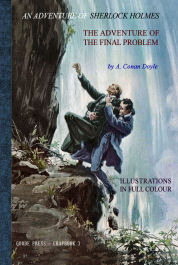
The Memoirs of Sherlock Holmes #12
The Adventure of the Final Problem - a Sherlock Holmes Short Story
Sherlock Holmes has determined that there is a diabolical mastermind behind the criminal activities in London. It's Professor Moriarty. The two men of genius pursue each other towards a final showdown.
'The Final Problem' is a short story by Arthur Conan Doyle, featuring his detective character Sherlock Holmes. It was first published in 'Strand Magazine' in December 1893. It appears in book form as part of the collection 'The Memoirs of Sherlock Holmes.' Conan Doyle later ranked "The Final Problem" fourth on his personal list of the twelve best Holmes stories.
'The Final Problem' is a short story by Arthur Conan Doyle, featuring his detective character Sherlock Holmes. It was first published in 'Strand Magazine' in December 1893. It appears in book form as part of the collection 'The Memoirs of Sherlock Holmes.' Conan Doyle later ranked "The Final Problem" fourth on his personal list of the twelve best Holmes stories.
1 pages, Audio CD
First published October 14, 1892
Ratings & Reviews
Friends & Following
Create a free account to discover what your friends think of this book!
Community Reviews
Displaying 1 - 30 of 354 reviews

April 12, 2026
I'll let you think you won / Date in the park, I'll play it super dumb / Holding your hand, but in the other one… I'm holding a loaded gun / Yeah, baby, you should really run (Checkmate – Conan Gray).
I’m not going to lie (because I suck at it), but I’ve been feeling like all I ever read nowadays are comic books and classics, often switching between the two where one turns my brain to mush and the other builds it back up, so what I’ve been doing to mitigate the damage is applying my secret secondary rating to these Sherlock Holmes classics based how gay they are! A Scandal in Bohemia was maybe a two out of five on my Gay Scale (it’s very official) due to the fact that Holmes spends the whole story in awe of a woman that gave him the slip, and while the relationship between Holmes and Irene Adler is decidedly platonic, I think the onslaught of heterosexual “shipping” that their dynamic inspired thereafter in adaptions or otherwise brought the rating down a little bit. On the Gay Scale that is, it's still the best Sherlock Holmes story from the original canon that I've read yet. Besides, there’s not as much dialogue between Sherlock Holmes and Watson talking about ejaculation, so… you know. Don’t believe me? Read A Study in Scarlet, these are Arthur Conan Doyle’s words, not mine. I’m just the messenger! Well, now that I think about it, A Scandal in Bohemia might score a few extra points on the Byesexual Scale, but then I’d have to go scrounge around in the closet looking for it and that'd be too much trouble, it's all the way over there somewhere. Anyway, The Final Problem takes the Sherlock Holmes series back to its roots of being incredibly homoerotic because we find him in the throes of chasing after the notorious criminal, Professor Moriarty, a man so elusive and brilliant that he has somehow managed to escape the notice of the detective for years. And hey, that’s gay (complementary). What do you me~aan you’ve been tracking a man for all this time! All proclaiming that topping him will be the climax of your career!? And look at them cuddling there on the cover, how cozy. No wonder Josh Lanyon has that Holmes and Moriarty series that's equal parts gay and racist. Yay, it's the Supernatural special! Anyway, it’s time to retire this joke like how Sherlock Holmes decides to retire after The Final Problem, and I just want to say that if nothing else, I always enjoy it when an artist grows to resent the very thing that put their name on the map.
Because all the greats lose interest in their greatest love eventually, don’t they? Rupert Holmes showed a noticeable distaste towards his hit song, “Escape (The Piña Colada Song)”, calling them a dreadful drink, Alec Guinness resented that his starring role as Obi-Wan Kenobi overshadowed everything else he did in his career, and you’ve got Chappell Roan out there trying to square up with children, so it’s totally on brand for Arthur Conan Doyle to have gotten so bored of writing Sherlock Holmes stories that he just up and decided to kill the guy. By the way, I’m not being flippant, I genuinely find it hilarious whenever a creator gets all “my muse, my curse” with whatever they’re best known for because that’s the most human thing out there. It’s only natural for Arthur Conan Doyle (I’m going to type his entire name every time) to hang up his hat as an acclaimed and prestigious author in order to study… fairies. No really, I’m not kidding, Mr. Logical over here actually believed clearly fake photos taken by a child halfway across the planet were definitive proof that Tinker Bell existed and was flying around granting wishes or doing whatever people at the turn of the century thought they did. Let's all point and laugh at Arthur Conan Doyle, point and laugh at him – ha ha! Anyway, now I am being flippant, so I’ll just get back to The Final Problem, a Sherlock Holmes story that was written with the intent to end his torment once and for all, and I’ve got to say… I'm a little underwhelmed. Look, I hate using terms like “over-hyped” or “underwhelmed” to describe my disappointment in a work of literature, but I really thought that in his excitement to never have to write about the detective ever again, it was abundantly clear that Arthur Conan Doyle wrote this specific story in a rushed and almost manic pace. Sure, Sherlock Holmes’ nature typically has him acting out in quirky and confounding ways that never fail to catch Watson unawares because that’s part of the fun, but in every other story there’s a sense of purpose and morality threaded throughout the narrative that keeps them grounded in something relatable. While with this story, I couldn’t get past the context surrounding its creation, and it unfortunately made it so my only opinion of The Final Problem was that it had a “patch job” kind of stylistic story telling that was hellbent on ushering Sherlock Holmes out the door as quickly as possible rather than giving a right and proper send-off to a beloved character.
“You know my powers, my dear Watson, and yet at the end of three months I was forced to confess that I had at last met an antagonist who was my intellectual equal. My horror at his crimes was lost in my admiration at his skill.”
It doesn’t help that almost the entirety of this story has Holmes glazing the hell out of Moriarty in an attempt to convince the reader that this dude whom we’ve never heard of beforehand is somehow his intellectual equal. I mean, don’t get me wrong, the writing is impeccable as usual, but I think A Scandal in Bohemia was much more natural in how it showed Irene Adler as Holmes’ better because we’re just as surprised Holmes was in the moment of his defeat, whereas with The Final Problem, it just feels like Sherlock Holmes is shilling for this rando for no good reason. I’m just saying, the reasoning behind this book is rather transparent. I’d even be daring enough to say that I've found most adaptions of Professor Moriarty (except for the Benedict Cumberland version) much more impressive than his appearance in this source material, because they usually plant the seeds of his evil genius in preceding stories, leaving a fun bread crumb trail to follow. And I’m afraid this is the part where I have to defend Sherlock Holmes: A Game of Shadows. That’s right, the Guy Ritchie film. I’m sorry, but I like it! One of my favorite parts of the adaption was that the movie is an actual mystery, which sounds like a crazy thing to say out loud, but make no mistake, The Final Problem is very much not about solving a puzzle! It starts with Watson walking in on a Sherlock Holmes who had already worked out most of the plot, with only some of Watson’s involvement being necessary to the overarching story. While in A Game of Shadows, not only is Watson’s presence required throughout the entire story in order to ground Holmes’ eccentric nature, but his relationship with Holmes is the emotional core. More emotion, that's a good thing! Also, their closer dynamic adds a level of catharsis for the Big Moment where Holmes sacrifices himself by throwing himself off of that famous waterfall. Not only do I love the fact that what finally defeats Moriarty is Sherlock Holmes deciding to act out of pure spontaneity rather than his usual mind palace overthinking, but also that the last thing Holmes sees is Watson’s face before he closes his eyes to accept oblivion. Ugh, nothing short of beautiful, I must admit! I mean, I'd choose Jude Law's face as the last thing I ever saw as well! Also, it was really funny how Moriarty was screaming something awful while Sherlock Holmes was just chilling.
That being said, I will grant that part of what makes Moriarty so imposing is the mystery surrounding his character, and even though he was obviously thought up after the fact, the utter lack of hints to his villainy prior to his first appearance in this story does make a lot of sense from a narrative standpoint. So yeah, go ahead and call me a fake fan, I can live with that, but I just think that The Final Problem feels like it’s missing a huge chunk of book before the starting pages. No wonder fans were so adamant that Arthur Conan Doyle bring back the character in more stories! Besides, I know this was a long time ago, but how exactly did he expect people to react when he had Holmes die by falling off a waterfall... off screen!? Of course the dude wasn’t really dead! If you really want people to believe a character died, died, you’ve got to do what Daniel Craig had the James Bond people do in his final outing as the character where they just straight up obliterated James Bond. Obliteration, there’s no coming back from that! Also, I’m not surprised that readers also figured Professor Moriarty survived this duel as well, because more appearances from the guy only offers more opportunities to learn about his, let’s face it, rather shallow character. He has the potential to be interesting that I'm afraid isn't seen in this short story. Personally, my favorite ending for him is in The Extraordinary Adventures of the Athena Club series where he gets vaporized like the death animation for getting struck by lightning in The Sims 2. Vaporization, here’s no coming back from that! Anyway, I hope I didn’t complain too much because I know a lot of people love this story, and despite my otherwise contrary opinions, I actually did like it! But I have to say that most of my satisfaction gained from The Final Problem comes from someone who enjoys lyrical prose rather than as a fan of Sherlock Holmes. Nonetheless, we’ve got a real “full circle” moment here, because Arthur Conan Doyle wanted to quit writing Sherlock Holmes stories so he could chase after fairies and now his Sherlock Holmes stories are being read by one. Sorry, was that low-hanging fruit? Heh heh. Oh yeah, as a final note, I reckon The Final Problem hits a four out of five on my very official Gay Scale. It's only right, right?
'Cause I've gotten tired of the games that you play / When you tell me you love me, then you throw me away / So cry me a river 'til you drown in the lake / 'Cause you may think you're winning, but checkmate.
I’m not going to lie (because I suck at it), but I’ve been feeling like all I ever read nowadays are comic books and classics, often switching between the two where one turns my brain to mush and the other builds it back up, so what I’ve been doing to mitigate the damage is applying my secret secondary rating to these Sherlock Holmes classics based how gay they are! A Scandal in Bohemia was maybe a two out of five on my Gay Scale (it’s very official) due to the fact that Holmes spends the whole story in awe of a woman that gave him the slip, and while the relationship between Holmes and Irene Adler is decidedly platonic, I think the onslaught of heterosexual “shipping” that their dynamic inspired thereafter in adaptions or otherwise brought the rating down a little bit. On the Gay Scale that is, it's still the best Sherlock Holmes story from the original canon that I've read yet. Besides, there’s not as much dialogue between Sherlock Holmes and Watson talking about ejaculation, so… you know. Don’t believe me? Read A Study in Scarlet, these are Arthur Conan Doyle’s words, not mine. I’m just the messenger! Well, now that I think about it, A Scandal in Bohemia might score a few extra points on the Byesexual Scale, but then I’d have to go scrounge around in the closet looking for it and that'd be too much trouble, it's all the way over there somewhere. Anyway, The Final Problem takes the Sherlock Holmes series back to its roots of being incredibly homoerotic because we find him in the throes of chasing after the notorious criminal, Professor Moriarty, a man so elusive and brilliant that he has somehow managed to escape the notice of the detective for years. And hey, that’s gay (complementary). What do you me~aan you’ve been tracking a man for all this time! All proclaiming that topping him will be the climax of your career!? And look at them cuddling there on the cover, how cozy. No wonder Josh Lanyon has that Holmes and Moriarty series that's equal parts gay and racist. Yay, it's the Supernatural special! Anyway, it’s time to retire this joke like how Sherlock Holmes decides to retire after The Final Problem, and I just want to say that if nothing else, I always enjoy it when an artist grows to resent the very thing that put their name on the map.
Because all the greats lose interest in their greatest love eventually, don’t they? Rupert Holmes showed a noticeable distaste towards his hit song, “Escape (The Piña Colada Song)”, calling them a dreadful drink, Alec Guinness resented that his starring role as Obi-Wan Kenobi overshadowed everything else he did in his career, and you’ve got Chappell Roan out there trying to square up with children, so it’s totally on brand for Arthur Conan Doyle to have gotten so bored of writing Sherlock Holmes stories that he just up and decided to kill the guy. By the way, I’m not being flippant, I genuinely find it hilarious whenever a creator gets all “my muse, my curse” with whatever they’re best known for because that’s the most human thing out there. It’s only natural for Arthur Conan Doyle (I’m going to type his entire name every time) to hang up his hat as an acclaimed and prestigious author in order to study… fairies. No really, I’m not kidding, Mr. Logical over here actually believed clearly fake photos taken by a child halfway across the planet were definitive proof that Tinker Bell existed and was flying around granting wishes or doing whatever people at the turn of the century thought they did. Let's all point and laugh at Arthur Conan Doyle, point and laugh at him – ha ha! Anyway, now I am being flippant, so I’ll just get back to The Final Problem, a Sherlock Holmes story that was written with the intent to end his torment once and for all, and I’ve got to say… I'm a little underwhelmed. Look, I hate using terms like “over-hyped” or “underwhelmed” to describe my disappointment in a work of literature, but I really thought that in his excitement to never have to write about the detective ever again, it was abundantly clear that Arthur Conan Doyle wrote this specific story in a rushed and almost manic pace. Sure, Sherlock Holmes’ nature typically has him acting out in quirky and confounding ways that never fail to catch Watson unawares because that’s part of the fun, but in every other story there’s a sense of purpose and morality threaded throughout the narrative that keeps them grounded in something relatable. While with this story, I couldn’t get past the context surrounding its creation, and it unfortunately made it so my only opinion of The Final Problem was that it had a “patch job” kind of stylistic story telling that was hellbent on ushering Sherlock Holmes out the door as quickly as possible rather than giving a right and proper send-off to a beloved character.
“You know my powers, my dear Watson, and yet at the end of three months I was forced to confess that I had at last met an antagonist who was my intellectual equal. My horror at his crimes was lost in my admiration at his skill.”
It doesn’t help that almost the entirety of this story has Holmes glazing the hell out of Moriarty in an attempt to convince the reader that this dude whom we’ve never heard of beforehand is somehow his intellectual equal. I mean, don’t get me wrong, the writing is impeccable as usual, but I think A Scandal in Bohemia was much more natural in how it showed Irene Adler as Holmes’ better because we’re just as surprised Holmes was in the moment of his defeat, whereas with The Final Problem, it just feels like Sherlock Holmes is shilling for this rando for no good reason. I’m just saying, the reasoning behind this book is rather transparent. I’d even be daring enough to say that I've found most adaptions of Professor Moriarty (except for the Benedict Cumberland version) much more impressive than his appearance in this source material, because they usually plant the seeds of his evil genius in preceding stories, leaving a fun bread crumb trail to follow. And I’m afraid this is the part where I have to defend Sherlock Holmes: A Game of Shadows. That’s right, the Guy Ritchie film. I’m sorry, but I like it! One of my favorite parts of the adaption was that the movie is an actual mystery, which sounds like a crazy thing to say out loud, but make no mistake, The Final Problem is very much not about solving a puzzle! It starts with Watson walking in on a Sherlock Holmes who had already worked out most of the plot, with only some of Watson’s involvement being necessary to the overarching story. While in A Game of Shadows, not only is Watson’s presence required throughout the entire story in order to ground Holmes’ eccentric nature, but his relationship with Holmes is the emotional core. More emotion, that's a good thing! Also, their closer dynamic adds a level of catharsis for the Big Moment where Holmes sacrifices himself by throwing himself off of that famous waterfall. Not only do I love the fact that what finally defeats Moriarty is Sherlock Holmes deciding to act out of pure spontaneity rather than his usual mind palace overthinking, but also that the last thing Holmes sees is Watson’s face before he closes his eyes to accept oblivion. Ugh, nothing short of beautiful, I must admit! I mean, I'd choose Jude Law's face as the last thing I ever saw as well! Also, it was really funny how Moriarty was screaming something awful while Sherlock Holmes was just chilling.
That being said, I will grant that part of what makes Moriarty so imposing is the mystery surrounding his character, and even though he was obviously thought up after the fact, the utter lack of hints to his villainy prior to his first appearance in this story does make a lot of sense from a narrative standpoint. So yeah, go ahead and call me a fake fan, I can live with that, but I just think that The Final Problem feels like it’s missing a huge chunk of book before the starting pages. No wonder fans were so adamant that Arthur Conan Doyle bring back the character in more stories! Besides, I know this was a long time ago, but how exactly did he expect people to react when he had Holmes die by falling off a waterfall... off screen!? Of course the dude wasn’t really dead! If you really want people to believe a character died, died, you’ve got to do what Daniel Craig had the James Bond people do in his final outing as the character where they just straight up obliterated James Bond. Obliteration, there’s no coming back from that! Also, I’m not surprised that readers also figured Professor Moriarty survived this duel as well, because more appearances from the guy only offers more opportunities to learn about his, let’s face it, rather shallow character. He has the potential to be interesting that I'm afraid isn't seen in this short story. Personally, my favorite ending for him is in The Extraordinary Adventures of the Athena Club series where he gets vaporized like the death animation for getting struck by lightning in The Sims 2. Vaporization, here’s no coming back from that! Anyway, I hope I didn’t complain too much because I know a lot of people love this story, and despite my otherwise contrary opinions, I actually did like it! But I have to say that most of my satisfaction gained from The Final Problem comes from someone who enjoys lyrical prose rather than as a fan of Sherlock Holmes. Nonetheless, we’ve got a real “full circle” moment here, because Arthur Conan Doyle wanted to quit writing Sherlock Holmes stories so he could chase after fairies and now his Sherlock Holmes stories are being read by one. Sorry, was that low-hanging fruit? Heh heh. Oh yeah, as a final note, I reckon The Final Problem hits a four out of five on my very official Gay Scale. It's only right, right?
'Cause I've gotten tired of the games that you play / When you tell me you love me, then you throw me away / So cry me a river 'til you drown in the lake / 'Cause you may think you're winning, but checkmate.

January 3, 2020
"The Final Problem" is the final short story in The Memoirs of Sherlock Holmes collection. The ever-loyal Dr. Watson takes his pen in hand, heavy-hearted, to tell the story of the escalating conflict between Sherlock Holmes and his nemesis, Professor Moriarty, a criminal mastermind that Sherlock is determined to bring to justice, along with all of his criminal associates. Says Sherlock:
Moriarty is a little too smart, however, and the journey turns into a cat-and-mouse chase. But who is the cat and who is the mouse?
There's no real mystery here, and we don't get to know Moriarty directly, only indirectly through Sherlock's observances. It's a suspenseful tale, though, and it rated #4 on Arthur Conan Doyle's personal list of what he thought were the best Sherlock Holmes tales.
"He is a genius, a philosopher, an abstract thinker... He sits motionless, like a spider in the centre of its web, but that web has a thousand radiations, and he knows well every quiver of each of them."So Sherlock asks Dr. Watson to join him on a trip to Europe, to keep Sherlock away from Moriarty - who’s determined to kill Sherlock - until the trap Sherlock and the London police have set up for Moriarty has time to snap closed.
Moriarty is a little too smart, however, and the journey turns into a cat-and-mouse chase. But who is the cat and who is the mouse?
There's no real mystery here, and we don't get to know Moriarty directly, only indirectly through Sherlock's observances. It's a suspenseful tale, though, and it rated #4 on Arthur Conan Doyle's personal list of what he thought were the best Sherlock Holmes tales.

December 16, 2011
Hypothesis: Professor Moriarty & Sherlock Holmes…..brothers?….Hmmm?....I could be wrong but the pair certainly appear to be broth from the same stubby shillelagh.
Being a very recent convert to TeamJacob Sherlock, it's likely I'm missing some obvious smoking gun that explains why this idea can’t be true.
If so, I’m hopeful my fellow Sherlockians will clue me in as to why this theory is fit only for washing hogs or walloping cods(ouch). However, after reading this “one and only” in story meeting between these two singular geniuses, master strategists and pompous bags of wind, the idea, or rather the possibility, gained a certain traction with me. Therefore, purely for the fun of speculating, here are some surface factors that came to mind in support of the supposition:
THE BROTHER THEORY:
1. They both appear to be of similar age (60-70) which makes the fact of their being siblings at least possible.
2. It is my understanding that little is known about Holmes’s early life or the history of his ancestors. Thus, it's at least possible that a casual affair by Sherlock’s father, an earlier marriage or similar circumstance could have produced Moriarty and that the child was shunned or deprived of parental love/guidance as a result of his "improper" origin. This factor also has the virtue of supporting Moriarty’s later developments into a super villain...just saying;
3. The equal and extraordinary facility both men possess for deductive, inductive and inferential reasoning displayed by both of these individuals certainly suggests a common genetic delivery system (dad) and/or genetic receptacle and gestation vehicle (mom). Two men of such extraordinary intellect existing within such a small geographical area. Do I hear a maybe?
Finally…
4. It is quite unusual for a well known “non-biologically related” pair of hero/arch villain to be defined by their similarities rather than their differences. Look at:
Batman/Joker,
Superman/Lex Luthor,
Dracula/Van Helsing,
Captain Hook/Peter Pan,
Elmer Fudd/Bugs Bunny, and
Newman/Jerry Seinfeld.
Each of the above pairs are defined, at least in part, by being the antithesis of their rival.
By the same token, when arch-nemeses happen to also be familial relations, they are more often defined by their similarities. For example:
Data/Lore from STNG,
Sydney Bristow/Irina Derenko from Alias (The best mom/daughter duo in TV history),
Darth Vader/Luke Skywalker (this comparison is even better now that we have see Vader as a juvenile dork named Anakin),
Mel Gibson/Beelzebub, and
Snooki/A walking case of infected genital warts (Jersey Shore).**
** Okay, I admit that was a long way to go just to take a stab atMel Gibson Beelzebub and Snooki genital warts but, c’mon, they’ve earned it.
Granted, the above doesn't begin to prove anything. It was just something that fluttered into my brain while I was reading the story and noticed how very similar the two are in almost all of their mannerisms and capacities. I’m just surprised that in all of the years since this story came out no one has explored this possibility...unless, as I said above, there is a smoking gun that I am missing.
Just food for thought…discuss…
PLOT SUMMARY:
**While I can't imagine that the “big reveal” of this story is not generally known to those reading this, I'll still throw out a spoiler warning as the climax of the story is discussed in general terms (though I will avoid the specifics in case you have not read the actual story).
.
.
.
.
.
.
So this was supposed to be the last Sherlock Holmes story and in it we are introduced to and see the only "in story" appearance of Professor Moriarty.
Of course, Moriarty shows up to have a first and final tete-a-tete with Holmes before the end game. This one and only conversation in the story is brilliantly constructed by Sir Arthur as a sort of semi-mind reading exercise between the two adversaries. So perfectly can they anticipate their opponents responses and counter-arguments that no lengthy discussion is needed though much is resolved. I was very impressed with this scene because I don’t think it could have been effectively written any other way.
To summarize, Moriarty tells Holmes to back off “or else” and Holmes tells Moriarty to blow him (though in a much more civilized, gentlemanly manner). Moriarty warns him that the next time they meet, one of them will not survive and Holmes concurs.
The game is afoot.
As stories go, this is terrific as it pits these two men equal in both intellect and arrogance who have been reluctantly forced into a sort of grudging appreciation for their adversary. As much as I loved their intercourse and the character of Moriarty, I think I am happy that this is there one and only meeting. It seems fitting and authentic that once these two titans circled this close to one another, the game could not last long.
Anyway, a short cat and mouse, blind-double blind game of misdirection ensues leading up to the final fatal meeting between the two.
In a word...superb.
5.0 stars. HIGHEST POSSIBLE RECOMMENDATION!!
Being a very recent convert to Team

If so, I’m hopeful my fellow Sherlockians will clue me in as to why this theory is fit only for washing hogs or walloping cods(ouch). However, after reading this “one and only” in story meeting between these two singular geniuses, master strategists and pompous bags of wind, the idea, or rather the possibility, gained a certain traction with me. Therefore, purely for the fun of speculating, here are some surface factors that came to mind in support of the supposition:
THE BROTHER THEORY:

1. They both appear to be of similar age (60-70) which makes the fact of their being siblings at least possible.
2. It is my understanding that little is known about Holmes’s early life or the history of his ancestors. Thus, it's at least possible that a casual affair by Sherlock’s father, an earlier marriage or similar circumstance could have produced Moriarty and that the child was shunned or deprived of parental love/guidance as a result of his "improper" origin. This factor also has the virtue of supporting Moriarty’s later developments into a super villain...just saying;

3. The equal and extraordinary facility both men possess for deductive, inductive and inferential reasoning displayed by both of these individuals certainly suggests a common genetic delivery system (dad) and/or genetic receptacle and gestation vehicle (mom). Two men of such extraordinary intellect existing within such a small geographical area. Do I hear a maybe?
Finally…
4. It is quite unusual for a well known “non-biologically related” pair of hero/arch villain to be defined by their similarities rather than their differences. Look at:
Batman/Joker,
Superman/Lex Luthor,
Dracula/Van Helsing,
Captain Hook/Peter Pan,
Elmer Fudd/Bugs Bunny, and
Newman/Jerry Seinfeld.
Each of the above pairs are defined, at least in part, by being the antithesis of their rival.
By the same token, when arch-nemeses happen to also be familial relations, they are more often defined by their similarities. For example:
Data/Lore from STNG,
Sydney Bristow/Irina Derenko from Alias (The best mom/daughter duo in TV history),
Darth Vader/Luke Skywalker (this comparison is even better now that we have see Vader as a juvenile dork named Anakin),
Mel Gibson/Beelzebub, and
Snooki/A walking case of infected genital warts (Jersey Shore).**
** Okay, I admit that was a long way to go just to take a stab at
Granted, the above doesn't begin to prove anything. It was just something that fluttered into my brain while I was reading the story and noticed how very similar the two are in almost all of their mannerisms and capacities. I’m just surprised that in all of the years since this story came out no one has explored this possibility...unless, as I said above, there is a smoking gun that I am missing.
Just food for thought…discuss…
PLOT SUMMARY:
**While I can't imagine that the “big reveal” of this story is not generally known to those reading this, I'll still throw out a spoiler warning as the climax of the story is discussed in general terms (though I will avoid the specifics in case you have not read the actual story).
.
.
.
.
.
.
So this was supposed to be the last Sherlock Holmes story and in it we are introduced to and see the only "in story" appearance of Professor Moriarty.
He is a man of good birth and excellent education, endowed by nature with a phenomenal mathematical faculty. At the age of twenty-one he wrote a treatise upon the binomial theorem which has had a European vogue. On the strength of it, he won the mathematical chair at one of our smaller universities, and had, to all appearances, a most brilliant career before him. But the man had hereditary tendencies of the most diabolical kind. A criminal strain ran in his blood, which, instead of being modified, was increased and rendered infinitely more dangerous by his extraordinary mental powers. Dark rumours gathered round him in the University town, and eventually he was compelled to resign his chair and come down to London. He is the Napoleon of Crime, Watson, the organiser of half that is evil and nearly all that is undetected in this great city...Holmes has spent months trying to gather enough information to bring down Moriarty and his entire organization and thinks he finally has the proof he needs. However the final piece will not be available for a few days and he must avoid Moriarty until then.
Of course, Moriarty shows up to have a first and final tete-a-tete with Holmes before the end game. This one and only conversation in the story is brilliantly constructed by Sir Arthur as a sort of semi-mind reading exercise between the two adversaries. So perfectly can they anticipate their opponents responses and counter-arguments that no lengthy discussion is needed though much is resolved. I was very impressed with this scene because I don’t think it could have been effectively written any other way.
To summarize, Moriarty tells Holmes to back off “or else” and Holmes tells Moriarty to blow him (though in a much more civilized, gentlemanly manner). Moriarty warns him that the next time they meet, one of them will not survive and Holmes concurs.
The game is afoot.
As stories go, this is terrific as it pits these two men equal in both intellect and arrogance who have been reluctantly forced into a sort of grudging appreciation for their adversary. As much as I loved their intercourse and the character of Moriarty, I think I am happy that this is there one and only meeting. It seems fitting and authentic that once these two titans circled this close to one another, the game could not last long.
Anyway, a short cat and mouse, blind-double blind game of misdirection ensues leading up to the final fatal meeting between the two.
In a word...superb.
5.0 stars. HIGHEST POSSIBLE RECOMMENDATION!!

July 1, 2023
POR FIN APARECE MORIARTY.
Aunque es más lo que se dice de él que lo que realmente hace en el relato, es impresionante verlo por fin y leer cómo se enfrenta a Sherlock desde las sombras. Creo que lo que más me rompe el corazón de este relato es que Watson de verdad cree que su amigo ha muerto y esa carta final es terrible.
Pobrecillo mío.
Aunque es más lo que se dice de él que lo que realmente hace en el relato, es impresionante verlo por fin y leer cómo se enfrenta a Sherlock desde las sombras. Creo que lo que más me rompe el corazón de este relato es que Watson de verdad cree que su amigo ha muerto y esa carta final es terrible.
Pobrecillo mío.

October 12, 2016
This was a very strong story up to the last couple pages, when suddenly the end. Not using an exclamation point, even, because it was so anticlimactic. Intellectually and emotionally unsatisfying.

January 16, 2014
This is, without a doubt, the best Sherlock Holmes short story I have read so far. I would have given it 5 stars if I had read the story before watching the BBC version but I'm sorry to say that I haven't.
Moriarty in the originals

Moriarty in the BBC series

Besides the fact that the original Moriarty is not half as attractive as the modern one, he was overall quite disappointing. He lacked character depth and that psychotic weirdness that was so evident and intriguing in the BBC version. The Adventure of the Final Problem would probably have been much better if a)it was a novel instead of a short story.. maybe then there could have been more character depth and b)Watson had shown more of his feelings about what was going on. So, overall, the story was pretty good but this is probably the only time that I can say I liked an adaptation more than the original.
Moriarty in the originals
Moriarty in the BBC series
Besides the fact that the original Moriarty is not half as attractive as the modern one, he was overall quite disappointing. He lacked character depth and that psychotic weirdness that was so evident and intriguing in the BBC version. The Adventure of the Final Problem would probably have been much better if a)it was a novel instead of a short story.. maybe then there could have been more character depth and b)Watson had shown more of his feelings about what was going on. So, overall, the story was pretty good but this is probably the only time that I can say I liked an adaptation more than the original.
August 31, 2022
5 Stars. Truly a mystery adventure for the ages. The short stories concerning Holmes invariably include, The Adventure of .., in the title. Most would be better with, The Mystery of .. Not this one. Pure adventure and world famous too. Who hasn't heard of, or seen, this part of the Holmes saga? Of his final pursuit of Professor Moriarty. Holmes views him as the genius behind everything that is criminal in London in the 1890s. Holmes follows the professor around London and England, then to northern France, and finally to beautiful Switzerland. For this later part Moriarty is actually pursuing Holmes! It all comes to a tragic conclusion at Reichenbach Falls. Am I disclosing anything which should be in a spoiler? No, it's all in the first sentence! Here's Dr. Watson's opening line: "It is with a heavy heart that I take up my pen to write these the last words in which I shall ever record the singular gifts by which my friend Mr. Sherlock Holmes was distinguished." It's one of the best-known short stories of all time. We all know that Conan Doyle relented and brought Holmes and Watson back for many more adventures and mysteries! I'm glad he did. (Au2022/Ap2026)

April 22, 2021
I had wanted to read "The Final Problem" because I was intrigued by Professor Moriarty in another story. Moriarty was a criminal genius and the intellectual equal to Sherlock Holmes.



May 31, 2021
5 stars & 5/10 hearts. What an ending. WHAT an ending! Wow! I’m blown away every time. It’s simply perfect—for the series, for Holmes, for Moriarty… yes. It’s amazing, and so well done. I applaud Conan Doyle for being able to create such a mastermind criminal and yet still managing to defeat him… even if Sherlock must pay the ultimate sacrifice to do so. I think this story really shows the heart of Sherlock’s detective work—he wants to make life better and protect people, and he dedicated his life to this, in spite of every temptation and reason to live a quiet life. He pitted himself against Moriarty not only because of his brains, but because of his heart—and he vanquished not only because of his brains, but because of his heart. This is the real Sherlock… and I love him. <3
A Favourite Quote: “I think that you know me well enough, Watson, to understand that I am by no means a nervous man. At the same time, it is stupidity rather than courage to refuse to recognize danger when it is close upon you.”
A Favourite Beautiful Quote: “I think that I may go so far as to say, Watson, that I have not lived wholly in vain,” he remarked. “If my record were closed to-night I could still survey it with equanimity. The air of London is the sweeter for my presence. In over a thousand cases I am not aware that I have ever used my powers upon the wrong side. … Your memoirs will draw to an end, Watson, upon the day that I crown my career by the capture or extinction of the most dangerous and capable criminal in Europe.”
A Favourite Beautiful Quote: “And I must further beg you to be so unconventional as to allow me to leave your house presently by scrambling over your back garden wall.”
“But what does it all mean?” I asked.
He held out his hand, and I saw in the light of the lamp that two of his knuckles were burst and bleeding. “It is not an airy nothing, you see,” said he, smiling. “On the contrary, it is solid enough for a man to break his hand over. …I was attacked by a rough with a bludgeon. I knocked him down, and the police have him in custody; but I can tell you with the most absolute confidence that no possible connection will ever be traced between the gentleman upon whose front teeth I have barked my knuckles and the retiring mathematical coach, who is, I dare say, working out problems upon a black-board ten miles away. You will not wonder, Watson, that my first act on entering your rooms was to close your shutters, and that I have been compelled to ask your permission to leave the house by some less conspicuous exit than the front door.”
A Favourite Quote: “I think that you know me well enough, Watson, to understand that I am by no means a nervous man. At the same time, it is stupidity rather than courage to refuse to recognize danger when it is close upon you.”
A Favourite Beautiful Quote: “I think that I may go so far as to say, Watson, that I have not lived wholly in vain,” he remarked. “If my record were closed to-night I could still survey it with equanimity. The air of London is the sweeter for my presence. In over a thousand cases I am not aware that I have ever used my powers upon the wrong side. … Your memoirs will draw to an end, Watson, upon the day that I crown my career by the capture or extinction of the most dangerous and capable criminal in Europe.”
A Favourite Beautiful Quote: “And I must further beg you to be so unconventional as to allow me to leave your house presently by scrambling over your back garden wall.”
“But what does it all mean?” I asked.
He held out his hand, and I saw in the light of the lamp that two of his knuckles were burst and bleeding. “It is not an airy nothing, you see,” said he, smiling. “On the contrary, it is solid enough for a man to break his hand over. …I was attacked by a rough with a bludgeon. I knocked him down, and the police have him in custody; but I can tell you with the most absolute confidence that no possible connection will ever be traced between the gentleman upon whose front teeth I have barked my knuckles and the retiring mathematical coach, who is, I dare say, working out problems upon a black-board ten miles away. You will not wonder, Watson, that my first act on entering your rooms was to close your shutters, and that I have been compelled to ask your permission to leave the house by some less conspicuous exit than the front door.”

April 13, 2026
The end.
No one will ever be equal to the creation of the character Sherlock Holmes, although his abilities can be matched by the Napoleon of crime, Moriarty.
"I think I may go so far as to say, Watson, that I have not lived in vain."
He said, in another novel, modesty isn't a great quality. This phrase got me.
10/10
confession: I cried.
Fine.
Nessuno potrà mai essere pari alla creazione del personaggio di Sherlock Holmes, per quanto le sue abilità possono essere eguagliate dal Napoleone del crimine, Moriarty.
"Watson, credo che potrei spingermi addirittura ad affermare di non essere vissuto invano."
Aveva detto, in un altro racconto, che la modestia non è una grande qualità. Questa frase mi ha colpito.
10/10
confessione: ho pianto.
No one will ever be equal to the creation of the character Sherlock Holmes, although his abilities can be matched by the Napoleon of crime, Moriarty.
"I think I may go so far as to say, Watson, that I have not lived in vain."
He said, in another novel, modesty isn't a great quality. This phrase got me.
10/10
confession: I cried.
Fine.
Nessuno potrà mai essere pari alla creazione del personaggio di Sherlock Holmes, per quanto le sue abilità possono essere eguagliate dal Napoleone del crimine, Moriarty.
"Watson, credo che potrei spingermi addirittura ad affermare di non essere vissuto invano."
Aveva detto, in un altro racconto, che la modestia non è una grande qualità. Questa frase mi ha colpito.
10/10
confessione: ho pianto.

May 4, 2024
Excellent.
This was excellent, but not going to review it.
For the moment at least.
It’s public domain. You can find it HERE.
-----------------------------------------------
PERSONAL NOTE :
[1893] [30p] [Crime] [Recommendable]
-----------------------------------------------
★★★★☆ 1. A Study in Scarlet [3.5]
★★★☆☆ 2. The Sign of Four [2.5]
★★★☆☆ 3. The Adventures of Sherlock Holmes
★★★★☆ 4. The Memoirs of Sherlock Holmes [3.5] <--
★★★★☆ 5. The Hound of the Baskervilles
★★★★☆ 6. The Return of Sherlock Holmes
★★★☆☆ 7. The Valley of Fear
★★★★☆ 8. His Last Bow [3.5]
★★★☆☆ 9. The Case-Book of Sherlock Holmes [2.5]
★★★☆☆ 10. The Complete Sherlock Holmes
-----------------------------------------------
Excelente.
Esto estuvo excelente, pero no voy a reseñarlo.
Al menos por ahora.
Es dominio público, lo pueden encontrar ACA.
-----------------------------------------------
NOTA PERSONAL :
[1893] [30p] [Crimen] [Recomendable]
-----------------------------------------------
This was excellent, but not going to review it.
For the moment at least.
It’s public domain. You can find it HERE.
-----------------------------------------------
PERSONAL NOTE :
[1893] [30p] [Crime] [Recommendable]
-----------------------------------------------
★★★★☆ 1. A Study in Scarlet [3.5]
★★★☆☆ 2. The Sign of Four [2.5]
★★★☆☆ 3. The Adventures of Sherlock Holmes
★★★★☆ 4. The Memoirs of Sherlock Holmes [3.5] <--
★★★★☆ 5. The Hound of the Baskervilles
★★★★☆ 6. The Return of Sherlock Holmes
★★★☆☆ 7. The Valley of Fear
★★★★☆ 8. His Last Bow [3.5]
★★★☆☆ 9. The Case-Book of Sherlock Holmes [2.5]
★★★☆☆ 10. The Complete Sherlock Holmes
-----------------------------------------------
Excelente.
Esto estuvo excelente, pero no voy a reseñarlo.
Al menos por ahora.
Es dominio público, lo pueden encontrar ACA.
-----------------------------------------------
NOTA PERSONAL :
[1893] [30p] [Crimen] [Recomendable]
-----------------------------------------------

April 20, 2016
The most disappointing Sherlock I've ever read. There was no detective work or plot whatsoever
Arthur Conan Doyle literally just wrote it to
Arthur Conan Doyle literally just wrote it to

May 20, 2018
Sheer brilliance, and what an ending. Sherlock Holmes antagonist professor moriarty is brilliant a true rivalry between both men. Characters like no others I have read before. I find myself liking both men.
This is how you write short stories, true excellence.
Highly recommended reading it.
This is how you write short stories, true excellence.
Highly recommended reading it.
July 28, 2021
It is frankly bizarre that Moriarty is featured in literally every Sherlock adaptation under the sun, because in the short story he's a bad villain that just doesn't fit the format at all. In a series of short stories, a mastermind coming out of nowhere who is in charge of most of the criminal activity in London (England?) just doesn't work. Doyle tries to sell it by having Watson not accompany Holmes as much as he used to so that all the messing around with Moriarty and Sherlock can happen before the start of the story, but it feels weak.
There's little detective work, the whole thing feels predictable and never keeps you guessing and I think this is probably the one story I've read where I instantly identified the person Sherlock was disguised as. It's *almost* like the whole thing is a hasty attempt to kill of a character that Doyle didn't want to write anymore! Hmmm.
There's little detective work, the whole thing feels predictable and never keeps you guessing and I think this is probably the one story I've read where I instantly identified the person Sherlock was disguised as. It's *almost* like the whole thing is a hasty attempt to kill of a character that Doyle didn't want to write anymore! Hmmm.

August 9, 2020

If you enjoy reading about falling bricks and speeding carriages that are a danger to the traffic, also some very hassled train-switching - the most exciting things that happened in here - by all means read it.

September 18, 2012
I thought I knew the basic premise of this story when I started it, but it turns out I knew the whole thing. This incredibly slim volume is considered the final of only four novels in the Sherlock Holmes series. There are many additional short stories.
Written from Watson’s point-of-view we see an increasingly paranoid Sherlock taking extreme measures to escape his arch-nemesis Dr. Moriarty. The pair, one an unconventional, brilliant detective, the other a criminal mastermind are perfectly matched. Sherlock has finally found his intellectual equal; unfortunately they are pitted against one another. You can’t help but hear the admiration in Sherlock’s voice as he describes the villains’ evil empire.
Here’s a bit about Moriarty in Sherlock’s own words…
“He is the Napoleon of crime, Watson. He is the organizer of half that is evil and of nearly all that is undetected in this great city. He is a genius, a philosopher, an abstract thinker. He has a brain of the first order. He sits motionless, like a spider in the center of its web, but that web has a thousand radiations, and he knows well every quiver of each of them. He does little himself. He only plans.”
BOTTOM LINE: A worthy conclusion to Sherlock’s story, I only wish it had been longer! I would still recommend The Sign of Four as the best place to start if you’re new to Sherlock.
Written from Watson’s point-of-view we see an increasingly paranoid Sherlock taking extreme measures to escape his arch-nemesis Dr. Moriarty. The pair, one an unconventional, brilliant detective, the other a criminal mastermind are perfectly matched. Sherlock has finally found his intellectual equal; unfortunately they are pitted against one another. You can’t help but hear the admiration in Sherlock’s voice as he describes the villains’ evil empire.
Here’s a bit about Moriarty in Sherlock’s own words…
“He is the Napoleon of crime, Watson. He is the organizer of half that is evil and of nearly all that is undetected in this great city. He is a genius, a philosopher, an abstract thinker. He has a brain of the first order. He sits motionless, like a spider in the center of its web, but that web has a thousand radiations, and he knows well every quiver of each of them. He does little himself. He only plans.”
BOTTOM LINE: A worthy conclusion to Sherlock’s story, I only wish it had been longer! I would still recommend The Sign of Four as the best place to start if you’re new to Sherlock.

September 25, 2017
شيرلوك في صراع مع البروفيسير جيمس مورياتي عالم الرياضيات الشهير .. يخبر واتسون بذلك و يخبره ايضًا بأن مورياتي اذكى منه و انه إذا ما اوقع بمورياتي سيكون هذا اهم انجاز في حياته
فيأتي هنا دور واتسون الذي يقترح على شيرلوك الذهاب في رحلة حول اوروبا حتى لايستطيع مورياتي تقفي آثاره و يستطيع وضع خطة محكم للقبض عليه وبالفعل يستطيع شيرلوك القبض على عصابه مورياتي بأكملها لكن عدا مورياتي نفسه الذي بدوره يحاول القاء على هولمز ردًا على مافعله
يذهب بعد ذلك شيرلوك و معه واتسون الى بلدة ميرنغن في سويسرا و بينما هما في زيارة للشلالات يأتي صبي في طلب واتسون و يخبره بأن هنالم امرأة تريد طبيب لكي يعالجها .. يتردد واتسون في ترك شيرلوك و لكنه يذهب على كل حال و يكتشف بأنها خدعة و ان الفتى ليس سوى صبي من عصابة مورياتي
يعود مرة أخرى للشلالات ليجد رسالة تركها صديقة ..
قصتي المفضلة لشيرلوك
فيأتي هنا دور واتسون الذي يقترح على شيرلوك الذهاب في رحلة حول اوروبا حتى لايستطيع مورياتي تقفي آثاره و يستطيع وضع خطة محكم للقبض عليه وبالفعل يستطيع شيرلوك القبض على عصابه مورياتي بأكملها لكن عدا مورياتي نفسه الذي بدوره يحاول القاء على هولمز ردًا على مافعله
يذهب بعد ذلك شيرلوك و معه واتسون الى بلدة ميرنغن في سويسرا و بينما هما في زيارة للشلالات يأتي صبي في طلب واتسون و يخبره بأن هنالم امرأة تريد طبيب لكي يعالجها .. يتردد واتسون في ترك شيرلوك و لكنه يذهب على كل حال و يكتشف بأنها خدعة و ان الفتى ليس سوى صبي من عصابة مورياتي
يعود مرة أخرى للشلالات ليجد رسالة تركها صديقة ..
قصتي المفضلة لشيرلوك

March 28, 2021
3,5/5
Read
February 12, 2024for school; sherlock’s always fun

September 6, 2021
Mr. Conan Doyle--my favorite English writer--took the formula designed by Poe and improved on it, thereby creating the most important, if not the best, detective stories this world has ever seen.
In The Final Problem, Sherlock Holmes faces his nemesis and counterpart, Professor Moriarty. The latter seems to represent Holmes' id; however, I tend to see Moriarty as Holmes' alter ego. After all, Watson only ever hears about Moriarty: he never actually sees him. Be that as it may, the confrontation between the two great men is both exciting and stimulating. It reminded me of the relationship that exists between Dale Cooper and Windom Earle in Lynch's Twin Peaks.
The Final Problem was written as the swan song of Sherlock Holmes, who is arguably the greatest and most famous fictional character of all time (I myself have a slight bias towards Poirot). Holmes' fans, however, would not hear of it! They demanded that Holmes be resurrected forthwith. Conan Doyle had no choice but complying with them. I don't know if his decision was the right one, but I am certainly happy that he did it, because it means that we have more Holmes stories to read.
In The Final Problem, Sherlock Holmes faces his nemesis and counterpart, Professor Moriarty. The latter seems to represent Holmes' id; however, I tend to see Moriarty as Holmes' alter ego. After all, Watson only ever hears about Moriarty: he never actually sees him. Be that as it may, the confrontation between the two great men is both exciting and stimulating. It reminded me of the relationship that exists between Dale Cooper and Windom Earle in Lynch's Twin Peaks.
The Final Problem was written as the swan song of Sherlock Holmes, who is arguably the greatest and most famous fictional character of all time (I myself have a slight bias towards Poirot). Holmes' fans, however, would not hear of it! They demanded that Holmes be resurrected forthwith. Conan Doyle had no choice but complying with them. I don't know if his decision was the right one, but I am certainly happy that he did it, because it means that we have more Holmes stories to read.

May 5, 2017
This story puts Sherlock Holmes abilities under serious scrutiny when he is confronted by the best criminal personality (Professor James Moriarty) in England, one that has attempted more than once to slaughter Sherlock Holmes.

April 13, 2020
All in all is a great conclusion to Sherlock’s story. This is the final of four novels in the Sherlock Holmes series written from Watson’s point-of-view. Its sees Holmes confronting his perfectly matched arch-nemesis Dr. Moriarty. He describes him as follows:
The plot
“He is the Napoleon of crime, Watson. He is the organizer of half that is evil and of nearly all that is undetected in this great city. He is a genius, a philosopher, an abstract thinker. He has a brain of the first order. He sits motionless, like a spider in the center of its web, but that web has a thousand radiations, and he knows well every quiver of each of them. He does little himself. He only plans.”
The plot

February 21, 2021
Oh god,
this story was awful on SO MANY levels-
but that's what made it super hilarious for me.
A. C. Doyle's hatred for Sherlock never fails to make me giggle.
Brilliant. =))))))
this story was awful on SO MANY levels-
but that's what made it super hilarious for me.
A. C. Doyle's hatred for Sherlock never fails to make me giggle.
Brilliant. =))))))
April 18, 2025
First read:
I listened to both the Bengali and English versions of The Final Problem, absolute cinema, that’s all I can say! I just wish Goodreads existed back when the book was first published, so I could see what readers of that time felt after reading it.
I usually listen to audiobooks while traveling to my classes, since I spend over 3 hours on the road every day. But I read this book on a cozy Friday afternoon, in the quiet of my room Sherlock Holmes: The Final Problem. The great detective, indeed.
6:54 pm, 18 April 2025
Second read:
Undoubtedly, Sherlock Holmes has always been the greatest detective in literature for me. But The Final Problem stands out because it shows a side of Holmes we almost never see, fear. In this story, we encounter a villain so intelligent and dangerous that even Holmes acknowledges his brilliance. The way Holmes speaks about him, almost with respect and caution, is exactly how a powerful villain should be built. Sir Arthur Conan Doyle masterfully creates a sense of threat without relying on loud action or typical thriller elements.
What makes this story remarkable is that it doesn’t follow the usual mystery formula. There is no traditional investigation, no gradual clue-hunting, yet it keeps you on edge throughout. The tension grows quietly as the danger becomes more real, and by the time the story reaches its conclusion, it leaves you shocked. The ending is abrupt, emotional, and unforgettable, a bold move by Doyle that changed the entire series.
Overall, The Final Problem is not just a story about a detective and a villain, it is a psychological battle between two brilliant minds. It reveals Holmes’s humanity, his vulnerability, and the true magnitude of his greatest enemy. That’s what makes it one of the most impactful Sherlock Holmes stories ever written.
9:21 pm, 27 November 2025
I listened to both the Bengali and English versions of The Final Problem, absolute cinema, that’s all I can say! I just wish Goodreads existed back when the book was first published, so I could see what readers of that time felt after reading it.
I usually listen to audiobooks while traveling to my classes, since I spend over 3 hours on the road every day. But I read this book on a cozy Friday afternoon, in the quiet of my room Sherlock Holmes: The Final Problem. The great detective, indeed.
6:54 pm, 18 April 2025
Second read:
Undoubtedly, Sherlock Holmes has always been the greatest detective in literature for me. But The Final Problem stands out because it shows a side of Holmes we almost never see, fear. In this story, we encounter a villain so intelligent and dangerous that even Holmes acknowledges his brilliance. The way Holmes speaks about him, almost with respect and caution, is exactly how a powerful villain should be built. Sir Arthur Conan Doyle masterfully creates a sense of threat without relying on loud action or typical thriller elements.
What makes this story remarkable is that it doesn’t follow the usual mystery formula. There is no traditional investigation, no gradual clue-hunting, yet it keeps you on edge throughout. The tension grows quietly as the danger becomes more real, and by the time the story reaches its conclusion, it leaves you shocked. The ending is abrupt, emotional, and unforgettable, a bold move by Doyle that changed the entire series.
Overall, The Final Problem is not just a story about a detective and a villain, it is a psychological battle between two brilliant minds. It reveals Holmes’s humanity, his vulnerability, and the true magnitude of his greatest enemy. That’s what makes it one of the most impactful Sherlock Holmes stories ever written.
9:21 pm, 27 November 2025

October 12, 2022
After reading "A Study in Scarlet" and then "The Hound of the Baskervilles," I looked up which were the best Sherlock stories and chose this one, since apparently it's the only one that actually features Moriarty (really?? Given how prominent he is in all the adaptations, that's amazing!) A good chunk of the story describes Moriarty as the criminal mastermind overseeing all London operations of crime at an almost supernatural level, but it goes in to absolutely no detail in how he does it. I suppose this didn't really matter--the point was, he was Sherlock's equal, as he must be in order to bring about the great detective's demise, and to do so in such a way that Sherlock's death also serves a greater purpose. But I'd had the distinct impression from adaptations that Sherlock faked his death... and this one really leaves little doubt in the reader's mind that he is, in fact, gone. (Apparently, as I read elsewhere, it left so little doubt that many readers cancelled their subscriptions to the periodical in which it appeared, in protest. I don't blame them!) But Doyle was tired of being pigeon-holed into Sherlock stories and wanted to do something different, so he killed him off--and faced appropriate backlash. Later, apparently, it was so extreme that he made up an excuse for why Sherlock wasn't dead and wrote another entire series of tales.
At any rate, this short story intriguingly introduced Moriarty, but in very vague terms, and then simply described how Sherlock tried to evade him with Watson's help. Ultimately, of course, Sherlock allows himself to be confronted and killed, because even in death, Sherlock cannot be overpowered. The next one I'll have to read is The Adventure of the Empty House, where he supposedly comes back to life again...
At any rate, this short story intriguingly introduced Moriarty, but in very vague terms, and then simply described how Sherlock tried to evade him with Watson's help. Ultimately, of course, Sherlock allows himself to be confronted and killed, because even in death, Sherlock cannot be overpowered. The next one I'll have to read is The Adventure of the Empty House, where he supposedly comes back to life again...

October 29, 2025
He llegit molt poquet d'en Holmes, si no m'erro tot just aquest relat i el que és considerat el primer, "Estudi en escarlata", quan ell i en Watson es coneixen. Tot i això, en les dues ocasions m'ha deixat molt bon sabor de boca. Com en l'altra ocasió, m'he endinsat en la trama de seguida, m'ha creat emoció de continuar llegint però al mateix temps he tingut una sensació agradable. Diria, com altres companys han dit, que el final és una mica precipitat, però pocs relats (i novel·les també) aconsegueixen un final amb "el tempo" adequat.
Molt recomanable i espero continuar llegint aquest inspector i el seu company i amic Watson.
---
He leído poquito de Holmes, si no me equivoco tan solo este relato y el que está considerado el primero, "Estudio en escarlata", cuando él y Watson se conocen. Aún así, en las dos ocasiones me ha dejado muy buen sabor de boca. Me he adentrado en la trama en seguida, me ha creado emoción de continuar leyendo y al mismo tiempo he tenido una sensación agradable. Diría, como otros compañeros, que el final es un poco precipitado, pero pocos relatos (y novelas también) consiguen un final con "el tempo" adecuado.
Muy recomendable y espero continuar leyendo a este inspector y su inestimable compañero y amigo Watson.
Molt recomanable i espero continuar llegint aquest inspector i el seu company i amic Watson.
---
He leído poquito de Holmes, si no me equivoco tan solo este relato y el que está considerado el primero, "Estudio en escarlata", cuando él y Watson se conocen. Aún así, en las dos ocasiones me ha dejado muy buen sabor de boca. Me he adentrado en la trama en seguida, me ha creado emoción de continuar leyendo y al mismo tiempo he tenido una sensación agradable. Diría, como otros compañeros, que el final es un poco precipitado, pero pocos relatos (y novelas también) consiguen un final con "el tempo" adecuado.
Muy recomendable y espero continuar leyendo a este inspector y su inestimable compañero y amigo Watson.

January 17, 2012
I was inspired to read this infamous Sherlock Holmes adventure after watching the BBC modern day rendition of "Sherlock", aired this past Sunday (1/15/2012). Although Sir Arthur Conan Doyle meant this to be the final adventure of Sherlock Holmes, I'm glad he left the plot shrouded in enough mystery to allow for the eventual resurrection of this brilliant detective with definite personality issues. Additionally, although I may have found Conan-Doyle's portrayal of James Moriarty frustratingly enigmatic, in retrospect I am glad he only painted a vague picture of this criminal mastermind because it now leaves the character open for more in-depth interpretation...and I think Steven Moffat & Mark Gatiss created a brilliant Jim Moriarty in their series.

April 12, 2023
This is undoubtedly the most iconic short story involving Holmes and his arch-enemy— the Professor.
After careful reading, this work reveals so many loopholes that the thread itself becomes invisible. But what a cracking read it is! Even in the n-th read, the story and its ending— which the author had penned as the conclusion of 'Holmes saga'— tends to overwhelm the reader.
The number of pastiches generated by this story and succeeding 'Hiatus' is mind-boggling. All of they had come in a just cause, proving that Sherlock Holmes just can't have a 'final' problem. He would go on solving problems, forever!
If you have read it, why not repeat the experience? Let me assure you, it would be as good as the first time.
After careful reading, this work reveals so many loopholes that the thread itself becomes invisible. But what a cracking read it is! Even in the n-th read, the story and its ending— which the author had penned as the conclusion of 'Holmes saga'— tends to overwhelm the reader.
The number of pastiches generated by this story and succeeding 'Hiatus' is mind-boggling. All of they had come in a just cause, proving that Sherlock Holmes just can't have a 'final' problem. He would go on solving problems, forever!
If you have read it, why not repeat the experience? Let me assure you, it would be as good as the first time.

March 23, 2012
"He is the Napoleon of crime, Watson. He is the organizer of half that is evil and of nearly all that is undetected in this great city. He is a genius, a philosopher, an abstract thinker. He has a brain of the first order. He sits motionless, like a spider in the center of its web, but that web has a thousand radiations, and he knows well every quiver of each of them. He does little himself. He only plans". Holmes on Moriarty. The final adventure.
Displaying 1 - 30 of 354 reviews