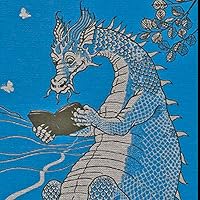
Intricate, even exquisite - but never immaculate, Theo Ellsworth's Capacity is a mind turned inside out. Ellsworth's careful line gives shape to profound and profoundly silly thoughts alike, bringing a visionary, startling new life to the doubts and hopes that are so familiar to everyone. This is the 2010 reprint of Theo Ellsworth's debut graphic novel. Capacity .
Theo Ellsworth is a self-taught artist and storyteller who grew up in the mountains of Montana. He developed his art while wandering the United States in a motor powered vehicle. He is uncommonly fond of clouds, monsters, trees, and impossible objects. He is prone to fits of whimsy, and his mind is filled with preposterous notions, yet he still manages to come across as semi-normal. He now lives in Portland, Oregon with a witch doctor and a slightly evil cat, and spends as much time as possible making comics, art zines, and imaginary phenomenon. He also helps run the Pony Club gallery, which he co-founded. He has replaced his motor powered vehicle with a two-wheeled, human-powered contraption.
“…I truly believe that for every imaginary problem, there is an imaginary solution.” (pg 23)
Theo Ellsworth’s CAPACITY is far too artful and magical to be adequately described in some layperson’s social media review. Yet here I am, the quintessential poster child for the dull and unimaginative, giving it a go.
“I created another version of myself, then abandoned him.” (pg 78)
The Artwork: Ellsworth draws as though ink is abundant and paper is scarce. There is very little (if any) unused space in his art. Every nook and cranny holds part of the story. There are details within details within details; it would be maddeningly overwhelming were it not so brilliantly put together.
“The Pudding of Obligation (placed upon the Doily of Resentment)” (pg 118)
The Dialogue: The author is largely having a stream of consciousness discussion with himself, and you—dear reader—are along for the ride. His anxieties and aspirations are a conversational subtext for all that he puts on a page.
“This is an imaginary outfit that I wear over my everyday clothes every Tuesday. I highly recommend doing this as a weekly practice. It has changed my life. Imaginary Outfit Tuesdays (IOT): see you there!” (pg 259)
I know my description makes this sounds like madness, and maybe it is, but it is an ordered madness. This is the coherent chaos of a lucid daydream and now I want to just sit here and ruminate on this experience for a while.
“Every thought I’ve ever had is all part of this big invisible project that I’ll keep working on until I die.” (pg 314)
Capacity is a large collection (over 325 pages) of Ellsworth's mini-comics by the same name, shaped into a sort of narrative, with some mini-interruptions along the way, some detours. But in a way, it is all detours, creative detours, because the creative brain must be obeyed! The focus is on the imagination, creativity. Scratch that: the focus is on Ellsworth's brain, which he sometimes fears is (socially) disabling, it is so weird. And it is weird, his brain, but he's also proud of it, sees it as something he is compelled to follow wherever it takes him. In that sense, this is a memoir of Ellsworth's creative life, and since it is also a kind of travelogue through it, it is a kind of explicit sharing about the creative process that others can learn from. He's kind of focused on that, in the early parts, what artists must do, and what art can do for people. Not in some sort of social justice way, but in a personally satisfying way. He directly addresses readers, tells us to turn the pages, tells us what is going on in his head at such and such a time, and so on. And he reveals to us that he (or his persona) is socially awkward, has odd quirks about eating and sleeping that are sometimes created by his artistic obsessions. It's a good thing, art, but he acknowledges it can make one (and him) weird.
And I guess the focus (besides Ellsworth's brain) simultaneously is on incredibly detailed (but not over-, anally- fussy) depictions of bizarre creatures and sites borne of his imagination. And these creatures and places, unlike many art comics, are not dark and forbidding. I guess the word surreal fits, though it doesn't seem Ellsworth is all that philosophical or purposeful about his visions. He just lets it happen, seems to me. And he's nice, or the effect is nice and not foreboding or off-putting as some crazy art comics can be.
And sometimes he is just plain funny, as when he illustrates all sorts of things that could be worn as pants. Or a mini-comic on the Physics Police. Actually he's often funny, and never really disturbing. There's a kind of sweetness to it.
I would say the art is far superior to the writing, which has this slacker feel to it, rarely all the insightful. But the art is pretty awesome at times, and never boring, accomplished, but he's also having fun with it all. This is my first viewing of Ellsworth's work, and I will read more if I can get my hands on it.
I liked Ellsworth's The Understanding Monster volumes, but I'm completely fascinated with Capacity. The core of the text is his original mini-comics series, but this is much, much more than a collection of previously published material. Ellsworth provides over 100 new pages to the original comics, and in doing so he provides cohesion in a way that makes everything seem almost seamless. In fact, if you don't know that Capacity comprises those earlier single issues, you wouldn't have much of a sense that this is partly a collection. The new material that Ellsworth does provide provides not only a context, but a narrative frame...and one that is very self-conscious and metafictional. We interviewed Theo on a recent episode of the podcast, http://comicsalternative.com/comics-a..., and although we did discuss Capacity, I wish we had covered it more thoroughly.
As with The Understanding Monster, the intricate art in this work is one of the highlights. But whereas the former is more beholden on the art for its message and impact, Capacity has a much more of an anchor in narrative flow.
The visuals were the only thing that got me through this book. Theo is a great artist, and is well suited to be a sequential illustrator. He's got a very unique, detailed style that isn't common today in comics - underground or otherwise. His narrative style on the other hand is absolutely terrible. While his art works well in dealing with nonsense and psychedelia, his writing does not in the least. It's tedious, forced, and in a few rare instances, almost insincere. He's trying to hard to be out there or whimsical, and he just doesn't pull it off. There are a few redeemable fictive moments in Capacity, but they're few and far between.
At one point during one of his journal-style interludes Theo mentions that a publisher turned him down because they were bored by his exposition. He should have taken the rejection to heart instead of reacting against it and soldiering on.
Beautiful, meticulous, strange. Ellsworth's art revolves around a rich, baroque mesh of architectural embellishments and crosshatching, somehow both messy and exceedingly intricate. And the images themselves often convey a surreal, lovely twilight dream-logic. The stories themselves are more hit-or-miss, but the long bookending sections, in which Ellsworth recounts his own attempts to translate his imagination into an intelligible form, often make for a fascinating study of the creative process. I'll look forward to more work from him, for sure.
This is one of the best graphic novels I've ever read: a feast of both imagination and intricately rendered art. The style and substance are unique to this author.
The artist's style is a mix of bizarre architecture, Aztec motifs, Hindu symbols, and quite a few monsters who remind one of Where The Wild Things Are. The artist is a dude from Montana, so these influences come from either past lives or the limitless world inside his head. I would describe Ellsworth in the same way my friends describe me: as a loveable weirdo. This is, for both of us, a point of pride.
The writing is very funny, sometimes absurd, and always enchanting. The pen and ink drawings are incredibly textured and detailed. They're visually busy images, but also inviting. There's very little blank space. Incredinly, the author is self-taught. It's clear that he has so many ideas in his head that the mass of them becomes an actual burden. He is compelled to let them out, whether they make sense or not, and he tries to give them the passing semblance of coherent linear structure. The art rules him, instead of the other way around. It's fascinating stuff. He calls his micro comics and shorts "skits" which seems appropriate. They are like mini performances.
Ellsworth introduces a novel concept: if truth is something that really happens, does that mean that whatever happens in your head is a true story?
These bizarre short scenes and stories are not just whimsical, but also philosophical. This is an author who has spent a lot of time on the various levels of the fun house in his head. The thoughts, concepts, and the images in his head are perhaps unrenderable (did I just make up a word?) or intransferable, but he does his best, going where his ideas lead him, hoping we can follow. He addresses the reader directly, and often and even creates spaces for us to interact with his creations. We are a part of the story. He tells us all about what was going on when he worked on various sections. It's part autobiography, part fantasy, and the majority is one incredible unfolding fever dream.
Regarding the title, CAPACITY is access not only to dreams and imagination, but also access to the subconscious mind and to the ability to remember and interpret dreams (without going crazy).
You will want to read this one. If you are very lucky, your library might have a single copy.
I’m making an effort to stop doing this, but I often speed through graphic novels and then feel guilty bc the artist spent so much time drawing them only for me to look at it for 1 second! For this book I spent a lot of time looking at the drawings because they were so intricate and detailed. The more you look the more you see some little frog guy peeking out of a window or something. I loved all the textures. They looked fun to draw. I remember when I was a kid I loved drawing tiny tiny circles for a super long time. Looking at these drawings I can just imagine how good it feels to hyperfixate on drawing the lines on the floorboards for hours and hours. He is so lucky he can draw his imagination so well. There are lots of trains/paths going in and out of buildings, lots of monsters, lots of dangling baubles off of tree branches or antlers.
Part of why I spent so much time looking at the drawings is that the narrative left something to be desired. This book is a collection of work over a period of 5 years. There is a linking between them all where Ellsworth goes over the things going on in his personal life while he made whatever it is we are about to see. I thought the memoir portions were stronger than the comics in between. By nature of this, the quality of the comics were variable, which he explains by showing what creative period/slump he was in at that time in his life. Ellsworth is clearly aware of his own weaknesses, like the inability to follow through on a narrative. Some of the rhymes were a bit childish/trite and I thought he might be better off making children’s content. There was one negative comment he gets from a publisher in the story that says the drawings are stunning but the writing is lacking, and I agreed with them :(. However, this was made in 2008 and there’s so much time for growth and I loved the drawings so much that I really want to read his newer stuff. I really liked him as a person while reading this, which tbh is rare when you are reading something memoir adjacent. An extremely charming book.
a comic book about the author's struggles with the creative process sounds dangerously pretentious. but i was really drawn into this fragmented & beautiful depiction of ellsworth's mind, overflowing with eerie worlds filled with fantastic creatures & characters - so much so that he's overwhelmed by the task of containing his own constantly-shifting imagination.
ellsworth is not as sophisticated with words as he is with images. a preachy vignette about war, for example, dips into stilted & painfully awkward territory. his stories work best when he keeps the narration simple and the subject matter close to his heart. to be read with a hot drink, under blankets, late on a rainy night.
I think if I were reading Theo Ellsworth's 'Capacity' minicomics, I'd think they were kind of interesting but nothing that would stick with me particularly, intensely detailed art but meandering half-narratives... framed within this book, those comics become an intrinsic part of a story of artistic and self discovery that was engaging enough to get me to finish reading the book in just a couple days.
Qualquer tipo de lógica deve ser abandonada ao se submergir neste livro. O leitor é tratado como um personagem ativo dentro do inconsciente do autor, que sonha o sonho de criaturas tão ou mais reais que uma caneta sobre uma folha de papel em branco. Monstros e cenários surreais se confundem com o cotidiano e aos poucos pensamentos se transformam em fatos e tomam de assalto todas as páginas do livro, em desenhos tão elaborados que beiram à perdição de olhares analíticos. A narrativa é intrincada e muitas vezes segue o ritmo do pensamento, dividindo-se em pequenas esquetes que uma vez encerradas, tornam a ressurgir em seus pequenos detalhes páginas e páginas depois. Tamanha convulsão mental se transforma em uma ode ao submundo do ser, em suas plenas forças criativas e opressivas. Todos que chegarem ao final dessa imersão literária, após tomarem chá imaginativo com o autor do livro, serão presenteados para sempre, se quiserem, com a benção do chá dos gnomos do chá, além de outras poderosas oferendas místicas.
Capacity is an inventive, whiny autobiographical account of the author's struggle with writing. He blends whimsy with insanity with more whimsy.
There are math page numbers, assorted pants pictures (palindrome pants, poltergeist pants, mitosis pants and posthumous pants, among others), and a Pudding of Obligation, placed upon a Doily of Resentment. Ellsworth uses a framing device in which his own avatar talks to an Aztec god-looking stand-in for the reader. There are even some almost-but-not-quite pseudo-choose-your-own-adventure decisions to be made. It's...weird. Often times I was delighted; often times I had to force myself to pick the book back up.
Whenever he can find an excuse to do so, the author fills his pages with endlessly dense line-drawing collages and monsters that remind me of Sendak's Where the Wild Things Are. Like the narrative, it's sometimes brilliant and sometimes tiresome.
Funny that I read this right after Picture This by Lynda Barry, as they share a theme of creating visual art and stories. Ellsworth's focus is on artist fear: his deep-rooted worry of losing himself in his own psyche for the sake of pushing his art "as far as it can go" (whatever that means), and out of this he creates a full-circle story in which he literally (by using the second person) invites the reader to bear witness to his creative process. Though this sounds tenuous as a narrative structure, and almost painfully post-modern, Ellsworth's ink drawings are enchanting and his narrative works surprisingly well. I found it sensitive and inspiring.
Messy, awkward, lavish, fertile, and lovely work. A disparate collection of ideas and vignettes stretched out over a decade that collide together suddenly and finally for a satisfying conclusion. This is especially true if you are curious about the creative process of art and how normal people are moved by that process. This work lets us watch as the author's craft and ability grow along with him.
An awesomely weird comic book. Surreal landscapes and imaginary creatures are great companions as the authour tries to come to an understanding of his creative process and the psychological connections he has to his ideas/the things that live in his head.
Intimidatingly dense line-work at the start, but as I grew accustomed to the massive landscapes and intricate patterning I managed to relax and absorb.
Theo Ellsworth's stream of consciousness series about his own abilities to create comics works only because of his own sharp sense of humor. In the hands of other cartoonists this concept could easily be seen as ostentatious, but Ellsworth's ability to churn out gags makes Capacity a wonderful read. This book collects a series of Ellsworth's minicomics about his own imagination with frequent detours to explore other aspects of his own imagination. Ellsworth inserts himself in the narrative by hosting the reader in his own brain to segue between comics and the resulting effect is delightfully bizarre. There is a bit of an frenetic energy to this kind of storytelling but it's toned down enough to never quite get exhausting.
What I enjoyed most about Capacity is the meticulously detailed cartooning and the sheer creativity to the designs of each panel. Ellsworth draws all manner of strange oddities that populate his mindscape, giving the reader just enough insight into the creative process. But even after seven issues of this, I can't say I've quite understood what Ellsworth is about - but I feel that is definitely by design. Capacity is Exhibit A as to why Theo Ellsworth is considered one of the most exciting cartoonists working today.
What a roller coaster! Theo breaks the fourth-wall more than any cartoonist I know, but in a cozy way, like by inviting you to tea and then asking if you need sugar or asking you if you wouldn't mind pressing some buttons with your mind to turn the page. He is a particular kind of genius, but maybe also reading this book as a fellow cartoonist freaks me out cause like now I gotta get to know my own inner cast of characters.
I like that we both enjoy human-mice hybrids. I'm giving this four stars only because I think I like his more recent works more, in terms of their narratives?
But I would like to repeat again, Theo is a special type of genius that you rarely come across and yes it's fractally and overwhelmingly detailed and full of new alien creatures but they are also here to support you and do a little cheer in your name, and I think will get through this all.
Capacity is a wildly inventive comic in which a cartoonist reflects on his hyperactive imagination. Fittingly, his reflections occur by way of wildly inventive little creatures and people in his head who put on wildly inventive “skits” about the cartoonist’s struggles with his almost-compulsive visions. The worlds and whimsies of those many figures in his head are all beautifully reflected in cartoonist Ellsworth’s Bosch-meets-Gorey visual style.
In repackaging his original seven-issue run of Capacity, Ellsworth took very much to heart his ability to comment on his own earlier work. He added a number of new interludes, bookends, introductions, and other comments along the way that make the work feel surprisingly complete and novelistic in ways that it never did or could have in single issues.
I know I will be thinking about this book for a long time.
This is truly a "out of this world" book, into the mind of the author.
For fairness, I should confess that this was also a bit hard to read, due to some "long and slow" sequences where I struggled to keep reading. I also became increasingly troubled with the author's welfare and mental stability, if this book is fairly autobiographical.
The art of the book is *outstanding* in its own style. The attention to detail is *unbelievable*.
The narrative is many times like a palimpsest, a dream within a dream within a dream, like the "Inception" movie.
Some episodes/skits are a bit boring, strange or "filler", but usually they won't last long.
Anyway, I was glad and relieved to see the final outcome, and the book ends up being rewarding and hopeful.
This book may not be everyone's cup of tea, but if you manage to read it till the end you may feel it was all worthwhile.
Reading capacity- which is an anthology of short comics in a larger frame story- is like becoming an alien earthworm on another planet that gets to eat all kinds of alien humus, while relating to one's consciousness back on earth by quantum entanglement. This book chronicles Theo Ellsworth's story of becoming an artist, from being lost and bewildered by the creature-filled labyrinth of his brain to finding skills that allowed him to navigate the internal and external worlds without as much emotional turmoil and confusion. It's a very exciting book, read it !
i am… extremely disappointed in this book! a few months ago i had read theo’s short, 32-page comic, sleeper car, and was completely in love with it, and decided to take the plunge and order the 300+ page graphic novel that came after it. capacity compiles 5 years worth of theo’s first attempts at storytelling, intertwined with explanations of what was going on with his life at the time. nearly all the comics in the book end with him describing how the comic got rejected, and at one point he talks about how he ended up doing a workshop at the high school that he had dropped out, describing his experience as “a feeling of revenge, because [he] had failed that class years before.” while it can often be exciting to see examples of an artists early work, i guess the feeling i came away with was that publishing this book was like another sort of “revenge” towards all those publishers who had rejected him, instead of his ever considering that maybe these comics are amateurish and should’ve just been jumping-off points instead of finished pieces. ultimately, the work felt like maurice sendak meets edward gorey meets conor oberst. like, there is a second where you read all those names together and think, “you know, that could be awesome!”… but, personally, i thought it felt like a whiny and overly-meta mess (an example of a comic that can be whiny and meta but also really good would be james kochalka’s american elf). i do want to note that about 1/3rd of the time, theo’s artwork is absolutely fantastic and totally unique, especially his larger-scale drawings, but most of the smaller panels feel rushed and not thought out. he does bring up several times that he has a hard time finishing work, so i have a feeling that in a lot of the pieces he felt that if he didn’t get the story out as quickly as possible, he would never finish it. anyways, i feel bad that i can’t recommend this book, because i really love supporting artists who self-publish or are getting their work out in unconventional ways (i ordered this book off of etsy, for example), but i also am kind of irritated that i spent $25 on this book!
*note: while i wouldn’t recommend this book, i totally would recommend sleeper car! it had none of the problems i noted from capacity, made me actually laugh-out-loud (or “lol,” if you prefer), and the artwork is perfect! and it’s only $6
Every so often the universe reveals to me a gemstone of unspeakable beauty and rare full-fledged satisfaction. These are the moments in reading I live for, to have my senses fully engaged and my soul wakened by the stirring fire of delight.
The book is a hybrid, chimerical collection of line drawings rendered in such detail as to suggest Richard Scarry characters when the lights go out and they go home from their day jobs.
Part cartoon, part comic, part pamphlet, and a host of other drawing techniques make each and every frikkin' page a study in the psychic organisms that exist in our psychological environment.
However, the book itself is no mere observation. Satisfying and enough as that would be--any Grail scholar worth their salt would tell you that the holy mysteries must be engaged with and the question asked or all is wasteland and ruin.
The author sets out to do exactly that, with a psychological plan using the tools at his disposal so clever as to become true creation, true joy, true understanding. This is the sort of stuff I'm talkin' bout bruthas and sistas! Whole on healing is ON, yo.
He takes the collected work of his observations through drawing and makes an attempt to place them in a kind of story format so we can see how the unconscious forces of mystery are leading him, and us the reader, into a more complete knowledge.
As much as the author has been through in order to gather enough strength, enough perspective, and enough confidence to make sense of his adventure, he like all true heroes and great literary geniuses recognizes his limitations when he comes up across them.
The riddle, can he solve it?
Such an ambitious, masterful, joyous work of art this is! We are all made better human beings by the existence of this work; this is civilization coming into being.
By this, and this only, are we sustained and allowed to continue.