

What do you think?

The PowerBook
To avoid discovery I stay on the run. To discover things for myself, I stay on the run. "The PowerBook" is twenty-first century fiction that uses past, present and future as shifting dimensions of a multiple reality. The story is simple. An e-writer called Ali or Alix will write to order anything you like, provided that you are prepared to enter the story as yourself and take the risk of leaving it as someone else. You can be the hero of your own life. You can have freedom just for one night. But there is a price. Ali discovers that she too will have to pay it. Death can take the body but not the heart. Set in London, Paris, Capri and Cyberspace, this is a book that reinvents itself as it travels. Using cover-versions, fairy tales, contemporary myths and popular culture, "The PowerBook" works at the intersection between the real and the imagined. Its territory is you.
244 pages, Paperback
First published January 1, 2001
About the author
Jeanette Winterson
117 books8,082 followersNovelist Jeanette Winterson was born in Manchester, England in 1959. She was adopted and brought up in Accrington, Lancashire, in the north of England. Her strict Pentecostal Evangelist upbringing provides the background to her acclaimed first novel, Oranges Are Not the Only Fruit, published in 1985. She graduated from St Catherine's College, Oxford, and moved to London where she worked as an assistant editor at Pandora Press.
One of the most original voices in British fiction to emerge during the 1980s, Winterson was named as one of the 20 "Best of Young British Writers" in a promotion run jointly between the literary magazine Granta and the Book Marketing Council.
She adapted Oranges Are Not the Only Fruit for BBC television in 1990 and also wrote "Great Moments in Aviation," a television screenplay directed by Beeban Kidron for BBC2 in 1994. She is editor of a series of new editions of novels by Virginia Woolf published in the UK by Vintage. She is a regular contributor of reviews and articles to many newspapers and journals and has a regular column published in The Guardian. Her radio drama includes the play Text Message, broadcast by BBC Radio in November 2001.
Winterson lives in Gloucestershire and London. Her work is published in 28 countries.
One of the most original voices in British fiction to emerge during the 1980s, Winterson was named as one of the 20 "Best of Young British Writers" in a promotion run jointly between the literary magazine Granta and the Book Marketing Council.
She adapted Oranges Are Not the Only Fruit for BBC television in 1990 and also wrote "Great Moments in Aviation," a television screenplay directed by Beeban Kidron for BBC2 in 1994. She is editor of a series of new editions of novels by Virginia Woolf published in the UK by Vintage. She is a regular contributor of reviews and articles to many newspapers and journals and has a regular column published in The Guardian. Her radio drama includes the play Text Message, broadcast by BBC Radio in November 2001.
Winterson lives in Gloucestershire and London. Her work is published in 28 countries.
Ratings & Reviews
Friends & Following
Create a free account to discover what your friends think of this book!
Community Reviews
Displaying 1 - 30 of 395 reviews

May 15, 2022
The lush sensual prose, and the themes of abandonment, adoption, fluid gender and sexuality, time, transformation and disguise, religious imagery, mythology, dreams, storytelling, and liturgical repetition are the familiar Winterson I love. The cover is sinuously sensual too, with a naked woman lying back, as if in ecstasy, on a carpet of tulips that look like vulvas.
But as a novel, this didn’t work, I didn’t enjoy it, and I’m sad to write those words.
It’s trying to be too many different things: Alix’s story and stories, philosophical essays, short stories based on well-known ones, imagined and reimagined biographies, passages that could be lifted from a tourist guidebook, all wrapped up as something quirky and tech-savvy.
Like every novel I’ve read by AS Byatt (see my reviews HERE), the best aspects were brilliant, but there were many frustrations to counter them. One minute I was annoyed, and then I was seduced by prose like this:
“I was the place where you anchored. I was the deep water where you could be weightless. I was the surface where you saw your own reflection. You scooped me up in your hands.”
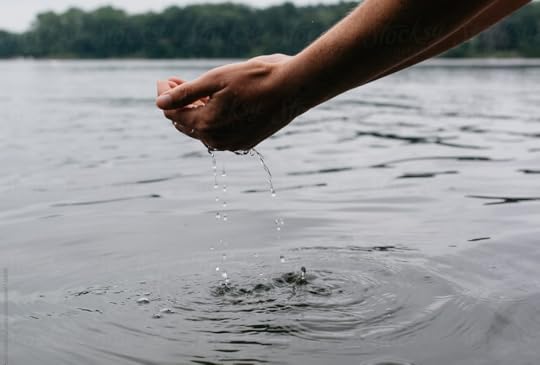
Image: Woman’s hands scooping water from a lake (Source)
Let’s pretend
“Freedom for a night… the freedom to be someone else.”
This was published - on paper - in 2000, and playfully imagines interactive ways of digital storytelling. The framing story is Alix, an orphan and adoptee, who now lives above a shop in Spitalfields, London, as Winterson did. Winterson’s shop sold… oranges, but they were not the only fruit. Alix’s shop hires out costumes, and she also writes stories for people who want a different form of escape.
“This is a virtual world. This is a world inventing itself. Daily, new landmasses form and then submerge. New continents of thought break off from the mainland… Others are like Atlantis - fabulous, talked about, but never found.”
Tulips to Amsterdam
From the start, this feels like a clear homage to Virginia Woolf’s Orlando, which I reviewed HERE. The first significant narrative is especially so: an exotic, erotic, and comic caper in which the narrator smuggles the first tulips to Holland, the bulbs being an integral and intimate part of her disguise. But Woolf did it better.
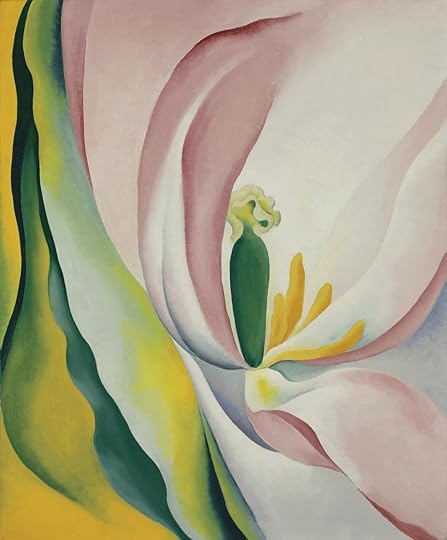
Image: Pink Tulip, by Georgia O’Keeffe (Source)
“I warned you the story might change under my hands. I forgot that the storyteller changes too.”
Other stories are woven around Lancelot and Guinevere, Emperor Tiberius on Capri, Francesca de Rimini, George Mallory on Everest, Giovani da Castro, and finally, Orlando is named.
“He slipped between the gaps in history, as easily as a coin rolls between the floorboards.”
This section also brought to mind Jeffrey Eugenides’ Middlesex (see my review HERE) and the tulips in Margaret Attwood’s Handmaid’s Tale (see my review HERE).
How does it end?
“I can’t untangle my whole life… I can’t be an exile from my own past… I can’t start again at year zero.”
Winterson often says there are three types of ending: revenge, tragedy and forgiveness. She says it here, and in The Gap of Time (see my review HERE) and Why be Happy? (see my review HERE), and probably elsewhere. But this doesn’t really end. And that felt right.
“I was typing on my laptop, trying to move this story on, trying to avoid endings, trying to collide the real and the imaginary worlds, trying to be sure which is which.”
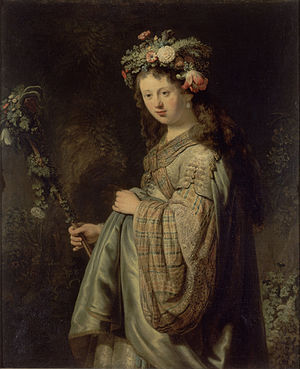
Image: “Flora”, Rembrandt’s portrait of his wife, Saskia, mentioned in the book because of the broken tulip in her hair and how she’s holding the staff (Source)
Quotes
• “The evening was stretching itself. The day’s muscle had begun to relax.”
• “Strangers often like to hear how writers write their books. It saves the bother of reading them.”
• “There was a woman near me, eating an ice cream with the intensity of a sacrament.”
• “There is no secret about eating [globe] artichoke or what the act resembles. Nothing else gives itself up so satisfyingly towards its centre. Nothing else promises and rewards. The tiny hairs are part of the pleasure.”
• “What a strange world it is where you can have as much sex as you like but love is taboo.”
• “I’m looking for something, it’s true. I’m looking for the meaning inside the data. That’s why I trawl my screen like a beachcomber - looking for you, looking for me, trying to see through the disguise.”
• “I wonder, maybe, if time stacks vertically, and there is no past, present, future, only simultaneous layers of reality.”
• “History is a collection of found objects washed up through time… We cannot rely on the facts. Time, which returns everything, changes everything.”
• “Beyond time, beyond death, love is.”
But as a novel, this didn’t work, I didn’t enjoy it, and I’m sad to write those words.
It’s trying to be too many different things: Alix’s story and stories, philosophical essays, short stories based on well-known ones, imagined and reimagined biographies, passages that could be lifted from a tourist guidebook, all wrapped up as something quirky and tech-savvy.
Like every novel I’ve read by AS Byatt (see my reviews HERE), the best aspects were brilliant, but there were many frustrations to counter them. One minute I was annoyed, and then I was seduced by prose like this:
“I was the place where you anchored. I was the deep water where you could be weightless. I was the surface where you saw your own reflection. You scooped me up in your hands.”
Image: Woman’s hands scooping water from a lake (Source)
Let’s pretend
“Freedom for a night… the freedom to be someone else.”
This was published - on paper - in 2000, and playfully imagines interactive ways of digital storytelling. The framing story is Alix, an orphan and adoptee, who now lives above a shop in Spitalfields, London, as Winterson did. Winterson’s shop sold… oranges, but they were not the only fruit. Alix’s shop hires out costumes, and she also writes stories for people who want a different form of escape.
“This is a virtual world. This is a world inventing itself. Daily, new landmasses form and then submerge. New continents of thought break off from the mainland… Others are like Atlantis - fabulous, talked about, but never found.”
Tulips to Amsterdam
From the start, this feels like a clear homage to Virginia Woolf’s Orlando, which I reviewed HERE. The first significant narrative is especially so: an exotic, erotic, and comic caper in which the narrator smuggles the first tulips to Holland, the bulbs being an integral and intimate part of her disguise. But Woolf did it better.
Image: Pink Tulip, by Georgia O’Keeffe (Source)
“I warned you the story might change under my hands. I forgot that the storyteller changes too.”
Other stories are woven around Lancelot and Guinevere, Emperor Tiberius on Capri, Francesca de Rimini, George Mallory on Everest, Giovani da Castro, and finally, Orlando is named.
“He slipped between the gaps in history, as easily as a coin rolls between the floorboards.”
This section also brought to mind Jeffrey Eugenides’ Middlesex (see my review HERE) and the tulips in Margaret Attwood’s Handmaid’s Tale (see my review HERE).
How does it end?
“I can’t untangle my whole life… I can’t be an exile from my own past… I can’t start again at year zero.”
Winterson often says there are three types of ending: revenge, tragedy and forgiveness. She says it here, and in The Gap of Time (see my review HERE) and Why be Happy? (see my review HERE), and probably elsewhere. But this doesn’t really end. And that felt right.
“I was typing on my laptop, trying to move this story on, trying to avoid endings, trying to collide the real and the imaginary worlds, trying to be sure which is which.”
Image: “Flora”, Rembrandt’s portrait of his wife, Saskia, mentioned in the book because of the broken tulip in her hair and how she’s holding the staff (Source)
Quotes
• “The evening was stretching itself. The day’s muscle had begun to relax.”
• “Strangers often like to hear how writers write their books. It saves the bother of reading them.”
• “There was a woman near me, eating an ice cream with the intensity of a sacrament.”
• “There is no secret about eating [globe] artichoke or what the act resembles. Nothing else gives itself up so satisfyingly towards its centre. Nothing else promises and rewards. The tiny hairs are part of the pleasure.”
• “What a strange world it is where you can have as much sex as you like but love is taboo.”
• “I’m looking for something, it’s true. I’m looking for the meaning inside the data. That’s why I trawl my screen like a beachcomber - looking for you, looking for me, trying to see through the disguise.”
• “I wonder, maybe, if time stacks vertically, and there is no past, present, future, only simultaneous layers of reality.”
• “History is a collection of found objects washed up through time… We cannot rely on the facts. Time, which returns everything, changes everything.”
• “Beyond time, beyond death, love is.”
April 18, 2018
"Very gently the Princess lowered herself across my knees and I felt the firm red head and pale shaft plant itself in her body. A delicate green-tinted sap dribbled down her brown thighs. All afternoon I fucked her."
Jeanette Winterson! Oh, how I love you so! When I read your books, I find myself totally immersed in them, and I find myself completely unaware of anything else around me, until of course, I'm rudely interrupted.
I was introduced to Winterson last year with" Written on the body" That book affected me more than I thought it would. This book was a little different, but still with the same beautifully haunting writing style. The Powerbook talks about sexuality, love and gender. Love is the general theme in the majority, if not all of Winterson's novels, and I have to say, nobody writes about passionate and chaotic love, quite like Jeanette Winterson.
You see, Winterson has this talent, where she can make the reader feel like they are part of the narrative. The amazing characters are relatable and I really feel their emotions. We see what they see, and we feel what they feel. I began forming an attachment to some of the characters, and I really didn't want their beautiful little stories to end.
When I finish a book by Winterson, I always feel shortchanged. Shortchanged in the sense of not wanting the book to end. I feel like I want to bathe in her words, for as long as reality will let me.
Jeanette Winterson! Oh, how I love you so! When I read your books, I find myself totally immersed in them, and I find myself completely unaware of anything else around me, until of course, I'm rudely interrupted.
I was introduced to Winterson last year with" Written on the body" That book affected me more than I thought it would. This book was a little different, but still with the same beautifully haunting writing style. The Powerbook talks about sexuality, love and gender. Love is the general theme in the majority, if not all of Winterson's novels, and I have to say, nobody writes about passionate and chaotic love, quite like Jeanette Winterson.
You see, Winterson has this talent, where she can make the reader feel like they are part of the narrative. The amazing characters are relatable and I really feel their emotions. We see what they see, and we feel what they feel. I began forming an attachment to some of the characters, and I really didn't want their beautiful little stories to end.
When I finish a book by Winterson, I always feel shortchanged. Shortchanged in the sense of not wanting the book to end. I feel like I want to bathe in her words, for as long as reality will let me.

March 27, 2008
Loved, adored, I want to dream in this book.
ETA: Ten years later, another reading, much slower this time. So nice to savor and dwell in it, maybe no book better than this one in which to do so.
"Inside her marriage there were too many clocks and not enough time. Too much furniture and too little space. Outside her marriage, there would be nothing to hold her, nothing to shape her. The space she found would be outer space. Space without gravity or weight, where bit by bit the self disintegrates."
"Night. I logged on to the Net. There were no e-mails for me. You had run out on the story. Run out on me. Vanished.... Nothing. Here I am like a penitent in a confessional. I want to tell you how I feel, but there's nobody on the other side of the screen."
"You are closed and shuttered to me now, a room without doors or windows, and I cannot enter. But I fell in love with you under the open sky...."
"Nothing could be more familiar than love. Nothing else eludes us so completely."
"Love has got complicated, tied up with promises, bruised with plans, dogged with an ending that nobody wants - when all love is, is what it always is - that you look at me and want me and I don't turn away."
"No date line, no meridian, no gas-burnt stars, no transit of the planets, not the orbit of the earth nor the sun's red galaxy, tell time here. Love is keeper of the clocks. ....
Your face, your hands, the movement of your body....
Your body is my Book of Hours.
Open it. Read it.
This is the true history of the world."
ETA: Ten years later, another reading, much slower this time. So nice to savor and dwell in it, maybe no book better than this one in which to do so.
"Inside her marriage there were too many clocks and not enough time. Too much furniture and too little space. Outside her marriage, there would be nothing to hold her, nothing to shape her. The space she found would be outer space. Space without gravity or weight, where bit by bit the self disintegrates."
"Night. I logged on to the Net. There were no e-mails for me. You had run out on the story. Run out on me. Vanished.... Nothing. Here I am like a penitent in a confessional. I want to tell you how I feel, but there's nobody on the other side of the screen."
"You are closed and shuttered to me now, a room without doors or windows, and I cannot enter. But I fell in love with you under the open sky...."
"Nothing could be more familiar than love. Nothing else eludes us so completely."
"Love has got complicated, tied up with promises, bruised with plans, dogged with an ending that nobody wants - when all love is, is what it always is - that you look at me and want me and I don't turn away."
"No date line, no meridian, no gas-burnt stars, no transit of the planets, not the orbit of the earth nor the sun's red galaxy, tell time here. Love is keeper of the clocks. ....
Your face, your hands, the movement of your body....
Your body is my Book of Hours.
Open it. Read it.
This is the true history of the world."

July 14, 2021
Winterson ile tanışma kitabım Dizüstü. Büyülü bir karşılama töreni oldu desem abartmış olmam sanırım :)
Nasıl oluyor bilmiyorum ama öyle zamanlarda öyle kitaplar çıkıyor ki karşıma, anlamlandırmak için debelendiğim kavramları “sakin ol elindeki kavramı öylece boşluğa bırak, uğraşmaya değmez” diye fısıldıyor edebiyat. Ben de bırakıveriyorum. Klişe ama ben yine de söylemekten alıkoyamayacağım kendimi; edebiyat iyi ki var.
"Seni ateşten kurtardım, oysa söndüremediğim bir ateş ayaklarımızın dibinde yanıyordu. Senle ben pek çok kez birbirimize sırtımızı döndük, yüzlerimiz mağrur, yüreklerimiz görünüşte soğuktu; yalnızca ayaklarımız, bastıkları temiz taşları için için yakan ayaklarımız bizi ele veriyordu. Pişmanlığımın soğuk zemininde yürürken, çıplak ve temiz ayaklarım kömür karası izler bırakıyordu. Yüreğinin kaldırım taşları, ocak taşı olmuştu. Nerede durursak duralım, ayaklarımızın dibinde ateş vardı.
Dudakların yanan parçalarımı bir maşa gibi toplarken, "Bu aşk bir gün bizi mahvedecek," demiştin.
Bense, zaten biz olan bir şeyin bizi nasıl mahvedeceğini merak etmiştim. Biz, bu aşk olmuştuk. Aşık degildik biz. Aşktık.
Senin iliklerin benim kemiklerimde. Benim kanım senin damarlarında. Giysilerinin altında benim bedenimin ağırlığı var. Savaşan kolum senin omzundan güç alıyor. Ufacık ayakların beni ayakta tutuyor. Tüm zırhımı kuşandığımda bile üzerimde senin iç gömleğinden başka bir şey yok; sen saçlarını ördüğünde, örgünü benim başımın çevresine doluyorsun. Senin gözlerin yeşil. Benimkiler kahverengi. Yeşil gözlerinle baktığımda, çayırların çimlerle parıldadığını görüyorum. Gözümdeki ağtabakanın ardına süzüldüğünde, gölün sazlıklarında alabalıkların suya attıgı fiskeleri görüyorsun.
Seni tek elimle kaldırabilirim, ama sen beni parmak uçlarında dengelersin. Dün gece öfkeli yumruklarınla dudağımı yardın, sonra bir yabandomuzunun açtığı yara izine ağladın.
Sen beni yaralamadığın sürece yaralanmam.
Sen benim gücüm olmadıgın sürece güçlü olamam."
"Ölüm beni paramparça edecek, ama aşkın hizmetinde ben pek çok kez paramparça oldum.
Anımsıyorum da bir gün, üzerimde zırhımla senin peşine düşmüş, seni bulmak için atımı Thames Nehri'ne sürmüş tüm. Karşı kıyıda atım vurulmuştu.
Yürüyerek ardından geldim ama zırhım o kadar ağırdı ki güçlükle ilerliyordum; miğferimle zırh levhaları memnuniyetle sökebilir, kalkanımı fırlatıp atabilirdim, ama insan tek başına zırhını bile sökemiyor.
Demir giysiler içinde, yorgun ve bitkin bir adam olarak sonunda bulunduğun yere geldim; seni esir alanları öldürdüm; seni kurtardım.
Sonra küçük bir çocuk gibi kollarımı açarak senden zır hımı sökmeni, metal eldivenlerimi çözmeni diledim. Diz çöktüm; miğferimin siperliğini kaldırdın ve beni öptün.
Üzerimden çıkardığım zırhım, sanki heykelimmiş gibi yerde duruyordu. Seninleyken çıplaktım, kahramanlık kabuğum bir kenara atılmıştı. Ben, Lancelal degildim. Senin aşığındım.
Öyleyse, bedenimin içine senin girdiğinden daha fazla girmesi olanaklı olmayan ölümden neden korkayım ki?
Öyleyse, bugün, bu gece, her zaman, beni senin içinde eridiğimden daha fazla eritemeyecek olan ölümden neden korkayım ki?
Ölüm bizi ayıramayacak. Aşk, ölüm kadar güçlüdür."
"Belki de böyledir - yaşam, belleğin ve tarihin üzerinden dümdüz akar, geçmişse gelgite bağlı olarak ya geri döner ya da dönmez. Tarih, zamanın derinliklerinden kıyıya vuran bulunmuş nesnelerin oluşturduğu bir yığındır. Eşya, düşünceler, kişilikler yüzeye çıkıp bize doğru ilerler, sonra batıp giderler. Bir bölümünü kancalarla yakalayıp çıkarır, diğerlerini görmezden geliriz; motif değiştikçe anlam da değişir. Olgulara güvenemeyiz. Her şeyi geri getiren zaman, her şeyi değiştirir.
Bunun gibi tuhaf bir gelgit, bizim pazarlık ettigimizden daha fazlasını açığa çıkarıyor. Açıklamalar kuruyup gidiyor. Yaşam, gerçekte neyse o - bir karmaşa, bir şans, bir delinin altı üstüne gelmiş odası. İleride kapısı olmayan bir buzdolabını, bir kangal dikenli teli, birilerinin köprüden aşağı attıgı bir alışveriş arabasını görebiliyorum. Pasla kaplı, midyelerle süslü ağır çapaları görebiliyorum. Eski Londra'nın çürümüş ahşap direkleri de burada - teknelerin bağlandığı çakılı kazıklar. Kahverengi, ufalanmış, nemli görünüşleriyle direkler, sıkıştırılmış tütüne benziyorlar.
Dipte bir yerlerde kesinlikle bir tabancanın kırık namlusu, bir istiridye kabuğu hazinesi vardır. Kilden yapılmış bir pipo, bir bilardo topu, bir yığın terk edilmiş giysi olacaktır. Bir kimliğin sonu, bir digerinin başlangıcı."
Nasıl oluyor bilmiyorum ama öyle zamanlarda öyle kitaplar çıkıyor ki karşıma, anlamlandırmak için debelendiğim kavramları “sakin ol elindeki kavramı öylece boşluğa bırak, uğraşmaya değmez” diye fısıldıyor edebiyat. Ben de bırakıveriyorum. Klişe ama ben yine de söylemekten alıkoyamayacağım kendimi; edebiyat iyi ki var.
"Seni ateşten kurtardım, oysa söndüremediğim bir ateş ayaklarımızın dibinde yanıyordu. Senle ben pek çok kez birbirimize sırtımızı döndük, yüzlerimiz mağrur, yüreklerimiz görünüşte soğuktu; yalnızca ayaklarımız, bastıkları temiz taşları için için yakan ayaklarımız bizi ele veriyordu. Pişmanlığımın soğuk zemininde yürürken, çıplak ve temiz ayaklarım kömür karası izler bırakıyordu. Yüreğinin kaldırım taşları, ocak taşı olmuştu. Nerede durursak duralım, ayaklarımızın dibinde ateş vardı.
Dudakların yanan parçalarımı bir maşa gibi toplarken, "Bu aşk bir gün bizi mahvedecek," demiştin.
Bense, zaten biz olan bir şeyin bizi nasıl mahvedeceğini merak etmiştim. Biz, bu aşk olmuştuk. Aşık degildik biz. Aşktık.
Senin iliklerin benim kemiklerimde. Benim kanım senin damarlarında. Giysilerinin altında benim bedenimin ağırlığı var. Savaşan kolum senin omzundan güç alıyor. Ufacık ayakların beni ayakta tutuyor. Tüm zırhımı kuşandığımda bile üzerimde senin iç gömleğinden başka bir şey yok; sen saçlarını ördüğünde, örgünü benim başımın çevresine doluyorsun. Senin gözlerin yeşil. Benimkiler kahverengi. Yeşil gözlerinle baktığımda, çayırların çimlerle parıldadığını görüyorum. Gözümdeki ağtabakanın ardına süzüldüğünde, gölün sazlıklarında alabalıkların suya attıgı fiskeleri görüyorsun.
Seni tek elimle kaldırabilirim, ama sen beni parmak uçlarında dengelersin. Dün gece öfkeli yumruklarınla dudağımı yardın, sonra bir yabandomuzunun açtığı yara izine ağladın.
Sen beni yaralamadığın sürece yaralanmam.
Sen benim gücüm olmadıgın sürece güçlü olamam."
"Ölüm beni paramparça edecek, ama aşkın hizmetinde ben pek çok kez paramparça oldum.
Anımsıyorum da bir gün, üzerimde zırhımla senin peşine düşmüş, seni bulmak için atımı Thames Nehri'ne sürmüş tüm. Karşı kıyıda atım vurulmuştu.
Yürüyerek ardından geldim ama zırhım o kadar ağırdı ki güçlükle ilerliyordum; miğferimle zırh levhaları memnuniyetle sökebilir, kalkanımı fırlatıp atabilirdim, ama insan tek başına zırhını bile sökemiyor.
Demir giysiler içinde, yorgun ve bitkin bir adam olarak sonunda bulunduğun yere geldim; seni esir alanları öldürdüm; seni kurtardım.
Sonra küçük bir çocuk gibi kollarımı açarak senden zır hımı sökmeni, metal eldivenlerimi çözmeni diledim. Diz çöktüm; miğferimin siperliğini kaldırdın ve beni öptün.
Üzerimden çıkardığım zırhım, sanki heykelimmiş gibi yerde duruyordu. Seninleyken çıplaktım, kahramanlık kabuğum bir kenara atılmıştı. Ben, Lancelal degildim. Senin aşığındım.
Öyleyse, bedenimin içine senin girdiğinden daha fazla girmesi olanaklı olmayan ölümden neden korkayım ki?
Öyleyse, bugün, bu gece, her zaman, beni senin içinde eridiğimden daha fazla eritemeyecek olan ölümden neden korkayım ki?
Ölüm bizi ayıramayacak. Aşk, ölüm kadar güçlüdür."
"Belki de böyledir - yaşam, belleğin ve tarihin üzerinden dümdüz akar, geçmişse gelgite bağlı olarak ya geri döner ya da dönmez. Tarih, zamanın derinliklerinden kıyıya vuran bulunmuş nesnelerin oluşturduğu bir yığındır. Eşya, düşünceler, kişilikler yüzeye çıkıp bize doğru ilerler, sonra batıp giderler. Bir bölümünü kancalarla yakalayıp çıkarır, diğerlerini görmezden geliriz; motif değiştikçe anlam da değişir. Olgulara güvenemeyiz. Her şeyi geri getiren zaman, her şeyi değiştirir.
Bunun gibi tuhaf bir gelgit, bizim pazarlık ettigimizden daha fazlasını açığa çıkarıyor. Açıklamalar kuruyup gidiyor. Yaşam, gerçekte neyse o - bir karmaşa, bir şans, bir delinin altı üstüne gelmiş odası. İleride kapısı olmayan bir buzdolabını, bir kangal dikenli teli, birilerinin köprüden aşağı attıgı bir alışveriş arabasını görebiliyorum. Pasla kaplı, midyelerle süslü ağır çapaları görebiliyorum. Eski Londra'nın çürümüş ahşap direkleri de burada - teknelerin bağlandığı çakılı kazıklar. Kahverengi, ufalanmış, nemli görünüşleriyle direkler, sıkıştırılmış tütüne benziyorlar.
Dipte bir yerlerde kesinlikle bir tabancanın kırık namlusu, bir istiridye kabuğu hazinesi vardır. Kilden yapılmış bir pipo, bir bilardo topu, bir yığın terk edilmiş giysi olacaktır. Bir kimliğin sonu, bir digerinin başlangıcı."

March 25, 2014
Jeanette Winterson is someone who can write sentences/paragraphs/passages that absolutely rock my world, yet she consistently fails to write a novel that I love in its entirety. It's incredibly frustrating. I would say in general you'd like this novel less the more of her books you've read, because yet again she's taking on the subject of being in love with a married woman, and she's done that plot more powerfully elsewhere. If, however, you haven't read many of her books, this is a good one to try because it's paced quickly and it feels particularly modern and immediate. And, of course, if you're on target to read all of them sooner or later, then (like me) I would think you'd probably give this one 3.5-4 stars in the end.
I will say that the idea of Ali writing stories for a variety of readers isn't as vital to the story as you might hope (certainly not as much as I hoped) because we very quickly find her obsessed with this one recipient. Winterson could have had more of a tour de force as a writer if she'd shown Ali writing for half a dozen clients, changing voices and perspectives as adeptly as we assume (s)he might, and being affected emotionally (or not) by each one. I respect it if Winterson didn't want to showboat at Ali's expense, but... I feel like so many of Winterson's readers are people who like to feel Winterson's presence in her books that it is reasonable to expect that she would be writing for the very specific readership her talent and voice have cultivated over the years, and we would all be happy if she were to show off a bit of the pure literary magic while telling Ali's story, too.
In the end, Winterson's writing is still enough to carry this book and warrant a couple of re-reads and many dog-eared pages.
I will say that the idea of Ali writing stories for a variety of readers isn't as vital to the story as you might hope (certainly not as much as I hoped) because we very quickly find her obsessed with this one recipient. Winterson could have had more of a tour de force as a writer if she'd shown Ali writing for half a dozen clients, changing voices and perspectives as adeptly as we assume (s)he might, and being affected emotionally (or not) by each one. I respect it if Winterson didn't want to showboat at Ali's expense, but... I feel like so many of Winterson's readers are people who like to feel Winterson's presence in her books that it is reasonable to expect that she would be writing for the very specific readership her talent and voice have cultivated over the years, and we would all be happy if she were to show off a bit of the pure literary magic while telling Ali's story, too.
In the end, Winterson's writing is still enough to carry this book and warrant a couple of re-reads and many dog-eared pages.
Read
January 8, 2025Watch my BookTube deep dive on
the weirdest Women's Prize nominees
. 👀

"I keep telling this story—different people, different places, different times—but always you, always me, always this story, because a story is a tightrope between two worlds."
This book puzzled me. I was never quite sure what to make of it, yet I couldn't put it down.
The premise is that a woman named Ali can write you (or anyone) into a story where you can be and do whatever you want. All you have to do is send her an email outlining your desires, like, I want freedom for just one night.
Ali develops feelings for one of her clients and the entire book charts her interaction with said client, in which she speaks directly to us as if we’re her lover. We venture through the stories she writes in which she and her lover continually find each other.
These short stories play out in settings from myth and fairy tales, as well as in the real world, where biographies are reimaged. It’s a fairly quick read that explores themes of love and identity, and it includes some philosophical musings as well.
I found the writing to be very vivid and unabashed. Take for example: "Your marrow is in my bones. My blood is in your veins. Your cock is in my cunt."
Straight to the point, at times, but more poetic at others: "You are a looking-glass world. You are the hidden place that opens to me on the other side of the glass. I touch your smooth surface and then my fingers sink through to the other side. You are what the mirror reflects and invents. I see myself, I see you, two, one, none. I don't know. Maybe I don't need to know. Kiss me."
I think this is a book that I may want to revisit again in the future and read more slowly so that I can absorb its best qualities again.
Not a book for everyone, but if inventive queer lit about failed but requited love is your thing, then check this one out.
"I keep telling this story—different people, different places, different times—but always you, always me, always this story, because a story is a tightrope between two worlds."
This book puzzled me. I was never quite sure what to make of it, yet I couldn't put it down.
The premise is that a woman named Ali can write you (or anyone) into a story where you can be and do whatever you want. All you have to do is send her an email outlining your desires, like, I want freedom for just one night.
Ali develops feelings for one of her clients and the entire book charts her interaction with said client, in which she speaks directly to us as if we’re her lover. We venture through the stories she writes in which she and her lover continually find each other.
These short stories play out in settings from myth and fairy tales, as well as in the real world, where biographies are reimaged. It’s a fairly quick read that explores themes of love and identity, and it includes some philosophical musings as well.
I found the writing to be very vivid and unabashed. Take for example: "Your marrow is in my bones. My blood is in your veins. Your cock is in my cunt."
Straight to the point, at times, but more poetic at others: "You are a looking-glass world. You are the hidden place that opens to me on the other side of the glass. I touch your smooth surface and then my fingers sink through to the other side. You are what the mirror reflects and invents. I see myself, I see you, two, one, none. I don't know. Maybe I don't need to know. Kiss me."
I think this is a book that I may want to revisit again in the future and read more slowly so that I can absorb its best qualities again.
Not a book for everyone, but if inventive queer lit about failed but requited love is your thing, then check this one out.

December 18, 2015
I had quite a moment reading this the other evening. This is so profoundly a Jeanette Winterson book that it took me back to reading the likes of 'The Passion' and 'Sexing the Cherry' as a naive, eager-to-love teenager half a lifetime ago. Back then Winterson's ideas about love and the power of her writing rattled my heart in my chest. Now her words leave me mostly empty. I'll revisit her early work at some point, hoping that they still hold me in a thrall. A good part of me thinks they will- although I, of course, have changed. The problem with the PowerBook (terrible title not withstanding) is that it demonstrates the writer has not- there is so little progress in her work. If anything the uncool terminology Winterson utilises when talking about the worldwide web makes her sound like a dotty aunt visiting for Sunday tea with her sprinklings of talk about bytes and that horrid sound you get when you are trying to hook up to the net. Winterson's insistence that she is a pioneer of the modern novel, where Victorian concepts of invoking a sense of place are banished to the attic like ZX Spectrums and Commodore 64s, is wrong, a product of years spent in academia. And what does this half-life of academic discussion lead her to? Triteness. 'You are the story.' Thanks very much, Jeanette. Also: We are the World, I Am What I Am and She's So Vain.
Popular Winterson themes- the tides of history, the paths not taken- surface. As usual, it's a crib taken from Virginia Woolf, copied messily in an exam situation. Woolf’s Orlando even has a cameo. But there are moments here of enthralling writing. The Turkish girl of the seventeenth century charged with the job of smuggling tulip bulbs into Holland, for instance, is a thread that could have served as the main colour of the piece rather than a stitched-in motif. There is no doubt Winterson is still capable of arresting ideas to do with gender and identity. But instead we have the repetition of the writer's emotional life. Regurgitated throughout the book: another all-consuming love affair, adulterous and doomed to fail, passages that feel they were lifted straight out of the author's diary. The dialogue, pages and pages of it floating in the ether, is terrible. Written as sparse script without even a line of direction (Exit, pursued by a bear- wishful thinking) the problem for me is that it is the dialogue between two mirror images. Two middle-class, middle-aged white women who can be ever so arch and pithy and clever while also being deadly serious about that twin of Death, Love. And the eureka moment is in there- it is really about doppeling your ganger because self-love is clearly the order of the day. The author comes across as egotistical as the most identikit clone coupling. There is no doubt that self-empowerment is an important concept in a century where too many people have forgotten it. But the most empowered part of Winterson is her ego. May she realize in time and reassert her id.
Popular Winterson themes- the tides of history, the paths not taken- surface. As usual, it's a crib taken from Virginia Woolf, copied messily in an exam situation. Woolf’s Orlando even has a cameo. But there are moments here of enthralling writing. The Turkish girl of the seventeenth century charged with the job of smuggling tulip bulbs into Holland, for instance, is a thread that could have served as the main colour of the piece rather than a stitched-in motif. There is no doubt Winterson is still capable of arresting ideas to do with gender and identity. But instead we have the repetition of the writer's emotional life. Regurgitated throughout the book: another all-consuming love affair, adulterous and doomed to fail, passages that feel they were lifted straight out of the author's diary. The dialogue, pages and pages of it floating in the ether, is terrible. Written as sparse script without even a line of direction (Exit, pursued by a bear- wishful thinking) the problem for me is that it is the dialogue between two mirror images. Two middle-class, middle-aged white women who can be ever so arch and pithy and clever while also being deadly serious about that twin of Death, Love. And the eureka moment is in there- it is really about doppeling your ganger because self-love is clearly the order of the day. The author comes across as egotistical as the most identikit clone coupling. There is no doubt that self-empowerment is an important concept in a century where too many people have forgotten it. But the most empowered part of Winterson is her ego. May she realize in time and reassert her id.

November 18, 2023
"There is always a city. There is always a civilisation. There is always a barbarian with a pickaxe. Sometimes you are the city, sometimes you are the civilisation, but to become that city, that civilisation, you once took a pickaxe and destroyed what you hated, and what you hated was what you did not understand."Terrible title, wonderful book. The ideal reminder of why I love Winterson, who I've been neglecting lately, having convinced myself that my adoration had been a passing phase. Wry humor, gorgeous imagery, love, sex, desire. Love hurts—scars, wounds, and marks, and Jeanette Winterson is here to tell you about it. Self-help, time travel, and a love story. Like many of her books this is a treatise about storytelling, only this time the protagonist is an unnamed you. You in Paris, you as Guinevere, you in Capri, you as Francasca da Rimini, immortalized by Dante. Let the storyteller, Alix, be your guide through the complex landscape of love, of life, of history, of time. Slightly gimicky, and bordering on being one of the self-empowerment novels I despise, I loved it despite, or perhaps because of, its inadvertently fixed position in the now-dated world of the ever-more-distant early 2000s. So much is made of timelessness and yet the novel's reliance on technology prevents it from achieving this quality. Still, there must be a reason why I own four different editions.
January 12, 2022
"Keşfedilmekten kaçınmak için sürekli yoldayım. Kendi adıma bir şeyler keşfetmek için sürekli yoldayım."

January 2, 2017
My last outstanding Winterson, The PowerBook was as superbly written as I have come to expect. Winterson says some absolutely wonderful things about the craft of writing throughout, and weaves together so many narrative strands to give the novel an almost bottomless depth. Her prose is exquisite: 'I was the place where you anchored. I was the deep water where you could be weightless. I was the surface where you saw your own reflection. You scooped me up in your hands.'
As with several of Winterson's other works of fiction, we do not always know a great deal about our narrator, or even who is speaking in parts. This makes the whole even more captivating, however; the details which are not concretely defined become even more beguiling than they perhaps would be otherwise. Here, there is mystery, myth, fairytale, and realism. The PowerBook is rather an intense read, which has been masterfully structured. It is wild, vivid, and enchanting, and I shall be recommending it to everyone.
As with several of Winterson's other works of fiction, we do not always know a great deal about our narrator, or even who is speaking in parts. This makes the whole even more captivating, however; the details which are not concretely defined become even more beguiling than they perhaps would be otherwise. Here, there is mystery, myth, fairytale, and realism. The PowerBook is rather an intense read, which has been masterfully structured. It is wild, vivid, and enchanting, and I shall be recommending it to everyone.

June 21, 2007
I read Winterson’s Written on the Body a few years ago and have never read a novel since that better depicted love. I should have known that it would be a novel written by Winterson herself that would rival my first foray into her work.
The Powerbook explores love, sexuality and gender. This is the theme of many of Winterson’s novels – and one that greatly intrigues me. Is sexuality masculine or feminine? Does the ambiguity of a partner’s sex change the love or physical boundaries between them?
What makes The Powerbook unique is its technological spin. The story is about a writer who offers people a chance to be someone else through just one story – just one e-mail. The writer is Alix… and the reader is anonymous, mostly… Until the stories cross over into real life and neither can escape them. The book is unveiled through e-mails from the author to the man she is writing to and the stories that she writes. As the reader, it is hard not to read the e-mails and the stories as letters to you.
I think what I enjoy most about Winterson is her ability to make you feel like you’re part of the narrative. Her characters tug at your heartstrings in just the right way. At the end of each story, you wish you could see what else happens and hear more about the characters. At the end of the greater story, it is hard not to turn to the first page and begin again.
Though each story is equally beautiful and gloriously told, I always have a favorite. The story is of a girl who travels with tulips in her undergarments to get them across to the Americas, where they cannot grow them. Of course, the story is much more complicated and of course the girl meets another girl… and it is beautiful.
Jeanette Winterson is one of my favorite authors, but I haven’t read all of her works. I’ve re-read Written on the Body several times but have yet to read most everything else. I space them out to enjoy them and get the most of them. And in an effort to not run out. The Powerbook will be re-read several more times before I allow myself another one of her novels. If she writes a book a year, it would not be enough.
In 2002, The Powerbook opened as a stage adaptation at the Royal National Theatre in London.
The Powerbook explores love, sexuality and gender. This is the theme of many of Winterson’s novels – and one that greatly intrigues me. Is sexuality masculine or feminine? Does the ambiguity of a partner’s sex change the love or physical boundaries between them?
What makes The Powerbook unique is its technological spin. The story is about a writer who offers people a chance to be someone else through just one story – just one e-mail. The writer is Alix… and the reader is anonymous, mostly… Until the stories cross over into real life and neither can escape them. The book is unveiled through e-mails from the author to the man she is writing to and the stories that she writes. As the reader, it is hard not to read the e-mails and the stories as letters to you.
I think what I enjoy most about Winterson is her ability to make you feel like you’re part of the narrative. Her characters tug at your heartstrings in just the right way. At the end of each story, you wish you could see what else happens and hear more about the characters. At the end of the greater story, it is hard not to turn to the first page and begin again.
Though each story is equally beautiful and gloriously told, I always have a favorite. The story is of a girl who travels with tulips in her undergarments to get them across to the Americas, where they cannot grow them. Of course, the story is much more complicated and of course the girl meets another girl… and it is beautiful.
Jeanette Winterson is one of my favorite authors, but I haven’t read all of her works. I’ve re-read Written on the Body several times but have yet to read most everything else. I space them out to enjoy them and get the most of them. And in an effort to not run out. The Powerbook will be re-read several more times before I allow myself another one of her novels. If she writes a book a year, it would not be enough.
In 2002, The Powerbook opened as a stage adaptation at the Royal National Theatre in London.

June 29, 2018
Sva je od forme, a forma joj nije neka.
Nasilno aforistična, upinje se da bude *edgy&deep*, a ostaje tek nategnuta il' se rasprsne u patetiku.
Veliki jedan mnjah na 200 strana, sa ponekom finom scenom koja ne pokazuje toliko umeće pisanja koliko umeće maštanja o dobrom seksu.
2.5, ajd', neka joj bude.
Ostavila sam je u otvorenoj biblioteci hostela Franz Ferdinand u Sarajevu, možda nađe čitateljku koja će joj se obradovati.
Nasilno aforistična, upinje se da bude *edgy&deep*, a ostaje tek nategnuta il' se rasprsne u patetiku.
Veliki jedan mnjah na 200 strana, sa ponekom finom scenom koja ne pokazuje toliko umeće pisanja koliko umeće maštanja o dobrom seksu.
2.5, ajd', neka joj bude.
Ostavila sam je u otvorenoj biblioteci hostela Franz Ferdinand u Sarajevu, možda nađe čitateljku koja će joj se obradovati.
September 20, 2009
Full of fairly meaningless wannabe aphorisms (see gobbits of Wilde, minus the wit). Example: "everything done with effort is beautiful. Nothing effortless is beautiful" (better put in her version, but nonetheless void of meaning). You can see what she was trying to do, both from the book and from what she's said in interviews - be very very modern, have a book without a story, composed principally of emotions (she succeeds here - there's very little intellect between these covers) and full of technological, scientific reference. It's the last aim that fails utterly and makes parts of this book cringey. Jenny Turner captures this exactly in her LRB review: "Winterson is terribly uneasy about science and technology. She’s too attracted to leave them to writers who know what they’re talking about. She’s too repelled to grasp the images firmly and think them through." Some of my personal repulsion to her metaphors is probably simply due to our generational differences (and as well to the fact that this book was written in 2000) - to me there's an incredible... embarrassment to her unfamiliarity to the internet, which is perhaps why her persistence at using World Wide Web analogy so irritates me. Her science "poetics" are more inexcusable, but not very unusual for students of exclusively humanities - the pull of the quantum "ooh-er! things aren't really anywhere! nothing is anything! everything's at random deep down! light is really particles! and waves! gosh darn, you damn do educate me Jeanette! paired particles - that's a bit like lovers!" and DNA, particularly in the selfish vain. A.S.Byatt's done it (see, I think, Babel Tower) and I adore her (it's always confused me that she said that scientists, _particularly_ biologists told her they loved her science bits, but then I guess macrobiologists tend(ed?) towards a more wishywashy world-view).
None of this is a very connected/flowing review - just a collection of the points of my thought on the book. I did enjoy reading the book (hence the two stars, along with the fact that I genuinely enjoyed the myth-type ministories (cover versions, she called them in her own gushing (over-used word in this context, but here precise) coverslip blurb. "Weight" is composed entirely of these and more enjoyable, more of a book), mainly because I read it for a book club and so was busy criticising it the whole way through, which is much more fun when you dislike the book.
Another point: Julian Barnes. A lot of the gobbits were repeated, in part, whole or altered - intra-referencing. Barnes does this (see "Flaubert's Parrot", "Love etc.", "Talking it over". The last two even do it across books) to a wonderfully... informal and very comic effect. Winterson's gobbits are repeated in the way of ancient truths/new cliches, but more often than not have none of their underlying truth; are banal, and as I said at the beginning, meaningless. It jolted me when I looked Jeanette Winterson up online 3/4 of the way through the book and read that she'd had an affair with Barnes' wife (Pat Kavanagh), although it's doubtful that this really affected anything - it's quite possible that not many people would instantly make the repetition connection - it's probably not that strong.
Final note: autobiography much? How many biographies does one author have to write for herself? Oranges was frankly as good (and, as far as I can remember from 5 yrs ago, very good it was too) as it was going to get, and beyond getting in her adulthood (albeit in a much vaguer manner than the detail-containing Oranges. That's another thing I dislike about this book - utter lack of detail. I'm fairly sure she did this on purpose - she said somewhere that [paraphrased due to my forgetfulness:] "we should not keep on writing Victorian novels [followed by how she's pioneering the modern novel, or something along those lines".) there's not that much to add. This was my problem with "Weight" as well - good story-telling, induced some genuine laughs, but inexplicable lapse into "I" sections. "Written on the Body" appears to be autobiographical as well, although I don't mind this - it's not repetition and fits. I'm not interested enough in her life/her life is not interesting enough. (look at that - it could almost be one of her own meaningful/meaningless pretty little statements!)
None of this is a very connected/flowing review - just a collection of the points of my thought on the book. I did enjoy reading the book (hence the two stars, along with the fact that I genuinely enjoyed the myth-type ministories (cover versions, she called them in her own gushing (over-used word in this context, but here precise) coverslip blurb. "Weight" is composed entirely of these and more enjoyable, more of a book), mainly because I read it for a book club and so was busy criticising it the whole way through, which is much more fun when you dislike the book.
Another point: Julian Barnes. A lot of the gobbits were repeated, in part, whole or altered - intra-referencing. Barnes does this (see "Flaubert's Parrot", "Love etc.", "Talking it over". The last two even do it across books) to a wonderfully... informal and very comic effect. Winterson's gobbits are repeated in the way of ancient truths/new cliches, but more often than not have none of their underlying truth; are banal, and as I said at the beginning, meaningless. It jolted me when I looked Jeanette Winterson up online 3/4 of the way through the book and read that she'd had an affair with Barnes' wife (Pat Kavanagh), although it's doubtful that this really affected anything - it's quite possible that not many people would instantly make the repetition connection - it's probably not that strong.
Final note: autobiography much? How many biographies does one author have to write for herself? Oranges was frankly as good (and, as far as I can remember from 5 yrs ago, very good it was too) as it was going to get, and beyond getting in her adulthood (albeit in a much vaguer manner than the detail-containing Oranges. That's another thing I dislike about this book - utter lack of detail. I'm fairly sure she did this on purpose - she said somewhere that [paraphrased due to my forgetfulness:] "we should not keep on writing Victorian novels [followed by how she's pioneering the modern novel, or something along those lines".) there's not that much to add. This was my problem with "Weight" as well - good story-telling, induced some genuine laughs, but inexplicable lapse into "I" sections. "Written on the Body" appears to be autobiographical as well, although I don't mind this - it's not repetition and fits. I'm not interested enough in her life/her life is not interesting enough. (look at that - it could almost be one of her own meaningful/meaningless pretty little statements!)
February 18, 2008
I got caught up in some of the stories, but it was all against my basic inclination. I didn't like this book.
I resisted the whole powerbook idea. It felt like it was trying too hard to be clever and exotic. (And the language of computer prompts and commands stopped being exotic a while ago.) (And we don't unwrap emails. We just don't.)
I have liked some books that continually gesture towards the ideal or towards a series of generalized beliefs about love and life (although it's not my preference), but in those cases I have been caught up with the story or the characters. Since neither was really true in this case, the grander gestures felt embarassing.
It felt like that narrator was making metaphysical statements about things--but then not backing them up in the physical details of the book.
For instance, on the last pages, the narrator goes down to the Thames at the lowest tide of the century. She goes out and sees what has been exposed and finds things in the silt. I really like the physical description of what goes on. But the narrator says, "A freak tide like this one uncovers more than we bargained for." Well, what was found that wasn't bargained for? Clearly the love story that has just concluded may have been more than she had bargained for, but in the description of what she sees uncovered in the Thames offers exactly what one might have expected to see. It's nice to say something like "more than we bargained for," but if you don't carry through in the details, you simply sound grandious.
I resisted the whole powerbook idea. It felt like it was trying too hard to be clever and exotic. (And the language of computer prompts and commands stopped being exotic a while ago.) (And we don't unwrap emails. We just don't.)
I have liked some books that continually gesture towards the ideal or towards a series of generalized beliefs about love and life (although it's not my preference), but in those cases I have been caught up with the story or the characters. Since neither was really true in this case, the grander gestures felt embarassing.
It felt like that narrator was making metaphysical statements about things--but then not backing them up in the physical details of the book.
For instance, on the last pages, the narrator goes down to the Thames at the lowest tide of the century. She goes out and sees what has been exposed and finds things in the silt. I really like the physical description of what goes on. But the narrator says, "A freak tide like this one uncovers more than we bargained for." Well, what was found that wasn't bargained for? Clearly the love story that has just concluded may have been more than she had bargained for, but in the description of what she sees uncovered in the Thames offers exactly what one might have expected to see. It's nice to say something like "more than we bargained for," but if you don't carry through in the details, you simply sound grandious.

June 14, 2015
Oh, Jeanette, I love you so. Your lyricism bathes over me until I lose all sense of time, perception, reality; I fall into your writing like I imagine I would into the eye of a storm which tears apart any illusion of order and structure, and find myself lulled away on the wings of a dream in which "sense" is meaningless.
Still, I couldn't give myself fully to The PowerBook. I admit, it's me, not you. But The PowerBook lost any sense of being a story, and while I appreciate non-linear, surreal explorations, I'm not as much of an artist perhaps as I'd like to think- I need some ground, some structure within which meaning might unfold. And this work, this beautiful meandering poem, severs all attachments to any semblance of "reality" (yes, I know, there is no such thing).
To the reader - I would recommend The Passion as a first Winterson exposure, unless you are a poet and/or dreamer able to disengage easily from expectations and conventions. Otherwise, I fear this one may convince you to never try Winterson again - a grave loss indeed.
Still, I couldn't give myself fully to The PowerBook. I admit, it's me, not you. But The PowerBook lost any sense of being a story, and while I appreciate non-linear, surreal explorations, I'm not as much of an artist perhaps as I'd like to think- I need some ground, some structure within which meaning might unfold. And this work, this beautiful meandering poem, severs all attachments to any semblance of "reality" (yes, I know, there is no such thing).
To the reader - I would recommend The Passion as a first Winterson exposure, unless you are a poet and/or dreamer able to disengage easily from expectations and conventions. Otherwise, I fear this one may convince you to never try Winterson again - a grave loss indeed.
June 11, 2021
This was more of a 3.5/5. Winterson does her magic, but this book felt like watching a series of fireworks and being lost in its luster, wondering who set the fireworks, what’s it for (which can be both so wonderful and yet feel vacant and absent). I think it’s a book to enjoy for the beauty of her language, of how she writes about love as terror, as salvation, as home. I am enamored by so many sentences in this book! Winterson’s language is masterful, sharp, lyrical and transportive but there is a kind of wall that keeps me at bay and from loving this book as much as her rest.

July 29, 2015
“The stories we sit up late to hear are love stories. It seems that we cannot know enough about this riddle of our lives. We go back and back to the same scenes, the same words, trying to scrape out the meaning. Nothing could be more familiar than love. Nothing else eludes us so completely.”
nobody writes about love, and its crazed highs and lows, better than Jeanette Winterson.
nobody writes about love, and its crazed highs and lows, better than Jeanette Winterson.
January 11, 2019
I’m not entirely sure what I’ve just read.
Is this book meant to be about... love?... sex?... relationships?
Is it about lesbians?
I’m giving it two stars instead of one because I feel like once it’s been discussed in seminars, I’ll understand it more.
Is this book meant to be about... love?... sex?... relationships?
Is it about lesbians?
I’m giving it two stars instead of one because I feel like once it’s been discussed in seminars, I’ll understand it more.

January 31, 2018
This is probably one of the weirdest books I’ve ever read and it wasn’t quite my cup of tea.
September 12, 2024
Winterson always has this lovely poetry like prose embedded into all of her novels, and it’s something that I will always appreciate. No doubt, her writing is beautiful. However, this book didn’t work for me.
I’m not exactly sure what the plot of this book was, it seemed all over the place but what I grasped was that it follows an e-writer called Alix who writes stories for people, allowing them to create any reality they like. This book plays around with the power of imagination and perception, a similar theme explored in Winterson’s Sexing the Cherry, a book which I loved.
The book discusses love, gender and sexuality, themes that are prominent in majority of Jeanette Winterson’s novels, and this book makes the reader question gender identity. What is masculinity and femininity supposed to look like and how do we make this distinctive line between the both? Does gender truly matter, or is it society’s norms that pressure us to make a meaning out of it?
I love how she makes literary allusions to previous works of literature such as Dante’s Inferno, King Arthur and Romeo and Juliet. Overall, I think it was an okay read and I understand why she wove so many stories into one but I just wasn’t a fan of this one.
favourite quotes:
“𝐈’𝐦 𝐩𝐮𝐭𝐭𝐢𝐧𝐠 𝐡𝐢𝐦 𝐢𝐧 𝐚 𝐛𝐨𝐨𝐤 𝐈’𝐦 𝐰𝐫𝐢𝐭𝐢𝐧𝐠, 𝐚𝐧𝐝 𝐬𝐭𝐫𝐚𝐧𝐠𝐞𝐫𝐬 𝐨𝐟𝐭𝐞𝐧 𝐥𝐢𝐤𝐞 𝐭𝐨 𝐡𝐞𝐚𝐫 𝐡𝐨𝐰 𝐰𝐫𝐢𝐭𝐞𝐫𝐬 𝐰𝐫𝐢𝐭𝐞 𝐭𝐡𝐞𝐢𝐫 𝐛𝐨𝐨𝐤𝐬. 𝐈𝐭 𝐬𝐚𝐯𝐞𝐬 𝐭𝐡𝐞 𝐛𝐨𝐭𝐡𝐞𝐫 𝐨𝐟 𝐫𝐞𝐚𝐝𝐢𝐧𝐠 𝐭𝐡𝐞𝐦.”
“𝐓𝐡𝐞 𝐥𝐨𝐯𝐞 𝐰𝐞 𝐬𝐞𝐞𝐤 𝐨𝐯𝐞𝐫𝐫𝐮𝐥𝐞𝐬 𝐡𝐮𝐦𝐚𝐧 𝐧𝐚𝐭𝐮𝐫𝐞. 𝐈𝐭 𝐡𝐚𝐬 𝐚 𝐰𝐢𝐥𝐝𝐧𝐞𝐬𝐬 𝐢𝐧 𝐢𝐭 𝐚𝐧𝐝 𝐚 𝐠𝐥𝐨𝐫𝐲 𝐭𝐡𝐚𝐭 𝐰𝐞 𝐰𝐚𝐧𝐭 𝐦𝐨𝐫𝐞 𝐭𝐡𝐚𝐧 𝐥𝐢𝐟𝐞 𝐢𝐭𝐬𝐞𝐥𝐟. 𝐋𝐨𝐯𝐞 𝐧𝐞𝐯𝐞𝐫 𝐜𝐨𝐮𝐧𝐭𝐬 𝐭𝐡𝐞 𝐜𝐨𝐬𝐭, 𝐭𝐨 𝐢𝐭𝐬𝐞𝐥𝐟 𝐨𝐫 𝐨𝐭𝐡𝐞𝐫𝐬, 𝐚𝐧𝐝 𝐧𝐨𝐭𝐡𝐢𝐧𝐠 𝐢𝐬 𝐚𝐬 𝐜𝐫𝐮𝐞𝐥 𝐚𝐬 𝐥𝐨𝐯𝐞. 𝐓𝐡𝐞𝐫𝐞 𝐢𝐬 𝐧𝐨 𝐥𝐨𝐯𝐞 𝐭𝐡𝐚𝐭 𝐝𝐨𝐞𝐬 𝐧𝐨𝐭 𝐩𝐢𝐞𝐫𝐜𝐞 𝐭𝐡𝐞 𝐡𝐚𝐧𝐝𝐬 𝐚𝐧𝐝 𝐟𝐞𝐞𝐭. 𝐌𝐞𝐫𝐞𝐥𝐲 𝐡𝐮𝐦𝐚𝐧 𝐥𝐨𝐯𝐞 𝐝𝐨𝐞𝐬 𝐧𝐨𝐭 𝐬𝐚𝐭𝐢𝐬𝐟𝐲 𝐮𝐬, 𝐭𝐡𝐨𝐮𝐠𝐡 𝐰𝐞 𝐬𝐞𝐭𝐭𝐥𝐞 𝐟𝐨𝐫 𝐢𝐭.”
“𝐈 𝐤𝐢𝐥𝐥𝐞𝐝 𝐚𝐥𝐥 𝐭𝐰𝐞𝐥𝐯𝐞 𝐨𝐟 𝐭𝐡𝐨𝐬𝐞 𝐜𝐨𝐰𝐚𝐫𝐝𝐬 𝐰𝐡𝐨 𝐥𝐮𝐬𝐭𝐞𝐝 𝐚𝐟𝐭𝐞𝐫 𝐨𝐮𝐫 𝐛𝐫𝐚𝐯𝐞𝐫𝐲, 𝐚𝐧𝐝 𝐢𝐭 𝐢𝐬 𝐛𝐫𝐚𝐯𝐞 𝐭𝐨 𝐥𝐨𝐯𝐞, 𝐟𝐨𝐫 𝐥𝐨𝐯𝐞 𝐢𝐬 𝐭𝐡𝐞 𝐦𝐨𝐫𝐭𝐚𝐥 𝐞𝐧𝐞𝐦𝐲 𝐨𝐟 𝐝𝐞𝐚𝐭𝐡. 𝐥𝐨𝐯𝐞 𝐢𝐬 𝐝𝐞𝐚𝐭𝐡’𝐬 𝐭𝐰𝐢𝐧, 𝐛𝐨𝐫𝐧 𝐢𝐧 𝐭𝐡𝐞 𝐬𝐚𝐦𝐞 𝐦𝐨𝐦𝐞𝐧𝐭, 𝐞𝐚𝐜𝐡 𝐟𝐢𝐠𝐡𝐭𝐢𝐧𝐠 𝐟𝐨𝐫 𝐦𝐚𝐬𝐭𝐞𝐫𝐲, 𝐚𝐧𝐝 𝐢𝐟 𝐝𝐞𝐚𝐭𝐡 𝐭𝐚𝐤𝐞𝐬 𝐚𝐥𝐥, 𝐥𝐨𝐯𝐞 𝐰𝐨𝐮𝐥𝐝 𝐝𝐨 𝐭𝐡𝐞 𝐬𝐚𝐦𝐞. 𝐘𝐞𝐭 𝐢𝐭 𝐢𝐬 𝐞𝐚𝐬𝐢𝐞𝐫 𝐭𝐨 𝐝𝐢𝐞 𝐭𝐡𝐚𝐧 𝐥𝐨𝐯𝐞. 𝐃𝐞𝐚𝐭𝐡 𝐰𝐢𝐥𝐥 𝐬𝐡𝐚𝐭𝐭𝐞𝐫 𝐦𝐞, 𝐛𝐮𝐭 𝐢𝐧 𝐥𝐨𝐯𝐞’𝐬 𝐬𝐞𝐫𝐯𝐢𝐜𝐞 𝐈 𝐡𝐚𝐯𝐞 𝐛𝐞𝐞𝐧 𝐬𝐡𝐚𝐭𝐭𝐞𝐫𝐞𝐝 𝐭𝐨𝐨 𝐦𝐚𝐧𝐲 𝐭𝐢𝐦𝐞𝐬.”
I’m not exactly sure what the plot of this book was, it seemed all over the place but what I grasped was that it follows an e-writer called Alix who writes stories for people, allowing them to create any reality they like. This book plays around with the power of imagination and perception, a similar theme explored in Winterson’s Sexing the Cherry, a book which I loved.
The book discusses love, gender and sexuality, themes that are prominent in majority of Jeanette Winterson’s novels, and this book makes the reader question gender identity. What is masculinity and femininity supposed to look like and how do we make this distinctive line between the both? Does gender truly matter, or is it society’s norms that pressure us to make a meaning out of it?
I love how she makes literary allusions to previous works of literature such as Dante’s Inferno, King Arthur and Romeo and Juliet. Overall, I think it was an okay read and I understand why she wove so many stories into one but I just wasn’t a fan of this one.
favourite quotes:
“𝐈’𝐦 𝐩𝐮𝐭𝐭𝐢𝐧𝐠 𝐡𝐢𝐦 𝐢𝐧 𝐚 𝐛𝐨𝐨𝐤 𝐈’𝐦 𝐰𝐫𝐢𝐭𝐢𝐧𝐠, 𝐚𝐧𝐝 𝐬𝐭𝐫𝐚𝐧𝐠𝐞𝐫𝐬 𝐨𝐟𝐭𝐞𝐧 𝐥𝐢𝐤𝐞 𝐭𝐨 𝐡𝐞𝐚𝐫 𝐡𝐨𝐰 𝐰𝐫𝐢𝐭𝐞𝐫𝐬 𝐰𝐫𝐢𝐭𝐞 𝐭𝐡𝐞𝐢𝐫 𝐛𝐨𝐨𝐤𝐬. 𝐈𝐭 𝐬𝐚𝐯𝐞𝐬 𝐭𝐡𝐞 𝐛𝐨𝐭𝐡𝐞𝐫 𝐨𝐟 𝐫𝐞𝐚𝐝𝐢𝐧𝐠 𝐭𝐡𝐞𝐦.”
“𝐓𝐡𝐞 𝐥𝐨𝐯𝐞 𝐰𝐞 𝐬𝐞𝐞𝐤 𝐨𝐯𝐞𝐫𝐫𝐮𝐥𝐞𝐬 𝐡𝐮𝐦𝐚𝐧 𝐧𝐚𝐭𝐮𝐫𝐞. 𝐈𝐭 𝐡𝐚𝐬 𝐚 𝐰𝐢𝐥𝐝𝐧𝐞𝐬𝐬 𝐢𝐧 𝐢𝐭 𝐚𝐧𝐝 𝐚 𝐠𝐥𝐨𝐫𝐲 𝐭𝐡𝐚𝐭 𝐰𝐞 𝐰𝐚𝐧𝐭 𝐦𝐨𝐫𝐞 𝐭𝐡𝐚𝐧 𝐥𝐢𝐟𝐞 𝐢𝐭𝐬𝐞𝐥𝐟. 𝐋𝐨𝐯𝐞 𝐧𝐞𝐯𝐞𝐫 𝐜𝐨𝐮𝐧𝐭𝐬 𝐭𝐡𝐞 𝐜𝐨𝐬𝐭, 𝐭𝐨 𝐢𝐭𝐬𝐞𝐥𝐟 𝐨𝐫 𝐨𝐭𝐡𝐞𝐫𝐬, 𝐚𝐧𝐝 𝐧𝐨𝐭𝐡𝐢𝐧𝐠 𝐢𝐬 𝐚𝐬 𝐜𝐫𝐮𝐞𝐥 𝐚𝐬 𝐥𝐨𝐯𝐞. 𝐓𝐡𝐞𝐫𝐞 𝐢𝐬 𝐧𝐨 𝐥𝐨𝐯𝐞 𝐭𝐡𝐚𝐭 𝐝𝐨𝐞𝐬 𝐧𝐨𝐭 𝐩𝐢𝐞𝐫𝐜𝐞 𝐭𝐡𝐞 𝐡𝐚𝐧𝐝𝐬 𝐚𝐧𝐝 𝐟𝐞𝐞𝐭. 𝐌𝐞𝐫𝐞𝐥𝐲 𝐡𝐮𝐦𝐚𝐧 𝐥𝐨𝐯𝐞 𝐝𝐨𝐞𝐬 𝐧𝐨𝐭 𝐬𝐚𝐭𝐢𝐬𝐟𝐲 𝐮𝐬, 𝐭𝐡𝐨𝐮𝐠𝐡 𝐰𝐞 𝐬𝐞𝐭𝐭𝐥𝐞 𝐟𝐨𝐫 𝐢𝐭.”
“𝐈 𝐤𝐢𝐥𝐥𝐞𝐝 𝐚𝐥𝐥 𝐭𝐰𝐞𝐥𝐯𝐞 𝐨𝐟 𝐭𝐡𝐨𝐬𝐞 𝐜𝐨𝐰𝐚𝐫𝐝𝐬 𝐰𝐡𝐨 𝐥𝐮𝐬𝐭𝐞𝐝 𝐚𝐟𝐭𝐞𝐫 𝐨𝐮𝐫 𝐛𝐫𝐚𝐯𝐞𝐫𝐲, 𝐚𝐧𝐝 𝐢𝐭 𝐢𝐬 𝐛𝐫𝐚𝐯𝐞 𝐭𝐨 𝐥𝐨𝐯𝐞, 𝐟𝐨𝐫 𝐥𝐨𝐯𝐞 𝐢𝐬 𝐭𝐡𝐞 𝐦𝐨𝐫𝐭𝐚𝐥 𝐞𝐧𝐞𝐦𝐲 𝐨𝐟 𝐝𝐞𝐚𝐭𝐡. 𝐥𝐨𝐯𝐞 𝐢𝐬 𝐝𝐞𝐚𝐭𝐡’𝐬 𝐭𝐰𝐢𝐧, 𝐛𝐨𝐫𝐧 𝐢𝐧 𝐭𝐡𝐞 𝐬𝐚𝐦𝐞 𝐦𝐨𝐦𝐞𝐧𝐭, 𝐞𝐚𝐜𝐡 𝐟𝐢𝐠𝐡𝐭𝐢𝐧𝐠 𝐟𝐨𝐫 𝐦𝐚𝐬𝐭𝐞𝐫𝐲, 𝐚𝐧𝐝 𝐢𝐟 𝐝𝐞𝐚𝐭𝐡 𝐭𝐚𝐤𝐞𝐬 𝐚𝐥𝐥, 𝐥𝐨𝐯𝐞 𝐰𝐨𝐮𝐥𝐝 𝐝𝐨 𝐭𝐡𝐞 𝐬𝐚𝐦𝐞. 𝐘𝐞𝐭 𝐢𝐭 𝐢𝐬 𝐞𝐚𝐬𝐢𝐞𝐫 𝐭𝐨 𝐝𝐢𝐞 𝐭𝐡𝐚𝐧 𝐥𝐨𝐯𝐞. 𝐃𝐞𝐚𝐭𝐡 𝐰𝐢𝐥𝐥 𝐬𝐡𝐚𝐭𝐭𝐞𝐫 𝐦𝐞, 𝐛𝐮𝐭 𝐢𝐧 𝐥𝐨𝐯𝐞’𝐬 𝐬𝐞𝐫𝐯𝐢𝐜𝐞 𝐈 𝐡𝐚𝐯𝐞 𝐛𝐞𝐞𝐧 𝐬𝐡𝐚𝐭𝐭𝐞𝐫𝐞𝐝 𝐭𝐨𝐨 𝐦𝐚𝐧𝐲 𝐭𝐢𝐦𝐞𝐬.”

March 6, 2026
So hoffnungslos romantisch, dass man doch ab und zu cringen muss, aber Winterson schreibt einfach zu schön.
September 16, 2025
2.5? 2.75? Rounded up. I liked the premise and thought it would be more of a collection of separate stories that would intersect, and while that’s true to some degree the focus is mostly on one of these stories which would be fine if Winterson hadn’t already done that particular plot more effectively in Written on the Body. Still some good prose here and Jeannette Winterson typical escapism though.
January 14, 2026
Якщо ви шукаєте традиційний роман, то це точно не він. Авторка не пропонує ані лінійного сюжету, ні (ментально) стабільного оповідача. Натомість це сапфічний текст про тугу, пристрасть і втрату, зібраний із фрагментів зустрічей і напівзізнань.
Тут немає історії в класичному розумінні, бо ця книга існує як досвід, а не як цільна історія. Вона читається як серія вітражних уламків: сцени, голоси та оповіді, що вплетені одна в одну. Читач сам збирає з них власну кінцівку, і щоразу вона може бути іншою.
Вінтерсон, в котрий раз, розказує про любов як про щось невловне й небезпечне, таке, що не належить нам і не піддається логічному поясненню. Про бажання, яке живе між тілом і мовою, між реальністю та вигаданим простором.
Тут немає історії в класичному розумінні, бо ця книга існує як досвід, а не як цільна історія. Вона читається як серія вітражних уламків: сцени, голоси та оповіді, що вплетені одна в одну. Читач сам збирає з них власну кінцівку, і щоразу вона може бути іншою.
Вінтерсон, в котрий раз, розказує про любов як про щось невловне й небезпечне, таке, що не належить нам і не піддається логічному поясненню. Про бажання, яке живе між тілом і мовою, між реальністю та вигаданим простором.
October 10, 2015
In her book filled with crafty and powerful metaphors, Winterson doesn’t leave the reader hungry for more words, rather a stiff drink and a cigarette, or two. This book is worth the time, but you should consider going in open minded and willing for confusing stimulation.
The premise of this book is straight forward: a writer, Ali (or Alix), uses the Internet to write online stories upon online readers’ requests. The characters of the stories include the requester and the writer, among other people, in locations throughout the world – real and invented – in the past, present, and future. We see relationships intermingle in short stories written by Ali, whom offers “Freedom, just for one night” (3). Fantasies are fulfilled and love is explored. But the story may, as Ali warns, leave a lasting effect on the requester.
As we are taken on a handful of journeys, we encounter masterfully-written poetic prose so alive and vivid, so extensive yet elaborate, and so lyrical yet raw. Love has tasted as tangy, or as sweet, as it has for hundreds of years. Love has loaded the loins with lust, just as irresistibly, just as desirably, as it will for hundreds more. Men with women, or women with men, or women with women; it might be all the same. This was the first book I had read by Winterson, but I sensed she was writing from behind the eyes of her own sexual nature, similar to other books of hers, like Oranges Are Not the Only Fruit. I wanted to take a scoop from her sea of concepts, but instead I had to drink the whole, and I was overwhelmed. This bombardment of ideas and artfully-articulated words didn’t allow for a natural flow, rather a constant regrouping, and frequent unfamiliarity with where I was.
Winterson avoids a typical plot line in favor of fragmented, yet intertwined chunks of stories. There is, however, continuity and development of a relationship between Ali and her lover, a married woman. While these lovers romp in Paris, Capri, and London, we also see pirates during the sixteenth-century embark in a love story; love between two females…and the anatomy of tulips. As distant from reality these stories brought me, the more ingrained I became in the possibility of truth. I paused in reflection to understand the feelings to conjure the concepts into awareness, and to embrace the lovely metaphors. As the next story started, I wondered if it was part of the previous one, or if it was new. I wondered if they were Ali’s desires or if they were only part of the order. More confusion.
Although we don’t see the book written with a rising action/climax/falling action sequence, the overall effectiveness and of the format Winterson selected worked . But, it left me feeling as though I had no characters to want to achieve their goals, no fun, and no resolution to conflict. I wondered to what strange land I was going to be taken after having been someplace I just became familiar with moments ago. This intentional jostling was interrupting, as if being woken up from dreamful slumber every hour, every night.
If any concept remained constant, if any feeling left an aftertaste while still chewing, if anything – it was love. Round and round, side to side, in and out, we felt love. We felt love. Even as a man, I still feel her love. From a personal preference, I would have liked to have seen a plot line; something to grip my fingers around, sink my teeth into, and gorge my mouth of at once (like a Philly sandwich). But Winterson wanted to serve her stories in less-than-sushi-sized portions. My plate wasn’t familiar, but my body’s capacity was consumed.
Would I recommend this book to friends and/or family? Maybe. Would I recommend this book to others? Maybe. Either way, only if you are willing to go in as yourself, risking that you may be someone else when you come out.
I would like to give this a rough-grit sanding, followed by several more fine-grit sandings. Just a little too choppy and rough for my story-telling preferences.
The premise of this book is straight forward: a writer, Ali (or Alix), uses the Internet to write online stories upon online readers’ requests. The characters of the stories include the requester and the writer, among other people, in locations throughout the world – real and invented – in the past, present, and future. We see relationships intermingle in short stories written by Ali, whom offers “Freedom, just for one night” (3). Fantasies are fulfilled and love is explored. But the story may, as Ali warns, leave a lasting effect on the requester.
As we are taken on a handful of journeys, we encounter masterfully-written poetic prose so alive and vivid, so extensive yet elaborate, and so lyrical yet raw. Love has tasted as tangy, or as sweet, as it has for hundreds of years. Love has loaded the loins with lust, just as irresistibly, just as desirably, as it will for hundreds more. Men with women, or women with men, or women with women; it might be all the same. This was the first book I had read by Winterson, but I sensed she was writing from behind the eyes of her own sexual nature, similar to other books of hers, like Oranges Are Not the Only Fruit. I wanted to take a scoop from her sea of concepts, but instead I had to drink the whole, and I was overwhelmed. This bombardment of ideas and artfully-articulated words didn’t allow for a natural flow, rather a constant regrouping, and frequent unfamiliarity with where I was.
Winterson avoids a typical plot line in favor of fragmented, yet intertwined chunks of stories. There is, however, continuity and development of a relationship between Ali and her lover, a married woman. While these lovers romp in Paris, Capri, and London, we also see pirates during the sixteenth-century embark in a love story; love between two females…and the anatomy of tulips. As distant from reality these stories brought me, the more ingrained I became in the possibility of truth. I paused in reflection to understand the feelings to conjure the concepts into awareness, and to embrace the lovely metaphors. As the next story started, I wondered if it was part of the previous one, or if it was new. I wondered if they were Ali’s desires or if they were only part of the order. More confusion.
Although we don’t see the book written with a rising action/climax/falling action sequence, the overall effectiveness and of the format Winterson selected worked . But, it left me feeling as though I had no characters to want to achieve their goals, no fun, and no resolution to conflict. I wondered to what strange land I was going to be taken after having been someplace I just became familiar with moments ago. This intentional jostling was interrupting, as if being woken up from dreamful slumber every hour, every night.
If any concept remained constant, if any feeling left an aftertaste while still chewing, if anything – it was love. Round and round, side to side, in and out, we felt love. We felt love. Even as a man, I still feel her love. From a personal preference, I would have liked to have seen a plot line; something to grip my fingers around, sink my teeth into, and gorge my mouth of at once (like a Philly sandwich). But Winterson wanted to serve her stories in less-than-sushi-sized portions. My plate wasn’t familiar, but my body’s capacity was consumed.
Would I recommend this book to friends and/or family? Maybe. Would I recommend this book to others? Maybe. Either way, only if you are willing to go in as yourself, risking that you may be someone else when you come out.
I would like to give this a rough-grit sanding, followed by several more fine-grit sandings. Just a little too choppy and rough for my story-telling preferences.
November 5, 2019
"In prospect or in contemplation, love is where it seems to be. Reach in to lift it out and your hand misses. The water is deeper than you had gauged. You reach further, your whole body straining, and then there is nothing for it but to slide in - deeper, much deeper than you had gauged - and still the thing eludes you."
Winterson takes the reader by the hand while showing them stories that carry meaning that transcends their time and place. All sorts of characters sacrifice everything for a mere glimpse at the magic that is love. But once you have it, how do you keep it? Moreover, how on earth do you hold on to something that you can't even grasp to begin with? Moments where we find that one person, that one connection, is all we have to go on.
Some parts of the book make the concept of love so clear that you can almost feel as though you have solved the enigma. Then one simple question or action tells you that you know nothing and you are back on your search for the so-called treasure.
A beautiful book... Wonderfully balanced and, at times, surprisingly funny.
Winterson takes the reader by the hand while showing them stories that carry meaning that transcends their time and place. All sorts of characters sacrifice everything for a mere glimpse at the magic that is love. But once you have it, how do you keep it? Moreover, how on earth do you hold on to something that you can't even grasp to begin with? Moments where we find that one person, that one connection, is all we have to go on.
Some parts of the book make the concept of love so clear that you can almost feel as though you have solved the enigma. Then one simple question or action tells you that you know nothing and you are back on your search for the so-called treasure.
A beautiful book... Wonderfully balanced and, at times, surprisingly funny.

May 25, 2013
The short review is that I adore this book. Its meandering prose sucked me in early on and didn't let up until I'd turned the last page.
Alix writes stories on the web for people who want to live those stories for a night. Woven around these stories is her love affair with a married woman. Their story moves through Turkey, Paris, London, past, present and future.
I wrote a blog post about this book. Since writing that about the love letter written by a past owner of this copy on the inside of the cover, but there's snippets written by the same woman to her lover under every chapter. Beautiful (and poignant, because after all, their love story didn't last given that I found this as a secondhand copy).
One of the best books I've read this year.
Alix writes stories on the web for people who want to live those stories for a night. Woven around these stories is her love affair with a married woman. Their story moves through Turkey, Paris, London, past, present and future.
I wrote a blog post about this book. Since writing that about the love letter written by a past owner of this copy on the inside of the cover, but there's snippets written by the same woman to her lover under every chapter. Beautiful (and poignant, because after all, their love story didn't last given that I found this as a secondhand copy).
One of the best books I've read this year.

June 1, 2012
This is the book that every teenage girl wants to write.
Okay - maybe not, this is just the book that I wish I were talented and driven enough to write when I was 15. It's all clever and full of Talmud references and interesting tid bits of history and rewritings of well known stories and lost love and longing. And it would all have been great if this were a book that I wrote when I was 15, but it's not - it annoys me when my 15 year old romanticizing smarty pants self comes out in my thinking / writing, it annoys me when JW's does as well. Often I think it's such a shame that she wrote Oranges first - and that it was so good and really deserved the acclaim it got - because she never really learnt how to write novels. Maybe she should try writing poetry.
Okay - maybe not, this is just the book that I wish I were talented and driven enough to write when I was 15. It's all clever and full of Talmud references and interesting tid bits of history and rewritings of well known stories and lost love and longing. And it would all have been great if this were a book that I wrote when I was 15, but it's not - it annoys me when my 15 year old romanticizing smarty pants self comes out in my thinking / writing, it annoys me when JW's does as well. Often I think it's such a shame that she wrote Oranges first - and that it was so good and really deserved the acclaim it got - because she never really learnt how to write novels. Maybe she should try writing poetry.

March 26, 2015
Kind of both worldly and other-worldly. I love the way it draws the reader in. It is Winterson's style of observation, fancy and humour, but apart from that it sits by itself in my reading experience. I finished it on an aeroplane, looking down at the clouds and with the sun on the horizon, which felt very apt. In the clouds, before coming down to land into reality.
As an archivist, I love her perspective on life, on history, memories, what is reality, and what reality really is. I love the way she uses stories. They live, they shift, they engage you and wrong-foot you. It is ultimately satisfying because beautiful writing is satisfying, but it is not 'beginning, middle and end' satisfying. That's fine.
As an archivist, I love her perspective on life, on history, memories, what is reality, and what reality really is. I love the way she uses stories. They live, they shift, they engage you and wrong-foot you. It is ultimately satisfying because beautiful writing is satisfying, but it is not 'beginning, middle and end' satisfying. That's fine.

July 26, 2010
This is a beautiful, poetic book, full of stories that relate to each other, and tell a larger tale. It's also a book about resisting narrative conventions, which as a writer, I found fascinating. People who like straightforward plot and coherrence might find this a challenging read, but if you are happy with something less clear and linnear, and enjoy beautiful prose and deep introspection, give it a try. I thought it was exquisite. It's a small, intricately cut gem, its facets reflecting aspects of love, life and desire. It raises questions about who we are, and how we love, and how we create the narratives of our own lives.

October 18, 2023
I don't want to say too much about this book, because I don't want to spoil the ingenuity of the plot and the weaving of each story into another. This book is incredible, I lost myself in it completely. The prose is so lyrical and beautiful at times and yet so poignantly succinct and cynical at other points. I cannot recommend it enough- it might be the best book I've read this year
Displaying 1 - 30 of 395 reviews