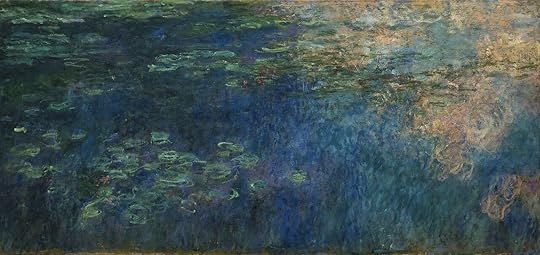
"La couleur est une obsession quotidienne, ma joie et mon tourment", disait Claude Monet (1840-1926). Chef de file du mouvement impressionniste, qui précipita la peinture dans la modernité, on doit notamment à ce maître prolifique, virtuose de la lumière et de la touche de couleur, les paysages les plus émouvants de Normandie, ainsi que l'apaisement et la douceur que nous procurent ses Nymphéas . Goûtez au plaisir de redécouvrir ses plus belles oeuvres rassemblées dans cette monographie.
Languages : Fr. En. ----------
"Color is a daily obsession, my joy and my torment," said Claude Monet (1840-1926). Leader of the impressionist movement, which precipitated painting into modernity, we owe to this prolific master, a virtuoso of light and the touch of color, the most moving landscapes of Normandy, as well as the peace and sweetness that his Water Lilies provide us. Enjoy the pleasure of rediscovering his most beautiful works gathered in this monograph.
This little book packed with photographs of the artist's paintings offers an excellent introduction to the life and works of Claude Monet (1840-1926).
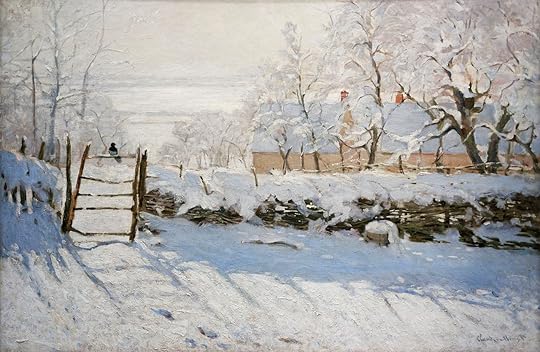
La pie (1869)
The salient points regarding the latter two are that Monet was not intending to become the leader of a school of painting; that early on he strongly advocated for open air painting; the names of some of his relations: his teacher Charles Gleyre, Auguste Renoir, Alfred Sisley, Frédéric Bazille or Paul Durand-Ruel, an art dealer he met in London as Monet fled from the Franco-Germanic war in 1870, a man who will help him in the direst times of misery by buying his otherwise unsold paintings.
As Monet regains France in Autumn 1871, he settles in Argenteuil, by the Seine river, working there with Renoir, Pissaro, Sisley and Manet paying him more or less regular visits. As an economic crisis raged in 1873, artists founded the Société Anonyme Coopérative d'artistes peintres, sculpteurs, graveurs, organizing its first exhibition in 1874, serving as a model for the events in The Masterpiece by Émile Zola, especially le Salon des Refusés (the Exhibition of rejects).
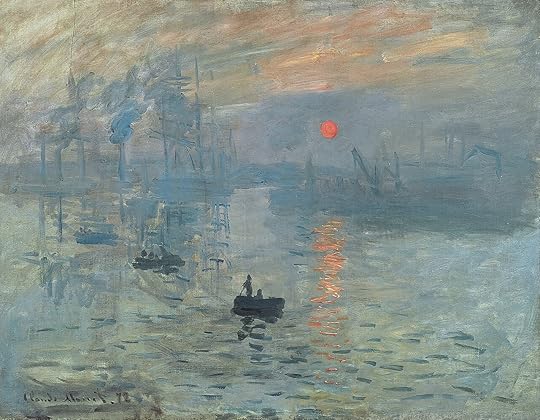
Impression, soleil levant (1872)
The works receive a tepid welcome from the general public, many considering them sketches or studies instead of finished works, when they are not openly blasted by the critics. Yet, according to the author, most visitors of these exhibitions of experimental art feel there is something fundamentally new about Impressionnist aesthetics, profoundly redefining the relationship between the perceiver and the perceived.
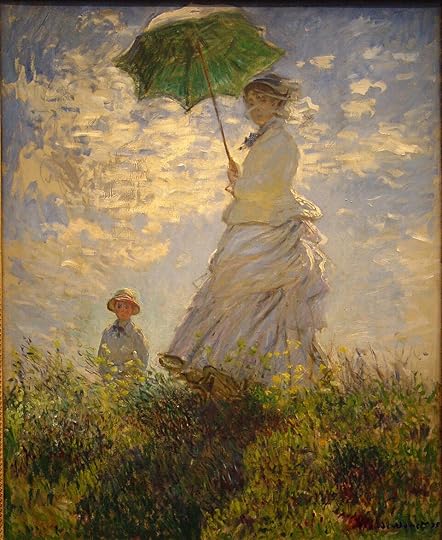
La promenade. Femme à l'ombrelle (1875)
These are harsh times indeed for Claude Monet, his wife Camille Monet née Doncieux and their two children, Jean and Michel. In 1879, 32 y.o. Camille dies from cancer.
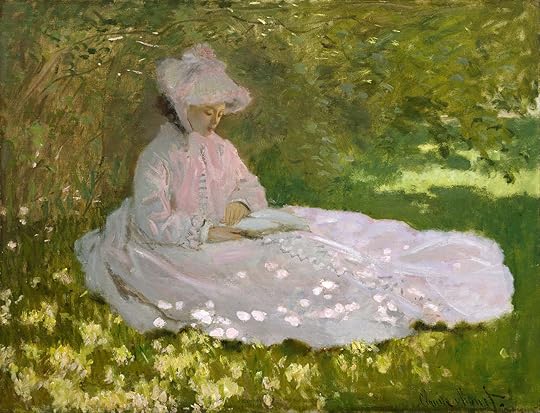
Printemps (La liseuse) (1872)
Claude then marries Alice Hoschedé. In the following years, they visit Paris, Vetheuil (Alice Hoschedé lived in this town), Giverny (where Monet will live from 1883 to his death in 1926), Lavacourt, Étretat, the Riviera, Côte-d'Azur, the Netherlands, Norway and Italy among others. It is from 1890 onwards that Monet creates his painting series: haystacks, poplars, the Rouen Cathedral, Westminster, the Seine near Giverny, or waterlillies, increasingly abstract paintings taking the flora of the private garden in Giverny as model.
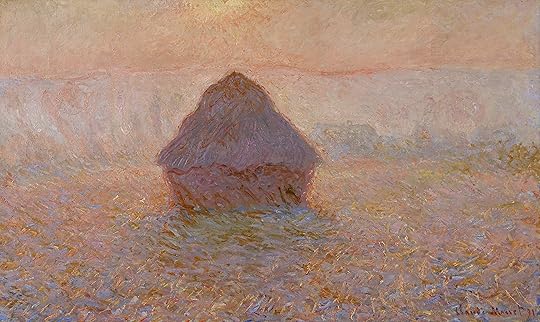
Meule, soleil dans la brume (1891)
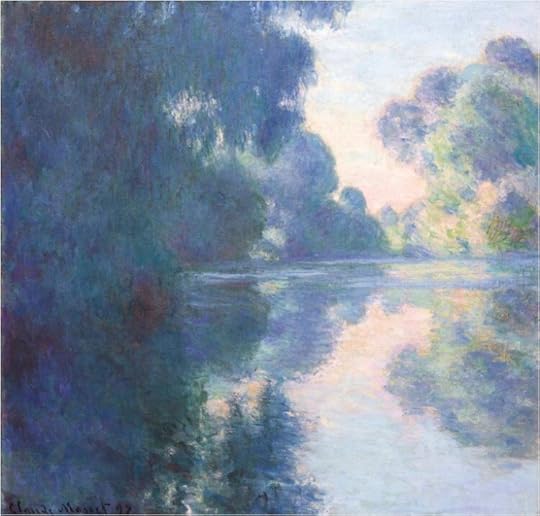
Matinée sur la Seine (1897)
Claude Monet outlives Alice Hoschedé, who dies in 1911.
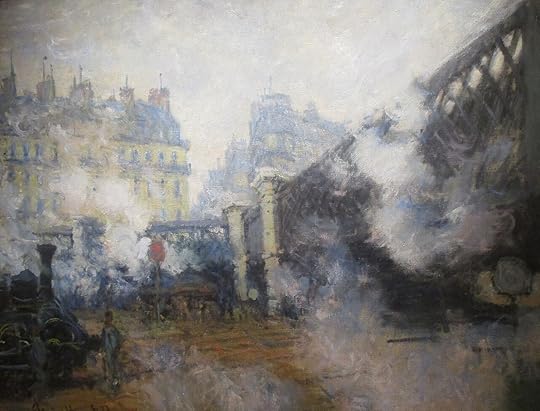
Le pont de l'Europe, gare Saint-Lazare (1877)
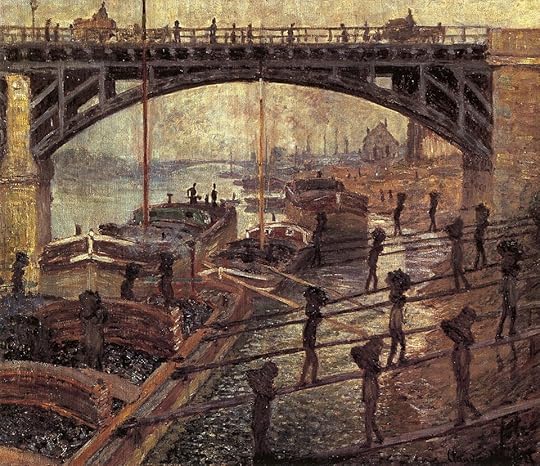
This work presents the main themes and most remarkable techniques put to use by Claude Monet and his contemporaries, or the state of the art market in the last decades of the 19th century, while offering a curated selection of many of his most evocative or memorable works. There are some paintings I had never seen before, like this one below:
Les Déchargeurs de charbon (1875)
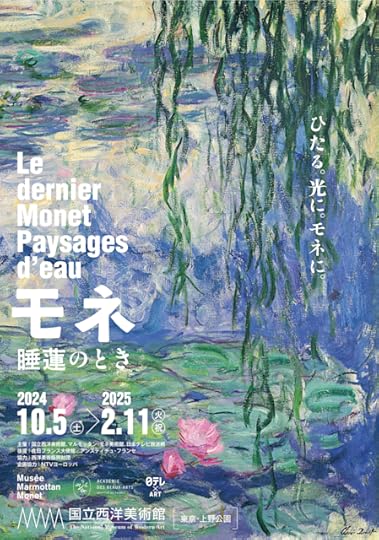
Finally, the additional maps and references given at the end are a nice addition. Excepting some flawed translation of titles, nothing subpar to declare about it. You may prefer reading more exhaustive works in a larger size, still for its format, the author delivers a remarkable synthesis. I also understand better why, during the trip in Kansai I made with two friends in May 2025, there were rows of posters praising a local exhibition of the works of Monet in the KYOCERA Museum of Art in Kyōto, so early and profound was his inspiration from Japanese arts.
A beautiful small coffee table book. When I was in a museum in France, I decided to get this one because it contains so many pictures of his work, through all the years. The book also has a short bio written in 4 languages.