A satire of teenage life follows cynical soon-to-graduate Flannery Culp on a raucous journey through high school in the 1990s, covering SATs, college applications, friends, boyfriends, tabloid journalism, and TV talk shows.
Daniel Handler is the author of seven novels, including Why We Broke Up, We Are Pirates, All The Dirty Parts and, most recently, Bottle Grove.
As Lemony Snicket, he is responsible for numerous books for children, including the thirteen-volume A Series of Unfortunate Events, the four-volume All the Wrong Questions, and The Dark, which won the Charlotte Zolotow Award.
Mr. Snicket’s first book for readers of all ages, Poison for Breakfast, will be published by Liveright/W.W. Norton on August 31, 2021.
Handler has received commissions from the San Francisco Symphony, Berkeley Repertory Theater and the Royal Shakespeare Company, and has collaborated with artist Maira Kalman on a series of books for the Museum of Modern Art in New York, and with musicians Stephin Merritt (of the Magnetic Fields), Benjamin Gibbard (of Death Cab for Cutie), Colin Meloy (of the Decemberists) and Torquil Campbell (of Stars).
His books have sold more than 70 million copies and have been translated into 40 languages, and have been adapted for film, stage and television, including the recent adaptation of A Series of Unfortunate Events for which he was awarded both the Peabody and the Writers Guild of America awards.
He lives in San Francisco with the illustrator Lisa Brown, to whom he is married and with whom he has collaborated on several books and one son.
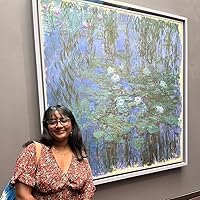
The "Basic Eight" are a group of teenage friends. Flannery Culp is our neurotic narrator. The novel is about love and murder and friendship in high school. This review of THE BASIC EIGHT features my very own Basic Eight from Los Alamitos, Orange County.
Photos circa 1988.
KEY WORDS:
REALISTIC ☻ PRIVILEGE ☻ SARCASM ☻ SAN FRANCISCO UNREALISTIC ☻ PRETENSION ☻ FRIENDSHIP
☻
Jeff:
On a technical level the novel is somewhat impressive, given that it is a first novel from a novice author. I enjoyed the dark, intelligent humor because I gravitate towards darkness and intelligence when it comes to my entertainment. I particularly enjoyed the character of Natasha. She’s the sort of chick I also gravitate towards. Overall the novel felt somewhat realistic to me because I engaged in many ‘Basic Eight’ activities during high school such as talks about The Arts while listening to classical music over a sophisticated dinner. Unfortunately, I was a +1 to that group of adjunct friends; my own Basic Eight mainly indulged in binge drinking on our parents’ various boats. Sigh.
I grew up to be a Website Developer. I make more money than you can even imagine.
☻
Kathy:
OH MY GOD THIS BOOK MADE ME LAUGH!!! SO FUNNY! IT WAS FUNNY BUT WITH A SAD AND SORTA DESPERATE CORE TO IT, JUST LIKE ME! HAHAHAHAHA! I’M NOT SURE I UNDERSTOOD EVERYTHING BUT I LIKED WHAT I UNDERSTOOD! HA! OK I’M JUST KIDDING, I UNDERSTOOD EVERYTHING BUT SOMETIMES I PRETEND NOT TO UNDERSTAND THINGS BECAUSE, WELL, I DON’T KNOW WHY! JUST BECAUSE! ANYWAY, GOOD BOOK!
I GREW UP TO BE A SCHOOLTEACHER! AND A MOTHER! TO A WHOLE LOTTA RUGRATS! PLUS I FELL OFF OF A WATERFALL AND SURVIVED!
☻
Mike:
Wow, reading this book was like reading my life story, well, not my whole life story and not the whole book either. Just the part about the gay kid, that really spoke to me, I understood where he was coming from and I admired his courage in coming to terms with it so young. But honestly, a lot of the book annoyed me, it wasn’t “laugh-out loud” funny, it was more of the sarcastic sort of humor that Marcy & Mark like so much and I think that kind of humor gets boring after a while, just the same sarcastic tone of voice over and over again, constant sarcasm which is really just being mean disguised as being funny. So I loved the gay character and I loved some of the girls, they were fierce... but I can’t say I loved the book too much.
So after graduating I went on various Christian missions around the world until I came to terms with being gay. Getting it on with another closeted Christian missionary can be an eye-opening experience. Now I’m married, to a man. Life is good!
☻
Kelly:
I have to admit that I didn’t understand many of the references in this book. Also the author mixed up Oprah and Dr. Phil and that didn't make sense. And one other thing really confused and bothered me: this is set in San Francisco? And a schoolteacher – in San Francisco – had his house burned down because he was gay? Okaaaaay. Well that would never happen. I love fantasy but I don’t love things that are set in the actual real world that don’t bother to get their facts straight. Facts are important.
I grew up to be a Senior Accountant for Pacific Gas & Electric.
☻
Craig:
The girls in this book sucked! So neurotic. Why complicate your life with so much bullshit? Sometimes I just wanted to slap them all, they were so fucking pretentious. FUCK THAT ATTITUDE. Why couldn’t they just get drunk and relax, have a regular high school experience, why be such snobs, what’s the fun in that? BORING. A boring book about boring, angsty teenagers who don’t realize that they live lives of complete privilege. And goddamnit, they should be enjoying that privilege! Kids like that should be having a good time and getting drunk on boats, not hosting boring dinner parties and whining to each other all the time about their boring lives. STUPID. Only a liberal with too much time on their hands would write something like this.
I grew up to be a high school Vice Principal.
☻
Marcy:
I agree with Craig: these were some whiny, pretentious types who loved talking about themselves. Real twits - the sort of people that Jeff & Bill & Mark snuck off to hang out with because I guess they were just too cool for getting drunk on boats with the rest of us every weekend. What kind of teenager wants to talk about classical music, what kind of teenager prefers theatre to sports? The lame kind. But I will give it this: it has the sarcastic, nihilistic humor down pat. I loved that. I also enjoyed how it took sexual harassment seriously and I really, really enjoyed the comeuppance that one teacher experienced. I hope that scumbag stays in a coma for the rest of his life. I also didn’t mind that Adam State was beaten to death with a crochet mallet. Some guys deserve that. He was one of them.
I moved to Alaska and became an Assistant District Attorney. Later, I had a change of heart and became an Assistant Public Advocate. From one side of the courtroom to the other. Funny how life turns out.
☻
Bill:
Eh. The book was self-indulgent. It was entertaining, but by the end all of the characters annoyed me. Although I did laugh a lot. It didn’t make me think, but it did make me laugh. And laughing is good. Right? I dunno. Whatever.
I grew up to be a Physical Therapist. And a Jazz Musician.
☻
Mark:
I quite liked this one. It was a breeze to read and I liked the mind games it played on the reader – although the tricks it played were predictable, they were amusing tricks all the same. The author perfectly conveys a certain kind of voice – sarcastic, highly intelligent, mordantly funny, angsty, insecure. Flannery Culp is a striking and surprisingly loveable creation. The book started off fun and the fun only increased as the narrative darkened. Overall: smart, lightweight entertainment. One caveat: absinthe = acid? Really? No. I've tried both many times when much younger. Very different effects. Come on, Handler.
Anyway, I grew up to be a Goodreads Troll.
☻
Look at us all together: my Basic Eight, my Adjunct Eight, plus some models and some jocks and a duck. But no cheerleaders! Not allowed.
Karen may disagree with this theory, but I came up with it while reading The Basic Eight and I'll expound on it here. I was going write a second part to this review, but it was going to be chock full of spoilers, and I kind of hate spoilers. And some book reports.
This book is part of the Secret History tradition of contemporary literature. But, as the cover of this book would seem to allude to for anyone who grew up in the late eighties, it also points towards the movie Heathers. This book, Donna Tartt's and the movie all can be summed up by Winona Ryder's line from Heathers, "Dear diary, my teen angst has a body count." They are about kids who are smarter and more cultured than their peers who end up killing someone. Add lots of other examples of books into this. Look up Karen's "Like Secret History" shelf for more examples.
The obvious reason why books are continually being compared to Secret History is that it's a pretty successful comparison. Just look at, well this book was pretty hip in the early oughties, or how Special Topics in Calamity Physics did, and then there are other books that have done pretty well too but I haven't read them. It's not secret conspiracy (rim shot) that when something makes publishers money there are a gazillion knock-offs busted out in a feeding frenzy of sucking on the tit relatively limited amount of money consumers are willing to shell out on books (relative to say movies). If you disagree with me on this idea just pretend I'm talking crazy and keep on being wide eyed and innocent but don't venture outside alone too often.
I'd argue that this particular sub-sub-genre of fiction is propagated by another reason. This is where Karen doesn't agree with me. I think some writers are anti-social people who have to have suffered some kind of social trauma in their younger days. Now this isn't all writers, but some. I'm guessing that in their teenage years they had ideas of their superiority to the masses of people in their, say, school and while they sat alone somewhere (say the library instead of subjecting themselves to the humiliation of sitting along in a crowded room of 500 people) reading or doing whatever they did. Or maybe they had their small group of friends, but they weren't really in. But they were smart. And in their fantasies they were part of an exclusive clique of very smart outsiders who were so above everyone else, but the violence of repression of course comes through even in fantasies and murder of those who spurned them comes eventually to the forefront. Where else except in a fantasy world such as these would someone be cool for knowing Ancient Greek, or because they listened to 18th century Opera instead of to the incessant droning guitars of cretinous rock music? In a slightly modified manner this archetype is present in Twilight. Or say in Buffy (although interestingly in Buffy the image of the fantastical is destroyed when seeing what the non-supernatural / 'real-world' thinks of The Scooby Gang.
I think there are lots of writers who would like to re-write their teen years to be cooler for what they were really like.
And I think that there are quite a few readers who also find something endearing about this type of narrative. Or maybe they just relate.
Karen for some reason disagrees, but what does a former Prom Queen know about this kind of stuff anyway?
How do I love "The Basic Eight"? Let me count the ways. I love the delicious untrustworthiness of the narrator. I love the cheerfully horrifying violence. I love the snarky questions for the reader at the end of each chapter, textbook-style, that don't just remake the points but cleverly further the plot. I love the dizzying revelations at the end and I love the physical descriptions of the clothes, the disastrous party, the drunkenness. I think I'll go read it again right now.
Well, damn, this book is smart. I'm not talking about the ending (I don't actually think all the mechanics work out perfectly) so much as Flannery herself, in all her glorious unreliable narrator-ness. The book is her diary, which she's editing for publication from prison - the treatment of time is beautifully messy and fun. You've got (1) traditional diary-style storytelling, (2) annotations at the original time of writing (i.e. Flannery giving her friend her journal instead of telling her a story and then stopping and saying, wait, I'm only writing this now, that won't work), (3) annotations during the editing process, (4) entire anecdotes added in and acknowledged as dramatized (i.e. a scene in which her friend gives her a ride and they argue briefly about their group's new nickname - The Basic Eight - and then Flannery gets out of the car and tells you that she walked to school that day, but she knows a conversation like that happened at some point, and this seemed like as good a place as any to include it), (5) conversations repeated word-for-word, between different characters (actually my favorite part of the book - Flan talks to Adam, and then repeats the conversation with Gabriel, this time taking Adam's role - it's identical, down to the descriptions of expressions and such), (6) open acknowledgement of all of it! She wants you to know she's unreliable! She wants you to see the seams where things were pieced together, and not care, because it's her story, damn it! And it's SO GOOD.
Dark, devious and intoxicating. This book pulled me in with some sort of twisted, magnetic force, until it was 2 AM and I realized I had finished it in one go. Full review to come.
So many people have compared this to Donna Tartt's THE SECRET HISTORY, and definitely there are lots of similarities. In THE BASIC EIGHT, an exclusive group of friends who are super rich and pretty pretentiously into high culture enter their senior year of high school. There are crushes, drinking, drugs and teachers involved, and yes finally a murder (not a spoiler).
I love the whole unreliable-narrator-editing-her-own-diary-after-the-crime format and mode. It's been done a lot, but not in this fresh and funny way, which probably can only be done by a teenager. What I love about this more than THE SECRET HISTORY is that the characters in THE BASIC EIGHT feel so real, like they're really speaking from the pages to me. When I wasn't reading I was thinking about them like they were in this world, what they could be doing now and all that. I don't know people like them personally and sometimes they talk and behave in ways quite dramatic I can't really see people talking and behaving, but their personalities were so much more fleshed out than those students huddling over their Greek books in THE SECRET HISTORY. Handler's dialogue is not only so witty and funny, but so sharply real. At so many points in the story I truly felt like I was reading a girl's story, not written by a man. This is crazy strange to me because I love the author's A SERIES OF UNFORTUNATE EVENTS books, and his writing here is SO wickedly different! I mean, there are clear traces of his style and plotting ideas that go into ASOUE too, but gosh the voices are very different, kudos to Daniel Handler, that's some great talent!
Anyway, the characters feel real to me mostly because they're the true kind of pretentious in the way that they're aware of their acts and mock themselves. They love how the high culture life of opera, classical music, lawn furniture and wearing suits to school looks, and they want it. While some of them have some of it, they know they're not perfectly prim people and don't try to be - they still listen to annoying indie-pop bands, they're not really that smart with Flan failing so many classes, even admitting she doesn't know every American poet and willing to learn. While THE SECRET HISTORY gang feel like the cold perfectly white marble Greek statues the book's cover reminds me of, THE BASIC EIGHT gang are colourful messed-up teenagers.
Some things I didn't like so much were the blurry understanding of some characters like V___, JRM and Lily - they're pretty vague to me, like they could do anything anytime. And the drama leading up to the climax was a little far-fetched and confusing. But I guess that all makes the first-person diary POV genuine. I'm lucky that I didn't guess the big twist until, like, one page before the revelation. Lots of people did not enjoy it because they knew it early, but Flan did drop quite a few clues when I think about it, so maybe she didn't mind people guessing it way beforehand. Anyway I still didn't find it OMG-shocking, the ending was pretty abrupt. I closed the book with a sense of awe and loved it not really because of the twist, but because of how everything tied in together - the writing, style, characters, plot - in a really complete kind of way that shows the author's efforts and mastery.
A friend recommended this book to me, and while I usually trust and agree with her literary opinions, I hated this book so much. It was so pretentious (the narrator constantly corrected her sentences ending in a preposition. for example. Just write it the right—correct—way in the first place!). I think it tried to be funny, but it was hard to tell, and it wasn't funny anyway. There were digs at the reader's intelligence and ejaculations of "Dear reader!" (that only works in like, classic novels). The Satanic thing, as well as the absinthe thing, was talked about throughout the entire book, yet ended up being really downplayed. The characters meant to represent real life people had annoying and stupid names like "Winnie Moprah." Lastly, are there really high school students wearing suits to school and throwing dinner parties? Ugh. I just couldn't find anything to enjoy about this book.
Before I read this, I thought it might be like the movie Heathers (not that I've seen it). But because I enjoy Handler's (and Lemony Snicket's) humor and morbidness and wit and his narrators being pedantic language snobs, I read it. It's his first novel for adults and despite this being about high school kids, it's definitely for adults (and maybe the oldest of teens).
I like the not-subtle-at-all skewering of pop-TV-psychologists, and the narrator's merging of the past of her journal entries with the present as she 'revises' it for publication. In the beginning she tries to explain away, or at least point out as she 'revises,' how she knows something before she should, but eventually she just abandons the whole pretense. Is she a confused teenager; or is this another skewering, this time of tell-all books? To say what else I like (and what other book/movies I thought of) would give too much away.
About halfway through I knew what was coming and then I thought I was wrong and then there it was. Knowing it, though, just means being a careful reader and doesn't take away any of its power.
Something that happened when the narrator was much younger and that gets only part of a paragraph holds the answer to one of the questions (a literal question -- there are 'study questions' (and 'vocabulary') at the end of several of the 'journal' entries). That paragraph is about the only subtle thing in the novel: this is satire after, and above, all.
This book was a thoroughly enjoyable 4-star read to begin with. Fun characters, dark humor, deliciously written sentences. This kind of thing: "Natasha arrived, bearing cleavage and brie, and immediately fell into a squabble with Gabriel over how to bake it properly. Kate and I sat basking in the pretentiousness of it all."
It's so self-aware it's ALMOST annoying, except that it rings so completely true. Apparently the author drew quite a bit from his own San Francisco high school experience, which makes passages like this all the more hilarious:
"'I'm a homosexual,' he said medically. 'Homosexual?' I said. 'Isn't that what they do to milk?'"
Anyway, all of this would have been pleasant enough, plus something something metafictional whatever, and THEN you get to the very end, which throws a remarkable wrench in the works that forces you to rethink everything about what you've read. Seriously, I went back to the beginning and reread a few chapters just to make sure. I don't want to say any more about it, but trust me. Such a pleasant surprise of a book.
This book, I see, is being compared to 'The Secret History' by Donna Tartt and 'Special Topics in Calamity Physics.' I disagree strongly. Both Ms. Tartt, especially Ms. Tartt, and Marisha Pessl are not only better writers, but they both are far superior in execution of a story.
Not that 'The Basic Eight' lacks merit. I found it to be an interesting read. My complaints are two-fold. I thought the execution was rather clumsy. I think if this had been a bit more streamlined, it would improve and elevate the story. My much bigger problem is the dialogue. It rings false. I think Mr. Handler did not channel a female teenager very believably. I was conscious throughout the entire story of this weakness, pulling me out of the story in fits and starts. This is a problem. As the novel progressed, instead of navigating through a maze of tangled relationships and situations, I found myself feeling the plot became more and more unbelievable and outlandish. This made the ending lack the punch I am sure the author intended.
So if I had read this in high school I can guarantee you it would have been my favorite book at the time. It is an incredibly mean spirited high school drama with a sick twist, revolving around a clique of outcast/precocious/uppity/self-involved intellectuals, much like myself (or the self I thought of myself as) in high school. I can see myself at 15, reading The Basic Eight outside a coffee shop, listening to the dead milkmen on my walk-man and smoking clove cigarettes... oh so very cool. It's definitely a page turner, I found myself having a hard time putting it down, in more of a guilty pleasure type of way than anything.
I'm willing to bet in less than 2 years, this turns into the next "Mean Girls". I can see Camilla Belle playing the heroine, Flannery Culp; and Evan Rachel Wood playing the mysterious and infamous closeted lesbian, Natasha. Mark my words, it will happen- or a similar casting anyway.
Fans of Lolita and/or coming of age/high school genre will dig this.
Welcome to Flannery Culp’s lovely, black, leather bound journal. On these pages she will capture all the memories of her senior year with her best friends “The Basic Eight”. She’ll share all the good, bad and ugly details – including a little tale of murder.
Absolutely DELICIOUS. I don’t even know how this book made it to my “to read” list*. I’m so thankful Goodreads is here to help prod my senile mind along. I was completely thrown into the way-back machine with this one – it was reminiscent of “Heathers” (including a croquet scene, no less) and absolutely delightful. Dark, edgy, brilliant. So much fun and even adds an extra little twist as the cherry on the sundae.
*Figured it out. Added it to my list when "Why We Broke Up" was recommended to me. Why We Broke UP SUUUUUCCCCCKKKKKKEEEEED, The Basic Eight was fabulous. Go figure.
It's obvious that this is a first novel. If you've read any of the Lemony Snicket books, you'll see where they came from. Despite its gimmicky plot, horribly precocious teenagers, and its overall grimness, I found myself entranced and enchanted about this book. The Basic Eight are who I wished I was in high school (hell, I wish I were like any of them now), and they're painted with an alternatingly endearing and maddening world-weary hopelessness but with just enough innocence to be likable.
when the unreliableness of the narrator is so blatantly clear but like... it's still so twisty. loved the characters. loved the style. love love lvoe. it was a delicious meal of a book.
Yet another book I was drawn to because of comparisons with The Secret History, though in fact, it has a lot more in common with Special Topics in Calamity Physics - not least the fact that it has a somewhat annoying protagonist with a stupid name. Flannery Culp (!) is our narrator, and at the beginning we learn that a) she's in prison and b) her high-school friendship group, the Basic Eight, has become notorious. True to the usual form of this type of book, the story then flips back to the beginning and we find out what happened to lead to this outcome. Like Special Topics' Blue, Flannery has a unique and sometimes confusing narrative voice; the book is made up of her old diaries, except she's constantly amending them as she goes along, so at certain points she will describe an incident and then admit that it didn't really happen at the time, but needed to be inserted to make a point or properly introduce a character. She also plays with language, using a lot of metaphors/similies, allegories, rhymes, alliteration and so on. There's a lot of parodic humour in small details (for example Flannery reading a 'Stephen Queen' book called 'The Salem Slot', the Basic Eight being discussed on the 'Winnie Moprah' show) and deviation from typical formats (she transcribes conversations, lapses into Shakespearean verse and adds 'study questions' to the end of some of her chapters).
You have to suspend your disbelief about lots of things to enjoy this book. The Basic Eight are like no group of high school kids you've ever known - they throw lavish dinner parties, form a club to listen to opera, say things like 'I've been craving noir' and embark on a mission to procure absinthe because drugs are too 'uncouth'. Their parents are almost completely absent from the story; Flannery's don't appear once, even though a significant chunk of the action takes place at her house. It's also impossible to believe that anyone would actually write a diary like this, and at first I found the style really jarring, but it got much more enjoyable as I went along and became accustomed to it. I guessed the twist regarding Natasha some time before it was revealed, but I still loved the reveal itself; I love unreliable narrators and twists that skew everything you've just read, and this was a beautifully executed example. The climactic party was also brilliantly depicted, vividly painted as a kind of Bacchanalian nightmare; this was definitely the best, and most effective, part of the book. Unfortunately, the scenes that came after it were a bit too jumbled, and although they did a good job of communicating Flannery's disorientation, I found the hysterical dialogue irritating.
One of my problems with the narrative was that Flannery didn't read like a girl for much of the story - not until the sex scenes, really. I realised this a short way through the book, without even thinking about the fact that the author is male, after wondering for a while exactly what it was I wasn't sure about but couldn't put my finger on. She's supposed to be in love with Adam but writes little about why, or makes any mention of what he looks like - okay, he's 'gorgeous', but that's it, no detail. Meanwhile there's constant stuff about how beautiful and beguiling her female friends are. For a while I wondered if this was deliberate, but if so then it wasn't resolved in any way; apart from her feelings of desire watching Natasha undress, but given the final revelations about Natasha, this scene appeared to have an altogether different significance. And as it took me a long time to believe in Flannery as a female character, it took me a similar amount of time to actually like her. Weirdly, I felt warmer towards her after the murder had taken place, and wished her voice hadn't been cut off at the end.
I'm probably being really unfair by reading books like this, as they're doomed from the start by the fact that I already know nothing is ever going to live up to The Secret History. I liked it, but I kept wishing the narrative would just settle down; that it would stop being so self-conscious. I'd probably have enjoyed it more if it didn't have associations with other, better books in my mind - it was funny and entertaining but I didn't find the characters sympathetic or entirely believable, and although it made me laugh at numerous points, it didn't have the sharp feel of a proper satire. It took until I was more than three-quarters of the way through for me to really feel compelled to keep reading, and because the date of the party - Halloween - is signposted throughout the book as the climax, and it's written in diary format, it does feel like a lot of what comes before this is just scene-setting. Still, it eventually overcame its obvious influences to charm me, and another thing this book has in common with Special Topics is that while I found a lot of faults in it, by the end I wanted more. Imperfect but worth reading; a 3.5, even a 3.75 maybe, but not quite a 4.
This was fun to read, but not quite the most wonderful book you will read in your life, contrary to what many of the reviews on Amazon.com would like you to believe. If it is the most wonderful book you've ever read, might I suggest broadening your horizons?
On the plus side:
• The voice of the first-person narrator (and murderess), Flannery Culp, is irresistible - smart, irreverent, quirky (OK, maybe a little insane as well), and highly entertaining. • Handler is a good writer, and knows how to structure the story to keep your interest - you definitely want to keep reading to see how things turn out. His account of the horrific, climactic final party was hilariously brilliant. • This book establishes Handler’s ability to write outside his “Lemony Snicket” persona. Here he ventures into the "Secret History"/"Calamity Physics" milieu, and generally acquits himself fairly well. (something I wouldn’t say about his later book “Adverbs”)
On the negative side:
• His satirization of popular culture is heavy-handed at times, or too self-consciously clever. References to “The Winnie Moprah" show, or to "Benjamin Granaugh's new movie, Henry IV" are just kind of silly. • Some reviews have criticized the book on the grounds that its final plot twist isn’t quite coherent, and introduces certain inconsistencies which are never satisfactorily explained. I think this is a valid criticism, but it didn’t bother me near as much as some other difficulties with the plot
WARNING: SPOILER POTENTIAL
My real difficulty with the book is that the entire story is completely implausible at the most fundamental level. Specifically:
Where were Flannery’s parents? Their daughter is sliding into total meltdown over a six-week period, and they don’t even make so much as an appearance. Now, theoretically, one can postulate parents so distant, so uninvolved in their daughter’s life, as to be completely unaware of her slide into homicidal madness. But I’m not buying it. Because – here’s the thing – all this is alleged to be happening during September and October of her high school senior year. All that any of these kids would be focusing on during this time would be their college applications. And, given the upper middle class San Francisco milieu, there is no way that their parents would not also be focusing obsessively on the same issue. So that, when Flannery fails her calculus test in early September, it’s just not credible that matters continue to degenerate without some parental intervention. But Handler never mentions the parents, not even to explain their continued absence.
So, in the end, it’s a nice little fantasy story. But one which bears no relationship whatsoever to the real world.
A fun read, but one which I will have forgotten in a month.
How could the genius who produced A Series of Unfortunate Events produce this?
I recently read all of the A Series of Unfortunate Events despite the fact that I'm "technically too old for children's novels." I thought that I would try this since it's actually for people my age. This book makes me sad. I don't know why the crtical reviews called it hilarious. There was some humor in a satire style, but even with that darker humor, it was not very funny.
The twist that Natasha might not exist doesn't make any sense. Perhaps this is just part of that pesky unreliable narrator thing, but I still don't buy it. I tend to think that if Natasha does not exist, then Flora was the other member of the Basic Eight. It would make sense that she was the one who took the group picture since she is shown in other situations to be taking pictures constantly. And then after Flora blew the whistle, Flannery edits her journal to make it seem like Flora is the wierd outsider with an annoying obsession on world records. That's the only way that I can reconcile the number thing and Flannery's negative feelings toward Flora. Even with that theory, I'm not quite sure how everything in the story would be reconciled if Natasha truly did not exist and was merely a projection of Flannery's guilt or "bad side."
Hipster psuedo-intelluctual high school friends form a clique that does either trite things such as hosting dinner parties and listening to underground bands or dumb/criminal things such as poisoning teenagers and killing Flannery's crush with a croquet stick? No thank you.
*I think that the real difference between this book and A Series of Unfortunate Events is that the series is darkly humorous while this one isn't. It is just another cookie cutter "teens doing bad stuff" novel. The stuff that the teens did make it seem like it would be a dark novel, but it's not truly dark - it's just sinister and morally gross. There's a difference.
This entire review has been hidden because of spoilers.
I did love this book. It was s-c-a-n-d-a-l-o-u-s. There was never a dull moment. So much was happening, all the time. The writing was the best ever. Darkly hilarious and so original. But I didn't quite understand or very much like the ending. But actually, the more I think about the ending and the book in general, the cleverer I realise it is. Maybe I was expecting too much at the time. But I so wish there was more. I miss reading it already. I think I need to read it again to fully understand and appreciate how great it is.
marissa pessl, krysten ritter, and tana french (i love all three of you. but those particular books): take notes. how to write a high school clique and experience that feels ethereal but grounded and real.
the basic eight was everything that special topics in calamity physics, the likeness and bonfire tried so very hard to be but failed spectacularly. it was thrilling, and didn't let me go for a second. this book is clever without being pretentious and that takes special skill.
Let's get this out of the way: in his late twenties a man named Daniel Handler decided to write this book from the point of view of a (disturbed) teenage girl and relate her most intimate personal thoughts. Ambitious. You can immediately tell this would be a great success, huh? Not to mention the Very Realistic Dialogue; that certainly was an accurate depiction of how teenagers talk! ...? Regardless, it's a fun book. I was amused. I wanted an easy fun summer read and it delivered. Now let's criticise it.
If I were to describe this book using very well known films/books to give you an idea of what it's like, I would firstly say it tries to be like "Heathers" (1988) in that it tries to recreate and satirise the atmosphere of panic around sudden tragic teen death in America, exploited by the news media and made into a distorted, melodramatic, outrageous show full of scaremongering about the adults' misguided idea of ~Peer Pressure~ and ~Drugs~ for an audience who eats it up and amplifies it, as the characters who know what happened watch uneasily. Here too, the news media presents the dead teenagers as perfect, innocent, kind, promising young people who died tragically before getting a chance to fulfill their potential. But you the reader/viewer know that the victims were pretty shitty individuals. Like "Heathers", it tries to take on the issue of homophobia but (like with "Heathers") it's hard to tell whether this story condemns homophobia or uses it for laughs and shock value. Here too the story is told in diary-of-teenage-girl format. However, Flannery is much more malicious than "Heathers"'s Veronica ever was, and remains that way until the very end of the story. Veronica has a change of heart, she makes an effort to fix what she can, to help heal her community and herself. Flannery writes bitter mean-spirited commentary on her peers from jail. Of course Veronica was never caught and she didn't act alone (+was arguably manipulated to some extent by JD). What's important is that "Heathers" makes a point of showing the healing process. "The Basic Eight" does not. I suppose this is part of what makes "Heathers" seem more self-aware.
Secondly, "The Secret History" parallels stop at the very exclusive pseudo-intellectual teen clique who commits/covers up the murder of a friend. But Flan was nothing like "TSH" narrator Richard Papen. She wasn't the "new memeber" desperately trying to fit in while being mostly kept in the dark about what was happening. Also Flan acted alone and her friends were left to clean up her mess, which is not what went down in "TSH".
Lastly, all the above is combined with a very particular element of "Fight Club". I'll discuss this at the end of the review.
Flannery believes that what makes herself and her friends special, what sets them appart, what makes them superior, is their interests (classical music, classic lit, classical antiquity, social class--notice a pattern?) and their extensive pretentious vocabulary. As a greek person, I find it hard to be impressed by american kids who think they're superior for knowing a few things about the classics as if so many people all over the world are not familiar with greek/roman mythology/tragedy/history. Or Shakespeare. Being familiar with some of the most worldwide famous literature (and considering it "better" than anything else ever written) isn't a substitute for a personality. I digress. I'd say this superiority complex is there to balance Flan's deep consuming insecurity about her appearance and particularly about her weight. She constantly, destructively compares her body and overall appearance to her friends'. It is telling that her only solace after she feels overshadowed by Kate is that at least "Kate is fatter" than her. But Flan doesn't seem able to objectively compare her body to others'. For all we know the opposite of what she says could be true, or they could look roughly the same. Which brings me to the fact that we can't judge any of the other characters as individuals because we only know what Flan tells us about them and Flan repeatedly proves herself pretty unreliable and inconsistent. We only know how she sees them, perhaps how she wants the reader to see them. Flan cares deeply about how she is seen by others. She needs to fix the damage to her image and we already know how far she's generally willing to go.
If you don't want to know what happens yet, this is where you should stop reading.
"Fat" is an everpresent word. Every girl in this book seems to believe that "fat" is the worst thing she could be, that being thin or fat is what makes or breaks her desirability from which her self worth stems. Other girls being fatter than you makes you feel safer. This could be D. Handler trying to show how body image distortion operates in a teen girl's mind, as plenty of girls and women obsessively think about their weight (which is a systemic problem of our society that i won't go into right now). However, having read A Series of Unfortunate Events, I am aware that Handler tends to associate being fat, gender-non-conforming, and/or very feminine(regardless of gender) with being a bad person. Flan calls herself and a lot of other people fat, and the word is always charged with intense dislike. Lily believes she turned her boyfriend Douglas gay by being fat (=unattractive). Another unatractive thing Flan mentions she'd hate to be, next to fat, is "a lesbian". Nice. Flan also has another great "f" word reserved for Douglas. After coming out, Douglas keeps making gay jokes and puns about himself and, as a lesbian, I can confirm is 100% realistic, yes us queers in fact do that a lot. Apparently Douglas also called Lily a "fat bitch" during a fight, so I guess Handler (intentionally or not) did get the misogyny present in many gay men right. Speaking of gay, there's Ron the drama teacher. I understand that it adds to the shock value of the plot ('cause Adam's croquet mallet murder wasn't enough) to accuse the gay teacher of being a predatory pedophile (how original!), but if this was truly a criticism to how damn fast conservative parents would jump to lynch the (actually innocent) gay teacher and burn his house down, I wish it was more clearly presented as criticism to homophobia, especially with the f-word being thrown around so much at Ron and at Douglas in different contexts.
Which brings me to Natasha. Natasha is the element from "Fight Club" I mentioned. She is Flan's respective Tyler Durden. She is her ideal self, she is what Flan wants to be like deep down: sexually liberated, thin, hot, "glamorous", bold, sassy, unafraid, always "cool". There's the dissonance: people who appear "cool" like Natasha aren't usually bffs with girls like Flannery Culp. Why does she love Flan so much? And why can't people tell them appart when they look nothing alike? They're the same person. During the hellish delirium of that last garden party they become indiscernible. All the things Natasha says and does are the things Flan wishes she could say and do, though sometimes it's unclear if Flan actually voices/does them or just thinks them. So Flan-tasha calls Douglas the f-word when he acts too horrified and emotional about stuffing Adam's body in the trunk of the car. Nat had also spoken negatively about Douglas being gay earlier in the book. Remember when Flan was trying to convince herself that she was fine with her ex coming out as gay? Turns out it's safe to say she at least feels conflicted about it. Interestingly, Natasha thinks very highly of Gabriel whereas Flan doesn't so much. Flan also makes a few weird comments about Gabriel being black (the one involving the phrase "applying whiteface" being the most cringeworthy of all). Just... why?
In the end, Flan isn't supposed to be likeable, a good person or a role model, but some things really weren't necessary. To conclude, fun book. Less fun the older you are.
I couldn't put this book down. It's similar to The Secret History- high school clique, someone they murdered, you read to find out how on earth and why it happened. I've been reading mystery cozy after cozy and never care who did it or why, but this story intrigued me. And when Handler gets to that, he doesn't disappoint. I enjoyed the format of Flan's diary, and I actually feel like I spent the weekend back in high school (except I didn't murder anyone in high school).
Comments to skip if you haven't read this already:
Although the twist was far from shocking in these years since Fight Club and The Sixth Sense, I still liked it. I am disappointed that the book just ended without explaining what happened to the other characters. I didn't need a play by play, but it would have been nice to know a little more than Flan's journal hints at. (At which Flan's journal hints). I thought The Secret History did a nice job of showing how everyone's lives unraveled after Bunny's murder, and The Basic Eight was on it's way to that when Flan just walked out of Roewer. Also, I want to know where her parents were the whole time. It's a bummer that my questions won't ever get answered-I feel like I didn't get enough closure.
In retrospect, I probably shouldn't have read this so soon after reading The Secret History. After expressing my disappointment with it, I was told that The Basic Eight was similar but better. Unfortunately, I simply could not force myself to like this. I did not care for the proclaimed "cleverness" of the novel; on the contrary, I thought it was anything but. It wasn't funny--and this is coming from someone who lives for sarcasm and dry humor--and although the whole unreliable narrator bit did have promise, it merely succeeded in aggravating me. Yes, we get it, you're editing this journal as you go along, we don't know if we can trust anything you say, blahblahblah. But what I hated the most were the parties, because reading those scenes just gave me headaches. It's a messy novel, and I am aware that it never aims to be all neat and tidy, but it just wasn't my cup of tea.
I think I've reached my quota of books about privileged white (minus Gabriel) kids.
I wanted to give this 4 stars, but I couldn't? Don't get me wrong, I loved many many parts of it, Flannery's unreliable POV is one of the most hilarious I've read and the pretentiousness of the gang was amazing to me, and most importantly I thought the whole style/conceit of the book was incredibly engaging and creative. But when it was winding down to the end, Handler lost me during the pages and pages of describing the garden party - 99% of which was way too absurd for me to accept even after buying the 300 pages of previous absurdities - and I was seriously taken aback by the abrupt ending. I had figured it out early on but thought there would be more to it than that? A little more closure, at least, though maybe that was the point.
It was a super enjoyable read though, one I highly recommend even though I myself am not as head over heels as everybody else.
This book is quite the unique story. Told through diary entries, Flannery Culp is writing a book explaining how events leading up to the death of classmate Adam State unfolded. It's interesting to have a murder mystery where you know right from the get-go who did it. The question for this book is "why?". So it's definitely fun to see how we get there. Flannery and her friend circle known as the Basic Eight are a very unlikable group. Many people compare this book to Heathers and I can definitely see the similarities with the dark humor and the exclusive "in" group. Overall, a very unique take on the mystery genre and definitely different from Handler's other books.
I almost didn’t keep reading this because of how offensively the narrator discussed race and sexuality. Then I read some reviews that talked about how unreliable the narrator is, so I pressed on. After finishing, I liked it, but I don’t think the unreliability of the narrator is an excuse for the racism and homophobia sprinkled in her narration in a manner it seems the white author is trying to play for laughs. I enjoyed the book in other ways, but I don’t recommend.
As soon as I finished this book I turned back to the beginning and read it again. I loved it. It has all the silliness of A Series of Unfortunate Events, but reworked for an older crowd. Yeah, I knew what the twist was going to be long before it was revealed, but the reveal was still great.
if i had read this four years ago it would have seared me to my core but i am older now. that said the climactic sequence was so gripping i had to sit outside the grocery store and finish it before i shopped and overall i do think it made me just a smidgeon more insane