

What do you think?

Invisible Ink
Patrick Modiano explores the boundaries of recollection in his tenth book published by Yale University Press
The latest work from Nobel laureate Patrick Modiano, Invisible Ink is a spellbinding tale of memory and its illusions. Private detective Jean Eyben receives an assignment to locate a missing woman, the mysterious Noëlle Lefebvre. While the case proves fruitless, the clues Jean discovers along the way continue to haunt him. Three decades later, he resumes the investigation for himself, revisiting old sites and tracking down witnesses, compelled by reasons he can’t explain to follow the cold trail and discover the shocking truth once and for all.
A number one best seller in France, Invisible Ink is Modiano’s most thrilling and revelatory work to date.
The latest work from Nobel laureate Patrick Modiano, Invisible Ink is a spellbinding tale of memory and its illusions. Private detective Jean Eyben receives an assignment to locate a missing woman, the mysterious Noëlle Lefebvre. While the case proves fruitless, the clues Jean discovers along the way continue to haunt him. Three decades later, he resumes the investigation for himself, revisiting old sites and tracking down witnesses, compelled by reasons he can’t explain to follow the cold trail and discover the shocking truth once and for all.
A number one best seller in France, Invisible Ink is Modiano’s most thrilling and revelatory work to date.
176 pages, Hardcover
First published February 4, 2019
About the author
Patrick Modiano
128 books2,206 followersPatrick Modiano is a French-language author and playwright and winner of the 2014 Nobel Prize in Literature.
He is a winner of the 1972 Grand prix du roman de l'Académie française, and the 1978 Prix Goncourt for his novel "Rue des boutiques obscures".
Modiano's parents met in occupied Paris during World War II and began a clandestine relationship. Modiano's childhood took place in a unique atmosphere: with an absent father -- of which he heard troubled stories of dealings with the Vichy regime -- and a Flemish-actress mother who frequently toured. His younger brother's sudden death also greatly influenced his writings.
While he was at Henri-IV lycee, he took geometry lessons from writer Raymond Queneau, who was a friend of Modiano's mother. He entered the Sorbonne, but did not complete his studies.
Queneau, the author of "Zazie dans le métro", introduced Modiano to the literary world via a cocktail party given by publishing house Éditions Gallimard. Modiano published his first novel, "La Place de l’Étoile", with Gallimard in 1968, after having read the manuscript to Raymond Queneau. Starting that year, he did nothing but write.
On September 12, 1970, Modiano married Dominique Zerhfuss. "I have a catastrophic souvenir of the day of our marriage. It rained. A real nightmare. Our groomsmen were Queneau, who had mentored Patrick since his adolescence, and Malraux, a friend of my father. They started to argue about Dubuffet, and it was like we were watching a tennis match! That said, it would have been funny to have some photos, but the only person who had a camera forgot to bring a roll of film. There is only one photo remaining of us, from behind and under an umbrella!" (Interview with Elle, 6 October 2003). From their marriage came two girls, Zina (1974) and Marie (1978).
Modiano has mentioned on Oct 9, 2014, during an interview with La Grande Librairie, that one of the books which had a great impact on his writing life was 'Le cœur est un chasseur solitaire' (The Heart is a Lonely Hunter), the first novel published by Carson McCullers in 1940.
(Arabic: باتريك موديانو)
He is a winner of the 1972 Grand prix du roman de l'Académie française, and the 1978 Prix Goncourt for his novel "Rue des boutiques obscures".
Modiano's parents met in occupied Paris during World War II and began a clandestine relationship. Modiano's childhood took place in a unique atmosphere: with an absent father -- of which he heard troubled stories of dealings with the Vichy regime -- and a Flemish-actress mother who frequently toured. His younger brother's sudden death also greatly influenced his writings.
While he was at Henri-IV lycee, he took geometry lessons from writer Raymond Queneau, who was a friend of Modiano's mother. He entered the Sorbonne, but did not complete his studies.
Queneau, the author of "Zazie dans le métro", introduced Modiano to the literary world via a cocktail party given by publishing house Éditions Gallimard. Modiano published his first novel, "La Place de l’Étoile", with Gallimard in 1968, after having read the manuscript to Raymond Queneau. Starting that year, he did nothing but write.
On September 12, 1970, Modiano married Dominique Zerhfuss. "I have a catastrophic souvenir of the day of our marriage. It rained. A real nightmare. Our groomsmen were Queneau, who had mentored Patrick since his adolescence, and Malraux, a friend of my father. They started to argue about Dubuffet, and it was like we were watching a tennis match! That said, it would have been funny to have some photos, but the only person who had a camera forgot to bring a roll of film. There is only one photo remaining of us, from behind and under an umbrella!" (Interview with Elle, 6 October 2003). From their marriage came two girls, Zina (1974) and Marie (1978).
Modiano has mentioned on Oct 9, 2014, during an interview with La Grande Librairie, that one of the books which had a great impact on his writing life was 'Le cœur est un chasseur solitaire' (The Heart is a Lonely Hunter), the first novel published by Carson McCullers in 1940.
(Arabic: باتريك موديانو)
Ratings & Reviews
Friends & Following
Create a free account to discover what your friends think of this book!
Community Reviews
Displaying 1 - 30 of 358 reviews

November 22, 2020
I love Modiano - and one thing I love is that one has the curious sense, while reading one of his books, that it is a Modiano that has already been read, then forgotten, a unique characteristic that is mirrored by his plots. Here to, an elliptic narrative, a detective, a missing person, and strange questions about how the missing person might overlap w/ the detective's life. I read Modiano fast, like a thriller, but there is, as always, a philosophical depth, sepulchral and fine, that brings into question memory, time, and human relationships. What makes this one stand out, to me, is the ending, which is sharp and wonderfully intact.
Night-music.
Night-music.

September 2, 2020
"There are blanks in this life, white spaces you can detect...a single sheet in a sky-blue folder that has faded with time...my only remnant of the Hutte Detective Agency...a 'case'...that hadn't yet been solved-a souvenir...slid into my briefcase after saying my goodbyes...".
Jean Eyben's first and only case as a young private investigator for the Hutte Agency was to look into the disappearance of Noelle LeFebvre. Noelle lived in the 15th arrondissement in Paris. Eyben was instructed to do the following: speak to the concierge at Noelle's apartment dwelling, use her ID to retrieve her mail at the General Delivery window at the post office, then wait and hope she would enter the cafe she was most likely to frequent. Eyben imagined "a silhouette of Noelle" taking the path from apartment...to post office...to cafe. He imagined a few people who might have seen her. "All I needed was a little patience and in that period of my life, I felt capable of waiting for hours in the sun and rain". Days passed and eventually Hutte was no longer interested in pursuing the cold case of Noelle LeFebvre. "From this point on, it concerned only me...[Hutte] was giving me free rein...that's what I thought at the time...but...he had perhaps guessed how deeply I was implicated in this 'case'...he'd given me a few clues. it was my job to follow up".
Three decades had now passed since Eyben worked at Hutte Detective Agency. The cold case was still ever present in his mind. Perhaps writing his ruminations would unlock clues he discovered in dribs and drabs over the years. A black cloth-covered notebook found in Noelle's dresser had sparse notations of places, appointments, monetary amounts and train arrivals. Some words looked almost translucent...like watermarks. Eyben remembered a man wearing a sheepskin jacket who asked why he was looking for Noelle.
"There are blanks in a life...And then one day, it comes back to you unbidden, when you're alone and there are no distractions". "...to set down...as precisely as possible ...many words have vanished...sometimes...the memory of a sentence returns from the past, but, you don't know who whispered it". If Eyben continues to question Noelle LeFebvre's disappearance, will he better understand himself?
"Invisible Ink : A Novel" by Nobel Laureate Patrick Modiano is about recollection. As time passes and we enter different stages of life, how much can memory be trusted? How will facts compare to a fiction created by misremembering? If video clips or complete journal entries from prior times are available, testimonials tend toward accuracy, but, the cold case our protagonist is obsessed with occurred three decades ago. Did Noelle LeFebvre truly exist? If so, what is her real story? A compelling, enigmatic read.
Thank you Yale University Press and Net Galley for the ARC in exchange for an honest review.
Jean Eyben's first and only case as a young private investigator for the Hutte Agency was to look into the disappearance of Noelle LeFebvre. Noelle lived in the 15th arrondissement in Paris. Eyben was instructed to do the following: speak to the concierge at Noelle's apartment dwelling, use her ID to retrieve her mail at the General Delivery window at the post office, then wait and hope she would enter the cafe she was most likely to frequent. Eyben imagined "a silhouette of Noelle" taking the path from apartment...to post office...to cafe. He imagined a few people who might have seen her. "All I needed was a little patience and in that period of my life, I felt capable of waiting for hours in the sun and rain". Days passed and eventually Hutte was no longer interested in pursuing the cold case of Noelle LeFebvre. "From this point on, it concerned only me...[Hutte] was giving me free rein...that's what I thought at the time...but...he had perhaps guessed how deeply I was implicated in this 'case'...he'd given me a few clues. it was my job to follow up".
Three decades had now passed since Eyben worked at Hutte Detective Agency. The cold case was still ever present in his mind. Perhaps writing his ruminations would unlock clues he discovered in dribs and drabs over the years. A black cloth-covered notebook found in Noelle's dresser had sparse notations of places, appointments, monetary amounts and train arrivals. Some words looked almost translucent...like watermarks. Eyben remembered a man wearing a sheepskin jacket who asked why he was looking for Noelle.
"There are blanks in a life...And then one day, it comes back to you unbidden, when you're alone and there are no distractions". "...to set down...as precisely as possible ...many words have vanished...sometimes...the memory of a sentence returns from the past, but, you don't know who whispered it". If Eyben continues to question Noelle LeFebvre's disappearance, will he better understand himself?
"Invisible Ink : A Novel" by Nobel Laureate Patrick Modiano is about recollection. As time passes and we enter different stages of life, how much can memory be trusted? How will facts compare to a fiction created by misremembering? If video clips or complete journal entries from prior times are available, testimonials tend toward accuracy, but, the cold case our protagonist is obsessed with occurred three decades ago. Did Noelle LeFebvre truly exist? If so, what is her real story? A compelling, enigmatic read.
Thank you Yale University Press and Net Galley for the ARC in exchange for an honest review.

August 17, 2020
It comforted me to think that even if you sometimes have memory gaps, all the details of your life are written somewhere in invisible ink.
This is archetypal Modiano as it contemplates the existentialism of memory and narrative through a surprisingly accessible story that purports to be the investigation into the case of a woman who has gone missing in Paris.
Whereas Modiano's Sleep of Memory was structured around lines of lights that led from one point to another, flashing in and out of existence, this has an architecture of the eponymous invisible ink: traces that are unseen until they become seen through a catalyst that brings them to the surface.
Short but dense, this is haunting and really almost gripping!
Thanks to Yale University Press for an ARC

March 2, 2023
No matter how much you scrutinize the details of what has been a life, there will always remain secrets and receding lines. And to me, this seemed the opposite of death.
My first glimpse of Patrick Modiano’s prolific oeuvre. This novel is a quiet, yet powerful tribute to memory and chances it can bring. Through Modiano’s sparse, evocative prose, we follow the trail of an invisible ink, leading us to an astonishing revelation.
It comforted me to think that even if you sometimes have memory gaps, all the details of your life are written somewhere in invisible ink.
Walking through the streets of Paris and visiting night time cafes, there is this continuous haunting feeling throughout the novel and absorbing quality to it which I really enjoyed.
I wonder though about the difference between the original French and its translation in English. Overall it was a fantastic experience - excited to read more Modiano’s work and discover how this novel relates to the whole.
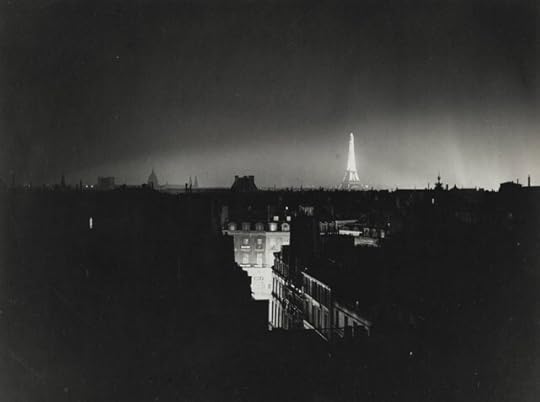
Photography by Brassai
P.S. Although I’ve been meaning to read Modiano for a long time, I feel happy and grateful to have Goodreads friends whose enthusiasm reminded me to sample this author’s work.
My first glimpse of Patrick Modiano’s prolific oeuvre. This novel is a quiet, yet powerful tribute to memory and chances it can bring. Through Modiano’s sparse, evocative prose, we follow the trail of an invisible ink, leading us to an astonishing revelation.
It comforted me to think that even if you sometimes have memory gaps, all the details of your life are written somewhere in invisible ink.
Walking through the streets of Paris and visiting night time cafes, there is this continuous haunting feeling throughout the novel and absorbing quality to it which I really enjoyed.
I wonder though about the difference between the original French and its translation in English. Overall it was a fantastic experience - excited to read more Modiano’s work and discover how this novel relates to the whole.
Photography by Brassai
P.S. Although I’ve been meaning to read Modiano for a long time, I feel happy and grateful to have Goodreads friends whose enthusiasm reminded me to sample this author’s work.

August 22, 2022
Прочита на тази кратка книга ми донесе голяма доза удоволствие. Насладих се на езика, парижката атмосфера, леката мистерия и чуденка около това коя е Ноел - защо и как е изчезнала.
За съжаление смятам, че нищо не разбрах и нищо не ми стана ясно 🤔 Не се разплете историята или ако се е аз не съм разбрала 😁
НО - писането е много, много красиво! Абсолютна феерия. Такъв казус само с френски автор може да ми се случи. Една от онези книги, след прочита на които оставаш объркан, но пък насладата от четенето остава!
Красивата корица е дело на на уникалната Люба Халева 🩵

May 1, 2022
"Впрочем, да си призная, никога не съм имал датници и не съм си водил дневник. Това би улеснило нещата. Ала не исках да осчетоводявам живота си - оставях го да тече, както луди пари изтичат между пръстите. Не беше благоразумно от моя страна. Когато си мислех за бъдещето, си казвах, че няма да се изгуби нищо от това, което съм преживял. Нищо. Бях твърде млад, за да зная, че от определен момент нататък в паметта се появяват бели петна."
P.S. Пропуснах да напиша нещо. Външният вид на българското издание на тази книга ми харесва страшно много!
P.S. Пропуснах да напиша нещо. Външният вид на българското издание на тази книга ми харесва страшно много!

November 3, 2020
Invisible Ink is the most recent of Patrick Modiano’s roughly two dozen novels and novellas. In Invisible Ink, Modiano readers will recognize Modiano’s recurring themes and tropes of a middle or elderly man, here Jean Eyben, reminiscing about a mysterious young woman of uncertain origins and even of an uncertain name from his early twenties or late teens, here “Noëlle Lefebvre”, his discovery of bits and pieces of documentary and unexpected photographic shards about her, his halting reconstruction of her life then and his attempts to uncover her life since their mutual youth, and her unsavory lovers and friends. Some readers may interpret Modiano’s recycling his typical themes as a sign of limited imagination; others, like me, appreciate Modiano's returning again and again to the same themes, expanding and modifying them, weaving them distinctly, delicately, and slightly differently with each novel, a Goldberg Variations of a contemporary oeuvre.
Invisible Ink represents both a continuation and a departure for Modiano, in which he draws upon two of his frequent themes. First, Modiano centers Invisible Ink on his favorite theme of the fog of memory after decades, here after three decades. Modiano starts Invisible Ink with Jean telling us that ”There are blanks in this life, white spaces you can detect if you open the ‘case file’: a single sheet in a sky-blue folder that has faded with time. That ancient sky blue has itself turned almost white” And here Jean later tells us: ”. . . I didn’t want to quantify my life. I let it flow by, like mad money that slips through your fingers. I wasn’t careful. When I thought about the future, I told myself that none of what I had lived through would ever be lost. None of it. I was too young to know that after a certain point, you start tripping over gaps in your memory.” And later, he again tells us that ”There are blanks in a life, and ellipses in memory.”
Modiano’s second theme that he expands upon in Invisible Ink is the loss of people, usually young women, to time’s passing, and the protagonist’s subsequent search for them. Here’s Jean accepts Noëlle’s description of himself: ”’So are you a history professor? [Noëlle asks]’ ‘Exactly. I’m a history professor. [Jean answers]’ He had said it with an air of self-mockery, and of not wanting to divulge other details about his work.” At his most effective, Modiano ties the fog of memory to a middle age or elderly man’s attempt, decades later, to recreate his experiences in his late teens or early twenties, temporarily besotted with a woman who mysteriously disappears from his life, as in In the Café of Lost Youth, After the Circus, and Out of the Dark. In Dora Bruder, Modiano’s brief Holocaust masterpiece, the near anonymous young woman lost to history was an actual historical figure.
The backdrop to Modiano’s themes in Invisible Ink, as in most other Modiano novels, are his protagonist’s reminisces inextricably bound to recollections of a disappearing Paris. A particular pleasure of reading Modiano is locating and viewing images of the neighborhoods, landmarks and street addresses nostalgically mentioned by Modiano, and a particular sadness of reading Modiano is discovering how many old Paris apartment buildings have been replaced by soulless apartment blocks.
In Invisible Ink, Modiano reinvents these two themes, but with the significant difference that “Noëlle Lefebvre”, the once young woman who’s the focus of the main character’s obsession was never Jean’s romantic partner or his romantic interest; and World War Two and its aftermath plays no role, unlike in such Modiano novels as Such Fine Boys and Young Once. In Invisible Ink, Modiano’s reweaving his themes, especially with its foreshadowed finale, is a novel less affecting than his best.
3.5 Modiano stars
Invisible Ink represents both a continuation and a departure for Modiano, in which he draws upon two of his frequent themes. First, Modiano centers Invisible Ink on his favorite theme of the fog of memory after decades, here after three decades. Modiano starts Invisible Ink with Jean telling us that ”There are blanks in this life, white spaces you can detect if you open the ‘case file’: a single sheet in a sky-blue folder that has faded with time. That ancient sky blue has itself turned almost white” And here Jean later tells us: ”. . . I didn’t want to quantify my life. I let it flow by, like mad money that slips through your fingers. I wasn’t careful. When I thought about the future, I told myself that none of what I had lived through would ever be lost. None of it. I was too young to know that after a certain point, you start tripping over gaps in your memory.” And later, he again tells us that ”There are blanks in a life, and ellipses in memory.”
Modiano’s second theme that he expands upon in Invisible Ink is the loss of people, usually young women, to time’s passing, and the protagonist’s subsequent search for them. Here’s Jean accepts Noëlle’s description of himself: ”’So are you a history professor? [Noëlle asks]’ ‘Exactly. I’m a history professor. [Jean answers]’ He had said it with an air of self-mockery, and of not wanting to divulge other details about his work.” At his most effective, Modiano ties the fog of memory to a middle age or elderly man’s attempt, decades later, to recreate his experiences in his late teens or early twenties, temporarily besotted with a woman who mysteriously disappears from his life, as in In the Café of Lost Youth, After the Circus, and Out of the Dark. In Dora Bruder, Modiano’s brief Holocaust masterpiece, the near anonymous young woman lost to history was an actual historical figure.
The backdrop to Modiano’s themes in Invisible Ink, as in most other Modiano novels, are his protagonist’s reminisces inextricably bound to recollections of a disappearing Paris. A particular pleasure of reading Modiano is locating and viewing images of the neighborhoods, landmarks and street addresses nostalgically mentioned by Modiano, and a particular sadness of reading Modiano is discovering how many old Paris apartment buildings have been replaced by soulless apartment blocks.
In Invisible Ink, Modiano reinvents these two themes, but with the significant difference that “Noëlle Lefebvre”, the once young woman who’s the focus of the main character’s obsession was never Jean’s romantic partner or his romantic interest; and World War Two and its aftermath plays no role, unlike in such Modiano novels as Such Fine Boys and Young Once. In Invisible Ink, Modiano’s reweaving his themes, especially with its foreshadowed finale, is a novel less affecting than his best.
3.5 Modiano stars

June 25, 2025
Aha, man muss vergessen um sich zu erinnern ?
Das Buch bespielt nur ein Gefühl: da war jemand.
Ein bisschen Rumgeirre, ein bisschen Feststellen "da gibt es Lebensrisse von mir, von anderen, die nach und nach verblassen" - vage und unbewegt.
Mir fehlt hier die Konsequenz. Das Buch endet und ich denke mir: ja und? was soll ich nun damit?
Da entsteht überhaupt kein Spannungsfeld. Lediglich eine banale Erkenntnis, die gut geschrieben ist.
Wer auf Stimmungsliteratur steht, die ihre Auflösung im Schweigen und einer gewissen Ziellosigkeit findet, könnte das durchaus besser finden als ich.
Ich kann daraus nicht weiter denken. Der produktive Schwebezustand aus "die Tänzerin" fehlt mir hier komplett.
Das Buch bespielt nur ein Gefühl: da war jemand.
Ein bisschen Rumgeirre, ein bisschen Feststellen "da gibt es Lebensrisse von mir, von anderen, die nach und nach verblassen" - vage und unbewegt.
Mir fehlt hier die Konsequenz. Das Buch endet und ich denke mir: ja und? was soll ich nun damit?
Da entsteht überhaupt kein Spannungsfeld. Lediglich eine banale Erkenntnis, die gut geschrieben ist.
Wer auf Stimmungsliteratur steht, die ihre Auflösung im Schweigen und einer gewissen Ziellosigkeit findet, könnte das durchaus besser finden als ich.
Ich kann daraus nicht weiter denken. Der produktive Schwebezustand aus "die Tänzerin" fehlt mir hier komplett.

April 14, 2021
Memory is an unreliable narrator ably shown in this story. How bits and piece juggle about in the space of years and change colour and shape. The thing is we do consider it as one of our mainstays so when we encounter how shaky of a column it is, it does shake us a bit, like we've built on sand rather than rock.
I've never read Modiano before so this was my first dip.
I've never read Modiano before so this was my first dip.

August 19, 2020
Trying to bring my research up to date, I get a very strange feeling. It’s as if all this was already written in invisible ink. How does the dictionary define it? “Ink, colorless when first used, that darkens when treated with a given substance.” Perhaps, at the turn of a page, what was set down in invisible ink will gradually emerge, and the questions I’ve been asking myself for so long about Noëlle Lefebvre’s disappearance, as well as the reason I’ve been asking myself those questions, will be resolved with the precision and clarity of a police report. In a neat hand that looks like mine, explanations will be provided in minutest detail, the mysteries cleared up. And perhaps this will allow me, once and for all, to better understand myself.
I was attracted to Invisible Ink because author Patrick Modiano was the winner of the 2014 Nobel Prize in Literature, and because I hadn’t read him before. Now finished this fine novel, I see that other reviewers recognise various settings and characters in these pages; it would seem that Modiano has revisited the themes of memory and writing and missing persons across his oeuvre and his regular readers can see how Invisible Ink figures into that bigger picture. Alas, I would love to join their laudatory ranks and exclaim, “This is genius and essential!”, but that would be posturing on my part: This novel is fine — interesting and impeccably written (kudos to translator Mark Polizzotti as well) — but taken as its own discrete entity, I found it a short diversion and not much more. (Note: I read an ARC through NetGalley and passages quoted may not be in their final forms.)
If I continue to write this book, it’s only in the possibly vain hope of finding an answer. I wonder — must I really find an answer? I’m afraid that once you have all the answers, your life closes in on you like a trap, with the clank of keys in a prison cell. Wouldn’t it be better to leave empty lots around you, into which you can escape?
Invisible Ink opens with author Jean Eyben looking back on a time, thirty years earlier, when he briefly worked for a detective agency (as life experience for his writing) and the one missing persons case he worked on, never solved. He recounts his efforts to locate this Noëlle Lefebvre — starting with the strange characters he encountered around Paris and their efforts to stymie the investigation — and at first I found the tale to be a bit Hitchcockian; suspenseful and potentially menacing. But as the narrative progresses, Eyben discloses that he has been intermittently working on the case file for all of these years (without encountering menace), and as he relates more encounters he has had with people who may have known Noëlle, never concerned with keeping the story chronological, it becomes clear that the author is looking for Noëlle — and making whatever writing he can out of the experience — in an effort to better understand himself and his own memories.
There are blanks in a life, but also sometimes what they call a refrain. For periods of varying length, you don’t hear this refrain, as if you’ve forgotten it. And then one day, it comes back to you unbidden, when you’re alone and there are no distractions. It comes back, like the words of a children’s song that still has a hold on you.
As a metaphor for memory, “invisible ink” is incredibly apt; what Modiano makes of it here (literally and figuratively) is clever and wise. This is, however, quite a short book (I don’t think it took even two hours to read) and without any bits that jumped out and grabbed me, it just feels thin somehow. And yet: I am totally open to reading more Modiano and discovering how this relates to the whole.
August 16, 2020
Later this year, Yale University Press, in collaboration with the Margellos World Republic of Letters, will be publishing Patrick Modiano’s latest work, Encre sympathique, in a lovely English translation by Mark Polizzotti. In this novella, the Nobel-Prizewinner explores the themes of identity, memory and the past. These are time-honoured subjects in literature, to which Modiano himself has repeatedly returned, turning them into a sort of leitmotif of his oeuvre.
The narrator of Invisible Ink, to give the novella its English title, is one Jean Eyben who, thirty years before he sets out to recount his story, worked for a stint with a detective agency in Paris. One of the cases in which he was then involved was the disappearance of a young woman, Noëlle Lefebvre. The facts which his boss, Hutte, provided him with were scant, and Eyben’s attempts at discovering the whereabouts of the elusive Noëlle soon drew a blank – so much so that he started to doubt whether the subject of his investigation did exist at all.
This notwithstanding, the case intrigued Eyben enough for him to take the file with him when he quit the job. Eyben has got on with his life, but every so often, he returns to the Lefebvre file and has a go at solving the mystery. With the passage of time, the days of his youth becoming increasingly distant, Eyben’s efforts to fill the blanks in the investigation lead him to question his own memories and impressions.
Indeed, there is much that is tentative in the narration – Eyben himself admits that his account does not follow any formal order. At one point he states that he must force himself to respect chronology as much as possible so as not to “get lost in those spaces where memory blurs into forgetting”. Soon after, however, he gives up – “it’s impossible to draw up that sort of calendar after such a long time… memories occur as the pen flies. You shouldn’t force them, but just write”. He then reveals that he has “never respected chronological order… Present and the past blend together in a kind of transparency, and every instant I lived in my youth appears to me in an eternal present, set apart from everything.”
The title of the novel (as well as certain plot elements such as the thin, uninformative file and the few vague entries in Nöelle’s day book) become a metaphor for memories which, besides often being few and incomplete, tend to disappear. Like invisible ink, they may return if given the right nudge.
Towards the end, the narrative shifts to the third person, and the setting moves from Paris to Rome. In this part of the book, Modiano shows that being a “literary author” (for want of a better description) need not be at the expense of good, old-fashioned storytelling. The ending – poetic and moving, almost bordering on the sentimental – provides a satisfying solution to the mystery at the heart of the novella. At the same time, aptly for a work on the transience of memory, Invisible Ink leaves us with plenty of loose ends – certainly enough to leave the narrative clouded in a metaphorical fog. The few certainties we acquire are hard-earned but thrilling, like a ray of light breaking through the haze among the mountains of Eyben’s youth.
https://endsoftheword.blogspot.com/20...
The narrator of Invisible Ink, to give the novella its English title, is one Jean Eyben who, thirty years before he sets out to recount his story, worked for a stint with a detective agency in Paris. One of the cases in which he was then involved was the disappearance of a young woman, Noëlle Lefebvre. The facts which his boss, Hutte, provided him with were scant, and Eyben’s attempts at discovering the whereabouts of the elusive Noëlle soon drew a blank – so much so that he started to doubt whether the subject of his investigation did exist at all.
This notwithstanding, the case intrigued Eyben enough for him to take the file with him when he quit the job. Eyben has got on with his life, but every so often, he returns to the Lefebvre file and has a go at solving the mystery. With the passage of time, the days of his youth becoming increasingly distant, Eyben’s efforts to fill the blanks in the investigation lead him to question his own memories and impressions.
Indeed, there is much that is tentative in the narration – Eyben himself admits that his account does not follow any formal order. At one point he states that he must force himself to respect chronology as much as possible so as not to “get lost in those spaces where memory blurs into forgetting”. Soon after, however, he gives up – “it’s impossible to draw up that sort of calendar after such a long time… memories occur as the pen flies. You shouldn’t force them, but just write”. He then reveals that he has “never respected chronological order… Present and the past blend together in a kind of transparency, and every instant I lived in my youth appears to me in an eternal present, set apart from everything.”
The title of the novel (as well as certain plot elements such as the thin, uninformative file and the few vague entries in Nöelle’s day book) become a metaphor for memories which, besides often being few and incomplete, tend to disappear. Like invisible ink, they may return if given the right nudge.
Towards the end, the narrative shifts to the third person, and the setting moves from Paris to Rome. In this part of the book, Modiano shows that being a “literary author” (for want of a better description) need not be at the expense of good, old-fashioned storytelling. The ending – poetic and moving, almost bordering on the sentimental – provides a satisfying solution to the mystery at the heart of the novella. At the same time, aptly for a work on the transience of memory, Invisible Ink leaves us with plenty of loose ends – certainly enough to leave the narrative clouded in a metaphorical fog. The few certainties we acquire are hard-earned but thrilling, like a ray of light breaking through the haze among the mountains of Eyben’s youth.
https://endsoftheword.blogspot.com/20...

November 6, 2021
“Ma per quanto tu possa scrutare con la lente d’ingrandimento i particolari di una vita, vi rimarranno per sempre segreti e punti di fuga. E ciò mi sembrava il contrario della morte.”
In questa frasetta sta nascosta la chiave di lettura che preferisco dell’unico romanzo in cui consistono tutti i romanzi di Modiano. Perché i libri di Modiano sembrano più o meno tutti uguali. E, come l’unica storia che raccontano, sono tanto impalpabili nella sostanza e misteriosi nel significato, quanto sono semplici e ammalianti nello stile. Per me questo libro è tra i suoi migliori. E il ruolo che vi gioca Roma mi è piaciuto in modo particolare.
Il mondo che si è inventato è un territorio nebbioso del vago, dell’impreciso, popolato da assenze. Tutto gira attorno a qualcuno che, come Noelle, non si trova più. Personaggi che abitano l’evanescenza della striscia di territorio che sta un millimetro prima dell’oblio. Ci scavi e ci giri dentro con un narratore solitario con poca memoria, che non prende appunti e che qualche volta si inventa e ci racconta bugie; che segue tracce labili e disordinati ricordi o, come in questo caso, appunti scritti con inchiostro simpatico.
A un certo punto pensi, come il tuo narratore, che in fondo, non è così importante sapere; e comunque alla cosiddetta verità completa non ci si arriva. Perché il non sapere come e perché sono andate davvero le cose è in Modiano oltre che inevitabile, anche l’estrema barriera impalpabile che separa dalla morte. Se non la si attraversa, se si resta in quell’opacità, si può continuare a pensarsi e a poter sperare di ritrovarsi. In ogni caso, la morte non arriva, non c’è. Il tempo, in Modiano, come nella letteratura migliore da un secolo a questa parte, contiene e asseconda col suo mistero questa opacità. Non ci si perde del tutto, non ci si dimentica, ci si continua ad immaginare in un qualche dove e a cercarsi, più o meno confusamente. Si resta in un limbo terreno, in un bardo dei viventi, come “Certi gatti o certi uomini, svaniti in una nebbia o in una tappezzeria”, della canzone di Paolo Conte. O come in un film di Fellini in cui la parola Fine non compare mai, perché lo spettatore deve poter continuare da solo a raccontarsi quella storia, senza la violenza di una conclusione, in un eterno presente. O come la non vita/non morte in cui mi piacerebbe lasciare per sempre Monica Vitti. O come Federico Caffè che vaga ancora per Roma senza occhiali, senza orologio e senza documenti.
È uno spazio che la civiltà di Google, dei documenti virtuali, dei big data rende sempre più difficile da difendere. Nei libri di Modiano è la solitudine dello scrittore in una Parigi-labirinto a proteggerli. Ed è la sua scrittura a dare ai suoi personaggi quella forma di vita fantasmatica, l'unica vita davvero eterna. Nella vita reale le persone ci circondano, le vediamo, le tocchiamo, sappiamo di loro e poi magari le sappiamo colpite dalla violenta certezza, definitoria e definitiva della morte. E a questo mondo di corpi, immagini ad alta definizione e certezze che Modiano si sottrae. È un’illusione, certo. Ma dietro o sotto o intorno a quella illusione, all’inchiostro simpatico con cui è scritta la vita, anche la nostra, stavolta una risposta forse c’è, chissà. Spoilerare d’altronde sarebbe un crimine.
“Questo confermava la mia idea: anche se a volte hai dei vuoti di memoria, tutti i particolari della tua vita sono scritti da qualche parte con l’inchiostro simpatico.”
In questa frasetta sta nascosta la chiave di lettura che preferisco dell’unico romanzo in cui consistono tutti i romanzi di Modiano. Perché i libri di Modiano sembrano più o meno tutti uguali. E, come l’unica storia che raccontano, sono tanto impalpabili nella sostanza e misteriosi nel significato, quanto sono semplici e ammalianti nello stile. Per me questo libro è tra i suoi migliori. E il ruolo che vi gioca Roma mi è piaciuto in modo particolare.
Il mondo che si è inventato è un territorio nebbioso del vago, dell’impreciso, popolato da assenze. Tutto gira attorno a qualcuno che, come Noelle, non si trova più. Personaggi che abitano l’evanescenza della striscia di territorio che sta un millimetro prima dell’oblio. Ci scavi e ci giri dentro con un narratore solitario con poca memoria, che non prende appunti e che qualche volta si inventa e ci racconta bugie; che segue tracce labili e disordinati ricordi o, come in questo caso, appunti scritti con inchiostro simpatico.
A un certo punto pensi, come il tuo narratore, che in fondo, non è così importante sapere; e comunque alla cosiddetta verità completa non ci si arriva. Perché il non sapere come e perché sono andate davvero le cose è in Modiano oltre che inevitabile, anche l’estrema barriera impalpabile che separa dalla morte. Se non la si attraversa, se si resta in quell’opacità, si può continuare a pensarsi e a poter sperare di ritrovarsi. In ogni caso, la morte non arriva, non c’è. Il tempo, in Modiano, come nella letteratura migliore da un secolo a questa parte, contiene e asseconda col suo mistero questa opacità. Non ci si perde del tutto, non ci si dimentica, ci si continua ad immaginare in un qualche dove e a cercarsi, più o meno confusamente. Si resta in un limbo terreno, in un bardo dei viventi, come “Certi gatti o certi uomini, svaniti in una nebbia o in una tappezzeria”, della canzone di Paolo Conte. O come in un film di Fellini in cui la parola Fine non compare mai, perché lo spettatore deve poter continuare da solo a raccontarsi quella storia, senza la violenza di una conclusione, in un eterno presente. O come la non vita/non morte in cui mi piacerebbe lasciare per sempre Monica Vitti. O come Federico Caffè che vaga ancora per Roma senza occhiali, senza orologio e senza documenti.
È uno spazio che la civiltà di Google, dei documenti virtuali, dei big data rende sempre più difficile da difendere. Nei libri di Modiano è la solitudine dello scrittore in una Parigi-labirinto a proteggerli. Ed è la sua scrittura a dare ai suoi personaggi quella forma di vita fantasmatica, l'unica vita davvero eterna. Nella vita reale le persone ci circondano, le vediamo, le tocchiamo, sappiamo di loro e poi magari le sappiamo colpite dalla violenta certezza, definitoria e definitiva della morte. E a questo mondo di corpi, immagini ad alta definizione e certezze che Modiano si sottrae. È un’illusione, certo. Ma dietro o sotto o intorno a quella illusione, all’inchiostro simpatico con cui è scritta la vita, anche la nostra, stavolta una risposta forse c’è, chissà. Spoilerare d’altronde sarebbe un crimine.
“Questo confermava la mia idea: anche se a volte hai dei vuoti di memoria, tutti i particolari della tua vita sono scritti da qualche parte con l’inchiostro simpatico.”

February 27, 2022
Май най-накрая ще успея трайно да изляза от книжната кома, която ме беше налегнала към края на миналата година.
За първи път ми се случва толкова дълго да ме държи невъзможността да запазя концентрация и да дочета книга до края. Опитвах с различни заглавия и все не се получаваше. Тази книга обаче е чудесна за целта.
Кратка, с чудесен език, мистериозна и меланхолична атмосфера, много Париж и накрая малко Рим, една изчезнала жена, един търсещ нея (и/или себе си?) мъж.
Радвам се, че попаднах на това заглавие. :)
За първи път ми се случва толкова дълго да ме държи невъзможността да запазя концентрация и да дочета книга до края. Опитвах с различни заглавия и все не се получаваше. Тази книга обаче е чудесна за целта.
Кратка, с чудесен език, мистериозна и меланхолична атмосфера, много Париж и накрая малко Рим, една изчезнала жена, един търсещ нея (и/или себе си?) мъж.
Радвам се, че попаднах на това заглавие. :)

February 17, 2020
Van Patrick Modiano (Nobelprijs 2014) heb ik zo'n beetje alle vertalingen in het Nederlands gelezen, soms wel twee of drie keer. Dat zijn boeken vaak sterk op elkaar lijken maakt mij niet uit: ik ben en blijf een fan van hem. Dus ook zijn nieuwste boek las ik weer met vreugde. Want het was een feest der herkenning dat voor mij toch weer extra kleur gaf aan al zijn eerdere vreemd weemoedige boeken. En tegelijk ook een boek waarin hij mij aangenaam verraste met wendingen die in zijn vorige boeken niet had gezien.
Ook dit boekje is weer doordesemd van vervagende herinnering en vergetelheid, en van een ik- figuur die vergeefs de sporen zoekt van een verdwenen persoon met een hoogst ongewisse identiteit. De ik- figuur heet deze keer Jean Eyben: hij is schrijver, maar was ooit als prille twintiger even werkzaam bij een detectivebureau, waar hij de opdracht had om de verdwijning en de lotgevallen te onderzoeken van de raadselachtige Noelle Lefebrve. De vergeefs sporen zoekende detective is vintage Modiano, net als de schrijver die vergeefs notities maakt om het onherroepelijk verdwijnen tegen te gaan van personen, herinneringen, gevoelens. In deze roman echter zijn beide personen verenigd in Jean Eyben, de man die droomt dat de oplossing van de raadselen opgeschreven staat in onleesbare inkt, en met een zekere weemoed beseft dat hij die oplossing nooit zal kunnen lezen. Tegelijk geeft dat besef, zoals vaker bij Modiano, ook weer een bepaalde lichtheid en gedempte vreugde. "Maar al leg je alle details van een mensenleven onder de microscoop, er blijven altijd bepaalde geheimen en vluchtlijnen over. En dat leek me het tegendeel van de dood", zo mijmert Jean. En ook: "En als ik doorga met het schrijven van dit boek, is dat alleen in de misschien ijdele hoop een antwoord te vinden. Maar moet je dan wel een antwoord vinden, vraag ik me af. Ik ben bang dat het leven, wanneer je eenmaal een antwoord op alle vragen hebt, achter je dichtklapt als een val, met het gerinkel van de sleutels van een gevangeniscel. Zouden we niet liever een paar onbetreden zones in stand houden, waarin je altijd nog kunt ontsnappen?".
En dus volgen we Jean op zijn zoektocht, speurend als detective en reconstruerend als schrijver, steeds vergeefs zoekend naar antwoord en tegelijk hopend dat hij dat niet vindt. Want alleen het onbeantwoorde mysterie, hoe onbevredigend en weemoedig makend ook, geeft ruimte en vluchtlijnen. Het is op een rare manier zowel spannend als ontroerend om Jean in deze zoektocht te volgen. Ook omdat er meer en meer verstilde en mistige aanwijzingen zijn dat het mysterie van Noelle "iets" te maken heeft met het leven van Jean zelf. Zonder dat Jean ooit weet wat precies, want: "Hoe zou je waarheid en schijn van elkaar kunnen onderscheiden, als je bedenkt hoeveel tegenstrijdige sporen mensen achterlaten? En zouden we meer weten van onszelf, bedacht ik, afgaande op mijn eigen leugens, mijn falende geheugen en mijn onwillekeurige omissies?" Wie weet zocht Jean door naar Noelle te zoeken eigenlijk steeds naar iets in zichzelf. Misschien wist hij dat steeds, zonder het te weten. Misschien wist hij dat ook niet, en zou hij ook niet echt iets hebben geweten als hij dit vanaf het begin had geweten. Want Noelle, de raadselachtige dame die hij alleen kent van vervaagde foto's en onbetrouwbare getuigenissen, is voor Jean een even onbekende als Jean zelf. Wat voor Jean, wellicht, ook weer een betreurenswaardig en gedempt vreugdevol besef is. Want wie weet geeft juist het besef dat hij zichzelf niet kent, en dat zijn identiteit een vraag is zonder antwoord, hem juist onontbeerlijke ontsnappingsmogelijkheden en vluchtlijnen.
Hoe dan ook: Jeans zoektocht naar Noelle - die misschien helemaal niet zo heet- neemt meer en meer de gedaante aan van een tastend zelfonderzoek. Dat laat Modiano zelfs culmineren in een perspectiefwisseling, iets wat hij volgens mij nog nooit eerder heeft gedaan: ineens volgen we een "zij", die naar alle waarschijnlijkheid Noelle is. En dat geeft een draai aan het mysterie zoals je die in andere boeken van Modiano volgens mij niet ziet. Maar die draai leidt, naar mijn gevoel, niet tot oplossingen van de mysteries maar tot verdiepingen ervan en tot nieuwe mysteries. We weten, bijvoorbeeld, volgens mij niet of deze "zij" een verzinsel is van de schrijver Jean Eyben. We weten dus ook niet of het gezamenlijk verleden van Jean en Noelle, waar we even een glimp van zien, fictie is of werkelijkheid. Temeer niet omdat die glimp een flakkerende lichtflits is in een van veel lacunes en vergetelheid doordesemde herinnering, en we weten inmiddels hoe onbetrouwbaar elke herinnering volgens Jean is. Terwijl we ook weten dat Jean liever niet een definitief antwoord heeft, hoezeer hij daar tegelijk naar zoekt: een onbepaalde glimp is immers vol mysterie dat nog ruimte aan de verbeelding laat, een definitief antwoord is de dood of een val die dichtklapt.
Ik vond "Onzichtbare inkt" weer een mooie mysterieuze Modiano. Ik genoot van de wijze waarop Modiano deze keer de spanning heel subtiel opvoert, en die laat culmineren in een glimp vol van nieuw mysterie. Tevergeefs zoeken en tegelijk niet willen vinden, met melancholie en vreugde over het ontbrekende antwoord: dat is wat Modiano's boeken voor mij zo mooi maakt. Ook "Onzichtbare inkt". Hopelijk wordt Modiano honderd, en schrijft hij nog jaren door.
Ook dit boekje is weer doordesemd van vervagende herinnering en vergetelheid, en van een ik- figuur die vergeefs de sporen zoekt van een verdwenen persoon met een hoogst ongewisse identiteit. De ik- figuur heet deze keer Jean Eyben: hij is schrijver, maar was ooit als prille twintiger even werkzaam bij een detectivebureau, waar hij de opdracht had om de verdwijning en de lotgevallen te onderzoeken van de raadselachtige Noelle Lefebrve. De vergeefs sporen zoekende detective is vintage Modiano, net als de schrijver die vergeefs notities maakt om het onherroepelijk verdwijnen tegen te gaan van personen, herinneringen, gevoelens. In deze roman echter zijn beide personen verenigd in Jean Eyben, de man die droomt dat de oplossing van de raadselen opgeschreven staat in onleesbare inkt, en met een zekere weemoed beseft dat hij die oplossing nooit zal kunnen lezen. Tegelijk geeft dat besef, zoals vaker bij Modiano, ook weer een bepaalde lichtheid en gedempte vreugde. "Maar al leg je alle details van een mensenleven onder de microscoop, er blijven altijd bepaalde geheimen en vluchtlijnen over. En dat leek me het tegendeel van de dood", zo mijmert Jean. En ook: "En als ik doorga met het schrijven van dit boek, is dat alleen in de misschien ijdele hoop een antwoord te vinden. Maar moet je dan wel een antwoord vinden, vraag ik me af. Ik ben bang dat het leven, wanneer je eenmaal een antwoord op alle vragen hebt, achter je dichtklapt als een val, met het gerinkel van de sleutels van een gevangeniscel. Zouden we niet liever een paar onbetreden zones in stand houden, waarin je altijd nog kunt ontsnappen?".
En dus volgen we Jean op zijn zoektocht, speurend als detective en reconstruerend als schrijver, steeds vergeefs zoekend naar antwoord en tegelijk hopend dat hij dat niet vindt. Want alleen het onbeantwoorde mysterie, hoe onbevredigend en weemoedig makend ook, geeft ruimte en vluchtlijnen. Het is op een rare manier zowel spannend als ontroerend om Jean in deze zoektocht te volgen. Ook omdat er meer en meer verstilde en mistige aanwijzingen zijn dat het mysterie van Noelle "iets" te maken heeft met het leven van Jean zelf. Zonder dat Jean ooit weet wat precies, want: "Hoe zou je waarheid en schijn van elkaar kunnen onderscheiden, als je bedenkt hoeveel tegenstrijdige sporen mensen achterlaten? En zouden we meer weten van onszelf, bedacht ik, afgaande op mijn eigen leugens, mijn falende geheugen en mijn onwillekeurige omissies?" Wie weet zocht Jean door naar Noelle te zoeken eigenlijk steeds naar iets in zichzelf. Misschien wist hij dat steeds, zonder het te weten. Misschien wist hij dat ook niet, en zou hij ook niet echt iets hebben geweten als hij dit vanaf het begin had geweten. Want Noelle, de raadselachtige dame die hij alleen kent van vervaagde foto's en onbetrouwbare getuigenissen, is voor Jean een even onbekende als Jean zelf. Wat voor Jean, wellicht, ook weer een betreurenswaardig en gedempt vreugdevol besef is. Want wie weet geeft juist het besef dat hij zichzelf niet kent, en dat zijn identiteit een vraag is zonder antwoord, hem juist onontbeerlijke ontsnappingsmogelijkheden en vluchtlijnen.
Hoe dan ook: Jeans zoektocht naar Noelle - die misschien helemaal niet zo heet- neemt meer en meer de gedaante aan van een tastend zelfonderzoek. Dat laat Modiano zelfs culmineren in een perspectiefwisseling, iets wat hij volgens mij nog nooit eerder heeft gedaan: ineens volgen we een "zij", die naar alle waarschijnlijkheid Noelle is. En dat geeft een draai aan het mysterie zoals je die in andere boeken van Modiano volgens mij niet ziet. Maar die draai leidt, naar mijn gevoel, niet tot oplossingen van de mysteries maar tot verdiepingen ervan en tot nieuwe mysteries. We weten, bijvoorbeeld, volgens mij niet of deze "zij" een verzinsel is van de schrijver Jean Eyben. We weten dus ook niet of het gezamenlijk verleden van Jean en Noelle, waar we even een glimp van zien, fictie is of werkelijkheid. Temeer niet omdat die glimp een flakkerende lichtflits is in een van veel lacunes en vergetelheid doordesemde herinnering, en we weten inmiddels hoe onbetrouwbaar elke herinnering volgens Jean is. Terwijl we ook weten dat Jean liever niet een definitief antwoord heeft, hoezeer hij daar tegelijk naar zoekt: een onbepaalde glimp is immers vol mysterie dat nog ruimte aan de verbeelding laat, een definitief antwoord is de dood of een val die dichtklapt.
Ik vond "Onzichtbare inkt" weer een mooie mysterieuze Modiano. Ik genoot van de wijze waarop Modiano deze keer de spanning heel subtiel opvoert, en die laat culmineren in een glimp vol van nieuw mysterie. Tevergeefs zoeken en tegelijk niet willen vinden, met melancholie en vreugde over het ontbrekende antwoord: dat is wat Modiano's boeken voor mij zo mooi maakt. Ook "Onzichtbare inkt". Hopelijk wordt Modiano honderd, en schrijft hij nog jaren door.

October 27, 2023
Joaquín Sabina cantaba aquello de:
“Para jugar al Black Jack y ser un duro 🎶.
Andar escaso de efectivo es igual que pretender envidar con un farol, al futuro 🎶.
No por casualidad me temen en los casinos 🎶.
Me daban diez de los grandes por el caso de la rubia platino 🎶”.
Nuestro protagonista de Tinta invisible, Jean Eyben, es un aprendiz de detective, pero no juega al Black Jack, ni es un duro, ni le daban diez de los grandes por el caso de la rubia platino. A Jean Eyben le dieron el caso de encontrar a Noëlle Lefebvre.
Tinta invisible habla de la fragilidad de los recuerdos y de cómo el olvido va fagocitando poco a poco la persistencia de la memoria. El autor no lo hace en orden cronológico sino que lo narra de forma fragmentada como si estuviera montando un rompecabezas con escenas del pasado; algunas muy nítidas y otras desenfocadas por el paso del tiempo.
La novela se lee en una sentada. Esperaba otra cosa (mea culpa), pero las reflexiones tienen peso y no olvidaré su final ❤️.
“Para jugar al Black Jack y ser un duro 🎶.
Andar escaso de efectivo es igual que pretender envidar con un farol, al futuro 🎶.
No por casualidad me temen en los casinos 🎶.
Me daban diez de los grandes por el caso de la rubia platino 🎶”.
Nuestro protagonista de Tinta invisible, Jean Eyben, es un aprendiz de detective, pero no juega al Black Jack, ni es un duro, ni le daban diez de los grandes por el caso de la rubia platino. A Jean Eyben le dieron el caso de encontrar a Noëlle Lefebvre.
Tinta invisible habla de la fragilidad de los recuerdos y de cómo el olvido va fagocitando poco a poco la persistencia de la memoria. El autor no lo hace en orden cronológico sino que lo narra de forma fragmentada como si estuviera montando un rompecabezas con escenas del pasado; algunas muy nítidas y otras desenfocadas por el paso del tiempo.
La novela se lee en una sentada. Esperaba otra cosa (mea culpa), pero las reflexiones tienen peso y no olvidaré su final ❤️.

September 13, 2022
Tengo bastante fe en las lecturas recomendadas que me hace mi Biblioteca de cabecera, pero debo decir que en esta ocasión el libro de Modiano, a quien por otra parte no había leído nunca y de quien la etiqueta de Premio Nobel viste bastante bien, no me ha causado especial emoción, o enamoramiento, o admiración, o envidia.
No digo que me parezca una mala novelita corta, no digo que uno de sus leitmotiv, por qué hacemos lo que hacemos, no me resulte de lo más atractivo, no digo que no sea interesante cómo lo resuelve, aunque no me termina de convencer la manera, pero sí puedo decir (quizá sea culpa de los estados de ánimo de entretiempo que estos días me recorren), que la impronta que me deja no será indeleble.
Pero por otra parte, no son tantas las lecturas que nos provocan una huella más o menos imperecedera, así que anímense a juzgar por ustedes mismos y, si alguien tiene ganas de hacerme una recomendación de este autor, bienvenida será.
No digo que me parezca una mala novelita corta, no digo que uno de sus leitmotiv, por qué hacemos lo que hacemos, no me resulte de lo más atractivo, no digo que no sea interesante cómo lo resuelve, aunque no me termina de convencer la manera, pero sí puedo decir (quizá sea culpa de los estados de ánimo de entretiempo que estos días me recorren), que la impronta que me deja no será indeleble.
Pero por otra parte, no son tantas las lecturas que nos provocan una huella más o menos imperecedera, así que anímense a juzgar por ustedes mismos y, si alguien tiene ganas de hacerme una recomendación de este autor, bienvenida será.

March 20, 2022
Това е книга за времето, което минава през нас и след което остават фрагменти от спомени, недостатъчни, за да можем да подредим цялостната картина на един живот. В крайна сметка чуждото присъствие в дните ни може да бъде сведено до няколко минути или часове, може да бъде побрано в рамките на няколко десетки страници. Такова място се полага и на собственото ни присъствие в съдбите на другите. Лицата от снимките губят конкретни очертания и остава само едно усещане, че някога е имало нещо, но то вече не може да бъде напълно пресъздадено с помоща на паметта, тъй като тя не може да бъде приета за достоверен свидетел. Това обаче е книга и за случайността, която се превръща в конеца, свързащ дните ни в броеница, където може да се проследи скрития смисъл на всяко действие и събитие. Предопределението протяга ръка през хаоса на всички срещи, за да могат двама души да се открият сред остатъците от миналото, чието значение не се простира отвъд това рандеву.
3.5
3.5

March 27, 2022
Lo so che i suoi romanzi si assomigliano, che ha uno stile onirico e che sono sempre troppo corti ………( mannaggia) , ma è questo il suo fascino, per me.
E affascinata anche da questo suo ultimo libro, che avevo lasciato sullo scaffale, dopo averne letti tanti , forse troppo ravvicinati.
Grazie ad @Arcobaleno e al suo bel commento apparso ieri sulla mia Home , l’ho letto
- finalmente - ed ho trascorso una serata piacevole con Modiano .
E affascinata anche da questo suo ultimo libro, che avevo lasciato sullo scaffale, dopo averne letti tanti , forse troppo ravvicinati.
Grazie ad @Arcobaleno e al suo bel commento apparso ieri sulla mia Home , l’ho letto
- finalmente - ed ho trascorso una serata piacevole con Modiano .

August 30, 2020
This is only the second of Patrick Modiano’s novels I’ve read (the first being In the Café of Lost Youth) and already I feel I can detect similarities in the sort of enigmatic, slightly shady characters he employs and the atmosphere of a Paris in the decades after WWII when it was still possible to obscure the past, reinvent oneself and disappear. There is a tense yet languid air to his writing that I find compulsive reading. I read this in one sitting and was entranced by Jean’s memory trail, uncovering events little by little to reach a perfect ending. Highly recommended.
With thanks to Yale University Press via NetGalley for the opportunity to read an ARC.
With thanks to Yale University Press via NetGalley for the opportunity to read an ARC.

November 30, 2020
As usual, memory and the impossibility of forgetting are Modiano’s themes here, and the novel explores one man’s obsession with the mysterious Noelle Lefebvre, a woman he was once employed to trace during his short stint as a private detective. He fails to find her at that time but she continues to haunt him and thirty years later he sets out on another quest to find her. I was left as puzzled as Jean Eyben was all the way through. The story seems to be without a point – unless the pointlessness of memory is actually the point. The narrative really doesn't go anywhere. It doesn’t go anywhere in a particularly atmospheric and lyrical way – but it still doesn’t go anywhere, and I found the style typically and annoyingly vague and dreamy. I keep trying with Modiano but essentially I just don’t “get” him. Not for me, this one.

September 22, 2020
Patrick Modiano has said he keeps writing the same book over and over, but that doesn't mean that if you've read one, you've read them all. Threads and atmospheric descriptions are echoed, but I still love getting caught up in his narrator's obsessions with a haunting past, and following the trail as it weaves and characters are introduced. Also, the weather is a big part of the scene in Modiano's work -- it's either raining or swelteringly hot. I'll keep on reading him as long as the books keep getting translated.

August 18, 2023
Сюжетът на този роман се носи плавно и леко като носталгична мелодия. Хареса ми.

September 5, 2020
What a privilege to read an accomplished French author in English. Thanks, must go to the publishers and the fine translation.
On the face of it, this is the story of a young man’s fleeting experience working for a detective agency. His half-hearted attempt to trace a missing woman and the fact her case has beguiled him, ever since, for the rest of his life.
Pocketing her case file when he left this employment. This is the story of his part-time obsession, a personal account of his ongoing dipping into this missing woman’s story and last known details. Sometimes without intent, but from chance events where circumstances brought her name up in conversation or where he could re-interview a witness who knew her during her time in Paris.
The writing flows, as the book is the reported notes of this young man explaining his life-long fixation with this woman who vanished from Paris.
Interestingly it explores the role of memory. How things are recalled; that sometimes over stressing can bring confusion, while chance or circumstance can bring clarity. Like an old-fashioned photo developing and coming into focus. Perhaps signs or spaces revealing something previously unseen, hidden or concealed. Like a page of invisible writing being revealed over time where the day before was just a blank page.
The way the narrative progresses is also cleverly conceived. As a young man and as he ages there is no real structure to his memories or a revised timeline to write up a chronological report of his investigations.
These thoughts are haphazard, jumbled, almost as he remembers them. He sees the writing process as needing pen on page, like a skier zig zagging down the mountain side. Backwards and forwards, slaloming down rather than a straight decent.
A very interesting novel about the act and art of remembering and how we can learn to forget. Cleverly constructed with a twist and a sense of mystery.
Fun to read, plenty of issues raised, but mostly as points come up, like indirect markers and asides. An entertainment, not an essay on the mind, but a revelation all the same.
Here’s the main point. It will beckon to be reread and will enlighten and please on each fresh reading where perhaps new type will surface from the page.
On the face of it, this is the story of a young man’s fleeting experience working for a detective agency. His half-hearted attempt to trace a missing woman and the fact her case has beguiled him, ever since, for the rest of his life.
Pocketing her case file when he left this employment. This is the story of his part-time obsession, a personal account of his ongoing dipping into this missing woman’s story and last known details. Sometimes without intent, but from chance events where circumstances brought her name up in conversation or where he could re-interview a witness who knew her during her time in Paris.
The writing flows, as the book is the reported notes of this young man explaining his life-long fixation with this woman who vanished from Paris.
Interestingly it explores the role of memory. How things are recalled; that sometimes over stressing can bring confusion, while chance or circumstance can bring clarity. Like an old-fashioned photo developing and coming into focus. Perhaps signs or spaces revealing something previously unseen, hidden or concealed. Like a page of invisible writing being revealed over time where the day before was just a blank page.
The way the narrative progresses is also cleverly conceived. As a young man and as he ages there is no real structure to his memories or a revised timeline to write up a chronological report of his investigations.
These thoughts are haphazard, jumbled, almost as he remembers them. He sees the writing process as needing pen on page, like a skier zig zagging down the mountain side. Backwards and forwards, slaloming down rather than a straight decent.
A very interesting novel about the act and art of remembering and how we can learn to forget. Cleverly constructed with a twist and a sense of mystery.
Fun to read, plenty of issues raised, but mostly as points come up, like indirect markers and asides. An entertainment, not an essay on the mind, but a revelation all the same.
Here’s the main point. It will beckon to be reread and will enlighten and please on each fresh reading where perhaps new type will surface from the page.

May 8, 2025
Only my second Modiano offering, and I'm quite confident it won't be my last. I can't say I envision myself sitting down to read lots of Modiano's work sequentially or back-to-back, and, indeed, I'm guessing I'll continue to most enjoy his work as a refreshing change of pace or something different, which makes me wonder how much of the attraction is la difference and how much is the quality of the work itself. At this point, I'm confident it's more than a little of both.
For me, this was a nice little (and I mean little, or no more than novella length) literary meditation on remembering, putting pieces together, scrambled mosaics rattling around in one's head, etc.
As self-aware fictional recollections go, I quite enjoyed this one, primarily because it's internally consistent with regard to giving enough ... but very much shying away from disclosing too much ... information on the various pieces of the puzzle. Although, to be fair, at the end of the day, it's the puzzle, or, even more so, the missing pieces of the puzzle, that drive storyline.
Useless, quirky associations: I concede it was more than marginally entertaining that, while most of the book's narrative plays out in and revolves around Paris and Annecey (in, duh, France), the late chapters describe events in Rome, where I happened to be (as part of my annual teaching gig here) while reading the book....
For me, this was a nice little (and I mean little, or no more than novella length) literary meditation on remembering, putting pieces together, scrambled mosaics rattling around in one's head, etc.
As self-aware fictional recollections go, I quite enjoyed this one, primarily because it's internally consistent with regard to giving enough ... but very much shying away from disclosing too much ... information on the various pieces of the puzzle. Although, to be fair, at the end of the day, it's the puzzle, or, even more so, the missing pieces of the puzzle, that drive storyline.
Useless, quirky associations: I concede it was more than marginally entertaining that, while most of the book's narrative plays out in and revolves around Paris and Annecey (in, duh, France), the late chapters describe events in Rome, where I happened to be (as part of my annual teaching gig here) while reading the book....

January 15, 2021
oh my goodness i got this for myself for Christmas - and read it slooooowly as i could since it is a short book. It has the atmosphere i love the search for lost people the vague romances and the lonely nighttime walks. just wonderful - absolutely wonderful read.

March 2, 2020
*** 3.50 ***

July 18, 2024
My first experience with Modiano. This is a brief, but beautifully written meditation on memory and what we choose to remember and how, framed as a mystery about a missing woman.

November 26, 2019
J’ai aimé m’immerger dans cette "Encre sympathique", me perdre dans les méandres de la mémoire du narrateur. Un titre sympathique pour un livre riche, fin et beau. Jean, le narrateur, a un peu plus de vingt ans lorsqu’il est embauché à l’essai dans l'agence de détective privé d’un dénommé Hutte. Ce dernier lui confie une affaire apparemment simple qui va conduire Jean à la recherche d’une certaine Noëlle Lefebvre. Cette enquête va l’occuper et le hanter, quoique par intermittence, au cours de sa vie à cause d’un pressentiment de lien entre lui et cette femme. Des années plus tard, il couchera cette quête sur le papier, d’où l’existence du livre. Les souvenirs de Jean viennent au fil de la plume et s’il a des trous de mémoire, ce n’est pas grave, ils seront comme des terrains vagues où il lui sera possible de s’échapper. Il est néanmoins confiant dans le fait que tous les détails de sa vie sont écrits quelque part à l’encre sympathique. Et l’on sait les propriétés de cette encre : incolore lorsqu’on l’emploie, elle noircit pour livrer ses secrets dans un processus de révélation. Le récit n’est cependant pas envahi par la nostalgie et la prose ne m’a semblé ni brumeuse, ni lourde. Il y a de la légèreté et de la fluidité dans l’écriture de Modiano que le titre rend si bien. C’est par cette écriture dépouillée qu’il va rattraper le passé et le saisir. On s’y perd parfois dans ce temps insaisissable, dans la chronologie instable, et la temporalité devient celle du livre et le narrateur ne compte plus les durées en jours, en heures ou en minutes mais en pages écrites. Je me suis laissé prendre et avoir par cette enquête mené comme un jeu de piste, avec des fausses routes, des tiroirs à double fond, des fantômes du passé, des agendas, des déambulations dans Paris, des personnages aux contours un peu louche. Dernier fait temporel étrange, je lis depuis quelques temps sur liseuse électronique et, je ne sais par quel mystère, j’ai obtenu, avec la prose de Modiano, des statistiques de vitesse de lecture bien plus élevées que pour les ouvrages précédents.
January 13, 2023
mon premier livre de 2023..... alléluia !!
“ Cela me confortait dans l'idée que, si vous avez parfois des trous de mémoire, tous les détails de votre vie sont écrits quelque part à l'encre sympathique. ”
j'ai eu une grosse panne de lecture et c'est le premier livre que j'ai pris en main depuis.. je suis happy de l'avoir lu, il était excellent!! je recommande fort fort fort.
“ Cela me confortait dans l'idée que, si vous avez parfois des trous de mémoire, tous les détails de votre vie sont écrits quelque part à l'encre sympathique. ”
j'ai eu une grosse panne de lecture et c'est le premier livre que j'ai pris en main depuis.. je suis happy de l'avoir lu, il était excellent!! je recommande fort fort fort.

February 26, 2025
Un ex investigatore privato va alla ricerca di una ragazza scomparsa, interroga chi l'ha conosciuta, la cerca nei luoghi che ha abitato, sfoglia la sua agendina. Ma questo non è un romanzo thriller, è un testo sulla memoria, sulla labilità, sull'impossibilità di raccontare tutti la stessa storia, di conoscere tutti la stessa persona.
Chi era Noelle? Perché è sparita? Perché l'io narrante non riesce a fare a meno di continuare a pensare a questo "caso"?
Non proprio la mia zona di comfort, ma è un bel romanzo, evanescente, onirico, proprio come sono i ricordi.
Chi era Noelle? Perché è sparita? Perché l'io narrante non riesce a fare a meno di continuare a pensare a questo "caso"?
Non proprio la mia zona di comfort, ma è un bel romanzo, evanescente, onirico, proprio come sono i ricordi.
Displaying 1 - 30 of 358 reviews