Jump to ratings and reviews
Rate this book

Neutral Evil )))

Rate this book
A short novel about a Sunn O))) concert in Philadelphia two months after Trump's inauguration. Also about anxiety, solitude, talent, self-realization, responsibility, dry ice, fog, Seasons 52, Guitar Center, effect pedals, improvising, paying attention, rearing children, raising fists, anticipating mass shootings, deleting Twitter, public flatulence, private resistance, moral alignment, and the search for pure tone.

120 pages, Paperback

Published May 1, 2020

140 people want to read

About the author

Lee Klein

17 books38 followers
Lee Klein is the author of Like It Matters, Chaotic Good, Neutral Evil ))), JRZDVLZ, The Shimmering Go-Between, Thanks and Sorry and Good Luck: Rejection Letters from the Eyeshot Outbox, and Incidents of Egotourism in the Temporary World. His translation of Horacio Castellanos Moya's Revulsion: Thomas Bernhard in San Salvador received a 2015 PEN/Heim Translation Fund Award and was recognized by the New Yorker's James Wood as one of four favorites of 2016. From 1999 to 2014 he edited Eyeshot.net, one of the first weird little lit sites, and in May 2007 he started using Goodreads. He lives in the Philadelphia area with his daughter and wife.

Ratings & Reviews

What do you think?
Rate this book

Friends & Following

Create a free account to discover what your friends think of this book!

Community Reviews

5 stars
28 (63%)
4 stars
15 (34%)
3 stars
1 (2%)
2 stars
0 (0%)
1 star
0 (0%)
Displaying 1 - 20 of 20 reviews
Profile Image for Lee Klein .
911 reviews1,055 followers
August 14, 2023
Here's a good review by someone unlike the writer: "In so many ways, Lee Klein’s novella, narrated by a bearded middle-aged man with a kid, a deep love of experimental metal music and a 140-character president, wasn’t meant for me, a childless twenty-something Englishwoman who, like, went to see Foo Fighters this one time. But a very real marker of its success is – and I mean this sincerely – that the whole experience could, should have been utterly unendurable, but wasn’t even close. In fact, it was quite brilliant."

[It strikes me that the excerpt above demonstrates the importance of a serial comma -- because there's no comma after the prepositional phrase "of experimental metal music" it sorta sounds like the narrator has a deep love for both this kind of music AND a 140-character president -- ie, Trump. A comma after "music" would unambiguously connect the president bit to "with" instead of "deep love" as an extension of the prepositional phrase "of experimental metal music." For the record, the narrator does not really actually have a deep love for experimental metal music and certainly not for the U.S. president in early 2017. Hi. Bye.]

Here's an interview about the book.

The Kindle version is now available: https://www.amazon.com/Neutral-Evil-L...

Asterism (world-wide shipping): https://asterismbooks.com/product/neu...

Or you can get it from Bookshop, which in turn supports local booksellers: https://bookshop.org/books/neutral-ev...

Or Powells: https://www.powells.com/book/-9781944...

Or the old-fashioned way: https://www.amazon.com/Neutral-Evil-L...

EXTENSIVE MULTI-CITY BOOK TOUR CANCELED SO COME FIND ME IF YOU WANT ME TO READ AT YOU FROM A SOCIALLY RESPONSIBLE DISTANCE
Profile Image for MJ Nicholls.
2,274 reviews4,845 followers
October 3, 2019
Frazzled by the volume of hate-tweeting and communal fume on Twitter, the narrator of this ruminative étude on music and memory sallies solo to seek respite in drone-rock noise-niks Sun O))). Over the course of the evening, a series of striking and humorous callbacks unravel, told as though in the presence of an amiable companion over a $6 craft beer, including sharp observations on ageing and the neuroses of the now. At the nub of this novella is a love of music, as evidenced by an epigraph from The Fall, and the narrator’s lingering descriptions on the properties of various purchased guitars, and the resonant rumble of earth-shaking live music from the likes of Swans, and its immersive freedom from Twitter tyranny (although he spends much of the evening on his phone, writing ideas for this novella). A neatly constructed piece with an improvisatory feel, more Knausgård than Bernhard, Neutral Evil ))) is an engaging and fat-hearted work with charm and insight in abundance.
Profile Image for João Reis.
Author 108 books613 followers
December 13, 2019
Ranging from Sun O))) to Godspeed you Black Emperor, from Kafka to Edgar Allan Poe, from Twitter to the White House, our narrator's thoughts give a pretty good idea of what feels like living in the post-Trump USA. And in a world where idiots climb to power. Sometimes depressing in its accuracy, in some other moments fun or funny, Lee Klein's latest book is an excellent novella one should read in a go.
Profile Image for Bogdan.
134 reviews80 followers
August 20, 2025
The following is a messy, incoherent review of a sizzling short book that – unfortunately, because of extreme lack of time, energy and ability to concentrate myself lately – I could only manage to read over the course of many, many days. On and off I would read and write some things about it and, eventually, I even wrote about me reading it, making an autoreview about this autofictional book that somehow mixed up with my life but, just like the sparse Northern Sunn this summer, accompanied me mostly quietly and from afar, shone on me intermittently, as I afforded to take only snap-reads from it, some days a few pages, while many other days passed without reading at all. I will definitely reread Neutral Evil))) in one or two sittings when my life will align better with literature!

(((I think it's best to read it in a break from everything, in one evening.)))

I basically want to make one point here, even though I know for certain that Lee Klein wouldn't agree with me: he writes better than Knausgård! If I would put their styles in a balance, I would say that in one pan of the scales there's much writing and in the other, much typing. The dense flow of Lee’s Writing, the life converging in the lines of this slim volume, outweighs the massive Typing of an autobiography stretched thin in Min Kamp*—at least in my eyes. I call this paradox The Klein & Knausgård Kampbalance. Now you can skip the review and read the quotes at the ending, where you'll find samples that illustrate what I'm saying.

* My Struggle

My own struggle to write a review:

Since the Universal States of America unfortunately encompass our planet, the solar system, and everything beyond, this work is likewise universal. I actually see in it three open parentheses, because it feels like an unending transmission between the lines of a supposed book (((spoken inside the author and only collaterally written by him in the style of a complex mental State (((that can only be individual, yet is nevertheless contextualized in the same universe, trapped in the same America, and bound to report first of all on the base subtext of its text—on the raw reality that won’t fit fiction, the Trumping phalopolitics, spurting spermatozoidal skinheads (((who can’t be fought on their own media turf—the former Twitter, now X—with “branded thoughts” of limited character number and reach, by an atypical American—since all the good Americans are A-mericans—, a half-Jewish writer who silenced his tweets to expand their silence on paper, that paper being like the fourth dimension between the virtual wall, the USA/Mexico wall (((or The Wall eternally rebuilt by the Tiran reborn))) and the calota craneal of any reasonable reader.

Wow, what a weird first paragraph! That was actually my entire, initial, review… In fact, the description above speaks only about the first few pages of the book, when the narrator is still safely tucked inside his domicile. He then steps out and heads towards the Union Transfer, where he will attend a concert by the band Sunn O))) (of dark, sun exploding vibes). It’s Saturday evening, and it’s dangerous to be outside in Philadelphia (adequately nicknamed by the press ‘Killadelphia’); on its menacing streets, Lee becomes Kleiner (despite his seemingly 6’6’’ height in boots—198 cm, I had to translate), a paranoid pedestrian with an echoing omen resonating in his head: you’ll get fucked in the ass if you go out tonight—a phrase his wife Mamou pronounced upon him as he left the house. Mamou could have been at that moment any of the nine premonitory muses—Calliope of epic poetry, Clio of history, Erato of love poetry, Euterpe of music, Melpomene of tragedy, Polyhymnia of sacred poetry, Terpsichore of dance, Thalia of comedy, Urania of astronomy—but the effect her words have upon the writing makes me think of Calliope (epic poetry), the destination and destiny of our hero, of Euterpe (music), and, as for the menace of being actually fucked in the ass, I honestly can’t choose between Thalia and Melpomene, between comedy and tragedy…

I’m still writing this autoreview as I am still reading the autofictional book. Many thoughts and observations whirl inside Lee on his way into the Sunn O)))—as also in my head, reading on, at the end of the day, finally lying 187 cm long on the sofa: the ad hoc parenting, “the lowest common-denominator family life” (I’m with you, bro), the alpha smell of vetiver, casual suicidal tendencies (of the sort everyone has by the metro tracks), electric guitars and effect pedals for the tall meloman, fading sight corrected by cheap glasses, reading books, eating edibles, watching the slapstick game of baseball on the tablet before falling asleep at the end of intricate, indistinct days (I say “slapstick” because that’s how baseball looks to me, a European, from across the Atlantic). The myopia that makes all strangers either hyperrealistically close (like seen through a microscope, with “their pores, every individual eyebrow hair, the chromaticity of their eyes”) or, “leaving everyone behind 10 feet (3.05 m) a total blur”.

Some of the more interesting figures so far are an absentminded panhandler begging on autopilot in the metro and some alluring black women in burkas, of “attention-absorbant anonymity,” who “seem almost sexy thanks to their inaccessibility.”

There’s this wandering despite the scope (the concert), and there are varied impressions along the way that trigger associations from memory (whole women in burkas recalling half mannequins in jeans, once seen in Honduras), miscellaneous thoughts, and poignant yet ever-fleeting social observations—like about the above-mentioned women: “They’re like abstractions of womanhood thanks to male religious oppression I simultaneously reject (women should be free) and support as a religious minority (women should be free to choose oppression).”

All this wandering in the city and in the mind makes Lee a contemporary flâneur, though quite a civil one. He picks seemingly random stuff from the seen and the unseen, the uncanny and the sublime (black women in burkas = photographic negatives of white ghosts), the present, the past, and the nevermore (the term is appropriate since Poe is mentioned as having been arrested drunk somewhere on the streets of this book—one and a half centuries ago). All this makes the prose like only improvised music can be when it flows.

Believe it or not, I enjoy reading Klein more than Knausgård, and this although the latter is not lost in translation for me, for the benefit of the first. The Norwegian’s prose is a bit stretched thin, I believe. He's quite the graphoman, after all! What Klein does here is to squeeze between the book’s covers the limited time-lapse of a Saturday evening alone—on his autofictional own—, outside daily routine; transported by the many impressions and thoughts along the way, the time spent out of the commonplace quotidien expands because it’s supersaturated, condensed, it becomes acceleratingly meaningful, it is time more experienced and thus more conscious and prone to be formulated:

I'm aware of my thoughts in a way that makes me aware that I haven't been aware of my thoughts recently. They've been benevolently suppressed by routine, by action, or whenever they asserted themselves I elevated their status to that of a tweet, but in general I'm now beginning to realize that I haven't been thinking. I haven't had sufficient unoccupied free-range time alone to hear myself think, and now it seems I have an hour or more to myself in a crowd of mostly young men willing to pay $22 to stand and listen to super-loud low-frequency drone-doom minimalist-metal in a converted Spaghetti Warehouse.

A condensed book, like canned consciousness, was exactly what I needed these days, because I too have so little time on my own—thus also for reading and writing—, this summer holiday. At best, I read a few pages in the evening and I managed to type some words sometimes—most of them were to Lee. This small book reached me from across the Atlantic ocean, and I carried it from one lake to another in Midtjylland, Denmark, and from the Baltic to the North Sea, from the forest of Moesgård by the eastern shore, to the white sands (Hvide Sande) of the west coast. Since I started reading it, it probably did more miles or kilometers with me, my wife, my three children and our dog than the number of words I could read from it per day. A very good, patient companion all this time (much more patient than the consumerist kids!), waiting for me to get back in the tempo of its pages. To think that I’m only at page 27!, now very close to the Sunn O))), but the concert hasn’t even started yet. I’ve listened to some tracks by this band on our road trips, like ‘The Sinking Belle’, ‘It Took the Night to Believe’, but I often had to switch to kind Soviet music for children, to David Bowie (my 4 year old son loves ‘Changes’ and ‘Starman’), to, sometimes, David Lynch— ‘Please Pinky watch the Road’ is a motivating song for me, when at the wheel, as also ‘I wanna have a good day today’, by the same versatile director—all this was mixed up with some hopa-tsupa Balcan fusion and numbing African vibes, with only Bach making sometimes some sort of silence in our car.

Quotes:

Page 29:

I'm savoring these rare island-like hours of solitude

Page 31:

I enter notes into my phone's Notes app and everyone around me must think I'm texting or tweeting, not knowing I'm leaning against the wall entertaining myself, leaving behind a trail of misspelled abstractions to decipher later, breadcrumbs to retrace my thoughts, aware that this could be a novel, as though I'm working on a novel now, conceiving it, recognizing the possibility of one when it appears in the wild, committing once again to fulfilling the need to create text from life and work on it daily and let it sit and work on it and let it sit like bread rising until the dough is ready to cook and consume. Every few minutes I flash open my phone in the dark and thumb something out, auto-SMSing myself.

(Reviewer’s note: I also write a lot to myself, on the phone, mostly at work, among noisy machinery, or sometimes at home—a guilty father—, among noisy children)

Page 34:

…to absquatulate post-haste.

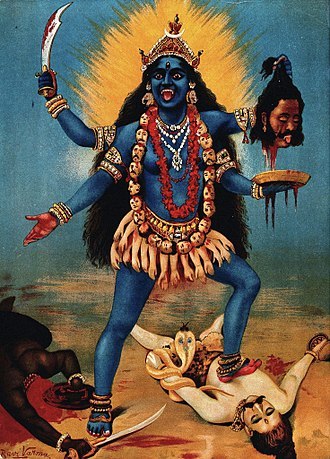
a fabric depiction of Kali like an orchid in homicidal bloom

Page 35:

The time and place seem right for an attack, a spasm of unexpected violence, a fissure across the surface of a Saturday night with a doom drone band playing that wears monkish robes to minimize their presence and maximize a semi-humorous or at least self-aware and not super-serious medieval vibe (it wouldn't surprise anyone if they lowered a miniature Stonehenge from the lights to the front of the stage in the middle of the show).

Page 38:

I'm listening to drum-based electronica piped over the house speakers, the lights down but not out, the room filling with dry ice and the anticipation of bass notes dropped as low as they can go, heavily distorted and sustained, each note a single steady stream but also rough, granular, emitting sparks like barbed-wire prongs, the overall sound like an electric fence surrounding the amalgamated mayhem of history.

Page 45:

Those years, the majority of my adult life so far, were the inverse progress of a butterfly, bright colors exchanged for the wooly gestative comfort of a cocoon that yields a caterpillar offspring, en route to the larval, pupal form of middle-aged parental existence

Page 66:

My friend's music lacked evil, the satanic edge, the rebelliousness, that nocturnal if not necessarily infernal orientation on the moral spectrum. His alignment was lawful good, essentially, like a paladin in Dungeons & Dragons, which he never had time or interest to play in elementary school because he had to practice piano and violin. He needed a touch of evil to give his music and playing and sensibility an edge, and maybe via drink, if he had ever learned to manage his drinking instead of completely restrict it, he could touch the hem of evil's Levi's. It was almost like he had a fatal flaw in his playing related to excessive whitebreadness, a natural resource and native instinct that led, naturally, to following in his mother's footsteps and becoming the minister of music at a progressive Unitarian-type church in one of the wealthiest towns north of New York City.

Page 78

If asked to stop texting or tweeting or whatever I'm doing, flashing open my phone every few minutes, alighting torso and face and fingers in heavenly smartphone glow, I'll say I'm writing an article. That'll be my alibi. I note that writing an article will be my alibi, but "alibi" autocorrects to "Albion," befitting a crowd primarily descended from European stock, the traditional hard-rock historical focal point of ancient Britannia, the Middle Ages, dreary castles, peasant villages set aflame by marauding hordes, wizards and wenches, lutes and folkloric lyricism, every nose with its wart.

[...]

The singer himself speaks in something that sounds like Romanian, Bulgarian, a southeastern European language inflected with Latin, an introductory lecture on the nature of the beast, the persistence of the Middle Ages, the Dark Ages, the Medieval stumble through dusk and night before the dawn of the Renaissance and rationality. Darkness persists, belief in ghosts, magic, binary spirits seeking influence, their forces in constant struggle in the air above us and inside us, masquerading these days as scientifically identified neurochemical and neuropsychological processes controlling our impulses, unconscious desires controlled with active reminders to pay attention to what we're doing so not to otherwise succumb to white and black spirits all around seeking possession.

Page 83

The volume must affect everyone's skin and thoughts. The watery surface of our eyes must ripple.

Page 100:

[...] I've had enough, I'm tired of standing in the slowly evolving colored fog listening to the sound of plate tectonics, of the leisurely settling of industrial pollution on medieval cathedrals, of the aging and weakening of everyone's bones, of in-evitable cognitive and bodily decline, of time itself pass-ing in a not entirely peaceful way, destroying everything in its path in the end, like slow-flowing lava.

Page 104:

It's the sound of inanimate wreckage and existential spiritual neuropsychological individual and collective dissolution, unified and simplified and repeated in gusts of sound distorted and enlarged by electricity, the amplifiers like elevated tombstone blocks in Europe, those walls of graves like post-office boxes filled with correspondence from the past in the form of corpses.


But the book ends on a pure tone that I won't spoil, într-un ton atât de firesc încât se confundă cu sublimul.
Profile Image for Caterina.
260 reviews82 followers
May 11, 2020
“. . . conscious once again of the desire and almost the strength to consecrate his life”
— Marcel Proust

“Jews on Twitter had placed three open parentheses and three closed parentheses on either side of their names, appropriating a tactic anti-Semites used to indicate Jews on Twitter. My father’s side is Lithuanian Jewish so I placed three closed parentheses after my name, with none before it thanks to my Polish Catholic mother.”

So begins this engaging new “day in the life” novella by Lee Klein. That day is March 18, 2017 — exactly three years before the date of this review and two months into the term of office of a certain United States president — and the day (or night) Klein attends a Sunn O))) concert in Philadelphia — an event that unexpectedly opens a window in time, a space to breathe and observe and contemplate — a sort of unorthodox contemporary retreat for spiritual renewal. Klein’s writing is vivid, original and fresh, striking the right balance between fun and seriousness. It definitely does not need to be accompanied by anything — but if you choose to turn your reading into a multi-media experience by inviting a live Sunn O))) concert* to recreate itself in the space between your ears during the concert portion of the reading, well, let’s just say it worked for me.

...I haven’t been thinking, I haven’t had sufficient unoccupied free-range time alone to hear myself think, and now it seems I have an hour or more to myself in a crowd of young men willing to pay $22 to stand and listen to super-loud low-frequency drone-doom minimalist-metal in a converted Spaghetti Warehouse. (p. 26-27)

With a voice that’s both sincere and ironically funny, Lee Klein takes us with him on his time off — a temporal gift from his wife to prepare him for a week alone with their toddler daughter while wife “Mamou” goes on a business trip. Protecting his family’s privacy, he doesn’t use their real names — so his daughter becomes “Kali” — nicknamed after the Hindu goddess. One thing I really liked about this book: it’s sort of upside-down from the usual expectations for books about forty-something white men in American society — in a refreshing way. Instead of the stereotypical arrogant jerk whose life falls apart with the sudden realization of his own mortality, Klein handles the move towards middle-aged stability with minimal drama. After a wake-up-call doctor’s visit, he’s pretty much quit drinking, started exercising, feels better -- but still, anxiety about the new president, the increase in racist and anti-semitic attacks, sexual assault and bullying and mass shootings — it’s making him kind of crazy — and, like most of us living and working and raising families and nursing creative ambitions in corporate America, his time is so fully booked that he has not had time to figure out how he, personally, should and can respond to the evils in the world, other than assassination fantasies — until, ironically, in the presence of music seemingly designed to overwhelm all thought …

…bass notes dropped as low as they can go, heavily distorted and sustained, each note a single steady stream but also rough, granular, emitting sparks like barbed-wire prongs, the overall sound like an electric fence surrounding the amalgamated mayhem of history.

This music isn’t for everyone. It’s not something you put on at a party, not even at the very end of the party unless everyone’s passed out or splayed all around on the floor after you spiked the punch with cyanide. It’s something you listen to alone, not in your car driving down the highway, although it could work on solo night drives across Nebraska or West Texas when the moon lights the sky and the road’s so straight you cut the headlights until you levitate. . . . It’s not beach music unless it’s a black volcanic beach littered with jagged shards of obsidian and everything smells like sulfur as a red tide laps at collapsing sandcastles. . . . .
(p. 39)


Hindu Goddess Kali, who according to Wikipedia was first known as a “destroyer of evil forces.”

I really enjoyed the cultural journey as Klein reflects back on his life as a single man, family life with his wife and daughter, work — it’s all spot-on, so many parallels to the lives of my brothers, my husband, other creative men of that generation. I had to chuckle at his trip to Guitar Center and fantasies about the specifics of guitars, effect pedals, amps. How many times have I accompanied my husband to Guitar Center or purchased a special occasion gift for him there? ... Meanwhile I’m apparently the rare nerdy woman who really likes Sunn O))) — a band whose typical audience, according to Klein, is twenty- and thirty-something men — but I was always that odd woman out — in engineering school, in school math competitions and, once upon a time, playing Dungeons and Dragons — whence the term “Neutral Evil” (which refers to a D&D character who is morally evil, and neutral, i.e., indifferent, toward the law). Who or what title might refer to wasn't clear-cut; it took on different meanings, changing as the story progressed to its climax.

(4.5/5)


Sunn O))) performing. Who knew I would like "doom drone minimalist metal"? To me, they even sound almost sexy, almost like the loud musical purr of Harley Davidson motorcycles, idling big trucks, or really, really big housecats. In Saint Francis of Assisi hooded brown robes.

Neutral Evil))), a 109-page autofictional novella published by Sagging Meniscus Press, a small independent publisher, is available now through Small Press Distribution and Amazon (links below) and by its official publication date of May 1, 2020 at Book Depository and Powell’s Books.

Small Press Distribution: https://www.spdbooks.org/AdvancedSear...

Amazon: https://www.amazon.com/Neutral-Evil-L...

Book Depository (free delivery worldwide): https://www.bookdepository.com/Neutra...

Powells: https://www.powells.com/book/-9781944...

______
*Sunn O))) concert recorded live, Los Angeles 2019. I couldn't find the one Lee attended in Philadelphia: https://www.youtube.com/watch?v=JpJrn...
Profile Image for W.D. Clarke.
Author 3 books351 followers
June 7, 2024
Long after finishing it, I find myself still thinking about this—let's not call it autofiction—digressive apologia pro vita sua and meditative, measured assessment of self, family and culture. And, above all, this is not so much an account but a demonstration of how the artist resists the pull of the "neutral evil" of the world by harnessing the chaotic good in it, in his or herself, and in other works of art.

Lee Klein's subtle, serpentine prose was not quite what I was expecting (the acerbic wit and irony of his earlier book, Thanks and Sorry and Good Luck: Rejection Letters from the Eyeshot Outbox (?)) when I pulled this slim volume from the TBR-soon shelf not as soon after acquiring it as I would have liked—and now, definitely should have done, since if I had done so I would now also have (what I presume is) its sequel, Chaotic Good under my belt and be ready for the forthcoming Like It Matters: An Unpublishable Novel, too, cos the writing is simply that compelling, I am happy to report.

Read the rest of this review on my blog: https://blog.wdclarke.org/the-art-of-...
Profile Image for Eric.
342 reviews
March 25, 2021
Am I Lee Klein? Or will I be? Or was he me?

We both have a Polish Catholic parent. We both have a Jewish parent. We’re white and blue-eyed and six foot three.

Neutral Evil ))), a book of associations, repetitions, imaginations, devastations, interpretations, is a book I would have liked to write.

Maybe, if I’m Lee Klein, or will be, or can be, I will one day. Maybe twenty years from now I’ll be completing a draft of ((( Neutral Evil ))) (my mom is the Jewish one) and apart from the adjustment of the title the text will be the same but not the same. Maybe twenty years from now I will be Pierre Menarding Lee Klein’s book (the title of which seems to name its author's place on the D&D alignment chart, a fact derived by reading the book but not explicitly stated in it), publishing it, and basking in its simple glory, happy to be pricked with the sticking of medals, taking the National Book Award by a landslide, that word so often used to describe overwhelming political victory, as though that victory were necessarily dependent upon external and unpredictable forces, an earthquake for example, even picking up the lesser known prizes, the American Book Award let's say, and a half dozen of those hundred-thousand French Le Prix things, prizes from a country that seems to recognize the vast nobility of the enterprise of writers and poets at work today, most of them undeserving of prizes, a conspiracy of smithing in gold wares, more garlands than they know what do with. But I will accept them, all of them, gladly, with a classically American wink: I will gather them around me like poor doomed Ruth her miraculous roses in that tale of Jules Laforgue.

But what is Neutral Evil )))?

It's a book that takes us from the crush of the ocean floor to the crush of outer space.
It’s a book about America.
It's a book about resistance and resistance to certain forms of resistance.
It's a book about interhumanity.
It’s a book about the inner and the outer.
It's a book about routine.
It's a book about the onslaught of consciousness.
It's a book about serenity.
It's a book about the ongoing search for the right word.
It's a book about getting blocked,
being blocked,
blocking oneself,
letting oneself be blocked,
longing to be unblocked,
getting unblocked,
being unblocked,
trying perhaps not quite desperately but with real intention to stay unblocked.
It's a book of/for our time with roots outside our time.
It’s a book, in one sense I mean, that manages to embrace the information age without succumbing to it.

This requires a delicate balance.

Lee Klein (b. circa 1972) seems all balance in this novelette. I (b. circa 1992) can't help but to admire the effortlessness, the tightness of its loose-seeming structure, the pure joy of seeing it through to its remarkably conclusive and self-justifying end. The blurb on the back that notes its Knausgaardishness is 100% spot on. I say that because in reading the Norwegian author's six-book My Struggle cycle last year, a marathonic blaze, I found its most astounding, most obvious quality to be a smoothness of prose style, an ease sustained for several thousands of pages, a gargantuan/speedy reading experience, with unparalleled ability to get me outside myself by getting me inside someone else who seems so much like myself, suggesting the restoring (a word that occurs, with slight modification, as the last word of the last sentence of LK's novel) quality I associate with a small card table and folding chair set up next to a fountain whose water gently undulates, which for this reader leads to a very strong impulse to surrender himself to acceptance of everything prior, here and now, and to be. I was talking about Knausgaard but I meant to say that I find this in spades in NE ))) as well: the ease, the perfect pace, the feeling of connection to someone you've never met and probably will never meet. Reading Klein's book almost feels like wearing a visual decoder ring that requires no intervention beyond movement of eyes over the page, like Google glass or Microsoft Hololens with a kind of code-that-is-life-on-Earth-cracking feature that leads to an insight or potently personal identification on every page, over and over, as authorly reflection melts into central narrative then spins out into the associative territory of vignettes of the past, vignettes of the imagined (and usually immediate and dread-drenched) future, spins back to the almost comical concert Lee doesn't seem to even really enjoy being at, and yet for this book to be written he had to have been there. I wish there were more of it.
Profile Image for Jeff.
Author 5 books19 followers
February 14, 2020
My friends and I joke about how some books would be dangerous in the wrong hands. What we mean by that is, through sheer brilliance, certain writers can get away with things that lesser writers (the wrong hands) would turn into a disastrous pile of garbage. I don’t quite know if that’s objectively true, but the entire time I was reading this book, I kept thinking, “Man, thank God this book was in the right hands.”

The title: Neutral Evil )))--Neutral Evil, as in evil for evil’s sake; the triple ))) to signify the triple parentheses Trump-era Nazis have used to identify Jewish people on Twitter (and appropriated by Jews as a middle finger to fascism)--good God. By only using a trio of closed parentheses, Klein is also paying tribute to Sunn O))), the ambient noise metal band that plays a prominent role in the narrator’s thoughts. Those triple parentheses evoke soundwaves, like Aquaman’s telepathic waves when he calls marine creatures to do his bidding on the old Superfriends cartoon. Klein’s sentences unfurl in the same way as those telepathic waves, like the sub-bass at a Sunn O))) concert, their vibrations radiating outward, causing the “watery surface of our eyes [to] ripple.”

The plot: On the 58th day of the Trump presidency, our protagonist ingests edibles and makes his way to a Sunn O))) concert, where he muses on homelessness, the lechery of younger men, political assassinations, Francis Bacon’s Van Gogh studies, the ill-fated Eagles of Death Metal concert at the Bataclan, Jose Saramago, Kung Fu Panda, and so on and so forth in the ways our brains go “)))” after we’ve ingested edibles. It’s a longform lyric essay masquerading as a novella about fatherhood and middle age, about life in the early stages of Trump’s America, and an engagingly rambling concert review written by a man on pot cookies. Everything the narrator addresses, from presidential assassination to capitalism to basic human kindness is told in the manner of a stoned person’s long, oblique sentences with all the digressions and deep mental dives down the rabbit hole completely intact. Easily the most immersive reading experience I’ve had in a long time. It’s like one of those photo mosaic posters, where the big picture is comprised of a grid of tinier photos. There’s so much here to soak in and really examine, and it’s clear a musician wrote this book.

I honestly can’t say I’ve ever read anything like this. It’s like wandering into someone’s fever dream. Being forced to stay in the moment with the narrator until he was done with me really led to understanding his obsessions in what I can only describe as transcendent. I’m still honestly trying to wrap my head around how in the holy hell Lee Klein got away with this. The reason he got away with it is because he’s just that damn good, but still. I feel like Dennis Hopper at the end of Apocalypse Now, just wildly gesticulating and shouting, “I’m a little man. I’m a little man. I should’ve been a pair of ragged claws scuttling across the floors of silent seas!”

)))
Profile Image for Lori.
1,786 reviews55.6k followers
Read
May 1, 2020
I'm thrilled to be taking on the publicity for this title. It's a helluva read, and it's well worth checking out. Seriously, have I steered you wrong yet?!?

Hit me up if you're interested in reviewing the book or interviewing the author!

~~~~~~~~~~~~~~~~~~~~~~~~~~~~~~~

A review in a series of tweets:

So I've been reading this book, an auto fiction called Neutral Evil))), forthcoming from Sagging Miniscus, and it's short and kind of a little all over the place, and I wasn't sure what I thought of it as I'm moving through it...

I mean it's ultimately just this middle aged dude hitting up a concert on his own stoned out of his mind on edibles, and all the weird shit that floats through his head as he waits for the band to start....

at times he's lost in a droolfest of guitars and amps he wants to buy or wants to sell and then he's on a mental tangent about the best place to stand at a concert in case some one open fires on the crowd...

and then there are these really painfully woke moments where he realizes we're all social media sheep thumbing outlines of hearts thousands of times a day, and raising resist fists just because the dudes next to us do it, and he's painfully aware of his age and status...

and what he must look like to others as he walks down empty city streets where he fears being the one mugged but knows people would view him as the potential mugger and then he remembers a homeless guy he saw reading Jose Saramago's Blindness....

and the band has started and he's watching the crowd of people around him raise their fists and he says "I don't raise my fist because I don't want to be afflicted with white blindness. I want to resist viruses of any sort" and I'm like fuuuuuck.

103 pages into a 109 paged book and yaaaassss you found the way to hook me. I'm hooked.

- A lesson on why I almost never DNF a book
Profile Image for Cody.
988 reviews301 followers
September 26, 2021
I spent this weekend demolishing a bathroom—not fucking mine, I add!—that by all rights should be condemned. Framing hammer, sledgehammer, deadhead mallets, pry bar, flat bar, nail puller, Sawz-All, all manner of plumbing wrench errata: name it, I yielded that sonofabitch doing this ‘small project’ for _________.

But my mind? My mind today was in Philadelphia; nighttime, high as shit with my mind cycling through Echoplex’s (Echo-Rec…hmmmm) and the overpricing of Strymon’s; middle-aged and unafraid, confident in my vetiver; experiencing the slight delirium of Brain Ping-Pong as memories without obvious connection wire new synaptic patch cables to make the absolutest sense when linked, which—now I see!—they always have been; snow, sky, SUN(N), city, child, partner, president all forcing me to jot staggeringly profound notes on my phone that will, invariably, lose some, though not all, of their Hermetic alchemy come tomorrow. And sub-bass. One mustn’t ever forget the sub-bass.

In other words, and despite having fucking grout and plaster in my hair as I type this on my phone in my own home (finally), I’m Lee Klein. Or, to clarify, I got through all of today’s hammer-swinging horseshit/fuckery with the delight of Klein’s book, this book, as my fortitude—I so absorbed it that it absorbed me, twinning myself and the author (it is autobio, after all) in that psycho-liminal transference that we wish all books did.

And if that isn’t the litmus for greatness, then I have no idea what is. But I sure as fuck know that you don’t tell someone not to worry about bringing tools because you have everything, only to hand them a $4 hammer from Target (14oz.) so they can bust out several-hundred pieces of tile that would have made any Roman cry in envy.

But that’s neither here nor there.
Profile Image for Lealdo.
133 reviews12 followers
Read
July 13, 2021
It has been a funny feeling to read this prog-album-cover-covered, carefully crafted but still free-flowing piece of autofiction written by a sincere and sensitive man who, despite the 16-year age and the 4000-mile birthplace difference, shares so many tastes with me: not-too-famous authors, not-too-famous musicians, not-too-famous movie directors, guitar playing, beer and weed, some D&D; even if I know most of those sound expected or obvious or even cliché if, well, in 2020 you're prone to buy and read and review the kind of book which quotes Proust and Mark E. Smith for epigraphs.

Loved many of the causal insightful comments and admissions, such as the one about the cigarettes’ charm - 'the need for a cigarette standing in for elusive existential longings’ – something I've always felt since every image of someone looking from a balcony seems incomprehensibly incomplete without a cigarette –, the perfect description of using and deleting Twitter - something I've went through twice, the second one weeks ago -, the rave for the Kung Fu Panda trilogy, the more frequent than I expected and entirely relatable scenes of looking (and literally just looking) at women, the run (not a metal one, but more like a Garcia meandering solo) towards recalling and closing the cycle about Twitter and insurrection and collectiveness with the raised fists scene at the end of the concert.

Maybe slightly less compelling when going on about family life than about greater society, not that the insights in this case aren’t as sincere - it'll be imposible to not start using the expression lowest common-denominator family life.

As someone from a third-world country (fuck the ‘developing world’ euphemism) who's never been to Philadelphia, the feeling of danger (‘sense of generalized menace afloat’ as eventually described, but it appears long before that) surprised me. Also, the semi-humorous or at least self-aware terrorism fear which is still alien for me, no matter how much I read the news or how many American movies and books I watch and read.

Six stars for clairvoyance in the Blindness section, which ends with a 'I want to resist viruses of any sort', a strange presage for 2020, even more so with Blindness, together with The Plague, being one of the books whose internal world literary-minded readers have been turning to in order to better cope with the outside world.

Prevalent theme: an external world of sensations and the unexpected and the life of hustling and improvising – which can derange into drug addiction, insofar as they become a seemingly stable harbor amid all the mess - vs the mechanization of the daily life in order to allow little safe islands of daily creation and inwards exploration, a mechanization which still allows an occasional Saturday solo Adventure Experience into inner city and the writing of this book itself.
115 reviews13 followers
January 26, 2020
The action takes place within a 24 hour period but reflects back decades to when the writer was a very young man. The main character is preparing to attend a post apocalyptic sounding concert taking place in a former Spaghetti Factory someplace in Philadelphia. He premedicates prior to the concert to enhance the anticipated experience of transcendence. This free time to himself is a relatively rare occurrence because of "marriage, matrimony, mortgage" obligations. He imagines all kinds of horrors as he travels to the venue. Creeps lurking in corners of the subway station, people being pushed to their death in front of oncoming trains, terrorists taking the stage and showering the crowd with bullets. The anxieties of Trump's election and the growing number of mass murders lay heavy on his mind.

This is essentially a coming of (middle) age story about a man fighting and screaming against the changes and constrictions of middle age and maturity. Almost as if the band is performing a black mass after which the writer is transformed and achieves a kind of equanimity and acceptance.
Profile Image for Benoit Lelièvre.
Author 6 books187 followers
May 9, 2020
A sweet post-Trump novel about the mind-altering power of music and the difficulty of carrying on with you life when a morally bankrupt reality television star has become the most powerful man in the world.

Told in a semi stream-of-consciousness style, Neutral Evil))) echoes the bouncing, anxious thoughts in one's head when spending too much time on your own without talking to anyone. I know "stream of consciousness" tends to scare more pragmatic readers away, but it's done in a very relatable fashion here. I didn't care for the more self-aware moments, which came off a little clumsy and convoluted, but whenever the author is trying to understand himself through music, purchases or the culture he's consuming, Neutral Evil))) is quite endearing. Because this is how we connect to one another. Through culture.

Fun fact: I've seen Sunn O))) on the exact same tour, 72 hours before the author did. Alone also. That might make me the person in the world that is most likely to understand and appreciate this novel.
Profile Image for Jason.
1,321 reviews139 followers
June 14, 2023
I does like me a bit of autofiction, the journey into the mind of the author with all the many distractions and thoughts colliding with each other is very much the style I use when doing a review, as I’m writing this I just came up with a fantastic ending to this review…of course by the time I get there I won’t remember what the idea was, such is the life of a rambler. This book was a very pleasant read, I think most people would sit down and be drawn in like I was, you’ll soon be nodding along in agreement with the protagonist’s opinions, you’ll be chuckling to yourself as the plans for a Trump assassination are laid out before the reader.

At the heart of this book is a love of family, music and edibles, these thoughts are explored whilst watching a concert, the anxieties we have once you have found your partner/had a child/got a mortgage always creep upon you when you least expect it. Here the thoughts start to wander whilst waiting for the roadies to do their bit and the bands to start their set, it was interesting witnessing the back and forth with the consciousness wondering if he had made the right life choices and convincing himself that yes he has achieved everything he set himself when young, this is all interrupted with more thoughts, this time on how he will get home after the show or whether he should get a new amp. There are also those morbid thoughts you sometimes have, what will you do if a gunman entered the room and started shooting, these obsessions almost overwhelmed our hero. It’s all written really well, the flow is spot on and whilst reading you realise that you’re not that different…who hasn’t wanted to be a rock star or the person to take out the Trump?

As for that great ending? I have forgotten it so instead I’ll end with, this book starts with the main guy taking an edible so maybe the book should come with a free edible? A good fun read that very much feels like it was taken right from my head.

Blog review: https://felcherman.wordpress.com/2023...
Profile Image for Steven.
488 reviews16 followers
November 12, 2021
liked this book about a billion times more than goddamn Ben Lerner....although sort of irresponsible to eat weed and go to a concert when you have kids! jeez. babies having babies...I know you can't see me but I just shrugged my shoulders. it happens. "auto-fiction'. we still calling it that? usually meh....this one I enjoyed, im irresponsible too (to this level? noooooooo! not even close but he's a writer, they got no morals O well, I hope CPS doesn't read it. glad I did.
Profile Image for Matt.
1,142 reviews759 followers
July 26, 2022

Nice to read a detailed, quietly precise, and imaginatively observed average night out. Not too far from the way I might think and feel in a similar situation-- middle aged bookish white dude, good job, marriage, four-year-old daughter, liberal politics going to see Sunn O (a band I've only heard a little bit of and liked) in Philadelphia shortly after The Orange Menace was elected. All the mundane personal details, the ambient angst about the fate of the world, and way it feels to stand around an hour before the show starts, memories and curiosities and observations mingling.

It's not quite like Emerson saying "the drop is a small ocean" but maybe more like a lake.
Profile Image for Jacob Beeson.
4 reviews
May 20, 2020
Really interesting novella which felt like a consistent stream of consciousness involving political hatred, aging, and guitar equipment. It certainly met my interests.
64 reviews2 followers
December 12, 2021
Loved this part:

“This music isn’t for everyone. It’s not something you put on at a party, not even at the very end of the party unless everyone’s passed out or splayed all around on the floor after you spiked the punch with cyanide. It’s something you listen to alone, not in your car driving down the highway, although it could work on solo night drives across Nebraska or west Texas when the moon lights the sky and the road’s so straight you cut the headlights until you levitate. But in most circumstances, across most roads, it’s not road trip music. It’s not beach music unless it’s a black volcanic beach littered with jagged shards of obsidian and everything smells like sulfur as a red tide laps at collapsing sandcastles. It’s not yacht rock unless your yacht has cannonball holes blown into its side and is sinking thanks to old-timey pirates. It’s not surf music although I suppose there’s something oceanic about it, tidal, like the sound of fiendish bloodred whales swimming in circles, conspiring against harpoons, or an attempt to sonically represent, using traditional electric guitars and amplifiers, the pressure in the lowest reaches of the Marianas Trench (if Mount Everest were moved to the Trench a mile of water would separate its peak and the ocean floor), where they say the water pressure is a thousand times stronger than closer to surface. In short, it’s a heavy sound, something for the most part listened to alone, atmospheric minimalism born from the deepest darkest note ever played by Black Sabbath guitarist Tony Iommi, who lost his fingertips in a freak accident in his teens and had them capped with metal.”
Profile Image for S.C. Ferguson.
6 reviews
July 2, 2023
Lee Klein’s Neutral Evil ))) falls within the school of autofiction, sure, but it deviates from the ur-texts of that ill-defined genre (Sebald, Lerner, Knausgaard, and Cusk all occur to me) in its levity, its “sense of play,” and – it must be said – its thoroughgoing American-ness. That’s not to say that Neutral Evil ))) avoids the literary depths. In just over one hundred pages, Klein takes us seemingly everywhere, from wistful assassination fantasies to questions of lust and misogyny to Guitar Center junkets to heartwarming stories of parenting. He also engages with death, the enduring presence (and varieties) of evil in our world, and the mysteries of sex, music, literature, marriage, fatherhood, food, and craft beer. He covers this ground in a headlong, impetuous, winsomely personable style that is heavy on lists and absolute phrases – the poetry, that is, of “late capitalist” urban/suburban hipster-dad life. An especially moving aspect of this excellent book: Klein’s discussion of virtuosity vs. taste. Does one need virtuosity in order to make great art? Or is great taste enough? (The point is moot in Klein’s case: he’s got both.)
Profile Image for Daniel.
104 reviews2 followers
January 14, 2024
I discovered Lee Klein on goodreads, reading his review of Bernhard's The Loser. I emailed him some questions about Bernhard and he was generous enough to answer. The question looming over this novel is how can someone do a Bernhard-ian novel in the trump era when coarse invective is so exhausted? Klein sees that so many of the tropes can be effectively inverted to produce something novel. Abandon the invective; be reasonable. Don't throw away the piano because you aren't a virtuoso; keep on writing even if you have to keep the day job. Spend peak twitter off twitter and vibe at some kind of ambient metal concert on your evening off. If you are reading this in twenty years or so, and you weren't even alive during the (first!?) Trump presidency, then you should know that *this* is what it was like for a lot people. They had their shit together and raised their kid. It wasn't all No One Is Talking About This, or Red Pill, or Ducks, Newburyport.
Displaying 1 - 20 of 20 reviews

Can't find what you're looking for?

Get help and learn more about the design.