Jump to ratings and reviews
Rate this book

The Tapestried Chamber

Rate this book
'This is another little story from The Keepsake of 1828. It was told to me many years ago, by the late Miss Anna Seward, who, among other accomplishments that rendered her an amusing inmate in a country

Sir Walter Scott, in full Sir Walter Scott, 1st Baronet, (born August 15, 1771, Edinburgh, Scotland--died September 21, 1832, Abbotsford, Roxburgh, Scotland), Scottish novelist, poet, historian, and biographer who is often considered both the inventor and the greatest practitioner of the historical novel.
Scott's father was a lawyer, and his mother was the daughter of a physician. From his earliest years, Scott was fond of listening to his elderly relatives' accounts and stories of the Scottish Border, and he soon became a voracious reader of poetry, history, drama, and fairy tales and romances. He had a remarkably retentive memory and astonished visitors by his eager reciting of poetry. His explorations of the neighbouring countryside developed in him both a love of natural beauty and a deep appreciation of the historic struggles of his Scottish forebears.
Scott was educated at the high school at Edinburgh and also for a time at the grammar school at Kelso. In 1786 he was apprenticed to his father as writer to the signet, a Scots equivalent of the English solicitor (attorney). His study and practice of law were somewhat desultory, for his immense youthful energy was diverted into social activities and into miscellaneous readings in Italian, Spanish, French, German, and Latin. After a very deeply felt early disappointment in love, he married, in December 1797, Charlotte Carpenter, of a French royalist family, with whom he lived happily until her death in 1826.
In the mid-1790s Scott became interested in German Romanticism, Gothic novels, and Scottish border ballads. His first published work, The Chase, and William and Helen (1796), was a translation of two ballads by the German Romantic balladeer G.A. B�rger. A poor translation of Goethe's G�tz von Berlichingen followed in 1799. Scott's interest in border ballads finally bore fruit in his collection of them entitled Minstrelsy of the Scottish Border, 3 vol. (1802-03). His attempts to "restore" the orally corrupted versions back to their original compositions sometimes resulted in powerful poems that show a sophisticated Romantic flavour. The work made Scott's name known to a wide public, and he followed up his first success with a full-length narrative poem, The Lay of the Last Minstrel (1805), which ran into many editions. The poem's clear and vigorous storytelling, Scottish regionalist elements, honest pathos, and vivid evocations of landscape were repeated in further poetic romances, including Marmion (1808), The Lady of the Lake (1810), which was the most successful of these pieces, Rokeby (1813), and The Lord of the Isles (1815).

30 pages, ebook

First published January 1, 1829

5 people are currently reading
102 people want to read

About the author

Walter Scott

10.5k books2,005 followers
Librarian Note: There is more than one author in the GoodReads database with this name.

Sir Walter Scott was a Scottish novelist, poet, historian, and biographer, widely recognized as the founder and master of the historical novel. His most celebrated works, including Waverley, Rob Roy, and Ivanhoe, helped shape not only the genre of historical fiction but also modern perceptions of Scottish culture and identity.

Born in Edinburgh in 1771, Scott was the son of a solicitor and a mother with a strong interest in literature and history. At the age of two, he contracted polio, which left him with a permanent limp. He spent much of his childhood in the Scottish Borders, where he developed a deep fascination with the region's folklore, ballads, and history. He studied at Edinburgh High School and later at the University of Edinburgh, qualifying as a lawyer in 1792. Though he worked in law for some time, his literary ambitions soon took precedence.

Scott began his literary career with translations and collections of traditional ballads, notably in his Minstrelsy of the Scottish Border. He gained early fame with narrative poems such as The Lay of the Last Minstrel and The Lady of the Lake. As the popularity of poetic storytelling declined, especially with the rise of Lord Byron, Scott turned to prose. His first novel, Waverley, published anonymously in 1814, was set during the Jacobite rising of 1745 and is considered the first true historical novel. The success of Waverley led to a long series of novels, known collectively as the Waverley Novels, which blended historical events with compelling fictional narratives.

Over the following years, Scott produced a remarkable number of novels, including Old Mortality, The Heart of Midlothian, and The Bride of Lammermoor, each contributing to the romantic image of Scotland that became popular throughout Europe. With Ivanhoe, published in 1819, he turned his attention to medieval England, broadening his appeal and confirming his status as a major literary figure. His works were not only popular in his own time but also laid the groundwork for historical fiction as a respected literary form.

Scott married Charlotte Genevieve Charpentier in 1797, and they had five children. In 1820, he was granted a baronetcy and became Sir Walter Scott. He built a grand home, Abbotsford House, near Melrose, which reflected his passion for history and the Scottish past. However, in 1825, financial disaster struck when his publishers went bankrupt. Rather than declare bankruptcy himself, Scott chose to work tirelessly to pay off the debts through his writing. He continued to produce novels and non-fiction works at a staggering pace despite declining health.

Walter Scott died in 1832, leaving behind a literary legacy that influenced generations of writers and readers. His works remain widely read and studied, and he is credited with helping to revive interest in Scottish history and culture. Abbotsford House, now a museum, stands as a monument to his life and achievements.

Ratings & Reviews

What do you think?
Rate this book

Friends & Following

Create a free account to discover what your friends think of this book!

Community Reviews

5 stars
19 (7%)
4 stars
57 (21%)
3 stars
129 (47%)
2 stars
56 (20%)
1 star
9 (3%)
Displaying 1 - 30 of 42 reviews
Profile Image for Bionic Jean.
1,384 reviews1,567 followers
August 30, 2023
The Tapestried Chamber; Or, the Lady in the Sacque is a ghost story by Sir Walter Scott. It was first published for the Christmas of 1828, as the middle one of three short stories by him, in the literary annual “The Keepsake”. Another story by Sir Walter Scott also appeared in this edition.

The author says that the story had been told to him many years ago by the late Miss Anna Seward of Litchfield, when they were both guests in an old country house:

“There are hours and moods when most people are not displeased to listen to such things; and I have heard some of the greatest and wisest of my contemporaries take their share in telling them.”

The Tapestried Chamber; Or, the Lady in the Sacque is a traditional spooky tale, best read in the depths of Winter, in front of a roaring fire, sitting ensconced in a wing-back chair. And preferably in the library of an old, haunted country house …

Or as Sir Walter modestly suggests: “read aloud to an undoubting audience by the doubtful light of the closing evening, or in silence by a decaying taper, and amidst the solitude of a half-lighted apartment, it may redeem its character as a good ghost story”.

We begin over thirty years earlier, with General Browne, who has just returned to England from fighting in the American War of Independence. He is riding on horseback through the West Country, when he sees a small country town, with a picturesque old castle:

“The little town, with its stately old church … lay amidst pastures and cornfields of small extent, but bounded and divided with hedgerow timber of great age and size. There were few marks of modern improvement … the houses were old, but in good repair; and the beautiful little river murmured freely on its way to the left of the town, neither restrained by a dam nor bordered by a towing-path.

Upon a gentle eminence … were seen, amongst many venerable oaks and tangled thickets, the turrets of a castle as old as the walls of York and Lancaster.”


The battle-weary General is delighted with the glimpses he can see of the charming “ancient feudal fortress”, through the woods and glades. He makes enquiries in the village, and learns that it named “Woodville Castle” and owned by a nobleman called Lord Woodville—who, as chance would have it, had been his schoolfellow! He decides to call upon his old friend, and makes his way to the gothic Lodge.

At first the young Lord does not recognise his former schoolfellow, who is battered and much scarred. But as soon as the General speaks, he does, and:

“the hearty greeting which followed was such as can only be exchanged betwixt those who have passed together the merry days of careless boyhood or early youth.”

Lord Woodville proves to be an amiable host, and says he has followed General Browne’s career with great interest over the years. He soon persuades the old soldier to be his guest for a week, and at bedtime shows him to an old-fashioned room where tapestries hang. It is luxuriously furnished in the old style, and well lighted by two large candles and a blazing fire.

The scene is now well set. We have all the elements for a mysterious gothic tale, and this is a satisfying read. There are no real surprises or originality, but we do want to know what happens. Why, for instance, is Lord Woodville informed by his servant the next morning, that General Browne has been wandering in the grounds since such an early hour? Why, when the General appears at the breakfast table, is he so unkempt, with a haggard face, and an abstracted air? And why above all else, does he announce that he must depart immediately?

Lord Woodville is a kind and personable young man, and concerned for his friend. Sure enough, the General—whose courage can never be questioned—tells him why he has reached this state. And sadly, his friend is able to reveal after a while, the source of the horror.

If you enjoy Victorian ghost stories, and do not mind the flowery language, you may like this one. Sir Walter Scott knows how to tell a tall tale.

“Upon a face which wore the fixed features of a corpse were imprinted the traces of the vilest and most hideous passions which had animated her while she lived. The body of some atrocious criminal seemed to have been given up from the grave, and the soul restored from the penal fire, in order to form for a space a union with the ancient accomplice of its guilt.”
Profile Image for Alberony Martínez.
600 reviews37 followers
September 25, 2020
Cuento publicado en 1828 por Sir Walter Scott, dramaturgo, poeta y escritor ingles de principio de siglo XIX, mejor recordado por novelas como Ivanhoe. Cabe destacar que, junto al oficio de escritor, también fue abogado.

De que va este cuento, nada más y nada menos, de la historia de un fantasma. Tras el regreso de la guerra estadounidense, el general Browne, quien fue utilizado como un conejillo de india por su amigo Lord Woodville fue colocado en una habitación anticuada con tapices. Este encuentro casual entre un militar retirado (el general Browne) y un amigo noble (Lord Woodville) en la propiedad más nueva del señor, se está celebrando una fiesta y, aunque aparece de la nada, los dos son amigos de la vieja escuela. Entonces, se invita al general Browne a unirse a la ensoñación y quedarse la semana. Sin embargo, cuando le dan una habitación en particular para dormir, esos planes cambian drásticamente. El general pierde el desayuno a la mañana siguiente y deja en claro sus intenciones de irse. ¿Por qué? Bueno, ahí radica la esencia de la historia, que Lord Woodville busca a través de una entrevista íntima

El general, en medio de la noche, se da cuenta de que no esta solo en la habitación, y puede ver la silueta de una acompañante, la cual en tiempo anteriores, ya se hablaba de que pernotaba en esa habitación, y es por eso, lo del conejillo de india, el General fue utilizado para darle validez a lo que se decía.

Es un cuento de una lectura fresca, donde se mezcla lo divertido y lo espeluznante, pero, pero debo decir, que el mismo cuento se liquida desde principio, pues se sabe lo que ocurrirá, y su final se hace pastoso, decirle a un General que era un experimento, y nada más.
October 26, 2019
Old school gothic story from the last days of romanticism (published in 1829).
It's interesting how the anglophone world never achieved the avant-garde and revolutionary forms of the prose text as their French and German counterparts did achieve in the same period.
Chateaubriand and Schiller (in this case I am thinking about Schiller's only prose which is of course a gothic ghost unfinished novel; "The Ghost Seer") are the foremost examples of this.
The Jena circle of the 1790s was even more avant-garde, 1790s in Jena were in literature far more revolutionary than 1920s in Moscow.
There was never such a courageous and swifty period of art in history as romanticism with it's shinning dark.
The language, although not as brave and avant-garde as the language of the continental texts, is very atmospheric. It builds strong and vivid scenes that lurk your mind.
Of course that you will not shiver reading this story but you will enjoy it's dark nature.
It's a typical ghost story but with such a good aroma!
Romanticism is like Bela Lugosi, undead.
https://youtu.be/YtLlmrrCajA
Profile Image for Latasha.
1,358 reviews434 followers
November 23, 2013
I'm not so sure these guys were as good of friends as the main character thinks. his buddy knew the room was rumored to be haunted but still put him in it anyways?!
Profile Image for Alyssa.
675 reviews225 followers
December 6, 2017
This was a fun little tale. It would have been more enjoyable had we experienced the "haunting" while our narrator was and I cannot help but thing was a crummy "friend" he had to test him so!
Profile Image for Caroline.
1,547 reviews77 followers
May 24, 2019
I'm sure this would have been an entertaining and spooky tale at the time it was published, but not so much now.
Profile Image for Keith.
938 reviews12 followers
October 22, 2022
“...it must be admitted that the particular class of stories which turns on the marvellous possesses a stronger influence when told than when committed to print. The volume taken up at noonday, though rehearsing the same incidents, conveys a much more feeble impression than is achieved by the voice of the speaker on a circle of fireside auditors, who hang upon the narrative as the narrator details the minute incidents which serve to give it authenticity, and lowers his voice with an affectation of mystery while he approaches the fearful and wonderful part.”


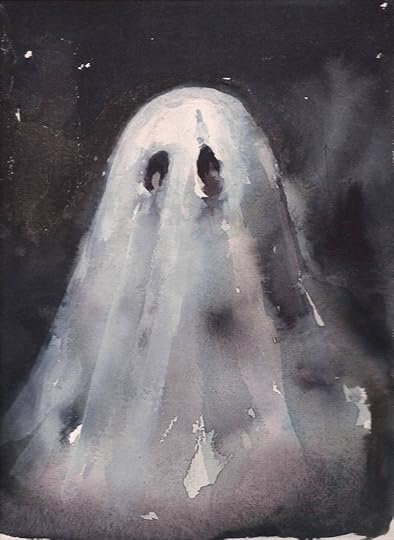
[“Ghost Print” by Mary Hayes]

“The Tapestried Chamber, OR, the Lady in the Sacque,” is a ghost story written by Sir Walter Scott and first published in the 1828 installment of The Keepsake. I find that the story’s set-up is far too long, while the actual interaction between a human being and a ghost is effective. Scott provides two different introductions for a reason that I cannot fathom. The quote above is interesting, however. He reflects that stories of the supernatural tend to be scarier when delivered orally rather than read in a book. It can also be beneficial to read a horror tale in an appropriate setting or time of day to experience the full impact.

Regarding Sir Walter Scott, H.P. Lovecraft mentions him several times in his literary essay Supernatural Horror in Literature: in chapter 2 he reflects that Scott’s “respect for the supernatural was always great.” In chapter 5, titled The Aftermath of Gothic Fiction, Lovecraft goes into a little more detail and mentions “The Tapestried Chamber” specifically:
In this same period Sir Walter Scott frequently concerned himself with the weird, weaving it into many of his novels and poems, and sometimes producing such independent bits of narration as “The Tapestried Chamber” or “Wandering Willie’s Tale” in Redgauntlet, in the latter of which the force of the spectral and the diabolic is enhanced by a grotesque homeliness of speech and atmosphere. In 1830 Scott published his Letters on Demonology and Witchcraft, which still forms one of our best compendia of European witch-lore.
Sean Branney and Andrew Leman include “The Tapestried Chamber” in their excellent audiobook The Literature of Lovecraft, Volume 1 (2021)* and that is where I listened to it.

Title: “The Tapestried Chamber”
Author: Sir Walter Scott
Dates: 1828
Genre: Fiction - Short story, horror
Word count: 5,834 words
Date(s) read:6/9/22-6/10/22
Reading journal entry #180 in 2022

Link to the story: https://www.gutenberg.org/files/1668/...

Sources:
Lovecraft, H. P., & Joshi, S. T. (2012). The annotated supernatural horror in literature (second edition). Hippocampus Press. https://www.hplovecraft.com/writings/... (Original work published 1927)

Scott, W. (2021). The tapestried chamber. In H.P. Lovecraft Historical Society (Ed.), The Literature of H.P. Lovecraft (S. Branney, Narr.; A. Leman, Narr.) [Audiobook]. HPLHS. https://www.hplhs.org/lol.php (Original work published 1828)

Link to the image: Ghost Print by Mary Hayes: https://www.saatchiart.com/print/Pain...

Review was written on June 12, 2022

*The contents of The Literature of H.P. Lovecraft are:
"The Adventure of the German Student" by Washington Irving
"The Avenger of Perdóndaris" by Lord Dunsany
"The Bad Lands" by John Metcalfe
"The Black Stone" by Robert E. Howard
The Boats of the "Glen Carrig" by William Hope Hodgson
"Count Magnus" by M.R. James
"The Dead Valley" by Ralph Adams Cram
"The Death Mask" by Henrietta Everett
"The Fall of the House of Usher" by Edgar Allan Poe
"The Ghost of Fear" by H.G. Wells (also called “The Red Room”)
"The Ghostly Kiss" by Lafcadio Hearn
"The Horla" by Guy de Maupassant
"The House and the Brain" by Edward Bulwer-Lytton
"The House of Sounds" by Matthew Phipps Shiel
"Idle Days on the Yann" by Lord Dunsany
"Lot #249" by Arthur Conan Doyle
"The Man-Wolf" by Erckmann-Chatrian
"The Middle Toe of the Right Foot" by Ambrose Bierce
"The Minister's Black Veil" by Nathaniel Hawthorne
"The Monkey's Paw" by W.W. Jacobs
"One of Cleopatra's Nights" by Théophile Gautier
"The Phantom Rickshaw" by Rudyard Kipling
The Place Called Dagon by Herbert Gorman
"Seaton's Aunt" by Walter de la Mare
"The Shadows on the Wall" by Mary E. Wilkins
"A Shop in Go-By Street" by Lord Dunsany
"The Signal-Man" by Charles Dickens
"Skule Skerry" by John Buchan
"The Spider" by Hanns Heinz Ewers
"The Story of a Panic" by E.M. Forster
"The Strange Case of Dr. Jekyll and Mr. Hyde" by Robert Louis Stevenson
"The Tale of Satampra Zeiros" by Clark Ashton Smith
"The Tapestried Chamber" by Sir Walter Scott
"The Upper Berth" by F. Marion Crawford
"The Vampyre" by John Polidori
"The Venus of Ille" by Prosper Mérimée
"The Were Wolf" by Clemence Housman
"What Was It?" by Fitz-James O'Brien
"The White People" by Arthur Machen
"The White Wolf of the Hartz Mountains" by Frederick Marryat
"The Willows" by Algernon Blackwood
"The Yellow Sign" by Robert W. Chambers
"The Yellow Wallpaper" by Charlotte Perkins Gilman

My reviews for all of the stories, read in the order that they were written:
The Vampyre (1819) by John William Polidori
The Adventure of the German Student (1824) by Washington Irving
The Tapestried Chamber (1828) by Walter Scott
The Minister's Black Veil (1836) by Nathaniel Hawthorne
The Venus of Ille (1837) by by Prosper Mérimée
The White Wolf of the Hartz Mountains (1839) by Frederick Marryat
The Fall of the House of Usher (1839) by Edgar Allan Poe
What Was It? (1859) by by Fitz-James O'Brien
The House and the Brain (1859) by Edward Bulwer-Lytton
The Signal-Man (1866) by Charles Dickens
The Man-Wolf by Erckmann-Chatrian
The Ghostly Kiss (1880) by Lafcadio Hearn
One of Cleopatra's Nights (1882) by by Théophile Gautier
The Upper Berth (1886) by F. Marion Crawford
The Strange Case of Dr. Jekyll and Mr. Hyde (1886) by Robert Louis Stevenson
The Horla (1887) by Guy de Maupassant
The Phantom Rickshaw (1888) by Rudyard Kipling
”The Middle Toe of the Right Foot” (1891) by Ambrose Bierce
Lot #249 (1892) by Arthur Conan Doyle
The Yellow Wallpaper (1892) by Charlotte Perkins Gilman
The Ghost of Fear (1894) by H.G. Wells- also called The Red Room
The Yellow Sign (1895) by Robert W. Chambers
The Dead Valley (1895) by Ralph Adams Cram
The Were-Wolf (1896) by Clemence Housman
The Monkey's Paw (1902) by W.W. Jacobs
The Shadows on the Wall (1903) by Mary E. Wilkins
Count Magnus (1904) by M.R. James
The White People (1904) by Arthur Machen
The Willows (1907) by Algernon Blackwood
The Boats of the "Glen Carrig" (1907) by William Hope Hodgson
Idle Days on the Yann (1910) by Lord Dunsany
The Story of a Panic (1911) by E.M. Forster
The House of Sounds (1911) by Matthew Phipps Shiel
A Shop in Go-By Street (1912) by Lord Dunsany
The Avenger of Perdóndaris (1912) by Lord Dunsany
The Spider (1915) by Hanns Heinz Ewer
The Death Mask (1920) by H.D. Everett
The Bad Lands (1920) by John Metcalfe
Seaton's Aunt (1922) by Walter de la Mare
The Place Called Dagon (1927) by Herbert S. Gorman
Skule Skerry (1928) by John Buchan
The Tale of Satampra Zeiros (1929) by Clark Ashton Smith
The Black Stone (1931) by Robert E. Howard
Profile Image for Lady Megan Fischer.
204 reviews2 followers
December 14, 2022

"The Tapestried Chamber" weaves the tale of General Browne, a British soldier. Recently returned home from "the American War", Browne is traveling through Western England and comes upon a beautiful and ancient castle. He finds himself strangely drawn to it, desperate to know more, to visit it, to see what it looks like inside.

He discovers the castle belongs to an old friend, Lord Woodville, who of course extends an invitation for Browne to join a party he's currently entertaining at the castle.

Browne spends an uneasy night, and tells everyone they must leave at once, as the castle is haunted. Will this news surprise Woodville and his party, or have then known this spooky truth all along?

There's a good reason the Scots love Sir Walter Scott; the richness of description alone is enough to make him worth reading, but there’s a spooky sort of fun he’s having here, too, that’s really great.

Profile Image for Sara Calderón.
21 reviews
October 8, 2025
Reto de 13 lecturas de Terror - Club "Clásico es leerte" 📚
Consigna: atrapado en la pared
Cuento: La cámara de los tapices

3/5. En esta historia, un general decide pasar la noche en una habitación cubierta de antiguos tapices, sin imaginar que entre esas telas parece haber quedado atrapada una presencia... Lo que me agradó de este cuento es que el miedo no viene de lo que se ve, sino de lo que no se dice. Scott juega con el silencio, con esa sensación de que algo se mueve detrás de la pared, como si el pasado hubiera quedado impregnado en los tapices y estén esperando volver a salir. No es un cuento de sustos directos, sino más de atmósfera. Estuvo bien, pero no me sorprendió.
3,480 reviews46 followers
April 20, 2023
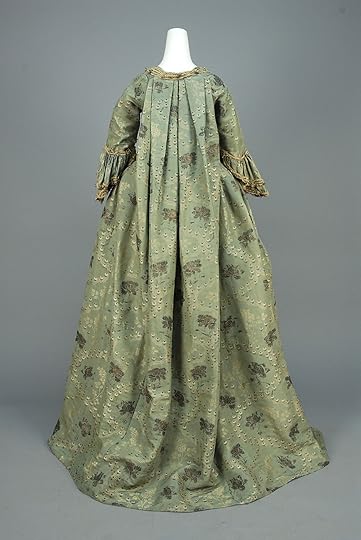
The apparition of an old lady ancestress forms the story of the Tapestried Chamber, by Sir Walter Scott. An old woman with the features of a demonic hag, whose dress was an old-fashioned gown, which ladies call a sacque; that is, a sort of robe completely loose in the body, but gathered into broad plaits upon the neck and shoulders.
Profile Image for Daniy ♠.
760 reviews3 followers
November 24, 2022
Como siempre con estas historias de terror tan antiguas, el factor miedo parece ser muy poco, como que te quedas pensando y eso fue todo?, pero bueno teniendo en cuenta que son tiempos distintos, la historia esta muy bien narrada, no habia leido nada de Sir Walter Scott y, al menos en esta historia, me gusto mucho como escribe.
Profile Image for BookishDramas.
848 reviews28 followers
September 15, 2025
This story made a tremendous impact on me and my reading along with some of Edgar allan and sheridan le fanu books. I started reading a continuous belt of ghost and horror stories from across the globe and also watching a lot of movies from the genre.
Very haunting and with a lot of character, will be a bit too slow by today's standard.
Profile Image for Tom.
705 reviews41 followers
October 11, 2017
Fairly unexceptional short about an ex-army man who stays in the ancestral home of a friend when returning from the American wars and has a ghostly visitation. Fairly generic stuff, held up fairly flimsily as a short story.
Profile Image for Jennifer.
100 reviews3 followers
November 15, 2017
Sir Walter Scott is a chronic mansplainer and this is no exception
Profile Image for Jill.
1,182 reviews
December 4, 2020
Interesting but not a frightening ghost story that I was lead to believe it was going to be.
Profile Image for sofia.
192 reviews2 followers
Read
December 29, 2021
I call this my reading challenge is fucked and I’m Scottish xxx really liked the prose, it’s just a nice wee spooky story which probs would have more impact read at a spooky party and in the 1800s
Profile Image for Guille Olivieri.
104 reviews
August 23, 2022
2.5
Me gustó el misterio y la fantasía del relato, aunque me hubiese gustado algo más sobre la historia paranormal. Me resultó un sabor a poco por este lado.
Eso sí, las descripciones son bellísimas.
Profile Image for Debbie Green.
245 reviews4 followers
February 28, 2023
I read this in a collection of ghostly tales. I would probably give it about 31/2 stars. It was spooky but there was no jeopardy as you knew nothing was going to happen to the character.
6,726 reviews5 followers
November 13, 2023
I listened to this as part of the Classic Tales of Horror - 500+ Stories. It was very enjoyable 2023
Profile Image for kayleigh.
214 reviews
December 28, 2023
2.5 ⭐⭐✨

not scary, and didn't hold enough interest to make up for it. would have appreciated more history to explain the haunting of the room.
Profile Image for Epsilon.
40 reviews9 followers
June 5, 2024
It was okay. Obviously a quick read, with not much to say. Reading it in the 21st century probably dampens the mystery it must've been a few centuries ago, but I still enjoyed it.
Profile Image for Brooke Cousins.
65 reviews1 follower
January 27, 2025
general browne is a saint because i would not be forgiving my friend who purposely mixed me up in his haunted house experiment and traumatized me for life in the span of two sentences
Displaying 1 - 30 of 42 reviews

Can't find what you're looking for?

Get help and learn more about the design.