Did you know that:
****Wes Craven came up with the idea for “A Nightmare on Elm Street” after reading about a real-life epidemic of mysterious sleeping deaths. Primarily occurring in males from Southeast Asia, Sudden Unexplained Nocturnal Death Syndrome (SUNDS) is exactly what it sounds like: dying suddenly in one’s sleep. There are many different causes for this, including pre-existing heart disease, but Craven wondered if it couldn’t also be some strange guy in an ugly sweater with knives for hands jumping inexplicably into your subconscious and killing you in your dream. Who’s to say it isn’t?
****A real-life shark attack in Beach Haven, New Jersey in 1916 left four dead and one seriously injured. Steven Spielberg’s “Jaws” (and the Peter Benchley novel it was based on) was loosely based on this incident. Also, the story that Quint (Robert Shaw) relates in the movie about the USS Indianapolis is a true story. During World War II, in the Pacific, the U.S. battleship was sunk by a Japanese submarine. Of the crew of 1195 men, roughly 900 survived the bombing. Unfortunately, in the days that followed, the splashing and bleeding survivors attracted numerous sharks, and a feeding frenzy began. Not even four days later, when rescue finally arrived, only 316 men were left alive.
****Anthony Hopkin’s Oscar-winning performance of the sociopathic but charming Dr. Hannibal Lecter is a composite character based on three famous serial killers: a Mexican doctor named Alfredo Trevino who killed and dismembered his lover and buried the body parts in a small box; Russia’s most famous serial killer, Andrei Chikatilo, who was arrested and executed for the murders (and cannibalization) of 53 women and children; and “The Monster of Florence”, an Italian serial killer alleged to have killed 14 people whose identity is still unknown today.
****The 1979 film “The Amityville Horror” was all bullshit. Based on a book by Jay Anson claiming to be a true story, the truth behind the film is even crazier. The Lutz family bought the famous house in 1975 for a great deal, mainly due to the fact that the previous owners were murdered in it. Over many nights of wine-drinking and telling wild ghost stories, the Lutzes and a lawyer named William Weber decided to have Anson write a book about their “paranormal experience” in the house. Weber admitted years later that the whole thing was “a hoax” with the sole purpose of making money. The fact that gullible people still believe that the house is haunted is testament to the fact that everybody loves a good ghost story.
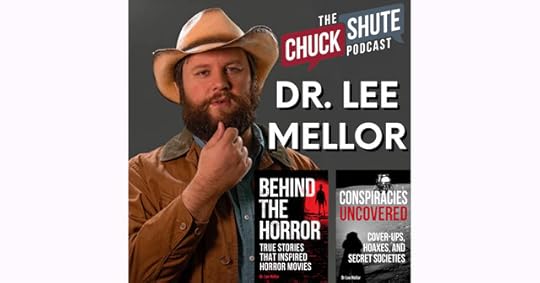
These are just a few of the many cool “true stories” behind some classic horror films in Dr. Lee Mellor’s “Behind the Horror”. I could go on and on—-especially about the numerous pre-war German serial killers that formed the basis for Fritz Lang’s classic 1931 film “M: A City Searches for a Murderer” or the real-life exorcism that was the basis for William Friedkin’s “The Exorcist”—-but I don’t want to give all the fun away. And this book is, especially for horror fans, a lot of fun.