"[A] sunny, can-do look at intense culture shock. Debeljak makes a humorous, self-effacing guide to her own story and the only complaint I have is that I wish she’d told us more. I hope someday she gives us a sequel."— Christian Science Monitor • "Witty and warm."— Kirkus Reviews
Forbidden Bread is an unusual love story that covers great territory, both geographically and emotionally. The author leaves behind a successful career as an American financial analyst to pursue Ales Debeljak, a womanizing Slovenian poet who catches her attention at a cocktail party. The story begins in New York City, but quickly migrates, along with the author, to Slovenia. As she struggles to forge an identity in her new home, Slovenia itself undergoes the transformation from a communist to a capitalist society. A complicated language, politically incorrect ethnic jokes, and old-fashioned sexism are just a few of the challenges Debeljak faces on her journey. Happily, she marries her poet and comes to love her new husband's family as well as the fast-disappearing rural traditions of this beautiful country. Set against the dramatic backdrop of the Slovenian Ten Day War and the much longer Yugoslav wars of succession, Forbidden Bread shows a worldly and courageous woman coming to grips with her new life and family situation in a rapidly changing European landscape.
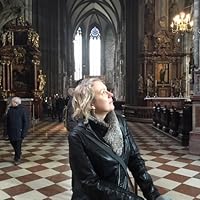
Erica Johnson Debeljak (born 1961, San Francisco, U.S.) is an American-Slovenian writer and translator, an American expatriate living in Slovenia.
From 1987 to 1993, she worked as an financial analyst at the French government-owned Banque Nationale de Paris and as lender to the major Wall Street firms.
After moving to Slovenia, she has worked as a translator and columnist for local newspaper Delo. Her essays and stories have also appeared in US News and World Report, Glimmer Train, Prairie Schooner, The Missouri Review, Nimrod, Epoch, Common Knowledge, and Eurozine. Barren Harvest: The Selected Poems of Dane Zajc, she translated in 2004, was published by White Pine Press.
She has published a number of books both in Slovenian and English, including two memoirs (Foreigner in the House of Natives and Forbidden Bread), a biography of Srečko Kosovel titled Srečko Kosovel: Pesnik in jaz, and a novel Anti-Fa cona.
This is an interesting memoir by a former New York financial analyst who moved to the newly-formed Slovenia in 1993 for love. I read it because it’s set primarily in Slovenia, and in that respect was rewarded: it provides not just a vibrant snapshot of a particular place and time, but information about culture and language and history. I learned more about the most recent war in the Balkans from this book than from any other that I’ve read. As a memoir and especially as a love story, though, I found this a bit lacking.
This book is mostly about Erica Johnson Debeljak’s first year in Slovenia, but it begins by tracing her relationship with her future husband, Aleš, in New York, and the final chapter, set in 2008, puts her experiences in context and reflects on how dramatically the country has changed. An outsider’s perspective gives her a sharp eye for detail, but being married to a local and living in a country that was not a destination for westerners at the time means the author isn’t a typical expat: her in-laws, who grew up in a small village and lived most of their lives under communism, are involved in her life, and she lives in a working-class area and spends time with Aleš’s rural extended family. She even gives birth at a local hospital, where the judgment of whether a childbirth is successful seems to depend mostly on the mother’s making no noise (epidurals aren’t even mentioned, though surely they must have been common in New York by 1993?).
But the book is rather lacking in emotion for the first 2/3 or so, up until the author’s decision to have a child. Perhaps she really did take moving to a newly-formed country bordered by war in stride, but this doesn’t let readers get to know her very well. The emotion snaps into focus toward the end, as pregnancy and childbirth put her in conflict with traditional Slovenian beliefs and practices (this is apparently a country where people wouldn’t open car windows in the hot summer because All Drafts Are Deadly), and as having a child brings home the fact that her decision is permanent.
There was something oddly unsatisfying about the author’s personal story, though, because her depiction of her relationship with her husband is so charmless. He’s a renowned womanizer, and their early relationship seems to revolve entirely around sex. While she’s clearly pleased with the sex and seems to find him excitingly exotic, that doesn’t explain why she would keep pursuing – ultimately across an ocean – a man who routinely pushes her away, insisting the relationship won’t work out. A few months into their marriage, she’s pleasantly surprised that he’s been a good husband, because it turns out her greatest fear in moving to Slovenia was that he’d cheat on her within a few months. I’ve seen memoirists depict relationships with exes with more charm and sweetness than this author brings to the marriage for which she gave up a career and moved across the world. In the end I wasn’t sure whether to attribute the lack of romance to secret unhappiness on the author’s part, or simply to her storytelling: perhaps she was afraid of seeming sentimental or felt the romance was self-evident. But she didn’t provide enough to make me root for them as a couple or understand what drew either of them so strongly to the other and to this relationship.
At any rate, I did enjoy book for the author’s depiction of her life in Slovenia, and even looked forward to reading it. It’s accessible and interesting and I learned from it. It is a good choice for anyone interested in Slovenia, though perhaps not ideal for those seeking a love story.
At first I thought I was going to have to drudge through repeated phrases and clichés, but after the first chapter describing falling in love with an "exotic, dark-haired poet-lover" (oh I rolled my eyes at that one), this book got much better. An American woman marries a Slovenian man and moves to Ljubljana during the height of the disintegration of Yugoslavia in the 1990s. She remains there despite danger, language and culture barriers, and the usual doubts about marriage. Her memoir is interesting and informative. The history she details is also accessible and educational. I read parts aloud to my husband whose own home is only an hour away from Ljubljana but across a border. Her sentences are a little over-written at times but I liked this book and value it for its information more than I expected. There are some helpful photographs too. She coins the phrase "the Yugo effect," a diplomatic way of acknowledging that the men from that part of the world tend to be so tall and good-looking that you ignore their often macho ways when you're falling for them. Yes it's a generalization but yes it's true.
Delightful fish-out-of water memoir of a successful American woman who falls in love with a young poet and joins him in his homeland of Slovenia, recently emerged from the former nation of Yugoslavia. Like most Americans, my only real familiarity with the former Yugoslavia centered around horrific accounts of ethnic cleansing in Kosovo and the subsequent trial and conviction of Slobodan Milošević. From this book, I learned Slovenia was largely insulated from those conflicts; they emerged as an independent nation after a brief 10-day conflict with the remnants of the Yugoslav army in 1991.
I enjoyed reading how a provincial nation found its way in a new capitalist world. Johnson Debeljak's account provides plenty of funny American eye-rolling moments (Why on earth do they use so many diapers on their babies?) but also a real respect and affection for the people and culture of her adopted home. I especially appreciated the 10-years later final chapter, which placed the events of the memoir firmly within a historical context.
A quite good memoir. The author, a financial analyst in New York City, threw caution to the wind when she married a Slovenian poet and moved to his brand-spanking-new country in 1993. She didn't know anyone else there and didn't speak Slovenian, and the war in Bosnia was going on close enough that they could hear it. Nevertheless, the transition was a success.
Debeljak fell in love with her adopted county and writes about it beautifully and with good-natured humor -- both its good parts and its bad. There was, for example, the horrible bureaucracy left over from the Communist days, as well as the hostility Slovenians held towards "southerners" (other Yugoslavs). But there was the gorgeous landscape, and the hardworking and thrifty inhabitants, and of course her husband and his family who accepted this foreigner as their own.
This is an awesome book if you want to know about daily life in Slovenia. I think it would also appeal to all immigrants, from and to anywhere. The culture shock is universal.
I really liked this book about a woman who left a good job in NYC to live with her Slovenian boyfriend in Ljubljana in the early 90's, just after independence from Yugoslavia and way before Slovenia joined the EU. She married the guy, had kids, and still lives there. It was interesting to learn more about the history of the country, from the author's point of view, before I traveled to Slovenia.
I had a hard time liking this because the man that the author follows to Slovenia sounds like the kind of guy I'd beg my friends to break up with, arrogant and womanizing. It was hard for me to root for this woman upending her life for a man I couldn't imagine staying faithful. Obviously no reader could really understand or know the relationship, but without better attempts to humanize him, we can only read what is revealed and it creates quite a head scratcher.
The author moved to Slovenia after meeting her future husband. She tells the story of her early life in Ljubljana , 1993 - 1995, when Slovenia had recently become a separate country after the breakup of Yugoslavia. Her personal perspective and description of life at that time is interesting. It is also a story of her challenges adapting to a different culture.
I loved this book. The author writes intelligently and with humour. I learned a lot, in an entertaining way, about the history of the region that was once Yugoslavia.
I loved this book. The author writes intelligently and with humour. I learned a lot, in an entertaining way, about the history of the region that was once Yugoslavia.
In 1991, Erica Johnson was an investment analyst living in New York city when she met a dark-haired Slovenian poet, Ales Debeljak. On their first date, Ales made it clear that he intended to return to Slovenia in three-months time, and that he would not let any "forbidden bread" (i.e. forbidden fruit or in this case, Erica) derail his plans. The looming expiration date aside, the two began a relationship, with neither one knowing exactly where it was headed. A break-up and make-up later, Ales, true to his word, returns to Slovenia; Erica promises to call and visit, and take things one step at a time.
Despite the initial pitfalls of very-long distance relationship, Ales proposed in 1993 and Erica made the radical decision to leave her job, her family, and her friends and move to Slovenia. In the early 90's, Slovenia was a country that very few Americans ever heard of. Gaining its independence from the former Yugoslavia in a ten-day war, Slovenia was struggling to modernize and enter the twentieth century with meager resources. Not surprisingly, Erica's decision was greeted with puzzled looks, questions like "Where is that?" and warnings from her Eastern European friends about her future husband not lifting a finger.
Married to Ales in October of 1993, Erica embarked on a journey of discovering a radically different culture. With farms in the middle of the city and entertainment consisting of three bars, Ljubjana (the capital of Slovenia) was light years apart from New York City. Erica was often looked at as the silly American who did not understand customs (or more often old wives' tales) like wearing slippers inside a home to prevent ailments, or triple-diapering a baby to avoid strange leg deformities. She often felt lonely and detached from the people around her, but took her new surroundings in stride. Erica learned Slovenian, dealt with the remnants of Soviet bureaucracy and most importantly, came to appreciate and enjoy the country that was now her home.
As described by Publisher's Weekly, "Forbidden Bread" is at once "a love letter to Erica's husband and an introduction to the Slovenian world". Part a reverse mail-order bride story, part a history/geography lesson, and part a family account, "Forbidden Bread" is above all a tribute to the lengths people go to for love.
This is the biography of the author's falling in love with a slovenian poet and consequently following him to his home-country from the states - a small country in the heart of Europe (not so very different from Austria in this aspect) which has just emerged from the conglomerate of Ex-Yugoslavia when the author arrives at the beginning of the nineties.
The book is a pleasant easy-to-read mixture of a little bit of history, some linguistic chit-chat, descriptions of the problems encountered when getting adapted to the family of her husband, with some nice photos to add colour to the told. Everything quite cosmopolitan-like, with a fresh can-do American in the main role, admirable in her sticking through getting acquainted with a new culture really different from her own, learning a new language and keeping positive encountering all these differences. I've read this with interest as Slovenia is our neighbor and also because I'm really fond of Ex-Yugoslavia, the country I've spent most of my childhood holidays (not in Slovenia, though, but in Croatia) and Debeljak's book is a nice easy read, nothing deep, though. Someone said that "Forbidden bread" tells as much about the US as it does about Slovenia, and that's very true - I had a good laugh at the toilets with "inspection shelves" the author is so disgusted at - they're a normal reality in my own country as well and so this intercultural read was quite entertaining. If you really want to learn about the Balcans or Slovenia, I'd recommend more insightful books, though, as this one is rather chit-chatty.
This is one of those stories that has a little bit of everything: love, war, history, culture, travel, humor. It is never just a love story or just a travelogue though. Most of all it is a story of transformation; firstly of Aleš and Erica as they transition from lovers to husband and wife to parents and secondly, of Slovenia as it transitions from being part of Yugoslavia to a newly independent country. After the first third of the book, I was not sure if I liked it enough to keep reading. I wasn't initially enthralled by any of the characters and asked myself several times: "Is the whole book going to be like this?" I'm glad I stuck with it, because it did get better after Erica moved to Slovenia. The characters developed vivid personalities and the snippets of life and cultural adjustment became more entertaining. All in all it was an insightful and often humorous look at Slovenia's past and culture. I'm glad I persevered.
Let me begin this review with thanks to LibraryThing for providing me with the opportunity to read this wonderful book. The second thing is that my lifelong dream has been to be a Slovak peasant knowing of course, as author Erica Johnson Debeljak discovers in her book Forbidden Bread that this group doesn t exist in Central Europe with the romanticized vision I have in my head. But when Erica first moved to Slovenia with her lover and fianc�, the rural lifestyle and traditions were still common and she describes these with great detail.[return][return]To read the rest of this review, please visit LibrarysCatBooks
Perfect! Not just a must-read for anyone travelling to Slovenia but one of the most elegantly written books I have read. This is described as a love story but it is not a soppy romance. It is more about how an American girl counters unanimous advice not to emigrate with her poet lover to his Slovenian homeland. Touching on all aspects of life in Slovenia - its complex language, cultural differences with the US, bureaucratic hurdles and its eventful recent and not so recent history - the author adeptly weaves shorter stories into the main narrative about how she settles in this former Yugoslav country.
I read this book because I am headed to Slovenia later this year and knew nothing of the history of the area. I wanted a bit of background in an easy to understand and entertaining way. The book delivered well on this aspect for me, as an easy way into a better understanding of the history and culture. Now, I can read the more historical pieces with a bit more context. It also was well written and a nice story.
The author lived in Ljubljana during a very interesting time - the transition from Communism/Yugoslavia to Capitalism/EU. She does a good job of outlining her experience - but it sometimes felt like she was forcing the "foreignness" and how difficult it was. I'd be thinking - that doesn't sound too weird as she was trying to say how strange things were. Guess she was just a very sheltered American before moving there.
I was tentative approaching this book. Normally I try to stay away from love stories with a ten foot pole but luckily it was so nicely interwoven that I fell into the story and her life. The romance worked and it's not sickly sweet but rather it nicely complements the Slovenian and fish out of water narratives. A good weekend, arm chair traveler book about a country that is usually a mystery to anyone outside of it.
Top notch memoir by an American who moves to Slovenia (a formerly Communist) Central European country when she marries Alesh, her "black-haired poet lover".
Perfectly combines the personal with the historical/political. Recommended if you like memoirs, Communist-bloc narratives, love stories, or stories of personal growth and cultural change.
Memoir by an American woman (New York investment banker) who falls in love with a Slovenian poet, and moves there, marries him, and starts a family. interesting to hear her experiences acculturating, especially in regard to pregnancy and raising children.