

What do you think?

Мистериозно завръщане
СВЕЩЕНИЯТ И САТАНИНСКИЯТ
Единият лекува живите, но е марионетка на Злото. Другият разговаря с мъртвите, а върши добро. Те ще бъдат спохождани от едни и същи сънища и кошмари, ще ги стряскат черната аура и преживяванията след смъртта, ще се счепкват с неспокойни духове, обитаващи тъмните гори на Алабама и гъмжащи из един изгорял хотел в Чикаго. Ще се срещнат с любовта и изкушенията, ще бъдат смъртни съперници в „Челинджъра" над мексиканската пустиня. Тяхното бойно поле е този свят... и отвъдния.
Единият лекува живите, но е марионетка на Злото. Другият разговаря с мъртвите, а върши добро. Те ще бъдат спохождани от едни и същи сънища и кошмари, ще ги стряскат черната аура и преживяванията след смъртта, ще се счепкват с неспокойни духове, обитаващи тъмните гори на Алабама и гъмжащи из един изгорял хотел в Чикаго. Ще се срещнат с любовта и изкушенията, ще бъдат смъртни съперници в „Челинджъра" над мексиканската пустиня. Тяхното бойно поле е този свят... и отвъдния.
415 pages, Paperback
First published January 1, 1983
About the author
Robert McCammon
174 books6,013 followersPseudonyms: Robert R. McCammon; Robert Rick McCammon
Robert McCammon was a full-time horror writer for many years. Among his many popular novels were the classics Boy's Life and Swan Song. After taking a hiatus for his family, he returned to writing with an interest in historical fiction.
His newest book, Leviathan, is the tenth and final book in the Matthew Corbett series. It was published in trade hardcover (Lividian Publications), ebook (Open Road), and audiobook (Audible) formats on December 3, 2024.
McCammon resides in Birmingham, Alabama.
Robert McCammon was a full-time horror writer for many years. Among his many popular novels were the classics Boy's Life and Swan Song. After taking a hiatus for his family, he returned to writing with an interest in historical fiction.
His newest book, Leviathan, is the tenth and final book in the Matthew Corbett series. It was published in trade hardcover (Lividian Publications), ebook (Open Road), and audiobook (Audible) formats on December 3, 2024.
McCammon resides in Birmingham, Alabama.
Ratings & Reviews
Friends & Following
Create a free account to discover what your friends think of this book!
Community Reviews
Displaying 1 - 30 of 383 reviews

July 25, 2021
What a brilliant blast from the past. We see an evangelist from the south, JJ Falconer, his son Wayne with the ability to heal, the Creekmores, with Ramona and Billy commanding some mysterious gift: they can see who's going to die soon and can talk to the death. Of course there is a battle between evangelist and native mystery. Who will win in the end? What about some shrewd business man trying to use both Wayne and Billy? What is the secret link between Billy and Wayne? What about the mystery walk everyone of the main characters (or we, the readers) takes upon? This is a great and absolutely intriguing tale told by a master storyteller. The characters are well crafted and you'll witness the timeless war between good and evil (snake and eagle). The shapechanger is a horrible classic monster if there ever was one. If you like stories about American Indian mystery, evangelist, clansmen and the south this is your novel. Something to fully enjoy. An absolute highlight of the year that got me hooked from first to last page. Highly recommended must read!
June 24, 2022
"he wanted to help others understand that Death wasn’t an ending, and that Life itself was a wonderful mystery full of chances and challenges."
4.5⭐'s
Initial Thoughts
Stephen King is the author that really got me into reading fiction about four years ago and, after swiftly polishing off the vast majority of his bibliography, I went on a scavenger hunt for similar authors. I watched a lot of YouTube vids and got switched on to Robert McCammon very early. After starting my journey into his work with the magnificent Boy’s Life I knew from the get-go that he was the author for me as I immediately connected with his fabulously smooth prose and unique voice that in certain aspects was even better than King. Did I really just say that?
Mystery Walk is my fourth book in my chronological read through of Robert R McCammon’s bibliography as I had previously read They Thirst. It’s been a fascinating look so far into his development as an author of some excellent pulp horror fiction. As I’ve already discussed in my previous reviews, he took his first four books out of print for a while as he felt they weren’t a good reflection of his writing ability, due to him learning the craft during this stage. So, it’s worth noting that this book, published in 1983, is the first that McCammon feels is up to scratch.
The Story
What you get with Mystery Walk is a fantastic coming of age tale and a pretty epic battle between good and evil, as we follow the life and trials of Billy Creekmore from his childhood in the 1950’s through the 60’s and into his life as an adult in the 1970’s.
The story begins in McCammon's home state of Alabama, with Billy's mother Ramona Creekmore, who's part-Choctaw native American, speaking with two men who are in need of her special talent. A talent that allows her to communicate with the spirits of the dead. It's a brilliant opening that had me immediately hooked.
Her young son Billy then discovers that he too is in possession of the same extraordinary supernatural ability that allows him to speak to the dead, which marks him as different from all the other children in the town. There's a great deal of prejudice directed toward him as he struggles to fit in while finding his purpose in life. Something his mother Ramona calls his 'mystery walk.'
"Everybody’s on their own kind of Mystery Walk, following the trail of their days and doing the best with what life throws at them. Sometimes its mighty hard to figure out what’s right and wrong in this mixed-up world. What looks black can sometimes really be white, and what appears like chalk can sometimes be pure ebony."
We're then introduced to another extraordinary boy in Wayne Falconer, who's the gifted son of charismatic tent-revivalist Jimmy Jed. He has a very different but equally remarkable ability and there's something there that links the two boys from the start and sees them on a collision course in the future. And that's the initial setup for this fantastic and entertaining tale.

The Writing
Robert McCammon is the best author you've never heard of. He's developed into a sensational writer and there's certain aspect of the craft he really excels in and these were evident right at the start. But I've got to say that Mystery Walk is the novel where you can really see that he was getting it together. The plot, pacing and description are all on the money in this one as McCammon provides an extremely immersive environment for you to submerge yourself in.
This is the first of his novels were McCammon decided to use his home state of Alabama as the location and it was definitely the right move. It really shows in his vivid description that portrays a splendid southern atmosphere from the sweaty barber shop to the dusty creek beds.
"Wind moved like a living thing through the rooms of the dark Booker house, where brown blood stained the floors and walls, and in the profound silence there might have been a footstep and a soft, yearning sob."
My favourite point in the book involves a carnival and this is certainly where the author does his best writing. I'm a big fan of this type of setting and he absolutely nails the description and atmosphere, putting you there amongst the sounds and the smells. Exactly where you want to be.

As always, there's some really intense scenes with Robert R McCammon, Bobby Mac to his friends. This author knows exactly how to crank up the gas and write some really intense scenes and some which are genuinely horrifying. There's a scene in the local sawmill that really had me gripping the pages with white knuckles. In my opinion he's up there with the best when it comes to this.
His use of Native American mythology was also great and brought an extra element to the story. You can tell McCammon did his research and he utilises this to add extra depth to the central characters and location. Nice work Mac!
The Characters
Some great character work in this one. The best so far from McCammon. The mother and son pairing of Billy and Ramona was particularly captivating, and I couldn’t help but start to genuinely care for them. The level of detail the author invested into fleshing out the Creakmore family was really well done and you could feel the different levels of emotion that existed between them. The father was a bit of an asshole to be honest but you could also see the love that they held for each other.
As I've already discussed, McCammon nails the location of Hawthorne, Alabama, and a big part of that is the characters that inhabit it. The town is a living breathing place and you really start to get immersed in it. Not all the characters are pleasant but they each bring something to the table.
The only character I would have liked to have seen a bit more from was Wayne Falconer. I think the author could have invested a little bit more time getting into his head and make this fascinating character a bit more complex. But that's just personal.
Final Thoughts
So all things considered this is a fantastic novel that for me marks the start of a golden era for Robert R McCammon. Its well written and plotted, particularly for the first two thirds of the book. The ending itself is a little bit lackluster as a new character is introduced that doesn't really click with the rest of the narrative for me. However the final confrontation is played out in exciting fashion. I don't think McCammon could pen a boring action scene if he tried!
There's also a lot of stuff going on here and it potentially could have been twice as long. Because of that some parts are skated over, particularly the part where Billy arrives at an institute in Chicago. But these are minor nitpicks and do not take away from a fine story.
So that's the first five novels written by Robert R McCammon smashed and for me Mystery Walk is the pick of the bunch. Definitely a good place to start your journey into his work as it gives you a flavour of what the guy can do at an early stage in his career. It's definitely a step up from Baal and the Night Boat.
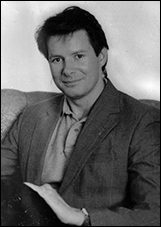
A young and cheeky looking Robert R McCammon
Do yourself a favour and skip watching the sixth sense and spend some time with a guy who knows how to hang with the dead!
4.5 well deserved stars. Thanks for reading. Cheers!

March 21, 2018
MYSTERY WALK is a story involving the epic battle between good and evil and Robert McCammon does these types of stories better than almost anyone.
I won't get into the plot much, as this book was written back in the 80's and hundreds of other reviews already do that. I will say that this is my fourth time reading this book, (I actually listened to it, courtesy of the narrator Nick Sullivan), and this time it affected me even more than it did previously. I'm not sure why that is-perhaps as I've grown older I see more truth and depth in this tale?
It could also be the fact that the narrator brought these characters alive for me. I easily pictured the small town of Hawthorn and both its hateful and sweet residents. I vividly pictured the tent revivals of J.J. Falconer and the bogus claims of healing from his son Wayne. (I had to try hard NOT to picture Wayne's first bout with healing, you'll see what I mean if you read this.) Mr. Sullivan's voicing worked really well for me here and for this reason I've bumped my rating of 4 and 4.5 stars from my previous reads to the full five.
MYSTERY WALK is full of hope but at the same time does not shy away at all from the difficulties in life we all face. The wonderful prose of Robert McCammon is only improved by Nick Sullivan's narration. If you're in need of a little hope in your life during these difficult times, then I highly recommend giving MYSTERY WALK a listen. If you do, give Billy Creekmore a hug from me and tell him that Char said Hi.
You can get your copy here: Mystery Walk
*I received a free copy of this audiobook from the narrator, in exchange for my honest review. This is it!*
I won't get into the plot much, as this book was written back in the 80's and hundreds of other reviews already do that. I will say that this is my fourth time reading this book, (I actually listened to it, courtesy of the narrator Nick Sullivan), and this time it affected me even more than it did previously. I'm not sure why that is-perhaps as I've grown older I see more truth and depth in this tale?
It could also be the fact that the narrator brought these characters alive for me. I easily pictured the small town of Hawthorn and both its hateful and sweet residents. I vividly pictured the tent revivals of J.J. Falconer and the bogus claims of healing from his son Wayne. (I had to try hard NOT to picture Wayne's first bout with healing, you'll see what I mean if you read this.) Mr. Sullivan's voicing worked really well for me here and for this reason I've bumped my rating of 4 and 4.5 stars from my previous reads to the full five.
MYSTERY WALK is full of hope but at the same time does not shy away at all from the difficulties in life we all face. The wonderful prose of Robert McCammon is only improved by Nick Sullivan's narration. If you're in need of a little hope in your life during these difficult times, then I highly recommend giving MYSTERY WALK a listen. If you do, give Billy Creekmore a hug from me and tell him that Char said Hi.
You can get your copy here: Mystery Walk
*I received a free copy of this audiobook from the narrator, in exchange for my honest review. This is it!*

August 29, 2025
3.5 stars.

September 18, 2017
Read this book when I was 20. Brilliant! Enough said.🐯👍

October 24, 2024
I thought Mystery Walk was a great coming-to-age tale about Billy Creekmore, a young man who’s part Choctaw.
Billy is not only different because of his Native American blood but he’s got supernatural talents. He got his ability to see life and death from his mother, along with her strength and kindness as well.
In Mystery Walk, he's trying to survive southern Alabama during the 1950s to the end of the 1960s. There's racism, sexism and classism for him to deal with but also the KKK and extreme religious beliefs.
I liked how Robert McCammon does his own spin on Native American mysticism with the mystery walk that Billy, his mom and grandmother have to go through.
I also loved the battle between good vs evil in this!
This is definitely a well written plot and I loved the parts when Billy is tapping into his supernatural talents. The ending and pacing were both satisfying for me.
Definitely excited to get to more McCammon books soon!
Billy is not only different because of his Native American blood but he’s got supernatural talents. He got his ability to see life and death from his mother, along with her strength and kindness as well.
In Mystery Walk, he's trying to survive southern Alabama during the 1950s to the end of the 1960s. There's racism, sexism and classism for him to deal with but also the KKK and extreme religious beliefs.
I liked how Robert McCammon does his own spin on Native American mysticism with the mystery walk that Billy, his mom and grandmother have to go through.
I also loved the battle between good vs evil in this!
This is definitely a well written plot and I loved the parts when Billy is tapping into his supernatural talents. The ending and pacing were both satisfying for me.
Definitely excited to get to more McCammon books soon!

September 21, 2016
“SATAN’S GOT YOU!” Falconer roared, the veins of his neck bulging. “That cloven-hoofed, horned, fork-tongued Devil has got you right in his clawwwwws”— he lifted his right hand into the air, contorting it into a claw and twisting as if ripping flesh from the bone—“ and he’s gonna squeeze you and mold you and make you like he isssss! … And if you’re a guest in Satan’s house and you like the dark, evil place, then you don’t belong here tonight!”
Evangelicalism is a major theme in this book.
In the 80s Robert R. McCammon was one of my favorite authors. He wrote mainly horror novels then he found commercial success with Bradbury-ish childhood nostalgia fiction Boy's Life which I–at the time–found to be disappointing, as it is not what I wanted from him; it was a bit like your favorite rock band making a country album. He followed Boy’s Life with another mainstream book Gone South which I didn’t read, then he disappeared for more than ten years, and returned with Speaks the Nightbird. Anyway, while he was a horror author I was a fan, now we seem to have gone separate ways.
Mystery Walk was published in 1983 while he was near the summit of his powers as a horror author, I think he hit his peak in the fantastic Swan Song, published four years later. I prefer to write short synopses than long ones, or avoid writing them altogether if I feel I can get away with it, but some books are densely plotted and the plot is integral to review. So, for the benefit of synopses skimmers like myself, I have made a clear division below so you can just jump to my opinionated nonsense instead!
— ╮( ˘_˘ )╭ Synopsis begins ╮( ˘_˘ )╭ —
Mystery Walk concerns a young man, Billy Creekmore of American Indian descent, living in Hawthorne in North Alabama With his parents. His mother, Ramona, has an ability to communicate with the dead, to help them cross over when they are tied to this world by some kind of traumatic death which their soul cannot come to terms with; and also the ability to see a “death aura” around people whose death is imminent. Unfortunately, Billy has inherited the same spooky abilities from his mother, and communicating with the dead is not really a fun thing to do, they don't seem to have much of interest to say, and often cause a lot of grief for the living. Knowing who is going to die is even less desirable as it is generally impossible to convince the doomed people, and their reactions are always hostile.
One day Billy and his parents attend a tent revival (Billy’s father is a devout Christian undiscerning variety), the revival is by “Jimmy Jed Falconer”, self-proclaimed “The South’s Greatest Evangelist”. The evangelist is accompanied by his son Wayne who claim to have the ability to heal. Ramona can see from the aura of the people being “healed” that they are not going to get better, and are being given dangerously false hopes of miraculous cures and told not to go to doctors. Ramona confronts the evangelist with this, while Wayne Falconer feels an instinctive hatred toward both mother and son, who are summarily thrown out of the tent. The second encounter after a fire at Billy’s school (which he kind of foresaw but failed to prevent) makes matters between them much worse. At the same time, a demonic entity who feeds on fear and misery of souls is out to destroy both mother and son who are spoiling his unhappy meals. Then a supremely evil gangster with OCD enters the scene and things quickly go south for the good guys…
— ヽ(・∀・)ノ Synopsis ends ヽ(・∀・)ノ —

Symbolic representation of the struggle between good and evil, directly from the book.
Horror fiction is often unfairly viewed with disdain, even more so than its distant cousins, science fiction, and fantasy. While the purpose of most horror fiction is to give the reader the heebeegeebees (in a good way), some of the best horror fiction have depths, subtexts, themes and motif you can chew on at your leisure, or ignore completely if you prefer. Mystery Walk is one of the more complex offerings of the genre. A certain type of evangelicalism prevailing in Alabama, and perhaps other southeastern regions of the US, is depicted here as charismatic orators exploiting the more gullible elements of fundamentalist Christianity. They not only generate fear and hatred for things that they deem sinful (like rock and roll, long hair etc.), and worse still convince sick people that they have been miraculously healed by The Lord through the evangelist’s gifts; and doctors are not needed. Going to the doctor after being “healed” may even be sinful. McCammon also explores the theme of death which is not a sin as some evangelists would have us believe.
“I'm not saying I understand death, and I’m not saying I know what Heaven and Hell are going to be like, but death itself isn’t evil, Billy; it’s the call to rest after a long day’s work.”

One of the most vivid scenes from the book
The town of Hawthorne also suffers from racism and bigotry.
“Things were even troubled right here in the Hawthorne Baptist Church; Reverend Horton did his best, but there was no fire nor brimstone in his sermons, and worst of all he’d been seen over at the church in Dusktown helping the blacks with their potluck supper. Nobody liked to shake Horton’s hand anymore”
On the more positive side of life McCammon effectively portrays the loving relationship between father and son:
“Time’s wastin’,” John said, and reached out to his son. They linked hands and John felt the immediate warm pleasure of contact with the boy. Billy was so alive, so alert and curious; some of his youth rubbed off on John when they could be together.
In spite of the serious themes the narrative moves at a fast pace and is never dull. My only complaint is that the hero Billy Creekmore spends most of the book being rather naïve and ineffectual. Only towards the end does he manage to put his supernatural talent to good use and come to terms with his mission in life (his “Mystery Walk”).
McCammon is really a terrific storyteller, I really wish he would return to the horror genre, though he seems to be finding success with his current series of historical crime fiction. Perhaps I will start reading that one day when I am in the mood for such things. In the meantime, if you like horror fiction, especially if you are a Stephen King fan, I highly recommend that you explore some of McCammon’s back catalog.

Penalized half a star because the hero is a bit of an idiot.
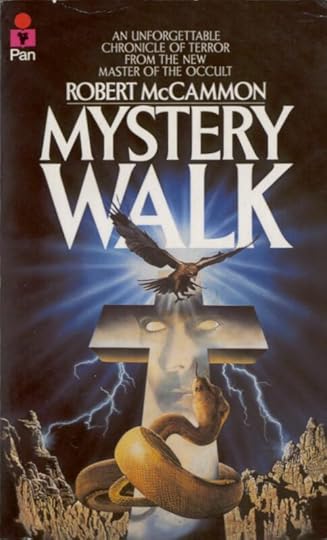
This is the version I have, a good distillation of the book's major themes.
Evangelicalism is a major theme in this book.
In the 80s Robert R. McCammon was one of my favorite authors. He wrote mainly horror novels then he found commercial success with Bradbury-ish childhood nostalgia fiction Boy's Life which I–at the time–found to be disappointing, as it is not what I wanted from him; it was a bit like your favorite rock band making a country album. He followed Boy’s Life with another mainstream book Gone South which I didn’t read, then he disappeared for more than ten years, and returned with Speaks the Nightbird. Anyway, while he was a horror author I was a fan, now we seem to have gone separate ways.
Mystery Walk was published in 1983 while he was near the summit of his powers as a horror author, I think he hit his peak in the fantastic Swan Song, published four years later. I prefer to write short synopses than long ones, or avoid writing them altogether if I feel I can get away with it, but some books are densely plotted and the plot is integral to review. So, for the benefit of synopses skimmers like myself, I have made a clear division below so you can just jump to my opinionated nonsense instead!
— ╮( ˘_˘ )╭ Synopsis begins ╮( ˘_˘ )╭ —
Mystery Walk concerns a young man, Billy Creekmore of American Indian descent, living in Hawthorne in North Alabama With his parents. His mother, Ramona, has an ability to communicate with the dead, to help them cross over when they are tied to this world by some kind of traumatic death which their soul cannot come to terms with; and also the ability to see a “death aura” around people whose death is imminent. Unfortunately, Billy has inherited the same spooky abilities from his mother, and communicating with the dead is not really a fun thing to do, they don't seem to have much of interest to say, and often cause a lot of grief for the living. Knowing who is going to die is even less desirable as it is generally impossible to convince the doomed people, and their reactions are always hostile.
One day Billy and his parents attend a tent revival (Billy’s father is a devout Christian undiscerning variety), the revival is by “Jimmy Jed Falconer”, self-proclaimed “The South’s Greatest Evangelist”. The evangelist is accompanied by his son Wayne who claim to have the ability to heal. Ramona can see from the aura of the people being “healed” that they are not going to get better, and are being given dangerously false hopes of miraculous cures and told not to go to doctors. Ramona confronts the evangelist with this, while Wayne Falconer feels an instinctive hatred toward both mother and son, who are summarily thrown out of the tent. The second encounter after a fire at Billy’s school (which he kind of foresaw but failed to prevent) makes matters between them much worse. At the same time, a demonic entity who feeds on fear and misery of souls is out to destroy both mother and son who are spoiling his unhappy meals. Then a supremely evil gangster with OCD enters the scene and things quickly go south for the good guys…
— ヽ(・∀・)ノ Synopsis ends ヽ(・∀・)ノ —
Symbolic representation of the struggle between good and evil, directly from the book.
Horror fiction is often unfairly viewed with disdain, even more so than its distant cousins, science fiction, and fantasy. While the purpose of most horror fiction is to give the reader the heebeegeebees (in a good way), some of the best horror fiction have depths, subtexts, themes and motif you can chew on at your leisure, or ignore completely if you prefer. Mystery Walk is one of the more complex offerings of the genre. A certain type of evangelicalism prevailing in Alabama, and perhaps other southeastern regions of the US, is depicted here as charismatic orators exploiting the more gullible elements of fundamentalist Christianity. They not only generate fear and hatred for things that they deem sinful (like rock and roll, long hair etc.), and worse still convince sick people that they have been miraculously healed by The Lord through the evangelist’s gifts; and doctors are not needed. Going to the doctor after being “healed” may even be sinful. McCammon also explores the theme of death which is not a sin as some evangelists would have us believe.
“I'm not saying I understand death, and I’m not saying I know what Heaven and Hell are going to be like, but death itself isn’t evil, Billy; it’s the call to rest after a long day’s work.”
One of the most vivid scenes from the book
The town of Hawthorne also suffers from racism and bigotry.
“Things were even troubled right here in the Hawthorne Baptist Church; Reverend Horton did his best, but there was no fire nor brimstone in his sermons, and worst of all he’d been seen over at the church in Dusktown helping the blacks with their potluck supper. Nobody liked to shake Horton’s hand anymore”
On the more positive side of life McCammon effectively portrays the loving relationship between father and son:
“Time’s wastin’,” John said, and reached out to his son. They linked hands and John felt the immediate warm pleasure of contact with the boy. Billy was so alive, so alert and curious; some of his youth rubbed off on John when they could be together.
In spite of the serious themes the narrative moves at a fast pace and is never dull. My only complaint is that the hero Billy Creekmore spends most of the book being rather naïve and ineffectual. Only towards the end does he manage to put his supernatural talent to good use and come to terms with his mission in life (his “Mystery Walk”).
McCammon is really a terrific storyteller, I really wish he would return to the horror genre, though he seems to be finding success with his current series of historical crime fiction. Perhaps I will start reading that one day when I am in the mood for such things. In the meantime, if you like horror fiction, especially if you are a Stephen King fan, I highly recommend that you explore some of McCammon’s back catalog.
Penalized half a star because the hero is a bit of an idiot.
This is the version I have, a good distillation of the book's major themes.
May 23, 2012
Review edited 10.14.13.
I am a HUGE Robert McCammon fan. Since his older works are all becoming available as e-books now, I'm trying to re-read everything of McCammon's that I read as a teenager. Lucky for me, these stories stand the test of time.
Mystery Walk is the story of two boys. One of Choctaw blood that can see and speak to the dead. The other, the son of a famous evangelist, can heal the sick. The stories of these boys on their way to manhood is fascinating. How they discover the gifts which they harbor within, and how they learn how to deal with said gifts was the most interesting part of the book to me.
I didn't wholeheartedly embrace the ending, though I did think it was ok. The characters grew throughout the book, so I enjoyed the character development. I have always admired McCammon's prose. The man knows how to weave words together to form a complete fabric for the story. All in all, I would recommend this book and I would give it, if allowed, a 4.5 rating.
***Revision 10.14.13.-A third read of this book has led me to change a couple of things about this review. This time around I thought the ending was perfect. In fact, I can't see another ending that would have worked. Also, I'm not sure if the e-book version has been updated, but I think it has because I did not see the errors this time around that I found the first time. There were still a few typos, but nothing more than one would normally see in a print book.
It must be a sign of a good writer when the author can change a reader's mind about the ending all these years and two reads later. I enjoyed the hell out of this book and if it sounds interesting to you, or if you're a fan of Mr. McCammon, give it a shot. I think you'll like it! Highly recommended!
I am a HUGE Robert McCammon fan. Since his older works are all becoming available as e-books now, I'm trying to re-read everything of McCammon's that I read as a teenager. Lucky for me, these stories stand the test of time.
Mystery Walk is the story of two boys. One of Choctaw blood that can see and speak to the dead. The other, the son of a famous evangelist, can heal the sick. The stories of these boys on their way to manhood is fascinating. How they discover the gifts which they harbor within, and how they learn how to deal with said gifts was the most interesting part of the book to me.
I didn't wholeheartedly embrace the ending, though I did think it was ok. The characters grew throughout the book, so I enjoyed the character development. I have always admired McCammon's prose. The man knows how to weave words together to form a complete fabric for the story. All in all, I would recommend this book and I would give it, if allowed, a 4.5 rating.
***Revision 10.14.13.-A third read of this book has led me to change a couple of things about this review. This time around I thought the ending was perfect. In fact, I can't see another ending that would have worked. Also, I'm not sure if the e-book version has been updated, but I think it has because I did not see the errors this time around that I found the first time. There were still a few typos, but nothing more than one would normally see in a print book.
It must be a sign of a good writer when the author can change a reader's mind about the ending all these years and two reads later. I enjoyed the hell out of this book and if it sounds interesting to you, or if you're a fan of Mr. McCammon, give it a shot. I think you'll like it! Highly recommended!

June 25, 2017
Great book by a fantastic author. I need to read more of his books and you do to :)
The closest you'll get to Stephen King. He even does some things better than the mighty one...
Each scream was seemingly louder than the one before, each one freezing his spine a little harder.
The closest you'll get to Stephen King. He even does some things better than the mighty one...
Each scream was seemingly louder than the one before, each one freezing his spine a little harder.

January 13, 2021
One talks to the dead. The other heals the living. Both must make the…Mystery Walk!
The main character here is Billy Creekmore who is of Choctaw Indian heritage with a psychic ability, he can see and speak with the dead.
Then there's Wayne Falconer who is the son of a evangelist. Who travels with his father to preach at revivals. He has healing powers, but there is more to Wayne than meets the eye.
I'll just leave it there...
I liked this book, the characters and the dialogue were excellent - some were loveable and some I just wanted to throat punch!
It's real page turner, the plot is well paced and original.
I'd recommend to fans of Stephen King.
The main character here is Billy Creekmore who is of Choctaw Indian heritage with a psychic ability, he can see and speak with the dead.
Then there's Wayne Falconer who is the son of a evangelist. Who travels with his father to preach at revivals. He has healing powers, but there is more to Wayne than meets the eye.
I'll just leave it there...
I liked this book, the characters and the dialogue were excellent - some were loveable and some I just wanted to throat punch!
It's real page turner, the plot is well paced and original.
I'd recommend to fans of Stephen King.

August 14, 2015
What can I say about Robert McCammon? The man can write like just about no one else in the business. Boy's Life, Swan Song, Stinger? All certified classics in my opinion. Now Mystery Walk. Wow! This book sat on my shelf for years, just not calling to me at all. Probably something to do with the horrid cover art. It never asked me to read it. Not once. Then, I wanted to read one of his that I haven't gotten to yet, and this one won. I'm glad it did. This book is non-stop from the first chapter all the way to the crazy finale and it is a story that will stay with me for a long time... just like all his other novels I have read.
Highly recommended. 'Nuff said!
Highly recommended. 'Nuff said!

November 18, 2021
This was a long book but what an epic read full of spirits, good and evil, misunderstanding, love, hate, and things we don’t understand. I truly loved the ending. The rivalry of the evangelist who maybe wasn’t so pure or good with the half-Native American who was shunned and misunderstood but had a heart of love and service to the hurting was expanded on throughout the story until it came to a surprising climax. An excellent tale!

July 12, 2026
This was one of those books I found years ago, in an old used book store, in which the cover really pulled me in. Creepy old men, crawling out of a wall in a "get off my lawn" pose have that effect on me, apparently.
Anyway, I usually only carry a card on me, so imagine my distress when I found out the guy didn't take a card at the register. Only cash. Well, I had opened my wallet to find a measly three dollars in one of the pouches and the pencil writing on the first page of this thing read "3 dollars", so for the first time ever, I walked out of a book store with only one book in my hands.
•••
Four years later, I finally read it. You can't blame me, though. I discovered his Matthew Corbett Series and that's taken up the bulk of my time.
Highly recommended, I might add.
I am saddened to report that this one started off wicked strong, then led into familiar territory, unfortunately. You've seen or read these types of "good versus evil" things before. The writing remains consistent throughout, but it just felt as though it was missing something, though.
Maybe those backwoods, southern descriptions that Mr. McCammon does so well, but I'm not sure. Gone South and the Corbett series are fantastic looks at how well McCammon describes those certain landscapes.
The character work was really good, however and the horror elements really stuck out too, which was great though!
All in all, a good outing from my favorite author, but not quite the same level as "the Wolf's Hour", "Swan Song" or "Boy's Life". But that's not surprising because I mean, c'mon. They're "the Wolf's Hour", "Swan Song" and "Boy's Life".
Recommended
Anyway, I usually only carry a card on me, so imagine my distress when I found out the guy didn't take a card at the register. Only cash. Well, I had opened my wallet to find a measly three dollars in one of the pouches and the pencil writing on the first page of this thing read "3 dollars", so for the first time ever, I walked out of a book store with only one book in my hands.
•••
Four years later, I finally read it. You can't blame me, though. I discovered his Matthew Corbett Series and that's taken up the bulk of my time.
Highly recommended, I might add.
I am saddened to report that this one started off wicked strong, then led into familiar territory, unfortunately. You've seen or read these types of "good versus evil" things before. The writing remains consistent throughout, but it just felt as though it was missing something, though.
Maybe those backwoods, southern descriptions that Mr. McCammon does so well, but I'm not sure. Gone South and the Corbett series are fantastic looks at how well McCammon describes those certain landscapes.
The character work was really good, however and the horror elements really stuck out too, which was great though!
All in all, a good outing from my favorite author, but not quite the same level as "the Wolf's Hour", "Swan Song" or "Boy's Life". But that's not surprising because I mean, c'mon. They're "the Wolf's Hour", "Swan Song" and "Boy's Life".
Recommended
November 10, 2025
I'm surprised more people haven't reviewed this one, as next to A Boy's Life, it's my favorite Robert McCammon novel. It reads a lot like A Boy's Life, actually. The pacing is similar as is the use of flashback narrative. I strongly encourage any McCammon fans out there holding out on this one to get it. It is such an original, haunting, suspenseful folk horror, and if you are experiencing book fatigue, it's a great cure.

April 30, 2025
Just a few months shy from reading 20 years ago. I could remember bits and pieces from my first read. McCammon always finishes well, but this just misses four stars.

October 29, 2021
For a long time I've put off reading McCammon's older works, because I thought I've already read the best he had to offer. Even with Usher's Passing, I thought he was still trying to find his groove. But now that I've read Mystery Walk, I know that he had found his style early on. This had some serious "Boy's Life" vibes... and you would never be able to tell from reading the synopsis (or by looking at the crappy cover).
This was definitely a coming-of-age story moreso than a horror. But it's very supernatural and deals with the good vs evil theme head on.
This is not a Native American story or anything like that. It's almost like Robert McCammon wanted to create his own version of the "shining". A mysterious power passed on to Native American descendants, in which our main character carries a quarter Choctaw heritage.
Mystery Walk was a beautiful story, with very human moments, a creepy supernatural antagonist, and some real asshole non-supernatural antagonists.
Highly recommend to everyone, especially to those who enjoy the likes of Boy's Life, Swan Song, and his more recent The Listener.
This was definitely a coming-of-age story moreso than a horror. But it's very supernatural and deals with the good vs evil theme head on.
This is not a Native American story or anything like that. It's almost like Robert McCammon wanted to create his own version of the "shining". A mysterious power passed on to Native American descendants, in which our main character carries a quarter Choctaw heritage.
Mystery Walk was a beautiful story, with very human moments, a creepy supernatural antagonist, and some real asshole non-supernatural antagonists.
Highly recommend to everyone, especially to those who enjoy the likes of Boy's Life, Swan Song, and his more recent The Listener.

September 9, 2022
It's been a long time since I read a Robert McCammon book. As i got further into the story, I remembered that he certainly has a talent for books that are compelling and are designed to keep the reader turning the pages to find out what will happen next. I couldn't wait to see which boy would be the one to defeat the evil forces aligned against them both. The two boys, Billy Creekmore and Wayne Falconer are different as night and day in many ways but as alike as Siamese twins in others. Billy lives in a small rural Southern Alabama town with his parents. The other children will have nothing to do with him and no one in the town will acknowledge his family since his mother is called a witch because she has the ability to help the dead cross over. They will call on her when she is reluctantly needed for her "talent"... but avoided otherwise. When the family of Billy's best friend is murdered, he feels a strange "calling" to go into their house. Their spirits are stuck and can't cross over. There Billy discovers his life calling. He also has the same ability as his mother. Then we have Wayne...110% different than Billy. Wayne's family has more money than they know what to do with. Billy's family doesn't have two nickels to rub together. Wayne is the son of a famous evangelist and spends his summers traveling with his father's crusade. When his father discovers Wayne's talent for healing the sick...or at least that's what they think it is...Wayne becomes famous. The sick and dying of his father's flock come to him to be healed. Everyone believes in him, except for Ramona Creedmore and her son. When they come to the crusade, they see through Wayne and see that he can heal no one...although it appears he can. The rivalry begins between the two boys that continues as they grow up. Each has a talent. Each is learning how to use and shape it and wondering how their lives should revolve around it. Each fears the other and something they both call "Shape Changer", a beast that comes to them in dreams and tells them how it will kill them and eat their souls if they don't do as it tells them to. As grown men they meet again and must discover family secrets and learn the truth about their powers. They know that they must unite to fight the "Shape Changer" if they have any hope of survival. I liked the mystique that surrounded the characters and the evil and mystery that was woven in and out of the plot. Horror story fans will like it.

April 12, 2019
Well this was really good! I was pleasantly surprised since I have only really loved one of McCammon's books, "Boy's LIfe." "Mystery Walk" brought back some of that feeling of magical realism along with horror that I liked in the previous book. We also get introduced to some pretty epic characters (Billy Creekmore and his mother) and I ended up wanting to read more about Billy after the conclusion of the book.
"Mystery Walk" begins with a pregnant Ramona Creekmore who has a gift. She can see the dead that have not peacefully passed on and she can set them free. Her husband John is a God fearing man (more on that later) who hates that Ramona is different. He believes her gift is a sin. When the book follows them years later after Ramona has given birth, they have their son Billy who they both love. Billy though appears to have taken on his mother and grandmother's gift and John is even more upset that his family appears to be "walking" with the devil. The book also follows Wayne Falconer and his father. Wayne's father is a tent revivalist and he claims his son can heal people. Something in Wayne allows him to feel things in certain people, but he really wants to do good and heal. However, something darker seems to have gotten a hold of him.
Billy and Ramona were the highlights of the book for me. I despised John Creekmore. A man using the Bible to incite terror in his son and wife and then also use the robes of the Klan to inspire fear in others was not someone that I sympathized with at all. I understood though why Billy and Ramona loved him though I puzzled at Ramona. Ramona is a Choctaw Indian and I don't get how her race wasn't seen as a deterrent to John though he had a lot of words to say about African Americans and how the world was going to end soon.
Billy wants to be what his father wants him to be, but his mother's blood calls out for him to do what she does, to help those who have a hard time letting go of life pass on. The first time this happens to Billy gave me shades of "Boy's Life" and I shuddered a lot. I think at times though that Billy's character was quite naive. He wants to be like everyone else, but his mother and his own actions have made it hard for him to blend into the small town. When Billy realizes he has to move on (first to a carnival and then to an institute which can study him) he realizes he is going to get to see more than he could ever thought possible.
I felt sorry for Wayne and honestly disliked his sections. I went back and re-read though when we get a reveal I didn't see coming. Everything made sense at that point and I realized I hadn't picked up on anything. That said, I didn't feel sorry for Wayne. His whole character is just a hot mess and when we finally get to him and Billy meeting again I wondered at how it would go.
Most of the setting of the book takes place in a small town in Alabama. You get a sense of the town and the secrets it holds. Also for the ugliness at times when you get into how the Klu Klux Klan was running around and beating up and abusing anyone that didn't fit. The storyline following the preacher was horrific. I wish that McCammon had followed up on him.
The book also shows Billy working at a carnival and I really enjoyed that whole setting. It was interesting and it reminded me a bit of Stephen King's "Joyland." When things moved to Billy at the institute I just found myself getting a bit bored.
I will say the ending read as a bit off to me. I don't know. Maybe because I wanted some epic final battle or something that I felt a bit letdown by it. And though I was happy with how things are left with Billy, I did want to follow him a bit father along his mystery walk.
"Mystery Walk" begins with a pregnant Ramona Creekmore who has a gift. She can see the dead that have not peacefully passed on and she can set them free. Her husband John is a God fearing man (more on that later) who hates that Ramona is different. He believes her gift is a sin. When the book follows them years later after Ramona has given birth, they have their son Billy who they both love. Billy though appears to have taken on his mother and grandmother's gift and John is even more upset that his family appears to be "walking" with the devil. The book also follows Wayne Falconer and his father. Wayne's father is a tent revivalist and he claims his son can heal people. Something in Wayne allows him to feel things in certain people, but he really wants to do good and heal. However, something darker seems to have gotten a hold of him.
Billy and Ramona were the highlights of the book for me. I despised John Creekmore. A man using the Bible to incite terror in his son and wife and then also use the robes of the Klan to inspire fear in others was not someone that I sympathized with at all. I understood though why Billy and Ramona loved him though I puzzled at Ramona. Ramona is a Choctaw Indian and I don't get how her race wasn't seen as a deterrent to John though he had a lot of words to say about African Americans and how the world was going to end soon.
Billy wants to be what his father wants him to be, but his mother's blood calls out for him to do what she does, to help those who have a hard time letting go of life pass on. The first time this happens to Billy gave me shades of "Boy's Life" and I shuddered a lot. I think at times though that Billy's character was quite naive. He wants to be like everyone else, but his mother and his own actions have made it hard for him to blend into the small town. When Billy realizes he has to move on (first to a carnival and then to an institute which can study him) he realizes he is going to get to see more than he could ever thought possible.
I felt sorry for Wayne and honestly disliked his sections. I went back and re-read though when we get a reveal I didn't see coming. Everything made sense at that point and I realized I hadn't picked up on anything. That said, I didn't feel sorry for Wayne. His whole character is just a hot mess and when we finally get to him and Billy meeting again I wondered at how it would go.
Most of the setting of the book takes place in a small town in Alabama. You get a sense of the town and the secrets it holds. Also for the ugliness at times when you get into how the Klu Klux Klan was running around and beating up and abusing anyone that didn't fit. The storyline following the preacher was horrific. I wish that McCammon had followed up on him.
The book also shows Billy working at a carnival and I really enjoyed that whole setting. It was interesting and it reminded me a bit of Stephen King's "Joyland." When things moved to Billy at the institute I just found myself getting a bit bored.
I will say the ending read as a bit off to me. I don't know. Maybe because I wanted some epic final battle or something that I felt a bit letdown by it. And though I was happy with how things are left with Billy, I did want to follow him a bit father along his mystery walk.

March 28, 2018
Reading McCammons books in order made this experience all the more special. Whilst his first 4 novels arent bad, they're more 70s/80s trashy horror. An author getting into his groove whilst tackling all of the different tropes in the horror genre. This though, this book right here is definitely the start of the genius McCammon i've heard so much about. Here is where he matured, big time. Its like reading a totally different author.
Mystery walk is a coming of age tale about Billy Creekmore, who is born with a powerful gift, to see the dead and to put to rest their souls. Billy has to get to grips with his powers at an early age with the help of his mother and grandmother whom he inherited the gift from. The first and best half of the book in my opinion, is mainly of Billy growing up and finding it hard to lead a normal life, which is all that he wants, and trying to use his powers for the good and understand them. To see where they take him. To follow his mystery walk. With his father and classmates being against him many parts of Billys life were so sad to read. In particular one bit at the school prom completely broke my heart as Billy plays up to what people think he is after just wanting to fit in and be like everyone else. Someone was definitely cutting onions nearby whilst i was reading that scene.
I definitely preferred the story when it stayed low key and was mainly about the Creekmores. Whilst not being at all bad, the second half we are introduced to another character who's to cross paths with Billy, and a pretty unbelievable gangster story that is very cliche. I believe that without the inclusion of this mob the story still could have gotten to where it needed be. That being said there are still some cool grisly bits and the final chase scene across the desert is very memorable and creepy.
So why 5 stars then? The whole book is very readable and never ever boring, and Billy is seriously one of my favourite characters in all of fiction. His story is superb and i imagine i will revisit this one again and again.
Mystery walk is a coming of age tale about Billy Creekmore, who is born with a powerful gift, to see the dead and to put to rest their souls. Billy has to get to grips with his powers at an early age with the help of his mother and grandmother whom he inherited the gift from. The first and best half of the book in my opinion, is mainly of Billy growing up and finding it hard to lead a normal life, which is all that he wants, and trying to use his powers for the good and understand them. To see where they take him. To follow his mystery walk. With his father and classmates being against him many parts of Billys life were so sad to read. In particular one bit at the school prom completely broke my heart as Billy plays up to what people think he is after just wanting to fit in and be like everyone else. Someone was definitely cutting onions nearby whilst i was reading that scene.
I definitely preferred the story when it stayed low key and was mainly about the Creekmores. Whilst not being at all bad, the second half we are introduced to another character who's to cross paths with Billy, and a pretty unbelievable gangster story that is very cliche. I believe that without the inclusion of this mob the story still could have gotten to where it needed be. That being said there are still some cool grisly bits and the final chase scene across the desert is very memorable and creepy.
So why 5 stars then? The whole book is very readable and never ever boring, and Billy is seriously one of my favourite characters in all of fiction. His story is superb and i imagine i will revisit this one again and again.

May 2, 2020
I thought this was probably the least memorable of all of the McCammon books I've read. It's quite well written and tightly put together, but I thought it was a little familiar and predictable. The good versus evil and revivalist/evangelical theme and symbolic dreams were all things I thought had been overdone. I should probably give it another try one of these days.

January 23, 2021
Mystery Walk is on the one hand a horror story filled with the genre's tropes, but on the other hand is a parable on life itself; alas, while entertaining in parts, it really does not excel in either. Our main protagonist, Billy Creekmore, was born and raised on a poor farm in a small town in northern Alabama and his story constitutes one aspect of the parable. We first meet him when he is 9 or so, and follow his life in jumps through the 13 sections of the book. Billy's mother (Ramona) is part Choctaw Indian and her 'line' so to speak carries a strange trait-- the ability to ease ghosts/haunts from Earth onto the beyond. Ghosts sometimes stick or cling to where the bodies were suddenly killed, usually because they felt they had something to do before dying. They can also see a black aura around people who will die soon. Ramona's husband John represents a typical bible-thumping redneck southern farmer and he always thought what Ramona did was tainted by evil.
The other story line/side of the parable concerns a traveling preacher (J.J.) and his son Wayne. J.J. is basically a classic stereotype of a southern preacher, praising the lord with one hand and holding out the other for cold, hard cash. He has build something of an empire, and this expands dramatically when Wayne displays the ability to heal (at least somewhat). The two families meet at a revival one day and there is instant frisson, and while put on the backburner at first, continues to simmer until it boils over at the end.
The Mystery Walk is what Ramona (and her mother) deem one's life journey; you can never say what path it will take you or where you will end up. Billy is told, while his talent is being honed by Ramona and her mother, that life will present challenges, and to strive for good over evil, etc. We know the 'walk' will involve Billy and Wayne, but McCammon leaves the reader guessing (at least for a little while) which character represents the good and evil respectively.
I have always liked McCammon's prose and his character development and there is no exception here to either. To me, however, it felt like McCammon was trying to do too much here which relates to the two fold aspect of the text-- horror story and parable. This was first published in 1992 but written about a decade before, when McCammon was first cutting his teeth as an author, and it has the feel of a 'first book'. Too many sidelines in the story, that while interesting, really only serve to lengthen the story without adding much. The cursory treatment of racial tension in Alabama the 60s was incorporated, but did not contribute to the story at all. Likewise, the preacher J.J. burning books and albums of 'devil's work' came off as more distracting than helpful to the plot.
All in all, not the most impressive of McCammon's work, even for genre fans. 2.5 stars rounding up.
The other story line/side of the parable concerns a traveling preacher (J.J.) and his son Wayne. J.J. is basically a classic stereotype of a southern preacher, praising the lord with one hand and holding out the other for cold, hard cash. He has build something of an empire, and this expands dramatically when Wayne displays the ability to heal (at least somewhat). The two families meet at a revival one day and there is instant frisson, and while put on the backburner at first, continues to simmer until it boils over at the end.
The Mystery Walk is what Ramona (and her mother) deem one's life journey; you can never say what path it will take you or where you will end up. Billy is told, while his talent is being honed by Ramona and her mother, that life will present challenges, and to strive for good over evil, etc. We know the 'walk' will involve Billy and Wayne, but McCammon leaves the reader guessing (at least for a little while) which character represents the good and evil respectively.
I have always liked McCammon's prose and his character development and there is no exception here to either. To me, however, it felt like McCammon was trying to do too much here which relates to the two fold aspect of the text-- horror story and parable. This was first published in 1992 but written about a decade before, when McCammon was first cutting his teeth as an author, and it has the feel of a 'first book'. Too many sidelines in the story, that while interesting, really only serve to lengthen the story without adding much. The cursory treatment of racial tension in Alabama the 60s was incorporated, but did not contribute to the story at all. Likewise, the preacher J.J. burning books and albums of 'devil's work' came off as more distracting than helpful to the plot.
All in all, not the most impressive of McCammon's work, even for genre fans. 2.5 stars rounding up.

March 14, 2018
4.5⭐
"Everybody's on their own kind of Mystery Walk, following the trail of their days and doing the best with what life throws at them. Sometimes it's mighty hard to figure out what's right and wrong in this mixed-up world."
Mystery Walk is my first McCammon book, and I was not disappointed. This was a buddy read with Twitter friends, and I really enjoyed the book. It actually reminded me of The Dead Zone by Stephen King, but not in a way like one of them was copying the other - they just express similar sentiments.
This is an intriguing coming-of-age story with paranormal elements. It's set in Alabama in the 80s, and there were a lot of dark things happening. Obviously it was super racist, and bad people in the story claimed to do evil acts for religious purposes. Being from the south, I can relate to some of the villains of this book being shitty evangelicals who believe they're doing the right thing.
Robert McCammon does a great job with in-depth character studies while still creating interesting settings and storylines. My main complaint, and why it's 4.5 stars instead of 5, is because there were so many cool storylines, and not enough time was able to be spent on all of them. I kind of wish this book would have been a series. There's the weird town with a murder house, a carnival, the Xavier Institute for Higher Learning (not really, but close enough), etc.
I would have liked to spend more time in certain aspects of the story, and I feel like some plot points just dropped off since it moved onto the next big setting pretty quickly. Some parts were a little too over-the-top, and some just didn't have enough going on.
I loved this book, and I will definitely be reading more McCammon.
"Everybody's on their own kind of Mystery Walk, following the trail of their days and doing the best with what life throws at them. Sometimes it's mighty hard to figure out what's right and wrong in this mixed-up world."
Mystery Walk is my first McCammon book, and I was not disappointed. This was a buddy read with Twitter friends, and I really enjoyed the book. It actually reminded me of The Dead Zone by Stephen King, but not in a way like one of them was copying the other - they just express similar sentiments.
This is an intriguing coming-of-age story with paranormal elements. It's set in Alabama in the 80s, and there were a lot of dark things happening. Obviously it was super racist, and bad people in the story claimed to do evil acts for religious purposes. Being from the south, I can relate to some of the villains of this book being shitty evangelicals who believe they're doing the right thing.
Robert McCammon does a great job with in-depth character studies while still creating interesting settings and storylines. My main complaint, and why it's 4.5 stars instead of 5, is because there were so many cool storylines, and not enough time was able to be spent on all of them. I kind of wish this book would have been a series. There's the weird town with a murder house, a carnival, the Xavier Institute for Higher Learning (not really, but close enough), etc.
I would have liked to spend more time in certain aspects of the story, and I feel like some plot points just dropped off since it moved onto the next big setting pretty quickly. Some parts were a little too over-the-top, and some just didn't have enough going on.
I loved this book, and I will definitely be reading more McCammon.

July 10, 2012
McCammon's name drew me to this title far more than what I knew about the plot. I am wary of "supernatural" fiction i.e. anything that focuses on ghosts and spirits and what-not. If I'm going to read some horror fiction, I'd rather that the fantastic elements have teeth, claws, or at least the rotten flesh of the undead. Monsters are my thing, all the way.
Here, McCammon does offer up a monster of sorts, but he takes his time doing it while spinning a longish tale of a family that is touched by the supernatural through the Mother and her son. The real ramifications of Billy and his Mother's gifts are explored, and McCammon made me feel their sorrow as well as their wonder. Along these lines, McCammon dangles the cliche of a god-fearing, abusive Father, and I was prepared to endure this stereotype the same way that I put up with Stephen King's brand of Christ-loving Crazies; but then McCammon switches things up and reveals a man who loves his family while fearing the supernatural abilities that touch them. This thread teased the most miles out of my blood pump, a fact which made it one of my favorites.
Since reading and loving "The Five" last year, I've enjoyed cherry-picking through McCammon's huge catalogue. I've got "Night Boat" sitting on my shelf, ready to deliver some zombified goodies next October (I usually dive into the horror genre in that month), while I've got my eye on "Swan Song" for some future stretch of time that begs for a pulpy read. I've also been following McCammon's website for a number of months, and I am excited by his news of an epic science fiction and horror novel. Whatever follows, I'm going to pay attention, because McCammon writes his stories with heart and then leads you through its paces so that you, too, can hear it beat.
Here, McCammon does offer up a monster of sorts, but he takes his time doing it while spinning a longish tale of a family that is touched by the supernatural through the Mother and her son. The real ramifications of Billy and his Mother's gifts are explored, and McCammon made me feel their sorrow as well as their wonder. Along these lines, McCammon dangles the cliche of a god-fearing, abusive Father, and I was prepared to endure this stereotype the same way that I put up with Stephen King's brand of Christ-loving Crazies; but then McCammon switches things up and reveals a man who loves his family while fearing the supernatural abilities that touch them. This thread teased the most miles out of my blood pump, a fact which made it one of my favorites.
Since reading and loving "The Five" last year, I've enjoyed cherry-picking through McCammon's huge catalogue. I've got "Night Boat" sitting on my shelf, ready to deliver some zombified goodies next October (I usually dive into the horror genre in that month), while I've got my eye on "Swan Song" for some future stretch of time that begs for a pulpy read. I've also been following McCammon's website for a number of months, and I am excited by his news of an epic science fiction and horror novel. Whatever follows, I'm going to pay attention, because McCammon writes his stories with heart and then leads you through its paces so that you, too, can hear it beat.

April 20, 2021
4.5 stars
Robert McCammon is a writer that definitely deserves more attention. While he does not identify as a horror writer, he is often classified as such and if he is classified as such, his work contends against heavyweights such as Stephen King and Dean Koontz. I read Boy's Life in 2019 and thought it was fantastic. Mystery Walk is also a great novel and among his earlier novels. For a period of time, this was the oldest novel that he recognized, but he has since started recognizing his first four novels and has allowed for them to be reprinted. I would argue that McCammon's works blend various genres with one another, especially those that incorporate speculative fiction. The amazing thing about his work, though, is that even the supernatural elements within his works have realistic explanations and that makes it all the more mind boggling.
Mystery Walk follows Billy Creekmore, who lives with his parents, John and Ramona, in Hawthorne, Alabama, and is 25% Choctaw. His mother, Ramona, is 50% Choctaw, while his maternal grandmother, Rebekah Fairmountain, is 100% Choctaw. His father, John, is a man of Christian faith, but is also a Klansman. While he cares for his family, his need to fit into society by being a Klansman leaves quite a stain to his reputation (maybe not to his and to this community, but to the general population and to those of us reading this book). Billy has a coming of age moment and discovers that he can sense death upon being drawn into the Booker house, the Bookers being friends of John's, as he is friend's with the man of the house, Dave, an abusive man that is connected to the deaths of his wife and children.
Upon Billy's horrifying encounter, the Creekmores go to the Falconers service, where Jimmy Jed Falconer leads the service, while his son, Wayne, has the ability to rid people of their demons. The interaction between Billy and Wayne leads to a demonic encounter when Billy tries to confess his sins and seek Wayne's help of ridding him of his demons.
A great strength of McCammon's is his ability to create a great deal of dimension within his characters. Wayne Falconer may be viewed as Billy's most direct antagonist, but Wayne comes to plenty of flaws and complexities in his own right, which also leads him to question his motives and abilities on occasion. Jimmy Jed, meanwhile, cares most for the well being of his son and while he wants to make the most of his abilities to heal people, knows that there are things that even Wayne has to leave up to God.
The greatest horrors within this piece are not even the moments that are supernatural, but those that are real and relevant to this world, particularly the generational continuity of hatred that leads to deadly consequences. Among the most horrifying is the hatred from children that stems from their parents or guardians, who should be providing a better example instead of instigating their children to be hurtful to those that are not like themselves. The Leightons, Ralph and Duke, are perhaps the finest example within this piece. In a greater retrospect, the relevance of the KKK in 1961 in Hawthorne being remnant to a piece that was released in 1983 is quite chilling and to view natives as demonic is quite horrifying and despicable. The name "Hawthorne" is also fitting in how taking away the "w" gives you "Hathorne" as in John Hathorne, perhaps the most willing to jump to conclusions among Salem Witch Trial judges, both in real life and as depicted in Arthur Miller's The Crucible.
While there is a great deal of hatred, prejudice, and bias displayed among many of Hawthorne's citizens, the Choctaw in this piece display a great sense of wisdom. Billy's grandmother, Rebekah, probably displays the wisest of words on page 117 (in the paperback):
"Now where was I? Oh, yes. The giver of breath. God of the Choctaws. God of the white man. He also gives gifts of talent, Billy, to use for his good. Inhale the smoke, all the way. Yes, that's right. Some people can paint beautiful pictures, some can make sweet music, others work with their hands, and some with their wits; but in all people is the seed of talent, to do something of value in this world. And doing that- perfecting that talent, making the seed grow to good fruit- should be the aim of this life."
These are wise words that we should all live by, using our talents and strengths in order to contribute to making the world and those that live within this world a better place. Billy's grandmother is the one that sends him on his mystery walk, but while it is initially vague, it seems to result in the sense of coming to terms and realizing the kind of world in which we live.
Another realization within this text is that when enough horrifying things take place in one's lifetime, how much does it matter what the final result is like? This applies to reality as well and that ability is a great strength within McCammon's writing. McCammon is a solid success when it comes to creating multidimensional characters that are flawed, make poor choices, but ultimately mean well. This challenges one's ability to develop a sense of empathy, but if one is able to do so, it can really make them a better person with a stronger character. This is a challenge that Billy faces, but we can easily find ourselves in Billy's position while giving and taking a few of the details.
Mystery Walk is a very haunting, thought-provoking story, because he honestly depicts the world as a scary place and people as a scary species, but one that is far more complex that we can wrap our heads around. It is definitely worth reading and I definitely want to read more by Robert McCammon.
Robert McCammon is a writer that definitely deserves more attention. While he does not identify as a horror writer, he is often classified as such and if he is classified as such, his work contends against heavyweights such as Stephen King and Dean Koontz. I read Boy's Life in 2019 and thought it was fantastic. Mystery Walk is also a great novel and among his earlier novels. For a period of time, this was the oldest novel that he recognized, but he has since started recognizing his first four novels and has allowed for them to be reprinted. I would argue that McCammon's works blend various genres with one another, especially those that incorporate speculative fiction. The amazing thing about his work, though, is that even the supernatural elements within his works have realistic explanations and that makes it all the more mind boggling.
Mystery Walk follows Billy Creekmore, who lives with his parents, John and Ramona, in Hawthorne, Alabama, and is 25% Choctaw. His mother, Ramona, is 50% Choctaw, while his maternal grandmother, Rebekah Fairmountain, is 100% Choctaw. His father, John, is a man of Christian faith, but is also a Klansman. While he cares for his family, his need to fit into society by being a Klansman leaves quite a stain to his reputation (maybe not to his and to this community, but to the general population and to those of us reading this book). Billy has a coming of age moment and discovers that he can sense death upon being drawn into the Booker house, the Bookers being friends of John's, as he is friend's with the man of the house, Dave, an abusive man that is connected to the deaths of his wife and children.
Upon Billy's horrifying encounter, the Creekmores go to the Falconers service, where Jimmy Jed Falconer leads the service, while his son, Wayne, has the ability to rid people of their demons. The interaction between Billy and Wayne leads to a demonic encounter when Billy tries to confess his sins and seek Wayne's help of ridding him of his demons.
A great strength of McCammon's is his ability to create a great deal of dimension within his characters. Wayne Falconer may be viewed as Billy's most direct antagonist, but Wayne comes to plenty of flaws and complexities in his own right, which also leads him to question his motives and abilities on occasion. Jimmy Jed, meanwhile, cares most for the well being of his son and while he wants to make the most of his abilities to heal people, knows that there are things that even Wayne has to leave up to God.
The greatest horrors within this piece are not even the moments that are supernatural, but those that are real and relevant to this world, particularly the generational continuity of hatred that leads to deadly consequences. Among the most horrifying is the hatred from children that stems from their parents or guardians, who should be providing a better example instead of instigating their children to be hurtful to those that are not like themselves. The Leightons, Ralph and Duke, are perhaps the finest example within this piece. In a greater retrospect, the relevance of the KKK in 1961 in Hawthorne being remnant to a piece that was released in 1983 is quite chilling and to view natives as demonic is quite horrifying and despicable. The name "Hawthorne" is also fitting in how taking away the "w" gives you "Hathorne" as in John Hathorne, perhaps the most willing to jump to conclusions among Salem Witch Trial judges, both in real life and as depicted in Arthur Miller's The Crucible.
While there is a great deal of hatred, prejudice, and bias displayed among many of Hawthorne's citizens, the Choctaw in this piece display a great sense of wisdom. Billy's grandmother, Rebekah, probably displays the wisest of words on page 117 (in the paperback):
"Now where was I? Oh, yes. The giver of breath. God of the Choctaws. God of the white man. He also gives gifts of talent, Billy, to use for his good. Inhale the smoke, all the way. Yes, that's right. Some people can paint beautiful pictures, some can make sweet music, others work with their hands, and some with their wits; but in all people is the seed of talent, to do something of value in this world. And doing that- perfecting that talent, making the seed grow to good fruit- should be the aim of this life."
These are wise words that we should all live by, using our talents and strengths in order to contribute to making the world and those that live within this world a better place. Billy's grandmother is the one that sends him on his mystery walk, but while it is initially vague, it seems to result in the sense of coming to terms and realizing the kind of world in which we live.
Another realization within this text is that when enough horrifying things take place in one's lifetime, how much does it matter what the final result is like? This applies to reality as well and that ability is a great strength within McCammon's writing. McCammon is a solid success when it comes to creating multidimensional characters that are flawed, make poor choices, but ultimately mean well. This challenges one's ability to develop a sense of empathy, but if one is able to do so, it can really make them a better person with a stronger character. This is a challenge that Billy faces, but we can easily find ourselves in Billy's position while giving and taking a few of the details.
Mystery Walk is a very haunting, thought-provoking story, because he honestly depicts the world as a scary place and people as a scary species, but one that is far more complex that we can wrap our heads around. It is definitely worth reading and I definitely want to read more by Robert McCammon.

June 10, 2020
В Mystery Walk / Мистериозна разходка, Мистериозно пътуване (както би бил по-коректният превод на заглавието на романа, излязъл през 1983), определено имаше наивни моменти, сюжетни ходове в стил сапунена опера, че и един почти блудкаво-сълзлив финал - но също така съвсем осезаемо долових и вече загатнатата писателска мощ, която в комбинация с многообразието от идеи, само след четири години ще произведе размазващия шедьовър Лебедова песен.
Лично на мен, въпреки споменатите слабости, и въпреки мяркащите се тук-там (така характерни за родните издания от 90's, но в случая не и фатални) преводачески бъгчета, романът успя да допадне по един ненатрапващо-симпатичен начин. И отново усетих (дано не си внушавам) хитрите намигания към книгите на Стивън Кинг и Рей Бредбъри - тук например, по подобие на събитията в Кери, един абитуриентски бал успя кошмарно да се прецака, а една обладана от отмъстителни духове гондола в лунапарк бе като излязла от страниците на Нещо зло се задава...
Робърт МакКамън пише увлекателно и с размах, превръщайки вечното литературно клише за борбата между Доброто и Злото в напрегнато хорър четиво, докато главните герои, протагонистът Били и антагонистът Уейн, извървяваха своя път към съзряването и разкриването на истинския смисъл на техните чудатости и свръхестествени способности...
В приличния обем от над 400 стр., освен споменатите по-нагоре благини, бяха намърдани Ку-клукс-клановци, зловещ маниак, дресьор на змии, престъпен бос, с фобия от бактерии и фетиш към снъф-филми, и... и... айде стига спойлери...
Харесах!!!
Лично на мен, въпреки споменатите слабости, и въпреки мяркащите се тук-там (така характерни за родните издания от 90's, но в случая не и фатални) преводачески бъгчета, романът успя да допадне по един ненатрапващо-симпатичен начин. И отново усетих (дано не си внушавам) хитрите намигания към книгите на Стивън Кинг и Рей Бредбъри - тук например, по подобие на събитията в Кери, един абитуриентски бал успя кошмарно да се прецака, а една обладана от отмъстителни духове гондола в лунапарк бе като излязла от страниците на Нещо зло се задава...
Робърт МакКамън пише увлекателно и с размах, превръщайки вечното литературно клише за борбата между Доброто и Злото в напрегнато хорър четиво, докато главните герои, протагонистът Били и антагонистът Уейн, извървяваха своя път към съзряването и разкриването на истинския смисъл на техните чудатости и свръхестествени способности...
В приличния обем от над 400 стр., освен споменатите по-нагоре благини, бяха намърдани Ку-клукс-клановци, зловещ маниак, дресьор на змии, престъпен бос, с фобия от бактерии и фетиш към снъф-филми, и... и... айде стига спойлери...
Харесах!!!

August 4, 2013
4 1/2 stars
I do think if you are a big Stephen King fan, that you will enjoy McCammon as . McCammon writes... simpler? King has admitted him self that he has verbal diarrhea.
Do you love a great Good Vs. Evil story? This is a good one. I couldn't put it down for hours on the first day I picked it up, but then I lost my momentum for skipping reading for a week... I do not advise that!
This is a great read with a twist that I didn't see comin...it hit me in the forehead... awesome.
I do think if you are a big Stephen King fan, that you will enjoy McCammon as . McCammon writes... simpler? King has admitted him self that he has verbal diarrhea.
Do you love a great Good Vs. Evil story? This is a good one. I couldn't put it down for hours on the first day I picked it up, but then I lost my momentum for skipping reading for a week... I do not advise that!
This is a great read with a twist that I didn't see comin...it hit me in the forehead... awesome.

June 9, 2018
4.5 stars.

December 2, 2023
"It was so hard not to miss someone, not to cry for him and mourn him; easy to look at death from a distance, more difficult to stare into its face."
"Everybody’s on their own kind of Mystery Walk, following the trail of their days and doing the best with what life throws at them. Sometimes its mighty hard to figure out what’s right and wrong in this mixed-up world. What looks black can sometimes really be white, and what appears like chalk can sometimes be pure ebony."
Mystery Walk by Robert R. McCammon tells the story of Billy Creekmore who is born and raised in Alabama. His mother is Choctaw and through her Billy attains a spiritual power that enables him to see dead people, sort of like Cole Sear from Shyamalan's The Sixth Sense. Unlike The Sixth Sense, however, this book takes a different twist as it takes the reader through Billy's adolescence into adulthood with Native American mysticism. This is a story of one person's Mystery Walk, which McCammon attests is a journey everyone must experience with unavoidable occurrences that prove us. Along that journey each person must make choices, and those choices will alter and form our character.
Consequently, McCammon's novel includes individuals who have become explicitly evil due to poor choices in their past, and the protagonist will encounter these people as part of his Mystery Walk developmental journey. Now, that statement may be confusing, but the novel is not. It is, actually, very readable and exciting, including some episodes that could be considered graphic and others that are somewhat erotic. In other words, this is not a book for children.
That said, I enjoyed Mystery Walk very much. I felt that the characters were well developed, the descriptions were vivid, the action sequences were stirring, and the ending was poignant. in my opinion, McCammon is a master of his trade, and I enjoy reading his novels. Mystery Walk is an excellent read.
"Everybody’s on their own kind of Mystery Walk, following the trail of their days and doing the best with what life throws at them. Sometimes its mighty hard to figure out what’s right and wrong in this mixed-up world. What looks black can sometimes really be white, and what appears like chalk can sometimes be pure ebony."
Mystery Walk by Robert R. McCammon tells the story of Billy Creekmore who is born and raised in Alabama. His mother is Choctaw and through her Billy attains a spiritual power that enables him to see dead people, sort of like Cole Sear from Shyamalan's The Sixth Sense. Unlike The Sixth Sense, however, this book takes a different twist as it takes the reader through Billy's adolescence into adulthood with Native American mysticism. This is a story of one person's Mystery Walk, which McCammon attests is a journey everyone must experience with unavoidable occurrences that prove us. Along that journey each person must make choices, and those choices will alter and form our character.
Consequently, McCammon's novel includes individuals who have become explicitly evil due to poor choices in their past, and the protagonist will encounter these people as part of his Mystery Walk developmental journey. Now, that statement may be confusing, but the novel is not. It is, actually, very readable and exciting, including some episodes that could be considered graphic and others that are somewhat erotic. In other words, this is not a book for children.
That said, I enjoyed Mystery Walk very much. I felt that the characters were well developed, the descriptions were vivid, the action sequences were stirring, and the ending was poignant. in my opinion, McCammon is a master of his trade, and I enjoy reading his novels. Mystery Walk is an excellent read.

September 14, 2012
Well then.
I have a feeling that this probably wasn't the best of McCammon's books to start with... or, at least I hope that's the case. I was less than impressed with this one for much of the time it took to get through it, and while I guess it was interesting enough (as in I was interested enough to continue on and see what happened), I didn't really ever feel invested in the story or the characters.
Perhaps it was the fact that I listened to this as an audiobook, a recording from tape circa 1983 or so. The reader was... distracting. He kept reading in a much different tone than I felt that the particular scene or situation warranted. Usually someone sounded wheedling or manipulative or threatening in this man's voice, when I feel that I'd have read the scene without the overtones of menace. Sometimes a question is just a question, not an unspoken threat.
There were a lot of "Am I right?" and "Is/isn't that right?" questions and every time - EVERY. SINGLE. TIME. - he read one of them, I'd picture the asking character with their head tilted inquiringly, a fake smile plastered on their face daring the person to contradict. Go ahead. See what happens.
And then there's the pronunciations. Oh man. Grimace was always "Grim Ace" and La Mesa was always "Luh Meesa". Luh Meesa. Really. It was just distracting. Because every time I'd picture fucking Jar Jar Binks.
Ye gods, whatta meesa sayin'?
Ohgodmakeitstopnow.
Yeah, so... aside from that stuff... I don't have much to say about this. I wasn't shocked by the revelations in this story. Rather than being a twisty mountain road with sharp, unexpected turns, this was more like a go-cart course - predictable and tame... I may not have been on THIS particular course before, but they are all pretty much the same.
I've seen the twists, the symbolism, the circular references, the good vs evil, the religiosity all before.
This story just felt formulaic, and so it wasn't really scary or particularly impressive. Maybe it's because the book is almost as old as I am and I've read a lot of other (better) horror before this. That's plausible, but then I think of stories like Richard Matheson's "I Am Legend", William Peter Blatty's "The Exorcist", or Ira Levin's "Rosemary's Baby", stories that are just as old (older, actually) and still amaze and terrify.
This didn't.
But I finished it and overall didn't loathe it, so... 2 stars. Maybe Swan Song will be better?
I have a feeling that this probably wasn't the best of McCammon's books to start with... or, at least I hope that's the case. I was less than impressed with this one for much of the time it took to get through it, and while I guess it was interesting enough (as in I was interested enough to continue on and see what happened), I didn't really ever feel invested in the story or the characters.
Perhaps it was the fact that I listened to this as an audiobook, a recording from tape circa 1983 or so. The reader was... distracting. He kept reading in a much different tone than I felt that the particular scene or situation warranted. Usually someone sounded wheedling or manipulative or threatening in this man's voice, when I feel that I'd have read the scene without the overtones of menace. Sometimes a question is just a question, not an unspoken threat.
There were a lot of "Am I right?" and "Is/isn't that right?" questions and every time - EVERY. SINGLE. TIME. - he read one of them, I'd picture the asking character with their head tilted inquiringly, a fake smile plastered on their face daring the person to contradict. Go ahead. See what happens.
And then there's the pronunciations. Oh man. Grimace was always "Grim Ace" and La Mesa was always "Luh Meesa". Luh Meesa. Really. It was just distracting. Because every time I'd picture fucking Jar Jar Binks.
Ye gods, whatta meesa sayin'?
Ohgodmakeitstopnow.
Yeah, so... aside from that stuff... I don't have much to say about this. I wasn't shocked by the revelations in this story. Rather than being a twisty mountain road with sharp, unexpected turns, this was more like a go-cart course - predictable and tame... I may not have been on THIS particular course before, but they are all pretty much the same.
I've seen the twists, the symbolism, the circular references, the good vs evil, the religiosity all before.
This story just felt formulaic, and so it wasn't really scary or particularly impressive. Maybe it's because the book is almost as old as I am and I've read a lot of other (better) horror before this. That's plausible, but then I think of stories like Richard Matheson's "I Am Legend", William Peter Blatty's "The Exorcist", or Ira Levin's "Rosemary's Baby", stories that are just as old (older, actually) and still amaze and terrify.
This didn't.
But I finished it and overall didn't loathe it, so... 2 stars. Maybe Swan Song will be better?

October 31, 2008
Mystery Walk has everything I love in a story: coming of age characters, good vs. evil, ghosts, suspense, scares... Like all of McCammon's works, Mystery Walk is a huge story I was able to lose myself in.
Displaying 1 - 30 of 383 reviews