At just sixteen, Nancy leaves the small island of Cape Clear for the mainland, the only member of her family to survive the effects of the Great Famine. Finding work in a grand house on the edge of Cork City, she is irrepressibly drawn to the charismatic gardener Michael Egan, sparking a love affair and a devastating chain of events that continues to unfold over three generations. Spanning more than a century, Life Sentences is the unforgettable journey of a family hungry for redemption, and determined against all odds to be free.
This sweeping story of one family's fight for survival goes on making the heart lurch long after the final page, and confirms Billy O'Callaghan as one of the finest living Irish writers.
Billy O'Callaghan was born in Cork, Ireland, in 1974. His books include the short story collections: In Exile (2008, Mercier Press), In Too Deep (2008, Mercier Press), and The Things We Lose, the Things We Leave Behind (2013, New Island Books/2017, CITIC Press, China); and a novel: The Dead House (2017, O'Brien Press/Arcade, USA).
His breakthrough novel, My Coney Island Baby, was published in 2019 by Jonathan Cape (UK, Ireland & the Commonwealth) and Harper (USA), as well as in translation by Grasset (France), Ambo Anthos (the Netherlands), btb Verlag (Germany), Paseka (Czech Republic), Ediciones Salamandra (Spain), L’Altra Editorial (Catalonia), Jelenkor (Hungary), Guanda (Italy) and Othello (Turkey). The novel was also shortlisted for the Royal Society of Literature's Encore Award.
A new short story collection, The Boatman, and Other Stories was published in 2020 by Jonathan Cape (UK) and Harper Perennial (USA), and is forthcoming from btb Verlag (Germany) and Sefsafa (Egypt - Arabic).
His novel, Life Sentences, published to critical acclaim by Jonathan Cape in 2021, and reached #3 Irish fiction bestsellers list. 'Life Sentences' was published in the US by David R. Godine as well as on audiobook by Blackstone, as well as in Czech translation by Paseka, in Croatian by Petrine Knjige, in Farsi by Rahetalaei, and in French by Christian Bourgois. The French edition was shortlisted for the Prix Littéraire UIAD and the Littératures Européennes Cognac Prix du Lecteurs. An edition of the book is also forthcoming from btb Verlag (Germany) in April 2025).
His work has been recognised with numerous honours, including Bursary Awards for Literature from the Arts Council of Ireland and the Cork County Council, a Bord Gais Energy Irish Book Award, as well as being shortlisted for Encore Award and Costa Short Story Award shortlistings, and his short stories have appeared in more than 100 magazines and literary journals around the world, including: Agni, the Bellevue Literary Review, the Chattahoochee Review, Fiction Magazine, the Kenyon Review, the London Magazine, the Massachusetts Review, Narrative, Ploughshares, Salamander, the Saturday Evening Post, the Stinging Fly and Winter Papers.
His latest novel, The Paper Man, was published in May 2023 by Jonathan Cape (UK) & Godine (USA), and as an audiobook by Blackstone. It has also been translated into Czech, published by Paseka.
‘Life Sentences’ is penned with such beautifully crafted phrases, that it could have come from the hand of a gifted poet. In addition, it’s a wonderful depiction of Irish history that covers three generations of one family.
This is a novel about family, famine, war, poverty, love, and loss, and it also touches on the all consuming power that the Church had on these small Irish communities, with one scene in particular that I found really moving, where a ‘man of the cloth’, a servant of God no less, treated a grieving family in a most diabolical and uncaring manner, and in reality it was a doctrine that shamed the Church. Within these pages are events that most of us will recognise, because when it comes right down to it, this novel is about life, its ups and its downs, and it demonstrates yet again how powerful human endurance can be.
So I’ve turned the last page, another book finished, the characters left behind for someone else to read about, but there are scenes and characters that I will never quite leave behind, and nor would I want to.
*Thank you to Netgalley and Random House UK Vintage for my ARC in exchange for an honest unbiased review *
Billy O'Callaghan paints a picture of the grim horrors and realities of almost a century of Irish history, the starvation that resulted in a large part of the population moving to Britain and the USA, the great famine, of faith, church and religion, social attitudes and norms, the position of women in this period, and impact of war, related through his extraordinary non-linear depiction of three generations of an ordinary Irish family. This is thinly veiled fiction that draws on O'Callaghan's family stories and research that begins with Jer (Jeremiah) a soldier who had fought and suffered in the Great War, spending a night in a police cell reflecting on his life, family and the past, raging over the death of his beloved sister, Mamie, a death hastened by the violence, drink and stresses of her husband, Ned Spillane. He wishes that he hadn't followed his mother, Nancy's pleas to leave well alone and not get involved in Mamie's domestic circumstances, even as she withered away, her life force draining away in front of their eyes, this is how things were at the time.
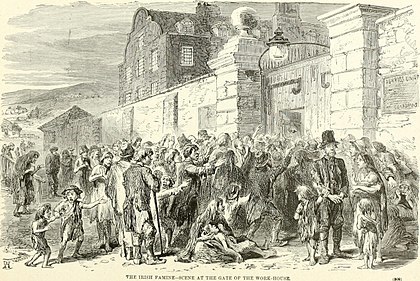
The narrative then shifts to Nancy, her devastatingly hard life, the only surviving member of her family, forced to leave her home on Clear Island to escape to Douglas, near Cork, ending up employed as a maid to Mrs McKechnie. Despite her poverty and travails, Nancy seeks love, tenderness and kindness, such natural human desires, in the gardener Michael Egan, feelings that persist even when he betrays and leaves her, pregnant and in despair, destined for the workhouse, where she gives birth to Mamie, and then later, Jer. Nancy turns her focus and energies on the needs of her children, learning to survive in a unforgiving community and church that judges unmarried mothers harshly, she must do what women in her position have to do just to barely survive, feeling shame, but her children need to eat. In 1982, Nellie, Jer's youngest daughter is dying, living in a council house close to her old family home with her daughter, Gina, surrounded by ghosts that stay close as she dreams of the past
There is a strong sense of melancholy that runs through the narrative, along with a stoicism, the worst can happen, you may well be broken, but you have to pick yourself up, put one foot in front of the other, learn to walk into a future and a world indifferent to all the troubles, bereavements, violence and horrors that bruise and devastate. Throughout it all, there are glimpses, memories of joy and love, whilst getting on with the bitter business of surviving, the strong familial relationships, family bloodlines, the circles of life and death, a family that personifies and is Ireland's history come alive, a past that is inextricably part of today, haunting the present. This is beautiful storytelling, barely disguised truths of Ireland, authentic characterisations that resonate, heartbreaking, yet speaking of the indomitable nature of the human spirit to survive. Highly recommended. Many thanks to Random House Vintage for an ARC.
Bleak from the unrelenting hand of fate, of the times with famine and the choices that people make bringing loss, sorrow, hard times, death . This Irish family is sustained by love and perseverance through generations. Three narrators, three time frames - Jer in 1920, moving back in time with his mother Nancy to 1911 and then to his daughter, Nellie in 1982.
The writing, what to say about it besides it’s always beautiful prose and that O’Callahan writes from the heart . The writing for me was the most beautiful in Part III.
“When I was young days felt so long, and time seemed so slow in passing. I used to listen to my father talk of all the places he'd been, and dream that I'd travel the world myself, that I'd someday get to walk the streets of London and New York, swim in half a dozen oceans, write poems and sing beautiful songs, that I'd always have in my purse a few shillings more than I could spend, and would be swept away in gales of love by someone tall, handsome and strong in all the ways I desired. I did get to savour love…and even if I had to make do with paddling in streams instead of seas and never travelled further down the road than Killarney, I still got to see and experience plenty of the world-more than my fill, some might say. It might not have been the life I'd have wished for as a girl, but we hold on to what happiness we find… I’ve come to understand that there’s peace in acceptance.”
Reading the acknowledgments, it is even more evident of how much of his heart is laid bare in this story. “The spark for Life Sentences was lit in me more than forty years ago, sitting captivated at my grandmother Nellie’s feet on those cold winter mornings when she’d keep me at home from school to share with me stories of her heart. What’s within these pages is a skin of fiction laid over a considerable amount of fact and truth drawn from the secrets I’d been told or uncovered over the years.”
I’m working my way through O’Callaghan’s books because I want to read every word he’s published.
This is an exceptional, multi-generational story of an unexceptional, poor, Irish family. Heartbreak and loss ripple down the generations, but so do love, resilience, and belief in the importance of blood and family. If I didn't love some of his other books even more, it would be 5*. “All that mattered was getting by, at any cost.” It portrays the sort of everyday heroism that may emerge in extreme hardship: something we can all aspire to, while hoping we never need to.
Ebb and flow
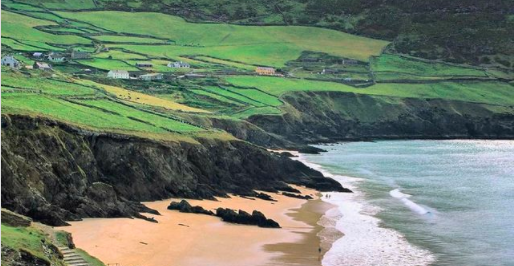
The narrative comes like waves on a beach: rolling forward, retreating, advancing again, ever changing the imprints on the sand, and all of it subject to the overarching tide.
Image: Waves roll in (and out) on Coumeenole Beach, Co Kerry, by S. Greg Panosian (Source)
To talk of timelines and chronology makes it sound contrived and mechanical. Instead, there is organic magic in the way the stories are told: entwined, backstitched, but distinct. “There are no beginnings, my father once told me, and no ends.”
The three sections each have their own narrator. Jer, the middle generation of the three, is first. His story gently swishes between the “now” of his sister’s death, his experiences in the Boer War and WW1, and his childhood. The middle section is by his mother, Nancy, overlapping with and explaining aspects of Jer’s childhood. She adds plenty of her own story - again, swishing between her “now” and her youth. Finally, it’s Nellie, Jer’s youngest child and O’Callaghan’s grandmother. She lives with her daughter’s family, and is looking back, with broad contentment, and forward, fearlessly, to her imminent death.
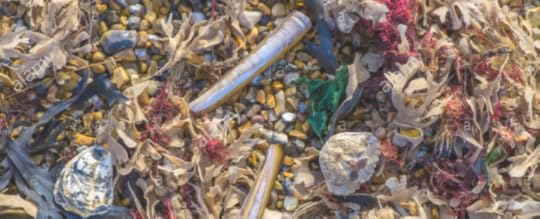
Picture the flotsam and jetsam along tideline, as the waves ebb and flow: a beautiful shell catching the sunlight; some slimy bladderwrack; shards of broken glass, rubbed smooth by the power of ocean; a scrap of knotted net; tiny crabs, scuttling along the sand, or faded, dead, and upside down; dirty plastic of dubious provenance; driftwood, sunned, salted, and wet, perfect for repurposing. Analogies of all are in this saga.
Image: Seaweed, razor shells and crab shells on tideline (Source)
Blood and landscape, identity and belonging
For one: “With little knowledge of my family line, I am largely foreign to myself.” For another: “Happiness for me now is in belonging.”
This is the bloody beating heart of the novel. It’s absolutely not an issue-based novel; it’s about family, about love, loss, and survival, and is rooted in a particular time and place.
Nevertheless, big issues stalk the pages, and they’re not alleviated with the sort of Dickensian humour that might trivialise. Jer bears the mental wounds of the trenches: “It’s 1920… but the flavours of that fighting haven’t left me.” There is hunger and poverty, including prostitution and time in a workhouse: “I stepped into an emptiness as lonesome as any unmarked grave and, for a long, long time, died.”
It's not misery-lit, though reading reviews that cast it as such made me wonder why I didn't feel the same. I think it's because of O'Callaghan's lyrical prose, the strength of love within the family, and knowing it's his family's story, so there must be a happy ending of some sort for some of them. Nevertheless, the multi-faceted pain is always clear, but it's always handled sensitively: it’s never graphic or gratuitous. That was especially important for a rape scene (though not considered such by the protagonists, which is interesting in itself) and an abusive relationship: “To stifle my cries, his mouth went more hungrily at mine.”
Religion, superstition, and the supernatural
“There is magic on Clear [Island], of a kind that is just as often wicked as it is good.”
I tend to think of the Irish as being deeply imbued in Catholicism, albeit allowing for ghosts, fairies and leprechauns. The picture here is more complex. The main characters are not really church people, but some pray, and all seem attuned to spirits of some kind, though often in a pragmatic way. When elderly May hears things: “Whether that has to do with spectres or is merely her mind unfurling spent moments is of no consequence.” Her sister says: “Ghosts… I see them myself all the time. It's the mind playing tricks. At our age, we do nothing but remember.”
There are two important but very different burial scenes. On Clear Island, at the end of the 19th century, it was traditional to burn bodies, but even when a family were burying a loved one, the priest stood back: “Understanding that he had no real business here, neither he nor his god, and he let us say our own prayers.” At another burial, the priest’s role is more complicated and controversial, with uncertain repercussions. “The dead felt on the rise. At that small, witchy hour, it was as if the whole wide world and all of its beyond was watching.”
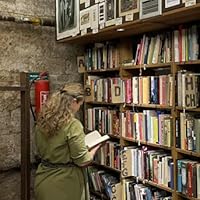
Image: “Religion runs through me like the rings striping the innards of a tree.” (Source)
It’s personal
This book is explicitly based on O’Callaghan’s own family. He described it in an interview as: “A fiction stretched over the strong bones of fact.” In particular, it’s a tribute to his grandmother, who filled him with these and other stories. After her death, when he was only seven, he found solace in books and eventually, writing.
This novel has more plot than O’Callaghan’s short stories, and so rather less space for the lyrical observations and metaphors of light, clouds, rain, and water that I love. Also, they wouldn’t sound authentic in the voices of Nancy or Jer, and maybe not Nellie. Objectively, it’s 5* (John Banville said “O'Callaghan is one of our finest writers... and this is his best work yet”), but I rate according to my experience, and personally, I have loved several of his other works even more.
Quotes
Light and nature quotes • “A mist has gathered and turned the morning vague.”
• “The solitary window does nothing but tease with its revelation of a starless sky.”
• “Eyes the waxy, wood-grey colour of cloud ahead of heavy rain.”
• “The sky’s colour had paled, thinned by a frail skin of clouds.”
• “A pink summer-smelling fur that retains its vibrancy even in the darkness” [Hawthorn blossom]
Other quotes • “My life is defined every bit as much by absences as acts.”
• “We’re most of us who we are because of the things we suffer through.”
• “Mamie… a frail infant… quickly learned that tears were a wasted spill.”
• “The beginning of my happiness and the start of my fall.”
• “We’re all laden with sin, but the shame shows differently… Men can get away with things that women can’t.”
• “Nobody dies, not really, not when their same blood runs through even younger bones.”
• “Exhaustion finally suffocates me, causing my mind to sink slowly from the man I appear to be, down to the stranger lying half an inch beneath the surface of my skin.”
• “Bombs tearing open the ground around us in spectacular patterns… and the night sky the sickly shade of withered apple skins. All of us who fought suffered these moments, flashes of living death when the life we had fell into shadow and we got to glimpse a deeper state: heaven, maybe, for some; hell for others; and nothingness for those of us who could no longer believe in either.”
Author’s voice? Just occasionally, O’Callaghan’s voice slips through the veil. I love the imagery of these quotes, but the first in particular felt rather too elaborate for the character.
• “Every significant moment of my life is a page in a pile that a hundred or a thousand years from now can be tossed in the air and recounted from at random as they fall. I am the picture, in any order. But Michael Egan, whether absent or otherwise, is the consistency that gives me shape.”
• “Leaning back from the fire’s glow and draped in night, she cleared her throat and built an air that was slow in finding its shape… the song that filled the room was a melancholic thing, like the lament of a gale sifting the crags of a bare hillside.”
See also
The novella/long short story, A Death in the Family (my review HERE), is Nellie’s telling of her brother Jimmy’s slow, painful, beautiful death after an accident when he was barely 12. It was included as the final piece in the brilliant The Boatman and Other Stories (my review HERE).
A haunting and affective novel about one family's fight for survival against the odds. Based on stories of the author's family handed down over generations, Life Sentences is a short book but really packs a punch in its 215 pages.
Billy O'Callaghan paints a stark but realistic picture of Ireland through the ages, an Ireland to this day that is still coming to terms with its dark and secret past. An Ireland where woman were treated so badly by church and state. I love how the author weaves his family story, the setting and characters drew me in immediately and I really found this a unique and atmospheric read.
Life Sentences tells the story of a family through a century of hardship, starting just shortly after the famine. We are introduced to sixteen year old Nancy the sole survivor of her family after the famine and who leaves her home on the Island of Cape Clear and finds work in a grand house on the edge of Cork City. Life isn't kind to Nancy and her story is heart-breaking but courageous and I had a hard time parting with Nancy and her story.
This isn't an uplifting book but the prose is beautiful and the author lifts the reader with his words. It's an honest look at a time in Ireland when life was about survival and woman were second class citizens. There is much unsaid in the book and areas where I wanted the author to elaborate, give me more detail and yet on finishing the story I was satisfied with his telling of it and its been on my mind in a good way for the past few days. I could honestly feel the Billy O' Callaghan's heart and soul in this story and I am already looking forward to his next novel.
A beautiful book, haunting and memorable and another novel to place on my real life book shelf.
EXCERPT: Nancy (1868) When I was a child, my mother often told me that we'd been a hundred generations on Clear Island, one branch or another of us, and on the day the last one of us left, the island would sink out of grief to the bottom of the sea. And at sixteen, as I sat in the prow of the Sullivan brothers' boat, wanting more than anything to risk a backward glance, those words kept me afraid. For the entire crossing, my mother's voice sang loud inside me and so truthful sounding that, had I turned my head, I felt sure I'd see the cliffs crumbling in on themselves and their blankets of gorse and heather flushing the stony grey water with shades of pink and gold. And worse still, that there'd be scatterings of my dead watching after me from the strand, thin-shouldered and forlorn, knowing I'd never return, that this was the end.
ABOUT 'LIFE SENTENCES': At just sixteen, Nancy leaves the small island of Cape Clear for the mainland, the only member of her family to survive the effects of the Great Famine. Finding work in a grand house on the edge of Cork City, she is irrepressibly drawn to the charismatic gardener Michael Egan, sparking a love affair and a devastating chain of events that continues to unfold over three generations. Spanning more than a century, Life Sentences is the unforgettable journey of a family hungry for redemption, and determined against all odds to be free.
MY THOUGHTS: The Dead House by Billy O'Callaghan was one of my top five reads of 2018. So I looked forward to Life Sentences with great anticipation. It's not that I didn't like it, because I did. I didn't love it.
There is a family tree at the beginning of the book which helps to make sense of it all. This is the author's own family, and Billy is the 'Bill, who's seven now' of the extract, son of Liam O'Callaghan and Gina Murphy.
The book (not the story, the book) begins in 1920 with Jer drowning his sorrows at the death of his sister, Mamie. We learn Jer's story in the first third of the book, his service in WWI, his love for his wife and children, the poverty, the desperation.
The narrative then moves back in time to the 1800s, and we learn Nancy's story. After the famine and the death of all her family, she leaves the island of Clear and moves to the mainland, where after living as an itinerant picking up seasonal farm work, she falls into a job in service. It is here she meets Michael Egan the man who will father her two children but will never be her husband.
Finally we get Nellie's story, Jer's daughter and Billy's grandmother.
Quite why it was written in this format, I don't know. It didn't add to the appeal. For a while there I thought that somehow I had downloaded the wrong book. Although Life Sentences is a scant 250 pages, it is a long story. In the author's notes, Billy O'Callaghan writes: 'What's here in Life Sentences is a skin of fiction laid over a considerable amount of fact and truth drawn from things I'd been told over the years.'
Although the writing is quite beautiful and lyrical in places, in others it just dully recounts events, some of them quite horrific, in the history of this family. It probably is heart-rending, all the more so because of the truth of it, but I was left unmoved, and I don't know why.
⭐⭐⭐.4
#LifeSentences #NetGalley
'When the night turns still, what keeps us awake, what haunts us, are the things we've done more so than the things we've had done to us.'
'Hell might be the ceaseless repetition of who we are in our lowest moments, with our mistakes, the ones that have defined our lives, playing over and over...'
'Nobody dies, not really, not when their same blood runs through ever younger bones.'
THE AUTHOR: Billy O’Callaghan is an Irish short fiction writer and author. He was born in Cork in 1974, and grew up in Douglas village, where he still resides.
DISCLOSURE: Thank you to Random House UK, Vintage via Netgalley for providing a digital ARC of Life Sentences by Billy O'Callaghan for review. All opinions expressed in this review are entirely my own personal opinions.
For an explanation of my rating system please refer to my Goodreads.com profile page or the about page on sandysbookaday.wordpress.com
I love Billy O’Callaghan’s writing. Beautiful prose in this story that covers three generations in a rural, Irish family that deal with many hardships…famine, abandonment, war, death… I really enjoyed it.
Life Sentences by Billy O’Callaghan is a story three generations of one family between 1920’s to 1982. Set off an island near Cork in Ireland Nancy leaves the small island that she has grown up on that starts a whole heap of events. From working in a grand house where she meets Michael Eagan that sets her life up from having his illegitimate children, working in the workhouse and when her soldier fighting in the great war. I always like fiction set in Ireland and this is no exception. It is beautifully written heartfelt story of one families joy and hardships and abandonment. The only thing that was a problem for me is the author sometimes transitioned from one character to the next without no break, so I got confused who the story who they are referring to. Maybe I am nit picking. You will have to read it yourself to find out.
Life Sentences was a beautiful, highly emotional family saga that took place on the southwest coast of Ireland, spanning four generations and over 100 years. The prose was gorgeous, the stories were engaging, and the characters were absolutely unforgettable! Guaranteed to bring on the tears!
I don’t know why I waited so long to read these modern-day Irish authors I’ve fallen for lately—Donal Ryan, Billy O’Callaghan, Colm Toibin and more—but their books will now and forever be my ‘go-tos’ when I want something I can really immerse myself in. I’ve found that reading this novel—and any novel by the authors mentioned above—is a fail-safe method for getting “all the feels” I’ve been looking for. It’ll work for you too!😉
So I'm a BIG fan of this writer. Billy O'Callaghan writes with a beauty that sometimes makes you reread his words again and again, so you can savour them for as long as you can. This is the story of three generations of one family. Migrating from Ireland's most southerly Island to Cork city, we see how those beginnings thread their way through the lives of Nancy, her son Jer, and his daughter Neillie. A tale of survival, and love, and redemption.
zanimljiv odabir naslova, gotovo da upućuje na neprestan niz ponavljanja tragedija unutar jedne irske obitelji. postavljajući rodoslovno stablo na početku (hvala mu na tome, ta metoda trebala bi se češće koristiti) upoznaje te s likovima koji su upleteni u mrežu preživljavanja (glad, rat, siromaštvo, beskućništvo, mrtvorođenčad...). o'callaghan je izdvojio troje njih koji u 1. licu pričaju obiteljsku povijest: sina jeremiah 1920., majku nancy 1911. i unuku nellie 1980. pa kroz njihove intimne ispovijesti dobivamo cijeli spektar događaja, uglavnom neveselih, koji su formirali obitelj martin. s obzirom da je autor nellien unuk, nije mogao izabrati bolji način odati hommage svojim precima. ova knjiga plod je kopanja i istraživanja obiteljske prošlosti, ali i pokušaj razumijevanja postupaka i zbližavanje s onima čiju krv nosi pod kožom. o'callaghan je izvrstan pisac, možda bolje reći "pripovjedač" kojeg bi se moglo neprestano čitati (s osjećajem da ga slušaš) danima i tjednima.
Je dosť pravdepodobné, že ste už čítali podobné príbehy ako tie v Doživotí. Intenzita zážitku tohto románu spočíva však predovšetkým v autorovej schopnosti skladať nádherné premyslené vety a myšlienky bez toho, aby skĺzol ku klišé a patetickosti. Dojímavý príbeh troch postáv prepojených rodinnými vzťahmi odkrýva kus írskych dejín, ale hlavne dejiny osobné, ľudské, obyčajné. Billy O´Callaghan mohol pokojne napísať nekonečnú ságu, no vystačil si s priestorom o rozsahu necelých 200 strán, v ktorom sa postavy ocitajú zoči voči smrti v rôznych podobách, no v svojom nekonečnom smútku si uvedomujú, že život ich má ešte stále o čo obrať. Postavu Jera považujem za jednu za najkrajších mužských postáv v literatúre, v roli bratra, manžela i otca obstál na jednotku s hviezdičkou. Keďže autor v románe spracováva skutočné rozprávanie svojich príbuzných, musel sa inšpirovať úžasným človekom. Jer pre mňa stelesňuje predstavu, čo s človekom dokáže láska v rôznych podobách v ťažkých časoch.
Vraj text obsahuje logické chyby, nevšimla som si, som nepozorná čitateľka. Ak nejaké sú, nevadilo mi to. Na začiatku knihy je rodokmeň, tam sú tiež chyby v rokoch, ale na orientáciu rodinnej schémy veľmi fajn. Neviem koho z týchto nedokonalostí viniť, ale samotného autora zrejme nie. Zážitok z čítana mi to našťastie nepokazilo.
Told from perspectives of three members of one family, this historical fiction novel was a masterpiece of literary fiction.
Wow! Kudos to Billy O'Callaghan who has left me verklempt and with a headache from weeping.
The desperate plight of his characters springs vividly from the page via his accomplished prose. His writing flows smoothly and with such empathy and understanding that you are completely immersed in the narrative.
The novel speaks to the social injustices prevalent in Ireland in years past. It is also a story of Irish Catholic heritage and the strong bond between siblings, as well as that between parent and child.
Highly recommended to those who like to read realistic, well-researched, biographical, historical, literary fiction. ❤
This novel has been described as semi-biographical. The Family Tree at the beginning of the book, easy to overlook, contains the author's name at the very bottom. The novel is set in the village of Douglas, on the outskirts of Cork City. It spans over a century, and the story focuses on the lives of three of the family members, who lived from 1852-1984.
While this could seem like a dry, everyday story, it stunned me with its lyricism, and profound portrayal of love and loss. The will to survive is strong in this family, and it beggars belief that again and again, members of the O'Callaghan family are able to overcome extreme hunger, abuse, and the number of tragedies that befall them. As bleak as this sounds, it is beautifully told.
Yet another novel about loss from O'Callaghan. Loss of a parent, spouse, sibling, child, loss of family life, security, health etc. It is quiet and reflective. No shocks or drama. A pleasant read because of the quality of writing.
Veľmi pekná realistická próza, ktorá na osudoch troch členov jednej rodiny mapuje spoločenské pomery konca 19. storočia a 80. rokov 20. storočia v Írsku. Najväčšou devízou tohto románu je jeho jednoduchosť a absencia pátosu a snahy vytvoriť mnohostranový epos jedenej rodiny, akých bolo v Írsku desaťtisíce.
Bohužiaľ v knihe sú aj formálne chyby a nepresnosti v rodostrome, ktoré ma ako čitateľku vyrušili.
3,5* Je to ten typ knihy/příběhu, který se strašně hezky čte, jenom to odpovídá přirovnání o východniarske svatbě - bolo to skvelé, ale nič si nepametám! Ale jsem ráda, že mě náš knižní klub k tomuto přivedl.
Life Sentences by Billy O’ Callaghan was published in paperback with Vintage in January 2022. It is a book that immediately received great acclaim, with John Banville stating that ‘O’Callaghan is one of our finest writers, in the tradition of John McGahern and Brian Friel, and this is his best work yet.’
Being from Cork myself, Billy O’ Callaghan is familiar to me yet, for some unexplained reason, it is only recently that I picked up a copy of Life Sentences. To say I was blown away by Billy’s writing is an understatement. I have been to a few literary events this year where Billy O’ Callaghan was on the panel and he is first and foremost a gentleman but also a real pleasure to listen to. He is very modest about his work and it is clear that he is at his happiest when writing.
Life Sentences is loosely based on Billy O’ Callaghan’s own family history. His grandmother, Nellie, passed on the stories of the generations who preceded her, providing him with the basics to get started. With some research into his family tree, he was able to piece together some additional facts incorporating them into this significant and immersive tale that is truly a very special and remarkable book.
Life Sentences spans three generations and initially we are introduced to Jer, Nellie’s father. The year is 1920 and the world is trying to recover from The Great War. For those who survived the battlefields, the memories are forever present. It is the eve of Jer’s beloved sister’s funeral and Jer is angry, an anger fuelled by grief. Throughout these opening chapters we get an insight into Jer’s younger years, his marriage to his beloved wife Mary Carty and of course his years in the trenches.
“I tell her that while she has me we’ll be fine and will get through whatever comes, kissing her as I talk, her forehead and cheeks and shut eyes, and she turns her face upwards so that I can find her mouth and tries, as she always does, to be strong, knowing I mean everything I say but understanding too that it might not be enough” – Jer
Anyone who has read Birdsong by Sebastian Faulks will recall the vividness of the horrors of war. Billy O’ Callaghan brings that same brutality to life with descriptions that are so authentic, you read them with a sense of absolute shock and revulsion. Jer is a gentle man, and his observations of his life to that point are skilfully recounted through the most gorgeous use of words that flow beautifully across the pages. There is a softness, a lilting edge to every sentence that just mesmerises and will fully capture the attention of any reader.
In the second part of Life Sentences, it’s 1911 and Nancy is about to share her story. Born in 1852 on Clear Island off the west Cork coast, Nancy left her birthplace at the age of nineteen, the last surviving member of her family. Starvation was rampant on the island so with no choice, Nancy knew she had to leave her beloved home and make her way to the city of Cork. She eventually got work in a house in Blackpool on the outskirts of Cork City. Working as a housemaid she was surprised to find love in the arms of the gardener, Michael Egan.
“Back on Clear Island, my mother had often told me that my voice was a leftover from long ago, when the world was still a beautiful place. Álainn agus cineálta – beautiful and good. My looks, such as they were, my still-young age and the music of my accent were what I had to offer, and although I feared the likes of me could be had ten a penny along the city docks of any wet night with a ship in port, I hoped that whatever had turned Michael Egan’s head would prove enough to keep him wanting” – Nancy
Nancy dreamed of a life filled with children and a stable home but this was not the path that was laid out for her and an unimaginable hardship was to be her future. My heart broke many times over reading Nancy’s story. The descriptions of Cork, the familiarity of all the streets and places brought Nancy’s story very much alive to me making it all the more heart-breaking and poignant.
The final part of Life Sentences is Nellie’s story. It’s 1982 and Nellie is reaching her final days. She looks back on a life that began in 1918, recalling her marriage to Dinsy Murphy and the challenges they faced as a young couple. She looks to the future imagining the life ahead for her daughter Gina with her husband Liam and she speaks of the love for her grandson Bill (Billy).
“Because when I look at him I see all of us reflected, traits of Gina and of Liam, his mother and father, and the rest of us too – my eyes in a certain light; strains of how my father lifted his head to speak or the delight that would square his shoulders whenever there was a chance to hear a story being told. He has just turned seven, with the best of living still to come, but he’s also all of our pasts combined. And because my own future has fallen short, it’s the years gone by that shine most clearly for me now.” – Nellie
Nellie’s story beautifully wraps up this outstanding book, one that Billy O’ Callaghan refers to as ‘a skin of fiction laid over a considerable amount of fact and truth drawn from things I’d been told over the years.'Life Sentences is more than I could have ever hoped for in a book. It is a compact read yet it is an epic read. It is written by a magician of words. This is not a happy read. These were not happy lives. Yet Billy O’ Callaghan captures the truth of life during those harsh years for the ordinary man and woman. A century sees a lot of change in any society but Billy O’ Callaghan manages to depict each era concisely while also keeping his focus on the lives of the individuals involved. There is so much pain in these pages, so much anguish yet also there is hope that life continues as the steadfast nature of the human spirit continues to thrive.
Life Sentences is an extraordinary and compelling read. It really is the sum of its parts, a combination of an emotive and personal story that resonates and the expressive and musical writing of this master storyteller.
Umne napísaný román, ktorému prestriedanie troch rozprávačov svedčalo. Obávam sa len jedného - že napriek tomu, ako dobre sa čítal (a pritom nebol vôbec banálny, naopak), nezostane vo mne veľmi dlho. Na taký ambiciózny časový záber mi jeho stručný rozsah asi úplne nestačil.
Absolutely beautiful writing,I´ll admit that. That aside, it´s relentless misery,tragedy and despair. I´ve read a lot of Irish history and literature, so I know these things happened, but still,there´s not a drop of hope in this one. Almost as if the author revelled in making his characters utterly miserable. Other Irish writers,like the brilliant Barry,Alice Ryan,and plenty others, while conveying the reality and mangling your soul,strike a better balance between harsh ,awful facts and the-quintessentially Irish also- capacity for love,hope and the soaring, indomitable spirit of that lovely people. The three voices are oddly similar, so nothing to rescue there either. Very aptly named, it gives the characters no quarter.It´s a rare book that leaves me with a bad taste in my mouth, so to speak, and this one was one.
I love Billy O'Callaghan's writing but this novel is special. Told in three sections, each in the voice of a member of a family over several generations. Jer (Jeremiah) grew up with a single mother and a sister. As his sister Mamie is laid to rest, he burns with anger at the brother-in-law who made her life such a grind and ponders his own life and meaning.
Nancy, Jer and Mamie's mother is a teenager when she leaves her island home to seek a living. Young and easily swayed by the advances of a handsome gardener, she falls pregnant and ends up in a workhouse. Then, she falls even further. But she summons her courage and fills her home with love, eventually making a decent home for her children.
Nellie is dying in the home of her daughter. The youngest of her siblings, she is not the first to go. As she reflects on her life, she remembers the heartbreak and love and how her family held her up when she needed comfort.
A beautiful, heart-filling little gem of a book. At 220 pages it could be read in a single sitting but I chose to stretch it out, one section per day so I could stay with Jer and his family a little longer.
I received an advance readers copy of this in exchange for a fair and unbiased review but I cannot say I am totally unbiased because I love the books of this writer. This is his finest yet, as good as his best short stories, a big ambitious story that somehow fits into just 200 pages but feels much more. There are three different stories here, each told by a main character. In the first part (spoiler alert) Jer, a former soldier of the great war, sits in a jail the night before his sister's funeral and reflects on his life. Then the story moves to his mother, Nancy, who was born into terrible poverty in west Cork after the great famine. Finally, there is Nelly's story, told from the final days of her life in the early 1980s. Each one is heartbreaking and stunning, and I was moved several times to tears. This is a great novel, full of power, about survival and identity and the value of family love. But as always with Billy O'Callaghan it is the skill of the sentences that amaze me. It is prose but feels like the best poetry.
Billy O’Callaghan mi v knížce Doživotí dokázal, že nebylo marné ho po minulé knížce sledovat. Z knihy Náš Coney Island byli někteří rozpačití, že všechno už tu bylo, že příběh je takový chudý. Ale i kdyby, napsané to bylo skvostně. A Billy O’Callaghan znovu ukazuje, že píše bravurně, že umí slova skládat do libozvučných vět, až člověk doslova jásá, že je může číst. A příběh tří postav, svázaných jednou krví (navíc krví společnou se samotným autorem), který čtenáře provází bezmála stovkou let a předkládá mu tak na osudech obyčejných lidí nelehký život v Irsku, je vynikající. K jeho postavám lze jednoduše přilnout, prožívat s nimi, přát jim to nejlepší. A některé mít zase chuť nakopat do oněch míst. Život provázaný rodinnými vztahy, láskou k dětem, matkám, otcům i babičkám, to je autorova pocta svým předkům, kteří ho méně i více a třeba i nepřímo tvarovali.
4.5 🌟 "Maybe there's some truth to the notion of time's healing qualities, but there's also no denying that life occasionally breaks in ways that can't be mended. We watch and wait and squeeze the hands of our dying, trying to comfort them when there's nothing left to say, and then we put them in the ground, weep a while for them and for ourselves. And when enough time has passed - because we have no other choice -we search among the fragments of whatever remains to us for a reason to keep moving forwards, then we step back into a world that, indifferent to our tribulations, has continued all the while to turn, and we go on breathing until our own air runs out. There's no real getting over those kinds of losses, the death of a spouse or a child, but they must be borne. And, of course, the losses I've endured are not unique."
Haunting, harrowing and brutal this wonderful read shines a light on three generations of the one family living in a small rural village in county Cork. First is Jer, struggling to find his identity, still reeling from the horrors of the trenches of the first world war and now having to bury his beloved sister whose death he blames on her drunken sot of a husband. Then Jer's mum Nancy, leaves her home on Clear island and falls for the charms of a glib married man, leaving her and her two children facing the workhouse. Then we meet Nellie Jer's daughter who wanted to do so much but like a hamster on a wheel is going round and round but going nowhere. Beautifully written, O' Callaghan used his own family history as his inspiration and this is certainly a very personal read.
"My mother had long since let the language slip from her days, and it existed within her now as an undercurrent, strong and steady but rarely rippling to the surface. English had become the language of work and the turning world, and the weapon for keeping hunger at bay."
"... But I think the song is really about the things we cry for when they're taken from us. And then how we go on from that. That's in the melody if not in the words. And I suppose it's about how we feel when some bit of the past that we thought had gone rises to the surface without us expecting it."
Das war ein oft düsteres, aber auch schönes und emotionales Buch. Das Buch ist sehr stark autobiografisch geprägt und basiert auf Geschichten, die in der Familie des Autors weitergereicht wurde. Es berichtet aus der Sicht von drei Familienmitgliedern über mehrere Generationen hinweg vom Leben einer irischen Familie und wie Armut, Krieg, Hunger, Verlust und Liebe das Leben der Einzelnen beeinflusst hat. Das Ende des Buches fand ich irgendwie beruhigend und einen schönen Abschluss. Der Schreibstil hat mir sehr gefallen, obwohl ich oftmals wegen der sehr lange Sätze irritiert war.
Meh. We’ll written, but although the three characters are connected as family members, there wasn’t enough overlap to connect the reader. Being only broken into three segments made it tough to get through even though it’s a short book.
This seems like it could be my own family and the struggles are universal-
Absolutely loved this book. I read it in one day. So beautifully written it was an effortless read. Every sentence a joy. I wanted to know so much more and can only hope Billy shares the narratives of every person who descended from the incredible woman that is Nancy Martin