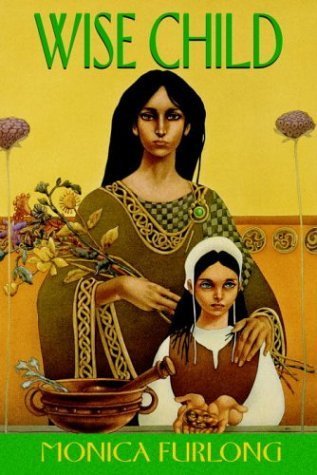
In a remote Scottish village, nine-year-old Wise Child is taken in by Juniper, a healer and sorceress. Then Wise Child's mother, Maeve, a black witch, reappears. In choosing between Maeve and Juniper, Wise Child discovers the extent of her supernatural powers--and her true loyalties.
Monica Furlong was a British author, journalist, and activist, regarded as one of the Church of England's most influential and creative laypersons of the post-war period. Her work often focused on religion and spirituality, with notable biographies of figures such as John Bunyan, Thomas Merton, Thérèse of Lisieux, and Alan Watts. She also explored subjects like the spiritual life of aboriginals, medieval women mystics, and the Church of England. Furlong was also known for her children’s novels, including the Wise Child series, which consists of Wise Child, Juniper, and Colman. Furlong began her writing career in 1956 as a feature writer for Truth magazine and later worked as a religious correspondent for The Spectator and Daily Mail. She became an advocate for religious reform, particularly supporting women’s rights within the Church of England. In her first book, With Love to the Church (1965), she championed an inclusive Church. She continued to support the ordination of women in the 1980s and pushed for the appointment of women to senior Church positions. Her autobiography, Bird of Paradise (1995), provides insights into her life and career. Furlong’s controversial experiences with LSD were shared in Travelling In (1971), which was banned from Church of Scotland bookshops. Throughout her career, Furlong wrote extensively on spirituality, reform, and religious figures, becoming a well-respected voice in both religious and literary circles.
There is no book more central to my development as a human being than this one. I can't possibly review it critically.
Some good points include a lovely style of guardian/parenting and a true acceptance/tolerance of other faiths. I also appreciate that the herb references are accurate, but that's probably because I'm a little nutty.
Recently re-read this, and found it again to be the rare kind of book that makes me want to work harder and be a better person (usually only George Macdonald can do that!). And it is a wonderful story from an excellent writer, one whose work mainly dealt with mysticism and the lives of certain Christian mystics. Furlong had a beautiful mind, and I wish she'd written more fiction!
This is a middle-grade novel for grownups. Or rather, it's a novel intended for preteens that, miracle of miracles, expects a lot from its reader, and is just as rewarding at 35 as it was at 11.
I read this as a kid and remember liking it, so I was expecting a fun nostalgia trip. What I wasn't expecting was to enjoy it even more twenty-five years later. The characters are still memorable, the writing excellent, the story compelling -- but there's a level of wisdom and thoughtfulness that had me cheering for authors who don't talk down to their intended audience. (Elizabeth George Speare's The Witch of Blackbird Pond succeeds in a similar way, I think, and I'm sure there are many many others I'm forgetting.) And as a parent, it's such a thrill to remember that books like this exist and to look forward to reading this with my daughter.
Something else that struck me throughout the book was what an excellent parent Juniper makes. She's the very embodiment of "firm but kind," allowing Wise Child to make her own mistakes, teaching her lessons without reprimand or punishment. (Wise Child is a real pill at times, so this is quite a task, but Juniper never seems too nice to be believed.) If Juniper wrote a parenting manual, I would absolutely buy it. Perhaps Parenting the Juniper Way, or The Doran's Guide to the First Five Years?
Het is bijzonder gevoel, ik voelde me weer even een kind door alle warmte en wijsheid die in Heksenkind verborgen zit. Toen een favoriet, en nu nog steeds.
Oh, Wise Child. You are so ornery and lazy and lucky. Re-reading this and Juniper for the first time in several years made me wonder if they had something to do with my desire to do nothing but milk cows and spin/dye wool and bake simple foods for the rest of my life. Oh, and do magic. Duh.
But in all seriousness: a quiet, calm book that I love to a ridiculous extent. I fear the day my copy falls apart and I can't find a new one because it's stupidly out-of-print.
I consider this a "cozy" book of literary excellence. I don't usually combine the words cozy, literary, and excellence in the same sentence but for this book I make an exception. I read this during the month of October which added to my enjoyment. It is about a witch teaching her student her witchy ways. I've been a member of The Herb Society of America for 27 years; I found the herb descriptions accurate. I could almost smell their aroma wafting from the pages. The plot is predictable but I don't mind in this instance.
The book is labeled for middle-graders. It has a lot of wisdom to offer adults too.
Opnieuw gelezen favoriet boek, een boek waarin ik veel terugvind over (en me eraan herinnert ook) hoe ik in het leven wil staan en mijn best doe te staan. Mooi verhaal!
I heard about Monica Furlong's Wise Child from fellow goodreader Ruby Hollyberry. She wrote that a friend of hers attributed this book making her a witch. That's a neat as hell description of a book, and of course, I had to check it out. I feel some major digressions coming on... Wait, is it just gas? Nah that was my dog. He's a ventiloquist pooter. He throws his fart stench to make it look like I did it. Crafty little bugger. Yep, digressions.
A. Books making you a witch! I love that. So my Cherokee great-grandmother told my mama that I was a witch when I was a baby. I lost the uncle lottery BIG TIME and my least favorite one honestly believed I was a witch. You wouldn't think people still confronted that Salem shit nowadays (or a Spanish inquisition). (If only NBC allowed SNL skits on youtube. The Shannon Doherty "Salem bitch trials" was priceless. 90210 made me a bitch.) No one asked me about Florida cults (despite wearing "Ask me about my Florida cult stories" button in another review) so I guess no one will ask me about those stories either (ahem okay so these ones happened in Alabama. I'll wear a bandana and have 'Bam flashbacks). Anyway, it was bizarre. My "powers" were really lame stuff like staring at bright lights and then watching the funky colors float over my eyeballs. (These days my little niece is a "witch" and has similar lame-o powers. I love it. Best thing after her trying to introduce *me* to The Beatles. Kids always think they got everything first.) Getting to the ACTUAL book at hand for a moment, the "witches" in questions are Cornish and Scottish. I dug that that wasn't the dealio at all. It's like making up these witchery stories on your own like me ignoring Indian folklore stuff and skipping straight to the staring at the sun magic. I loved the deciding for yourself message. I nicknamed myself "Mariel the Mean Machine" as a little kid. My grandfather renamed me "Mariel the Mean" and the name stuck. I'd have loved Wise Child as a kid 'cause she's fighting all that labeling from most in her life.
A.1 (not the steak sauce) Are places and magic overrated? John Sayles is not Irish and he wrote and directed the film The Secret of Roan Inish about selkies and Irish folklore and it is most awesome movie (and if you haven't seen it, you should. It's sold in bargain bins pretty much everywhere, like begging to be this little lost gem you find by accident and love to heart). You don't need to give a fig about selkies at all. It's just great storytelling. So teachers who say "write what you know" aren't always right. You can know stuff by bullshitting and making it your own, anyway. I love that kid feeling of thinking you were the one who got it first.
A(gain). This book is a little too telling too much, almost preachy. I loved best (better than the witchery and really nice husbandry building your own world through hard work and order) the feeling of the girl Wise Child coming up in her world and learning through repeated knuckles on bruises (Juniper refuses to beat her, though. Scandalous! Should've gone to Alabama public schools in the '80s if she wanted beatings...). If only that hadn't been shown so much through being TOLD these things. That's a little too after school special for me, at past thirty. I wanted it more at ease, other angles, sense of humor view like Terry Prachett. Pratchett's Tiffany Aching books came later, but boy do they have Wise Child beat on that. Wise Child is the relative from the past that you look at in photographs and appreciate but don't carry that photograph around in your wallet for day-to-day affirmation (I'd totally wear a "What would Tiffany Aching do?" bracelet).
B. Mariel's scale of wish-everything-was-that-awesome-fantasy-stories: The Secret of Roan Inish. Peter S. Beagle's The Last Unicorn and Tamsin. Juliett Marillier's Sevenwaters books (especially the third one, and that book was probably influenced by Wise Child? Marillier loves her some Margaret Mahy, that I know). I worship Patricica A. McKillip, some of Dianna Wynne Jones. You know the feeling of reading some really fun and interesting, and everything bad just faded away? Narnia and Harry Potter and Labyrinth. I'd do nothing else but read and watch movies if only I knew where all the more stuff like this was hiding from me.
B.1 Then there's just the scale of becomes a frame of reference in my mind, like The Witches of Worm. I wouldn't say it is a *favorite* but it sure sticks out in my mind for creepy-witchy-paranoia-cautionary-tale stories. Roald Dahl's The Witches was a childhood favorite.
B2 (not the vitamin) I don't know. Maybe it's too soon to tell. I do like to keep little homey pictures in my mind for warmth, and Juniper is very nice.
C. Anyone remember that internet meme from a few years ago about which musicians made you gay just by listening to them? Sufjan Stevens scored 100%. Morrissey and Elton John didn't get that. David Bowie made me wish I was a lesbian. Anyway, Karin Andersson from The Knife and Fever Ray is a witch if anyone is, to my mind. If you're actually reading any of this you might have time to watch these two videos. Pass this On and When I Grow Up.
D. The Life of Brian Juniper tree guy! E. Wise Child is out of print. I got mine used online. There's a dedication in the front flap: "Jessica, Merry Christmas, 1992. The Bicks". How come they got to give a gift as an entire family when my cheapo friends in 1992 bitched if my twin and I gave joint gifts? (They had no problem giving joint gifts.) Clearly, I'd have shared Wise Child's selfish side that wanted to be pampered and given nice things by her bad mama... And shout-out to The Bicks! Jessica didn't keep your book. Ooooh regifting! Mine came from the Goodwill from some Midwestern state. Our goodwill didn't have good anything the one time I went. I know a guy obsessed with the goodwill and he actually brags to me about getting "collectible" self-help books from the 1950s. I should give him Wise Child. Dude, material things don't matter. Mildly preachy kid's books are millions times better than self-help books (from the '50s!).
F-Z Saving those for the other two books in the series...
I love this book. I first read it when I was in 7th grade and my paradigm was being shaped. It was a soft as new cement at the moment. This book reminds me of Boulder Coaster by Acoustic Alchemy. it brings back memories of nicking chamomile tea from my grandmother's cabinet, drinking it and thinking about life and such. In this book, Wise Child finds herself living with the compassionate Juniper who treats the ailments of people in a Scottish village even though they look at her with suspicion and fear. Which annoys me. If someone is REALLY in the league with the devil, why would they take so much effort to heal you? Juniper is so kind to Wise Child, to the villagers, despite being a bit of an outcast because she's not Christian, but more of a believer in the unity of nature and using her powers for good.
I really have to stop this book at the last couple of chapters because they bug me. It's not due to the quality of the book, but the fact that I hate the villagers so much. As a kid, I might have identified more with Wise Child, but as an adult, I find myself wanting to be like Juniper. I want to be compassionate, responsible and kind to people even when they don't deserve it, the jerks.
10/18/19
I continue to love this book but the last 3 chapters frustrate me. Not because they are bad, but because I just want Juniper and Wise Child to be happy forever.
I also want to be a doran. I wonder if my friend crush would like this book.
Voor de zoveelste maal herlezen, dit keer voorgelezen aan mijn dochter. Iedere keer als ik dit boek herlees vallen me weer nieuwe dingen op.
Waar ik als kind viel voor de sprookjesachtige sfeer en de spannende gebeurtenissen, trof me deze keer vooral de levensbeschouwing van Juniper. Juniper aanvaardt alles wat er is: in de natuur en in de mensen. Alles mag er zijn en hoort erbij. Als mens ben je onderdeel van het grote geheel van de natuur.
Hoofdpersonage Leana maakt in een Vrouw Holle-achtige coming of age door in de zin dat ze zich leert overgeven, zich de filosofie van Juniper eigen maakt en een rol voor zichzelf ziet in de wereld.
Helaas kunnen de vertegenwoordigers van de patriarchale dogmatische kerk de wijsheid en de rol die Juniper inneemt, niet verdragen.
Ook vond ik het heel mooi hoe Leana’s mystieke ervaringen worden beschreven. Ze kan niet zonder Colman om haar te steunen en te helpen.
2026: nog geen kindjes in zicht maar toch immer nog de drang dit boek voor te lezen. ik ga op zoek naar bonuskindjes.
deze keer sloeg de feministische insteek hard aan. ~vrouwen die enigszins macht hebben die niet iedereen begrijpt, dat is natuurlijk levensgevaarlijk en moet tot op het bot worden afgeslacht. op de brandstapel ermee, dat enge vrouwmens, en alles wat ze heeft aangeraakt! dat zal onze oogst redden!~ terwijl deze vrouw toch letterlijk het beste voor heeft met de mensen in het dorp, zelfs de mensen die het dorp uitgepest zijn door hun bloedeigen broer. mooi dat er zulk onrecht niet verbloemd wordt en dat vervolgens dan toch op een kinderlijke manier alles nog weer goed komt.
--- 2020: dit was daya's favoriete boek toen ze klein was en ik snap honderd procent waarom. wat een avonturen maar vooral wat een mooie levenslessen hier! ging vooral ook lekker op de waardering voor plantjes en de natuur.
mijn favo scène, dagen na een iets dat verdacht veel op een trip lijkt, moet ze een eng bruggetje over en durft niet tot ze beseft dat alles verbonden is dus ze zelf ook het bruggetje en het water is, dus als ze erin zou vallen, dat niet erg is.
ja ga dit boek sowieso aan mijn kindjes voorlezen (of laten lezen) !!!!!! aan ze allemaal!
"Wise Child, come to me, over the land and hill and sea..." That simple line has become a haunting sing-song in my mind, and I've been unable to forget it ever since I first read Wise Child by Monica Furlong when I was younger.
It is not a difficult book to read, and it's easy to get wrapped up in Wise Child's story. With no one to turn to after her grandmother dies, she becomes the ward of the (rumored) witch Juniper. As she spends more time with the woman, though, she learns that appearances and rumors often have no basis on the character of a person. At first forcing the spoiled Wise Child to help with the chores, Juniper teaches Wise Child about the art of healing, and the manner in which all creatures should be treated. They form a bond that is tested when Wise Child's beautiful and manipulative mother puts a claim on her daughter, and it is suddenly up to Wise Child to decide whether she'll listen to the voices around her, or if she'll listen to an inner voice that she's only just starting to trust.
A special book about the bond between Wise Child who is sent by her away-at-sea father to live with Juniper a woman who many in their village believe to be a witch. First book in a trilogy. This first installment seems to be setting the reader up for future battles between good evil. Much like the early books in the Harry Potter series, Wise Child spends much of this title learning a multitude of subjects (Latin, English, philosophy, astronomy, music, herbal lore, etc.) in what seems to be preparation for later challenges.
I read Wise Child 15 years ago and loved it so much that I introduced it to our students and staff at our wilderness school, Hawk Circle. The Wise Child books have now become a must read for just about every one that comes through our programs. I especially love Juniper and her incredibly wise way of teaching and mentoring. The story of Wise Child and Juniper has become so potent at our place that I've started a Juniper Retreat where I will be teaching many of the herbal and healing skills that are woven through out the story. Can't wait!
'Heksenkind' krijgt van mij alleen maar lof en heel, heel veel liefde. Het was mijn favoriete boek toen ik een jaar of 9 was geloof ik - misschien nog wel jonger? - en ik lees het nu weer, en af en toe moest ik echt even hardop lachen. NATUURLIJK ging ik hier al lekker op toen ik kind was!!! Alles van dit boek past gewoon zo goed bij mij.
Het speelt zich af in de zevende eeuw in een mini dorpje op een eiland in Schotland (waar ze uiteraard Gaelic spraken <3), en de hoofdpersoon Leana (meisje van een jaar of 10) moet bij Juniper gaan wonen, de vrouw die door het dorp wordt gezien als 'heks' aangezien ze mensen kan genezen met kruiden, niet naar de kerk gaat etc..
"Ze was wat wij in onze taal een cailleach noemden. Een cailleach was een alleenstaande vrouw, maar niet alleen dat, het was ook een vrouw die iets geheimzinnigs had."
Leana is in het begin bang want ~wow heks ze gaat me betoveren, is ze in dienst van de duivel help??~ maar Juniper is echt de meest inspirerende en mooie vrouw die je ooit in boeken gaat tegenkomen. Leana leert ondertussen dus over kruiden en planten, hoe ze mensen kan genezen. Maar het gaat verder, ze leert de zienswijze van een 'Doran' kennen, namelijk hoe de levenskracht van de natuur werkt, hoe je die tot je voordeel kan laten werken, hoe je angsten moet overwinnen, het luisteren naar je gevoel etc. En above all gaan Juniper en Leana van elkaar houden als een soort moeder en dochter, of zus en zus, het is echt zo wholesome.
Ik ging hier op kind al lekker op omdat het inspirerend is op meerdere vlakken. En natuurlijk door wat enge trippy dingen die erin voorkomen- want ja, he, het blijft een soort hekserij. (Hoofdstuk 6: 'vliegen' en hoofdstuk 15: 'het meifeest' zijn echt m a g i s c h). En het mooiste was om te beseffen dat dit gekke, trippy, betoverende boek mij zóveel jaren geleden al in haar greep had. Ja man.... ik wil ook een Doran worden. Nog steeds!
Ik zeg het jullie jongens - herlees je favoriete kinderboek!!!
Some years ago now, my parents and I purged a bunch of my childhood books. I kept some, the books I had loved and read over and over. Not long ago, I went looking for the box in their garage because I wanted something from the stash, and I rediscovered the full trove I'd saved, and I'm grateful to my younger self.
It's always chancy to re-read a book you loved as a child; some of them lose their magic when read by one's adult self. But this book isn't one of those. Like Lois Lowry's A Summer to Die (also stashed safely in that dusty box, along with a bunch of Madeleine L'Engle), I appreciated it as much or more now as I did then. I re-read it so many times as a kid that my copy is tattered, and the words echoed back to me a little, because they were still in my head somewhere. But like all the best books, it kept giving; it had a whole new dimension to me in adulthood. Everything about this book is thoughtful and gentle and patient, and encourages thoughtfulness and gentleness and patience -- something that often seems in short supply in the world just now -- in the reader. (I'm sure I did not notice, entirely, as a child, how often Wise Child says she finds something boring, but looking back, I now remember how often adult things were dull, dull, dull to me, too).
I admire, too, the book's fundamental respect for children: their feelings, their fears, their impatience and intelligence and bravery, the way they see the world. It's instructive to be reminded that we don't only learn to be good people once, in one way -- we learn it over and over and over, for life.
A gem of a book. I related to Wise Child more than I thought I would. Having an abusive mother figure in your life always made me wish I had someone like Juniper. I laughed, cried, and smiled so much while reading this ~200 page book. Furlong really knows how to write children and how they think and act. I didn’t think I would want to pick up the next book, Colman, after this as this does tie up a lot of loose ends, but now I feel like I need more. Overall, this book has a special place in my heart now.
This book was like mulled cider on a chilly day. Warm and gentle. Told from the perspective of an obstinate young girl it reminded me a bit of The Secret Garden. The magic is the same
Ik twijfel nog tussen 4 en 5 sterren. Een rustig verteld, warm, wijs boek dat duistere randjes niet schuwt. Ook interessant om over het leven Monica Furlong erbij te lezen: https://www.independent.co.uk/news/ob...
Partway through this book I had to stop and check the copyright date. This definitely felt like a 1970s, second-wave feminist fantasy from the same period as The Mists of Avalon but seems to be a bit later than I thought.
I've got no huge problem with second-wave, recover women's magic, look-witches-were-good stories per se. It's pretty much what I grew up with. But it does lead to a question; if the dorans have magic and are so calm nd happy and can heal people, then why did anyone ever convert to Christianity? What did the common people get out of it?
With that in mind, I feel like this would be a better book if the (admittedly already muted) magic further reduced. To a child's eyes, the power of Juniper's herbalism and her personal spirtuality may have appeared magical and been enough to move the whole plot. However, the magic is made explicit and I feel like the story a bit poorer for the loss of that ambiguity.
On a final note, I do have one big complaint. I think it is inappropriate to bring a person, child or no, into a religous/magical ritual without explaining the mysteries of the ritual. I understand that the scene of Wise Child reciting the Language and seeing the sacrificial deer is more powerful for her lack of understanding of what is going on. However I think it's just bad parenting and bad spirit-guiding. Magical/religous mysteries are powerful things and likely to be misinterpreted by the uninitiated. To a child, this is scary. From a spritial perspective, it is wrong to have someone give of thier own spirit to a collective without understanding what is going on. Either explain what this all means or don't have the kid (or newby) there.
Wise Child has recognizably modern content but an old type of writing for a novel. While it's full of good scenes, it doesn't mesh much as a single volume.
Pros: Author Monica Furlong manages a convincing setting in terms of locale, culture, industry, and character. The main character is interesting and captures a striking feeling of truth in her narration. The book is full of interesting moments, as well, with some absolutely beautiful passages in the latter half. Overall, very unique.
Cons: It feels like lots of characters were ignored, when their development might have strengthened the point of the story. Wise Child herself is the only character who really grows at all. The main weakness is a looseness of plotting, which ends up making Wise Child feel like an incomplete memoir instead of a cohesive novel. The final sentences seem to tell what the author wanted the book to be about, but that ending doesn't quite mesh with what she has given readers.
Overall. . . It's hard to say. It was enjoyable to read, but could have been stronger without changing much. The main themes seem to be overlooked when they most matter, and the climax leaves something to be desired.
‘Heksenkind’ wordt voorgelezen door Paula Udondek. Zij presenteerde vroeger Get the picture. In het begin is het erg wennen en kost het wat geduld. Luisteren duurde me altijd veel te lang en vaak was ik met mijn gedachtes al elders. Dit keer deed ik het dus anders: voor het slapengaan en in het donker. Dus geen afleiding! Alleen een donkere slaapkamer en de rustige stem van Paula Udondek. Het verhaal ken ik al helemaal uit mijn hoofd, want als tiener las ik dit boek al helemaal stuk. Echt diepe concentratie had ik daardoor ook niet echt nodig.
‘’Wat ik eigenlijk wilde weten is,’ - mijn stem trilde toen ik het zei - ‘als Meave slecht is, ben ik het dan ook?’ Juniper draaide zich om en keek me aan met een warme, lieve glimlach. ‘Natuurlijk niet,’ zei ze. ‘Misschien heb je wat van de macht van Meave in je, maar jij gaat die voor goede dingen gebruiken. Dat is een keus die iedereen kan maken.’’
(Herlezen voor een paper)
(Herlezen in de zomer van 2024 want een nieuwe uitgave gekocht! Had ik die nieuwe uitgave nodig? Nee, absoluut niet. Was de uitgave mijn €20 waard? Jaaaaaa.)
I stumbled across Furlong's book by accident, but I am very glad I found it. It's a cozy little gem of a book and I would recommend it to anyone who likes medieval settings and stories that revolve around healers/sorceresses. Although the protagonist, the Wise Child, is more childish than wise and, therefore, often irritating (although that is exactly what was intended), the book is very comforting to me, much like Bradley's The Mists of Avalon.
Oh wow, this was so lovely! When I started I had no idea that it was going to include so many of my favorite tropes or elements to read about in fiction.
One was chosen family/re-parenting. The jumping point of the book is that Wise Child's parents have both abandoned her in their various ways, so when her grandmother dies the village tries to figure out what to do with her. She ends up going home with Juniper, a witch of sorts, and... everything she had been brought up to believe about parenting and childhood (and that many of us are still brought up to believe) gets turned on its head. Juniper is kind, gentle, loving, and firm without rancor. Reading about Juniper as a caregiver, seeing her relationship with Wise Child grow, and in particular the ways Wise Child blooms when in a safe environment that is so full of trust... it made me melt. Juniper sets expectations, but she never ever punishes, and she lets Wise Child discover what she wants to do and how she wants to act in her own time.
What I especially loved about this new parenting & family dynamic is that Wise Child doesn't suddenly turn into a perfect Good Little Girl who loves to do chores, learn her lessons, and only ever feels the Right Ways. She's still a child, and she gets sullen and vindictive, struggles to self-regulate emotionally, and is proud, impetuous, and rash. She finds many household tasks odious and lessons boring, and she very openly tells Juniper so! But oftentimes she still ends up doing them even if she doesn't unilaterally love it, for a variety of reasons: because she values her relationship with Juniper, because it's part of her routine, because there's nothing better to do... and also because she does grow to appreciate certain aspects of the work.
That brings me to the second trope I love... that of cozy cottage witch doing cozy witchy domestic things! Gahhhhhh, there is so much of that here and it's so delightful. There's such loving description of household tasks, from the mundane like milking the cow, setting & cleaning the table, sweeping, to more magical things like herbalism, working in the garden, gathering ingredients from faraway places, cutting, drying, straining herbs... It forms a huge part of the book and it's a demonstration of Juniper's worldview that these daily tasks are what makes life worth living and how you express your appreciation of life. That it's possible to find joy in the work. There's tension between her and Wise Child in that regard, and appreciated that the author presented both viewpoints without judging Wise Child for her recalcitrance. Also, the writing takes delight in the sensory aspects of their life together, from the warmth of the fire to the softness and green-ness of the cushions in Wise Child's favorite chair.
The routine of daily life is really tied into magic and spirituality, which really works for me. Magic in this book means as being aware of, understanding, and acting with the patterns of things. So it makes sense that much of it would be expressed through seasonal activities of tending animals and crops, as well as helping sick people. I first encountered that 'magic of the mundane' sort of worldview in Tamora Pierce's Circle of Magic books, and it's stayed close to my heart ever since.
CW healing from trauma In the end, The Wise Child also turns out to be a book about recovering from abuse and trauma. This was the most unexpected aspect for me, but incredibly well handled. I was so deeply moved by the ways Wise Child kept being drawn back to her abusive mother, even after you'd think she'd have 'learned her lesson'. She struggles so openly with that pull, and Juniper always allow her to make her own choices while empowering her to have a different life if she wants it. The slow unfolding of understanding in Wise Child was extraordinary, heartbreaking, and beautiful.
Readalikes: the aforementioned Circle of Magic series by Tamora Pierce, which similarly focuses on the magic of everyday tasks; the Earthsea series by Ursula LeGuin, in particular Tehanu, where another woman and a traumatized little girl live and work together on a mountainside, doing everyday magic; Coraline by Neil Gaiman, for the conflict between mother and Other Mother, and the discovery that getting everything you want is boring; and Hild by Nicola Griffith, because of the uncanny little girl growing up in medieval Britain, where older religions and Christianity uneasily rub up against each other.
This was a wonderful book, making me, besides enjoying it, think about housework and religion.
pp. 36-37; "After breakfast Juniper began to wash up the dishes, and she asked me to sweep the floor. I fetched the broomstick to humor her, but I thought I'd better have the housework problem out with her right away.
'I don't like cleaning or dusting or cooking or doing dishes, or any of those things,' I explained to her. 'And I don't usually do it. I find it boring, you see.'
'Everyone has to do those things,' she said.
'Rich people don't,' I pointed out.
Juniper laughed, as she often did at things I said in those early days, but at once became quite serious.
'They miss a lot of fun,' she said. 'But quite apart from that—keeping yourself clean, preparing the food you are going to eat, clearing it away afterward—that's what life's about, Wise Child. When people forget that, or lose touch with it, then they lose touch with other important things as well.'
'Men don't do those things.'
'Exactly. Also, as you clean the house up, it gives you time to tidy yourself up inside—you'll see.'"
pp. 48-49: "When Fillan [Priest:] gave his exposition of the Gospel, he talked about the powers of darkness and how they must be overcome by the powers of light. Colman, who always listened in church instead of daydreaming as I did, nudged me gently with his elbow.
As if guessing that Fillan might have spoken against her, Juniper asked me about him when I rejoined her. We were walking through a little wood, along the banks of the river, and I was already munching my bread.
'He talked about Pelagius,' I lied. Pelagius was an English scholar who had had a quarrel with the great St. Augustine, and Fillan was always defending him or else telling us about the other big quarrel about the date of Easter.
'Pelagius? He who thinks we are good entirely by our own endeavors?' Juniper asked. 'The man's a fool.'"
I also like how the inquisitor, asking Wise Child about Juniper, brought out that the disliking of Fillan was not because he was a Christian but because he was not kind. Most of the time, the evil, nasty churchman is a representative of the Church, rather than seen as a man who is a part of the Church but not its definition.
Easiest 5 star rating I've given in a long time. This book may be a children's book, but only in it's whimsy. This book is the embodiment of motherly advice--words of love describing problems beyond the scope of the child's understanding yet transcending age. Everyone should give this a read (I promise it's worth it).