Jump to ratings and reviews
Rate this book

La Comédie Humaine #58

An Episode Under The Terror

Rate this book
Set in the aftermath of the French Revolution, this short story from the Scenes of Political Life section of Honore de Balzac's The Human Comedy immerses readers in the terrifying tumult of the period. Brimming with mystery and suspense, this is historical fiction at its very best.

20 pages, Paperback

First published January 1, 1830

Loading...
Loading...

About the author

Honoré de Balzac

9,804 books4,492 followers
French writer Honoré de Balzac (born Honoré Balzac), a founder of the realist school of fiction, portrayed the panorama of society in a body of works, known collectively as La comédie humaine .

Honoré de Balzac authored 19th-century novels and plays. After the fall of Napoléon in 1815, his magnum opus, a sequence of almost a hundred novels and plays, entitled, presents life in the years.

Due to keen observation of fine detail and unfiltered representation, European literature regards Balzac. He features renowned multifaceted, even complex, morally ambiguous, full lesser characters. Character well imbues inanimate objects; the city of Paris, a backdrop, takes on many qualities. He influenced many famous authors, including the novelists Marcel Proust, Émile Zola, Charles John Huffam Dickens, Gustave Flaubert, Henry James, and Jack Kerouac as well as important philosophers, such as Friedrich Engels. Many works of Balzac, made into films, continue to inspire.

An enthusiastic reader and independent thinker as a child, Balzac adapted with trouble to the teaching style of his grammar. His willful nature caused trouble throughout his life and frustrated his ambitions to succeed in the world of business. Balzac finished, and people then apprenticed him as a legal clerk, but after wearying of banal routine, he turned his back on law. He attempted a publisher, printer, businessman, critic, and politician before and during his career. He failed in these efforts From his own experience, he reflects life difficulties and includes scenes.

Possibly due to his intense schedule and from health problems, Balzac suffered throughout his life. Financial and personal drama often strained his relationship with his family, and he lost more than one friend over critical reviews. In 1850, he married Ewelina Hańska, his longtime paramour; five months later, he passed away.

Ratings & Reviews

What do you think?
Rate this book

Friends & Following

Create a free account to discover what your friends think of this book!

Community Reviews

5 stars
55 (19%)
4 stars
101 (34%)
3 stars
112 (38%)
2 stars
17 (5%)
1 star
4 (1%)
Displaying 1 - 30 of 35 reviews
Profile Image for Elizabeth (Alaska).
1,621 reviews566 followers
August 30, 2018
A short, quick read even for me. The opening scene seems intended to fill the reader with fear, and Balzac does a pretty good job of it. I feel repetitious in saying the ending is filled with irony. This is too short, however, for a long review. It is quite good and worth the 45 minutes I spent. But at 45 minutes I can award only 3-stars.
522 reviews25 followers
June 8, 2024
3,5 stele.
O povestire sobră și emoționantă despre "un episod" cel mai probabil ficțional "din vremea Terorii", mai precis o slujbă religioasă și o comemorare a lui Ludovic al XVI-lea săvârșită în condițiile cele mai vitrege cu putință.
Elementul cu adevărat remarcabil al povestirii este modul în care descrie Balzac sentimentul de frică dezumanizantă, de teroare în cel mai pur sens pe care o resimt personajele centrale, cu o singură excepție, bătrânul abate de Marolles, supraviețuitor al masacrului de la Biserica Saint-Joseph-des-Carmes din Paris din 2-4 septembrie 1792, unde au fost uciși 115 preoți și multe alte persoane de către revoluționarii însetați de sânge. E de înțeles faptul că a supraviețui unui asemenea măcel te face să privești viața cu alți ochi.
Surpriza vine însă de unde te aștepți mai puțin și anume de la identitatea bărbatului misterios care organizează ceremonia funebră dedicată regelui ghilotinat. Lectură plăcută!
Profile Image for Kim.
712 reviews13 followers
August 13, 2023


An Episode during the Terror is a short story by Honoré de Balzac, published in 1830. I said short story, I hope you noticed that. That means this will be a short review and I will forget the entire story probably by next week. That's why I don't read short stories. Not many of them anyway.

In the story an elderly lady buys a package from a bakery but believes that she is being followed. Taking her package she makes it home where we find she is a nun, a former nun I guess, and she lives in hiding with another ex-nun and a priest. They are all elderly and the box she bought contains communion wafers. She was right in believing she was being followed because a stranger now comes up to their room and asks the priest to say a mass for the recently executed King Louis XVI. He comes back for the mass, says he will come back in a year for another mass, tells them they will be safe and leaves them as a gift a blood stained handkerchief with royal insignia. I would rather not have a gift of a blood stained handkerchief, just in case you were thinking of getting me something.

I don't want to tell you any more of the story. It's short, go read it. By next week I'll have to read it again myself to remember anything about it.
Profile Image for Sladjana Kovacevic.
860 reviews23 followers
August 19, 2023
UN ÉPISODE SOUS LA TERREUR-HONORÉ DE BALZAC
✒️"Tout était immense, mais petit ; pauvre, mais noble ;
profane et saint tout à la fois."
✒️"Le 22 janvier 1793, vers huit heures du soir, une vieille dame descendait, à Paris, l’éminence rapide qui finit devant l’église Saint-Laurent, dans le faubourg Saint-Martin. Il avait tant neigé pendant toute la journée, que les pas s’entendaient à peine. Les rues étaient désertes.
La crainte assez naturelle qu’inspirait le silence s’augmentait de toute la terreur qui faisait alors gémir la France ; aussi la vieille dame n’avait-elle encore rencontré personne ; sa vue affaiblie depuis longtemps ne lui permettait pas d’ailleurs d’apercevoir dans le lointain, à la lueur des lanternes, quelques passants clairsemés comme des ombres dans l’immense voie de ce faubourg.
Elle allait courageusement seule à travers cette solitude, comme si son âge était un talisman qui dût la préserver de tout malheur."
🌬Još jedna od kratkih pričica iz Balzakove Ljudske Komedije,ovog puta Scena iz političkog života.
🌬U jednoj rečenici bih ovo mogla da nazovem "revolucija jede svoju decu".
🌬I mada su meni nezanimljive istorijske i političke priče,ovde ima nečega što je iznad svih istorijskih događaja i svih društvenih ubeđenja.
🌬Priča govori o plemenitosti prema pobeđenima. I o ljudskosti koja je univerzalna.
#7sensesofabook #bookstagram #readingaddict #literature #knjige #balzac
Profile Image for Gláucia Renata.
1,324 reviews40 followers
August 6, 2018
Publicado em 1831, esse conto abre o volume 12 da Comédia Humana e faz parte da subdivisão Estudos de Costumes - Cenas da Vida Política.
A ação se passa no ano de 1793 e inicia-se com uma senhora caminhando de forma furtiva pelas ruas mais sombrias de Paris, aparentemente sendo seguida. Estamos no ano do terror, logo seu temor se justifica. Ao final a identidade do perseguidor se revela, assim como uma dívida moral.


Histórico de leitura
05/08/2018

"No dia 22 de janeiro de 1793, cerca de oito horas da noite, uma velha senhora, em Paris, descia a rápida eminência que terminava em frente à igreja de São Lourenço, no Faubourg Saint-Martin. Caíra tanta neve durante o dia que mal se lhe ouviam os passos."
Profile Image for Skip.
236 reviews26 followers
March 26, 2019
Balzac. Always a completely satisfying read. Glad he sat down to write. What a pleasure reading his words.
Profile Image for Maggie.
348 reviews23 followers
December 4, 2020
On 22 Jan 1793, during the Reign of Terror, an old lady walks down a silent Paris street, and hears footsteps following her. Afraid, she enters a pastry-cook's shop and buys something in a mysterious wrapped box. The pastry-cook and his wife treat her with contempt for her poverty, yet feel pity for her obvious fall from previous nobility. She returns home, still followed by the stranger. We discover that she is one of two nuns living with a priest, in hiding due to religious persecution during the Reign of Terror. The box she bought contains wafers. The stranger enters the house. He is not persecuting them, but instead requests a mass for someone recently deceased, which the priest accedes to. We soon learn that the deceased is King Louis XVI, the last king of France, who was executed the day before. It is hinted that the stranger was unwillingly involved in his execution. Over the next year, the priest and nuns mysteriously receive gifts like firewood, food and protection. A year later, the stranger returns for another mass. After the 9 Thermidor, on which Robespierre was ousted and the Reign of Terror ended, the priest and nuns see the stranger on his way to being executed, and realise he is Charles-Henri Sanson (though he is not named), the executioner who executed nearly 3000 people, including Louix XVI.

I wonder if the original readers of this short story would have recognised the dates and known immediately that 22 Jan 1793 was one day after the death of Louis XVI. For me, the story was engaging largely because of the mystery surrounding who the stranger is and who the man for whom he is requesting the mass is. I don't know what Sanson's true personality was, but it's interesting that Balzac chooses to portray him as remorseful, seeking religion underground as expiation for his public executions. The complexity of the issue is shown in this passage, which takes place after the priest, who does not known Sanson's identity, says that those who passively contributed to Louis XVI's death are as responsible for his death as those who actively killed him.

“But do you think that an indirect participation will be punished?” The stranger asked with a bewildered look. “There is the private soldier commanded to fall into line–is he actually responsible?”

The priest hesitated. The stranger was glad; he had put the Royalist precisian in a dilemma, between the dogma of passive obedience on the one hand (for the upholders of the Monarchy maintained that obedience was the first principle of military law), and the equally important dogma which turns respect for the person of a king into a matter of religion.


I enjoyed this. It's well-written, atmospheric, and a wonderful piece of historical fiction.
This entire review has been hidden because of spoilers.
Profile Image for Steve R.
1,055 reviews70 followers
December 29, 2019
An interesting eighteen page short story involving both sides of the French Revolution. Two nuns and a priest are offered sanctuary and a place to hide by a mysterious stranger during the Reign of Terror under Robespiere which following the execution of Louis XVI. The identity of their benefactor is unknown, and they initially suspect him of being a spy who would turn them in to the Jacobins. As it turns out, he has a strange request which the religious refugees nonetheless find it within their poor means to grant. As always, Balzac's descriptive powers seem to ooze out of his very fingertips as he describes their preparations of an improvised altar for their relatively secret mass, done with articles so rude as to make the setting 'at once majestic and paltry, poor yet noble, holy and profane in one'.

A year later, the shocking denouement of the story occurs, when the religious rite is again celebrated and the true identify and surprising motivation of the visitor is revealed, as well as his means of obtaining the 'relic' from the guillotine's fateful operation which he had given to his helpmates a year earlier.

Within its all-too-brief confines, very well done. It makes one wish that Balzac expanded the temporal dimensions of his Human Comedy from the early nineteenth century to include the tumultuous events in his nation's recent past, particularly during the late eighteenth century, as well as expanding this story to involve more elements associated with his nation's turbulent history.
Profile Image for Ben.
927 reviews62 followers
May 3, 2018
Set in January 1793, just after the execution of Louis XVI, Honoré de Balzac's An Episode Under the Terror shares a time period with such works as Les Chouans and Christ in Flanders. Like the former, it deals explicitly with the Revolution and with class and social relations, and with the latter it shares themes, like class and religion. While (justifiably) considered part of the Scènes de la vie politique it raises more important philosophical questions than Christ in Flanders, thought the latter is classified under Balzac's Études philosophiques, both subheadings in his broad La Comédie humaine. Among the most interesting ethical problems addressed in this work is the issue of free will and social responsibility, a problem tackled by countless writers, activists and ethicists (including Sartre, C.A. Campbell, Martin Luther King, Jr., John Steinbeck, Kurt Vonnegut and Elie Wiesel, among many others). Is, for instance, an executioner morally responsible for his actions? Or is he excused because he is "just doing his job"?

"Remember, my son, that it is not enough to have taken no active part in the great crime; that fact does not absolve you. The men who might have defended the King and left their swords in their scabbards, will have a very heavy account to render to the King of Heaven—Ah! yes," he added, with an eloquent shake of the head, "heavy indeed!—for by doing nothing they became accomplices in the awful wickedness——"

"But do you think that an indirect participation will be punished?" the stranger asked with a bewildered look. "There is the private soldier commanded to fall into line—is he actually responsible?"


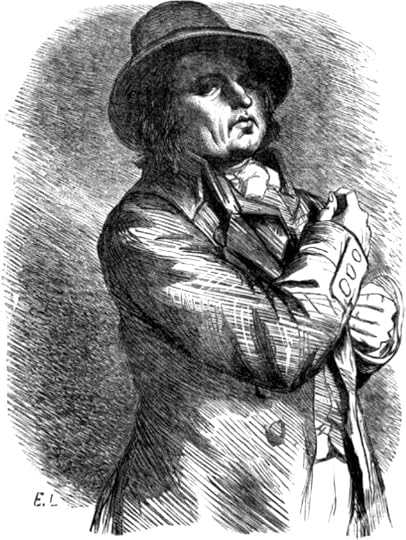
An Episode Under the Terror, published in 1842, brings in familiar names and characters, like Beauséant, Langeais and Ragon, all encountered elsewhere in the Human Comedy, and this work of historical fiction not only deals with actual events (the Revolution), but Balzac makes real persons into characters, something done by other writers of historical fiction (e.g., Tolstoy does this in War and Peace) and something Balzac does with other titles like Le Père Goriot. Here we encounter a fictionalized version of the devoutly religious executioner Charles-Henri Sanson, the man who executed over 3,000 people, including Louis XVI himself. And what an interesting character he makes!
Profile Image for Classic reverie.
1,905 reviews
May 3, 2022
Balzac begins "Scenes From a Political Life"with "An Episode Under the Terror". This short story tells of the degree of fear for the undesirables, the religious aristocrat.

I did not read this edition but from a Delphi collection of his work, which included the below.

"Un épisode sous la Terreur is an 1830 novel, which opens in the winter of 1793, with an old woman struggling to walk through the snow. She suspects that she is followed by a spy, but still persists with her intended mission. She reaches a haven in a pastry-cook’s shop, which seems to have been her goal. There is an unmentioned item she seeks to retrieve from this shop. The shopkeeper and his wife are very secretive about the item and hand it to the old lady. At this time it is also quite clear that the old lady belongs to the now despised tier of aristocrats."


"Eh! but it is the execution of Robespierre’s accomplices. They defended themselves as long as they could, but now it is their turn to go where they sent so many innocent people.”

Old Time Radio August 18, 1954; A WW 2 spin on this tale.
Also Family Theater October 17, 1956

https://www.oldtimeradiodownloads.com...


💢💢💢💢💢💢💢💢💢💢💢💢💢💢💢💢💢💢💢💢💢💢💢💢💢💢💢💢💢💢💢💢💢💢💢💢💢💢💢💢💢💢💢💢💢💢💢💢💢💢💢💢💢💢💢💢

An old lady is being followed and enters a bakery shop for the purchase of holy wafers. The baker and his wife sell it at a high price but when it is clear that there might be trouble, the baker refuses to walk the old lady home. The couple notice her clothes, which are warn down but they are from an aristocrat. The old lady is a nun, Sister Agathe, hides Abbe de Marolles with the help of Sister Marthe. Abbe de Marolles has escaped death and needs to hide. The stranger, who was following Agathe comes looking for a priest, to perform the funeral rites without a body.
"He had under his protection, at this time, two nuns, who were in as great danger as he, Sister Marthe and Sister Agathe. On January 22, 1793, and on January 21, 1794, the Abbe de Marolles, in their presence, said masses for the repose of Louis XVI.’s soul, having been asked to do so by the executioner of the “martyr-king,” whose presence at mass the Abbe knew nothing of until January 25, 1794, when he was so informed at the corner of rue des Frondeurs by Citizen Ragou."
After the ceremony is over, the stranger who refuses penitence the Abbe. A year later executions are being starting again, he Abbe sees him, the executioner was the stranger who said prayers a year ago. The bloodied handkerchief, he gave was from the King.

“He must have given me the handkerchief that the King used to wipe his brow on the way to his martyrdom,” murmured he. “... Poor man!... There was a heart in the steel blade, when none was found in all France...”


"RAGON born about 1748; a perfumer on rue Saint-Honore, between Saint-Roche and rue des Frondeurs, Paris, towards the close of the eighteenth century; small man, hardly five feet tall, with a face like a nut-cracker, self-important and known for his gallantry. He was succeeded in his business, the “Reine des Roses,” by his chief clerk, Cesar Birotteau, after the eighteenth Brumaire. As a former perfumer to Her Majesty Queen Marie-Antoinette, M. Ragon always showed Royalist zeal, and, under the Republic, the Vendeans used him to communicate between the princes and the Royalist committee of Paris. He received at that time the Abbe de Marolles, to whom he pointed out and revealed the person of Louis XVI.’s executioner. In 1818, being a loser in the Nucingen speculation in Wortschin mining stock, Ragon lived with his wife in an apartment on rue du Petit-Bourbon-Saint-Sulpice. Cesar Birotteau. An Episode under the Terror"

"AGATHE (Sister), nee Langeais, nun of the convent of Chelles, and, with her sister Martha and the Abbe de Marolles, a refugee under the Terror in a poor house of the Faubourg Saint-Martin, Paris. An Episode Under the Terror."

"BEAUSEANT (Marquis and Comte de), the father and eldest brother of the Vicomte de Beauseant, husband of Claire de Bourgogne. The Deserted Woman. In 1819, the marquis and the comte dwelt together in their house, rue Saint-Dominique, Paris. Father Goriot. While the Revolution was on, the marquis had emigrated. The Abbe de Marolles had dealings with him. An Episode under the Terror."

"LANGEAIS (Duc de), a refugee during the Restoration, who planned, at the time of the Terror, by correspondence with the Abbe de Marolles and the Marquis de Beauseant to help escape from Paris, where they were in hiding, two nuns, one of whom, Sister Agathe, was a Langeais. An Episode Under the Terror. In 1812 Langeais married Mademoiselle Antoinette de Navarreins, who was then eighteen years old. He allowed his wife every liberty, and, neither abandoning any of his habits, nor giving up any of his pleasures, he lived, indeed, apart from her. In 1818 Langeais commanded a division in the army and occupied a position at court. He died in 1823. The Thirteen. "


"MAROLLES (Abbe de), an old priest, who lived towards the close of the eighteenth century. Having escaped in September, 1792, from the massacre of the Carmelite convent, now a small chapel on rue de Vaugirard, he concealed himself in the upper Saint-Martin district, near the German Highway. He had under his protection, at this time, two nuns, who were in as great danger as he, Sister Marthe and Sister Agathe. On January 22, 1793, and on January 21, 1794, the Abbe de Marolles, in their presence, said masses for the repose of Louis XVI.’s soul, having been asked to do so by the executioner of the “martyr-king,” whose presence at mass the Abbe knew nothing of until January 25, 1794, when he was so informed at the corner of rue des Frondeurs by Citizen Ragou. An Episode under the Terror. "


"MARTHE (Sister), a Gray sister of Auvergne; from 1809 to 1816 instructed Veronique Sauviat — Madame Graslin — in reading, writing, sacred history, the Old and the New Testaments, the Catechism, the elements of arithmetic. The Country Parson."
1,112 reviews5 followers
November 11, 2025
‘An Episode Under the Terror,’ a charming little story, published either in 1830 or 1831, brings home as nothing else might, the fear that aristocrats and priests, and as 1793 drew to a close, the bourgeois and commoners, lived with. Even to go out for a loaf of bread had sometimes to be done under cover of darkness, and in any case, well hooded and veiled.

Two nuns and a priest live in utmost secrecy, but events bring a rough looking stranger among them, who demands that the priest perform a mass for a man who lies in unhallowed ground, through no fault of his. A date and time are agreed upon, the priest offers the mass for the dead man's soul, and they see the stranger only once again – a year later, on his way to the guillotine.

The story has none of Balzac's occasional cynicism, and perhaps, not much of his realism, but the stranger is identifiable as the executioner Charles-Henri Sanson, the man who, a year before, had beheaded King Louis XVI.

Profile Image for James F.
1,738 reviews130 followers
April 30, 2020
A short story first published anonymously in 1830 and thus among Balzac's earliest works, this was considerably modified in 1845 when it was incorporated in the division Scènes de la vie politique of the Comédie humaine. The description "under the terror" is somewhat premature, as it begins right after the execution of Louis XVI; it opens with a mysterious stranger following an old woman through the streets, and it's too short to give any further details.
Profile Image for Lloyd Hughes.
605 reviews
June 28, 2022
It’s 1793, the ‘Reign of Terror’ is at its peak. The old nun has been walking all over town all day. Not to see the sites but because she sensed that somebody was tracking her and she was afraid to stop. Eventually, she returned home to her church and she met a man who was actually following, where upon he introduced himself, asked for a favor, and left a package behind, claiming that it would declare itself special in time…

A nice, simple feel-good story in the midst of evil times. 3 stars.
Profile Image for António Conceição.
Author 3 books10 followers
July 19, 2023
Ao contrário dos autores ingleses, em regra, os autores franceses não fazem ideia alguma de como se conta uma história. Balzac também não faz. Na quinta página, já qualquer leitor, mesmo destituído, sabe quem é o desconhecido que ele revela no fim.
O estilo é o de Balzac: descrições inverosímeis, excesso inútil de comparações, metáforas e imagens.
Profile Image for jb-rand.
120 reviews
October 5, 2023
Probably my favourite Balzac short story I've read so far. The start was such a whirlwind of different types of espionage. The culmination in an ironic ending was to be expected but it was tinged with some sincerity that I really appreciated. I don't think it says much about the virtues of forgiveness but I think it says a lot about guilt and shame, both individual and cultural.
Profile Image for Miles Smith .
1,301 reviews41 followers
January 15, 2020
One of my favorites in Le Comedie humaine, this short story tells the tale of of hunted priest and nuns during the Reign of Terror in 1794. One cold night, they get a surprising visitor who ask for a surprising favor.
Profile Image for Dave.
1,366 reviews11 followers
April 4, 2020
Mmm..... Not my favorite.
Profile Image for Claudia.
933 reviews24 followers
November 29, 2024
Un relato corto que inicia con un tono que acompaña al título pero se desarrolla sobre una situación completamente diferente e inesperada.
Profile Image for Lisa.
3,877 reviews499 followers
September 5, 2014
This is a perfect little story, a superb illustration of human nature at its best and at its most base. This is not a review: it is a summary of the story from my 2006 reading journal and there are spoilers throughout.

A nun, forced from her abbey when it was sacked under The Terror (see http://en.wikipedia.org/wiki/Reign_of...), makes her way to a pastrycook to buy wafers for the now forbidden mass. On the way she realises she is being followed - and her terror is palpable.

The pastrycook and his wife are moved momentarily by compassion but they take her money despite her extreme poverty and despite knowing that if they are Catholics themselves, they ought to donate the wafers instead of charging her for them.

When the pastrycook sees who it is that has been following the nun, he is terrified too, and reneges on his offer to escort her home and tries to take back the box of wafers. Balzac is such a profound observer of human nature! This man and his wife are drawn two ways, by pity and by self-interest, and next we see them try to salve their consciences with words justifying what they have done.

The nun sets off again alone, her pursuer in tow. The reader, at this stage of the story doesn't know that she is a nun, only that the pastrycook feared to serve her. The reader also doesn't know that he has supplied the wafers for communion and the mystery is deepened but his curse: 'Don't come to me for material for your plots!'

The old lady reaches her home, a hovel in a seedy part of Paris, and flits upstairs just in time to tell the priest to hide himself and the wafers. However he calms her, telling her that they are expecting someone who is to help them escape. Thinking it is he, they admit the stranger, though the priest still hides.

The stranger wins their confidence, and begs a funeral mass for 'the repose of the soul of an august personage whose body will never rest in consecrated earth'. He means the recently executed King Louis XVI, but neither the priest nor the nun realise this. Thereafter, however, their lives are a little easier. They are sent clothes to help them blend in un-noticed, they receive 'civic cards' to legitimise their existence, and 'tidings for the priest's safety' come their way.

The stranger's great grief during the funeral mass and his ardent intentions to repeat it every year intrigue the priest. He guesses that the stranger must be one of the conspirators under the Terror and urges confession and absolution. The stranger claims to be guiltless, yet his grief and repentance is profound. He asks the priest the question which has bedevilled moralists from Henry VIII to the Nuremburg Trials: should participation in evil acts be punished when one is only following orders? For him there are two competing dogmas: obedience as the first principle of military law versus respect for the king as a matter of religion.

The stranger's mysterious gift of the king's handkerchief 'soiled with sweat' and blood, is revealed at the end. The Terror is over as Robespierre himself is guillotined, and the priest, free to go abroad at last, is at a perfumier's. A crowd goes by to witness another execution, and this time it is the stranger's. He was the executioner who had guillotined the king.

'There was a heart in the steel blades when none was found in all France'

I am not a monarchist, but this story made me think deeply about what a terrible thing it would be to have to live with, being responsible for the death of a king.
This entire review has been hidden because of spoilers.
Profile Image for Phil.
645 reviews35 followers
February 11, 2021
(The Human Comedy #03/98)
A short story set in 1793 / 1794, suggested as #3 in the Human Comedy reading order I'm using. It was interesting (and surprisingly short and concise for Balzac) - a well-written, well-crafted story that sets up its atmosphere of suspense and fear very well at the start, putting across the hard life of panic, mistrust and loneliness that aristocrats and relgious had to contend with during the years following the revolution. It even has a pay-off at the end, with a turnaround that's a little over-wrought considering that most readers will have grasped the significance of the handkerchief already, without needing it spelt out for them. But, on the whole, an enjoyable interlude in the v long series of writings.
134 reviews2 followers
December 12, 2016
This is the first I have read by the prolific Honore de Balzac, and what a delight and surprise. It is a short story with every page built with excitement. It is clear why Balzac is considered a great author. Not only is the writing superb, but the story-line is tightly written.
Profile Image for Hildegart.
930 reviews6 followers
September 18, 2013
A year ago I had read Old Man Goriot for a French history class, so when I came across this story I decided to pick it up and read. I enjoyed this story quite a bit, especially since I had taken that history class. If you don't know about what was going on in France at that time, I would suggest pulling up a timeline.
Profile Image for Even Emry.
194 reviews
June 7, 2025
Courte histoire qui joue très bien sur l'atmosphère lugubre et mystérieuse mise en place, à la fois par l'époque dans laquelle l'histoire est placée, et à la fois par la manière dont tout est raconté.
1,167 reviews37 followers
April 17, 2020
Has there ever been a writer of more variable quality than Balzac? I really didn't enjoy 'The Chouans' at all, and then this comes along (I'm following the suggested reading order from the Balzac Yahoo Group) and it is a superb piece of work. Short, yes, but worthy of 5 stars in every respect.
Profile Image for Nancy.
218 reviews
August 3, 2013
Oui, j'aime ça! A short story really, and Balzac manages to evoke so much with this short work. His endings always clinch it for me...always a twist.
Displaying 1 - 30 of 35 reviews