‘This is a dictionary—a poem about everything.’
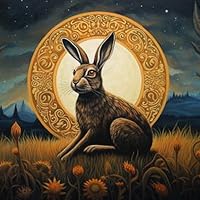
Sometimes we are caught in an abstract feeling, some seemingly inexpressible vibe or mindset that hovers right on the cusp of language best explored by poets equipped with imagery and metaphor to cast a shadow of its shape in our minds. 12 years in the making, and originating as a podcast and youtube channel, John Koenig’s The Dictionary of Obscure Sorrows aims to harness these emotions with language in order to better talk about them. Collected here are neologisms, all completely coined by Koenig based on research into word etymology, with the etymology of each new word explained as well as definitions for the obscure or abstract emotions denoted by the invented word. It is a lovely linguistic exercise that hones in on feeling we’ve all likely experienced but never had a word for and to see them collected here makes the reader feel much less alone knowing these abstract emotions are rather universal. Divided into six sections, each with a mini essay, and photography that is whimsical and beautiful, this is a fascinating and fun existential foray that word lovers should not miss.
You may have heard the term sonder, one that Koenig coined, that did come into use on social media for awhile, and it would be cool to see many of these getting usage. I could see the poets enjoying trying these out.
Sonder: n. the realization that each random passerby is living a life as vivid and complex as your own—populated with their own ambitions, friends, routines, worries and inherited craziness—an epic story that continues invisibly around you like an anthill sprawling deep underground, with elaborate passageways to thousands of other lives that you’ll never know existed, in which you might appear only once, as an extra sipping coffee in the background, as a blur of traffic passing on the highway, as a lighted window at dusk.
Koenig’s descriptions of each emotion get quite poetic, and his words lull you into the specific feeling in a wonderful way. They range from fun and silly to somber and dark as he explores all the corners of the human existence. Here’s a favorite:
Ringlorn: adj. the wish that the modern world felt as epic as the one depicted in old stories and folktales-a place of tragedy and transcendence, of oaths and omens and fates, where everyday life felt like a quest for glory, a mythic bond with an ancient past, or a survival against a clear enemy, rather than an open-ended parlor game where all the rules are made up and the points don't matter."
It would be a shame, however, to learn reading this will give you ‘aimonimia’: n. ‘the fear that learning the name of something—a bird, a constellation, an attractive stranger—will somehow ruin it, inadvertently transforming a lucky discovery into a conceptual husk pinned in a glass case, leaving one less mystery flutter around in the universe.’
French aimer, to love + nom, name. A palindrome. Pronounced “eym-uh-nohm-ee-uh.”
But it is wonderful to hear him ramble about language and emotions, especially how much it dips into existential moments of existence ‘Emotions are none of these. As a result, there’s a huge blind spot in the language of emotion, vast holes in the lexicon that we don’t even know we’re missing. We have thousands of words for different types of finches and schooners and historical undergarments, but only a rudimentary vocabulary to capture the delectable subtleties of the human experience.’
But check out some other fun ones:
Anchorage: n. The desire to hold on to time as it passes.
Vellichor: the strange wistfulness of used bookstores.
Hanker sore: adj. Finding a person so attractive it actually kinda pisses you off.
Aulasy: n. The sadness that there’s no way to convey a powerful memory to people who weren’t there at the time.
Backmasking: n. The instinctive tendency to see someone as you knew them in their youth.
Grayshift: n. The tendency of future goals and benchmarks to feel huge when viewed in advance, only to fade into banality as soon as you’ve achieved them.
Nilous: adj. Anxious to imagine how many times you must’ve barely avoided catastrophe.
Proluctance: n. The paradoxical urge to avoid doing something you’ve been looking forward to
This is a must for word lovers. Though hopefully with all my praise your own reading of it won’t give you ‘the wends’: the frustration that you're not enjoying an experience as much as you should, which prompts you to try plugging in various thought combinations to trigger anything more intense that roaring static, as if your heart had been inadvertently demagnetized by a surge of expectations.
Flichtish: adj.nervously aware how much of your self-image is based on untested assumptions about yourself—only ever guessing how you’d react to a violent threat, a sudden windfall, a huge responsibility, or being told to do something you knew was wrong.
Wenbane: adj. feeling small and alone while walking the streets of an unfamiliar city, swept along in the commercial bustle of asphalt and neow, dwarfed by impenetrable monoliths looming high overhead, brushed aside by pulses of traffic carrying on their daily business, with nobody willing to look you in the eye except for the posters encrusted on subway walls, each of them pitching at someone other than you.
From wen, an enormous congested city that swells like a cyst + bane, an affliction or poison.