Jump to ratings and reviews
Rate this book

Aphasia

Rate this book
A modernist tour de force from an exhilarating new talent Antonio’s sister is on the run. Convinced that Antonio is conspiring with Obama, the Pentagon, and now her own neighbours, she’s disappeared. Antonio, however, is doing his best to think of anything but his sister or, for that matter, any of his problems.  By day, he’s Antonio, father of two, recent divorcé and unenthusiastic database analyst. In private, he divides his time between visits to seedy pick-up website ‘Your Sugar Arrangements’, and hours spent combing fiction and film for examples of how to become a better father. As the meticulously crafted structure of his outwardly comfortable life begins to crumble, Antonio submerges himself in the lives of those who have shaped him. What really caused his mother to leave Antonio’s father with two young children in tow? What lies beneath his Czech ex-wife’s troubled, obsessive relationship with her country?  And where does Antonio, the man, fit in all this?  Propulsive and freewheeling, Mauro Javier Cárdenas’ second novel is a daring examination of identity in a world that seems determined to fragment us.

195 pages, Hardcover

First published November 3, 2020

32 people are currently reading
2336 people want to read

About the author

Mauro Javier Cárdenas

5 books201 followers
Mauro Javier Cardenas is the author of American Abductions (Dalkey Archive, May 2024) and Aphasia (FSG, 2020) and The Revolutionaries Try Again (Coffee House Press, 2016). In 2017, The Hay Festival included him in Bogotá39, a selection of the best young Latin American novelists.

Ratings & Reviews

What do you think?
Rate this book

Friends & Following

Create a free account to discover what your friends think of this book!

Community Reviews

5 stars
63 (25%)
4 stars
82 (33%)
3 stars
59 (23%)
2 stars
32 (12%)
1 star
11 (4%)
Displaying 1 - 30 of 62 reviews
Profile Image for ♑︎♑︎♑︎ ♑︎♑︎♑︎.
Author 1 book3,808 followers
February 11, 2022
Aphasia by Mauro Javier Cárdenas is like no book I've ever read--and I'll never understand why any reader wouldn't want to have every next book be that way--unexpected, exhilarating, full of new languages, making even ordinary words pop open like seeds and bloom new meanings.

Here is a link to the musical composition that inspired this novel--APHASIA by Mark Applebaum:
https://www.youtube.com/watch?v=B2YLo...

Here is an article about how this musical composition inspired Mauro Javier Cárdenas:
https://www.nplusonemag.com/online-on...

This novel is an exhilarating read, and if you approach it in good faith you'll nevertheless find yourself a little breathless with trying to keep up, but you'll also feel full of wonder, and you'll also wonder when the end of each sentence is coming, because a period just never seems to come along when you expect it, but hang in there, because it's an extraordinary read, especially if you remain alert and ready for the next revelation when some new thought comes rolling along (although admittedly it's hard, sometimes, to know what to think, because the thoughts keep coming at such a pace that you're already thinking about the next thought before your done thinking about the last one) for instance here I am rereading the first paragraph in a chapter entitled "DORA & HER DOG BY ANTONIO JOE JIMÉNEZ and the chapter has thrust me without warning into a conversation that has much to do with what we are willing to sacrifice for those we love, but then it suddenly off it flies into a brand new and yet completely relevant metafictional observation about the verb "to sob"-- and somebody says: "in my own so-called fiction I skirt the verb 'to sob' because of its melodramatic acoustics--" and when I read that, I thought: isn't it true? that "to sob' has melodramatic acoustics? -- and now I'm going to think so forever. I'll never write the verb "to sob" again. "To weep," maybe. But what was I just thinking about? And the fluttering revelatory inspirations kept coming one after another, and the words rushed by until the end. I suppose I could have read slower. But it felt wrong to. I'm happy to have read it. I'm sorry it's over. I'll be reading it again.
Profile Image for Paul Fulcher.
Author 2 books1,961 followers
August 3, 2024
If I imagined the perfect novel for me, what might it be?

Perhaps one where characters play a drinking game during an extended reading from Thomas Bernhard's Correction - a shot each time the word 'cone' appears! - and where two lovers decide to use "László Krasznahorkai" as their safe word.

And a book that also references explicitly many of my other favourite authors of all time - W.G. Sebald, Virginia Woolf, José Saramago, Franz Kafka, Jorge Luis Borges and Kazuo Ishiguro.

Let's throw in as well other greats such as António Lobo Antunes, Bruno Schulz, Gustave Flaubert, Denis Johnson, Robert Walser, Saul Bellow, J.M. Coetzee, Augusto Monterroso, Silvina Ocampo, Anton Chekhov, Vladimir Nabokov, Samuel Beckett, Joseph Heller, and, for fun and recent controversies not withstanding, Dr. Seuss. As well as some new authors for me to explore - say Miquel Bauçà, Helen Schumann, Adam Haslett, Grace Paley, Mary Gaitskill, Stanley Elkin, Gina Berriault and Bennett Sims - and modernist composers, visual artists and filmmakers.

Stylistically, the book would build on all of the above, and other influences such as David Markson, meeting the author's desire (as indirectly quoted from an interview with Bookworm's Michael Silverblatt - and let's also have him feature in the novel) to explore fresh forms that can replace obstacles in outmoded structures; he says novelistic conventions no longer work for him, and conventional narratives do not represent the world he feels himself experiencing.

we should remove the dramatic charge from fiction because nothing’s really that dramatic, someone is always leaving us or dying or going to the insane asylum, these miseries just happen to us and will continue to happen to us, to which she replied by speaking of metaphorical icebergs, the surface of things, etc., but Antonio did not refute these handed-down notions of narrative because he wanted to be amenable so she would agree to a handful of Fridays with him during summer #8

As an actuary who works in insurance investment, whose sibling is also an actuary, perhaps I'd make the main character a database analyst for Prudential Investments, and his sister a Senior Actuarial Associate.

Let's base the title on a wonderful performance piece by Mark Applebaum.

And crucially the entire novel would be less than 200 pages.

Well, I don't need to imagine this book - I've just read it.

Extract from Music and Literature (see also the accompanying review):

All this, of course, Silvina reads, indeed his whole history, originated in the distant past, said Korin, and here Antonio rewinds the recording of Silvina reading from War & War by László Krasznahorkai, trying to remember where he’d recorded her, all this, of course, Silvina reads, indeed his whole history, originated in the distant past, said Korin, no, Antonio thinks, he can’t remember where he’d recorded her so he rewinds the recording to the beginning again, listening to Silvina’s voice again and thinking of Krapp’s Last Tape, which he’d seen once by himself when he was still twenty-five or twenty-two and once years later with Dora — we lay there without moving, Krapp hears himself say, but under us all moved, and moved us, gently, up and down, and from side to side [pause] — rewinding to the same part of the recording where Krapp talks about a woman lying stretched on the floorboards with her hands under her head, her eyes closed, the whole world moving under them, all this, of course, Silvina reads, indeed his whole history, originated in the distant past, said Korin, yes, Antonio thinks, he’d seen Krapp’s Last Tape twice: the first time he’d been twenty-five or twenty-two, his sister still a Senior Actuarial Associate in Baltimore

From an interview in the excellent new blog Obstructive Fictions:

I’ve preferred long sentences ever since I first encountered them twenty-plus years ago. I like to believe I still remember the youthful excitement of reading a sentence that shifts seamlessly from an enumeration of discarded furniture to the dictator giving senseless orders and his subjects responding sí, mi general — The Autumn of the Patriarch by Gabriel Garcia Marquez — or a sentence that begins with a description of the great clan to which a boy belongs, wheel of sensation and all, that shifts effortlessly to the boy cutting out pictures from an illustrated catalogue — To the Lighthouse by Virginia Woolf — or the freedom of delirium in the sentences of Antonio Lobo Antunes, or the manic recursive sentences of Thomas Bernhard & his descendants.

From a follow-up interview at Ploughshares

David Markson removed almost everything from the novel so that he could focus on his preference: to fiddle with his favorite passages from hundreds of books. I have tried to remove almost everything from the novel so I can focus on my preferences: the representation of altered minds. Their delusions, imaginary dialogues, recasted memories, etc. Markson trusts that readers will follow his barely visible patterns, whereas in Aphasia the patterns, how a passage connects to a subsequent passage, are more visible, although they come at you faster than in Markson.

From PEN Transmissions

Q: There are many writers in Aphasia, some dead, some alive, and some – like László Krasznahorkai – who you have met and interviewed in the real world. I’m interested in the process of rendering in fiction a character’s thoughts on a writer whom you have spoken to at length. Is that an uncanny process?

When you spend so much time thinking about imaginary situations, the distinction between memories, imaginary memories, dreams, films, and what you imagine while you’re reading becomes irrelevant while you’re writing, so despite my fondness for my memories of László Krasznahorkai’s monologues about monologues in San Francisco – a monologue is someone trying to convince you of something, László Krasznahorkai said, but in my books no one listens – they exist in my mind alongside Korin’s monologues in War & War, Antonio’s monologue in Aphasia about Korin’s monologues in War & War, and everything else directly or indirectly related to them.


Brilliant. 5 stars - and much my favourite novel of 2021 to date - one the Booker judges surely can not afford to overlook.
Profile Image for Jola.
184 reviews440 followers
January 18, 2022
Aphasia (2020) by Mauro Javier Cárdenas is like an oxymoron. Simultaneously exhausting and unputdownable, repelling and engrossing, obscene and cathartical, depressing and amusing. Yes, I know, it sounds bizarre and crazy but so is this novel.

My guess is that if you do not like Antonio, the neurotic narrator of Aphasia — and he may get on your nerves right from the start — reading this book might be a frustrating experience. Please, do not give up as chances are you will warm up to him gradually. I did.

Why aphasia? Judging by the title, you might wrongly suspect that it is a non-fiction study on the impairment of language. Sounds ironic, given the fact that Antonio is interested in literature and creative writing. He keeps juggling with words for 208 pages. You will find the interpretation in the novel: 'aphasia is a metaphor for expressive paralysis'. Communication skills and expressing feelings are not Antonio's forte. Real aphasia is often caused by stroke or head trauma. In the narrator's case, it was an emotional injury.

No wonder words and literature play such an important part in Aphasia. The narrator’s stream of consciousness feels like an unstoppable logorrhoea which oftentimes drives you mad. Besides, there are many literary allusions.

Do not let an eccentric disguise of Aphasia deceive you. Behind the literary extravagance, there is a disturbing, emotionally draining story of child abuse and family trauma. Cárdenas depicts how such experiences shape our life and who we are.

As it seems, sometimes it is better to embark on a book not knowing exactly what is awaiting you. Had I known before how heart-breaking Aphasia is, despite dark humour and sarcasm, most probably I would have shied away from it. That would have been a mistake: two weeks have passed since I read this novel and it is still circulating in my thoughts.

When you read this book, be careful not to get drowned in Cárdenas' endless, meandering sentences. Most probably, you will need a moment to get used to his overwhelming narration and excess is its second name. After a while, you will notice that Antonio's chaotic rant often has an addictive rhythm, musical cadence and poetic aspect.

I liked the experimental quality of Aphasia however two things annoyed me. It felt awkward when the author was trying to impress the readers by all means and his efforts to shock and amaze were not seamless. Personally, I prefer to be enchanted not being aware that it is happening. Besides, Antonio’s verbosity was sometimes insufferable. I needed a few breaks but felt so worried about Estela, Antonio's sister, that had to go on, despite the irritating flood of words I was floating in.

Aphasia is like a rapid river. Numerous digressions and subplots made me think of bifurcating tributaries and dark pools. Sometimes you breathlessly dive headfirst, sometimes you drearily wade in the shallows, but the voyage is memorable anyway.


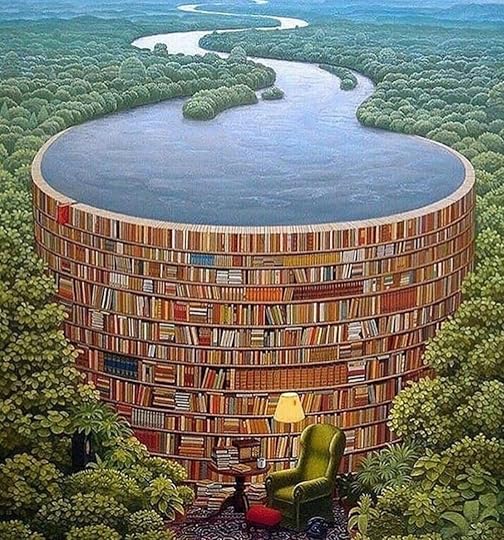
Jacek Yerka, Bibliodam.
Profile Image for jeremy.
1,204 reviews311 followers
October 18, 2020
smart, sensitive, and certainly a novel of our unrelenting, torrential times, bogotá39 honoree mauro javier cárdenas's new novel, aphasia, is a collision of protagonistical past and present. familial drama, domestic discord, the neurotic self, the inevitable lassitude of late-stage capitalism, and the ever-pendulous extremes of personal motivation and defeat, aphasia, save for its specifics, could be the tale of nearly any one of us in an age of every-man-for-himself mania and compulsion (except cárdenas's story has much more compassion and empathy than found in our non-fictional world).

the ecuadorian novelist (and author of the revolutionaries try again)'s new work is sometimes frantic, sometimes funny, but always engaging. readers of pola oloixarac (who blurbed the book), carlos fonseca (who also blurbed the book), agustín fernández mallo, carlos labbé, or jordi nopca will find a lot to love, as aphasia nestles self-assuredly into that same realm of bright, brainy fiction. and, oh my, those long, meandering, tangential, forking-stream-of-consciousness sentences are irresistibly delectable.
...if i have learned anything about breakups, antonio said, and i haven't really learned anything about breakups, and here she interrupted him and said why do you always qualify yourself like that, and he said because i believe this business of learning is a mirage we impose on ourselves to feel better about our fated lives, does that include what i just said about changing, dora said, that wasn't my intention but yes, antonio said, reaching across the table to rest his hand on her forearm, wanting her to believe he could believe she could change, why shouldn't we nurse our delusions, antonio said, if we find consolation in them?
19 reviews29 followers
June 26, 2022
Incredible. Cárdenas peppers this novel with literary references and wears his influences on his sleeve—Sebald, Bernhard, Saramago, Woolf, Krasznahorkai, to name a few—but he takes their innovations and creates new forms of expression. Experimental but full of heart. Surprised it isn't more well known. Hope more people will read this or his next work will bring him to a broader audience. I have plenty more thoughts so may come back to this review.
Profile Image for Cherise Wolas.
Author 2 books301 followers
March 10, 2022
A rush to read, also written in a prose style of a breathless rush, great interiority, conversations without quote marks, Antonio Jose Jimenez, the narrator, seems to be existing in many versions of time, thinking about or writing about some other time than the time he's currently inhabiting, indeed the novel is very invested in time, sections divided by mysterious signifiers - S8, F8, W8, for example - which we come to realize are the seasons in which the "action" unfolds - what was going on at the time in his mind, his life, with the relationships he was having with women, with his former wife, his two young daughters, his mentally ill sister, his mother - a recognition that our minds are never focused entirely on this current time in which we are living, but on all the times that have come before in our lives. If you need easy reads, and books that do not require great attention as you turn the pages, this one is not for you. It takes a little while to fall into and come to understand the rhythm of the novel, how to follow the quick turns, the quick changes of voice, who is speaking, what is going on, etc. Antonio is a data analyst at Prudential Investments in Los Angeles. Originally from Bogota, Colombia, he's been in the US since he was 18, community college until he went to Yale. Through this novel, we learn of his family life in Bogota, the closeness between him and his sister, about his father, his mother, that he is well paid as a data analyst, an aspiring novelist, and a deep and inveterate reader, throughout the novel many other novels are referenced, characters, scenes, etc, and indeed, he is drawn to novels that are in some way about the fracturing of the mind, as he thinks about everything even as he does not want to think about what his sister Estela is going through - an accountant who owns her own home in Baltimore, but has fallen into the hole of mental illness. He is a man who did not want to be married, to be a father, but has a good relationship with his former wife, adores his daughters, pays for sex with these lovers in whom he becomes invested, is aware that memory is hard to grasp, that we are always erasing certain memories, and he listens constantly to the audiotapes he has made interviewing his mother, interviewing various of his lovers, listening to tapes of passages of books he's had them read, trying to make sense of life, of his life, the whole of the novel stylistically elegiac, ambitious, and wildly beautiful.
Profile Image for Lavinia.
749 reviews1,041 followers
March 18, 2021
(2.5*) Unfortunately, to me, the book ended up being more experimental and ambitious than interesting. I felt it tries too hard and the interesting bits end up buried beneath intellectual mumbo jumbo.
Author 12 books71 followers
June 9, 2021
Consistently upended my expectations, like great works of art tend to do. I had to begin it a few times to get on its wonderful wavelength. Funny on the outside, but with a dark interior, so one's laughs get caught in the throat.
Profile Image for remarkably.
173 reviews81 followers
December 8, 2024
frustrating! worth reading! frustrating! probably just go read it instead of reading this review! I had the whole range of reactions reading this, 'five star' ones, 'one star' ones, and so I choose the Solomonic solution, the midpoint of the scale, even though that's a ridiculous result which pleases nobody.

absolutely unfakeably good ear for the most part, great sentences, great cadence, and in a field of contemporary novels so utterly devoid of great sentences and great cadence I have a very hard time being too critical of anything that passes this first test.

but it's essential to hold the thing to the standard it sets for itself, and the standard it sets for itself is, as it were, worn on its sleeve: it is incredibly incredibly imitative — hard to escape the sense that one is reading not a novelty but a simple linear combination of all the influences to which this book owes (and sometimes pays) its debts, Krasznahorkai, Bernhard, Sebald, etc. etc. etc. book so utterly shot through with references as to be sincerely irritating — occasionally rises above this into real loveliness eg. the homage to ‘Time Passes’, but for the most part not always falling on the right side of the line between ‘communicating the texture of an educated, hyper-literate consciousness, and the channels down which that mind runs when it is trying not to think about the Matter at Hand’ and ‘pseudy name-dropping / craven curatorial impulses’ [the references to music particularly irritated me, they felt so consumer-commodity, just bizarre to have a character crank up the volume on his ‘Arvo Pärt / Olivier Messiaen playlist’, what does that even mean, what do we imagine the dynamic range would be like in that scenario, the huge huge music of Messiaen and the delicate little silences of Pärt, what is it that is achieved by saying this or by always pairing the names of Pärt and Messiaen within your text in this way — this really irrationally irritated me, and made me uncharitable and hostile —].

this is all down ultimately to what I think is a rather indelicate and unsubtle set of instincts warring with a delicate and subtle sensibility — at second order, the extra-textual desire to have one's fine taste admired and respected, the intra-textual desire to get across this clever but rather pat set of ideas about the externalisation vs. interior state of trauma; but then the taste is fine, and that does count for something!
Profile Image for Ionarr.
328 reviews
October 21, 2020
By the time I finished this, I really liked it. Unfortunately, for the first 100 pages I hated it, and then the 50 in the middle I was just about OK with. If I hadn't had a reason to read it, I would have put it down early on and not picked it back up. Overwhelmingly I'm not sure it's worth persevering through 100-150 pages in the hope that you'll like it more by the time you get to the last 50.

The story is very basic, and I definitely would not bother to read it or recommend based on the story, but everything in this is dwarfed by the writing style. There's immense run-on sentences, clause upon clause nested in subclause and side notes, which often barely make sense. It comes across as overwhelmingly pretentious for the sake of trying to seem a lot more clever than it is. I like pretentious, literary, challenging writing; I'm actually generally a fan of run-on sentences, due to a tendency to write and think that way myself and the narrative flow they give a text; and despite this all being very middle-aged man is a dick, justifies it with daddy issues so he can fuck lots of young women who would totally realistically want to fuck this sad old man, it's not a bad way of doing layered life snapshots. It's just... A lot. And not really worth it. Nothing about this is new or innovative, and pretty much the only reason to read a book like this is either if it has something new and innovative about it or if it's an especially brilliant example of the form/genre etc. This is neither. It's eventually OK. That's pretty much it.
Profile Image for steph.
316 reviews7 followers
November 18, 2022
Written in a completely original style, missing most of punctuation and grammar we expect, Aphasia takes some getting used to. About halfway through though, I acclimatised to the writing, and I could sink further into the book.

The storyline surrounding Antonio’s past, growing up in a family with a father who had a proclivity for younger girls, brought into question how our family histories influence our individual present-day experience. Antonio who is obsessed with not becoming his father, seems to fall into similar patterns despite him wanting otherwise. Meanwhile his sister Estela battles mental illness brought about by traumatic events in her childhood. The exploration of trauma, PTSD and family dynamics were insightful and thought provoking.

Overall, the book was a bit a slog to get through but I’m happy for having read it.
Profile Image for Anna Piwowar.
257 reviews
April 8, 2025
The momentum comes with surprises and delights. Sweet and devastating, riddled with reference.
Profile Image for Joseph Schreiber.
588 reviews182 followers
July 26, 2021
Aphasia is a novel featuring a narrator who is essential wrapped up in his own narrative, trapped in it even, Bernhardian in a sense and yet not quite like Bernhard at all. More thoughts to come when I untangle myself from the experience of reading this original, engaging book.
Longer review can be found here: https://roughghosts.com/2021/07/25/ha...
Profile Image for Anna.
379 reviews56 followers
September 10, 2021
Premeditated Dysphasia

This writer came to my attention after his interview with László Krasznahorkai. His vast knowledge and effortless focus aptly directed that conversation in very rewarding channels.

And sadly, that set a very high standard for his fiction and laid the ground for a major disappointment. I couldn’t get rid of the feeling that the technical construction of this novel borrows from all the writers he likes, starting from the stream-of-consciousness style of said Hungarian author. Compared to him, Cárdenas is merely an epigone. The stream of consciousness in Aphasia is structured more formally, and lacks the inherent substance of thought that drives Krasznahorkai’s convoluted sentences. Interwoven with this unstoppable flow are the micro-narratives of Antonio’s sugar girls, and punctuating these combined threads are observations by the narrator as a writer, which act as brief (and welcome) stops of awareness. Thus, awareness becomes distance, not immediacy, which only exacerbates the artificial feel. In the same vein of distancing, mentioning family members obsessively by their function, e.g. “future former girlfriend”, “soon-to-be-new” is a nod to Milkman by Anna Burns, and sure enough, a look at his tweets confirms he has read and enjoyed that book.

The way language is used is another example of the narrator’s avoidance of immediate emotions, an analytical distance to life, but too self-consciously so:
“in my own so-called fiction I skirt the verb to sob because of its melodramatic acoustics, Antonio writes, nevertheless to weep aloud with convulsive gasping was what I did.” (my emphasis)
Unfortunately, this excellent analytical breakdown of emotions felt inauthentic, too, due to its lack of subtlety. The title itself also seems to function as a preemptive defense against accusations of failure to speak properly and is too explicitly analyzed in one of the chapters.

Characterization is not bad. Chapter numbering (S8 for the eighth summer, F for fall, W for winter, etc.) is indicative of what the protagonist, a database analyst, does for a living. But then rather than painting him as a complex character, the many intertextual references merely sound like pretentious namedropping. I found it implausible that Antonio tries to outroar external noise by listening at debilitating loudness to the music of Arvo Pärt, the composer who suffused silence with meaning. Even though they are pertinent to the narrator’s own story, these references have no impact (on this reader).

The rich intratextual substrate was slightly more gratifying than its intertextuality. But then again, when he mentions his fiction-writing teacher
“advising him against writing sentences that seemed to contain two or more sentences from two or more narratives at once”,
I couldn’t shoo away memories of similar, but much more effective, self-critical comments on the impenetrable text in Krasznahorkai’s books.
His modus operandi is made indelicately explicit elsewhere, too. Antonio's observation about his daughter’s being “too young to understand what it means to remember the past, to blur, avoid, recast aspects of the past” is again an all-too-evident characterization of the book's style. The clarity of the wise and quotable conclusions Antonio the writer draws on the interplay between memories and the vantage from which we look at them is inconsistent with the dizzying psychological effect of the effervescent writing.

The obsessive quest for “associative threads of interest” seems to suggest the narrator, too, is affected by the mental issues that plague his sister, and I realize I might have missed the therapeutic role that writing has in his life. We don't get to see the narrator as a connected person, but only as an observer, except in the end where healing has started. But the path leading there is unconvincing, a sign of the author's own aphasic inability to explore essence.

What Cárdenas does is more obvious than why he does it. I couldn’t find an explanation of what triggered the healing process in the narrator, which is why the substance, coming to terms with a troubled family past and self – otherwise full of potential –, was simply lost in the gimmicky form.
Profile Image for Kaitlin.
442 reviews7 followers
February 22, 2021
I spent 36% of this book wondering what was going on. It’s experimental fiction which means the man uses run on sentences and entire pages go on without a period. It feels masturbatory and excessive, we get it, you write outside the rules, how transgressive! But it makes it impossible to read, impossible to enjoy, and I’m annoyed. I wasted 36% of my time on it. Cannot recommend.
Profile Image for Anne Secher.
340 reviews46 followers
June 19, 2020
*I received this book free from NetGalley in exchange for an honest review.*

I gave this book 2 stars.

I was not able to finish reading this book, partly because of the writing style and partially for the format sent.

My personal perception is that this author has read and loved Jose Saramago, Gabriel Garcia Marquez, Efraim Medina Reyes and Charles Bukowsky. All of them have different styles, but I found their influence in the style. However, what they did was unique and extremely difficult to portray unless you, of course, are themselves. When a writing style seems to have no rules is when the writer has been more careful to make themselves understood. It is like anarchy; there are careful rules in it, even though there is no hierarchy.

The first part of the book has a leitmotiv, which I completely lost upon starting the second part. Shamefully, I could not continue reading, so I ignore if either the title or this thread make sense later in the story.

The book was titled Aphasia, which is a language disorder consisting on either not being able to produce language in a way others understand or not understanding input received through language. Up to where I stopped, it has more to do with other language disorders that are not related to this one from the style.

Having paragraphs which are beetween one and 3 pages long and no standard punctuation adds up to the hardship I felt while trying to make sense of the story.

All these features produce a flat tone. This is a problem to me because I believe the best thing about reading and what allows you to live through the story is precisely imagining the voice and tone of each character, which cannot be found here.

Nevertheless, the spoken and casual tone about everyday aspects, stating them as they regularly spring to mind, without trying to teach you anything caught my attention. Quite a Bukowskian characteristic.
Profile Image for Kristi Lamont.
2,157 reviews74 followers
May 21, 2021
Whew.

I don't think I'm smart enough to have read this book.

I came away from it with a scowl on my face, a headache behind my left eye, a dry mouth, and low blood sugar. And that was even with taking significant breaks after each chapter to process what I'd just read/drowned in. (Hmmm.....literal headache.....watch this one, y'all--it's probably gonna be a Booker Prize nominee at the very least, seems like all of those do a number on me.)

I do think Mauro Javier Cárdenas does a good job of capturing how one might think-talk to himself if he were the main character in this book (which, thank _God_ I'm not); and, to some extent, he does a good job capturing both the insidious horror and sheer banality of mental illness. But all of that kinda gets lost with his Watch Me Write approach to the story/ies he's attempting to tell.

Not my glass of Cava, that's for sure.

8 reviews1 follower
May 5, 2022
In amongst the at times incomprehensible stream of consciousness is a gripping narrative that is alarmingly fast paced and filled with many memorable moments. It's hard to keep up with your own thoughts let alone the narrators at times, but wow what a read.
Profile Image for Stewart Mitchell.
547 reviews29 followers
October 21, 2025
Having now read through Cárdenas’s entire painfully small catalogue, I’m convinced he’s the best-kept secret in literature today. Not a single person in my friends list has read either of his three books, and I have specifically cultivated a friends list full of people who will go so far as to dig up out of print bullshit if it even so much as faintly reeks of postmodernism. Get on it, guys, he’s one of the most inventive writers to pop up in the past 10 years, and his stuff looks great on the shelf.

Aphasia is the most interior of his novels thus far, and as usual, I find myself shocked at how well he builds up his characters’ psyches through his stream of consciousness style (each chapter is broken into multi-page paragraphs, each of which consists of a single, unbroken sentence; quotation marks aren’t used; there are lots of parentheses within parentheses; the hoes will love this one). The narrative is mostly concerned with inter-generational trauma, guilt, and denial, but I hesitate to say that the book is about those things, mostly because that makes it sound much less funny and much more boring than it actually is. What Cárdenas does well is incorporating the modern world into his fiction in a way that doesn’t feel forced, and rather reinforces the hold that technology has on our lives (which is apparent here but even more apparent in his next novel, the brilliant American Abductions). He also writes beautifully about the American immigrant experience, and every time he peppers his sentences with Spanish dialogue or brings his Ecuadorian background into play, I am just so grateful that he decided to write his books in English so that we don’t have to wait years for them to be translated here.

This novel feels autobiographical in a way that is uncomfortably intimate, and assuming that Cárdenas is pulling from at least some of his own family’s stories here, it is a brave and painful story to tell. Not much “happens” (which we all know is unnecessary in a great novel), but the depth and complexity in which this small cast of characters is rendered is astonishing, and the way that this thing is structured to gradually peel back the layers of everything the protagonist is trying to run away from is so calculated, so masterful, so compelling. I could not stop reading this book, which is the same thing I said the last time I read Cárdenas, and the time before that, and I’m sure I will be saying the same whenever his next one comes out. In the meantime, I’d recommend catching up.
1,238 reviews23 followers
March 1, 2021
A rollicking tale that at first seems impossible to decipher due to its unusual style. Antonio's colorful romps with Your Sugar Arrangements women enliven his life as a divorced Prudential analyst (with a nesting arrangement enabling him to spend ample time with his two daughters). He's also involved in his sister's legal/mental health issues that turn out to be rooted in disturbing childhood experiences just coming to light. The writing here is very compact but worthwhile. Chekov's Gooseberries story about happiness and life's pleasures (I recently read this!) comes up, alongside other works. I enjoyed this. Something different.

Birmingham library
39 reviews
November 15, 2025
Refreshing, playful, very enjoyable. Amazing rythm. Chose to read this after War and War knowing that it was mentioned in several chapters. Got inspiration for writing.
Profile Image for chiara.
56 reviews1 follower
November 6, 2023
all i can think about is Antonio drawing numbers across his children’s backs at 8:45, and meeting his YSA girls at 9:30 so his daughters still get to have time with him.

a bit slow to start but somehow grasped my attention in the last few days and wouldn’t let it go. (p.s. i’m a little tipsy finishing this - highly recommend otherwise i would be crying!)
Profile Image for Karthik Arcot.
13 reviews1 follower
December 9, 2021
This book is written in long winding run-on sentences! The author expertly melds the protagonist’s experiences with excerpts from other writers and other meandering thoughts all in single sentences. I could not follow various references to works of other authors but it was a very rewarding reading experience just to see english being pushed to such extremes. The author also delves on some philosophical musings which were nice to read as well!
640 reviews24 followers
November 15, 2020
Thanks to Netgalley and FSG for the ebook. Antonio, who grew up in Columbia with his sister, his mother and his abusive father, is now living in Los Angeles, next door to his ex wife and two young daughters. Antonio is trying to do anything he can to try and distract himself from his sister, who now lives in Baltimore and is getting in more and more trouble as her schizophrenia gets worse. But instead of dealing with her, Antonio is listening to recordings of his mother, his ex wife and ex girlfriends in order to write a novel about them. He is also taken up playing soccer twice a week, even though it’s tearing apart his body, trying to distract himself with novels that have characters going through mental illness and also seeing escorts through an app that may get him in trouble. But with all these distractions, he can’t avoid dealing with his sister forever.
Profile Image for Declan Fry.
Author 4 books100 followers
Read
January 25, 2022
In the cookie-cutter, risk-averse landscape of contemporary publishing, there's something unnerving about reading a new novel that actually makes you pay attention.

Ecuadorian novelist Mauro Javier Cárdenas's second work — after The Revolutionaries Try Again (2016) — concerns Antonio Jose Jiménez, a Colombian migrant living in LA and working at an anonymous tech firm.

Antonio is having a rough time: he is struggling to write, his marriage has failed, his memories are haunted by former girlfriends (one of whom has as her safe word "László Krasznahorkai"), and he is addicted to sex with college students he meets on a site called Your Sugar Arrangements

Aphasia by Mauro Javier Cárdenas was one of my favouite novels of 2021; I wrote more about it here:
https://www.abc.net.au/news/2021-12-1...
2 reviews1 follower
August 4, 2024
This left me wondering about what it is like to be a father, to recognize the lineages of pain within our family and the choices we have, at the ends of our pasts and beginnings of our futures. The fragments of SQL, the recollections of past lovers, the narrator's excellent humor in coping with intensely stressful situations, the tender interview/conversations with different people in the narrator's life all left me feeling quite moved. I loved the capacious sentences.
Profile Image for Thurston Hunger.
838 reviews14 followers
October 18, 2022
A bit like being on a roller coaster going around and through a series of drive-in movie screens. My attention will latch on to a thought/reference but then within a few seconds get lurched away. Certain patterns emerge, and at the bottom it feels a little bit like the sins of the father taking seed in the son, as the son strives to spit them out.

Was it one of the Sugar Arrangements who was writing a thesis about an author (perhaps Krasznahorkai?) and then this book mentions someone writing in lengthy run-on sentences, while of course at the same time as Cardenas does so.

The odd thing to me was up until that point, I had not really noticed it. Maybe I've read enough of such writing, but then it made me aware of the process. For better or worse.

At the best I will say this roller coaster was rife with references. Some I knew, many I did not. Some I looked up, some I did not. The Richard Greaves, Anarchitect felt like an apt one once I looked into it. Cardenas here builds a house collapsing in words and broken thoughts.

The overall process was okay, and I could see re-reading it returning more. On first pass, this was like a bad search with an inner join, yielding unexpected results....both good and bad.
Displaying 1 - 30 of 62 reviews

Can't find what you're looking for?

Get help and learn more about the design.