What do you think?
Rate this book


1165 pages, Kindle Edition
Published August 19, 2021
The oldest and strongest emotion of mankind is fear, and the oldest and strongest fear is the fear of the unknown.
Greed always makes one foolish. Even when a person knows that there's only the abyss in front of him, he'll still attempt to walk to the edge and take a peek.
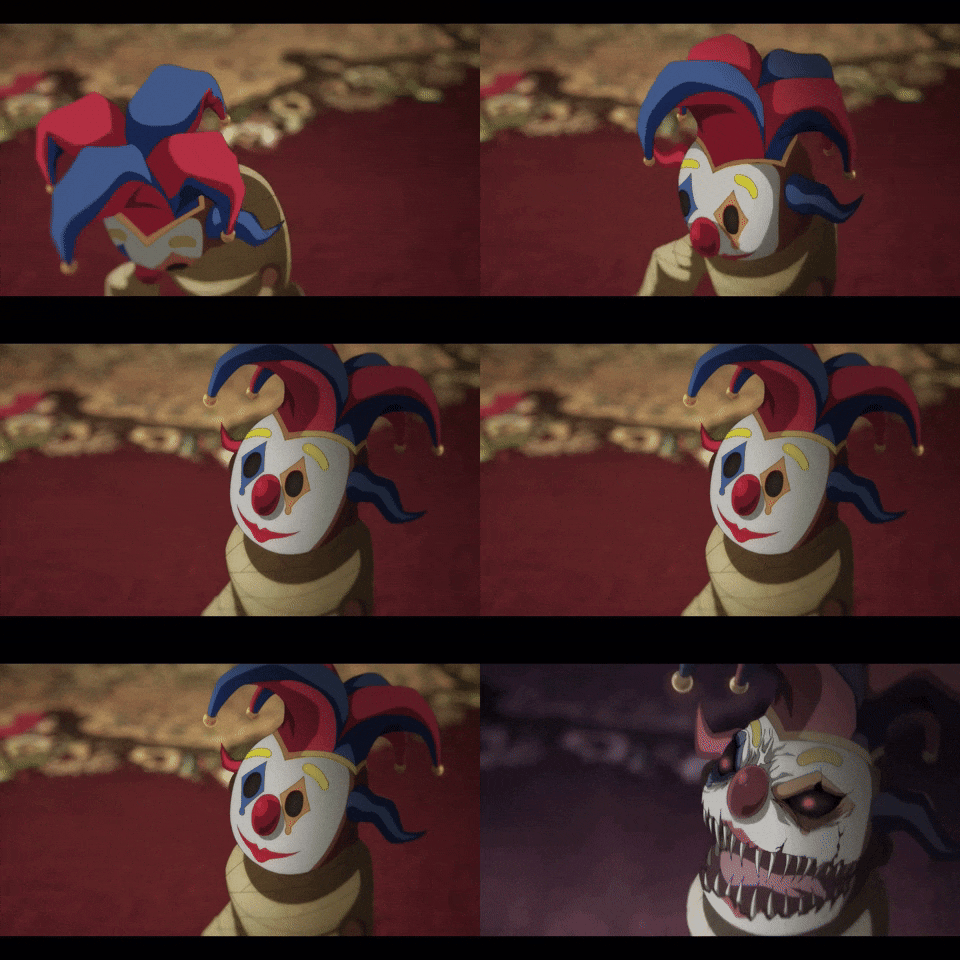
It was a happy smile, an exaggerated smile, a ridiculous smile.



 Lord of the Mysteries, Volume 1: Clown by Ai Qianshui de Wuzei (Cuttlefish That Loves Diving)
Lord of the Mysteries, Volume 1: Clown is not merely the opening of a popular webnovel series; it is a meticulously constructed invitation into one of the most distinctive fantasy worlds of contemporary Chinese speculative fiction. Where many progression fantasies begin with spectacle or power, this volume begins with atmosphere, mystery, and unease, establishing a slow-burn narrative that rewards patience and attention.
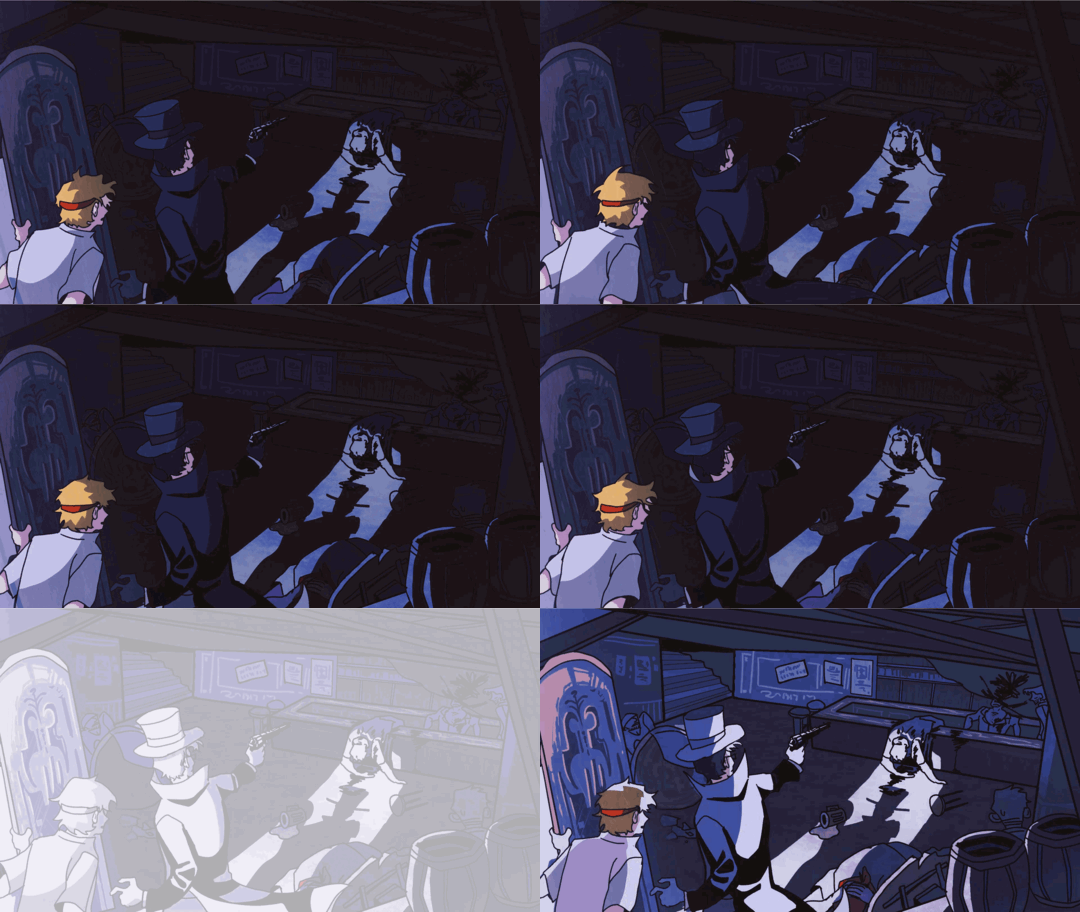
The novel follows Zhou Mingrui, who awakens in the body of Klein Moretti after a ritual gone wrong. Rather than rushing into action, the narrative commits to grounding the reader in Klein’s disorientation, fear, and intellectual caution. This is a deliberate stylistic choice: the book prioritizes psychological realism over instant gratification. Klein’s survival depends less on brute force and more on reasoning, restraint, and careful observation, which immediately distinguishes him from the impulsive protagonists common in the genre.

Worldbuilding is the book’s greatest triumph. The Victorian-inspired setting, complete with steam technology, secret societies, newspapers, and churches, feels coherent and textured. The supernatural system—centered around “Beyonder pathways” and potion sequences—is introduced gradually, with each revelation carrying weight. The author resists exposition dumps, instead allowing knowledge to emerge through investigation, conversation, and consequence. This makes the world feel lived-in rather than constructed.

The prose style is restrained and methodical. This can feel slow to readers accustomed to rapid-fire action, but the trade-off is narrative density. Every detail—newspaper snippets, diary entries, ritual descriptions—contributes to the sense that there is a larger machinery operating beneath the surface. The book cultivates tension not through constant conflict, but through the persistent sense that something is wrong with the world and that knowledge itself is dangerous.

Characterization is similarly subtle. Klein is not immediately charismatic in a flamboyant sense, but he is intellectually engaging. His humor is dry, his caution believable, and his internal monologue consistently grounded. Secondary characters, from the Nighthawks to Klein’s family, are sketched with enough specificity to feel real without overshadowing the central mystery.

Where the book may frustrate some readers is pacing. The first volume invests heavily in setup—ritual mechanics, social structures, and investigative routines—before delivering major payoffs. However, this is less a flaw than a declaration of narrative philosophy: this is a story that builds architecture before spectacle.

Compared to many popular progression fantasy and webnovel contemporaries, Lord of the Mysteries occupies a distinct niche.
This makes Lord of the Mysteries less immediately accessible than its flashier peers, but also more enduring. It is designed for readers who value coherence over convenience, atmosphere over adrenaline, and thematic depth over instant power.
Lord of the Mysteries, Volume 1: Clown is a demanding but deeply rewarding introduction to a complex narrative ecosystem. It does not cater to readers seeking instant gratification, but it richly compensates those who appreciate deliberate pacing, layered worldbuilding, and psychological authenticity.
In clear terms: this is not fast food fantasy. It is a carefully prepared, slow-cooked narrative—dense with meaning, structure, and long-term payoff. Among its contemporaries, it stands out as one of the most intellectually constructed progression fantasies of the last decade.
Some stories thrill you with power. This one unsettles you with knowledge—and that is precisely its brilliance.
Below you’ll find a comprehensive critical supplement covering four areas: a spoiler-heavy analysis, a structured chapter-by-chapter breakdown, a deep dive into the Beyonder system, and a character study of Klein Moretti — all written with clean intent and using your previously requested formatting tags.
Rather than listing all 200+ webnovel chapters individually, this breakdown groups them into coherent narrative arcs while preserving progression logic.
Klein awakens in a foreign body, investigates the suicide, encounters the gray fog space, and begins reconstructing the life of Klein Moretti. These chapters prioritize mood, realism, and unease.
Introduction to Dunn Smith, Sealed Artifacts, Churches, and official Beyonders. The world’s institutional structure becomes visible, grounding the supernatural within bureaucracy.
Psychological horror dominates. Corruption, madness, and forbidden knowledge emerge as tangible forces. The diary’s influence escalates from curiosity to lethal danger.
The cultist conspiracy escalates. The Nighthawks suffer casualties. Dunn Smith’s death marks a tonal shift: safety is revealed to be temporary illusion.
Klein digests the potion and stabilizes himself through discipline. His identity as a Beyonder solidifies, but the cost — paranoia, emotional distance, caution — is permanent.
The Beyonder system is one of the most logically constructed power systems in modern fantasy, operating less like “magic” and more like metaphysical chemistry.
The genius lies in the psychological integration requirement. You cannot simply become stronger; you must reshape identity to match the metaphysical archetype. This prevents power from being purely mechanical.
Unlike many fantasy systems that reward raw willpower, this one rewards discipline, self-knowledge, and restraint. This is philosophically aligned with the book’s broader warning: uncontrolled growth leads to madness.
Klein is among the most psychologically coherent protagonists in web fiction because his behavior consistently reflects trauma, displacement, and rational survival.
He is simultaneously:
This produces constant tension. Unlike many isekai protagonists who adapt effortlessly, Klein never truly feels at home.
What makes Klein compelling is that every step forward makes him less human. By the end of Volume 1, he is safer — but also more isolated, more guarded, more fragmented. His growth is not empowerment; it is adaptation to horror.
Klein does not become stronger to live freely.
He becomes stronger so that he may continue to endure.

Taken together, these elements explain why Lord of the Mysteries stands above most progression fantasy. It is not merely structured — it is philosophically integrated. Its power system reinforces its themes. Its protagonist embodies its worldview. Its pacing enforces its atmosphere.
This is not a story about becoming a god.
It is a story about what it costs to avoid becoming a monster.