What do you think?
Rate this book

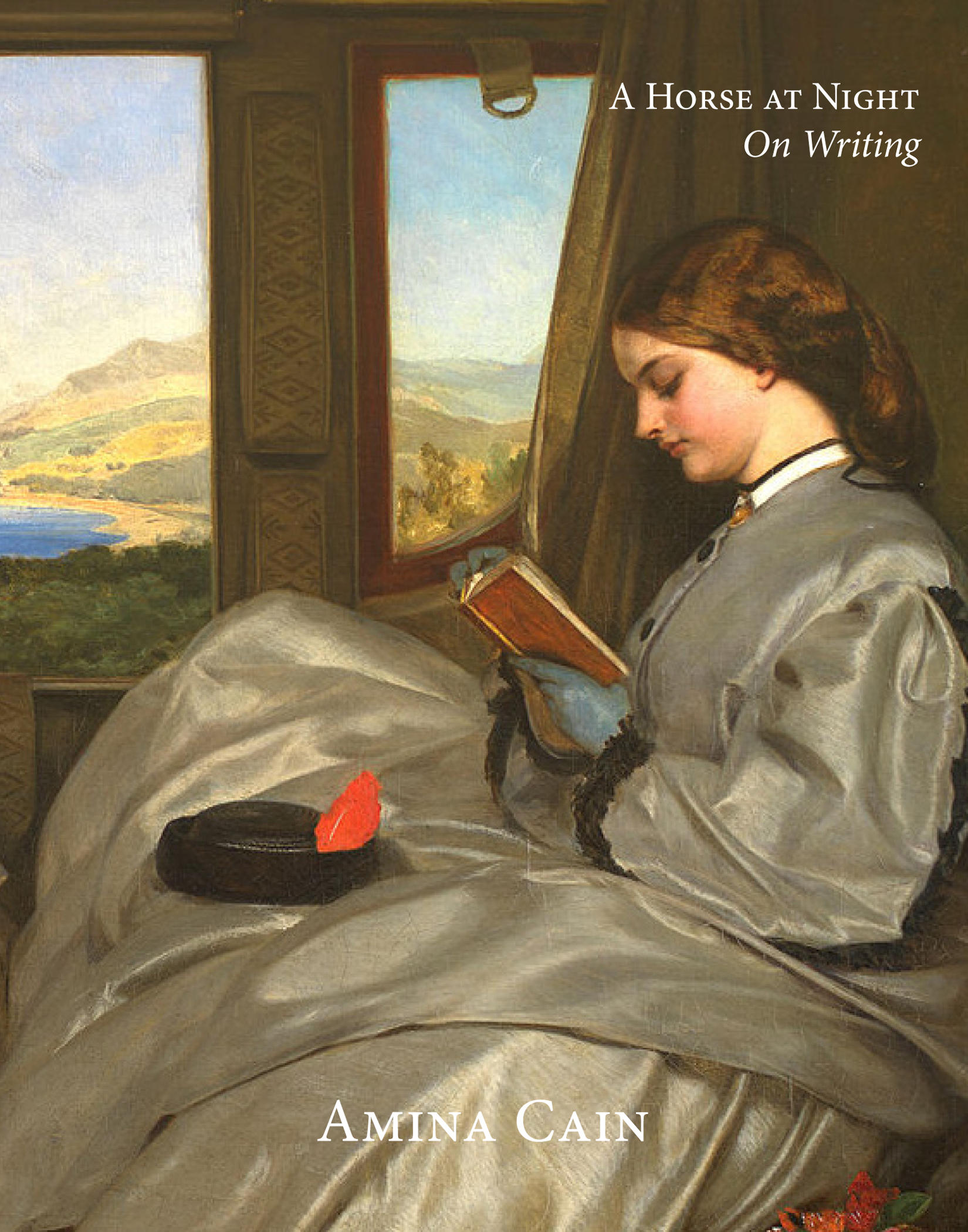
136 pages, Paperback
First published January 1, 2022


‘To be in favor of solitude is not to be against community or friendship or love. It’s not that being alone is better, just that without the experience of it we block ourselves from discovering something enormously beneficial, perhaps even vital, to selfhood. Who are you when you are not a friend, a partner, a lover, a sibling, a parent, a child? When no one is with you, what do you do, and do you do it differently than if someone was there? It’s hard to see someone fully when another person is always attached to them. More importantly, it’s hard for us to see our own selves if we’re not ever alone.’
‘Too much time alone is just as risky as not enough, for it allows us to sink into our cyclical patterns of thought and narrative. We need someone to hold up a mirror so we can see who we are when we are taken outside of our heads. We need to hear others’ thoughts too.’
‘What if a work of fiction simply ended with pages and pages of descriptions of plants? If it doesn’t already exist, I think I must sit down and write it.’
‘—but I find myself always returning to Clarice Lispector and Duras, and now Ferrante and Townsend Warner in my thinking, but also when I write, and I’ve realised that it might make sense to focus on them through writing for an extended period of time. It’s said that it only takes a few seconds for the body to tense up, but that to relax completely takes much longer, more like twenty minutes—Regardless, I also like reading these books because of the state of mind in which they put me.’
‘One reads or writes a novel like one goes out to walk in the heat, or into the rain, to buy persimmons and butter.’
‘The flowers that look like bright yellow balls, with soft little pine tree-like leaves, are standing in their bucket of water, not far from a large bowl of tangerines—How could I not think of Lolly, especially in the blustery seasons? I was glad I left my commonplace desk. I went back to it with those images in my mind. For me, fiction is a space of plainness and of excess.’
‘I want to write with that kind of expansiveness, into one’s life and the landscape one is in. It is like a needle piercing the sky. Writing of spending time with one’s mother, the conversations they have in a spring that is really a late brutal winter, not understood by her mother at all. Loneliness on the moors, becoming Emily Brontë, ice and interiors, the house and the mind—in Carson’s writing. I admire it, and I feel so much when I read it, but how can I feel cradled in something so difficult? It’s the writing itself that does that, the details, the setting, the cutting through, taking off one’s clothes.’
‘Even though I’m a writer, it’s not always language I’m drawn to first. When I start writing a new story, I often begin with setting. Before plot, before dialogue, before anything else, I begin to see where a story will take place, and then I hear the narrative voice, which means that character is not far behind. Lately I’ve been thinking a lot about landscape painting and literature, and perhaps as an extension of this I have started to think through the idea of character and landscape as similar things, or at least as intimates, co-dependent.’
‘To be in favour of solitude is not to be against community or friendship or love. It’s not that being alone is better, just that without the experience of it we block ourselves from discovering something enormously beneficial, perhaps even vital, to selfhood—It’s hard to see someone fully when another person is always attached to them. More importantly, it’s hard for us to see our own selves if we’re not ever alone.’
“I love these novels too, as well as Elena and Lila, but not for their friendship, necessarily, which never seems to me completely close, though I like that it encompasses their entire lives [still not closed enough?] receding and then becoming stronger again over and over throughout the time. I understand difficulty in a friendship, and falling out, but not the idea of the “frenemy” [there is no idea of "frenemy" in Ferrante’s novel whatever this trendy neologism is supposed to mean]. I am not interested at all in competitiveness between women [but elsewhere in this book: “I used to worry I was not intellectual in the same ways many of my friends were” - what that if not competitiveness? ] in toxic female friendships as a literary topic. .. I think it is something different, an internalised patriarchy.”
In my own fiction, I sometimes find myself trying to conjure something that isn’t there, so that it both is and isn’t appealing. For instance, my novel “Indelicacy” narrator says: “I pulled my hair into a loose bun, but not like a dancer would do it“. There is no dancer in this sentence, yet I see the dancer. This is one way to haunt my sentence. It is exciting to think I might haunt my sentences.
“The whole future- I thought - will be that way, life together with the damp odour of the land of the dead, attention with inattention, passionate leaps of the heart along with abrupt losses of meaning”.
Sometimes sentences I have written in the past make me cringe, even if once I liked them. They might sound ok, but they’re hollow, with nothing behind them. I have already cut many false sentences from this book, but I’m afraid there will be more I am not yet capable of seeing. I already write such short sparse texts. How much more can I get rid off?
I used to worry that I am not intellectual in the sands way as my friends. I could not understand them. I listened quietly in those moments, aware of the means by which I feel my way towards things, even thought. My writing is like that too?
“I think we ought to read only the kind of books that bite and stab us. If the book we’re reading doesn’t wake us up with a blow on the skull, what are we reading it for? ... A book must be the axe for the frozen sea within us.”
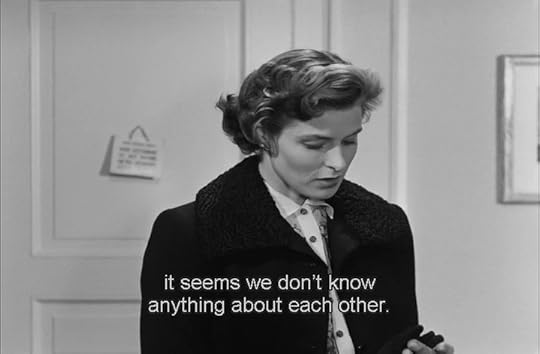
Without planning it, I wrote a diary of sorts...
In The Lost Daughter, when Leda goes alone...
To have to maintain those class roles always, especially if they are enforced with any kind of degradation, is a violation of the sacredness of one's life, and a violence all of its own.
As I write this my cat Trout whines loudly
"Interiority is one of my favorite things to read in fiction — to abide in a narrator's mind if that narrator, that mind, compels me — and when you read a diary you have that, tenfold. A diary is intimate, forthright, immediate."
![Profile Image for s.penkevich [hiatus-will return-miss you all].](/_next/image?url=https%3A%2F%2Fi.gr-assets.com%2Fimages%2FS%2Fcompressed.photo.goodreads.com%2Fusers%2F1735525095i%2F6431467._UX200_CR0%2C11%2C200%2C200_.jpg&w=128&q=75)