Jump to ratings and reviews
Rate this book

The Nature of Alexander

Rate this book
The acclaimed biography of Alexander the Great.

276 pages, Mass Market Paperback

First published January 1, 1975

175 people are currently reading
2200 people want to read

About the author

Mary Renault

29 books1,681 followers
Mary Renault was an English writer best known for her historical novels set in Ancient Greece. In addition to vivid fictional portrayals of Theseus, Socrates, Plato and Alexander the Great, she wrote a non-fiction biography of Alexander.

Her historical novels are all set in ancient Greece. They include a pair of novels about the mythological hero Theseus and a trilogy about the career of Alexander the Great. In a sense, The Charioteer (1953), the story of two young gay servicemen in the 1940s who try to model their relationship on the ideals expressed in Plato's Phaedrus and Symposium, is a warm-up for Renault's historical novels. By turning away from the 20th century and focusing on stories about male lovers in the warrior societies of ancient Greece, Renault no longer had to deal with homosexuality and anti-gay prejudice as social "problems". Instead she was free to focus on larger ethical and philosophical concerns, while examining the nature of love and leadership. The Charioteer could not be published in the U.S. until 1959, after the success of The Last of the Wine proved that American readers and critics would accept a serious gay love story.

Ratings & Reviews

What do you think?
Rate this book

Friends & Following

Create a free account to discover what your friends think of this book!

Community Reviews

5 stars
624 (41%)
4 stars
566 (37%)
3 stars
242 (16%)
2 stars
47 (3%)
1 star
15 (1%)
Displaying 1 - 30 of 124 reviews
Profile Image for Ted.
515 reviews737 followers
March 3, 2019

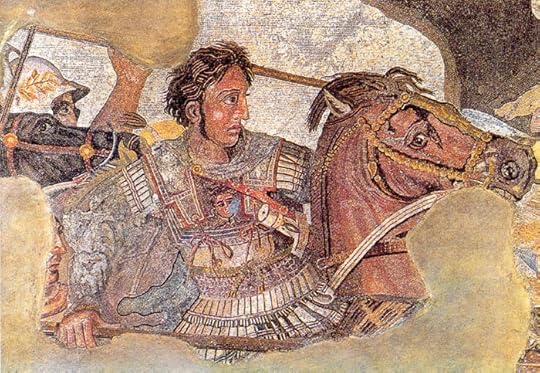
Mosaic, Alexander at the Battle of Isis 333 BC (Wiki)

Note: For a fine review, see Sarah's.


This could be a five star book, but I’ve been conservative since it’s so long since I read it. (It’s probably worth a re-read, actually).

The Nature of Alexander is a popular, non-academic, very readable biography of Alexander the Great. It is Mary Renault’s only non-fiction book. There’s a very brief Wiki article on the book, in which it is stated that it’s not a “neutral” book, but presents Alexander in a very favorable light. Nevertheless, the book is cited as a source 18 times in the Wiki article on Alexander, which is an indication that although a “popular” work, it is by no means devoid of authority.

The book does not use footnotes, another indication of its popular style. But there is a very useful list of Ancient Sources used by Renault in the back, which she prefaces by saying “This book is meant for general readers; and the following list may serve as a guide to those wishing to make their own assessments and explorations.” The list is short enough (perhaps 20 works) to not overwhelm, and does include four modern secondary sources.)

Renault organizes these works into five categories. The first has no title, but is simply five works in which considerable information about Alexander has come down to us. These are by Arrian, Quintus Curtius, Plutarch, Diodorus Siculus, and Justin. The other categories are Additional biographical details or anecdotes (5, one modern), Works relevant to Alexander’s life and times (5), Works known to Alexander, which certainly or probably influenced his thought (4), and For the legend (3, all modern).

From the inside cover:
The aim of Mary Renault’s study has been to peel off from this complex and dynamic human being the accumulated layers of wishful thinking, both idealizing and ideological, and show him not in our terms but his: as he saw himself, and was seen by his friends, his enemies, the men he led and the peoples he conquered. Besides the statements of those who knew him in life, of which many fragments have been preserved, she has studied the folk memory, ‘which can be neither enforced nor bought’, handed down in the lands he ruled.
The book has a five page index of proper names (very useful). I brought it upstairs recently hoping to find out something about the period of time in Alexander’s youth when he was engaged with Aristotle, and wasn’t disappointed. The index immediately pointed me to a six page section in which the relationship is discussed (as well as numerous other references to Aristotle through the work.)


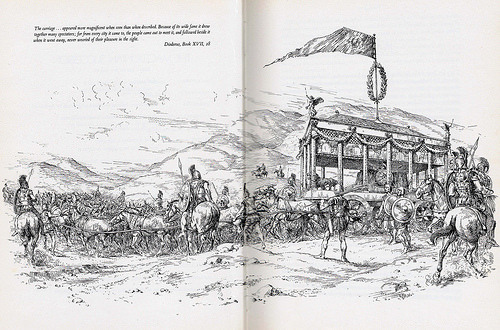
The book is handsomely illustrated in color and black and white. Some of the numerous illustrations are photographs of places (many full page), other are depictions of sculptures, jewelry, tapestries, etc. connected with Alexander, his times, or his legend. There’s a two page section giving details and acknowledgment for all the illustrations.

The image above shows a two-page illustration of Alexander's funeral car, by Edward Mottelmans. The inscription in the upper left is from Diodorus. The carriage ... appeared more magnificent when seen than when described. Because of its wide fame it drew together many spectators; for from every city it came to, the people came out to meet it, and followed beside it when it went away, never wearied of their pleasure in the sight. This car was pulled by 64 mules for months across a thousand miles of Asia.

For anyone interested in a very readable biography of Alexander the Great, I would recommend Renault's book.


. . . . . . . . . . . . . . . . . . . .
Previous review: All Quiet on the Western Front
Next review: Baseball's Benchmark Boxscores
More recent review: Voyage in the Dark Jean Rhys

Previous library review: The Classical Greeks Michael Grant
Next library review: The Roman Empire VSI
Profile Image for Sarah (Presto agitato).
124 reviews179 followers
November 3, 2013
I recently read and enjoyed Mary Renault’s trilogy of novels about Alexander the Great (Fire from Heaven, The Persian Boy, and Funeral Games). I was curious to see her approach the topic from a nonfiction perspective. The Nature of Alexander is her biography of the Macedonian king who managed to conquer Greece, Persia, part of India, and Egypt, creating an enormous empire without ever losing a battle.

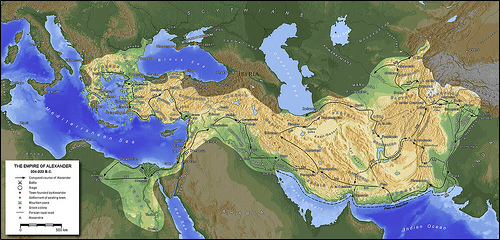
Macedonian Empire
Alexander's empire (Source: Wikimedia Commons)

Despite ruling for only thirteen years, Alexander is renowned for his military brilliance. Holding together an empire that vast, with populations of such diverse cultures, languages, and religions, was at least as challenging as conquering it in the first place. He died young without having a clear successor. The power vacuum left after his death created a setting ripe for murders, revolts, and usurpations. The massive empire did not last for long, at least not in the form in which Alexander left it.

Renault can tell a good story. The narrative quality of the biography, which focuses on what is known about Alexander’s interpersonal relationships as much as on his battles, makes it a pleasure to read. Alexander was an interesting character: intelligent, disciplined, and courageously unconcerned with his own comfort and personal safety. He led by example, and his men were (usually) fiercely loyal to him. At times, though, Alexander could be surprisingly emotional. He is described as sulking in his tent for days when his soldiers, exhausted by years of military campaigning, refused to go farther into India.

Renault draws on ancient sources for this biography, particularly Curtius, Arrian, Plutarch, and Ptolemy. There is inevitably a certain amount of historical reconstruction involved, as much information has been lost. The ancient writers often refer to other documents closer to the source that are no longer extant. Many of those writers had an angle they were pushing. There was quite a bit of propaganda, both for and against Alexander, so any biographer has to sift through the details and decide what is most likely to be true.

Renault’s objectivity is questionable at times. She is clearly in the pro-Alexander camp. There are many historical controversies regarding Alexander’s life, such as whether or not he was involved in his father’s assassination or was an alcoholic. There are also accusations of atrocities, such as a story about him ordering that the defeated leader of Gaza be executed by having him dragged behind a chariot by his heels until he died, a grim allusion to Achilles having Hector’s (already dead) body dragged around Troy. Renault calls the story “Athenian propaganda,” which it well could be. Unfortunately, though, her lack of footnoting makes it hard to evaluate her claim that “all good historians have rejected [this] story.”

The retrospective medical analyses of certain events here are unconvincing. The author scrutinizes the death of Hephaistion (Alexander’s best friend and possible lover), twisting and stretching small details in a convoluted fashion seemingly to justify Alexander’s execution of the doctor. Renault seems to come out on Alexander’s side on every dispute, taking great pains to justify his actions and sometimes protesting a little too much.

The Nature of Alexander is an enjoyable biography of a fascinating historical figure. For a more balanced account of Alexander’s life, readers should look elsewhere, but this book is a well-told introduction to the subject.

Alexander_Hephaistion
Alexander and Hephaistion (Source: Wikimedia Commons)
Profile Image for George Ilsley.
Author 12 books314 followers
November 1, 2022
This is Mary Renault's only non-fiction book, and it offers a glimpse behind the scenes at the sources, inspiration, and her creative choices when writing her popular Alexander trilogy. This was a writer who knew her material, and mostly did not stray from historical sources in her fiction.

There have been times in my life when I've been completely absorbed by a Mary Renault book, especially Fire From Heaven and The Persian Boy. It is very queer that I've not added any of them here—am I waiting to re-read them? I have a small cherished shelf of Mary Renault books, which have followed me around, and am handling The Nature of Alexander right now. It feels so good in the hand, like only some books do — those that have been loved and cherished, and feel comfortable being picked up.

It amuses me to no end that all these centuries later people are still trying to figure out Alexander and Hephaestion, as if their relationship is somehow the key to unlocking The Nature of Alexander.
Profile Image for Joe.
111 reviews151 followers
February 13, 2018
"A dark mist crossed the sky, and a bolt of lightning was seen to fall from heaven into the sea, and with it a great eagle. And the bronze statue of Arimazd in Babylon quivered; and the lightning ascended into heaven, and the eagle went with it, taking with it a radiant star. And when the star disappeared in the sky, Alexander too had shut his eyes."

------

My particular interest in the personality of Alexander the Great began when reading Arrian, who ends his The Anabasis of Alexander, with the following:

"Alexander died in the 114th Olympiad, in the archonship of Hegesias at Athens. [...] He had great personal beauty, invincible power of endurance, and a keen intellect; he was brave and adventurous, strict in the observance of his religious duties, and hungry for fame. Most temperate in the pleasures of the body, his passion was for glory only, and in that he was insatiable."

First, however, a comment on the historical account of Alexander outlined by Mary Renault. Erudite and well-written, Renault offers a biography of Alexander based on contemporary records, dispersed with modern medical scholarship that critique the outcome of Alexander's battle wounds, and the likelihood of poisoning for both Hephaestion and Alexander. With this, the reader will be acquainted as much with Alexander as if they read more recent biographies such as Alexander the Great.

Still, this is not why I read this book. The aim was to delve deeper into the psyche of Alexander, peeling back to his fundamentals, and finding what made Alexander Alexander. With this in mind, see these quotes with my commentary:

* "[Alexander] was considered a runner of Olympic standard, but declined to enter for the Games 'unless [he] had kings to run again'. His pride would not tolerate even a suspicion that he had been given the race." - One can only think of Nero, who won every singing or musical competition he entered in - even winning the chariot race, which he didn't even finish.

* "[Alexander] could not live without books. [...] Next after Homer, it seems the chief of these was Xenophon, who influence shows unmistakably again and again." - to understand Xenophon is to understand Alexander. Xenophon presents the pattern of an ideal ruler, governing his conquered peoples in a vast extended empire.

* "The image of a conqueror [Cyrus the Great] brilliant, powerful and merciful, making friends of enemies, hailed as a father by the conquered." - The Alexandrian legends bears witness that he aspired to be like Cyrus. For example, the helmet of Cyrus had a white plum. Alexander put up two of them, one each side.

* "Moderns who have accused [Alexander] of 'an unpleasant concern for his own glory' are thinking in terms of another age. [...] To be fameworthy is the most honourable of aspirations, the incentive of the best men to the best achievements." - This is key to understand much of ancient history. Before Christianity, ambition was celebrated and venerated. After Christianity, ambition ended with Christ, and not the world: “Make it your ambition to lead a quiet life, to mind your own business and to work with your hands …” (Thessalonians 4:11)

As I began my search with Arrian, I also end with Arrian:

"Anyone who belittles Alexander has no right to do so on the evidence only of what merits censure in him; he must base his criticism on a comprehensive view of his whole life and career. But let such a person, if blackguard Alexander he must, first compare himself with the object of his abuse: himself, so mean and obscure, and, confronting him, the great King with his unparalleled worldly success, the undisputed monarch of two continents, who spread the power of his name over all the earth. Will he dare to abuse him then, when he knows his own littleness and the triviality of his own pursuits, which, even so, prove too much for his ability?"
Profile Image for Debbie Zapata.
1,980 reviews57 followers
June 29, 2021
Jun 25, 635pm ~~ Review asap.

Jun 29, 11am ~~ Okay, I confess. I got caught up with other things and forgot I had not written a review for this book yet. So here we go.

I have read many Renault titles, mostly pre-GR, and loved them all. The first book of hers I ever read was The Persian Boy, many many years ago. I eventually tracked down all the other Alexander novels and snapped up anything else by Renault that I saw at the used book sales.

But I had never heard of this book until I was browsing one day at my favorites online used book seller. I ordered it, it sat for some months, then I read the Michael Wood book about Alexander and moved this one up on the Next list. Steinbeck distracted me for a bit but when I did finally dive in here I was impressed.

The main thing I took away from this book is that modern day readers absolutely must understand the mindset of Alexander's day and not judge him or his actions by our own. Renault explains such things at different points throughout the story, so I was able to have more than one of those ah-ha moments that good information gives a reader. And we must also remember that much of what we know about him was left by the Athenians of Greece, and as Renault also demonstrates they hated the man so they were not exactly interested in leaving an objective portrait for the world to see.

I loved that he carried books with him on his campaigns. And that he read Xenophon. I have read Xenophon's book about horsemanship, and knowing that Alexander most likely read it also explains a lot about the relationship between himself and his famous horse Bucephalus. Renault at one point says that Bucephalus never allowed anyone else to ride him, but would bow down to allow Alexander to mount easily. This may seem like quite a trick, but it is easily trained, and would be a way to strengthen the bonds between a man and his horse. Alexander obviously was very observant about horses and understood at least Bucephalus like no one else did. If he did read Xenophon's book on horses he would have used many of the tips in it to reach that understanding. What I love is the idea that Alexander The Great and I have read at least two of the very same books. This one and Homer's The Iliad. I would love to sit down with the man and chat about them; I think that would be just TOO cool!

This was a wonderful book. Anyone who wants to meet Alexander and get a scholarly yet very readable view of his life would enjoy it.

Profile Image for Nate.
481 reviews20 followers
June 12, 2014
Alexander has always been a mystery to me. To be honest, I've always been a bit frustrated with his legacy. We tend to picture Alex as the beautiful, idealized conquering hero in a way that we never would with someone like Attila the Hun. For most of my life my theory on why this is has been related to the western world's huge affinity for Hellenistic culture and ideas. As a whole we have a serious boner for Greek stuff and while most of the time I share said boner it can be problematic. Alexander was directly responsible for the awful deaths of a TON of people, most of whom had no interest in taking part in his own personal Iliad. Furthermore, dude was the aggressor in his wars on Persia and India--I don't care what Renault and a billion other historians insist, there is no proof Darius had any involvement in Philip's assassination and the Indian campaign really seems to just exist because it could. Philip had plenty of enemies in Greece that had nothing to do with Persia. So it can be irritating to not ever see Alexander in the same category as historical "villain conquerors" like the aforementioned Attila or Genghis Khan.

Mary Renault does set me a little bit straight on this, if not to the point I'd like. This is a psychological portrait of the man. Volumes have been and are probably currently being written on Alexander's military life, but Renault forgoes most of this stuff in favor of examining the kind of mind and personality that produces the myriad decisions he made during his short life. I mean, you literally can't produce a biography of Alexander without talking about his military campaigns, but these are examined shallowly and again, mostly to see what they tell us about the man as a person, not a commander. And the person that emerges from these pages is indeed often likable--often completely skipping the brutal plunder, rape and destruction of the cities and towns of vanquished enemies and mostly going completely without the useful tool of outright murdering one's political enemies. You also have to stand in awe of the fact that here was a dude inspired by one of the world's first epic fantasies (the Iliad) who went on to basically bring his own epic fantasy to life on the world stage. You can't make this shit up!

Renault's biography does have some issues, however. There's clearly some fangirlish hero worship going on, and the occasional awkward desperation she resorts to to prove "Alexander was really a great guy! Really, guys!" is embarrassing enough in a fictional setting, even more so in an academic one. She even occasionally resorts to the stale "War and killing were not viewed as inherently bad things at the time, this was not the 20th century" argument. This argument does very little for me. Imagine yourself kneeling next to a mortally wounded man, woman or child after one of Alex's fancy battles/sieges and telling them "Listen...I know this sucks ass, but war isn't viewed by the world as inherently bad thing, so chill out with the whining and crying. Look how awesome Alexander looks on Bucephalus!" Even though the man did occasionally very merciful and honorable things and held himself to an ideal a bit loftier than most other rulers of the era, he was a killer and a conqueror. We cannot forget that, and Renault does her best to make us.

I know this seems like I'm being very harsh on the author and her subject. I do hope and think I'm coming from a realistic place rather than a cynical one, however. I'm just as easily seduced as the next person by the Alexander ideal--a beautiful young man raised by a hardass soldier dad and mystical hippie mom that loves his Homer and goes on to conquer the fuck out of the world before dying early, forever young and beautiful, like a legendary dead rockstar of the ancient world--but when we look at history and the people who write it we have to ask if this was reality or indeed just an ideal. All that said, my final verdict on Alexander has indeed improved after reading this despite the odds. I just don't fully buy into the hero-lover-conqueror thing. Complaints aside, the author's writing is eminently readable and this biography zips by within a few sittings. It also utterly crystallized my desire to read her fiction. Her dedication to the subject is clear and I can see it translating into some awesome novel action. A bit of a mixed bag here but one I liked on the whole.
Profile Image for Jim.
1,449 reviews96 followers
June 9, 2020
What an incredible story!--if you stop to think a moment about it. A brave youth sets out with his army, wins victory after victory, conquers a great empire, and all this by the age of 33, when he dies suddenly (planning yet another campaign). I may be wrong, but I think anyone who is a little familiar with "world history" at least knows the name of Alexander the Great. There have been a number of films made about him after all.
I wanted to read this book about the great leader of Macedon because it was written by a fine novelist, Mary Renault. I have read her novels about Alexander and Ancient Greece and wanted to read this biography of Alexander that she wrote in 1975. She did her research, going back to ancient sources, and she wrote the story like a novel which moves at a swift pace. One problem--NO MAPS, but I've read other books about Alexander- and an excellent National Geographic article about him- and I had a general idea of where he went (I did also look at a Nat'l. Geo. map of Iran ).
Renault focuses on the character of Alexander. He believed he was descended from the great hero of the Trojan War, Achilles, and, also, Zeus, the King of the gods. It helps to have that much confidence! He believed in winning glory, gaining immortality through everlasting fame. I'm most impressed by his charisma, his magnetic quality, that attracted men to want to follow him, fight for him, and, of course, die for him. And, of course, all the great military commanders had that quality--Napoleon comes readily to mind, but there are others...Rommel? Patton? What amazes me the most about Alexander is that he was usually in the forefront of battle, risking his life alongside his men. It was expected of commanders in ancient times...but, still, he was wounded repeatedly and it's incredible that he was able to recover and keep pushing on.
For Renault, there's no doubt that Alexander was a great hero. Today, we would say he was a bloodstained imperialist, needlessly causing death and destruction in the lands that he invaded. But, as Renault points out, the great Persian Empire which had tried to conquer Greece, remained a threat to the Greeks. The Persians also controlled Greek cities in what has been called Asia Minor, in today's Turkey. Alexander's father, Philip II, king of Macedonia, had unified the Greeks under him and planned to liberate those Greek cities in Asia Minor when he was assassinated. Alexander, seen as just a mere youth at first, was able to take over the disciplined army that his father had built and then proceed to carry out his father's plans. But that wasn't enough for him-- he kept going...he took Judea, where he was welcomed as a liberator from Persian rule, and then Egypt, where he was proclaimed a Pharoah, a divinity. In the Battle of Gaugamela, Alexander defeated the Persian Emperor Darius decisively and became effectively the new emperor of Persia. Did he stop there? No way. He wanted to push on to the mysterious land of India--and he did so, defeating an Indian king who used war elephants against him--to no avail.
He would have kept going--but, finally!, there was one thing that could stop him--his own men. They were exhausted and had had enough. They wanted to return to their families, not keep going on and on into unknown lands...Had Alexander gone too far? In my opinion, Yes. I can see him building an empire based on a unified Greek Empire, being dominant in the Med, and I would think promoting and spreading Greek learning, the arts and philosophy (Alexander had been the student of Aristotle). He did not need to go into the interior of Asia as he did. What he needed to do was consolidate his empire and set up a succession that would keep it from all falling apart following his death--which is what happened. Alexander got sick and died in Babylon--Renault believes he was poisoned. His son Alexander and his wife Roxanne were murdered-- and the Macedonian generals had a falling- out and fought among themselves over the remnants of Alexander's empire. It would be the much bloodthirstier Romans who would come along and build a great empire, including Greece..
In sum, it certainly is a great story and also there's a great what-if. What if Alexander had lived longer, just ten years longer, AND he had set his mind on building the peace and not keep conquering and conquering.....?
Profile Image for Kathleen.
1,956 reviews39 followers
January 8, 2010
This is one of those books that I read to become an informed person and about which I will later remember only three to five things. In no particular order I predict that those three to five things will be: Bucephalas, Hephaestion, Darius, Roxane, and Olympias. This is, of course not how I will remember: the Horsey, the Boyfriend, the Cowardly Enemy, the Evil!Wife, and the Conniving Clingy Mother.

I am being glib because I am not really familiar with this period in history. I honestly will forget most of the other well-detailed historical figures mentioned in this book because they have Greek and Persian names that I can't pronounce as well as similarly incomprehensible characters. I am sort of fine with that, though, because this book isn't really about the supporting cast, it is about the character of Alexander.

Alexander, as it turns out, really was sort of great. He had a pathological need for approval and friendship, so was outgoing and generous by default. He was wackily opposed to all sorts of common things like torture, rape, pillaging surrendered cities, and secret murders to consolidate his power. Many of his major historical mistakes stem from trusting his friends too much. His army loved him to the point where discipline was more like dealing with a parent you don't want to disappoint than a Cesar looking to flog or kill one in ever ten soldiers.

This is a well written, extremely well cited history of Alexander. The prose is very dense, but entirely worth the effort.
Profile Image for Sean.
332 reviews20 followers
December 1, 2016
I think this is my fifth biography of Alexander, and it's easily my favorite. It's not the most scholarly -- indeed, it's not scholarly at all. It's not the most balanced -- Renault is an aggressive partisan. It's not the most in-depth -- it's a slim, fast-moving book. But my god, what a gem.

Renault is clever, and a close reader of the source material. She's wordly, and reads between the lines, and through the lacunae. She's also an angel with her pen, and the book reads like a splendid novel. Which isn't all that surprising, both because she wrote novels, and because Alexander's life reads like one, with the proper styling, at least.

Is her Alexander the Alexander of history? I don't know. I suspect that her romantic view of him, tempered though it is by her thorough-going analysis of the source texts, has led her astray at times. So if you're looking for an academic take on the man, read Green or Lane Fox or any number of others. In fact, if you haven't read about him before, you should certainly start there. If you're familiar with the knowns and the known-unknowns of Alexander, though, you owe it to yourself to read this book.

Highly recommended.
Profile Image for Olethros.
2,724 reviews534 followers
July 4, 2013
-Trabajo natural después de las dos primeras novelas sobre el tema que escribió la autora.-

Género. Biografía.


Lo que nos cuenta. Repaso de la vida, obras y batallas del famoso macedonio, pero también un relato de los tiempos en los que vivió.

¿Quiere saber más de este libro, sin spoilers? Visite:

http://librosdeolethros.blogspot.com/...
Profile Image for Steven.
Author 1 book7 followers
January 25, 2016
After seeing the excruciatingly tedious and mangled film about Alexander the Great by Oliver Stone recently, I decided to find a biography that would better capture the character and achievements of the man. Many years ago, I read Mary Renault's wonderful novel, The King Must Die, so when I found this biographical study (written in 1975), it was a "no-brainer" to read it.

In it, Renault examined the writings about Alexander, much of it by his comrades and by historians who lived a relatively short time after he did (and who had access to primary sources in ancient libraries). When the writers were in conflict about his actions and motives, Renault followed the path that is most logical. For example, she dismissed much of the negative writings about Alexander as propaganda, which was disseminated by the tyrannical Athenian Demosthenes, but also by Alexander's generals after his death. It is a studious and thoughtful approach.

We get a good sense of the man, who became king at 20, but was a leader in battle as a teenager (under his father, Phillip). Renault clearly had a high opinion of Alexander, but did not neglect to relate to us instances of misjudgment and cruelty by him. She also gave us the facts—as best she could—about the momentous battles against the Persians, Indians, and others, as well as his feats in building cities and gaining the support of different ethnic groups.

I have not read her three novels about Alexander. Frankly, I do not have the time right now, but I am satisfied that this 265-page, non-fiction work has given me a good understanding of this influential leader. My few criticisms are that it was a bit hard to "get into" the book at first, that his father, Philip, is not given enough credit for building up the army, and that there are no maps of Alexander's long journey. However, I still can recommend Renault's book, which is enlightening and interesting, in general.
289 reviews6 followers
February 5, 2011
Simply the best Alexander book I've read. Renault wrote brilliant historical fiction, but realized the facts would suffice to make a great story here. I got this book as a consolation prize after an horrific scholarship interview in high school (it was for Pitt so that's fine. I wouldn't shame my ancestors by going there anyway). Renault was the first I read to discuss Alexander's probably homosexuality- she really just touches on the facts we know, like how he kept turning down marriage possibilities, was never known to take females after a battle and put matching wreaths on Achilles and Patroclus' tombs at Troy with his 'special companion' (who he eventually staged the world's greatest funeral for). Anyway, even more modern books (this was from 1975) like Tanner's treatment of Alexander in his book Afghanistan (where Tanner like any other military historian cannot resist telling the Alexander story back to Macedon in his book about Afghanistan), try to duck this issue or explain it away. Renault's story reads like an incredible epic tale, it just happens to be great history written with real charm and grace.
Profile Image for Diane.
197 reviews
August 17, 2020
It’s an emotional read. Renault doesn’t expand on Alexander’s military campaigns. She has chosen to focus on Alexander’s “nature”, on his personal history, relationships, on his character. She paints the picture of a man who was an outlier in the way he embraced other cultures when most Greeks and Macedonians had a narrow view of what a “good” culture was (theirs, of course). He was conquered as much as he conquered, he was changed as much as he changed those foreign lands, and this was voluntarily, most often to the surprise, outrage and distaste of his compatriots. They followed him anyway, so great was his hold on them: riches, fear, fascination, love, adoration.

What a bloody period of history! War was a noble pursuit. Lands were to be conquered for sport. Women of the conquered raped, enslaved, taken as concubines, spouses for the luckiest (usually only the daughters of nobles, chiefs or kings).

And Alexander was one of the best warrior of them all. Much as his nature fascinates me, it’s good that he belongs to the pages of history long passed.
Profile Image for Michael Flick.
507 reviews918 followers
July 14, 2020
The author’s nonfiction life of Alexander the Great, who she came to know as well as a modern person probably can in her readings of ancient sources and her writing three fictional accounts of his life and its aftermaths. Remarkable man, remarkable life, remarkable books.
Profile Image for Fonch.
461 reviews375 followers
January 13, 2023
Ladies and gentlemen this is one of my readings last year, but I was wrong was one of the four books I read on December 31 of the extinct 2022. I have finally had the opportunity to read Mary Renault https://www.goodreads.com/author/show... who is an author very dear to my boss). Regarding my boss I think the reason why we get along so well apart from how well he treats me, and the respect that exists between us. It's because we're the opposite. My boss is a lover of the classical Greek era, the Renaissance, and the Enlightenment, and I am the opposite. A lover of the Achaemenid Persians, the Jews, the Middle Ages, and the Baroque. My boss's idol is Alexander the Great. I must admit that I was very interested in reading Mary Renault, things with the Spanish Society of Tolkien were very bad, and what ended up precipitating that he will stop following them on Facebook was an article that they posted I do not know if by the time of gay pride saying that as Tolkien had praised the books of Mary Renault this would be pro-LGTBI which I doubted due to the rejection inspired by Oscar Wilde https://www.goodreads.com/author/show... https://www.goodreads.com/author/show.... If we read the overrated Humphrey Carpenter https://www.goodreads.com/book/show/7... https://www.goodreads.com/author/show... It must be believed that Tolkien was until the university stage without knowing what homosexuality was. Given this political correctness, I made the decision to abandon following on Facebook because they did not represent me. It had not been the only reason for friction I had with the Spanish Society of Tolkien. So there was a lot of curiosity to see how my first meeting with Mary Renault would be, and I think it has been a great success to start with her biography (which at the same time is also her Doctoral Thesis as well as "Right to dream" of my admired Don Juan Manuel de Prada https://www.goodreads.com/author/show... ). Although Renault has not told me anything that I do not know, I liked it. The best thing to talk about Alexander the Great in history as seen by Curio, Plutarch https://www.goodreads.com/author/show..., Arrian https://www.goodreads.com/book/show/8..., https://www.goodreads.com/author/show..., in the Middle Ages (where his image is embellished), and by Harriet Grote https://www.goodreads.com/author/show... . There are some things about this book that I didn't like is a hostile tone of the author for the Middle Ages (as if it were a time of fans), and I am closer to the views of Tom Holland https://www.goodreads.com/author/show... (at least the current Tom Holland https://www.goodreads.com/book/show/4...), and Gene Wolfe https://www.goodreads.com/author/show... Wolfe in his saga of the Sun speculates what would have happened if Christianity had not existed, or disappeared, and was not at all complacent with the Greeks in his trilogy of Latro https://www.goodreads.com/series/4147... https://www.goodreads.com/series/4945... . It is a bloody period with extermination of civilizations, slavery, infanticide, human sacrifice. For example, St. Augustine https://www.goodreads.com/author/show... in his wonderful "City of God" https://www.goodreads.com/review/show... (I would say it is my most successful review in Goodreads) tells us about the cruelties of the ancient world before the advent of Christianity to refute the idea of the pagans, and which Edward Gibbon will later defend. https://www.goodreads.com/series/1070... https://www.goodreads.com/author/show... that the Roman Empire falls for having accepted Christianity. To which it must be said that, despite the ferocity of Visigoths, and vandals https://www.goodreads.com/book/show/4... https://www.goodreads.com/author/show... many pagans were saved because they took refuge in the Christian Churches, and being Christians both Goths and Christians respected the places of worship. Something unthinkable with the Hittites, Assyrians, or Babylonians (for example). To this day Rome is remembered thanks to the Christian authors who saved its writings, and to the translations made in the monasteries. The Fall of Rome is because it was cyclical, and its fall already began before they accepted Christianity. The plague of the first century as my good friend Professor Manuel Alfonseca explains in his first book of the Aeolian family https://www.goodreads.com/book/show/5... https://www.goodreads.com/author/show... had much to do with it. That is why I do not like very much that Renault criticizes the Middle Ages, and more considering that that period both Islam (the considerations that Mary Renault establishes in her book on how Islam saw Alexander the Great are very accurate. I recommend, and I am indebted to the great contributions made to me by my friend Don Andrés Guijarro, https://www.goodreads.com/author/show... whose sincere criticisms helped me improve this review. We were discussing whether Alexander the Great had a divine mission, or not. I opted for the second option) as Christianity rehabilitated Alexander the Great. Another defect that I see is the obsession of insisting on who Alexander the Great sleeps with. The book has a ProLGTBI touch, although not so much, perhaps there is an obsessive obsession of the author on the subject of Bagoas, to which she devotes too much time. But perhaps the great flaw of the book is the closed defense of Alejandro, who never does anything wrong, or is exonerated of everything while there is a certain criminalization of both Demostenes https://www.goodreads.com/author/show... (which is not as altruistic, nor as beneficial as it seems. After all, their hostility to Alexander is due to envy, jealousy, arrogance, and snobbery. Enormously democratic virtues), like Cassander's. Nor do I like the author's very negative view of Aristotle https://www.goodreads.com/author/show... because she defends Macedonian primacy over Alexandrian tolerance. For Renault Alexander had nothing to do with the death of Philip II, which would be the work apart from Pausanias https://www.goodreads.com/author/show... of Demostenes, and Darius III. Except for the assassination of Calisthenes (rather execution, and what in my opinion is the fairest of all) Renault seems to justify all the arbitrary decisions of Alexander. Parmenio's guilt was never proven in the case of the conspiracy of Philotas (in fact, neither was Philotas' involvement in the conspiracy proven), and the death of Clito the Black is that of a man unable to control his passions (accidental). Not to mention that the excuse he gives for the burning of Persepolis is clumsy. Following the sources the author concludes that it was the result of a drunkenness, or an act of revenge instigated by a hetaira (Thais) lover of Ptolemy (in what is good in Renault in trying to make a balanced vision, and not letting there be a uniboca voice the easy thing was to have followed the criteria of Ptolemy, and having been critical of Perdicas). Manfredi https://www.goodreads.com/series/6212... in his Alexander the Great trilogy https://www.goodreads.com/author/show... gives a more logical excuse for the burning of Persepolis. I do not think it is the real one, but it seems logical to me that Alexander ordered the burning of Persepolis so that his troops would not be corrupted by luxury, and pleasures, and continue to conquer. I like something else about Mary Renault, and that is that we do not fall into presenteeism judging the acts of the past with today's views taking the human rights of the UN. In what I disagree most with Renault without any doubt is in the deification of Alejandro no Mrs. Renault is not the same as winning a Nobel, or that one is named Professor as she pointed out (this is not justified by the sources is a personal assessment of hers, and this is mine). Although Demostenes brought Athens to ruin, he did well not to recognize Alexander's divinity. For no matter how many his exploits are, Alejandro is a mortal not a God (this topic is discussed by Don Andrés Guijarro, and a humble servant. Don Andrés does not believe in the divinity of Alexander the Great, but he does believe that he had a divine mission, and I believe that God uses him for his plans as he used Nebuchadnezzar II. The image that is given in the Maccabees of Alexander the Great is not positive, and this is seen with the arrival of the Seleucids, who are the consequence of their conquests as mentioned below. Don Andrés points out that the support of the Jews is proof of the divine mission of Alexander III, and I refuted him by saying 1 The Jews supported Alexander the Great because it was better to side with the strongest, and second because the Samaritans supported the Persians. In fact, the Persians treated the Jews much better except for a brief period in the life of Xerxes, thought to be Xerxes.) It does not need, as Tertullian said, https://www.goodreads.com/author/show... of the Roman emperors that we worship them as gods, which are already quite recognized by their great deeds. In the case the best of him undoubtedly the friendship he felt for his friends, and the attempt to create a cosmopolitan society overcoming Macedonian nationalism, also that he was a gracious man, and compassionate except when he was dominated by emotions. The worst thing that ended up becoming a tyrant, and the uncertain situation in which he left the East. If we read the Maccabees Alexander does not come out well, and is responsible for the subsequent chaos. Except for the dynasty lagida in Egypt the rest of the States were unviable, his Darwinist policy led to the strongest being right (to control the nefarious influence of his mother he gave power to Antipatro so that he had it controlled. Why didn't he decide the same when he knew he was in a trance of dying?), leading to absurd civil wars, and crushed minorities such as the Jews, and Nabataeans who had to fight for their survival against the Seleucids. Until the arrival of Rome there was no stability in those areas. Special mention should be made of the cruelties of Olympias, Roxana (who was certainly not the right woman for Alexander), and Greece was crushed. It was already a far cry from the greatness it held in the fifth century. Although Greece's Democracy is a camel, and the Persian world was not as bad as it seems. Most of what this book contains was already known by Valerio Massimo Manfredi. But it's not a bad book at all. My grade is (3'5/5) PS. As a positive inspired great conquerors such as Caesar, or Pizarro, and the cult of heroes, which can be good, or bad depending on the use made of heroism https://www.goodreads.com/book/show/5... .

335 reviews4 followers
May 17, 2018
Mary Renault escribió una trilogía sobre Alejandro Magno, el consquistador macedonio que llegó hasta la India tras derrotar a Persia, coronarse Faraón en Egipto y llegar hasta Asia Central. Este libro tiene como objetivo justificar lo escrito por la novela. Menciona las fuentes utilizadas y la autora nos deja ver de forma totalmente subjetiva su visión de Alejandro y como le concibe. Quizá retratado de forma excesivamente romántica, pero no por ello injustificada - son las fuentes a las que nos debemos para conocerle - es una buena toma de contacto y una amena lectura para recordar quien fue.
Profile Image for Lynnie.
105 reviews1 follower
June 2, 2025
This is too favorable a biography, and it loses a star by playing fast and loose with its sources. A glaring example is that Renault accepts the commonly crowed and just as commonly rejected statement that the walls at Tyre were a whopping 150 feet high. This, of course, makes Alexander by Renault’s measure very cool, to have penetrated a fortress held by 150 foot high walls. Lots of choices like this are made in her recounting of the story of Alexander, and while some can be excused by the development of Alexander scholarship in the last fifty years, not all of them can be.

But that’s not to say that this isn’t a beautiful and loving tribute. It succeeds in showing Alexander in his best light, and looks charitably at his character and activities. There are moments in this manuscript where there is real payoff for this genuine, adoring attention, such as Renault’s rendition of Alexander’s appointment of Hephaistion to chose the next king of Sidon, and the light that she casts over both Alexander and Hephaistion’s hearts in the telling. While this is one of those Alexander biographies that should be read with a critical eye, it remains very beautiful, and very worth reading even as we approach its 50th birthday.
Profile Image for Phil.
625 reviews31 followers
January 4, 2015
A very interesting and highly readable biography of Alexander the Great. You can tell that Renault is a novelist because she has a great turn of phrase and a highly tuned sense of pace. Unfortunately, her love of Alexander means that it reads as a hagiography - and even the parts where she's criticising his behaviour read as though it's really a disguised compliment. It was very useful as an overview of the life and the events, but I'm not sure how reliable it is as an assessment of character (or of the characters around him) because it seems to hell bent on putting everything in the best possible light.

Also, the paper back edition I read was crying out for a series of maps. I hadn't a clue where the action was taking place, how far they'd travelled or how the empire connected with itself. It would have improved the reading experience no end if the maps linking ancient Greece and the modern world had been reprinted (I'm aware that maps were included in the original edition - but that didn't help me).

(#6 in my Year of Reading Women)
Profile Image for Carlos.
2,700 reviews77 followers
February 10, 2020
Having read, and loved, all the historical novels of Alexander the Great’s life by Renault I was curious to read her non-fiction biography of him. I was not disappointed. She starts the book with a marvelous exploration of the runaway legend of Alexander’s life, which reached and was influenced by all parts of his empire and allowed him almost any imaginable feat. From there she moves to discuss the handful of sources that have survived to our age as well as their reliability and mutual references. Her actual biography is just amazing. She manages to bring in just the right amount of informed speculation while leaving firm foundations of what is not disputed and was has been uncovered as false. In this way she chronicles the outstanding achievements and strong personality that made Alexander capable of doing almost anything and of posterity to believe almost anything he was said to have done. Quite a wonderful book.
Profile Image for Jennifer.
26 reviews23 followers
February 21, 2009
I'm just a big fan of Alexander the Great. I've read this book and a lot more about him, but I just can't recall titles and authors except for Renault. I'm reminded of Renault because I read her trilogy of historical fiction on Alexander. She also wrote this book which is more nonfiction or rater a collection of observations and opinions, legends, etc. on Alexander the Great told by the various cultures he touched, and influenced.

Who knows what Alexander the Great was truely like, but I've enjoyed reading about the different accounts. Unfortunately, most of the histories of Alexander were told long after his death. I wonder what Pytolomy's library would have revealed of Alexander? Such a loss. :(
Profile Image for Tom Meyer.
130 reviews9 followers
July 9, 2017
A strong companion to her Alexander Trilogy, this does several things the novels lacked. First, it lets Renault examine events the novels missed or glossed over, particularly the period between Alexander's ascension and the Battle of Issus. Second, it gives her space to explain how she evaluated conflicting sources about Alexander and made the judgement calls she did (though I agree with the conventional wisdom that Renault's judgement of Alexander overshot the mark, I don't think she missed by that much).

Third, it stands on its own -- and quite well at that -- as an illuminating and entertaining examination of one of the most remarkable personalities and adventures in history.
Profile Image for Barbara.
405 reviews28 followers
June 27, 2017
While there was plenty here about battles and conquests, this book had a lot about Alexander's interests, friends, and personality. As presented here, he seemed to EARN rather than DEMAND loyalty from his followers, and seemed to care about them as individuals more than I would have expected. It was well-written and pretty interesting, although I'm not a big fan of ancient history.
Profile Image for Read me two times.
527 reviews2 followers
May 30, 2021
WARNING: Apologia di Alessandro.

Ho letto questo #libro per il #gdl creato da Elena @alessandroiiidimacedonia.

Impressioni sul libro: non mi è dispiaciuto, racconta i fatti così come si sono svolti e fa riferimento alle fonti più autorevoli (#Arriano, #Curzio, #Plutarco, Cratero) e quelle meno (lo pseudo-Callistene). Dove non arriva la #storia (o la #leggenda), Mary inventa (verosimilmente, certo, ma inventa), e questo non mi è piaciuto molto...
Ci sono passaggi (e interi capitoli) notevoli, ma va tutto preso abbastanza con le pinze. Quello che mi è piaciuto di più probabilmente è il capitolo sull'India. Ho amato molto l'impostazione del libro, non classica con nacque-crebbe-morì, ma per "macroargomenti", iniziando dal lascito della sua leggenda.
Peccato non ci sia una #traduzione in italiano.

Della vita di #Alessandromagno che posso dire? Per me lui è stato il più grande #condottiero di tutti i tempi, il più visionario e anche il più #rivoluzionario. Mi spingerò a dire un pre-anarchico (attendo lancio di pomodori marci...). Chi non ha mai letto nulla su di lui dovrebbe farlo, non è stato solo un uomo o un dio, ma una vera leggenda vivente, che se fosse vissuto più a lungo avrebbe cambiato le sorti del mondo. Ma è comunque vissuto abbastanza per fare la differenza.
Profile Image for Lev Paine.
16 reviews
August 26, 2023
Not a lot of new information for me, but very cool to see a bit more of the thought behind the Alexander trilogy, and the necessary psychoanalysis that goes along with writing historical fiction about such a figure--both of Alexander himself and of those who wrote about him. I think Renault makes her opinions on the various usual sources more clear than other historians I've read, so while all the stories were the same, it was interesting to see them explicitly granted different weights of credibility here.
Profile Image for sierra!!.
257 reviews43 followers
January 3, 2025
“He is often called fearless; but no man with so powerful an imagination is immune to fear. He had seen men die horribly in the field, in lingering agony after. Perhaps this was why fear was always the first enemy he had to kill.”

“By the standards of even the most courageous modern soldiering, Alexander exposed himself in battle as no responsible commander should. But ours were not the standard of Macedon, whose ethos was still Homeric. Not he alone, but his men, thought in terms of Sarpedon’s words before the wall of Troy. Alexander probably knew them by heart.”


Absolutely riveting
Profile Image for Daniel Puyuelo.
11 reviews2 followers
February 15, 2023
una biografía de alejandro magno en la que me lo dejan como héroe homosexual pues cómo no me va a gustar vamos a ver
Profile Image for Boy Blue.
621 reviews107 followers
October 7, 2019
This is a speedy read that matches the frenetic pace of Alexander's meteoric rise.

Like all great figures of ancient history the nature of Alexander has been layered over by the silt of inaccurate historians both ancient and modern. Underneath the thousands of years of rumours, agendas, myths, stories, and legends lies the truth of the Great one. Renault does a good job of trying to create a simple linear narrative that pulls from all sources and certainly clears away some of the rubble. While trying to reveal the structure underneath Renault gets a bit overzealous and sands down the edges, leaving an unnaturally smooth surface. Even Alexander's mistakes are explained away to nothing. Renault's fault is only that she loves Alexander too much.

From this account you will learn of Alexander that he

- Lead by example, both on the battlefield and in all aspects of his life. Refusing water when his troops were also going without, first into the breach etc. This was the source of much of his success leading armies.
- He was often reckless with his own life but never with the lives of his troops.
- He was exceptionally generous
- He tried to know all his men by name and talked with them often.
- He was most often magnanimous in victory and offered proper burial rites to most of his enemies. He looked after Darius family and Sisygambis the Persian queen mother ultimately became his mother because of the mutual respect. He also didn't sack, pillage and destroy towns unless they had done something ignoble in his eyes. Although this changed in later life.
- He understood how to use fear and his reputation to help win battles. Often winning against massive odds by using his reputation to break the morale of the enemy.
- He had figured out the benefit of using variable rewards. The same sort of model used by today's tech giants.
- He was loyal beyond all else and valued that most highly among his followers. This was also the source of any of his mistakes
- He was largely disinterested romantically in women, with the exception of a brief love for Roxane
- He adopted the social mores of the Persians but combined them with his native Macedonian practices
- He inherited a great military system from his father but augmented it with his own tactical genius
- He loved to read and seemed to see the heroes of the Trojan war, Xenophon, and Cyrus as the models for his own conquest and life.
- "To iron men he is iron, but gold towards the golden."
- At one time he was offered a 10,000 talent ransom from Darius for the return of Darius' family and joint kingship. One of Alexander's trusted generals said "If I were you, I'd take it." To which Alexander replied. "If I were you, so would I, but I'm Alexander."
Profile Image for Alex.
24 reviews5 followers
September 12, 2017
Of course, Mary Renault's writing is impeccable and I believe she succeeds in painting a human, believable, as above all consistent portrait of Alexander the Great.
There are, however, places where as lets him off the hook a little too easily, most notably in her account of the Bactrian campaign. If I had not read Frank Holt's excellent account of that period (Into the Land of Bones, if you're interested), and if Renault had added footnotes into her quotes, I think this book would have earned 5 stars.
There aren't any biographers of Alexander without an axe to grind, as Renault point out at the beginning of the book. Those most in vogue today are his detractors (Bosworth, Cartledge, to a lesser extent Green) who go out of their way to paint some of his actions in the worst possible light. They quote Curtius a lot. Renault spends a lot of he own time countering Curtius, which puts her into the other camp almost by default. That has advantages and disadvantages. On the one hand she's right: Curtius is not a first class historian, nor are Diodorus or Justin, who by some odd coincidence are the original sources most negative on Alexander. But Renault's dismissal of Curtius also means that we lose out on a lot of the anecdotes that are only found in his work. Most of these relate to the Afghan campaign, which in my opinion is doubly unfortunate because that seems to be one of the transformative periods in Alexander's life and also the one most relevant to us as Americans. Again, for that period, I recommend reading Into the Land of Bones by Frank L Holt, obviously along with the original sources, Curtius and Arrian, who are both actually a pretty fun read themselves.
If you're new to Alexander I recommend reading Plutarch first, or Renault's superb novels, but this is also a fine place to start. If you've been studying Alexander for a while, this will present some fascinating counter arguments to all that Bosworth you've probably been reading.
Displaying 1 - 30 of 124 reviews

Can't find what you're looking for?

Get help and learn more about the design.