

What do you think?
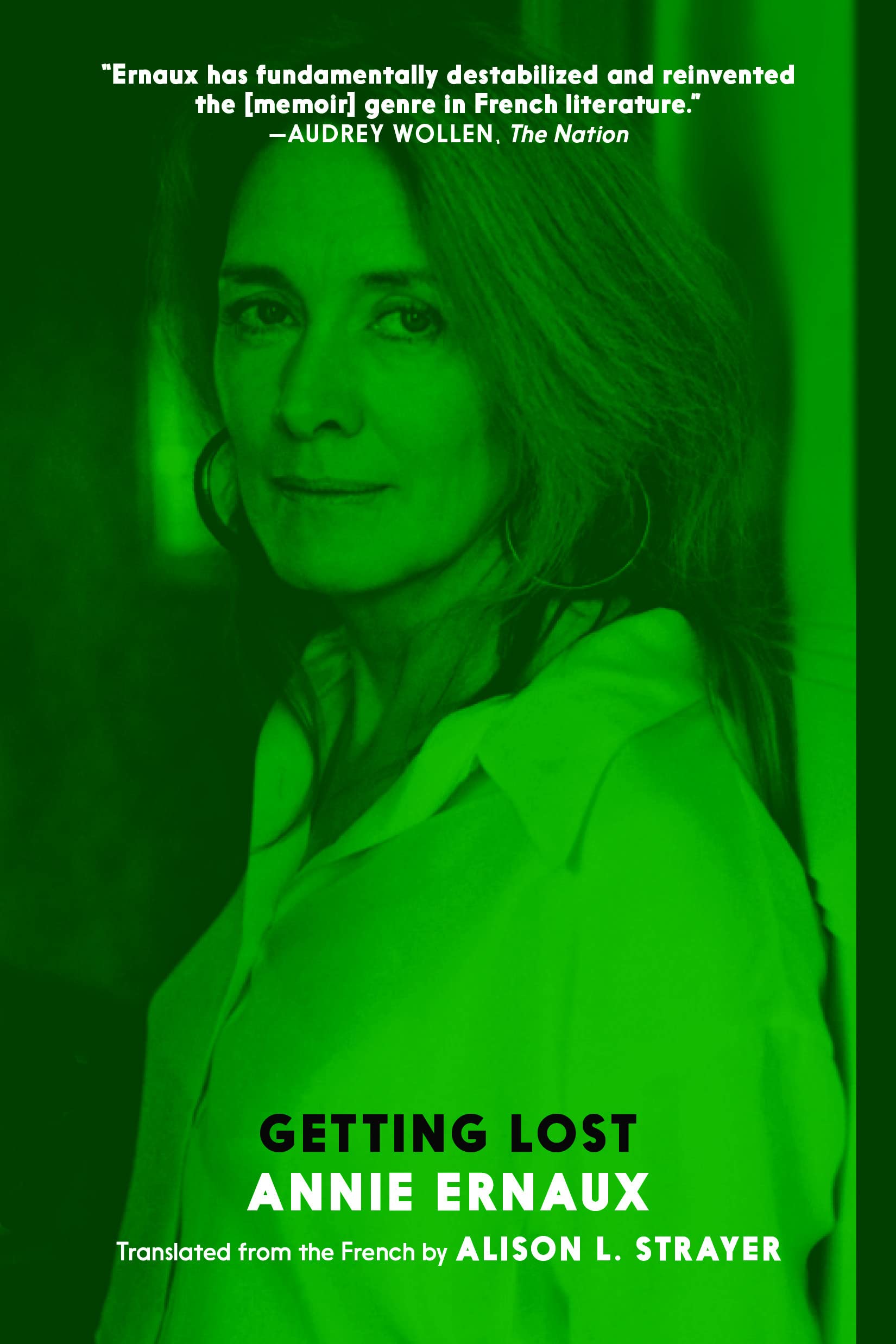
Getting Lost
WINNER OF THE 2022 NOBEL PRIZE IN LITERATURE
The diary of one of France’s most important, award-winning writers during the year she had a passionate and secret love affair with a Russian diplomat
Getting Lost is the diary Annie Ernaux kept during the year and a half she had a secret love affair with a younger, married man, a Russian diplomat. Her novel, Simple Passion, was based on this affair, but here her writing is immediate, unfiltered.
In these diaries it is 1989 and Annie is divorced with two grown sons, living outside of Paris and nearing fifty. Her lover escapes the city to see her there and Ernaux seems to survive only in expectation of these encounters, saying “his desire for me is the only thing I can be sure of.” She cannot write, she trudges distractedly through her various other commitments in the world, she awaits his next call; she lives only to feel desire and for the next rendezvous. When he is gone and the desire has faded, she feels that she is a step closer to death.
Lauded for her spare prose, Ernaux here removes all artifice, her writing pared down to its most naked and vulnerable. Getting Lost is as strong a book as any that she has written, a haunting, desperate view of strong and successful woman who seduces a man only to lose herself in love and desire.
The diary of one of France’s most important, award-winning writers during the year she had a passionate and secret love affair with a Russian diplomat
Getting Lost is the diary Annie Ernaux kept during the year and a half she had a secret love affair with a younger, married man, a Russian diplomat. Her novel, Simple Passion, was based on this affair, but here her writing is immediate, unfiltered.
In these diaries it is 1989 and Annie is divorced with two grown sons, living outside of Paris and nearing fifty. Her lover escapes the city to see her there and Ernaux seems to survive only in expectation of these encounters, saying “his desire for me is the only thing I can be sure of.” She cannot write, she trudges distractedly through her various other commitments in the world, she awaits his next call; she lives only to feel desire and for the next rendezvous. When he is gone and the desire has faded, she feels that she is a step closer to death.
Lauded for her spare prose, Ernaux here removes all artifice, her writing pared down to its most naked and vulnerable. Getting Lost is as strong a book as any that she has written, a haunting, desperate view of strong and successful woman who seduces a man only to lose herself in love and desire.
240 pages, Kindle Edition
First published October 17, 2001
About the author
Annie Ernaux
98 books11.8k followersThe author of some twenty works of fiction and memoir, Annie Ernaux is considered by many to be France’s most important writer. In 2022, she was awarded the Nobel Prize in Literature. She has also won the Prix Renaudot for A Man's Place and the Marguerite Yourcenar Prize for her body of work. More recently she received the International Strega Prize, the Prix Formentor, the French-American Translation Prize, and the Warwick Prize for Women in Translation for The Years, which was also shortlisted for the Man Booker International Prize in 2019. Her other works include Exteriors, A Girl's Story, A Woman's Story, The Possession, Simple Passion, Happening, I Remain in Darkness, Shame, A Frozen Woman, and A Man's Place.
Ratings & Reviews
Friends & Following
Create a free account to discover what your friends think of this book!
Community Reviews
Displaying 1 - 30 of 1,495 reviews

October 6, 2022
Something happened today. Something beautiful.
Not only did Annie Ernaux win the Nobel Prize for Literature 2022, but I also, well — I did something somewhat mad, something of mad intensity: mere hours after the announcement, I went up to my professor – thinking: what am I doing? – and asked him whether he would kindly allow me a few minutes during our creative writing session – part of which was dealing with memoir – to present the formidable French woman of letters to the class and share with them my experience of reading Annie Ernaux, as well as some of her reflections on writing. He said yes: we must celebrate extraordinary writers. He is lovely. It was lovely.
Of course, I had just finished reading Alison Strayer’s translation of Ernaux’s Getting Lost, published on September 21. But who would have told me that Ernaux would be awarded the Nobel Prize? Ecstatic was my state of being, and still is.
Whilst Getting Lost is by no means the apotheosis of Ernaux’s writing, it is of immense value when read alongside her Simple Passion, the two texts constituting the multi-layered and variously reworked experience of her intense – beautiful and annihilating – love affair with a Russian diplomat (‘S’ in GL, ‘A’ in SP) between October 1988 and November 1989, against the backdrop of the approaching Fall of the Berlin Wall in Germany, following which he returns to Russia.
Though the journal version, Getting Lost, presents material of miscellaneous quality – references to art, music, and her literary muses; her travels for writing events and conferences – the passionate affair remains its core centre. In her Preface to the text, written in 2000 prior to its original publication, Ernaux notes that S ‘embodied the principle, wondrous and terrifying, of desire, of death and writing’; and connotes their sexual experience to the sublime. Very reminiscent of Simple Passion, therefore, in which the idea of ‘living this passion to the limit’, of being ‘caught between fusion and the return to self’ and remaining ‘entangled with this presence’ feature most prominently: Eros Thanatos, in other words.
Likewise spare but naked and forthright in its confessions, Getting Lost does however come across as being less given to compressed and articulate self-analysis, perhaps more sordidly repetitive. And this in line with the daily experiencing of the Waiting – compulsive and unbearable – for his next phone call, his next visit – both increasingly spaced out, the details of his pres-absences obsessively pondered and noted in her entries. This is not to say that she does not, say, write down lists to review and analyse her relationship with men and the extent to which she understands herself to be ‘under the rule of passion’; inhabiting the ‘hell of the senses’. But there is, understandably, the humdrum dullness of everyday living, a less searching gaze, perhaps, though still remarkably controlled, affectively available and giving in her writing, which here also notes her dreams and nightmares, as they become one with her own trance-like existence. Indeed, very much in the vein of her experimental, personalising and distinctive work on memoir, she also indicates – at one point – that ‘[w]hat I wrote above is not really accurate’. She also wonders whether she ought to have added a right column with reinterpretations and enhancements to the journal entries. Self-reflexivity, full frankness and stark sharing do return to some extent, therefore. They re-find their way into her writing, symptomatic of a writer whose artistic project is intricately bound to her passion, to the acute intensity – alternated with ‘torpor’ and the ‘immense fatigue’ – defining this moment of Ernaux's being in the world, consumed by the passion of passions.
Thanks go to NetGalley, publisher, author for granting me access to this ARC, in exchange for an honest review.
🌹 On October 6 2022, Annie Ernaux was awarded the Nobel Prize for Literature, for ‘the courage and clinical acuity with which she uncovers the roots, estrangements and collective restraints or personal memory.’ 🌹
Not only did Annie Ernaux win the Nobel Prize for Literature 2022, but I also, well — I did something somewhat mad, something of mad intensity: mere hours after the announcement, I went up to my professor – thinking: what am I doing? – and asked him whether he would kindly allow me a few minutes during our creative writing session – part of which was dealing with memoir – to present the formidable French woman of letters to the class and share with them my experience of reading Annie Ernaux, as well as some of her reflections on writing. He said yes: we must celebrate extraordinary writers. He is lovely. It was lovely.
Of course, I had just finished reading Alison Strayer’s translation of Ernaux’s Getting Lost, published on September 21. But who would have told me that Ernaux would be awarded the Nobel Prize? Ecstatic was my state of being, and still is.
‘This is a notebook full of sorrow, with few glimmers of wild delight.’
Whilst Getting Lost is by no means the apotheosis of Ernaux’s writing, it is of immense value when read alongside her Simple Passion, the two texts constituting the multi-layered and variously reworked experience of her intense – beautiful and annihilating – love affair with a Russian diplomat (‘S’ in GL, ‘A’ in SP) between October 1988 and November 1989, against the backdrop of the approaching Fall of the Berlin Wall in Germany, following which he returns to Russia.
Though the journal version, Getting Lost, presents material of miscellaneous quality – references to art, music, and her literary muses; her travels for writing events and conferences – the passionate affair remains its core centre. In her Preface to the text, written in 2000 prior to its original publication, Ernaux notes that S ‘embodied the principle, wondrous and terrifying, of desire, of death and writing’; and connotes their sexual experience to the sublime. Very reminiscent of Simple Passion, therefore, in which the idea of ‘living this passion to the limit’, of being ‘caught between fusion and the return to self’ and remaining ‘entangled with this presence’ feature most prominently: Eros Thanatos, in other words.
Likewise spare but naked and forthright in its confessions, Getting Lost does however come across as being less given to compressed and articulate self-analysis, perhaps more sordidly repetitive. And this in line with the daily experiencing of the Waiting – compulsive and unbearable – for his next phone call, his next visit – both increasingly spaced out, the details of his pres-absences obsessively pondered and noted in her entries. This is not to say that she does not, say, write down lists to review and analyse her relationship with men and the extent to which she understands herself to be ‘under the rule of passion’; inhabiting the ‘hell of the senses’. But there is, understandably, the humdrum dullness of everyday living, a less searching gaze, perhaps, though still remarkably controlled, affectively available and giving in her writing, which here also notes her dreams and nightmares, as they become one with her own trance-like existence. Indeed, very much in the vein of her experimental, personalising and distinctive work on memoir, she also indicates – at one point – that ‘[w]hat I wrote above is not really accurate’. She also wonders whether she ought to have added a right column with reinterpretations and enhancements to the journal entries. Self-reflexivity, full frankness and stark sharing do return to some extent, therefore. They re-find their way into her writing, symptomatic of a writer whose artistic project is intricately bound to her passion, to the acute intensity – alternated with ‘torpor’ and the ‘immense fatigue’ – defining this moment of Ernaux's being in the world, consumed by the passion of passions.
‘When will I break through the paper hoop, be ready to go through the pain?’
Thanks go to NetGalley, publisher, author for granting me access to this ARC, in exchange for an honest review.
🌹 On October 6 2022, Annie Ernaux was awarded the Nobel Prize for Literature, for ‘the courage and clinical acuity with which she uncovers the roots, estrangements and collective restraints or personal memory.’ 🌹

September 1, 2023
Translated from French by Alison L. Strayer
Audiobook narrated by Tavia Gilbert
Getting Lost is another of Annie Ernaux books suitable for her fans. I strongly recommend to read it as a companion to her Simple Passion, since it deals with the same affair. While the former is written in the usual Ernaux style, objective and impersonal, Getting Lost is her diary kept during the affair. Annie had secret relationship with a younger, married man, an attaché to the Soviet embassy in Paris. For 1 year and a half she kept an unfiltered diary of her feelings, her passion, her suffering, the endless wait for a call, the exquisite pleasure she felt when she was with her lover, the jealousy when she was not with him, everything is laid bare . In the Introduction, the author wrote that she did not change anything so the writing is raw, urgent, less thought out than in a novel. It is also more repetitive, the above mentioned themes are mentioned again and again. Here and there, the writing becomes poetic, almost like in a novel.
I enjoyed reading this diary but I felt I benefited from reading Simple passions in "preparation" for it.
Audiobook narrated by Tavia Gilbert
Getting Lost is another of Annie Ernaux books suitable for her fans. I strongly recommend to read it as a companion to her Simple Passion, since it deals with the same affair. While the former is written in the usual Ernaux style, objective and impersonal, Getting Lost is her diary kept during the affair. Annie had secret relationship with a younger, married man, an attaché to the Soviet embassy in Paris. For 1 year and a half she kept an unfiltered diary of her feelings, her passion, her suffering, the endless wait for a call, the exquisite pleasure she felt when she was with her lover, the jealousy when she was not with him, everything is laid bare . In the Introduction, the author wrote that she did not change anything so the writing is raw, urgent, less thought out than in a novel. It is also more repetitive, the above mentioned themes are mentioned again and again. Here and there, the writing becomes poetic, almost like in a novel.
I enjoyed reading this diary but I felt I benefited from reading Simple passions in "preparation" for it.
![Profile Image for s.penkevich [hiatus-will return-miss you all].](https://i.gr-assets.com/images/S/compressed.photo.goodreads.com/users/1735525095i/6431467._UX200_CR0,11,200,200_.jpg)
September 16, 2024
‘This journal will have been a cry of passion and pain from start to finish.’
Few writers can capture the raw energy of passions or the agony of separation as Annie Ernaux. A well deserved winner of the Nobel Prize, Ernaux has an extraordinary ability to channel life into art and mine memory for a dazzling wealth of insights on desire, place and the self. Getting Lost is Ernaux’s personal diary kept between 1988-1990 chronicling her daily thoughts on an affair she has with a younger man referred to only as S., an affair she would write about in her succinctly sublime novella Simple Passion. Ernaux excels at ‘raising life to the level of a literary novel,’ not only from turning her life into novels but also living life in the moment with an intensity and thirst for narrative that matches those of the great literary liaisons. While she views these diary entries as a ‘notebook full of sorrow, with few glimmers of wild delight,’ with ‘not much of a story, just a layer of egocentric suffering,’ her entries written in direct prose that captures the rawness of her emotions are bursting with soaring insights and enough quotable gems to run a pen dry underlining them. While a bit repetitive and unpolished at times, though startlingly poetic all the same, Getting Lost is a fascinating look into the mind and life of this great writer and a unique opportunity to put your finger on the pulse of Ernaux’s emotional state during such a whirlwind of a time in her life.
‘I understand Tristan and Isolde, the passion that consumes and cannot be extinguished, despite—because of—the obstacles.’
Ernaux is an author that is able to find a level of intensity broiling within even mundane moments that surpasses most writers even in their most dramatic scenes. The diary entries in Getting Lost reveal Ernaux bouncing between wild desires and pining that borders on panic between trysts across the whole of the affair. Upon returning to these entries 10 years after the affair and years after the success of Simple Passion,Ernaux decided to publish them in a belief that ‘words set down on paper to capture the thoughts and sensations of a given moment are as irreversible as time—are time itself,’ and bear a merit all to their own in this.
Raw and dark is a great description in itself as the reader is plunged into the 18-month affair between Ernaux, 38, and S., a married, 35 year old Russian diplomat she meets in Russia who then returns to Paris along with her to work at the embassy. S. isn’t particularly suave or attractive—physically and intellectually—to her, ‘what it all comes down to is this: he fucks, he drinks vodka, he talks about Stalin’ yet ‘all his gestures are love, like mine.’ It is a drive for passion, pure and simple. Yet nothing in an affair is simple though perhaps that’s part of the passion she has for it as ‘the beauty of this whole affair lies in its continual uncertainty.’ Still, for all the moments of heightened desire and consuming passion, there are weeks where he does not call and each separation is marked by equally extreme agony. All of which she views as a search for perfection in feeling by allowing the extremes to overtake her:
French sculpture Auguste Rodin once said ‘I invent nothing, I rediscover,’ and it is apparent how Ernaux’s work follows a similar trajectory. Getting Lost is an excellent insight into that process, seeing the raw materials of her life that she polishes into narrative though even such raw materials carry their weight in gold.
‘Life is art. Art is life. I never separate it.’
—Ai Weiwei
Ernaux tells us ‘I’ve never wanted anything but love. And literature.’ Here we see how the two aren’t inseparable for her and how part of her drive for life comes from the literary merits she finds within it, living not unlike the words of French philosopher Michel Foucault on ‘a self that had to be created as a work of art.’ In his essay What is an Author? Foucault wrote ‘one should try to make oneself a work of art, an artist of oneself,’ and much of what we find in Getting Lost is Ernaux looking at her days through the framing of art and narrative, capturing the waves of emotions in ways that can later be useful to her novels.
While caught up in the affair she finds it difficult to do her work and is ‘suffering from not writing,’ discovering that ‘I no longer seek truth since I no longer write, the two are intertwined’ and her diary entries help her to wed life and literature together. This is something, she recognizes, that has helped her in the past and reflects on how to writes to ‘endure’ her memories and craft a ‘story of flesh and love.’
‘I am a voracious woman—really, that is the only fairly accurate thing that can be said of me.’
I really enjoyed these despite the rather repetitive nature of the entries and was surprised to find how her diaries were not unlike reading a novel. Literature is so central to her life that she finds it in everything and it was rather endearing to read. I also enjoy her reflections on the books she read during the time, always rather adjacent to what was occurring in her own life such as her reading Anna Karenina or the diaries of Simone de Beauvoir. A bit of a slow read, but not one without heaps of passion, Getting Lost is yet another example of why Ernaux is an incredible artist.
3.5/5
‘Is this the beginning of a “beautiful love story”?’
Few writers can capture the raw energy of passions or the agony of separation as Annie Ernaux. A well deserved winner of the Nobel Prize, Ernaux has an extraordinary ability to channel life into art and mine memory for a dazzling wealth of insights on desire, place and the self. Getting Lost is Ernaux’s personal diary kept between 1988-1990 chronicling her daily thoughts on an affair she has with a younger man referred to only as S., an affair she would write about in her succinctly sublime novella Simple Passion. Ernaux excels at ‘raising life to the level of a literary novel,’ not only from turning her life into novels but also living life in the moment with an intensity and thirst for narrative that matches those of the great literary liaisons. While she views these diary entries as a ‘notebook full of sorrow, with few glimmers of wild delight,’ with ‘not much of a story, just a layer of egocentric suffering,’ her entries written in direct prose that captures the rawness of her emotions are bursting with soaring insights and enough quotable gems to run a pen dry underlining them. While a bit repetitive and unpolished at times, though startlingly poetic all the same, Getting Lost is a fascinating look into the mind and life of this great writer and a unique opportunity to put your finger on the pulse of Ernaux’s emotional state during such a whirlwind of a time in her life.
‘I understand Tristan and Isolde, the passion that consumes and cannot be extinguished, despite—because of—the obstacles.’
Ernaux is an author that is able to find a level of intensity broiling within even mundane moments that surpasses most writers even in their most dramatic scenes. The diary entries in Getting Lost reveal Ernaux bouncing between wild desires and pining that borders on panic between trysts across the whole of the affair. Upon returning to these entries 10 years after the affair and years after the success of Simple Passion,Ernaux decided to publish them in a belief that ‘words set down on paper to capture the thoughts and sensations of a given moment are as irreversible as time—are time itself,’ and bear a merit all to their own in this.
‘I perceived there was a “truth” in those pages that differed from the one to be found in Simple Passion—something raw and dark, without salvation, a kind of oblation. I thought that this, too, should be brought to light.’
Raw and dark is a great description in itself as the reader is plunged into the 18-month affair between Ernaux, 38, and S., a married, 35 year old Russian diplomat she meets in Russia who then returns to Paris along with her to work at the embassy. S. isn’t particularly suave or attractive—physically and intellectually—to her, ‘what it all comes down to is this: he fucks, he drinks vodka, he talks about Stalin’ yet ‘all his gestures are love, like mine.’ It is a drive for passion, pure and simple. Yet nothing in an affair is simple though perhaps that’s part of the passion she has for it as ‘the beauty of this whole affair lies in its continual uncertainty.’ Still, for all the moments of heightened desire and consuming passion, there are weeks where he does not call and each separation is marked by equally extreme agony. All of which she views as a search for perfection in feeling by allowing the extremes to overtake her:
‘I want perfection in love, as I believe I attained a kind of perfection in writing with A Woman's Story. That can only happen through giving, while throwing all caution to the wind. I’m already well on my way.’
French sculpture Auguste Rodin once said ‘I invent nothing, I rediscover,’ and it is apparent how Ernaux’s work follows a similar trajectory. Getting Lost is an excellent insight into that process, seeing the raw materials of her life that she polishes into narrative though even such raw materials carry their weight in gold.
‘Life is art. Art is life. I never separate it.’
—Ai Weiwei
Ernaux tells us ‘I’ve never wanted anything but love. And literature.’ Here we see how the two aren’t inseparable for her and how part of her drive for life comes from the literary merits she finds within it, living not unlike the words of French philosopher Michel Foucault on ‘a self that had to be created as a work of art.’ In his essay What is an Author? Foucault wrote ‘one should try to make oneself a work of art, an artist of oneself,’ and much of what we find in Getting Lost is Ernaux looking at her days through the framing of art and narrative, capturing the waves of emotions in ways that can later be useful to her novels.
While caught up in the affair she finds it difficult to do her work and is ‘suffering from not writing,’ discovering that ‘I no longer seek truth since I no longer write, the two are intertwined’ and her diary entries help her to wed life and literature together. This is something, she recognizes, that has helped her in the past and reflects on how to writes to ‘endure’ her memories and craft a ‘story of flesh and love.’
‘I am a voracious woman—really, that is the only fairly accurate thing that can be said of me.’
I really enjoyed these despite the rather repetitive nature of the entries and was surprised to find how her diaries were not unlike reading a novel. Literature is so central to her life that she finds it in everything and it was rather endearing to read. I also enjoy her reflections on the books she read during the time, always rather adjacent to what was occurring in her own life such as her reading Anna Karenina or the diaries of Simone de Beauvoir. A bit of a slow read, but not one without heaps of passion, Getting Lost is yet another example of why Ernaux is an incredible artist.
3.5/5
‘Is this the beginning of a “beautiful love story”?’

October 15, 2024
It took me 3 months, on and off, to finish reading this book. I actually considered giving up many times. The reason I couldn't continue was that the content wasn't that appealing to me: Annie Ernaux, one-night stand with a Soviet diplomat stationed in Paris, developed into a casual sexual relationship, and the entire diary is a record of their year-long relationship.
What does she record? She records their pleasurable sexual experiences, her jealousy of the diplomat's wife as his mistress, her countless hopeless waits for his calls, and her repeated fears of their relationship ending.
What made me uncomfortable was that I couldn't understand her intense feelings for this Soviet lover. Apart from his body, he had no personal charm. He was just an empty-headed Soviet who opposed homosexuality, loved luxury goods, and admired Stalin. Why would she allow herself to be so humble in this relationship?
A few days ago, when I was about to give up on the remaining half of the book, I went to YouTube to find out why so many people were reading it. Had I missed something?
Listening to Ernaux’s interview when the book was first published, she candidly admitted that initially, she and the Soviet lover only had a physical connection, and only later did she get to know him as a person. However, she also understood that his thoughts and behaviors were understandable in the context of Soviet society at that time. Moreover, a large part of her attachment to him came from her fascination with Soviet socialism, and he, as a Soviet, represented that to her.
After watching the interview, I finished the remaining half of the book in a day. In fact, it's less about her being obsessed with this diplomat and more about her being obsessed with her own passion and desire, as she herself mentioned in the book. The constant waiting for calls, the repeated disappointments, the physical pleasures, the fear of separation - she records her self-loss in a very candid manner. But she didn't lose herself for this man; she lost herself for her passion. And as she herself said, passion and writing guided her life. So this diary describes her losing herself in passion and losing herself in writing, a fusion of two kinds of loss.
To me, it’s worth noting that this diary, filled with erotic descriptions, was written by Ernaux when she was 48, and her Soviet lover was 13 years younger. A woman in her late forties describing her sexual desire and her fascination with a young body is in itself a challenge to the cultural cliché of "women as sexual objects and reproductive tools." Are older women not entitled to sex? Do women who have lost their reproductive function no longer need sex?
Women are the subjects of their own sexuality, and female writers can write about their sexual experiences. Even in the book, Ernaux repeatedly mentions her fear of aging, because aging, to her, means losing the possibility of sex, meaning passively leaving men, which shows how the prejudice against female aging arouses her anxiety about the changes in her body.
Although the work primarily records her relationship with her Soviet lover, it also interweaves other content, such as her travel experiences in Eastern Europe and Italy, her views on literary creation and the literary circle, her admiration for Beauvoir, and her dreams. Some of her feelings and insights are very appealing to me, especially when they provide a breath of fresh air amidst the rather gloomy passion and desire written throughout the book.
To be objective, this is a wrong book for me.I can understand Ernaux, but I hardly empathise.
Sorry.
2.4 / 5 stars
What does she record? She records their pleasurable sexual experiences, her jealousy of the diplomat's wife as his mistress, her countless hopeless waits for his calls, and her repeated fears of their relationship ending.
What made me uncomfortable was that I couldn't understand her intense feelings for this Soviet lover. Apart from his body, he had no personal charm. He was just an empty-headed Soviet who opposed homosexuality, loved luxury goods, and admired Stalin. Why would she allow herself to be so humble in this relationship?
A few days ago, when I was about to give up on the remaining half of the book, I went to YouTube to find out why so many people were reading it. Had I missed something?
Listening to Ernaux’s interview when the book was first published, she candidly admitted that initially, she and the Soviet lover only had a physical connection, and only later did she get to know him as a person. However, she also understood that his thoughts and behaviors were understandable in the context of Soviet society at that time. Moreover, a large part of her attachment to him came from her fascination with Soviet socialism, and he, as a Soviet, represented that to her.
After watching the interview, I finished the remaining half of the book in a day. In fact, it's less about her being obsessed with this diplomat and more about her being obsessed with her own passion and desire, as she herself mentioned in the book. The constant waiting for calls, the repeated disappointments, the physical pleasures, the fear of separation - she records her self-loss in a very candid manner. But she didn't lose herself for this man; she lost herself for her passion. And as she herself said, passion and writing guided her life. So this diary describes her losing herself in passion and losing herself in writing, a fusion of two kinds of loss.
To me, it’s worth noting that this diary, filled with erotic descriptions, was written by Ernaux when she was 48, and her Soviet lover was 13 years younger. A woman in her late forties describing her sexual desire and her fascination with a young body is in itself a challenge to the cultural cliché of "women as sexual objects and reproductive tools." Are older women not entitled to sex? Do women who have lost their reproductive function no longer need sex?
Women are the subjects of their own sexuality, and female writers can write about their sexual experiences. Even in the book, Ernaux repeatedly mentions her fear of aging, because aging, to her, means losing the possibility of sex, meaning passively leaving men, which shows how the prejudice against female aging arouses her anxiety about the changes in her body.
Although the work primarily records her relationship with her Soviet lover, it also interweaves other content, such as her travel experiences in Eastern Europe and Italy, her views on literary creation and the literary circle, her admiration for Beauvoir, and her dreams. Some of her feelings and insights are very appealing to me, especially when they provide a breath of fresh air amidst the rather gloomy passion and desire written throughout the book.
To be objective, this is a wrong book for me.I can understand Ernaux, but I hardly empathise.
Sorry.
2.4 / 5 stars

October 30, 2022
Annie had a lover, when she was in Paris: S was a Russian diplomat, who was married. He would arrive and stay just a few hours, which they spent making love. Then he would leave, and she would live to wait for the next call.
S was thirty-five. His wife worked as his secretary at the Russian embassy.
She never knew anything about his activities, which, officially were related to culture.
Annie was amazed that she didn’t ask him more questions at the time.
During their affair she wrote nothing but articles which she had been asked to do for magazines. The only place she regularly wrote was in her journal, on and off since adolescence.
“It was a way of enduring the wait until we saw each other again, of heightening the pleasure by recording the words and acts of passion. Most of all, it was a way to save life, save from nothingness the thing that most resembles it”.
After S left France, she started to write a book about her passion resulting in “Simple Passion”, in 1992.
In the year of 1999, Annie travel back to Russia. She couldn’t recall the name of the hotel where she had first spent the night with him.
In 2000, she started to reread her journals from the year after passionate affair with S.
When Annie wrote this book she didn’t alter or remove any part of the original text from her diaries.
For her, “words set down on paper to capture the thoughts and sensations of a given moment are as irreversible as time—are time itself”.
Other than protecting the identity at her secret lover, S, she didn’t change anything.
She said “the outside world is almost totally absent from these pages”.
1988….
September Tuesday 27
… a diary entry:
“S . . . the beauty of it all: the very same desires, the same actions as at other times in the past, in ‘58 and ‘63, and with P. The same drowsiness, even torpor. These scenes stand out. That evening (Sunday) in his room, as we sat close to each other, touching, saying nothing, willing and eager for what would follow, which still depended on me. His hand passed close to my legs, stretched out in front of me, and brushed them each time he put his cigarette ash in the container on the floor”.
Such a brave, raw memoir…exposing deep personal history of oneself (normal topics from joys to sorrows) —
It seemed to me that by the time Annie wrote this ‘for’ publication, she had an arms distant to her own emotions —
Yet—
at the same time -
she was clearly intrigued by her own personal history.
It’s written presently intelligent generosity and more rational than her younger emotional self.
I like Annie Ernaux— her writing and the introspective thoughts and feelings she projects in me —
I admire her vulnerability -
And —
— apparently I am not the only person who has fallen spell under Annie Ernaux’s words.
I plan to keep reading her other books.
S was thirty-five. His wife worked as his secretary at the Russian embassy.
She never knew anything about his activities, which, officially were related to culture.
Annie was amazed that she didn’t ask him more questions at the time.
During their affair she wrote nothing but articles which she had been asked to do for magazines. The only place she regularly wrote was in her journal, on and off since adolescence.
“It was a way of enduring the wait until we saw each other again, of heightening the pleasure by recording the words and acts of passion. Most of all, it was a way to save life, save from nothingness the thing that most resembles it”.
After S left France, she started to write a book about her passion resulting in “Simple Passion”, in 1992.
In the year of 1999, Annie travel back to Russia. She couldn’t recall the name of the hotel where she had first spent the night with him.
In 2000, she started to reread her journals from the year after passionate affair with S.
When Annie wrote this book she didn’t alter or remove any part of the original text from her diaries.
For her, “words set down on paper to capture the thoughts and sensations of a given moment are as irreversible as time—are time itself”.
Other than protecting the identity at her secret lover, S, she didn’t change anything.
She said “the outside world is almost totally absent from these pages”.
1988….
September Tuesday 27
… a diary entry:
“S . . . the beauty of it all: the very same desires, the same actions as at other times in the past, in ‘58 and ‘63, and with P. The same drowsiness, even torpor. These scenes stand out. That evening (Sunday) in his room, as we sat close to each other, touching, saying nothing, willing and eager for what would follow, which still depended on me. His hand passed close to my legs, stretched out in front of me, and brushed them each time he put his cigarette ash in the container on the floor”.
Such a brave, raw memoir…exposing deep personal history of oneself (normal topics from joys to sorrows) —
It seemed to me that by the time Annie wrote this ‘for’ publication, she had an arms distant to her own emotions —
Yet—
at the same time -
she was clearly intrigued by her own personal history.
It’s written presently intelligent generosity and more rational than her younger emotional self.
I like Annie Ernaux— her writing and the introspective thoughts and feelings she projects in me —
I admire her vulnerability -
And —
— apparently I am not the only person who has fallen spell under Annie Ernaux’s words.
I plan to keep reading her other books.

March 18, 2024
WOMAN I BEG YOU TO STAND UP WHAT IS THIS MADNESS, YOU CANNOT LET A MAN (derogatory) DESTROY YOUR LIFE IN THIS WAY (some beautiful quotes though !!)

February 2, 2023
As an Ernaux completist, I saw this 2001 book was available in English translation in late 2022, so I began reading it. Ernaux has one short book about her passion and despair at twenty, having an affair with a married man, just paralyzed by it. A Simple Passion (1989), 80 pages. Not a feminist text, necessarily, but sort of a source text for feminist study, I'd say, about women and desire.
And thirteen years later, Ernaux, a literary sensation in France who might have begun to “control the message” and make herself more likable to her growing audience, well-published and well-known, publishes her original journal about his affair, unedited: The sex that swallows her whole, the waiting for him to call, the doubt, the self-loathing, the despair. A companion piece to A Simple Passion, maybe especially for writers. How do you take the raw materials of an experience and "capture" the "essence" of it? You keep a daily diary and you have to be honest, brutally honest.
In the process, Ernaux quotes and is guided by the Master Memoirist, Proust, and she also reads Anna Karenina in the process of the affair, realizing she is the tragic Anna, and her lover, S., a married Russian diplomat, is Vronsky.
Early on I glanced at the low overall rating of this book, and imagined short reviews: Idiot! But I think this is a kind of treatise on the joys and pitfalls of sex/desire. Sometimes I think of it as an almost Calvinist warning about sex, as all-consuming as it is for her in the throes of passion. But it’s everything, the joy of sex and the depths of despair.
What is it like to be in an affair at 48 with a (married) man of 35, a Russian diplomat? A Simple Passion is auto-fiction about this affair (though with some of the central details changed). It’s evocative, elusive, it’s everything--desire, lots of sex, waiting, anguish. And in her actual journal of that time--if we’re interested--we can see the broader context for the novel, not fiction (though let’s acknowledge that all memoir is in part fiction, selective). More descriptions of sex, and darker, filled with the madness and delusions of desire (unless she is actually in the throes of sex, when she has no doubts about his attraction for her).
“I perceived there was a ‘truth’ in those pages that differed from the one to be found in Simple Passion—something raw and dark, without salvation, a kind of oblation. I thought that this, too, should be brought to life.”
But the journal and the novel reveal a kind of insular passion:
“The outside world is almost totally absent from these pages.”
Ernaux also writes a lot about the relationship of writing to experience:
“ . . . words set down on paper to capture the thoughts and sensations of a given moment are as irreversible as time—are time itself.”
“It [writing in the journal] was a way of enduring the wait until we saw each other again, of heightening the pleasure by recording the words and acts of passion. Most of all, it was a way to save life, save from nothingness the thing that most resembles it”.
“This journal will have been a cry of passion and pain from start to finish.”
She rereads it and introduces it to us:
“This is a notebook full of sorrow, with few glimmers of wild delight.”
S. is in our eyes not necessarily a “catch.” He’s a Russian diplomat that defends Stalin, is shallow, interested in a show of material wealth in clothes, and so on. He’s not physically remarkable. It’s about desire, which may not always bear a close relationship to reason, she makes clear. After months she sees a dimple on his chin she had never noticed, and when she is with him they are naked almost constantly.
S. is married, and we learn his wife is short, not thin, which somehow she admits makes her feel better, superior. They meet at a few social occasions, even attending some events together. Is the fact that Ernaux is the unapologetic “other woman” part of why some people rate this so low? Not sure, but there’s not much forgiveness for women such as Anna Karenina, Madame Bovary, or Annie Ernaux as “homewreckers,” (though that does not actually happen). But the point is not an apology from Ernaux; it is to reveal with brutal honesty what this was like for her (with the possibility that it may be useful to others--maybe particularly women). No shame. Literature.
“I understand Tristan and Isolde, the passion that consumes and cannot be extinguished, despite--because of--the obstacles.”
“Admit it--I’ve never wanted anything but love. And literature. I only wrote to fill the void. . . everything that was a story of flesh and love.”
“. . . raising life to the level of a literary novel.”
“What I’ve experienced with S. is as beautiful as a Russian novel.” In other words, even the despair she pays for passion is worth the investment: “It’s still a beautiful story.”
Michel Foucault: “The highest good is to make one’s life a work of art.”
Then later Ernaux says: “It’s not much of a story, just a layer of egocentric suffering.”
And: “Everything I wished for on January 1, 1989, more or less came true, except I didn’t know the price I’d have to pay.”
Except she did, as she had done things like this before, and she knew S. was married and would never leave his wife, not ever an issue.
She is brutal about her loss of self in love: “. . . the ‘male,’ the man, he whom I recognize as a god, for a while, before disillusionment, oblivion.”
And she admits it is the act, not a “relationship”: “I don’t know anything about him.”
But she wouldn’t have it any other way:
“Passion filled to bursting,” even if it leads to despair. “What matters is having and giving pleasure.” “I am a voracious woman.” “Writing as desire.”
And she can’t call him, he is married, so she is waiting for him to call and show up when he can, so her imagination runs wild, with jealousy, and other emotions. But mainly desire.
Sometimes she thinks sex is the only thing that matters, the only time when she is truly present, but other times she is aware that it can be an erasure of self, too. At one point she says that sex at 48 is like reviving her 22-year-old self, when she felt exactly the same, consumed and obliterated.
Ernaux, the Nobel Prize in Literature awardee of 2022, can surely write.
And thirteen years later, Ernaux, a literary sensation in France who might have begun to “control the message” and make herself more likable to her growing audience, well-published and well-known, publishes her original journal about his affair, unedited: The sex that swallows her whole, the waiting for him to call, the doubt, the self-loathing, the despair. A companion piece to A Simple Passion, maybe especially for writers. How do you take the raw materials of an experience and "capture" the "essence" of it? You keep a daily diary and you have to be honest, brutally honest.
In the process, Ernaux quotes and is guided by the Master Memoirist, Proust, and she also reads Anna Karenina in the process of the affair, realizing she is the tragic Anna, and her lover, S., a married Russian diplomat, is Vronsky.
Early on I glanced at the low overall rating of this book, and imagined short reviews: Idiot! But I think this is a kind of treatise on the joys and pitfalls of sex/desire. Sometimes I think of it as an almost Calvinist warning about sex, as all-consuming as it is for her in the throes of passion. But it’s everything, the joy of sex and the depths of despair.
What is it like to be in an affair at 48 with a (married) man of 35, a Russian diplomat? A Simple Passion is auto-fiction about this affair (though with some of the central details changed). It’s evocative, elusive, it’s everything--desire, lots of sex, waiting, anguish. And in her actual journal of that time--if we’re interested--we can see the broader context for the novel, not fiction (though let’s acknowledge that all memoir is in part fiction, selective). More descriptions of sex, and darker, filled with the madness and delusions of desire (unless she is actually in the throes of sex, when she has no doubts about his attraction for her).
“I perceived there was a ‘truth’ in those pages that differed from the one to be found in Simple Passion—something raw and dark, without salvation, a kind of oblation. I thought that this, too, should be brought to life.”
But the journal and the novel reveal a kind of insular passion:
“The outside world is almost totally absent from these pages.”
Ernaux also writes a lot about the relationship of writing to experience:
“ . . . words set down on paper to capture the thoughts and sensations of a given moment are as irreversible as time—are time itself.”
“It [writing in the journal] was a way of enduring the wait until we saw each other again, of heightening the pleasure by recording the words and acts of passion. Most of all, it was a way to save life, save from nothingness the thing that most resembles it”.
“This journal will have been a cry of passion and pain from start to finish.”
She rereads it and introduces it to us:
“This is a notebook full of sorrow, with few glimmers of wild delight.”
S. is in our eyes not necessarily a “catch.” He’s a Russian diplomat that defends Stalin, is shallow, interested in a show of material wealth in clothes, and so on. He’s not physically remarkable. It’s about desire, which may not always bear a close relationship to reason, she makes clear. After months she sees a dimple on his chin she had never noticed, and when she is with him they are naked almost constantly.
S. is married, and we learn his wife is short, not thin, which somehow she admits makes her feel better, superior. They meet at a few social occasions, even attending some events together. Is the fact that Ernaux is the unapologetic “other woman” part of why some people rate this so low? Not sure, but there’s not much forgiveness for women such as Anna Karenina, Madame Bovary, or Annie Ernaux as “homewreckers,” (though that does not actually happen). But the point is not an apology from Ernaux; it is to reveal with brutal honesty what this was like for her (with the possibility that it may be useful to others--maybe particularly women). No shame. Literature.
“I understand Tristan and Isolde, the passion that consumes and cannot be extinguished, despite--because of--the obstacles.”
“Admit it--I’ve never wanted anything but love. And literature. I only wrote to fill the void. . . everything that was a story of flesh and love.”
“. . . raising life to the level of a literary novel.”
“What I’ve experienced with S. is as beautiful as a Russian novel.” In other words, even the despair she pays for passion is worth the investment: “It’s still a beautiful story.”
Michel Foucault: “The highest good is to make one’s life a work of art.”
Then later Ernaux says: “It’s not much of a story, just a layer of egocentric suffering.”
And: “Everything I wished for on January 1, 1989, more or less came true, except I didn’t know the price I’d have to pay.”
Except she did, as she had done things like this before, and she knew S. was married and would never leave his wife, not ever an issue.
She is brutal about her loss of self in love: “. . . the ‘male,’ the man, he whom I recognize as a god, for a while, before disillusionment, oblivion.”
And she admits it is the act, not a “relationship”: “I don’t know anything about him.”
But she wouldn’t have it any other way:
“Passion filled to bursting,” even if it leads to despair. “What matters is having and giving pleasure.” “I am a voracious woman.” “Writing as desire.”
And she can’t call him, he is married, so she is waiting for him to call and show up when he can, so her imagination runs wild, with jealousy, and other emotions. But mainly desire.
Sometimes she thinks sex is the only thing that matters, the only time when she is truly present, but other times she is aware that it can be an erasure of self, too. At one point she says that sex at 48 is like reviving her 22-year-old self, when she felt exactly the same, consumed and obliterated.
Ernaux, the Nobel Prize in Literature awardee of 2022, can surely write.

March 13, 2023
I can see the spark of genius in the writing, but this book was dreadful. It's like listening to your smartest, most accomplished friend talk endlessly about a guy who sucks.

February 16, 2024
this is a hard one for me to rate and review. getting lost is the published diary that annie ernaux kept during her affair with a younger, married man, an experience which inspired her novel simple passion - which i loved.
annie ernaux writes about desire / love / lust / heartbreak / frustration so viscerally and i enjoyed reading her reflections on these subjects, however as a book, it is quite the repetitive read. i suppose diaries in essence are going to be repetitive as the writer attempts to make sense of their experiences - which leads into the whole discussion of whether diaries/journals should be published (a matter i’m undecided on). i’m just glad i read this slowly over a few weeks, as i can imagine you’d get very frustrated with the repetitiveness of ernaux yearning for this man and just be like…….annie girl stand UP.
so many stunning quotes though:
“there is no more beauty because there is no more anything.”
“i’ve never wanted anything but love. and literature”
“that life consists of this accumulation of endeavours, bland and burdensome actions, punctuated only occasionally by moments of intensity, outside of time, is horrifying. love and writing are the only two things in the world that i can bear, the rest is darkness. tonight i have neither.”
“i love him with all my emptiness.”
“but how am i to believe that people can love me, become attached to me? it’s as if only my parents could possibly have done so.”
“it’s a lovely hell, but hell nonetheless.”
“i write in lieu of love, to fill that empty space above death.”
annie ernaux writes about desire / love / lust / heartbreak / frustration so viscerally and i enjoyed reading her reflections on these subjects, however as a book, it is quite the repetitive read. i suppose diaries in essence are going to be repetitive as the writer attempts to make sense of their experiences - which leads into the whole discussion of whether diaries/journals should be published (a matter i’m undecided on). i’m just glad i read this slowly over a few weeks, as i can imagine you’d get very frustrated with the repetitiveness of ernaux yearning for this man and just be like…….annie girl stand UP.
so many stunning quotes though:
“there is no more beauty because there is no more anything.”
“i’ve never wanted anything but love. and literature”
“that life consists of this accumulation of endeavours, bland and burdensome actions, punctuated only occasionally by moments of intensity, outside of time, is horrifying. love and writing are the only two things in the world that i can bear, the rest is darkness. tonight i have neither.”
“i love him with all my emptiness.”
“but how am i to believe that people can love me, become attached to me? it’s as if only my parents could possibly have done so.”
“it’s a lovely hell, but hell nonetheless.”
“i write in lieu of love, to fill that empty space above death.”

May 11, 2023
(4.5)
La transcripción de un diario de una pasión desgastante e intoxicante que Ernaux vivió con un hombre soviético durante poco más de un año. Me parece increíble la publicación de un texto así, la descripción de lo erótico pasa a segundo plano y me es mucho más fuerte la exposición de la espera de las llamadas, de las ilusiones y los espirarles que se construye en la cabeza, de la dependencia de un otro que es muy probable que no la ama igual que a ella a él.
Adoro a esta mujer.
(E INSISTO, "august" de Taylor Swift es LA canción de este libro y de "Pura pasión", todo es muy: "To live for the hope of it all, cancel plans just in case you'd call", muy "You weren't mine to lose").
La transcripción de un diario de una pasión desgastante e intoxicante que Ernaux vivió con un hombre soviético durante poco más de un año. Me parece increíble la publicación de un texto así, la descripción de lo erótico pasa a segundo plano y me es mucho más fuerte la exposición de la espera de las llamadas, de las ilusiones y los espirarles que se construye en la cabeza, de la dependencia de un otro que es muy probable que no la ama igual que a ella a él.
Adoro a esta mujer.
(E INSISTO, "august" de Taylor Swift es LA canción de este libro y de "Pura pasión", todo es muy: "To live for the hope of it all, cancel plans just in case you'd call", muy "You weren't mine to lose").

July 16, 2022
This journal will have been a cry of passion and pain from start to finish.
What a courageous act on Ernaux's part to release this uncensored journal ('I neither altered nor removed any part of the original text') charting her inner turmoil, suffering and joy while embarked on a two year love affair with a married Soviet diplomat, the story of which she has also written in her autofictional Passion simple.
The journal format structurally reinforces the repetitive nature of the - of any? - affair that will always stay as an affair with no development and no future: the waiting, the agonising, the fear that it is over, the jealousy, the rapture, the disappointment, and then the repetition of the whole cycle over and over.
Ernaux is brave in her transparency, and her recognition of the themes even here that are foundations of her more shaped writing: the way time expands and contracts, the role of memory in desire, the connections between love, desire and writing.
On one level, this is an exposure of the self in all its vulnerabilities, in what and who we are when we're unseen; on another, it speaks to the ways in which supposedly 'private' writing (diaries, journals, personal letters) are always themselves sites of self-fashioning and never as innocent as they strive to appear.
Compulsively readable, horribly recognisable, it's fascinating to read this both as the raw material that became Passion simple, and as a piece of women's writing charting interiority and obsession.
Many thanks to Fitzcarraldo Editions for an ARC via NetGalley

July 18, 2022
76th book of 2022.
2.5. This was okay, maybe not the best place to enter Ernaux's work. I've had a copy of The Years for... years, but haven't read it yet. I couldn't resist this advance copy for Getting Lost which isn't published till September, though. It is a long-awaited, so I hear, translation of Ernaux's diaries detailing an affair with a Russian man known simply as S. If you are a fan of Ernaux already then perhaps you'd get more from this, 'know' her a little more and so maybe care a little more. I almost gave it three because there are some good lines about writing, about the self, but the whole thing does read like a diary. There is lots of being depressed, crying, it's 200 pages of telling. Ernaux never tried to write this in a beautiful way, I suppose; it's her diary. She prefaces it slightly by saying (warning?) that she changed/removed nothing from the diaries when writing them up. I'm with her on that, I wrote one of my Master's essays on unconscious writing. I appreciate the unabashed honesty of the whole thing.
There is a lot of sex involved and describing her positions, what she did, anal, the like, there is a lot of Proust quoting, Anna Karenina mentions. By the end it becomes more of a dream diary, at which point I began to check how far I was from the end. Some good lines (none of which I can quote because this is an advance copy) but overall felt a little pointless. Ernaux fans will enjoy it more than me. I'm now going to have to backtrack with my reading of her. Thanks to Fitzcarraldo for the ARC.
2.5. This was okay, maybe not the best place to enter Ernaux's work. I've had a copy of The Years for... years, but haven't read it yet. I couldn't resist this advance copy for Getting Lost which isn't published till September, though. It is a long-awaited, so I hear, translation of Ernaux's diaries detailing an affair with a Russian man known simply as S. If you are a fan of Ernaux already then perhaps you'd get more from this, 'know' her a little more and so maybe care a little more. I almost gave it three because there are some good lines about writing, about the self, but the whole thing does read like a diary. There is lots of being depressed, crying, it's 200 pages of telling. Ernaux never tried to write this in a beautiful way, I suppose; it's her diary. She prefaces it slightly by saying (warning?) that she changed/removed nothing from the diaries when writing them up. I'm with her on that, I wrote one of my Master's essays on unconscious writing. I appreciate the unabashed honesty of the whole thing.
There is a lot of sex involved and describing her positions, what she did, anal, the like, there is a lot of Proust quoting, Anna Karenina mentions. By the end it becomes more of a dream diary, at which point I began to check how far I was from the end. Some good lines (none of which I can quote because this is an advance copy) but overall felt a little pointless. Ernaux fans will enjoy it more than me. I'm now going to have to backtrack with my reading of her. Thanks to Fitzcarraldo for the ARC.
October 22, 2023
Nell'arco dell'ultimo anno ho letto, senza mai scompormi e spesso tra gli sbadigli, romance con scene di sesso così estremo da sconcertare persino il Marchese de Sade. Poi, sul principio di questo autunno tardivo, è arrivata Annie Ernaux a spettinarmi. In Perdersi, diario di una relazione sentimentale e sessuale con un uomo più giovane e sposato, l’autrice si concede qua e là, mai a sproposito, l'uso delle parole "fellatio" e "sodomia". E in più d’una occasione sono arrossito come la più virginea delle suorine pudiche.
Forse avrei dovuto fermarmi lì: a quella inconsueta reazione imbarazzata al sesso, che di solito mi lascia tutt’al più indifferente. Un cortocircuito che credo sia stato causato da questa mia idea di Ernaux anziana, più che ottuagenaria, che parla con un po’ di affaticamento, che ritira l’ennesimo premio, che sorride a chi la fotografa. Tuttavia è proprio con una fotografia che il mio sistema si è riavviato: lei, nel 1988 a Clergy, con le braccia disordinatamente incrociate sulle gambe incrociate elegantemente, l’orecchio destro lasciato scoperto dai capelli, gli occhi attenti su chi la sta immortalando, forse appena un accenno di smorfia.
È seguita un’ancora più inusuale eccitazione, in cui fatico a riconoscermi. Più mi addentravo in queste annotazioni diaristiche così telegrafiche e dirette e sfacciate, più rimanevo invischiato a mia volta in questo rapporto fedifrago. Mi sono ritrovato a bramare d’essere io quello che le metteva le mani sui fianchi mentre indossava quel vestito nero, io quella ad attendere le chiamate sempre tardive e volitive del mio amante russo, io ad inginocchiarmi tra le sue gambe per darle piacere, io quella fottuta contro la scrivania, io quello accolto più e più volte e soddisfatto in ogni mia voglia, capriccio o bramosia.
Con un certo imbarazzo ho invidiato la libertà, sessuale e non, di Ernaux, poiché credo le abbia permesso di vivere con famelicità la propria vita, per poi sbranarla ancora grazie al tramite della scrittura. Soprattutto, con un certo imbarazzo, ho desiderato essere io quello catturato dalle sue frasi. Io la musa, io il soggetto. Forse la speranza d’attirare, anche per poco, l’attenzione di qualcuno che manipola l’arte è propria di tutti coloro a cui manca il talento d’immortalare gli altri. Perché, in fin dei conti, non potendo vincerla per gli altri, questo ci permetterebbe almeno di posporrebbe la nostra morte.
Se per certo questo non sarà mai il miglior libro scritto da Ernaux, poiché le frasi, riportate in diretta, spesso non sono abbastanza condensate per raggiungere i picchi più riusciti della precisione stilistica propria di altri volumi della sua produzione, in quest’ultima si inserisce magnificamente, dando prova ulteriore della parabola netta di questa scrittrice. La meticolosità con cui riporta i propri sogni, per ritornarci o trovarvi un significato, li rende poi i veri protagonisti – e, così facendo, ritorna a sé, a questa enorme autobiografia unica ripartita in tutti i testi da lei pubblicati.
Mi chiedo se la decisione, insolita, di dare alle stampe direttamente i propri diari non sia stata causata da una certa insoddisfazione nei confronti del testo, Passione semplice, in cui per la prima volta ha cercato di filtrare questa esperienza.
Se non fosse che ho bisogno di ritornare al mio stato usuale di persona pressoché morta dal collo in giù, forse darei inizio ad un’altra maratona di Ernaux. [A trattenermi, in realtà, è principalmente il fatto che i volumi ancora da leggere iniziano a scarseggiare.]
Forse avrei dovuto fermarmi lì: a quella inconsueta reazione imbarazzata al sesso, che di solito mi lascia tutt’al più indifferente. Un cortocircuito che credo sia stato causato da questa mia idea di Ernaux anziana, più che ottuagenaria, che parla con un po’ di affaticamento, che ritira l’ennesimo premio, che sorride a chi la fotografa. Tuttavia è proprio con una fotografia che il mio sistema si è riavviato: lei, nel 1988 a Clergy, con le braccia disordinatamente incrociate sulle gambe incrociate elegantemente, l’orecchio destro lasciato scoperto dai capelli, gli occhi attenti su chi la sta immortalando, forse appena un accenno di smorfia.
È seguita un’ancora più inusuale eccitazione, in cui fatico a riconoscermi. Più mi addentravo in queste annotazioni diaristiche così telegrafiche e dirette e sfacciate, più rimanevo invischiato a mia volta in questo rapporto fedifrago. Mi sono ritrovato a bramare d’essere io quello che le metteva le mani sui fianchi mentre indossava quel vestito nero, io quella ad attendere le chiamate sempre tardive e volitive del mio amante russo, io ad inginocchiarmi tra le sue gambe per darle piacere, io quella fottuta contro la scrivania, io quello accolto più e più volte e soddisfatto in ogni mia voglia, capriccio o bramosia.
Con un certo imbarazzo ho invidiato la libertà, sessuale e non, di Ernaux, poiché credo le abbia permesso di vivere con famelicità la propria vita, per poi sbranarla ancora grazie al tramite della scrittura. Soprattutto, con un certo imbarazzo, ho desiderato essere io quello catturato dalle sue frasi. Io la musa, io il soggetto. Forse la speranza d’attirare, anche per poco, l’attenzione di qualcuno che manipola l’arte è propria di tutti coloro a cui manca il talento d’immortalare gli altri. Perché, in fin dei conti, non potendo vincerla per gli altri, questo ci permetterebbe almeno di posporrebbe la nostra morte.
Se per certo questo non sarà mai il miglior libro scritto da Ernaux, poiché le frasi, riportate in diretta, spesso non sono abbastanza condensate per raggiungere i picchi più riusciti della precisione stilistica propria di altri volumi della sua produzione, in quest’ultima si inserisce magnificamente, dando prova ulteriore della parabola netta di questa scrittrice. La meticolosità con cui riporta i propri sogni, per ritornarci o trovarvi un significato, li rende poi i veri protagonisti – e, così facendo, ritorna a sé, a questa enorme autobiografia unica ripartita in tutti i testi da lei pubblicati.
Mi chiedo se la decisione, insolita, di dare alle stampe direttamente i propri diari non sia stata causata da una certa insoddisfazione nei confronti del testo, Passione semplice, in cui per la prima volta ha cercato di filtrare questa esperienza.
Se non fosse che ho bisogno di ritornare al mio stato usuale di persona pressoché morta dal collo in giù, forse darei inizio ad un’altra maratona di Ernaux. [A trattenermi, in realtà, è principalmente il fatto che i volumi ancora da leggere iniziano a scarseggiare.]

February 9, 2023
lo de siempre con ernaux: consuelo al ver que no soy el único que se siente así y desconsuelo al ver que con los años y la experiencia no se sufre menos

March 2, 2023
"Je le revis comme je le vivrai en souvenir. Je pleure en écrivant cela, torturée par la peur qu'il soit déjà parti."

February 28, 2022
El otro día estuve hablando con mi amiga Eli sobre el amor y sobre las veces en las que más que encontrarnos prendadas de una persona en cuestión, lo estamos de nuestros sentimientos y de nuestros pensamientos, que, de manera casual, se encuentran dirigidos hacia esa persona. Y de repente, Eli me dijo: "creo que Machado tenía un verso que decía algo así: más que amar a alguien, amamos el amor".
Amar el amor. Cogí deprisa un bolígrafo y me lo apunté en la mano. Creo que esta expresión es lo que define a la perfección la pasión que siente Ernaux por S. (o por A., si hablamos de Pura pasión) al esperar sus llamadas, a comprarse ropa sólo para que él la vea, a escribir en su diario, a solas, "¿Cómo estaré yo en su recuerdo?" (p. 46).
Para mí Perderse es un libro muy especial, no sólo por todo lo que significa Ernaux para mí (que es muchísimo) sino también porque fue el primer libro que leímos en el club de lectura de Annie Ernaux (@clubdelecturaernaux). Frases punzantes, dolor del recuerdo y una espera interminable es lo que encontramos en los diarios en los que se basó para escribir Pura pasión.
Termino con mi frase favorita de todas: "deseo inmediato de hacerme la prueba del sida. Como un deseo de muerte y de amor, por lo menos me habría dejado eso" (p. 278).
Amar el amor. Cogí deprisa un bolígrafo y me lo apunté en la mano. Creo que esta expresión es lo que define a la perfección la pasión que siente Ernaux por S. (o por A., si hablamos de Pura pasión) al esperar sus llamadas, a comprarse ropa sólo para que él la vea, a escribir en su diario, a solas, "¿Cómo estaré yo en su recuerdo?" (p. 46).
Para mí Perderse es un libro muy especial, no sólo por todo lo que significa Ernaux para mí (que es muchísimo) sino también porque fue el primer libro que leímos en el club de lectura de Annie Ernaux (@clubdelecturaernaux). Frases punzantes, dolor del recuerdo y una espera interminable es lo que encontramos en los diarios en los que se basó para escribir Pura pasión.
Termino con mi frase favorita de todas: "deseo inmediato de hacerme la prueba del sida. Como un deseo de muerte y de amor, por lo menos me habría dejado eso" (p. 278).

August 9, 2022
Leí este diario al enterarme de que eran los pensamientos escritos día a día en los que la autora se basó para escribir la novela 'Pura pasión', que me encantó y sobrecogió a partes iguales por verme muy reflejada en sus pensamientos. Y es que a veces pasa que algunos libros parecen haber sido escritos para que una misma los lea y se dé cuenta de que no está sola en el mundo, de que hay otras personas que pasan por cosas muy parecidas y que experimentan sentimientos casi calcados a los propios.
Me ha gustado muchísimo ver los miedos, las sensaciones y reacciones de una parte de esta 'polémica' relación. Me ha encantado ver que los seres humanos somos tan parecidos y que hay mujeres que sienten muy similar. Ver de primera mano lo que pasa por la cabeza de alguien durante una relación amorosa es todo un privilegio y una valentía inmensa por parte de Annie Ernaux.
Me hubiera gustado saber también los pensamientos de la otra parte comprometida, pero eso ya es otra historia.
En cuanto a este libro, me ha absorbido tanto como el otro, a pesar de que el formato diario sea más 'duro' de leer. Estoy completamente rendida a esta escritora y deseando volver a leer algo más de ella, aunque dejaré pasar un tiempo para rebajar un poco la intensidad sentida por mi alma.
Me ha gustado muchísimo ver los miedos, las sensaciones y reacciones de una parte de esta 'polémica' relación. Me ha encantado ver que los seres humanos somos tan parecidos y que hay mujeres que sienten muy similar. Ver de primera mano lo que pasa por la cabeza de alguien durante una relación amorosa es todo un privilegio y una valentía inmensa por parte de Annie Ernaux.
Me hubiera gustado saber también los pensamientos de la otra parte comprometida, pero eso ya es otra historia.
En cuanto a este libro, me ha absorbido tanto como el otro, a pesar de que el formato diario sea más 'duro' de leer. Estoy completamente rendida a esta escritora y deseando volver a leer algo más de ella, aunque dejaré pasar un tiempo para rebajar un poco la intensidad sentida por mi alma.

November 11, 2023
If I’m ever down this bad for a man…please slap some sense into me

August 26, 2022
*edited to say that since writing this review, Annie Ernaux has won the Nobel Prize for Literature which may go some way towards explaining the reasons for and timing of publication!*
I debated giving this one star but I’ve stretched to two, purely for some of the entertainment value I derived from it. Getting Lost was my first Annie Ernaux and I probably won’t be in a rush to read her other work based on this one.
Getting Lost is the (apparently) highly anticipated book containing Ernaux’s personal diaries (unaltered) from the early 1990s detailing her passionate one year affair with a married Russian diplomat who she names S.
The author fell madly in love with S, becoming consumed with thoughts of him, madly jealous of other women he may have been attracted to, and living for their next rendezvous, which became all too infrequent for her as time passed.
The diary is introspective as you’d expect, quite detailed in terms of their meetings, sexual positions and activities, very repetitive and unintentionally hilarious at times, particularly with regard to the author’s disdain for S’s Russian underpants 😂.
I found it very hard to take it seriously as a piece of literature, Anna Karenina and Proust quotes notwithstanding. Honestly, it bore a greater resemblance to the ramblings of a melodramatic, lovesick teenager than it did to a literary legend. I say this with the greatest of respect. Kudos to her for publishing these diaries unaltered on the one hand, but on the other hand, why?
Perhaps those who have read Ernaux’s work, in particular Simple Passion which was her work of (auto) fiction based on the real life affair, might have a greater appreciation for the literary value in these diaries.
I read this for #womenintranslation month (the book is translated into English by Alison L Strayer).
Many thanks to @fitzcarraldoeditions for the eARC via @netgalley. Getting Lost will be published on 21 September.
I debated giving this one star but I’ve stretched to two, purely for some of the entertainment value I derived from it. Getting Lost was my first Annie Ernaux and I probably won’t be in a rush to read her other work based on this one.
Getting Lost is the (apparently) highly anticipated book containing Ernaux’s personal diaries (unaltered) from the early 1990s detailing her passionate one year affair with a married Russian diplomat who she names S.
The author fell madly in love with S, becoming consumed with thoughts of him, madly jealous of other women he may have been attracted to, and living for their next rendezvous, which became all too infrequent for her as time passed.
The diary is introspective as you’d expect, quite detailed in terms of their meetings, sexual positions and activities, very repetitive and unintentionally hilarious at times, particularly with regard to the author’s disdain for S’s Russian underpants 😂.
I found it very hard to take it seriously as a piece of literature, Anna Karenina and Proust quotes notwithstanding. Honestly, it bore a greater resemblance to the ramblings of a melodramatic, lovesick teenager than it did to a literary legend. I say this with the greatest of respect. Kudos to her for publishing these diaries unaltered on the one hand, but on the other hand, why?
Perhaps those who have read Ernaux’s work, in particular Simple Passion which was her work of (auto) fiction based on the real life affair, might have a greater appreciation for the literary value in these diaries.
I read this for #womenintranslation month (the book is translated into English by Alison L Strayer).
Many thanks to @fitzcarraldoeditions for the eARC via @netgalley. Getting Lost will be published on 21 September.

March 12, 2023
I think I’ve said this before… but I’m sure I’d quite happily read Annie Ernaux’s shopping list. I just love her writing.
‘Getting Lost’ is a more detailed account of the affair she wrote about in ‘Simple Passion’, in the form of her journals from that period. I’m certain anyone who’s been in a similar situation will recognise Ernaux’s words on this subject… the feelings of obsession, desperation, the unhappiness caused through happiness. The extremely high price to pay.
I certainly think there might be some kind of perverse comfort in reading this book for anyone who has found themselves in a similar situation.
‘Getting Lost’ is a more detailed account of the affair she wrote about in ‘Simple Passion’, in the form of her journals from that period. I’m certain anyone who’s been in a similar situation will recognise Ernaux’s words on this subject… the feelings of obsession, desperation, the unhappiness caused through happiness. The extremely high price to pay.
I certainly think there might be some kind of perverse comfort in reading this book for anyone who has found themselves in a similar situation.
January 21, 2024
“Só suporto duas coisas no mundo, o amor e a escrita; o resto é negro.”
Confesso que não sou grande apreciadora de narrativas em diário, contudo reconheço o seu valor, para quem os escreve ajuda a lidar com os pensamentos, estimula o autoconhecimento, alivia a ansiedade e permite-nos sair dos limites materiais da vida.
Talvez por ser um trabalho muito pessoal, que só ao seu portador diz respeito, neste livro são muitos os pensamentos intrusivos, desenlaçados e um amontoado de episódios repetitivos.
Apesar de gostar bastante desta autora, apreciar a sua escrita crua e sincera, neste livro não consigo refutar estes dois fatores, daí as minhas 3 estrelas.
Confesso que não sou grande apreciadora de narrativas em diário, contudo reconheço o seu valor, para quem os escreve ajuda a lidar com os pensamentos, estimula o autoconhecimento, alivia a ansiedade e permite-nos sair dos limites materiais da vida.
Talvez por ser um trabalho muito pessoal, que só ao seu portador diz respeito, neste livro são muitos os pensamentos intrusivos, desenlaçados e um amontoado de episódios repetitivos.
Apesar de gostar bastante desta autora, apreciar a sua escrita crua e sincera, neste livro não consigo refutar estes dois fatores, daí as minhas 3 estrelas.

October 30, 2023
Cercare di sopravvivere.
Perdersi è il diario tenuto da Annie Ernaux durante l'anno e mezzo in cui ebbe una storia d'amore segreta con un S. uomo più giovane, sposato, diplomatico sovietico a Parigi
Nel breve e bruciante resoconto ci sono l’ossessione per il corpo bellissimo del suo amante, le ore di straziante attesa, l’estasi, la lingerie, lo champagne e il salmone consumati a letto.
Lei incapace di scrivere e di lavorare, completamente assorbita da quella passione totalizzante, che oggi definiremmo "tossica ”, vive tra momentanei appagamenti e infelicità
Quando S. deve rientrare a Mosca lei fa i conti con la sua assenza
Poi la voglia di ricominciare a scrivere un libro torna.
In Perdersi, S diventa un mezzo attraverso il quale la Ernaux medita sull'erotismo, sulle sue precedenti e deludenti esperienze, sul desiderio e su cosa sceglie di conservare di quel periodo e mettere per iscritto.
Morte, scrittura e sesso spesso si fondono
L’erotismo descritto con linguaggio crudo alla lunga diventa noioso così come il suo assillante bisogno d’amore, nella consapevolezza che lui non ricambierà mai il sentimento e che un giorno sparirà dalla sua vita
Perdersi è pensato come diario, e come tale dovrebbe custodire sentimenti, emozioni, e pensieri fuori dallo sguardo altrui è invece diventa un freddo resoconto in tempo reale di una cronaca intima raccontata in modo molto esplicito, quasi l’autrice avesse qualcosa da dimostrare.
Non c’è dubbio che Annie Ernaux scriva bene, ma resta a mio giudizio, sempre troppo egocentrica, anche nella sofferenza amorosa
“Ho voluto fare di questa passione un’opera d’arte nella mia vita, o meglio: questa relazione si è trasformata in passione perché l’ho voluta opera d’arte ”
Perdersi è il diario tenuto da Annie Ernaux durante l'anno e mezzo in cui ebbe una storia d'amore segreta con un S. uomo più giovane, sposato, diplomatico sovietico a Parigi
Nel breve e bruciante resoconto ci sono l’ossessione per il corpo bellissimo del suo amante, le ore di straziante attesa, l’estasi, la lingerie, lo champagne e il salmone consumati a letto.
Lei incapace di scrivere e di lavorare, completamente assorbita da quella passione totalizzante, che oggi definiremmo "tossica ”, vive tra momentanei appagamenti e infelicità
Quando S. deve rientrare a Mosca lei fa i conti con la sua assenza
Poi la voglia di ricominciare a scrivere un libro torna.
In Perdersi, S diventa un mezzo attraverso il quale la Ernaux medita sull'erotismo, sulle sue precedenti e deludenti esperienze, sul desiderio e su cosa sceglie di conservare di quel periodo e mettere per iscritto.
Morte, scrittura e sesso spesso si fondono
L’erotismo descritto con linguaggio crudo alla lunga diventa noioso così come il suo assillante bisogno d’amore, nella consapevolezza che lui non ricambierà mai il sentimento e che un giorno sparirà dalla sua vita
Perdersi è pensato come diario, e come tale dovrebbe custodire sentimenti, emozioni, e pensieri fuori dallo sguardo altrui è invece diventa un freddo resoconto in tempo reale di una cronaca intima raccontata in modo molto esplicito, quasi l’autrice avesse qualcosa da dimostrare.
Non c’è dubbio che Annie Ernaux scriva bene, ma resta a mio giudizio, sempre troppo egocentrica, anche nella sofferenza amorosa
“Ho voluto fare di questa passione un’opera d’arte nella mia vita, o meglio: questa relazione si è trasformata in passione perché l’ho voluta opera d’arte ”
August 11, 2024
Perderse te hace, en efecto, perderte entre el desbordamiento de emociones que la autora pone en cada página de la novela. No sabía lo que esperarme de la autora, ya que es la primera vez que la leo, y al final he encontrado con un mundo con el que me siento muy identificado.
El libro es muy intenso, hay veces en las que he tenido que parar de leer para procesar todo, porque Annie es capaz de escribir los sentimientos más indescifrables por el ser humano.
Bellísimo.
El libro es muy intenso, hay veces en las que he tenido que parar de leer para procesar todo, porque Annie es capaz de escribir los sentimientos más indescifrables por el ser humano.
Bellísimo.

April 30, 2023
Annie Ernaux'nun bu kitabı "Yalın Tutku"nun günlük halinde yazılmış sansürsüz versiyonu. Metinde S. adıyla geçen Rus diplomatla bir buçuk yıl süren tutkulu aşkını, bu tutkunun dalgalanmalarını, sonunda sönümlenmesini ve ardında bıraktığı boşluğu anlatıyor. Birçok açıdan yazara uymayan evli ve maço bir erkeğe yönelik, kökü belirsiz hatta yer yer yıkıcı bir tutku bu. Zira söz konusu erkek Stalin hayranı, yahudi karşıtı, entelektüel zevkleri olmayan sığ denebilecek biri. Bazen Ernaux'yla annesininkileri andıran siyah uzun çoraplarıyla sevişiyor, bazen son derece kaba ve düşüncesiz davranıyor; arabasıyla, pahalı içkisiyle övünüyor - yine de Ernaux bu kaba görünümlerin ardına gizlenmiş güzellikleri yakalayabiliyor. Metni güçlü kılan Ernaux'nun tutkusundaki, belki genel olarak arzunun kökenindeki kişiyi an an son derece zayıf kılan loşluğun kanıksanması. Öyle ki, hiç de varlıklı olmayan Ernaux S.'i göreceği bir davete gitmeden önce kendine bütçesini zorlayan bir çanta satın alıyor sözgelimi. Bu gibi kendi gözünde alçalmalar bir açıdan güçsüzlük olarak görülebilir, ancak Ernaux'nun bakışının berraklığı, kendine karşı dürüstlüğünde ve genel olarak arzusunu analizinde gösterdiği sakınmasız tavrı bazı aktarımlarına zorlayıcı bir gerçeklik kazandırıyor; adeta kendi kendinin deneği gibi, uçlara gidip gelerek yaşadıklarını, bazen tüm bayağılığıyla kaydediyor sanki - yeri geldiğinde onu bu deneyime neyin itelediği üzerine düşünerek.
Arzunun şiddeti, sonsuzluğu, yazmakla, ölümle ilişkisi, ardında bıraktığı boşluğun entelektüel uğraşla, yazmakla telafisi, uzun süren yıpratıcı bekleyişler; şiddetli, haz dolu kavuşmalar, gelip geçicilik, yaşlanma endişesi, yer yer güçlü kıskançlık akıntıları... Ayrıca Anna Karenina, Proust'un eseri gibi metinlerle de güçlü bağlar kuruluyor
Bu metini yazmak kadar yazılmasını mümkün kılan bir kültürün varlığı da önemli kanımca. Asla sadece kendine karşı dürüst olmakla, utancı alt edip her şeyi en ince detayına kadar, olduğu gibi yazmakla elde edilecek bir metin değil bu. Arzunun iniş çıkışlarını, nedensizliğini, hatta uçlara gitmeyi en ince ayrıntısına kadar anlatmak, ve beraberinde analiz etmek, bunu aşma çabasıyla değil de içerek yapmak hem belli bakış açılarını hem karakter gücünü hem de buna zemin sağlayan bir kültürü gerektiriyor sanki.
Benzer konular işleyen kimi kurmaca eserlerle karşılaştırıldığında metnin gücü daha bir hissediliyor.
Arzunun şiddeti, sonsuzluğu, yazmakla, ölümle ilişkisi, ardında bıraktığı boşluğun entelektüel uğraşla, yazmakla telafisi, uzun süren yıpratıcı bekleyişler; şiddetli, haz dolu kavuşmalar, gelip geçicilik, yaşlanma endişesi, yer yer güçlü kıskançlık akıntıları... Ayrıca Anna Karenina, Proust'un eseri gibi metinlerle de güçlü bağlar kuruluyor
Bu metini yazmak kadar yazılmasını mümkün kılan bir kültürün varlığı da önemli kanımca. Asla sadece kendine karşı dürüst olmakla, utancı alt edip her şeyi en ince detayına kadar, olduğu gibi yazmakla elde edilecek bir metin değil bu. Arzunun iniş çıkışlarını, nedensizliğini, hatta uçlara gitmeyi en ince ayrıntısına kadar anlatmak, ve beraberinde analiz etmek, bunu aşma çabasıyla değil de içerek yapmak hem belli bakış açılarını hem karakter gücünü hem de buna zemin sağlayan bir kültürü gerektiriyor sanki.
Benzer konular işleyen kimi kurmaca eserlerle karşılaştırıldığında metnin gücü daha bir hissediliyor.

Read
January 26, 2026acabar este libro como forma de comenzar el día. hemos estado en sitios peores. lucidez muy grande. pero qué tristeza. esto no es un homenaje al amor y al deseo, es un homenaje al sufrimiento y a la pérdida hecho desde la obsesividad pura. un diario sobre cómo construirse un pequeño infierno en el presente. como dije el otro día, tengo muchas ganas de arrancarme el pelo

November 2, 2023
“ Per un anno ho vissuto questa passione senza fare niente altro.”
“Tutto è soltanto attesa.”
La passione nella sua essenza, semplicemente, spaventosamente.
Assoluta e definitiva. Cieca e anelante. Con tutti i sensi accesi.
In un presente eterno fatto di attesa e di paura.
Mi chiamerà? Tornerà da me? O è già tra le braccia di un’altra?
Il buco nero dell’assenza brulica di parassiti mentali.
(La citazione di Borges, abbagliante: “Secoli e secoli, e solo nel presente accadono i fatti;
innumerevoli uomini nell’aria, sulla terra e sul mare, e tutto ciò che realmente accade, accade a me.”).
Poi tutto si annulla nell’attimo taumaturgico della presenza, così abbacinante, così esclusivo e escludente.
La felicità sprofonda nel turbine del desiderio, assillante e prevaricatore, e se ne sazia.
Fino a quando la porta si chiude in faccia alla solita impossibile domanda: ti rivedrò? E quando?
E tutto ricomincia, uguale e sempre nuovo. Sempre doloroso.
Camminare nel buio lungo il perimetro di un abisso. Ma l’abisso siamo noi, inconoscibili, pericolosi a noi stessi.
Passione semplice. Declinata nella sua ossessione quotidiana.
Brace accesa e imperturbabile. Il vuoto la nutre. Giorno e notte.
Non è la mia storia eppure è la mia storia.
È Perdersi, di Annie Ernaux.
“Tutto è soltanto attesa.”
La passione nella sua essenza, semplicemente, spaventosamente.
Assoluta e definitiva. Cieca e anelante. Con tutti i sensi accesi.
In un presente eterno fatto di attesa e di paura.
Mi chiamerà? Tornerà da me? O è già tra le braccia di un’altra?
Il buco nero dell’assenza brulica di parassiti mentali.
(La citazione di Borges, abbagliante: “Secoli e secoli, e solo nel presente accadono i fatti;
innumerevoli uomini nell’aria, sulla terra e sul mare, e tutto ciò che realmente accade, accade a me.”).
Poi tutto si annulla nell’attimo taumaturgico della presenza, così abbacinante, così esclusivo e escludente.
La felicità sprofonda nel turbine del desiderio, assillante e prevaricatore, e se ne sazia.
Fino a quando la porta si chiude in faccia alla solita impossibile domanda: ti rivedrò? E quando?
E tutto ricomincia, uguale e sempre nuovo. Sempre doloroso.
Camminare nel buio lungo il perimetro di un abisso. Ma l’abisso siamo noi, inconoscibili, pericolosi a noi stessi.
Passione semplice. Declinata nella sua ossessione quotidiana.
Brace accesa e imperturbabile. Il vuoto la nutre. Giorno e notte.
Non è la mia storia eppure è la mia storia.
È Perdersi, di Annie Ernaux.

January 25, 2023
el inicio y el final enganchan más, el desarrollo se hace un poco indigesto, como dice Annie de los diarios de Beauvoir. Es una maravilla poder leer tanta vulnerabilidad sobre sexo, dinero y todas las oscilaciones cotidianas, pero el desquicie es tan repetitivo que aburre leerlo aunque está genial identificarlo como patrón. Hay pocas diferencias entre el nuestro y el suyo ante un ghosting de ese tipo. Perdidísimas

December 27, 2022
El mejor libro que he leído nunca. Obsesionada con su calidad literaria y exactamente el tipo de novela que sueño escribir algún día.

November 3, 2024
Ascoltare Radio Maria per 12h consecutive sarebbe stata una tortura migliore di questa
December 16, 2022
I was initially drawn to the book because of its blurb – I've personally not read any books whose subject is the romance between an older woman and a younger man, and I thought that the way that the blurb was phrased suggested a great degree of introspection. That was my expectation as I set out reading the book, and it was particularly pronounced given Ernaux's receipt of this year's Nobel Literature Prize.
Unfortunately, I was very severely let down. I truly did try to like it, but absolutely nothing about the book appealed to me very much. After I got over the appeal posed by the novelty of its topic and (to a limited extent) the relatability of the intensity with which she describes her feelings for S, the book no longer had anything to offer. I understand that the book is meant to be her journal entries, unfiltered and unedited, and perhaps there is merit to publishing such an entry (some of the other reviewers here have said that it is perhaps better read as a supplement to her other book), but I personally didn't see it. The book was simply just a tedious repetition of some graphic sex scenes, Ernaux's dreams (which quickly became very tiresome to attempt to interpret), her worries about whether S would call and meet up with her (he does, each time), and her continued back-and-forth about whether she should break up with him. I read it on a Kindle so I couldn't tell how many pages I was actually reading of the same stuff, but it sure did feel like I was drudging on through the book after awhile. I was really disappointed to see that there was only minimal, if at all, substantial introspection at any point in the book, and the fact that many parts of the book very much bore the markings of something written by a ( very emotionally annoying ) teenager. Maybe I would give her other books a go (she is a Nobel laureate after all), but I don't think I'd be rushing to do so anytime soon.
Unfortunately, I was very severely let down. I truly did try to like it, but absolutely nothing about the book appealed to me very much. After I got over the appeal posed by the novelty of its topic and (to a limited extent) the relatability of the intensity with which she describes her feelings for S, the book no longer had anything to offer. I understand that the book is meant to be her journal entries, unfiltered and unedited, and perhaps there is merit to publishing such an entry (some of the other reviewers here have said that it is perhaps better read as a supplement to her other book), but I personally didn't see it. The book was simply just a tedious repetition of some graphic sex scenes, Ernaux's dreams (which quickly became very tiresome to attempt to interpret), her worries about whether S would call and meet up with her (he does, each time), and her continued back-and-forth about whether she should break up with him. I read it on a Kindle so I couldn't tell how many pages I was actually reading of the same stuff, but it sure did feel like I was drudging on through the book after awhile. I was really disappointed to see that there was only minimal, if at all, substantial introspection at any point in the book, and the fact that many parts of the book very much bore the markings of something written by a (
Displaying 1 - 30 of 1,495 reviews