Augustyn got his start in the industry in 1986 as an editor for Tru Studios' Trollords. He then edited Syphons and Speed Racer for NOW Comics in 1987. In 1988, he joined DC, starting out as a co-editor on Action Comics during its period as a weekly title. During the late 1980s and early 1990s Augustyn was an editor for DC Comics, where he edited The Flash, Justice League and the Impact Comics line of titles.
Augustyn was recognized for his work in the industry with the Wizard Fan Award for Favorite Editor in 1994. He served as the managing editor of Visionary Comics Studio. As editor of The Flash beginning in 1989, Augustyn brought in Mark Waid as writer in 1992, which led to an acclaimed eight-year run. Under Augustyn's stewardship, the Flash was brought out from the shadow of his predecessors and increased his powers dramatically. Other Augustyn-Waid editor-writer partnerships included The Comet (DC/Impact, 1992) and Impulse (DC, 1995–1996).
Augustyn currently works as story editor for publisher Red Giant Entertainment and their Giant-Size Comics line of free print comic book titles which debuted on May 3, 2014 as part of Free Comic Book Day.[
Very good! So not that many people talk about this one, it kind of gets swept under the original Gotham By Gaslight story which introduced a Victorian Batman! Well I got to to say, this was a very good sequel! So the story takes place a year after Gaslight, with Bruce Wayne engaged, and wandering whether he wants to continue his crusade. The Year is 1892, and a new villain appears, who doesn't want Gotham to go into the 2oth century, hence he's called The Master of The Future. This book is very fast paced, and has some more colourful artwork since we have a new artist. I am a bit disappointed that we never got to see some traditional villains appear, aside from the Joker Easter egg in Gaslight and another one here as well. Overall though this is pretty fine sequel, I really wish we get a third book in this series, even if it was just a one shot issue, that would be nice!
Everything here feels period appropriate. Images match our presumptions of the era as does their verbiage. Even though dates are never explicitly given, nine pages in we’re privy to a conversation that does indeed corroborate with any assumptions we've had: “We’re six years from the next century.” It’s 1894 kids, I’m stoked for the new era, are you?
I was stoked until I read a single page more. The story fell apart faster than an electronic imported from China. With a shoddy construction to match, the frames were there, the stability of something well designed was not.
Go along with this theme of disintegration, nigh a third the way in, Batman tells us that his original mystery was that of the Jack the Ripper. However, as he tells us further, that case is closed. Without a raison detre what’ Batman gonna do?
As mysterious as the conclusion of that illusory conflict that ended as quickly as it was declared, our erstwhile British Batman now finds himself in America. No reasoning here, it just happens. Just like everything else in this comic – off the hoof without a single explanation.
Murky plot development thereafter bequeaths us our brand new villain: LeRoi! In the midst of a legal proceeding, this quasi-eco-terrorist-anarcho-primitivist- SteamPunker shows up to threaten the litigation occurring. And well, that’s just that. Bad guys gotta do/what bad guys gotta do.
Just like the lazy newspaper inserts that don’t even have real words, puerile scribbles well describe this mess of a comic. No Bruce Wayne origin story – no cool backgrounding for anyone or anything – everything feels, well, scribbled. Even when our protagonist dons the horned cowl and accompanying cape – it doesn’t and anything to his powers nor character - it just merely reminds us who is the hero. And hero's gotta do/what hero's gotta do.
Anyways, things happen. Swords are substituted for fisticuffs. Explosions roar and a stupid plot twist is shoe-horned in at the end for no other reason than just cuz [sic]. A cute little pink bow wraps it all up and The End.
I know I'm in the minority when I say the artwork wasn't bad, but I will stand by that. Just that when you place it next to the art from the first book, yes, I can see why many call it a downgrade. But on its own, it shines.
The story is quite simple, but lacks the mystery that made Gotham by Gaslight so good. And the payoff is forgettable too. In fact, the only things this has going for it, are a good first two acts and then some nice artwork, but it's really not an essential read, truth be told.
This is one of those books I'd tell you about, but it's completely up to you, whether or not it's a good book. There are things to like and dislike about it.
This is the lesser-known sequel to ‘Gotham by Gaslight’ and, while it’s not as good as that seminal work, it’s still a good read. If you’re a steampunk fan, you’d probably enjoy it more than I did.
I've always liked "Gotham by Gaslight" where Batman fought against Jack the Ripper. I was surprised to find that there was a sequel to this story. "Batman: Master of the Future" is that story.
Nearly a year after the events in Gotham by Gaslight, Batman is gone. Bruce Wayne has retired and is engaged. Having caught his parent's murders he is at rest. But, all is not well for Gotham. As the new mayor, Tolliver from the previous volume, wants to bring a worlds fair to Gotham to highlight modernity. A stupidly named villain (Leroi *sigh* It's le roi which is french for "The King") has decided to burn everything. It seems there is still a need for a Batman.
Thats the gist of this interesting Victorian themed Batman story. As a follow up to a popular story, it doesn't seem to have aged as well, since I didn't even know it existed as opposed to Gotham by Gaslight which is somewhat well known.
Don't let that lack of knowledge deter you. This is a pretty good story and the artwork is rather complimentary to the story. All in all this was an entertaining follow up. I would recommend it to anyone who liked the Victorian Gotham by Gaslight story.
I admit I'm going against the tide, but I liked it more than "Gaslight." More fantastical, more steampunk, and at the same time less repetitive in its character biography.
However, the cover is awful and has nothing to do with the story.
I like the idea of a "villain" who can see the future and wants to stop industrialism, especially put in a historical fiction setting like this. But in execution, he wasn't... even... that? He was just some guy who kept announcing that he wanted to rule the city? For some reason? The subplot with Bruce's fiancee was equally pointless.
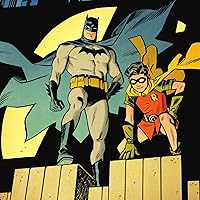
Batman: Master of the Future is a prestige edition DC Comics issue written by Brian Augustyn, art by Eduardo Barrett, and colors by Steve Oliff.
Having given up the mantle of Batman when he solved the case of this parents’ murders, Bruce Wayne spends his days trying to make Gotham a better city my spending his money in social programs. But Gotham’s future is in question when a new madman appears.
At least that is what I think the story was. This didn’t suck me in at all and I felt like was just growing through the motions here. This sequel to Gotham by Gaslight features a different artistic creative team and I actually enjoyed the art more here. I love Mignola’s style but Barrett’s drawing brought much more detail to the high society life that was shown in this story.
A short and forgettable continuation of Gotham by Gaslight.
While I do enjoy the Elseworlds comics line and how it reimagines Batman, this tale didn't really do much with him as a Victorian vigilante. The plot involves Gotham City being beset by Alexandre LeRoi, the self-professed Master of the Future, during the arrival of an American Discovery Expedition.
While it was interesting to see how Batman, Alfred and Commissioner Gordon reacted to these concepts, they weren't changed by them on any significant level. I suspect that the iconic characters were used to draw interest in the plot, which I think may have been more striking if told as wholly its own entity. Also a few more pages for world-building and character development couldn't have hurt.
As it is though, Batman: Master of the Future does its best to continue Bruce's emotional journey from Gotham by Gaslight. Also Barreto's artwork is expertly rendered and suitably dynamic. If you're in the mood for a well-drawn comic about Batman protecting Gotham in the 19th Century, you can do a lot worse than Batman: Master of the Future.
Although this had technically superior art, more characters, and a more fleshed out story, it was not as good as its predecessor. It was missing the mystery, noir, and grounded take on the character that the original created. The ending also suffered from the same reasons the first one did, and it tacked on a weird unneeded convo at its conclusion.
I didn’t realise there even was a sequel to Gotham by Gaslight until I saw it on here. Having read it, it’s not difficult to see why it’s never really spoken about.
The story is slow and forgettable and the new villain LeRoi is a bit rubbish.
That said, it’s a treat to see Victorian Batman again and surprisingly I enjoyed the return of his supporting cast, not just Gordon but Commissioner, now Mayor Tolliver. Rupert Thorne is snuck in here too as a little easter egg for Bat-fans.
Bruce having lost interest in being Batman now he’s caught his parents’ killer is an interesting direction for this Batman, and it takes new villain LeRoi to show him the public need for Batman.
The other new main character for this book is Bruce’s fiancee Julie Madison. For most of the book she’s the perfect and therefore boring love interest who even looks after orphans for good measure. Her fascination with and support for Batman was interesting though, and I found her wholehearted support for Batman still at the end very refreshing. She’s not just accepting of Bruce’s alter ego, she actively encourages it, and good for her.
This isn’t a classic like Gotham by Gaslight. It won’t stick with you in the same way at all. But it’s still nice to get another taste of Gaslight Gotham and I wish there’d been more after. The series just needed to work on its villains really.
i was pleasantly surprised when my copy of Gotham By Gaslight contained a second story, a sequel i didn’t realise existed. Master of the Future is a great sequel to the first book and i loved it. the villain of the story is different to other villains within the DC universe and i thoroughly enjoyed reading about his escapades, even if they were short. the ending of this story was also very cute and i thought it was a great way to end it. highly recommend to anyone who’s read Gotham by Gaslight as this is a very good addition to that comic
I finally got my hands on the sequel to Batman: Gotham by Gaslight. However, when I began reading, I thought it seemed...familiar. It turns out that I have read "Master of the Future" before. It is included in the same book with the issue called "Gotham by Gaslight." Oh well, I still re-read it, and I still think the steampunk elements are interesting.
I started this book, realized it was a sequel to Gaslight, read that first, did a bunch of side quests, and came back 22 days later and read it in one night.
It’s a solid jaunt through Victorian Batman, it just doesn’t have Jack the Ripper, maybe that’s why some people don’t like this one
I liked the setting and the artwork, I liked the whackadoo antagonist, I’d say all meat is in the action of this one as opposed to the first one’s meat being in the detective work and the twist
The artwork of this story is fantastic, if a little ill-matched for a tale of The Batman. The story was clear and well composed, but really just not very interesting. As a sequel to Gotham by Gaslight, it’s a little jarring, as it so different as to be unrelated. I enjoyed reading it, but I could have skipped it.
Yeah this wasn't even close to Gotham By Gaslight's Ripper story, and I didn't even really care for that one anyway. The plot made no sense, none of the characters heed the warning of a man who somehow appears on the NINTH floor of a super tall building? I mean cmon this guy has to be somewhat credible if he can do that in 1894. Also, the ending "resolution" was just stupid.
The second part of Batman, Gotham by gaslight it is the continuation of the story by Brian Augustine. I was impressed with it, but it was a little disappointing and that the story didn’t seem to be well fought out. I did like the reference references to the Victorian age, including one panel that had Sherlock Holmes and Dr. Watson in the foreground.
Fun little adventure. Slightly better storytelling than the Jack the Ripper Gotham by Gaslight. Rather than being a “One-Shot” both of the Gotham by Gaslight tales would have been better served as miniseries. But as a One-Shot it was enjoyable.
The plot isn’t very credible and there’s a lot of stuff which happens just because, but the artwork looks great and the Victorian-era vibe is appealing as always. Not as good as the first book (Gotham by Gaslight) but still worth a look.
As an aside, I don’t know where the inspiration for this book came from, but it kinda put me in mind of that old Vincent Price movie Master of the World; that, and the stories of phantom airships in the US during the late 1800s
The artwork was actually better than the original Gotham By Gaslight, but the story was pretty thin and, basically, boring. Some French villain decides to attack the Mayor's vanity project with a solar death ray from a zeppelin and Batman foils his nefarious schemes. And that's about it.
The next iteration of Victorian-era Batman and a year after the events of Gotham by Gaslight. Batman disappears and hasn’t been seen in a year. Once a brand new threat arrives and swiftly kills many, does justice strike. The ending seemed very lacking, but the new, one off villain was interesting.
La secuela de una premisa espectacular que se queda a medio gas. Tras el listón tan alto que dejó el "Batman contra Jack el Destripador" original, esta continuación se siente como un insípido postre después de una comida que pintaba deliciosa, sabía muy bien, pero venía en una porción minúscula. Como una bola de helado de yogur griego: totalmente sin sabor.
El guion nos arrastra por una trama predecible con un villano genérico francés que no aporta absolutamente nada, acompañado de un interés romántico para Batman que está tan mal llevado que te hace extrañar y desear la presencia de Selina.
Una secuela totalmente innecesaria que desinfla el misticismo de su predecesora.