

What do you think?

Some Must Watch
Also published as The Spiral Staircase. This book has been the inspiration behind three movies.
As Professor Sebastian Warren battens down the shutters and locks all the doors of their isolated country house, the eight occupants start to feel safe. Somewhere outside lurks a murderer of young girls, the latest only an earshot away. Is there really safety in numbers and what happens when their numbers start to dwindle?
As Professor Sebastian Warren battens down the shutters and locks all the doors of their isolated country house, the eight occupants start to feel safe. Somewhere outside lurks a murderer of young girls, the latest only an earshot away. Is there really safety in numbers and what happens when their numbers start to dwindle?
256 pages, Paperback
First published January 1, 1933
About the author
Ethel Lina White
131 books112 followersEthel Lina White was a British crime writer, best known for her novel The Wheel Spins (1936), on which the Alfred Hitchcock film, The Lady Vanishes (1938), was based, and Some Must Watch (1933), on which the film The Spiral Staircase (1946) was based.
Born in Abergavenny, Monmouthshire, Wales, in 1876, White started writing as a child, contributing essays and poems to children's papers. Later she began to write short stories, but it was some years before she wrote books.
She left employment in a government job working for the Ministry of Pensions in order to pursue writing. Her writing was to make her one of the best known crime writers in Britain and the USA during the 1930s and '40s.
Her first three works, published between 1927 and 1930, were mainstream novels. Her first crime novel, published in 1931, was Put Out the Light. Although she has now faded into obscurity, in her day she was as well known as such writers like Dorothy L. Sayers and Agatha Christie.
She died in London in 1944 aged 68. Her works have enjoyed a revival in recent years with a stage adaptation of The Lady Vanishes touring the UK in 2001 and the BBC broadcast of an abridged version on BBC Radio 4 as well as a TV adaptation by the BBC in 2013.
(from Wikipedia)
Born in Abergavenny, Monmouthshire, Wales, in 1876, White started writing as a child, contributing essays and poems to children's papers. Later she began to write short stories, but it was some years before she wrote books.
She left employment in a government job working for the Ministry of Pensions in order to pursue writing. Her writing was to make her one of the best known crime writers in Britain and the USA during the 1930s and '40s.
Her first three works, published between 1927 and 1930, were mainstream novels. Her first crime novel, published in 1931, was Put Out the Light. Although she has now faded into obscurity, in her day she was as well known as such writers like Dorothy L. Sayers and Agatha Christie.
She died in London in 1944 aged 68. Her works have enjoyed a revival in recent years with a stage adaptation of The Lady Vanishes touring the UK in 2001 and the BBC broadcast of an abridged version on BBC Radio 4 as well as a TV adaptation by the BBC in 2013.
(from Wikipedia)
Ratings & Reviews
Friends & Following
Create a free account to discover what your friends think of this book!
Community Reviews
Displaying 1 - 30 of 282 reviews

June 29, 2022
Este clásico es famoso sobre todo por la adaptación al cine de 1946 - que quiero ver ya! Me ha parecido muy entretenido y sobre todo atmosférico.
Una mansión en el campo inglés, una noche de tormenta y un asesino suelto en las inmediaciones. La protagonista es una chica joven y simpática que trabaja para la familia - especial, claro - que habita en la casa. Hay una enfermera muy extraña que viene a cuidar de la abuela, parece un hombre así que ¿puede ser que el asesino esté ya dentro de la casa? La escalera de caracol lleva a la cocina, donde la señora Oates y su marido parecen ofrecer un refugio seguro, pero a ella la pierde el coñac. Y el profesor y su hermana, sabios misántropos que viven en su mundo, para no hablar del hijo del profesor y su casquivana mujer, enamorada de un alumno que se aloja en la casa. Y el doctor Parry, tan simpático él. Poco a poco todos van desapareciendo, por una u otra razón, y Helen va quedando sola frente al peligro.
En la melancólica y estrecha hondonada tapizada con agujas de pino los sonidos se reducían a un furtivo rumor bajo los arbustos; la luz era sólo un oscuro velo por el que surgían árboles con apariencia de hombres.
En fin una gozada si disfrutas de esas mansiones con familia cozy-disfuncional, con ventanas que no pueden resistir los embates de la tormenta y árboles que parecen amenazar la casa. Casi parece una obra de teatro, con muchos diálogos y poca acción, pero a mí me ha resultado entretenida.
3,5*
Una mansión en el campo inglés, una noche de tormenta y un asesino suelto en las inmediaciones. La protagonista es una chica joven y simpática que trabaja para la familia - especial, claro - que habita en la casa. Hay una enfermera muy extraña que viene a cuidar de la abuela, parece un hombre así que ¿puede ser que el asesino esté ya dentro de la casa? La escalera de caracol lleva a la cocina, donde la señora Oates y su marido parecen ofrecer un refugio seguro, pero a ella la pierde el coñac. Y el profesor y su hermana, sabios misántropos que viven en su mundo, para no hablar del hijo del profesor y su casquivana mujer, enamorada de un alumno que se aloja en la casa. Y el doctor Parry, tan simpático él. Poco a poco todos van desapareciendo, por una u otra razón, y Helen va quedando sola frente al peligro.
En la melancólica y estrecha hondonada tapizada con agujas de pino los sonidos se reducían a un furtivo rumor bajo los arbustos; la luz era sólo un oscuro velo por el que surgían árboles con apariencia de hombres.
En fin una gozada si disfrutas de esas mansiones con familia cozy-disfuncional, con ventanas que no pueden resistir los embates de la tormenta y árboles que parecen amenazar la casa. Casi parece una obra de teatro, con muchos diálogos y poca acción, pero a mí me ha resultado entretenida.
3,5*

December 20, 2019
Another writer that I’ve investigated after reading “The Book of Forgotten Authors”. Even her GR author page comments that she “has faded into obscurity”, although it seems she was very well known in her day.
Before moving onto the book I wanted to highlight that the blurb at the top of the page is misleading and I think relates to the plot of the Hollywood film “The Spiral Staircase”, which was adapted from this novel. In the book the main character, Helen Capel, is not mute, and neither does the serial killer target disabled women in particular. I read the blurb before starting the book and it confused me when in the novel Helen was given dialogue!
The book is a psychological thriller in which the central character works as a domestic help in an isolated country mansion near the Wales/England border. The author was herself from Abergavenny, so the setting was home territory for her. The book was published in 1933 and timewise the story seems to be set in the early 1920s.
In the novel the area is being terrorised by a serial killer, and Helen has the distinct feeling that she is to be the killer’s next target. As night falls she is reassured by being in a house with a number of other people, but during the night the others gradually leave. One servant is sent on an errand, several guests leave after an argument, and so on. What’s more, Helen begins to wonder whether she can trust those left in the house, and her feelings of panic start to build.
I really enjoyed this one. The author builds the tension gradually but effectively, and I found the last third of the book riveting. The story takes place over a single evening and night, but the author effectively conveys the feeling Helen has, of an unbearably long night. It probably helped that I’ve never seen “The Spiral Staircase” so I didn’t know how the book would end. It’s decently written, and the various characters are an interesting bunch, especially the female ones. The author really concentrates on the relationships between the women in the house. By comparison most of the male characters are incidental.
I think that Ethel Lina White is deserving of a revival!
Before moving onto the book I wanted to highlight that the blurb at the top of the page is misleading and I think relates to the plot of the Hollywood film “The Spiral Staircase”, which was adapted from this novel. In the book the main character, Helen Capel, is not mute, and neither does the serial killer target disabled women in particular. I read the blurb before starting the book and it confused me when in the novel Helen was given dialogue!
The book is a psychological thriller in which the central character works as a domestic help in an isolated country mansion near the Wales/England border. The author was herself from Abergavenny, so the setting was home territory for her. The book was published in 1933 and timewise the story seems to be set in the early 1920s.
In the novel the area is being terrorised by a serial killer, and Helen has the distinct feeling that she is to be the killer’s next target. As night falls she is reassured by being in a house with a number of other people, but during the night the others gradually leave. One servant is sent on an errand, several guests leave after an argument, and so on. What’s more, Helen begins to wonder whether she can trust those left in the house, and her feelings of panic start to build.
I really enjoyed this one. The author builds the tension gradually but effectively, and I found the last third of the book riveting. The story takes place over a single evening and night, but the author effectively conveys the feeling Helen has, of an unbearably long night. It probably helped that I’ve never seen “The Spiral Staircase” so I didn’t know how the book would end. It’s decently written, and the various characters are an interesting bunch, especially the female ones. The author really concentrates on the relationships between the women in the house. By comparison most of the male characters are incidental.
I think that Ethel Lina White is deserving of a revival!

August 11, 2023
I have absolutely no idea how to rate this book. The first half bored me to tears, so much that I considered DNF-ing it several times. If it weren't for the fact that I really, really hate abandoning books, I never would've stuck it out. The second half, on the other hand, was suspenseful and fun and basically unputdownable – I read it in a single sitting. It's a slow burn, but the psychological terror builds and builds right up until the final pages, as Helen wanders the house waiting for the murderer to make his or her appearance.
I adored all the characters, even NurseRatched Barker, and their interactions with each other were tremendously amusing at times. The suspense in the latter pages was fantastic. But … that first half, gah. So very, very boring. It took me four days to get through the first fifty percent and under two hours to get through the remainder, if that tells you anything.
So … yeah, a rating. Hmm. 3.5 stars, perhaps? Rounded up, even, because parts of this book really were top-notch.
I adored all the characters, even Nurse
So … yeah, a rating. Hmm. 3.5 stars, perhaps? Rounded up, even, because parts of this book really were top-notch.

February 7, 2014
If you're in the mood for a good old-fashioned gothic, damsel in distress book then this is the book for you.
The scene is set in 1930's England at the mansion of the aristocratic Warren family, in a remote location bordering on Wales.
Newly hired maid young Helen, all alone in the world, is delighted to have landed any job and just can't believe her good luck to finally find employment, even if the mansion is in a desolate location.
She just can't understand why they have problems keeping any help in the first place.
Well, she's about to find out and it's not very pretty either.
This book covers a long day and even longer night as Helen slowly realizes that the fiend that has previously murdered 4 young ladies in the area might have chosen her as his next victim. To add to the terrifying atmosphere a horrible gale is blowing outside imprisoning the occupants of the mansion whether they want to be there or not.
All of the characters are so well written, they come alive with Helen being a very sympathetic heroine.
The newly arrived nurse who has the difficult task of nursing the ancient, bedridden Lady Warren is a welcome bit of comic relief.
The huge, hulking nurse soon prompts vicious rumors among the help that she is really a man and could be the feared killer as well.
The fact that the poor nurse happens to be just entering a room whenever this gossip is in progress and overhears all of it kept me laughing.
But is she really the insane madman in disguise murdering the hapless local women? You'll just have to read the book to find out. I hope you will enjoy it as much as I did.
The scene is set in 1930's England at the mansion of the aristocratic Warren family, in a remote location bordering on Wales.
Newly hired maid young Helen, all alone in the world, is delighted to have landed any job and just can't believe her good luck to finally find employment, even if the mansion is in a desolate location.
She just can't understand why they have problems keeping any help in the first place.
Well, she's about to find out and it's not very pretty either.
This book covers a long day and even longer night as Helen slowly realizes that the fiend that has previously murdered 4 young ladies in the area might have chosen her as his next victim. To add to the terrifying atmosphere a horrible gale is blowing outside imprisoning the occupants of the mansion whether they want to be there or not.
All of the characters are so well written, they come alive with Helen being a very sympathetic heroine.
The newly arrived nurse who has the difficult task of nursing the ancient, bedridden Lady Warren is a welcome bit of comic relief.
The huge, hulking nurse soon prompts vicious rumors among the help that she is really a man and could be the feared killer as well.
The fact that the poor nurse happens to be just entering a room whenever this gossip is in progress and overhears all of it kept me laughing.
But is she really the insane madman in disguise murdering the hapless local women? You'll just have to read the book to find out. I hope you will enjoy it as much as I did.

October 25, 2016

 https://www.youtube.com/watch?v=5hwzw...
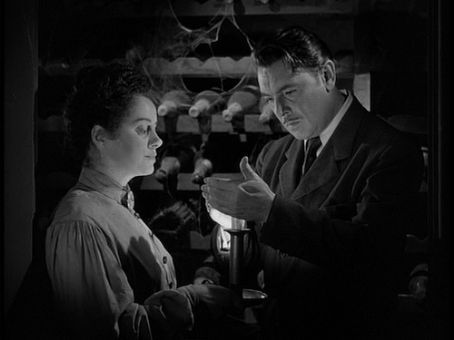
Description (from wiki): In early 20th century New England, a serial killer murders disabled young women in the community. His next victim apparently is Helen (McGuire), a mute girl working as a live-in companion for the wealthy, bedridden Mrs. Warren (Barrymore). Mrs. Warren urges her to leave the house, as does Dr. Parry, who knows the reason for Helen's loss of speech and hopes to help her get her voice back. Rounding out the household are Mrs. Warren's son and stepson, her verbally abused nurse, a secretary, a handyman and his wife, a housekeeper with a taste for brandy.

November 28, 2018
There is a word that film buffs like to use to describe a type of motion picture that, because of its tautness and high suspense quotient, almost seems as if it had been directed by the so-called "Master of Suspense" himself, Alfred Hitchcock. The word, naturally enough, is "Hitchcockian," a term that might be fairly applied to such wonderful entertainments as "Gaslight" (both the 1940 and '44 versions), "Charade," "The Prize" and "Arabesque." But of all the pictures that have been honored with the adjective "Hitchcockian" over the years, none, it seems to me, is more deserving than the 1946 RKO film "The Spiral Staircase," and indeed, after 40 years' worth of repeated watches, I have come to deem the picture the greatest horror outing of the 1940s...at least, that wasn't a product of Universal Studios or producer Val Lewton.
Featuring impeccable direction by Robert Siodmak (his close-up shots of the maniac's eyeballs in the film are legendary), who would go on to direct the noir classics "The Killers" and "The Dark Mirror" that same year; sumptuous set design; and spectacularly gorgeous B&W cinematography by Nicholas Musuraca, who would eventually work on no fewer than five of those Val Lewton horror films, the picture is a genuine classic, beloved by millions. A neo-Gothic suspense thriller starring Dorothy McGuire, giving an almost Oscar-caliber performance despite the fact that she only has three or four lines of dialogue, and abetted by a remarkable supporting cast that is just aces (George Brent, Ethel Barrymore, Kent Smith, Elsa Lanchester, Rhonda Fleming et al.), the picture has been one of this viewer's personal Top 100 favorites for decades now, and I have long wanted to read its source novel, Welsh author Ethel Lina White's "Some Must Watch." And fortunately, thanks to the fine folks at Arcturus Publishing, a reasonably priced edition can be easily procured today; "fortunately," I say, seeing that the original hardcover seems to now be completely unobtainable, even on the usually dependable Bookfinder website, and the fact that even the 1946 movie tie-in paperback can be a dicey proposition.
White, I should perhaps mention, was a new author for me. Apparently, White began writing somewhat late in life, and her first novel was not released until 1927, when the budding author was already 51. Over the course of 17 years, until her death in 1944, White came out with 17 novels. "Some Must Watch," her sixth, was released in 1933. Her ninth, incidentally, entitled "The Wheel Spins," was released in 1936 and, two years later, adapted as Hitchcock's "The Lady Vanishes." Ultimately, White would become known as "The Mistress of Macabre Mystery," and I suppose that "Some Must Watch" (an oddly unsatisfying title, for this reader) is a good example of why.
In the book, the reader meets 19-year-old Helen Capel, who has come to the lonely abode known as the Summit, on the Welsh border, to work as a maid in the service of the Warren family. While there, Helen, a diminutive slip of a girl whose small stature is constantly referred to, gets to know the members of this most unusual household: old Lady Warren, a bedridden, cantankerous invalid who is confined to her room upstairs; her stepson, Prof. Warren, an intellectual cold fish; his prissy sister Blanche; his married son Newton; Newton's wife, Simone, who is something of a nymphomaniac; Stephen Rice, who the professor is tutoring and whom Simone has set her sights on; and Mr. and Mrs. Oates, two other house servants. Helen seems happy at her new job, despite the loneliness of the locale, and despite the fact that a series of murders has just transpired in the vicinity. Four young girls have recently been strangled to death by an unknown madman, the last incident having occurred only a few miles from the Summit itself. And now, as a monstrous thunderstorm commences one evening, a fifth young woman is strangled almost on the very doorstep of the Warren residence! "Some Must Watch" takes place during the 12 or so hours following this last murder, as Helen becomes increasingly distraught. One by one, all the residents in the Warren household are rendered unable to assist (the youngsters, caught in their love triangle, take off for the local pub; Mr. Oates is away on an errand; Mrs. Oates is dead drunk; Prof. Warren has taken too many sleeping pills; Blanche is trapped in her room due to a faulty doorknob; the new nurse, Barker, who may or may not be a man, has vanished; Lady Warren is, of course, too infirm to be of aid), until Helen finds herself quite alone, in the middle of a raging storm, with a homicidal lunatic who has somehow found entry into the house....
Longtime fans of Siodmak's 1946 film may be a bit surprised, after reading White's source novel, to discover just how many changes screenwriter Mel Dinelli made while adapting the author's work. For one thing, while the novel is set in contemporary times (in other words, 1933; both "King Kong," which had just been released, and Cecil B. DeMille's 1932 film "The Sign of the Cross" are mentioned), the film takes place a good 30 years earlier (when we first see Helen in the film, she is watching the silent movie "The Kiss," which had been released in 1896), and in New England. The character named Blanche becomes the professor's secretary in the film; the professor has a stepbrother rather than a sister; and Helen herself, as played by the 5'5" McGuire, is hardly as petite as White had described her. But shockingly, the biggest difference between the book and the film is that whereas Helen in the film is a mute, the result of a traumatic shock at a young age, White's Helen is anything but...she's quite the chatterbox, actually! Also, the jealous dynamic between her and Nurse Barker in the novel is excised in the film (Barker, a lonely and unattractive woman, is inordinately envious of Helen being able to enthrall the young Dr. Parry), and the killer's motivation in the motion picture (that is, the reason why he is compelled to kill physically afflicted women) is completely different, as well. Personally, I find the changes that Dinelli made work marvelously, particularly the idea of having Helen being a mute...most especially since it enables the film to deliver some of the most emotionally affecting closing lines in screen history. So yes, this may very well be one of those rare instances in which the cinematic adaptation eclipses the source material, at least in part. But still, White's book does have much to offer.
As might be expected, the book is genuinely suspenseful, and it really is remarkable how the author ratchets up her tension slowly, over the course of 250 pages. Every single chapter ends in cliff-hanger fashion, keeping the reader primed for anything that might ensue. During the course of her long, stormy evening, Helen is placed into what the author somewhere refers to as "perpetual postponement"; that is, "nerved up to meet an attack which did not come, but which lurked just around the corner." The book can fairly be accused of being all buildup, with not enough in the way of payoff, but trust me, although the novel ends a tad abruptly, the threat that Helen girds herself for is a genuine one; a wackadoodle maniac of the first water. My advice would be to not even try to guess the killer's identity (a simpler guessing game in the movie, I will admit, despite the red herrings), but to just put yourself in Helen's place (a remarkably well-written and likable character, I must say) and hang on tight.
As would be expected, "Some Must Watch" is a very British type of novel, employing any number of English expressions ("bally rot," "dripping toast," "one over the eight") and referencing then-popular English entertainers (such as the singer Al Bowlly, as well as bandleader Jack Hylton); yes, using the Interwebs as a recourse here might not be a bad idea. The book is often slyly self-aware, and Helen repeatedly thinks to herself that the situations she finds herself in, such as with the thunderstorm and the cut telephone wires, are like the "faithful accompaniment to the thrill-drama." White, as it turns out, was a very fine writer, especially when it comes to sharp and witty dialogue, but still, a close reading will reveal some unfortunate gaffes on her part. For example, in one late section, Lady Warren refers to Newton as her nephew, whereas he is in actuality her step-grandson. Her late husband is referred to as Sir Roger in some chapters and Sir Robert in others. The author tells us that Helen was "reliant and conscientious" when she obviously meant to say "reliable," and shows herself capable of turning an ungrammatical phrase, such as "Helen crossed to the walnut sideboard, where the glass and silver was kept," instead of "were kept." Still, quibbles aside, some very impressive and highly atmospheric work here.
During the course of her novel, White shows us Stephen trying to forget his troubles and tension "in the excitement of a thrill-novel," only to become aware, presently, that "his attention was no longer gripped." A pity, then, that he did not have a book such as "Some Must Watch" to flip through, a novel that I personally found quite gripping and almost nerve-wracking (and that's a good thing!). As a matter of fact, I enjoyed reading this one so much that I now find myself wanting to take in White's 10th novel, 1937's "The Third Eye," which is supposedly another neo-Gothic thrill ride of sorts. Stay tuned....
(By the way, this review originally appeared on the FanLit website at http://www.fantasyliterature.com/ ... a very fine destination for all fans of scary books in general....)
Featuring impeccable direction by Robert Siodmak (his close-up shots of the maniac's eyeballs in the film are legendary), who would go on to direct the noir classics "The Killers" and "The Dark Mirror" that same year; sumptuous set design; and spectacularly gorgeous B&W cinematography by Nicholas Musuraca, who would eventually work on no fewer than five of those Val Lewton horror films, the picture is a genuine classic, beloved by millions. A neo-Gothic suspense thriller starring Dorothy McGuire, giving an almost Oscar-caliber performance despite the fact that she only has three or four lines of dialogue, and abetted by a remarkable supporting cast that is just aces (George Brent, Ethel Barrymore, Kent Smith, Elsa Lanchester, Rhonda Fleming et al.), the picture has been one of this viewer's personal Top 100 favorites for decades now, and I have long wanted to read its source novel, Welsh author Ethel Lina White's "Some Must Watch." And fortunately, thanks to the fine folks at Arcturus Publishing, a reasonably priced edition can be easily procured today; "fortunately," I say, seeing that the original hardcover seems to now be completely unobtainable, even on the usually dependable Bookfinder website, and the fact that even the 1946 movie tie-in paperback can be a dicey proposition.
White, I should perhaps mention, was a new author for me. Apparently, White began writing somewhat late in life, and her first novel was not released until 1927, when the budding author was already 51. Over the course of 17 years, until her death in 1944, White came out with 17 novels. "Some Must Watch," her sixth, was released in 1933. Her ninth, incidentally, entitled "The Wheel Spins," was released in 1936 and, two years later, adapted as Hitchcock's "The Lady Vanishes." Ultimately, White would become known as "The Mistress of Macabre Mystery," and I suppose that "Some Must Watch" (an oddly unsatisfying title, for this reader) is a good example of why.
In the book, the reader meets 19-year-old Helen Capel, who has come to the lonely abode known as the Summit, on the Welsh border, to work as a maid in the service of the Warren family. While there, Helen, a diminutive slip of a girl whose small stature is constantly referred to, gets to know the members of this most unusual household: old Lady Warren, a bedridden, cantankerous invalid who is confined to her room upstairs; her stepson, Prof. Warren, an intellectual cold fish; his prissy sister Blanche; his married son Newton; Newton's wife, Simone, who is something of a nymphomaniac; Stephen Rice, who the professor is tutoring and whom Simone has set her sights on; and Mr. and Mrs. Oates, two other house servants. Helen seems happy at her new job, despite the loneliness of the locale, and despite the fact that a series of murders has just transpired in the vicinity. Four young girls have recently been strangled to death by an unknown madman, the last incident having occurred only a few miles from the Summit itself. And now, as a monstrous thunderstorm commences one evening, a fifth young woman is strangled almost on the very doorstep of the Warren residence! "Some Must Watch" takes place during the 12 or so hours following this last murder, as Helen becomes increasingly distraught. One by one, all the residents in the Warren household are rendered unable to assist (the youngsters, caught in their love triangle, take off for the local pub; Mr. Oates is away on an errand; Mrs. Oates is dead drunk; Prof. Warren has taken too many sleeping pills; Blanche is trapped in her room due to a faulty doorknob; the new nurse, Barker, who may or may not be a man, has vanished; Lady Warren is, of course, too infirm to be of aid), until Helen finds herself quite alone, in the middle of a raging storm, with a homicidal lunatic who has somehow found entry into the house....
Longtime fans of Siodmak's 1946 film may be a bit surprised, after reading White's source novel, to discover just how many changes screenwriter Mel Dinelli made while adapting the author's work. For one thing, while the novel is set in contemporary times (in other words, 1933; both "King Kong," which had just been released, and Cecil B. DeMille's 1932 film "The Sign of the Cross" are mentioned), the film takes place a good 30 years earlier (when we first see Helen in the film, she is watching the silent movie "The Kiss," which had been released in 1896), and in New England. The character named Blanche becomes the professor's secretary in the film; the professor has a stepbrother rather than a sister; and Helen herself, as played by the 5'5" McGuire, is hardly as petite as White had described her. But shockingly, the biggest difference between the book and the film is that whereas Helen in the film is a mute, the result of a traumatic shock at a young age, White's Helen is anything but...she's quite the chatterbox, actually! Also, the jealous dynamic between her and Nurse Barker in the novel is excised in the film (Barker, a lonely and unattractive woman, is inordinately envious of Helen being able to enthrall the young Dr. Parry), and the killer's motivation in the motion picture (that is, the reason why he is compelled to kill physically afflicted women) is completely different, as well. Personally, I find the changes that Dinelli made work marvelously, particularly the idea of having Helen being a mute...most especially since it enables the film to deliver some of the most emotionally affecting closing lines in screen history. So yes, this may very well be one of those rare instances in which the cinematic adaptation eclipses the source material, at least in part. But still, White's book does have much to offer.
As might be expected, the book is genuinely suspenseful, and it really is remarkable how the author ratchets up her tension slowly, over the course of 250 pages. Every single chapter ends in cliff-hanger fashion, keeping the reader primed for anything that might ensue. During the course of her long, stormy evening, Helen is placed into what the author somewhere refers to as "perpetual postponement"; that is, "nerved up to meet an attack which did not come, but which lurked just around the corner." The book can fairly be accused of being all buildup, with not enough in the way of payoff, but trust me, although the novel ends a tad abruptly, the threat that Helen girds herself for is a genuine one; a wackadoodle maniac of the first water. My advice would be to not even try to guess the killer's identity (a simpler guessing game in the movie, I will admit, despite the red herrings), but to just put yourself in Helen's place (a remarkably well-written and likable character, I must say) and hang on tight.
As would be expected, "Some Must Watch" is a very British type of novel, employing any number of English expressions ("bally rot," "dripping toast," "one over the eight") and referencing then-popular English entertainers (such as the singer Al Bowlly, as well as bandleader Jack Hylton); yes, using the Interwebs as a recourse here might not be a bad idea. The book is often slyly self-aware, and Helen repeatedly thinks to herself that the situations she finds herself in, such as with the thunderstorm and the cut telephone wires, are like the "faithful accompaniment to the thrill-drama." White, as it turns out, was a very fine writer, especially when it comes to sharp and witty dialogue, but still, a close reading will reveal some unfortunate gaffes on her part. For example, in one late section, Lady Warren refers to Newton as her nephew, whereas he is in actuality her step-grandson. Her late husband is referred to as Sir Roger in some chapters and Sir Robert in others. The author tells us that Helen was "reliant and conscientious" when she obviously meant to say "reliable," and shows herself capable of turning an ungrammatical phrase, such as "Helen crossed to the walnut sideboard, where the glass and silver was kept," instead of "were kept." Still, quibbles aside, some very impressive and highly atmospheric work here.
During the course of her novel, White shows us Stephen trying to forget his troubles and tension "in the excitement of a thrill-novel," only to become aware, presently, that "his attention was no longer gripped." A pity, then, that he did not have a book such as "Some Must Watch" to flip through, a novel that I personally found quite gripping and almost nerve-wracking (and that's a good thing!). As a matter of fact, I enjoyed reading this one so much that I now find myself wanting to take in White's 10th novel, 1937's "The Third Eye," which is supposedly another neo-Gothic thrill ride of sorts. Stay tuned....
(By the way, this review originally appeared on the FanLit website at http://www.fantasyliterature.com/ ... a very fine destination for all fans of scary books in general....)

May 27, 2026
The perfect mix of intrigue and dread as a young woman is isolated in an old mansion while a serial killer is peeking the countryside. The entire time I was reading the story I was picturing it as Oman old black and white movie in my head. Now I must track down the film versions.

April 6, 2020
“Гвинтові сходи” – якщо можна так висловитися, “докрістітевський” текст – так, навіть враховуючи, що пані Аґата сама вже писала тільки в путь, а Етель Ліна Вайт також любила поколупати тему заміських маєтків та їхніх підгнилих мешканців. Але є кілька “але”.
“Але” головне: на нинішні гроші “Сходи” – не детектив. Ні-ні, тут є загадкові злочини, але вони є радше сюжетом-рамочкою, а весь сюжет крутиться навколо того, як жителі одного будинку переживають одну конкретну ніч, коли за вікном лютує буря, а лісопосадкою крадеться зловісне дерево – якщо це точно дерево, а не маніяк, від якого всі околиці тремтять. Чи всі вікна зачинені? Чи всі ключі до всіх дверей підходять? Чому в підвалі так темно? Невже економка не могла знайти кращої миті, аби вижлуктати пів плящини бренді? Куди, в дідька, поділилися всі молоді чоловіки і хто захистить честь, життя та інтереси юної служниці, яка має погану звичку лізти в кожну діжку затичкою? Єп, “Гвинтові сходи” – це психологічний трилер, причому цілковито робочий. Етель Ліна Вайт гарно працює з саспенсовими гойдалками: нагнітає – відпускає, нагнітає – відпускає, нагнітає, нагнітає, нагнітає – упс, фінал настав трішки зненацька.
“Але” тематичне: так, “Сходи” – це маніячний трилер, написаний в часи, коли це не було аж таким модним. Власне сама по собі лінія з маніяком – штука декоративна й потрібна, щоб пояснити, а чого це люди позамикалися в домі й тремтять, але коли виникає передозування хитродупих героїв Крісті, котрим все б оце спадок віджати, то раціонально-інфернальне зло, що фігурує в тексті схожої стилістики – це навіть освіжує.
“Але” проблематичне: аристократи – аристократами, але віва егаліте! Головна героїня “Гвинтових сходів” – юна покоївка. Метикувата, весела, трохи намахана на всю голову, але Гелен – симпатична персонажка, за якою цікаво спостерігати, бо це той випадок, коли і розумні, і фейспалмові вчинки героїні справді обумовлені заявленим характером, а в жанровій літературі це не так вже й часто трапляється. І хоча місцями сюжет провалюється ледь не до водевільного рівня (ага, я ще пам’ятаю, що про трилер розповідаю), де половина персонажів – типізовані до непристойності (“суворий професор”, “молоде ледащо”, “нікчемний спадкоємець”, “великосвітська хвойда”), у романі, як на ті часи, доволі небанально організований перший план. Утворюють його, власне, жінки з робочого класу – покоївка, економка, медсестра-доглядальниця. Тож це дає авторці можливість то трішки просвітити читачів, як організовували за тих часів хатню роботу, то поміркувати про долю “селфмейд”-пань:
Продовження відгуку - у блозі, як завше.
“Але” головне: на нинішні гроші “Сходи” – не детектив. Ні-ні, тут є загадкові злочини, але вони є радше сюжетом-рамочкою, а весь сюжет крутиться навколо того, як жителі одного будинку переживають одну конкретну ніч, коли за вікном лютує буря, а лісопосадкою крадеться зловісне дерево – якщо це точно дерево, а не маніяк, від якого всі околиці тремтять. Чи всі вікна зачинені? Чи всі ключі до всіх дверей підходять? Чому в підвалі так темно? Невже економка не могла знайти кращої миті, аби вижлуктати пів плящини бренді? Куди, в дідька, поділилися всі молоді чоловіки і хто захистить честь, життя та інтереси юної служниці, яка має погану звичку лізти в кожну діжку затичкою? Єп, “Гвинтові сходи” – це психологічний трилер, причому цілковито робочий. Етель Ліна Вайт гарно працює з саспенсовими гойдалками: нагнітає – відпускає, нагнітає – відпускає, нагнітає, нагнітає, нагнітає – упс, фінал настав трішки зненацька.
“Але” тематичне: так, “Сходи” – це маніячний трилер, написаний в часи, коли це не було аж таким модним. Власне сама по собі лінія з маніяком – штука декоративна й потрібна, щоб пояснити, а чого це люди позамикалися в домі й тремтять, але коли виникає передозування хитродупих героїв Крісті, котрим все б оце спадок віджати, то раціонально-інфернальне зло, що фігурує в тексті схожої стилістики – це навіть освіжує.
“Але” проблематичне: аристократи – аристократами, але віва егаліте! Головна героїня “Гвинтових сходів” – юна покоївка. Метикувата, весела, трохи намахана на всю голову, але Гелен – симпатична персонажка, за якою цікаво спостерігати, бо це той випадок, коли і розумні, і фейспалмові вчинки героїні справді обумовлені заявленим характером, а в жанровій літературі це не так вже й часто трапляється. І хоча місцями сюжет провалюється ледь не до водевільного рівня (ага, я ще пам’ятаю, що про трилер розповідаю), де половина персонажів – типізовані до непристойності (“суворий професор”, “молоде ледащо”, “нікчемний спадкоємець”, “великосвітська хвойда”), у романі, як на ті часи, доволі небанально організований перший план. Утворюють його, власне, жінки з робочого класу – покоївка, економка, медсестра-доглядальниця. Тож це дає авторці можливість то трішки просвітити читачів, як організовували за тих часів хатню роботу, то поміркувати про долю “селфмейд”-пань:
… вона все одно не покладалася на майбутнє заміжжя, а воліла й далі купляти ощадні сертифікати, таким чином забезпечуючи свою старість. Бо вірила вона в Бога, а не в казку про Джейн Ейр.
Продовження відгуку - у блозі, як завше.

July 5, 2022
Un clásico de suspense gótico más conocido por las adaptaciones cinematográficas (la de 1946 es grandiosa), que por el libro en sí, el cual, sin embargo, merece muy mucho la pena.
Helen Capel, apenas una muchacha menuda y morbosamente curiosa, trabaja en la mansión de la familia Warren. Cerca de allí, varias mujeres jóvenes han sido asesinadas en los últimos meses. El miedo se extiende entre los vecinos de la región y hace mella en Helen, que vive encerrada en un ambiente opresivo y enfermizo, rodeada de seres que le resultan odiosos y que no son siquiera conscientes de su presencia. El asesino parece cercarla en una noche fatal en la que todo conspira para dejarla sola en manos del maníaco. Hasta aquí la sinopsis.
Son varios los aspectos que me gustaría destacar de este libro.
El primero la ambientación. Fue escrito en 1933. El contexto social y cultural es el de esa época. La acción transcurre en una mansión "La Cúspide", situada en la frontera entre Inglaterra y Gales. Es una zona solitaria y agreste. A sus dueños nos les resulta fácil conseguir servicio, nadie quiere trabajar en un lugar tan alejado. La casa es sombría, llena de escaleras y recovecos. Estamos en diciembre. El viento, la lluvia y la tormenta están presentes y contribuyen a crear el ambiente de tensión y suspense.
La trama se desarrolla a buen ritmo en una única noche y dentro de la mansión. En esta novela el quién y sobre todo el cómo cobran más importancia que el porqué. Los tejemanejes que pone en juego el culpable para "despejar el camino" son el punto fuerte de la novela. La tensión y el suspense van a en aumento a medida que transcurre dicha noche. La autora sabe como dosificar ese suspense y jugar al despiste con nosotros. Desde el principio tuve dos posibles candidatos a asesino. Era uno de ellos, pero no supe ver cuál de los dos hasta el final. El motivo es lo más flojo. Coherente con la mente enferma del culpable, pero imposible de averiguar para el lector. Insisto, en este libro el meollo de la cuestión no es el porqué sino la atmósfera de suspense que se crea en torno a el cómo.
Por último destacar a los personajes, muy bien trazados y muy importantes en este libro. Todo gira en torno a ellos. La protagonista, Helen, es una muchacha muy joven que ha tenido que ganarse la vida desde temprana edad. Sirve en "La Cúspide" como señora de compañía (o chica para todo más bien), es curiosa, atrevida, pero sabe cuidar de sí misma. El resto del elenco no tiene desperdicio. La autora nos ha descrito casi todos los estereotipos de la época. Me ha gustado mucho la anciana señora Warren, atormentada por lo que no hizo y sabe debe hacer. No digo más, quién decida leerla es mejor que descubra a cada personaje por sí mismo.
En conclusión, una novela de suspense gótico, que me ha gustado mucho y que recomiendo a los amantes del género.
Helen Capel, apenas una muchacha menuda y morbosamente curiosa, trabaja en la mansión de la familia Warren. Cerca de allí, varias mujeres jóvenes han sido asesinadas en los últimos meses. El miedo se extiende entre los vecinos de la región y hace mella en Helen, que vive encerrada en un ambiente opresivo y enfermizo, rodeada de seres que le resultan odiosos y que no son siquiera conscientes de su presencia. El asesino parece cercarla en una noche fatal en la que todo conspira para dejarla sola en manos del maníaco. Hasta aquí la sinopsis.
Son varios los aspectos que me gustaría destacar de este libro.
El primero la ambientación. Fue escrito en 1933. El contexto social y cultural es el de esa época. La acción transcurre en una mansión "La Cúspide", situada en la frontera entre Inglaterra y Gales. Es una zona solitaria y agreste. A sus dueños nos les resulta fácil conseguir servicio, nadie quiere trabajar en un lugar tan alejado. La casa es sombría, llena de escaleras y recovecos. Estamos en diciembre. El viento, la lluvia y la tormenta están presentes y contribuyen a crear el ambiente de tensión y suspense.
La trama se desarrolla a buen ritmo en una única noche y dentro de la mansión. En esta novela el quién y sobre todo el cómo cobran más importancia que el porqué. Los tejemanejes que pone en juego el culpable para "despejar el camino" son el punto fuerte de la novela. La tensión y el suspense van a en aumento a medida que transcurre dicha noche. La autora sabe como dosificar ese suspense y jugar al despiste con nosotros. Desde el principio tuve dos posibles candidatos a asesino. Era uno de ellos, pero no supe ver cuál de los dos hasta el final. El motivo es lo más flojo. Coherente con la mente enferma del culpable, pero imposible de averiguar para el lector. Insisto, en este libro el meollo de la cuestión no es el porqué sino la atmósfera de suspense que se crea en torno a el cómo.
Por último destacar a los personajes, muy bien trazados y muy importantes en este libro. Todo gira en torno a ellos. La protagonista, Helen, es una muchacha muy joven que ha tenido que ganarse la vida desde temprana edad. Sirve en "La Cúspide" como señora de compañía (o chica para todo más bien), es curiosa, atrevida, pero sabe cuidar de sí misma. El resto del elenco no tiene desperdicio. La autora nos ha descrito casi todos los estereotipos de la época. Me ha gustado mucho la anciana señora Warren, atormentada por lo que no hizo y sabe debe hacer. No digo más, quién decida leerla es mejor que descubra a cada personaje por sí mismo.
En conclusión, una novela de suspense gótico, que me ha gustado mucho y que recomiendo a los amantes del género.

April 24, 2025
4.75 stars
A masterful display of suspense and red herrings, The Spiral Staircase—originally published in 1933—reminds me that sometimes the classics just get it.
Soaked in dreary atmosphere and tantalizing macabre, the story follows its female protagonist’s increasingly dire situation, as everyone around her is either inadvertently incapacitated or highly suspicious. Even though the setup is in the mold of ‘cozy mystery’ (one night in a household of archetypal characters), the writing keeps the mood ghoulish. Along the way, its omnipresent narrator foreshadows small, mundane actions, all laddering up to the ultimate climax—providing an extra layer of fated doom.
Revisiting The Spiral Staircase today is surprisingly refreshing, as stylistically it’s so different from what’s currently being published. Personally, I found the antiquated writing style actually elevates the overall off-kilter vibe (aside from a few hiccups with confusing phrasing and outdated references). If you're in the mood for a solid closed-room mystery with a side of dark British humor, this one is well worth picking up!
**This ARC was provided by the publisher via NetGalley in exchange for an honest review. Much appreciated!**
A masterful display of suspense and red herrings, The Spiral Staircase—originally published in 1933—reminds me that sometimes the classics just get it.
Soaked in dreary atmosphere and tantalizing macabre, the story follows its female protagonist’s increasingly dire situation, as everyone around her is either inadvertently incapacitated or highly suspicious. Even though the setup is in the mold of ‘cozy mystery’ (one night in a household of archetypal characters), the writing keeps the mood ghoulish. Along the way, its omnipresent narrator foreshadows small, mundane actions, all laddering up to the ultimate climax—providing an extra layer of fated doom.
Revisiting The Spiral Staircase today is surprisingly refreshing, as stylistically it’s so different from what’s currently being published. Personally, I found the antiquated writing style actually elevates the overall off-kilter vibe (aside from a few hiccups with confusing phrasing and outdated references). If you're in the mood for a solid closed-room mystery with a side of dark British humor, this one is well worth picking up!
**This ARC was provided by the publisher via NetGalley in exchange for an honest review. Much appreciated!**

April 29, 2022
щойно дочитала. сиджу в шоці з кінцівки.
хоча протягом всієї історії тут не було сильних поворотів сюжету, все так ніби плавно йшло, то кінцівка, як на мене, класна, було неочікувано.
основна частина (~300 сторінок) це суто життя головної героїні, опис її страхів, дій і хід думок (не всім таке може бути до вподоби, але так як це гарно написано, мені було цікаво), але це круто. тверда 4⭐️🕵️♀️
(окремий лайк за той атмосферний вайб чогось лихого і страшного за межами будинку, за опис погоди, природи, та тих самих дерев.. ці описи – неймовірний кайф🖤)
хоча протягом всієї історії тут не було сильних поворотів сюжету, все так ніби плавно йшло, то кінцівка, як на мене, класна, було неочікувано.
основна частина (~300 сторінок) це суто життя головної героїні, опис її страхів, дій і хід думок (не всім таке може бути до вподоби, але так як це гарно написано, мені було цікаво), але це круто. тверда 4⭐️🕵️♀️
(окремий лайк за той атмосферний вайб чогось лихого і страшного за межами будинку, за опис погоди, природи, та тих самих дерев.. ці описи – неймовірний кайф🖤)

April 26, 2024
“Security Is Mortal’s Chiefest Enemy”
Shakespeare’s words, which we find as the title of one of the chapters, are not only relevant with regard to the underlying spirit of modern society but also spell a truth that Helen Capel, the protagonist of Ethel Lina White’s novel Some Must Watch has to learn the hard way. Helen is a lively, enterprising and uncommonly curious young woman from modest origins who depends on her position as a household help in Professor Warren’s service – a place that is not all too pleasant because the house is an old building in a lonely place, and the family are, all in all, very forbidding. There is Professor Warren himself, a recluse, given to his studies, and his sister Blanche is of a similar stamp, both of them hardly ever noticing Helen. The professor’s son is staying there as a guest, and his main pastime is to keep a watchful and jealous eye on his beautiful wife Simone, who – as White and the characters in her novel have it – is a “nymphomaniac”, constantly stalking young Rice, the professor’s latest pupil, who has no interest in her whatsoever but likes to encourage her whenever her husband is present, just to spite the latter. The chief terror of the household, though, is old Mrs. Warren, the bed-ridden stepmother of the professor and his sister, a moody and seemingly malicious old lady who throws things at the domestics, and aims well. While Mr. and Mrs. Oates, the butler and the cook, are quite caring about Helen, there is a new nurse, Mrs. Barker, who has taken an intense dislike to Helen from the very first moment, based on the privileges Helen enjoys in the household and at the hands of nature. At least, that is how Mrs. Barker sees it. Last not least there is Doctor Parry, the old lady’s physician, who has developed a romantic interest in Helen, which adds to the nurse’s mortification.
The stage is set, and the action can begin! Enter a maniac serial killer who has it in for young women and who has already taken some lives in the vicinity of the house, and when I say “Enter”, I might add additional anxiety to Helen’s fears because the night is an extremely Bulwer-Lyttonian one, and although the professor has given strict orders to close and bar every window and door and not to let anyone in, Helen finds more and more evidence that the killer might already have entered, and that instead of shutting him out, they have shut themselves in with him. To make matters even worse, one by one the inhabitants of the house – potential protectors for Helen in case the killer should strike that night – are taken out of the game, for example when Mr. Oates, a paragon of physical strength, has to leave unexpectedly in order to fetch a new oxygen bottle for Mrs. Warren, or when his wife succumbs to her inclination to inebriate herself in that night of all nights, or when the professor’s sister is locked into her own room and cannot get out because of a broken lock.
Well might Helen ask herself whether these are all accidents or whether, on the other hand, there is an evil mastermind at work, diligently setting the stage for the murder of the heroine. After all, can so many things go wrong in just one night? And it is indeed just one night that is covered in the entire novel, which makes Some Must Watch an incredibly claustrophobic experience because the reader is allowed a good feeling of how slowly the minutes trickle by and how quickly the situation deteriorates. Apart from that, White adds a lot of surrealistic touches to the story, for example with the advent of Nurse Barker, whose hatred of Helen makes her a rather unreliable ally in times of need, or with old Mrs. Warren, who seems not quite as helpless as she is made out to be. One of the most striking scenes, to me, is when the Warrens and Helen sit down to dinner, and the mean passions of young Warren, Simone and Rice display without a modicum of shame, and when everyone at the table finally unites in making fun of Helen because of her religious believes. Faced with the jeerings and taunts of those who a few minutes ago exchanged snide little remarks among themselves, Helen suddenly wonders how these people are actually supposed to be her betters, and is left aghast. Not for the only time in this night, however.
The story itself may seem contrived in some places, but the writing and the portrayal of the characters and the place make this a worthwhile read. In 1946, Robert Siodmak even made a movie out of White’s novel, calling it The Spiral Staircase and changing Helen from a nosey, sometimes cheeky young women into a more demure damsel played by Dorothy McGuire. The major change, however, is that Siodmak’s Helen is mute due to a childhood trauma involving the loss of her parents, and that the killer is someone who has set his mind on relieving the world from “imperfect people”. I rewatched the film some days after finishing the novel, and although I have always been a great fan of the film, I must say that the atmosphere created in the book is at least as compelling and that White’s characters, especially that of Nurse Barker, are far more haunting than those in the film.
Shakespeare’s words, which we find as the title of one of the chapters, are not only relevant with regard to the underlying spirit of modern society but also spell a truth that Helen Capel, the protagonist of Ethel Lina White’s novel Some Must Watch has to learn the hard way. Helen is a lively, enterprising and uncommonly curious young woman from modest origins who depends on her position as a household help in Professor Warren’s service – a place that is not all too pleasant because the house is an old building in a lonely place, and the family are, all in all, very forbidding. There is Professor Warren himself, a recluse, given to his studies, and his sister Blanche is of a similar stamp, both of them hardly ever noticing Helen. The professor’s son is staying there as a guest, and his main pastime is to keep a watchful and jealous eye on his beautiful wife Simone, who – as White and the characters in her novel have it – is a “nymphomaniac”, constantly stalking young Rice, the professor’s latest pupil, who has no interest in her whatsoever but likes to encourage her whenever her husband is present, just to spite the latter. The chief terror of the household, though, is old Mrs. Warren, the bed-ridden stepmother of the professor and his sister, a moody and seemingly malicious old lady who throws things at the domestics, and aims well. While Mr. and Mrs. Oates, the butler and the cook, are quite caring about Helen, there is a new nurse, Mrs. Barker, who has taken an intense dislike to Helen from the very first moment, based on the privileges Helen enjoys in the household and at the hands of nature. At least, that is how Mrs. Barker sees it. Last not least there is Doctor Parry, the old lady’s physician, who has developed a romantic interest in Helen, which adds to the nurse’s mortification.
The stage is set, and the action can begin! Enter a maniac serial killer who has it in for young women and who has already taken some lives in the vicinity of the house, and when I say “Enter”, I might add additional anxiety to Helen’s fears because the night is an extremely Bulwer-Lyttonian one, and although the professor has given strict orders to close and bar every window and door and not to let anyone in, Helen finds more and more evidence that the killer might already have entered, and that instead of shutting him out, they have shut themselves in with him. To make matters even worse, one by one the inhabitants of the house – potential protectors for Helen in case the killer should strike that night – are taken out of the game, for example when Mr. Oates, a paragon of physical strength, has to leave unexpectedly in order to fetch a new oxygen bottle for Mrs. Warren, or when his wife succumbs to her inclination to inebriate herself in that night of all nights, or when the professor’s sister is locked into her own room and cannot get out because of a broken lock.
Well might Helen ask herself whether these are all accidents or whether, on the other hand, there is an evil mastermind at work, diligently setting the stage for the murder of the heroine. After all, can so many things go wrong in just one night? And it is indeed just one night that is covered in the entire novel, which makes Some Must Watch an incredibly claustrophobic experience because the reader is allowed a good feeling of how slowly the minutes trickle by and how quickly the situation deteriorates. Apart from that, White adds a lot of surrealistic touches to the story, for example with the advent of Nurse Barker, whose hatred of Helen makes her a rather unreliable ally in times of need, or with old Mrs. Warren, who seems not quite as helpless as she is made out to be. One of the most striking scenes, to me, is when the Warrens and Helen sit down to dinner, and the mean passions of young Warren, Simone and Rice display without a modicum of shame, and when everyone at the table finally unites in making fun of Helen because of her religious believes. Faced with the jeerings and taunts of those who a few minutes ago exchanged snide little remarks among themselves, Helen suddenly wonders how these people are actually supposed to be her betters, and is left aghast. Not for the only time in this night, however.
The story itself may seem contrived in some places, but the writing and the portrayal of the characters and the place make this a worthwhile read. In 1946, Robert Siodmak even made a movie out of White’s novel, calling it The Spiral Staircase and changing Helen from a nosey, sometimes cheeky young women into a more demure damsel played by Dorothy McGuire. The major change, however, is that Siodmak’s Helen is mute due to a childhood trauma involving the loss of her parents, and that the killer is someone who has set his mind on relieving the world from “imperfect people”. I rewatched the film some days after finishing the novel, and although I have always been a great fan of the film, I must say that the atmosphere created in the book is at least as compelling and that White’s characters, especially that of Nurse Barker, are far more haunting than those in the film.
September 23, 2025
From 1933
Helen is a live-in maid at a house called the Summit. There is a heavy rainstorm and a killer of young women. People talk about previous deaths that occurred at the house, a girl being thrown down a well. People sneak alcohol and argue with each other.
Helen is a live-in maid at a house called the Summit. There is a heavy rainstorm and a killer of young women. People talk about previous deaths that occurred at the house, a girl being thrown down a well. People sneak alcohol and argue with each other.

May 16, 2025
Очікувала на набагато більше, я чогось думала що це буде щось схоже на Аґату Крісті, а виявилось далеко не він. Почнімо з того, що всі персонажі якось дратували, особливо Гелен і її деякі висловлювання, мені найбільше не сподобалось те, що вона вирішила що дасть найкращу пораду хлопцю, який закоханий у заміжню жінку, щоб він від неї відчепився. Хоча якось і дружина не дуже ставиться до свого чоловіка, але і не розводиться. Якщо чесно, одразу впала думка на головного антагоніста, ким він може бути, і я вгадала, бо це мені нагадало «І не лишилось жодного» від Аґати Крісті. Ще Гелен мене дратувала тим, що засуджувала стару пані, яка вбила свого чоловіка в минулому, але ж вона не знає причини чому? Окей вбивство взагалі погано, але ж вона вбила того, хто вбивав дівчат. Я не зрозуміла що там у неї з лікарем, чи будуть разом, чи просто спілкуватися будуть, якось не закінчено. Фінал якийсь пшик взагалі, очікувала більшого. Головний антагоніст дуже гидотний, відчуття що його якось намагалась вбити жінка але не добила, бо така ненависть до них. Окремі цитати «Я вважаю це своїм обов’язком, — відповів він. — Мене, як науковця, охоплює жах від безперервного зростання населення й одночасного скорочення харчових ресурсів. Тому кількість зайвих жінок необхідно зменшувати.» окей не шановний, тоді КОРИСТУЙТЕСЯ КОНТРАЦЕПТИВАМИ, чи в ті часи не було нічого схожого? Чи це було «суто жіноча проблема»? І тобто, зайвих чоловік бути не може? Чи як логіка працює? А ще є таке «Тому що ви не маєте ані краси, ані розуму, ані хоча б якоїсь корисної риси, яку могли б передати нащадкам. Ви — людське сміття. Некваліфікована працівниця на переповненому ринку робочої сили. Ще один рот, який потрібно годувати. І саме тому я вас уб’ю.» чомусь в голові промайнуло «я у мами довбойоб, хто не згоден, той уйоб» не знаю звідки це, але оце описує його. Аааа, тобто, всі чоловіки еталони краси я так розумію? Або всі чоловіки прям професори? І ось одразу треба казати щось про «нащадків», а якщо жінка не хоче оцього всього, то її теж треба вбити? Чи як? І про «ще один рот, який потрібно годувати», але ж вона працює, тобто вона сама заробляє собі на їжу, то якого про саме це казати? Книжка розчарувала.
This entire review has been hidden because of spoilers.

Read
December 3, 2015This book was so much fun to read and it hit all of my classic mystery reading buttons -- an isolated family home, a murderer on the prowl and all of it set against the proverbial dark and stormy night, complete with banging shutters and an elderly bedridden woman predicting doom and gloom. How could it possibly be any better??? Having said that, I don't think it's a 5-star read but I definitely had a great time with it. In fact, just thinking about it right now makes me want to do that evil villain laugh, the "muah-hah-hah-hah-hah" reminiscent of the old Shadow radio show opening because this is just that type of book. And while I thought it was clever and well paced, with ratcheting tension that continues throughout the night making me flip pages in a frenzy, I see that some readers weren't so crazy about it. Well, it sort of goes with Ethel Lina White territory that there are a lot of psychological observations from the characters in her work, so here the talky parts didn't bother me at all. Personally, I think the dynamics among the characters are just as much a part of this story as the mystery, so I quite enjoyed it.
There's more, of course, at my reading journal . On the whole -- not great literature, but definitely a fun read, one right up my old-school mystery-reading alley.
There's more, of course, at my reading journal . On the whole -- not great literature, but definitely a fun read, one right up my old-school mystery-reading alley.

July 6, 2020
Мав бути англійський детектив, а вийшов якийсь недотриллер. Розтягнута оповідь про одну вітряну ніч у старому вікторіанському особняку, навколо якого багато дерев і десь серед них ховається маніяк, що чигає на молоду рудоволосу служницю Гелен. А, може, і не серед дерев, а десь ближче?
Приблизно після 200-ї сторінки стає нецікаво спостерігати за нагнітанням атмосфери і пристрастями членів сім'ї Ворренів. Текст викликав відчуття мигаючої лампочки, яка дратує. Від швидкості зміни думок героїні трохи укачує, імпульсивні вчинки дівчини схожі на вчинки героїв американських жахастиків, які знають, що кудись не варто лізти, але лізуть. Лінія стосунків сестри Баркер з Гелен дивна, ніби висмоктана з пальця - як і неприязнь сестри. Та й сама сестра Баркер - ідеальний чоловікоподібний персонаж, щоб перевести стрілки і спробувати "обдурити" читача.
Фінал, як на диво, непоганий, мотиви маніяка цілком логічні й зрозумілі. Але скоротити б це все на кілька сотень сторінок і трохи об'ємнішими зробити персонажів - і було б супер.
Приблизно після 200-ї сторінки стає нецікаво спостерігати за нагнітанням атмосфери і пристрастями членів сім'ї Ворренів. Текст викликав відчуття мигаючої лампочки, яка дратує. Від швидкості зміни думок героїні трохи укачує, імпульсивні вчинки дівчини схожі на вчинки героїв американських жахастиків, які знають, що кудись не варто лізти, але лізуть. Лінія стосунків сестри Баркер з Гелен дивна, ніби висмоктана з пальця - як і неприязнь сестри. Та й сама сестра Баркер - ідеальний чоловікоподібний персонаж, щоб перевести стрілки і спробувати "обдурити" читача.
Фінал, як на диво, непоганий, мотиви маніяка цілком логічні й зрозумілі. Але скоротити б це все на кілька сотень сторінок і трохи об'ємнішими зробити персонажів - і було б супер.
This entire review has been hidden because of spoilers.

October 9, 2015
As Helen opened the door of Miss Warren's room, a small incident occurred which was fraught with future significance.
It was a dark and stormy night....no, really, it was. Fortunately, Ethel Lina White was a much better author than the potboiler creators who are generally credited with starting their books in such fashion. The Spiral Staircase (1933; originally titled Some Must Watch) is a suspense thriller with a damsel in distress that makes excellent use of the dramatic storm-tossed night to provide a top-notch novel filled with Had-I-But-Known moments.
She was visited by no prescience to warn her that--since her return--there had been certain trivial incidents which were the first cracks in the walls of her fortress. Once they were started, nothing could stop the process of disintegration; and each future development would act as a wedge, to force the fissures into ever-widening breaches letting in the night.
Things start off calmly enough. Helen Capel is over-joyed to find a position as lady's help at the Summit, Professor Warren's remote estate on the Welsh border. After all, apart from the loneliness of the locale, the post is a very good one--offering her a very nice room and sitting room of her own, good food, and she's even allowed to take her meals with the family. It is a bit worrisome that there is a murderer loose in the countryside. A mysterious killer who has chosen as his prey young women who work for their living. Some think he may be a man who believes these women have taken jobs away from men.
But, reasons Helen, all the girls who have been killed have been alone. And the murders have taken place at a good distance from the Summit. Surely she, and the others in the house, will be safe if they keep the place shuttered and bolted at night and they all stay inside. Yes, she's sure of it. Until a victim is strangled in a house just five miles away. Until the next victim is found murdered just on the other side of the estate. Death and terror creep closer to the Summit, but still Helen feels safe...until the stormy night when she bolts herself in the house only to find that the danger was somewhere inside and had chosen her as the next target.
White also provides the typical suspense-thriller heroine in Helen Capel, a self-identified independent-minded young woman who none-the-less does remarkably silly things for someone who suspects she's in danger. Through various plausible-sounding means, several of the inmates leave the house, a few of them are drugged, drunk or otherwise incapacitated, and Helen promptly goes about alienating one of the few people who couldn't possibly be the killer--thereby setting herself up to slip into the maniac's clutches.
White manages to bring about a quite nifty ending--I won't spoil it by giving even a hint of what I mean. The book is a classic example of good suspense done right without blood and gore or explicit scenes. It is also a terrific character study with plenty of misdirection to allow the reader to question each person's motives and whether they are really what they seem. A very good read for a dark and stormy night of your own. Just make sure to lock all the doors. You might want to check under all the beds first, though.
First posted on my blog My Reader's Block. Please request permission before reposting. Thanks.
It was a dark and stormy night....no, really, it was. Fortunately, Ethel Lina White was a much better author than the potboiler creators who are generally credited with starting their books in such fashion. The Spiral Staircase (1933; originally titled Some Must Watch) is a suspense thriller with a damsel in distress that makes excellent use of the dramatic storm-tossed night to provide a top-notch novel filled with Had-I-But-Known moments.
She was visited by no prescience to warn her that--since her return--there had been certain trivial incidents which were the first cracks in the walls of her fortress. Once they were started, nothing could stop the process of disintegration; and each future development would act as a wedge, to force the fissures into ever-widening breaches letting in the night.
Things start off calmly enough. Helen Capel is over-joyed to find a position as lady's help at the Summit, Professor Warren's remote estate on the Welsh border. After all, apart from the loneliness of the locale, the post is a very good one--offering her a very nice room and sitting room of her own, good food, and she's even allowed to take her meals with the family. It is a bit worrisome that there is a murderer loose in the countryside. A mysterious killer who has chosen as his prey young women who work for their living. Some think he may be a man who believes these women have taken jobs away from men.
But, reasons Helen, all the girls who have been killed have been alone. And the murders have taken place at a good distance from the Summit. Surely she, and the others in the house, will be safe if they keep the place shuttered and bolted at night and they all stay inside. Yes, she's sure of it. Until a victim is strangled in a house just five miles away. Until the next victim is found murdered just on the other side of the estate. Death and terror creep closer to the Summit, but still Helen feels safe...until the stormy night when she bolts herself in the house only to find that the danger was somewhere inside and had chosen her as the next target.
White also provides the typical suspense-thriller heroine in Helen Capel, a self-identified independent-minded young woman who none-the-less does remarkably silly things for someone who suspects she's in danger. Through various plausible-sounding means, several of the inmates leave the house, a few of them are drugged, drunk or otherwise incapacitated, and Helen promptly goes about alienating one of the few people who couldn't possibly be the killer--thereby setting herself up to slip into the maniac's clutches.
White manages to bring about a quite nifty ending--I won't spoil it by giving even a hint of what I mean. The book is a classic example of good suspense done right without blood and gore or explicit scenes. It is also a terrific character study with plenty of misdirection to allow the reader to question each person's motives and whether they are really what they seem. A very good read for a dark and stormy night of your own. Just make sure to lock all the doors. You might want to check under all the beds first, though.
First posted on my blog My Reader's Block. Please request permission before reposting. Thanks.

May 21, 2022
Leer esta novela ha sido un disfrute continuo. Desde el primer capítulo nos sumergimos en una historia cargada de intriga donde la acción no cesa en ningún momento. Uno de sus grandes aciertos es que la autora va al grano y ofrece al lector lo que espera de un libro de estas características.
Helen es una chica joven que se dirige a la apartada mansión de los Warren donde trabajará de ayudante personal. Al llegar conocerá a la especial familia que allí vive y se dará cuenta de que el asesino que ha matado a varias muchachas de la zona parece estar merodeando alrededor de la casa…
Los personajes son muy peculiares y no nos fiaremos de ninguno. También cuenta con una estructura muy bien pensada en la que la protagonista se irá quedando cada vez más sola ante el peligro conforme avanza la historia. Además, la ambientación es brillante y todo transcurre a lo largo de una noche de tormenta; la autora consigue transmitirnos el desasosiego que siente Helen a medida que las horas pasan. Tiene escenas que ponen los pelos de punta y está resuelto de una forma muy satisfactoria que nos mantiene en vilo hasta literalmente la última línea.
Uno de esos libros que merecen más reconocimiento y que voy a recomendar mucho. Indispensable para los fans del género.
Helen es una chica joven que se dirige a la apartada mansión de los Warren donde trabajará de ayudante personal. Al llegar conocerá a la especial familia que allí vive y se dará cuenta de que el asesino que ha matado a varias muchachas de la zona parece estar merodeando alrededor de la casa…
Los personajes son muy peculiares y no nos fiaremos de ninguno. También cuenta con una estructura muy bien pensada en la que la protagonista se irá quedando cada vez más sola ante el peligro conforme avanza la historia. Además, la ambientación es brillante y todo transcurre a lo largo de una noche de tormenta; la autora consigue transmitirnos el desasosiego que siente Helen a medida que las horas pasan. Tiene escenas que ponen los pelos de punta y está resuelto de una forma muy satisfactoria que nos mantiene en vilo hasta literalmente la última línea.
Uno de esos libros que merecen más reconocimiento y que voy a recomendar mucho. Indispensable para los fans del género.

June 26, 2016
Suspenseful throughout!
I had seen the classic movie years ago & enjoyed it, but like every movie made from a book there are changes and that is one reason I enjoy reading books that were made into movies. I have usually seen the movie long before reading the book but it only makes it more interesting seeing the difference which there were many but still the same kind of end. Looking for a book uncertain of the direction or even if there is a reason for alarm, this is the book for you. A nice suspenseful thriller about a young girl hired in an uncertain house & waiting until day if it ever comes.
--I always enjoy reading books that were made into classic/older movies that I saw years ago & this is such a book that piqued my interested for that reason. Many times the book has many differences & the director has license to change the story to fit his ideas. The film noir psychological thriller directed by Robert Siodmak did this to Ethel's story. The movie was called "The Spiral Staircase" which RKO released in 1946 & the cast included Dorothy McGuire, George Brent & Ethel Barrymore."Some Must Watch" novel by Ethel Lina White, an English writer, (1876-1944) was published in 1933. Alfred Hitchcock made a movie with her book, "The Lady Vanishes"(1938) & also on my list. She started writing crime novels in 1931 & in her time, she was as popular as Agatha Christie & Dorothy L. Sayers. I always enjoy a good mystery & this story is a that & much more.I started out reading a different Kindle version & the mistakes were just too much to deal with because of errors of words & paragraph structure. I tried my current version & that had some mistakes but 95% less than the other but still a little annoying but it did not ruin my enjoyment of the story. I would have had finished this sooner but life was busy & I was just too tired. It can be a quick read.The story without giving the story away is about a young girl, Helen, who has to fend for herself & in a time where it is hard to find a good job. The depression years in the 1930's. She finds a girl helper kind of job in a country mansion far away from other houses. The occupants of the house are a professor & his older children plus his ailing step mother who is bedridden. Murders are taking place around the village & come closer and closer to the mansion. Is there safety in numbers & is it just an active imagination that is distressing Helen?An interesting discussion of faith in Providence & lack of any faith was added to the enjoyment. I had to laugh at Helen in so many thoughts of her were cinema & theater based. She took life as a kind of role in a movie as being center stage or an extra yet she rarely saw movies due to lack of funds, so she must make her own fun. I enjoyed the movie but the book was so much better and generally is filled with much more. The book starts with a passage from "Hamlet" "For Some must watch, while some must sleep: So runs the world away."
I had seen the classic movie years ago & enjoyed it, but like every movie made from a book there are changes and that is one reason I enjoy reading books that were made into movies. I have usually seen the movie long before reading the book but it only makes it more interesting seeing the difference which there were many but still the same kind of end. Looking for a book uncertain of the direction or even if there is a reason for alarm, this is the book for you. A nice suspenseful thriller about a young girl hired in an uncertain house & waiting until day if it ever comes.
--I always enjoy reading books that were made into classic/older movies that I saw years ago & this is such a book that piqued my interested for that reason. Many times the book has many differences & the director has license to change the story to fit his ideas. The film noir psychological thriller directed by Robert Siodmak did this to Ethel's story. The movie was called "The Spiral Staircase" which RKO released in 1946 & the cast included Dorothy McGuire, George Brent & Ethel Barrymore."Some Must Watch" novel by Ethel Lina White, an English writer, (1876-1944) was published in 1933. Alfred Hitchcock made a movie with her book, "The Lady Vanishes"(1938) & also on my list. She started writing crime novels in 1931 & in her time, she was as popular as Agatha Christie & Dorothy L. Sayers. I always enjoy a good mystery & this story is a that & much more.I started out reading a different Kindle version & the mistakes were just too much to deal with because of errors of words & paragraph structure. I tried my current version & that had some mistakes but 95% less than the other but still a little annoying but it did not ruin my enjoyment of the story. I would have had finished this sooner but life was busy & I was just too tired. It can be a quick read.The story without giving the story away is about a young girl, Helen, who has to fend for herself & in a time where it is hard to find a good job. The depression years in the 1930's. She finds a girl helper kind of job in a country mansion far away from other houses. The occupants of the house are a professor & his older children plus his ailing step mother who is bedridden. Murders are taking place around the village & come closer and closer to the mansion. Is there safety in numbers & is it just an active imagination that is distressing Helen?An interesting discussion of faith in Providence & lack of any faith was added to the enjoyment. I had to laugh at Helen in so many thoughts of her were cinema & theater based. She took life as a kind of role in a movie as being center stage or an extra yet she rarely saw movies due to lack of funds, so she must make her own fun. I enjoyed the movie but the book was so much better and generally is filled with much more. The book starts with a passage from "Hamlet" "For Some must watch, while some must sleep: So runs the world away."

June 30, 2025
Una villa isolata al confine tra il Galles e l’Inghilterra, una ragazza giovane e troppo curiosa che vuole svelare ad ogni costo i misteri che avvolgono la casa , un maniaco che cerca di penetrare all’interno per saziare la sua fame di omicidi.
Non è una nottata facile quello che sta per trascorrere Helen Capel tra le mura di Summit, la residenza della famiglia Warren, all’interno della quale lavora come ragazza alla pari. Sin dalla sua passeggiata pomeridiana, Helen rimane colpita dalla desolazione che circonda la tenuta, dallo spettrale silenzio della natura, dai cespugli che sembrano muoversi e avvicinarsi in sordina alla casa, finché qualcosa sembra fin troppo reale per parere il frutto della sua immaginazione e ha il potere di paralizzarla per la paura: uno degli alberi che circondano la casa sembra nascondere un uomo, immobile e in attesa. Sta forse aspettando lei?
Grazie al suo spirito di osservazione, Helen sfugge al pericolo e si richiude alle spalle la porta di casa, tremante, ma salva. Quelle che sembrano fantasticherie, illusioni di una mente piena di sogni, sono alimentate invero dalle notizie che si rincorrono in quei giorni su un maniaco, ancora a piede libero, che minaccia l’incolumità delle giovani donne del circondario. Dopo aver iniziato la sua scia di delitti in città, infatti, si è spostato in campagna e sembra avvicinarsi sempre più a Summit.
Helen pare la sola a rispettare i requisiti della vittima designata: giovane, sola, non particolarmente bella, senza nessuno che ne rimpiangerebbe davvero la dipartita. Mentre Helen ascolta, con un misto di curiosità e terrore, i racconti della signora Oates su quello che è successo alle altre ragazze, ancora non sa che un’altra giovane è stata strangolata e che, al suo posto, ci sarebbe potuta essere lei. Ritrovato il corpo a casa di un vicino, viene subito chiamata la polizia e anche il medico dei dintorni, il signor Parry, viene incaricato di fare un primo esame del cadavere.
continua a leggere qui: https://parlaredilibri.wordpress.com/...
Non è una nottata facile quello che sta per trascorrere Helen Capel tra le mura di Summit, la residenza della famiglia Warren, all’interno della quale lavora come ragazza alla pari. Sin dalla sua passeggiata pomeridiana, Helen rimane colpita dalla desolazione che circonda la tenuta, dallo spettrale silenzio della natura, dai cespugli che sembrano muoversi e avvicinarsi in sordina alla casa, finché qualcosa sembra fin troppo reale per parere il frutto della sua immaginazione e ha il potere di paralizzarla per la paura: uno degli alberi che circondano la casa sembra nascondere un uomo, immobile e in attesa. Sta forse aspettando lei?
Grazie al suo spirito di osservazione, Helen sfugge al pericolo e si richiude alle spalle la porta di casa, tremante, ma salva. Quelle che sembrano fantasticherie, illusioni di una mente piena di sogni, sono alimentate invero dalle notizie che si rincorrono in quei giorni su un maniaco, ancora a piede libero, che minaccia l’incolumità delle giovani donne del circondario. Dopo aver iniziato la sua scia di delitti in città, infatti, si è spostato in campagna e sembra avvicinarsi sempre più a Summit.
Helen pare la sola a rispettare i requisiti della vittima designata: giovane, sola, non particolarmente bella, senza nessuno che ne rimpiangerebbe davvero la dipartita. Mentre Helen ascolta, con un misto di curiosità e terrore, i racconti della signora Oates su quello che è successo alle altre ragazze, ancora non sa che un’altra giovane è stata strangolata e che, al suo posto, ci sarebbe potuta essere lei. Ritrovato il corpo a casa di un vicino, viene subito chiamata la polizia e anche il medico dei dintorni, il signor Parry, viene incaricato di fare un primo esame del cadavere.
continua a leggere qui: https://parlaredilibri.wordpress.com/...

October 28, 2022
Another stellar claustrophobic mystery from Ethel Lina White, and another source for a well-known film that has somehow not cemented her place in most people's go-to list of Golden Age mystery authors. Bitterness on her behalf aside, this is a particularly well put-together story filled with red herrings when the answer turns out to be right in front of you the entire time. All of the non-mystery threads aren't tied up, but they also don't need to be; the question of who is committing the murders is foremost in the heroine's mind and everything else is the window dressing of her life. It's a neat way to tell the story because it basically acknowledges that not everything is equally important, and I think it's actually a stronger book for it.

September 11, 2022
Нудно. Дуже нудно.

July 7, 2014
I saw the movie based on this book (The Spiral Staircase) several years ago and enjoyed it, and I liked the book just as well. In spite of some pretty significant changes—the setting moved from the Welsh border in the 1930s to Edwardian-era America, for instance; and character names and relationships being shuffled around—the main structure of the story and most of the key events are remarkably similar. The biggest difference, of course, is that in the book, heroine Helen Capel is most definitely not mute. I really took to the book-Helen, with her curious interest in people's behavior, her zest for life and delight in details and little changes from ordinary routine. I knew the solution to the mystery going into it (assuming that the movie hadn't changed it; it took me a little while to decide that it hadn't), but it didn't spoil my enjoyment of the book at all—I enjoyed White's writing, the back-and-forth struggles between the clashing personalities of the characters, and the vividly-evoked atmosphere of the isolated old Victorian mansion lashed by a storm. It's almost more suspense than traditionally clued murder-mystery; for most of the book equal consideration seems given to the theories of whether the murderer is really an unknown lurking outside, or whether one of the people shut up in the house has something to do with it. The subtle clues are there to follow, though. In any case, I found it a good read and I'm looking forward to trying more of White's books.

November 6, 2017
Auf die Autorin Ethel Lina White bin ich erst vor ein paar Tagen gestoßen (worden), und um die Zeit bis zur Ankunft von Wax zu überbrücken, habe ich mir das Hörspiel DIE WENDELTREPPE angehört. Den zugrundeliegenden Roman kenne ich nicht, aber die Verfilmung von Robert Siodmak aus dem Jahr 1946 (übrigens sehr sehenswert).
Nun also das Hörbuch. Die Story ist eingedampft auf 60 Minuten Laufzeit, da bleibt keine Zeit zum Luftholen, geschweige denn für lange Weile.
Ein Frauenmörder treibt sein Unwesen und die junge Hausangestellte Helen verbringt ihre erste Nacht im abgelegenen, sturmumtosten Haus ihres neuen Arbeitgebers. Lange Schatten und klappernde Fensterläden untermalen den Leitsatz, der bei Akte X seine größte Bekanntheit erlangt hat: Traue niemandem!
Nun handelt es sich zwar bei DIE WENDELTREPPE um einen frühen Thriller, aber die Verknüpfung zum Mystery-Genre mit übernatürlichen Anteilen ist gar nicht so unpassend, wie ich finde.
Denn so, wie in der Hörspielfassung die arme Helen Schlag auf Schlag mit neuen Gefahren konfrontiert wird und jeder, aber auch jeder im Haus der Mörder sein könnte, musste ich an die Weird Fiction eines Arthur Leo Zagat aus den 30er Jahren denken. In seinen Pulp-Texten wird der Leser genauso durch die Handlung gepeitscht, weiß nicht, was er glauben soll, bis sich am Ende alles überraschend auflöst und es eine natürliche Erklärung gibt.
Wie immer Whites Roman sein mag: In dieser Hörspielfassung hat er die Qualität eines guten Pulp-Krimis.
Zur Hörspielproduktion ist zu sagen, dass die Sprecher sehr gut und die Tonqualität schlichtweg herausragend ist.
Nun also das Hörbuch. Die Story ist eingedampft auf 60 Minuten Laufzeit, da bleibt keine Zeit zum Luftholen, geschweige denn für lange Weile.
Ein Frauenmörder treibt sein Unwesen und die junge Hausangestellte Helen verbringt ihre erste Nacht im abgelegenen, sturmumtosten Haus ihres neuen Arbeitgebers. Lange Schatten und klappernde Fensterläden untermalen den Leitsatz, der bei Akte X seine größte Bekanntheit erlangt hat: Traue niemandem!
Nun handelt es sich zwar bei DIE WENDELTREPPE um einen frühen Thriller, aber die Verknüpfung zum Mystery-Genre mit übernatürlichen Anteilen ist gar nicht so unpassend, wie ich finde.
Denn so, wie in der Hörspielfassung die arme Helen Schlag auf Schlag mit neuen Gefahren konfrontiert wird und jeder, aber auch jeder im Haus der Mörder sein könnte, musste ich an die Weird Fiction eines Arthur Leo Zagat aus den 30er Jahren denken. In seinen Pulp-Texten wird der Leser genauso durch die Handlung gepeitscht, weiß nicht, was er glauben soll, bis sich am Ende alles überraschend auflöst und es eine natürliche Erklärung gibt.
Wie immer Whites Roman sein mag: In dieser Hörspielfassung hat er die Qualität eines guten Pulp-Krimis.
Zur Hörspielproduktion ist zu sagen, dass die Sprecher sehr gut und die Tonqualität schlichtweg herausragend ist.

September 12, 2026
For a paranoid psychological thriller set in a dusty old mansion in the back of beyond during a storm filled night this rocks. Written in 1933, it tells the tale of Helen a home help who lives in the place she works.
The town is twelve miles away but off late there’s been murders there. Young females have been strangled to death. Not a strangler on the loose I hear you cry! Each passing murder is slowly edging towards the mansion with the last being only five miles away.
The lady of the house is bedridden but she knows what’s going on. The house is home to various characters, the old lady’s son the professor, Newton his grown son along with Newton’s nymphomaniac wife, who is mad for their young lodger called Rice. The Oates, who run the house as husband and wife, one caretaker the other the cook. Helen meanwhile does the other chores.
Helen is young and pretty just like the other victims and as the storm filled night draws in the games afoot especially when a local woman is found strangled in a neighbouring garden. Is a killer prowling the grounds of the mansion or are they already inside.
Tense and foreboding, this really works.
The town is twelve miles away but off late there’s been murders there. Young females have been strangled to death. Not a strangler on the loose I hear you cry! Each passing murder is slowly edging towards the mansion with the last being only five miles away.
The lady of the house is bedridden but she knows what’s going on. The house is home to various characters, the old lady’s son the professor, Newton his grown son along with Newton’s nymphomaniac wife, who is mad for their young lodger called Rice. The Oates, who run the house as husband and wife, one caretaker the other the cook. Helen meanwhile does the other chores.
Helen is young and pretty just like the other victims and as the storm filled night draws in the games afoot especially when a local woman is found strangled in a neighbouring garden. Is a killer prowling the grounds of the mansion or are they already inside.
Tense and foreboding, this really works.

April 20, 2018
Amusing in parts...
An insane murderer is rampaging through the countryside, killing young women. Helen, a young woman, has taken a job with the Warren family in their manor house right slap bang in the middle of where the murderer is doing his thing. But she's perfectly safe, because there are lots of other people in the house with her. Except that, for one reason or another, gradually all the other people either leave the house or become incapable of helping. Soon Helen is on her own... or is she??
There are good things about this book and overall it's a light, entertaining read for the most part, although I did find myself beginning to skim in the last third, feeling that I was more than ready for the thriller ending. It has a nice Gothic feel to it, with the rambling old house and a bunch of eccentric and not very likeable upper class characters, whom White, via Helen, has some fun showing up as arrogant snobs and relatively useless members of the human race. The servants come off much better, though they're not exactly saints either. To call Helen curious would be an understatement – she pokes her nose in everywhere and always has to be where the action is. The cook likes to drink her employer's brandy, while her husband's main feature is his laziness. But still, they all have good hearts, which is more than can be said for the Warrens. On the whole, I enjoyed the characterisations although unfortunately Helen annoyed me intensely throughout.
My first real problem is with Helen's position in the household. I have no idea what she's actually employed to do. She refers to herself as “the help” but beyond dusting the bannisters occasionally so she can eavesdrop on conversations, I couldn't work out her duties. If she's supposed to do housework, then how come she'd never been in the Professor's study before that night? If she's a maid, she most certainly wouldn't don an evening gown and eat her meals with the family, as she does. In fact, I can't think of any servant other than a governess or a companion who would ever have eaten with the family in a household like this one, and she's neither of those. So right from the start, credibility was gone.
It is assumed by everyone that Helen is to be the murderer's next victim – no idea why. Perhaps she was the only remaining young woman in the district. The assumption is also that he'll come for her this dark and stormy night (despite him having committed another murder just that afternoon – prolific!). So Professor Warren puts all kinds of safety measures in operation which everyone then promptly ignores, even Helen, who doesn't seem to be able to remember basic things like don't open the door to potential murderers late at night. Gradually all the people who could have protected her either leave the house or become incapacitated in one way or another, until she is left only with horrible old Lady Warren, whose hobby is throwing things at menials, and Lady Warren's even more horrible nurse, whose hobby is tormenting Helen. It's a fun premise, but it takes far too long to get there. The ending when it finally came sadly didn't surprise me – it had seemed increasingly obvious as time went on, both whodunit and what form the denouement would take.
I didn't dislike it as much as this critical review is probably suggesting – for the most part, it held my attention and was quite amusing. But I'm afraid my recommendation is half-hearted at best. 2½ stars for me, so rounded up.
www.fictionfanblog.wordpress.com
An insane murderer is rampaging through the countryside, killing young women. Helen, a young woman, has taken a job with the Warren family in their manor house right slap bang in the middle of where the murderer is doing his thing. But she's perfectly safe, because there are lots of other people in the house with her. Except that, for one reason or another, gradually all the other people either leave the house or become incapable of helping. Soon Helen is on her own... or is she??
There are good things about this book and overall it's a light, entertaining read for the most part, although I did find myself beginning to skim in the last third, feeling that I was more than ready for the thriller ending. It has a nice Gothic feel to it, with the rambling old house and a bunch of eccentric and not very likeable upper class characters, whom White, via Helen, has some fun showing up as arrogant snobs and relatively useless members of the human race. The servants come off much better, though they're not exactly saints either. To call Helen curious would be an understatement – she pokes her nose in everywhere and always has to be where the action is. The cook likes to drink her employer's brandy, while her husband's main feature is his laziness. But still, they all have good hearts, which is more than can be said for the Warrens. On the whole, I enjoyed the characterisations although unfortunately Helen annoyed me intensely throughout.
My first real problem is with Helen's position in the household. I have no idea what she's actually employed to do. She refers to herself as “the help” but beyond dusting the bannisters occasionally so she can eavesdrop on conversations, I couldn't work out her duties. If she's supposed to do housework, then how come she'd never been in the Professor's study before that night? If she's a maid, she most certainly wouldn't don an evening gown and eat her meals with the family, as she does. In fact, I can't think of any servant other than a governess or a companion who would ever have eaten with the family in a household like this one, and she's neither of those. So right from the start, credibility was gone.
It is assumed by everyone that Helen is to be the murderer's next victim – no idea why. Perhaps she was the only remaining young woman in the district. The assumption is also that he'll come for her this dark and stormy night (despite him having committed another murder just that afternoon – prolific!). So Professor Warren puts all kinds of safety measures in operation which everyone then promptly ignores, even Helen, who doesn't seem to be able to remember basic things like don't open the door to potential murderers late at night. Gradually all the people who could have protected her either leave the house or become incapacitated in one way or another, until she is left only with horrible old Lady Warren, whose hobby is throwing things at menials, and Lady Warren's even more horrible nurse, whose hobby is tormenting Helen. It's a fun premise, but it takes far too long to get there. The ending when it finally came sadly didn't surprise me – it had seemed increasingly obvious as time went on, both whodunit and what form the denouement would take.
I didn't dislike it as much as this critical review is probably suggesting – for the most part, it held my attention and was quite amusing. But I'm afraid my recommendation is half-hearted at best. 2½ stars for me, so rounded up.
www.fictionfanblog.wordpress.com

November 13, 2022
коли починала читати книжку, навіть не думала, що вона мені настільки сподобається! навпаки відчувала розчарування, що така красива обкладинка, але такі нудні перші сторінки. початок справді трохи затягнутий: забагато описів, замало дій, персонажі всі якісь неприємні. зате потім...
книжка неймовірно атмосферна (і, до речі, «...сходи» нагадали мені своїми атмосферою та сеттінгом виставу в театрі), я давно вже не відчувала стільки емоцій. моментами ставало страшно (в анотації сказано про фільм жахів, і я дійсно почувалась, як при перегляді хоррору) та було тривожно за головну героїню, тому що авторка всю книжку тримає читачів у напрузі, і це чудово.
загалом, мені дуже сподобався цей трилер (та, це більше трилер, ніж детектив), і я вже починаю шукати, де купити іншу видану українською книжку авторки. єдиний недолік «гвинтових сходів» для мене - книжка, швидше за все, на один раз. ну і фінал можна було б зробити не настільки різким. але все одно книжка <3
книжка неймовірно атмосферна (і, до речі, «...сходи» нагадали мені своїми атмосферою та сеттінгом виставу в театрі), я давно вже не відчувала стільки емоцій. моментами ставало страшно (в анотації сказано про фільм жахів, і я дійсно почувалась, як при перегляді хоррору) та було тривожно за головну героїню, тому що авторка всю книжку тримає читачів у напрузі, і це чудово.
загалом, мені дуже сподобався цей трилер (та, це більше трилер, ніж детектив), і я вже починаю шукати, де купити іншу видану українською книжку авторки. єдиний недолік «гвинтових сходів» для мене - книжка, швидше за все, на один раз. ну і фінал можна було б зробити не настільки різким. але все одно книжка <3

February 24, 2018
Whenever I cannot decide on which genre I want to read, I tend to be selecting mysteries at the moment. I have really enjoyed a couple of White's books to date, but was rather disappointed by the last which I read. Still, I had rather high hopes for Some Must Watch. White writes wonderfully, and I found the novel engaging from its first page. I love country house mysteries, and this is one of the better ones which I have read for a while. The real strength here, aside from the well developed and engaging cast of characters, is the atmosphere which White creates; the novel is incredibly creepy at times because of it. White's work is nowhere near as quaint as that of a lot of her contemporaries, and there are plenty of twists and turns here to satisfy every reader.

October 16, 2025
Insufferable main character, dragging and repetitive action which far from building tension bores the reader up to the desultory and hasty end. One of the rare cases where the film adaptation (any of them) is far better than the book.

February 18, 2023
The suspense was effective, though it went on for a bit too long to really keep the same level of tautness. The heroine was incredibly annoying on several levels… not one you feel an affinity for.
Displaying 1 - 30 of 282 reviews