Bad language. Scatalogical humour. Razor wit. Convoluted plot. High readability. It's the new Christopher Brookmyre novel.
The senior pupils of St Peter's High School are on retreat to a secluded outdoor activity centre, coming to terms with the murder of a fellow pupil through the means you would expect: counselling, contemplation, candid discussion and even prayer - not to mention booze, drugs, clandestine liaisons and as much partying as they can get away with. Not so far away, the commanders of a top-secret military experiment, long-since spiralled out of control, fear they may have literally unleashed the forces of Hell. Two very different worlds are on a collision course, and will clash in an earthly battle between science and the supernatural, philosophy and faith, civilisation and savagery. The bookies are offering evens.
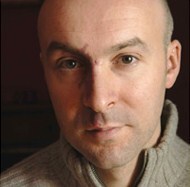
Christopher Brookmyre is a Scottish novelist whose novels mix politics, social comment and action with a strong narrative. He has been referred to as a Tartan Noir author. His debut novel was Quite Ugly One Morning, and subsequent works have included One Fine Day in the Middle of the Night, which he said "was just the sort of book he needed to write before he turned 30", and All Fun and Games until Somebody Loses an Eye (2005). Brookmyre also writes historical fiction with Marisa Haetzman, under the pseudonym "Ambrose Parry."
Listen up, nerds. Because you're going to love this book, so much. I'm going to write a review of it, and it's going to stand your hair on end, but in the meantime: this is the philosophy-loving, physics-enjoying, video game playing, potty-mouthed mythology-spotting plot lover's ideal holiday read.
The audiobook is excellent.
I hope this is selling it for you, because I've just finished it and I'm a little bit beside myself here. You know that euphoria you felt in the first sixty seconds after finishing Ready Player One? That.
-----
Read for Tartan Noir Month, 2015. Audiobook read by Kenny Blyth, who - can I just say - is from the Borders and has a lovely accent.
Even when venting off, Christopher Brookmyre is poetic. When hard man Kirk is taken aside by Mr Kane, the schoolboy expects a mild telling off, only to be ripped apart: “Do you know how many bright Scottish boys from places like Gleniston end up making the least of themselves, just because they’re afraid getting the head down and scoring good grades would clash with their hard man image? Too fucking many.” Christopher Brookmyre’s memories from his own school days in the Scottish town of Barrhead are crystal clear and his anger is unambiguous. Say what you think, Christopher.
Partly as a result, his latest novel – a horror, black comedy, commentary and polemic - is not only his best ever but an important book which deserves to become a modern day classic. Not least because of this, it should become a standard text in British schools; and for two other reasons. It has enough profanity - all within context as it happens but that’s irrelevant – to engage all young people irrespective of their interest in reading, but it also sets them the same challenge posed by Mr Kane to Kirk.
In telling this story about thirty sixth-formers on a retreat, Brookmyre has nailed the teenager: their angst, front, recklessness and sometimes self-destructive tendencies are there in spades; but this is balanced by their natural curiosity in many things beyond normal adolescence, internal self-awareness and their ability, when they feel like it, to articulate very clearly their feelings and observations on the world.
Brookmyre draws on several earlier works. In “A Tale Etched in Blood and Hard Black Pencil”, he alternated between a current day murder mystery (itself much in the style of his earlier Jack Parlabane novels) and flashbacks to the schooldays of those involved. Many of the tribes are re-used: the hard-men, the geeks, the bible-bashers, the quiet ones, the cool kids, the happy-go-lucky gang, the gossipers and one splendidly isolated emo.
The similarity ends there. In “Pandemonium”, some of the sixth-formers come to gory ends, but in a very creative way. The back story does not involve humans; it is about creatures from the bowels of the earth. It is also about a battle between two of Brookmyre’s favourite subjects: science versus faith.
He has recently written about both. In “All Fun and Games until Someone Loses an Eye”, his pulp fiction adventure goes into much scientific detail – some correct and some invented, irrelevant in either case – and shows his interest and understanding of physics and maths. Brookmyre has an inner geek, much like Adnan, his main character in “Pandemonium”.
In another recent novel, “Attack of the Unsinkable Rubber Ducks”, he did a hatchet job on so-called mystics. In “A Snow Ball in Hell”, his target was celebrity. In “Pandemonium” he turns his guns on the big one: both the message of religion and its medium, the Church. In doing so, he has clearly taken some of the arguments of “The God Delusion” by Richard Dawkins (to whom he dedicated "Attack....”, along with the rationalist James Randi), but he has also introduced a few challenges of his own, and they are not superficial. His thoughtful conversations between Mr Kane and Father Blake deserve a considered response from religious intellectuals.
This novel shows that Brookmyre is an outstanding writer, commentator and philosopher. He could probably also have been a scientist had he been born in an earlier, less specialised, age. I once wrote that he was a Renaissance Man, and this novel has the rigour that such a label deserves.
This rigour extends to his careful use of poetic licence. Mr Kane concludes his dressing down of Kirk with “And our unis end up full of overprivileged mediocrities from Fettes and fucking Hutchie Grammar and the like, who rise way above their abilities because they’re not afraid someone’s going to call them a poof for getting their sums right.” We all know that thick rich kids go to Fettes and Glasgow Academy, but that would require a slightly less poetic use of language.
Most of Brookmyre's books fit in the crime (with a dark sense of humour) category. This one is a slightly new direction, more horror gore-fest yet ultimately SF — with a dark sense of humour. Yet it still reads like a crime novel.
Take a coachload of Paisley schoolkids heading for a retreat to deal with the emotional effects of a recent violent incident at their school, an underground military base where physicists are working on a top-secret project, a Cardinal leading a Vatican team to deal with spiritual evil, and solid, breathing demons on the loose; mix generously with Brookmyre's usual sardonic wit, and you have a book that is quite different from his others yet still has the same flavour. In particular, the understanding of how reasoning actually should be applied to events is still there: how many books have a character casually using the principle of parsimony to explain why something happened? It's very difficult to say too much without either revealing too much of the plot or making it sound too much like A Tale Etched in Blood and Hard Black Pencil, which it only resembles as far as having well-drawn West of Scotland schoolkids.
Anyone who has enjoyed Brookmyre's books will very likely enjoy this one (I certainly did). The distinctive voice is still there, the humour is there (I particular liked the explanation of why there are only atheists in foxholes).... I suspect an SF reader who hasn't previously read Brookmyre might be less impressed, since the basic explanations of what has to have been happening are pretty clear from early in the book, although Brookmyre does a good job of covering the traces; but, then, I wouldn't suggest this as a good book to start with if you haven't read Brookmyre. As well as that, I did feel the end was (unusually for him) a little unsatisfactory. Or perhaps I just wanted there to be more of it.
Wow. Just wow. Don't know what to say. This book is simultaneously completely serious about itself and absolutely taking the piss, too. It's not even one OR the other, it's both at the same time. I don't know how that possible, but I haven't read anything so darkly tragic and yet, at the same time so ridiculously ironic. The whole story is sort of like... As a background for philosophical questions. Not many books will be like this. Especially hard to find one like that that's not being pretentious. And this one is certainly not. But at the same time, it's so heart-hammeringly full of adrenaline that I'm gonna have to go changed right about now. Soaking scare-sweat and I'm not even kidding you.
This story was so many things at the same time. Amazing. Absolutely amazing.
Well, that was a bit of an experience. I'm a big fan of Brookmyre. There is something remarkably refreshing about the way he writes while at the same time (usually) containing plenty of absurd violence and heartfelt social commentary. His books are much more enjoyable than that statement makes them sound. This one is a bit different though: he's took a mighty swerve to one side and given us horror, gore, religion, adolescent nightmares that none of us care to remember and managed to weave it all together in a gaming package. It's a truly remarkable achievement. So why only three stars? Only the very best get five and there is one slight problem with this: he has populated the novel with many, many characters (properly drawn it has to be said) but so many that it is hard to know exactly who is who. Plus, the first half of the novel is relatively slow (for Brookmyre) and yet the second half is full on. I would recommend everyone reads this. There isn't another like it (apart from, I suspect, a sequel).
I wasn’t expecting so much discussion and debate regarding religion and faith so maybe I went into this with the wrong expectations. I’m an atheist so reading this was just a complete waste of my time. I didn’t read anything that I hadn’t thought about before and I didn’t learn anything new from a different perspective. I actually found myself skim reading from about 50% in just to get it over with.
Would not recommend unless you are interested in reading about well known religious debates or reading about Scottish teenagers being teenagers!
The only reason I have given it 1 star instead of 0 is the action at the ending was OK.
PANDEMONIUM is certainly a convergence of two distinct worlds with the end result being bloody, blasphemous, and nothing short of brutal.
I read a couple of reviews of this book prior to delving in (something I don't tend to do all that often) whose sentiments mirrored that of my above sentence. Early in reading (as in 200pgs +) I thought I was looking at a different book to what was being reviewed by other readers and critics. Coming across as little more than teenage angst mixed with a Sunday school reform curriculum centered around restoring the grieving students faith following the loss of a class member - oh how things changed.
PANDAEMONIUM is survival horror and pure blood-splatter gore gloriously mixed with the notion of hell and it's inhabitants. It's a slow burn that steadily turns red hot - to use the tattered and tired phrase 'I couldn't turn the pages quick enough'.
A good story with some pretty decent horror scenes while posing questions about the Catholic faith vs science and throwing in a military cover up just for good measure. "There are only atheists in foxholes"....
I've been contemplating what to say about this. Normally CB's books have a pattern: comically inept criminals, unlikely heroes, Scottish theme (either based in Scotland or characters are Scottish), but despite that, they do always feel different. A lot of these are present here, but this time the genre is 'Gothic Horror' rather than 'Crime'.... and I'm not sure that it works for me. It certainly isn't as good as his usual stuff, but having said that I did still enjoy it.
So the blurb on the jacket says:
" A gothic horror story for the twenty-first century...
The senior pupils of St Peter's High School are on retreat to a secluded outdoor activity centre, coming to terms with the murder of a fellow pupil through the means you would
expect: counselling, contemplation, candid discussion and even prayer - not to mention booze, drugs, clandestine liaisons and as much partying as they can get away with.
Not so far away, the commanders of a top-secret military experiment, long-since spiralled out of control, fear they may have literally unleashed the forces of Hell.
Two very different worlds are on a collision course, and will clash in an earthly battle between science and the supernatural, philosophy and faith, civilisation and savagery.
The bookies are offering evens. "
Personally, I felt the book took too long to get going - lots of scene setting, lots of exploration of the St Peter's characters & back story. In fact if he'd just stuck to that - the teens & teachers & the way they explored & came to terms with their feelings - it might even have been a better book. But it was supposed to be gothic horror & it didn't kick in til over halfway through the book. When it did, it was a rollercoaster to the end. Maybe a bit predictable, but this isn't a genre I normally bother with, so that was fine by me.
As always, the characters were well observed & drawn & the kids were fabulous. So funny. Was saddened with the ending. Would have liked to carry on a little further & seen what happened next. Having said that, CB has a habit of throwing old characters into new books, so maybe we'll meet some of them again & find out whether they followed up on the new relationships they forged.
The only other thing that I found a little annoying was the tub thumping anti-religion. I happen to agree with most of what he's getting at, but felt this time he forced it down our throats a little too much. We get it! Don't keep on!
Lastly, there was one para that I really liked:
"The sun that "gave birth" to us died billions of years ago in a supernova, which created the higher elements that make up our solar system. And that means that every one of us here is literally made of stardust."
Still like CB, will continue to await his next offering eagerly, but hopefully this is his one & only attempt at Gothic Horror.
I really enjoy Christopher Brookmyre's novels, so when his latest was recommended by another of my favourite authors (Diana Gabaldon) I wasted no time in reading it!
Brookmyre's novels are a paradox in that they are full of certainties and uncertainties. The certainty is that they will involve violence and lots of blood, humour, satire, entertaining characters, red herrings and plot twists and a great dollop of Scottishness. The uncertainty involves those plot twists. The only thing you can be sure of in a Brookmyre novel is that you can't be sure of anything.
This novel contained all those elements and added two more - religion and science. It's almost like a cross between Be My Enemy and A Tale Etched in Blood and Hard Black Pencil with the Vatican in a supporting role. Some senior students of St Peter's High School are on a retreat in a remore part of the Scottish Highlands when a scientific experiment at a secret military base nearby goes terribly wrong and all hell breaks loose.
This is Brookmyre at his best. Great read - thanks Diana!
A bold change of direction away from the normal Brookmyre book revolving around a tightly plotted crime.
This one involves demons, teenagers, religious debate and quantum physics: quite a heady mix.
The characters are, as ever, skillfully drawn, and the dialogue crisp, funny and realistic. Some knowledge of Scottish vernacular will help, but the effect is startling.
Two strands of the story gather pace, and then they collide, violently. There are plenty of twists and turns, and I certainly didn't see who would be there at the end.
Puerile. My first book by this author & i have several others by Brookmyre, so i suppose i will revisit him at some time, though i'm in no hurry. I couldn't finish this book. The humour reminds me of Irvine Welsh, had Welsh been publishing at age 15.
Horror, gore, and black humour what's not to like. A bunch of Glasgow teenagers are taken on a retreat by their Catholic school. There has been a tragedy, and two of their classmates are dead. Their teachers think some quiet reflection and spiritual support may be appropriate. The students see it as an opportunity to get drunk, have the odd spliff, and see how far they can get with the opposite sex. Everything is set for a typical school trip. But what they don't know is that the venue is on top of a secret research facility equipped with top scientists, the American military, and a delegation from the Vatican and Daemons. Who is the most scary? Who has the worst attitude? Who will survive? Chris Brookmyer paints great characters and has produced a highly entertaining read.
I can see what Brookmyre was trying to do here: have a lively debate about religion, and the concept of evil, in a pop culture context. The central theme is one of how people's attitudes towards religion (in this case, Christianity, and more specifically Scots Catholicism) would change were they faced with the seeming reality of actual demons. It's a shame that it's so rough, even rubbish then. Especially compared to how tight his subsequent book Bedlam is. (Bedlam also deepens the videogames-in-literature material, here suggested by allusions to Doom etc.)
Pandaemonium has got some solid material, but boy does it take an age to get going. Half the book is build-up. Half of that doesn't even add anything to plot or theme. It reads like a first draft. I've no idea how this got published in this state - Brookmyre and his editor needed some intense sessions discussing what to cull. Get rid of a load of those kids, get rid of loads of their scenes, focus it. Focus dammit! Oh, and go easy on the Hollywood cliches (eg flame near a vehicle causes it to blow up).
I don't know, it's probably my own fault. I keep choosing books that appeal in terms of theme and subject matter, but are clearly underdeveloped and undisciplined. I'm starting to sound like a broken record with my cries for better edits, but seriously, so much of modern culture of churned out, when it needed to be tightened up. Meh.
i think there are two brookmyre modes: prosaic wheelhouse stuff, rich in detail and humor, making the most out of meager set pieces, and then the dude who writes books like mid budget hollywood action movies ought to be. the detail and humor are still there, the characters all literally sing from the pages, but the conceit is so large and blockbusterish that the book takes on this lunatic momentum, like a movie, but a book. the inner monologues render everything in more depth and pathos than most movies ever could, but there are people using chainsaws, improvised flamethrowers, shotguns, and fictional video game weapons. this book absolutely rules. the kids rule, the adults rule, the plot rules, the pacing is perfect, and some of the dialogue is out of this world [you fight like a lassie (there’s no italix option here but the italics really sell it, especially coming from a bampot teenager in the middle of coming out of the closet) being my favorite line of them all] and it also makes time for being an extended meditation on the inner and outer politics of catholicism? good god, what a fun time.
Brookmyre really strecthes credibility with this one. I've said before that you know what you are going to get before you even read it - great turns of scottish phrases, anger against something wrong in society (although toned down in this one), cracking pace and plotting - and with this one - so great science fictions explaining how the back story could come about.
Group of school kids are off to a recreational centre in the wilds of scotland - after one of their class has been stabbed at school. No-one captures group banter like Brookmyre.
At the same location - the military have created a portal to the underworld. Lots of intelligent debate of science vs. religion that is well researched and written.
The two worlds collide in a bloodbath that goes on for around 150 pages of unrelenting nonsense that undoes all the good work building to the story. It really is tedious beyond belief.
It does raise a couple of questions for me 1) does anyone read these books outside the UK and 2) do they understand them?
I feel very confused. Was a Terry Deary book accidentally put inside a Christopher Brookmyre cover? This was unlike any of Brookmyre's other books and it definitely wasn't as good.
The book is split into two halves, one concentrates on an unruly bunch of sixth formers on a school trip and the other follows Merrick a scientist. Any time I turned to the next chapter and saw 'Merrick' I immediately groaned. I really didn't like his half of the book; I found it tedious and uninteresting. The second half following the kids was much better and provided the comic relief but there were far too many characters for me to remember who was who and who was friends with who and it was hard to follow.
The subject matter didn't interest me either and although the plot definitely picked up pace towards the end, it wasn't good enough for me to fully enjoy.
Having said that I can imagine that this was make a great film.
This was a significantly tedious book, and I couldn't possibly recommend it to anyone. Just as I was going to give up the pace picked up, so I made it to the end, thus getting it the second star.
The "preamble" to the main action is slow and only vaguely interesting and takes the best part of two thirds of the book, exploring on one hand the teenage angst of a bus load of kids on retreat, and on the other the goings on at a scientific research establishment which seems to have opened a portal to hell.
In the final third of the book when these two stories come together it feels to me as if Brookmyre is angling for someone to create a screenplay from his book, with loads of all too predictable action and images mixed out of Alien via any shoot-em-up computer game.
There are other, better, Brookmyres. Don't waste your time on this mish-mash.
I have to say that Brookmyre is not shining in this book much. The plot takes a really long time to blossom, making the reader lose interest fairly quick. While the characters are fleshed out, almost three quarter of them will not last till the book's end, making the first half forgettable at best. For me, the ending, although satisfying, did not make up for the rest of the book. Admittedly, there are questions unanswered, which leave the story open for a sequel, yet there is hardly anything that would make this book stand out from the hundreds of its kin in the horror genre. This book is definitely not recommended for those who would like to read Brookmyre for the first time.
This is the first Christopher Brookmyre novel I've read, and he's as good writer as I was told he is. He spends the first half of the book introducing us to a group a of well written, believable characters, exploring their motivations and relationships. For all their faults and foibles, you can't help starting to care about them and wanting to learn what their future holds. Then in the second half of the book he kills loads of them off, but in an entertaining, fast moving and exciting way, while bringing the story to a satisfactory ending. There's nothing deep or meaningful to be found in this novel, apart from a dig at religion, but it's an enjoyable read.
As I did a pretty significant chunk of reading on one of the worst flights I have ever been on, I kept thinking to myself: 'You know what, it's fine. At least you're not in the Scottish Highlands, in a camp that's overrun with demons'. Gives you some perspective, this book.
Joking aside, I absolutely loved it: it entwines the tales of an experiment gone wrong and of a Catholic (Glaswegian) school retreat gone horribly wrong. It delves into some philosophy, and some religion, and some (quantum) physics and plenty of bloody gore. Sure, it has a lot of characters one needs to be mindful of - but without that element would it be a pandaemonium?
CB does a good job of describing teenagers: how they think, how they talk, how they go about politicking - but do I want to read several hundred pages about insecure little fucks thinking about nothing but sex and trying not to show they’re not that cool? No I don’t. And as I always say after reading Peter F. Hamilton: I’m not at all interested in teenage sexuality!! If you want to do some sexuality on a school trip make the teachers do it, not the frightened little children!
I’m more than halfway through the book and the two storylines still haven’t clashed. What the fuck is taking so long??!
Also: too many characters.
Update: okay, we had the clash. It was not that special.
A mischievously blasphemous comedy/teen gorefest horror mashup that definitely had its moments but is not quite as good as some of Brookmyre's other novels. A cross between Attack the Block, a classic 90s first person shooter PC game like Quake or Doom, and a cheezy 'school camp movie' like American Pie. The set up was elaborate and the huge list of characters were fleshed out with skill. But this led to an issue with the novel's pacing... not much happens for the 1st 250 pages (after which everything happens at once).
DNF - I usually like Brookmyre’s work but I couldn’t even finish this: so much religion and the build up was so tedious. I didn’t mind the school bus stuff but everything else was just really tedious. I have been stubborn in the past about always finishing books but if the events of the last few months have proved anything, it’s that life’s too short not to be enthralled by a book.
All of Brookmyre's usually wit and gore, this time with an interesting science fiction slant. As usual his characters are vivid and become friends or enemies by the end of the book. Well, those that survive do anyway. Another ripping yarn.
There is a distinct similarity in the set-up of most of Brookmyre’s non-Jack Parlabane or Angelique Di Xavia stories (and even in some of them) wherein a group of more-or-less innocents come to a confined place - usually in a remote part of Scotland - and are brought into confrontation with others intent on criminality or mayhem, who are overcome in the end. Pandaemonium conforms to these parameters precisely, except in one respect.
The innocents here are a cohort of schoolmates on an Outward Bound type expedition to help them come to terms with the violent deaths of two of their contemporaries. The danger they meet is of an extraordinary kind though, as it is not human. Scientists funded by the US military have been conducting experiments to find the graviton but instead broke the boundaries between the different worlds of the “many worlds” interpretation of quantum mechanics whereby each decision ever made spawns an alternative universe and less than a molecule’s width separates us from universes not our own. In this case daemons - horns and tails and all - have been brought through the portal between the worlds and kept in captivity under the former Fort Trochart. On the basis that the Church knows most about the potential threat from such creatures a Catholic Cardinal has been brought in to help investigate them. It turns out that demons have been “coming through into our world for centuries, most probably for millennia” and the Vatican knows all about it.
At the outset the disconnect between the two story strands is jarring. After a prologue set in the laboratory where the scenes are par for that sort of course, but with the usual conflicts between scientist and soldier exacerbated by the presence of Cardinal Tullian and his acolytes calling the shots Brookmyre’s tone alters considerably as he illustrates the pupils’ attitudes to the other sex and the prospect of the act itself; or, more pertinently, the lack of it. The peculiar mixture of bravado and innocence of the teenage boy is portrayed well enough as is the girls’ cliquishness and stoking of ammunition for point-scoring against each other but there are too many characters and they are insufficiently distinguished. Throw in among the adults in the party a martinet of an older teacher, a youngish Priest unsure of his faith and an unmarried woman of his age and parts of the story could write themselves. The balance between the two strands is also off-kilter.
Brookmyre illuminates the pressures of a Scottish Catholic upbringing and schooling. His clearly left scars. To his three dedicatees he says, “Be glad you went to PGS.” PGS is of course not a Catholic school. The baddies in his scenario are not the daemons - they are merely innocent victims of the project to find the graviton and only cause the destruction and bloodshed that they do because they have been starved of their soul food and in any case see us as the daemons, bent on their destruction. The real villain is the man who lets the daemons out of their confinement.
His later novel Bedlam was presented as Brookmyre’s first foray into Science Fiction. In fact, in its serious consideration of the many worlds theory, higher-dimensional space and expounding thereof, this has a greater claim to the title: even if the treatment more belongs to the coming of age and, perhaps, horror genres.