

What do you think?
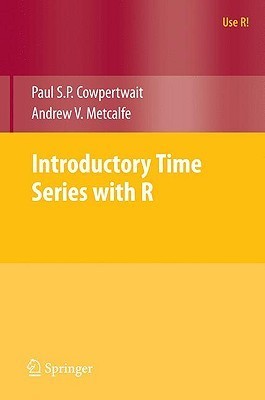
Introductory Time Series with R
This book gives you a step-by-step introduction to analysing time series using the open source software R. Each time series model is motivated with practical applications, and is defined in mathematical notation. Once the model has been introduced it is used to generate synthetic data, using R code, and these generated data are then used to estimate its parameters. This sequence enhances understanding of both the time series model and the R function used to fit the model to data. Finally, the model is used to analyse observed data taken from a practical application. By using R, the whole procedure can be reproduced by the reader. All the data sets used in the book are available on the website The book is written for undergraduate students of mathematics, economics, business and finance, geography, engineering and related disciplines, and postgraduate students who may need to analyse time series as part of their taught programme or their research.
272 pages, Paperback
First published June 9, 2009
Ratings & Reviews
Friends & Following
Create a free account to discover what your friends think of this book!
Community Reviews
Displaying 1 - 6 of 6 reviews

March 7, 2015
A good intro to time series. However, for people who are looking for something they can use to forecast thousands of entities automatically, I suggest the forecast package by Hyndman. I work for a large retailer and his package allows us to forecast demand for 100k+ SKUs without having to figure out the three things you really need to know about each 1) error, 2) trend, and 3) seasonality. If anyone is really interested in this area, I going straight to this paper first - http://www.jstatsoft.org/v27/i03/paper

April 29, 2026
This is a good book to get you started on time series. It does what it wants to do well and in short time.
The book can be pretty brief, which is a strength and a weakness I think. Sometimes glossing over things maybe a bit too quick for me. It's probably more of a strength than a weakness, this is really intended as an introduction and doesn't seek to be too comprehensive.
Clearly written and a pretty enjoyable read for a text on coding and math.
A couple notes:
- I cannot comment on the quality of any code as I am by no means an expert myself, maybe I'll come back to this someday.
- I have not read this book in its entirety — the last three chapters are not required for my upcoming exam. I might just come back to those last three chapters at some point too.
The book can be pretty brief, which is a strength and a weakness I think. Sometimes glossing over things maybe a bit too quick for me. It's probably more of a strength than a weakness, this is really intended as an introduction and doesn't seek to be too comprehensive.
Clearly written and a pretty enjoyable read for a text on coding and math.
A couple notes:
- I cannot comment on the quality of any code as I am by no means an expert myself, maybe I'll come back to this someday.
- I have not read this book in its entirety — the last three chapters are not required for my upcoming exam. I might just come back to those last three chapters at some point too.

March 22, 2018
Overall this is my favorite first book on time series, provided you already understand regression. The first half of this book is a very gentle and comprehensible introduction; the second half is a lightning tour of more advanced techniques which has impressively broad coverage but which will not be as easy to follow.

September 4, 2020
Excellent description with a lot of paradigms and graphs. It rpovides both mathematical quations and R coding examples. Essential for R users. I definitely recommend it. 5 stars.

April 6, 2021
Kinda like a laundry list type book with some examples.
Not a thorough treatment and context setting to truly be labelled 'introductory'.
Not a thorough treatment and context setting to truly be labelled 'introductory'.

April 26, 2026
Definitely improved my understanding of MAS II material.
Displaying 1 - 6 of 6 reviews