Jump to ratings and reviews
Rate this book

Reginald

Rate this book
Saki was the pen name of British author Hector Hugh Munro, a witty, often macabre author who wrote an appreciative novel of the German conquest of England and then (in his forties, mind you!) signed up to die on the Belgian front during World War I. He's considered a master of the short story and is often compared to O. Henry and Dorothy Parker. His stories are generally short and often memorable. If you haven't read him before, you're in for a treat.

112 pages, Hardcover

First published January 1, 1904

18 people are currently reading
213 people want to read

About the author

Saki

1,667 books588 followers
British writer Hector Hugh Munro under pen name Saki published his witty and sometimes bitter short stories in collections, such as The Chronicles of Clovis (1911).

His sometimes macabre satirized Edwardian society and culture. People consider him a master and often compare him to William Sydney Porter and Dorothy Rothschild Parker. His tales feature delicately drawn characters and finely judged narratives. "The Open Window," perhaps his most famous, closes with the line, "Romance at short notice was her specialty," which thus entered the lexicon. Newspapers first and then several volumes published him as the custom of the time.

His works include
* a full-length play, The Watched Pot , in collaboration with Charles Maude;
* two one-act plays;
* a historical study, The Rise of the Russian Empire , the only book under his own name;
* a short novel, The Unbearable Bassington ;
* the episodic The Westminster Alice , a parliamentary parody of Alice in Wonderland ;
* and When William Came: A Story of London under the Hohenzollerns , an early alternate history.

Oscar Wilde, Lewis Carroll, and Joseph Rudyard Kipling, influenced Munro, who in turn influenced A. A. Milne, and Pelham Grenville Wodehouse.

Ratings & Reviews

What do you think?
Rate this book

Friends & Following

Create a free account to discover what your friends think of this book!

Community Reviews

5 stars
110 (26%)
4 stars
152 (36%)
3 stars
110 (26%)
2 stars
33 (8%)
1 star
7 (1%)
Displaying 1 - 30 of 60 reviews
Profile Image for Glenn Russell.
1,511 reviews13.3k followers
February 10, 2018


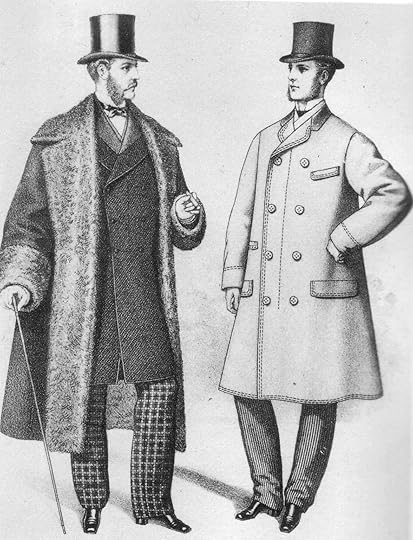
Lesson to last a lifetime - never put pressure on an aesthete or lover of books or someone with highly refined taste to attend a social occasion filled with idle chit-chat. It will not work as the narrator of this delightfully hilarious Saki tale finds out the hard way. And keeping in the spirit of this snapping Saki shorty and as something of a bonus (I hope), I have included my own microfiction beneath the illustration of those two Victorian gentlemen. Bon appétit.

REGINALD
I did it–I who should have known better. I persuaded Reginald to go to the McKillops’ garden-party against his will.

We all make mistakes occasionally.

“They know you’re here, and they’ll think it so funny if you don’t go. And I want particularly to be in with Mrs. McKillop just now.”

“I know, you want one of her smoke Persian kittens as a prospective wife for Wumples–or a husband, is it?” (Reginald has a magnificent scorn for details, other than sartorial.) “And I am expected to undergo social martyrdom to suit the connubial exigencies” –

“Reginald! It’s nothing of the kind, only I’m sure Mrs. McKillop Would be pleased if I brought you. Young men of your brilliant attractions are rather at a premium at her garden-parties.”

“Should be at a premium in heaven,” remarked Reginald complacently.

“There will be very few of you there, if that is what you mean. But seriously, there won’t be any great strain upon your powers of endurance; I promise you that you shan’t have to play croquet, or talk to the Archdeacon’s wife, or do anything that is likely to bring on physical prostration. You can just wear your sweetest clothes and moderately amiable expression, and eat chocolate-creams with the appetite of a blase parrot. Nothing more is demanded of you.”

Reginald shut his eyes. “There will be the exhaustingly up- to-date young women who will ask me if I have seen San Toy: a less progressive grade who will yearn to hear about the Diamond Jubilee–the historic event, not the horse. With a little encouragement, they will inquire if I saw the Allies march into Paris. Why are women so fond of raking up the past? They’re as bad as tailors, who invariably remember what you owe them for a suit long after you’ve ceased to wear it.”

“I’ll order lunch for one o’clock; that will give you two and a half hours to dress in.”

Reginald puckered his brow into a tortured frown, and I knew that my point was gained. He was debating what tie would go with which waistcoat.

Even then I had my misgivings.

* * *

During the drive to the McKillops’ Reginald was possessed with a great peace, which was not wholly to be accounted for by the fact that he had inveigled his feet into shoes a size too small for them. I misgave more than ever, and having once launched Reginald on to the McKillops’ lawn, I established him near a seductive dish of marrons glaces, and as far from the Archdeacon’s wife as possible; as I drifted away to a diplomatic distance I heard with painful distinctness the eldest Mawkby girl asking him if he had seen San Toy.

It must have been ten minutes later, not more, and I had been having QUITE an enjoyable chat with my hostess, and had promised to lend her The Eternal City and my recipe for rabbit mayonnaise, and was just about to offer a kind home for her third Persian kitten, when I perceived, out of the corner of my eye, that Reginald was not where I had left him, and that the marrons glaces were untasted. At the same moment I became aware that old Colonel Mendoza was essaying to tell his classic story of how he introduced golf into India, and that Reginald was in dangerous proximity. There are occasions when Reginald is caviare to the Colonel.

“When I was at Poona in ’76” –

“My dear Colonel,” purred Reginald, “fancy admitting such a thing! Such a give-away for one’s age! I wouldn’t admit being on this planet in ’76.” (Reginald in his wildest lapses into veracity never admits to being more than twenty- two.)

The Colonel went to the colour of a fig that has attained great ripeness, and Reginald, ignoring my efforts to intercept him, glided away to another part of the lawn. I found him a few minutes later happily engaged in teaching the youngest Rampage boy the approved theory of mixing absinthe, within full earshot of his mother. Mrs. Rampage occupies a prominent place in local Temperance movements.

As soon as I had broken up this unpromising tete-a-tete and settled Reginald where he could watch the croquet players losing their tempers, I wandered off to find my hostess and renew the kitten negotiations at the point where they had been interrupted. I did not succeed in running her down at once, and eventually it was Mrs. McKillop who sought me out, and her conversation was not of kittens.

“Your cousin is discussing Zaza with the Archdeacon’s wife; at least, he is discussing, she is ordering her carriage.”

She spoke in the dry, staccato tone of one who repeats a French exercise, and I knew that as far as Millie McKillop was concerned, Wumples was devoted to a lifelong celibacy.

“If you don’t mind,” I said hurriedly, “I think we’d like our carriage ordered too,” and I made a forced march in the direction of the croquet-ground.

I found everyone talking nervously and feverishly of the weather and the war in South Africa, except Reginald, who was reclining in a comfortable chair with the dreamy, far-away look that a volcano might wear just after it had desolated entire villages. The Archdeacon’s wife was buttoning up her gloves with a concentrated deliberation that was fearful to behold. I shall have to treble my subscription to her Cheerful Sunday Evenings Fund before I dare set foot in her house again.

At that particular moment the croquet players finished their game, which had been going on without a symptom of finality during the whole afternoon. Why, I ask, should it have stopped precisely when a counter-attraction was so necessary? Everyone seemed to drift towards the area of disturbance, of which the chairs of the Archdeacon’s wife and Reginald formed the storm-centre. Conversation flagged, and there settled upon the company that expectant hush that precedes the dawn– when your neighbours don’t happen to keep poultry.

“What did the Caspian Sea?” asked Reginald, with appalling suddenness.

There were symptoms of a stampede. The Archdeacon’s wife looked at me. Kipling or someone has described somewhere the look a foundered camel gives when the caravan moves on and leaves it to its fate. The peptonised reproach in the good lady’s eyes brought the passage vividly to my mind.

I played my last card.

“Reginald, it’s getting late, and a sea-mist is coming on.” I knew that the elaborate curl over his right eyebrow was not guaranteed to survive a sea-mist.

“Never, never again, will I take you to a garden-party. Never . . . You behaved abominably . . . What did the Caspian see?”

A shade of genuine regret for misused opportunities passed over Reginald’s face.

“After all,” he said, “I believe an apricot tie would have gone better with the lilac waistcoat.”


THE BACKHANDED COMPLEMENT
All the people gather round and shower me with compliments. Right in the middle of my shower, someone enters our gathering and delivers a backhanded compliment. I feel all the indignity and shock of having been slapped in the face by the back of someone's hand. Not the smooth palm, but the bony backhand. Had the deliverer of this backhanded compliment remained with us, I would confront him with his affront to my dignity. But the backhander is no longer with us. He delivered his backhanded complement and made his exit. The other members share my indignity and shock at such an insult.
"How coarse and vile!" someone exclaims. "To say such a thing and then exit by the back door."
Profile Image for Eleanor.
614 reviews57 followers
May 28, 2015
Just like a perfect soufflé - light and utterly delicious. Very reminiscent of Oscar Wilde:

"Reginald had left the selection of a feeding-ground to her womanly intuition, but he chose the wine himself, knowing that womanly intuition stops short at claret. A woman will cheerfully choose husbands for her less attractive friends, or take sides in a political controversy without the least knowledge of the issues involved - but no woman ever cheerfully chose a claret." ("Reginald at the Carlton")

and:

"The young have aspirations that never come to pass, the old have reminiscences of what never happened. It's only the middle-aged who are really conscious of their limitations - that is why one should be so patient with them. But one never is." ("Reginald at the Carlton")

Highly recommended as a pick-me-up!
Profile Image for Rose.
401 reviews53 followers
Read
October 30, 2009
I love Munro. His skill with the eminently quotable epigrams and pearls of wisdom effortlessly embedded in his stories makes me surprised that he seems to receive less attention for them than Oscar Wilde does for his. In this book, some of my favourites included:

"Trouble is not one of those fancies you can take up and drop at any moment; it's like a grouse-moor or the opium-habit--once you start it you've got to keep it up."

"To my mind, education is an absurdly over-rated affair. At least, one never took it very seriously at school, where everything was done to bring it prominently under one's notice. Anything that is worth knowing one practically teaches oneself, and the rest obtrudes itself sooner or later."

"Hors d'oeuvres have always a pathetic interest for me," said Reginald: "they remind me of one's childhood that one goes through, wondering what the next course is going to be like--and during the rest of the menu one wishes one had eaten more of the hors d'oeuvres."

"Children are given us to discourage our better emotions."

And as a bonus, I loved the description of a girl who wears "a frock that's made at home and repented at leisure".
Profile Image for Leslie.
2,760 reviews231 followers
March 9, 2014
I found these short stories, which are very short by the way, very amusing but very British turn-of-the-century (meaning the early 1900s not the early 2000s!!). Those readers not familiar with this period might not understand what is so funny about them.

However, I think that if you like the humor of Oscar Wilde, it would be worth trying some of Saki's short stories.
Profile Image for Scott.
207 reviews63 followers
October 1, 2009
Elegant, urbane, and effete, with a surprising streak of cruelty, Reginald is a perfect antidote to Baden Powell's Boy Scouts ... or maybe the raison d'etre for the whole youth movement. Reginald exercises his snarky wit against the foibles of Edwardian England's upper crust, at the expense of capitalists, imperialists, and the poor lads in the choir. If you like Wilde's brilliant repartee, or Wodehouse's cheeky Psmith, or the nearly sadistic tone of Hilaire Belloc's Cautionary Tales for Children , you'll very probably enjoy Saki's Reginald (1904).
Profile Image for John Anthony.
942 reviews166 followers
November 8, 2025
Halfway through I questioned why I was reading this tosh! But it got better and even raised the odd titter and smile. Edwardian camp.
Profile Image for H. P. Reed.
286 reviews16 followers
March 18, 2017
Reginald is Bertie Wooster with edge. Lots of edge. Or perhaps he's actually a cat in human form. Yes, admirer of felines though I am, they are, like Reginald, lackadaisical and selfish to an almost virtuous degree. There's no desire to please in Reginald, no wish to keep the peace. He is focused on only one issue: the care and feeding of Reginald. I wouldn't want to meet him in the preciously dressed flesh but Saki's Bright Young Thing is fun to follow in this book. He says things normal people would never think of saying to all the stuffy, self-satisfied upper middle-class folk he meets. An illustrative passage gives us an idea of Reginald's general behavior when bored. His friend, who brought him to a garden party tells us that
"Reginald, ignoring my efforts to intercept him, glided away to another part of the lawn. I found him a few minutes later happily engaged in teaching the youngest Rampage boy the approved theory of mixing absinthe, within full earshot of his mother. Mrs. Rampage occupies a prominent place in local Temperance movements."
While we in the 21st century are long past the day of Temperance movements, we can still appreciate the chaos that Reginald brings to a very boring situation. In relieving himself, he brightens our day.
Profile Image for Owen Townend.
Author 9 books14 followers
March 9, 2021
A brief return to a sharp wit. Having enjoyed A Shot in the Dark, I decided that I wanted to sample some more of the short works of Saki (or H. H. Munro) and this book seemed a perfect length for that.

That being said, Reginald is a focused collection of the life and times of one particular upper-class rascal. Reginald is a chaotic personality to say the least, a rebel with a quip for every occasion and an irrepressibly blasé attitude to High Society. While he is definitely droll and cutting in his wordplay, his actions prove insanely macabre, from shooting a peacock to making an entire household believe that an annoying early riser has shot herself. It soon becomes apparent that Reginald would be quite content if the world should suddenly combust in his presence and never mind the spent match in his hand.

While I didn't find the individual stories terribly engaging, I did appreciate the vivid picture they painted of this oddly lovable contrarian. Reginald is definitely not the kind of person anyone would want to meet a civilised dinner party but he is a fascinating character study and walking critique of the era that Saki was living in. I'm sure the author has written stronger stories in other books but Reginald confirms that I definitely enjoy Saki's writing style.

I recommend Reginald to Edwardian history buffs with a love of outrageous dark humour.

Notable Stories

• Reginald – the first story featuring the character reveals all you need to know about his quick wit and destructive tendencies.

• Reginald’s Peace Poem – seeing Reginald dabble in moralistic poetry is absurd but craftily handled.

• Reginald’s Christmas Revel – Reginald gets into a kind of seasonal spirit but his idea of ‘jolly’ is rather twisted.
Profile Image for Rafa.
188 reviews3 followers
October 20, 2024
Breve colección de relatos, aún más breves, de Saki.

Es Saki, pero no es el mejor Saki. Y es un libro muy breve.

Tiene la ironía y el saber hacer de Saki, pero cojea algo... y es muy breve.

Y, no quiero que se me quede en el tintero, que con la edad uno ya se despista, es un libro muy breve.

Espero haber contribuido brevemente a aclarar lo que se puede esperar de este breve volumen.
Profile Image for Diane.
351 reviews77 followers
November 24, 2016
A funny, often anarchic collections of short fiction about Reginald, a mischievous young man who delights in causing trouble, especially for older, more conservative members of society. The narrator of "Reginald" states:

"I did it — I who should have known better.  I persuaded Reginald to go to the McKillops’ garden-party against his will.

We all make mistakes occasionally."


That's a bit of understatement, considering Reginald's behavior at the party.

Then there's the attempt of the vicar's daughter to reform Reginald. She mistakenly allows him to supervise the annual outing of the choirboys that culminates in a Bacchanalian procession through the village:

"The singing had died down long before the main street was reached, but the miserable wailing of pipes brought the inhabitants to their doors.  Reginald said he had seen something like it in pictures; the villagers had seen nothing like it in their lives, and remarked as much freely.

Reginald’s family never forgave him.  They had no sense of humour."


Then there's his prank on the rather pompous Miss Langshan-Smith:

"There was a paper pinned on her door with a signed request that she might be called particularly early on the morrow.  Such an opportunity does not come twice in a lifetime.  I covered up everything except the signature with another notice, to the effect that before these words should meet the eye she would have ended a misspent life, was sorry for the trouble she was giving, and would like a military funeral.  A few minutes later I violently exploded an air-filled paper bag on the landing, and gave a stage moan that could have been heard in the cellars.  Then I pursued my original intention and went to bed.  The noise those people made in forcing open the good lady’s door was positively indecorous; she resisted gallantly, but I believe they searched her for bullets for about a quarter of an hour, as if she had been an historic battlefield."


Reginald also sees himself as a philosopher, and has opinions on just about everything. For example, on aunts:

"Then there are aunts.  They are always a difficult class to deal with in the matter of presents.  The trouble is that one never catches them really young enough.  By the time one has educated them to an appreciation of the fact that one does not wear red woollen mittens in the West End, they die, or quarrel with the family, or do something equally inconsiderate.  That is why the supply of trained aunts is always so precarious."


On canaries:

"I knew a canary once that had been trying for months and years to hatch out a family, and everyone looked upon it as a blameless infatuation, like the sale of Delagoa Bay, which would be an annual loss to the Press agencies if it ever came to pass; and one day the bird really did bring it off, in the middle of family prayers.  I say the middle, but it was also the end: you can’t go on being thankful for daily bread when you are wondering what on earth very new canaries expect to be fed on."


Education:

"And then there’s the Education Question — not that I can see that there’s anything to worry about in that direction.  To my mind, education is an absurdly over-rated affair.  At least, one never took it very seriously at school, where everything was done to bring it prominently under one’s notice.  Anything that is worth knowing one practically teaches oneself, and the rest obtrudes itself sooner or later.  The reason one’s elders know so comparatively little is because they have to unlearn so much that they acquired by way of education before we were born."


Children:

"It is dreadful to think that other people’s grandchildren may one day rise up and call one amiable.

There are moments when one sympathises with Herod.


"Reginald" is like a mix of "MASH", the Marx brothers, and P. G. Wodehouse. The stories sometimes lag, which is why I only gave it four stars, but there is a lot that is very funny, especially "Reginald's Choir Treat" and "Reginald's Christmas Revel." There is a sequel, Reginald in Russia, which I have not read yet.
Profile Image for Dione Basseri.
1,034 reviews43 followers
August 22, 2017
Irreverence in line with "The Importance of Being Earnest," or, honestly, lots of early 20th century plays! Reginald is built of nothing but vice and cleverness, and he can talk around you so much that you become certain said vice is only the highest of virtues. The absurdities pile up with each story, but they all stand on their own, so feel to read this out of order, if you please.

Saki has some of the best punchlines of any writer I've ever seen. This being my particular favorite: "She leaned back and snorted, ‘You’re not the boy I took you for,’ as though she were an eagle arriving at Olympus with the wrong Ganymede." It flows so well, and the ending is so unexpected, but so perfect, for anyone with a bit of mythology knowledge. Just one word, and you know exactly how she has been speaking.

This book is in the public domain, so go out looking for it free at Project Gutenberg. Or, if you want an audio version, there's one for free at Librivox. And if you ever see a complete works of Saki book, GET IT. Well worth the investment!
Profile Image for Stewart.
708 reviews9 followers
March 8, 2016
Side-splitting. Reginald, should he have consented to do such an unlikely thing as procreate, might have sired Evelyn Waugh's divine Anthony Blanche. These stories are really not stories so much as a continuous monologue, a frame from which to hang dazzling epigrammatical baubles, but it doesn't matter. Par exemple: "Youth should suggest innocence, but never act on the suggestion." Wickedly funny.
Profile Image for Mo.
1,890 reviews189 followers
July 12, 2016
I read these short stories off and on over the past month. They brought to mind a quote by Oscar Wilde:

description
Profile Image for Bibliolyra.
24 reviews
July 25, 2023
*Published in 1904*
I read this for my chronological reading project on Bookstagram, where I read a publication for each year of the 20th century.

~ Reginald by Saki ~

"I did it — I who should have known better.  I persuaded Reginald to go to the McKillops’ garden-party against his will.

We all make mistakes occasionally."

Do you like irony, dark humour, Edwardian history, social criticism and witty short stories? Then Saki might be for you. Saki is often compared to Oscar Wilde and P.G. Wodehouse. I haven’t read Wodehouse yet, but I agree with the similarities to Wilde, whose work and humour I love.

The Reginald stories are little snippets out of Reginald’s life, an upper-class rascal whose lack of tact causes trouble when he’s with individual people or at social events. He’s not unwittingly tactless, though, but rather delights in causing trouble. It’s fun to read about him, but I’m not sure I would want to meet him in the flesh. He doesn’t care about keeping the peace in a social situation, he wants to ruffle someone’s feathers and amuse himself.

The stories are very 1900s, so a little knowledge about the era Saki was living in might be useful to appreciate them. However, they are deliciously ironic and surprisingly savage!

~ Quotes ~

"I found everyone talking nervously and feverishly of the weather and the war in South Africa, except Reginald, who was reclining in a comfortable chair with the dreamy, far-away look that a volcano might wear just after it had desolated entire villages."

~

"I hope you were not too brutal?"

"I merely told her with engaging simplicity that the art of life was the avoidance of the unattainable."

~

"Of course," she resumed combatively, "it's the prevailing fashion to believe in perpetual change and mutability, and all that sort of thing, and to say we are all merely an improved form of primeval ape — of course you subscribe to that doctrine ?"

"I think it decidedly premature ; in most people I know the process is far from complete."

~

"Life is full of its disappointments," observed the Duchess, " and I suppose the art of being happy is to disguise them as illusions. But that, my dear Reginald, becomes more difficult as one grows older."

"I think it's more generally practised than you imagine. The young have aspirations that never come to pass, the old have reminiscences of what never happened. It's only the middle-aged who are really conscious of their limitations — that is why one should be so patient with them. But one never is."

~

"There was a paper pinned on her door with a signed request that she might be called particularly early on the morrow.  Such an opportunity does not come twice in a lifetime.  I covered up everything except the signature with another notice, to the effect that before these words should meet the eye she would have ended a misspent life, was sorry for the trouble she was giving, and would like a military funeral.  A few minutes later I violently exploded an air-filled paper bag on the landing, and gave a stage moan that could have been heard in the cellars.  Then I pursued my original intention and went to bed.  The noise those people made in forcing open the good lady’s door was positively indecorous; she resisted gallantly, but I believe they searched her for bullets for about a quarter of an hour, as if she had been an historic battlefield."

~ Some facts about the year 1904 ~

In the year 1904:
- J. M. Barrie's play Peter Pan, or The Boy Who Wouldn't Grow Up premières in London
- The International Alliance of Women is founded; historically the main international organization that campaigned for women's suffrage

Born in 1904:
- Salvador Dalí, Spanish surrealist artist (died 1989)
- Dr. Seuss, American children's writer (died 1991), best known for How the Grinch Stole Christmas

Died in 1904:
- Anton Chekhov, Russian writer (born 1860); I read his play The Three Sisters for the year 1901
- Kate Chopin, American writer (born 1850); best known for The Awakening, which I've read years ago and highly recommend

🎨 1904 in art:
- Portrait of Lady Helen Vincent, Viscountess D'Abernon, by John Singer Sargent
- Luxe, Calme et Volupté at Saint-Tropez by Henri Matisse; considered the start of Fauvism
-
🎶 1904 in music: Estampes by Claude Debussy

🎬 1904 in film: The Impossible Voyage; French silent film by Georges Méliès; Inspired by Jules Verne's Journey Through the Impossible, and modeled in style and format on Méliès's A Trip to the Moon
Profile Image for Kelsey Dangelo-Worth.
599 reviews14 followers
October 8, 2025
Saki is becoming one of my all time favorite short story authors. I'm dying laughing from these, texting them to my husband to read. Even his lesser known ones are gems.
3,539 reviews184 followers
February 9, 2023
I adore Saki and although compared to his later collections of stories this one does not contain any of his finest writings this is still a wonderful selection of some of the funniest short stories you are likely to read. They are also fascinating as they reveal Saki as a link between the world of Wilde's Lord Henry Wotton, Forster's Cecil Vasey and Wodehouse's Bertie Wooster. Reginald is the first of Saki's young men who aren't quite aesthetes, nor intellectuals and certainly not clubmen but are deeply concerned with being well dressed, well fed, well acquainted with fashionable society who go everywhere and know everyone and most importantly are known but not always totally approved of. They are distinctly not hearty sorts but above everything else Reginald. Like all Saki's creations (like those of Wodehouse) his are utterly conversant with classical and biblical references and stories.

As stage one in getting to know Saki I can recommend nothing better then reading his collections as they first appeared and get to know him and his world. Don't read these stories too quickly, savour them - they are wonderful treats. This is a book that will provide you with nothing but joy.
Profile Image for Bhan13.
201 reviews2 followers
January 22, 2012
A familiarity with Edwardian England and Victorian literature increases enjoyment of this book *a lot* because of the constant references, I am reading this aloud to others and sometimes we're laughing so hard we're crying. We all adore Reginald although he is so terrible it would be hard to have him in the house.

It's hard to pick just a few epigrams because Munro is such a master, I wish I could just copy out 'Reginald on House-Parties' and 'Reginald's Peace Poem' in their entirety.

........

Waldo is one of those people who would be enormously improved by death.

..‘The Feast of Nemesis’

Reginald sat in a corner of the Princess’s salon and tried to forgive the furniture, which started out with an obvious intention of being Louis Quinze, but relapsed at frequent intervals into Wilhelm II.

..‘Reginald in Russia’

Reginald closed his eyes with the elaborate weariness of one who has rather nice eyelashes and thinks it useless to conceal the fact.

..‘Reginald’s Drama’

Think how many blameless lives are brightened by the blazing indiscretions of other people.

..‘Reginald at the Carlton’

Reginald in his wildest lapses into veracity never admits to being more than twenty-two.

..‘Reginald’

We all know that Prime Ministers are wedded to the truth, but like other married couples they sometimes live apart.

..'The Unbearable Bassington', ch. 13 (1912)
Profile Image for Letty.
86 reviews
April 13, 2016
This collection of short stories, or rather sketches, is an entertaining read, very Wilde-like in its biting humour satirizing the upper-class society of pre-WWI London. Yet, the light tone can be quite deceiving as hints at the looming war and international conflicts permeate the stories (the second Boer war, the situation in the Balkans and France are evoked), which may be explained by the fact Saki (a.k.a Hector Hugh Munro) spent the first decade of the 20th century as a foreign correspondent.

I both read the book and listened to the audio recording, read by Richard Crowest. The conceited, old-fashioned voice put on by the performer perfectly suits the ambience. However, it might get a little annoying, just like the stories themselves can feel unnecessarily contrived at times.
Profile Image for Rachel Stevenson.
439 reviews17 followers
December 28, 2017
The missing link between Oscar Wilde and P.G. Wodehouse, this collection is less an assortment of short stories and more a selection of epigrams, but they are no less witty and incisive for that. The best was about the death of a prized peacock (somewhat funnier than it sounds).
95 reviews10 followers
November 27, 2016
A very nice collection of short stories by the famed writer of the 90's Hector Hugh Munro(Saki). The book's based on a young man Reginald.
The book's really fun to read and is very gripping. It's a very light read.
Profile Image for Peter G.
147 reviews
May 3, 2025
The centripetal force of this collection is the main character Reginald. A youngish upper-class dandy and aesthete, a sort of knock-off Oscar Wilde who generally either haunts some social events to which he has been inadvisedly invited, or instead, holds forth in a monologue describing some sort of personal take on a phenomenon. The humour is in his obliviousness, mostly. And the way his thoughts are subversively radical and the way they are expressed bounce off the other characters in the story — primarily stuffy old icons of privilege. The collection takes the form of a short series of barely-structured vignettes which I suppose are primarily social commentary in the way they reflect and amplify the pretentious and hypocrisies of Edwardian England in an irrelevant way.

Certainly there’s hay to be had here, at the turn of the century at least, and Saki makes the most of the material in a way that has clearly been influential to others. He counts Evelyn Waugh and P. G. Wodehouse among his admirers. For me, well… I did find it entertaining in parts, but not really substantially so. It’s a sort of feuilleton-like humour where each story has a central comedic premise and spins that premise up to a climax neatly with the rhythm of a comedy routine. Saki has some of that bombastic Wodehouse style approach to prose and can drop the odd witticism that ranks with some of the best — but he is too often, to my mind, a bit content to be just play out the premise of each story. There may be some knowledge of historical context that let some of the meaning leak-out for me but actually I suspect not. Literary humour just ages fast I suspect. This is a deeply, deeply, unserious collection. It’s short and goes by easily. Probably worth reading to see how Saki’s work influenced other writers who did it better than him, but I didn’t love this that much.
Profile Image for Preetam Chatterjee.
6,770 reviews357 followers
December 16, 2025
The central character 'Reginald' is not a character so much as a stance toward the world. He speaks from the fault line between politeness and contempt, using conversation as a form of controlled detonation.

In these stories, nothing much happens—and yet everything is destabilised. Saki understands that Edwardian society’s true drama lies not in events but in opinions delivered with exquisite timing.

Reginald’s monologues function like anti-sermons. They reverse the moral gravity of drawing-room values, exposing charity, duty, and propriety as social performances rather than ethical truths.

What makes this postmodern before its time is the self-awareness: Reginald knows he is performing and knows language is a weapon and shield simultaneously.

There is no expectation that Reginald be likable. He is brilliant, selfish, cruel, and observant. Saki does not soften him. Instead, he invites the reader into complicity. Laughter becomes an ethical problem. You laugh—and then realise what you’ve laughed with.

Reginald’s world is one where sincerity is suspect and boredom is the ultimate sin. His voice cuts through convention not to improve society, but to amuse himself. That refusal of moral obligation is precisely the point. Reginald does not seek change. He seeks accuracy.

Read today, Reginald feels uncannily modern: ironic, performative, and exhausted by sanctimony. He anticipates the essayist, the satirist, and the online contrarian long before such forms existed. Saki gives us not a hero, but a lens—sharp, amused, and dangerous.

Brilliant. Give it a go......
Profile Image for Victor Santillán .
64 reviews4 followers
December 11, 2017
Al entender que Reginald es un “dandy” de la aristocracia británica, siempre burlándose de la sociedad y las costumbres en las que vive hace bastante amena la lectura. Historias cortas por momentos contadas en primera persona, en otros contadas por algún amigo de Reginald deja en evidencia la forma prejuiciosa y recatada de la sociedad británica. Haría falta leerlo en su idioma original para entender gran parte de los chistes que se han perdido en la traducción. Sin embargo, cuenta con grandes momentos de humor.
Profile Image for Johan D'Haenen.
1,095 reviews13 followers
April 21, 2019
Satire op z'n best... Saki maakt er geen punt van om de bourgeoisie en de al dan niet vermeende adel in al haar kleingeestigheid voor schut te zetten. Mij doet het denken aan die uitspraak van Shakespeare:
“But man, proud man,
Dress'd in a little brief authority,
Most ignorant of what he's most assur'd—
His glassy essence—like an angry ape
Plays such fantastic tricks before high heaven
As makes the angels weep; who, with our spleens,
Would all themselves laugh mortal.”
Profile Image for RJ - Slayer of Trolls.
990 reviews191 followers
Want to read
October 24, 2023
Contains the stories:

Reginald -
Reginald on Christmas Presents -
Reginald on the Academy -
Reginald at the Theatre -
Reginald’s Peace Poem -
Reginald’s Choir Treat -
Reginald on Worries -
Reginald on House-Parties -
Reginald at the Carlton -
Reginald on Besetting Sins -
Reginald’s Drama -
Reginald on Tariffs -
Reginald’s Christmas Revel -
Reginald’s Rubaiyat -
The Innocence ofReginald -
Profile Image for David Meiklejohn.
395 reviews
November 11, 2025
I’m trying to catch up with my target book count for the year, after two big, long ones, so this was ideal, at only fifty odd pages. Similar in vein to the Jeeves and Wooster books, this features the musings of Reginald, a very opinionated fellow, on a variety of subjects, usually coming to the conclusion that he’s not very impressed with people. Decent enough, and reasonably witty, but not much in the way of story.
Displaying 1 - 30 of 60 reviews

Can't find what you're looking for?

Get help and learn more about the design.