

What do you think?
Emperors #1
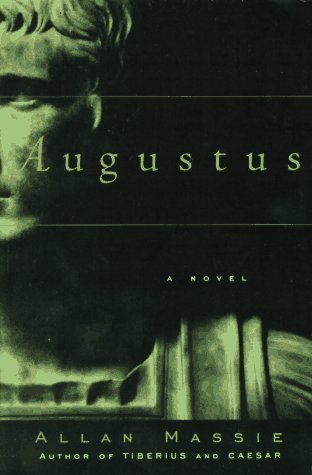
Augustus
Reconstruction of the lost memoirs of Emperor Augustus; an account from the killing of Caesar to his own death.
After Caesar and Antony, the third volume of this series of historical novels about the Roman Empire. The remarkable recovery of the drama and glory of a unique historic character.
After Caesar and Antony, the third volume of this series of historical novels about the Roman Empire. The remarkable recovery of the drama and glory of a unique historic character.
384 pages, Paperback
First published January 1, 1986
About the author
Allan Massie
81 books86 followersAllan Massie was a Scottish journalist, sports writer and novelist. He was one of Scotland's most prolific and well-known journalists, writing regular columns for The Scotsman, The Sunday Times (Scotland) and the Scottish Daily Mail. He was the author of nearly 30 books, including 20 novels. He is notable for novels set in the distant past and Vichy France.
Ratings & Reviews
Friends & Following
Create a free account to discover what your friends think of this book!
Community Reviews
Displaying 1 - 30 of 44 reviews

August 25, 2015
If you really like your Roman Imperial history, or would like to learn more, this is a great place to start. Alan Massie’s novel on Augustus is both detailed and engaging, an excellent commentary on the man who probably did more to shape the Roman Empire than any other – high praise when you consider Julius Caesar is on that list.
Augustus is largely accepted as Rome’s first Emperor (Julius Caesar was dictator for life) and although Augustus preferred to go by the term ‘princeps’ or first citizen, he completely reformed Rome’s old Republic into an imperial super-power capable of controlling the vast lands and provinces that stretched through Europe, Asia, and Northern Africa.
Alan Massie’s novel is a fictional memoir from Augustus, as he recounts his life. It is divided into two parts. The first is recounted by a middle aged Emperor in a triumphant tone as he retells the period of the civil wars which followed the assassination of his uncle, Julius Caesar. He tells of his ascension to power as, with the help of his general Aggripa, and his one-time ally Mark Anthony, they defeat the forces of his uncle’s assassins. He doesn’t shy away from the dark period afterwards for Rome’s elite, when he and Mark Anthony oversee the proscriptions, as the two of them put black marks against the names of those who had opposed them and strip them of all they own before condemning them to death or banishment.
In the second part of the novel, we join Augustus much later in life, when he decides to continue his recollection. I normally don’t like it when a book is divided up in this way as it spoils the immersion in the story, but as Augustus ruled for so long, it is difficult to see how Massie could have done it in any other way. The intervening decades of prosperity for Rome might not have been thrilling reading. In any case, Massie does it brilliantly, the tone changes as the aging Emperor reaches his later years, being sombre and sad after he is greatly affected by the deaths of his heirs and two grandsons Gaius and Lucius Caesar. The second part teaches us all of Augustus’ startling achievements over his long reign, how he transformed virtually every aspect of the great Empire and set up the foundations that would see it dominate the world for the best part of four to five hundred years – quite a legacy. We then hear the aging Emperor’s hopes and fears for his succession, as the thoughts of his family and those around him, turn towards life after his death.
This is a fascinating book, full of well researched historical detail – for anyone interested in Roman history, this surely has to be a must read.
Augustus is largely accepted as Rome’s first Emperor (Julius Caesar was dictator for life) and although Augustus preferred to go by the term ‘princeps’ or first citizen, he completely reformed Rome’s old Republic into an imperial super-power capable of controlling the vast lands and provinces that stretched through Europe, Asia, and Northern Africa.
Alan Massie’s novel is a fictional memoir from Augustus, as he recounts his life. It is divided into two parts. The first is recounted by a middle aged Emperor in a triumphant tone as he retells the period of the civil wars which followed the assassination of his uncle, Julius Caesar. He tells of his ascension to power as, with the help of his general Aggripa, and his one-time ally Mark Anthony, they defeat the forces of his uncle’s assassins. He doesn’t shy away from the dark period afterwards for Rome’s elite, when he and Mark Anthony oversee the proscriptions, as the two of them put black marks against the names of those who had opposed them and strip them of all they own before condemning them to death or banishment.
In the second part of the novel, we join Augustus much later in life, when he decides to continue his recollection. I normally don’t like it when a book is divided up in this way as it spoils the immersion in the story, but as Augustus ruled for so long, it is difficult to see how Massie could have done it in any other way. The intervening decades of prosperity for Rome might not have been thrilling reading. In any case, Massie does it brilliantly, the tone changes as the aging Emperor reaches his later years, being sombre and sad after he is greatly affected by the deaths of his heirs and two grandsons Gaius and Lucius Caesar. The second part teaches us all of Augustus’ startling achievements over his long reign, how he transformed virtually every aspect of the great Empire and set up the foundations that would see it dominate the world for the best part of four to five hundred years – quite a legacy. We then hear the aging Emperor’s hopes and fears for his succession, as the thoughts of his family and those around him, turn towards life after his death.
This is a fascinating book, full of well researched historical detail – for anyone interested in Roman history, this surely has to be a must read.

July 17, 2013
Quinctilius Varus, give me back my Legions!

January 1, 2017
I really liked this piece of historical fiction ... well written and entertaining.

March 19, 2017
Unlike Caesar an autobiographical account by the subject of the book and much less tightly written.
Augustus’s character emerges from the book in a deep way.
He is presented as a driven individual who: seizes his own destiny; is perhaps unaware how his ambition and drive appears to others; is ultimately sure of the importance of securing Rome’s internal and external peace (even if this means sacrificing some of the liberty of its subjects); believes in constitutional niceties but is willing to indulge in the horrors (to him) of the prescriptions even though the death of Cicero haunts him; is at best respectful of Caesar and in many ways horrified by his bloodthirstiness, war crimes in Gaul and desire to be King; has a deep relationship with Antony – stained by Antony’s rape/seduction of him, by the reminder when he deals with Antony of their joint participation in the prescriptions, by jealousy at the devotion Antony (like Caesar) can inspire and their sheer charisma; has a deep relationship with his three advisors Virgil, Agrippa and ex-lover Maecenas; has almost blindness to the failings of Julia until way too late; is devoted to his three grandchildren and intended heirs all of whom die; is quietly in awe of Livia – happy to override her deepest wishes but at the same time with his own deepest wish to gain her approval; is sad as he enters old age at (a little like the author of Ecclesiastes) the futility in the face of the death of him and his loved ones of much of what he has achieved (while at the same time publically and privately listing time and time again those same achievements); fascinated by Greek and other religions (his musings here and stories of some of his meditations and visits to shrines are the most confusing and worst parts of the book).
Augustus’s character emerges from the book in a deep way.
He is presented as a driven individual who: seizes his own destiny; is perhaps unaware how his ambition and drive appears to others; is ultimately sure of the importance of securing Rome’s internal and external peace (even if this means sacrificing some of the liberty of its subjects); believes in constitutional niceties but is willing to indulge in the horrors (to him) of the prescriptions even though the death of Cicero haunts him; is at best respectful of Caesar and in many ways horrified by his bloodthirstiness, war crimes in Gaul and desire to be King; has a deep relationship with Antony – stained by Antony’s rape/seduction of him, by the reminder when he deals with Antony of their joint participation in the prescriptions, by jealousy at the devotion Antony (like Caesar) can inspire and their sheer charisma; has a deep relationship with his three advisors Virgil, Agrippa and ex-lover Maecenas; has almost blindness to the failings of Julia until way too late; is devoted to his three grandchildren and intended heirs all of whom die; is quietly in awe of Livia – happy to override her deepest wishes but at the same time with his own deepest wish to gain her approval; is sad as he enters old age at (a little like the author of Ecclesiastes) the futility in the face of the death of him and his loved ones of much of what he has achieved (while at the same time publically and privately listing time and time again those same achievements); fascinated by Greek and other religions (his musings here and stories of some of his meditations and visits to shrines are the most confusing and worst parts of the book).

February 27, 2023
Uma verdadeira masterclass em como desperdiçar e deixar figuras históricas que já são interessantes por natureza completamente entediantes.
No geral as minhas expectativas não eram lá tão altas, eram razoáveis com o que se espera em uma ficção histórica sobre uma figura como Augustus mas Allan Massie conseguiu a proeza de acabar com qualquer boa expectativa existente e de causar irritação à medida que a trama foi progredindo. É impressionante como o autor conseguiu deixar o Augustus entediante, blasé, raso e irritante em alguns momentos. Os outros personagens tão pouco fogem disso, mesmo que de vez em quando assim não o sejam na maior parte do livro são.
Muitas tramas e escolhas do autor para elas foram completamente desnecessárias e em determinado momento terríveis, a relação entre Augustus e Marco Antônio é um exemplo claro dessas escolhas que falo e também uma ATROCIDADE. O que é exposto da relação deles na segunda parte e a maneira que o autor prossegue com essa invenção quase me fizeram largar a leitura por tamanha barbaridade! Algumas escolhas de palavras também me incomodaram bastante, muitas sequer tinham necessidade de estarem ali.
Para não somente listar os pontos negativos (que são muitos além dos que eu escrevi nessa resenha) tenho que dizer que em diversos momentos existem certo brilho e qualidade na história, algumas observações sobre poder e política são muito boas e a relação de Octavius com Livia realmente é um dos pontos fortes, a escrita não é terrível.
Enfim espero que tenha conseguido ilustrar o quão decepcionante esse livro foi pra mim ao menos.
No geral as minhas expectativas não eram lá tão altas, eram razoáveis com o que se espera em uma ficção histórica sobre uma figura como Augustus mas Allan Massie conseguiu a proeza de acabar com qualquer boa expectativa existente e de causar irritação à medida que a trama foi progredindo. É impressionante como o autor conseguiu deixar o Augustus entediante, blasé, raso e irritante em alguns momentos. Os outros personagens tão pouco fogem disso, mesmo que de vez em quando assim não o sejam na maior parte do livro são.
Muitas tramas e escolhas do autor para elas foram completamente desnecessárias e em determinado momento terríveis, a relação entre Augustus e Marco Antônio é um exemplo claro dessas escolhas que falo e também uma ATROCIDADE. O que é exposto da relação deles na segunda parte e a maneira que o autor prossegue com essa invenção quase me fizeram largar a leitura por tamanha barbaridade! Algumas escolhas de palavras também me incomodaram bastante, muitas sequer tinham necessidade de estarem ali.
Para não somente listar os pontos negativos (que são muitos além dos que eu escrevi nessa resenha) tenho que dizer que em diversos momentos existem certo brilho e qualidade na história, algumas observações sobre poder e política são muito boas e a relação de Octavius com Livia realmente é um dos pontos fortes, a escrita não é terrível.
Enfim espero que tenha conseguido ilustrar o quão decepcionante esse livro foi pra mim ao menos.

December 6, 2018
I don't know enough about the period to argue it's authenticity, but Massie's use of 'modern' slang to improve readability veers between engaging and distracting. The second half is confusingly written and is unfortunately dull (surprising, given the topic.)

November 18, 2018
I've read this book before several years ago and to be honest couldn't recall its contents nor what my previous thoughts on it were. So I have re-read it and come to the conclusion that Massie is not that great when it comes to writing historical novels set in Ancient Rome (for reference see my review of his other book 'Antony' here https://www.goodreads.com/review/show...). The blurbs on the back of this edition vastly oversell the quality of the book and his writing.
It has to be said that Massie is up against it, insofar as he has written a novel that will inevitably draw comparisons with the masterworks of Robert Graves, 'I, Claudius' and 'Claudius the God'. I don't think it's fair to be harsh on 'Augustus' based on such a comparison. However what is problematic with the novel is that Augustus as a central fictional character has neither the commanding personality that one should expect from considering the historical 'reality' of the first Roman emperor, nor is the persona uniquely and creatively constructed to give one pause to think about how different Massie's Augustus is. To be blunt, Massie's Augustus is neither magisterial nor personable. He is generally as flat as a character as the paper his 'autobiography' appears on.
There is one redeeming aspect of the novel where I think Massie has hit the target, and I suspect that if his publisher, literary agent and editor were more prescient they would've asked him to hoe this row instead of what the author has written. The brief focus on the personal relationship between Livia and Augustus was a breath of fresh air and a provocative, entertaining and new angle on the historical framework for the novel. A story that dealt with the love, arguments, politics and other complications of the relationship between Augustus and the woman who was to become the Augusta would have been far more engaging and perhaps productive. In fact I wonder if anyone has written such a book, and if not, why not?
It has to be said that it's not unpleasant to see the character of Tiberius given more understanding than perhaps Graves (or indeed Tacitus) did, and it was fruitful for Massie to also give Virgil a presence in the book. However the flagrantly camp Maecenas was truly awful, and an interpolation of a modern sensibility that was both jarring and cartoonish. I'm all for considering producing historical fiction that reflects contemporary values, however it has to be synthesized with quality prose and respect for history. The numerous exclamations of 'ducky' that Massie gives Maecenas to speak are just wrong, and a bloody irritation.
In summary I would suggest this will be the last time I read a Massie novel, and if you are reading this and thinking of giving his work a go, then be warned. He's not a bad writer and this is not a bad book...however there is better out there.
It has to be said that Massie is up against it, insofar as he has written a novel that will inevitably draw comparisons with the masterworks of Robert Graves, 'I, Claudius' and 'Claudius the God'. I don't think it's fair to be harsh on 'Augustus' based on such a comparison. However what is problematic with the novel is that Augustus as a central fictional character has neither the commanding personality that one should expect from considering the historical 'reality' of the first Roman emperor, nor is the persona uniquely and creatively constructed to give one pause to think about how different Massie's Augustus is. To be blunt, Massie's Augustus is neither magisterial nor personable. He is generally as flat as a character as the paper his 'autobiography' appears on.
There is one redeeming aspect of the novel where I think Massie has hit the target, and I suspect that if his publisher, literary agent and editor were more prescient they would've asked him to hoe this row instead of what the author has written. The brief focus on the personal relationship between Livia and Augustus was a breath of fresh air and a provocative, entertaining and new angle on the historical framework for the novel. A story that dealt with the love, arguments, politics and other complications of the relationship between Augustus and the woman who was to become the Augusta would have been far more engaging and perhaps productive. In fact I wonder if anyone has written such a book, and if not, why not?
It has to be said that it's not unpleasant to see the character of Tiberius given more understanding than perhaps Graves (or indeed Tacitus) did, and it was fruitful for Massie to also give Virgil a presence in the book. However the flagrantly camp Maecenas was truly awful, and an interpolation of a modern sensibility that was both jarring and cartoonish. I'm all for considering producing historical fiction that reflects contemporary values, however it has to be synthesized with quality prose and respect for history. The numerous exclamations of 'ducky' that Massie gives Maecenas to speak are just wrong, and a bloody irritation.
In summary I would suggest this will be the last time I read a Massie novel, and if you are reading this and thinking of giving his work a go, then be warned. He's not a bad writer and this is not a bad book...however there is better out there.

June 9, 2020
I've had these books of Massie's sitting in a bookcase for a good long while, so I thought I'd re-read them, see what a second read would give me, and simply to enjoy the experience.
Massie writes with confidence about his subject - not simply from the view of a slave or a companion, as with Caesar and Anthony, but as memoirs of the greatest spin doctor and politician the world has ever known. He attempts to explain away the seemingly Psychopathic youth in which we see the proscriptions and the battles and murder of so many, civilians and warriors. He shows, in depth, the thought processes of Augustus in such a way as to make you feel somehow that it was all a good thing, that his later life negates the cruelty of his younger years, although it goes without saying that he was pretty ruthless even when older, as seen when he sends his own daughter and grandson into exile on tiny islands for breaking the laws he set for the rest of the Roman people - a man, it seems, who does not believe in one rule for us and another for everyone else.
Massie writes so well, as I say, that you find yourself agreeing with his decisions, at times feeling sorry for him, at times wondering if, in fact, the choices he made were the only ones he could.
This book is a masterpiece, and well worth reading, whether you enjoy Roman history, or simply are fascinated by how people can dominate and subjugate others, how the words of a spin doctor (and if we look at others in history, Hitler, Napoleon, Alexander, Mussolini etc...) can change the minds and control one of the largest of empires the western world has seen.
An excellently written five star book xx
Massie writes with confidence about his subject - not simply from the view of a slave or a companion, as with Caesar and Anthony, but as memoirs of the greatest spin doctor and politician the world has ever known. He attempts to explain away the seemingly Psychopathic youth in which we see the proscriptions and the battles and murder of so many, civilians and warriors. He shows, in depth, the thought processes of Augustus in such a way as to make you feel somehow that it was all a good thing, that his later life negates the cruelty of his younger years, although it goes without saying that he was pretty ruthless even when older, as seen when he sends his own daughter and grandson into exile on tiny islands for breaking the laws he set for the rest of the Roman people - a man, it seems, who does not believe in one rule for us and another for everyone else.
Massie writes so well, as I say, that you find yourself agreeing with his decisions, at times feeling sorry for him, at times wondering if, in fact, the choices he made were the only ones he could.
This book is a masterpiece, and well worth reading, whether you enjoy Roman history, or simply are fascinated by how people can dominate and subjugate others, how the words of a spin doctor (and if we look at others in history, Hitler, Napoleon, Alexander, Mussolini etc...) can change the minds and control one of the largest of empires the western world has seen.
An excellently written five star book xx

August 16, 2025
I absolutely adore how Massie handled Antony and Octavian. To me it is the discovery of the horrible, beautiful sublime, the point where love and death, sea-roaring enmity and the lover's sigh, cease to be contradictions, as Augustan propaganda would have wished. To be disillusioned with propaganda, with the grand narratives that the authors of our world provide, we need a transvaluation of all values, a reality where everything becomes manifest in themselves rather than in their distinctions with the others. What Massie has accomplished, in a work whose prosaic and psychic brilliance remains criminally clandestine, is bringing to life an old myth (eyeing Antony’s narrator, Critias; could we be hearing about Atlantis?) where Eros remains another path across from statecraft, but destruction and desire at all times exchange their masks, and War, that glorious god, strips off its armor in the bedchamber of its ancient opposite.
Let the Emperor speak; one cannot fail to appreciate Massie’s humor in his introductory notes. It remains to this day the only historical novel on Augustus (and I’ve more or less scanned them all) in which I truly feel I am witnessing the human soul erupt, resoundingly, in all its magnificent pain. Something is to be said about the inability of people today to accept the untruth, the myth, the made-up as delicacies among the staple of what is known for certain to have happened. But without these, what would become of the first novel, the very art form that from the start pretends to tell a true story experienced by the narrator, despite being a fabrication? How could fiction bring about a higher degree of reality and self-realization if not by being in love with its own lies?
Given how little we know about the ancient world, I loathe historical fiction that brands itself as striving to be authentic and remain true to historical facts—how boring! What a shabby excuse for a lack of imagination and courage! Browsing early modern plays on the events leading up to Actium, I have seen many instances where known facts were foregone for dramatic tension, even between Antony and Octavian—and what fine theatre they are. Massie is but doing a similar thing. If dramas, shows, and games can invent entirely new female characters to romance Augustus or Antony, what makes people so squeamish or silent about a relationship born out of the complicated feelings and history between the two men themselves? It is not such a big leap.
When I first skimmed Massie’s books four years ago, I thought I saw but a fever dream. Yet, returning to re-read them with the eyes of a lover, I see now how artfully Massie has reopened a wound in the body of history to reveal human hearts that bleed, grafting a marvelous and aching reality onto the known. It is, moreover, isomorphic with the very tremors of Rome’s soul as it shattered itself on the eve of an empire.
I am glad to have enjoyed a tragedy whose aesthetic depths vibrate with the nocturnal storm on Brontë's moors, the exquisite cruelty of Nabokov, and the slow, magnificent decay of Mann. Its enduring beauty, I think, triumphs over that of the so-called great lovers of history, who in actuality were but two people seeking worldly pleasures and their own destruction at convenience.
The priest of a new nation officiating over the exquisite corpse. The prince of Eternal Rome and the phantom limb on which the new empire learned to walk. A dualism from which I believe many themes and much beauty would spring.
Let many such perspectives hemorrhage into the desiccated veins of official history. This is written as an act of fealty to the Great Goddess Aphrodite, a tribute to her conquering manifestation as Love, in equal degrees peace and war. In the entrails and across the verses, militia amoris.
Let the Emperor speak; one cannot fail to appreciate Massie’s humor in his introductory notes. It remains to this day the only historical novel on Augustus (and I’ve more or less scanned them all) in which I truly feel I am witnessing the human soul erupt, resoundingly, in all its magnificent pain. Something is to be said about the inability of people today to accept the untruth, the myth, the made-up as delicacies among the staple of what is known for certain to have happened. But without these, what would become of the first novel, the very art form that from the start pretends to tell a true story experienced by the narrator, despite being a fabrication? How could fiction bring about a higher degree of reality and self-realization if not by being in love with its own lies?
Given how little we know about the ancient world, I loathe historical fiction that brands itself as striving to be authentic and remain true to historical facts—how boring! What a shabby excuse for a lack of imagination and courage! Browsing early modern plays on the events leading up to Actium, I have seen many instances where known facts were foregone for dramatic tension, even between Antony and Octavian—and what fine theatre they are. Massie is but doing a similar thing. If dramas, shows, and games can invent entirely new female characters to romance Augustus or Antony, what makes people so squeamish or silent about a relationship born out of the complicated feelings and history between the two men themselves? It is not such a big leap.
When I first skimmed Massie’s books four years ago, I thought I saw but a fever dream. Yet, returning to re-read them with the eyes of a lover, I see now how artfully Massie has reopened a wound in the body of history to reveal human hearts that bleed, grafting a marvelous and aching reality onto the known. It is, moreover, isomorphic with the very tremors of Rome’s soul as it shattered itself on the eve of an empire.
I am glad to have enjoyed a tragedy whose aesthetic depths vibrate with the nocturnal storm on Brontë's moors, the exquisite cruelty of Nabokov, and the slow, magnificent decay of Mann. Its enduring beauty, I think, triumphs over that of the so-called great lovers of history, who in actuality were but two people seeking worldly pleasures and their own destruction at convenience.
The priest of a new nation officiating over the exquisite corpse. The prince of Eternal Rome and the phantom limb on which the new empire learned to walk. A dualism from which I believe many themes and much beauty would spring.
Let many such perspectives hemorrhage into the desiccated veins of official history. This is written as an act of fealty to the Great Goddess Aphrodite, a tribute to her conquering manifestation as Love, in equal degrees peace and war. In the entrails and across the verses, militia amoris.

August 5, 2021
The first time I read "Augustus", I was around 14 years old, and all I remembered was that it instantly became one of my favorites. Without this book (as well as the works of Colleen McCullough), I would have never ever found myself interested in Classical History.
On a whim, I decided to read this book again, 8 years later. I still remember Maecenas's remark about the red-hot walnut shells (Maecenas is and will always be my guilty pleasure). I read the whole thing in around 2 or 3 days, and I still love it as much as I loved it back then. While it's certainly not perfect, Massie has written an enjoyable book, one that can be enjoyed casually despite it breaching heavier topics (especially in Book 2).
Reasons why I can't give this book a perfect rating (some of this may boil down to personal preference, but I digress):
- Massie portrays Agrippa as a country bumpkin who speaks like a peasant, and expresses multiple times that his background is lowly. This is just untrue. First of all, Agrippa was educated alongside Octavian since they were children. Second of all, Agrippa was from the same social class as Octavian (they both came from Equestrian families). Lastly, Agrippa was hardly an uncultured brute? He collected art, commissioned great public works, and was universally recognized as a great architect and geographer. Massie doesn't do him justice.
- Julia likewise, was given a bimbo treatment. She was highly educated and rebelled against her father's authority over her life like any young woman would. This was the source of her malcontent. Yet, Massie portrays Julia as a Paris Hilton-esque, empty headed party girl.
- Some of the characters' dialogues are wayyyy too dragged out (I'm looking at some of the politically driven segments, in particular). The language he chose to use, while deliberately pedestrian, unfortunately fails at times to capture the feel of the Classical age.
- In Book 2 there is a confession Octavian (now Augustus) makes about Antony... it confused me? I'm honestly not even sure what the point of that was supposed to be, and it felt very out of character as well? This isn't an issue of sexual orientation - I rather enjoyed the fact that Massie alluded to Maecenas's past with our protagonist. I say this rather because it just seemed bizarre in hindsight.
Things I enjoyed the most about the book: Octavian's point of view (a feat in itself, I do think Massie wrote him extremely extremely well), Livia — who's not a villain! Yay!, Maecenas, the entirety of Book 2, and Octavian's relationship with both Agrippa and Maecenas.
Would recommend to anyone interested in Roman history! I can't wait to read "Tiberius" as well, if I can get my hands on a copy.
On a whim, I decided to read this book again, 8 years later. I still remember Maecenas's remark about the red-hot walnut shells (Maecenas is and will always be my guilty pleasure). I read the whole thing in around 2 or 3 days, and I still love it as much as I loved it back then. While it's certainly not perfect, Massie has written an enjoyable book, one that can be enjoyed casually despite it breaching heavier topics (especially in Book 2).
Reasons why I can't give this book a perfect rating (some of this may boil down to personal preference, but I digress):
- Massie portrays Agrippa as a country bumpkin who speaks like a peasant, and expresses multiple times that his background is lowly. This is just untrue. First of all, Agrippa was educated alongside Octavian since they were children. Second of all, Agrippa was from the same social class as Octavian (they both came from Equestrian families). Lastly, Agrippa was hardly an uncultured brute? He collected art, commissioned great public works, and was universally recognized as a great architect and geographer. Massie doesn't do him justice.
- Julia likewise, was given a bimbo treatment. She was highly educated and rebelled against her father's authority over her life like any young woman would. This was the source of her malcontent. Yet, Massie portrays Julia as a Paris Hilton-esque, empty headed party girl.
- Some of the characters' dialogues are wayyyy too dragged out (I'm looking at some of the politically driven segments, in particular). The language he chose to use, while deliberately pedestrian, unfortunately fails at times to capture the feel of the Classical age.
- In Book 2 there is a confession Octavian (now Augustus) makes about Antony... it confused me? I'm honestly not even sure what the point of that was supposed to be, and it felt very out of character as well? This isn't an issue of sexual orientation - I rather enjoyed the fact that Massie alluded to Maecenas's past with our protagonist. I say this rather because it just seemed bizarre in hindsight.
Things I enjoyed the most about the book: Octavian's point of view (a feat in itself, I do think Massie wrote him extremely extremely well), Livia — who's not a villain! Yay!, Maecenas, the entirety of Book 2, and Octavian's relationship with both Agrippa and Maecenas.
Would recommend to anyone interested in Roman history! I can't wait to read "Tiberius" as well, if I can get my hands on a copy.
August 5, 2026
4.5 stars. Another in Alan Massie's series of pseudo-memoirs of great men from the Roman world. This is my favourite so far. Purporting to be a recent archaeological find, the long-lost memoirs of the Emperor Augustus, this is of course a novelised summary of the work of real Roman historians like Suetonius, Tacitus and Cassius Dio with a bit of poetic licence and some invention thrown in to make it more readable and "modern". It is the best attempt I have encountered yet at getting to the heart of this enigmatic man, dividing his long and eventful life into two almost equal sections. The first book deals with his years of struggle following the assassination of his adoptive father Julius Caesar, through the civil wars which followed up to the death of Mark Antony. This is related in a conversational style to his two grandsons (recently adopted as sons and heirs) Gaius and Lucius, telling them of his adventures and perils as a young soldier and politician. The second book is more formal, a testament/apologia written for posterity as he approaches the end of his life. This part is more reflective and also brilliantly ironic, the ageing Augustus trying to justify the many cruelties and crimes he has committed or connived in in order (he says) to end the civil wars and stabilise the Roman Empire. It has a slightly pompous and lecturing tone, but the real author brilliantly uses "his own" words to nail him as a hypocrite and a monster.
Faults ? Alan Massie has done better than other authors with the gaps in the historical record, but there are still frustrating questions left unanswered, especially how a young man not yet 20 managed to steer through the shark-infested waters of the period after Caesar's death to become one of the three most powerful men in the world. I also craved more detail about the reasons he and Mark Antony fell out and precipitated a third civil war. This is always going to be a difficult task as the actual Augustus, Antony, Conspirators, and Cleopatra left no writings of their own, and what we know was written by later historians concerned with flattering Augustus' descendants. But surely it's the novelist's privilege to invent letters and meetings and rumours and reports from spies to fill the gap ? This is supposed to be Augustus' own memoir, and we know he's an unreliable narrator - so make up stuff to fill in the gaps. We know it's fiction !
But this is the best "Augustus" I've found yet. Highly recommended.
Faults ? Alan Massie has done better than other authors with the gaps in the historical record, but there are still frustrating questions left unanswered, especially how a young man not yet 20 managed to steer through the shark-infested waters of the period after Caesar's death to become one of the three most powerful men in the world. I also craved more detail about the reasons he and Mark Antony fell out and precipitated a third civil war. This is always going to be a difficult task as the actual Augustus, Antony, Conspirators, and Cleopatra left no writings of their own, and what we know was written by later historians concerned with flattering Augustus' descendants. But surely it's the novelist's privilege to invent letters and meetings and rumours and reports from spies to fill the gap ? This is supposed to be Augustus' own memoir, and we know he's an unreliable narrator - so make up stuff to fill in the gaps. We know it's fiction !
But this is the best "Augustus" I've found yet. Highly recommended.

February 7, 2025
I've always found Augustus a much more fascinating historical figure than Julius Caesar or Mark Anthony, say, but frustratingly this book didn't get me any closer to the real man. (Though why should it have?) It's not bad. The prose style is plain to the point of being dull, but given that it's supposedly dictated by Augustus that could be intentional.
There are interesting observations on statecraft, personal politics, and the specifics of post-Republican Rome -- but it's all too 20th century. Again, that's presumably intentional. Making figures of the distant past talk like modern people might have seemed fresh and daring in the 1980s. They hadn't been exposed to the relentlessly modernized characters in Netflix historical dramas or (gods help us) the likes of Bridgerton. I'd hoped for the novelist to create a stepping stone that would carry me at least partway into the Rome of the 1st century BC. This is not that book. "Far more entertaining than I Claudius," said The Times reviewer; "Massie [...] has made the past live," said Books & Bookmen, "A fascinating exercise in historical recreation," reckoned The Glasgow Herald. So it's just me that was disappointed, then.
Not altogether disappointed, though. I especially liked the parts concerning the murderous priest of Diana, first described by Virgil and later visited by Augustus. That's where the story did seem to take on the strangeness of another time. We needed more of that and less of Augustus and Livia portrayed like a squabbling married couple in Esher.
Reading it in 2025 it's impossible to ignore the resonances with modern politics in the Trump era, for example in the line, "For Anthony the State existed to be plundered." The Republic in fact stands as a parallel to modern American politics: an antiquated system, no longer fit for purpose, collapsing when somebody comes along who is willing to game it as designed rather than be bound by custom and good manners. But that's a detail.
There are interesting observations on statecraft, personal politics, and the specifics of post-Republican Rome -- but it's all too 20th century. Again, that's presumably intentional. Making figures of the distant past talk like modern people might have seemed fresh and daring in the 1980s. They hadn't been exposed to the relentlessly modernized characters in Netflix historical dramas or (gods help us) the likes of Bridgerton. I'd hoped for the novelist to create a stepping stone that would carry me at least partway into the Rome of the 1st century BC. This is not that book. "Far more entertaining than I Claudius," said The Times reviewer; "Massie [...] has made the past live," said Books & Bookmen, "A fascinating exercise in historical recreation," reckoned The Glasgow Herald. So it's just me that was disappointed, then.
Not altogether disappointed, though. I especially liked the parts concerning the murderous priest of Diana, first described by Virgil and later visited by Augustus. That's where the story did seem to take on the strangeness of another time. We needed more of that and less of Augustus and Livia portrayed like a squabbling married couple in Esher.
Reading it in 2025 it's impossible to ignore the resonances with modern politics in the Trump era, for example in the line, "For Anthony the State existed to be plundered." The Republic in fact stands as a parallel to modern American politics: an antiquated system, no longer fit for purpose, collapsing when somebody comes along who is willing to game it as designed rather than be bound by custom and good manners. But that's a detail.

January 15, 2018
Massie's Augustus is a decent novel in fake-autobiographical form about Augustus, and that's really all I have to say about it. There are a number of things I enjoy about it- such as the overall attention to detail- and a number of things that I really don't- mostly the portrayals of the other people in Augustus's life. Massie's prose is generally alright, but nothing spectacular, and it often doesn't make up for some of the more annoying aspects of the book, such as Maecenas being played as a gay stereotype and Livia's strained relationship with Augustus. All that being said, though, it's a decent read and one that I've enjoyed well enough despite it faults.

June 28, 2017
Published in 1986, Augustus is a novel covering the life of Augustus from the death of Caesar onwards. Split into two parts, the first covers the more dynamic phase with internal civil wars in the aftermath of Caesars murder, followed by a war with Egypt. The second part is darker and far more political, as the elderly Augustus comes to terms with the consequences of his actions. The body count is quite high, although this means a lot of sudden deaths in the first part followed by a lot of age related deaths in part two. Brilliant.

February 17, 2018
This is one of the books you really want to like once you read the preface. But I think it fells short on the writing style. The quotes you can get from the book are great and full of good advice, unfortunately for me it was a little boring on some parts so it is easy to loose interest and by the end I was really begging to finish the book. Nevertheless any book about Caesars is interesting.

August 7, 2019
Enjoyable but dragged a bit in the middle. If you have an interest in Roman History as I do then this is highly recommended.
Massie's style is very approachable, he brings the characters to life. I would have liked to find out more about the key figures that surrounded Augustus. I think they could have been more interesting than he was (I found him to be effective rather than interesting)
Massie's style is very approachable, he brings the characters to life. I would have liked to find out more about the key figures that surrounded Augustus. I think they could have been more interesting than he was (I found him to be effective rather than interesting)

June 15, 2025
I love this book. I know there are lots of historically debatable characterisations in it and that our sources are partial and few but that doesn't spoil it as a novel with wit and depth and relevance to our own times (perhaps even more so in 2025 than when it was written in the 1980s). 'I, Claudius' on steroids.
January 17, 2026
Interesting and boring at the same time.
It was nice to see the Augustus' layered personality, how he did what was best for rome and at the same time the second half of the book and how he reigned over his family and especially Tiberius was horrible.
All in all, I have mixed feelings. It was good to have read it and gained some knowledge about Augustus, but I wouldn't read the book again.
It was nice to see the Augustus' layered personality, how he did what was best for rome and at the same time the second half of the book and how he reigned over his family and especially Tiberius was horrible.
All in all, I have mixed feelings. It was good to have read it and gained some knowledge about Augustus, but I wouldn't read the book again.

January 25, 2018
I thought this would be similar to I, Claudius, but unfortunately I can’t hold a candle to that book. This is pretty turgid and boring. I never could get inspired by it. Was Augustus reign really that boring?

March 31, 2021
There is no better way to learn about the great Roman leaders than reading Allan Massie's series of books.
Told by Augustus himself it is like a wonderful journey through his time and place in Rome.
I will now progress onto Tiberius.
Told by Augustus himself it is like a wonderful journey through his time and place in Rome.
I will now progress onto Tiberius.

August 10, 2017
great book. well written
May 25, 2025
I don't know why writer make Antony rape Augustus
June 24, 2026
Brilliant read, turned out to be the first in a Massie marathon.
July 6, 2013
This is not a book for plot and battle scenes but for the insights of the age and what Augustus may have been thinking throughout. It's set against the loss of the Republican ideal, which I confess I had sympathy with before reading this book. But one of the themes is the concentration and abuse of power during that era, and the point that Augustus actually tempered the power of the elite (the landed patrician senators - read for the current age the corporate elite - both plutocracies). Things were falling to bits with governors exploiting for wealth and glory, lands concentrating into the hands of the slave-owning few, with it the loss of Virgil's ideals of husbandry in the Georgics and Ecologues, as well as the effective reduction into a form of wage or self-employed slavery by the agrarian classes, the loss through indebtedness and unfair competition of these plebs to the city and the corn dole. The enemies of Augustus are either motivated by their own position in power or by the desire for the return of the patrician plutocracy all wrapped up in the rhetoric of 'the Republic' and 'freedom' (to exploit). Think corporate agribusiness today and our own political trends. Augustus knows he is no saint - a gangster effectively - but he claims a gangster that held the interests of Rome above self gain. Was he the ultimate benevolent dictator, or just another man on the rise? Less egomaniac than Julius. Much more flexible and considered than the stiff and bloody Tiberius. Look to this age for a window on our own.

October 8, 2015
When asked what he most feared in politics, the British Prime Minister Harold Macmillan replied, 'Events, dear boy, events.' In Allan Massie's fictional account of the life of Augustus there is a similar awareness of the way that political life is all about reacting to unpredictable realities.
Massie succeeds admirably in bringing to life the architect of Imperial Rome and the society that surrounded him. He does so far more effectively than all the hefty volumes of toga-lit with their obsessive detailing of military hardware. That's because his focus is on character and psychology, rather than blood on the floor of the arena.
He shows how the need to respond to inconvenient events shaped Augustus as much as it shaped his politics, constraining and hardening him until he became trapped within the political carapace he had created. He ends his life eaten up with regret, fearful for the security of the empire he has built and unable to communicate with those he loves most.
The decisions over which Augustus deliberated so long and hard resonated down through the centuries. Massie's achievement is to illuminate the forces behind those decisions. The result is a compelling study of the man, of the world that he was born into and of the way he transformed it.
Massie succeeds admirably in bringing to life the architect of Imperial Rome and the society that surrounded him. He does so far more effectively than all the hefty volumes of toga-lit with their obsessive detailing of military hardware. That's because his focus is on character and psychology, rather than blood on the floor of the arena.
He shows how the need to respond to inconvenient events shaped Augustus as much as it shaped his politics, constraining and hardening him until he became trapped within the political carapace he had created. He ends his life eaten up with regret, fearful for the security of the empire he has built and unable to communicate with those he loves most.
The decisions over which Augustus deliberated so long and hard resonated down through the centuries. Massie's achievement is to illuminate the forces behind those decisions. The result is a compelling study of the man, of the world that he was born into and of the way he transformed it.

January 1, 2015
I read to page 57 and I just can't waste time reading any more of this. This book is all made up. The dialog is made up, the personalities, all fake. Maybe Massie was trying to imitate Robert Graves? Graves wrote a fake autobio of Claudius. In this book Massie tried to write a fake autobio for Augustus. It's a good idea, but what made Graves' so good is that he stuck to facts. Even the quotes were verified as having been spoken. Massie just makes things up. It is not in the least like reading a diary. It's like reading a made up story written by a high school kid.
If you want really good writing, and want to feel confidant about getting the real story, as much as can be known anyway, then stick to Robert Graves, Michael Grant or Suetonius. They are pretty good about clarifying what is gossip, propaganda or slander as opposed to facts and they are all entertaining.
If you want really good writing, and want to feel confidant about getting the real story, as much as can be known anyway, then stick to Robert Graves, Michael Grant or Suetonius. They are pretty good about clarifying what is gossip, propaganda or slander as opposed to facts and they are all entertaining.

December 26, 2010
A vivid, readable memoir of Augustus. Interesting form Massie chose. The first half being reasonably conventional novelistic memoire of the first years of Octavian from the Ides of March to the defeat of Anthony. Of course, Augustus lived a very long time after that, and going over the details of that would be ... well, not so exciting. Instead, Massie has Augustus write thoughts down for his grandchildren who were slated to be his successor, but who unfortunately didn't make it.
Fun book. Interesting study of the dissappointment of great power, and outliving those you thought would carry your legacy.
Considering how disappointing Tiberius came out, being emperor for a long time is not a formula for personal, or state, success.
Fun book. Interesting study of the dissappointment of great power, and outliving those you thought would carry your legacy.
Considering how disappointing Tiberius came out, being emperor for a long time is not a formula for personal, or state, success.

August 17, 2011
Massie places us inside the head of Caesar Augustus as Massie sees him. It is brilliantly done, especially Augustus's struggle to accept a doubled morality: his reconciliation between personal goodness and governmental expedience. Through Augustus's relationships between family and friends, Massie gradually unfolds the wrappings that protect Augustus from his world.
Who knows how close this comes to the real Augustus? But Massie has grounded him in what historical knowledge we have of this man who lived his theater, and the result is as human as one could imagine. Don't expect any of Robert Graves's characters, btw.
Why did I give it only 3 stars? Augustus's disillusionment lives as piercingly as any of the rest of this incisive life.
Who knows how close this comes to the real Augustus? But Massie has grounded him in what historical knowledge we have of this man who lived his theater, and the result is as human as one could imagine. Don't expect any of Robert Graves's characters, btw.
Why did I give it only 3 stars? Augustus's disillusionment lives as piercingly as any of the rest of this incisive life.
May 5, 2016
Honestly...see my review for its sequel, "Tiberius." My same complaints about the sometimes too-flowery prose, and the readers who criticize authors for using modern colloquialisms in historical fiction, remain. Eye-roll-worthy moments: Massie often features the characters enjoying modern Italian delicacies, which is...wrong. Ancient Roman food was pretty gross.
But all-in-all, a good read. I appreciated the humor. Entertaining, and an insightful character study, with some insightful musings on life-in-general that sometimes approach beautiful writing. I think I like Massie's books better than Graves' "I, Claudius," honestly. Better analyses of these characters, more vivid and readable...
But all-in-all, a good read. I appreciated the humor. Entertaining, and an insightful character study, with some insightful musings on life-in-general that sometimes approach beautiful writing. I think I like Massie's books better than Graves' "I, Claudius," honestly. Better analyses of these characters, more vivid and readable...

Read
July 28, 2008This is a historical novel about the first of the Roman emperors. It has plausible characters, witty anachronisms, and crackerjack action. Massie effectively uses two distinct tones for the first and second parts of the novel. The story works also as a meditation of how a powerful man rationalizes the lousy things he does in politics and family life. If readers like literary evocations of the classical world such as Robert Graves (I, Claudius) or Anthony Burgess (The Kingdom of the Wicked), they should read this. If readers prefer Conn Iggulden, not.
Displaying 1 - 30 of 44 reviews