

What do you think?

A Scattering
A tribute to the author's wife consisting of poems written during her final illness and after her death.
62 pages, Paperback
First published January 1, 2009
About the author
Christopher Reid
70 books24 followersChristopher Reid, FRSL is a Hong Kong-born British poet, essayist, cartoonist, and writer. He has been nominated twice for the Whitbread Awards in 1996 and in 1997. A contemporary of Martin Amis, he was educated at Exeter College, Oxford. He is one of the exponents of Martian poetry which employs unusual metaphors to render everyday experiences and objects unfamiliar. He has worked as poetry editor at Faber and Faber and Professor of Creative Writing at the University of Hull. In January 2010 he was awarded the 2009 Costa Book Award for A Scattering, written as a tribute to his late wife, the actress Lucinda Gane. The work won in the poetry category, and overall Best Book of the Year, becoming the first poet to take the overall prize since Seamus Heaney in 1999.
Ratings & Reviews
Friends & Following
Create a free account to discover what your friends think of this book!
Community Reviews
Displaying 1 - 30 of 38 reviews

September 30, 2018
Memories. Weighty emptinesses. I live in a memory
the size and shape of a house.
As so often seems to happen to me, this collection came into my hands by serendipity. Perusing the shelves with poetry in the native language in the local library, A Scattering apparently had wandered off to the wrong shelf, and so naturally caught my attention. I went in entirely innocent and unknowing, lured by the label of ‘Costa Book of the year 2009’ on the tiny volume and bang, it turned out I stumbled on another poet who has excelled in sublimating the loss of his spouse and transforming his experience of mourning and grief into art.
A Scattering is a collection of poetry Christopher Reid wrote as a tribute to his spouse Lucinda Ganes, who died of brain cancer, commemorating her life and charting his grief. The collection comprises four poetic sequences, from the vivid, colourful but ill-omened first section describing the couple’s last holiday together (The flowers of Crete) over her illness and death (The Unfinished), his grieving (A Widower’s Dozen) and a touching portrayal of Lucinda, ‘his intrepid wife’ in the fourth section (Lucinda’s Way).
My favourite section was the third, ‘A Widower’s Dozen’, in which Reid faces and contemplates his own grieving, and serenely illustrates how the grief is palpable in the details of everyday life, how life is when one belongs to ‘the club of the left-over living’. The home turns into a psychologically and emotionally charged space where unexpectedly what previously passed almost thoughtlessly, gets nourished with new meaning, and brings the poet into a meditative modus questioning existence and life as it had changed for him.
A Reasonable Thing to Ask
Please explain tears.
They must have some purpose
that a Darwin or a Freud
would have understood.
Widowed, a man hears
music off the radio -
Handel - Cole Porter -
that sharply recalls her,
and they swamp up again.
A faculty that interferes
with seeing and speaking
and leaves him feeling weaker:
what does he gain by it?
What do we gain by it -
blind to the tiger's leap,
voiceless under the avalanche?
Somebody must know.
Evidently, like when asking for the meaning of life or the universe, there will never be an explanation or an answer to his questions – though we can rely on poetry on the moments we feel overwhelmed by sorrow and it becomes hard to breathe.
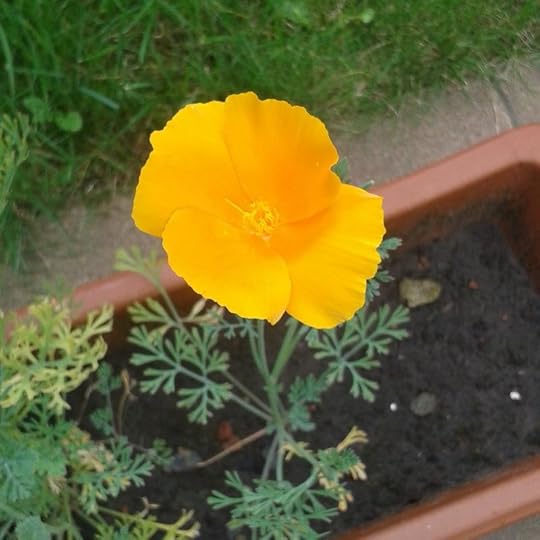
Reid reflects poignantly on the experience of grief, conveying how no longer heard songs (a whole unique improbable songbook – silent, deleted, permanently lost – as a language or a culture is lost – irreparable damage), spectacles, perfume bottles in the bathroom become memento’s heavy with significance. He evokes how he still seems to hear her voice, rationally knowing however the house ‘has not been saving up old echoes of the lost voice as rationed treats and rewards’ (‘Turns’), how missing and being cut off makes him a ghost to his own life (a flesh-and-blood revenant, my own ghost (‘Conundrum’). A particularly profound and aching moment Reid conjures beautifully is the seasonal rebirth of the garden - her garden – the change of seasons, the mere continuance of the cycle, is a moment when the awareness of the reality of the loss bites hard. However for Reid nature is not the force indifferent to human existence, it echoes and shares his missing of her:
Flowers in Wrong Weather
Snowdrops, crocuses and hellebore,
which last year must have done their shy, brave thing
unobserved by me, are out again this year.
I was in the garden bagging
tree-trash the gales had flung down the week before.
No gardener, even I could tell the job needed doing.
Now it was a too-mild February morning.
The flowers looked misplaced, without some ice in the air
or bullying wind to give them their full meaning.
Or was it just that there was nobody to share
the annual miracle with? Crocuses piercing
the soil with a palpable pang: the dear
droop of snowdrops; hellebore
stoically averted: all missing the welcome and blessing
of the one who had planted them there.
One needs a poet to articulate the ineffable, to express the experiences which are cutting right through us and leave us blank and at loss for words.
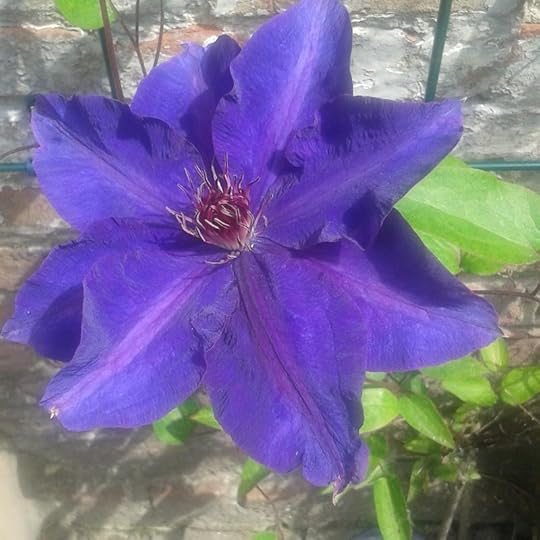
Reid captures sensitively how the one staying behind becomes the keeper of a lost life, an archivist of photographs, letters and diaries in box-files and shoe-boxes, filled with innumerable air kisses, matrimonial legends, private jokes, the speed of life:
You lived at such speed that the ballpoint script
running aslant and fading
across the faded blue
can scarcely keep up. Many words are illegible. I miss
important steps. Your movements blur. I want to follow, but can’t.
Elegiac in tone, no anger is found in Reid’s words– the grief is commendable, not raw. Reid doesn’t confront the reader with its sharpness or ugliness. A Scattering is less an emotional outpouring than an elegy of quiet acceptance and self-observance of one’ loss - humble, restrained, unsentimental, moving and tender.
Subtle, erudite, delicate and self-contained, Reid’s collection didn’t pack the emotional punch that Michel Faber’s Undying: A Love Story (my review here) – written in similar circumstances did – Faber’s collection is more raw, it keeps less distance from the reader, bares the couple’s intimacy on the verge of the unbearable. Reid’s approach is more phlegmatic but no less honest or relatable. I thought his poetry more lyrical than Faber’s, more dexterous and inventive in tonality, rhythm, imagery, but as a whole it didn’t resonate with me with a similar intensity. We all grieve differently and in our own way, and so did both poets, Christopher Reid as well as Michel Faber, who both inspire me with utter gratefulness for having shared their personal experiences of bereavement in their own magnificent voice.
the size and shape of a house.
As so often seems to happen to me, this collection came into my hands by serendipity. Perusing the shelves with poetry in the native language in the local library, A Scattering apparently had wandered off to the wrong shelf, and so naturally caught my attention. I went in entirely innocent and unknowing, lured by the label of ‘Costa Book of the year 2009’ on the tiny volume and bang, it turned out I stumbled on another poet who has excelled in sublimating the loss of his spouse and transforming his experience of mourning and grief into art.
A Scattering is a collection of poetry Christopher Reid wrote as a tribute to his spouse Lucinda Ganes, who died of brain cancer, commemorating her life and charting his grief. The collection comprises four poetic sequences, from the vivid, colourful but ill-omened first section describing the couple’s last holiday together (The flowers of Crete) over her illness and death (The Unfinished), his grieving (A Widower’s Dozen) and a touching portrayal of Lucinda, ‘his intrepid wife’ in the fourth section (Lucinda’s Way).
My favourite section was the third, ‘A Widower’s Dozen’, in which Reid faces and contemplates his own grieving, and serenely illustrates how the grief is palpable in the details of everyday life, how life is when one belongs to ‘the club of the left-over living’. The home turns into a psychologically and emotionally charged space where unexpectedly what previously passed almost thoughtlessly, gets nourished with new meaning, and brings the poet into a meditative modus questioning existence and life as it had changed for him.
A Reasonable Thing to Ask
Please explain tears.
They must have some purpose
that a Darwin or a Freud
would have understood.
Widowed, a man hears
music off the radio -
Handel - Cole Porter -
that sharply recalls her,
and they swamp up again.
A faculty that interferes
with seeing and speaking
and leaves him feeling weaker:
what does he gain by it?
What do we gain by it -
blind to the tiger's leap,
voiceless under the avalanche?
Somebody must know.
Evidently, like when asking for the meaning of life or the universe, there will never be an explanation or an answer to his questions – though we can rely on poetry on the moments we feel overwhelmed by sorrow and it becomes hard to breathe.
Reid reflects poignantly on the experience of grief, conveying how no longer heard songs (a whole unique improbable songbook – silent, deleted, permanently lost – as a language or a culture is lost – irreparable damage), spectacles, perfume bottles in the bathroom become memento’s heavy with significance. He evokes how he still seems to hear her voice, rationally knowing however the house ‘has not been saving up old echoes of the lost voice as rationed treats and rewards’ (‘Turns’), how missing and being cut off makes him a ghost to his own life (a flesh-and-blood revenant, my own ghost (‘Conundrum’). A particularly profound and aching moment Reid conjures beautifully is the seasonal rebirth of the garden - her garden – the change of seasons, the mere continuance of the cycle, is a moment when the awareness of the reality of the loss bites hard. However for Reid nature is not the force indifferent to human existence, it echoes and shares his missing of her:
Flowers in Wrong Weather
Snowdrops, crocuses and hellebore,
which last year must have done their shy, brave thing
unobserved by me, are out again this year.
I was in the garden bagging
tree-trash the gales had flung down the week before.
No gardener, even I could tell the job needed doing.
Now it was a too-mild February morning.
The flowers looked misplaced, without some ice in the air
or bullying wind to give them their full meaning.
Or was it just that there was nobody to share
the annual miracle with? Crocuses piercing
the soil with a palpable pang: the dear
droop of snowdrops; hellebore
stoically averted: all missing the welcome and blessing
of the one who had planted them there.
One needs a poet to articulate the ineffable, to express the experiences which are cutting right through us and leave us blank and at loss for words.
Reid captures sensitively how the one staying behind becomes the keeper of a lost life, an archivist of photographs, letters and diaries in box-files and shoe-boxes, filled with innumerable air kisses, matrimonial legends, private jokes, the speed of life:
You lived at such speed that the ballpoint script
running aslant and fading
across the faded blue
can scarcely keep up. Many words are illegible. I miss
important steps. Your movements blur. I want to follow, but can’t.
Elegiac in tone, no anger is found in Reid’s words– the grief is commendable, not raw. Reid doesn’t confront the reader with its sharpness or ugliness. A Scattering is less an emotional outpouring than an elegy of quiet acceptance and self-observance of one’ loss - humble, restrained, unsentimental, moving and tender.
Subtle, erudite, delicate and self-contained, Reid’s collection didn’t pack the emotional punch that Michel Faber’s Undying: A Love Story (my review here) – written in similar circumstances did – Faber’s collection is more raw, it keeps less distance from the reader, bares the couple’s intimacy on the verge of the unbearable. Reid’s approach is more phlegmatic but no less honest or relatable. I thought his poetry more lyrical than Faber’s, more dexterous and inventive in tonality, rhythm, imagery, but as a whole it didn’t resonate with me with a similar intensity. We all grieve differently and in our own way, and so did both poets, Christopher Reid as well as Michel Faber, who both inspire me with utter gratefulness for having shared their personal experiences of bereavement in their own magnificent voice.

January 4, 2020
Writing after grief after experiencing it yourself is never easy. I do give Reid lots of credit for being able to creatively write about his loving wife before she passed away. Some of the poetry was emotional and beautiful to read. Others were harder to get into. A Scattering is quite visual throughout with memories to cherish.

October 13, 2018
Hauntingly beautiful... It took me a few days to be able to get through this poetry collection because of how real the feelings Reid poured into each of his poems are. The book itself is divided into four sequences, all equally poignant and moving that I had to read each sequence at least a couple of times in order to fully absorb everything in. At times, I found myself having to put the book down as I couldn't stomach the visceral feelings of pain and loss that some of its pieces evoked in me. Even now after I've finished it, its words are still echoing in my mind, refusing to leave... Without a doubt, this is definitely a book that I'll keep returning to in the future.

September 5, 2012
If you want comfort (and comfort through your tears), especially if you too are widowed, read this collection of poems. They're eloquent and moving and clearly remembered and address all the things we think about after a loved one has died. There's one where Reid walks along the Marylebone Road past - I think - the Wellcome Foundation and wonders about where exactly his wife is now, because she gave her body to science. And about the woman who always managed to do two or three things at the same thing he laments (page 54): 'Can't you now somehow contrive, To be both dead and alive?'

July 24, 2012
Although Christopher Reid's "A Scattering" is a tribute to his wife, the first of its four sequences written during her final illness and the other three at intervals after her death, it is never depressing and is in fact quite life-affirming. It's heartbreaking too, mind you, moving, beautiful, with many moments of quiet eeriness. I'm now going to put my copy somewhere safe; I know I'll be turning and returning these pages well into the future.

July 27, 2012
When I first read this collection of poems I wept. Incredibly moving without being gushing or ove-rsentimental, this collection of poems covers the four periods around his wife's illness and subsequent death from cancer.
I have since re-read it several times and each time remain moved by the beauty and simplicity of the poetry - love, death, grief, anger, mourning, all put in words both simple and ordinary as well as moving & ethereal.
Highly recommended.
I have since re-read it several times and each time remain moved by the beauty and simplicity of the poetry - love, death, grief, anger, mourning, all put in words both simple and ordinary as well as moving & ethereal.
Highly recommended.

June 11, 2018
I remember reading this when it won the Costa book of the year award back in 2009 and being intensely moved by its four sequences of poems about the life, death and 'afterlife' of the poet's wife. Finding a copy in a second hand bookshop recently prompted me to read it again. It's a beautiful, poignant, sometimes almost unbearable portrayal of illness, death and grief. That's not to say it is unrelentingly grim; there's wit and humour and plenty of love in these poems too.

September 4, 2015
A triumph of poetry for its modesty... Said David Sexton. It is true. It is modest and sober and simple. And profoundly touching. It asks for several rereads. I'm sure it will grow. At first sight I would give it 4 stars tops, but I'm pretty sure it will earn the 5 I'm giving in the immediate next reading.
June 16, 2015
This is a wonderful moving collection following the death of Christopher Reid's wife, Lucinda Gane.
The first of four sections is set on Crete and what was probably their last holiday. As Crete has been a favourite destination for me also, I could imagine the colours, flowers and the rugged scenery the poems are rooted in. What could seem like descriptions of happy times have hints of what they knew was coming "the small change of days and hours".
The second section covers the days and weeks leading up to her death, except that they are told in reverse order , starting with "Sparse breaths, then none - and it was done". The poems give a very intimate portrait of their relationship.
In the third section, Reid shares something of the strangeness of grief and loss; the sense of the person still being there, the sudden outpourings of tears at unexpected triggers and the reality that the world is the same but entirely different.
The book concludes with a little sense of distance, the ability to look back and remember with love and affection, particularly the little details of life together.
It is a beautiful collection to rank alongside Douglas Dunn's 'Elegies'.
The first of four sections is set on Crete and what was probably their last holiday. As Crete has been a favourite destination for me also, I could imagine the colours, flowers and the rugged scenery the poems are rooted in. What could seem like descriptions of happy times have hints of what they knew was coming "the small change of days and hours".
The second section covers the days and weeks leading up to her death, except that they are told in reverse order , starting with "Sparse breaths, then none - and it was done". The poems give a very intimate portrait of their relationship.
In the third section, Reid shares something of the strangeness of grief and loss; the sense of the person still being there, the sudden outpourings of tears at unexpected triggers and the reality that the world is the same but entirely different.
The book concludes with a little sense of distance, the ability to look back and remember with love and affection, particularly the little details of life together.
It is a beautiful collection to rank alongside Douglas Dunn's 'Elegies'.
July 30, 2012
So beautiful, so sad, and so, so moving.
If you have a friend or relative who has sworn off poetry, this would be your best chance at convincing them that no other medium heals or captures the human spirit better.
If you have a friend or relative who has sworn off poetry, this would be your best chance at convincing them that no other medium heals or captures the human spirit better.

July 27, 2011
Lucid, subtle eulogy to his departed wife. Recommended to remind you to let the people in your life know how you feel, before departure takes all opportunity away.

June 21, 2017
An intensely moving and powerful sequence of poems. "A Scattering", "5" and "Turns" are magnificent examples of grief, unconventionally captured.

July 3, 2021
Greater than even Doug Dunn’s Elegies.
March 3, 2013
This book of poetry, which tells the intensely moving before, during and after experiences of the poet's tragic loss of his beloved wife, is quite the most moving poetry I have ever read. It is easy to see why it won the Costa Book of the year award in 2009. My stumbling words cannot do it justice. Read it, please.
September 19, 2016
A very beautiful reminisce of the author's late wife. Recalling the things they shared together and his loneliness that haunts him through his memories, mementoes and love for his wife. A longing also for what they could have shared if it wasn't for that tumor. A short read but a very poignant one.
March 8, 2010
I read this with a fervour that I have not managed for some time and cherished each everyday observance and sublime compound verb ("bloom-sleuthing" was a favourite). This is love, this is bereavement, this is real and, my word, it's gorgeous.
April 20, 2010
I'm not the biggest reader of poetry, but this has encouraged me to be a much bigger one.
Thanks Chris - Very moving, verrrrrry.
trivia - Christopher Reid was the poetry editor at Faber for like, 9 years or something, this is presumably why the book looks just-like-a-faber-poetry-book.
January 13, 2014
This book comprises four poem sequences, each concerning the death of the poet's wife. It is surprisingly enjoyable to read, and I think this is because Reid's love for her shines through. The intricate forms and subtle rhymes often delight. This Martian is very much now of this world.
February 8, 2011
A fantastic read!

April 23, 2012
Sad poetry, but very well written as was his "Song of Lunch"...love his word choices and imagery!

January 28, 2013
I love reading anything from Mr Reid and this is no exception. Its a such a touching collection, sad but beautiful. After I had read it I read it again.

July 6, 2013
You Will Weep
That is all I'm able to say at the moment :'(
That is all I'm able to say at the moment :'(

August 25, 2013
This has been the most well-rounded, beautifully formed collection I've read.
His use of language and the depth of his vocabulary are nothing short of inspiring.
A must read for any 'poet'
His use of language and the depth of his vocabulary are nothing short of inspiring.
A must read for any 'poet'

April 23, 2016
Don't know what to say.
It gets all the emotions, appears simple but has many layers and much depth. A masterful collection.
I'm sure I'll come back to reread this many times.
It gets all the emotions, appears simple but has many layers and much depth. A masterful collection.
I'm sure I'll come back to reread this many times.

February 16, 2018
Weep and grieve ....
September 23, 2019
Poignant and, for me, heartbreakingly precognisant.
February 29, 2020
I find it almost impossible to review poetry. It either speaks to you or it doesn't and if it doesn't, speaking about metre and humour etc can just seem pointless. I liked these poems, but I didn't love them. Douglas Dunn's Elegies is one of my favourite collections and I kept comparing this to that, unfavourable.

August 19, 2021
A moving collection of poems, written by the poet in dedication to his wife who passed away. Split into four sections, each piece takes you through a journey, emotionally, figuratively, and literally. Memories filled upon each of the pages of love, laughter, and heartache. Wonderful collection of poems. I was turning the pages fervently!

October 11, 2026
An essay in poetry navigating death, loss and reconciliation with the departed. Accessible, loving and tender recollections of Reid’s wife. There are those who may find the sentiments old-fashioned but echoes of love are, in fact, timeless even of expressed out of step with the zeitgeist.

December 9, 2019
A heartfelt tribute to the poet's late wife, but I found it strangely unmoving.
Displaying 1 - 30 of 38 reviews