Written by one of the most gifted storytellers of our time, Death in Kenya is a wonderfully evocative mystery, reminiscent of the best classic novels of Agatha Christie.
When Victoria Caryll is offered a position at Flamingo, her aunt's family estate in Kenya's Rift Valley, she accepts-knowing full well that the move will give her a chance to see Eden DeBrett once again, the man she was previously engaged to. But she doesn't realize that coming to her aunt's home will introduce her to an unstable region still recovering from the bloody Mau Mau revolt, and to a household thrown into grief by a recent murder. Distinguished by its mystery, romance, and exotic setting, Death in Kenya is as graceful as it is chilling-it is the beloved novel of one of our finest and most accomplished writers.
M. M. Kaye (Mary Margaret) was born in India and spent her early childhood and much of her early-married life there. Her family ties with the country are strong: her grandfather, father, brother and husband all served the British Raj. After India's independence, her husband, Major-General Goff Hamilton of Queen Victoria's Own Corps of Guides (the famous Indian Army regiment featured in The Far Pavilions), joined the British Army and for the next nineteen years M. M. Kaye followed the drum to Kenya, Zanzibar, Egypt, Cyprus and Germany. M. M. Kaye won worldwide fame for The Far Pavilions, which became a worldwide best-seller on publication in 1978. This was followed by Shadow of the Moon and Trade Wind. She also wrote and illustrated The Ordinary Princess, a children's book and authored a dozen detective novels, including Death in Kashmir and Death in Zanzibar. Her autobiography has been published in three volumes, collectively entitled Share of Summer: The Sun in the Morning, Golden Afternoon, and Enchanted Evening. In March 2003, M. M. Kaye was awarded the Colonel James Tod International Award by the Maharana Mewar Foundation of Udaipur, Rajasthan, for her "contribution of permanent value reflecting the spirit and values of Mewar".
The highlight and focus point of this novel is Africa itself. More specifically, an area known as The Rift in Kenya. This book was written in 1958, which was at the tail end of the Mau Mau uprising (1952 – 1959), called the Emergency by the local white population.
Through dialogue, there were some interesting points brought up about ‘foreign’ interests in what are sometimes referred to as colonialized countries. It definitely gave me some food for thought, and I am still mulling over the various perspectives.
With regard to the storyline itself, I did find it interesting and absorbing. It tells the story of some of the neighbouring farmlands and the families who, through several generations, built those farms and cottage industries from wild acres of undeveloped, untouched land into productive and profitable enterprises. At the same time, these pioneer families brought economic relief to many of the indigenous families both in the area itself and from other neighbouring areas.
The murder and mystery aspect was also well done in this book, although I was not at all prepared for the reveal at the end and a part of me is still resisting it.
M. M. Kaye’s husband was stationed in Kenya for a time, which was the case in all six of her “Murder in . . . “ series. This first-hand perspective, and M. M. Kaye’s ability to paint beautiful word pictures gave this story added dimension and beauty. For that alone, it was well worth the read.
One of M.M. Kaye's sextet of old-fashioned murder mysteries, this one set in (no surprise) Kenya in the 1950s. Victoria Caryll has been called to return from England to her Aunt Emily's beautiful estate in the jungle of the Rift Valley in Kenya.
Victoria is leery of returning because she was once engaged to Emily's grandson, Eden, who is her (I had to brain hard to figure this out) half-first cousin once removed, so, hey, maybe it's a good thing he broke up with her! But Victoria loves Kenya and Aunt Em, so she decides she can get over the awkwardness of dealing with Eden and his wife Alice.
Things get more complicated when someone is murdered -I won't say who the victim is because it was a shock to me, so I don't want to spoil it for anyone else. And (cue ominous music here) the murderer may not be finished.
I guessed the murderer, but only just barely before the Big Reveal at the end, when the clues were starting to come thick and fast.
It was fascinating to read about the political background in Kenya during the 50s, including the Mau Mau rebellion that was just ending at the time. M.M. Kaye did a great job of integrating the political unrest into the plotline, and it was interesting reading one British settler's justification of their appropriation of the land in Africa. Basically the colonialism rationale was: (a) no one was using this particular land anyway; (b) the Africans who were originally in this area aren't the tribe that are now trying to claim it, along with all of our (the Brits') hard work and development; and (c) hey, America and other countries do the same thing. I assume that this is a fairly accurate representation of peoples' viewpoints at the time. Like I said, it was interesting, as well as sobering and worrisome. I tend to doubt things have changed much in the intervening 55 years.
In a lot of ways this was a better-constructed murder mystery than the same author's Death in Zanzibar, but I enjoyed that one more. This is a more somber tale, and I wanted more of an epilogue to give me a better sense of closure. Still, a solid 4 stars.
a splendid murder mystery set in colonial Kenya, although perhaps one of the author's lesser works. as always, Kaye makes atmosphere a palpable part of the novel's appeal. she gives less care to several of her characters, but she does succeed in providing an excellent murderer, a sympathetic murder victim, and an appealing leading man. unfortunately the heroine is barely even there. Kaye's prose is elegant and her dialogue sharp and the mystery itself quite cunning. (although I did guess the murderer's identity within the first couple chapters.) besides the atmosphere, perhaps the best parts of the book are its tantalizing references to Masai culture and to the Mau Mau Uprising. the novel takes places during the latter's aftermath, which casts a disturbing shadow over its proceedings.
but really it's the atmosphere that is the book's strength. over 50 years later, I was in Kenya, and the details provided by Kaye still rang perfectly true. I felt oddly nostalgic reading about Lake Naivasha and the beautiful manses within a stone's throw from its waters. I especially enjoyed the brief, murderous interlude set on the wooded shore of unsettling Crater Lake Sonachi. the latter was my favorite part of my own trip; I could have stayed in my hut on the shore of that lake for much, much longer. such eerie nights: so silent one moment, so full of strange whispery water sounds and haunting bird cries the next. it's an unusual experience walking near that shore, on your own, after dark.
here's a photo I took of that amazing lake:
and now to fill out this so-called review, here are some more photos I took in Kenya:
I owned this book decades ago and gave it away at some point. I came to regret that decision and hunted down a replacement copy to add to my permanent collection. I have great fondness for Kaye's murder mysteries and it was a treat to revisit this one, even though my views of it have evolved. Unfortunately for me, my unreliable memory supplied me with the identity of the murderer. Thankfully most of the details had been expunged, giving me the ability to enjoy the structure of the mystery as well as the historical context.
Published in 1958, this was a very contemporary setting. In Kenya the Mau Mau Rebellion was underway and Kaye used it as the background for this story. She was married to a British military man and they were stationed in Kenya during the Mau Mau years, so she knew what life was like for those of European descent in that time period. This novel shows us the colonial mindset clearly and honestly it made me cringe. I didn't notice it nearly as much when I was younger, so I feel that I have progressed.
The mystery is pretty good, but the focus is on relationships: family, neighbourly, and romantic. Victoria is summoned to Kenya by her aunt, Lady Emily, owner of the Flamingo estate. Having been engaged to Emily's grandson, Eden, years ago, Victoria feels safe answering the call, as she knows that he has married. The author knows better, however, that being married doesn't mean safety. As Victoria gets to know the characters around the Flamingo, she realizes that there is Lisa (married to the land manager Gilly) who is obviously pursuing Eden. Then there is the son from a nearby property, Ken, who had an unrequited thing for Eden's wife, Alice. Victoria's flight lands the day after Alice has been murdered and she is immediately plunged into the middle of themurder investigation.
Having lived around many ex-pat communities in the British Empire, Kaye no doubt observed these kinds of interactions many times. She uses them in all of her murder mysteries to great effect. She also used lived experience—she was pregnant with their second child when her military man got his divorce and was able to marry her. Kaye claimed it was love at first sight, another phenomenon that occurs in these books regularly. It happens in Agatha Christie's fiction too. Perhaps that's why there are so many wayward spouses in their fiction. Insta-love doesn't seem like a stable basis for a long, happy marriage.
Okay, now the Halloween Bingo machinations: I used The Lottery wild card to abracadabra my Dark Academia square and replace it with Romantic Suspense.
This is also book 18 of my 2024 Read Your Hoard Challenge.
The opinions voiced by my characters were taken from life and at first hand. For though the Wind of Change was rising fast, very few of the Kenya-born settlers would believe that it could possibly blow strongly enough to uproot them from a country that every single one of them looked upon, and loved, as a ‘Land where my fathers died. Land of the pilgrim’s pride ...
If ever a novel was in dire need of a disclaimer, of a word of warning placed in the foreword by the author herself, it would this one. The Wind of Change that Kaye refers to in her preamble is the Independence of former colony Kenya a couple of years after the novel’s publication and less that ten years after the events described in the story. These emancipation events put to shame the racism and the imperial bias embraced by all the characters in the novel.
The fact that M M Kaye is sympathetic towards the settlers’ arguments should not be a surprise to readers familiar with her other novels, in particular with those famous epics about colonial India, or with her biographical background as a daughter of Imperial Army officers, married and following for decades the army life during the forced dissolution of that Empire. Her worldview is understandably skewed towards those opinions shared by all her peers.
I happened to be in Kenya towards the end of that period, because my husband’s regiment had been sent there to deal with ‘The Emergency’ - which was the white settlers’ name for it. And despite some hair-raising moments, I can truthfully say that I enjoyed practically every minute of my stay in that marvellous and exciting country.
For all these reservations, I do enjoy her stories for their unapologetic romantic sensibility, mixing love with adventure and with exotic settings. It was only in recent years that my eyes have also been opened to their politically incorrect context.
The author has penned six commercial adventure novels that feature ‘Death’ in the title and are generally considered a sort of series, even as each novel is completely unrelated to any other. What links them together is the obvious formula applied to the script and to the characters: take one young and extremely beautiful young lady, preferably raised in England in a high income setting, make her an orphan or a single independent woman, then send her to some exotic corner of the Empire, usually to a military garrison, in care of relatives. The lady arrives at some sumptuous villa, is promptly enchanted with the barely civilized country, and is very soon a witness to murder most foul. According to similar rules from the ‘whodunit’ canon as set by Agatha Christie and her peers, the circle of suspects is contained to the people who sat over dinner or visited the villa recently. Among these people there will always be a young gentleman of aggravating manners, who will get on the young lady’s nerves with his arrogance and his know-it-all expertise. He is usually also connected with the army, the police or the intelligence services, allowing the plot to delve into political power games in the colonies. By the time the novel ends, the young lady will be guaranteed to swoon into his manly embrace.
The Kenya story, like all the others included in this loosely connected series, benefits greatly from the direct experience of the author in visiting the locations [Kashmir, Zanzibar, Berlin, Andamans, etc]. A sense of humour also helps to make the formulaic plot more palatable.
The location is a colonist villa on the shores of one of the beautiful lakes in the Great Rift Valley of Kenya. The owner is the formidable Aunt Em [Emily DeBrett], an elderly lady who built the domain practically by herself after losing her husband very soon after arriving in the country. She has a son and heir, good looking playboy Eden DeBrett, married to an English heiress Alice. Aunt Em socializes with a close group of neighbours who also own big estates by the lake shore. Her white administrator Gilly, is an alcoholic musician who some say he was hired out of pity instead of competence. The year is 1952, at the tail end of the Mau Mau Rebellion, and into this explosive environment, Aunt Em invites her niece Victoria Caryll, recently orphaned when Em’s sister died. The first dead body is discovered even before Victoria’s plane lands in Nairobi, an event that also coincides with the young lady’s meeting Drew Stratton, an unattached neighbour of her Aunt who happens to be involved in guerrilla militias fighting the Mau-Mau.
I don’t think I need to say more about the setting, leaving it to the readers to discover on their own the numerous suspicious liaisons between the members of this white-only group. On its own, the actual criminal investigation is nothing special and it is saved by the clear fascination the author has for the uplands and the vibe of authenticity she gives to the scenery descriptions, in particular a picnic/safari to one of the famous craters in the Rift Valley. I wish I could say the same about the political discussions, of which there are more than enough debates over cigars and drinks. I tried not to be bothered by the aspects hinted at in the author’s note, but it turns out all my bookmarks are about these insensitive, tone-deaf racial commentaries.
She’s had them for years and they’re nearly all second-generation ‘Flamingo’ servants. Or even third! She won’t believe that it is one of them. But it’s worrying her badly. I know it is.
I know the characters are all second-generation settlers, and that the book was written during the last days of their colonial glory, but even so, I would have expected more from a writer with obvious empathy for ‘natives’ and for their struggles. The settlers’ sense of entitlement, their shallow justifications of personal strife and danger as a reason to hold on to properties established by expropriating the local farmers when in reality all the hard work was done by the same natives who were forced to become indentured servants and low-paid workers, culminated in an ill-advised rant that everybody else does it. Just look at what Americans did to the natives!
Our grandfathers found a howling wilderness that no one wanted, and which, at the time, no one objected to their taking possession of.
This whataboutism was the low point of the novel for me, until I actually started to read about the Mau-Mau rebellion from other sources online, and found out that the propaganda and the white-washing of war crimes were even more egregious than the colonial justifications.
You cannot conduct a campaign against a bestial horror like the Mau Mau with gloves on.
It’s been the job of every propaganda bureau around the world to paint their adversaries as monsters in order to justify the atrocities on your own side, but most historians agree that the British were at their most vicious in Kenya during the systematic torture and the ethnic cleansing of the villagers suspected of sympathies towards the Mau Mau. The concentration camps so reviled during World War II were now considered of as the only solution to control a recalcitrant population that is described by the characters at various points of the story as half-witted, devious, childlike, bestial, lazy, or envious of white settlers success.
I believe M M Kaye was bothered in her own mind by these points of view, even as she decided to keep faith with the original conversations she witnessed during her brief stay in Kenya. I really shouldn’t keep up with my accusations, since they are par for the course in most of her novels, and I did enjoy her style of storytelling. My final quote is from Drew, the love-interest:
He said: “I apologise for treating you to a grossly over-simplified lecture of the Settlers’ point of view.”
When Alice DeBrett is cut down by a panga (machette), the British immigrant community in Kenya is in uproar. Who could it be? The Mau-Mau rebels had mostly been subdued, but there were still some of them lurking around the place. Of course, the complicated love triangles in the community could have caused it. And there could always be a hidden assassin among all the apparently benign people.
Aunt Em is a 'character', and is one of those women who are blunt and do exactly what they want, making them very unpleasant to be around. But Alice's death hits everyone hard, and she sends for Victoria Caryll to return to Kenya to help her out. When Victoria turns up in Kenya, she realises she just walked into a snake pit. People begin dying like flies, and Victoria wonders when it would be her turn.
The book is simply a brilliant murder mystery in the typical old-style British tradition. The setting is fairly simple and the police is a member of the community, so not really above suspicion himself either. I really enjoyed most of the book, except the parts where Kaye opened up about the kind of jerk she actually was in real life.
There were colonial rants about how the land was lying waste anyway until the British came and worked on it. But it was slightly more complicated than that, wasn't it? I read up about Kaye and she was an apologist for colonialism in every form, and this book certainly reflects that attitude. The righteousness of one of the characters made me cringe. He was supposed to be the epitome of a gentleman, so it was even worse! The author certainly didn't bother to keep the art separated from the artist, so neither will I. I'll strike off one star for this otherwise excellent murder mystery. Also warning readers to avoid if you can't take the colonial crap.
2022 Review Perhaps because this one disturbed me the most of the Death In... books, it has stuck with me longer than the others. I decided to give it another try to determine if it was as distasteful as I remembered. And I conclude....I was probably a little harsh in my memory. (Not with my comments about the liver failure, though. The amount of hard liquor they go through in any given conversation!) The heroine is a bit on the weaker side (growing pale and demanding exposition every other scene) but it is still satisfying. The ambiance is excellent. Even knowing what would happen next, I had chills going down my spine. I'd be curious to learn more about this era in history and the British settlement of Kenya in general.
2021 Review It is a miracle all the characters didn't die of liver failure before the story even began. The amount of alcohol consumed...!
5.stars Fabulous blend of mystery, suspense and romance
M M Kaye is famous for her wonderful novel about India, The Far Pavilions. Death in Kenya is a far cry from that block buster of a book, but in it's own way it is no less excellent. Death in Kenya is a wonderfully written mystery with just a touch of romance, but the best part is the setting, which is Colonial Kenya at the end of WWII. Back then, Kenya was still a place where many white settlers were born, raised families, and enjoyed life in a world still very much steeped in British roots and colonial sensibilities. This is a world of bungalows, afternoon tea parties, card parties, drinking and dancing at clubs, and wild animal hunts. BUT, as Kaye herself says in the novel, the winds of change were already blowing over Kenya, things were changing and the white settlers are desperately trying to hold on to a disappearing white society.
Into this decadent lifestyle comes Victoria Caryll, a young girl who had been born in Kenya, but was subsequently sent home to England for her education. Her Aunt, Lady Emily DeBrett, has asked Victoria to return to Kenya to be her helper and secretary. Victoria is reluctant because returning to Kenya means meeting her second cousin Eden DeBrett, the cousin whom she has loved all her life, but who, for some unknown reason, jilted her and inexplicably decided to marry another woman, Alice. Victoria was left heartbroken and shaken by Eden's behavior, but feels that since Eden is married she will be safe from her memories and the desire for her old lost love. While Victoria is on her way to Kenya, Eden''s wife, Alice,is brutally murdered. Victoria arrives and soon finds herself in the thick of suspicion and terror because of Alice's murder and because all of the settlers are afraid in the aftermath of the recent Mau Mau uprising and the terrorist called General Africa. Another murder soon follows and Victoria begins to doubt the people she has always loved and trusted.
The mystery is genuinely suspenseful and I didn't guess who the murderer was until almost the end. I went back to spot the clues and Kaye does play fair with the reader they are all there. Kaye's descriptions of Kenya are amazing. She lived in Kenya for a number of years and her love for the country and indeed all of Africa clearly comes through.
Summary: Twenty-something Brit born Victoria Caryll returns to her Aunt Em's (Lady Emily DeBrett) plantation in Kenya, the Flamingo where she had spent an idyllic childhood, after a worrisome letter requests her return. Prior to this, her ex, Eden, Aunt Em's gorgeously handsome son who she idolized since a child and expected to marry, had dumped her for some chick named Alice with no explanation. Years go by, Victoria gets over it (somewhat), reestablishes herself (still single) in London with its dreary weather, still kinda heartbroken over being jilted.. then suddenly, out of the blue, this strange letter from Auntie Em arrives. What to do, what to do..???
Victoria, missing the wonderful place she grew up in, but knowing she'll be forced to interact with that cad Eden and new wifey Alice, takes the chance and hops a plane back to Kenya. After all, the weather's better, right? Plus great memories! And the letter is weird. Need to figure that out. BUT!! This unknown Alice, the expected competition, has been found murdered while Victoria's en route compounding the mystery further..
Nothing on arrival was anything Victoria could have anticipated. That's just the beginning and I'll stop here on that.
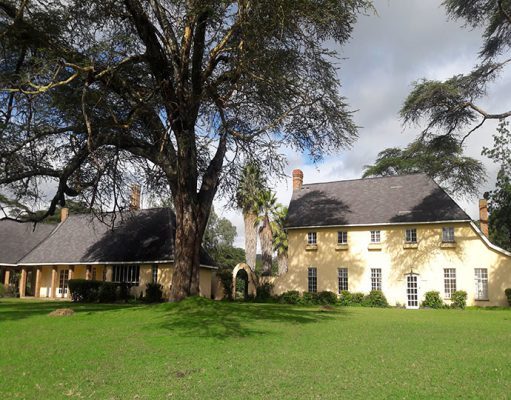
The historic Mundui House (below), situated on Lake Oloiden, Naivasha built in 1926, typical of British colonial plantation homes. I'm assuming Aunt Em's plantation Flamingo looked similar. (courtesy https://www.theluxurysafaricompany.co...)
So~~~ Lots and lots of dialogue. In fact, a good 90% of this “mystery” novel is talk, talk, talk, a brief glimpse of the scenery, then more talk, talk, talk, talk and more talk with very little action but lots of talk about the action. Ugh. Note: Pretty much all of the novel occurs in Kenya, Africa but none of any conversation is by any one of the African peoples themselves. --none-- Double Ugh.
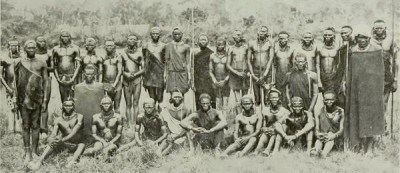
The other local indigenous peoples were the Kikuyu/Gikuyu. The Maasai and Kikuyu/Gikuyu did not get along and were encouraged by the Brits to annihilate each other.
Originally written in 1958, the author briefly mentions what she terms "The Emergency" which was actually the Mau Mau Uprising by the indigenous peoples, who basically were protecting their lands, way of life and themselves against the invasion of greedy British colonists who seized land literally anywhere they wanted, choosing the most arable and profitable in terms of resources while dispossessing the locals, enslaving them or massacring them outright. (Sound familiar? That's what the Brits doooo... their modus operandi.) Note: Might want to look into the Scramble for Africa. Wikipedia has a whole article on British and Europeans' conquering shenanigans.
The author was there at the time of the Mau Mau rebellion, which occurred from 1952 to 1960, accompanying her British Indian Army husband on assignment and naturally restricted herself to association with the Brits only, which reflects in the novel. It's treated as a “side” issue of little importance save for the impact it has amongst the British colonists, of which the protagonist Victoria is alongside her Aunt Emily of the Flamingo plantation and the neighboring settlements.
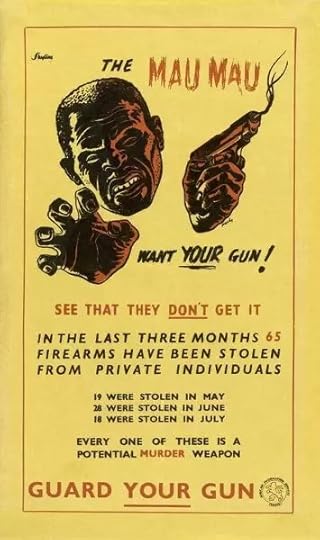
And then we have more from the war-mongering Brits, instilling fear from the local peoples: Yet another British propaganda poster, 1952 (courtesy https://www.prints-online.com/anti-ma...)
A conversation regarding the Brits and their flawed insane conquering run-over-anyone-that's-indigenous colonialist mentality goes, quoting Drew Stratton (page 131): “It's no good trying to treat Africans as though their processes of thought were the same as Europeans... (page 132): “All the chatter about 'It belongs to them' makes me tired. Sixty years ago Americans were still fighting Red Indians and Mexicans and grabbing their land... Our grandfathers found a howling wilderness that no one wanted, and which, at the time, no one objected to taking possession of. And with blood, toil, tears and sweat they turned it into a flourishing concern. At which point a yelping chorus is raised, demanding, in the name of “Nationalism”, that it be handed over to them...”
Obviously, in writing the statement above and including it in her “mystery” novel, the author M.M. Kaye (Mary Margaret Kaye) is very much aware of the inequalities between the colonialists and the indigenous locals yet found a way to subtly address the ongoing (at that time) conflict of the Mau Mau Uprising but still appeal to her reading audience, perhaps with the intention of introducing them to this important issue for the first time and the rough shod, run-them-over mind think of colonialists in general.
I've also read Trade Wind, originally written in 1963 (review to come) and M.M. Kaye, again, weaves disparity between the indigenous population and the newly arrived who assume control into that novel.
Aside from the previous, I rate this story 3 stars. Save for a few separated incidents, there's just not much happening action-wise; the protagonists are all self serving British colonialists, the native peoples sidelined into malignancy or are indentured servants and the "mystery" ho hum at best.
However, M.M. Kaye by writing this novel introduced me to an important episode in Kenya's long history which is invaluable to me. I thank her for that.
Death in Kenya has just unseated Death in Cyprus as my favorite of M.M. Kaye’s romantic suspense/mystery series set in exotic locales. Along with gorgeous, evocative descriptions of Kenya, Kaye makes the reader care about and empathize with the murder victim, who is cleverly set up as the fake protagonist. I was sorry when she was murdered, since she was a lovely, vulnerable, decent character who was more interesting than the actual protagonist. This is a real page turner and is the only one of the books to create an uncomfortable, unsettling atmosphere throughout (the others are much less sombre).
This is my first M.M Kaye book...WHERE have you been all my life? Believe it or not I only heard of this author last week, don't know how I came across it but it sounded right up my alley so I went to the library to find some of her books. I chose a few of the 'death in...'series to start with (cos they're shorter)to see if I liked her writing style before I ventured into her larger books.
And basically, I love her!
The author has lived in all kinds of exotic locals and incorporates them into her stories. So the reader always gets a good dose of "vacation in an arm chair". Love that. This book finds us in Kenya ~with a murder~ kind of Agatha Christie style.
This story started off a little confusing~ only because several people are introduced and I had a hard time keeping them straight at first. But once I did, I was engrossed. It's a classic "who-dunnit" thriller.I had my suspicions of the bad guy but I was wrong...so see, it's not entirely predictable.
If you havent read any of M.M. Kaye books, check some out at the library,they're well worth a read! I'm off to find another one.
CONTENT:
SEX: None LANGUAGE: mild cussing throughout DRINKING: Quite a bit~ but it is integral to the story VIOLENCE: A few brutal crimes are mentioned (in a list) but the main murder/s are not shown. PARANORMAL ELEMENTS: none. A "ghost" is mentioned as a possible reason for vandalism. (It is Kenya after all) but there are none.
In spite of the fact that my kindle unilaterally added this book to my currently reading on 12/17/16, I didn't really start it until yesterday. And then I finished it this morning.
I really enjoyed this one. It was thought-provoking, and the colonial Kenya setting was one of my favorites so far. I was baffled by the whodunit part of this mystery. The relationship between the male love interest and the female main character was less regressive than that in Death in Berlin, and more convincing than Death in the Adamans.
I now only have one more of these delightful vintage mysteries left to read - Death in Zanzibar.
Stunning. I do believe this is the best mystery I have ever read. I did suspect the murderer at one point but quite quickly out ruled him/her. There was a light romantic thread woven through but it was not the main theme. I wasn't entirely sure who the Hero was at first but was happy with who it turned out to be.
It kept me turning pages rapidly so I could sooner find out who did it. Words can hardly express how much I enjoyed this. It was just the sort of book I needed. I didn't have a dull moment while reading Death in Kenya. The mystery in it's self was satisfying and had me thinking I had got it. All the while someone else was really behind the murder and vandalism. To put it in three words, I loved it! I hope to read more by M.M. Kaye.
I really loved this book (in a just for fun, frivolous kind of way).
Yes, it is deeply, painfully colonialist, and achingly short-sighted (and narrow-minded) in its perspective on the Mau Mau revolt. But, in its defense, it never claims to be anything but what it is: a story of British East Africa, by British East Africa. And, as Kaye writes in her introduction, the perspectives laid out in this book were the perspectives held, and voiced, by real people. I wonder if she might declare, with Dickens' Ghost of Christmas Past, "That they are what they are, do not blame me."
Perhaps, in some ways, the strangest aspect of the book is how historical it feels, when it was written barely half a century ago. It seems that, in Kenya at least, the British Empire (with its lifestyle of sprawling villas and innumerable servants) was alive and well far into the 20th century.
But that atmosphere of a bygone era, captured in such rich detail, is what gives the book its charm. Contained within its pages is the Rift Valley that I know, but as it used to be -- and as, it's true, parts of it still (almost) are.
This has the feel of an Agatha Christie or Mary Stewart mystery -- but with stronger prose, a more compelling backdrop, and characters both vivid and interesting. In many ways this is more a story about colonialism and Kenya than it is a traditional "who-dunnit" -- and that suited me just fine. And though the heroine's mid-book change of heart feels a bit abrupt and underdeveloped, I'll forgive Kaye for the simple reason that I enjoyed the rest of it so much.
I wanted to love this, as it was my first M.M. Kaye book. So many people love her books! I really liked the mystery and it kept me guessing until the very end. I just felt it drug on and on too long. The ending was a bit disappointing - not so much the "who dunnit" but the WHY?
Ok, after a few days of thinking about this, I am bumping it up to 4 stars. I realized I was probably swayed to the negative because of the 2-day horrible headache I had while trying to read this. I loved the old fashion style of this book and the great mystery. I would definitely read more of her books.
A more enjoyable read this time round. I had a bigger appreciation for the wild kenyan landscape and all the trappings that came with living in it. The cat and mouse plot was gripping and I got caught up in the suspense.
Overall a decent stoey, though I do feel like the characters could have been more fleshed out.
I found this book in the M.M.Kaye series to finally deviate from her previous books. In the others I read each book had the exact same plot. A murder, an innocent young girl who unwittingly finds herself at the scene of a murder and the same implicated by circumstances beyond her control. The only that changed in each was the geographical place. What kept me reading was the fact that M.M.Kaye had lived in each of these countries and so I learned of history having to do with the years during and after the war. Very interesting stuff. As is each of her prefaces to the books.
I had no idea that this one would be any different. So much to my delight I find there was a growth to her writing of these books. I put this down to the fact that this one was written much later than the others. It must have been wonderful to have been her. To have lived in all these places where so much history was taking place. And to top it off she had the imagination and writing skills to use her experiences in a fun, light mystery.
This book still has the heroine that comes in on an unexpected death. Except this time she isn't the immediate suspect. Much more detailed story in that you cannot exactly put your finger on who might have really done the deed.
I discovered this book and Author through Gooodreads recommandation, it came up as a suggestion of books I may like since I enjoyed " The Man in the Brown Suit by Agatha Christie, the suggestion included some of the Death series, but I decided to start with this one as I visited Nairobi and Nakuru area in 2011 and I still have all the memories in my mind.
I liked the story and the historical part of it, I almost guessed who was the murderer , what I didn't like was the end, it was too short, I would have wanted to know more about what happened to all the other characters.
I will definitely read more M. M. Kaye in the future.
Another winner from M.M. Kaye's 6 book "Death in..." murder mystery series. This one is set in early 1950's Kenya, soon after the infamous Mau Mau rebellion. The setting is the beautiful and remote Rift Valley, where in the late 1800's and early 1900's British colonials set up vast farms and ranches throughout the valley (think "Out of Africa").
Once again, Kaye paints a vivid picture of the locale, while at the same time delivers a chilling and atmospheric whodunit.
End of Empire is a frequent theme in this series of books. Death in Kenya involves a passionate monologue about white ownership. But even while Kaye is attempting to navigate through the wrongs or rights of white landowners in Kenya, she manages to give us a story without any non-servant native Kenyans.
Still reasonably good mystery-thriller. This one is reminiscent of Ngaio Marsh's New Zealand stories.
I thought this was a great mystery--at times suspenseful and tense, and full of twists and turns. I loved the setting, and the cast of characters gave me plenty of suspects from which to choose (and no, I didn't figure it out).
Another old-fashioned murder mystery, by M.M. Kaye with a amazing sense of place. I half read just for the imagery of the locations these books are set in. Not my favorite one though. The murder here is quite creepily set, but this means half the characters are on the edge of hysterics and it made me feel somewhat impatient with most of them. On top of this, the feelings from primarily a white colonists point of view made me feel somewhat squirmy, as did the strange love triangle/s. A lot of one-sided obsessive/possessiveness, which I find exhausting!
The ending felt sad rather than satisfying (I don't think this is bad, just how it felt).
Years ago I read several of M. M. Kaye's books, most notably Far Pavilions. I enjoyed her writing but had never read any of her 'Death in..' series. I found Death in Kenya at a used book sale recently. It is a very well-written book, if somewhat dated (it was first published in 1958) and is worth the read. It is written in the tradition of the English mysteries of the time, similar to Agatha Christie where all is not revealed until the very end. I did not guess who the murderer was although there were hints. I really liked the Kenya setting and how it permeates the story. The characters and dialog are very dramatic but it doesn't take away from the story. The romance is light and mostly just hinted at. I would recommend it for Kaye fans as well as Agatha Christie fans.
'Death in Kenya', originally titled 'Later Than You Think', is a dark psychological tale of English settlers in Kenya in the late 1950's. The rebellion known as the Mau Mau Uprising, or The Emergency, is in the very recent past. The English colonists are feeling very uneasy about their safety and tenure since they do not know who among their African servants they can trust.
Lady Em DeBrett, one of the early colonists, rules her plantation Flamingo with an iron hand. Her grandson Eden, heir to the property, and his wife Alice live with her. But things have not been going well. Mysterious events have seemed to haunt the great villa, and some even suspect a poltergeist. Tragedy strikes, and the tension ramps up as the police try to find out who committed the crime. Into this unpleasant atmosphere comes Lady Em's young niece, Victoria. Five years before, she was almost engaged to Eden, and she is very unsure about whether she should come to Kenya. She tries to figure out why everyone is so high-strung, from the plantation manager Gilly Markham and his unhappy wife Lisa, to the neighbors Drew Stratton and Hector and Mabel Brandon. Everyone seems to have a reason to conceal their movements at the time of the crime. Does Victoria still love Eden, and is this blinding her to what is going on? Another death occurs when the whole group is on a picnic. This again brings in the police, who are convinced that someone is lying, but is it to protect themself or another person? Is there a connection to the Mau Mau unrest? When another body is found, the tension reaches an unbearable level and suddenly emotions, and alibis, start to crack. The violent conclusion is both shocking and psychologically weird. The story is wrapped up just a bit too quickly for complete satisfaction for the reader.
I knew nothing about the Mau Mau rebellion and found this to be an interesting backdrop for the story. Ms. Kaye lived in Kenya at that time because her husband was stationed there. She had a keen eye for the rationalizing that the settlers engaged in. She presents an intriguing look at a small social group that lived in dangerous times and how it warped their perspective. Recommended.