

What do you think?

Very Short Introductions #142
Human Evolution: A Very Short Introduction
The recent discovery of the diminutive Homo floresiensis (nicknamed "the Hobbit") in Indonesia has sparked new interest in the study of human evolution. In this Very Short Introduction , renowned evolutionary scholar Bernard Wood traces the history of paleoanthropology from its beginnings in
the eighteenth century to today's latest fossil finds. Along the way we are introduced to the lively cast of characters, past and present, involved in evolutionary research. Although concentrating on the fossil evidence for human evolution, the book also covers the latest genetic evidence about
regional variations in the modern human genome that relate to our evolutionary history. Wood draws on over thirty years of experience to provide an insiders view of the field, and demonstrates that our understanding of human evolution is critically dependent on advances in related sciences such as
paleoclimatology, geochronology, systematics, genetics, and developmental biology. This is an ideal introduction for anyone interested in the origins and development of humankind.
the eighteenth century to today's latest fossil finds. Along the way we are introduced to the lively cast of characters, past and present, involved in evolutionary research. Although concentrating on the fossil evidence for human evolution, the book also covers the latest genetic evidence about
regional variations in the modern human genome that relate to our evolutionary history. Wood draws on over thirty years of experience to provide an insiders view of the field, and demonstrates that our understanding of human evolution is critically dependent on advances in related sciences such as
paleoclimatology, geochronology, systematics, genetics, and developmental biology. This is an ideal introduction for anyone interested in the origins and development of humankind.
144 pages, Paperback
First published January 1, 2005
Ratings & Reviews
Friends & Following
Create a free account to discover what your friends think of this book!
Community Reviews
Displaying 1 - 30 of 103 reviews

April 3, 2019
"...when all is said and done, all taxonomies are hypotheses."
- Barnard Wood, Human Evolution: VSI

Vol N° 142 of Oxford's Very Short Introductins series, Human Evolution is focused, by design on explaining how paleoanthropologists do their job, explaining (briefly) what we THINK we know about human evolutionary history, and where the gaps in our knowledge are.
I really wish Wood had spent more of the brief time authors are given in the VSI format describing WHAT we know rather than the process and taxonomy. Everything is a choice. Wood's choice of what to focus on in this book (and thus what he ignores) means less time spent exploring the difference between H. Erectus, H. Sapien, and A. Afarensis and more time discussing how they get put into their boxes. Ugh.
My real feeling is these books should be viewed as the ONCE chance each author has to sell their area of expertise, their specialty, their subject, to an amatuer or generalist, or introductory audience. Grab me. Teach me. You've got 150 pages and a couple hours of my complete attention. Are you really going to spend 1/2 your time discussing taxonomies and process?
- Barnard Wood, Human Evolution: VSI
Vol N° 142 of Oxford's Very Short Introductins series, Human Evolution is focused, by design on explaining how paleoanthropologists do their job, explaining (briefly) what we THINK we know about human evolutionary history, and where the gaps in our knowledge are.
I really wish Wood had spent more of the brief time authors are given in the VSI format describing WHAT we know rather than the process and taxonomy. Everything is a choice. Wood's choice of what to focus on in this book (and thus what he ignores) means less time spent exploring the difference between H. Erectus, H. Sapien, and A. Afarensis and more time discussing how they get put into their boxes. Ugh.
My real feeling is these books should be viewed as the ONCE chance each author has to sell their area of expertise, their specialty, their subject, to an amatuer or generalist, or introductory audience. Grab me. Teach me. You've got 150 pages and a couple hours of my complete attention. Are you really going to spend 1/2 your time discussing taxonomies and process?

July 4, 2019
I remember Bernard Wood as one of the best professors I have ever had. He taught a two-week course on human anatomy at the Turkana Basin Field School, and in that time he managed to get me to memorize and identify every bone in the human body (well, he did his best). More importantly, however, he introduced some of the thornier problems with taxonomy.
His main concern was how to identify whether two fossil skeletons belonged to the same or to different species. If you imagine a future scientist trying to tell whether lions and tigers were one or two species by just looking at the bones of a few individuals, you can get an idea of what paleoanthropologists have to do. The key to deciding this issue is determining how much anatomical variation a species can accommodate. Humans, for example, can vary quite drastically in size and proportions. But some variables—such as bone shape, or the placement of sockets, or relative thicknesses—are highly unlikely to vary beyond certain bounds, even in extreme cases. Figuring out what can vary and what cannot, then, is the key to making these sorts of decisions.
Another complicating factor is time. The concept of a “species” is especially difficult to apply to fossil creatures, since for a modern biologists it denotes an interbreeding population. Obviously this information is out of reach for the paleoanthropologist. What is more, ancient hominims were presumably evolving over time, transforming themselves in a series of gradations: So how is one to say where one species ends and another begins? Convergent evolution (or homoplasy) is another complicating factor. How can one know whether one species evolved from another, or whether the two of them evolved similar features independently from a common ancestor? To sum up, the variation across individuals and through time, combined with overlapping variation, make species classification a very thorny issue indeed.
Scientists can grapple with these confusions through careful study of contemporary animals, noting how they tend to vary, change, and converge. Still, there is much room for disagreement, which leads to several different camps in the paleoanthropological world. One major division Wood mentions is that between “lumpers” and “splitters”: whether a scientist is inclined to lump different fossils into the same species, or to create a new species for each fossil. Another division is between those who see human evolution as more of a tree—with a single trunk leading linearly from one species to another—or as a bushy structure, with species splitting off in many different directions, the majority of which go extinct without leaving any evolutionary heirs.
This book provides an admirable introduction to some of these problems. Wood also takes the reader through some of the more important known hominim species. I fear, however, that Wood’s tone may be too academic for the casual reader. I also think that the sections on the history of Western thought regarding human evolution and on the methodology of dating fossils could have been greatly reduced, to have allowed more space to discuss some of the more interesting problems of human evolution: Why did we evolve bipedalism? Why did our brains grow when they did? Why do we lack hair?
Of course, no book this short could have done complete justice to such an enormous topic. For any who wish a longer but more popular style of book, I recommend Ancestral Passions by Virginia Morrell—a book that Professor Wood once recommended to me.
His main concern was how to identify whether two fossil skeletons belonged to the same or to different species. If you imagine a future scientist trying to tell whether lions and tigers were one or two species by just looking at the bones of a few individuals, you can get an idea of what paleoanthropologists have to do. The key to deciding this issue is determining how much anatomical variation a species can accommodate. Humans, for example, can vary quite drastically in size and proportions. But some variables—such as bone shape, or the placement of sockets, or relative thicknesses—are highly unlikely to vary beyond certain bounds, even in extreme cases. Figuring out what can vary and what cannot, then, is the key to making these sorts of decisions.
Another complicating factor is time. The concept of a “species” is especially difficult to apply to fossil creatures, since for a modern biologists it denotes an interbreeding population. Obviously this information is out of reach for the paleoanthropologist. What is more, ancient hominims were presumably evolving over time, transforming themselves in a series of gradations: So how is one to say where one species ends and another begins? Convergent evolution (or homoplasy) is another complicating factor. How can one know whether one species evolved from another, or whether the two of them evolved similar features independently from a common ancestor? To sum up, the variation across individuals and through time, combined with overlapping variation, make species classification a very thorny issue indeed.
Scientists can grapple with these confusions through careful study of contemporary animals, noting how they tend to vary, change, and converge. Still, there is much room for disagreement, which leads to several different camps in the paleoanthropological world. One major division Wood mentions is that between “lumpers” and “splitters”: whether a scientist is inclined to lump different fossils into the same species, or to create a new species for each fossil. Another division is between those who see human evolution as more of a tree—with a single trunk leading linearly from one species to another—or as a bushy structure, with species splitting off in many different directions, the majority of which go extinct without leaving any evolutionary heirs.
This book provides an admirable introduction to some of these problems. Wood also takes the reader through some of the more important known hominim species. I fear, however, that Wood’s tone may be too academic for the casual reader. I also think that the sections on the history of Western thought regarding human evolution and on the methodology of dating fossils could have been greatly reduced, to have allowed more space to discuss some of the more interesting problems of human evolution: Why did we evolve bipedalism? Why did our brains grow when they did? Why do we lack hair?
Of course, no book this short could have done complete justice to such an enormous topic. For any who wish a longer but more popular style of book, I recommend Ancestral Passions by Virginia Morrell—a book that Professor Wood once recommended to me.

March 18, 2019
توثيق وسرد مختصر لمراحل تحليل أحافير اكتشفت في مناطق مختلفة في العالم مع تصنيفها ومقارنتها وترتيبها للوصول للإنسان الحديث..

January 18, 2023
حابه اعطي هالكتاب نجمتين ونص لانه المعلومات الموجوده فيها جداً متكرره و تعيد نفسها طول الوقت لدرجة صدعت منها كان في معلومات مثيرة للاهتمام و اغلبها مثيرة للملل جداً

December 4, 2015
Excelente síntese do actual entendimento acerca da evolução humana a partir dos dados provenientes da paleoantropologia e do registo arqueológico, particularmente útil a estudantes da área ou a pessoas interessadas em saber um pouco para além da famosa Lucy e do Homo sapiens.
Pontos positivos: todos os conceitos enunciados na obra são explicados, o que facilita a sua compreensão; é coerente com os modelos explicativos existentes à data da sua publicação (2005), na sua maioria ainda válidos e em contínuo desenvolvimento; não apresenta uma linguagem excessivamente científica.
Pontos menos positivos: pode oferecer ligeiras dificuldades a quem não tenha as mínimas bases de génese evolutiva, não sendo por isso um livro recomendado a todas as pessoas; alguns diagramas não são inteiramente explícitos e carecem de ligação directa com o texto.
Pontos positivos: todos os conceitos enunciados na obra são explicados, o que facilita a sua compreensão; é coerente com os modelos explicativos existentes à data da sua publicação (2005), na sua maioria ainda válidos e em contínuo desenvolvimento; não apresenta uma linguagem excessivamente científica.
Pontos menos positivos: pode oferecer ligeiras dificuldades a quem não tenha as mínimas bases de génese evolutiva, não sendo por isso um livro recomendado a todas as pessoas; alguns diagramas não são inteiramente explícitos e carecem de ligação directa com o texto.

December 2, 2017
Meh. It was a rather boring book. Though it can be a good book to represent the norm of the literature a scholar in this field would read and review, it is not a good book for others who are interested in the bigger picture rather than important and particular cases.
I have to say, most V.S.I. books I've read so far, have this theme to them. Is that intentional?
I have to say, most V.S.I. books I've read so far, have this theme to them. Is that intentional?

September 27, 2019
An acclaimed academic in paleoanthropology, Prof. Wood gives a brief discussion on different aspects of human evolutionary narrative. Unlike science popularisers, he talked about different assumption, biases, limitations, speculation involved in creating naturalistic human genesis story. Good book for beginners.

September 12, 2023
المعلومات متكررة نوعاً ما.

January 8, 2017
هيا ليست مراجعه ولكنها افكار سببها الكتاب
تطور الانسان ..... او تشكيل صورة كبيره لمراحل تطور الانسان باستخدام مجموعة قطع صغيرة من هذه الصورة ومحاوله تصور باقي الصوره
بالظبط كما لو انك تحاول تجميع صوره مكونه من الاف قطع البازيل باستخدام عشر قطع فقط ... تضعها فى احتمالات وتتخيل باقي القطع
جهلا منى اطرح هذا السؤال .... ما الفائدة من معرفة تطور الانسان وهل اصله قرد او شمبانزي او غير ذالك؟؟
خلال الكتاب رسخت فى ذهنى فكرة طرحها الكاتب وهي ان بعض الناس يحكمون علي نظرية التطور عن طريق اخذ صوره واحده من سباق مارثون استغرق الكثير ليكتمل ..... فلا تحكم على نظرية التطور والتأقلم من خلال حتى عشرة الاف سنه .... فالتطور والانتقال من مرحلة لاخرى يستغرق ملايين السنين
ولكن هل معني هذا ان نظرية التطور تتعارض مع الدين ؟؟؟؟
اظن ذالك.... فلو ان نظرية التطور صحيحه سيكون هناك الكثير من الاسئله المطروحه
هل كان داروين او العلماء المشتغلين فى هذا المجال يحاربون الدين بنظرياتهم .... اظن لا.. فهم يؤمنون بالعلم ويتخذونه سبيل ... قد يعارض الدين ولكن هدفم هو
العلم وليس معارضه الدين
فى الكتاب تعرف ان اصل البشر بصوره شبه قطعيه هيا افريقيا
الانسان الحديث ظهر تقريبا من حوالي 200 الف سنه
هناك نظريه بان كل افراد الانسان الحديث ينحدرون من ام واحده ربما هيا حواء
هل سيدنا ادم كان اسود" من افريقيا" وبالتالى من الممكن ان نتخيل - بجملة التخيل هيا جت علينا يعنى- بان اشباه البشر لم يتطوروا ولكن كانت هناك حياة على الارض حتى هبط أدم وحواء فى افريقيا قبل 200 الف سنه وظهر الانسان الحديث
ومعنى هذا ان الانسان الحديث لم يكن تطور لاشباه الانسان وان اشباه البشر كانو موجودين قبل أدم وحواء على الارض ولم يتطورا ولكن ظهر أدم وحواء
فى الختام تقييمى للكتاب ناتج عن جهلى بالمصطلحات العلمية
على الهامش : استفذني الكاتب عندما ذكر كشف حفريات فى ثلاثينات القرن العشرين فى منطقه كان يطلق عليها فى هذا الوقت فلسطين ؟؟؟ بالمناسبه هيا ما زالت الى اليوم فلسطين
تطور الانسان ..... او تشكيل صورة كبيره لمراحل تطور الانسان باستخدام مجموعة قطع صغيرة من هذه الصورة ومحاوله تصور باقي الصوره
بالظبط كما لو انك تحاول تجميع صوره مكونه من الاف قطع البازيل باستخدام عشر قطع فقط ... تضعها فى احتمالات وتتخيل باقي القطع
جهلا منى اطرح هذا السؤال .... ما الفائدة من معرفة تطور الانسان وهل اصله قرد او شمبانزي او غير ذالك؟؟
خلال الكتاب رسخت فى ذهنى فكرة طرحها الكاتب وهي ان بعض الناس يحكمون علي نظرية التطور عن طريق اخذ صوره واحده من سباق مارثون استغرق الكثير ليكتمل ..... فلا تحكم على نظرية التطور والتأقلم من خلال حتى عشرة الاف سنه .... فالتطور والانتقال من مرحلة لاخرى يستغرق ملايين السنين
ولكن هل معني هذا ان نظرية التطور تتعارض مع الدين ؟؟؟؟
اظن ذالك.... فلو ان نظرية التطور صحيحه سيكون هناك الكثير من الاسئله المطروحه
هل كان داروين او العلماء المشتغلين فى هذا المجال يحاربون الدين بنظرياتهم .... اظن لا.. فهم يؤمنون بالعلم ويتخذونه سبيل ... قد يعارض الدين ولكن هدفم هو
العلم وليس معارضه الدين
فى الكتاب تعرف ان اصل البشر بصوره شبه قطعيه هيا افريقيا
الانسان الحديث ظهر تقريبا من حوالي 200 الف سنه
هناك نظريه بان كل افراد الانسان الحديث ينحدرون من ام واحده ربما هيا حواء
هل سيدنا ادم كان اسود" من افريقيا" وبالتالى من الممكن ان نتخيل - بجملة التخيل هيا جت علينا يعنى- بان اشباه البشر لم يتطوروا ولكن كانت هناك حياة على الارض حتى هبط أدم وحواء فى افريقيا قبل 200 الف سنه وظهر الانسان الحديث
ومعنى هذا ان الانسان الحديث لم يكن تطور لاشباه الانسان وان اشباه البشر كانو موجودين قبل أدم وحواء على الارض ولم يتطورا ولكن ظهر أدم وحواء
فى الختام تقييمى للكتاب ناتج عن جهلى بالمصطلحات العلمية
على الهامش : استفذني الكاتب عندما ذكر كشف حفريات فى ثلاثينات القرن العشرين فى منطقه كان يطلق عليها فى هذا الوقت فلسطين ؟؟؟ بالمناسبه هيا ما زالت الى اليوم فلسطين

August 24, 2022
A good, fast overview of our current understanding of human evolution. Occasionally it bogged down a little when listing various hominids by their Latin names (better read in text than listened to), but it trucked along for the most part & hit the high points. Wood also made good points about "our current understanding", dating, & some of the fossils they're working from. This led to explanations alternate theories & arguments between archeologists. There wasn't too much, just enough to show that the news stories aren't always as simple as they seem.
I almost shelved this as reference & it's also a good introduction. Well narrated.
I almost shelved this as reference & it's also a good introduction. Well narrated.

December 17, 2015
While I'm interested in *what* scientists/researchers know of evolution, this account focuses on *how* they know what they know. The historical side takes second place to the technical aspects, therefore it didn't appeal to me as much as hoped.
The writing itself is very good, though, and anyone wanting to know more about studying fossils, etc., should like this short account.
The writing itself is very good, though, and anyone wanting to know more about studying fossils, etc., should like this short account.

June 10, 2013
كمقدمة لعلم التطور وخصوصا التطور البشري، فالكتاب جيد جدا وسيساعد كل من يحتاج للاضطلاع على هذا المجال

August 22, 2017
مقدمة قصيرة جدا لكن بعض فصولها معمقة جدا، أسماء علمية كثيرة تجعل من تتبع الأفكار أمرا صعبا
على العموم يمكنك أخد فكرة إجمالية على تطور الإنسان من هذه المقدمة
على العموم يمكنك أخد فكرة إجمالية على تطور الإنسان من هذه المقدمة

July 19, 2025
If you saw me reading this, no you didn't.

September 7, 2017
يمكن إعتبار هذه الصورة كتبسيط وتوضيح وكخارطة للكل فصول هذا الكتاب. يمكنها ان تبسط لك التسلسل التطوري لأشباه البشر عبر الزمان
[image error]
Gif:
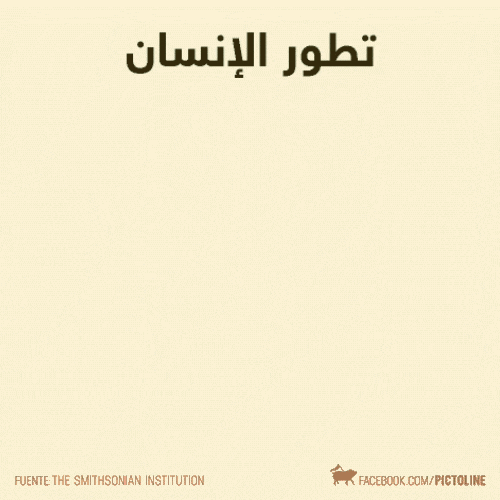
اما فيما يخص هذا كتاب فهو جميل وغني بالمعلومات وصريح ايضا فيما يخص الصعوبات التي يلقاها العلماء في دراسة الحفريات وصعوبة تصنيفها. أجده كتاب شامل وليس مقدمة بسيطة في تطور الانسان. وصريحة ايضا فيما يخص الضبابية التي تحيط بالتسلسل الكامل لتطور الانسان نظرا لندرة المعلومات. وهو ما يعيق إنشاء تسلسل كامل.
تمتل الاحافير الخاصة بالبشر وأسلاف البشر من بين الادلة القطعية على نظرية التطور رغم ندرة هذه الادلة وصعوبة تصنيفها إما لهشاشتها او لقلتها لأن أغلب الحفريات التي عتر عليها لأشباه البشر تكون مجرد أسنان او فكوك او أجزاء من الجمجمة او الحوض. نظرا لتدميرها بسبب السنين (بين 0.2 و 6 مليون سنة) أو بسبب تدميرها من طرف الحيوانات المفترسة انداك او الاكلة للجيف. او فقط بسبب تعرضها لعوامل التعرية وحموضة التربة.
الكتاب غني بالمعلومات التي لا تحتاج لتعمق كبير في المجال لفهمها وكل ما يخص هو بعض التركيز بسبب كثرة الاسماء الغريبة والطويلة لأصناف.
تطرق الكتاب أيضا الى الفرضيتين عن كيف إنتشر البشر في الكرة الارضية بين الاولى التي تفترض ان البشر تطور في افريقيا تم إنتشر في باقي القارات وبين الفرضية التانية التي تفترض ان اصناف من البشر تطورت بشكل مفرق في اماكن وقارات متفرقة. الكتاب أجاب أيضا على سؤال كنت أتسائله قبل قرائتي وهو كيف وصل البشر للقارة الامريكية؟
الشيء الوحيد الذي لم يعجبني في الكتاب هو صورة الغلاف التي تبدو لي غير منطقي مع الموضوع الكلي للكتاب، خصوصا في إستعمال التسلسل البسيط أو "الغبي" إن صح التعبير لفكرة التطور. وحبدا لو كان صورة أكتر منطقية.
[image error]
Gif:
اما فيما يخص هذا كتاب فهو جميل وغني بالمعلومات وصريح ايضا فيما يخص الصعوبات التي يلقاها العلماء في دراسة الحفريات وصعوبة تصنيفها. أجده كتاب شامل وليس مقدمة بسيطة في تطور الانسان. وصريحة ايضا فيما يخص الضبابية التي تحيط بالتسلسل الكامل لتطور الانسان نظرا لندرة المعلومات. وهو ما يعيق إنشاء تسلسل كامل.
تمتل الاحافير الخاصة بالبشر وأسلاف البشر من بين الادلة القطعية على نظرية التطور رغم ندرة هذه الادلة وصعوبة تصنيفها إما لهشاشتها او لقلتها لأن أغلب الحفريات التي عتر عليها لأشباه البشر تكون مجرد أسنان او فكوك او أجزاء من الجمجمة او الحوض. نظرا لتدميرها بسبب السنين (بين 0.2 و 6 مليون سنة) أو بسبب تدميرها من طرف الحيوانات المفترسة انداك او الاكلة للجيف. او فقط بسبب تعرضها لعوامل التعرية وحموضة التربة.
الكتاب غني بالمعلومات التي لا تحتاج لتعمق كبير في المجال لفهمها وكل ما يخص هو بعض التركيز بسبب كثرة الاسماء الغريبة والطويلة لأصناف.
تطرق الكتاب أيضا الى الفرضيتين عن كيف إنتشر البشر في الكرة الارضية بين الاولى التي تفترض ان البشر تطور في افريقيا تم إنتشر في باقي القارات وبين الفرضية التانية التي تفترض ان اصناف من البشر تطورت بشكل مفرق في اماكن وقارات متفرقة. الكتاب أجاب أيضا على سؤال كنت أتسائله قبل قرائتي وهو كيف وصل البشر للقارة الامريكية؟
الشيء الوحيد الذي لم يعجبني في الكتاب هو صورة الغلاف التي تبدو لي غير منطقي مع الموضوع الكلي للكتاب، خصوصا في إستعمال التسلسل البسيط أو "الغبي" إن صح التعبير لفكرة التطور. وحبدا لو كان صورة أكتر منطقية.

April 5, 2011
This book is everything that the VSI (Very Short Introductions) are supposed to be: it's short, it's to the point and it's up-to-date. It reviews all the major events in the history of thought on human evolution, as well as all the major landmarks of that evolution as we understand them today. When there are several differing interpretations of fossil evidence, Wood impartially points out all the strengths and weaknesses of different positions. Although this is not a book on evolution in general, the early chapters position human evolution within the context of primate evolution, and even more briefly, under the evolution of life. For the review of evolution in general, "Evolution: A Very Short Introduction" would be an excellent choice.

September 13, 2016
This was really quite a frustrating read. I know that some of these short introductions are occupied with methodology, some rightly so (History), some fail (Postcolonialism). This is sadly towards the latter of these. When I picked up a book that is suppose to introduce human evolution I did not suspect most of it to be about how one is to go about finding something out about human evolution. I was rather more interested in the finding themselves, and then perhaps hear something about how these were made. Only in the very last chapter or so did it get to what I wanted to read about, which was human evolution.

May 24, 2017
تطور الإنسان
مقدمة قصيرة جدا
.......................
مقدمة عن تطور الإنسان في أقل من 150 صفحة تحدث المؤلف عن الحفريات القديمة التي اعتبرها العلماء أسلاف الإنسان الحديث وسلالات قديمة منه وقد سماها العلماء "أشباه الإنسان".
تحدث الكتاب عن تحليل للحفريات وتفسير هذا التحليل، وتحدث عن المراحل المختلفة لتطور سلالات الإنسان القديم، كما تحدث تفصيليا عن مواقع اكتشاف الحفائر القديمة، وعلاقتها بالإنسان الحالي، كما حاول المؤلف الربط بين هذه السلالات ربطا مرتبا من الأقدم للأحدث.
قدم المؤلف جداول حاول شرح اوجه التشابه بين الحفائر والإنسان الحديث في شكل مقارنة لتحديد أوجه التشابه والاختلاف.
مقدمة قصيرة جدا
.......................
مقدمة عن تطور الإنسان في أقل من 150 صفحة تحدث المؤلف عن الحفريات القديمة التي اعتبرها العلماء أسلاف الإنسان الحديث وسلالات قديمة منه وقد سماها العلماء "أشباه الإنسان".
تحدث الكتاب عن تحليل للحفريات وتفسير هذا التحليل، وتحدث عن المراحل المختلفة لتطور سلالات الإنسان القديم، كما تحدث تفصيليا عن مواقع اكتشاف الحفائر القديمة، وعلاقتها بالإنسان الحالي، كما حاول المؤلف الربط بين هذه السلالات ربطا مرتبا من الأقدم للأحدث.
قدم المؤلف جداول حاول شرح اوجه التشابه بين الحفائر والإنسان الحديث في شكل مقارنة لتحديد أوجه التشابه والاختلاف.

October 13, 2016
دربارهی گذشته میخونم و به بلاهت انسان مدرن فکر میکنم.

July 26, 2017
A very clear introduction. I felt encouraged to learn more about the subject. The author shows how fossil and genetic evidence helps us understand the origins and development of humankind.


April 12, 2021
كتاب ممتع لذيذ علميا أرشحه لاي حد
حابب أقسم الكتاب لتلات أقسام أول قسم هو شرح طرق الكشف عن الحفريات وطرق التأريخ الحفري علميا
تاني قسم هو قسم تقسيم أسلاف الهومو سيبيانز
وهما بينقسموا إلي : أولا أشباه البشر المحتملون والمرجحون وهنا ينقسم العلماء في تصنيفهم كأشباه بشر أو لا وهما
إنسان تشاد السواحلي / أورورين توجنيسيس / اردبيتكوس راميدوس ,اردبيتكوس كادابا
ثانيا : أشباة البشر القامى والأنتقاليون وهما :
الأسترالوبيتكس وهو أول أشباه بشر منتصب وينقسم إلي ( استرالوبيتكس أنامنسيس ، استرالوبيتكس أفارنيسينس وهو الأقرب إلي شكل الهومو ) /إنسان كينيا ( حوالي 3 ونص مليون سنة )
واسترالوبيتكس الأفريقي من عمر 3 الي 2 .4 مليون سنة / بارانثروبوس روبستوس واحد ونص الي 2 مليون سنة
ثالثا : الإنسان ما قبل الحديث وينقسم الي الإنسان الماهر هومو هابيلوس من 2.4 الي 1.6 مليون سنة / إنسان بحيرة رودولف / الإنسان العامل هوموإرغاستر1.5 الي 1.9 مليون سنة /الإنسان المنتصب هومو اركتوس 1.8 مليون سنة /انسان فلوريس /هومو أنتيستيسور /إسان هايدلبيرغ 0.1 مليون سنة / انسان النيادرتال
ثالثا الإنسان العاقل ( هومو سيبيانز ) من 0.2 مليون سنة إلي عصرنا الحالي
تالت قسم هو الإنسان الحديث وفرضيات حول أول شعوب
حابب أقسم الكتاب لتلات أقسام أول قسم هو شرح طرق الكشف عن الحفريات وطرق التأريخ الحفري علميا
تاني قسم هو قسم تقسيم أسلاف الهومو سيبيانز
وهما بينقسموا إلي : أولا أشباه البشر المحتملون والمرجحون وهنا ينقسم العلماء في تصنيفهم كأشباه بشر أو لا وهما
إنسان تشاد السواحلي / أورورين توجنيسيس / اردبيتكوس راميدوس ,اردبيتكوس كادابا
ثانيا : أشباة البشر القامى والأنتقاليون وهما :
الأسترالوبيتكس وهو أول أشباه بشر منتصب وينقسم إلي ( استرالوبيتكس أنامنسيس ، استرالوبيتكس أفارنيسينس وهو الأقرب إلي شكل الهومو ) /إنسان كينيا ( حوالي 3 ونص مليون سنة )
واسترالوبيتكس الأفريقي من عمر 3 الي 2 .4 مليون سنة / بارانثروبوس روبستوس واحد ونص الي 2 مليون سنة
ثالثا : الإنسان ما قبل الحديث وينقسم الي الإنسان الماهر هومو هابيلوس من 2.4 الي 1.6 مليون سنة / إنسان بحيرة رودولف / الإنسان العامل هوموإرغاستر1.5 الي 1.9 مليون سنة /الإنسان المنتصب هومو اركتوس 1.8 مليون سنة /انسان فلوريس /هومو أنتيستيسور /إسان هايدلبيرغ 0.1 مليون سنة / انسان النيادرتال
ثالثا الإنسان العاقل ( هومو سيبيانز ) من 0.2 مليون سنة إلي عصرنا الحالي
تالت قسم هو الإنسان الحديث وفرضيات حول أول شعوب

July 19, 2019
Out of date. Too little discussion of the methods.

June 14, 2023
So much can change in a few decades. I took a course in this stuff in 1980s but this little book is more useful.
Recommended.
Recommended.

March 11, 2025
شاید این موضوع برای من نباشه یا شاید تکست سختتر از حد انتظاری داشته باشه. هرچی که هست، کم مونده که انگیزه برای خوندنش رو از دست بدم

November 22, 2024
Some woje parts but otherwise decent.

August 22, 2019
دسم وممل، حسيت انه منهج تعليمي اكثر من تثقيفي لغير المتخصصين
عمومًا برضو طلعت بفايدة
عمومًا برضو طلعت بفايدة

March 25, 2022
Focuses a lot on the evidence itself and specific cases, less on analysis and constructing a narrative. This is good at providing a detailed understanding of the current state of paleoanthropology, but it comes at the expense of bigger-picture and further implications. I got a more detailed understanding of the evidence behind the basic picture of human evolution that I got from Sapiens by Harari, plus some interesting tidbits.
Notes:
• Alfred Russel Wallace independently worked out natural selection around same time as Darwin
• Hominins start deliberate burial about 60-70 kya, which dramatically improves quality of fossil record
• Radiocarbon dating works up to 40 kya, after that we use K/Ar, and then U/Pb. We can also use magnetostratigraphy, which uses the history of magnetic field shifts to date rocks. Another key thing is using non-hominin fossils similar to those which have been reliably dated elsewhere as anchors
• Oxygen isotopes in marine sediments produced by foraminifera can tell us something about the temperature, because during higher temperature the lighter O-16 isotope will tend to evaporate more
• Taxa have to be attached to a "type specimen", and this attachment is permanent. If the type specimen turns out to be atypical, it can't be reassigned - the rest of the taxon instances have to be reclassified with a new type specimen
• Almost all researchers accept the punctuated equilibrium model, in which random-walk periods of stasis are interrupted by speciation events. Speciation could be due to large-scale chromosome rearrangements.
○ This confuses me. I would be surprised if there's a separate mechanism (chromosome rearrangements) that is responsible for speciation, separate from the usual natural selection by genetic mutations.
○ I thought punctuated equilibrium mainly happen through allopatric speciation, but I guess that's not the case?
• Some clades tend to produce substantially more new species than others? That's weird and confusing
• Paleoanthropologists are split between two rough camps - "splitters" which recognize more distinct species, and "lumpers" which recognize fewer. Author is a splitter
○ What is actually the thing under debate here? The sample distribution of morphologies is fixed by the fossils we've discovered, and they can't possibly be debating about whether or not these different groups could produce fertile offspring…
• It is likely that features such as thick tooth enamel and bipedalism evolved more than once in the hominin clade
• Hominins are also often classified by "grades" - phylogenetic categories like "leaf-eating" or "bipedal", not necessary (but sometimes) corresponding to clades
• Australopithecus afarensis is the earliest strongly hominin that we have lots of physiological detail about, diverged ~3.3mya. A. afarensis has a brain that is larger (both absolutely and relatively, although the former more so) than modern chimp brains! Suggests humans are the latest step in a long speciation process driven by moving into a more brain-intensive niche
• Homo ergaster is ~2mya and has different teeth shape and isotope ratios from the previous "transitional" hominins - seems to be in a different niche. Suggests a different diet, at least - some have suggested it was the first to cook, but our oldest reliable archaeological evidence of fire is ~1mya
• However, homo ergaster's brain isn't much larger than the transitional hominins
○ To me, that seems like pretty decent evidence for cook -> brain instead of brain -> cook
• Ergaster's legs are longer and allow for better mobility, and this is about the time we see evidence of hominins outside Africa (stone tools in China, ~2.1mya)
• Supports the narrative from Sapiens by Harari that there appears to be "admixture" between Neanderthals and non-African homo sapiens, and another admixture between Denisovans and Oceanian homo sapiens.
• Main hypotheses for origin of modern humans is weak-recent-out-of-Africa vs weak-multi-regional. First proposes that modern humans evolved in Africa, and then migrated to the rest of the globe with limited or no cross-breeding with other hominins. Second proposes that regional hominin variants evolved convergently to modern humans, with differences evening out via gene flow
• Both mitochondrial DNA (non-recombinant, matrilineal) and the Y chromosome (non-recombinant, patrilineal) suggest the majority of modern human DNA originated in Africa
• Neanderthals had larger brains, but cruder tools
Notes:
• Alfred Russel Wallace independently worked out natural selection around same time as Darwin
• Hominins start deliberate burial about 60-70 kya, which dramatically improves quality of fossil record
• Radiocarbon dating works up to 40 kya, after that we use K/Ar, and then U/Pb. We can also use magnetostratigraphy, which uses the history of magnetic field shifts to date rocks. Another key thing is using non-hominin fossils similar to those which have been reliably dated elsewhere as anchors
• Oxygen isotopes in marine sediments produced by foraminifera can tell us something about the temperature, because during higher temperature the lighter O-16 isotope will tend to evaporate more
• Taxa have to be attached to a "type specimen", and this attachment is permanent. If the type specimen turns out to be atypical, it can't be reassigned - the rest of the taxon instances have to be reclassified with a new type specimen
• Almost all researchers accept the punctuated equilibrium model, in which random-walk periods of stasis are interrupted by speciation events. Speciation could be due to large-scale chromosome rearrangements.
○ This confuses me. I would be surprised if there's a separate mechanism (chromosome rearrangements) that is responsible for speciation, separate from the usual natural selection by genetic mutations.
○ I thought punctuated equilibrium mainly happen through allopatric speciation, but I guess that's not the case?
• Some clades tend to produce substantially more new species than others? That's weird and confusing
• Paleoanthropologists are split between two rough camps - "splitters" which recognize more distinct species, and "lumpers" which recognize fewer. Author is a splitter
○ What is actually the thing under debate here? The sample distribution of morphologies is fixed by the fossils we've discovered, and they can't possibly be debating about whether or not these different groups could produce fertile offspring…
• It is likely that features such as thick tooth enamel and bipedalism evolved more than once in the hominin clade
• Hominins are also often classified by "grades" - phylogenetic categories like "leaf-eating" or "bipedal", not necessary (but sometimes) corresponding to clades
• Australopithecus afarensis is the earliest strongly hominin that we have lots of physiological detail about, diverged ~3.3mya. A. afarensis has a brain that is larger (both absolutely and relatively, although the former more so) than modern chimp brains! Suggests humans are the latest step in a long speciation process driven by moving into a more brain-intensive niche
• Homo ergaster is ~2mya and has different teeth shape and isotope ratios from the previous "transitional" hominins - seems to be in a different niche. Suggests a different diet, at least - some have suggested it was the first to cook, but our oldest reliable archaeological evidence of fire is ~1mya
• However, homo ergaster's brain isn't much larger than the transitional hominins
○ To me, that seems like pretty decent evidence for cook -> brain instead of brain -> cook
• Ergaster's legs are longer and allow for better mobility, and this is about the time we see evidence of hominins outside Africa (stone tools in China, ~2.1mya)
• Supports the narrative from Sapiens by Harari that there appears to be "admixture" between Neanderthals and non-African homo sapiens, and another admixture between Denisovans and Oceanian homo sapiens.
• Main hypotheses for origin of modern humans is weak-recent-out-of-Africa vs weak-multi-regional. First proposes that modern humans evolved in Africa, and then migrated to the rest of the globe with limited or no cross-breeding with other hominins. Second proposes that regional hominin variants evolved convergently to modern humans, with differences evening out via gene flow
• Both mitochondrial DNA (non-recombinant, matrilineal) and the Y chromosome (non-recombinant, patrilineal) suggest the majority of modern human DNA originated in Africa
• Neanderthals had larger brains, but cruder tools

December 20, 2018
کتاب خوبی است ولی چند ایراد دارد. هیچ عکسی از انواع هومو ندارد. درباره ابعاد هیکل و شکل صورت گونه ها حرفی نزده و تنها نئاندرتال را با خردمند مقایسه کرده. مسیر مهاجرتی از افریقا را نشان نداده. ترتیب هومو ها را ننوشته. ولی توضیح خوبی درباره چگونگی محاسبه سن گونه ها و تاریخشان گفته شده.

August 23, 2010
These Short Introductions are a bit of mixed bag. This one is absolutely excellent. It's well laid out with very clear chapters entitled:
Introduction
Finding our place
Fossil hominins: their discovery and context
Fossil hominins: analysis and interpretation
Early hominins: possible and probable
Archaic and transitional hominins
Pre-modern Homo
Modern Homo
Strangely, it has the same diagram of different hominins repeated three times in the book, each with with different titles. It seems to be a copy-editing error but is actually rather useful!
The writing is clear and lucid and a joy to read. It's always a great reading pleasure when you come across a factual author who can actually 'write'.
The author, Bernard Wood, has impeccable qualifications:
He is Professor of Human Origins at George Washington University and a Senior Scientist in the Human Origins Programme of the Smithsonian Institute. He is a medically qualified palaeoanthropologist and was on Richard Leakey's first expedition to Lake Rudolph in 1968 and has pursued research in the field ever since.
The book was published in 2005, so will need an update soon but, meanwhile, I highly recommend it as an introduction to a fascinating subject about which we know so little.
Introduction
Finding our place
Fossil hominins: their discovery and context
Fossil hominins: analysis and interpretation
Early hominins: possible and probable
Archaic and transitional hominins
Pre-modern Homo
Modern Homo
Strangely, it has the same diagram of different hominins repeated three times in the book, each with with different titles. It seems to be a copy-editing error but is actually rather useful!
The writing is clear and lucid and a joy to read. It's always a great reading pleasure when you come across a factual author who can actually 'write'.
The author, Bernard Wood, has impeccable qualifications:
He is Professor of Human Origins at George Washington University and a Senior Scientist in the Human Origins Programme of the Smithsonian Institute. He is a medically qualified palaeoanthropologist and was on Richard Leakey's first expedition to Lake Rudolph in 1968 and has pursued research in the field ever since.
The book was published in 2005, so will need an update soon but, meanwhile, I highly recommend it as an introduction to a fascinating subject about which we know so little.
Displaying 1 - 30 of 103 reviews