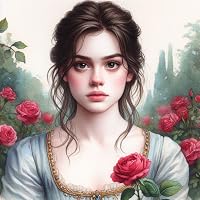
In her most charming book yet, three-time New York Times Best Illustrator Barbara McClintock has created the Cinderella that every little girl will want to savor -- over and over again.
Poor Cinderella, who is relegated to a dingy garret room by her duplicitous stepmother and beleaguered by her nasty stepsisters, never gives in to hostility or revenge. Instead, this sweet heroine remains steadfast in her kind, gentle ways, and her generosity flows like a mountain stream. This tale of virtue rewarded is as charming and rich as any prince. McClintock's warm, humorous, and lucious artwork that reflects the story's French roots, coupled with her disarming text will insure that this book will be loved and cherished -- happily ever after.
Barbara McClintock is the author and illustrator of books for children.
Her books have won 4 New York Times Best Books awards, a New York Times Notable Book citation, a Boston Globe/Horn Book Honor award, numerous other awards, recommended/best book lists, and starred reviews. Her books have been made into children's videos, a ballet/opera, and a recorded books on tape.
Barbara drew constantly as a child. By the time she was seven, she knew she would be an artist when she grew up. Her older sister recommended she be a childrens' book illustrator, and this proved to be a rare instance when she followed her sister's advice. Barbara also wanted to be a cat when she grew up, and is glad she had art as a back up plan.
The first part of Barbara's growing up was in Clinton, NJ. Her early influences were her photographer father, seamstress/teacher mother, and the cartoon character Top Cat.
Barbara moved to North Dakota when she was 9 with her mother and sister after her parents divorced. She continued to draw through middle and high school, frequently in the margins of her tests and homework.
Barbara attended Jamestown College in North Dakota, where she refined her drawing skills by copying pictures in artbooks she checked out of her college library.
Two weeks after her 20th birthday, Barbara moved to New York City to begin her career on the recommendation of Maurice Sendak, whon she called from North Dakota for advice about how to become a children's book illustrator.
Barbara studied for two months at the Art Student's League in New York City. She continued to copy from art books she checked out of libraries, and sketched paintings and drawings in museums in New York City. Barbara is essentially self-taught as an artist/illustrator.
After illustrating books written by other authors, Barbara began writing as well as producing the artwork for her own books.
She currently lives in rural Connectucut with the illustrator David A. Johnson, their cats Pip and Emma, and David's truly gorgeous rose garden.
Gorgeous re-telling of Cinderella's story, with a Parisian flare. McClintock set her story during the time of King Louis XIV (not that the words really reflect this, but the beautiful illustrations do, especially in terms of the palace, the attire and the HAIR!) This story even has an extra-happy ending.
Pretty version of the Cinderella story, with text based on the Perrault version and illustrations influenced by the art of Watteau and Fragonard, but also by Cocteau and Hergé.
McClintock modestly credits her research assistant and her cat.
This was a classic Cinderella story. It had the remarried father with the mean step sisters. It was very beautifully told with funny and detailed art work. I would recommend this book to young reading around the age of 4 years to old.
The fabulous Barbara McClintock, who has illustrated many folkloric retellings from the pen of author Jim Aylesworth, presents her own take on one of the world's most famous fairy-tales in this lovely picture book. Taking her tale from the version of Charles Perrault, who is credited on the title page, McClintock spins the classic French story about a beautiful and kind young girl who becomes a mistreated servant in her own home, thanks to her cruel stepmother and stepsisters. Aided by a kindly fairy when she wishes to attend the king's ball, Cinderella sets out in a magical coach (made from a pumpkin) and clad in gorgeous raiment, and wins the heart of the prince. Leaving behind her glass slipper at midnight, she is sought by this besotted royal, until all is revealed and a happy ending ensues...
I have greatly enjoyed many of McClintock's books, from her own travelogue picture books about siblings Adèle & Simon, to her projects with Aylesworth, including such favorites as The Gingerbread Man, The Tale of Tricky Fox, Goldilocks and the Three Bears, and The Mitten. So it is that I sought out her telling of Cinderella with keen anticipation. I have been reading a number of tellings of this tale recently, and expected this one to be a favorite. While I wouldn't say it quite achieved that status, I did think very highly of it. The telling is traditional, and has all the appeal of that tradition—there is a reason, after all, that this tale is so popular, with its reward for the virtuous but downtrodden heroine. I also enjoyed the artwork, with its period French settings and costumes, and its feeling of presenting many little scenes. Perhaps it's because I've read Ruth Sanderson's telling of this tale recently, with its vivid oil painting illustrations, but this felt a little more mannered, a little bit more like an illustrated play, then some other versions I've read. This isn't a criticism, just a note that the style is quite different from other, more lush tellings, like those of Sanderson or Kinuko Craft. The effect is charming, and makes this a pleasure to read. Recommended to young fairy-tale lovers, to fans of Barbara McClintock, and to anyone looking for lovely picture book retellings of this classic tale.
"Cinderella" by Barbara McClintock was a beautiful retelling of the fairytale Cinderella. I read this book for a graduate school literature class. Cinderella lives with her dad and evil stepmom and stepsisters. One night the evil stepsisters are heading to a ball that Cinderella is not able to go to. A fairy godmother came and made Cinderella's wish come true to go to the ball. She gave her a beautiful dress and a beautiful carriage to ride in. Cinderella went to the ball. She had an incredible night with the prince but at midnight she had to run out of the ball. All of the beauty went away, and everything went back to the way it was. While running out of the ball Cinderella lost a shoe. The prince found the shoe and was determined to find out who the princess was that the shoe belonged to. I read this book in paperback, and I am so glad I had a physical copy of the book. The illustrations were drawn with pen and then colored with watercolors. The colors were more muted but the intricate details of the dresses, the characters, and the setting made the story come to life. McClintock used large detailed 2-page spreads and also smaller illustrations with more white space on the pages to really capture each scene in the story. Each illustration was more detailed than the next. The facial expressions in each illustration were so detailed that you could feel the emotions of each character. This book would be a perfect book to read in classes from kindergarten through 3rd grade. The pictures are so detailed that even a younger reader who isn't able to read the words would be able to tell the story through looking at the illustrations. I would pick this book for a elementary school library. This Cinderella story is different from the Disney version of Cinderella but there are also many similarities. It would be a great book to use to teach compare and contrast using Barbar Clintock's version of the fairytale and the Disney version. There are many similarities but also some differences that the students would be able to find reading both versions of the stories.
For the most part, I liked this retelling, except for how everything is all hunky-dory at the end despite the cruelty of the step-mother and step-sisters toward Cinderella. If you’re going to have a forgiveness-based ending, there has to be more time given for that - time for true repentance shown and healing between the parties. These fast-paced, one-page, “oh-that’s-all-right”, cop-out endings make Cinderella look like an idiot who can’t see that these terrible women haven’t changed at all; they’re only nice now because Cinderella suddenly has the power to behead them… As for the illustrations, I loved the detail, color, and accuracy to French fashions - except for Cinderella’s two looks. Honestly, the fist hairstyle was like a big, overgrown, and out-of-control weed on her head. The second wasn’t much better. I don’t know why the prince’s reaction wasn’t to turn tail and run as fast as he could in the opposite reaction. If it weren’t for those two problems, I would have rated this version much more highly.
This is a retelling of the famous fairytale Cinderella. It's not the original one, so it's still kid-friendly, but it is different than the Disney version. Her stepmother had less impact on the story at the end, and Cinderella still treated her sisters with kindness even at the end.
I loved the illustrations in this book. I think I picked it up because of the cover. It is also a great way to teach kids to be kind, even if people are being mean to you. It also teaches forgiveness. It's a classic story that has stood the test of time.
This would be a good book for girls to read. I would have it on my pick a book bookshelf, and I feel like kids would pick it up to read during reading time. I don't think I would read this book out loud in class, but I would definitely have it on hand in my classroom.
Genre: Traditional Fantasy Grade Level: K-2nd grade
I love this story of Cinderella or "Cinderbottom" as told in the story. I think this book would be a great read when discussing traditional fantasy. I also think it is just good for students to read because I never knew the Cinderella story to go like this, I've heard the more popular "movie" version where there is only one ball, and the father isn't in the picture. This could teach the students that there are many sides to the stories and every one is a little bit different. This is an easy read and I really enjoyed it.
This book was, for the most part, a great retelling of Cinderella. I really enjoyed the illustrations, they felt historically accurate to a time period. The biggest problem I had with the book was the ending. Despite the abuse she face from her stepmother, father (who is still alive), and her stepsister, she forgives them and shares her riches with them. Although I think the themes of forgiveness are important for children, taking peoples abuse isn't something that should be enouraged.
This classic fairytale of Cinderella is beautifully illustrated here. The story is fairly true to the original except for the ending. Cinderella forgives her family for their mistreatment of her. Instead of taking revenge, Cinderella finds both of her step sisters a man to marry.
This classic fairytale is one that students must learn. It is still one of my favorites. It would also be perfect for students to read on their own because of the familiarity of the story.
This story of Cinderella provides a new way to look at the story. The artwork is very elegant and the colors are nice and vibrant. The fact that there are flowers in the hair when attending the ball is a nice and unique feature to this book as it gives it this beautiful look. In this book the flowers used n Cinderellas hair could represent beauty because after all it did state she was better looking than her step sisters. Also the fact that there are multiple pictures on most pages really show how the artist wanted to capture the story. The border is also a nice black outline with a light pink inner line and it gives the book a nice soft feeling.
Traditional literature K-2nd grade I loved the princess stories that I grew up with and even though I’ve heard the story of Cinderella before, I still enjoy reading it. This was a new version of Cinderella I hadn’t heard before, so that was nice to read. It teaches such a good lesson of being kind to others even if they aren’t kind to you and to forgive, and I love that about the story of Cinderella.
Cinderella is my favorite! I've only seen and read the Disney renditions of this story, so it was super interesting to see the traditional one and compare the two. The drawings in this book were so good and very colorful. They definitely added character to the story and really brought it to life. Overall, I really enjoyed this book and can say Cinderella is still my favorite princess!
I have never enjoyed this particular fairytale. I find it to be rather repulsive and don't think the message is a good one to share with children. It teaches you that in order to escape an abusive situation you have to change literally everything about yourself with the help of a fairy and some talking animals then hope a prince falls in love with you.
I personally liked this fairy tale book. The illustrations were beautiful as well as having a great retelling of the Cinderella story. I loved how there were some settle differences like how Cinderella's dress is a traditional dress that pink instead of blue. I also loved how the animals were different than Disney's version of Cinderella.
Personality, I think the book cover doesn't do this book justice. A lovely version of Cinderella! The writing and illustrations were excellent. The art style reminds me of Arthur Rackham's work. And I love that the clothing, decor, and architecture are all period appropriate and match the time she picked for the story. A happy ending, and an enjoyable read!
Just as the traditional story, it is full of magic and love. I will always love the Cinderella stories, it is amazing how each story is the same yet different. The style of illustration used was very beautiful.
Lovely illustrations! For some reason, I expected the more accurate/original Cinderella account, but this story still had the more fluffy happy ending. I'm still looking for an illustrated original account with the hemlock tree and gory justice on the stepsisters.
I’ve known the story of Cinderella as long as I can remember, but this book had a few twists I’ve never heard. It was worded sweetly and I enjoyed the pictures! I like this version of the story.
Grade range: K-3 Genre: Traditional Literature This was a beautiful retelling of the classic Cinderella story! I, like most little girls, was in love with the story of Cinderella, it's just so magical! Barbara McClintock did a wonderful job of retelling this story and adding some of the most beautiful illustrations I have ever seen! If I was a young child reading this book, or having someone read it to me, I would be absolutely entranced. I was almost that way when I was reading it to myself. This book would be a wonderful addition to a unit about fairy tales!
Beautiful late baroque (rococo) french style Cinderella illustrations. The story consist of two days at the ball, short and easily understandable for small children.
This is a very traditional Cinderella story. The illustrations are what set it apart from the other Cinderella stories. The dress is not the traditional blue from what you may think of from the Disney movie. It follows the traditional tale of Cinderella rather than the Disney version of the story. This is a good folktale to tell young children because unlike the Grim brothers it spares any of blood from the step-sisters hurting themselves to put on the shoe. It is a very good story and the artwork helps the story follow in ways that I did not think would happen. It has many of the key components of a folklore story which is great for any teacher who is doing a lesson on fairy tales or folklore stories. This one has a major difference in that it is not a fairy godmother who saves the day it is just Cinderella godmother. Which I thought was interesting because in the many different versions of this story it usually is Cinderella fairy godmother not just her godmother.