

What do you think?
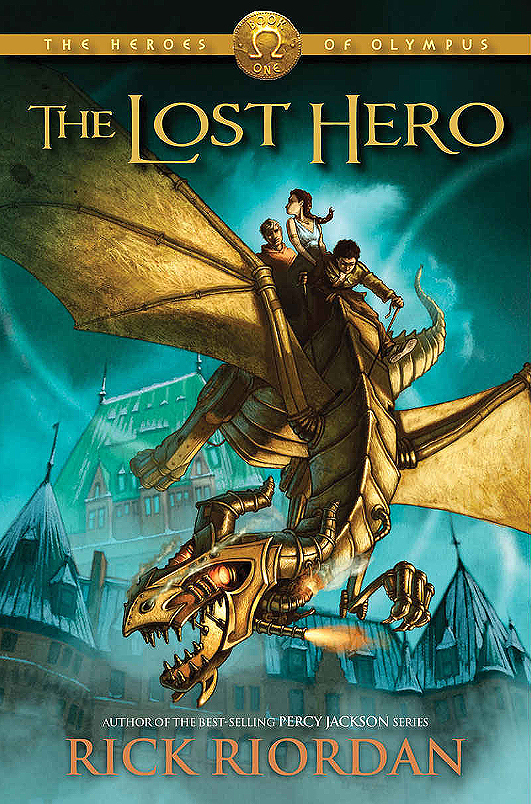
The Heroes of Olympus #1
The Lost Hero
JASON HAS A PROBLEM. He doesn’t remember anything before waking up in a bus full of kids on a field trip. Apparently he has a girlfriend named Piper, and his best friend is a guy named Leo. They’re all students at the Wilderness School, a boarding school for “bad kids," as Leo puts it. What did Jason do to end up here? And where is here, exactly? Jason doesn't know anything—except that everything seems very wrong.
PIPER HAS A SECRET. Her father has been missing for three days, ever since she had that terrifying nightmare about his being in trouble. Piper doesn’t understand her dream, or why her boyfriend suddenly doesn’t recognize her. When a freak storm hits during the school trip, unleashing strange creatures and whisking her, Jason, and Leo away to someplace called Camp Half-Blood, she has a feeling she’s going to find out, whether she wants to or not.
LEO HAS A WAY WITH TOOLS. When he sees his cabin at Camp Half-Blood, filled with power tools and machine parts, he feels right at home. But there’s weird stuff, too—like the curse everyone keeps talking about, and some camper who's gone missing. Weirdest of all, his bunkmates insist that each of them—including Leo—is related to a god. Does this have anything to do with Jason's amnesia, or the fact that Leo keeps seeing ghosts?
Join new and old friends from Camp Half-Blood in this thrilling first book in The Heroes of Olympus series. Best-selling author Rick Riordan has pumped up the action, humor, suspense, and mystery in an epic adventure that will leave readers panting for the next installment.
PIPER HAS A SECRET. Her father has been missing for three days, ever since she had that terrifying nightmare about his being in trouble. Piper doesn’t understand her dream, or why her boyfriend suddenly doesn’t recognize her. When a freak storm hits during the school trip, unleashing strange creatures and whisking her, Jason, and Leo away to someplace called Camp Half-Blood, she has a feeling she’s going to find out, whether she wants to or not.
LEO HAS A WAY WITH TOOLS. When he sees his cabin at Camp Half-Blood, filled with power tools and machine parts, he feels right at home. But there’s weird stuff, too—like the curse everyone keeps talking about, and some camper who's gone missing. Weirdest of all, his bunkmates insist that each of them—including Leo—is related to a god. Does this have anything to do with Jason's amnesia, or the fact that Leo keeps seeing ghosts?
Join new and old friends from Camp Half-Blood in this thrilling first book in The Heroes of Olympus series. Best-selling author Rick Riordan has pumped up the action, humor, suspense, and mystery in an epic adventure that will leave readers panting for the next installment.
576 pages, Hardcover
First published October 12, 2010
About the author
Rick Riordan
441 books462k followersRick Riordan is the #1 New York Times bestselling author of many books, including the Percy Jackson series.
Ratings & Reviews
Friends & Following
Create a free account to discover what your friends think of this book!
Community Reviews
Displaying 1 - 30 of 41,037 reviews

June 5, 2018
(B+) 79% | Good
Notes: It treats memory as the primordial stew of personality: a precious, bubbling cistern of affection, anguish and intrigue.
*Check out progress updates for detailed commentary:
Notes: It treats memory as the primordial stew of personality: a precious, bubbling cistern of affection, anguish and intrigue.
*Check out progress updates for detailed commentary:

October 30, 2012
4.5/5 stars!
Great book, I loved the Roman aspect to it and CANNOT WAIT to learn more about all the Roman stuff in the next book because I can already tell it's going to get CRAZYYYYYY!
Great book, I loved the Roman aspect to it and CANNOT WAIT to learn more about all the Roman stuff in the next book because I can already tell it's going to get CRAZYYYYYY!

May 2, 2015
Re-read in 2017 so I can FINALLY finish the rest of the series!
Original Review:
THAT ENDING WAS SOOO GOOD. I NEED THE NEXT BOOK ASAP PLEASE AND THANK YOU.
Original Review:
THAT ENDING WAS SOOO GOOD. I NEED THE NEXT BOOK ASAP PLEASE AND THANK YOU.

October 10, 2019
Tell me why it took me NINE years to read this lmao
I'm so happy to be back in Rick Riordan's magical worlds and cannot wait to continue with this series.
I'm so happy to be back in Rick Riordan's magical worlds and cannot wait to continue with this series.

June 12, 2010
EDIT: So, uh, I was kind of maybe extremely delirious when I originally wrote this, but I find it kind of awkward entertaining, and since so many people have liked it, I guess I'll leave it up? >>'
THIS REVIEW CONTAINS SPOILERS! If you were lame enough to click the "show" button even though the Goodreads thing automatically says spoilers (um, no offense), STOP READING THIS REVIEW RIGHT NOW.
Well. Now that that's settled...
KJSNFGHLJKEHNRJLKG AWRKLG AJKREG KLAWR JW4HT ;JRKGWA AEIOPRU35JY AE;GJKR AJ;GROIT JAE;GKLAJWRIT JWROGIJW OAGI;
Rick Riordan is alternately brilliant and cruel. HOW, I ask you, can he come up with a plot this crazily insane (in an awesome way), yet end the book with the WORST CLIFFHANGER IN ALL OF LITERARY HISTORY?
Okay, maybe that's a bit of a stretch. I'd say the worst/best cliffy in maybe the last century. Yeah, that's it.
But anyway.
AAAAAAAAGGGGGGGGHHHHHHHHHHHHH!!! I SWEAR TO GODS, PERCY, YOU HAD BETTER GET YOUR MEMORY AND GET YOUR SORRY HIDE BACK TO NEW YORK OR I WILL FIND A WAY TO GET INSIDE THE BOOK AND KILL YOU.
Also, I just had a terrible, horrible, ugly, bad, horrendous, repulsive, monstrous idea.
So, at the end of the book, when Jason remembers all that stuff about the Roman camp, he remembers the names of all his friends. Then he remembers this girl and gets kind of uncomfortable because he can't remember what his "relationship" was with her- meaning, they definitely liked each other but now he can't remember her, and now he likes Piper (which I find adorable, by the way), so if he goes back, there's going to be some serious girl drama.
But actually, the drama isn't my point. My point is- Jason forgot everything, including who his friends were and who he had a crush on (whether it be unrequited or tiny)... and if Percy's hanging at that Roman camp in the Neptune cabin, there's a 99.9999999% chance that he's just like Jason and can't remember anything about CHB or anything else, either (since Annabeth is always right, and all).
So does that mean... he likes... SOMEONE ELSE?
*throws tantrum* LKJEFKJWE JKERGA ERJGPOAREJ OAREKJG AWOERJ AEOROJG AOER GAOERJOJSHRG ERGKAREKJL
That is all. (For now.)
THIS REVIEW CONTAINS SPOILERS! If you were lame enough to click the "show" button even though the Goodreads thing automatically says spoilers (um, no offense), STOP READING THIS REVIEW RIGHT NOW.
Well. Now that that's settled...
KJSNFGHLJKEHNRJLKG AWRKLG AJKREG KLAWR JW4HT ;JRKGWA AEIOPRU35JY AE;GJKR AJ;GROIT JAE;GKLAJWRIT JWROGIJW OAGI;
Rick Riordan is alternately brilliant and cruel. HOW, I ask you, can he come up with a plot this crazily insane (in an awesome way), yet end the book with the WORST CLIFFHANGER IN ALL OF LITERARY HISTORY?
Okay, maybe that's a bit of a stretch. I'd say the worst/best cliffy in maybe the last century. Yeah, that's it.
But anyway.
AAAAAAAAGGGGGGGGHHHHHHHHHHHHH!!! I SWEAR TO GODS, PERCY, YOU HAD BETTER GET YOUR MEMORY AND GET YOUR SORRY HIDE BACK TO NEW YORK OR I WILL FIND A WAY TO GET INSIDE THE BOOK AND KILL YOU.
Also, I just had a terrible, horrible, ugly, bad, horrendous, repulsive, monstrous idea.
So, at the end of the book, when Jason remembers all that stuff about the Roman camp, he remembers the names of all his friends. Then he remembers this girl and gets kind of uncomfortable because he can't remember what his "relationship" was with her- meaning, they definitely liked each other but now he can't remember her, and now he likes Piper (which I find adorable, by the way), so if he goes back, there's going to be some serious girl drama.
But actually, the drama isn't my point. My point is- Jason forgot everything, including who his friends were and who he had a crush on (whether it be unrequited or tiny)... and if Percy's hanging at that Roman camp in the Neptune cabin, there's a 99.9999999% chance that he's just like Jason and can't remember anything about CHB or anything else, either (since Annabeth is always right, and all).
So does that mean... he likes... SOMEONE ELSE?
*throws tantrum* LKJEFKJWE JKERGA ERJGPOAREJ OAREKJG AWOERJ AEOROJG AOER GAOERJOJSHRG ERGKAREKJL
That is all. (For now.)
This entire review has been hidden because of spoilers.
October 17, 2022
(B+) 79% | Good
Notes: Slow to move, it finds a groove, once bailing from Quebec, kicks into gear, though Jason here remains as dull as heck.
*Check out progress updates for detailed commentary:
Notes: Slow to move, it finds a groove, once bailing from Quebec, kicks into gear, though Jason here remains as dull as heck.
*Check out progress updates for detailed commentary:

January 31, 2021
"Flying shoes, slightly used, 50% off today!"
"Her Majesty, the Loose Cannon."
Though HoO belongs in Camp Half-blood Chronicles, I did not expect the PJO team to make any frequent appearances here. So naturally, I was delighted to find Annabeth and Chiron at the start of the story. But there was a downside: I kept waiting to see the PJO team pop up somewhere more than focusing on Jason's adventure. Still, the plot was interesting and the new direction the series has taken is quite mysterious.
"I want some time without you organic life forms."
With that said, I couldn't help but compare this first adventure of HoO to PJO. As the PJO kept on getting better till the very last book, I felt like The Lost Hero was a bit of a step down, compared to the last couple of Percy Jackson books. True, the book is somewhat longer and complex, but the events were a bit too descriptive than I would've preferred. May be it's just me, still not used to the rotational narration of Jason-Jason-Piper-Piper-Leo-Leo. However, I hope the next books will improve as it happened with PJO.
"My friends call me Your Highness."
As usual, the author does not fails in ending the book in a very unsettling cliffhanger. Very kind of him to do so. But on the bright side, Percy should be back for at least part of the next one and that's something worth waiting for (for those who read this as books got released). And on a completely unrelated subject, Drew Tanaka reminded me of Dolores Umbridge for some reason.
"Great victory requires great risk,"
"Her Majesty, the Loose Cannon."
Though HoO belongs in Camp Half-blood Chronicles, I did not expect the PJO team to make any frequent appearances here. So naturally, I was delighted to find Annabeth and Chiron at the start of the story. But there was a downside: I kept waiting to see the PJO team pop up somewhere more than focusing on Jason's adventure. Still, the plot was interesting and the new direction the series has taken is quite mysterious.
"I want some time without you organic life forms."
With that said, I couldn't help but compare this first adventure of HoO to PJO. As the PJO kept on getting better till the very last book, I felt like The Lost Hero was a bit of a step down, compared to the last couple of Percy Jackson books. True, the book is somewhat longer and complex, but the events were a bit too descriptive than I would've preferred. May be it's just me, still not used to the rotational narration of Jason-Jason-Piper-Piper-Leo-Leo. However, I hope the next books will improve as it happened with PJO.
"My friends call me Your Highness."
As usual, the author does not fails in ending the book in a very unsettling cliffhanger. Very kind of him to do so. But on the bright side, Percy should be back for at least part of the next one and that's something worth waiting for (for those who read this as books got released). And on a completely unrelated subject, Drew Tanaka reminded me of Dolores Umbridge for some reason.
"Great victory requires great risk,"

November 24, 2010
2021 EDIT: Before you comment on this, please note that I wrote this in 2010, when I was 13 years old and thought I was very sassy and witty. Trust me, I am also cringing at it as I re-read it now, but that doesn't mean I still need negative comments telling me that I suck or am annoying. I have already taken this feedback into consideration over the past decade. Okay, here you go:
Probably SPOILER ALERT, but nothing you couldn't have figured out in the first few pages.
According to Goodreads, 97% of people liked it. But the 3% will rise!
Prepare yourself for the first yet negative review of this book.
I was so excited for this book to come out. But then I read it, and was very disappointed. Just to clarify, I LOVED the original Percy Jackson series. They were amazing. This, however, was not.
The characters were all Sues:
1. Piper's perfection. "I'M SO BEAUTIFUL BUT I MUST HIDE IT BECAUSE IT'S EMBARASSING SO I'M GOING TO GO CUT MY HAIR WITH SAFETY SCISSORS NOW BAAAAAAAAAAAAAAAAAAAAAAAAAAAAW!!!" She doesn't need to wear makeup or nice clothes to be beautiful, because being a daughter of Aphrodite gets you everything except self-confidence. She is very speshul because 1) her eyes change color (cliche? What? NO!) and 2) she has the VERY RARE gift of charmspeak.
2. And then there was Jason, Piper's love interest. Which they were very, very subtle about. I never saw a connection between them. It seemed like she thought that she should be attracted to him, so she was.
3. Leo. It's too bad, I kind of liked him. But then he got the VERY RARE gift of creating fire from nothing and I laughed.
Also, I quickly got sick of the simple writing style. Point of view changes definitely didn't add to the story AT ALL. The quality of writing has plummeted, maybe because Riordan is just plain better at writing in first person. The part at the end where Jason was incredibly frustrating.
...I'm done.
Probably SPOILER ALERT, but nothing you couldn't have figured out in the first few pages.
According to Goodreads, 97% of people liked it. But the 3% will rise!
Prepare yourself for the first yet negative review of this book.
I was so excited for this book to come out. But then I read it, and was very disappointed. Just to clarify, I LOVED the original Percy Jackson series. They were amazing. This, however, was not.
The characters were all Sues:
1. Piper's perfection. "I'M SO BEAUTIFUL BUT I MUST HIDE IT BECAUSE IT'S EMBARASSING SO I'M GOING TO GO CUT MY HAIR WITH SAFETY SCISSORS NOW BAAAAAAAAAAAAAAAAAAAAAAAAAAAAW!!!" She doesn't need to wear makeup or nice clothes to be beautiful, because being a daughter of Aphrodite gets you everything except self-confidence. She is very speshul because 1) her eyes change color (cliche? What? NO!) and 2) she has the VERY RARE gift of charmspeak.
2. And then there was Jason, Piper's love interest. Which they were very, very subtle about. I never saw a connection between them. It seemed like she thought that she should be attracted to him, so she was.
3. Leo. It's too bad, I kind of liked him. But then he got the VERY RARE gift of creating fire from nothing and I laughed.
Also, I quickly got sick of the simple writing style. Point of view changes definitely didn't add to the story AT ALL. The quality of writing has plummeted, maybe because Riordan is just plain better at writing in first person. The part at the end where Jason was incredibly frustrating.
...I'm done.
January 23, 2015
THE ENDING. OMFG.

June 8, 2020
”Cute, smart and violent. Jason wished he remembered having her as a girlfriend.”
Me too! A girlfriend like that sounds kinda awesome and Piper is as cool as they come! XD As are the two new boys in this series! I loved Jason Grace because he’s very sweet and a total badass hero and I adored Leo Valdez because... well because he’s Leo! *lol* That boy is damn funny but also so very skilled and if you ask me even more badass than Jason and this says quite something! Of all of those newly introduced heroes Leo is definitely my favourite because he gives me some Nico di Angelo vibes and we all know how much I love my precious boy! <3
”He’d survived in tough neighbourhoods, tough schools, tough foster homes by using his wits. He was the class clown, the court jester, because he’d learned early that if you cracked jokes and pretended you weren’t scared, you usually didn’t get beaten up. Even the baddest gangster kids would tolerate you, keep you around for laughs. Plus, humour was a good way to hide the pain.”
Aww my heart broke for Leo! Of all those demi-god characters he definitely had the worst childhood! Yet he still managed to stay positive which is great and you just gotta love him for it. I really hope that he and Nico will meet one day because those two could be amazing friends. At first glimpse they might not have all too much in common and Leo is definitely not as serious as Nico but I think with time they both could be great friends. =)))
Piper patted his shoulder. “Trust me, Valdez. Beautiful people never lie.”
Speaking of which! Piper and Jason are awesome friends too and I can’t help but wonder who’ll be the other 4 heroes of the prophecy. I brooded over it throughout the entire book and came to the conclusion that Percy and Annabeth have to be two of them. No idea who the other two heroes are gonna be but I have a theory and I’m pretty sure I’m right. I’m curious if I’m right with this assumption and hell, am I ready to tackle the next book! *lol* I'm very worried about Percy though and this sort of surprised me. He really grew on me during the PJ series! <3 Anyway, let’s stop wondering and get back to the plot!
”Only the son of Jupiter is needed alive. The rest of you, I’m afraid, are dinner.”
Don’t you hate it when your day starts like that? XD You can bet your behind on the fact that Piper, Leo and Jason weren’t all too happy about that statement either. ;-P So what happened in this book? A quest! DUH! *lol* Our three heroes have their work set out for them and they don’t only have to find wind spirits, make a deal with their god, dodge multiple attempts on their lives by mythological characters that should be in Tartarus, find a lost hero and well, save the world from evil. But hey! What else is new?! ;-P
”Iris-message me?” Mellie pleaded.
Hedge winked.
Oh yes, Coach Hedge flirting with a cloud nymph aka aura! XD That one certainly came as a surprise, but then again we all love our flirty satyrs, don’t we? *lol* The interesting thing about the start of this series were the differences to PJ and Magnus Chase. For me “The Lost Hero” felt like a combination of both. The plot was more concise and not all over the place, there was a certain order to it and it definitely felt more serious than the PJ series. I don’t know if this is because Uncle Rick wanted us to get to know the characters and their different POVs or because it’s the first book of this new series and everything needed to be introduced, but either way I don’t care. It was still a fun ride albeit less funny and sarcastic than PJ.
”In case you think I’m not a true daughter of Aphrodite,” Piper said, “don’t even look at Jason Grace . He may not know it yet, but he’s mine. If you ever try to make a move, I will load you into a catapult and shoot you across Long Island Sound.”
And with this threat I’ll finish my review! I can’t wait to read more and I’m so ready to tackle the next book. =) I have a request for Uncle Rick though: Can I have more of Will Solace?! He’s one of my fave side-characters and I’d love to read more about him! <333 Also I’d appreciate it if Nico would appear in this series! He’s so precious and I just need more of my boy! XD *lol* This said I’m ready for book two! Let’s hope it’s going to be another wild and thoroughly entertaining ride. ;-)
____________________________
OMG!
This was such a wild and awesome ride!
But the ending kind of filled me with dread and I hope I can read “The Son of Neptune” soon.
I’m really worried now! >_<
Still, I love the new heroes and they all grew on me. But I gotta admit: I love Leo Valdez the most! *lol* I want Leo and Nico to meet! And I’d love to see Jason and Percy in action together.
Also I can I have more of Will Solace? He’s one of my fave side characters but is always barely mentioned. And who are the other four heroes!!!???
Full RTC soon so I can move on to the next book. XD
______________________________
My library opened again and we all know which series I wanted to start really, really desperately while everything was closed!
YES!
500 Points to Gryffindor!
“The Heroes of Olympus”!!!
I managed to snatch a copy of “The Lost Hero” and I’m so ready to begin with it! <3
According to the blurb there are a lot of new heroes so I’m more than just curious in which direction this is going to head. XD
I’m sure this is going to be good! =))
Me too! A girlfriend like that sounds kinda awesome and Piper is as cool as they come! XD As are the two new boys in this series! I loved Jason Grace because he’s very sweet and a total badass hero and I adored Leo Valdez because... well because he’s Leo! *lol* That boy is damn funny but also so very skilled and if you ask me even more badass than Jason and this says quite something! Of all of those newly introduced heroes Leo is definitely my favourite because he gives me some Nico di Angelo vibes and we all know how much I love my precious boy! <3
”He’d survived in tough neighbourhoods, tough schools, tough foster homes by using his wits. He was the class clown, the court jester, because he’d learned early that if you cracked jokes and pretended you weren’t scared, you usually didn’t get beaten up. Even the baddest gangster kids would tolerate you, keep you around for laughs. Plus, humour was a good way to hide the pain.”
Aww my heart broke for Leo! Of all those demi-god characters he definitely had the worst childhood! Yet he still managed to stay positive which is great and you just gotta love him for it. I really hope that he and Nico will meet one day because those two could be amazing friends. At first glimpse they might not have all too much in common and Leo is definitely not as serious as Nico but I think with time they both could be great friends. =)))
Piper patted his shoulder. “Trust me, Valdez. Beautiful people never lie.”
Speaking of which! Piper and Jason are awesome friends too and I can’t help but wonder who’ll be the other 4 heroes of the prophecy. I brooded over it throughout the entire book and came to the conclusion that Percy and Annabeth have to be two of them. No idea who the other two heroes are gonna be but I have a theory and I’m pretty sure I’m right. I’m curious if I’m right with this assumption and hell, am I ready to tackle the next book! *lol* I'm very worried about Percy though and this sort of surprised me. He really grew on me during the PJ series! <3 Anyway, let’s stop wondering and get back to the plot!
”Only the son of Jupiter is needed alive. The rest of you, I’m afraid, are dinner.”
Don’t you hate it when your day starts like that? XD You can bet your behind on the fact that Piper, Leo and Jason weren’t all too happy about that statement either. ;-P So what happened in this book? A quest! DUH! *lol* Our three heroes have their work set out for them and they don’t only have to find wind spirits, make a deal with their god, dodge multiple attempts on their lives by mythological characters that should be in Tartarus, find a lost hero and well, save the world from evil. But hey! What else is new?! ;-P
”Iris-message me?” Mellie pleaded.
Hedge winked.
Oh yes, Coach Hedge flirting with a cloud nymph aka aura! XD That one certainly came as a surprise, but then again we all love our flirty satyrs, don’t we? *lol* The interesting thing about the start of this series were the differences to PJ and Magnus Chase. For me “The Lost Hero” felt like a combination of both. The plot was more concise and not all over the place, there was a certain order to it and it definitely felt more serious than the PJ series. I don’t know if this is because Uncle Rick wanted us to get to know the characters and their different POVs or because it’s the first book of this new series and everything needed to be introduced, but either way I don’t care. It was still a fun ride albeit less funny and sarcastic than PJ.
”In case you think I’m not a true daughter of Aphrodite,” Piper said, “don’t even look at Jason Grace . He may not know it yet, but he’s mine. If you ever try to make a move, I will load you into a catapult and shoot you across Long Island Sound.”
And with this threat I’ll finish my review! I can’t wait to read more and I’m so ready to tackle the next book. =) I have a request for Uncle Rick though: Can I have more of Will Solace?! He’s one of my fave side-characters and I’d love to read more about him! <333 Also I’d appreciate it if Nico would appear in this series! He’s so precious and I just need more of my boy! XD *lol* This said I’m ready for book two! Let’s hope it’s going to be another wild and thoroughly entertaining ride. ;-)
____________________________
OMG!
This was such a wild and awesome ride!
But the ending kind of filled me with dread and I hope I can read “The Son of Neptune” soon.
I’m really worried now! >_<
Still, I love the new heroes and they all grew on me. But I gotta admit: I love Leo Valdez the most! *lol* I want Leo and Nico to meet! And I’d love to see Jason and Percy in action together.
Also I can I have more of Will Solace? He’s one of my fave side characters but is always barely mentioned. And who are the other four heroes!!!???
Full RTC soon so I can move on to the next book. XD
______________________________
My library opened again and we all know which series I wanted to start really, really desperately while everything was closed!
YES!
500 Points to Gryffindor!
“The Heroes of Olympus”!!!
I managed to snatch a copy of “The Lost Hero” and I’m so ready to begin with it! <3
According to the blurb there are a lot of new heroes so I’m more than just curious in which direction this is going to head. XD
I’m sure this is going to be good! =))

October 31, 2017
4.75 Golden Stars
Then:
(previously on the Last Olympian)
You know you should read Percy Jackson & the Olympians FIRST, right!?
(I warned everywhere!)
don't read this part if you haven't read them or you will receive spoilers. (tip: skip to the first pic)
"Percy," Apollo said, "I wouldn't worry too much. The last Great Prophecy about you took almost seventy years to complete. This one may not even happen in your lifetime."
HA HA! Yeah! Sure!
(the Fates: LOL! who's gonna tell them?)
Now:
it is Awesome, Funny, Thrilling & Adventurous. but when , there is much less fun!
but now I saw its own treasury by itself. especially since
but, almost everyone was saying they were about to put the book aside, because of that, until he appeared! Waaaaaaaaaaaaaaaaaaaaaaaaat!?
it's all the Expectation fault.
I mean, yeah, I was waiting to see how these new characters & their story linked to the previous series, but it was just like any other book waits for me, heck! it made me read even faster.
& the whole series is more mature & more complicated! I even, yeah I'm gonna confess, loved it more than PJO. (just a tiny little bit, but still)
speaking of Characters:
"Seven half-bloods shall answer the call...
it's time
the players coming to the spotlight
🔺 another truly fav hero/crush of mine has been shown up & he is funny in his own way. (not loud like Leo, but in thoughts)
Meet Jason Grace:

Calm, confident, gentle, thoughtful, inspiring Leader, all gets down to business & Superman. innocent & pure, introvert & a nerd (tho you might not notice, it's very subtle!), some funny thoughts in the most serious way/situations, the common sense fun (the jokes I might think unconsciously) not "trying" to be funny, just genuinely thinking his own way. (I love these kinds of jokes. it's like real-life myself, when I'm thinking of something as funny, but not always sharing them with others.)
brave & skilled warrior.
also very well at boasting in battles. Epic! I feel proud!
"If you knew who I was, you'd be worried about me, not my father. I hope you enjoyed your 2 & half minutes of rebirth, because I'm going to send you right back to Tartarus."
in spite of many fans' declaring (which is the reason I felt I have to defend my boy!) he's not TOO perfect! (FYI I never liked flawless/too perfect characters...) he's powerful, yes (well, duh! you know the reason! you know it's not based on nothing.) trying to do his best (probably this was so much like me that I felt connected to him & he became my favourite blond hero) as a leader.
& in its way, he's getting nervous, afraid of failure/situation. he fails too & getting jealous or angry like a normal person. & he's vulnerable. (the BRICK thing!- but not in this book yet)
sums it up, in my opinion, he is a very well-designed, well-written & realistic hero/leader/character.
I fell in love with him since his first sentences. (& his name too had an impression, I always was fond of the name 'Jason', so stylish.)
(& maybe fans' grudge was because he was kind of replaced our beloved hero, but that didn't stop me loving him, & (very) later, many fans reversed their opinions & started to like him. but I'M an original fan, since the beginning!)
Sorry my fangirl side raged & got out of control!
Jason's POV chapters were the BEST, serious along with fun expressions & descriptions. awesome, inspiring, thrilling & powerful.
so Jason helped building the fun atmosphere with his own serious sass & serious-fun thinking too. (& I like this type more than the class clown jokester)
here's the thing; I think fans didn't like him (or this book) because they assumed some expectations, so they might be disappointed.
so please keep that in mind, it's in the same world, yes (the world's expanding, & more complicated) but there are 7 main characters & the story is not only around Percy. (In my opinion, it was kind of the strong point, but hey, I'm usually the weird one out) so keep them time, let them grow. that's all I'm saying. for NEW FANS, don't have any kinds of expectations or a sweet experience of reading a good book/series would be ruined.
(I'm not saying this book is flawless, keep reading!)
Leo & Jason friendship was beautiful!

I didn't like Piper much in this book.

she's Strong, caring, cool & funny. but I don't know, I don't feel like her yet.
also her chapters filled with backstories & myths, which was sweet, but sometimes I was like "oh... it's Piper again..."
2020 update: Piper is awesome in the end (2022; in general!) & in later books! I like her a lot now!
Plot:
🔺 the beginning was awesome! & I loved that hair-raising, goose-bumping, thrilling Ending! the battles & the revelations.
🔻 but the premise/scenes of the quest were mostly cold, I mean literally!
Winter Solstice, snow, wind, icy palace... I usually don't like snowy environment for a story.
tho it had many good, exciting parts too (Chicago, Cyclopes, the beginning, the mountain end before the end, the end) which spiced up with fun,but just in comparison to other uncle Rick's books, it was a bit below my expectations.
I think the title can sound ambiguous, can't it? another reason that shows Riordan is a genius.
/arts by Viria94/
Am I the only one wants to read about how Jason & his friends fought in the battle of Othrys & the story behind his titles? I really crave for that (short?) story. I need it!
-
2020, 4th read: Buddy Reading with dear Caitlin; I do want to give it 5 stars now, this book earned it. but as it's one of my least favs, I won't... probably... it is one of my most favourite least-favourites among the least-fav books in the series I love, if that makes sense. too complicated. but I had to make my rating system strict or every books I truly loved would end up 5 stars & people who investigating what to read, can't rely on it if it's not real. also I like Piper this time. (tho I'm mad for what she did in that very later book, she shows up again. she did that she said she wouldn't do at all & that broke my heart.) don't mind me I'm babbling.
Dec 25: YES! I MADE UP MY MIND! I DID IT! 5 STARS IT IS!
2022, 5th re-read: another BR. I LOVE it more & more in each re-read! totally deserved the 5.
-
World building: ★★★★/5
Characters: ★★★★★/5
Written style: ★★★★★/5
Plot: ★★★★/5
General idea: ★★★★★/5
-
(Warning: hide spoilers in the comments or it will be deleted.)
Then:
(previously on the Last Olympian)
You know you should read Percy Jackson & the Olympians FIRST, right!?
(I warned everywhere!)
don't read this part if you haven't read them or you will receive spoilers. (tip: skip to the first pic)
"Percy," Apollo said, "I wouldn't worry too much. The last Great Prophecy about you took almost seventy years to complete. This one may not even happen in your lifetime."
HA HA! Yeah! Sure!
(the Fates: LOL! who's gonna tell them?)
Now:
it is Awesome, Funny, Thrilling & Adventurous. but when , there is much less fun!
but now I saw its own treasury by itself. especially since
but, almost everyone was saying they were about to put the book aside, because of that, until he appeared! Waaaaaaaaaaaaaaaaaaaaaaaaat!?
it's all the Expectation fault.
I mean, yeah, I was waiting to see how these new characters & their story linked to the previous series, but it was just like any other book waits for me, heck! it made me read even faster.
& the whole series is more mature & more complicated! I even, yeah I'm gonna confess, loved it more than PJO. (just a tiny little bit, but still)
speaking of Characters:
"Seven half-bloods shall answer the call...
it's time
the players coming to the spotlight
🔺 another truly fav hero/crush of mine has been shown up & he is funny in his own way. (not loud like Leo, but in thoughts)
Meet Jason Grace:
Calm, confident, gentle, thoughtful, inspiring Leader, all gets down to business & Superman. innocent & pure, introvert & a nerd (tho you might not notice, it's very subtle!), some funny thoughts in the most serious way/situations, the common sense fun (the jokes I might think unconsciously) not "trying" to be funny, just genuinely thinking his own way. (I love these kinds of jokes. it's like real-life myself, when I'm thinking of something as funny, but not always sharing them with others.)
brave & skilled warrior.
also very well at boasting in battles. Epic! I feel proud!
"If you knew who I was, you'd be worried about me, not my father. I hope you enjoyed your 2 & half minutes of rebirth, because I'm going to send you right back to Tartarus."
in spite of many fans' declaring (which is the reason I felt I have to defend my boy!) he's not TOO perfect! (FYI I never liked flawless/too perfect characters...) he's powerful, yes (well, duh! you know the reason! you know it's not based on nothing.) trying to do his best (probably this was so much like me that I felt connected to him & he became my favourite blond hero) as a leader.
& in its way, he's getting nervous, afraid of failure/situation. he fails too & getting jealous or angry like a normal person. & he's vulnerable. (the BRICK thing!- but not in this book yet)
sums it up, in my opinion, he is a very well-designed, well-written & realistic hero/leader/character.
I fell in love with him since his first sentences. (& his name too had an impression, I always was fond of the name 'Jason', so stylish.)
(& maybe fans' grudge was because he was kind of replaced our beloved hero, but that didn't stop me loving him, & (very) later, many fans reversed their opinions & started to like him. but I'M an original fan, since the beginning!)
Sorry my fangirl side raged & got out of control!
Jason's POV chapters were the BEST, serious along with fun expressions & descriptions. awesome, inspiring, thrilling & powerful.
so Jason helped building the fun atmosphere with his own serious sass & serious-fun thinking too. (& I like this type more than the class clown jokester)
here's the thing; I think fans didn't like him (or this book) because they assumed some expectations, so they might be disappointed.
so please keep that in mind, it's in the same world, yes (the world's expanding, & more complicated) but there are 7 main characters & the story is not only around Percy. (In my opinion, it was kind of the strong point, but hey, I'm usually the weird one out) so keep them time, let them grow. that's all I'm saying. for NEW FANS, don't have any kinds of expectations or a sweet experience of reading a good book/series would be ruined.
(I'm not saying this book is flawless, keep reading!)
Leo & Jason friendship was beautiful!
she's Strong, caring, cool & funny.
also her chapters filled with backstories & myths, which was sweet, but sometimes I was like "oh... it's Piper again..."
2020 update: Piper is awesome in the end (2022; in general!) & in later books! I like her a lot now!
Plot:
🔺 the beginning was awesome! & I loved that hair-raising, goose-bumping, thrilling Ending! the battles & the revelations.
🔻 but the premise/scenes of the quest were mostly cold, I mean literally!
Winter Solstice, snow, wind, icy palace... I usually don't like snowy environment for a story.
tho it had many good, exciting parts too (Chicago, Cyclopes, the beginning, the mountain end before the end, the end) which spiced up with fun,
I think the title can sound ambiguous, can't it? another reason that shows Riordan is a genius.
/arts by Viria94/
Am I the only one wants to read about how Jason & his friends fought in the battle of Othrys & the story behind his titles? I really crave for that (short?) story. I need it!
-
2020, 4th read: Buddy Reading with dear Caitlin; I do want to give it 5 stars now, this book earned it. but as it's one of my least favs, I won't... probably... it is one of my most favourite least-favourites among the least-fav books in the series I love, if that makes sense. too complicated. but I had to make my rating system strict or every books I truly loved would end up 5 stars & people who investigating what to read, can't rely on it if it's not real. also I like Piper this time. (tho I'm mad for what she did in that very later book, she shows up again. she did that she said she wouldn't do at all & that broke my heart.) don't mind me I'm babbling.
Dec 25: YES! I MADE UP MY MIND! I DID IT! 5 STARS IT IS!
2022, 5th re-read: another BR. I LOVE it more & more in each re-read! totally deserved the 5.
-
World building: ★★★★/5
Characters: ★★★★★/5
Written style: ★★★★★/5
Plot: ★★★★/5
General idea: ★★★★★/5
-
(Warning: hide spoilers in the comments or it will be deleted.)

June 30, 2017
A one on one buddy read with my wonderful friend, Audrey =) Yay, finally got me a buddy =)
I liked this book more than the first few Percy books but I'm not sure I'm going to continue with either series. I will probably move on to Magnus.
I was telling a friend, I'm pretty sure what ruined Percy for me was watching the movies before reading the books. I don't even remember the second movie. I just know that while reading the books, any mention of the characters in the movie, I would cringe. I think there was one girl that was okay but the rest were horrible! And even though this series seems even better, I know Percy is going to be back and all I see once again is the idiots in the movie. Sigh... it almost ruined this book just because the mentioned Percy and Grover. Once again, movie cringe! But alas, I'm hoping for a better outcome in the Magnus, etc books =]
I liked this book more than the first few Percy books but I'm not sure I'm going to continue with either series. I will probably move on to Magnus.
I was telling a friend, I'm pretty sure what ruined Percy for me was watching the movies before reading the books. I don't even remember the second movie. I just know that while reading the books, any mention of the characters in the movie, I would cringe. I think there was one girl that was okay but the rest were horrible! And even though this series seems even better, I know Percy is going to be back and all I see once again is the idiots in the movie. Sigh... it almost ruined this book just because the mentioned Percy and Grover. Once again, movie cringe! But alas, I'm hoping for a better outcome in the Magnus, etc books =]

May 13, 2010
Well, I finished re-reading all the Percy Jackson & the Olympians books, so now I'm attempting to re-read all the Heroes of Olympus books as well––mostly because I wanted to refresh my memory before The Blood of Olympus comes out. After that, no more Percy Jackson ... *sobs*
So yeah, I've now finished re-reading this one––which was a good idea, because as I read it I realized I'd forgotten like 99% of what happened in it. I also think I liked it a lot better reading it the second time, probably because I'm more familiar with the characters now. The first time I read it, I think I was a little distracted being like, "but WHERE'S PERCY JACKSON." Reading it again and knowing there was no Percy in it, I think I was a bit more invested in the characters. I still am not a huge fan of Jason or Piper, but LEOOOOO. GAHHH. I love Leo so much. (Apparently the first time I read this book I really liked Piper ... ? But I don't know, the second time around I didn't like her much ... Huh.)
Well anyway, I'll write a new/longer review at some point.
Old/crappy review under the spoiler.
So yeah, I've now finished re-reading this one––which was a good idea, because as I read it I realized I'd forgotten like 99% of what happened in it. I also think I liked it a lot better reading it the second time, probably because I'm more familiar with the characters now. The first time I read it, I think I was a little distracted being like, "but WHERE'S PERCY JACKSON." Reading it again and knowing there was no Percy in it, I think I was a bit more invested in the characters. I still am not a huge fan of Jason or Piper, but LEOOOOO. GAHHH. I love Leo so much. (Apparently the first time I read this book I really liked Piper ... ? But I don't know, the second time around I didn't like her much ... Huh.)
Well anyway, I'll write a new/longer review at some point.
Old/crappy review under the spoiler.

Want to Read
August 28, 2014
All of my friends seem to have read this series, and I want to start it so much, but I haven't read the Persy Jackson series yet.Can this series be read before Persy Jackson, or is this a prequel or a sequel. And if you have read this, any feedback?


April 15, 2010
Seven half-bloods shall answer the call,
To storm or fire the world must fall.
An oath to keep with a final breath,
And foes bear arms to the Doors of Death.
New prophecy. New characters. New adventure. Same, EPIC world!!!
Meet our new demigods; Jason, Piper and Leo.
Jason is the mystery in this trio, see he doesn't remember anything, not even who he is. A God has stolen his memories.
Piper has a secret, a terrible one that will only cause pain and suffering, but what other choice does she have?
Leo, the comic relief of our group, is good at fixing stuff, now only if he can fix his past long enough to stop the running.
Each are intertwined through a destiny that has brought them to this moment in time.
A Quest. The start of the new prophecy has begun...
To be honest, I was a littleteeytinybit nervous that this book wasn't going to live up to my expectations. Percy Jackson and his gang were quite the amazing characters and I wasn't sure I was willing to let them go while a bunch of new demigods took over.
Yeah, I don't know what the hell I was thinking. Rick's the man, and he quickly put my mind at ease once I got this book in my hands. I can't believe how much I've missed this world.
I loved this book! I don't care that I'm a 34 year old mom of two. I adore this whole series so much! Rick is like, the male JKR, he has the most amazing imagination and it's penned in such a solid pace. It's completely captivating that I just wanted to savor every single word of this 500+ book and before I knew it, I was already done and craving more.
There are so many colorful new characters, creatures and monsters to enjoy. Reading this feels like my own little history lesson in mythology. I loved there back stories, there unique talents, there choice of weapons and the magic of it all. We even get to see some of our favorite familiar hero's, but sadly, some aren't here in this book, but hoping Rick will include them in the next.
I don't want to give anything away. A lot of great and fun stuff happen in this book. It's more gripping, a little more intense but still the fun and fantastic escape that I've come to rely on, still lives in these pages.
Remarkable-Remarkable stuff! The Lost Hero is an incredible start to a brand new adventure!
Highly entertaining! Highly recommended! For all ages!
Read this, it's made of pure awesomesauce!

October 11, 2021
Leo grinned. “Hop in, kids. Uncle Leo’s gonna take you for a ride.”
I came looking for Percy and I found Leo. But seriously I have a bad habit of starting books without reading it's blurb first. I thought finally I'll get more of Percabeth but then... nevermind. I loved this book so much. Uncle Rick never dissapoints.
“Believe me, lady,” Leo muttered, “I remember. And whoever you are, I’m gonna face-plant you hard, Leo-style.”
I love each and every character of this book. Except Drew. I don't really like Jason that much too. In the entire book he acts like losing memory is the worst thing that could happen to anyone. NEWSFLASH- I lose my memory too during exams. But no one really cares about my memory loss. Instead I'm threatened to be thrown out of my house (by my parents ofc). So why does this guy get so much sympathy? #justiceforIshika'smemory.
“Gaea?” Leo shook his head. “Isn’t that Mother Nature? She’s supposed to have, like, flowers in her hair and birds singing around her and deer and rabbits doing her laundry.” “Leo, that’s Snow White,” Piper said.
Leo is one of the best character ever written. Fight me if you want but you are surely going to lose. There would have been no mission if Leo wasn't alive. Jason and Piper would have been dead without him. Half of the Cabin 9 would have been injured if Leo never controlled Festus. He is the best.
There were times when I got bored because I don't really care about wherever the hell they land/stay. I don't care about Piper and Jason too. They are not a couple. Jason didn't even know who Piper was, yet he acted like he loved her. Piper acted a little childish too when it came too Jason.
Also the Greek Gods are the most incompetent Gods to ever exist. They seriously need some teenagers to save the world. What the fuck are they doing with their powers? And Zeus really needs to stop acting like a jealous spoilt kid. He is the freaking King of Gods for God's sake (don't mind the dumb joke I made).
To all the demons out there I would like to say something to you all in Coach Hedge's style- "Die!".
The only people who could stop it—three fashionably dressed teenaged demigods and a megalomaniac goat.
I came looking for Percy and I found Leo. But seriously I have a bad habit of starting books without reading it's blurb first. I thought finally I'll get more of Percabeth but then... nevermind. I loved this book so much. Uncle Rick never dissapoints.
“Believe me, lady,” Leo muttered, “I remember. And whoever you are, I’m gonna face-plant you hard, Leo-style.”
I love each and every character of this book. Except Drew. I don't really like Jason that much too. In the entire book he acts like losing memory is the worst thing that could happen to anyone. NEWSFLASH- I lose my memory too during exams. But no one really cares about my memory loss. Instead I'm threatened to be thrown out of my house (by my parents ofc). So why does this guy get so much sympathy? #justiceforIshika'smemory.
“Gaea?” Leo shook his head. “Isn’t that Mother Nature? She’s supposed to have, like, flowers in her hair and birds singing around her and deer and rabbits doing her laundry.” “Leo, that’s Snow White,” Piper said.
Leo is one of the best character ever written. Fight me if you want but you are surely going to lose. There would have been no mission if Leo wasn't alive. Jason and Piper would have been dead without him. Half of the Cabin 9 would have been injured if Leo never controlled Festus. He is the best.
There were times when I got bored because I don't really care about wherever the hell they land/stay. I don't care about Piper and Jason too. They are not a couple. Jason didn't even know who Piper was, yet he acted like he loved her. Piper acted a little childish too when it came too Jason.
Also the Greek Gods are the most incompetent Gods to ever exist. They seriously need some teenagers to save the world. What the fuck are they doing with their powers? And Zeus really needs to stop acting like a jealous spoilt kid. He is the freaking King of Gods for God's sake (don't mind the dumb joke I made).
To all the demons out there I would like to say something to you all in Coach Hedge's style- "Die!".
The only people who could stop it—three fashionably dressed teenaged demigods and a megalomaniac goat.

August 10, 2016
2021: Can’t believe I gave a Rick Riordans book only 4 stars, but damn if this book wasn’t a little boring. Leo was the one who carried the plot in my opinion. Love him. Jason gets too much attention, he actually didn’t impress me in this book at all. Piper was... idk, boring? There’s something about her that bothers me, I just can’t put my finger on it. Anyway, I can’t wait to start the next book. I really missed Percy, it’s unbearable.
2016: What the actual fuck.
Okay, okay... I saw it coming. I'm not really surprised. But I have dygfdryh feelings right now. UGH.
So I go to book number two (Percy love, here I come).
2016: What the actual fuck.
Okay, okay... I saw it coming. I'm not really surprised. But I have dygfdryh feelings right now. UGH.
So I go to book number two (Percy love, here I come).

August 13, 2017
I read almost of this book in a relax mood. But the ending! It was killer! Shocking! When I realised what actually happened and craving for more, the book ended!!😣😣 That was painful.
OVERVIEW
New characters are being introduced. Jason, Leo and Piper.
Jason has lost his memory. Finds himself in a school bus where Leo and Piper claim to be his friends. But he doesn't remember them. They get attacked by monsters but save by Annabeth and finally reach at the Camp Half-Blood.
Moreover Hera is being kidnapped by monsters and there is a threat of rising of the king of giants and the most powerful antagonist ever, . If she has risen, she will destroy everything.
Jonas and his friends are chosen to save Hera who has his memory.
=> The POV has changed from 1st person to 3rd. I thought I might not enjoy the humour. But I was soo wrong. I enjoyed it!
=> In the beginning I didn't care much about Jason even I wanted to. He just didn't sound that good to me. Eventually I began to like his character. I didn't realise when I began to like him. This transition was very very slow. I kinda like how it happened.
=> Leo!! He was the character who contributed in almost of the humor of this book. Without him there would be no humour. I loved him. Don't know why I was always imagining as a satyr. But he is the , demi-god. He sounded a lot like Grover with more humor to me. Am I the only one here?
=> Piper. She is a fine addition. I really want to see her with Jason in the next book.
=> Hera. In the last series she was my least favourite god. In this one she seemed to have improved. There was a reason behind her cold attitude towards heros. I understood her. Looking forward to her in the next book.
After this ending, I am very afraid. I don't want any changes between Percy and Annabeth. I can't tolerate it.
I am seeing that there are more main characters are waiting in the next book. Anxiously looking forward to them.
August 13, 2017
OVERVIEW
New characters are being introduced. Jason, Leo and Piper.
Jason has lost his memory. Finds himself in a school bus where Leo and Piper claim to be his friends. But he doesn't remember them. They get attacked by monsters but save by Annabeth and finally reach at the Camp Half-Blood.
Moreover Hera is being kidnapped by monsters and there is a threat of rising of the king of giants and the most powerful antagonist ever, . If she has risen, she will destroy everything.
Jonas and his friends are chosen to save Hera who has his memory.
=> The POV has changed from 1st person to 3rd. I thought I might not enjoy the humour. But I was soo wrong. I enjoyed it!
=> In the beginning I didn't care much about Jason even I wanted to. He just didn't sound that good to me. Eventually I began to like his character. I didn't realise when I began to like him. This transition was very very slow. I kinda like how it happened.
=> Leo!! He was the character who contributed in almost of the humor of this book. Without him there would be no humour. I loved him. Don't know why I was always imagining as a satyr. But he is the , demi-god. He sounded a lot like Grover with more humor to me. Am I the only one here?
=> Piper. She is a fine addition. I really want to see her with Jason in the next book.
=> Hera. In the last series she was my least favourite god. In this one she seemed to have improved. There was a reason behind her cold attitude towards heros. I understood her. Looking forward to her in the next book.
After this ending, I am very afraid. I don't want any changes between Percy and Annabeth. I can't tolerate it.
I am seeing that there are more main characters are waiting in the next book. Anxiously looking forward to them.
August 13, 2017

February 29, 2020
my little sister lily and I are continuing our tradition of reading rick riordan's books together, so of course after finishing the Percy Jackson series we had to move along to The Lost Hero!
I really enjoyed it! I loved all the hints at the previous series, and cameos from our favourite characters. I was initially trepidatious about the introduction of new characters, because I had grown so attached to those in Percy Jackson. But I shouldn't have worried, because apparently uncle Rick can do no wrong
➽Leo
my unapologetic favourite out of them all. My child, my son, my fav.
I felt that his character was quite refreshing and new. I loved his sense of humour, and his inner thoughts.
"So...giants who can throw mountains. Friendly wolves that will eat us if we show weakness. Evil espresso drinks. Gotcha. Maybe this isn't the best time to bring up my psycho babysitter."
➽Piper
I feel like Piper is really underrated in this series. I enjoyed learning more about her background and how that has influenced her and her father. In the Percy Jackson series I felt that children of
“Love is powerful, Piper. It can bring even the gods to their knees.”
“My point is that love is the most powerful motivator in the world. It spurs mortals to greatness. Their noblest, bravest acts are done for love.”
➽Jason
Ehh.. he was by far my least favourite character. It could be due to the fact that he literally didn't know who he was- but he had no personality. Jason felt like a rip-off Percy 2.0, but no where near as loveable or funny. I look forward to seeing him come to his own in the next books- but for now he just isn't that memorable to me.
so overall, while predictable in some points- The Lost Hero was funny, entertaining and a good first book to kick off a new series in the Percy Jackson universe!
I really enjoyed it! I loved all the hints at the previous series, and cameos from our favourite characters. I was initially trepidatious about the introduction of new characters, because I had grown so attached to those in Percy Jackson. But I shouldn't have worried, because apparently uncle Rick can do no wrong
➽Leo
my unapologetic favourite out of them all. My child, my son, my fav.
I felt that his character was quite refreshing and new. I loved his sense of humour, and his inner thoughts.
"So...giants who can throw mountains. Friendly wolves that will eat us if we show weakness. Evil espresso drinks. Gotcha. Maybe this isn't the best time to bring up my psycho babysitter."
➽Piper
I feel like Piper is really underrated in this series. I enjoyed learning more about her background and how that has influenced her and her father. In the Percy Jackson series I felt that children of
“Love is powerful, Piper. It can bring even the gods to their knees.”
“My point is that love is the most powerful motivator in the world. It spurs mortals to greatness. Their noblest, bravest acts are done for love.”
➽Jason
Ehh.. he was by far my least favourite character. It could be due to the fact that he literally didn't know who he was- but he had no personality. Jason felt like a rip-off Percy 2.0, but no where near as loveable or funny. I look forward to seeing him come to his own in the next books- but for now he just isn't that memorable to me.
so overall, while predictable in some points- The Lost Hero was funny, entertaining and a good first book to kick off a new series in the Percy Jackson universe!

May 13, 2014
I just love Rick Riordan. His writing is just so conversational yet eloquent, I really just can't even describe it.
I loved the new characters and mythology introduced in this book BUT, that being said, this book wasn't what I was expecting. I still loved it, but I feel like it is more of a companion to the Percy Jackson Series rather than a continuation, which is what I had heard it was. I still loved it though so don't yell at me!!!!!
I loved the new characters and mythology introduced in this book BUT, that being said, this book wasn't what I was expecting. I still loved it, but I feel like it is more of a companion to the Percy Jackson Series rather than a continuation, which is what I had heard it was. I still loved it though so don't yell at me!!!!!
December 31, 2016
I always think that rereading books I read as a teen is like opening a Pandora’s box. This book, however, aged superbly well! I gave it 4 stars the first time I read it. This time around, anything less than 5 stars would have been blasphemous!
I don’t think I quite have the words to express how much I loved this. It was so much fun that I wish I Anna and I were on house arrest so we could go through the rest of the series at once.
It has been years since I read Percy Jackson and the Olympians, so I was a little worried that I might have grown out of Rick Riordan’s books. But that turned out to be a very silly concern. A great story is a great story at any age, and Riordan still has that same magic that made the original series so addictive.
In The Lost Hero, we meet Jason, a demigod who suddenly appears on a school bus with absolutely no memory of who he is, where he came from, or how he got there. He only knows that the girl next to him, Piper, claims to be his girlfriend, and the boy nearby, Leo, is apparently his best friend. Needless to say, Jason is a little confused.
And because this is a Rick Riordan book, things go from strange to chaotic very quickly. In true Riordan fashion, the school is soon attacked by monsters, and the presence of demigods at the school is revealed. Their protector, who has been secretly watching over them, finally brings them to safety at camp. Not long after, the real problem emerges. A goddess has been kidnapped, and she begins appearing in the demigods’ dreams, asking for their help. Naturally, this means a quest. Jason, Piper, and Leo must set out on a dangerous journey to rescue the goddess and stop the forces threatening the fragile peace between gods and monsters.
What I really enjoyed about this story is how the quest is tied to the characters themselves. Jason’s missing memories are not just a mystery for the reader but a source of tension throughout the story. The demigods are not only fighting monsters and traveling across the country, they are also trying to piece together who Jason used to be and what role he might play in the larger conflict.
The trio itself is also fantastic. Riordan has always been good at writing friendships, and that talent is very much on display here. Leo, in particular, completely stole the show for me. His humor, awkwardness, and constant stream of jokes make him both hilarious and surprisingly endearing.
More than anything, reading this book reminded me why Rick Riordan’s stories are so beloved. They are adventurous, funny, fast paced, and full of heart. The stakes are high, but the tone never becomes so heavy that it loses its sense of fun.
I had so much fun buddy reading this with Anna and trying to figure out the mystery together. The funniest part of the whole journey was that the blurb on the back of her physical copy casually spoiled a major detail. Meanwhile that same detail remained a mystery for about 80% of the book for me. So Anna was operating with insider information while I was out here conducting blind investigations. She thought I knew the whole time!

If you love adventure and want to feel giddy and childlike again, this is definitely your book.
Updates reading ༄˖°.☕️.ೃ࿔📚*:・
Buddy read with my love, Anna! We planned to start on Friday, but Anna, bless her soul, had the most amazing idea - to take some time to watch YouTube videos and refresh our memory on Percy Jackson and the Olympians Series, the prequel to this series. Such a brilliant idea, because I’m not that attentive and I probably would’ve jumped into the series and ended up complaining about being lost like it wasn’t my fault for skipping the recap.
I’m excited because I loved the Percy Jackson series so much! It’s also been a while since I read true adventure, and I’m so glad I get to share this series with Anna. Thank you for accepting 🥺💕🌹💝
This is my second time reading this book, but I don't remember a thing, so here goes!
I don’t think I quite have the words to express how much I loved this. It was so much fun that I wish I Anna and I were on house arrest so we could go through the rest of the series at once.
It has been years since I read Percy Jackson and the Olympians, so I was a little worried that I might have grown out of Rick Riordan’s books. But that turned out to be a very silly concern. A great story is a great story at any age, and Riordan still has that same magic that made the original series so addictive.
In The Lost Hero, we meet Jason, a demigod who suddenly appears on a school bus with absolutely no memory of who he is, where he came from, or how he got there. He only knows that the girl next to him, Piper, claims to be his girlfriend, and the boy nearby, Leo, is apparently his best friend. Needless to say, Jason is a little confused.
And because this is a Rick Riordan book, things go from strange to chaotic very quickly. In true Riordan fashion, the school is soon attacked by monsters, and the presence of demigods at the school is revealed. Their protector, who has been secretly watching over them, finally brings them to safety at camp. Not long after, the real problem emerges. A goddess has been kidnapped, and she begins appearing in the demigods’ dreams, asking for their help. Naturally, this means a quest. Jason, Piper, and Leo must set out on a dangerous journey to rescue the goddess and stop the forces threatening the fragile peace between gods and monsters.
What I really enjoyed about this story is how the quest is tied to the characters themselves. Jason’s missing memories are not just a mystery for the reader but a source of tension throughout the story. The demigods are not only fighting monsters and traveling across the country, they are also trying to piece together who Jason used to be and what role he might play in the larger conflict.
The trio itself is also fantastic. Riordan has always been good at writing friendships, and that talent is very much on display here. Leo, in particular, completely stole the show for me. His humor, awkwardness, and constant stream of jokes make him both hilarious and surprisingly endearing.
More than anything, reading this book reminded me why Rick Riordan’s stories are so beloved. They are adventurous, funny, fast paced, and full of heart. The stakes are high, but the tone never becomes so heavy that it loses its sense of fun.
I had so much fun buddy reading this with Anna and trying to figure out the mystery together. The funniest part of the whole journey was that the blurb on the back of her physical copy casually spoiled a major detail. Meanwhile that same detail remained a mystery for about 80% of the book for me. So Anna was operating with insider information while I was out here conducting blind investigations. She thought I knew the whole time!
If you love adventure and want to feel giddy and childlike again, this is definitely your book.
Updates reading ༄˖°.☕️.ೃ࿔📚*:・
Buddy read with my love, Anna! We planned to start on Friday, but Anna, bless her soul, had the most amazing idea - to take some time to watch YouTube videos and refresh our memory on Percy Jackson and the Olympians Series, the prequel to this series. Such a brilliant idea, because I’m not that attentive and I probably would’ve jumped into the series and ended up complaining about being lost like it wasn’t my fault for skipping the recap.
I’m excited because I loved the Percy Jackson series so much! It’s also been a while since I read true adventure, and I’m so glad I get to share this series with Anna. Thank you for accepting 🥺💕🌹💝
This is my second time reading this book, but I don't remember a thing, so here goes!

January 29, 2016
If you have been around long enough to know my reviews for the original Percy Jackson series, you'd know that I wasn't the hugest fan. I thought it was veeeery juvenile, even for a series intended for middle schoolers, I was just very put off by the corniness of it. However, I finished that series because I wanted to read this one, which I hear is better. And it so is. I really enjoyed the three main characters. I felt that in this book, I could actually relate to them and understand their backstories, whereas I felt no real connection to Percy. Leo reminded me so much of Kenji that I was in love, and Piper is so fleshed-out already and even though we know little about Jason, his honest and refreshing personality made him so, so likeable. I love the mythology in these series; it's just unmatched by anything else out there. Every time the Gods are shown in these books it makes me feel like a puny mortal, and I love how real they seem even though they are so abstract and literally a myth. There were several times in this book wherein a bit of Riordan's typical corny writing comes to play, something I would rather do without but am able to tolerate because there's a lot less of it in this book than there was in the previous series.
I listened to the audiobook for this, but I think for the rest i'll be reading it physically since they're so fast and there are so many different characters, it might behoove me. But I can't wait to continue on!
I listened to the audiobook for this, but I think for the rest i'll be reading it physically since they're so fast and there are so many different characters, it might behoove me. But I can't wait to continue on!

August 27, 2020
Why did no one tell me this was gonna be so much more awesome than the first series???! I did not even think that was possible.
The plot gets 10 times more complex and writing is significantly better. This time the stakes are high, the entire world is in danger and heroes have to do all the saving. AGAIN.
I enjoyed the inclusion of Roman mythology in the story. Jason and Piper are pretty badass and they certainly have better chemistry than Percy and Annabeth in my opinion. And Leo has the potential to become my favorite. Dude's got a weird sense of humor.
Missed Percy's clueless monologues though.
Rick Riordan is fast becoming one of my favorite YA writers!
The plot gets 10 times more complex and writing is significantly better. This time the stakes are high, the entire world is in danger and heroes have to do all the saving. AGAIN.
I enjoyed the inclusion of Roman mythology in the story. Jason and Piper are pretty badass and they certainly have better chemistry than Percy and Annabeth in my opinion. And Leo has the potential to become my favorite. Dude's got a weird sense of humor.
Missed Percy's clueless monologues though.
Rick Riordan is fast becoming one of my favorite YA writers!

August 12, 2024
₊‧ ୨୧ 3.75 stars ★
꒰🏛️꒱ “𝐲𝐨𝐮 𝐧𝐚𝐦𝐞𝐝 𝐡𝐢𝐦 𝐅𝐞𝐬𝐭𝐮𝐬 ? 𝐲𝐨𝐮 𝐤𝐧𝐨𝐰 𝐭𝐡𝐚𝐭 𝐢𝐧 𝐥𝐚𝐭𝐢𝐧, ‘𝐟𝐞𝐬𝐭𝐮𝐬’ 𝐦𝐞𝐚𝐧𝐬 ‘𝐡𝐚𝐩𝐩𝐲’ ? 𝐲𝐨𝐮 𝐰𝐚𝐧𝐭 𝐮𝐬 𝐭𝐨 𝐫𝐢𝐝𝐞 𝐨𝐟𝐟 𝐭𝐨 𝐬𝐚𝐯𝐞 𝐭𝐡𝐞 𝐰𝐨𝐫𝐥𝐝 𝐨𝐧 𝐇𝐚𝐩𝐩𝐲 𝐭𝐡𝐞 𝐃𝐫𝐚𝐠𝐨𝐧 ?”
this was a great way to start the series. it starts with the prophecy that is told at the end of the “percy jackson and the olympians” series. so they introduce three new characters as main characters and a new story develops, following the line of the old series. i really liked it, although i think this book is made to get to know the characters and explain the story, so that’s why it was a little boring for me. but the story has a lot of potential and i’m sure the next books are going to be amazing 🤭
jason lost his memory at the beginning of the story so i don’t think what we saw in this book was his true personality but i still liked the character. also, the place where he comes from? what a plot twist 🫠 i liked piper too. although i think she has much more potential than she has shown, i look forward to seeing her in the following books 🫡 and last but not least LEO VALDEZ <3 a person who uses humor as armor so that people don’t see how he really feels? yeah, he is my comfort character 💌 i feel so sorry for him when he compares himself to others and feels like he’s worthless. boy, you can use fire and you've built a dragon! and many more things. i hope he has a happy ending because if not, rick, we'll have a few words (🔪)
all in all, i liked it and i’m looking forward to reading the next one! i also loved that annabeth appeared, but i would have liked more screen time (page time?) for clarisse. i also hope percy and nico appear soon (best characters fr)
꒰🏛️꒱ “𝐲𝐨𝐮 𝐧𝐚𝐦𝐞𝐝 𝐡𝐢𝐦 𝐅𝐞𝐬𝐭𝐮𝐬 ? 𝐲𝐨𝐮 𝐤𝐧𝐨𝐰 𝐭𝐡𝐚𝐭 𝐢𝐧 𝐥𝐚𝐭𝐢𝐧, ‘𝐟𝐞𝐬𝐭𝐮𝐬’ 𝐦𝐞𝐚𝐧𝐬 ‘𝐡𝐚𝐩𝐩𝐲’ ? 𝐲𝐨𝐮 𝐰𝐚𝐧𝐭 𝐮𝐬 𝐭𝐨 𝐫𝐢𝐝𝐞 𝐨𝐟𝐟 𝐭𝐨 𝐬𝐚𝐯𝐞 𝐭𝐡𝐞 𝐰𝐨𝐫𝐥𝐝 𝐨𝐧 𝐇𝐚𝐩𝐩𝐲 𝐭𝐡𝐞 𝐃𝐫𝐚𝐠𝐨𝐧 ?”
this was a great way to start the series. it starts with the prophecy that is told at the end of the “percy jackson and the olympians” series. so they introduce three new characters as main characters and a new story develops, following the line of the old series. i really liked it, although i think this book is made to get to know the characters and explain the story, so that’s why it was a little boring for me. but the story has a lot of potential and i’m sure the next books are going to be amazing 🤭
jason lost his memory at the beginning of the story so i don’t think what we saw in this book was his true personality but i still liked the character. also, the place where he comes from? what a plot twist 🫠 i liked piper too. although i think she has much more potential than she has shown, i look forward to seeing her in the following books 🫡 and last but not least LEO VALDEZ <3 a person who uses humor as armor so that people don’t see how he really feels? yeah, he is my comfort character 💌 i feel so sorry for him when he compares himself to others and feels like he’s worthless. boy, you can use fire and you've built a dragon! and many more things. i hope he has a happy ending because if not, rick, we'll have a few words (🔪)
all in all, i liked it and i’m looking forward to reading the next one! i also loved that annabeth appeared, but i would have liked more screen time (page time?) for clarisse. i also hope percy and nico appear soon (best characters fr)

March 19, 2017
So, this is gonna be a quick review cause I forgot what happened and I don’t know how to write reviews anymore.
This is the first book in the Heroes of Olympus series which continues off from the Percy Jackson series. . . EXCEPT THIS TIME, we’re dealing with new characters.
So we got introduced to a number of new characters and a whole bunch of roman mythology ish. It’s great.

^^ Those are our three new demigods main characters and they’re pretty fabulous. Each of these characters are dealing with something:
- Jason lost the entirety of his memory
- Piper is hiding a terrible secret
- Leo is always dealing with ish so all this demigod business is just more for him
Just like all of Uncle Rick’s books, there’s action, cuteness, and lots and lots of adventure involved. HOWEVER comma I feel like 500 pages is just TOO long for a middle school book. Like I understand, it’s great, your characters rock, you deal with so much important ish, but 500 pages man, lessen that please.
I often found myself dozing off while listening to the audiobook and getting distracted while reading. Now I would NEVER dnf but it was tiring to keep up with.
Also what the French fries there ain’t no Percabeth in this book. NO, ACTUALLY PERCY IS MISSING ALL TOGETHER. This is a public outrage and I demand better than this.
So we better be seeing some more Percabeth in book 2 or else . . .(or else nothing, I’m already far too deep in this fandom to leave now)

“Survive first. Figure out crayon drawing of destiny later.”
3 stars bye
~~~~~~~~~~~~~~~~~~~~~
First buddy read with this monster
gimme more percabeth cause i NEED this

June 19, 2021
I think we all asked ourselves the same question: where is Percy?

April 17, 2010
So I finished this book in 8 hours of solid reading. Yes, even 400-something pages of Greek mythology take that long.
And the first thing which I should mention is that this book, and some others which have come before it and all those which will follow, have nothing going for them except for plot. Absolutely nothing. (Well, unless you count occasional hilarious one-liners on the side. I guess I should.)
Of course, we can't discuss this book without discussing the original Percy Jackson and the Olympians. What made Percy Jackson such a success? He was new. Some people call him the Harry Potter of the new age, but he was much more interesting than that; a smart-aleck, good-hearted 12-year old who sets out on the ultimate road trip to save the world from a god-scale war. The reader befriends the stumbling hero from page two. We want things to turn out alright for our demon-slaying protagonist, but, peeking from behind our fingers, we also really don't want them to, because the result will be much funnier. The most important thing about Percy was that he evolved over the course of his series. That was probably greatest asset Riordan could have granted to Percy: change. It takes Percy half the first book to even admit to himself that gods are toying around with mortals/demigods; he doesn't fall into the role of leadership until book three, or perhaps book four. But here, in The Lost Hero, our new heroes simply are. Jason is the new Percy, and he fails miserably at the job. Piper, although deeper than the Mary-Suestic (is there a male counterpart to that term?) Jason, will never be as likeable as Annabeth, and Piper's relationship with her father will never reach the depth or strength of the Percy-Sally relationship. The only interesting character of the trio proves to be Leo, who is haunted, a little insecure, and on occasion jealous.
But ever since The Last Olympian itself, all of Riordan's books have lacked something. What is it? Soul? There's little life in the writing style of the The Lost Hero. Gone are the mirthful chapter titles of the Olympian series (e.g. "I Accidentally Vaporize my Pre-Algebra Teacher"), and the sassy first-person tone of voice which worked so well in Percy's case will never again be. The third-person narration in this book distances us from the characters. There’s little to no illustrative description. The focus is instead of bland action and scenes which we have already encountered countless times. Needless to say, all of this becomes a little tiring. Riordan is trying to write a different series about different heroes in a different voice, but he has retained the writing style of the previous books, something which should not have happened.
But hey, all in all, there’s some fun to it. Although redundant, The Lost Hero avoids being boring. Sure, the plot structure is terrible (Evil powers are rising! Go on a quest! Leo, save the day! Piper, save the day! Jason, save the day! Boss battle, everyone – with the aid of a dues-ex-machina, of course, the fourth in a row!), but I was loathe to the put the book down, and that must say something. There was a great deal of focus on who finds what other character attractive, which irked me (someone tell me, where did this trend start?), and I was really surprised that the characters are initially are older than the targeted reading age group, since authors generally want to have as much connection with the reader as possible. I know that Riordan wanted to pick up where the Olympians left off, but maybe our new heroes could’ve hung around Nico, or something. The best aspect of the book, I think, is the whole dual idea of Greek and Roman camps, which means that this series will have just as much character-character conflict as character-bad guy conflict, if not more. The part which will doubtlessly hold readers on tenterhooks is the news of what has happened to Percy. Although this plot thread was not entirely unprecedented (Riordan has become about as suave as Suzanne Collins in his plot twists), I have to admit I was a little heartbroken, and now I nervously await the next installment.
Speaking of that… I am clearly very curious about the next book in the series. It will be titled The Son of Neptune, and, if I’m not mistaken, there will be a great deal of focus on a greatly beloved character. But I am afraid that Percy will not be Percy. What is he now? Seventeen? He’ll never again be the slightly naïve but courageous middle-schooler who chose to journey to the Underworld, granted, but I wish that Riordan could bridge that gap and take us to the old world of Percy Jackson once again.
And the first thing which I should mention is that this book, and some others which have come before it and all those which will follow, have nothing going for them except for plot. Absolutely nothing. (Well, unless you count occasional hilarious one-liners on the side. I guess I should.)
Of course, we can't discuss this book without discussing the original Percy Jackson and the Olympians. What made Percy Jackson such a success? He was new. Some people call him the Harry Potter of the new age, but he was much more interesting than that; a smart-aleck, good-hearted 12-year old who sets out on the ultimate road trip to save the world from a god-scale war. The reader befriends the stumbling hero from page two. We want things to turn out alright for our demon-slaying protagonist, but, peeking from behind our fingers, we also really don't want them to, because the result will be much funnier. The most important thing about Percy was that he evolved over the course of his series. That was probably greatest asset Riordan could have granted to Percy: change. It takes Percy half the first book to even admit to himself that gods are toying around with mortals/demigods; he doesn't fall into the role of leadership until book three, or perhaps book four. But here, in The Lost Hero, our new heroes simply are. Jason is the new Percy, and he fails miserably at the job. Piper, although deeper than the Mary-Suestic (is there a male counterpart to that term?) Jason, will never be as likeable as Annabeth, and Piper's relationship with her father will never reach the depth or strength of the Percy-Sally relationship. The only interesting character of the trio proves to be Leo, who is haunted, a little insecure, and on occasion jealous.
But ever since The Last Olympian itself, all of Riordan's books have lacked something. What is it? Soul? There's little life in the writing style of the The Lost Hero. Gone are the mirthful chapter titles of the Olympian series (e.g. "I Accidentally Vaporize my Pre-Algebra Teacher"), and the sassy first-person tone of voice which worked so well in Percy's case will never again be. The third-person narration in this book distances us from the characters. There’s little to no illustrative description. The focus is instead of bland action and scenes which we have already encountered countless times. Needless to say, all of this becomes a little tiring. Riordan is trying to write a different series about different heroes in a different voice, but he has retained the writing style of the previous books, something which should not have happened.
But hey, all in all, there’s some fun to it. Although redundant, The Lost Hero avoids being boring. Sure, the plot structure is terrible (Evil powers are rising! Go on a quest! Leo, save the day! Piper, save the day! Jason, save the day! Boss battle, everyone – with the aid of a dues-ex-machina, of course, the fourth in a row!), but I was loathe to the put the book down, and that must say something. There was a great deal of focus on who finds what other character attractive, which irked me (someone tell me, where did this trend start?), and I was really surprised that the characters are initially are older than the targeted reading age group, since authors generally want to have as much connection with the reader as possible. I know that Riordan wanted to pick up where the Olympians left off, but maybe our new heroes could’ve hung around Nico, or something. The best aspect of the book, I think, is the whole dual idea of Greek and Roman camps, which means that this series will have just as much character-character conflict as character-bad guy conflict, if not more. The part which will doubtlessly hold readers on tenterhooks is the news of what has happened to Percy. Although this plot thread was not entirely unprecedented (Riordan has become about as suave as Suzanne Collins in his plot twists), I have to admit I was a little heartbroken, and now I nervously await the next installment.
Speaking of that… I am clearly very curious about the next book in the series. It will be titled The Son of Neptune, and, if I’m not mistaken, there will be a great deal of focus on a greatly beloved character. But I am afraid that Percy will not be Percy. What is he now? Seventeen? He’ll never again be the slightly naïve but courageous middle-schooler who chose to journey to the Underworld, granted, but I wish that Riordan could bridge that gap and take us to the old world of Percy Jackson once again.

November 28, 2021
piper mclean most iconic final girl

July 11, 2024
🎧✩˖°🌷✨ PRE-REVIEW ♡
I have a new fictional crush and his name is Jason Grace 🤭🤭🤭
🐋🐚☾⋆⁺₊ PRE-READ ♡
Believe it or not I've never read the Heroes series before and I'm so excited to read this after that ending in The Last Olympian 🫶🏻🫶🏻
I have a new fictional crush and his name is Jason Grace 🤭🤭🤭
🐋🐚☾⋆⁺₊ PRE-READ ♡
Believe it or not I've never read the Heroes series before and I'm so excited to read this after that ending in The Last Olympian 🫶🏻🫶🏻

August 15, 2014
Admittedly, I was a bit late to the Percy Jackson party. I ended up loving PJ enough to purchase hardcovers for all things Riordan, the set for Heroes of Olympus being among my favorite things on my shelves (so pretty!). However, it did take me a long while (5+ years) to get around to reading these, mostly because I was unaware it had anything to do with PJ until my best friend clued me in.
This series is not just a spinoff, it's a bonafide continuation with a mix of old and new characters! I definitely would've started it sooner had I been aware of that. The newby characters were exceptionally well-developed compared to other middle grade series. It actually surprised me how much depth of character I got from their rich backstories. It made their motives and actions have a much bigger impact on the overall arc of the story, which really helped build my enthusiasm for what's to come.
So, good characters aside, I have mixed feelings about the actual plot of The Lost Hero. Other than the chapters spent in Camp Halfblood (like Hogwarts, I think any time spent in magical establishment for kids is golden material), I found the plot unnecessarily long and repetitive. Meet a new mythical monster, fight it, lather, repeat. It didn't give me a whole lot to latch onto and I found myself putting it down in favor of other things after getting that "wait, didn't I just read this?" feeling every time I picked it up. The good characters and some of the other cool components (like the metal dragon on the cover) kept me reading (plus that weird motivation that comes from the mindset that I "should" love this series), but overall it didn't knock my socks off. It got a pass because it has all the makings of something great, and I know the level of awesomeness Riordan is capable of. Even so, I believe this first book could've been pared down a bit for a much more concise and interesting story. Maybe it's just me.
All that said, I think (it has been a while) I had similar issues with the first PJ book, and ended up absolutely loving the second one and beyond. Now that I know the main conflict of this series (introduced at the end of Lost Hero, which might be part of the initial issue even though I really loved the "reveal"), I like where Riordan is going with the story. I'm hoping to see my ratings increase with each installment.
Recommendations: I think at this point most people interested in this author have already tried him. However if you're like me and late to the party, I would only recommend this Heroes of Olympus series if you've already read (and loved) Percy Jackson. It's a direct continuation with spoilers abound for the first series. I think the saga is an awesome rec for middle grade readers, and as a bookseller I saw it spark a love of both reading and mythology in kids, which is pretty friggin cool.
Via The Obsessive Bookseller at www.NikiHawkes.com
Other books you might like:


This series is not just a spinoff, it's a bonafide continuation with a mix of old and new characters! I definitely would've started it sooner had I been aware of that. The newby characters were exceptionally well-developed compared to other middle grade series. It actually surprised me how much depth of character I got from their rich backstories. It made their motives and actions have a much bigger impact on the overall arc of the story, which really helped build my enthusiasm for what's to come.
So, good characters aside, I have mixed feelings about the actual plot of The Lost Hero. Other than the chapters spent in Camp Halfblood (like Hogwarts, I think any time spent in magical establishment for kids is golden material), I found the plot unnecessarily long and repetitive. Meet a new mythical monster, fight it, lather, repeat. It didn't give me a whole lot to latch onto and I found myself putting it down in favor of other things after getting that "wait, didn't I just read this?" feeling every time I picked it up. The good characters and some of the other cool components (like the metal dragon on the cover) kept me reading (plus that weird motivation that comes from the mindset that I "should" love this series), but overall it didn't knock my socks off. It got a pass because it has all the makings of something great, and I know the level of awesomeness Riordan is capable of. Even so, I believe this first book could've been pared down a bit for a much more concise and interesting story. Maybe it's just me.
All that said, I think (it has been a while) I had similar issues with the first PJ book, and ended up absolutely loving the second one and beyond. Now that I know the main conflict of this series (introduced at the end of Lost Hero, which might be part of the initial issue even though I really loved the "reveal"), I like where Riordan is going with the story. I'm hoping to see my ratings increase with each installment.
Recommendations: I think at this point most people interested in this author have already tried him. However if you're like me and late to the party, I would only recommend this Heroes of Olympus series if you've already read (and loved) Percy Jackson. It's a direct continuation with spoilers abound for the first series. I think the saga is an awesome rec for middle grade readers, and as a bookseller I saw it spark a love of both reading and mythology in kids, which is pretty friggin cool.
Via The Obsessive Bookseller at www.NikiHawkes.com
Other books you might like:
Displaying 1 - 30 of 41,037 reviews