

What do you think?

Collins Complete British Insects: A Photographic Guide to Every Common Species
A photographic field guide to all the common and some unusual species of insects across Britain that the keen amateur naturalist is likely to spot. Approximately 1,500 species are illustrated with clear photographs chosen for their help in identification. Insect groups dealt with include butterflies and moths, mayflies, dragonflies, damselflies, grasshoppers, crickets, earwigs, lacewings, bugs, bees, wasps, ants and beetles, all with keys to ensure accurate identification.
320 pages, Paperback
First published April 1, 2005
About the author
Michael Chinery
260 books10 followersMichael Chinery is an English naturalist.
He studied in Cambridge where he graduated in natural sciences and anthropology.
He edits Cecidology, the journal of the British Plant Gall Society.
Books:
- Animals in the zoo,
- Animal communities,
- Britain's Plant Galls. A photographic
guide (2011) WildGuides. Old Basing, Hampshire. ISBN 978 190365743 0
- Purnell's concise Encyclopedia of Nature,
Forests, Kingfisher, London, 1992 ISBN 0-86272-915-7
Chinery is well known for his books on insects :
Insects of Britain and Northern Europe, 3rd edition, Collins field guide. ISBN 0-00-219918-1
Insects of Britain and Western Europe, Collins Guide, 1986 (reprinted in 1991)
Butterflies of Britain and Europe, Collins Wildlife Trust Guides.
He studied in Cambridge where he graduated in natural sciences and anthropology.
He edits Cecidology, the journal of the British Plant Gall Society.
Books:
- Animals in the zoo,
- Animal communities,
- Britain's Plant Galls. A photographic
guide (2011) WildGuides. Old Basing, Hampshire. ISBN 978 190365743 0
- Purnell's concise Encyclopedia of Nature,
Forests, Kingfisher, London, 1992 ISBN 0-86272-915-7
Chinery is well known for his books on insects :
Insects of Britain and Northern Europe, 3rd edition, Collins field guide. ISBN 0-00-219918-1
Insects of Britain and Western Europe, Collins Guide, 1986 (reprinted in 1991)
Butterflies of Britain and Europe, Collins Wildlife Trust Guides.
Ratings & Reviews
Friends & Following
Create a free account to discover what your friends think of this book!
Community Reviews
Displaying 1 - 4 of 4 reviews

August 3, 2013
Over this summer I have become a friend to insects. It has been a long hot one in England, and I have been sitting in the garden reading, as one does, and it has been far too hot to jump up and buffet each stray bug which lands upon one’s torso, so that laziness has inspired tolerance and an acknowledgement that these flying and jumping things will buzz off to wherever their schedule takes them if you just sit still and do nothing. Noticing their remarkable, careless, rapturous variety I was inspired become conversant with their names while they made their brief visit , so that I could pay them the courtesy of addressing them properly – “Aha, avast there, Mr Donacia Vulgaris “, “Oho, guten abend Mein herr Astata Boops, is this not a fine day!“ and so forth; hence I got this book. But although a very pretty volume stuffed with almost a trillion photos I must say that it has proved a complete dud in this respect. The very first time I put it to the test, today, was when a saucy bold fly zoomed onto the very page of my R K Narayan novel and regarded me with a multi-refracted ironical stare – “Hey bro”, he seemed to say, “life’s for living, that’s my philosophy.” Then he left – kavoom – just like that. He was of a sturdy build, with firm black stripes, legs somewhat akimbo, and I guessed a strongly satirical point of view. I thumbed through the section on flies – nothing. He wasn’t there. I was sorry, I had liked the cut of his jib.
So there are two serious problems about this book.
1. THE LEG THING
As I rambled through the gaudy, lurid photographs of this pungent volume I was annoyed that certain favourite creatures were simply omitted. Then I came across a terse section on p5 which I had overlooked called WHAT IS AN INSECT? Which has a picture of a fly (THIS IS AN INSECT) and pictures of woodlice and a spider (THESE ARE NOT INSECTS). Apparently those guys have the wrong number of legs and body sections. I mean, come on already. Us non-entomologists do not go about counting the legs and the body sections, to us idiots they’re all insects. But no, a goodly portion of the interesting creepy-crawlies in my garden are OUT of this book because they don’t measure up, too many legs or not enough body sections. I thought this was typical scientific arrogance and a fine example of how scientists and the rest of us don’t talk the same language. Entomologist comes from a Greek word meaning SEXIST LEG-COUNTER.
2. LEPIDOPTERISM
About 55% of the whole of this book is pix of butterflies and moths. Yeah, that’s right, the supermodels of the insect world. This is a poor show. I had thought that scientists would have risen above the looksism which blights so many aspects of our cultural life, but it seems not. The young, sexy, show-offy insects get the royal treatment, as in human life. What’s on the cover? Oh, only a drop dead gorgeous peacock butterfly. What kind of signal does this send out to the wart biters or atlantoraphidia maculicollises of this world?
So what with the leg thing and the huge butterfly bias, I have to say that this guide to British insects might be part of the problem instead of the solution.
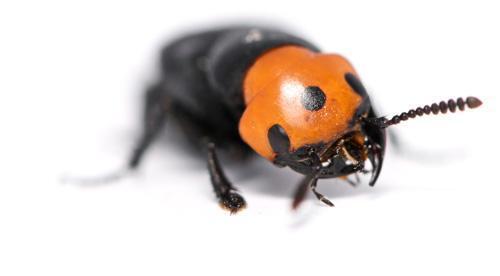
"They never even returned my CV and headshots."

May 8, 2021
A useful guide for naturlists walkers and anybody who has a love of nature.
Highly recommended.
Highly recommended.

December 22, 2022
A great reference book that I use all of the time to identify species I have photographed. It takes some time to get used to how the book is set out and some of the photos are a bit small for my old eyes but using this and google together is a winning combination.
September 5, 2017
A very thorough and very well photographed guide. Used it for successful identification time and time again.
Displaying 1 - 4 of 4 reviews