

What do you think?
Cambridge Mathematical Library
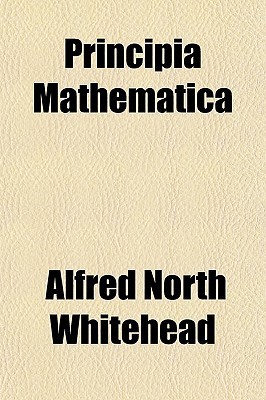
Principia Mathematica
Publisher: Cambridge, University Press Publication date: 1910 Subjects: Mathematics Mathematics Logic, Symbolic and mathematical Notes
260 pages, Paperback
First published January 1, 1913
About the author
Alfred North Whitehead
149 books464 followersAlfred North Whitehead, OM FRS (15 February 1861 – 30 December 1947) was an English mathematician and philosopher. He is best known as the defining figure of the philosophical school known as process philosophy, which today has found application to a wide variety of disciplines, including ecology, theology, education, physics, biology, economics, and psychology, among other areas.
In his early career Whitehead wrote primarily on mathematics, logic, and physics. His most notable work in these fields is the three-volume Principia Mathematica (1910–13), which he co-wrote with former student Bertrand Russell. Principia Mathematica is considered one of the twentieth century's most important works in mathematical logic, and placed 23rd in a list of the top 100 English-language nonfiction books of the twentieth century by Modern Library.
Beginning in the late 1910s and early 1920s, Whitehead gradually turned his attention from mathematics to philosophy of science, and finally to metaphysics. He developed a comprehensive metaphysical system which radically departed from most of western philosophy. Whitehead argued that reality was fundamentally constructed by events rather than substances, and that these events cannot be defined apart from their relations to other events, thus rejecting the theory of independently existing substances. Today Whitehead's philosophical works – particularly Process and Reality – are regarded as the foundational texts of process philosophy.
Whitehead's process philosophy argues that "there is urgency in coming to see the world as a web of interrelated processes of which we are integral parts, so that all of our choices and actions have consequences for the world around us." For this reason, one of the most promising applications of Whitehead's thought in recent years has been in the area of ecological civilization and environmental ethics pioneered by John B. Cobb, Jr.
Isabelle Stengers wrote that "Whiteheadians are recruited among both philosophers and theologians, and the palette has been enriched by practitioners from the most diverse horizons, from ecology to feminism, practices that unite political struggle and spirituality with the sciences of education." Indeed, in recent decades attention to Whitehead's work has become more widespread, with interest extending to intellectuals in Europe and China, and coming from such diverse fields as ecology, physics, biology, education, economics, and psychology. However, it was not until the 1970s and 1980s that Whitehead's thought drew much attention outside of a small group of American philosophers and theologians, and even today he is not considered especially influential outside of relatively specialized circles.
In recent years, Whiteheadian thought has become a stimulating influence in scientific research.
In physics particularly, Whitehead's thought has been influential, articulating a rival doctrine to Albert Einstein's general relativity. Whitehead's theory of gravitation continues to be controversial. Even Yutaka Tanaka, who suggests that the gravitational constant disagrees with experimental findings, admits that Einstein's work does not actually refute Whitehead's formulation. Also, although Whitehead himself gave only secondary consideration to quantum theory, his metaphysics of events has proved attractive to physicists in that field. Henry Stapp and David Bohm are among those whose work has been influenced by Whitehead.
Whitehead is widely known for his influence in education theory. His philosophy inspired the formation of the Association for Process Philosophy of Education (APPE), which published eleven volumes of a journal titled Process Papers on process philosophy and education from 1996 to 2008. Whitehead's theories on education also led to the formation of new modes of learning and new models of teaching.
In his early career Whitehead wrote primarily on mathematics, logic, and physics. His most notable work in these fields is the three-volume Principia Mathematica (1910–13), which he co-wrote with former student Bertrand Russell. Principia Mathematica is considered one of the twentieth century's most important works in mathematical logic, and placed 23rd in a list of the top 100 English-language nonfiction books of the twentieth century by Modern Library.
Beginning in the late 1910s and early 1920s, Whitehead gradually turned his attention from mathematics to philosophy of science, and finally to metaphysics. He developed a comprehensive metaphysical system which radically departed from most of western philosophy. Whitehead argued that reality was fundamentally constructed by events rather than substances, and that these events cannot be defined apart from their relations to other events, thus rejecting the theory of independently existing substances. Today Whitehead's philosophical works – particularly Process and Reality – are regarded as the foundational texts of process philosophy.
Whitehead's process philosophy argues that "there is urgency in coming to see the world as a web of interrelated processes of which we are integral parts, so that all of our choices and actions have consequences for the world around us." For this reason, one of the most promising applications of Whitehead's thought in recent years has been in the area of ecological civilization and environmental ethics pioneered by John B. Cobb, Jr.
Isabelle Stengers wrote that "Whiteheadians are recruited among both philosophers and theologians, and the palette has been enriched by practitioners from the most diverse horizons, from ecology to feminism, practices that unite political struggle and spirituality with the sciences of education." Indeed, in recent decades attention to Whitehead's work has become more widespread, with interest extending to intellectuals in Europe and China, and coming from such diverse fields as ecology, physics, biology, education, economics, and psychology. However, it was not until the 1970s and 1980s that Whitehead's thought drew much attention outside of a small group of American philosophers and theologians, and even today he is not considered especially influential outside of relatively specialized circles.
In recent years, Whiteheadian thought has become a stimulating influence in scientific research.
In physics particularly, Whitehead's thought has been influential, articulating a rival doctrine to Albert Einstein's general relativity. Whitehead's theory of gravitation continues to be controversial. Even Yutaka Tanaka, who suggests that the gravitational constant disagrees with experimental findings, admits that Einstein's work does not actually refute Whitehead's formulation. Also, although Whitehead himself gave only secondary consideration to quantum theory, his metaphysics of events has proved attractive to physicists in that field. Henry Stapp and David Bohm are among those whose work has been influenced by Whitehead.
Whitehead is widely known for his influence in education theory. His philosophy inspired the formation of the Association for Process Philosophy of Education (APPE), which published eleven volumes of a journal titled Process Papers on process philosophy and education from 1996 to 2008. Whitehead's theories on education also led to the formation of new modes of learning and new models of teaching.
Ratings & Reviews
Friends & Following
Create a free account to discover what your friends think of this book!
Community Reviews
Displaying 1 - 16 of 16 reviews

Want to Read
September 7, 2013Rhubarb, rhubarb rhubarb rhubarb: rhubarb rhubarb
- Rhubarb
Rhubarb, rhubarb rhubarb rhubarb? Rhubarb rhubarb. Rhubarb, rhubarb rhubarb rhubarb rhubarb rhubarb rhubarb? Rhubarb rhubarb rhubarb rhubarb: rhubarb, rhubarb, rhubarb rhubarb rhubarb. Rhubarb rhubarb rhubarb, rhubarb rhubarb - rhubarb rhubarb rhubarb - rhubarb rhubarb rhubarb.
Rhubarb rhubarb rhubarb, rhubarb, Rhubarb Rhubarb rhubarb. Rhubarb rhubarb rhubarb rhubarb:
- Rhubarb: rhubarb rhubarb rhubarb, rhubarb rhubarb.
- Rhubarb: rhubarb (rhubarb rhubarb rhubarb) rhubarb.
- Rhubarb rhubarb rhubarb: rhubarb/rhubarb, rhubarb rhubarb rhubarb.
Rhubarb rhubarb rhubarb, rhubarb rhubarb; rhubarb rhubarb, rhubarb rhubarb rhubarb rhubarb rhubarb rhubarb, rhubarb rhubarb. Rhubarb rhubarb... rhubarb rhubarb.

- Rhubarb
Rhubarb, rhubarb rhubarb rhubarb? Rhubarb rhubarb. Rhubarb, rhubarb rhubarb rhubarb rhubarb rhubarb rhubarb? Rhubarb rhubarb rhubarb rhubarb: rhubarb, rhubarb, rhubarb rhubarb rhubarb. Rhubarb rhubarb rhubarb, rhubarb rhubarb - rhubarb rhubarb rhubarb - rhubarb rhubarb rhubarb.
Rhubarb rhubarb rhubarb, rhubarb, Rhubarb Rhubarb rhubarb. Rhubarb rhubarb rhubarb rhubarb:
- Rhubarb: rhubarb rhubarb rhubarb, rhubarb rhubarb.
- Rhubarb: rhubarb (rhubarb rhubarb rhubarb) rhubarb.
- Rhubarb rhubarb rhubarb: rhubarb/rhubarb, rhubarb rhubarb rhubarb.
Rhubarb rhubarb rhubarb, rhubarb rhubarb; rhubarb rhubarb, rhubarb rhubarb rhubarb rhubarb rhubarb rhubarb, rhubarb rhubarb. Rhubarb rhubarb... rhubarb rhubarb.

April 11, 2012
My favorite part was where they took about 50 pages to prove that 1+1=2

November 5, 2013
When I'm tired and depressed, I often spend half an hour flicking through this and underlining the mistakes. It never fails to cheer me up.

Read
June 15, 2015Did you just ask me to rate Principia Mathematica out of five stars? Go fuck yourself.

i-want-money
June 9, 2015unreadable jargon=drenched masturbatory circle jerk. who do these guys think they are making up words ; and then there's the target audience, a bunch of snobbish pocket=protector wearing "geniuses". I'm calling emperor's new clothes on this one!!
____________________
Where CNP C. steps boldly onto the scene
Rhubarb, rhubarb rhubarb rhubarb: rhubarb rhubarb [fruit or vegetable?]
Despite its title, this is NOT a math book, at least in the conventional definition of the term. [read : "conventional definition"]
...and underlining the mistakes. [in red or blue?]
...they took about 50 pages to prove that 1+1=2 [so you know now better the meaning of 'prove'?]
Read "On Denoting" [Will do! thanks!]
Sir Isaac Newton was undoubtedly one of the geniuses of our universe!! [Simon says :: The state of cataloguing and reviewing of this masterpiece on GR is pitiful! which is a true statement]
Bertrand Russell has always given me a bit of a headache. [hunh.]
has anybody read this?? {Guy name of Kurt Gödel }
____________________
Where CNP C. steps boldly onto the scene
Rhubarb, rhubarb rhubarb rhubarb: rhubarb rhubarb [fruit or vegetable?]
Despite its title, this is NOT a math book, at least in the conventional definition of the term. [read : "conventional definition"]
...and underlining the mistakes. [in red or blue?]
...they took about 50 pages to prove that 1+1=2 [so you know now better the meaning of 'prove'?]
Read "On Denoting" [Will do! thanks!]
Sir Isaac Newton was undoubtedly one of the geniuses of our universe!! [Simon says :: The state of cataloguing and reviewing of this masterpiece on GR is pitiful! which is a true statement]
Bertrand Russell has always given me a bit of a headache. [hunh.]
has anybody read this?? {Guy name of Kurt Gödel }

May 26, 2019
Skimmed it for a great reference it is. Some amazing insights nowhere to be found in modern textbooks.

January 17, 2021
Video on Russell Paradox
https://www.youtube.com/watch?v=xauCQ...
https://www.youtube.com/watch?v=xauCQ...
March 20, 2012
Not the drone you're looking for.
Russell and Whitehead were responding to a challenge to run through all of mathematics using the same notation - something that people assumed could be done, but no one had the time to do it. Principia Mathematica ballooned into a book that is too large and dense for anyone to actually read. Worse than that, Goedel came along a few years later and proved that the book was also too short to actually accomplish what it set out to do. You're probably better off reading Russel's "Principals of Mathematics" if you're looking to understand the foundations of mathematics.
This edition is only the first 56 chapters, that Cambridge University Press is trying to sell as an introduction to logic. It wasn't written in an accessible style to be that, and it uses its own peculiar notation to boot. You should find a book on set theory or introductory logic if that's what you're looking for.
Russell and Whitehead were responding to a challenge to run through all of mathematics using the same notation - something that people assumed could be done, but no one had the time to do it. Principia Mathematica ballooned into a book that is too large and dense for anyone to actually read. Worse than that, Goedel came along a few years later and proved that the book was also too short to actually accomplish what it set out to do. You're probably better off reading Russel's "Principals of Mathematics" if you're looking to understand the foundations of mathematics.
This edition is only the first 56 chapters, that Cambridge University Press is trying to sell as an introduction to logic. It wasn't written in an accessible style to be that, and it uses its own peculiar notation to boot. You should find a book on set theory or introductory logic if that's what you're looking for.
April 1, 2021
"The mark of a civilized human is the ability to look at a column of numbers, and weep."

Read
May 19, 2020The book that guided my life as a Mathematician

July 26, 2020
It's probably the most accessible way to read it, and not as difficult as one might think.
I once bought a huge stack of used Dover books cheap, and the guy tried to sell me the Principia Mathematica along with it... it was slightly faint with the typesetting, but for 40% off i decided sure i'll take the 3 volume monster home
I bought Principia Mathematical to *56 the same day with it...
I would probably recommend
Morris Kline - Mathematics: The Loss of Certainty (Oxford 1980)
as the best book on Mathematical Philosophy around to go with Principia to *56
Some disagree with Kline, but i think it was one of his finest books
I once bought a huge stack of used Dover books cheap, and the guy tried to sell me the Principia Mathematica along with it... it was slightly faint with the typesetting, but for 40% off i decided sure i'll take the 3 volume monster home
I bought Principia Mathematical to *56 the same day with it...
I would probably recommend
Morris Kline - Mathematics: The Loss of Certainty (Oxford 1980)
as the best book on Mathematical Philosophy around to go with Principia to *56
Some disagree with Kline, but i think it was one of his finest books

August 26, 2023
"It is to be regretted that this first comprehensive and thorough-going presentation of a mathematical logic and the derivation of mathematics from it [is?] so greatly lacking in formal precision in the foundations (contained in *1–*21 of Principia) that it presents in this respect a considerable step backwards as compared with Frege. What is missing, above all, is a precise statement of the syntax of the formalism."
~Kurt Gödel, 1944.
~Kurt Gödel, 1944.

April 18, 2014
Das Buch von Whitehead und Russell beschreibt wichtige logische Gesichtspunkte, die auch in der Philosophie eine große Rolle spielen. Ein ganz wichtiger zentraler Punkt des Buches ist das sogenannte Zirkelfehlerprinzip. Es hilft Paradoxien zu vermeiden, z.B. die 'Universalmenge' oder das 'Argument vom dritten Menschen', da es sogenannte 'illegetime Gesamtheiten' enttarnt.
Read
November 27, 2008That's "read" in the loosest sense of the word. I looked at many if not most of the pages here, even after I lost all sense of what the notations meant. Upshot is, if you're looking for someone to explain why 1 + 1 = 2, I'm afraid I'm (still) not your guy.
Currently Reading
May 19, 2011One of the most powerful work ever done. Sir Isaac Newton was undoubtedly one of the geniuses of our universe!!
December 8, 2008
Whitehead and Russell develop the logical structure of Mathematics.
Displaying 1 - 16 of 16 reviews