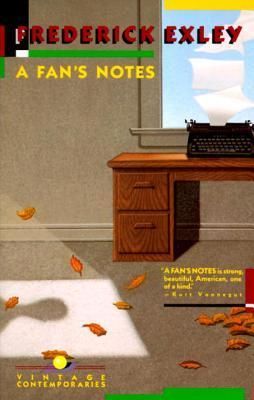
A nine-year-old boy named Miller, who lives in Watertown, NY, struggles to make sense of his father's disappearance, for which he blames himself. Later, when he is convinced that his father is lying in a coma in the local VA hospital, he searches for the one person he thinks can save his father, the famously reclusive--and dead--author, Frederick Exley, Watertown native and author of the "fictional memoir" A Fan's Notes, his father's favorite book. Told in alternating voices of the young boy and the therapist the boy's mother has hired to help him, Exley is ultimately an exploration of the difference between what we believe to be real and what is real and how difficult it is to reconcile the two.
Brock Clarke is the author of seven books of fiction, most recently a collection of short stories, The Price of the Haircut. His novels include The Happiest People in the World, Exley (which was a Kirkus Book of the Year, a finalist for the Maine Book Award, and a longlist finalist for the IMPAC Dublin Literary Award), and An Arsonist’s Guide to Writers’ Homes in New England (which was a national bestseller, and American Library Associate Notable Book of the Year, a #1 Book Sense Pick, a Borders Original Voices in Fiction selection, and a New York Times Book Review Editor’s Choice pick). His books have been reprinted in a dozen international editions, and have been awarded the Mary McCarthy Prize for Fiction, the Prairie Schooner Book Series Prize, a National Endowment for Arts Fellowship, and an Ohio Council for the Arts Fellowship, among others.
Clarke’s individual stories and essays have appeared in The New York Times Magazine, Boston Globe, Virginia Quarterly Review, One Story, The Believer, Georgia Review, New England Review, Southern Review, and have appeared in the annual Pushcart Prize and New Stories from the South anthologies, and on NPR’s Selected Shorts.
Clarke lives in Portland, Maine and teaches creative writing at Bowdoin College and in The University of Tampa’s low residency MFA program.
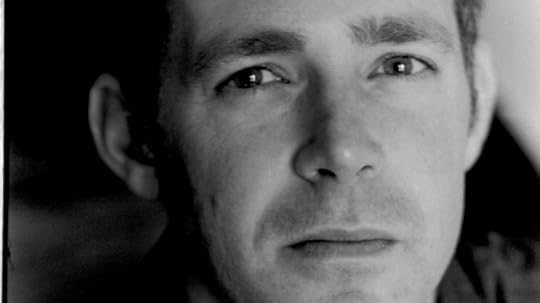
Exley, the novel's title - as in American writer Frederick Exley (pictured above), author of his notorious 1968 fictionalized autobiography, A Fan’s Notes
Contemporary American author Brock Clarke’s moving story of a son’s love for his missing dad. The novel takes place in Watertown, New York at the time of George W. Bush's war in Iraq,
The book features two alternating first-person narrators: a nine-year old boy by the name of Miller and Miller’s therapist, a doctor who, during the course of his dealings with Miller, receives initiation into the literary world of A Fan’s Notes. By my reckoning, the novel’s switching back and forth between narrators, young patient and seasoned therapist, is the perfect choice for all of the tale's surprising twists and turns.
Take my word for it here, Clarke’s novel packs a real emotional charge. As readers, we want to keep turning the pages to learn what happens next, to discover what is fact and what is fiction since Miller and his therapist have their big hearts in the right place but their respective stories are as unreliable as can be.
Every stage of the unfolding drama reveals surprises so I will not disclose any details that could act as spoilers; rather, here is a thumbnail of each of the three, no, let’s make that four, main characters:
Miller Le Ray - Since Miller at age nine is a precocious reader of books, he is moved up from third grade to seventh grade with a class of thirteen-year olds. He loves his dad so much and since his dad loves Frederick Exley’s A Fan’s Notes, owning many copies, reading and rereading it to the point where he can and does quote freely and allude to continually, Miller does the same. For example, Miller will say or write the first initial of someone’s name, say “K” or “H” similar to what Exley does in his book and, by extension, similar to his dad. Miller lives with his mom and develops a tight emotional connection with his therapist.
Miller’s Mom – Drop dead gorgeous with dark eyes and jet black hair. She is a dedicated professional, the head lawyer in her office where she handles cases of spousal abuse among military personnel. She has plenty of work since Watertown is a big military town. Miller’s mom loves Miller and judges her son in need of some psychotherapy to help him in dealing with his missing father. Thus, she arranges for Miller to see a therapist.
Miller’s Therapist – An experienced and educated psychologist and counselor who continually refers to himself as a health care professional, which has a tincture of irony since a number of his actions are very unprofessional. He also is a thirty-something bachelor who falls deeply in love at first sight with Miller’s mom. The lion’s share of his narrative is a reciting of his Doctor’s Notes, which, as it turns out, isn’t that far removed from Exley’s A Fan’s Notes.
Frederick Exley and his autobiographical novel – The book and the long dead author have a tangible presence on every page; it’s as if there is an Exleyesque film coating thoughts, words and actions. Brock Clarke’s novel will most certainly resonate with an added vibe for readers familiar with Exley’s book.
Incidentally, I intentionally did not give the names of either Miller’s mother or Miller’s therapist since Miller himself employs names as Exleyesque signifiers and also as modes of potential transformation. Does it sound to you like Miller is a bright, perceptive lad? Quite right, which adds a real zest to Clarke's engaging novel.
American author Brock Clarke, born 1968
“There's nothing as quiet as that moment before one person is about to tell another something neither of them wants to hear.” ― Brock Clarke, Exley
Hmm...let's see...how do I convince my fellow Goodreads users that Exley, a book criminally under-read, meh-reviewed, and the (as 2012 draws to a close) best novel I've read this year so far, is a book worth reading??? Maybe compare it to Mark Haddon's The Curious Incident of the Dog in the Night Time??? (Well no, despite it having a precocious young narrator like Curious Incident it's nothing at all like it [Not to mention, my very last review {Pigeon English} made that very-same comparison...my Goodreads Friends will think I have a screw loose]). Echo the jacket blurb that compares Brock Clarke to Richard Ford and John Irving??? (Um, no. Despite my love of both those novelists, there's nothing there to compare). Mention my favorite book last year (2011)??? (Oh, hell-to-the-no, Karen Russell's pissed-on-by-the-Pulitzers gem Swamplandia! gets no love from Goodreads either, languishing in 3.1-star-rating-land).
Let's just go with a screw-loose-upstairs supposition and see if I can draw in some kooky like-minded Goodreads folks that way:
The somewhat tired trope unreliable narrator has never been a more accurate descriptor for a novel. For Exley's got two of them and they're both wackadoodle (or are they?!?) Nine year old eighth grader Miller (of Watertown NY) suffers from delusions that his father (a nearly 40-something marginally employed layabout, recently disappeared) was sent to Iraq and was injured there, to be sent home to the local VA hospital. His mother, a lawyer and battered women's advocate, sends Miller to a psychologist to disabuse him of his silly notions. So enters the second unreliable narrator, Miller's psychologist, who in his fascination over Miller's "delusions", starts losing touch with reality himself. The narrative ping-pongs between delusional patient and increasingly delusional "mental health professional", with the reader (i.e. Me...and, hopefully, if you're one of the aforementioned Goodreads' screw-loose set that I can convince to read this novel, you) desperately trying to figure out who's the crazier one as you solve the mystery of Dad's disappearance. I, for the first time, I think ever, re-read the book immediately after finishing, not only because I loved it so much, but to clarify the sources of all my WTF-inducing head scratches upon first read. So, yeah, maybe having a screw or two loose is a prerequisite for enjoyment. Just read it. It's a (total head) trip.
(Did I mention that Exley borrows liberally and often (and derives its title) from another book? Yeah, another lesser-read "novel" A Fan's Notes: a Fictionalized Memoir by Frederick Exley, a 1968 "cult classic" by, who some have deemed, the East Coast Charles Bukowski. Miller's dad (and, evidently, Exley author Brock Clarke) loved loved loved this book and young Miller used it (and quoted passages from it) with fervent intent in trying to piece together his father's disappearance...brilliantly, I might add. (And yet another selling point for Exley lost on everyone: Less than 2000 Goodreads users deigned to rate Exley's A Fan's Notes...yet two of my Goodreads pals HAVE read it...so maybe it's a start...)
I am uber glad to have found these two books pretty close together @ the bookstore, for the name "Exley", a somewhat rare name caught in my eye and I ended up getting both. As I began to read one of them, I felt the need to scan the other and immediately saw how obvious it was that they should be read together. The hunch was one hundred percent accurate. Brock Clarke's "Exley" complimented Fredrick Exley's "Fictional Memoir" by providing a reference for crucial references to specific quotes, conversations, scenes, and "inside meanings" in the text. Vice versa, the latter provided the ability to better appreciate the former. Brick Clarke's use of the book that supposedly changed his life in own novel was somewhat genius. At least quite experimental as far as I am aware. And a successful one at that. He wrote such an unexpectedly humorous interpretation of it that gave more meaning to Exley's obviously at least partial honest memoir.
In short Exley's memoir showed, by user of various vignettes/narrations for significant/deemed important, a quite wild and sick man. An alcoholic, a serious one, whom inevitable relapses a few times, managing in between to do some irrevocable ruination. He spends am insane amount of time laying in his davenport, doing absolutely nothing at all except occasionally contemplating deep philosophical beliefs. He meets some interesting characters at the residential hospital/treatment center named Avalon. He tells of his many excessive sexual encounters with women, almost none of which he truly loves. The only woman he was involved with whom he at least felt like he lived at the time is one Bunny Sue- whom, of course, was the only woman with whom was impotent around.
What vitiates the whole book, is that, unlike his father and his hero, Frank Gifford of the New York Giants, he was doomed "to sit in the stands with most men and acclaim others. It was my fate, my destiny, my end, to be a fan." In short, he saw himself in Gifford, to the point of actually thinking he was him. More specifically, Gifford was, to him, his alter ego - the far more successful one; the one that was living out his dreams, while he suffered, simmering in hatred and desperation with his banal and miserable life. Rather than inspire him to better himself, this depressed him to further his alcoholism, womanizing, as well as his overall dysfunctional way of life. As a slightly related side note, apparently his obsession with Frank Gifford qualified the memoir to be categorized in the sports genre. This is not something I agree with at all.
Somewhere in the last few pages, actually expresses how, he was not destined to be a teacher, as he "lacked the intelligence to simplify". I have been thinking the same exact thing during the entire novel. Mostly, I actually preferred this, as I appreciated his extensive vocabulary inability to describe things that necessitated verbosity. Unfortunately, for a fair amount, I could definitely see the pleonasm.
If I had read "A Fan's Notes" without the accompanying "Exley", I would have liked it a lot less. The depressing tone would be nothing but depressing. I would have finished it with nothing but the impression that Exley wanted to author a testament to his dire and woebegone life.
Now, calling this "The best novel written since 'The Great Gatsby'" (Newsday) is simply absurd- as is apparent in his lack of success with any other books he penned.
"Exley", first and foremost a much more humorous, lighter, and fun read, tells the story of a young boy trying to save his dying father, whom his mother insists is, in effect, non existent. Told in part by his therapist, whom he calls Doctor Pah-nee (a play on "penis" as originally written by Frederick Exley), a central theme is how far we will go to be in denial and believe the unbelievable. For example, Doctor Pah-nee actually dresses up as Exley, reads "A Fan's Notes" in order to be "in character", so that his patient can have what they both acknowledge he needs- to bring Exley to his father laying in the hospital. Miller Le Ray is the routine of denial, using his defense mechanisms to the maximum, continuing to search for the elusive Exley even when he is faced with hard evidence that he has died. Jonathan Yardley, the real life author of a non-fiction biography for Frederick Exley, is called to his home, for a visit during which Miller insists that Exley is still alive and breathing- in fact right there (in the form of Doctor Pah-nee). They have even gone as far as to mine Exley's grave!
Anyhow, the heart-warming narrative end on a redeeming note, one in which lasts in stark contrast to that in "A Fan's Notes".
Brock Clarke's interpretation far superior to the source, I fully liked the paired reading of these two novels!
I understand why this book garnered some negative reviews. If you're looking for a straightforward tale, told by a reliable narrator, you won't find it here. But if you want a departure from conventional storytelling (without any of the quirks of overly "post-modern" techniques), then you might find this book worth the ride. The novel is about a boy who can't accept his reality -- that his parents have separated and he's lost touch with his father. He is now convinced that his father went off to Iraq, but got injured and is lying comatose in a VA hospital in Watertown, New York -- the setting of the novel A Fan's Notes. The father was a big fan of Exley's book and modeled his life after Exley and the boy is convinced that if he brings Exley to his father, he'll be able to save his father's life. But the boy's mother doesn't believe him, and she brings the boy to a psychiatrist to help him stop fantasizing and creating what she believes are elaborate ruses to convince her he's telling the truth. The psychiatrist is no ordinary psychiatrist. We learn that he's a social misfit, and we discover right off that something's not quite right with him because he has a crash on the boy's mother and initially his only interest in treating the boy (whose name is Miller, but 2ho is mostly referred to as just M. in imitation of Exley's style) seems to stem from his desire to interact with her. Things get more and more complicated from there.
The chapters switch back and forth between M's point of view and case study notes taken by the psychiatrist. As each chapter unravels, the story functions like a series of Russian nesting dolls, where you assume each time you've gotten to the bottom of things, but you can never be sure. One minute you think Miller's telling the truth, another you think his mother is right and that his story is all just a fantasy. Facts that you thought were true are pulled out from under you, as you discover you too have been the victim of the boy's need to fantasize. The psychiatrist provides good comic fodder because he starts to unravel. In an attempt to get to the truth, he starts to follow the boy and even breaks into his house to read the journal he's told M.to write. In doing that, he even steals some letters written, we think, by the father from Iraq to his son, which the mother's been hiding because she believes Miller fabricated them. You're constantly kept guessing as the story gets more complicated and the stakes get higher. Later on, the psychiatrist takes on the persona of Exley, and it's not clear whether it's from lunacy or a brilliant to attempt to help Miller cope with what the psychiatrist realizes would be an unacceptable reality. Exley's biographer, Jonathan Yardley, is even brought into the story as Miller tries to sort everything out. The closing is heart-wrenching and pays off in a big way the effort you made to keep poring through what at times is a perplexing story. You'll be left feeling heartbroken for those of us who have to cope with untenable realities and sympathetic to the extent we can all go to create fantasies that make those harsh realities livable.
There's some serious "meta" stuff, and deep thinkers (of which I'm not) will have a lot of fun with how the story's bigger themes play into the whole notion of fiction. There's a lot of playing with words. The psychiatrist insists on being called a "mental health professional" because he doesn't like all the pejorative nicknames for psychiatrists -- in the belief that the words we choose can somehow shape the reality we live in. There's a whole examination of whether the stories we create for ourselves can become reality -- and Exley is the perfect vessel for that exploration. He wrote a "fictional memoir" (what is that? after all) and created a persona -- the fun-loving drunk who had disdain for all in the world he disaproved of -- as if that story and persona could become his reality. So in other words, if you're patient with the unconventional storytelling approach here, the book offers plenty of rewards.
This quirky, imaginative book kept me going until the end! Miller is an extremely bright child who makes up his own world to deal with his beloved father's disappearance. Much of his world is based on the writings and life of Frederick Exley, his father's favorite author. Clarke tells the story from both Miller's perspective as he tries to find Exley to save his father, and from the "mental health professional" working with Miller. I loved the writing - and loved the fact that I never knew what was true and what wasn't until the very end.
I didn't enjoy this book as much as i enjoyed Brock Clarke's first book. That was downright uproarious. Exley, I can't say the same about it. What I can say is- it is splendidly written. Clarke has a marvelous relationship with language, and more so, with the main characters in this novel. Miller is a young kid whose father is in the VA hospital, gravely injured. His mother refuses to go see his father. Miller goes through two therapists before settling in with one, who happens to be fixated with Miller's mom. The book goes back and forth, between the therapist, M(Miller), the mom, and the supporting characters- Miller's father(for one chapter), the bartender at the Crystal(the dive bar where Miller's father is well known), K, a student at the school where Miller goes(and who had a questionable relationship with Miller's father), and others. The main character- one Frederick Exley- is a famous author of dubious nature. He's the famous author of the book that Miller's father has been obsessed with his whole life, and so Miller decides-to help his father recover from the serious injury that's landed him in the hospital- to find the reclusive Exley and bring him to the hospital, to help bring his father out of the coma. What follows, well, is confusing. I had to re-read certain parts of it multiple times to try to put the pieces together. You find yourself really feeling sorry for Miller, as he's obviously a very confused and lonely kid. That alone can't save the book, unfortunately. I'll just say I was disappointed with the resolution to this tale.
I'm still not entirely sure how I feel about this book. At times, I was pretty sure it was brilliant. At others, it was only ok. At still others, I had no fucking idea what the point was.
When your two narrators are a nine-year-old with an overactive imagination (and a tenuous grasp on a reality) and a mental health professional who could probably use a mental health professional of his own... Well, shit's gonna get weird.
It was like a solid Anne Tyler novel wrapped in an episode of Seinfeld about nothing while on an acid trip. Today, 3 stars. Ask me tomorrow and it'll be 4. I think I'm gonna change it to a 4....
The hallmark of a good literary novel is that you don't ever want it to end. I raced through the first half of this book, and then started to slow down--not because it became less interesting, but because I wanted to savor it. I knew that once I said goodbye to M. at the end of the book, I would miss him. And I already do.
Exley has two narrators, a mental health professional and his patient, both deliciously unreliable. Unlike some books, where multiple narrators seem like a gimmick or a cop-out, Exley's dual, delusional narrators compliment each other and the story. Without both of their characters and narratives, the reader wouldn’t see the inconsistencies-—sometimes innocuous, sometimes troubling—-between each of their realities. By employing this technique, Clarke strikes the perfect balance between realism and fantasy. The strangeness of it all isn't overwhelming; it feels more like a puzzle for the reader to solve, to determine what is real and what isn't. The end of the book gives the reader a sense of closure, but that won't keep my mind from wandering back to M.
Unnerving, funny, and deeply human. The story is told in first person narration, alternately by 10 year old Miller, and by his psychiatrist, hired by Miller's mother, with whom the doctor becomes instantly infatuated. None of the three of them are quite telling the truth, or are quite sympathetic, but I really liked how I had to parse what each one was saying, and construct my own version of what was really happening by which elements of the various narratives coincide. It's like a Wes Anderson film of a story by, say, M. Night Shyamalan, or maybe vice versa. There were some unsettling parts, many funny parts, and there is an underlying current of the pointlessness and loss of the Iraq war that colors the whole story. The writing is deft and true.
The title refers to the author of the book "A Fan's Notes," which I did not know was a real book until the afterword. This book is practically a character in itself, and now I want to read that as well, though not right away.
Exist kind of reminds of Extremely Loud and Incredibly Close, which I loved. There is a young boy who suffers the loss of his father when he leaves for Iraq. His mother sends him to a psychiatrist because she believes he is a liar. (She doesn't believe her husband is in Iraq.). As a reader you never know what is the truth and what is a lie and that is what makes the story so compelling. After all truth is often in the eye of the beholder.
Loved this book. After finding out last year that Brock Clarke was writing this, I read "A Fan's Notes" by Frederick Exley in preparation. Worth it, because it's pretty fantastic, but it's certainly not necessary in order to enjoy Clarke's book. "Exley" has well-developed characters and a fascinating story--funny and sad and maddening and odd. Yay for Brock Clarke!
There were points when I was reading this book when I really, really liked it and felt like I should recommend it to people I know who like good books. There were points when I was reading this book when I really, really didn't understand what the hell was going on. If you drew a Venn diagram, many of those points would fall in the middle, overlapping circle.
This book was inventive and creative and at times quite funny. I thought it was much, much better than An Arsonist's Guide to Writers' Homes in New England, Clarke's earlier novel, which I was lukewarm on. Miller Le Ray is one confused kid, but he's not the only one confused, because he seems to revel in misleading the reader, as do several other characters in Exley. Clarke takes the unreliable narrator to the extreme. It works for the most part, but, without giving too much away, I felt a little let down by the ending, and I'm not sure if it's because I didn't understand it or it simply wasn't the ending I was hoping for. That took it from a 5 to a 4 rating for me. I'm still glad I read it, I still enjoyed it on the whole, but ...
That said, I won't rule out re-reading it. Maybe I'll figure some more out the next time around. This book does require you to pay attention and work a little. If you're into that, you should give it a look.
I can honestly say that i both loved and hated this book, i almost gave it one star. this author can write and if you let him, toy with your emotions.. he got me. his protagonist miller a ten year old boy brought out some boxed up memories from my childhood especially about fathers. our fathers, for a time were everything to us we revered them and were willing to do anything we could for them prior to their being taken away. throughout this book i had to fight the urge to cry and throw the book as my heart swelled with emotion and love for my dad-it is a truly cathartic experience. the turn that millers relationship took with his mother mimiced what happened with mine as well, we noticed our mom's in an entirely new light and it was a blessing. as if it couldnt get more meaningful, i could see and almost feel parallels with what my children must be feeling with this forced absence and the pain and frustration that comes along with it... i apologize so much to them for this.... it causes my heart to shred. i am sorry that this review hasnt 'touched' much on the story, i would definitely recommend this book as its humorous, well written, heart warming and emotional. im going to try and get my children to read it.
Interesting structure with the choice of two unreliable narrators. Miller's POV was particularly interesting to analyze; Miller is precocious and reads adult books, but understands them and the interactions of the adults around him like the 9-year-old he is. He wants so badly to believe certain things that it seems he DOES believe them (or is he just claiming belief to manipulate the reader?). His father is his hero and his father's hero is Exley, so he goes on a quest to find Exley and persists in his quest even when it seems impossible. I had more trouble with the doctor, the other narrator. Given the obvious unreliability of Miller, I was in the mindset to question every POV the book offered, particularly when the doctor seemed very easily swayed by his own interests (i.e., the beauty of Miller's mother). He was fixated on his role as a "mental health professional," but behaved unprofessionally throughout. I've thought about it a bit and I'm not sure I've figured out all his motivations, but the fact I'm still thinking about it makes this 4 stars for me.
1.5 stars. If I had read this novel before I read "An Arsonist's Guide to Writers' Homes in New England," I would have never picked up another book by Brock Clarke, sad to say. And I would have missed out on a superbly-written novel which made me laugh for days (An Arsonist's Guide, I mean). Unfortunately there is not much to be said for Clarke's strange, confusing novel "Exley" other than I wish I had not wasted my time reading it. I think I understand why he wrote it, and there is a point somewhere in there, hidden in the haystack, but really, there are many other creative ways to bring a point across, that would not bore your reader to tears. This is either a very feeble excuse for a novel, or Clarke is a genius and I am a feeble-minded idiot for not figuring it out.
This was a sort of meta-novel - a fictional character (a 9 year old boy) tries to find a real author (Frederick Exley) to save his father who may or may not have been injured in Iraq and is recovering at a VA hospital in Watertown, NY where the real Exley lived. It's actually not quite as complicated as all that - a very enjoyable book, but perhaps a little narrow in its scope. I have read all of Exley's three books, though "A Fan's Notes" stands head and shoulders above the rest, and one of my favorite books I have ever read. Exley may not be one to admire or even emulate, but is writing is amazing and I like the way the author paid homage to him. That said, if you don't know or haven't read Exley, I'd suggest doing so before reading this to really get the full context.
It’s practically a prerequisite to have read Frederick Exley’s incredible fictional memoir, A Fan’s Notes, before proceeding with this novel. If you don’t, you’re going to miss some humor and some insights into the delusions of the main character. Besides, Exley’s book is really, really, really good.
With that preamble aside, this book is the running for the best book I’ve read in 2019. It’s a bit of a puzzle box where the main character, Miller, is clearly lying and yet equally clear that he is not. It’s also a surprisingly moving and melancholic novel about relationships and alienation. You need to read both books, right now!
This was a really quirky, interesting book. So many of the reviews describe it as funny. I would not. There is some dark humor but the overall feeling of the book for me was really sadness. One reviewer called it ultimately sorrowful and that rings true for me. Oh and one of the quirks is definitely how the therapist refers to himself as a “mental health professional” all the time. I will never be able to hear those words again without remembering this book!
While I found the premise interesting, I found most of the characters inauthentic. There was a lot of unrealized potential in this book. Miller's voice felt particularly unreal. No 10 year old, no matter how precocious, talks like Miller does. I enjoyed the novel, but wouldn't recommend it to anyone.
Admittedly, this one didn't start off very strong for me, but I like Brock Clarke, he's a groovy dude, so I kept at it, and I feel rewarded. There's a goofy sadness to this, and I can get down with goofy sadness, probably because I'm a sad goof.
"Exley" is a strange book. That’s not necessarily a bad thing, plenty of great novels are strange, but this one leaves you walking away more confused than contemplative. I’m still not sure how I feel about it, to be honest. It wasn’t at all what I expected, and that disorientation is sticking even after the last page.
At the center of the novel is a young boy struggling to come to terms with the disappearance of his father. His world is confusing, fractured, and shaped by stories, especially the story he builds around Frederick Exley, the author of A Fan’s Notes. That book becomes a kind of totem for the boy, a way of making sense of a world that no adult around him seems to care to explain or even improve.
And this is where things really get frustrating. Every character outside the child is completely unlikable. Not in a compelling, layered, "I love to hate them" sort of way, just genuinely unhelpful and disappointing. It’s like they’re all existing in some parallel dimension where emotional responsibility doesn’t exist. They do absolutely nothing to help this poor kid cope with reality. Like WTF!!! There’s a clinical detachment that might be intentional, but it doesn’t do the story any favors when it comes to emotional payoff.
I get the obsession with A Fan’s Notes acting as the core of this story. The idea of using one broken man's confessional novel as a kind of mythic blueprint for a child’s reality is intriguing, there’s definitely something powerful in the way fiction can distort or anchor our view of the world. But even that thread feels like it’s dangling, never quite woven into something cohesive.
"Exley" tries to blur lines between reality and fiction, psychology and narrative, love and delusion. Sometimes it works. Most of the time it just feels like a weird read. If you’re into meta narratives and can stomach an almost painful lack of adult empathy, there might be something here for you. Otherwise, be prepared to sit with a lot of “WTF” moments and a deep empathy for a child surrounded by emotional incompetence.
This book has not one but TWO unreliable narrators: the Boy Who Cried Wolf, and his Therapist Who Needs More Help Than He Does.
The boy protagonist is a compulsive liar with a wild imagination. It's hard to tell what's in his head and what isn't. He's also a kid, and they're spacey and ill-informed to begin with. He's convinced that his father is a soldier in Iraq who has returned and is in the VA.
His mother is convinced that the father simply left them and her son is making this (and basically everything else) up. Annoyed with his shenanigans, sends him to a therapist.
I won't get into the ins-and-outs of this story, but the therapist is a loon. And their quest to find Exley (the author of the boy's father's favorite novel) dissolves into further strangeness.
Thankfully, at the end, the truth does weasel its way out. So if you're the sort of person who hates ambiguity like I do (character flaw!), this will not agitate you.
While I found getting into this book a little challenging, I'm so glad I kept going. It is the story of a nine year old boy (Miller) trying searching for his fathers favorite author (Exley) given his father is in a Veterans Hospital recovering from an injury sustained in Iraq. Miller believes Exley is the only person who can help save his father. Problem is, no one believes Millers father went to Iraq and thus no one truly believes the father is injured in a hospital. The psychologist / mental health specialist the boy goes to see, proceeds to fall in love with his mother...and then increasing stalk on the young boy to try and figure out if the stories he is telling have any truth to them. Major twists and dark humor in abundance along the way.
This is a well-written book that I had a really hard time getting stuck into because of the dual unreliable narrators. There was enough of a mystery i wanted to solve that kept me coming back, but I eventually gave up and tried to skip to the end. Basically this book was not my jam but I feel like if you went in knowing about the unreliable narrator from the beginning you might like it. Also if you have read it, I've got some questions!
Not my thing. Not badly written, not a bad story, just not for me. I felt dumb and lost the whole time and wondered when I was going to figure it out or when it was going to become clear....So, I didn't actually finish I just gave up. I did go read the ending at that time and it didn't make me want to go back and try again.
Interesting and endearing at first, but the 10 year old boy narrator got old, like I was reading a children’s book. It’s kind of weird that an author would be so enthralled with another that he would write an ode to him, wrapped lightly in a simple and drawn out story, especially if the author being extolled was not very accomplished.
Well the book was certainly nutty! I really love books narrated by children, and this one was no exception. There are times where the book has you really going in circles, and I was captivated to find out what was really going on! Some things got a little bit wild and unbelievable… But overall, would definitely recommend this!
Young Miller seeing a drunk on the street who looks like Frederick Exley, Miller’s father‘s favorite author, who Miller believes can magically heal his father: the drunk guy has “a gray beard and messy gray hair … he looked old and used up. He looked like he could have been Exley, in other words. He also looked like he could have been half the guys in Watertown.”
I tried very hard to finish reading this turgid pce of garbage. And failed. This novel is tendentious, pretentious, and did I remember to say obnoxious? It goes on and on and on....and on. Any comparisons with A Curious Incident of a Dog in the Nighttime are grasping at straws. Don't bother.