While visiting Rome with their daughters, two middle-aged women reminisce about their romantic rivalry for the dashing Delphin Slade. Although Mrs. Slade admits to falsifying the letter that led to her eventual marriage to Slade, Mrs. Ansley holds her own secret regarding the gentleman.
Written by esteemed American author Edith Wharton in 1934, “Roman Fever” was adapted into a play, as well as two operas.
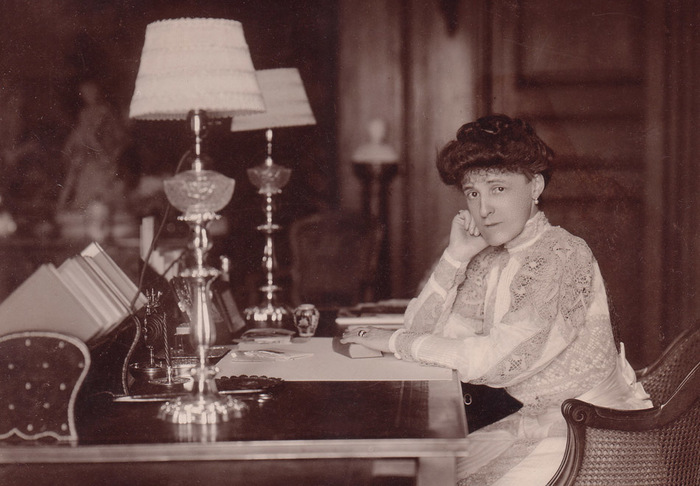
Edith Wharton emerged as one of America’s most insightful novelists, deftly exposing the tensions between societal expectation and personal desire through her vivid portrayals of upper-class life. Drawing from her deep familiarity with New York’s privileged “aristocracy,” she offered readers a keenly observed and piercingly honest vision of Gilded Age society.
Her work reached a milestone when she became the first woman to receive the Pulitzer Prize for Fiction, awarded for The Age of Innocence. This novel highlights the constraining rituals of 1870s New York society and remains a defining portrait of elegance laced with regret.
Wharton’s literary achievements span a wide canvas. The House of Mirth presents a tragic, vividly drawn character study of Lily Bart, navigating social expectations and the perils of genteel poverty in 1890s New York. In Ethan Frome, she explores rural hardship and emotional repression, contrasting sharply with her urban social dramas.
Her novella collection Old New York revisits the moral terrain of upper-class society, spanning decades and combining character studies with social commentary. Through these stories, she inevitably points back to themes and settings familiar from The Age of Innocence. Continuing her exploration of class and desire, The Glimpses of the Moon addresses marriage and social mobility in early 20th-century America. And in Summer, Wharton challenges societal norms with its rural setting and themes of sexual awakening and social inequality.
Beyond fiction, Wharton contributed compelling nonfiction and travel writing. The Decoration of Houses reflects her eye for design and architecture; Fighting France: From Dunkerque to Belfort presents a compelling account of her wartime observations. As editor of The Book of the Homeless, she curated a moving, international collaboration in support of war refugees.
Wharton’s influence extended beyond writing. She designed her own country estate, The Mount, a testament to her architectural sensibility and aesthetic vision. The Mount now stands as an educational museum celebrating her legacy.
Throughout her career, Wharton maintained friendships and artistic exchanges with luminaries such as Henry James, Sinclair Lewis, Jean Cocteau, André Gide, and Theodore Roosevelt—reflecting her status as a respected and connected cultural figure. Her literary legacy also includes multiple Nobel Prize nominations, underscoring her international recognition. She was nominated for the Nobel Prize in Literature more than once.
In sum, Edith Wharton remains celebrated for her unflinching, elegant prose, her psychological acuity, and her capacity to illuminate the unspoken constraints of society—from the glittering ballrooms of New York to quieter, more remote settings. Her wide-ranging work—novels, novellas, short stories, poetry, travel writing, essays—offers cultural insight, enduring emotional depth, and a piercing critique of the customs she both inhabited and dissected.
Roman fever - malignant tertian, falciparum, or estivoautumnal fever, formerly prevalent in the Roman Campagna and in the city of Rome; caused by Plasmodium falciparum (Farlex Partner Medical Dictionary); an antiquated term for malaria, which was so named as the disease was attributed to mala aria—Italian for ‘bad air’ (Segen's Medical Dictionary)
Fear is a bad counsellor, and so are envy and jealousy, poisoning the heart and mind, restlessly seeking to nurture itself on the tiniest traces. Awareness of the toxic effect of these emotions is however not enough to cure oneself from them, nor does experiencing those emotions protects or prepares one for impending grief, as reality still might surpass whatever we might imagine in our worst nightmares.
’So these two ladies visualized each other, each through the wrong end of her little telescope.’
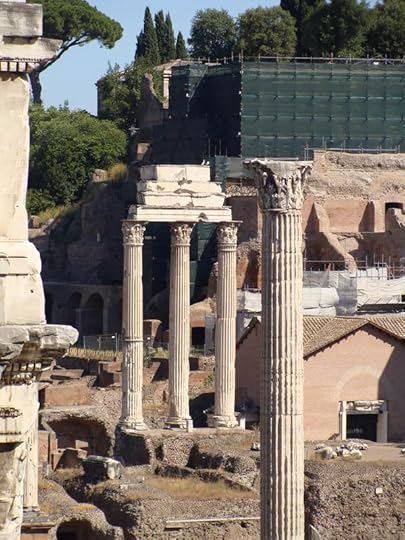
Two middle-aged American widows who have known each other since their youth find themselves drawn together again by the similarity of their lot, spending a day on the lofty terrace of a restaurant in Rome, overlooking the outspread glories of the Palatine and the Forum while awaiting the return of their daughters having a romantic outing with some Italian aviators. Gliding beneath the thin veneer of a rippling afternoon of soporific conversation the reader enters the mind of both ladies who mentally picture each other in a way which gradually reveals a prolonged rivalry between them. Eventually the keeping up appearances and stifling of long buried secrets no longer holds and their togetherness degenerates in a psychological joust fired by envy and jealousy originating from their former stay in Rome at young age.
Against the deceptively reassuring backdrop of the clicking of knitting needles, Rome and their own past emerge as ‘the great accumulated wreckage of passion and splendour’ and the biter is bit, the subliminal violence backfires, the verbal dagger that is thrown is riposted with chilling precision.
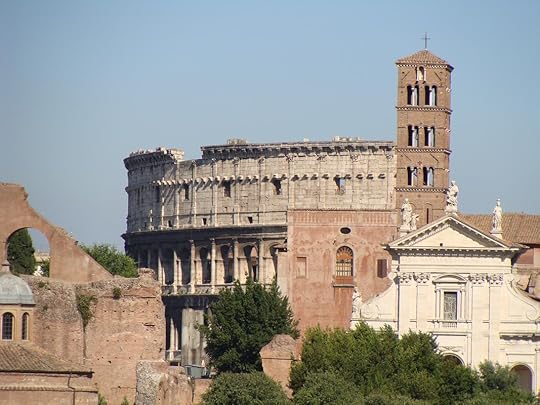
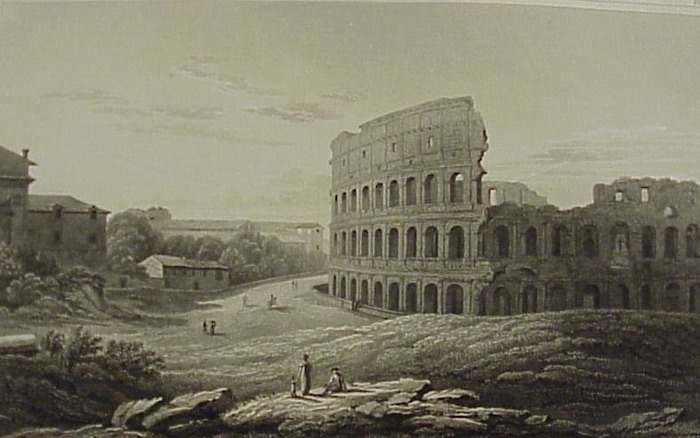
The Roman setting – the ruins the ladies observe at their feet a reminder of their gone prime - in the story is amply symbolic, particularly the role of the Colosseum – as a reminiscence of the gladiator fights, as a former battleground between the characters - both having quite different memories on Rome and the monument - and as a reference to the story which Wharton’s friend Henry James wrote eighteen years earlier – Daisy Miller – in regard of which the title and the role the Roman fever plays in the story also will turn out to be telling, open to multiple interpretations as well as ironic. What happens to the eponymous protagonist of James and one of the ladies concerned in Wharton’s story makes an interesting contrast, which might reflect the changing views on the position of women in society (or maybe rather the critical views of James and Wharton on that position).
Like in the first story I read by Wharton (Xingu), it struck me that the character who is looked down upon, the ostensibly unassuming and socially less regarded lady, almost against her will is turned into a fearsome opponent, winning the battle with a lethal punchline of three simple words which makes a fine coping stone of a multi-layered story that is delightfully peppered with foreshadowing and cruelly illustrates a handful of proverbial wisdoms (he who laughs last, laughs longest, whoever digs a pit will fall into it, and a stone will come back on him who starts it rolling).
When I was in high school, my sophomore English teacher Mrs. Hearn gave us this short story to read during class. I was not a big reader and I'm ninety percent sure she also gave us Ethan Frome and I never even cracked it open. But that day in class, I sat and read quietly as instructed and when I finished it, I looked up at Mrs. Hearn and smiled. And she smiled back. And it was the first time I understood that if you’ve read a truly great story, with a truly great ending, you have a delicious secret to share with anyone else who has read it. I reread it this year and I loved it just as much.
I do not seem to like Edith Wharton’s pompous writing style. It makes me inpatient and bored. I already gave up on one novel of hers and was beginning to skip paragraphs from this story when things got interesting.
Two women who lost their husbands discuss their daughters when they meet by chance in Rome. They used to be neighbors but life separated them. Interesting twists in the end, up to the last sentence.
“Mrs Slade and Mrs Ansley had lived opposite each other - actually as well as figuratively - for years.”
They first met in Rome as teens or twenties, and in their early married years, their New York homes were on the same street, facing each other. This story is when, by chance, they meet again in Rome. Both are widowed and somewhat adrift: “Ladies of ripe but well-cared-for middle age… each of them the modest appendage of a salient daughter”. They compare lives and daughters out loud - and, more snarkily, in their minds.
“These two ladies visualized each other, each through the wrong end of her little telescope.”
How little they really know each other. Small irritations aggravate envy and expose secrets. It’s said that revenge is a dish best served cold, but when it’s festered for years, it can be devastatingly rancid.
Knitting on a balcony
Mrs Ansley knits, “half guiltily” and “almost furtively”. Their daughters laugh about the mothers having little else to do, and it also marks a difference in status: “Mrs. Slade took sideways note of this activity, but her own beautifully cared-for hands remained motionless on her knee.” I thought of Madam Defarge in A Tale of Two Cities. Certainly Mrs Ansley is good at keeping secrets.
Image: The Forum and Palatine Hill at sunset (Source)
In a comment on my review of Works of Edith Wharton (HERE, which is actually a list of tropes I noticed), Alfred pointed out that she made “analogies between an upper class woman's social position and the rooms in a house”. That made me wonder about her choice of the balcony for this story. It's very apt: a neutral but public space, steeped in history (ancient and personal) is perfect for a genteel confrontation. However, the class differences are marked more by their conversation and by knitting and not.
Fever at sunset
It’s well-paced, slowly exposing the tarnish below the gloss. Carefully chosen words hint at broader interpretations.
“The great accumulated wreckage of passion and splendor” ostensibly refers to the Palatine and Forum, but Mrs Slade and Mrs Ansley probably privately think of the other in such terms. Similarly, the titular Roman Fever explicitly refers to a dangerous strain of malaria, fears of which lingered nearly two thousand years later, but also to the fever of passion in the Mediterranean heat. Their two daughters are out with young men, and Mrs Slade and Mrs Ansley remember their own courting days in Rome.
“She stood up… filling her troubled eyes with the tranquilizing magic of the hour.” The beauty of the sunset is often mentioned. But it also marks the onset of mosquitoes and opportunity for shady assignations. Mrs Slade and Mrs Ansley, in the sunset of their lives, are unlikely to experience the passion of youth again. Instead, they live their lives vicariously.
The final sentence is elegant and startling.
Who’s who
The two women are very different, but on first reading, I kept muddling up the very small cast. For the record: • Grace Ansley is widow of Horace and mother of Barbara. • Alida Slade is widow of Delphin and mother of Jenny. “Mrs Slade, the lady of the high color and energetic brows” is more confident, more articulate, and her husband was more successful, which is why they moved away.
Quotes
• “Contemplating it [view] in silence, with a sort of diffused serenity which might have been borrowed from the spring effulgence of the Roman skies.”
• “Those were the days when respectability was at a discount.” [Wall Street boom]
• “I was only thinking how your Babs carries everything before her… And I was wondering, ever so respectfully, you understand... wondering how two such exemplary characters as you and Horace had managed to produce anything quite so dynamic.”
• “The Colosseum. Already its golden flank was drowned in purple shadow, and above it the sky curved crystal clear, without light or color. It was the moment when afternoon and evening hang balanced in midheaven.”
More Wharton Stories
I first read this as the last of twenty stories in The New York Stories of Edith Wharton , which I reviewed HERE. Having rather overdosed, I didn’t fully appreciate what is often cited as one of Wharton’s best stories. Rereading it five years later, I see its brilliance.
A benefit of reading so many in quick succession was that it made me notice her favoured ingredients, from which she selected a unique combination for each story, and which led me to concoct a recipe for Write Your Own Wharton Short Story, which I posted HERE.
Another short story to be savoured by Edith Wharton is Roman Fever. I’m only new to the World-of-Wharton but already I can see how much she loved spending her time critiquing the lives of the ‘well to do’. In this story, I was instantly hooked when the setting was a restaurant balcony overlooking the Roman Forum – FOR HEAVEN’S SAKE!!!!
Our two main characters, were ‘ripe but well cared for middle aged’ women - holidaying in Rome. The two women spent the afternoon and evening reminiscing about days gone by, much of this illustrated by flashbacks to their lives in America.
Anyway, the conversation starts out nice enough – however, there is some inherent acrimony amongst the pair. One woman is jealous of the other, and the other looks down on her friend. This becomes more apparent as the story progresses. Well, one of them throws the other a verbal grenade – I don’t want to spoil it. The ending had me stunned.
Imagine sitting on the balcony of a restaurant, guzzling Aperol Spritz and gobbling peanuts with Wharton (sniping at the rich), Gogol (drinking Vodka) and Sedaris (talking about his Dad) for company, overlooking the Roman Forum on a lovely sunny day? Oh my, oh my.
From the table at which they had been lunching two American ladies of ripe but well-cared-for middle age moved across the lofty terrace of the Roman restaurant and, leaning on its parapet, looked first at each other, and then down on the outspread glories of the Palatine and the Forum, with the same expression of vague but benevolent approval.
Preconceived notions are perhaps the worst enemies of humankind but being human, we have tendency to form opinion, sometimes without any adequate evidence. However we may try to culture our brain to not to develop any preconceptions, but we find ourselves following the same path which is not supposed to be traversed by a fertile brain. One such prepossession planted seed of ignorance in the cervices of my brain, as I encountered the very first chance with the profound and compelling prose of Edith Wharton I surrendered myself to it, gleefully though, the blissful rendezvous wetted my cerebral facilities with ecstasy. When Edith Wharton was a little girl, her favorite game was called “making up.” “Making up” involved pacing around with an open book and (before she could read) inventing and then later half reading, half inventing stories about real people, narratives that she would chant very loud and very fast. The constant pacing and shouting were important parts of the game, which had an enraptured, trance-like, slightly erotic aspect. She developed keen intelligence, a lively sensibility, an eye for close detail, a witty and graceful prose style, strong opinions about society and about how to live, and a certain constriction traceable to the upbringing and class about which she wrote with alternating and sometimes simultaneous savagery and compassion.
How difficult it is to conceal human emotions, however hard we may try to wrap them behind the veneer of emotions which are socially acceptable, to be in line with norms we develop inauthentic existence, but as soon as we face fierce attack from someone who has wrapped around her/ himself equally thick sheath of those ‘socially acceptable’ but inauthentic emotions, we are stripped off all the comfort provided by that veneer of emotions we stand ashamed and drenched in guilt of perhaps having that veneer of those emotions or probably because we do not know about what lies beneath these consolations of inauthentic existence and when face one-to-one that ‘real self’ of ours we find it unrecognizable, abominable and may be disgusting; and then guilt take over us to find out that we are in real so damnable creatures. The funny and ironical part is that we develop another defense mechanism to overcome that disgust, we launch equally or perhaps more vicious attack on ‘the other’ person, for we are unable to stand that loathsome figure of ours and we want to have comfort that ‘the other person’ is more abominable than us, that is how our morality works. Two American ladies of ripe but well-cared-for middle age but knew each other since their younger days moved across the lofty terrace of the Roman restaurant and, leaning on its parapet, looked first at each other, and then down on the outspread glories of the Palatine and the Forum, with the same expression of vague but benevolent approval, waiting for return of their daughters having their romantic evenings. This unusual meeting which is perhaps not so unusual starts with a seemingly joyous conversation but gradually both of them start digging into deep recess of their characters, this supposedly buoyant intimacy degraded due to jealousy, bitterness disguised under veneer of their former companionship.
A few years later, and not many months apart, both ladies lost their husbands. There was an appropriate exchange of wreaths and condolences, and a brief renewal of intimacy in the half shadow of their mourning; and now, after another interval, they had run across each other in Rome, at the same hotel, each of them the modest appendage of a salient daughter. The similarity of their lot had again drawn them together, lending itself to mild jokes, and the mutual confession that, if in old days it must have been tiring to "keep up" with daughters, it was now, at times, a little dull not to.
Rome stands differently for each generations, for it may have pleasant memories for one but bitter seeds may be sown in the memory of other, for same settings may extract different kind of emotions for different people since people perceive things differently. The voice of indifferent narrator makes you read between the lines and to relish underlying symbolism which indeed is apparent, battleground of great Roman architectures wherein gladiators used to gauge each other’s strength has been use to convey the battleground wherein the women test each other’s strength; the attacks may be verbal though but words are perhaps stronger than swords, they are profound as actions, for they don’t go without consequences, the wounds created by verbal outrage sometimes inflict more grave injury than that by weapons, for human relationships may be ripped apart into shreds of jealously, envy and animosity. The prose is outstandingly dense and symbolic as you expect from Wharton, the reader may feel astonished to acknowledge the greatness of the author as to how she had been able to create so profound effect in so few words. And one may be hallucinated, pleasantly though, as if sitting their besides the two ladies and watching in awe, how contempt and jealousy grab Mrs. Slade that she wants her daughter to fall for an inappropriate and then bring out the heroic side of her to rescue her daughter from that suffering, for the notion of self-appeasement defeats the feeling of love for her daughter, for all emotions should make one great otherwise what is the use of them even if it may be love to your offspring. And then sitting there, one may observe a new kind of intimacy developing between the two ladies, intimacy when people don’t utter a single word but one may tell there is some bond between them and apparently they don’t know to deal with it.
Yes; being the Slade's widow was a dullish business after that. In living up to such a husband all her faculties had been engaged; now she had only her daughter to live up to, for the son who seemed to have inherited his father's gifts had died suddenly in boyhood. She had fought through that agony because her husband was there, to be help ed and to help ; now, after the father's death, the thought of the boy had become unbearable. There was nothing left but to mother her daughter; and dear Jenny was such a perfect daughter that she needed no excessive mothering. "Now with Babs Ansley I don't know that I should be so quiet," Mrs. Slade sometimes halfenviously reflected; but Jenny, who was younger than her brilliant friend, was that rare accident, an extremely pretty girl who somehow made youth and prettiness seem as safe as their absence. It was all perplexing—and to Mrs. Slade a little boring. She wished that Jenny would fall in love—with the wrong man, even; that she might have to be watched, out-maneuvered, rescued. And instead, it was Jenny who watched her mother, kept her out of drafts, made sure that she had taken her tonic...
The author did a remarkable job, in the sense that it doesn’t happen quite often, in transforming characters, who appears to be sitting around the table, into fierce opponents who would go to any length to prove their individual superiority; and in the process we watch, awestruck apparently, how one of characters, who incidentally occurs to be somewhat docile, sympathy is taking birth for whom in your heart, turns to fearsome gladiator, may be taking cue from the great surroundings, though using different weapon but fighting with vigor no less. I’ve read a lot about the author but never really read her and when I finally read her I found that there have been a few authors who have written incisively not just about a historical period and a particular social milieu but about something more timeless—the ardor with which we flee and return to the prison of conditioning and convenience. Wharton’s graceful sentences create dramatic, populous tableaux and peel back layer after layer of artifice and pretense, of what we say and how we wish to appear, revealing the hidden kernel of what human beings are like, alone and together. I think it is an absolute must for anyone wishes to plunge into deep but humane, in every sense- good or bad, world of Edith Wharton.
Mrs. Slade gave an unquiet laugh. "Yes, I was beaten there. But I oughtn't to begrudge it to you, I suppose. At the end of all these years. After all, I had everything; I had him for twenty-five years. And you had nothing but that one letter that he didn't write." Mrs. Ansley was again silent. At length she took a step toward the door of the terrace, and turned back, facing her companion. "I had Barbara," she said, and began to move ahead of Mrs. Slade toward the stairway
”From the table at which they had been lunching two American ladies of ripe but well-cared-for middle age moved across the lofty terrace of the Roman restaurant and, leaning on its parapet, looked first at each other, and then down on the outspread glories of the Palatine and the Forum, with the same expression of vague but benevolent approval.”
”… for a few moments the two ladies, who had been intimate since childhood, reflected how little they knew each other.”
Two women, Mrs. Slade and Mrs. Ansley, who met as children, and had for a time lived opposite each other during the years they were married, meet once again in Rome. Their husbands have each passed away some time ago.
”Museum specimens of old New York. Good-looking, irreproachable, exemplary.” This is a short, twenty-five page story that was well worth reading, with a very unexpected ending.
"I was just thinking," she said slowly, "what different things Rome stands for to each generation of travelers." -Edith Wharton Roman Fever
You must read this you must read this. You must read this you must read this.
OK – this is a short story, and I’ve read countless reviews of it after finishing it today, and some people describe it as one of the best short stories they’ve ever read, and I just changed my rating from a four to a five because I agree.
I mean just look who wrote it.
The setting is absolutely luscious. It takes place in Rome in a restaurant on the balcony of a restaurant two older women reminisce about the past.
Two Women who both come off as extremely stuffy, at least in the beginning. Their conversation is utterly inane and rather dull. Get on with it I found myself thinking.
Oh, boy, did she!
You have to go with the flow on this one. It starts very slowly and blossoms into this delightful THING of absolute wonder , a Roman gem, a little light pink lipstick, that suddenly turns into neon red venom lipstick.
You see the women are friends – or are they?
You have to really key in on the conversation.
I agree with the near total positive reviews, and I read dozens of them – that say the ending is a gut punch
I actually had to come on here to make sure I read that right — brilliant.
I am going to expand on this review with spoilers tomorrow, but given that it’s almost 3 AM right now where I am and I’m not in Rome, although I sure would like to be I shall pause it for now and offer yet another glowing, awestruck recommendation.
Две бывшие подруги миссис Слейд и миссис Энсли, две вдовы, две постоянно соревнующиеся и соперничающие дамы, оттачивающие свое мастерство злословного остроумия друг на друге, узнают детали своего юношеского романа. Невероятно любопытно наблюдать, как искусно они друг друга укалывают, поддевают, задирают, наносят словесные удары, пытаются обидеть, опустить и унизить, но так, чтобы нельзя было их обвинить в грубости или злом умысле, и все это с самой благопристойной миной, с уверениями дружеских намерений и с самыми вежливыми манерами. И этой взаимной ненависти была причина - Делфин Слейд. Он умер давно, а они до сих пор наносят друг другу удары. Впрочем, он каждой дал много...
There is so much we don’t know about the past. What went on in the shadows of these ruins?
Two aging women, friends forever, bring their daughters to Rome.
“Mrs. Slade and Mrs. Ansley had lived opposite each other--actually as well as figuratively--for years.”
When the daughters run off, they sit among the ruins and reflect on the past, on the time they came to Rome as young girls. They have a lifetime of assumptions about each other, but as the sun sets, they’re both in for a surprise.
This is a late story of Edith Wharton’s, and it shows. Her mastery of character and flare for drama is at a highpoint, and the story is complex, layered, and biting.
I love this author. She takes what seems mundane, fills it with all the titillating detail of a particular time and place, and then shows us what hides there in the shadows.
The short story "Roman Fever" is about two middle-aged women, both with daughters, who have known each other most of their lives. As the story goes on, their true relationship is shown. There is intense rivalry in their history, and a surprise at the end. I enjoy Edith Wharton's short stories and this is one of my favorites.
Two GR friends of mine, Jim and Elaine, told me this was very good and that I mustn't miss it.
My library helped me find it in audio format. It is available at YouTube. Another GR friend, Sandy, instructed me on how to go about accessing it on the YouTube site. I won't explain because most of you already know how to do this! It's 37 minutes long.
I listened to and very much liked the recording there read by a woman, Susie, in black glasses. She speaks clearly and it is easy to follow. She leaves a few comments at the start and at the end. You needn't worry about spoilers.
Elaine and Jim were absolutely right! Don't miss this. It will make you smile, and the ending packs a wallop. It has humor of the ironical type. The setting is Rome. Two widowed, middle-aged women are visiting Rome with their daughters. They reminisce, chatting about when they had visited Rome at their daughters' age. A long held secret comes to the surface.
Women can be extremely nasty to each other. Mostly, I would say, when they are competing for something. Claws can come out.
Women can be nasty to each other, but they can also be very dear friends. I am thinking of you, Sandy! And Elaine and the woman who helped me in the library. Thank you, all of you.
5★ “So these two ladies visualized each other, each through the wrong end of her little telescope.”
Oh, how satisfying this was! It reminds me of the comment people make when they are surprised by an old friend’s behaviour: Wow! You think you know someone, and then this!
Rome, holiday, reminiscences. Two old friends who had visited Rome together as young women are lunching and then chatting amiably during the afternoon as their daughters go off to see Rome, possibly with some young men they’ve met.
As the mothers chat, one begins to talk about their first visit there and begins to pick bit by bit around the edges of an old rivalry between them, obviously hoping to gloat about something if she gets a reaction. Then:
“I’d no idea you’d feel about it as you do; I thought you’d be amused.”
Oops! A story of female rivalry over a man. And the ending is a little unexpected, since the woman who thinks she's smarter than the other wasn't that smart.
A bit sad that I was able to guess the ending way before and nonetheless kept wishing for a last-line twist until the full stop mark. It's a nicely crafted and well-written story, and I liked it a lot.
I’ve often unfairly dismissed Edith Wharton as just Henry James in drag, and I'll probably say it a few more times before I die. Fans of the Gilded Age might enjoy their tales of the tragically elite told in turgid prose, but it's just not for me and I stand by my narrow-minded assessment of the two even if it's unbecoming of me as a former English major who ought to know better. But, barring Hegel and a few other German philosophers, is there anyone else quite as dull to read? Rather humorously, in 1904 Wharton herself confessed to her editor that she had been unable to read anything James had written in the last ten years. I'm not aware if history records what James really believed in his heart of hearts about Wharton's novel and stories.
Having said all that, overall Wharton does seem a tad more readable than James, and there's a bluntness at the end of "Roman Fever" that I doubt James capable of. Here, Wharton introduces us to Mrs. Slade and Mrs. Ansley, two well-heeled, middle-aged widows from New York who might well have sprung from the pages of The Age of Innocence, on interminable vacation in Europe, past their glory days now as their two daughters sample the Italian nightlife leaving their mothers behind to their conversation and knitting on the terrazzo of a restaurant overlooking the splendors of Rome.
Ansley and Slade are frenemies from way way back, and as the evening goes by their conversation becomes more pointed and secrets are revealed. Perhaps Wharton is doing something ironic and fun here with this conversational combat between these two older women, as the restaurant is described in the opening lines as having a parapet and the Colosseum can be seen from where they sit. Drinks are not thrown and knitting needles are never wielded against opponents here, but for a Wharton story, things do get a little brutal. Maybe I've even made the case that it's not as dull as I earlier suggested? Nonetheless, there’s a limit to how much I want to read about wealthy Americans abroad in their evening wear having coded conversations at exclusive soirees. And 23andMe would have been a real gut punch to this generation of stuffed shirts.
If you're interested and can access the New York Times, here’s the article I referenced about the friendship and correspondence between Wharton and James:
First off let me just say W-O-W! This short story was on the longish side and I didn’t really care or like the characters who were just so catty! Once near the end I had figured out what was going to happen but it certainly gave me the “I knew it” which brought a smile to my face! Take that Mrs. Slade!
For a few moments the two ladies, who had been intimate since childhood, reflected how little they knew each other.
After a bit of a clunky start introducing the characters and setting, Wharton dives deeper into the complicated intimacy and competitiveness of these two old friends revisiting Rome.
"Roman fever" —the syndrome— is flavoured by "the spice of disobedience" but there is no real danger. The wheel has turned for these women; they recall their youthful journey to Rome but now they are chaperoning their adventurous daughters.
The ending is rather broadly foreshadowed. Modern jaded readers will almost certainly arrive at the conclusion before the story does, but perhaps at the time the story was written the twist achieved a certain shock value for its frankness.
Edith Wharton wrote so much! She's a fascinating character.
A complicated lifelong friendship, a never-ending, slow-burning rage and hatred, a relationship full of dark secrets and jealousy, a punch in the stomach kind of ending: Yes this is what Wharton does best. A well-written ethereal story by an author who never stops enchanting me. 4.5/5
I loved The Age of Innocence so I was disappointed when my first Wharton short story did not knock my socks off. Maybe my expectations were too high. Or my socks too tight. Either way, I will try reading more by her.
Basically, I have very little to add to this very clever and in-depth review by Ilse - which made me read the story in the first place :) What I liked was that though the story is very brief, there is a very gradual revealing of the characters of the two women, we sort of go deeper and deeper as the shadows of the evening deepen. Like Ilse says, all the details are symbolic, so, again, although the story is short, it's packed with meaning. A beautiful example of Edith Wharton's smart writing, I think.
Well, I certainly wasn't expecting to like this one. I'll always remember this text as that particular story my friend and I had to cram reading during class because we had to write a report and present it to everyone in front (lesson learned: always read in advance and make sure you have the copy of all the texts assigned). Needless to say, I was pretty much filled with panic already since time was running out, and while I was reading I was starting to be confused and frustrated. What the hell is even happening here? Nothing is happening, it's just two friends talking. I started wondering what significant insights I could possibly glean from a story seemingly teeming with the mundane. Or so I thought.
As though Edith Wharton could hear my distressed mumbling, the plot suddenly became more interesting, and all of a sudden I was plunged in a roller-coaster drama of intrigue, lies, and antagonism between two "friends" who turned out to be harboring ill feelings towards each other for the past 25 years.
I like how the author played with the concept of power in the story. At the beginning, Mrs. Slade and Mrs. Ansley seemed to be in equal footing, especially in the notion that they were both a part of "the collective modern idea of Mothers." However, signs soon emerged that Mrs. Slade felt envy towards her friend, and that she was treating everything as some kind of competition; comparing their daughters, and even matching the extravagance of Mrs. Ansley's bag. This imbalance in dominance became even more magnified later on when Mrs. Slade finally revealed her true sentiments - feelings that she had always made sure to hide - and the readers would perhaps think that Mrs. Slade had the upper hand. The very fact that the story was mostly narrated in her point-of-view seemed to prove this. However (as I'm finally beginning to learn with all the stories I've read so far for my American literature class), there's always, always some sort of twist towards the ending. And true enough, it turned out that Mrs. Ansley actually was the one who held more power. Not only during that moment, but during all those years.
Min of meer willekeurig van een bibliotheek plank getrokken - het boek zag er nieuw uit en tot mijn verbazing kwam ik erachter dat de schrijfster al in 1937 was overleden. Het betreft hier een (nieuwe) heruitgave voor het Nederlandse publiek, een verzameling verhalen bijeen gezocht door Lisette Graswinckel.
De personages in dit boek worden gevormd door rijke Amerikaanse vrouwen in het begin van de vorige eeuw - een periode waarin veel vrouwen nog gebonden waren aan hun man, maar een periode waarin vrouwen steeds zelfstandiger werden. De hoofdrollen worden (met hier en daar een uitzondering) vertolkt door intelligente, rijke Amerikaanse vrouwen die op de een of andere manier aan (een slecht) huwelijk zijn ontsnapt en nu hun plek in de maatschappij moeten vinden. Een maatschappij waarin een vrouw desondanks toch nog een groot gedeelte van haar bestaansrecht aan haar huwelijk moet zien te ontlenen. Zo niet, dan valt eeuwige sociale schande haar ten deel.
De tijdsperiode waarin dit speelt komt ook goed naar voren. Het zijn bij uitzondering rijke Amerikanen, en het 'gewone volk' komt nauwelijks in de verhalen naar voren. Butlers en bedienden, hutkoffers en stoomschepen, luxe hotels en romantische bestemmingen is waar de verhalen zich afspelen.
Edit Wharton weet op voortreffelijke wijze een karakterschets van haar hoofdpersonen te geven - we worden deelgenoot van de twijfels en gedachten die deze vrouwen ten deel vallen. Het zijn dan voornamelijk veel psychologische portretten, waarin de beweegredenen van de vrouwen goed naar voren komen. Sommige vrouwen weten niet aan hun bestaan te ontsnappen, maar er worden ook zeker (persoonlijke) overwinningen geboekt.
Al met al een zeer vermakelijk boek, zeker ook voor een man. Ondanks de andere tijdsperiode zijn de meeste situaties onverminderd ook heden ten dage nog van toepassing.
What a delightful short story with a surprise twist. I laughed out loud listening to this lovely radio dramatization at http://www.kpfahistory.info/dandl/rom...
En dan lees je opeens een boek waarin de hoofdpersonages voornamelijk vrouwen op leeftijd zijn. Als 32-jarige man moet je dan wel een goede reden heb om daar aan te beginnen. En die reden had ik kennelijk. Ik was, door het lezen van een aantal recensies, benieuw geraakt naar het schrijven van Wharton. Ze heeft me niet teleurgesteld.
Bijna alle verhalen gingen over vrouwen in de hogere laag van de bevolking. De meeste vrouwen zijn gevangen in hun omgeving en de omgangsvormen waarop ze worden beoordeeld. Eén van de grote thema's die in verschillende verhalen terugkomen is het huwelijk. De norm, Het Heilige Huwelijk, is niet meer van deze tijd, in het milieu van de hoofdpersonen proberen steeds meer mensen zich te bevrijden van die oude conventies.
Zoals zo vaak, was het ene verhaal beter dan het andere. De manier waarop Wharton diep tot haar personages door dringt is geweldig. Een ander sterk punt was het beschrijven van de omgeving, of het nou New York was, een stad in Algerije of het Midden Oosten. Wharton schuwt zelfs het mysterie, het bovenaardse niet.
Mooie bundel van een schrijfster die een groter publiek verdient.
bro. there’s a whole bomb dropped at the end. the buildup is very slow and you can sense a lot of animosity between the two main characters, but you don’t necessarily think there’s a why. but there is. and you only find out on the last sentence. really quick read that will leave you with your mouth wide open!!