شمنيزم پديده ديني سيبري و آسياي مركزي است. در سرتاسر اين قلمرو وسيع، حيات جادويي - ديني جامعه، حول شخصيت شمن متمركز است كه نه تنها جادوگر و حكيم ساحر، بلكه شفا دهنده، معجزهگر، هادي ارواح به دنياي مردگان، عارف و شاعر نيز هست. همين پديدهها و مهارتها در ديگر نقاط آسيا در اقيانوسيه، در امريكاي شمالي و امريكاي جنوبي و در ميان اقوام هندو - اروپايي نيز يافت ميشوند. در اين كتاب، ميرچا الياده در مقام مورخ اديان، با تبحري بينظير رويكردهاي روانشناختي، جامعهشناختي و قومشناختي را درهم ميآميزد. وي ايدئولوژي شمنيسم را تجزيه و تحليل نموده و در خصوص مهارتها، فنون، نمادهاي و اساطير شمنيسم بحث ميكند. از نظرگاه الياده شمنيسم در معناي دقيق آن، فن خلسه يا هارت فرو روي به حالت خلسه است.
Romanian-born historian of religion, fiction writer, philosopher, professor at the University of Chicago, and one of the pre-eminent interpreters of world religion in the last century. Eliade was an intensely prolific author of fiction and non-fiction alike, publishing over 1,300 pieces over 60 years. He earned international fame with LE MYTHE DE L'ÉTERNAL RETOUR (1949, The Myth of the Eternal Return), an interpretation of religious symbols and imagery. Eliade was much interested in the world of the unconscious. The central theme in his novels was erotic love.
Читать книгу этого виднейшего ученого по истории религии было интересно, но вместе с тем присутствовала некоторая настороженность из-за его противоречивой биографии и обвинений в связи с нацистами. Любопытно, что Мирча Элиаде никогда не был в тех регионах, чьи шаманистские ритуалы, верования и традиции он описывает, разве что в Индии, хотя именно здесь оказывалось наибольшее влияние на шаманизм, а буддизм стимулировал его развитие. Несмотря на то, что все эти потрясающие этнографические факты о шаманах были почерпнуты/позаимствованы им из трудов других международно признанных исследователей, в том числе Радлова, Анохина, Широкогорова, мы не устаем удивляться им, и его заслуга в систематизации знаний о шаманизме.
Книга предназначена для неспециалистов. Элиаде подчеркивает, что он не является алтаистом, американистом или специалистом по этнографии других регионов. Тогда в чем же смысл, не в пересказе же? Автор считает, что шаманизм - предтеча мировых религий. От других членов общества шаманы отличаются интенсивностью их личного религиозного или мистического переживания. Шаман- это великий специалист человеческой души. На мой взгляд неспециалиста, простое отсутствие упоминание женского божества Умай в мифологии народов, поклонявшихся Тенгри, создаёт ощущение недооценки, хотя, безусловно, в его словах есть правда в том, что женским божествам в основном поклонялись женщины. Также, наверное, с его стороны огульна оценка о психопатологической природе шаманизма, по крайней мере с позиций сегодняшнего дня. Странные испытания инициации, призванные устрашать зрителей, безусловно, не могут не оставить впечатления даже в описании, но в этом и расчет. Познавательно было узнать о небесных супругах, и о взаимодействии с духами-покровителями. Целительство зиждется на способности вхождения в экстаз, вере в способность души шамана безопасно оставлять тело и возноситься на небеса или погружаться в ад для общения с духами, в процессе которых шаман приводит души заболевших в тело или провожают души умерших. Миф о восхождении на небо по лестнице известен во всем мире, и имеет отголоски и в христианстве и исламе. Книга имеет огромное культурологическое значение. Например, прочитав эту книгу, для меня стало ясным название и эпиграф романа "Острие бритвы" Сомерсета Моэма.
Shamanism: Archaic Techniques of Ecstasy is a dense volume of incredibly intricate and detailed research of an extremely fine scholar into the field of religious anthropology. Such is the seriousness of its subject matter that it presents itself as an excellent tool for throwing at 'new-age' practitioners of spiritual bullshit. The weight of this book may be enough to knock some sense into these urban wizards. An extract:
"It is primarily with the syndrome of the shaman's mystical vocation that we are concerned. In Siberia, the youth who is called to be a shaman attracts attention by his strange behavior; for example, he seeks solitude, becomes absentminded, loves to roam in the woods or unfrequented places, has visions, and sings in his sleep."? In some instances, this period of incubation is marked by quite serious symptoms; among the Yakut, the young man sometimes has fits of fury and easily loses consciousness, hides in the forest, feeds on the bark of trees, throws himself into water and fire, cuts himself with knives. The future shamans among the Tungus, as they approach maturity, go through a hysterical or hysteroid crisis, but sometimes their vocation manifests itself at an earlier age: the boy runs away into the mountains and remains there for a week or more, feeding on animals, which he tears to pieces with his teeth. He returns to the village, filthy, bloodstained, his clothes torn and his hair disordered, and it is only after ten or more days have passed that he begins to babble incoherent words."
I cannot recommend this book, not on the basis that it is not good, but more that it can potentially and drastically alter a perception of the world as something that resembles a Hollywood movie. This book strays far from that, and does not contain a happy ending nor a strong cast of reliable characters. It is concerned with the messy and often intimate nature of birth, life and death and even rebirth. It also verges on insanity combined with bouts of severe sickness and occasional violence. It dispels the notion that nature and traditional communities are inherently good or better than the mess of modern civilization and describes a cosmology in which evil beings exist with which the Shaman must struggle with. I will write some more after sobering up. Thanks.
This is what I wanted but didn’t get from William James’ Varieties of Religious Experience. My issue with James (and, as far as I understand, this continues to today’s scholarship) is the very limiting approach to mysticism. James only recognized mysticisms that possess (1) ineffability; (2) noetic quality; (3) transience; and (4) passivity. This excludes phenomena like shamanism, which is, at least to some extent, effable and active. By contrast, Eliade is happy to situate shamanism within the history of mysticism; he even argues that shamanic ecstatic experiences “often have the same precision and nobility as the experiences of the great mystics of East and West.” In fact, because of its ecstatic intensity, “it would be more correct to class shamanism among the mysticisms than with what is commonly called a religion.” Yay for the more expansive and inclusive view of mysticism.
On the other hand, Eliade has rather strict demarcations for what he terms shamanism (and this I did not mind so much, it clearly being a more specific phenomenon). His necessary qualifications: • “shamanic vocation is manifested by a crisis” • would-be shaman undergoes a symbolic death and resurrection • “the shaman specializes in a trance during which his soul is believed to leave his body and ascend to the sky or descend to the underworld.” • ecstatic technique, such that shamanic practices are highly controlled, with ecstasy as part of the soul’s travel rather than the practitioner’s end goal Since shamanism is such an agential phenomenon, Eliade differentiates it from both passive possession and Bacchic frenzy. He argues that “the healers, diviners, or ecstatics who might be connected with shamanism have no relation to Dionysus. The Dionysiac mystical current appears to have an entirely different structure; Bacchic enthusiasm does not resemble shamanic ecstasy.” (Compare with E.R. Dodds’ view in The Greeks and the Irrational, in his chapter “The Greek Shamans and the Origin of Puritanism.”)
Eliade was, in some ways, the product of his time, but in other ways he was quite progressive. Apparently, his contemporaries considered shamanism a kind of Arctic sickness, a response to cold, dark, harsh environments; they believed shamans to be neurologically ill or mentally unstable, conditions that were potentially inherited (as shamans were sometimes chosen along family lines). Eliade disagreed, pointing to the shaman’s capacity to carry heavy mental loads. The vocation exerts a demand on one’s memory: “The poetic vocabulary of a Yakut shaman contains 12,000 words, whereas the ordinary language—the only language known to the rest of the community—has only 4,000.” It also requires excellent executive functioning, physical abilities, and endurance for long hours of dance and ceremony: “the shamans, for all their apparent likeness to epileptics and hysterics, show proof of a more than normal nervous constitution; they achieve a degree of concentration beyond the capacity of the profane; they sustain exhausting efforts; they control their ecstatic movements, and so on.” Nervous conditions, preference for solitude, or sickliness, though they may manifest in many shamans, are not enough to qualify them or to sustain them through many years of practice. As Wendy Doniger writes in her introduction to my edition, Eliade did not look down on the peoples he studied, “nor did he regard them as children or neurotics or people too stupid to have invented the internal combustion engine; he admired them, and felt that they had had insights and wisdom that we in the modern world would do well to learn from.”
Mircea Eliade, Shamanism: Archaic Techniques of Ecstasy (Princeton, 1951)
I didn't keep count of how many times during this survey Eliade says he's just touching on the very surface of the scholarship of a given topic, or that in the limited space provided, he can only manage the barest mention of something. Eliade's "few comments" (p. 511) and fifty plus pages of bibliography, if he is to be believed, are a quick overview on shamanism as it has been practiced for the past two and a half millenia, covering six of the seven continents and thousands of years.
Shamanism is a survey, not a new work; Eliade, here, only attempts to distill what he and others have written in the past, to give the prospective student or researcher an idea of where to begin on a specific topic. As such, the book may not be meant to be read all the way through. Taken as a whole, however, it's an interesting and thought-provoking document about not only shamaism, but many deeper issues; the migration of man over two and a half thousand years, cultural "degeneration" (Eliade's word), the Judeo-Christian tradition and its heavy borrowing from religions that pre-dated it, etc. While Eliade's writing is often thick, it's certainly understandable by the layman, as always (one of the things which made Eliade a consistently popular and well-read anthropologist). It requires a leisurely pace and a good deal of reflection, but is ultimately worth the time (in my case, five and a half months) it takes to finish.
Mircea Eliade’s book is a fascinating, albeit dated, account of shamanism that focuses on the application of the tradition in different world regions.
Shamanism is by Romanian historian and author Mircea Eliade (1907 – 1986), and is considered to be one of the first proper attempts to approach shamanism systematically and scholarly. From costumes and drums to spirit animals and dreams, Eliade elucidates one of the most misunderstood practices/traditions in the world. The great thing about the book is that it talks about shamanism as it is applicable in different regions of the world, from Siberia and India, to South America and Oceania, attempting to draw parallels between them and talking about their general concepts, including similarities in initiation processes.
The book starts with the definition of shamanism, differentiating the shaman from the medicine man and the magician: “the shaman specialises in a trance during which his soul is believed to leave his body and ascend to the sky or descend to the underworld” [1951/1964: 5]; “the shaman is the great specialist in the human soul; he alone “sees” it; for he knows its “form” and its destiny” [1951/1964: 8]. The book then talks about how shamanic powers are usually bestowed, such as through initiation rituals. A person usually has to undergo a ritual “death” through some kind of (symbolic) suffering and reach “resurrection”: “Like other religious vocation, the shamanic vocation is manifested by a crisis, a temporary derangement of the future” [1951/1964: xii]; “the shaman begins his new, his true life by a “separation”…by a spiritual crisis” [1951/1964: 13]. The author focuses on symbolism, dreams and visions to explain how shamanic powers could be gained: “…pathological sickness, dreams, and ecstasies, [there] are….so many means of reaching the condition of shaman….[and they] in themselves constitute an initiation…they transform the profane, pre-“choice” individual into a technician of the sacred.” [1951/1964: 33]. In particular, shamans can seek their instructions in dreams where “the historical time is abolished and the mythical time is [restored]” – this allows the future shaman to witness the beginning of world [103].
Eliade then goes on to explain the beliefs, traditions and practices of shamanism thoroughly across different cultures and regions. For example, “the shaman’s costume itself constitutes a religious hierophany and cosmography”; “it discloses not only a sacred presence but also cosmic symbols” [90]. Eliade also points out that the shamanic drum helps the shaman to journey to “the centre of the world”, the seat of the cosmic tree, and, by drumming, the shaman flies away to the cosmic tree. The language of shamans derives from animal cries [1951/1964: 98], and is “equivalent to the ability to communicate with the beyond and the heavens”. Spirit animals of shamans can be their alter egos, and the author often notes that “the ecstasy is only the concrete experience of ritual death…of transcending the profane human condition” [1951/1964: 95]. The author talks about the link between shamanism and nervous disorders; compares shamanism to rituals of secret societies, and illuminates the primary role of shamans in a community.
“The shamans have played an essential role in the defence of the psychic integrity of the community….they combat not only demons and disease, but also the black magicians….shamanism defends life, health, fertility, the world of light, against death, diseases, sterility, disaster, and the world of “darkness” [1951/1964: 509].
Chapters 8 and 13 are probably the most fascinating in the book. In Chapter 8, Eliade talks about shamanism and cosmology, saying that “the pre-eminently shamanic technique is the passage from one cosmic region to another – from earth to the sky or from earth to the underworld” [1951/1964: 259]. The author is a strong believer in the mystical experience, and, naturally, thinks that the soul of the shaman in ecstasy can fly up or down in the course of his celestial or infernal journeys. Chapter 13 is all about parallel myths, symbols and rites, and Eliade talks about the “dog and horse” symbolism, for example “the horse” “enables the shaman to fly through the air, to reach the heavens, and it is also associated with the ecstatic dance” [1951/1964: 468], “psychopomp and funerary animal, the horse facilitated trance, the ecstatic flight of the soul to forbidden regions” [470]. The symbolism of a shamanic flight, as well as the relationship between shamans and smiths are also talked about.
“It is consoling and comforting to know that a member of the community is able to see what is hidden and invisible to the rest and to bring back direct and reliable information from the supernatural world”; …he can contribute to the knowledge of death…little by little, the world of dead becomes knowable, and death itself is evaluated primarily as a rite of passage to a spiritual mode of being” [1951/1964: 347].
At certain times it is a little difficult to take this book seriously – but, one of the great things about the book is that it always uses concrete examples from different cultures, such as from Siberian shamans and their practices. As a result, the book becomes a sufficiently objective, thorough and lucid account. One of its main theses is that shamanism represents the abolition of human condition and the recovery of the situation of the pre-fall of Adam and Eve – this includes friendship with animals and knowledge of their language – so that there is a re-establishment of the “paradisal” situation [1951/1964: 99].
📿 Shamanism employs a tad overly dry and scholarly approach to the fascinating topic, and the translation could have been better. However, it is a good book in a way it provides an overview of shamanism around the world, trying to systematise the study of shamanism, making the point that it is a universal practice. The book tries to demystify many things associated with shamanism and explains its origins, beliefs, practices and misconceptions, thereby remaining an important treatise/historical study to this very day.
When it comes to finding the roots of processes that we use in our life today (religion, politics, pornography, etc.) there is a certain reticence in our data-driven, highly skeptical world for the sort of thing that Eliade does best: comparative pattern-study. That's basically what this book is. Eliade looks at instances of shamanism the world-round and finds common denominators that seem to point to archaic, shared world-views amongst those early pockets of humanity thrust into the wider world. Shamanism here is defined as what I call "ecstatic procession" and by "ecstatic" Eliade doesn't mean sex or spine-rotting drugs, he revives its original meaning of "a state outside". One of the most common elements in shamanism is the ability of the shaman to project oneself through realities. Emissaries between the planes of the universe now locked away from each other, the shaman is intermediary between the sacred and the profane. The bulk of this study centers on this idea and its variations and manifestations, which aren't as various as you think. Common elements include flight, the World Tree, initiation via dismemberment, theriomorphism (turning into animals), and drums. This sort of stuff is shared the world-round, Eliade tentatively reminds us. If you're interested in whence came All That, read this book.
One of the three most authoritative works on shamanism, by renowned religious historian, Mircea Eliade. If you want to understand shamanism properly, forgo the New Age nonsense. Eliade's work is finely detailed, expertly researched, and places shamanic practice within an historical context of human spiritual development. There may be Christians, Jews, Muslims and Buddhists who practice Christianity, Judaism, Islam and Buddhism without having read, studied or understood the Bible, the Talmud, the Q'ran or the Dharma Sutras, but such uninformed practice argues against spiritual integrity. Similarly with shamanism and Eliade.
Archaic Techniques of Ecstasy… With a title like that, Eliade has won half the battle. Wittingly or not, it is the perfect title for the 60s generation’s search for non-ordinary experiences. This book has had a cult following since the 60s, not comparable to Aldous Huxley’s Doors of Perception, but right up there. It’s had detractors as well. Nevertheless, this is still considered to be a foundational work in shamanism studies, hence my immense guilt at not having read it.
I have read it now, every word. I found it thorough and comprehensive, dull in many, many places, and exciting in a few. What Eliade does is to survey practices in indigenous tribes throughout the world. Right off the bat, then, he assumes shamanism is confined to tribes, the “primitive.” No mention of contemporary urban shamans, the movement to re-create shamanism, the presence of shamanistic strands in modernity, or what shamanistic elements remain in the major religions, for that matter. In general Eliade sees shamanism as something archaic. Here he means something specific to his conceptual scheme. The archaic is part of the early layers of human religious development. It’s not the oldest, though—he hints at the presence of even older layers. So shamanism is a stage that humans passed through in their evolution. By implication, groups that still practice shamanism are stuck in a primitive stage. In line with this scheme, he notes that some elements of shamanism are left over from this early archaic period, for instance the “symbolism of the center” (p. 492). And at one point (491) he indicates that archaic tribes and primitive peoples still exist. But who exactly are these people, the archaics and the primitives, and how do they differ? On this question and so many others, he fails to explain in depth.
Let me give a few examples of Eliade’s habit of touching on issues without going deep. In discussing Tibetan shamanism, he notes that Bon “…shows the transformation that a shamanic schema can undergo when it is incorporated into a complex philosophical system, such as tantrism” (437). Exactly how, and when, did this incorporation occur? He may very well be correct, that there was indeed such a transformation. But without going into more detail, we are left questioning him—not his veracity, but his grasp of the mechanism he mentions so lightly. In regard to China Eliade theorizes that “the shamanic ritual of descent…fell into disuse after the crystallization of the ancestor cult…”. Again, if this is so, we need more detail to illustrate and back it up. This is a broad statement, and I acknowledge that going deep would have required much space. Yet he doesn’t even try (458).
As Wendy Doniger admits in her introduction, Eliade is criticized for his use of the primitive label, among other things. She defends him, partially, as being a product of his times. Beyond that she notes he had valuable points to make beyond the stubborn adherence to his framework. But this is not what bothers me most about Eliade’s work. What grates is his habit of playing fast and loose with associations, such as a vague connection of shamanism with magic and sorcerers. Most of these connections aren’t spelled out, they’re simply assumed.
What’s missing here, I conclude, is an ethnographic sensibility, where the researcher gives nuance and sheds light on the informants thoughts. This is what I value, in my own relatively meager lines of research. But I’m not alone in wanting to know what the subjects of research think. Years ago the folklorist Alan Dundes was the outside member on my dissertation committee. He criticized my dissertation for not going into more of what my subjects thought. Perhaps criticism is too strong; what he said was that the section describing their world view was the most interesting, and he wanted more. And more is what I want from Eliade, more of what the subjects say and think. That way I as a reader will get a deeper picture of this thing called shamanism.
Eliade’s habit of touching on things and moving quickly became clear pretty early on. To get around this I started my own mini-project. I began to take notes on every indigenous term for “shaman,” so that I could respect the distinctions between cultures, and not blur them all in the etic category called “shaman.” Here is a partial list of the indigenous terms Eliade mentions:
pimo: a Lolo priest-shaman Llü-bu: Na-khi sorcerer ndo po: Moso sorcerer srung-ma: guardian of the faith dto-mba: Moso faster/founder, = Tibetan ston-pa t’iaoshen: Chinese “sorcerer” wu/wu-shi/saikung: shaman (per de Groot) messlthe: Georgian sorcerer pammo/nyen-jomo: Bon mediums wee: Karen priests (similar to su) sai kung=taoshi=“Taoist doctor” [道士] saman: Tungusic, = Turkic kam (gam)
Equating all these culturally-specific roles with the category “shaman,” not to mention something broader like shaman-sorcerer-healer-magician, is painting with a broad brush indeed. As I read on it became clear that Eliade intended to treat each particular example as an instance of a universal type. Perhaps this is defensible. Frustratingly, he doesn’t spend much time defining the boundaries of this ideal type. He simply uses the term shaman loosely.
Shaman is not the only such term not well-defined. Another is ecstasy. Here he does partially satisfy my desire for some clarity: around page 395 he reveals that ecstasy is something vastly different from Plato’s contemplation: “it is through ecstasy that man fully realizes his situation in the world and his final destiny.” Ecstasy, he goes on, is “the archetype of gaining existential consciousness.” Then, on page 493, he explains that shamanic ecstasy is “…a recovery of the human condition before the ‘fall’”. So it’s a primordial leftover! This is the “trippy” side of Eliade, where he reveals a corner of his framework for interpreting the spiritual. It is a shame it came too late in the book to be of much use in understanding most of his examples.
This style of offering partial explications, where he whets the appetite without offering respite, crops up in several other places. On page 411 he explains that the ecstatic experience, here specifically meaning shamanic flight, “…becomes communicable through universally current symbolism, and is validated to the extent to which it can enter into the already existing magico-religious system.” Absolutely interesting, but it is given without further explanation. He hints at “religious ensembles” connected to ecstasy. Frustratingly, he doesn’t spell out the connection. Elsewhere, he mentions “ecstasies and frantic ceremonies” of secret societies (467). Honestly, I’d like to know more, but he doesn't stop to explain.
Other aspects of his framework are revealed as he proceeds, but sparingly. For instance, he lays out some timelines: the earliest form of shamanism was found in Europe c. 25,000BC, he tells us, as evidenced in the bird drawing at Lascaux Caves (504). I suspect such lines of thought are related to his history of religions perspective. I could buy into it, but I want more spelled out. Maybe he does this elsewhere, perhaps in his preceding work, Patterns in Comparative Religion (1949). Still, if you mention something, you should be prepared to give the reader enough to understand what you mean. That at least is current academic practice.
Another major criticism is Eliade’s problem with simply accepting shamanic practices without giving his take on them. Walking on swords, for example, is “an endemic example of spontaneous pseudoshamanism…whose most important characteristic is its easiness” (456). How can he label some practices “pseudo” and others authentic? At least he should tell the reader why walking on swords is not authentic. In another spot, page 493, he labels some practices “abhorrent,” which indicates to the reader that he deems other practices to be acceptable. Again, who gets to make that call?
He has a particular problem accepting drug use by shamanism. Narcotics, he says, indicate “decadence in shamanic technique,” a “vulgarization” (401). At the same time he notes hemp is the most elementary technique of ecstasy. He also states that agarics musdarinus, the shamanic mushroom, though widely used, is another “degradation.” Overall, the use of narcotics “indicates decadence of technique of ecstasy…” (477)
In the same vein he often denigrates other practices: one thing is “far from shamanism proper…” (462). So there’s a proper shamanism? Who gets to make that call? Another thing “does not fit into the structure of feminine magic…” (464). Where did feminine magic come in? Here a bit more explanation, even one or two-sentences, would have helped to make his point clear.
One could argue that all scholars and anthropologists of that generation made such sweeping generalizations. I must differ there. Boas and Evans-Pritchard were able to give nuanced and less value-laden descriptions of their informants. Given Eliade’s total dependency on the work of ethnographers and anthropologists, I wish more of this anthropological sensibility had rubbed off.
Eliade’s style of writing, while academic, is usually polished and fluent. Still the meaning can be murky. His sentences sometimes verge on gobbelygook: “Our final impression is always that a shamanic schema can be experienced on different though homologizable planes, and this is a phenomenon that extends far beyond the sphere of shamanism and can be observed in respect to any religious symbolism or idea.” (457) A tough editor today would not let this pass.
My criticisms should not blind us to the mass of amazing material here. For instance, he notes how dressing in animal skins is a way of going out of the self (459.) (Yes! Role play rocks.) On the next page he notes how ecstasy is similar to the climax of orgasm. I like the suggestion, even though I suspect it's just him guessing.
There are plenty of other suggestive images to stimulate the imagination inside these covers, for instance the octopod horse (469). It is sad that his details obscure some of the universal qualities he tries to outline. I sense there is something universal about shamanism; this is an intuition still shared by many practitioners and researchers. But I conclude that the methodology Eliade uses—reams of examples without much analysis—does not serve to make the case. The wealth of examples often feel forced. Instead of seeking equivalencies between different practices, I would prefer the writer acknowledge differences between practices and instead work to rigorously discover the core shamanic elements. This has been done by Michael Harner and others. Perhaps Doniger sums it up best when she says that “Eliade argued boldly for universals where he might more safely have argued for widely prevalent patterns.”
So what in the end is Eliade's contribution? Can this work still be called great? The scholarship here is certainly a tour de force. But Eliade’s true contribution is that he set the stage for the following generation of shamanic scholarship. As such Shamanism remains a must-read.
Mircea Eliade is one of those authors whose strength is also their weakness. His work is academically rigorous, and has a comprehensiveness in scope that is as impressive as it is insightful and objective. Yet precisely because of this, I find it slightly clinical and difficult to relate to even as he reaches toward deep universalities embedded in the human psyche. In this book, he writes about ecstasy and trance in a way that feels like a long list of superficial details akin to a catalogue. Perhaps this was the standard of academia in his day, but I always finish his books slightly disappointed, having hoped to taste some of the cosmic truths he hints at. Where Joseph Campbell can be considered problematic in his tendency toward generalizations, he had the gift of making us feel a common thrum of humanity throughout the diversity of the worlds' cultures. Eliade dwells almost too much on the differences, making "archaic" people almost seem a different species. I don't blame him for being a product of his time, but it feels like a missed opportunity sometimes. This is especially true in this work, given how widespread this way of relating to the land was throughout the world. There is a lot to learn from cultures that viewed the land as animate, but the distancing from this perspective that Eliade's work engenders isn't conducive to it. At least, so it felt to me.
This is another book that has been in my work bag and has taken me months to plough through little by little, on my breaks.
Whilst I give the author 3 stars for his absolutely impeccable and outstanding knowledge of shamanism the world over (I mean he'd be the nerd you'd want on your pub quiz team if a question on shamanic activity came up!), the level of minute and scrutinised detail is completely overwhelming and becomes tedious to the point of anger!!
After all these months, I feel as though if I ever met Mircea Eliade (although I'm aware he died in 1986!), I'd grab him and scream in his face, "SHUT THE FUCK UP MAN, IT'S TOO MUCH, NO ONE SHOULD BE THAT BOTHERED"!!!
Nevertheless, it is probably the go-to book on shamanism, so long as you're prepared to suspend reality for a while and wade through endless descriptions of people having their bodies/souls torn apart to come out the other side as an astral warrior.
Shamanism – the world’s most ancient religious form – is in essence a religious ideology of Ascent, from the earth to the dwelling of the sky god. This is a thorough academic consideration of the subject – though, sadly, Africa is entirely omitted. Sometimes Eliade is remarkably prescient – such as when suggesting some parallels between between indigenous peoples of Australia and South America. The latest DNA evidence – of course coming long after Eliade’s time - has suggested a tenuous but real and very ancient connection between these human populations.
Eliade considers that shamanism originally came from feminine magic and a matriarchal mythology, and points to fascinating examples such as the transvestism of the Sea Dyak shamans, or the Norse Seidhr magic – “unworthy of a man” – and other curiously gender bending features. Many associate shamanism with mind altering drugs, but although this is of course found, it is by no means universal, and practices such as shamanic intoxication through mushrooms are a late, derivative method. The mystical inner light – a feature of many traditions including Christian mysticism – can be sought and perhaps found without the need for crude chemical stimulus.
Manchu shamanism started in the eleventh century but was widespread by the time of the Ming Dynasty. Buddhism was clearly a major influence – on the Siberian Tungus shamans, for example. However, Tungus shamanism is not a creation of Buddhism: influence is not genesis. I suspect that if we could delve into the furthest origins of Siberian shamanism we would be close to the very root of all religions: the Ur beliefs from which all others spring.
This is a very deep study which it took me a while to get through, but I found it very absorbing and enjoyable. I am also encouraged to read Georges Dumézil, whose vitally important work in this field is rated indispensably highly by Eliade – and I can’t think of a better recommendation.
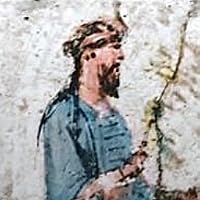
I read this book because I saw pictures of Siberian shamans from the 50's and I wanted to understand how people like this understand themselves. This book is great because it doesn't try to contextualize primitive shamanism through the lens of any particular religion or philosophy. Instead, it takes interviews and traditions of tribal shamans at face value and lets the reader decide what it all means.
I was surprised at the extent to which shamanic beliefs should be familiar to any contemporary religious person. It's as if the basic axioms of religion occur to all people in all places. It also seems to me that all people have a basic capacity for hallucination, some with more of a talent for it than others. It can be cultivated through harsh treatment of the body or drugs or mind control, but it's necessary for transcendent/phophetic/visionary elements of religion to germinate and prosper.
My favorite aspect of the book was the descriptions of how primitive shamanic societies handle mental illness. What we would call depressed/bipoloar/schizophrenic youth are identified and immediately placed in the care of an older shaman who himself/herself suffered the same symptoms as a young person. The young shaman-in-training isn't cured. Instead, he/she is taught a theory of mental illness. They learn the architecture of their internal pathology, and become masters of it. They are never well, but they become sick with purpose. For the rest of their lives, they tend to the mental/spiritual health of the tribe because they "know the way".
Eliade discusses shamanic practices and beliefs from around the world, including how shamans are selected, their powers, their initiations, their seances, and their social functions as retrievers of lost souls and as psychopomps. A well-researched (and fully footnoted) sociological/ anthropological study of tribal healers and spiritual leaders and a classic work on the subject.
"The shaman's essential role in the defense of the psychic integrity of the community depends above all else on this: men are sure that one of them is able to help them in the critical circumstances produced by the inhabitants of the invisible world. It is consoling and comforting to know that a member of the community is able to see what is hidden and invisible to the rest and to bring back direct and reliable information from the supernatural worlds" (500, emphasis Eliade's).
Acquired Jul 30, 1991 Coles Books, Fredericton, New Brunswick
This is as good a survey of the socio-spiritual phenomenon of shamanism as is ever likely to be written. It is focused primarily around the shamanic practices of Siberia and Central Asia—the region where shamanism was first observed and labeled as such—but Eliade links the practices of this region with similar shamanic practices in other parts of the world. This study is both broad and elaborately detailed.
The subtitle—Archaic Techniques of Ecstasy—belies Eliade’s general approach. Shaman spirituality is both archaic and ecstatic: archaic in that it invokes the oldest spiritual impulses of humanity stretching back into its prehistory, and ecstatic because it is centered around the flight of spiritual ecstasy experienced by the shaman upon contact with the divine.
This was a somewhat interesting book...required reading for a class on John Milton. Isn't that odd? We were to make connections between Milton's authorship of Paradise Lost and the Shaman's ecstatic experience. A heavy book, written by a scholar, not a new age Llewellyn author.
There are a bunch of books about shamanism, yet most of them consist of the Neoshamanism template. Usually western people romanticize Shamanism nowadays (e.g. turning our faces to our inner selves and combining our beings with nature by going vegan, meditating and burning some herbs/incense etc. ) when in fact Shamanism is cruel in its own way, considering how people believed that they can make it rain by offering Gods their poor animal victims, even sometimes little children.
Are you fucking kidding me?
If you really want to know about Shamanism, this is a very widely approached book from different angles. It is not easy to read, especially for those who are not into Shamanism, but I don’t think the book was addressed to those people. This is an academic book with worlds of information and references that I would almost call it an encyclopedia. Since it’s so full of notions, the language gets boring and repetitive from time to time and reading the footnotes might cause temporary disconnections with the text. Comparing Shamanism with other belief systems and questioning how it was influenced by others might feel like off topic or let’s say losing the track, but I found them very useful and I was surprised by how little I knew about this subject. Although in sake of not extending it any further, these information are kept short, which gives the feeling of “okay, book is about to end but let me still add this one too please”.
In my opinion, one negative issue about the book is lack of visual elements. Not a single picture or schema are included. Especially the definitions of Shaman clothes and ornaments need pictures. Another deficiency is the categorization of the shamanic people. I had to google so many times to see where that certain tribes were living, for e.g. Dayaks or Karen people etc. A map or schema could’ve been really helpful. But as I’ve mentioned above, this book is an academic one and it doesn’t tend to teach you these. It’s up to you how much you can take from the book.
This book is rather old (1951) and I don’t actually know how accurate it is compared to today’s knowledge on shamanism, still I can say that the author puts different thoughts together well enough to be objective and reflects his own point of view at the same time. It might be easily the most informative book I’ve read about Shamanism so far. I won’t be remembering most of the book but I learned the basic ideas and important concepts about Shamanism. Therefore, despite all its deficiencies, I don’t hesitate to give it full stars.
Where did yoga come from? What about poetry and drama? Costume and dance? There's much evidence to show that most of what we do in our daily lives that matters most to us, revolves around passions and not rational thought, and those passions are often convoluted and vague. Following the trail of where our passions come from will often end in the naming of an ineffable force, only after finding we often partake in a "westernized" tradition of something that was once more raw and archaic. Metaphysics will always be the alpha and omega of philosophy, and Eliade exposes a rich web of metaphysical theory, medicinal practice, and plenty of dream analysis material in this book, as well as making the argument that the word Shaman itself can be problematic being that it's a bit of a nomadic phenomena. For instance, the reader is first introduced to an illness that certain Eskimos might get in arctic from a lack of light, warmth, food, etc. and that this might have turned some into epileptics, making them candidates for shamanism. Epilepsy and shamanic ecstasy are looked at side by side but ultimately dismissed as the author sees true shamanism as a controlled state of abandon rather than a disease that can come on without warning. However it does seem that there is a possibility that certain lineages were derived from those prone to seizures and that they were often thought as divine possession episodes. Eliade sees the most basic pattern of all religion to be that of a return to the union of what once was not separated, and this is stressed in the last third of the book by way of his axis mundi/world umbilical cord/world tree theme he often explores. A great portion of this book goes into the death that the initiate goes through, and it is hard to tell what is in concreto and what is in illo tempore, which I think is Eliade's gift. He turns chronicles upon chronicles of anthropological study into something sublime and poetic on a grand scale.
This was interesting (non word! Interesting! She got bored at the half-way mark!) and well-researched for its time, but also I know that scholarship has moved on, and if I want a complete overview on shamanism I’ll have to read like four more books. And I’m tired. I don’t care about shamanism so much.
I had a vague idea that it could be helpful in the ritual of tattooing, but after a chapter of this I realised that is cultural appropriation and I should keep my grubby lil cultural hands to my own heritage.
dated, but useful. my biggest issue is he takes the particular and tries to make it apply universally within a culture. also, let's take a moment to interrogate his use of the word 'primitive'. Still a necessary read so long as one knows the convo has moved on considerably.
I read and re-read this book frequently- it's dense- clear and incredibly illuminating on the topic of all things shamanic. Masterful covering of the topic.
Difficult to comment as I didn't finish it. Was a little, in fact 'a lot', more academic in tone and style than I had anticipated.
The parts I read didn't include any real analysis or criticism, just a very dry summary of what happens. Why this or that practice is followed isn't mentioned which, although of course subjective, gives the more casual reader something.
It appears fairly comprehensive if it were to be required reading academically and that would probably be the only reason I would pick it up. Having said that, I did buy this for non-academic research into these practices and felt like I was getting nothing but a summary of observations.
I stand to be corrected if what I've mentioned is irrelevant to later parts of the text, and be aware of that if you are thinking of buying. However, not only people with an academic interest or need may be here and I guess that that is where my review is mainly directed.
"En general, podemos decir que el chamán defiende la vida, la salud, la fecundidad y el mundo de la "Luz", contra la muerte, las enfermedades, la esterilidad, la desgracia y el mundo de las "tinieblas"."
"Pero se sabe que el chamán puede atraer la lluvia, detener las nubes, fundir el hielo de los ríos, y todo ello simplemente cantando o agitando una pluma."
"El chamán es el gran especialista del alma humana: solo el la "ve", porque conoce su "forma" y su "destino."
Şamanizm hakkında bilgi edinmek için okuduğum bu kitaptan istediğim her şeyi fazlasıyla aldım. Yazar bölgelere göre farklılıkları ortak yönleri okuyucuyu sıkmadan anlatmış. Şamanizm ritüellerini hayalimde canlandırmamda oldukça yardımcı oldu. Kitabın kalınlığından dolayı sıkıcı olacağını düşünüyordum fakat yazarın farklı kaynaklardan derlediği ve kendi araştırmalarından elde ettiği anlatacak o kadar çok çıkarımı var ki asla kendini tekrar etmiyor.
A huge tome devoted to the study of shamanism. Although a lot of the information is quite outdated the overall quality of the text is excellent. Tons of ethnographic examples from many cultures, culled by Eliade while he sat in his armchair.
Excellent, but dense and a little dry. The subject matter is fascinating, and the connections he makes with Shamanism from around the world, along with the parallels between Shamanistic thought and art and religion, were beyond fascinating. Recommended as a reference book.