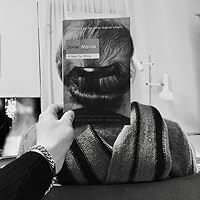
Unable to rid his mind of the brutal shooting deaths of a group of Englishmen by German soldiers shortly after World War II, German citizen Sydney van Damm abandons his homeland for Paris and becomes involved in an unscrupulous scam. Reprint.
Ward Just was a war correspondent, novelist, and short story author.
Ward Just graduated from Cranbrook School in 1953. He briefly attended Trinity College in Hartford, Connecticut. He started his career as a print journalist for the Waukegan (Illinois) News-Sun. He was also a correspondent for Newsweek and The Washington Post from 1959 to 1969, after which he left journalism to write fiction.
His influences include Henry James and Ernest Hemingway. His novel An Unfinished Season was a finalist for the Pulitzer Prize for Fiction in 2005. His novel Echo House was a finalist for the National Book Award in 1997. He has twice been a finalist for the O. Henry Award: in 1985 for his short story "About Boston," and again in 1986 for his short story "The Costa Brava, 1959." His fiction is often concerned with the influence of national politics on Americans' personal lives. Much of it is set in Washington, D.C., and foreign countries. Another common theme is the alienation felt by Midwesterners in the East.
from a blog entry... I’m reading an excellent book: The Translator by Ward Just. Two months ago I had never heard of Ward Just, but turns out he’s nearly as prolific as Iris Murdoch, and way worldlier.
I have about 40 pages to go and I can feel the doom clotting up, getting ready to burst, and I am committed to watching it. The protagonist, Sydney, is a German who translates novels into English. He lives in Paris with his American wife, and their retarded son lives in a home. The wife longs to leave the city and find a place in the country where the son, she believes, will be happier, so Sydney gets involved in a shady deal to earn a one-off lump of money. I don’t know the particular flavor of tragedy that’s due, but I know it’s coming.
Just is good at evoking atmosphere, and he sets a scene so well. The book takes its time but does not feel slow. The story takes place in Paris but is very German, heavy, fraught and dark. The main character may enjoy oysters and Sancerre, but there’s nothing carefree going on. And Just is spot-on in describing the conflicts of ex-patriates, I feel directly spoken to over and over – being torn from “home,” being separate from “home,” watching “home” disintegrate, rationalizing, romanticizing. I haven’t been this engrossed since White Noise, but for all of that book’s dazzle and smack, maybe this is better.
Part of the fascination lies in how the book and mood are couched in recent history, around 1990, the fall of the wall, Glasnost, German “reunification.” Here’s a scene where the main character and his wife are watching Romania’s Ceausescu (“Eyebrows”) seal his doom on tv:
"Ceausescu was shaking his head. Not a denial of the charges but a refusal to dignify them with an answer. His wife sat beside him and looked at her hands. She had a peasant’s shrewd face and large hands. Suddenly she looked at her husband, and Sydney said aloud, she knows. He doesn’t know but she does and she’s trying to tell him but he won’t listen to her, because he still thinks he’s a dictator and she knows he isn’t."
Why hadn’t I heard of Ward Just before? maybe I don't get to the states enough.
This entire review has been hidden because of spoilers.
I have not read a single work by Just that I didn't consider time well spent. He has nuance; political savvy; wordcraft; storytelling skills par excellence. I do not really understand why he is not more widely followed, but I continue to read every book of his. May he live long and keep writing.
Ward Just, a novelist of manners in the Henry James fashion, died in 2019. Here he tries his hand at a caper novel. Just's narratives are filtered through interior monologues, though. So the action is revealed slowly, very slowly and deliciously. No surprise, there's not much of a caper here, just a lot of history repeating. The end is preordained, with the real mystery coming from the expatriate characters' self-deception. It seems the message always changes with the interpretation. I read this alongside a recent story of a fictional translator, Olga Tokarczuk's Drive Your Plow Over the Bones of the Dead.
It's not perfect and has some pacing issues in its first half, but this is really an under-discovered/under-appreciated one for me. Some mild echoes between this one and Forgetfulness, the other Just that I've read so far and really liked (I stay away from the overtly DC ones, as that's not my jam from any author) but this one's got a generous amount of really interesting ideas all on its own. The idea of a the text as a living thing, set against the idea of other people, even the ones we're closest too, as texts that are always up for our imperfect translation, was incredibly compelling to me. Not to mention, the end is kind of thrilling. Really rich and quite, quite good.
Ward Just is one of my favorite writers. His prose is always beautifully measured, solidly graceful, an almost visceral feeling of sculpted. He writes about personal relationships in a socio-political context that brings us into the world picture while remaining within the small picture. Both the personal and political gain depth and power from this relationship.
The Translator is a beautiful example of Just's work. Sydney Van Damm is a German (a small child during the World War II, whose father worked for-and was also killed by-the Nazis), living in Paris, married to Angela, an American who hates America, whose brother died in Vietnam, and whose father is a member of the privileged who has wasted his fortune and is going through Angela's. As if all this isn't loaded enough with symbolism. Angela and Sydney have a son who is brain-damaged in some unspecified way who is sweet with episodes of uncontrollable rage.
Sydney is content with his work as a translator (currently working on a literary novel called "The Catastrophe"), his loved wife, and his life. Angela wants more-a farm where they can live with their son who is currently in a hospital. Sydney wants to make her happy so he agrees to do some work for "Junko" Poole-the American expatriate who introduced Sydney and Angela, a somewhat shady very lucky businessman who is rumored to work (or have worked) for the CIA. This decision brings Sydney into danger.
More than that I cannot say without spoiling this wonderful novel. The story is personal and strong and not diminished but enhanced by its political relationship. It is the story of a country-actually, three countries and a balance of world power-the relationship of power and love as well as the story of two people trying to create a satisfying life together, a life in which love is almost-but not quite-enough.
I found Sydney to be an especially likable and interesting character. He is the core of the story. I found him appealing and interesting and liked spending time with him. He is smart but somewhat naive, more at home with his translation than his real-life interactions but happy in his love and his home.
I hope many people read this book, and the rest of Just's work. He is a fine and interesting writer.
At first it looked like a different topic than what Ward Just normally covers so well, political old-timers fading from relevance. And then it turns out, it’s about two or so political refugees, a man who grew up under Nazi Germany, who has left Germany for France, and his wife, who left the United States in the sixties—unlike so many who claimed they would and didn’t.
Everything is written from the perspective of expatriates in Europe, cut off from their homelands and lost, in this pre-Internet era—the main portion of the book takes place in the early seventies up to the early nineties)—due to having to learn about their country only through television news or local newspapers.
Just as extraordinarily well-written as anything I’ve read of his; in fact, if you’re looking for a first Ward Just book to read, this would be a good choice.
I have read a lot of Ward Just and generally like him. I had missed this book. It was not very good. The characters are two dimensional and all speak with the same voice, so the book comes across as a soliloquy by a pretty boring guy who gets involved in something beyond his skill level. You know what's going to happen way before it does. There are so many good Just books, so it's OK to skip this one.
I started 2005 with a Ward Just novel and I think I'm going to spend the year reading his "back catalog." A German living in Paris, with his American wife, eking out a living as a translator, is pulled back into the intelligence world as the cold war comes to an end. Just really has an artist's eye, Paris comes alive in the book, as does the German countryside.
This got three stars because I enjoyed Just's writing. Unfortunately, I thought this was going to be a spy story based on the description on the flap. It actually was a character study, beautifully written, but not what I expected or wanted to read.