“We don’t say much more for the next mile and walk in silence. But this isn’t the silence that comes from comfort; no, it’s that strained silence, where you can feel the throb of the other’s thoughts and stillborn sentences that die in the lips before they’re spoken.”
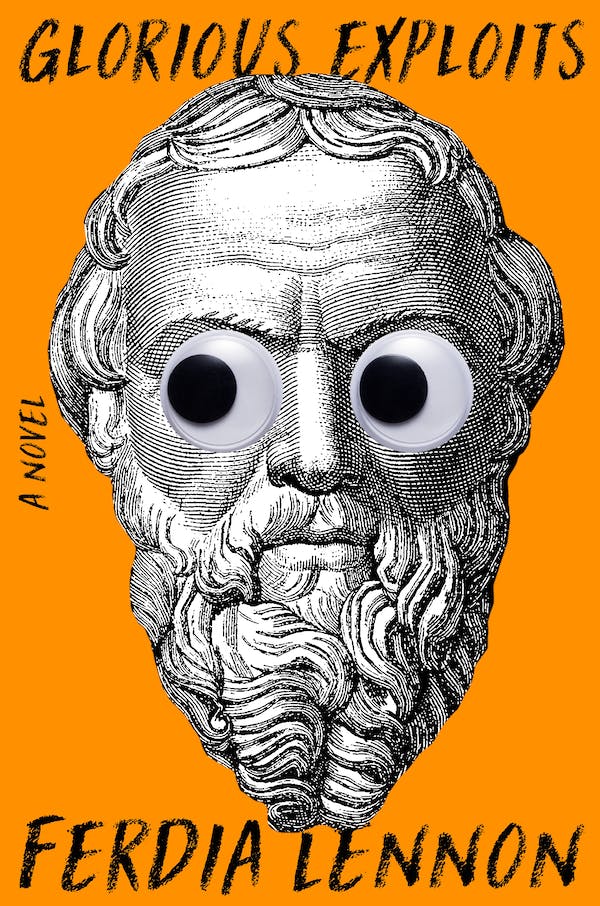
“Glorious Exploits” by Ferdia Lennon is a literary Trojan horse, sneaking into the realm of contemporary fiction with the guise of a historical romp, only to unleash a torrent of existential questions, biting satire, and raw humanity. Set against the backdrop of ancient Sicily, this audacious debut is a riotous blend of classical tragedy and modern wit, a tale that feels as timeless as Homer yet as fresh as a TikTok trend.
“Glorious Exploits” follows two Sicilian potters, Lampo and Gelon, who hatch a wild scheme to stage Euripides’ plays in the aftermath of the Athenian defeat in Syracuse. Their actors? Athenian prisoners of war. Their audience? A ragtag mix of Sicilian locals and war-weary soldiers. Their motivation? A mix of ambition, boredom, and a desperate yearning for meaning in a world gone mad. What unfolds is a chaotic, hilarious, and often heartbreaking exploration of art, identity, and the absurdity of human ambition. Lennon’s narrative is a wild ride, oscillating between slapstick comedy and profound meditation. One moment, you’re laughing at Lampo’s bumbling attempts to direct a group of reluctant Athenian prisoners; the next, you’re grappling with the weight of war, the fragility of life, and the power of storytelling. It’s as if Lennon took the DNA of “Waiting for Godot”, “The Iliad”, and “Monty Python”, spliced them together, and set the result loose in ancient Sicily.
The Characters: Flawed, Human, Unforgettable. Lampo and Gelon are the heart and soul of the novel, and their dynamic is nothing short of electric. Lampo, the dreamer with a penchant for grandiosity, is the perfect foil to Gelon, the pragmatic cynic with a hidden well of compassion. Their banter crackles with wit and authenticity, and their friendship feels as real as any in contemporary literature. The Athenian prisoners, too, are vividly drawn, each grappling with their own trauma and disillusionment.
The Themes: Art, War, and the Human Condition. Lennon uses the staging of Euripides’ plays as a lens to examine the power of art to heal, to provoke, and to unite. Can beauty exist in the midst of suffering? Can storytelling transcend the boundaries of culture and conflict? The answer, it seems, is a resounding yes—but not without cost. The novel also probes into the futility of war and the absurdity of human ambition. The Sicilians and Athenians, despite their enmity, are bound together by their shared humanity, their shared flaws, and their shared need for meaning. Lennon’s portrayal of war is unflinching, highlighting its senselessness without descending into nihilism. Instead, he offers a glimmer of hope—a belief in the redemptive power of art and connection.
The Style: A Feast for the Senses Lennon’s prose is a delight, rich with vivid imagery and laced with humor. His descriptions of ancient Sicily are immersive, transporting us to a world of sun-baked streets, olive groves, and crumbling amphitheaters. His dialogue crackles with energy, blending ancient and modern vernacular in a way that feels both playful and profound. That said, Lennon’s stylistic choices may not be for everyone. The blending of ancient and modern language, while clever, can be jarring, and the novel’s tonal shifts—from comedy to tragedy, from satire to sincerity—can feel disjointed.
“Glorious Exploits” is a novel that defies easy categorization. It’s a historical novel that feels utterly contemporary, a comedy that packs an emotional punch, a satire that brims with sincerity. It’s messy, ambitious, and occasionally uneven—but isn’t that the point? Lennon has crafted a work that reflects the chaos and complexity of the human experience, a novel that challenges, provokes, and ultimately inspires. It is a Glorious Experiment, a bold and brilliant debut that marks Ferdia Lennon as a writer to watch. So yes take a chance on “Glorious Exploits” , let it sweep you up in its madcap odyssey, its kaleidoscope of myth and modernity. And ask yourself: What does it mean to create, to connect, to be human? The answers may surprise you.
“It’s despair and meaning that are being pitted against one another, and its asking, if meaning departs from reason, might there not be wisdom in a faith-filled lunacy?”
4.5/5 amphorae of Sicilian wine. Cheers!