

What do you think?
Vurt
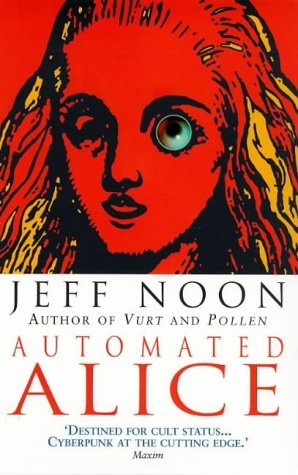
Automated Alice
In the last years of his life, the fantasist, Lewis Carroll, wrote a third Alice book. This mysterious work was never published or even shown to anybody. It has only recently been discovered. Now, at last, the world can read of Automated Alice and her fabulous adventures in the future. That's not quite true. Automated Alice was in reality written by Zenith O'Clock, the writer of wrongs. In the book he sends Alice through time, tumbling from the Victorian age to land in 1998, in Manchester, a small town in the North of England. Oh dear, that's not at all right. This trequel to Alice in Wonderland and Through the Looking Glass was actually written by Jeff Noon. Zenith O'Clock is only a character invented by Jeff Noon and any resemblance to persons living or dead is purely accidental. What Alice encounters in the automated future is mostly accidental too ... a series of misadventures, even weirder than your dreams.
256 pages, Paperback
First published January 1, 1996
About the author
Jeff Noon
53 books895 followersJeff Noon is a novelist, short story writer and playwright whose works make extensive use of wordplay and fantasy.
He studied fine art and drama at Manchester University and was subsequently appointed writer in residence at the city's Royal Exchange theatre. But Noon did not stay too long in the theatrical world, possibly because the realism associated with the theatre was not conducive to the fantastical worlds he was itching to invent. While working behind the counter at the local Waterstone's bookshop, a colleague suggested he write a novel. The result of that suggestion,
Vurt, was the hippest sci-fi novel to be published in Britain since the days of Michael Moorcock in the late sixties.
Like Moorcock, Noon is not preoccupied with technology per se, but incorporates technological developments into a world of magic and fantasy.
As a teenager, Noon was addicted to American comic heroes, and still turns to them for inspiration. He has said that music is more of an influence on his writing than novelists: he 'usually writes to music', and his record collection ranges from classical to drum'n'bass.
Ratings & Reviews
Friends & Following
Create a free account to discover what your friends think of this book!
Community Reviews
Displaying 1 - 30 of 150 reviews
October 8, 2010
Make no mistake people either love or hate this book. Before picking this up, I would highly suggest reading some of Noon's other work ('Vurt' if nothing else) to get an idea of what type of writer Noon is. [return][return]I acknowledge that this is probably not Noon's strongest work; but then again, one of the really interesting things about Noon that each one of his novels is really unique in it's structure and execution. Even though many of Noon's works take place in his Vurt/Manchester universe, each book is distintinctly different. Here is the quick and dirty of some of his works: 'Vurt' is written in the cyberpunk genre; 'Pollen' the biopunk police thriller; 'Nymphomation' is frenetic story of students vs. coroporation and moves into abstraction/surrealism ala Borges; 'Pixel Juice' is a collection of short stories with entries touching all of Noon's earlier works, 'Automated Alice' is emulation of Lewis Carrol work's and is written in a steampunk genre. The idea is that each book in the Vurt/Manchester universe is written distinctly style and genre from one another. Noon will never is not a serial novelist; indeed, every time he writes, he challenges himself in either the genre he chooses, his writing style, type layout, plot, characters, etc. [return][return]People who read 'Automated Alice' are quick to criticism the characters and plot for being overly simplistic. Noon said he wished to write a 'Trequel' to Lewis Carrol's works of 'Alice in Wonderland' and 'Through the Looking Glass'. This doesn't mean that Noon just uses Lewis Carrol's characters and slaps them into his own stories. It's a genuine attempt at a Trequel: it is written in the style of Carrol and it's written like a children's story. Yes, there were deeper ideas in 'Alice in Wonderland' but that story was delivered as a children's tale. So criticizing Noon for writing 'Automated Alice' for having simple characters or plot doesn't make sense to me. Like Carrol, he wrote this as a children's story; and having a complex plot/characters was never the point of such a writing. [return][return]In the spirit of Lewis Carrol, Noon writes in plenty or word play and surreal absurdities into his little story. Yes, some of the little word plays are really explicit; but again, I advise looking at this in the context of a children's tale. It was written that way intentionally. Noon chooses a neo-victorian setting for most of this book that also holds truer to the original styles of Lewis Carrol. What is really impressive is that Noon even illustrates 'Automated Alice' in the same style that Carrol illustrated 'Alice in Wonderland'. [return][return]I thought this book was actually a brilliant execution as a genuine trequel to the works of Lewis Carol. Noon does an excellent job of writing this as a genuine children's adventure while still tying into his own Vurt/Manchester universe. Indeed, most of this story takes place in the Vurt and the events in this story tie back into the background history of 'Vurt', 'Pollen', 'Nymphomation', etc. Again, don't read this expecting to read another novel; it is intentionally written as a children's story. Lastly, I would read a few other books in the 'Vurt' universe before reading this one, just so that the relevance of certain events is clear in the overall history of the 'Vurt'.
May 14, 2023
For the adult Lemony Snicket fan, the slightly-smug Language Person, and/or the ardent intertext-hunter. I guess I'm all of those things, which is how I knew from the opening pages of Automated Alice that 1) it was going to be a Lot and 2) I was going to love it for its every excess and slant-telling pun.
I hadn't read any of Jeff Noon's work, including the previous two Vurt books, before this, so I'm definitely planning on taking a look in the near future.
I hadn't read any of Jeff Noon's work, including the previous two Vurt books, before this, so I'm definitely planning on taking a look in the near future.

March 17, 2015
"And what is so very wrong with going crazy?"
I reread Automated Alice it in honor of my daughter Alice bring born. I originally read it almost 15 years ago when I was still in college and just discovered Jeff Noon. Sadly Noon's books are somewhat difficult to come by nowadays in the United States. Fortunately my local used book store just happened to have a copy in stock on the day I visited. Truly that is kismet.
The book is still as good as I remember it. It really captures the spirit and essence of the original Lewis Caroll Alice books. The logic, illogic, and nonsense are pitch perfect. Alice's voice is spot on. The wordplay is splendid and I'm sure I missed some of it. There really needs to be an annotated version; maybe an updated The Annotated Alice: The Definitive Edition that includes this book! Even the names of those two books are eerily similar, but I have no idea if Noon based his title on the other book.
Noon's books are always mind bending, like all good cyberpunk is (see William Gibson). All the misunderstandings over homophones and homographs pay tribute to the original Alice while creating all sorts of new zany scenarios and characters. A pseudoscientific explanation for the Chesire Cat was a great example of the twisted logic employed by the characters. An inspired meeting with Zenith O'Clock at noon is a wonderful bending of the fourth wall. Several asides by the author inject him directly into the story. These range from offering commentary on the events to reasons for certain things being written. They really add to the feel that the story is being made up along the way similar to how the original Alice story was created in an afternoon.
(I do believe that I will take to my bed now. Zzzzzz)
Unfortunately chapter 11, the penultimate chapter and last one of any substance, really lost most of the inspired magic amidst all the rushing through the plot to get to the ending. The book would have risked running long if it didn't end at this point, though. It's still a shame the ending doesn't match the fantastical rest of the book.
A wonderful read for any fan of Alice or weird cyberpunk.
I reread Automated Alice it in honor of my daughter Alice bring born. I originally read it almost 15 years ago when I was still in college and just discovered Jeff Noon. Sadly Noon's books are somewhat difficult to come by nowadays in the United States. Fortunately my local used book store just happened to have a copy in stock on the day I visited. Truly that is kismet.
The book is still as good as I remember it. It really captures the spirit and essence of the original Lewis Caroll Alice books. The logic, illogic, and nonsense are pitch perfect. Alice's voice is spot on. The wordplay is splendid and I'm sure I missed some of it. There really needs to be an annotated version; maybe an updated The Annotated Alice: The Definitive Edition that includes this book! Even the names of those two books are eerily similar, but I have no idea if Noon based his title on the other book.
Noon's books are always mind bending, like all good cyberpunk is (see William Gibson). All the misunderstandings over homophones and homographs pay tribute to the original Alice while creating all sorts of new zany scenarios and characters. A pseudoscientific explanation for the Chesire Cat was a great example of the twisted logic employed by the characters. An inspired meeting with Zenith O'Clock at noon is a wonderful bending of the fourth wall. Several asides by the author inject him directly into the story. These range from offering commentary on the events to reasons for certain things being written. They really add to the feel that the story is being made up along the way similar to how the original Alice story was created in an afternoon.
(I do believe that I will take to my bed now. Zzzzzz)
Unfortunately chapter 11, the penultimate chapter and last one of any substance, really lost most of the inspired magic amidst all the rushing through the plot to get to the ending. The book would have risked running long if it didn't end at this point, though. It's still a shame the ending doesn't match the fantastical rest of the book.
A wonderful read for any fan of Alice or weird cyberpunk.

November 13, 2011
I was really excited about this book, because I have always been a fan of the Alice books, and the first couple of pages were very promising, as was the poem at the beginning.
But it reads a little too much like a YA book (where the actual Alice books don't, of course, because there was no such thing when Carroll wrote them), and behaves a little too much like 'nudge-nudge wink-wink aren't we all so clever for understanding the pop-culture references' between author and reader. The cutesy characters of Jimi Hentrails and Quentin Tarantula both stick in the craw as odd, out-of-place in-jokes amongst other more subtle futuristic Alice jokes, and like all cultural references they will only get more dated from here, 15 years after they were written.
I'm never a fan of authors who write themselves into their books (except for Lemony Snicket, which isn't really the same thing) and Zenith O'Clock was a particularly odious example of this. At the point where he introduces himself to Alice, he really starts going overboard with the 'words confused with other words' gimmick, where he's 'infested with Crickets... that ravenous crowd of reviewing insects' because they didn't like his first two books Shurt and Solumn (get it? Vurt and Pollen? Yeah.) I got real tired real quick of that bit of authorial wanking.
Less cyberpunk - as a lot of the reviews seem to say - and more steampunk, if anything, this book is just a mildly clever trequel with very few original ideas, that will soon be forgotten by me and probably most of its other readers.
But it reads a little too much like a YA book (where the actual Alice books don't, of course, because there was no such thing when Carroll wrote them), and behaves a little too much like 'nudge-nudge wink-wink aren't we all so clever for understanding the pop-culture references' between author and reader. The cutesy characters of Jimi Hentrails and Quentin Tarantula both stick in the craw as odd, out-of-place in-jokes amongst other more subtle futuristic Alice jokes, and like all cultural references they will only get more dated from here, 15 years after they were written.
I'm never a fan of authors who write themselves into their books (except for Lemony Snicket, which isn't really the same thing) and Zenith O'Clock was a particularly odious example of this. At the point where he introduces himself to Alice, he really starts going overboard with the 'words confused with other words' gimmick, where he's 'infested with Crickets... that ravenous crowd of reviewing insects' because they didn't like his first two books Shurt and Solumn (get it? Vurt and Pollen? Yeah.) I got real tired real quick of that bit of authorial wanking.
Less cyberpunk - as a lot of the reviews seem to say - and more steampunk, if anything, this book is just a mildly clever trequel with very few original ideas, that will soon be forgotten by me and probably most of its other readers.

March 25, 2008
As a fan of Alice in Wonderland and Through the Looking-Glass and What Alice Found There, I enjoyed this novel a lot. Noon’s work achieves a fair pastiche of Lewis Carroll’s style.
Acquired Sept 7, 2007
Powell's City of Books, Portland, OR
Acquired Sept 7, 2007
Powell's City of Books, Portland, OR
May 18, 2024
Une Alice revisitée mais une Alice comme dans Lewis Carroll, à chercher un sens à la vie.
Un hommage à Lewis Carroll, à l'imaginaire, au brin de folie qui nous habite. C'est un livre farfelu, joyeux, un conte déjanté. On ne comprend pas tout, mais est-ce important ? On suit Alice avec beaucoup de plaisir !
Ce n'est pas du tout le genre de livre que je lis, merci à mon mari de me l'avoir conseillé, et je suis contente de l'avoir tant aimé !
(Shiny Spring challenge 2024, rubrique Printemps verdoyant, Allergie au pollen : sortir de sa zone de confort)
Un hommage à Lewis Carroll, à l'imaginaire, au brin de folie qui nous habite. C'est un livre farfelu, joyeux, un conte déjanté. On ne comprend pas tout, mais est-ce important ? On suit Alice avec beaucoup de plaisir !
Ce n'est pas du tout le genre de livre que je lis, merci à mon mari de me l'avoir conseillé, et je suis contente de l'avoir tant aimé !
(Shiny Spring challenge 2024, rubrique Printemps verdoyant, Allergie au pollen : sortir de sa zone de confort)

March 2, 2024
That was quite something, actually! It was one of the best tributes to Alice in Wonderland I've read so far.
Automated Alice is at times dense, clever, funny and downright stupid 🤭
I've laughed out loud a lot, at any rate, and smiled the whole time. The final rendering of all this is outstanding!
I'm not sure if I really liked the story... But I loved the literary work, neatly honed to a perfect amount of silliness mixed with cleverness.
"Knowledge through nonsense. That's my motto."
Sums it all up...
(I could not possibly leave this review without a final ellipsis...)
Automated Alice is at times dense, clever, funny and downright stupid 🤭
I've laughed out loud a lot, at any rate, and smiled the whole time. The final rendering of all this is outstanding!
I'm not sure if I really liked the story... But I loved the literary work, neatly honed to a perfect amount of silliness mixed with cleverness.
"Knowledge through nonsense. That's my motto."
Sums it all up...
(I could not possibly leave this review without a final ellipsis...)

February 19, 2012
As someone who has loved Lewis Carroll's Alice stories since he was a very young boy I must say that I found Jeff Noon's amusing novel, Automated Alice both clever and funny, very funny. The whimsy begins with computermites and seems to be infinite before the book is over.
Poor Alice is alone, bored, and sleepy in her Great Aunt Ermintrude's house in rainy Manchester, but she is quickly swept away into another world as she follows Whippoorwill, "a green-and-yellow-plumed parrot with a bright orange beak", up and away into the mechanism of an old grandfather clock. The reader, along with Alice, never has a chance to look back.
If I have any complaint with the novel, it is that like a Viennese chocolate torte it was too sweet and before the end of the book my head began to feel like it does when I have overdosed on sugar. Curiously the capriciousness speeds along at a pace which is fast and faster, to the point where I began to feel my mind spinning. It reminded me of the Red Queen's admonition to Alice : “Now, here, you see, it takes all the running you can do, to keep in the same place. If you want to get somewhere else, you must run at least twice as fast as that!” (Through the Looking Glass).
It is all tremendously amusing when you find yourself laughing out loud on almost every page and you are mystified by the circumlocutions and wordplay that is positively preternatural. This is a book for all who love puns, riddles, titillating moments filled with uncommon literary references that lend the text a postmodern sheen. Some call this novel an instance of cyberpunk fiction, but I merely suggest that all who dare explore the world of speculative fiction will find this a delightful novel.
Poor Alice is alone, bored, and sleepy in her Great Aunt Ermintrude's house in rainy Manchester, but she is quickly swept away into another world as she follows Whippoorwill, "a green-and-yellow-plumed parrot with a bright orange beak", up and away into the mechanism of an old grandfather clock. The reader, along with Alice, never has a chance to look back.
If I have any complaint with the novel, it is that like a Viennese chocolate torte it was too sweet and before the end of the book my head began to feel like it does when I have overdosed on sugar. Curiously the capriciousness speeds along at a pace which is fast and faster, to the point where I began to feel my mind spinning. It reminded me of the Red Queen's admonition to Alice : “Now, here, you see, it takes all the running you can do, to keep in the same place. If you want to get somewhere else, you must run at least twice as fast as that!” (Through the Looking Glass).
It is all tremendously amusing when you find yourself laughing out loud on almost every page and you are mystified by the circumlocutions and wordplay that is positively preternatural. This is a book for all who love puns, riddles, titillating moments filled with uncommon literary references that lend the text a postmodern sheen. Some call this novel an instance of cyberpunk fiction, but I merely suggest that all who dare explore the world of speculative fiction will find this a delightful novel.

April 11, 2013
An allegorical tale about the power of imagination... with ellipses.
Life and daydreams merge; the far past meets one of the futures, and beautiful things ensue.
Alice is one of two and part of a cast of dozens, and the words twist and turn like spaghetti, which creates the disconcerting feeling of living inside someones stream of consciousness, yet such is the author's skill that the meaning is never lost and the flow is always smooth, and we arrive at our destination, which is pretty much exactly where we started, quickly, efficiently and none the worse for wear.
Put another way, Alice is not Alice, yet she is, and she goes to the future, yet she doesn't. Sounds confusing, yet it isn't. I kinda liked it, and I kinda didn't, but I got through it mainly because it was finitely chaptered and smoothly written and it flowed faster than... a really fast thing.
That's enough - you can stop reading now.
Honest - there's nothing more below this.
No, really; the review has stopped. Desist.
What? You're still here? Sticky little thing ain't you.
Look, this is getting ridiculous - go away already!
Here's a poem I composed in a shop yesterday:
Nowt today,
Alas, alack,
but rest assured,
I will come back.
Life and daydreams merge; the far past meets one of the futures, and beautiful things ensue.
Alice is one of two and part of a cast of dozens, and the words twist and turn like spaghetti, which creates the disconcerting feeling of living inside someones stream of consciousness, yet such is the author's skill that the meaning is never lost and the flow is always smooth, and we arrive at our destination, which is pretty much exactly where we started, quickly, efficiently and none the worse for wear.
Put another way, Alice is not Alice, yet she is, and she goes to the future, yet she doesn't. Sounds confusing, yet it isn't. I kinda liked it, and I kinda didn't, but I got through it mainly because it was finitely chaptered and smoothly written and it flowed faster than... a really fast thing.
That's enough - you can stop reading now.
Honest - there's nothing more below this.
No, really; the review has stopped. Desist.
What? You're still here? Sticky little thing ain't you.
Look, this is getting ridiculous - go away already!
Here's a poem I composed in a shop yesterday:
Nowt today,
Alas, alack,
but rest assured,
I will come back.

January 17, 2023
Jeff Noon is not too big a fan of snakes - they are evil, and they can subtract! Such wicked creatures. On the other hand, he really likes flesh golems and snail junkies.
I'm going through the whole series Vurt, and Automated Alice doesn't fit. There are no dream feathers, killer pollen or Fecundity 10 virus, which allow you to fuck everything. It is very different from those two previous books and is more like a variation of Lewis Carol's Alice. I'm not completely convinced it is for kids, but I still enjoyed it! Quite a lot, actually. Jeff Noon's writing style can be very obscure and poetic, but in Automated Alice, it is crystal clear (more or less) what is actually going on. Of course, we have some dream sequence or two, like drowning in a pool of wurms, but it is possible to read it without any previous knowledge of Vurt. In fact, there is little connection to the Vurt world. Except,... Alice's last name is Hobart - does it ring some bells? (Was this good use of ellipsis?)
I really love Jeff Noon, and this is no exception. So, it is five stars and a recommendation from me.
I'm going through the whole series Vurt, and Automated Alice doesn't fit. There are no dream feathers, killer pollen or Fecundity 10 virus, which allow you to fuck everything. It is very different from those two previous books and is more like a variation of Lewis Carol's Alice. I'm not completely convinced it is for kids, but I still enjoyed it! Quite a lot, actually. Jeff Noon's writing style can be very obscure and poetic, but in Automated Alice, it is crystal clear (more or less) what is actually going on. Of course, we have some dream sequence or two, like drowning in a pool of wurms, but it is possible to read it without any previous knowledge of Vurt. In fact, there is little connection to the Vurt world. Except,... Alice's last name is Hobart - does it ring some bells? (Was this good use of ellipsis?)
I really love Jeff Noon, and this is no exception. So, it is five stars and a recommendation from me.

January 17, 2010
I tend to give 5 stars to books I just finished with a smile, then edit them once more with 4 to not seem overenthusiastic, which I may be at times. As I'm typing this, it's a 5.
I really, really enjoyed Automated Alice as a fun literary experiment (this is the first book I read by Jeff Noon).
Though some (actually, most) of the present-time references are extremely cheesy, I suspect Noon did this totally on purpose. It's not as much a sci-fi twist on an [im]possible treacle trequel of the Alice books as it is a technical take (from a literary perspective) to using a narrative within a narrative within historical reality in a fun, lighthearted way. I think Noon successfully imitates Lewis Carroll (Charles Dodgson) without trying to impersonate him. He applies new rules and theories of science as well as logical puzzles and linguistic "games" in the Carrollian spirit while all the while being self-referential within the VURTual reali[ce]y that is all his own.
I guess in order to really enjoy this book you have to already love Caroll's work, and not the Alice books alone. And perhaps, also be a bit of a lit theory geek so you may see what he did there instead of just reading the book for the adventure.
Not unlike Carroll, what is truly entertaining about this book is not so much the plot, but the author's devices. It's not just a light commentary on contemporary society, but a parody of post-modern literature.
Though we disagree on this one, a salute to Miss Haywire!
I really, really enjoyed Automated Alice as a fun literary experiment (this is the first book I read by Jeff Noon).
Though some (actually, most) of the present-time references are extremely cheesy, I suspect Noon did this totally on purpose. It's not as much a sci-fi twist on an [im]possible treacle trequel of the Alice books as it is a technical take (from a literary perspective) to using a narrative within a narrative within historical reality in a fun, lighthearted way. I think Noon successfully imitates Lewis Carroll (Charles Dodgson) without trying to impersonate him. He applies new rules and theories of science as well as logical puzzles and linguistic "games" in the Carrollian spirit while all the while being self-referential within the VURTual reali[ce]y that is all his own.
I guess in order to really enjoy this book you have to already love Caroll's work, and not the Alice books alone. And perhaps, also be a bit of a lit theory geek so you may see what he did there instead of just reading the book for the adventure.
Not unlike Carroll, what is truly entertaining about this book is not so much the plot, but the author's devices. It's not just a light commentary on contemporary society, but a parody of post-modern literature.
Though we disagree on this one, a salute to Miss Haywire!

July 15, 2022
I am a huge Noon fan and I'm going through all the books in the Vurt series.
I wasn't prepared for Automated Alice.
After reading Vurt (numerous times) and Pollen, I expected some change in style and tone, but not this much. Noon always surprises, and his style is hard to pin down, ever-changing. Automated Alice reads like a children's book, not surprising as a proclaimed trequel to Alice in Wonderland and Through the Looking Glass. But I was quickly entertained by the masterful wordplay and linguistic trickery. It felt like I was paying attention to the written word just to see how Noon could manipulate it. And it gives us hints about the Vurt universe, although not as much as I was hoping for. I hope to find more in Nymphomation.
The world of Manchester in 1998 is teeming with vivid, fantastical human/animal/machine hybrids that are definitely worthy of the psychedelic Lewis Caroll imaginings that inspired it. I find Noon's characters each have strong personalities that bounce off the page (unlike his previous works in which it was difficult to picture certain characters as they did not have very distinct speech patterns/behaviours).
The plot holds up very well until the end in which it ends rather abruptly, but we're ready for that as the entire book explains itself as whimsical fantasy and ready to unravel at any second. It is a fantastic read that entertains non-stop on so many levels.
I just wanted someone to suck a damn feather and go on a trip.
But thoroughly enjoyed it and looking for the next one.
I wasn't prepared for Automated Alice.
After reading Vurt (numerous times) and Pollen, I expected some change in style and tone, but not this much. Noon always surprises, and his style is hard to pin down, ever-changing. Automated Alice reads like a children's book, not surprising as a proclaimed trequel to Alice in Wonderland and Through the Looking Glass. But I was quickly entertained by the masterful wordplay and linguistic trickery. It felt like I was paying attention to the written word just to see how Noon could manipulate it. And it gives us hints about the Vurt universe, although not as much as I was hoping for. I hope to find more in Nymphomation.
The world of Manchester in 1998 is teeming with vivid, fantastical human/animal/machine hybrids that are definitely worthy of the psychedelic Lewis Caroll imaginings that inspired it. I find Noon's characters each have strong personalities that bounce off the page (unlike his previous works in which it was difficult to picture certain characters as they did not have very distinct speech patterns/behaviours).
The plot holds up very well until the end in which it ends rather abruptly, but we're ready for that as the entire book explains itself as whimsical fantasy and ready to unravel at any second. It is a fantastic read that entertains non-stop on so many levels.
I just wanted someone to suck a damn feather and go on a trip.
But thoroughly enjoyed it and looking for the next one.

August 26, 2008
Jeff Noon re-used Lewis Carroll's old teabags, and created a weakened, milder, less flavorful sequel to the Alice books. I saw a college theater production of "Alice in Wonderland" at the Fringe while reading this book, and (while that piece had troubles of its own) it drove home the contrast between the violent and disturbing nonsense of the original and the less interesting nonsense of the imitation.

October 12, 2013
Jeff Noon did a decent job in emulating the style of Lewis Carroll's style. The story was easy to read, and the puns and humour were very much welcome. I also loved Noon's more daring techniques, such as the point where , a technique I very much welcomed.
In short, I recommend this. The plot's decent, and if you don't mind the parodying than you'll be in for a ride just as strange as both Carroll's two books.
In short, I recommend this. The plot's decent, and if you don't mind the parodying than you'll be in for a ride just as strange as both Carroll's two books.

April 14, 2025
While Automated Alice is the third novel in the Vurt series, it occupies a strange space between prequel, sequel, and side-story. It doesn’t serve to set up Vurt in the traditional way; instead, it retrofits Alice into the mythology of the Vurt universe, almost like a myth or legend intruding into sci-fi. It stands apart in tone and style and acts as a surreal crossover between Victorian fantasy and a dystopian sci-fi future which Noon refers to as a “trequel,” combining Carroll’s whimsical storytelling with elements of cyberpunk, steampunk, and speculative fiction. It’s very unlike the first two novels, displaying Noon’s versatile technique in writing style.
This whimsical and surreal retelling (with illustrations included!) follows young Alice on a rainy afternoon in Manchester as she escapes a grammar lesson and tumbles into a fantastical version of 1998 through a grandfather clock. Pursuing her Great Aunt's runaway bird, Whippoorwill, she enters a world blending Victorian flair with futuristic absurdity—filled with mechanical oddities, strange riddles, and bizarre creatures. Wrongly accused of a series of “Jigsaw Murders,” Alice must navigate chaos theory, quantum puzzles, and talking cats to recover twelve missing jigsaw pieces. Only then can she partake of the “radishes of time” and return to the present.
Automated Alice is an nostalgic ride through a reimagined Wonderland, colliding Victorian innocence with cyberpunk chaos. It’s both a homage to Carroll and a sharp commentary on modernity. Part pastiche, part prophecy, it doesn’t just follow Alice through the looking glass, but into a mirror that reflects our own technological future.
The prose mimics Carroll’s whimsical and absurdist style, but injects it with a surreal, darker twist—with jocular references, such as Jimmy Hendrix as James Marshall Hentrails (as in the entrails of hens)—the book is filled with riddles, paradoxes, and recursive loops of logic. Noon’s use of language is dense with puns and invented words, requiring the suspension of conventional narrative expectations and to embrace the chaos. He coins neologisms, bends grammar, and blurs the boundaries between fantasy and science fiction. The result is a reading experience that feels like a dream wrapped in circuitry; equal parts nostalgia and future shock.
I wouldn’t consider myself a “Carroll fan” but I do like the nostalgic, fantastical Alice in Wonderland story and this retelling is a literary experiment that succeeds not just in concept but in execution—playful, profound, and utterly original. Jeff Noon doesn't just revisit Wonderland; he reinvents it for a new era. A definite favorite of the three I’ve read thus far.
This whimsical and surreal retelling (with illustrations included!) follows young Alice on a rainy afternoon in Manchester as she escapes a grammar lesson and tumbles into a fantastical version of 1998 through a grandfather clock. Pursuing her Great Aunt's runaway bird, Whippoorwill, she enters a world blending Victorian flair with futuristic absurdity—filled with mechanical oddities, strange riddles, and bizarre creatures. Wrongly accused of a series of “Jigsaw Murders,” Alice must navigate chaos theory, quantum puzzles, and talking cats to recover twelve missing jigsaw pieces. Only then can she partake of the “radishes of time” and return to the present.
Automated Alice is an nostalgic ride through a reimagined Wonderland, colliding Victorian innocence with cyberpunk chaos. It’s both a homage to Carroll and a sharp commentary on modernity. Part pastiche, part prophecy, it doesn’t just follow Alice through the looking glass, but into a mirror that reflects our own technological future.
The prose mimics Carroll’s whimsical and absurdist style, but injects it with a surreal, darker twist—with jocular references, such as Jimmy Hendrix as James Marshall Hentrails (as in the entrails of hens)—the book is filled with riddles, paradoxes, and recursive loops of logic. Noon’s use of language is dense with puns and invented words, requiring the suspension of conventional narrative expectations and to embrace the chaos. He coins neologisms, bends grammar, and blurs the boundaries between fantasy and science fiction. The result is a reading experience that feels like a dream wrapped in circuitry; equal parts nostalgia and future shock.
I wouldn’t consider myself a “Carroll fan” but I do like the nostalgic, fantastical Alice in Wonderland story and this retelling is a literary experiment that succeeds not just in concept but in execution—playful, profound, and utterly original. Jeff Noon doesn't just revisit Wonderland; he reinvents it for a new era. A definite favorite of the three I’ve read thus far.
December 12, 2025
questo libro merita una ristampa

August 1, 2017
I bought this book on a whim - it's not my usual genre of book being YA/Sci-fi, but I have to say I throughly enjoyed it. Alice in wonderland has always been one of my favourite books in like forever, so naturally, of course, I just have to read any retellings to do with Alice.
I loved the intrigue I felt when I wasn't reading it, what's going to happen next? How will Alice get home? Who will Alice meet next? Etc..
Alice has travelled ahead of time and is desperate to get back to the past. Alice's great aunt has a pet parrot named Whippoorwill who likes to speak in riddle. Alice at first doesn't seem to understand these riddles but then neither did I. But Alice must find the answers to the riddles to find her way home.
I found myself sometimes laughing at some of things that were happening in this book and at some of the characters 'weird' names.
As with retellings, they have pretty much the same story as the original but a different take on the characters journeys, so they are a must! They also give us (the readers) the chance to see some of our favourite characters in a different light.
This is a book I can really recommend to all fans of Alice and to those who love retellings or to anyone just needing a change of genre.
I loved the intrigue I felt when I wasn't reading it, what's going to happen next? How will Alice get home? Who will Alice meet next? Etc..
Alice has travelled ahead of time and is desperate to get back to the past. Alice's great aunt has a pet parrot named Whippoorwill who likes to speak in riddle. Alice at first doesn't seem to understand these riddles but then neither did I. But Alice must find the answers to the riddles to find her way home.
I found myself sometimes laughing at some of things that were happening in this book and at some of the characters 'weird' names.
As with retellings, they have pretty much the same story as the original but a different take on the characters journeys, so they are a must! They also give us (the readers) the chance to see some of our favourite characters in a different light.
This is a book I can really recommend to all fans of Alice and to those who love retellings or to anyone just needing a change of genre.
February 14, 2016
This is an excellent take-off on Alice in Wonderland. You have Alice who ends up in an alternate Wonderland when she chases her parrot up a grandfather clock.
The characters she encounters are just as whimsical as Lewis Carroll's, Alice spending her early time there with intelligent termites (she is as small as they are at this point) who have a thing for answering questions. She finds out there are automatons called Terbots which are animated by termites (especially in their brains.) There are windshield vipers, and a massive group of beings who are part human, part animal or part human, part thing (like having a kitchen sink for a head).
There's a reason for this, of course. There's also a series of murders going on where these people are being killed and their parts are being rearranged. There's a whole group of snakes that are the civil serpents and at least one of them seems to be out to kill Alice.
This is a wonderful take-off on Alice, perhaps the best one that I have read yet since it captures the feeling of Alice in Wonderland. Not much makes sense, of course, but that's the way Wonderland is. A must-add for your Alice in Wonderland connection.
The characters she encounters are just as whimsical as Lewis Carroll's, Alice spending her early time there with intelligent termites (she is as small as they are at this point) who have a thing for answering questions. She finds out there are automatons called Terbots which are animated by termites (especially in their brains.) There are windshield vipers, and a massive group of beings who are part human, part animal or part human, part thing (like having a kitchen sink for a head).
There's a reason for this, of course. There's also a series of murders going on where these people are being killed and their parts are being rearranged. There's a whole group of snakes that are the civil serpents and at least one of them seems to be out to kill Alice.
This is a wonderful take-off on Alice, perhaps the best one that I have read yet since it captures the feeling of Alice in Wonderland. Not much makes sense, of course, but that's the way Wonderland is. A must-add for your Alice in Wonderland connection.

September 11, 2016
Ugh. This book was so cringy. Noon tried to copy Caroll's style of writing (which is a really bad and poor idea, in my opinion) - needless to say he failed horribly. I seldom ditch a book, but I cannot for the love of reading bring myself to finish this. Reading it helped me come up with a new term though; what I experienced during reading is best described as "the cringy valley" (for those of you who haven't heard of the term "uncanny valley", take a quick look at it). Noon tried to stay so close to the original in terms of puns, word twists, Alice' behavior and such, but the outcome is not close enough and therefor gave me very unpleasant chills. Also I was promised a cyberpunk version of Alice (which I know the author is not to blame, since authors are not responsible for what gets written ON the book), but no.
I liked the cover. That is all.
I liked the cover. That is all.

May 13, 2021
My selection for the 'Backlist Book' square in the 2021 r/Fantasy Bingo. Coincidentally, Jeff Noon latest book was published on Tuesday, (at least here in the U.S.) the day I started reading this. If you really like the Alice books by Lewis Carroll, then you should enjoy this one too. It's a trequel, set in modern time (well, 1998). It has all the things you'd expect from an Alice book; lots of word play and puns, whacky characters plus plenty of illustrations to accompany the text. The author is also a character in the book (plus references to his first novel Vurt). One star off because there were many places where there should have been more
Show and less Tell.
(Other 2021 Bingo categories for this novel are: "Mystery Plot").
Show and less Tell.
(Other 2021 Bingo categories for this novel are: "Mystery Plot").

May 17, 2021
This one really surprised me. As a Vurt book, I thoroughly enjoyed it (which didn't surprise me), but this is actually much more of an Alice story than a Vurt story. Jeff Noon certainly adds his personal spin, but the whole thing reads like some long lost conclusion to a trilogy started by Lewis Carroll.
I say this both to praise the book and to warn off readers who don't actually *want* to read a new Alice book along the same lines as the originals, with their thought experiments, songs/poetry, terrible puns, and outright nonsense. I personally love all of that, so five stars from me!
Highly recommended for fans of dreampunk, the old Alice stories, Jeff Noon, and especially for the intersection of all three of these groups.
I say this both to praise the book and to warn off readers who don't actually *want* to read a new Alice book along the same lines as the originals, with their thought experiments, songs/poetry, terrible puns, and outright nonsense. I personally love all of that, so five stars from me!
Highly recommended for fans of dreampunk, the old Alice stories, Jeff Noon, and especially for the intersection of all three of these groups.

October 22, 2009
Alice takes another trip. She meets characters every bit as bizarre as in her first two trips. Jeff Noon gets the character of Alice just right, she sounds just the same as always, and he never forgets she is an 8-year old. The wordplay is almost as much fun, but the whimsy isn't quite as whimsical and the non-sense isn't quite as non-sensical. Wisely, he gives us less than half as many poems as Lewis Carrol, which is good because his poems are less than half as good. But overall a quick, fun read.

August 31, 2017
I've been meaning to read this book for years and somehow had never quite got round to it. I'm not sure why I delayed, really, but it was worth the wait. This is a brilliant "trequel" to the two Alice books by Lewis Carroll. Noon gets the style perfectly and his word play is utterly superb. I started this last night and just couldn't stop reading. Wonderfully bizarre, exactly like the originals, only with a bit of steampunk thrown in for good measure. Highly recommended.

October 8, 2019
This "trequel" to Carroll's Alice books is a fun romp through computers, AI, and quantum physics. Alice is paired with two other Alices (sort of): A Real Alice, An Unreal Alice, and An Automated Alice. Who is real? Will Alice find all 12 jigsaw pieces? Who is the real jigsaw murderer? Featuring human-animal hybrids, a walking tool shed/ship, and an inconvenient librarinth (where no one can find any books), this tale earns a place next to Wonderland and Looking Glass. Enjoy!

May 27, 2017
Well that was a lot of fun. Jeff Noon's Viurt series spins off into a wonderful adventure as Alice, of Wonderland fame, who briefly appeared in the previous book, travels to the future. Written in a style complimentary to Lewis Carroll's, this is rich with wirdplay and a cracking good read.
There are lots of little in jokes that reference his precious books.
Looking forward to number 4
There are lots of little in jokes that reference his precious books.
Looking forward to number 4

December 1, 2018
My university on-off boyfriend made me read Vurt, c. 1997. It was, if I remember rightly, fun and filthy, but quite, quite mad and rather disturbing at times. Hmm, a bit like him, actually...
This book wasn't really any of these things. It kind of reminded me of Jasper Fforde's The Eyre Affair, but maybe took itself a bit too seriously. Or not seriously enough. Or something.
This book wasn't really any of these things. It kind of reminded me of Jasper Fforde's The Eyre Affair, but maybe took itself a bit too seriously. Or not seriously enough. Or something.

September 15, 2009
Definitely not as good as Lewis Carrol, not even a little bit. However, it was a good attempt. This book takes you on a rollercoaster of events with tons of riddles and endless questions. I don't think it's absolutely amazing, but it's not as bad as most people make it out to be.

May 21, 2026
4.7 Stars!
"... the wonder of life, the mirror of life, [and] the future of life."
Automated Alice is truly the closest anyone will get to a third Alice book (or trequel, if you will).
And this was doubtlessly the intent of the author and the nature of the novel, despite any external attempts to tie it to the Vurt series or the cyberpunk genre (of all things).
As a hardcore fan of Lewis Carroll's Alice books (being easily two of my top 10 books of all time), I was ready to be particularly tough and demanding from this book. And I'm glad to report I'm elated this book exists!
Simply put, Noon succeeds in creating a new adventure starring Carroll's Alice as if Lewis himself had somehow written it in the late 20th century. Despite finding many elements from all across modern times (computers, Picasso, Hendrix, oh my!), it seamlessly weaves them into the classic whimsical flight of fancy that the original adventures had. And, like in either of those, there's a myriad of brand new elements and characters in this story that makes it wholly unique and entertaining on its own right.
Make no mistake though, this is an Alice adventure through and through, intended to delve deep into the distinctive "literary nonsense" of the originals (though I prefer to call it "playing with logic and reason", both here and the two Carroll works). As such, it may seem like a "nonsensical" children's tale at surface level, but it's actually an extremely clever, mature, and surprisingly well structured voyage across a dreamlike world (in this case the future of Alice's world as imagined if she lived in Manchester).
Wordplay is the order of the day here, and the most powerful engine this story employs to construct its narrative. I couldn't stop finding myself smiling at so many new word mashups and puns that played so entertainingly with language, to both surprise and propel the story forward. Trying to emulate Carroll's distinctive style is bold, but in here it's a rousing and hilarious success.
Though it does bring up a few familiar elements from the previous books (in particular a hilarious attempt at scientifically explain the Cheshire cat through quantum physics), it relies far more heavily on its own mythology, and even on meta twists that shows up every now and then, especially concerning the nature of Alice herself as both a fictional and historical personage. It's a fascinating take on the character of Alice herself, making her confront her own paradoxical nature as she treads through a world constantly questioning reason.
This balancing act of telling a brand new story with contemporary elements, and simultaneously providing the familiar Carrollian prose and whimsy of the two originals is simply impressive. An inferior author could have flooded this type of book with Alice references and characters that we've seen before, then twisted them just a bit to put together an Alice tale of sorts, and call it a day. But this is clearly not simply a pastiche or an homage; rather, it's a truly honest and loving attempt at a third Alice book, and in my opinion it succeeds with flying colors. I 100% recommend it to anyone who has read and enjoyed the original two books, and in fact I recommend all three books to anyone who hasn't read them yet...!
"... the wonder of life, the mirror of life, [and] the future of life."
Automated Alice is truly the closest anyone will get to a third Alice book (or trequel, if you will).
And this was doubtlessly the intent of the author and the nature of the novel, despite any external attempts to tie it to the Vurt series or the cyberpunk genre (of all things).
As a hardcore fan of Lewis Carroll's Alice books (being easily two of my top 10 books of all time), I was ready to be particularly tough and demanding from this book. And I'm glad to report I'm elated this book exists!
Simply put, Noon succeeds in creating a new adventure starring Carroll's Alice as if Lewis himself had somehow written it in the late 20th century. Despite finding many elements from all across modern times (computers, Picasso, Hendrix, oh my!), it seamlessly weaves them into the classic whimsical flight of fancy that the original adventures had. And, like in either of those, there's a myriad of brand new elements and characters in this story that makes it wholly unique and entertaining on its own right.
Make no mistake though, this is an Alice adventure through and through, intended to delve deep into the distinctive "literary nonsense" of the originals (though I prefer to call it "playing with logic and reason", both here and the two Carroll works). As such, it may seem like a "nonsensical" children's tale at surface level, but it's actually an extremely clever, mature, and surprisingly well structured voyage across a dreamlike world (in this case the future of Alice's world as imagined if she lived in Manchester).
Wordplay is the order of the day here, and the most powerful engine this story employs to construct its narrative. I couldn't stop finding myself smiling at so many new word mashups and puns that played so entertainingly with language, to both surprise and propel the story forward. Trying to emulate Carroll's distinctive style is bold, but in here it's a rousing and hilarious success.
Though it does bring up a few familiar elements from the previous books (in particular a hilarious attempt at scientifically explain the Cheshire cat through quantum physics), it relies far more heavily on its own mythology, and even on meta twists that shows up every now and then, especially concerning the nature of Alice herself as both a fictional and historical personage. It's a fascinating take on the character of Alice herself, making her confront her own paradoxical nature as she treads through a world constantly questioning reason.
This balancing act of telling a brand new story with contemporary elements, and simultaneously providing the familiar Carrollian prose and whimsy of the two originals is simply impressive. An inferior author could have flooded this type of book with Alice references and characters that we've seen before, then twisted them just a bit to put together an Alice tale of sorts, and call it a day. But this is clearly not simply a pastiche or an homage; rather, it's a truly honest and loving attempt at a third Alice book, and in my opinion it succeeds with flying colors. I 100% recommend it to anyone who has read and enjoyed the original two books, and in fact I recommend all three books to anyone who hasn't read them yet...!
September 13, 2021
I picked up a copy of Automated Alice at a thrift shop not long after reading Vurt back in 2014, so it’s clear that I’ve been dilatory in reading my second Jeff Noon novel. Lewis Carroll’s classic Alice novels (Alice’s Adventures in Wonderland and Through the Looking Glass) never made much of an impression on me, and I believe my memory of the novels has been sustained by the profusion of cultural allusions, much in the way non-readers become aware of such literary figures as Don Quixote and Robinson Crusoe. The tale of the Jabberwock in Through the Looking Glass is my strongest recollection of those novels, reinforced by many readings of the poem in other contexts.
All this is to say that I found Noon’s time-traveling Alice no more and no less memorable than Carroll’s original. There was plenty of light-hearted fun in the narration, and Noon replicated the simple, wide-eyed credulity of Carroll’s earnest prose to a T, supplementing the story with a good deal of wordplay and self-reference. Also, as the novel was set in the suburb of Didsbury, in Manchester—where I lived recently for five years—it was especially entertaining to imagine this new Alice in that community in the 1990s.
I have a difficult time pronouncing Automated Alice “unmemorable”, but if I applied the same, six- to eight-week delay in writing up accounts of the one to three novels I read per week, I might observe that half fall into this bland, benign, “uh… yeah, it was okay” category.
All this is to say that I found Noon’s time-traveling Alice no more and no less memorable than Carroll’s original. There was plenty of light-hearted fun in the narration, and Noon replicated the simple, wide-eyed credulity of Carroll’s earnest prose to a T, supplementing the story with a good deal of wordplay and self-reference. Also, as the novel was set in the suburb of Didsbury, in Manchester—where I lived recently for five years—it was especially entertaining to imagine this new Alice in that community in the 1990s.
I have a difficult time pronouncing Automated Alice “unmemorable”, but if I applied the same, six- to eight-week delay in writing up accounts of the one to three novels I read per week, I might observe that half fall into this bland, benign, “uh… yeah, it was okay” category.

June 10, 2023
Lewis Carroll loved mathematics, which is evident in the first two of his Alice novels. But what if Lewis Carroll knew about programming, computers, and robots? He might have written Automated Alice. Alice travels to the future (present-day alternative-universe Manchester), where people build computers from termites (remember the computer in The Three-Body Problem?), where people and animals have been merged, where artists build robots, and the snake-people rule. Alice has to find her way back, assisted by a robot-version of herself, animal-people, while hunting for elusive puzzle-pieces and her escaped parrot.
If you're looking for another Vurt you'll be disappointed; there are some overlapping images (feathers!!!), but it's a threquel for Alice with computing influences, not a mindbending Cyberpunk-novel. Noon is amazing at imitating Carroll's style; in 2023 you'd think this was written by ChatGPT (what a science-fiction sentence to write!). But it's not just Carroll, Noon himself has a self-insert, things happen that Carroll couldn't have imagined, but yeah, it's not cyberpunk: it's bona-fide Alice.
If you're looking for another Vurt you'll be disappointed; there are some overlapping images (feathers!!!), but it's a threquel for Alice with computing influences, not a mindbending Cyberpunk-novel. Noon is amazing at imitating Carroll's style; in 2023 you'd think this was written by ChatGPT (what a science-fiction sentence to write!). But it's not just Carroll, Noon himself has a self-insert, things happen that Carroll couldn't have imagined, but yeah, it's not cyberpunk: it's bona-fide Alice.
Displaying 1 - 30 of 150 reviews