Make no mistake: Christian Wiman’s poetic endeavors are ambitious. From the personal lyrics of solitude and loss to “Being Serious,” the long poem that concludes Hard Night, his poems examine emotions clearly, without sentimentality. A profound reverence for form and passion for poetry are evident in these artfully shaped poems that contain and find meaning in the unwieldy and inexplicable. Just as he is doing as the new editor of Poetry, Wiman makes intellectually and emotionally engaged writing accessible to an expanding audience of readers.
Christian Wiman is the author of two books and a widely published essayist and critic. He lives in Chicago, where he is editor of Poetry magazine.
Christian Wiman is an American poet and editor born in 1966 and raised in West Texas. He graduated from Washington and Lee University and has taught at Northwestern University, Stanford University, Lynchburg College in Virginia, and the Prague School of Economics. In 2003 he became editor of the oldest American magazine of verse, Poetry.
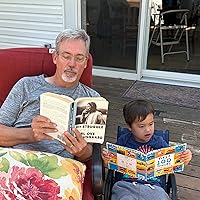
I don't often reach for poetry (other than Bukowski), but I'm learning to read it on my own, rather late in life. This one I added to my travel since I would finish the novel I was reading during a business trip to Germany. As it turned out, I was bereft in my hotel room after the shock / horror of the election results, alone, with cold rain pouring outside. This book was a fine tonic, but like all strong poetry I had to focus on the words and their arrangement on the page. Being a scientist, I can appreciate that it sometimes takes work (close reading, open-mindedness) to find meaning where others might cast their eyes over, and these selections gave me that joy of discovery. Wiman tells of a private suicide, from the corpse' view (it's not as macabre as it sounds), the wrenching sorrow of watching a mother die, a birds-eye view of a man's ultimate demise. The final long poem is an allegory of the life of "Serious" starting before he emerges from the end and ending in the most tragic of events, a final understanding of love during the final throws of death "My God! Serious screams, Unable to help himself, What maundering politician, What decerebrated pop star, what stupid puling poet Couldn't tell me that?"
Wiman plays (in a very Serious way) with form and rhyme and meter, all very successfully. He writes lyric and narrative poetry with equal and remarkable skill. His mentality toward lineation appeals to my love of seventeenth- to nineteenth-century verse. I highly recommend this to anyone looking for contemporary poetry with an antique spin.
Close your eyes just this side of sleep and you can almost hear them, all the long wonder of it, the lost gods and the languages, the strange names and their fates, lives unlike our own, as alien and unknowable as the first hour on this earth for a womb-slick babe around whom the whole tribe has formed a ring, wailing as one for what the child must learn. (From "Reading Herodotus")
I really liked some of these poems, others I could leave. Christian Wiman is best when he uses the lyric form for a narrative, but I am much less impressed with his short lyrics describing an experience or a thought (except, here, "Postolka" and "Funeral"). His best in this collection, for me, are "Why He Doesn't Keep a Journal," "After the Ice Storm," and the very long (almost a 1/3 of the book) "Being Serious." Each of these poems deals with a life, from beginning to end, the first in the way a man (in a dream) relates to his overall life - "he looks dead into the fire that feeds on nothing,/and nothing stays." The second ("After the Ice Storm") is about a husband and wife, and how they both look to each other (instead of just the self) or into something else (William Gladstone and golf, for the husband, and an two ice storms, for the wife) to comprehend their life. "Being Serious" is sort of like the Medieval "Psychomachia" stories, but instead of "Temperance" or "Justice" as the personified characters, it's "Serious" or "Doom" or "Funny," etc., who are the personified characters. In this case, Serious looks at his life through sort of a universal conception of character types. This is the second collection of Wiman's I've read, and I find he's very good on very large subjects, not as good on the small, intimate moments. I don't mind that, but this collection is a bit uneven for me.
I was close to rating this book three stars as there were only a few poems I really liked. This book's saving grace is it's longer poems. Usually I find longer poems to be more taxing than shorter poems, but in this collection I found them to be the best. There are three long poems of which I preferred 'The Ice Storm' and 'Being Serious'. And from the quite a few shorter poems I most enjoyed:
Why he doesn't keep a journal Poštolka The Funeral
Wiman is an elegant, sometimes tortured poet and essayist. In this earlier collection, he crafts poems of great beauty and depth. His long piece "Being Serious," is elegant, funny, tightly crafted, bringing you through the absurdities and piercing beauties of a life, as well as the weight of the serious. Note: a beautiful surprise ending!
I love Christian Wiman. Writing in form is a lost art. Musical attention to rhyme and meter. "Being Serious" was a highlight, funny, playful, rhythmic. The simple punchline that love is the ultimate answer.
"To be serious, to be truly serious, is to know That what you call your losses you cannot grieve, For it was never quite these things that you wanted –This treasure, this touch, this one place– But by such a life to be haunted."
I am a Wiman afficianado. From the haunting opening narrative "Sweet Nothing" about an English art restorer who is herself fine bone china to the emptiness of an almost-love story in Prague, "Postolka," oh I almost love too many to name! The deft & subtle ars poetica of the title poem, the tender long poem about a long-married couple, "Ice Storm," the reflections on the passing of the beloved grandmother for whom "Long Home" (both poem & much of that volume) was memorial in "Night's Thousand Shadows," Wiman has a ripeness and lushness that are Frostian, but less anecdotal, with the play and sophistication of Lowell. Wiman definitely gestures to a 21st century cosmopoetics.Christian Wiman
I've read Wiman's prose (which includes the occasional poem), but this is my first foray into a book of his poetry. Consider me eager for more. The longer form poems in the book (especially "The Ice Storm" and "Being Serious") do a marvelous job of unfolding a narrative while at the same time giving one a palpable sense of the range of feelings in the subjects. A couple of the shorter poems ("Hard Night" and "Old Song, Long Night") are real stand outs for me in their ability to communicate a sense of yearning for something good beyond the limitation or difficulty of the present moment.
Really shockingly good. Some of the shorter, earlier poems feel sort of lofty and don't emotionally convince me, but the longer sectioned narratives are gorgeous -- sweeping, yet with precise attention to the right details. In form and phrasing these longer pieces remind me of early Gjertrud Schnackenberg. I already knew that I loved Wiman's prose, but now I'm most excited to read his newest book of poems.
Stunning. My favorite poems in this collection were the two long ones: "Ice Storm" and "Being Serious." I'm captivated by his use of rhyme:
He thinks and thinks and thinks Until his ignorance shrinks To the tiniest of flies Alighting somewhere in the Louvre. Carefully, carefully, Serious creeps With his massive swatter Saying, _Don't move, don't move_.
Loved this poetry. So much better than The Long Home, his first volume. My favorite was the last very long poem, Serious. Wiman blends humor and tragedy better than most poets I have read lately, and has a range of emotions and registers I find refreshing.