What do you think?
Rate this book


28 pages, ebook
First published September 1, 1946

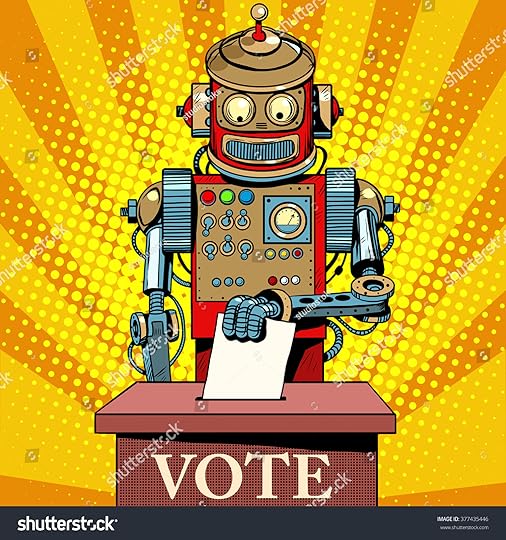
Is mayoral candidate Stephen Byerley a robot or not?
As you read this story, be on the lookout for instances of a character telling Byerley to do something. It almost never happens, which is weird. Even the guy with the search warrant doesn't give orders; he simply makes declarative statements about the warrant he has. And yet, naively, you'd think the second law would be simplest to test. Just order Byerley to do something silly and inconsequential, see if he can choose not to obey. Seems like Asimov is avoiding a simple, obvious solution to make his story seem cleverer than it really is.
Only, if they did that, and Byerley disobeyed, I expect there'd be an explanation for it on the assumption that Byerley is a robot, like there is for all the other supposed evidence that he's human. Think of the harm Byerley could prevent as mayor! Won't happen if he doesn't get elected, and he won't get elected if he's outed as a robot, so he must disobey to prevent himself from being outed. Same reasoning even applies to the punch, supposing the guy who took it was human. A punch is such a minor harm, after all.
The point, as it often is, is that the apparently rigid laws of robotics are subject to interpretation and lawyering by robots with bad epistemics. They kinda have to be - if they weren't, robots would all refuse to spend their time doing anything but working to eradicate malaria, or poverty, or whatever's most cost-effective in Asimov's future. And even that assumes that the laws are sufficiently open to interpretation that robots don't become paralyzed on realizing that they must choose which harms to prevent.