Set in a bizarre and slightly sinister town where the elderly are auctioned off at an Old Folks Fair, the townspeople assail the priest in hopes of making it rain, and the official town scapegoat bears the shame of the citizens by fishing junk out of the river with his teeth. Heartsnatcher is Boris Vian's most playful and most serious work. The main character is Clementine, a mother who punishes her husband for causing her the excruciating pain of giving birth to three babies. As they age, she becomes increasingly obsessed with protecting them, going so far as to build an invisible wall around their property.
Boris Vian was a French polymath: writer, poet, musician, singer, translator, critic, actor, inventor and engineer. He is best remembered for novels such as L’Écume des jours and L'Arrache-cœur (translated into English as Froth on the Daydream and Heartsnatcher, respectively). He is also known for highly controversial "criminal" fiction released under the pseudonym Vernon Sullivan and some of his songs (particularly the anti-war Le Déserteur). Vian was also fascinated with jazz: he served as liaison for, among others, Duke Ellington and Miles Davis in Paris, wrote for several French jazz-reviews (Le Jazz Hot, Paris Jazz) and published numerous articles dealing with jazz both in the United States and in France.
«Τί συνέβη; ρώτησε ό Μακαβριωάννης. Πέσατε από τη βάρκα; —"Εκανα τη δουλειά μου, είπε ό άνθρωπος. Μέσα σ' αυτά τα νερά πετάνε τα πεθαμένα πράγματα, για να τα ψαρέψω. Με τα δόντια. Πληρώνομαι γι αυτό. — Μα ένα δίχτυ θα έκανε εξίσου καλά αυτή τη δουλειά, είπε ό Μακαβριωάννης. "Ενιωθε ένα είδος ανησυχίας, μια εντύπωση σα να μίλαγε με κάποιον από άλλον πλανήτη. Αίσθηση αρκετά γνωστή, βέβαια, βέβαια. — Πρέπει να τα ψαρέψω με τα δόντια μου, είπε ό άνθρωπος. Τα πράγματα πού έχουν σαπίσει ή πού έχουν πεθάνει, γι αυτό τα πετάνε. Συχνά, τα αφήνουν επίτηδες να σαπίζουν για να μπορέσουν να τα πετάξουν. Καί πρέπει να τα πιάσω με τα δόντια μου. Καί να σκάσουν ανάμεσα στα δόντια μου. Να μου μολύνουν το πρόσωπο. — Σάς πληρώνουν ακριβά γι αυτό; ρώτησε ό Μακαβριωάννης. — Μου προμηθεύουν τη βάρκα, είπε ό άνθρωπος, καί με πληρώνουν με ντροπή καί χρυσάφι. Στή λέξη «ντροπή», ό Μακαβριωάννης έκανε ένα βήμα προς τα πίσω καί θύμωσε με τον εαυτό του. —"Εχω ένα σπίτι, είπε ό άνθρωπος, πού άντελήφτηκε την κίνηση του Μακαβριωάννη καί χαμογέλασε. Μου δίνουν να τρώω• μου δίνουν χρυσάφι. Πολύ χρυσάφι. Άλλα δεν έχω δικαίωμα να το ξοδέψω. Κανείς δεν θέλει να μου πουλήσει τίποτα. "Εχω ένα σπίτι και πολύ χρυσάφι, άλλα πρέπει να χωνεύω την ντροπή ολόκληρου του χωρίου. Με πληρώνουν για να έχω τύψεις στη θέση τους. Για ό,τι κακό ή ανόσιο κάνουν. Για όλα τους τα βίτσια. Για τα εγκλήματα τους. Για το παζάρι των γέρων. Για το βασάνισμα των ζώων. Για τους μαθητευόμενους. Και για τις βρωμιές. Σταμάτησε για ένα λεπτό. —Άλλα, συνέχισε, όλα αυτά δεν θα σας ενδιαφέρουν. Δεν έχετε βέβαια σκοπό να μείνετε εδώ. "Εγινε μια μεγάλη σιωπή. — Ναί, έχω, είπε τελικά ό Μακαβριωάννης. Θα μείνω εδώ. — Τότε, θα γίνετε σαν τους άλλους, είπε ό άνθρωπος. Θα ζήσετε και σεις με ήσυχη τη συνείδηση, και θα ξεφορτώνετε πάνω μου το βάρος της ντροπής σας. Και θα μου δίνετε χρυσάφι. Δεν θα μου πουλάτε όμως τίποτα για το χρυσάφι μου. — Πώς σας λένε; ρώτησε ό Μακαβριωάννης. —Ή Δόξα, είπε ό άνθρωπος. Με φωνάζουν ή Δόξα. Είναι το όνομα της βάρκας. Εγώ δεν έχω πια. — Θα σας ξαναδώ. . . είπε ό Μακαβριωάννης. — Θα είσαστε σαν κι αυτούς, είπε ό άνθρωπος. Δεν θα μου ξαναμιλήσετε πια. Θα με πληρώνετε. Και θα μου πετάτε τις βρωμιές σας. Και τη ντροπή σας».
Θεωρώ πως μετά απο αυτό το απόσπασμα τα συμπεράσματα και οι σκέψεις σχετικά με το βιβλίο αυτό είναι προφανέστατα.
Ένα κόκκινο απο αίμα ποτάμι διασχίζει κάποιο χωριό. Μέσα σε αυτό το ποτάμι οι κάτοικοι πετούν σκουπίδια, άχρηστα πράγματα, νεκρά σώματα, ανθρώπινα μέλη κακοποιημένα και φυσικά εκεί πνίγουν την ντροπή τους, ελευθερώνοντας τη συνείδηση τους απο τύψεις.
Ο «αποδιοπομπαίος τράγος» είναι ένας άνθρωπος, ονομάζεται Δόξα και έχει καθήκον να συλλέγει με τα δόντια τα αποσυντιθέμενα πράγματα και να καταπίνει την ντροπή ολοκλήρου του χωριού. Η παράδοση λέει πως όποιος αισθανθεί μεγαλύτερη ντροπή παίρνει τη θέση του στο ποτάμι της ματωμένης δόξας. Σ’ αυτό το χωριό φθάνει κάποια μέρα ένας ψυχίατρος, ο. Γεννήθηκε ενήλικας και δεν έχει αναμνήσεις και συναισθήματα. Αναζητά μέσω της ψυχανάλυσης σε άλλους ανθρώπους μια μεταβίβαση ταυτότητας για να ολοκληρώσει την ύπαρξη του.
Όταν γνωρίζει το χωριό και τους χωρικούς νιώθει απίστευτη ντροπή και απέχθεια μα σταδιακά προσπαθεί να εγκλιματιστεί.
Στην κεντρική πλατεία του χωριού πλειστηριάζουν τους ηλικιωμένους και τους πουλάνε σαν σκλάβους σε κάποιους που θα τους βασανίζουν για διασκέδαση.
Στην εκκλησία, ο παπάς δοξολογεί το χρήμα και την πολυτέλεια και αφορίζει τη φτώχεια και την ανέχεια. Ο Θεός είναι για τους λίγους, δεν ειναι χρηστικός, είναι ένα χρυσό μαξιλάρι, είναι δώρο γενεθλίων, απεχθάνεται τα καθημερινά και ευλογεί τα πλούτη και την ασυδοσία.
Τα ζώα σταυρώνονται και τιμωρούνται για τη φύση τους. Τα παιδιά κακοποιούνται, εργάζονται ως βοηθοί τεχνιτών με αντάλλαγμα τιμωρίες και βασανιστήρια μέχρι θανάτου.
Εγκλήματα, κακίες, βρομιά, σαπίλα, αρρώστιες, βασανιστήρια και βία σε κάθε μορφή ζωής.
Ο συγγραφέας δημιουργεί αλληγορικά, σατιριτικά και απίστευτα θλιβερά ένα παράλληλο Σύμπαν σουρεαλιστικής φρίκης και παραλληλισμών σε βαθμό κακουργήματος. Το χειρότερο είναι πως ο πόνος, το δάκρυ και το γέλιο που εναλλάσσονται σε αυτή την κοινωνικό πολιτική ατζέντα δεν είναι μακριά απο την σημερινή πραγματικότητα.
Ένας νέος κόσμος που σατιρίζει τον υπάρχοντα συμβολικά και επιτηδευμένα προκαλώντας λογοτεχνικά τον κοινό νου. Αξίες, ιδέες, θεσμοί, ιεροί δεσμοί, ήθη, συναισθήματα και μια ιδιότροπη παράλογη αλήθεια απ-ανθρωπιάς εκτοπίζουν τη σημασία...και καθιστούν αυτό το παράδοξο πεζογράφημα αξιόλογο σαν μια αντιμετώπιση της ανθρώπινης σκληρότητας, της ασυνέπειας και της περίεργης λογικής.
"Heartsnatcher," the last novel by Boris Vian, flopped in bookstores and led to the abandonment of his career as a writer, yet it remains my favorite. A self-analysis? Perhaps. An attempt at revenge against a castrating mother? Maybe. What remains is an extraordinary village and a psychoanalyst, Jacquemort, who arrived there as if by chance. He conveniently arrives at Angel and Clémentine's house, where he will assist in the birth of three boys: Noël, Joël, and Citroën. When the child appears, you know the rest; then three, born in pain. Clémentine will develop a rejection syndrome against Angel. I said it was an extraordinary village: there is the priest, like in all the villages, but we put the children in cages so that they don't steal after eating blue slugs, we put irons on their feet, and we organized a fair for old people; and then Jacquemort, arriving "empty of emotions" in the village, intends to fill himself with those of others. There is also the red stream, from which Glory fishes out the fruit of the shame of the villagers who pay him for it. "Heartsnatcher" is an excellent novel in the tradition of "Mood Indigo," but it is darker; yet, it remains poetic and dreamlike. In short, it is from the great Boris Vian.
This was great! I loved Vian's L'Écume des Jours and thought this was just as good if not better. Heartsnatcher (in English) is set in a village near the sea where rotten and grotesque villagers buy old people to abuse them, horses get tortured for their sins, farm animals hitch lifts and get booted up the arse regularly, and where miserable mistreated work apprentices keep snuffing it. Oh, and then there is a guy who lives on the river called Glory Hallelujah who fishes out junk and body parts with his teeth and who is paid only in gold, only he can't spend it anywhere. The novel primarily focuses on an overprotective and paranoid mother called Clementine, who lives near the cliffs with her three little triplets - Noel & Joel, and the third less sulky Alfa Romeo. She hates her husband for putting her through the hell of child birth and wants him never to touch her again, so he builds a boat from scratch whilst his three little sprogs watch on and play happily in the sawdust and wood chippings wearing iron clogs that make their poor little tootsies bleed before he later sails off into the sunset never to return. Then there is the bad-tempered Psychiatrist Timoris who has an itchy bright red beard and likes to screw Clementine's maid while psychoanalyzing and who also develops the strange need to miaow now and again. When I say Clementine is overprotective that's not to be taken lightly. It even goes as far as licking bums clean in fear that the loo paper might be covered in arsenic, or that when playing outside they might dig a hole too deep, split open a water pipe, and burn to death as a result of a flaming meteorite splashing down and boiling up the water supply. Basically, when they are out of her sight, she is panicked to frenzy. Timoris comes up with a great idea to keep them safe 100% of the time, but that's before he discovers that all three have a secret gift. It's all wildly eccentric and absurd, wicked and cold-blooded, yet smothered in motherly love, and so damn right hilarious in places - mainly down to the triplets - that I was crying out for more. Some scenes here never to be forgotten!
The final novel from Boris Vian—sort of a Queneau for Coltrane enthusiasts—is a bleak and harrowing tale of a mother who loves her children too much.
Well, that’s the rub. There’s also the David Lynch village, unnamed, where unfeeling psychiatrist Timortis wanders into the Old Folks Fair, where OAPs are sold to the highest bidder. He meets the Glory Hallelujah—a man paid in gold to absolve the village’s shame by fishing corpses and fish heads from the local river with his teeth, leaving the residents free to murder apprentices, abuse the vicar and be beastly in general.
Timortis moves into the house of Clementine and Angel, a feuding couple whose newly born triplets drive them apart, forcing Angel to ride out to sea on a handmade boat. While Tim gets intimate with the maid, Clementine grows paranoid that she doesn’t love her children enough. She becomes over-protective to a degree of madness, eventually sealing her children in cages and building a dome of nothingness over her home.
So. Quite strange. By turns surreal, hilarious, bawdy and brutal, this is a touching and devastating book. It satirises the hysteria of parents eager to shield their kids from a brutal world, a world symbolised in this unnamed village, with Clementine’s conclusion even bleaker—it’s better to hide from the world and shut out the ugliness. The fatal irony comes from her vanity: her children being too precious to deserve their freedom.
This is a unique and twisted gem. Boris Vian was a talent to rival Queneau, who supplies a fitting foreword. Recommended for fans of French classics and seriously weird tales.
"Сърца за изтръгване" е много странна, абсурдна, трудна за възприемане, но силно въздействаща. Книга-сън, книга-бълнуване, книга-видение, която се случва в неопределено село и в неопределено време - 59-ти янрил, 73-ти феврюин, 107-ми апруст, 348-ми юлиември.
Виан е нарисувал с думи много красиви, изящни, цветни и почти нереални късчета природата и ги е вместил между разтърсващо натуралистичните описания на мутиралите и изродени навици и възприятия на местните хора. Жакмор (млад на години, но роден възрастен и празен) попада в странното село, за да се напълни с емоции и усещания, психоанализирайки другите. В един момент усеща себе си като черен котарак.
В това село, където животните пътуват на автостоп, бременните мразят мъжете за болките и мъките, които са им причинили и не ги допускат до себе си и до децата. Насилието се е пропило в душите - съгрешилите жребци ги разпъват на кръст, на даващите малко мляко крави им режат главите, старците ги продават на пазара, щипят ги и ги изнасилват за забавление, децата по навик ги пребиват до смърт, а дърветата ги убиват с нажежени шишове и те умират с писъци. Но съвестта на хората е чиста, защото не правят разлика между доброто и злото, не усещат срам. Това е забранена дума, продават го срещу злато на един човек, който вади със зъби от червената, мазна и гъста река остатъците от всичките им хвърлени там грехове и срамове и ги събира в лодка. Той дори вече няма свое име, наричат го както лодката - Ла Глоар. Първият, който се засрами повече от него, ще заеме мястото му.
Децата растат за часове, мислят и говорят като възрастни. Когато си играят, от земята между цветните им камъчета излиза десетсантиметрово русо момиченце и танцува, а когато се изплюят върху семка, от нея веднага расте мъничко дърво с розови листа, сребристи клони и пеещи птички по тях. И децата се учат сами да летят - нагоре в облаците, с ятата. Страхът изражда майчината любов до лудост и обсебване и Клемантин затваря тризнаците в клетки, тъкмо когато са станали съвършени в полета си, за да ги предпази от всяко възможно зло. "Но птиците умират в клетка."
Хич и не очаквах това, което намерих в книгата. Изненадата ми беше пълна още от първите няколко страници - тонът, разсъжденията и (не)моралните виждания на героите ме хванаха неподготвена. Красиви и изящни описания на природата се редуваха със сюреалистични и граничещи с абсурдизма персонажи и заобикалящ свят. Изключително странна комбинация, звучаща повече от абсурдно (тази дума ще се повтаря), която обаче Борис Виан е успял да докара до баланс сякаш с лекота.
Няма нищо нормално в тази книга.
Няма нищо ненормално в тази книга.
Първа среща с Виан и я пиша особено успешна. Не съм се чувствала толкова неподготвена относно четиво от доста отдавна, а си заслужава когато нещо успее да те изненада така.
Няма да разкривам нищо от сюжета, трябва сами да го изпитате и да ахнете или смръщите вежди зад книгата.
Sou Boris Vian. Quero contar-vos a minha história da humanidade. Todos os horrores que os homens são capazes de cometer, por ódio ou por amor. Mas fazendo-vos rir, quando a vossa vontade é chorar de pena e gritar de medo. Alguns vão achar que todas as personagens e situações são surreais, mas se tirarem a venda dos olhos irão reconhecê-los e reconhecer-se...
- O meu nome é Jacquemort. Estou vazio. Preciso absorver as vidas e os sentimentos dos outros para me tornar humano. - Chamo-me Culblanc. Cuido da casa, dos senhores e dos meninos. E durmo com o homem oco a quem dou apenas o meu corpo, nada lhe contando de quem sou. Sou uma serva de corpo mas o meu coração é livre. - Eu sou a Clémentine. Sou a mãe. Para que nascessem sofri muito e por isso não os amava. Depois cresceram e a cada dia os amo mais. Já não consigo dormir, descansar por um segundo pois o mundo tem tantos perigos. Tenho de os proteger de qualquer forma. Prendê-los junto a mim. São meus e faço tudo por eles. Amo-os demais. - Eu sou o Angel. Quando os gémeos nasceram não sobrou nada para mim. Durante o parto ela isolou-me e ameaçava matar-me se eu me aproximasse. Agora só tem amor para os filhos. - Somos o Noël, o Joël e o Citroen. Nascemos no mesmo dia. Estamos a conhecer o mundo que é mais do que este jardim onde ela nos prende. Mas estamos juntos e com a nossa imaginação podemos quebrar todas as grilhetas; criar asas e voar; tornar-nos minúsculos e escapar por qualquer espaço mínimo. - Chamam-me "A Glóira". Vivo nesta barca, condenado a pescar com os dentes todas os pecados que o povo atira para o rio, para se livrarem de culpas e de remorsos. Recolho toda a vergonha dos homens. - Somos os velhos. Já não servimos para nada. Leiloam-nos numa feira e quem nos compra diverte-se batendo-nos, rindo dos nossos corpos enrugados, flácidos. - Somos os meninos pobres. Os que não tiveram uma mãe que nos guardasse numa gaiola quentinha e nos acarinhasse. Temos de trabalhar até morrermos de esgotamento. - Somos os fiéis. Vamos à igreja para que o padre interceda por nós junto de Deus e recebermos graças. Precisamos de chuva para as colheitas e a quem a pedir senão a Deus? Mas o padre recusa as nossas preces e temos de o castigar. - Somos os animais crucificados porque não cumprimos o nosso dever. - Somos todos os homens e mulheres pecadores, egoístas, cruéis, infelizes, solitários, prisioneiros das suas paixões e desejos.
Eu sou a Teresa Jacquemort Culblanc Clémentine Angel Noël Joël Citroen. Sou um pouco Glóira, um tanto velha, um bocado menina, por vezes um cavalo crucificado. Mas acima de tudo sou uma Arranca Corações, quando preencho o meu vazio devorando as mentes dos homens e das mulheres que vivem nas folhas de papel...
Boris Vian apparently died while attending the premiere of the film version of I Spit on Your Grave. The story goes that the cause of death, rather the cause of the cause of death, which was a heart attack, was 'cause the film wasn't any good. I don't know about anyone else but if I had my expectations so lowered I might say to myself, "Well, it wasn't that bad." Maybe my not dying would raise the expectations of another goodreader and then they would die. "It won't kill me! I already left my brain at the door of every Tim Allen movie ever made. Why not this? At least I can be donated to science." It might be safer not to not watch any films at all, if that is your benchmark (science could be up to no good as well). What if they are so bad that dying isn't enough? Roald Dahl routinely spins in his grave whenever a sub-par filmic adaptations of his works is released (he loaded up his coffin with things like pool cues and pencils so that the noise would reach Los Angeles). There is no such thing as rest in peace when you're an author with crappy film versions to their name. (Ken Kesey got a head start but I'm sure he's out there haunting some studio executive as I write this, all the same. Early birds getting the worm is a myth. The executive will be inspired to do a remake. Should have stayed at home...)
What can I say? I'm a rat bastard on the road to staying a rat bastard.
The film version of Heartsnatcher. (A text synopsis of what could be a film version, if such things happened.)
A jazz band jams. It sounds like a bunch of guys getting on stage and playing the same notes over and over again. (Vian was a jazz musician. So sue us! Also, it all sounds exactly the same so it would be cheap to get some guys together to eek out a soundtrack.)
Timortis is played by the guy that you always mistake for Tom Cruises' cousin William Map-what is his face but isn't him.
The camera is on the actor hired because he looks like someone you don't know well enough to place that it's not him. He's kneeling in the weak red sand doing some deep looking combination of Bill Paxton in Twister and Aragorn. It looks like flavored water that gets its colors because it is made with bugs. And if you knew it was made with bugs you would feel too sick to drink it. The pretty much pink sand is sifting through his fingers and he's about to ask why the dirt is this squished insides color when the camera isn't on him anymore. It's on a large figured gal. The kind who is still the sex pot in sketch comedy shows because there are only so many actresses on those shows. Her breasts are so large you feel smothered just looking at them. That's because the perverted camera operator is too close to them. He hasn't seen a woman in weeks because he was in prison for a five year stint (identity theft. He played an actor in a movie when he wasn't really that b-list actor from Law and Order).
The large figured gal is screaming like she thinks she's Dawn French, or someone. I can't get away from her.
The sand in Timortis' palm sifts into the awesome wind special effects. There's enough grains to scratch his chin as he strokes the hairs on his thoughtless chin. They stand to attention, still seeing nothing.
Woman: Help! My maid is breastfeeding my children!
Timortis takes the time to be aroused. Of course, the problem would be solved if one of them is lying on their back. The sand is all up in the cracks and other places. The problem wasn't solved by only one of them being on their backs.
Woman: My bosom isn't enough anymore. What if my babies scratch their precious milk fed faces on this sand? Timortis is an analrapist so he nods and accepts the credit, as due his profession, from his lofty position of a raised arm behind her bum when the mother decides (the actress depicts this in pure soap eyebrow arching) that clasping them tighter with the effects of the new Wonderbra would be the ideal idea. Underwire is the new prison wire. Timortis isn't sure he prefers clasps in the front or the back but he is moving on to younger milk maids after today. Why keep milking the same old cow? The sand is blowing in the direction of a rock formation that resembles phallic and vaginal shaped backgrounds of music videos made by The Cure. This way are the girls...
Oh, darn! Timortis never fucked Clementine. She wouldn't let another man near her after birthing three babies (who would want to, after that?). This film is unfaithful! I'll never get another nights sleep. What can I say? I'm a hack.
I could have written a real goodreads review instead of being dumb online again. Too late. Well, did I really like this? It's a bit like watching a Disney film with a too obvious moral of the story, at the end of its day. I mean to say one that is told to you what it is. That kind of obvious (and yet we murderers miss what is explicitly told in our crappy film adaptations). The twins, Joel and Noel, and especially their leader triplet Alfa Romeo, made me feel for their plight and tightened spirit in the grip of their over bosomed mama. I liked the kids being kids of their own world. That fit into the playful way that Vian writes. I like Boris Vian's style of messed up cruelty and sticking your finger in the moving wheel impulse. I did that once as a kid. I probably knew it wouldn't be good and I still did it (twelve was too old to do that, probably). Then it's like you knew what would happen and it's "Oh, I knew that would happen" as a disappointed letdown rather than a dawning horror of inevitability. What else was supposed to happen? Can I just say it's dreamlike without sounding too obvious? The way you don't know if you're going to enter a room in a dream even if you are headed that way. Like satire that is satire of what you never needed pointed out. Oh wait, that is what it is. I like the moment of staring the spinning wheel. I never do learn my lesson, in that time. Now can the dream end less obviously?
What can I say? I am chasing a bit of what I don't already know. That you can't be free in a cage... Well, yeah? (Maybe a bit of freedom before you shut the door so to feel the loss.) So that's what I want in a really great read. I did kinda like this. Love is more than past arms length, I guess.
Clementine would argue that you shouldn't watch any films again if one could kill you. Would Boris Vian change his mind about risks if he knew how he would die?
Heaven help you if you can't tell the difference between real love and this fake grabby kind, I think he wanted to say. Does Heartsnatcher have any? I didn't find it. So what was the risk?
Ето защо била толкова харесвана тази книга! Макар че има голям парадокс – съдържанието, прието буквално, изобщо не е за харесване… Няколко пъти се чудех защо ми напомня на Салман Рудши и се оказа, че не е само заради понятието „срам“, а и заради безкомпромисното достигане на границите на търпимостта до (и извън) предела.
Не зная доколко понятието „сюрреализъм“ е уместно за литературата, дос��га в изобразителното изкуство съм го възприемала като експериментиране, едва ли не забавление на творците; сега открих истинските му възможности и най-банално казано – СМисъл. И ето започват моите „СМ“ – това наистина се оказа „см“ книга за мен – СМазваща, СМайваща, СМразяваща, СМърдяща. Хилих се озъбено, но не мога да кажа и СМешна…
Такава концентрация на гадория (алегория на човешката гадория) на едно място… Кой може да им помогне на тези хора, как? Ако едно селце е хипербола на цялата човешка смрад, да си правим ли изводи за целия свят… Очаквах краят на книгата да даде отговор, но какъвто и да е той - погубеното възстановява ли се? Леко отдъхване имаше само при досега с природата, при „разговорите“ с животни. Имаше време на по-голяма поносимост, но когато Анжел започна да се топи и юли стана юнли, август – апруст и т.н., всичко стана още по-мътно, ако можеше да не се стига до 16-ти марюни… Обаче намеси ли се такава мощ като Майката, не са изненадващи сериозните последствия. Дадена ѝ е привилегията да дава живот, силата да дарява свобода, но и да отнема пòлета на своите създания… Напоследък преоткривам всяка дума от текстовете на Pink Floyd и сега нямаше как да не направя аналогия с „Mother“ от The Wall.
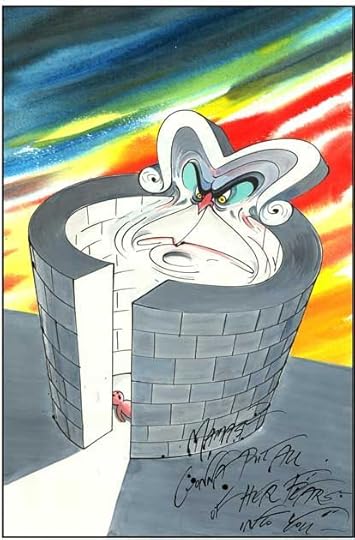
„Mother's gonna make all your nightmares come true. Mother's gonna put all her fears into you. Mother's gonna keep you right here under her wing. She wont let you fly, but she might let you sing.“
Може в книгата да има и друг „вид“ шамари, но този по отношение на майчинството за мен беше най-силен. Как Роджър Уотърс и Борис Виан са казали едно и също нещо по различен (силен) начин!
Преводът не можеше да не ми направи впечатление – уловени са всички нюанси на налудничавостта. Почти нищо не може да се цитира, защото като в някои други книги на абсурда откъснатото от контекста губи основната си сила.
Тук положението със звездите пак е малко особено – защо не и 5 – може би защото при толкова гнилоч не може да ми дойде отвътре високата оценка. Но последните изречения често са решаващи за мен – тук също си казах „Добре, че имаше глътка въздух накрая“ с недвусмисленото „Вятърът минаваше свободно между пръчките ѝ.“
People sometimes say they love you, but then you discover that what they really mean is that they want something from you. Just about every woman I know has met the guy who says he loves her, but actually wants sex. I guess that's the example you think of first. But there are plenty more.
I saw the movie of Coraline yesterday, and it reminded me of this book. Coraline has her real mother, who loves her, but is very bad at showing it. And then she also has her Other Mother, who wants... well, if you haven't yet seen the movie, I'd better not tell you what she wants, though I'm sure you've already guessed that it isn't what Coraline first believes. Needless to say, the reason why Coraline is so powerful is that most of us have a mother and an Other Mother, who unfortunately are the same person.
L'Arrache-Coeur is rather similar. It's a surrealistic fantasy novel, in which a character like the Other Mother plays a large part. I didn't appreciate it as much as L'Ecume des Jours, which for me is Vian's masterpiece, but it's interesting and creepy. If you have problems with your Other Mother, you might like it. But I should warn you that it's not nearly as upbeat as Coraline, so be careful...
Този роман ми остави белег в сърцето. Трудно ми е да говоря за него. Дали от погнуса към част от човешкия род, дали от съжаление или от страх, не мога да кажа.
Не случайно заглавие е избрал за романа си Виан. Сърцата наистина са за изтръгване, макар че като се замисля- има ли сърца изобщо? Вероятно единствено моето, което беше полека извадено по време на прочита.
Защото те нямат сърца.
Нямат и съвест. Нямат и човещина. Нямат ни жалост, ни емпатия. Не притежават нищо човешко.
Попадаме в село, уж измислено, където главният персонаж - психиатърът Жакмор отива, за да "психоанализира" хората, тъй като се чувства празен отвътре.
Уви обаче няма с какво да се "пълни", понеже там всички са изпразнени от съдържание, включително и той.
Всичко човешко тук е принизено до първичното, животинското. Дори животинско не е правилната дума, защото животните в романа в пъти превъзхождат човека.
Той е изверг. Ужасно, гадно същество, за което не съществува нищо друго, освен секс в най-първичната му и противна форма, и насилие (във всевъзможни проявления), използвано за щяло и нещяло, включително върху деца и възрастни. И това е нормализирано. И да наблюдаваш отстрани - също е нормализирано.
Чак в един момент започнах да се питам защо си причинявам тази книга. Запитах се дори къде е Потопът. Ако може този път без Ной.
Признавам си, че ми дойде твърде много. Този роман трябва да върви с Trigger warnings... Не мога да го препоръчам с лека ръка. Трябва определена нагласа, за да се чете.
Искам да подчертая, че книгата не ме разочарова. Разочарованието ми е насочено към истината. Към болезнения факт, че макар измислено, селото почива на реални лица и събития.
То е събирателен образ. Параван, зад който писателят може да разкаже за действителността такава, каквато за съжаление съществува.
Защото подобни неща и най-богатото въображение не може да измисли. Те съществуват. И това изтръгва сърца.
An absolutely wicked and delicious concoction of magic realism crenulated with a Daliesque purpose of the grotesque: a collage of taboo, Levitic-ean prototype, a coronet of (greek) mythological misdirection and a nexus of all encompassing neuroses are shaken, and stirred, into an ironic indictment of petty foibles.
What, what? Well, hear ye. Timortis, a ‘psychoanalyzator’ is born (again) into an anonymous French village where he is witness to a parade of grotesque daily exhibits.
Each one an exquisite infraction: mutilation of old people, extinguishing of children, crucifixion of animals, incarceration (Angel), blasphemy, the downfall of Icarus, and the jewel in the crown, Glory Hallelujah, who has to do this:
In the name of redemption. Amen.
If anything in this genesis of creation is grotesque, its ultimately US. Vian hones in on an unspoken undercurrent of spiritual sewage which underpins the high auspices of refined civilization. What is the value of say, the elder in today’s storyboard? Do we purport to revere where we secretly discount? Lip service to cover a most shameful disservice? HSBC here have done more in recent advertisement to recontextualise the core of modern soundbite than anyone else I can think of:
Vian enrols the same juxtaposition. Grotesque? Says who? By whose law?
With painstaking deliberation this virtuoso takes up all of our preconceived notions and turns them inside out into a neon scarlet letter which heralds as an Xray synopsis all of our best intentions.
Why, oh why did I let you sit on my shelf so long, little Heartsnatcher?
At first Vian seems like he's just goofing off. He's writing a novel as one tries on a costume and prances around in it. Behold my costume, don't I look fine in it? (Wink.) Aren't you fooled? (Nudge.) Let's see a novel has, what? Characters. No problem. Here's a new mother with a gun under her pillow. And here's a vicar who could've been in the Sex Pistols, if there were such a band as the Sex Pistols when I wrote this. And here's a Sisyphus kind-of-guy who's relegated to fishing trash out of the river with his teeth. And here's a boy . . . let's name him after a sports car and give him a talent, since good characters are often very talented . . . uh . . . flight, sure. And what else does a novel have? Imagery. Easy-peasy. Here's a crucified horse. Here's some eyes painted on a blind seamstress. And here's a bunch of plants and birds I just made up and a wall of nothing — not black, not white, just nothing. What a nice touch. And the characters will have to talk to each other, I guess, and they'll have to care about things, and the images will evoke, naturally, as a kind of side effect, so off to work I go. And pretty soon Vian has begun to not just wear his costume, but to inhabit it. The characters and the images begin to dance in and out of alchemic combination, then, lord did you see that? I think I just gave birth to a theme. Yup. There's my theme all slick and steaming, fresh from the womb. What to name it? Evil? Shame? Evil born of Shame? Shame born of Need? Evil born of Shame born of Need? My, that is baroque, but how novel-istic! Haven't I touched you deeply? Haven't I novel-ed you within an inch of your life? (Wink. Nudge.)
So, there are enough reviews already out there dealing with plot and themes and all that jazz, so I will simply say I dug it, daddio.
However, what I did not expect was the Wakean wordplay (which leaped out at me due to my current FW reading), and the quality of the translation which achieved that rare ability of seeming as though it was an original text. What do I mean? Well, howzabout this:
"Sections of the Babylonian garden hung far over the cliff, and certain species of plants clung to the most perilous spots. Although it was possible to tend them there, the majority were left to grow wild in their natural state, like the amizaltzes whose violetindigo foliage is tender greygreen on the underside and patterned with coolly exuberant cartographical white veins more splendid than baroque tendrils; like the wild powaroses, with last year's marienbuds still clinging as umbrella-like skeletons of black straw to the straphanging yellowplush, occasionally bursting into monstrous nodes which thrust out dry tripartite flowers as unappetizing as meringues of blood; like the tufts of lustrous pearlgrey dreamrape; the long clusters of paletipped creamy ginger fenellacas, hanging to the lower branches of the monkeypuzzle trees; the ninastangas with more nests than leaves among their winglike clumps of jewelled astrakhan and tailfeathered collars of fossilised seagulls…"
Or, even more perfectly Joycean:
"Novembruary, the cold, spitgrey, drizzleridden, fogeared month. Novembruary rain can cause all sorts of damage in all sorts of places. It can furrow through the fields, flaunch the furrows into ravines, and carry off the enraptured ravens. Or it can suddenly freeze.”
See, that kind of shizzle really floats my nizzle, ya get me?
Throw in some sharp and funny commentary on the seriously fucked up nature of our society, and you have a winner winner chicken dinner.
- L'empire des Lumières, René Magritte (site : Artsper.com)
Qu'est-ce que c'est qu'un arrache-cœur ? C'est l'histoire d'Angel, de sa femme Clémentine et de leurs faux triplés, dans leur petit village trouble où se tient tous les mercredis une foire aux vieux, où le menuisier préfère user ses apprentis que ses machines, où le curé organise des spectacles. Une petite rigole rouge s'écoule, la sournoise, le long des rues, sans que personne en parle...
La langue bien déliée de Boris Vian est fidèle au poste, ici pour la plus grande réussite d'une histoire à la noirceur grandissante, qui se met à gonfler comme une éponge de suie, jusqu'à éclabousser le lecteur tout partout.
Tout est grotesque, bête, servile et méchant. Terrible. Chacun fait le reclus chez soi pour s'adonner à sa perversion favorite derrière trois rangées de cloisons étanches (là où il y a de la gêne, il n'y a pas de plaisir). Les animaux, plus sensibles et raisonnables que partout ailleurs, font les frais de la médiocrité hargneuse et veule des adultes. Entre gens très corrects et appliqués, on vend ses parents comme on ne vendrait pas ses rogatons défraîchis, on traite son congénère comme un meuble, on se prend d'amour pour des machines et des rochers. On n'oublie pas d'aller à la messe, grand divertissement populaire pour mieux se dégommer et on jettera bien ses hontes au fond du ruisseau. On vivra heureux, on vivra opaques et indifférents les uns pour les autres.
UN EXTRAIT
- Vous avez un joli jardin, dit Jacquemort, sans chercher mieux. Vous vivez ici depuis longtemps ?
- Oui, dit Angel. Deux ans. J'avais des désordres de conscience. J'ai raté pas mal de choses.
- Il restait de la marge, dit Jacquemort. Ce n'est pas fini avec ça.
- C'est vrai, dit Angel. Mais j'ai mis plus longtemps que vous à le découvrir.
Jacquemort hocha la tête.
- On me dit tout, remarqua-t-il. Je finis par savoir ce qu'il y a dans les gens. A propos, pourrez-vous m'indiquer des sujets à psychanalyser ?
- Il y en a plein, dit Angel. Vous aurez la nurse quand vous voudrez. Et les gens du village ne refuseront pas. Ce sont des gens un peu grossiers, mais intéressants et riches.
Jacquemort se frotta les mains.
- Il va m'en falloir des tas, dit-il, je fais une forte consommation de mentalités.
- Comment ça ? demanda Angel.
- Je dois vous expliquer pourquoi je suis venu ici, dit Jacquemort. Je cherchais un coin tranquille pour une expérience. Voilà : représentez-vous le petit Jacquemort comme une capacité vide.
- Un tonneau ? proposa Angel. Vous avez bu ?
- Non, dit Jacquemort. Je suis vide. Je n'ai que gestes, réflexes, habitudes. Je veux me remplir. C'est pourquoi je psychanalyse les gens. Mais mon tonneau est un tonneau des Danaïdes. Je n'assimile pas. Je leur prends leurs pensées, leurs complexes, leurs hésitations, et rien ne m'en reste. Je n'assimile pas ; ou j'assimile trop bien ... c'est la même chose. Bien sûr, je conserve des mots, des contenants, des étiquettes ; je connais les termes sous lesquels on range les passions, les émotions, mais je ne les éprouve pas.
- Alors, cette expérience, dit Angel. Vous avez tout de même le désir de cette expérience ?
- Certes, dit Jacquemort. J'ai le désir de cette expérience. De quelle expérience au fait ? Voilà. Je veux faire une psychanalyse intégrale. Je suis un illuminé.
Angel haussa les épaules.
- Ca s'est déjà fait ? dit-il.
- Non, dit Jacquemort. Celui que je psychanalyserai comme ça, il faudra qu'il me dise tout. Tout. Ses pensées les plus intimes. Ses secrets les plus poignants, ses idées cachées, ce qu'il n'ose pas s'avouer à lui-même, tout, tout et le reste, et encore ce qu'il y a par-derrière. Aucun analyste ne l'a fait. Je veux voir jusqu'où on peut aller. Je veux des envies et des désirs et je prendrai ceux des autres. Je suppose que s'il ne m'en est rien resté jusqu'ici, c'est que je n'ai pas été assez loin. Je veux réaliser une espèce d'identification. Savoir qu'il existe des passions et ne pas les ressentir, c'est affreux.
- Je vous assure, dit Angel, que vous avez au moins ce désir-là et que cela suffit à faire que vous ne soyez pas si vide.
- Je n'ai aucune raison de faire une chose plutôt qu'une autre, dit Jacquemort. Et je veux prendre aux autres les raisons qu'ils ont.
Ils s'approchaient du mur de derrière. Symétrique par rapport à la maison du portail par lequel Jacquemort avait pénétré la veille dans le jardin, une haute grille dorée s'élevait, rompant la monotonie des pierres.
- Mon cher ami, dit Angel, permettez-moi de vous répétez qu'avoir envie d'avoir des enfants c'est déjà une passion suffisante. La preuve, c'est que cela fait agir.
Le psychiatre caressa sa barbe rousse et se mit à rire.
- Cela prouve cependant en même temps le manque d'envies, dit-il.
- Mais non, dit Angel. Pour ne pas avoir de désirs ni d'orientations, il faudrait que vous eussiez subi un conditionnement social parfaitement neutre. Que vous soyez indemne de toute influence, et sans passé intérieur.
- C'est le cas, dit Jacquemort. Je suis né l'année dernière, tel que vous me voyez devant vous. Regardez ma carte d'identité.
Il la tendit à Angel qui la prit et l'examina.
- C'est exact, dit Angel en la lui rendant. C'est une erreur.
- Ca se complète très bien, dit Angel. Il est exact que ce soit écrit, mais ce qui est écrit est une erreur.
- J'avais pourtant une notice à côté de moi, dit Jacquemort. Psychiatre. Vide. A remplir. Une notice ! C'est indiscutable. C'est imprimé.
- Alors ? dit Angel.
- Alors vous voyez bien que ça ne vient pas de moi, ce désir de me remplir, dit Jacquemort. Que c'était joué d'avance. Que je n'étais pas libre.
- Mais si, répondit Angel. Puisque vous avez un désir, vous êtes libre.
- Et si je n'en avais pas du tout ? Pas même celui-là ?
- Vous seriez un mort.
- Ah zut ! s'écria Jacquemort. Je ne discuterai plus avec vous. Vous me faites peur.
Ils avaient franchi la grille et foulaient le chemin qui mène au village. Le sol était blanc et poussiéreux. Des deux côtés croissait une herbe cylindrique, vert foncé, spongieuse, comme des crayons de gélatine.
- Enfin, protesta Jacquemort, c'est le contraire. On n'est libre que lorsqu'on a envie de rien, et un être parfaitement libre n'aurait envie de rien. C'est parce que je n'ai envie de rien que je me conclus libre.
- Mais non, dit Angel. Puisque vous avez envie d'avoir des envies, vous avez envie de quelque chose et tout ça est faux.
- Oh ! Oh ! Oh ! s'exclama Jacquemort de plus en plus outré. Enfin, vouloir quelque chose, c'est être enchaîné à son désir.
- Mais non, dit Angel. La liberté, c'est le désir qui vient de vous. D'ailleurs.
Il s'arrêta.
- D'ailleurs, dit Jacquemort, vous vous payez ma tête, et c'est tout. Je psychanalyserai des gens et je leur prendrai des vrais désirs, des vouloirs, du choix et tout, et vous me faites suer.
- Tenez, dit Angel, qui réfléchissait, faisons une expérience : essayez un instant avec sincérité de cesser complètement de désirer les envies des autres. Essayez. Soyez honnête.
- J'accepte, dit Jacquemort.
Ils s'arrêtèrent au bord de la route. Le psychiatre ferma les yeux, sembla se détendre. Angel le surveillait avec attention.
Il se fit comme une brisure de couleur dans la tonalité de la figure de Jacquemort. Subtilement, une certaine transparence envahit ce qu'on voyait de son corps, ses mains, son cou, sa figure.
- Regardez vos doigts ... Murmura Angel.
Jacquemort ouvrit des yeux presque incolores. Il vit, à travers sa main droite, un silex noir sur le sol. Puis, comme il se ressaisissait, la transparence disparut et il se solidifia de nouveau.
- Vous voyez bien, dit Angel. En pleine relaxation, vous n'existez plus.
- Ah ! dit Jacquemort. Vraiment vous vous leurrez. Si vous croyez qu'un tour de passe-passe va avoir raison de ma conviction ... Expliquez-moi votre truc ...
- Bien, dit Angel. Je suis heureux de voir que vous êtes de mauvaise foi et insensible à l'évidence. C'est dans l'ordre des choses. Un psychiatre doit avoir mauvaise conscience.
Ils étaient parvenus à l'orée du village et, d'un commun accord, rebroussèrent chemin. L'arrache-cœur, Le livre de poche (Fév. 2018), pp. 39-42
Прочетох книгата на английски, а не на български, защото предпочитам да чета на хартия (в Канада естествено намерих английско копие), пък и двата варианта са преводи. Докато четях се сетих, че я има в Читанка и полюбопитствах как определени моменти звучат на български. И за мое учудване и разочарование открих много разлики, въпреки че сравних само няколко неголеми откъса. Общото ми впечатление е, че като цяло много места в българския текст са съкратени/опростени, а отделни изречения направо са зле и неточно преведени. Много добре си давам сметка, че тази книга е "костелив орех" за превод в много отношения, но това в никакъв случай не е оправдание. За съжаление няма как да сравня с оригинала, но едва ли английският преводач ей така е решил да добави толкова думи своеволно. Уви, най-логичното заключение е, че българският превод е доста осакатен. Жалко за пламенните фенове на Виан! Българският превод е на Андрей Манолов (Христо Г. Данов, 1981)
Примери:
Разлики има в самото заглавие, както и в имената на някои от главните герои, което може и да е оправдано, но определно прави впечатление.
A thin snivelling, drivelling, driving, persistent, pernicious rain was falling and everybody had a cough. Валеше ситен, нездрав дъжд и хората кашляха. *** Noel and Joel were following in hid trail behind him and trying to dribble in the same places. A very tricky operation.
Ноел и Жоел вървяха след него и се мъчеха да пускат лиги на същите места. Деликатно. *** Clementine, in the kitchen, was making all sorts of gorgeous things for them with sugar and milk and spice. В кухнята Клемантин им приготвяше пюре с мляко.
**** 'You little horrors. You're foul and filthy!' 'But it's raining outside,' stated Alfa Romeo, who had just created a smashing dollop of spit. 'It's raining outside,' repeated Joel. 'Raining,' said Noel, more concisely It's true that it was pelting down at that moment. 'And who's going to clear up all this mess that you've been making?' 'You are,' said Alfa Romeo. Clementine went in. She had overheard these last few words. 'Of course you are going to clear it up,' she said. 'That's what you're paid for. Haven't the poor little darlings got the right to enjoy themselves? Do you like this kind of weather?' 'Bloody nonsense,' said Whitarse. 'Be quiet,' said Clementine. And get back to your ironing. I'll take over up here.' The maid went out.
— Отвратителни сте. Вие сте малки мърльовци. — Навън вали — забеляза Ситроен, — който беше улучил с една дълга хубава лига. — Навън вали — повтори Жоел. — Вали — каза Ноел по-кратко. Вярно че в този момент той усилено се трудеше. — И кой ще чисти вашите свинщини? — Ти — рече Ситроен. Клемантин влезе. Беше чула края. — То се знае, че вие — каза тя. — Вие сте тук за това. А те, милите, имат право да се забавляват, бедничките ми. Или намирате, че времето е хубаво. — Това няма нищо общо — рече Кюблан. — Стига — каза Клемантин. — Можете да си отидете да гладите. Аз ще се занимавам с тях. Прислужницата излезе.
*** ‘No,’ said Alfa Romeo ‘NO,’ said Joel Noel said nothing. It was the only possible remaining abbreviated course that he could take.
— Няма — каза Ситроен. — Няма — каза Жоел. Ноел си замълча. Това беше единственият начин да се съкрати.
Part 3, XXIX
At the foot of the bed their three tame bears were dancing in a ring and singing The Lobster's Lullaby, but very quietly, so as not wake Clementine. In between Noel and Joel, Alfa Romeo was thinking hard. Something was hidden in his hands. ‘I’m trying to remember the words.’ He said to his brothers. ‘The ones that begin…’ He suddenly stopped. ‘I’ve got it. This is how it goes.’
Трите им опитомени мечета танцуваха в кръг около леглото и пееха тихичко, за да не събудят Клемантин — тази бавачка на омари. Ситроен лежеше между Ноел и Жоел и изглеждаше замислен. Той криеше нещо в ръцете си. — Търся думи — каза той на братята си. — Тази започва с… Той млъкна. — Готово. Намерих я.
Part 3, XXVI
‘Furtively the clouds close in on each other. As they met a dull, humming, buzzing sound could be heard at the same time as a ruddy glow sprang up between them. The whole of the sky seemed to be hanging concentrated above the cliff. When it had become nothing but a huge heavy dusty carpet, a great silence fell. And behind this silence, the wind could be heard coming, softly at first, then leaping lightly over the agile rooftops and swift chimneys, but soon growing harder, sturdier, wrenching a sharp, anguished, skirmishing zoom from every cornerstone it passed, bending and banging the weary heads of the flowers, chasing the first blade-edges of water before it as it went. Then the sky cracked with one wild blow, like a piece of dead china, and the hail began. Bitter stones exploding as they battered on the slates of the roof, sending up a spray of hard crystal gunpowder. Little by little the house disappeared in the deep, dark vapour. The hailstones struck still more savagely on the paths and sparks shot off and dropped back dead at each point of impact. The continuous jolts and shocks made the sea begin to rise and bubble like boiling black milk.’
“Облаците крадешком се приближаваха един към друг; при всеки допир се чуваше глухо боботене и в същия миг проблясваше червеникава светлина. Небето сякаш се струпваше над брега. Когато то заприлича на тежък, мръсен килим, настана пълна тишина. И зад тази тишина се чуваше приближаването на вятъра; отначало той плахо подскачаше по комини и корнизи, но скоро набра скорост, стана по-твърд и зазвънтя при допира си с всеки камък, накланяше уплашените треви и гонеше пред себе си първите вълни. Тогава небето като лош фаянс се разпука изведнъж и градушката започна, горчивите й зърна се разбиваха по керемидите и от тях се вдигаше твърд кристален прашец; лека-полека къщата изчезна под тъмната мъгла — зърната се силеха лудо по алеята и отвсякъде хвърчаха искри. Под непрекъснатите удари морето закипя и започна да се надига като черно мляко.”
"Heartsnatcher" was Boris Vian's last novel and it has a sadness attached to it. Here Vian goes after the "family unit" with great hysterical results. And again it's his genius to match the moods into a crazy narrative. Vian is like a great bartender, who knows how to mix if not the perfect drink, then at the very least a cocktail that you will never forget.
DNF (P. 102) Leilões de velhos, crianças que voam e cavalos crucificados não entram na minha lista de coisas interessantes ou aceitáveis. Aliás, a crueldade para com crianças e animais é tão bestial neste livro que me deixa agoniada. Eu bem tento, mas do Vian só aprecio a música... Vou passar, sem remorsos!
Boris Vian é um escritor que mostra o pior da humanidade. De maneira sublime provoca asco, nojo, mas também compreensão no leitor. Já tinha adorado a Espuma dos Dias e este livro acompanha-o em qualidade.
Here's a somewhat bizarre and unexpected emergence from the early 50s -- not exactly surrealism, not the oulipo despite Queneau's forward, perhaps more of a presage of the kinds of wild and unclassifiable oddities that would emerge in greater force in the late 60s and 70s (which Vian didn't live to see, sadly). Someone else pointed to Vian's jazz background in their review (MJ? Jonathan? Knig? Either way, they've all written excellent reviews), and it makes sense: in the beginning theirs a sense of riffing, improvisation, of spontaneous creative formation out of nothing. First there's a cliff, gorgeously described. A trail, character. He's a doctor, NO, a psychiatrist, MAYBE a kind of (sympathetic?) vampire AND WAIT he was born as an adult only a matter of weeks ago, blank of history or sense of self. Much as the reader appears in each new book, fresh and receptive to the world they're entering. If so Dr. Timortis makes sense as a guide here, equally unfamiliar with this gradually coalescing world of Vian's absurd and grotesque, insightful or unsettling (or even horrifying). But anyway, that original improvisational uncertainty (or potential) rapidly takes on substance and direction, and we find ourselves in a harrowingly funny and biting story about childhood (like all good children those here are occultists) and the terrors of child-raising (as their mother works herself into paroxysms of parental paranoia, each risk one-upping itself in new and absurd improbabilities. It actually all ends up holding together exceedingly well, bound up in Vian's acrobatic language and his guiding, sublime sense of the menacing absurd.
Майстор на абсурда и парадокса. В същото време отлично разбирам всички хора, които се отвращават от книгата. Просто е много специфичен този сюрреален свят. На мен любима ми остава обаче "Пяната на дните".
Да напиша каквото и да е за този роман на Виан, значи да редя клише до клишето. Има книги, които е добре да прочетеш, да мислиш за тях и да мълчиш. Тази е от тях.
Are you up for a satire on helicopter Moms written in France way back in 1953? Boris Vian's Heartsnatcher is just that. Psychoanalyst Timortis (Timor Mortis, get it?) arrives in a small French village and arrives at a house where a Mom, Clementine, gives birth to triplets. One upshot is that she gives her husband walking papers for having caused her so much misery, so he leaves. Timortis stays, but without bedroom privileges.
It took a while for me to get into the strange world of this book, but I began to enjoy it after about fifty pages in. The village is a strange one, where one person is deputed to pick up garbage with his teeth; pigs and horses are severely punished for fornication; and apprentices are routinely mistreated by their masters. Old folks are auctioned off cheap. There is even a gala fight between the vicar and his curate, whom he accuses of being the devil.
Clementine becomes increasingly frightened of what accidents and illnesses can befall her beloved triplets, so she becomes more and more extreme -- while the children, on the other hand, are doing just fine.
This is Vian's last book, and it's a pretty good one.
Одна з найхимерніших книжок з тих, що читала, і одна з найбільш цікавих😊 Можна пробувати передбачити, що ще вигадає автор, але скоріш за все Віан вас здивує)
Психіатр Жакмор приїжджає вести практику у дуже незвичайне село - дітей тут підковують, кюре виступає рок-зіркою, мати хоче віддавати дітям найкраще, тому їсть лише протухлі залишки й думає, чи не ввести ще замість традиційного купання вилизування, як у котиків😅А чого лише вартують сцени її страхів щодо того, що з ними може трапитися, ці описи шедевральні🤣
Мені дуже сподобалась мова автора чи те, як текст перекладено. Яскрава описовість часто перемежовуються сатирою й чорним гумором.
Точно читатиму ще щось Віана😊 Розкажіть, який з його романів став для вас найбільш яскравим?