

What do you think?
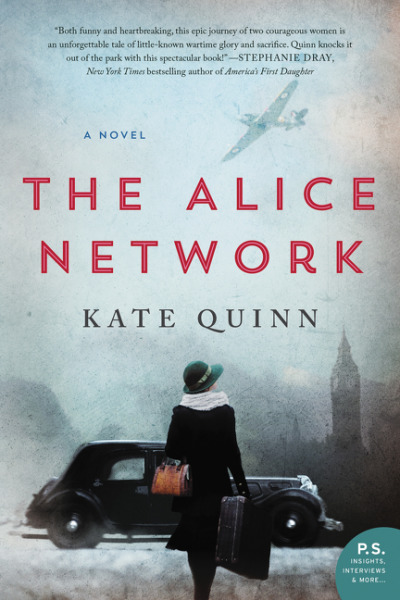
The Alice Network
Goodreads Choice Award
Nominee for Readers' Favorite Historical Fiction (2017)In an enthralling new historical novel from national bestselling author Kate Quinn, two women—a female spy recruited to the real-life Alice Network in France during World War I and an unconventional American socialite searching for her cousin in 1947—are brought together in a mesmerizing story of courage and redemption.
1947. In the chaotic aftermath of World War II, American college girl Charlie St. Clair is pregnant, unmarried, and on the verge of being thrown out of her very proper family. She's also nursing a desperate hope that her beloved cousin Rose, who disappeared in Nazi-occupied France during the war, might still be alive. So when Charlie's parents banish her to Europe to have her "little problem" taken care of, Charlie breaks free and heads to London, determined to find out what happened to the cousin she loves like a sister.
1915. A year into the Great War, Eve Gardiner burns to join the fight against the Germans and unexpectedly gets her chance when she's recruited to work as a spy. Sent into enemy-occupied France, she's trained by the mesmerizing Lili, code name Alice, the "queen of spies", who manages a vast network of secret agents right under the enemy's nose.
Thirty years later, haunted by the betrayal that ultimately tore apart the Alice Network, Eve spends her days drunk and secluded in her crumbling London house. Until a young American barges in uttering a name Eve hasn't heard in decades, and launches them both on a mission to find the truth...no matter where it leads.
1947. In the chaotic aftermath of World War II, American college girl Charlie St. Clair is pregnant, unmarried, and on the verge of being thrown out of her very proper family. She's also nursing a desperate hope that her beloved cousin Rose, who disappeared in Nazi-occupied France during the war, might still be alive. So when Charlie's parents banish her to Europe to have her "little problem" taken care of, Charlie breaks free and heads to London, determined to find out what happened to the cousin she loves like a sister.
1915. A year into the Great War, Eve Gardiner burns to join the fight against the Germans and unexpectedly gets her chance when she's recruited to work as a spy. Sent into enemy-occupied France, she's trained by the mesmerizing Lili, code name Alice, the "queen of spies", who manages a vast network of secret agents right under the enemy's nose.
Thirty years later, haunted by the betrayal that ultimately tore apart the Alice Network, Eve spends her days drunk and secluded in her crumbling London house. Until a young American barges in uttering a name Eve hasn't heard in decades, and launches them both on a mission to find the truth...no matter where it leads.
503 pages, Paperback
First published June 6, 2017
About the author
Kate Quinn
28 books46.1k followers--I use Goodreads to track and rate my current reading. Most of my reads are 4 stars, meaning I enjoyed it hugely and would absolutely recommend. 5 stars is blew-my-socks-off; reserved for rare reads. 3 stars is "enjoyed it, but something fell a bit short." I very rarely rate lower because I DNF books I'm not enjoying, and don't rate books I don't finish.--
Kate Quinn is the New York Times and USA Today bestselling author of historical fiction. A native of southern California, she attended Boston University where she earned a Bachelor’s and Master’s degree in Classical Voice. She has written four novels in the Empress of Rome Saga, and two books in the Italian Renaissance, before turning to the 20th century with “The Alice Network”, “The Huntress,” "The Rose Code," "The Diamond Eye," and "The Briar Club." She is also a co-author in several collaborative novels including "The Phoenix Crown" with Janie Chang and "Ribbons of Scarlet" with Stephanie Dray, Laura Kamoie, Eliza Knight, Sophie Perinot, and Heather Webb. "The Astral Library," releasing in 2026, is her first foray into magical realism. Kate and her husband now live in Maryland with their two rescue dogs.
Kate Quinn is the New York Times and USA Today bestselling author of historical fiction. A native of southern California, she attended Boston University where she earned a Bachelor’s and Master’s degree in Classical Voice. She has written four novels in the Empress of Rome Saga, and two books in the Italian Renaissance, before turning to the 20th century with “The Alice Network”, “The Huntress,” "The Rose Code," "The Diamond Eye," and "The Briar Club." She is also a co-author in several collaborative novels including "The Phoenix Crown" with Janie Chang and "Ribbons of Scarlet" with Stephanie Dray, Laura Kamoie, Eliza Knight, Sophie Perinot, and Heather Webb. "The Astral Library," releasing in 2026, is her first foray into magical realism. Kate and her husband now live in Maryland with their two rescue dogs.
Ratings & Reviews
Friends & Following
Create a free account to discover what your friends think of this book!
Community Reviews
Displaying 1 - 30 of 44,598 reviews

November 1, 2017
“Facing a pistol-wielding murderer does tend to put parents further down the list of things to be intimidated by.”
The Alice Network, to put it plainly, is too long a book for one of its two perspectives to not work for me. Most of my three star ratings are "I liked it, but...", though in this case it's more that I liked roughly half of the book and had to force myself not to skim through the other chapters.
Many historical books use the perspectives of two characters more successfully than this one, in my opinion. The first that springs to mind is Orphan Train, a book that also uses two female characters to tell stories in two very different time periods. In this book, Eve's tale during World War I is so gripping and dangerous that the story noticeably slows down and becomes dull when we are forced to return to Charlie's perspective in 1947.
In 1915, Eve Gardiner is recruited as a spy in the Alice Network, based on the very real story of Alice Dubois who led an espionage team in Lille during the First World War. Eve is a fiery character who refuses to be held back by conventional gender roles and the speech impediment she has struggled with her whole life. Going undercover during the German occupation of north-east France, Eve must play a part and, at times, lie through her teeth.
Years later, embittered and drunk, Eve still has nightmares. Then the air-headed American socialite - Charlie St. Clair - walks into her life, demanding to know what happened to her cousin Rose during the Second World War. Eventually, the two women's stories begin to overlap, but there's a whole lot of Charlie's whining and self-pitying to sit through before that happens.
Eve's story is absolutely fascinating. Female secret agents sneaking around under the enemy's nose makes Charlie's road trip to find her cousin seem bland in comparison. One half of this book is a thrilling and terrifying historical adventure; the other half is a love story and an overlong journey across France.
It didn't help that Charlie herself was bratty, immature and selfish. I rolled my eyes so many times during her chapters. And when you consider that this is a 500+ page book, that makes approximately 250 pages that I was reading just to make it through to the good stuff.
The ending pulls the two stories together, but I think by then it was a little too late for me.
Blog | Facebook | Twitter | Instagram | Youtube

June 12, 2017
In the last several years women from many different walks of life and ethnicities, and their integral contributions to the arts and science are being uncovered, recognized and brought to mainstream attention in books and movies. The Alice network, operating in France, is another such contribution, taking place during the first world war and was a spy network consisting of women. Women who put themselves in grave danger to collect information that the allies could use to defeat Germany.
I enjoyed the characters in this, became engrossed in their stories, such good characterizations; from the naive Charley, who shows tremendous growth during the course of this novel, to the irracible and hard drinking Eve, on to the delicious Finn, the Scotsman with a delicious bu'ur, well all I can say about him is be still my heart. Eve's story takes us back to the first world war, when she was part of the Network and her horrific experiences at the hand of a profiteer. Charley's story takes place in 1947, when she is looking for her cousin Rose who went missing in France. Fantastic, though tense filled stories, what these women risked with so little reward nor recognition.
The authors afterward clearly defines what who and what events were actual people or happenings. I think you will be surprised at just how much of this was based on fact. I was and so much of which I had never heard. The ending was a bit over the top, but if ever a book deserved a somewhat schmaltzy ending, it is this one.
I enjoyed the characters in this, became engrossed in their stories, such good characterizations; from the naive Charley, who shows tremendous growth during the course of this novel, to the irracible and hard drinking Eve, on to the delicious Finn, the Scotsman with a delicious bu'ur, well all I can say about him is be still my heart. Eve's story takes us back to the first world war, when she was part of the Network and her horrific experiences at the hand of a profiteer. Charley's story takes place in 1947, when she is looking for her cousin Rose who went missing in France. Fantastic, though tense filled stories, what these women risked with so little reward nor recognition.
The authors afterward clearly defines what who and what events were actual people or happenings. I think you will be surprised at just how much of this was based on fact. I was and so much of which I had never heard. The ending was a bit over the top, but if ever a book deserved a somewhat schmaltzy ending, it is this one.

July 15, 2018
I’m in the minority with this book. I did not like the author’s writing and found The Alice Network to be repetitious and quite tiresome.
There is no doubt that historically women played an important role in WWI and WWII. Their courage, sacrifice, and strength should be rejoiced. This book, however, really wasn’t about the history, it was all about 2 woman’s silly behavior.
1947’s Charlie St. Clair’s story was so flip. Pregnant and single, drunk, sleeping around - these should not be the highlights of a book written on a very serious matter - heroism. Her journey to look for her cousin Rose was not believable. I had a real hard time with her pregnancy called her “little problem” throughout the book. Very immature at the least.
I enjoyed some of the 1915 escapades of Lili and Eve when spying on the Germans and their collaborators during WWI. However, I can’t imagine the real Louise de Bettignes treating what she did every day so lightly. 1947’s Eve wasn’t written much better. PTSD should be treated in a more enlightening way. She needn’t be a raving drunk.
I really felt this book should have been classified as YA. This was chick lit at it’s worst. I think back to one of my favorite books on war, A Constellation of Vital Phenomena, where women are treated with dignity and have fierce loyalty.
1 out of 5 stars
There is no doubt that historically women played an important role in WWI and WWII. Their courage, sacrifice, and strength should be rejoiced. This book, however, really wasn’t about the history, it was all about 2 woman’s silly behavior.
1947’s Charlie St. Clair’s story was so flip. Pregnant and single, drunk, sleeping around - these should not be the highlights of a book written on a very serious matter - heroism. Her journey to look for her cousin Rose was not believable. I had a real hard time with her pregnancy called her “little problem” throughout the book. Very immature at the least.
I enjoyed some of the 1915 escapades of Lili and Eve when spying on the Germans and their collaborators during WWI. However, I can’t imagine the real Louise de Bettignes treating what she did every day so lightly. 1947’s Eve wasn’t written much better. PTSD should be treated in a more enlightening way. She needn’t be a raving drunk.
I really felt this book should have been classified as YA. This was chick lit at it’s worst. I think back to one of my favorite books on war, A Constellation of Vital Phenomena, where women are treated with dignity and have fierce loyalty.
1 out of 5 stars

July 9, 2017
"The Alice Network" was a nice escape for me. I enjoyed one part of the book but not the other. There are two storylines going on. I absolutely loved the story in 1915 but the story in 1947 was just OK for me. I didn't like the character of Charley nor that storyline. I'm not a huge fan of historical fiction so maybe it's just me. A lot of people loved this book.
I listened to the audio version. The narrator was very good. No problems there.
WWI storyline - 5 Stars
WWII storyline- 2.5 Stars
If you enjoy historical fiction you might really like this book.
I listened to the audio version. The narrator was very good. No problems there.
WWI storyline - 5 Stars
WWII storyline- 2.5 Stars
If you enjoy historical fiction you might really like this book.

August 15, 2017
What a fascinating story! And to discover it's based on a real woman, Louise de Bettignies or Alice Dubois. I love a good historical novel and this one ranks right up there. Telling two parallel tales, one of several female spies in Lille during WWI, the other of a pregnant college student looking for her cousin who went missing after the end of WWII. Eve Gardiner, one of the spies, is the link between the two stories. Both stories held my interest, which is a feat. I usually find with dual stories that one is more interesting than the other. I loved reading about what the spies were able to accomplish and the risks they were willing to take to achieve their information. This is a sad but ultimately redeeming tale of strength and courage.

May 8, 2017
I really loved this book. I hadn't read anything about women spies during WWI, lots about WWII, so this was unique. The characters were great, well described with lots of depth of understanding of what it was to be them.
I think this is one of the best historical fiction novels I have read this year. I will write a longer review and post to social media soon. I just wanted to get this posted so you will all still have time to request it!
There are so many great characters it's hard to say who my favorite is. The main protaganists are Charlie St. Clair who has just left her parents as they were checking into a suite in England. They are there to settle Charlie's "little problem" and then she can reappear for the Fall semester of school without anyone being the wiser. But Charlie has other ideas and when she flees the hotel she starts her search for her lost cousin, Rose, whom she was extremely close to in childhood. She is stated as missing and Charlie very much wanted to know whether she was killed or is still alive.
Eve Gardiner is the first contact that Charlie had to start her search. Eve we fairly quickly learn was a spy during WWI. She and her network of female spies are part of "The Alice Network" . The entire story of how Eve got recruited by Captain Cameron, her training and her "work" in German occupied France is vividly described and very interesting.
The book alternates chapters between Charlie and Eve, both stories were enticing to read and I did find myself reading quickly to get back to the other character, but I liked them equally well. They were both courageous and intelligent women and their stories are unique.
I would highly recommend this historical fiction novel even based on the characters alone, but I know you will enjoy the plot!
Thank you to Edelweiss who provided me with an ARC from the publisher.
I think this is one of the best historical fiction novels I have read this year. I will write a longer review and post to social media soon. I just wanted to get this posted so you will all still have time to request it!
There are so many great characters it's hard to say who my favorite is. The main protaganists are Charlie St. Clair who has just left her parents as they were checking into a suite in England. They are there to settle Charlie's "little problem" and then she can reappear for the Fall semester of school without anyone being the wiser. But Charlie has other ideas and when she flees the hotel she starts her search for her lost cousin, Rose, whom she was extremely close to in childhood. She is stated as missing and Charlie very much wanted to know whether she was killed or is still alive.
Eve Gardiner is the first contact that Charlie had to start her search. Eve we fairly quickly learn was a spy during WWI. She and her network of female spies are part of "The Alice Network" . The entire story of how Eve got recruited by Captain Cameron, her training and her "work" in German occupied France is vividly described and very interesting.
The book alternates chapters between Charlie and Eve, both stories were enticing to read and I did find myself reading quickly to get back to the other character, but I liked them equally well. They were both courageous and intelligent women and their stories are unique.
I would highly recommend this historical fiction novel even based on the characters alone, but I know you will enjoy the plot!
Thank you to Edelweiss who provided me with an ARC from the publisher.

January 29, 2025
shockingly, i didnt love this as much as i thought i would. i wanted wayy more from eve's point of view and the ending just felt super rushed? i think the more historical fiction i read, the harder it is to wow me lol

October 4, 2017
2.5 stars. I'm disappointed in myself for not enjoying this more than I did. I really thought I would love this book, yet I barely even liked it.
I really enjoyed learning about The Alice Network and that amazing piece of history involving female spies. These women were brave secret agents leading double lives during WWII aiding their country in uncovering highly classified information. These unsung heroes risked their lives as much as any soldier on the battlefield and I have so much admiration and respect for them. The Author's Note at the end of the book was wonderful in explaining a lot of historical detail and once I read that, I decided to round up to 3 stars instead of down to 2 stars.
While I enjoyed the educational piece of this novel, I had a very hard time connecting with the storyline and characters. The 1947 storyline centered around Charlie who I had a very hard time with. Her character was highly unlikeable and unrealistic to me, her actions often making me cringe in disgust. She was very selfish and immature and I couldn't find even one ounce of sympathy for her. There were a few things about her character and storyline that I wondered why the author chose to include - they seemed unnecessary and took away from the seriousness of the story for me. I grew to dread reading Charlie's chapters after about the halfway mark. She really took away from my overall enjoyment of this novel.
I know I am in the minority with my feelings toward this book, so please read the numerous other raving reviews before making a decision and please visit the Traveling Sisters link listed below to see how our group had varying reactions and opinions of this book. It was an incredible experience to read this along with my Traveling Sisters Brenda, Norma, Susanne and JanB.
To find our full Traveling Sister Read review, please visit Norma and Brenda's fabulous blog at:
https://twogirlslostinacouleereading....
I really enjoyed learning about The Alice Network and that amazing piece of history involving female spies. These women were brave secret agents leading double lives during WWII aiding their country in uncovering highly classified information. These unsung heroes risked their lives as much as any soldier on the battlefield and I have so much admiration and respect for them. The Author's Note at the end of the book was wonderful in explaining a lot of historical detail and once I read that, I decided to round up to 3 stars instead of down to 2 stars.
While I enjoyed the educational piece of this novel, I had a very hard time connecting with the storyline and characters. The 1947 storyline centered around Charlie who I had a very hard time with. Her character was highly unlikeable and unrealistic to me, her actions often making me cringe in disgust. She was very selfish and immature and I couldn't find even one ounce of sympathy for her. There were a few things about her character and storyline that I wondered why the author chose to include - they seemed unnecessary and took away from the seriousness of the story for me. I grew to dread reading Charlie's chapters after about the halfway mark. She really took away from my overall enjoyment of this novel.
I know I am in the minority with my feelings toward this book, so please read the numerous other raving reviews before making a decision and please visit the Traveling Sisters link listed below to see how our group had varying reactions and opinions of this book. It was an incredible experience to read this along with my Traveling Sisters Brenda, Norma, Susanne and JanB.
To find our full Traveling Sister Read review, please visit Norma and Brenda's fabulous blog at:
https://twogirlslostinacouleereading....

September 29, 2017
2.5 stars, rounded down
My favorite part of the book was learning about the female spy network during WWI, called the Alice Network. The name is taken from the leader, the real-life Louise de Bettignies, who used the pseudonym Alice Dubois. What a shame these women went so long without getting the recognition they so deserved. They were truly brave and inspiring women who saved the lives of many with the information they obtained and passed along.
And therein lies the problem I have with much of historical fiction: I find the true story much more interesting and inspiring than the fictional one.
In this book, there are two timelines, one set in WWI featuring Eve, a spy in the Alice Network, and the other is set in 1947, where Charlie (Charlotte), a foolish, vapid young woman, pregnant and unwed, goes on a search for her cousin Rose, who went missing during WWII. They meet and their stories eventually intersect.
My overall feeling was disappointment that a book based on such an important part of history was dealt with in such a fluffy, light way vs. a more literary approach. It’s a style of writing that I don’t care for, so take my opinion with a grain of salt.
This was thinly disguised chick-lit and Charlie set my teeth on edge and my eyes rolling, especially when she directed her thoughts toward “My Little Problem”, i.e., her pregnancy. Much was made of her being a math major and she makes up silly, juvenile “equations” that don’t involve math at all. I realize times were different in the 40s, and there weren't the warnings we have today, but her level of drinking while pregnant was concerning. I'm pretty sure she would have had a baby with fetal alcohol syndrome. It seemed irresponsible to write her character this way and added nothing positive to the story.
The novel would have benefitted if the story had focused solely on Eve and the network of spies. I didn’t feel Charlie’s story added anything worthwhile to the book, and there was too much focus on the romantic and sexual lives of the characters.
I did enjoy the author’s note at the end and I added a star for learning about the Alice Network.
My favorite part of the book was learning about the female spy network during WWI, called the Alice Network. The name is taken from the leader, the real-life Louise de Bettignies, who used the pseudonym Alice Dubois. What a shame these women went so long without getting the recognition they so deserved. They were truly brave and inspiring women who saved the lives of many with the information they obtained and passed along.
And therein lies the problem I have with much of historical fiction: I find the true story much more interesting and inspiring than the fictional one.
In this book, there are two timelines, one set in WWI featuring Eve, a spy in the Alice Network, and the other is set in 1947, where Charlie (Charlotte), a foolish, vapid young woman, pregnant and unwed, goes on a search for her cousin Rose, who went missing during WWII. They meet and their stories eventually intersect.
My overall feeling was disappointment that a book based on such an important part of history was dealt with in such a fluffy, light way vs. a more literary approach. It’s a style of writing that I don’t care for, so take my opinion with a grain of salt.
This was thinly disguised chick-lit and Charlie set my teeth on edge and my eyes rolling, especially when she directed her thoughts toward “My Little Problem”, i.e., her pregnancy. Much was made of her being a math major and she makes up silly, juvenile “equations” that don’t involve math at all. I realize times were different in the 40s, and there weren't the warnings we have today, but her level of drinking while pregnant was concerning. I'm pretty sure she would have had a baby with fetal alcohol syndrome. It seemed irresponsible to write her character this way and added nothing positive to the story.
The novel would have benefitted if the story had focused solely on Eve and the network of spies. I didn’t feel Charlie’s story added anything worthwhile to the book, and there was too much focus on the romantic and sexual lives of the characters.
I did enjoy the author’s note at the end and I added a star for learning about the Alice Network.

August 3, 2017
Oh dear! I slogged through about 150 pages of this 500 page book before giving up. It purports to be historical fiction, set partly in 1915 and partly in 1947. I say purports, because just telling us the date won't really convince the reader, when a young woman in 1947 says "nice wheels" in reference to a car. And then back in 1915, writing about Folkestone and the refugees there, we are told that "more French and Belgian (was) heard on the docks than English". Belgian is a language? Who knew?
The story of Louise de Bettignies, working as a spy in France and Belgium during the Great War, deserves to be told, but told well. A lot of people seem to have enjoyed this book. I wasn't one of them.
The story of Louise de Bettignies, working as a spy in France and Belgium during the Great War, deserves to be told, but told well. A lot of people seem to have enjoyed this book. I wasn't one of them.

July 29, 2020
The WWI/WWII historical fiction genre has become pretty saturated over the past decade. You will find almost as many books about women in this era as you will find books with Girl/Woman in the title! Because of this, for me, I have become somewhat jaded by what ends up feeling like rehashed storylines or authors trying to force their style into a genre that they were not prepared to write in. (see The Lost Girls of Paris) Because of this, I have shied away from this genre for a few years.
Recently, The Alice Network came highly recommended by my wife and Father-In-Law. 99.9% of the time I have been able to confidently trust their judgement of books so I figured I would give it a try and hopefully cleanse my palate of other books from this genre that did not stack up. Was it good? Am I glad I read it? Is my faith in WWI/WWII historical fiction centered around female protagonists restored? Yes, yes, and yes!
The Alice network was great – I was riveted, never bored, and never wanted to stop reading. The stories of the two main female characters were told in different time periods of the early to mid-20th century but flowed and meshed together perfectly so as to become intertwined into one main story by the end. The writing was great, and the characters were interesting. There was some romance, but not too heavy, sappy, or cheesy for my tastes. I cannot say for sure how accurate the historical details were, but they seemed very well researched and were delivered with believability.
Oh, and another important aspect to let you know about. If you have read my reviews before you know that I love truly despicable bad guys (see East of Eden). This book has one so slimy and awful and who does such mind-blowingly terrible things to one of our protagonists, I loved to hate him! If you enjoy feeling really good about cheering against the really bad, this is a perfect book for you.
The Alice Network book definitely worth giving a try if you are a historical fiction fan. If you, like me, have been jaded with this genre, this may just be the perfect title to get you out of your funk.
Recently, The Alice Network came highly recommended by my wife and Father-In-Law. 99.9% of the time I have been able to confidently trust their judgement of books so I figured I would give it a try and hopefully cleanse my palate of other books from this genre that did not stack up. Was it good? Am I glad I read it? Is my faith in WWI/WWII historical fiction centered around female protagonists restored? Yes, yes, and yes!
The Alice network was great – I was riveted, never bored, and never wanted to stop reading. The stories of the two main female characters were told in different time periods of the early to mid-20th century but flowed and meshed together perfectly so as to become intertwined into one main story by the end. The writing was great, and the characters were interesting. There was some romance, but not too heavy, sappy, or cheesy for my tastes. I cannot say for sure how accurate the historical details were, but they seemed very well researched and were delivered with believability.
Oh, and another important aspect to let you know about. If you have read my reviews before you know that I love truly despicable bad guys (see East of Eden). This book has one so slimy and awful and who does such mind-blowingly terrible things to one of our protagonists, I loved to hate him! If you enjoy feeling really good about cheering against the really bad, this is a perfect book for you.
The Alice Network book definitely worth giving a try if you are a historical fiction fan. If you, like me, have been jaded with this genre, this may just be the perfect title to get you out of your funk.

November 24, 2017
“Facing a pistol-wielding murderer does tend to put parents further down the list of things to be intimidated by.”
― Kate Quinn, The Alice Network
This is a very short review, but I couldn't stay completely silent on this book. The Alice Network is excellent, and I might go so far as to say it is among my favorites this year, or even among my favorite historical fiction novels ever. It had everything I wanted - mystery, history, adventure, drama, romance, wit - and though it is quite long, I was never bored. I borrowed this from the library, but will buy a copy now, because I just liked it so much. Highly recommended, Kate Quinn has a new fan!
Find more reviews and bookish fun at http://www.princessandpen.com
― Kate Quinn, The Alice Network
This is a very short review, but I couldn't stay completely silent on this book. The Alice Network is excellent, and I might go so far as to say it is among my favorites this year, or even among my favorite historical fiction novels ever. It had everything I wanted - mystery, history, adventure, drama, romance, wit - and though it is quite long, I was never bored. I borrowed this from the library, but will buy a copy now, because I just liked it so much. Highly recommended, Kate Quinn has a new fan!
Find more reviews and bookish fun at http://www.princessandpen.com

Want to Read
March 12, 2025A bad ass woman spy? Say less.

January 16, 2023
For 2023, I’ve committed to reading some of my own books I own, instead of going for the shiny new one the library has.
Quinn has become my travelling companion. Loved the Diamond eye which I read in France last year. Now I have dusted off this one and she is joining me on the beaches of st.Lucia.
This is a twofer. It is historically paralleled - first Great War (1915) and end of WWll (1949) with Eve being in both. A British spy in the first war and the trauma she suffered to the present day (1949) where she has been asked by a young girl to help locate her missing cousin. Revisiting the locations years later, jars Eve’s memory into sharp focus and the years sacrificed being a spy.
This was fascinating. The Alice Network being a group of women spies. Trained to bring intel to the Brit’s.
Historical buffs will love this one as it is based on some truths. It was intense at times, brutal even. Themes of early pregnancy, trust, grief, shame. And most significantly, the role women played during both wars. 4⭐️
Quinn has become my travelling companion. Loved the Diamond eye which I read in France last year. Now I have dusted off this one and she is joining me on the beaches of st.Lucia.
This is a twofer. It is historically paralleled - first Great War (1915) and end of WWll (1949) with Eve being in both. A British spy in the first war and the trauma she suffered to the present day (1949) where she has been asked by a young girl to help locate her missing cousin. Revisiting the locations years later, jars Eve’s memory into sharp focus and the years sacrificed being a spy.
This was fascinating. The Alice Network being a group of women spies. Trained to bring intel to the Brit’s.
Historical buffs will love this one as it is based on some truths. It was intense at times, brutal even. Themes of early pregnancy, trust, grief, shame. And most significantly, the role women played during both wars. 4⭐️

August 7, 2017
Decent story, repetitive writing. Author shouldn't have made her character a math major if the only point of doing so was to add super annoying 'this situation + this person divided by this other thing = an outcome.' That's not math, it's a sloppy shortcut to sum up a character's internal dialogue.

March 27, 2019
4.5 rounded to 5 stars
Over the last few months, I can’t seem to get enough of these World War I and II historical fiction novels. Almost every one I have read has been such high quality, and this one is no exception.
As is often the case in these stories, there are two timelines (1915-1916 and mostly 1947). I found myself equally engrossed in both. Eve Gardiner features prominently in both eras. For much of the book I found it difficult to reconcile the Eve during WWI with the post-WWII Eve. They seem like different people. The two images do eventually merge as we come to understand how the transformation occurred. This created a little confusion for me early on, but was not a huge determent to my enjoyment of the story. The book is also a little long. Otherwise, I thought it was superb.
Make sure you read the riveting Author’s Notes at the end. I was surprised and delighted to see that much of the story is based in truth. The research that went into writing this book is immense, and the author deserves so much credit for that. We get everything in this novel: fascinating characters, gripping storylines, high suspense, further insights into WWI, and a bit of romance. I especially loved learning more about the French Resistance spy network during WWI, in particular the real Alice Network headed by a woman (code name Alice Dubois).
This is a rich and absorbing read highlighted by outstanding writing. I found myself caring a great deal for the characters, flawed as they are. I highly recommend The Alice Network to all those interested in historical fiction set in or around the time of the World Wars. I look forward to Ms. Quinn’s next book, The Huntress.
Over the last few months, I can’t seem to get enough of these World War I and II historical fiction novels. Almost every one I have read has been such high quality, and this one is no exception.
As is often the case in these stories, there are two timelines (1915-1916 and mostly 1947). I found myself equally engrossed in both. Eve Gardiner features prominently in both eras. For much of the book I found it difficult to reconcile the Eve during WWI with the post-WWII Eve. They seem like different people. The two images do eventually merge as we come to understand how the transformation occurred. This created a little confusion for me early on, but was not a huge determent to my enjoyment of the story. The book is also a little long. Otherwise, I thought it was superb.
Make sure you read the riveting Author’s Notes at the end. I was surprised and delighted to see that much of the story is based in truth. The research that went into writing this book is immense, and the author deserves so much credit for that. We get everything in this novel: fascinating characters, gripping storylines, high suspense, further insights into WWI, and a bit of romance. I especially loved learning more about the French Resistance spy network during WWI, in particular the real Alice Network headed by a woman (code name Alice Dubois).
This is a rich and absorbing read highlighted by outstanding writing. I found myself caring a great deal for the characters, flawed as they are. I highly recommend The Alice Network to all those interested in historical fiction set in or around the time of the World Wars. I look forward to Ms. Quinn’s next book, The Huntress.

November 24, 2023
“Marguerite, Lili, and Violette.” He smiled, and the worry in his eyes bordered on agony. “My flowers.” “Fleurs du mal,”Summer 1947, Eve was waiting again. You see, Eve was good at waiting. She’d waited more than thirty years to shoot René Bordelon, after all, and ever since then she had spent a good deal of time waiting under a killing sun for game. Shooting René had taught Eve just how much she liked to stalk, hunt, and kill dangerous things.
Eve heard herself saying, and shivered. “What?” “Baudelaire. We are not flowers to be plucked and shielded, Captain. We are flowers who flourish in evil.”
In May, 1947 Charlie is looking for her cousin, Rose. Thirty years prior, Eve and Lili served as spies in the Alice network to help in the war effort. When Charlie and Eve's paths collide in a emotional whirlwind of flashbacks and past-present nightmares, they do not much care for each other until they realize they share a common monster, René.
His face was hard against mine at the final shudder that speared us both, and I felt a tear slide between our pressed cheeks. I didn’t know which of us it had come from. But I didn’t care. It hadn’t come from grief, and that was enough.I cried so much reading this. I could blame it on the sensitive topics of war, ptsd, unwanted pregnancy, torture, misogyny, physical abuse, addiction. But in the end, I think it's just how real it is- that even when it ends in happiness and peace, everyone is still left a little bit broken.
Find The Alice network on Amazon/Kindle/Audible 💖
***
I'm in the mood for some historical fiction. oh my, am I a mood reader now? 🤭

June 22, 2020
Read it for the second time and I was as mesmerized by it as the first time. Quinn writes compelling stories based on true events, and it’s magical to be able to go back in time and experience a completely different world.

December 2, 2023
Why I chose to read this book:
1. I saw all the high ratings via Goodreads and found a used copy at a local thrift shop;
2. I have other books by Kate Quinn on my WTR list, but I thought I should read this earlier publication first; and,
3. November 2023 is my "Wars of the 20th-Century Historical Fiction" Month.
Praises:
1. I am fascinated by stories about female spies. I learned something new about Frenchwoman Louise de Bettignies (alias Alice Dubois), who headed The Alice Network, spying on the Germans for the British during WWI. Interesting details were provided as to how information was gleaned from the enemy and eventually smuggled to the British intelligence;
2. I enjoyed Eve's story, for the most part, as it was more adventurous and suspenseful than Charlie's story; and,
3. I appreciated the inclusion of the map.
Niggles:
1. EVERYTHING about Charlie! Nuff said;
2. sex and "romance" seem to be major plot lines, which really got in the way of what could have been a compelling story, making it sound more like "chick-lit" rather than historical fiction. At times, it was so mindboggling! For example:
- Eve (aka Marguerite) seemed confused that she may be enjoying sex with "evil" Rene (in order to get vital information) and confides her troubling thoughts to Lili, who responds, "...it is entirely possible to despise a man and still enjoy him between the sheets." Like, what the ...?? With this kind of thinking, does that mean rape victims can enjoy the sex imposed on them? With lines like these, Quinn is just perpetuating this harmful myth!
- Rene Bordelon - this despicable profiteer is so unbelievable! Even though his character comes across as sinister and suspicious, he often divulges secrets to Eve during their "pillow talks"! Huh???
- Charlie's "sexcapades" were just ridiculous. Wait a minute, Charlie herself was just ridiculous;
- I'm really tired of reading stories where adultery is okay, as long as the guy's wife is a b*tch;
3. this dual timeline felt like page-filler; and,
4. the ending was too neatly wrapped up for everyone in this story, even though two of the main characters obviously have PTSD.
Overall Thoughts:
This book took me quite a while to finish due to the constant eyerolling. These unbelievable characters just didn't work for me.
Actually, I would have preferred a biographical fiction focusing on Louise de Bettignies (since the title is really about her) like Ariel Lawhon did with her book Code Name Hélène about Australian spy, Nancy Wake.
As for this particular book, it was just okay for me. Back to the thrift store it goes!
1. I saw all the high ratings via Goodreads and found a used copy at a local thrift shop;
2. I have other books by Kate Quinn on my WTR list, but I thought I should read this earlier publication first; and,
3. November 2023 is my "Wars of the 20th-Century Historical Fiction" Month.
Praises:
1. I am fascinated by stories about female spies. I learned something new about Frenchwoman Louise de Bettignies (alias Alice Dubois), who headed The Alice Network, spying on the Germans for the British during WWI. Interesting details were provided as to how information was gleaned from the enemy and eventually smuggled to the British intelligence;
2. I enjoyed Eve's story, for the most part, as it was more adventurous and suspenseful than Charlie's story; and,
3. I appreciated the inclusion of the map.
Niggles:
1. EVERYTHING about Charlie! Nuff said;
2. sex and "romance" seem to be major plot lines, which really got in the way of what could have been a compelling story, making it sound more like "chick-lit" rather than historical fiction. At times, it was so mindboggling! For example:
- Eve (aka Marguerite) seemed confused that she may be enjoying sex with "evil" Rene (in order to get vital information) and confides her troubling thoughts to Lili, who responds, "...it is entirely possible to despise a man and still enjoy him between the sheets." Like, what the ...?? With this kind of thinking, does that mean rape victims can enjoy the sex imposed on them? With lines like these, Quinn is just perpetuating this harmful myth!
- Rene Bordelon - this despicable profiteer is so unbelievable! Even though his character comes across as sinister and suspicious, he often divulges secrets to Eve during their "pillow talks"! Huh???
- Charlie's "sexcapades" were just ridiculous. Wait a minute, Charlie herself was just ridiculous;
- I'm really tired of reading stories where adultery is okay, as long as the guy's wife is a b*tch;
3. this dual timeline felt like page-filler; and,
4. the ending was too neatly wrapped up for everyone in this story, even though two of the main characters obviously have PTSD.
Overall Thoughts:
This book took me quite a while to finish due to the constant eyerolling. These unbelievable characters just didn't work for me.
Actually, I would have preferred a biographical fiction focusing on Louise de Bettignies (since the title is really about her) like Ariel Lawhon did with her book Code Name Hélène about Australian spy, Nancy Wake.
As for this particular book, it was just okay for me. Back to the thrift store it goes!

June 18, 2018
Steel blades such as you and I do not measure against standards for ordinary women.
Louise de Bettignies
If this book was an anime, Charlie St. Claire would be what we call ‘filler’: A character or episode that is non-canon and was just there to make the anime longer, hence, filler.
This is, of course, absolutely a personal experience but Charlie’s chapters more often than not were always always in the way of the bigger, more important action. I felt like I spent half the book trying to get her out of the way.
Eve, on the other hand, was an excellent main character. She was scared out of her mind but she pushed on. If the book was told from Eve’s and Lili’s perspective then it would have been so much more. The bravery and courage was simply astounding, then you find out in ‘acknowledgement’ section that the novel actually drew heavily from real accounts of Violette..... Speechless.
War is the real beast: so ugly and leaves no one untouched, one way or another. How lucky I am to have to be born in a time of ‘peace’.... Owed to these inspiring women (and men). I am so grateful.
“What about your war?”
Because everyone’s war was different.

February 5, 2019
“There are two kinds of flowers when it comes to women,” Eve said. “The kind that sit safe in a beautiful vase, or the kind that survive in any conditions . . . even in evil. Lili was the latter. Which are you?”
This book brings together two incredibly different women; one, a female spy recruited in WW1 for the Alice Network to spy on those involved in the occupation in France during 1915. The other, an unconventional American socialite, pregnant, and in search for her missing cousin who disappeared in France during WW2. It is 1947 when the 'yank' bursts into the 'spies' derelict house and the two women come face to face, both with a connection to ghosts that they are chasing.
The timeline of the book shifts between 1915 and 1947. In 1915 Eve Gardiner wants nothing more than to join the fight, but is dismayed when all of the posters and recruitment's only want male fighters. Instead she is unexpectedly recruited and trained as a spy and is sent to enemy, occupied France. Here she meets the mesmerising head of The Alice Network, "Alice Dubois" (AKA Lili, real name: Louise de Bettignes) and is working with other secret women agents right under the enemies noses. During Eve's time here, the information collecting and passing information, going undetected, is riddled with danger and the reader gets a real sense of dread and anxiety for these women and the tasks that they face.
Switching to 1947, Eve Gardiner is traumatised by the ending of The Alice Network and what she has witnessed and endured during both World Wars. She spends her days drunk and secluded in a dark, crumbling London House. One day, suddenly, Charlie St Clair; the American socialite, barges into Eve's life on a mission of her own and uttering a name that Eve has not heard in decades, shocked, they both begin to work together to uncover the truth. The point of view of 1947 is mainly told from Charlies view.
This book is a tale of retribution and revenge, as well as being able to forgive oneself. It tells a woman's story of how society treated women during these time periods. Both time lines specifically dealt with pregnancies in countries where abortion was not yet legal and unwed mothers are seen as shameful. This book also focused on how PTSD effected both female leads, either directly or through family members suffering, and how this disorder was not effectively discovered, diagnosed or treated.
I found this book showed the strong backbone of war through women's work, featuring brave and resilient women characters. It showed the suffering of character's as they endured human rights violations and crimes against humanity, the severe torment they had to go through. The characters of those involved in the Alice Network, Eve and Louise de Bettignies, were completely fascinating characters, consistently risking ones life to get a message to British Captains and going undetected when gaining information.
This book had utterly exquisite story telling and it is amazing how much information the author lifted from true life. For example, while Eve Gardiner and Charlie St Clair are fictional, Louise de Bettignies "The Queen of Spies" and the Alice Network were real and operational during WW1.
This was a whirlwind of a story and was unputdownable.
This book brings together two incredibly different women; one, a female spy recruited in WW1 for the Alice Network to spy on those involved in the occupation in France during 1915. The other, an unconventional American socialite, pregnant, and in search for her missing cousin who disappeared in France during WW2. It is 1947 when the 'yank' bursts into the 'spies' derelict house and the two women come face to face, both with a connection to ghosts that they are chasing.
The timeline of the book shifts between 1915 and 1947. In 1915 Eve Gardiner wants nothing more than to join the fight, but is dismayed when all of the posters and recruitment's only want male fighters. Instead she is unexpectedly recruited and trained as a spy and is sent to enemy, occupied France. Here she meets the mesmerising head of The Alice Network, "Alice Dubois" (AKA Lili, real name: Louise de Bettignes) and is working with other secret women agents right under the enemies noses. During Eve's time here, the information collecting and passing information, going undetected, is riddled with danger and the reader gets a real sense of dread and anxiety for these women and the tasks that they face.
Switching to 1947, Eve Gardiner is traumatised by the ending of The Alice Network and what she has witnessed and endured during both World Wars. She spends her days drunk and secluded in a dark, crumbling London House. One day, suddenly, Charlie St Clair; the American socialite, barges into Eve's life on a mission of her own and uttering a name that Eve has not heard in decades, shocked, they both begin to work together to uncover the truth. The point of view of 1947 is mainly told from Charlies view.
This book is a tale of retribution and revenge, as well as being able to forgive oneself. It tells a woman's story of how society treated women during these time periods. Both time lines specifically dealt with pregnancies in countries where abortion was not yet legal and unwed mothers are seen as shameful. This book also focused on how PTSD effected both female leads, either directly or through family members suffering, and how this disorder was not effectively discovered, diagnosed or treated.
I found this book showed the strong backbone of war through women's work, featuring brave and resilient women characters. It showed the suffering of character's as they endured human rights violations and crimes against humanity, the severe torment they had to go through. The characters of those involved in the Alice Network, Eve and Louise de Bettignies, were completely fascinating characters, consistently risking ones life to get a message to British Captains and going undetected when gaining information.
This book had utterly exquisite story telling and it is amazing how much information the author lifted from true life. For example, while Eve Gardiner and Charlie St Clair are fictional, Louise de Bettignies "The Queen of Spies" and the Alice Network were real and operational during WW1.
This was a whirlwind of a story and was unputdownable.

October 9, 2017
3 Stars.
The Alice Network was a Traveling Sister Group Read with Norma, Brenda, Lindsay and JanB. The sisters were split on this one, which was quite interesting!
The Premise of The Alice Network is a fascinating one: a historical novel based on the true story of a female spy network which took place during World War I. The best part of it for me however, was reading it with my sisters.
This is a novel told in two timelines.
In 1915: Eve Gardiner and Lilli are spies: Eve is a seemingly innocent, yet brilliant woman who becomes a spy for the Alice Network at the height of World War I. She lies easily and laughs in the face of danger. Eve is funny, tough resilient. A survivor. Lilli teaches Eve everything she needs to know. And Lilli is the best and the brightest female spy ever.
The war, however was tough. Hard fought as well all know. Years later, Eve is angry - a gun toting shell of her former self.
In 1947: Charlie is a young teenage girl who, after getting pregnant, is thrown out of her New York home because of her “situation.” Searching for her cousin Rose, Charlie treks to London. There she meets Eve Gardiner and Finn (her cook and driver). They all form a bond. However, Charlie is childish, idiotic, immature and cringe-worthy, even: calling her child the “little problem,” getting drunk every single night while extremely pregnant, She also had sexual relations with several young men during time period, which frankly just didn’t fit the novel, in my opinion.
Eve’s story was fabulous, had the book been just about her, I would have given it 5 stars. Charlie’s story ruined it for me however (I gave hers 2 stars). The author’s note added a lot to the story, which made me raise the novel to 3 stars.
For the full Traveling Sister’s Group Read Review, please see Norma and Brenda’s blog:
https://twogirlslostinacouleereading....
Published on Goodreads and Twitter on 10.9.17
The Alice Network was a Traveling Sister Group Read with Norma, Brenda, Lindsay and JanB. The sisters were split on this one, which was quite interesting!
The Premise of The Alice Network is a fascinating one: a historical novel based on the true story of a female spy network which took place during World War I. The best part of it for me however, was reading it with my sisters.
This is a novel told in two timelines.
In 1915: Eve Gardiner and Lilli are spies: Eve is a seemingly innocent, yet brilliant woman who becomes a spy for the Alice Network at the height of World War I. She lies easily and laughs in the face of danger. Eve is funny, tough resilient. A survivor. Lilli teaches Eve everything she needs to know. And Lilli is the best and the brightest female spy ever.
The war, however was tough. Hard fought as well all know. Years later, Eve is angry - a gun toting shell of her former self.
In 1947: Charlie is a young teenage girl who, after getting pregnant, is thrown out of her New York home because of her “situation.” Searching for her cousin Rose, Charlie treks to London. There she meets Eve Gardiner and Finn (her cook and driver). They all form a bond. However, Charlie is childish, idiotic, immature and cringe-worthy, even: calling her child the “little problem,” getting drunk every single night while extremely pregnant, She also had sexual relations with several young men during time period, which frankly just didn’t fit the novel, in my opinion.
Eve’s story was fabulous, had the book been just about her, I would have given it 5 stars. Charlie’s story ruined it for me however (I gave hers 2 stars). The author’s note added a lot to the story, which made me raise the novel to 3 stars.
For the full Traveling Sister’s Group Read Review, please see Norma and Brenda’s blog:
https://twogirlslostinacouleereading....
Published on Goodreads and Twitter on 10.9.17

January 19, 2021
2.5 stars
Not sure how many stars should I give this book.. two? three? I enjoyed Eve's plot as a spy but Charlie's wasn't interesting AT ALL. And then she kept mentioning Rose and "seeing her everywhere" made me roll my eyes. Her affection for her was overdone.
I doubt I'm going to write a review of this one, I have read several and the general opinion is Eve great plot, Charlotte not so much. And I completely agree with that. Her parts bored me and all I wanted was to know more about Eve's spying days.
I decided to round it down to two stars because yes I enjoyed Eve's story but I couldn't care about the characters other than oh interesting kind of way.
Not sure how many stars should I give this book.. two? three? I enjoyed Eve's plot as a spy but Charlie's wasn't interesting AT ALL. And then she kept mentioning Rose and "seeing her everywhere" made me roll my eyes. Her affection for her was overdone.
I doubt I'm going to write a review of this one, I have read several and the general opinion is Eve great plot, Charlotte not so much. And I completely agree with that. Her parts bored me and all I wanted was to know more about Eve's spying days.
I decided to round it down to two stars because yes I enjoyed Eve's story but I couldn't care about the characters other than oh interesting kind of way.

March 30, 2020
4.5 stars.
"Why did it matter if something scared you, when it simply had to be done anyway?"
Bravery can come from the least likely of sources. And in Kate Quinn's The Alice Network , she weaves together a story of some brave but unknown women from history with some fictitious ones.
In 1947, Charlotte “Charlie” St. Clair has been dragged to Europe by her mother. Charlie is 19, pregnant, and unmarried, and the plan is to go to Switzerland to have her “little problem” taken care of. But Charlie is less interested in dealing with her own issues and would rather try to find her beloved cousin Rose, who disappeared during WWII.
Charlie escapes her mother’s clutches and flees to London to try and find a woman who supposedly can help her. When she meets Eve Gardiner, the woman is drunk, angry, and pointing a gun at Charlie, and refuses to help her. But when Charlie utters one man’s name, and the French city where Rose had supposedly gone during the war, Eve reluctantly agrees to help.
It turns out that Eve isn’t just a drunk older woman—during WWI she was a spy, part of the Alice Network, a group of women trained to ferret out information from the most dangerous of sources. Stationed in France, Eve was excellent at her job, until something goes awry, and a betrayal tears down the whole network. She bears the physical and emotional scars all these years later.
This is a great historical fiction book, alternating between Eve’s time in France in 1915 and Charlie’s 1947 efforts to find Rose. It’s intense, suspenseful, and emotional, and although it was a tiny bit too long, I really devoured it. I've heard Quinn's other book, The Huntress , is good as well.
It's funny: I often say that historical fiction isn't my thing because I'd much rather read contemporary stories than anything else. But strangely enough, all of the historical fiction I've read lately (without really considering it "historical") has been pretty great. So now I'm just a big contradiction, lol.
Check out my list of the best books I read in 2019 at https://itseithersadnessoreuphoria.blogspot.com/2020/01/the-best-books-i-read-in-2019.html.
Check out my list of the best books of the decade at https://itseithersadnessoreuphoria.blogspot.com/2020/01/my-favorite-books-of-decade.html.
See all of my reviews at itseithersadnessoreuphoria.blogspot.com.
Follow me on Instagram at https://www.instagram.com/the.bookishworld.of.yrralh/.
"Why did it matter if something scared you, when it simply had to be done anyway?"
Bravery can come from the least likely of sources. And in Kate Quinn's The Alice Network , she weaves together a story of some brave but unknown women from history with some fictitious ones.
In 1947, Charlotte “Charlie” St. Clair has been dragged to Europe by her mother. Charlie is 19, pregnant, and unmarried, and the plan is to go to Switzerland to have her “little problem” taken care of. But Charlie is less interested in dealing with her own issues and would rather try to find her beloved cousin Rose, who disappeared during WWII.
Charlie escapes her mother’s clutches and flees to London to try and find a woman who supposedly can help her. When she meets Eve Gardiner, the woman is drunk, angry, and pointing a gun at Charlie, and refuses to help her. But when Charlie utters one man’s name, and the French city where Rose had supposedly gone during the war, Eve reluctantly agrees to help.
It turns out that Eve isn’t just a drunk older woman—during WWI she was a spy, part of the Alice Network, a group of women trained to ferret out information from the most dangerous of sources. Stationed in France, Eve was excellent at her job, until something goes awry, and a betrayal tears down the whole network. She bears the physical and emotional scars all these years later.
This is a great historical fiction book, alternating between Eve’s time in France in 1915 and Charlie’s 1947 efforts to find Rose. It’s intense, suspenseful, and emotional, and although it was a tiny bit too long, I really devoured it. I've heard Quinn's other book, The Huntress , is good as well.
It's funny: I often say that historical fiction isn't my thing because I'd much rather read contemporary stories than anything else. But strangely enough, all of the historical fiction I've read lately (without really considering it "historical") has been pretty great. So now I'm just a big contradiction, lol.
Check out my list of the best books I read in 2019 at https://itseithersadnessoreuphoria.blogspot.com/2020/01/the-best-books-i-read-in-2019.html.
Check out my list of the best books of the decade at https://itseithersadnessoreuphoria.blogspot.com/2020/01/my-favorite-books-of-decade.html.
See all of my reviews at itseithersadnessoreuphoria.blogspot.com.
Follow me on Instagram at https://www.instagram.com/the.bookishworld.of.yrralh/.

October 1, 2017
4 stars for Norma and I
3 Stars for our Traveling Sisters
Traveling Sister Group read with Norma, Susanne, Lindsay and JanB
We read this book along with three of our Traveling Sisters and Norma & I ended up having different feelings about this novel than our other sisters did leaving us lost in the coulee without our sisters as we enjoyed this a little bit more than they did.
The Alice Network is an interesting, fascinating, and an extraordinary historical fiction novel that is centered around a spy network of women lead by the remarkable Louise de Bettignies or Alice Dubois as she was known within this network of spies.
The story is told in two separate timelines from our two main characters perspectives, Eve and Charlie bringing the two stories together in the end. Kate Quinn does a fantastic job here with Eve’s character and storyline as her character was fascinating, interesting, and compelling to read.
The story told from emotional, broken, grief and guilt-stricken Eve’s perspective we learn her backstory and her part in The Alice Network. This was our favorite part of the story as we really enjoyed the friendships here and their deep connection that they had with each other. Eve’s character and her perspectives we felt were the strongest part of this story. We really could feel and see their loyalty and how protective they were of each other. We loved how the Kate Quinn gave her a stutter and it really showed how she was able to use that to her advantage. The characters involved in this storyline were Eve, Lili and Vivian who are remarkable and memorable characters.
Now for Charlie's perspective, we didn’t enjoy her storyline as much as we did Eve’s and this became a big part of our discussion. We all agreed we had some concerns with her character and this is where our opinions differed as her character affected the enjoyment of the story for our traveling sisters. This is where we were left lost in the coulee with our thoughts by our traveling sisters. This affected their rating but not for Norma and I. We all agreed on some things to her storyline seemed out of place and didn’t fit into that time period for us. They felt Charlie’s character brought a little chick-lit to the storyline and that distracted them from the overall enjoyment of the story. There was a little eye rolling going on here with some parts of Charlie's story that had Brenda rolling her eyes too. Our sisters felt her character was too annoying, immature, and careless. Where Brenda and Norma felt she brought an important and interesting part to Eve’s story as they came together which added an exciting and compelling element to the storyline. Now, this is where the story did pick up for our sisters and they did start to like and enjoy Charlie's character a little bit more.
The Alice Network made for an interesting group read and discussion that we all really enjoyed. We all agreed we really appreciated learning about the remarkable Alice Network. We recommend for group reads and for anyone looking to learn more about this very interesting part of history and the workings of this spy network of women.
All of our Traveling Sisters Reviews can be found on our sister blog:
http://www.twogirlslostinacouleereadi...
3 Stars for our Traveling Sisters
Traveling Sister Group read with Norma, Susanne, Lindsay and JanB
We read this book along with three of our Traveling Sisters and Norma & I ended up having different feelings about this novel than our other sisters did leaving us lost in the coulee without our sisters as we enjoyed this a little bit more than they did.
The Alice Network is an interesting, fascinating, and an extraordinary historical fiction novel that is centered around a spy network of women lead by the remarkable Louise de Bettignies or Alice Dubois as she was known within this network of spies.
The story is told in two separate timelines from our two main characters perspectives, Eve and Charlie bringing the two stories together in the end. Kate Quinn does a fantastic job here with Eve’s character and storyline as her character was fascinating, interesting, and compelling to read.
The story told from emotional, broken, grief and guilt-stricken Eve’s perspective we learn her backstory and her part in The Alice Network. This was our favorite part of the story as we really enjoyed the friendships here and their deep connection that they had with each other. Eve’s character and her perspectives we felt were the strongest part of this story. We really could feel and see their loyalty and how protective they were of each other. We loved how the Kate Quinn gave her a stutter and it really showed how she was able to use that to her advantage. The characters involved in this storyline were Eve, Lili and Vivian who are remarkable and memorable characters.
Now for Charlie's perspective, we didn’t enjoy her storyline as much as we did Eve’s and this became a big part of our discussion. We all agreed we had some concerns with her character and this is where our opinions differed as her character affected the enjoyment of the story for our traveling sisters. This is where we were left lost in the coulee with our thoughts by our traveling sisters. This affected their rating but not for Norma and I. We all agreed on some things to her storyline seemed out of place and didn’t fit into that time period for us. They felt Charlie’s character brought a little chick-lit to the storyline and that distracted them from the overall enjoyment of the story. There was a little eye rolling going on here with some parts of Charlie's story that had Brenda rolling her eyes too. Our sisters felt her character was too annoying, immature, and careless. Where Brenda and Norma felt she brought an important and interesting part to Eve’s story as they came together which added an exciting and compelling element to the storyline. Now, this is where the story did pick up for our sisters and they did start to like and enjoy Charlie's character a little bit more.
The Alice Network made for an interesting group read and discussion that we all really enjoyed. We all agreed we really appreciated learning about the remarkable Alice Network. We recommend for group reads and for anyone looking to learn more about this very interesting part of history and the workings of this spy network of women.
All of our Traveling Sisters Reviews can be found on our sister blog:
http://www.twogirlslostinacouleereadi...

September 29, 2017
Traveling Sister Group read with Brenda, Susanne, Lindsay and JanB
I found this book to be a very interesting and fascinating read that was quite enjoyable although there was some issues that I had with the authors portrayal of one of the characters. I so enjoyed learning about the remarkable women of the Alice Network and really appreciated that there was some truth to this story. Would recommend!
I found this book to be a very interesting and fascinating read that was quite enjoyable although there was some issues that I had with the authors portrayal of one of the characters. I so enjoyed learning about the remarkable women of the Alice Network and really appreciated that there was some truth to this story. Would recommend!

July 9, 2020
As much as I enjoyed the World War 1 arc, I hated the World War 2 arc almost as much if not more. While Eve's story as a WWI spy was fascinating and kept me hook to the book, sadly second narrator of the story, Charlie, was very bad in my opinion. I just couldn't relate with her. Also, once the WWI and Alice Network story came to an end, story lost all its shine and was pretty much a drag after that. I was going to give a two star to this but somehow author's note in the end prompted me to give an extra star. It was really good and told us many things about the real people who inspired her to write this story.

August 7, 2017
Terrible. Soooo terrible. I don't even want to give up room in my suitcase to bring it back home, but leaving it in the hotel room seems like cruel punishment for the maid.

June 23, 2017
i could not put this down! From the first chapter I was hooked. Memorable characters and an engrossing story. Glad that the bulk of the story focused on WWI rather than WWII... also, loved that it was based on actual people & events. 4.5 stars.

December 15, 2018
4 stars
“Hope was such a painful thing, far more painful than rage.”
The Alice Network takes place during 1915 and 1947. Two characters dealing with two world wars and yet both are connected by the past. Eve was a spy in the first world war, and Charlie is searching for her cousin who went missing during the second world war.
“What did it matter if something scared you, when it simply had to be done?”
This was a very engaging and enthralling story. I found with every switch of the year wanting to know more and more about each story. There's a lot of truth in this novel, and some very haunting facts about both wars.
Kate Quinn is a wonderful author and I would gladly read another book by her in the future. I would love to see this book made into a mini-series.
“Fleurs du mal,” Eve heard herself saying, and shivered. “What?” “Baudelaire. We are not flowers to be plucked and shielded, Captain. We are flowers who flourish in evil.”
“Hope was such a painful thing, far more painful than rage.”
The Alice Network takes place during 1915 and 1947. Two characters dealing with two world wars and yet both are connected by the past. Eve was a spy in the first world war, and Charlie is searching for her cousin who went missing during the second world war.
“What did it matter if something scared you, when it simply had to be done?”
This was a very engaging and enthralling story. I found with every switch of the year wanting to know more and more about each story. There's a lot of truth in this novel, and some very haunting facts about both wars.
Kate Quinn is a wonderful author and I would gladly read another book by her in the future. I would love to see this book made into a mini-series.
“Fleurs du mal,” Eve heard herself saying, and shivered. “What?” “Baudelaire. We are not flowers to be plucked and shielded, Captain. We are flowers who flourish in evil.”
Displaying 1 - 30 of 44,598 reviews