

What do you think?
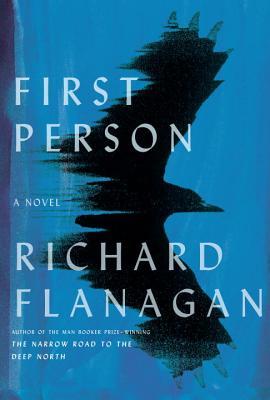
First Person: A novel
From the Man Booker Prize-winning author of The Narrow Road to the Deep North, the hypnotic tale of a ghost writer writing the memoir of a notorious con man, and the chilling events that unfold as their lives become increasingly intertwined.
Kif Kehlmann, a young, penniless writer, is rung in the middle of the night by the notorious con man and corporate criminal, Siegfried Heidl. About to go to trial for defrauding the banks of $700 million, Heidl offers Kehlmann the job of ghost-writing his memoir. He has six weeks to write the book, for which he'll be paid $10,000.
But as the writing gets under way, Kehlmann begins to fear that he is being corrupted by Heidl. As the deadline draws closer, he becomes ever more unsure if he is ghost writing a memoir, or if Heidl is rewriting him--his life, his future. Everything that was certain grows uncertain as he begins to wonder: who is Siegfried Heidl--and who is Kif Kehlmann?
As time runs out, as Kehlmann's world feels it is hurtling towards a catharsis, one question looms above all others: what is the truth?
By turns compelling, comic, and chilling, this is a haunting journey into the heart of our age.
Kif Kehlmann, a young, penniless writer, is rung in the middle of the night by the notorious con man and corporate criminal, Siegfried Heidl. About to go to trial for defrauding the banks of $700 million, Heidl offers Kehlmann the job of ghost-writing his memoir. He has six weeks to write the book, for which he'll be paid $10,000.
But as the writing gets under way, Kehlmann begins to fear that he is being corrupted by Heidl. As the deadline draws closer, he becomes ever more unsure if he is ghost writing a memoir, or if Heidl is rewriting him--his life, his future. Everything that was certain grows uncertain as he begins to wonder: who is Siegfried Heidl--and who is Kif Kehlmann?
As time runs out, as Kehlmann's world feels it is hurtling towards a catharsis, one question looms above all others: what is the truth?
By turns compelling, comic, and chilling, this is a haunting journey into the heart of our age.
353 pages, Hardcover
First published October 2, 2017
About the author
Richard Flanagan
32 books1,753 followersRichard Flanagan (born 1961) is an author, historian and film director from Tasmania, Australia. He was president of the Tasmania University Union and a Rhodes Scholar. Each of his novels has attracted major praise. His first, Death of a River Guide (1994), was short-listed for the Miles Franklin Award, as were his next two, The Sound of One Hand Clapping (1997) and Gould's Book of Fish (2001). His earlier, non-fiction titles include books about the Gordon River, student issues, and the story of conman John Friedrich.
Two of his novels are set on the West Coast of Tasmania; where he lived in the township of Rosebery as a child. Death of a River Guide relates to the Franklin River, Gould's Book of Fish to the Macquarie Harbour Penal Station, and The Sound of One Hand Clapping to the Hydro settlements in the Central Highlands of Tasmania.
Two of his novels are set on the West Coast of Tasmania; where he lived in the township of Rosebery as a child. Death of a River Guide relates to the Franklin River, Gould's Book of Fish to the Macquarie Harbour Penal Station, and The Sound of One Hand Clapping to the Hydro settlements in the Central Highlands of Tasmania.
Ratings & Reviews
Friends & Following
Create a free account to discover what your friends think of this book!
Community Reviews
Displaying 1 - 30 of 416 reviews

October 2, 2017
Richard Flanagan has written a smart, comic and intelligent satirical fable for our era, set in Australia. To some extent it is a blend of fact and fiction that draws on the author's well known experience of ghost writing a memoir for a con man in the 1990s. Flanagan mocks and incisively skewers the publishing industry. Kif Kehlmann is an unpublished Tasmanian writer in dire financial straits. His wife, Suzy, is expecting twins and they already have a child. He finds himself in Melbourne, having a $10, 000 contract to ghost write the memoir of the notorious con man and fraudster, Siegfried Heidl (Ziggy), within six weeks. The two men find themselves dependent on each other, with their fates intertwined. Heidl proves to be the slipperiest of customers, disinclined to offer any personal information, throwing out the odd bones that prove to be nebulous and hard to pin down. Kif struggles to write anything of value whilst being harried by the monstrous publisher.
I was amused by the picture of the publisher, Gene Paley, terrified of literature with its allegories, symbolism, tropes of time dancing, often lacking the logical structure of a beginning and an end. Paley is scared because literature does not sell, whereas celebrity memoirs and other superficial books make money. And Paley is all about the money, and he wants Kif to understand that there is no money in writing well, only in writing badly. Heidl claims to be Australian even though he has a strong German accent. He alludes to working for the CIA and mentions Laos, FRG and Chile, and that his codename was Iago. However, nothing adds up and Heidl talks of the invented lives of the famous, where the achievement invents the life it needs. Kif is drawn to and beguiled into the life of Heidl as he writes a fictional memoir, caught by the glamour of the rich and powerful, infected by their corruption. He begins to understand that Heidl may actually be guilty of far more heinous crimes than those he is charged with.
Flanagan weaves a dark story about identity, a ghostwriter performing a conjuring trick, an illusion of a life that is fictitious. It asks the questions, what is truth and what is fiction in our world? I did like the symbolism of the codename of Iago for Heidl and the portrayal of Paley, a man only interested in the badly written and the money it makes for him. Kif finds the memoir puts him on a voyage of discovery about who he is and is instrumental in the trajectory of the path his life takes later. This is a novel that catches the zeitgeist of our contemporary post truth world with its fake news. A brilliant and highly recommended read. Many thanks to Random House Vintage for an ARC.
I was amused by the picture of the publisher, Gene Paley, terrified of literature with its allegories, symbolism, tropes of time dancing, often lacking the logical structure of a beginning and an end. Paley is scared because literature does not sell, whereas celebrity memoirs and other superficial books make money. And Paley is all about the money, and he wants Kif to understand that there is no money in writing well, only in writing badly. Heidl claims to be Australian even though he has a strong German accent. He alludes to working for the CIA and mentions Laos, FRG and Chile, and that his codename was Iago. However, nothing adds up and Heidl talks of the invented lives of the famous, where the achievement invents the life it needs. Kif is drawn to and beguiled into the life of Heidl as he writes a fictional memoir, caught by the glamour of the rich and powerful, infected by their corruption. He begins to understand that Heidl may actually be guilty of far more heinous crimes than those he is charged with.
Flanagan weaves a dark story about identity, a ghostwriter performing a conjuring trick, an illusion of a life that is fictitious. It asks the questions, what is truth and what is fiction in our world? I did like the symbolism of the codename of Iago for Heidl and the portrayal of Paley, a man only interested in the badly written and the money it makes for him. Kif finds the memoir puts him on a voyage of discovery about who he is and is instrumental in the trajectory of the path his life takes later. This is a novel that catches the zeitgeist of our contemporary post truth world with its fake news. A brilliant and highly recommended read. Many thanks to Random House Vintage for an ARC.

November 3, 2017
One of those books you can easily expect to appear on a literary prize list - beautiful prose, many pages spent pondering the thoughts and beliefs of the main character and a lot going on that I did not understand!
Not understanding parts of it is, I am sure, my problem not the author's. Richard Flanagan's writing is flawless and frequently very beautiful. His characters are deep and cleverly written but also very unpleasant with very little to redeem any of them.
I debated long and hard how to rate this book and decided to go down the middle with three stars. It is without doubt a very good book but one I could not personally enjoy.
Not understanding parts of it is, I am sure, my problem not the author's. Richard Flanagan's writing is flawless and frequently very beautiful. His characters are deep and cleverly written but also very unpleasant with very little to redeem any of them.
I debated long and hard how to rate this book and decided to go down the middle with three stars. It is without doubt a very good book but one I could not personally enjoy.

March 25, 2018
Australian men do man things. The men are so manly with their man problems. Occasionally there is an incidental woman who is hugely pregnant like a whale, or has an evilly lipsticked mouth, or who likes to take selfies. But what of the MEN? How will they manage to create REAL ART when also struggling with all the pressures of being men? It's so hard. One day they will die, they will cease to be; there is even an actual dead parrot in this novel if you want to make the obvious joke. Haha just kidding! There are absolutely no jokes in this book. Just scathing observations about how literature is dead and everyone is shallow and boy did old computers crash a lot which is how you can remember that most of this book takes place in 1992. MAYBE THE MEN WOULD BE SAVED IF THEY WENT BACK TO USING TYPEWRITERS LIKE HEMINGWAY! Oh god won't somebody think of the men???
Repeat for 350 pages.
Repeat for 350 pages.

January 8, 2018
An intriguing hybrid of satire and counterfactual autobiography that turns out to be both dark and surprisingly profound, while remaining something of a page turner.
The central character Kif Kehlmann is, like the young Flanagan, a Tasmanian writer struggling to fund his first novel with casual work and support a young family. He is offered a job as a ghost writer for a notorious con man Siegfried Heidl, a lightly fictionalised caricature of John Friedrich, whose autobiography was ghosted by the young Flanagan. Heidl is a pathological liar and Kehlmann gradually finds himself inhabited by his personality, without making much progress on a coherent story.
The first part of the story builds to a melodramatic climax
Kehlmann completes the biography and his first novel, which also sounds very like Death of a River Guide: "I can see now that its story - a drowning man having visions of his life - was not something of originality or appeal
It was a young man's book.". .
The writing is lively and often funny, and I found the book very enjoyable, coming very close to awarding it five stars.
The central character Kif Kehlmann is, like the young Flanagan, a Tasmanian writer struggling to fund his first novel with casual work and support a young family. He is offered a job as a ghost writer for a notorious con man Siegfried Heidl, a lightly fictionalised caricature of John Friedrich, whose autobiography was ghosted by the young Flanagan. Heidl is a pathological liar and Kehlmann gradually finds himself inhabited by his personality, without making much progress on a coherent story.
The first part of the story builds to a melodramatic climax
Kehlmann completes the biography and his first novel, which also sounds very like Death of a River Guide: "I can see now that its story - a drowning man having visions of his life - was not something of originality or appeal
It was a young man's book.". .
The writing is lively and often funny, and I found the book very enjoyable, coming very close to awarding it five stars.

October 4, 2017
This is a beautifully written book. My copy is dog-eared countless times at pages where the prose took my breath away. At the same time, I found it quite a bleak, harrowing read. The descent into madness. The poverty. The loss of love. It is a painful parable for the age of Trump and reality TV.

January 28, 2018
Richard Flanagan was the 2014 winner of the Booker Prize for The Narrow Road to the Deep North, a book inspired by his own father’s harrowing experiences, but one on which I had mixed views, concerned at characters that seem to barely rise above cliché and a topic that really did nothing that hasn’t already been done in the “Bridge over the River Kwai but impressed with the writing style … and its thoughtful examination of topics such as …. good/evil …. self-belief and delusion and the stories people tell themselves …. the contrast between one’s public image and private image, the impossibility of really knowing another.
Flanagan’s Wikipedia entry states:
For more details on John Friedrich and his expansion (with the aid of dubiously extended, fraudulently obtained, and Ponzi-scheme style repaid bank loans) of the National Safety Council of Australia from a low-key advisory organization into a national search-and-rescue organization with a quasi-paramilitary rescue force and its own helicopters, aircraft and submarines (and its subsequent insolvency and collapse) see here
https://en.wikipedia.org/wiki/John_Fr...
https://en.wikipedia.org/wiki/Nationa...
This book is a very loosely disguised novelistic retelling of Flanagan’s experiences with Freidrich in 1991.
The (appropriately) first person narrator is Kif Kehlmann a struggling writer, originally from Tasmania, whose wife is pregnant with twins (all of which reflect Flanagan’s own situation at that time). He is contacted by his best and oldest friend from Tasmania – Ray who acts as a bodyguard to Siegfried (Ziggy) Heidl.
Heidl is facing an imminent fraud trial for his role of defrauding the banks that funded his expansion (with the aid of dubiously extended, fraudulently obtained, and Ponzi-scheme style repaid bank loans) of the Australian Safety Organisation (ASO) from a low-key advisory organization into a national search-and-rescue organization with a quasi-paramilitary rescue force and its own helicopters, aircraft and submarines (……….. stop me if this sounds familiar)
Heidl is under contract to produce an autobiography for the major (fictional) Australian publisher - Schegel Trans Pacific (Trans Pac or STP) – whose star author is the blockbuster author Jez Dempster. The publisher Gene Paley and editor Pia Carnevale despair of Heidl’s ability to work with their ghostwriters and in desperation suggest he supplies his own. An unrepentant Heidl is effectively aiming to use the publishing fees to continue his Ponzi style business methods (in this case a rumoured clandestine rocket launch site in Queensland which is being funded by ex-ASO directors, still it seems under his spell) and when Ray mentions his best friend is a writer approaches Kif to write his biography. Kif initially decides to refuse on grounds of morality and artisitic integrity, but faced with the imminent birth of two children to a family of three (his wife Suzy and a young daughter Bo) which he already cannot support, and with the persuasiveness of Paley and Heidl, ends up accepting almost by default.
Kif, working to only a six week deadline, is given Heidl’s own attempts at the book – a twelve thousand word manuscript, which is a
Trying to supplement this by asking Heidl about the missing pieces – he quickly despairs of Heidl’s evasions, half-truths, inventions and often blatant lies as well as his consistent hints about his involvement in CIA funded black-operations in countries such as Laos and Chile. Instead Kif finds himself quickly committing a form of literary fraud himself, effectively inventing Heidl’s backstory, one Heidl then adopts as the truth and (for example in the case of a chance encounter with the Beatles that Kif invents) flamboyantly embellishes)
Kif also finds his own pretensions as a writer coming up against the realities of commercial success, something which enables Flanagan to satirise the publishing industry:
And to get in a number of literary references, for example
- Heidl we are told rejects the concept of conventional self-examining biography a life isn’t an onion to be peeled he says in a clear literary reference to Gunter Grass.
- When asked about the desired length of the book – Paley comments (and I was reminded of Paul Auster’s 4321) Look at American novels – six hundred pages or more and who reads them? We say they’re substantial but a lot of people are frightened to lift them. I’m terrified I’ll dislocate an arm in bed if I open one. But they get great reviews because no reviewer can be bothered getting to the end, so they have to say its good
- Or much later, when the older Kif meets a seemingly rather self-obsessed young writer (for Emily Coppin all things were all things Emily Coppin) of whom Pia says We bill her as one of the voices of her generation) and Kif asks her what she writes: Autobiography.It’s what everyone writes now. Knausgaard, Karl Ove … Rachel Cusk. A quote which of course has added deliberate irony given the almost entirely autobiographical nature of this novel.
Instead of engaging with the biography, Heidl insists on discussing and presenting his own philosophy on life – often quoting the invented philosopher the great German installationist Tomas Tebbe –an outlook which is nihilistic and deeply cynical, albeit increasingly Kif realises to his own dismay, more representative of reality than the upbeat, optimistic view that he may previously have held.
Heidl claims to be convinced that the banks are out to kill him and insists on a ludicrous cover story that he, Kif and Ray are producing an anthology of mediaeval Westphalian folk verse. He frequently absconds from his meetings with Kif – supposedly to meet up with producers, journalists or other contacts (although at times Kif then spots him wandering the streets) and also at one stage seems to order a hit on a former colleague who has turned against him (only for Kif to redial the number and find it’s a pizza parlour).
But rather than seeing Heidl as simply a con man, it is clear that Kif is genuinely filled with both hatred and fear of him: warned in advance by Ray, he sees but is unable to resist the ways in which Heidl insinuates himself into Kif – firstly into his writing but then into his character and even poisons his relationship with Suzy (on whom pregnancy has the opposite effect to that of Heidl on Kif – giving her an optimistic view of the future and of intrinsic goodness).
Later in the book – a chance reading of a newspaper article about a pizza parlour front for a hitman, and a shocking picture of a flayed corpse that Pia and Kif find in Heidl’s effects, confront Kif with the knowledge of the evil that does reside in the world and which Heidl has channelled, further poisoning his own thoughts and relationships.
In between Rif’s dealings with Heidl, are interspersed details of Ray and Kif’s past in Tasmania (joyriding, bar fights, kayaking exploits which gained them a certain level of fame) and a lengthy description of the harrowing birth of the twins – presumably taken from autobiographical detail and so intrinsically lined with Heidl/Friedrich in the author’s view, but to the reader rather oddly juxtaposed.
A very lengthy set piece of the book ensues when Heidl tries to enlist Kif’s assistance in his suicide (with the extent to which he did assist left deliberately unclear).
Flanagan has implied that this is the point at which the story diverges from autobiography – and while the closing section of the novel opens with clear parallels to Flanagan’s own experience – Kif completes and largely invents what is effectively a posthumous autobiography, while attempting to get his own novel published receiving (as did Flanagan) a rejection letter stating “This novel does not fit into any recognizable school of Australian literature”, it then clearly diverges with Kif, splitting with his wife, abandoning literature and finding fame and fortune (but complete dissatisfaction and disillusionment) as a TV soap writer and later producer of reality TV. One can only assume here that Flanagan is mapping an alternative pathway his life could have taken had he succumbed to the malign, nihilistic influence of Friedrich.
The book finishes with Flanagan setting up Friedrich/Heidl as effectively a foretaste of how society developed, both in terms of how it foreshadowed the banking crisis and the selfie phenomenon:
Overall not a flawless novel but a fascinating one, packed with ideas.
One that could be said to be a thoughtful examination of topics such as …. good/evil …. self-belief and delusion and the stories people tell themselves …. the contrast between one’s public image and private image, the impossibility of really knowing another .......... (……….. stop me if this sounds familiar)
Flanagan’s Wikipedia entry states:
Flanagan wrote four non-fiction works before moving to fiction…. one of these was an autobiography of 'Australia's greatest con man', John Friedrich, which Flanagan ghost wrote in six weeks to make money to write his first novel. Friedrich killed himself in the middle of the book's writing and it was published posthumously. Simon Caterson, writing in The Australian, described it as "one of the least reliable but most fascinating memoirs in the annals of Australian publishing.
For more details on John Friedrich and his expansion (with the aid of dubiously extended, fraudulently obtained, and Ponzi-scheme style repaid bank loans) of the National Safety Council of Australia from a low-key advisory organization into a national search-and-rescue organization with a quasi-paramilitary rescue force and its own helicopters, aircraft and submarines (and its subsequent insolvency and collapse) see here
https://en.wikipedia.org/wiki/John_Fr...
https://en.wikipedia.org/wiki/Nationa...
This book is a very loosely disguised novelistic retelling of Flanagan’s experiences with Freidrich in 1991.
The (appropriately) first person narrator is Kif Kehlmann a struggling writer, originally from Tasmania, whose wife is pregnant with twins (all of which reflect Flanagan’s own situation at that time). He is contacted by his best and oldest friend from Tasmania – Ray who acts as a bodyguard to Siegfried (Ziggy) Heidl.
Heidl is facing an imminent fraud trial for his role of defrauding the banks that funded his expansion (with the aid of dubiously extended, fraudulently obtained, and Ponzi-scheme style repaid bank loans) of the Australian Safety Organisation (ASO) from a low-key advisory organization into a national search-and-rescue organization with a quasi-paramilitary rescue force and its own helicopters, aircraft and submarines (……….. stop me if this sounds familiar)
Heidl is under contract to produce an autobiography for the major (fictional) Australian publisher - Schegel Trans Pacific (Trans Pac or STP) – whose star author is the blockbuster author Jez Dempster. The publisher Gene Paley and editor Pia Carnevale despair of Heidl’s ability to work with their ghostwriters and in desperation suggest he supplies his own. An unrepentant Heidl is effectively aiming to use the publishing fees to continue his Ponzi style business methods (in this case a rumoured clandestine rocket launch site in Queensland which is being funded by ex-ASO directors, still it seems under his spell) and when Ray mentions his best friend is a writer approaches Kif to write his biography. Kif initially decides to refuse on grounds of morality and artisitic integrity, but faced with the imminent birth of two children to a family of three (his wife Suzy and a young daughter Bo) which he already cannot support, and with the persuasiveness of Paley and Heidl, ends up accepting almost by default.
Kif, working to only a six week deadline, is given Heidl’s own attempts at the book – a twelve thousand word manuscript, which is a
mash up of quotes from newspaper stories about the growth of the Australian Safety Organisation ….. supplemented by extracts from annual reports, memorandum, letters of praise from various politicians and thanks from public figures … linked by the occasional unenlightening paragraph from Heidl. It was in its way as extraordinary as it was almost unreadable ….. there was nothing about Heidl’s background, nothing of his private life, nor anything about the collapse of the ASO, the missing millions, the banks and businesses and jobs and lives that went down in consequence, the manhunt and his subsequent arrest and pending trial. Nothing in short that might make a book
Trying to supplement this by asking Heidl about the missing pieces – he quickly despairs of Heidl’s evasions, half-truths, inventions and often blatant lies as well as his consistent hints about his involvement in CIA funded black-operations in countries such as Laos and Chile. Instead Kif finds himself quickly committing a form of literary fraud himself, effectively inventing Heidl’s backstory, one Heidl then adopts as the truth and (for example in the case of a chance encounter with the Beatles that Kif invents) flamboyantly embellishes)
I would read out what I had created out of his delusions and evasions. The more outlandish, the less related my story was to the few, vague facts, he had outlined, the more ludicrous I was, the more pleased Heidl seemed to be, and the more he would claim that it accorded exactly with his own memory
Kif also finds his own pretensions as a writer coming up against the realities of commercial success, something which enables Flanagan to satirise the publishing industry:
Books on chocolate, gardening, furniture, military history, tired celebrities; tedious memoirs and pulp novels – a small part of the profits from which paid for the publication of the few books I thought books were – novels, essays, poems, stories
It was feared by others that I might relapse into literature. By which I mean allegory, symbol, the tropes of time dancing; of books that didn’t have a particular beginning or end, or at least not in that order. By whom I mean the publisher, a man by the unexpected name of Gene Paley. He had been quite specific in this regard: I was to tell a simple story simply, and where it was not simple – when it dealt with the complexities of the spectacular crime – simplify, illustrate by way of anecdote, and never have a sentence that lingered longer than two lines
It was whispered around the publishing house that Gene Paley was frightened of literature. And not without good reason. For one thing it doesn’t sell. For another it can fairly be said that it asks questions that it can’t answer. It astonishes people with themselves, which on balance is rarely a good thing. It reminds them that the business of life is failure, and that the failure to know is true ignorance. Maybe there is transcendence in all this, or wisdom in some of it, but Gene Paley didn’t see himself in the transcendence game. Gene Paley was all for books telling you one or two things over and over again. But preferably only one.
It was 1992, that time so close and now so far away when publishing executives still had such [large corner offices] and liquor cabinets; before Amazon and e-books; before phrases like granular analytics, customer fulfillment and supply chain alignment had connected like tightening coils in a hangman’s noose
And to get in a number of literary references, for example
- Heidl we are told rejects the concept of conventional self-examining biography a life isn’t an onion to be peeled he says in a clear literary reference to Gunter Grass.
- When asked about the desired length of the book – Paley comments (and I was reminded of Paul Auster’s 4321) Look at American novels – six hundred pages or more and who reads them? We say they’re substantial but a lot of people are frightened to lift them. I’m terrified I’ll dislocate an arm in bed if I open one. But they get great reviews because no reviewer can be bothered getting to the end, so they have to say its good
- Or much later, when the older Kif meets a seemingly rather self-obsessed young writer (for Emily Coppin all things were all things Emily Coppin) of whom Pia says We bill her as one of the voices of her generation) and Kif asks her what she writes: Autobiography.It’s what everyone writes now. Knausgaard, Karl Ove … Rachel Cusk. A quote which of course has added deliberate irony given the almost entirely autobiographical nature of this novel.
Instead of engaging with the biography, Heidl insists on discussing and presenting his own philosophy on life – often quoting the invented philosopher the great German installationist Tomas Tebbe –an outlook which is nihilistic and deeply cynical, albeit increasingly Kif realises to his own dismay, more representative of reality than the upbeat, optimistic view that he may previously have held.
Heidl claims to be convinced that the banks are out to kill him and insists on a ludicrous cover story that he, Kif and Ray are producing an anthology of mediaeval Westphalian folk verse. He frequently absconds from his meetings with Kif – supposedly to meet up with producers, journalists or other contacts (although at times Kif then spots him wandering the streets) and also at one stage seems to order a hit on a former colleague who has turned against him (only for Kif to redial the number and find it’s a pizza parlour).
But rather than seeing Heidl as simply a con man, it is clear that Kif is genuinely filled with both hatred and fear of him: warned in advance by Ray, he sees but is unable to resist the ways in which Heidl insinuates himself into Kif – firstly into his writing but then into his character and even poisons his relationship with Suzy (on whom pregnancy has the opposite effect to that of Heidl on Kif – giving her an optimistic view of the future and of intrinsic goodness).
I was learning from him the power of suggestion rather than demonstration; of evasion rather than enlightenment; of giving only one fact – or really just the rumour of a fact – and then letting the reader invent everything around it. I was without being aware of it, learning to distract from the truth by amusing the reader; to flatter the reader by playing on what they believed to be their virtues – their ideas of goodness and decency – whilst leading them ever further into an alien darkness that was the real world, and perhaps the real them, and on occasion, I feared, the real me ………….. And every night when I thought I was washing him away I was deluding myself. For he was entering me, and there was nothing I could do about it. I sensed it, how could I not. But I ignored it because the worlds were beginning to come. He was entering me and there were more and more words, and with each word somehow less and less of me. I was a man unmoored, once more adrift in a wild sea
Later in the book – a chance reading of a newspaper article about a pizza parlour front for a hitman, and a shocking picture of a flayed corpse that Pia and Kif find in Heidl’s effects, confront Kif with the knowledge of the evil that does reside in the world and which Heidl has channelled, further poisoning his own thoughts and relationships.
In between Rif’s dealings with Heidl, are interspersed details of Ray and Kif’s past in Tasmania (joyriding, bar fights, kayaking exploits which gained them a certain level of fame) and a lengthy description of the harrowing birth of the twins – presumably taken from autobiographical detail and so intrinsically lined with Heidl/Friedrich in the author’s view, but to the reader rather oddly juxtaposed.
A very lengthy set piece of the book ensues when Heidl tries to enlist Kif’s assistance in his suicide (with the extent to which he did assist left deliberately unclear).
Flanagan has implied that this is the point at which the story diverges from autobiography – and while the closing section of the novel opens with clear parallels to Flanagan’s own experience – Kif completes and largely invents what is effectively a posthumous autobiography, while attempting to get his own novel published receiving (as did Flanagan) a rejection letter stating “This novel does not fit into any recognizable school of Australian literature”, it then clearly diverges with Kif, splitting with his wife, abandoning literature and finding fame and fortune (but complete dissatisfaction and disillusionment) as a TV soap writer and later producer of reality TV. One can only assume here that Flanagan is mapping an alternative pathway his life could have taken had he succumbed to the malign, nihilistic influence of Friedrich.
The book finishes with Flanagan setting up Friedrich/Heidl as effectively a foretaste of how society developed, both in terms of how it foreshadowed the banking crisis and the selfie phenomenon:
He swindled the banks of seven hundred million, but soon enough the world would be swindled by so much more, the racket disarmingly the same taking and making money out of shipping containers that were so empty they didn’t even have a physical existence – junk bonds, no doc loans, derivatives
Everyone wants to be the first person. Autobiography is all we have …. Isn’t that what you do on reality television [she said] ……… It sounds like literary selfies I said
Overall not a flawless novel but a fascinating one, packed with ideas.
One that could be said to be a thoughtful examination of topics such as …. good/evil …. self-belief and delusion and the stories people tell themselves …. the contrast between one’s public image and private image, the impossibility of really knowing another .......... (……….. stop me if this sounds familiar)

May 7, 2018
Ghostwriting—what a thankless task: After countless hours of subsuming the self in another’s life story and personality, you get hardly any credit, not even a byline. But for Kif Kehlmann, the narrator of Flanagan’s seventh novel, it’s a quick route to some cash. Unfortunately for Kif, his subject, conman Siegfried Heidl, is extremely unforthcoming about the basic facts of his past. Instead, author and subject start to mutually imagine and insinuate themselves into each other’s existence. There’s no shortage here of consciously profound lines about identity and self-creation, but with no driving story to back them up the novel soon grows repetitive. As Kif says of writing Heidl’s memoir, “I may as well have used a pair of scissors to pick up spilled mercury.” The striking metaphor also applies, alas, to the frustrations of this particular reading experience.
See my full review on the Pittsburgh Post-Gazette website.
See my full review on the Pittsburgh Post-Gazette website.

September 30, 2017
“It’s a very strange time where fictions are presented to us as realities, where reality seems fictional, and it seems to me there’s no better way to write about that than to write a story about what lies are, what fiction is, and to use the form of the novel to do it.”
This is how Richard Flanagan himself sums up what his new novel is about. I might add that apart from being an allegory on the age of post-truth, "First Person" is also a book about the nature of evil, and how we get drawn to it.
Flanagan's protagonist Kif Kehlmann is an aspiring writer, living in a downtrodden neighborhood in Tasmania and trying to make ends meet as an unskilled worker. He is already the father of young Bo, and his wife is now pregnant with twins which puts additional financial pressure on him. When Kehlmann is offered to ghostwrite the autobiography of infamous criminal Ziggy Heidl, he is at first hesitant, but finally takes on the job and gets more and more drawn into the world of the man who carried out the biggest con job in Australian history. But not only is Heidl extremely difficult to work with, in order to earn the $ 10,000 the publishing house promised him, Kehlmann also needs to complete his task within six weeks, as Heidl is facing trial.
Flanagan has written this novel in the style of a memoir, and there actually is a true story at the core of this fictional account: In 1991, Flanagan himself was offered $10,000 to write the autobiography of Australian conman John Friedrich within six weeks. In the third week, Friedrich killed himself, only days before he would have had to stand trial on charges relating to the $296m fraud of the National Safety Council of Australia. Flanagan, broke and with his wife expecting twins, had to finish the book nonetheless (and he did: http://catalogue.nla.gov.au/Record/28...).
Based on this set-up, Flanagan mixes fact and fiction, the line between the two becoming partly unrecognizable for the reader. Kehlmann meets himself while writing about Heidl, the book's narrator mirrors its author, the subject the narrator writes about (Heidl) mirrors the subject the author himself wrote about in a former book (Friedrich) - and of course Flanagan still writes about Friedrich by writing about Kehlmann writing about Heidl!
And it does not stop here: The many hours Kehlmann and Heidl spend together while working on the book are like a chamber drama, with Heidl engaging Kehlmann in his philosophical musings, citing Nietzsche, elaborating on his own grim, nihilistic ideas, and never giving enough information for Kehlmann to write a consistent story without throwing in inventions of his own making: "They were arabesques of nonsense, but there was music in them. It was almost jazz. He was Thelonius Monk and I just tried to hang in, playing around his parts, filling in all the notes and beats he didn't bother with (...)."
Not that Heidl would care about the accuracy of the final account: "(...) there is no truth, only interpretations. That's why we do better liberated from the truth, he went on. Believe me." What counts, according to Heindl, is how good the story is: "Australia is a story, politics is a story, religion is a story, money is a story and the ASO (his company) was a story. The banks just stopped believing in my story. And when belief dies, nothing is left."
Flanagan also transfers this idea to literature itself, proclaiming ours to be the age of the literary selfie: "Everyone wants to be the first person. Autobiography is all we have", it says in the novel, only to dismiss this notion: "Life isn't an onion to be peeled, a palimpsest to be scraped back to some original, truer meaning. It's an invention that never ends." We are more than just one thing, Flanagan states, and literature reminds us of that. The way the publishing industry works is portrayed in harsh satirical strokes though: "If you can only learn to write badly enough, you can make a great deal of money."
All in all, Flanagan wrote a dark, challenging story, trying to find explanations for how we ended up where we are now: Was the crime Heidl committed and, moreover, the attitude he displayed a starting point for what was to come after him? Is it not the brutality itself, but the fact that we accept it that lies at the core of evil? I am not sure whether I fully agree with Flanagan, but he certainly found an interesting, artistic way to contemplate our state of affairs.
This is how Richard Flanagan himself sums up what his new novel is about. I might add that apart from being an allegory on the age of post-truth, "First Person" is also a book about the nature of evil, and how we get drawn to it.
Flanagan's protagonist Kif Kehlmann is an aspiring writer, living in a downtrodden neighborhood in Tasmania and trying to make ends meet as an unskilled worker. He is already the father of young Bo, and his wife is now pregnant with twins which puts additional financial pressure on him. When Kehlmann is offered to ghostwrite the autobiography of infamous criminal Ziggy Heidl, he is at first hesitant, but finally takes on the job and gets more and more drawn into the world of the man who carried out the biggest con job in Australian history. But not only is Heidl extremely difficult to work with, in order to earn the $ 10,000 the publishing house promised him, Kehlmann also needs to complete his task within six weeks, as Heidl is facing trial.
Flanagan has written this novel in the style of a memoir, and there actually is a true story at the core of this fictional account: In 1991, Flanagan himself was offered $10,000 to write the autobiography of Australian conman John Friedrich within six weeks. In the third week, Friedrich killed himself, only days before he would have had to stand trial on charges relating to the $296m fraud of the National Safety Council of Australia. Flanagan, broke and with his wife expecting twins, had to finish the book nonetheless (and he did: http://catalogue.nla.gov.au/Record/28...).
Based on this set-up, Flanagan mixes fact and fiction, the line between the two becoming partly unrecognizable for the reader. Kehlmann meets himself while writing about Heidl, the book's narrator mirrors its author, the subject the narrator writes about (Heidl) mirrors the subject the author himself wrote about in a former book (Friedrich) - and of course Flanagan still writes about Friedrich by writing about Kehlmann writing about Heidl!
And it does not stop here: The many hours Kehlmann and Heidl spend together while working on the book are like a chamber drama, with Heidl engaging Kehlmann in his philosophical musings, citing Nietzsche, elaborating on his own grim, nihilistic ideas, and never giving enough information for Kehlmann to write a consistent story without throwing in inventions of his own making: "They were arabesques of nonsense, but there was music in them. It was almost jazz. He was Thelonius Monk and I just tried to hang in, playing around his parts, filling in all the notes and beats he didn't bother with (...)."
Not that Heidl would care about the accuracy of the final account: "(...) there is no truth, only interpretations. That's why we do better liberated from the truth, he went on. Believe me." What counts, according to Heindl, is how good the story is: "Australia is a story, politics is a story, religion is a story, money is a story and the ASO (his company) was a story. The banks just stopped believing in my story. And when belief dies, nothing is left."
Flanagan also transfers this idea to literature itself, proclaiming ours to be the age of the literary selfie: "Everyone wants to be the first person. Autobiography is all we have", it says in the novel, only to dismiss this notion: "Life isn't an onion to be peeled, a palimpsest to be scraped back to some original, truer meaning. It's an invention that never ends." We are more than just one thing, Flanagan states, and literature reminds us of that. The way the publishing industry works is portrayed in harsh satirical strokes though: "If you can only learn to write badly enough, you can make a great deal of money."
All in all, Flanagan wrote a dark, challenging story, trying to find explanations for how we ended up where we are now: Was the crime Heidl committed and, moreover, the attitude he displayed a starting point for what was to come after him? Is it not the brutality itself, but the fact that we accept it that lies at the core of evil? I am not sure whether I fully agree with Flanagan, but he certainly found an interesting, artistic way to contemplate our state of affairs.

June 26, 2018
First Person by Richard Flanagan
When you are a struggling writer, and you haven’t actually written anything, or published a book there is probably only a few job offers that you would refuse. When a con man and fraudster waiting on trial calls you and asks you to ghost write his memoirs (in 6 weeks prior to the start of his trial), for 10K, it is a hard thing to refuse, risking your integrity for your craft against a quick fix in the bank. This is the story of Kif (AKA Richard Flanagan) and Heidl (AKA Siegfried “Ziggy” Heidl (fictional character), AKA John Friedrich) and how during a small period of time together became locked in a world of lies, deceit and discovery. The story is part fictional, part autobiographical, the agony of the ghost writer is extremely well written here, but the added weight of the hell of knowing Heidl and being manipulated daily during and after the writing of the book was just torturous to read. I am not a writer, have never aspired to be one other than in my younger days. I dream't I might spend my life on my typewriter at an open window looking out to sea over my flower garden. I don’t have a creative bone in my body today, but if I did, I would not want to be anyone’s ghost[writer].
When you are a struggling writer, and you haven’t actually written anything, or published a book there is probably only a few job offers that you would refuse. When a con man and fraudster waiting on trial calls you and asks you to ghost write his memoirs (in 6 weeks prior to the start of his trial), for 10K, it is a hard thing to refuse, risking your integrity for your craft against a quick fix in the bank. This is the story of Kif (AKA Richard Flanagan) and Heidl (AKA Siegfried “Ziggy” Heidl (fictional character), AKA John Friedrich) and how during a small period of time together became locked in a world of lies, deceit and discovery. The story is part fictional, part autobiographical, the agony of the ghost writer is extremely well written here, but the added weight of the hell of knowing Heidl and being manipulated daily during and after the writing of the book was just torturous to read. I am not a writer, have never aspired to be one other than in my younger days. I dream't I might spend my life on my typewriter at an open window looking out to sea over my flower garden. I don’t have a creative bone in my body today, but if I did, I would not want to be anyone’s ghost[writer].

April 15, 2025
EXCERPT: It was whispered around the publishing house that Gene Paley was frightened of literature. And not without good reason. For one thing, it doesn't sell. For another, it can fairly be said that it asks questions that it can't answer. It astonishes people with themselves, which, on balance, is rarely a good thing. It reminds them that the business of life is failure, and that the failure to know this is true ignorance. Maybe there is transcendence in all this, or wisdom in some of it, but Gene Paley didn't see himself in the transcendence game. Gene Paley was all for books telling you one or two things over and over again, but preferably only one.
Selling, Gene Paley would say, is telling.
I opened the manuscript again and re-read the opening lines.
On 17 May 1983, I signed my application letter for the position of Acting Safety Officer (supervisor) (acting Class 4/5) at the Australian Safety Organisation, with two words, Siegfried Heidl, and my new life began.
Only much later did I discover that Siegfried Heidl had never existed until the day he signed the letter, so - strictly speaking - it was an honest account. But the past is always unpredictable and, as I was to learn, not his least gift as a con man was that he rarely lied.
ABOUT 'FIRST PERSON': Six weeks to write for your life... In this blistering story of a ghostwriter haunted by his demonic subject, the Man Booker Prize winner turns to lies, crime and literature with devastating effect
A young and penniless writer, Kif Kehlmann, is rung in the middle of the night by the notorious con man and corporate criminal, Siegfried Heidl. About to go to trial for defrauding the banks of $700 million, Heidl proposes a deal: $10,000 for Kehlmann to ghost write his memoir in six weeks.
But as the writing gets under way, Kehlmann begins to fear that he is being corrupted by Heidl. As the deadline draws closer, he becomes ever more unsure if he is ghost writing a memoir, or if Heidl is rewriting him—his life, his future. Everything that was certain grows uncertain as he begins to wonder: who is Seigfried Heidl—and who is Kif Kehlmann?
MY THOUGHTS: I cannot, in all honesty, say I liked or enjoyed this book. I didn't get past the first page until my third attempt. There are pages upon pages of text where I have absolutely no idea of what Flanagan was trying to say. The characters are all, with the exclusion of Suzy, quite unlikeable. And possibly quite mad.
I did not find out until after I finished that this is a (very lightly) fictionalised account of part of the author's own life - he was ghostwriter on the 'autobiography' of John Freidrich, a notorious German-Australian politician and con man. Freidrich's 'autobiography' has been described as "one of the least reliable but most fascinating memoirs in the annals of Australian publishing".
I wish I could say the same about First Person. There are times when it flows beautifully, but largely I was left feeling confused and had to push myself to read on. I wish I had known about Flanagan's penning of Freidrich's autobiography before I started. I may have read First Person through different eyes.
⭐⭐.5
#FirstPerson @waitomodistrictlibrary
THE AUTHOR: The Australian author Richard Flanagan is well known for his extremely incisive style of writing that gets straight to the point. Writing evocative and immersive fiction, he’s also well known for his work as a historian, as well as a talented film director. This has made him a multitalented artist with many different skills under his respective belt, knowing precisely how to tell an engaging story. Focusing on both fiction and non-fiction, he’s gone on to win numerous awards over the years too, seeing him become one of the most respected authors within his field.
Taking inspiration from his own life and the world around him, Flanagan uses real events and people to help fuel him creatively. This has created the unique voice that he has today, writing for a massive audience all over the world, drawing in readers from all corners. Often writing about the outdoors and nature, he utilizes rural landscapes for his storytelling, really making the most of them. (Source: bookseriesinorder.com abridged)
https://sandysbookaday.wordpress.com/...
Selling, Gene Paley would say, is telling.
I opened the manuscript again and re-read the opening lines.
On 17 May 1983, I signed my application letter for the position of Acting Safety Officer (supervisor) (acting Class 4/5) at the Australian Safety Organisation, with two words, Siegfried Heidl, and my new life began.
Only much later did I discover that Siegfried Heidl had never existed until the day he signed the letter, so - strictly speaking - it was an honest account. But the past is always unpredictable and, as I was to learn, not his least gift as a con man was that he rarely lied.
ABOUT 'FIRST PERSON': Six weeks to write for your life... In this blistering story of a ghostwriter haunted by his demonic subject, the Man Booker Prize winner turns to lies, crime and literature with devastating effect
A young and penniless writer, Kif Kehlmann, is rung in the middle of the night by the notorious con man and corporate criminal, Siegfried Heidl. About to go to trial for defrauding the banks of $700 million, Heidl proposes a deal: $10,000 for Kehlmann to ghost write his memoir in six weeks.
But as the writing gets under way, Kehlmann begins to fear that he is being corrupted by Heidl. As the deadline draws closer, he becomes ever more unsure if he is ghost writing a memoir, or if Heidl is rewriting him—his life, his future. Everything that was certain grows uncertain as he begins to wonder: who is Seigfried Heidl—and who is Kif Kehlmann?
MY THOUGHTS: I cannot, in all honesty, say I liked or enjoyed this book. I didn't get past the first page until my third attempt. There are pages upon pages of text where I have absolutely no idea of what Flanagan was trying to say. The characters are all, with the exclusion of Suzy, quite unlikeable. And possibly quite mad.
I did not find out until after I finished that this is a (very lightly) fictionalised account of part of the author's own life - he was ghostwriter on the 'autobiography' of John Freidrich, a notorious German-Australian politician and con man. Freidrich's 'autobiography' has been described as "one of the least reliable but most fascinating memoirs in the annals of Australian publishing".
I wish I could say the same about First Person. There are times when it flows beautifully, but largely I was left feeling confused and had to push myself to read on. I wish I had known about Flanagan's penning of Freidrich's autobiography before I started. I may have read First Person through different eyes.
⭐⭐.5
#FirstPerson @waitomodistrictlibrary
THE AUTHOR: The Australian author Richard Flanagan is well known for his extremely incisive style of writing that gets straight to the point. Writing evocative and immersive fiction, he’s also well known for his work as a historian, as well as a talented film director. This has made him a multitalented artist with many different skills under his respective belt, knowing precisely how to tell an engaging story. Focusing on both fiction and non-fiction, he’s gone on to win numerous awards over the years too, seeing him become one of the most respected authors within his field.
Taking inspiration from his own life and the world around him, Flanagan uses real events and people to help fuel him creatively. This has created the unique voice that he has today, writing for a massive audience all over the world, drawing in readers from all corners. Often writing about the outdoors and nature, he utilizes rural landscapes for his storytelling, really making the most of them. (Source: bookseriesinorder.com abridged)
https://sandysbookaday.wordpress.com/...

October 26, 2017
If you've never read a Richard Flanagan book, you might be inclined to think First Person is some kind of thriller, based on the blurb alone. It isn't, rather it is very literary - by which I mean it consists mainly of a lot of introspection by the main character, Kif Kehlmann, who is himself a Flanagan proxy.
The story of real life con man John Friedman, fictionalised here as Ziggy Heidl, is truly astonishing and a different writer might have made of it a madcap Fargo-style black comedy. Instead, Flanagan focuses not on Heidl's misdeeds, but on ghostwriter Kif's attempt to grapple with the nature of good and evil, truth and lies, fiction and memoir.
Here's a little bit about Heidl heaping lies upon ever more outrageous lies:
To hear Flanagan tell it in interviews, basically everything in the book concerning Friedman/Heidl is true (with the notable exception of Richard/Kif's ultimate moral decision). It's impossible to separate this knowledge from the book itself. Would this novel be the same if it was pure invention? I don't think so. It's too preposterous and would come across as an attempt at comedy, at farce, instead of the deeply disturbing examination of psychopathy that it is.
While Flanagan can bloviate and is fond of a simile, those "writerly" bits do yield up some nuggets of inspired imagery. For me, the flourishes succeeded at least as often as they fell flat, and so on balance it worked. I did think a goodly chunk of the book at the end felt like an epilogue that could have been cut.
The timing could not be better for this novel-memoir hybrid as it delves into lies, deception and audacious self-invention. It's not perfect, but it's certainly relevant.
The story of real life con man John Friedman, fictionalised here as Ziggy Heidl, is truly astonishing and a different writer might have made of it a madcap Fargo-style black comedy. Instead, Flanagan focuses not on Heidl's misdeeds, but on ghostwriter Kif's attempt to grapple with the nature of good and evil, truth and lies, fiction and memoir.
Here's a little bit about Heidl heaping lies upon ever more outrageous lies:
Less experienced liars would have sought consistency in their untruths. But life is never consistent, and at some point, long before I met him, he had realised that the vast ineptitude of his illusions was by some alchemy their most convincing proof.
To hear Flanagan tell it in interviews, basically everything in the book concerning Friedman/Heidl is true (with the notable exception of Richard/Kif's ultimate moral decision). It's impossible to separate this knowledge from the book itself. Would this novel be the same if it was pure invention? I don't think so. It's too preposterous and would come across as an attempt at comedy, at farce, instead of the deeply disturbing examination of psychopathy that it is.
While Flanagan can bloviate and is fond of a simile, those "writerly" bits do yield up some nuggets of inspired imagery. For me, the flourishes succeeded at least as often as they fell flat, and so on balance it worked. I did think a goodly chunk of the book at the end felt like an epilogue that could have been cut.
The timing could not be better for this novel-memoir hybrid as it delves into lies, deception and audacious self-invention. It's not perfect, but it's certainly relevant.

September 24, 2017
In this devastating satire on the world of publishing, based on real-life events, Flanagan has a sly dig at the latest cult of memoir as fiction, and the blurring of reality with fake news and post truth.
His narrator Kif, while undergoing a crisis of confidence in his ability to write a novel, agrees to act as a ghost writer for the memoirs of the notorious con man Heidle – a man as shifty, slippery and cunning as a snake oil salesman, employing suggestion, evasion, rumour and downright lies in his biographical accounts.
Through this unholy Faustian alliance with his subject, Kif becomes drawn in and ultimately enmeshed in Heidle’s shady accounts of espionage, arms deals and political corruption – all the while uncertain of what is fiction and what is fact, but increasingly having to turn to invention – “making things up” as much as a writer of fiction must do.
I loved all the writerly conceits Flanagan displays via Kif - the puns (“the lies that bind”, ghost writing as “an I for an I”) - the aphorisms (“Flattery isn't foolproof but it is proof of fools”) – the zeugmas (“coming back to the office and to my senses”).
But the piece on the drawn-out visceral horror of Kif’s wife giving birth to twins is brought to life as authentically as a skilled dramatist - and shows that Flanagan is not just a conjuror of words.
Thanks to the publisher for supplying me with an ebook copy via Netgalley
His narrator Kif, while undergoing a crisis of confidence in his ability to write a novel, agrees to act as a ghost writer for the memoirs of the notorious con man Heidle – a man as shifty, slippery and cunning as a snake oil salesman, employing suggestion, evasion, rumour and downright lies in his biographical accounts.
Through this unholy Faustian alliance with his subject, Kif becomes drawn in and ultimately enmeshed in Heidle’s shady accounts of espionage, arms deals and political corruption – all the while uncertain of what is fiction and what is fact, but increasingly having to turn to invention – “making things up” as much as a writer of fiction must do.
I loved all the writerly conceits Flanagan displays via Kif - the puns (“the lies that bind”, ghost writing as “an I for an I”) - the aphorisms (“Flattery isn't foolproof but it is proof of fools”) – the zeugmas (“coming back to the office and to my senses”).
But the piece on the drawn-out visceral horror of Kif’s wife giving birth to twins is brought to life as authentically as a skilled dramatist - and shows that Flanagan is not just a conjuror of words.
Thanks to the publisher for supplying me with an ebook copy via Netgalley

October 24, 2017
I received a copy of this book from Netgalley, in exchange for an honest review.
Seriously good writing, but a little like wading through treacle at times.
Well. This was an interesting and highly unusual book. Not quite sure it was my cup of tea - but it was fascinating nonetheless.
The story follows Kif; a struggling writer from Tasmania, with a family to support - who has somehow found himself in the unfortunate position of writing an autobiography for Siegfried 'Ziggy' Heidl - a man who, at the start of the book, is frustratingly slippery; and by the end, is positively satanic.
It's a great concept, and I cannot fault the overall plot. Kif's sense of growing helplessness and despair is magnificently conveyed; and likewise, you get a strong sense of Heidl's unpleasantness, and also his ambiguity. He's wonderfully enigmatic - and that aspect works really well. Is he the Devil himself? Is he just a bad person, intent on ruining Kif's life? Or is he just oblivious to his own faults? I loved that I was never quite sure.
However, my one overriding problem here is that I felt the book dragged in places - and I wasn't quite sure why. There were other moments that totally captivated me; not least because they were so expertly, wonderfully written. Oh my goodness, the chapter where Kif's twin children are born, for example - such deft, effective writing! I was literally bowing down in worship to Flanagan at that point, thinking 'how does he do it'! But other moments were rather turgid and felt a bit repetitive at times.
For that, I'm marking it down to a 3* - but feel slightly bad for doing so. Sorry to the author - just to point out, I do think your use of language is phenomenal!
It could be just a 'it's not you, it's me' thing - I am an impatient reader at times, and I wonder if this was the issue. Judging by the other 5* reviews on here, I think that might be it. So, certainly give it a go - it is worth reading.
Seriously good writing, but a little like wading through treacle at times.
Well. This was an interesting and highly unusual book. Not quite sure it was my cup of tea - but it was fascinating nonetheless.
The story follows Kif; a struggling writer from Tasmania, with a family to support - who has somehow found himself in the unfortunate position of writing an autobiography for Siegfried 'Ziggy' Heidl - a man who, at the start of the book, is frustratingly slippery; and by the end, is positively satanic.
It's a great concept, and I cannot fault the overall plot. Kif's sense of growing helplessness and despair is magnificently conveyed; and likewise, you get a strong sense of Heidl's unpleasantness, and also his ambiguity. He's wonderfully enigmatic - and that aspect works really well. Is he the Devil himself? Is he just a bad person, intent on ruining Kif's life? Or is he just oblivious to his own faults? I loved that I was never quite sure.
However, my one overriding problem here is that I felt the book dragged in places - and I wasn't quite sure why. There were other moments that totally captivated me; not least because they were so expertly, wonderfully written. Oh my goodness, the chapter where Kif's twin children are born, for example - such deft, effective writing! I was literally bowing down in worship to Flanagan at that point, thinking 'how does he do it'! But other moments were rather turgid and felt a bit repetitive at times.
For that, I'm marking it down to a 3* - but feel slightly bad for doing so. Sorry to the author - just to point out, I do think your use of language is phenomenal!
It could be just a 'it's not you, it's me' thing - I am an impatient reader at times, and I wonder if this was the issue. Judging by the other 5* reviews on here, I think that might be it. So, certainly give it a go - it is worth reading.

December 27, 2017
I always seem to read this author as apart of a bookclub. Exquisite writing, perfectly plotted and asks the questions about what is fiction and what is fact. A little slow in some places but should be apart of most Australian fiction awards.

May 5, 2018
Part memoir, part psychological thriller, part satire of the publishing industry, part commentary on the political state of the world and, possibly, part meta-fiction about what it is to be an author and what it is to be a reader.
This book really won me over and sucked me in. I really, really enjoyed reading it.
Kif Kehlmann wants to be an author but is struggling to finish his first novel. Suddenly, he is offered the chance to ghostwrite the autobiography of a notorious conman, Siegfried (Ziggy) Heidl, who is about to go to jail. Heidl's imminent lack of availability means deadlines are impossibly tight (just 6 weeks). Kehlmann is not helped by the fact that Heidl is evasive and self-contradictory.
This part of the story is based on Flanagan's own history. On Wikipedia, we read about Flanagan
Flanagan wrote four non-fiction works before moving to fiction, works he has called his apprenticeship. One of these was an autobiography of 'Australia's greatest con man', John Friedrich, which Flanagan ghost wrote in six weeks to make money to write his first novel.
As Kehlmann attempts to work with Heidl, the psychological thriller starts to come into play. Heidl plays mind games. He seems to know personal things about Kehlmann that he shouldn’t be able to know. He seems to be pulling strings, but we can’t quite see what they are attached to.
While Heidl and Kehlmann are fighting over the contents of Heidl's autobiography, Flanagan takes the opportunity to reflect on (satirise) the publishing industry.
Look at American novels – six hundred pages or more and who reads them? We say they’re substantial but a lot of people are frightened to lift them. I’m terrified I’ll dislocate an arm in bed if I open one. But they get great reviews because no reviewer can be bothered getting to the end, so they have to say its good
At one point, a character says "Autobiography. It's what everyone writes now. Knausgaard, Lerner, Cusk, Carrere. All the best writers taking literature somewhere new." and the the novel continues "It's fake, inventing stories as if they explain things, Emily was saying. Plot, character, Jack and Jill going up the hill. Just the thought of a fabricated character doing fabricated things in a fabricated story makes me want to gag. I am totally hoping never to read another novel again." But not long later, our narrator deprecatingly says "It sounds like literary selfies". As a photographer, I find this a marvellous take-down (I hate selfies with a passion!).
And it is this underlying commentary on the state of literature that made me start to notice something else going on. The book is a story about a writer struggling to write a book. In a review in The Guardian, the reviewer complained about the structure of the book (introductory precis followed by longer version with details changing etc.). But this structure exactly reflects the book Kehlmann is trying to write because Heidl sends him a 12000 word summary which he then proceeds to contradict and confuse. Flanagan’s novel reflects Kehlmann’s novel. But, more than that, the novel at times seems to flick over into a meta-narrative where Heidl takes the role of the omniscient narrator (remember, he knows all kinds of things about Kehlmann that he shouldn’t) and Kehlmann becomes like a reader rather than a writer, struggling to keep up with the author. At one of the book's dramatic high points, we read
For a moment I wondered if my only problem was that of the reader - of not knowing, of impatience - whereas if I was patient, if I just turned a few more pages, if I just went a little further on, everything would be revealed and a path of escape become clear. But with a growing terror I began to see that the pages before me had a purpose, that the gun had a purpose, and I began to fear Heidl was the author of these things, and all I knew, all that I wished for, was that his ending now not include me.
Kehlmann’s journey becomes a reflection of what we as readers can be pulled into as an all-seeing narrator/author cons us with a fabricated story which we, during the reading of the book, at least, allow ourselves to believe.
Maybe by now you are bored and thinking you wouldn’t read this if someone paid you to. But it's also possible that you might be seeing what it is that grabbed me as I read this and why I was so fascinated all the way through. True, there’s some writing that is a bit over the top, but it is very easy to persuade yourself it has to be for the purposes of the book. And I did like the description of ghostwriting as "And I for an I" and some little phrases such as "…felt both afraid and a fraud…".
I was one of several people I know who was not impressed by Flanagan’s Man Booker winning The Narrow Road to the Deep North. But this one is a whole other kettle of fish and I really loved it.
This book really won me over and sucked me in. I really, really enjoyed reading it.
Kif Kehlmann wants to be an author but is struggling to finish his first novel. Suddenly, he is offered the chance to ghostwrite the autobiography of a notorious conman, Siegfried (Ziggy) Heidl, who is about to go to jail. Heidl's imminent lack of availability means deadlines are impossibly tight (just 6 weeks). Kehlmann is not helped by the fact that Heidl is evasive and self-contradictory.
This part of the story is based on Flanagan's own history. On Wikipedia, we read about Flanagan
Flanagan wrote four non-fiction works before moving to fiction, works he has called his apprenticeship. One of these was an autobiography of 'Australia's greatest con man', John Friedrich, which Flanagan ghost wrote in six weeks to make money to write his first novel.
As Kehlmann attempts to work with Heidl, the psychological thriller starts to come into play. Heidl plays mind games. He seems to know personal things about Kehlmann that he shouldn’t be able to know. He seems to be pulling strings, but we can’t quite see what they are attached to.
While Heidl and Kehlmann are fighting over the contents of Heidl's autobiography, Flanagan takes the opportunity to reflect on (satirise) the publishing industry.
Look at American novels – six hundred pages or more and who reads them? We say they’re substantial but a lot of people are frightened to lift them. I’m terrified I’ll dislocate an arm in bed if I open one. But they get great reviews because no reviewer can be bothered getting to the end, so they have to say its good
At one point, a character says "Autobiography. It's what everyone writes now. Knausgaard, Lerner, Cusk, Carrere. All the best writers taking literature somewhere new." and the the novel continues "It's fake, inventing stories as if they explain things, Emily was saying. Plot, character, Jack and Jill going up the hill. Just the thought of a fabricated character doing fabricated things in a fabricated story makes me want to gag. I am totally hoping never to read another novel again." But not long later, our narrator deprecatingly says "It sounds like literary selfies". As a photographer, I find this a marvellous take-down (I hate selfies with a passion!).
And it is this underlying commentary on the state of literature that made me start to notice something else going on. The book is a story about a writer struggling to write a book. In a review in The Guardian, the reviewer complained about the structure of the book (introductory precis followed by longer version with details changing etc.). But this structure exactly reflects the book Kehlmann is trying to write because Heidl sends him a 12000 word summary which he then proceeds to contradict and confuse. Flanagan’s novel reflects Kehlmann’s novel. But, more than that, the novel at times seems to flick over into a meta-narrative where Heidl takes the role of the omniscient narrator (remember, he knows all kinds of things about Kehlmann that he shouldn’t) and Kehlmann becomes like a reader rather than a writer, struggling to keep up with the author. At one of the book's dramatic high points, we read
For a moment I wondered if my only problem was that of the reader - of not knowing, of impatience - whereas if I was patient, if I just turned a few more pages, if I just went a little further on, everything would be revealed and a path of escape become clear. But with a growing terror I began to see that the pages before me had a purpose, that the gun had a purpose, and I began to fear Heidl was the author of these things, and all I knew, all that I wished for, was that his ending now not include me.
Kehlmann’s journey becomes a reflection of what we as readers can be pulled into as an all-seeing narrator/author cons us with a fabricated story which we, during the reading of the book, at least, allow ourselves to believe.
Maybe by now you are bored and thinking you wouldn’t read this if someone paid you to. But it's also possible that you might be seeing what it is that grabbed me as I read this and why I was so fascinated all the way through. True, there’s some writing that is a bit over the top, but it is very easy to persuade yourself it has to be for the purposes of the book. And I did like the description of ghostwriting as "And I for an I" and some little phrases such as "…felt both afraid and a fraud…".
I was one of several people I know who was not impressed by Flanagan’s Man Booker winning The Narrow Road to the Deep North. But this one is a whole other kettle of fish and I really loved it.

November 24, 2017
My problem was my task: to create a single, plausible human being out of a man who on any given day could be Princess Di, Lee Iacocca, or Papillon. Or all three in one sentence. For Heidl wasn’t so much a self-made man as a man ceaselessly self-making. He had many births and many parents, and his origins were as mystical and protean as the gods of old. Each incarnation more mysterious than the last, Heidl begat Heidl who begat Heidl.
Richard Flanagan is best known for his 2014 Booker Prize winning The Narrow Road to the Deep North (my review: https://www.goodreads.com/review/show...), although my personal favourite is his 2001 Gould’s Book of Fish, a physically beautiful work which, with its use of different coloured inks, has clear echoes in Nicola Barker’s 2017 Goldsmiths Prize winning H(A)PPY.
Early in his writing career, in the early 1990s, while still an aspiring novelist, Flanagan found himself ghost writing ‘Codename Iago: The Story of John Friedrich’, the memoirs, published posthumously (indeed largely written) after the subject had committed suicide, of a notorious Australian conman. The Australian described it as “one of the least reliable but most fascinating memoirs in the annals of Australian publishing."
Friedrich’s story would itself make a fascinating novel. See https://en.wikipedia.org/wiki/John_Fr... for the full details. He took charge of the National Safety Council of Australia, a low-key organisation that was responsible for producing work place safety posters and conducting audits, and turned in into an international rescue organisation, the only real point of comparison The Thunderbirds, complete with helicopters, aircraft, a submarine and also a quasi-militia of its own. The whole edifice was built on a pyramid of bank loans and when it collapsed, leaving AUD700m of unpaid debt, and taking some banks down with it, Friedrich himself came under the spotlight. When captured after a lengthy manhunt, he transpired to have a false identity, not even to be Australian, and in his memoirs claimed an even shadier past for himself including active field involvement across the world with the CIA.
But Flanagan’s new novel doesn’t tell Friedrich’s story, rather it tells a, at times rather lightly, fictionalised version of the ghost-writing of the book.
In the novel, Tasmanian budding-author Kit Kehlmann is working as a labourer, while he tries to complete his first novel, and struggling to support his wife, pregnant with twins, and young daughter.
Meanwhile conman Siegfried Heidl is on bail, with a trial due in 6 weeks. Having signed a lucrative deal for his memoirs he has yet to deliver and a succession of professional ghost writers and editors have quit after failing to make any progress given his infuriating ability to deliver a straight story. Heidl, in danger of not collecting his advance, asks if he can appoint his own writer and his bodyguard / gofer / carrier out of various nefarious tasks, Ray, who is also Kit’s oldest friend, suggests Ray. With no better option the publishers agree, and Kit receives a call out of the blue from Australia’s most wanted. He initially wrestles with in part his conscience (accepting money to make a conman look good) but even more with his vainglorious artistic integrity (he wants to be a literary novelist, not a hack) but ultimately money talks.
He starts work in Melbourne with Heidl, although soon starts to realise what he is dealing with when the paranoid conman tells him the project must be kept top secret – if the banks knew he was telling all they would ‘get him’ – and that he has created a ludicrous cover story, that they are working on a book of German medieval folk-verse, with Kit the author, Heidl the expert and Ray (who couldn’t look less like the part) a technical adviser.
Thus far, the story – with only the names changed to protect the guilty – is essentially identical to Flanagan and Friedrich’s actual story, and indeed the only real departure from the facts in the novel seems to be the destinies of the characters in the aftermath of events.
Indeed parts – Kit’s friendship with Ray, the difficulties of Kit’s marriage including an extended description of a difficult childbirth from the husband’s perspective – seem a little too personal and unnecessary to the plot, although the quality of Flanagan’s writing is as strong as ever.
And this generally feels a very cathartic and personal book: Flanagan has clearly being trying to come to terms with his encounter with Friedrich for 25 years, and this book is his way of working out what he felt at the time. This makes the prose claustrophobic and rather circular at times, but actually makes for a satisfyingly intense reading experience.
Heidl is fond of quoting Nietzsche but also his spiritual predecessor, the great German installationist, Heidl said. Tomas Tebbe who as far as I can ascertain doesn’t exist and is therefore a vehicle for Heidl to be able to infuse his own thoughts with historical significance. Heidl/Tebbe is no fan of the Gunter Grass school of autobiography:
A life isn’t an onion to be peeled, a palimpsest to be scraped back to some original, truer meaning. It’s an invention that never ends. And when I must have looked struck by his elaborate turn of phrase, Heidl added, as if giving directions to a public toilet: Tebbe. It’s one of his aphorisms.
Instead Heidl is difficult to pin down, never really saying anything false but encouraging the listener (ghost-writer, Board of Directors, journalist, investor or bank loan officer) to spin their own story:
I learnt the less I told them, the more they made it up. In the end, I didn’t have to make up anything. I was a prophet to them. And you know what Tebbe says about prophets? I had no idea what Tebbe said about anything. The greatest of prophets has but the vaguest of messages, Heidl said. The vaguer the message, the greater the prophet.
[...]
He always seemed able to evoke a mystery, but the moment you sought to penetrate the mystery, he sought to escape what it was he had just suggested. His first feint was to go with your building of the mystery, seeking to draw you in with agreement and encouragement. To have you invent his lies.
.....
He contradicted his own lies with fresh lies, and then he contradicted his contradictions. It was as if he couldn’t exist except in the tumult of self-denial. The necessarily incomplete nature of Heidl’s stories, rather than denying their supposed truth, instead confirmed it. I am not saying Heidl consciously made sure his slow-drip stories never quite matched, and were often entirely opposed. But as an instinctive ruse it was more than effective. For the challenge to reconcile such outrageous lies lay not with him, but with you, the listener.
And Kif eventually learns to go with the flow – making up his own stories (for example that Heidl met the Beatles) that Heidl likes so much that he decides to incorporate in his own mental biography. Indeed he finds it easier to complete the book after Heidl is dead and he has no need to check the facts:
The more outlandish, the less related my story was to the few, vague facts he had outlined, the more ludicrous I was, the more pleased Heidl seemed, and the more he would claim that it accorded exactly with his own memory.
At the novel’s outset Ray warns Kit (as indeed Flanagan was similarly warned) about letting his personal guard down with Heidl who is adapt at picking up on personal facts (in one case from a casual doodle Kit makes) and getting inside someone’s head, and Kit ends the experience fundamentally changed by his encounter, becoming (unlike Flanagan) diverted away from his vocation as a novelist towards reality TV.
And Flanagan uses the novel to make wider points about modern society, indeed the timing of the novel’s release in 2017, when the OED makes post-truth its word of the year, is highly apposite.
In interviews Flanagan has said Friedrich “was a master at inviting other people to invent the worlds he wished them to live in, and perhaps that’s the world we’re in now.” Which he seems to mean not just as a sideswipe at Trump and his political ilk, but also at Facebook and its desire to destroy the boundaries of privacy.
Kit at one point tries to confront Heidl over his fraud but struggles to land a blow:
You didn’t make money, I said, feeling irritated that he was telling me nothing that wasn’t on the public record.
Does the government make money?
You weren’t the government. You were a business.
Roger that. We were a model business. We won an export award.
You didn’t export anything.
That was a mystery to me as well. But we were a successful business. That’s why they gave me the Order of Australia.
You weren’t Australian.
I didn’t have a passport. There’s a difference.
Mostly there isn’t.
Roger that. The citation for my Order of Australia speaks of ‘the innovative reinvention of a late-twentieth-century business’.
Businesses have to stand the test of the market. Well, we stood that test well. The market gave us seven hundred million dollars.
You never gave it back.
The market never worried about that. It seemed like the future.
You lied to the banks.
I told the truth about our abilities. Showed them our shipping containers. We created jobs. Saved lives. Fought fires. We rescued sailors. Mineworkers. Took industrial training to another level. Set new levels of excellence. And the banks endorsed us, backed us all the way.
With other people’s money.
And again Flanagan uses this explicitly in the novel as a critique not just of the early 1990s boom of which Heidl / Friedrich were part, but also trickle-down economics, neocapitalism and the pre-crisis financial order and banking system.
Flanagan also uses Heidl’s ‘autobiography’ that was, in fact, largely fiction, to highlight the, to him, worrying tendency of fiction to become autobiographical. From a Guardian interview:
I asked her what she wrote. Autobiography. It’s what everyone writes now. Knausgaard, Lerner, Cusk, Carrère. All the best writers taking literature somewhere new.
Which I think the reader is meant to take as a criticism of those writers – although I must admit I am in general terms a fan of what they have done, Knausgaard and Cusk in particular.
So Flanagan perhaps uses the device of his story to settle a few too many scores and drag in a little too much personal history. But nevertheless a fascinating work and, in my view, stronger than his Booker prize winning effort.
Audio interview with Flanagan on the real-life story:
http://www.abc.net.au/radio/programs/...
Newspaper interview on the book:
https://www.theguardian.com/books/201...
Richard Flanagan is best known for his 2014 Booker Prize winning The Narrow Road to the Deep North (my review: https://www.goodreads.com/review/show...), although my personal favourite is his 2001 Gould’s Book of Fish, a physically beautiful work which, with its use of different coloured inks, has clear echoes in Nicola Barker’s 2017 Goldsmiths Prize winning H(A)PPY.
Early in his writing career, in the early 1990s, while still an aspiring novelist, Flanagan found himself ghost writing ‘Codename Iago: The Story of John Friedrich’, the memoirs, published posthumously (indeed largely written) after the subject had committed suicide, of a notorious Australian conman. The Australian described it as “one of the least reliable but most fascinating memoirs in the annals of Australian publishing."
Friedrich’s story would itself make a fascinating novel. See https://en.wikipedia.org/wiki/John_Fr... for the full details. He took charge of the National Safety Council of Australia, a low-key organisation that was responsible for producing work place safety posters and conducting audits, and turned in into an international rescue organisation, the only real point of comparison The Thunderbirds, complete with helicopters, aircraft, a submarine and also a quasi-militia of its own. The whole edifice was built on a pyramid of bank loans and when it collapsed, leaving AUD700m of unpaid debt, and taking some banks down with it, Friedrich himself came under the spotlight. When captured after a lengthy manhunt, he transpired to have a false identity, not even to be Australian, and in his memoirs claimed an even shadier past for himself including active field involvement across the world with the CIA.
But Flanagan’s new novel doesn’t tell Friedrich’s story, rather it tells a, at times rather lightly, fictionalised version of the ghost-writing of the book.
In the novel, Tasmanian budding-author Kit Kehlmann is working as a labourer, while he tries to complete his first novel, and struggling to support his wife, pregnant with twins, and young daughter.
Meanwhile conman Siegfried Heidl is on bail, with a trial due in 6 weeks. Having signed a lucrative deal for his memoirs he has yet to deliver and a succession of professional ghost writers and editors have quit after failing to make any progress given his infuriating ability to deliver a straight story. Heidl, in danger of not collecting his advance, asks if he can appoint his own writer and his bodyguard / gofer / carrier out of various nefarious tasks, Ray, who is also Kit’s oldest friend, suggests Ray. With no better option the publishers agree, and Kit receives a call out of the blue from Australia’s most wanted. He initially wrestles with in part his conscience (accepting money to make a conman look good) but even more with his vainglorious artistic integrity (he wants to be a literary novelist, not a hack) but ultimately money talks.
He starts work in Melbourne with Heidl, although soon starts to realise what he is dealing with when the paranoid conman tells him the project must be kept top secret – if the banks knew he was telling all they would ‘get him’ – and that he has created a ludicrous cover story, that they are working on a book of German medieval folk-verse, with Kit the author, Heidl the expert and Ray (who couldn’t look less like the part) a technical adviser.
Thus far, the story – with only the names changed to protect the guilty – is essentially identical to Flanagan and Friedrich’s actual story, and indeed the only real departure from the facts in the novel seems to be the destinies of the characters in the aftermath of events.
Indeed parts – Kit’s friendship with Ray, the difficulties of Kit’s marriage including an extended description of a difficult childbirth from the husband’s perspective – seem a little too personal and unnecessary to the plot, although the quality of Flanagan’s writing is as strong as ever.
And this generally feels a very cathartic and personal book: Flanagan has clearly being trying to come to terms with his encounter with Friedrich for 25 years, and this book is his way of working out what he felt at the time. This makes the prose claustrophobic and rather circular at times, but actually makes for a satisfyingly intense reading experience.
Heidl is fond of quoting Nietzsche but also his spiritual predecessor, the great German installationist, Heidl said. Tomas Tebbe who as far as I can ascertain doesn’t exist and is therefore a vehicle for Heidl to be able to infuse his own thoughts with historical significance. Heidl/Tebbe is no fan of the Gunter Grass school of autobiography:
A life isn’t an onion to be peeled, a palimpsest to be scraped back to some original, truer meaning. It’s an invention that never ends. And when I must have looked struck by his elaborate turn of phrase, Heidl added, as if giving directions to a public toilet: Tebbe. It’s one of his aphorisms.
Instead Heidl is difficult to pin down, never really saying anything false but encouraging the listener (ghost-writer, Board of Directors, journalist, investor or bank loan officer) to spin their own story:
I learnt the less I told them, the more they made it up. In the end, I didn’t have to make up anything. I was a prophet to them. And you know what Tebbe says about prophets? I had no idea what Tebbe said about anything. The greatest of prophets has but the vaguest of messages, Heidl said. The vaguer the message, the greater the prophet.
[...]
He always seemed able to evoke a mystery, but the moment you sought to penetrate the mystery, he sought to escape what it was he had just suggested. His first feint was to go with your building of the mystery, seeking to draw you in with agreement and encouragement. To have you invent his lies.
.....
He contradicted his own lies with fresh lies, and then he contradicted his contradictions. It was as if he couldn’t exist except in the tumult of self-denial. The necessarily incomplete nature of Heidl’s stories, rather than denying their supposed truth, instead confirmed it. I am not saying Heidl consciously made sure his slow-drip stories never quite matched, and were often entirely opposed. But as an instinctive ruse it was more than effective. For the challenge to reconcile such outrageous lies lay not with him, but with you, the listener.
And Kif eventually learns to go with the flow – making up his own stories (for example that Heidl met the Beatles) that Heidl likes so much that he decides to incorporate in his own mental biography. Indeed he finds it easier to complete the book after Heidl is dead and he has no need to check the facts:
The more outlandish, the less related my story was to the few, vague facts he had outlined, the more ludicrous I was, the more pleased Heidl seemed, and the more he would claim that it accorded exactly with his own memory.
At the novel’s outset Ray warns Kit (as indeed Flanagan was similarly warned) about letting his personal guard down with Heidl who is adapt at picking up on personal facts (in one case from a casual doodle Kit makes) and getting inside someone’s head, and Kit ends the experience fundamentally changed by his encounter, becoming (unlike Flanagan) diverted away from his vocation as a novelist towards reality TV.
And Flanagan uses the novel to make wider points about modern society, indeed the timing of the novel’s release in 2017, when the OED makes post-truth its word of the year, is highly apposite.
In interviews Flanagan has said Friedrich “was a master at inviting other people to invent the worlds he wished them to live in, and perhaps that’s the world we’re in now.” Which he seems to mean not just as a sideswipe at Trump and his political ilk, but also at Facebook and its desire to destroy the boundaries of privacy.
Kit at one point tries to confront Heidl over his fraud but struggles to land a blow:
You didn’t make money, I said, feeling irritated that he was telling me nothing that wasn’t on the public record.
Does the government make money?
You weren’t the government. You were a business.
Roger that. We were a model business. We won an export award.
You didn’t export anything.
That was a mystery to me as well. But we were a successful business. That’s why they gave me the Order of Australia.
You weren’t Australian.
I didn’t have a passport. There’s a difference.
Mostly there isn’t.
Roger that. The citation for my Order of Australia speaks of ‘the innovative reinvention of a late-twentieth-century business’.
Businesses have to stand the test of the market. Well, we stood that test well. The market gave us seven hundred million dollars.
You never gave it back.
The market never worried about that. It seemed like the future.
You lied to the banks.
I told the truth about our abilities. Showed them our shipping containers. We created jobs. Saved lives. Fought fires. We rescued sailors. Mineworkers. Took industrial training to another level. Set new levels of excellence. And the banks endorsed us, backed us all the way.
With other people’s money.
And again Flanagan uses this explicitly in the novel as a critique not just of the early 1990s boom of which Heidl / Friedrich were part, but also trickle-down economics, neocapitalism and the pre-crisis financial order and banking system.
Flanagan also uses Heidl’s ‘autobiography’ that was, in fact, largely fiction, to highlight the, to him, worrying tendency of fiction to become autobiographical. From a Guardian interview:
”There’s this idea that a novel can no longer represent reality; that only memoir, which is rooted in an idea of an authentic experience, can. And I think that’s a nonsense.”And Kit takes a similar line – and indeed names names:
I asked her what she wrote. Autobiography. It’s what everyone writes now. Knausgaard, Lerner, Cusk, Carrère. All the best writers taking literature somewhere new.
Which I think the reader is meant to take as a criticism of those writers – although I must admit I am in general terms a fan of what they have done, Knausgaard and Cusk in particular.
So Flanagan perhaps uses the device of his story to settle a few too many scores and drag in a little too much personal history. But nevertheless a fascinating work and, in my view, stronger than his Booker prize winning effort.
Audio interview with Flanagan on the real-life story:
http://www.abc.net.au/radio/programs/...
Newspaper interview on the book:
https://www.theguardian.com/books/201...
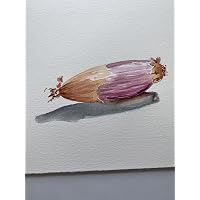
Read
January 4, 2025I can rely on Richard Flanagan to give me a cracking start to the year.
Kif Kehlmann is an aspiring Tasmanian writer. Aspiring - meaning he has not, as yet, actually produced the novel that is surely inside him. He can hardly believe his luck when, through his old friend Ray, he is offered the chance to be the ghost writer for an autobiography of Siggy Heidl - or at least a memoir - or something resembling a publishable book, to be produced within six weeks because Siggy Heidl is about to go on trial for defrauding the banks of seven hundred million dollars.
Occasionally, Siggy's obfuscations and contradictions and disappearances began to feel frustrating, but that, in the end, was a reflection of Kif's own frustration in trying to pin him down to 'facts'. And where this novel flies is in the examination of that whole question of reliability, truth, authenticity. We are all making it up, all of the time. Inventing ourselves. Re-telling stories, adjusting them each time to feel better about ourselves, to fit in with a narrative we have dreamed up. The fundaments of society: money, nationhood, institutions are just fictions that we all believe in. Siggy's crime is grounded in a fictional company that he invents, and for which he can apply for investment loans, produce fake invoices and apply for more money on the basis of an 'income'. A story that the banks believe. Until they don't.
The relationship between Kif and Siggy turns darker. Siggy is manipulative, obscurely threatening. There are hints of - what? Something unspeakable. But is it all just a facade?
But beware of sinister snake-oil salesmen as your leader.
A wonderfully meaty novel, with comic highlights. What more could you want?
Kif Kehlmann is an aspiring Tasmanian writer. Aspiring - meaning he has not, as yet, actually produced the novel that is surely inside him. He can hardly believe his luck when, through his old friend Ray, he is offered the chance to be the ghost writer for an autobiography of Siggy Heidl - or at least a memoir - or something resembling a publishable book, to be produced within six weeks because Siggy Heidl is about to go on trial for defrauding the banks of seven hundred million dollars.
Occasionally, Siggy's obfuscations and contradictions and disappearances began to feel frustrating, but that, in the end, was a reflection of Kif's own frustration in trying to pin him down to 'facts'. And where this novel flies is in the examination of that whole question of reliability, truth, authenticity. We are all making it up, all of the time. Inventing ourselves. Re-telling stories, adjusting them each time to feel better about ourselves, to fit in with a narrative we have dreamed up. The fundaments of society: money, nationhood, institutions are just fictions that we all believe in. Siggy's crime is grounded in a fictional company that he invents, and for which he can apply for investment loans, produce fake invoices and apply for more money on the basis of an 'income'. A story that the banks believe. Until they don't.
The relationship between Kif and Siggy turns darker. Siggy is manipulative, obscurely threatening. There are hints of - what? Something unspeakable. But is it all just a facade?
I could see that for others he seemed aglow with some indefinable aura, a wickedness that was also a glamour; a conspiratorial mystery that somehow you and you alone felt invited to join, and at its apex, a glorious darkness that wasn't quite evil and wasn't quite not evil. No - I felt none of that, or at least not at first, perhaps because Ray had so frightened me with his warnings that I didn't dare see any of Heidl's exotic charms other than subterfuge, deceit, manipulation. But I sensed that it was something more than these things, something else - the chance to submit and subjugate yourself to another, and, after all, isn't that what so many of us secretly crave? To be told what to do, and what not to do? To not be alone? Who does not feel the immense attraction of being led?
But beware of sinister snake-oil salesmen as your leader.
A wonderfully meaty novel, with comic highlights. What more could you want?

March 13, 2018
I would meet myself writing Heidl. There was no other way to write the book. I and I. Me and me. Did I know, at the very beginning, the crimes I would commit? If I did, it's not that I didn't tell others, it's that I didn't even admit them to myself. But I think even then Heidl knew. Being the first person, perhaps that's what I hated in him most.
The only Richard Flanagan I had read before was his Man Booker Prize-winning The Narrow Road to the Deep North; a book based on his father's WWII experiences that I felt was difficult but rewarding. It was, therefore, a surprise to me to have found First Person to be so different – confiding in tone and accessible (in the first person, no less), it tells an interesting story; treats some dark material lightly. It was an enjoyable read in its own right, but it was the information that I later learned that elevated the whole experience for me: In a way, I was led astray by the author (which is, in a way, the author's point here), and because I so enjoyed the “Aha” moment of after-the-book discovery, I would encourage other readers to also go into this read blind as to what other reviewers have written. I'll tread carefully hereafter myself.
What this book is about: It is 1992 and Kif Kehlmann is a struggling young writer – 100% committed to his art and agonising over getting every word in his first novel just right – but with a wife about to give birth to twins, and another young child to support and a crippling mortgage and every second-hand convenience they own about to fall apart, when his oldest friend calls to ask him if he'd like to ghostwrite a memoir for a quick $10 k, Kif wants to refuse out of artistic pride, but finds himself compromising his principles for the sake of his young family. When the (backwoods) Tasmanian author travels to the (big city) publishing company in Melbourne, he meets his subject, Seigfried Heidl: Australia's most notorious conman – having stolen 700 million dollars from the banks and government in a high profile Ponzi scheme, “Ziggy” is either a remorseless but brilliant manipulator or a very dangerous shadow figure with links to the CIA and the criminal underworld – and with just six weeks to write the man's memoir before Ziggy is due in court, Kif is unable to get the conman to tell a straight story, commit to even the most basic of biographical information, or even spend significant amounts of time in the same room as him. In the end, Kif finds himself inventing the memoir to get the paycheque, and every bit that Ziggy reads, he agrees, “Yes, it was just like that!” (proceeding to then call various magazines to give them these “scoops” for a fee).
Ziggy gets into Kif's brain – questioning the point of struggling for art or familial duty when there's riches and pleasure aplenty out there for the taking – and there's a persistent thread running through the narrative of people discussing “story”; declaring the death of the novel and the rise of the memoir form (with, of course, the fictionalised memoir that Kif is writing straddling the two poles), and throughout, the book skewers the publishing industry that seems more concerned with sales than art. Kif's initial impression of the publishing house:
It was feared by others that I might relapse into literature. By which I mean allegory, symbol, the tropes of time dancing; of books that didn’t have a particular beginning or end, or at least not in that order. By whom I mean the publisher, a man by the unexpected name of Gene Paley. He had been quite specific in this regard: I was to tell a simple story simply, and where it was not simple – when it dealt with the complexities of the spectacular crime – simplify, illustrate by way of anecdote, and never have a sentence that lingered longer than two lines.
Ziggy's take on his crimes and reality:
Stories are all that we have to hold us together. Religion, science, money – they're all just stories. Australia is a story, politics is a story, religion is a story, money is a story and the ASO was a story. The banks just stopped believing in my story. And when belief dies, nothing is left.
Eventually, seeming to have learned from Ziggy's philosophy, and after the complete failure of his first novel, Kif devotes himself to trash TV – first writing for Australian soaps, and then pioneering the rise of the worst of today's reality television. When in NYC in the present, he runs into his editor from the Heidl memoir, and through her, is introduced to Emily Coppin – a wildly successful twenty-something serial memoirist who “understood her own limited experience as the full extent of the universe” – who says:
Plot, character, Jack and Jill going up the hill. Just the thought of a fabricated character doing fabricated things in a fabricated story makes me want to gag. I am totally hoping never to read another novel again.
So, all of this was a very interesting and timely examination of “story” and “literature”: the rise of fake news and “reality TV”; the current success of fictionalised memoirs by writers such as Rachel Cusk and Karl Ove Knausgård (both mentioned by name). I enjoyed the seemingly light tone of the writing, even as some quite dark events occur. The passage when Kif's wife gives birth to the twin's was astonishingly captivating to me (even if a review in The Guardian complains of this bit, “it is intense and involving to a degree that makes it seem part of a different project entirely”; actually, most newspaper reviews that I read about First Person didn't like it as well as I did). I simply loved the writing in passages like this:
They want to say things, the dead. Ordinary things, everyday things. Of a night they return to me, and I let them in. I let them their tongue. They talk of what we watch, what we see, what we hear and touch, free as the moon to wander the true night. The unbodied air, wrote Melville. But there is no Ziggy Heidl. No Ray. No others. Back then, before I had written anything, I knew everything about writing. Now I know nothing. Living? Nothing. Life? Nothing. Nothing at all.
So, that's what's in the book, and I could leave the review there, but this is what I later learned (and what I'd consider a spoiler for those who haven't read it yet; hint, hint): In 1991, Richard Flanagan was a struggling young writer – 100% committed to his art and agonising over getting every word in his first novel just right – but with a wife about to give birth to twins, and another young child to support, when his oldest friend called to ask him if he'd like to ghostwrite a memoir for a quick $10 k, Flanagan wanted to refuse out of artistic pride, but found himself compromising his principles for the sake of his young family. When the (backwoods) Tasmanian author travelled to the (big city) publishing company in Melbourne, he met his subject, John Friedrich: a German-born conman who had embezzled 300 million dollars from the Australian banks and government in a high profile Ponzi scheme. With just six weeks to write the man's memoir before Friedrich was due in court, Flanagan was unable to get the conman to tell a straight story, commit to even the most basic of biographical information, or even spend significant amounts of time in the same room as him. In the end, Flanagan started inventing the memoir to get the paycheque, and when Friedrich killed himself halfway through the process, Flanagan created the rest from his imagination. While this memoir, Codename Iago, was a flop, the novel that Flanagan was able to finish writing because of that paycheque, Death of a River Guide, was such a critical success that it set the author on a very different path than poor Kif Kehlmann.
So, in addition to having enjoyed the narrative in its own right, I loved discovering that this is an autobiographical fiction about having written a fictionalised memoir; there's a nice irony in reading it during our age of fake news and whatever it is Knausgård has been up to. An article in The Sydney Morning Herald nicely outlines everything in First Person that's autobiographical (turns out, quite a bit) and provides this explanatory quote from Flanagan:
There's this strong belief, almost a dogma, that novels are finished and reality's outstripped fiction and therefore the only true literary form is the literary memoir, because you can only describe what happened to yourself. But really, we're constantly imagining and reimagining who we are. Most of what we choose to recall is selection and invention. I liked the idea of taking some facts from my life and creating a complete invention around them and in that way questioning what a memoir is.
I wanted to reinforce the necessity and power of invented stories, because what's happened isn't that reality's outstripped fiction. It's that fiction has outstripped reality. From the claims of climate-change denialists to the £350 million per week that the Brexiteers were going to get back from the EU, to Donald Trump's claims of the size of his inauguration crowds, none of these things were reality. They were fictions designed to bolster power and deny people the fundamental truth of the world. The fiction you get in novels speaks to that truth. Lies are a pernicious form of fiction, while novels are a liberating form of fiction that we need more than ever. In a way, my book is an argument for the necessity of novels.
Roger that. Now I want to go back and read all of Flanagan's earlier novels.

November 4, 2017
 BABT
BABT http://www.bbc.co.uk/programmes/b09cympy
Description: Kif Kehlmann is a penniless writer. He has never been published. In fact, he hasn't even completed his first novel. But he is committed to literature - great literature. Kif and his wife Suzy have a young daughter and they are also expecting twins, they can't pay their bills and interest rates are spiralling out of control in early 1990s Australia. So when Kif's best mate Ray, who happens to be minder and bodyguard to Australia's most notorious conman, suggests Kif accepts the job offer of ghostwriting the fraudster's memoir, Kif has a dilemma.
But it doesn't take him long to abandon literature in favour of actually getting a book published - and getting paid. The only problem is they have less than six weeks before Australia's most wanted, Ziggy Heidl, goes on trial - and Ziggy appears pathologically incapable of telling the truth about anything.
First Person is the novel Richard Flanagan began to write just before he won the Booker Prize for The Narrow Road to The Deep North (2014), a novel which was acclaimed by The Guardian as a masterpiece. He has also been described as the greatest Australian writer of his generation.
As a penniless young writer, he accepted the job of ghostwriting the autobiography of Australia's most famous criminal who was about to go on trial for defrauding the banks of $700 million dollars. John Friedrich, the conman, died before he went to trial. Decades later, Flanagan takes this bizarre, real life episode as the starting point for a chilling and at times darkly funny novel about truth and lies and the difference between good and evil. Richard Flanagan on lies, literature, and Australia’s greatest conman
 1/10: Australia's most wanted criminal, Ziggy Heidl, needs a ghost writer for his memoir2/10: Kif is a struggling would-be novice with a pregnant wife and no income.3/10: Penning the memoir of a celebrity criminal proves frustrating - without any facts.4/10: Ziggy hints at CIA and continues to state that the banks want to kill him5/10: Ziggy points out that being a conman is the same as being a writer: both tell lies.6/10: Kif is back in Tasmania to focus on work, but Kif storms out of the house.7/10: A showdown results in an uneasy truce, but the book is nowhere near finished.8/10: In secluded woods, Kif has witnessed Ziggy put a gun in his mouth9/10: After Heidl's death, Kif forges the signature to release the book10/10: Kif's career as a reality star leaves him feeling like a conman.
5* Gould's Book of Fish: A Novel in Twelve Fish
3* First Person
3.5* The Narrow Road to the Deep North
3.5* Wanting

May 17, 2018
An I for an I
Richard Flanagan’s Gould’s Book of Fish is on my top two dozen list. His 2014 Man Booker winner, The Narrow Road to the Dark North, was also extraordinary, all the more so by its sense of personal truth, as a tribute to his father’s experiences as a Japanese prisoner in WW2. Though not perfect, his Wanting,—a historical fantasy that manages to connect Queen Victoria, Charles Dickens, a Tasmanian native, and the quest for the North Pole—was also stimulating. So I was eager to get this latest novel of his, and terribly disappointed to find hardly a trace of the old genius. (Though I do recall his The Unknown Terrorist as being similarly flat.)
First strike against it: its protagonist, Kif Kehlmann, is a struggling writer. There are few writers who can overcome the inherent anality of writing about their own profession, and the routine of sitting in front of a blank screen followed by going out to get drunk soon wears thin. Kif is getting nowhere with his novel. Married, with one child and twins on the way, he is desperate to make some money, so when he gets the offer to ghost-write the memoirs of a mega-criminal in the brief window before his subject goes to trial and almost certain jail, he reluctantly accepts. In one of the few good lines of the book, it was "simply a case of an I for an I."
Second strike: this has been done before, only better, in The Great Gatsby . But Siegfried Heidl, the master criminal here, is no Jay Gatsby. The main plot point is that he will entirely elude Kif’s attempts to pin him down; the trouble is that he eludes the reader too; he is simply not very interesting. I know you are expected to feel the miasma of evil slowly penetrating everywhere—but for that, you need a central figure with some charisma. Kif says he feels Heidl’s power, but he couldn’t make me feel it. (Mind you, to cite another classic precursor, I am not sure that even Conrad managed this in Heart of Darkness ; after all the build-up, the actual Kurtz has always seemed an anticlimax.)
Third strike: the book never convinces on the purely mechanical level. The deadlines under which Kif must work are virtually impossible. The amount of time he can work is little enough, if you take out the drunken evenings, the weekend flights back to Tasmania to see his very pregnant wife, and the endless excuses that Heidl makes to leave the office for meals or meetings. And if you add the fact that Heidl never tells him anything of importance…. Since I could never believe in the reality of the writing, I felt little tension as the time grew shorter. There were also surprising flaws in narrative technique, with denouements coming in at the end, following up on something earlier; but if you have to scratch your head to recall the original reference, the "Aha!" moments become merely "Eh?"
So it’s a strikeout, then? Not quite: for my second and third criticisms at least are the necessary corollaries of Flanagan’s central idea—and it is a potentially good one. If Heidl gives Kif nothing that he can trust, and he has no time to produce a properly researched biography, all he is left with is a kind of magical speed-writing, attempting to capture the essence of his subject without concern for any kind of self-censorship or even for fact. And when Kif does this, the evil that he is imagining no longer comes from his ostensible subject, but from deep inside himself. An interesting idea, yes, but more in theory than in practice. Flanagan shows, by means of flashbacks, that Kif has a tendency towards wrongdoing himself. But this only made it that much harder for me to invest myself in him, in his troubled marriage, or in his later career, which extends for a further quarter-century in a tedious dying fall. Near the end of the book, Kif writes: "No one had told me I was dead." He should have realized it at the beginning!
PS. There is a certain comic frisson to be obtained by viewing Heidl as another Trump, but don't be deceived; it won't do much to sustain the book.
PPS. I now learn, from other reviewers, that Flanagan himself was in Kif's shoes, ghost-writing a memoir by a celebrated criminal called John Friedrich, and finishing the job in six weeks. Which might make my criticisms irrelevant, you might think. But no; I suspect that the real-life aspect may make the characters less real than if he had created them from scratch, and blind him as to what needs to be explained and what doesn't. His truth, in these circumstances, is not necessarily the reader's truth.

November 2, 2017
Although some of the final parts of First Person were pretty good, I found most of it very hard going. It is the story of Kif, an aspiring writer who, through the need for money and his own ambition, reluctantly agrees to ghost-write the autobiography of Ziggy Heidl, who is awaiting trial as a colossal conman and thief on a scale approaching Bernard Madoff. Heidl is utterly evasive and often a downright liar, so the project becomes almost impossible for Kif who also, somewhat implausibly, is drawn into his own dark identity crisis.
First Person is written by a writer who is writing about a writer who is struggling to write, which should really have been enough to warn me off. I read it because of Flanagan's reputation but frankly, I found most of it to be overwritten and rather tedious. There is an awful lot of stuff like, "No graffiti had yet flowered on the grey concrete…nor damasked the umber and olive renders of the low-rise office buildings…" or "In the silence that followed silence followed," which simply irritated me and when, after 200 long pages, someone said of Kit's book, "Kif, there's interesting things here, but you need something to happen," I said "Exactly!" out loud and with considerable warmth. And toward the end I raised a quizzical eyebrow at the irony of "Although I had nothing to say, I had read enough Australian literature to know this wasn't necessarily an impediment to authorship."
To be fair, the book does begin to pick up toward the end with some sharp observations about current attitudes to truth, deceit and dissimulation of several kinds, and also about cheap, self-important certainties, but it really was a struggle to get to this. There is a great deal of Writing (capital W) but for me there was a good deal less here than meets the eye. In the end, it's a book I was glad to have got out of the way, and I'm afraid I can't recommend it.
(I received an ARC via NetGalley.)
First Person is written by a writer who is writing about a writer who is struggling to write, which should really have been enough to warn me off. I read it because of Flanagan's reputation but frankly, I found most of it to be overwritten and rather tedious. There is an awful lot of stuff like, "No graffiti had yet flowered on the grey concrete…nor damasked the umber and olive renders of the low-rise office buildings…" or "In the silence that followed silence followed," which simply irritated me and when, after 200 long pages, someone said of Kit's book, "Kif, there's interesting things here, but you need something to happen," I said "Exactly!" out loud and with considerable warmth. And toward the end I raised a quizzical eyebrow at the irony of "Although I had nothing to say, I had read enough Australian literature to know this wasn't necessarily an impediment to authorship."
To be fair, the book does begin to pick up toward the end with some sharp observations about current attitudes to truth, deceit and dissimulation of several kinds, and also about cheap, self-important certainties, but it really was a struggle to get to this. There is a great deal of Writing (capital W) but for me there was a good deal less here than meets the eye. In the end, it's a book I was glad to have got out of the way, and I'm afraid I can't recommend it.
(I received an ARC via NetGalley.)

November 18, 2017
From BBC Radio 4 - Book at Bedtime:
Kif Kehlmann is a penniless writer. He has never been published. In fact, he hasn't even completed his first novel. But he is committed to literature - great literature.
Kif and his wife Suzy have a young daughter and they are also expecting twins, they can't pay their bills and interest rates are spiralling out of control in early 1990s Australia. So when Kif's best mate Ray, who happens to be minder and bodyguard to Australia's most notorious conman, suggests Kif accepts the job offer of ghostwriting the fraudster's memoir, Kif has a dilemma.
But it doesn't take him long to abandon literature in favour of actually getting a book published - and getting paid. The only problem is they have less than six weeks before Australia's most wanted, Ziggy Heidl, goes on trial - and Ziggy appears pathologically incapable of telling the truth about anything.
First Person is the novel Richard Flanagan began to write just before he won the Booker Prize for The Narrow Road to The Deep North (2014), a novel which was acclaimed by The Guardian as a masterpiece. He has also been described as the greatest Australian writer of his generation.
As a penniless young writer, he accepted the job of ghostwriting the autobiography of Australia's most famous criminal who was about to go on trial for defrauding the banks of $700 million dollars. John Friedrich, the conman, died before he went to trial. Decades later, Flanagan takes this bizarre, real life episode as the starting point for a chilling and at times darkly funny novel about truth and lies and the difference between good and evil.
Written by Richard Flanagan
Abridged by Jill Waters and Isobel Creed
Read by Luke Mullins
Produced by Jill Waters
A Waters Company production for BBC Radio 4.
http://www.bbc.co.uk/programmes/b09cympy
5* The Narrow Road to the Deep North
3* Gould's Book of Fish: A Novel in Twelve Fish
4* First Person
TR Death of a River Guide
Kif Kehlmann is a penniless writer. He has never been published. In fact, he hasn't even completed his first novel. But he is committed to literature - great literature.
Kif and his wife Suzy have a young daughter and they are also expecting twins, they can't pay their bills and interest rates are spiralling out of control in early 1990s Australia. So when Kif's best mate Ray, who happens to be minder and bodyguard to Australia's most notorious conman, suggests Kif accepts the job offer of ghostwriting the fraudster's memoir, Kif has a dilemma.
But it doesn't take him long to abandon literature in favour of actually getting a book published - and getting paid. The only problem is they have less than six weeks before Australia's most wanted, Ziggy Heidl, goes on trial - and Ziggy appears pathologically incapable of telling the truth about anything.
First Person is the novel Richard Flanagan began to write just before he won the Booker Prize for The Narrow Road to The Deep North (2014), a novel which was acclaimed by The Guardian as a masterpiece. He has also been described as the greatest Australian writer of his generation.
As a penniless young writer, he accepted the job of ghostwriting the autobiography of Australia's most famous criminal who was about to go on trial for defrauding the banks of $700 million dollars. John Friedrich, the conman, died before he went to trial. Decades later, Flanagan takes this bizarre, real life episode as the starting point for a chilling and at times darkly funny novel about truth and lies and the difference between good and evil.
Written by Richard Flanagan
Abridged by Jill Waters and Isobel Creed
Read by Luke Mullins
Produced by Jill Waters
A Waters Company production for BBC Radio 4.
http://www.bbc.co.uk/programmes/b09cympy
5* The Narrow Road to the Deep North
3* Gould's Book of Fish: A Novel in Twelve Fish
4* First Person
TR Death of a River Guide

June 6, 2018
This didn't blow me away as much as Flanagan's Booker Prize winner, but it was fascinating to read this fictitious take on his own experience as a ghost writer for an Australian scoundrel. It may have been effective as nonfiction just as well, but given the deeply satiric portraits of other characters and "road not taken" aspect of some of Kif's choices, it works as fiction.
January 17, 2018
I expected more of this after Flanagan's previous book "The Narrow Road to the Deep North" (5 stars) which was one of the best books I've read. This book has the same quality of writing in parts but the story, part memoir, part fiction, is all over the place. The memoir part is well written but not interesting---especially the frustration of trying to get the subject (Ziggy) to talk about his life so Flanagan can write about it. Dozens of attempts to get him to talk are chronicled---as frustrating for the reader as it seemed for the author. In the end made a decision that the book was going nowhere and stopped reading. I couldn't get my head around the madness.
2/10
2/10

June 17, 2018
I tried, but I couldn't get into it. It was dense. I wanted something more fun, or at least less work.
Others might like it, but it seemed tedious every time I picked it up. I'm returning it to the library early. The final straw was when I realized I'd picked up a grammar hornbook and read that instead on a Saturday night.
Others might like it, but it seemed tedious every time I picked it up. I'm returning it to the library early. The final straw was when I realized I'd picked up a grammar hornbook and read that instead on a Saturday night.

May 23, 2025
Ratings:
Writing 5
Story line 5
Characters 5
Impact/enjoyment 5
Overall rating 5
Writing 5
Story line 5
Characters 5
Impact/enjoyment 5
Overall rating 5

March 30, 2018
First Person (Knopf Publishing Penguin Random House 2017) by Richard Flanagan follows the publication of his Booker-winning novel The Narrow Road to the Deep North. This next book is contemporary and darkly funny, with esoteric overtones that imbue the tale with an impenetrable and mysterious tone. I’ve heard Richard Flanagan speak about the genesis of this book, which is loosely based on an experience he had has a young writer just starting out. The story he tells is ridiculously absurd and full of hilarious anecdotes on the theme of ‘you couldn’t make this stuff up’ and ‘if this was fiction, no-one would believe it’. But in First Person, and the creation of the characters Kif Kehlmann and Siegfried Heidl, Flanagan has reproduced the essence of that story, and captured the inanities both of the corporate world and the world of writing.
Siegfried Heidl is a notorious conman who has swindled Australian banks out of $700 million and masqueraded in a multitude of personas to amass a personal fortune and an impressive reputation. But he has been found out, and is due to go to trial. In a last-ditch effort to save face, he hires penniless wannabe author, Kif Kehlmann, to ghost write his memoir, promising it will be a tell-all bestseller. Kif is attempting to work on his first novel, and trying to support his wife, who is heavily pregnant with twins, and his young daughter. The $10 000 offered by the publisher Gene Paley for Heidl’s memoir seems like a life-saving proposition to the young Tasmanian writer, even if it is has to be completed in the impossible time-frame of six weeks. But once he begins work – or at least, once he attempts to begin work, which is fraught, because Heidl seems intent on divulging as little of himself as possible – but once he meets with Heidl and begins, he starts to understand the enormity of the task he has agreed to undertake, and the unlikelihood that anything close to resembling a book will eventuate.
Kif is introduced to Heidl through an old friend, Ray, who is now working security for Heidl. Ray warns Kif from the very beginning not to get too involved with Heidl, not to tell him anything personal, not to let him get under his skin. But Heidl is a slippery and elusive character and Kif finds that he does indeed begin to make an impression, more like a covering of green slime that he desires to wash away at the end of each day. The personality of Heidl, and the relationship he cultivates with those around him, including Kif and Ray, is executed so well – we have the sinister overtones, the ever-present threat of violence, the constant ambiguity about whether to believe his lies or whether to call out his truths. The whole book is one big deception. We don’t know who to believe, or how much to believe. The characterisation of Heidl – and of Kif also – is nuanced and elaborate. In addition, the craft and business of writing is deconstructed, analysed and critiqued. The art of writing is debated, poked fun at, and parodied. We gain a keen sense of all the insecurities writers suffer, all the thwarted ambitions and the prideful notions. The writer’s lament: ‘Am I any good? Will I ever be published? Is my writing complete rubbish? Am I a pretender? Will I ever come up with anything original? Where is my muse? What if this is as good as it gets?’ is thoroughly dissected. So for writers, this book is very interesting for its take on writing, but also the in-depth characterisation of the main two characters, with all their foibles and flaws, is fascinating.
Siegfried Heidl is a notorious conman who has swindled Australian banks out of $700 million and masqueraded in a multitude of personas to amass a personal fortune and an impressive reputation. But he has been found out, and is due to go to trial. In a last-ditch effort to save face, he hires penniless wannabe author, Kif Kehlmann, to ghost write his memoir, promising it will be a tell-all bestseller. Kif is attempting to work on his first novel, and trying to support his wife, who is heavily pregnant with twins, and his young daughter. The $10 000 offered by the publisher Gene Paley for Heidl’s memoir seems like a life-saving proposition to the young Tasmanian writer, even if it is has to be completed in the impossible time-frame of six weeks. But once he begins work – or at least, once he attempts to begin work, which is fraught, because Heidl seems intent on divulging as little of himself as possible – but once he meets with Heidl and begins, he starts to understand the enormity of the task he has agreed to undertake, and the unlikelihood that anything close to resembling a book will eventuate.
Kif is introduced to Heidl through an old friend, Ray, who is now working security for Heidl. Ray warns Kif from the very beginning not to get too involved with Heidl, not to tell him anything personal, not to let him get under his skin. But Heidl is a slippery and elusive character and Kif finds that he does indeed begin to make an impression, more like a covering of green slime that he desires to wash away at the end of each day. The personality of Heidl, and the relationship he cultivates with those around him, including Kif and Ray, is executed so well – we have the sinister overtones, the ever-present threat of violence, the constant ambiguity about whether to believe his lies or whether to call out his truths. The whole book is one big deception. We don’t know who to believe, or how much to believe. The characterisation of Heidl – and of Kif also – is nuanced and elaborate. In addition, the craft and business of writing is deconstructed, analysed and critiqued. The art of writing is debated, poked fun at, and parodied. We gain a keen sense of all the insecurities writers suffer, all the thwarted ambitions and the prideful notions. The writer’s lament: ‘Am I any good? Will I ever be published? Is my writing complete rubbish? Am I a pretender? Will I ever come up with anything original? Where is my muse? What if this is as good as it gets?’ is thoroughly dissected. So for writers, this book is very interesting for its take on writing, but also the in-depth characterisation of the main two characters, with all their foibles and flaws, is fascinating.

November 1, 2017
It has taken me ages to read Richard Flanagan’s new novel First Person because there is so much to think about within its pages. But as you can tell from the Sensational Snippet that I posted last week, it’s a book that has a comic thread while also pursuing much darker issues.
I had long forgotten John Friedrich who as Executive Director of the National Safety Council of Australia (NSCA*) in the 1980s, defrauded the banks of nearly $300 million dollars, but his story was astonishing news, even in the 1980s when we had become used to corporate fraud. As I recall it, the NSCA was a national search and rescue outfit, which impressed us all with its high profile rescues and its gee-whiz equipment, and we were all flabbergasted to learn that all but one of the containers full of hi-tech equipment either did not exist, or were empty. What I did not know was that my literary hero Richard Flanagan was ghost-writing Friedrich’s memoirs at the time of his suicide (four days after he was charged) and that the book, Codename Iago was published posthumously. (And sank like a stone). How could I have known about that? It still doesn’t appear on his Goodreads page!
Out of this experience as an unsuccessful ghost-writer, Flanagan has crafted a cunning pseudo-memoir of a wily conman called Siegfried (Ziggy) Heidl and his memoirist the hapless Kif Kehlmann. Kif is a penniless wannabe author in Hobart, struggling to get by on next-to-nothing with his wife Suzy and small daughter Bo. While Flanagan writes this section with sardonic humour, it reads as if it’s from the heart: it’s tough for this young couple and mortgage stress is the least of it. Everything they have is second-hand and cobbled together from junk at the tip. Simple pleasures are what they enjoy because they can’t afford any other kind, and there’s no relief on the horizon because Kif has an implacable desire to be a writer and he has Suzy’s enduring support – her faith in him is unshakeable.
But Kif’s novel, (as we saw in the Sensational Snippet that I posted last week), is not going well, and he gets the sack from his job as a doorman; the mortgage payments are pressing and Suzy is pregnant with twins – so much against his better judgement he takes up the offer of a ghost-writing job.
To read the rest of my review please visit https://anzlitlovers.com/2017/11/01/f...
I had long forgotten John Friedrich who as Executive Director of the National Safety Council of Australia (NSCA*) in the 1980s, defrauded the banks of nearly $300 million dollars, but his story was astonishing news, even in the 1980s when we had become used to corporate fraud. As I recall it, the NSCA was a national search and rescue outfit, which impressed us all with its high profile rescues and its gee-whiz equipment, and we were all flabbergasted to learn that all but one of the containers full of hi-tech equipment either did not exist, or were empty. What I did not know was that my literary hero Richard Flanagan was ghost-writing Friedrich’s memoirs at the time of his suicide (four days after he was charged) and that the book, Codename Iago was published posthumously. (And sank like a stone). How could I have known about that? It still doesn’t appear on his Goodreads page!
Out of this experience as an unsuccessful ghost-writer, Flanagan has crafted a cunning pseudo-memoir of a wily conman called Siegfried (Ziggy) Heidl and his memoirist the hapless Kif Kehlmann. Kif is a penniless wannabe author in Hobart, struggling to get by on next-to-nothing with his wife Suzy and small daughter Bo. While Flanagan writes this section with sardonic humour, it reads as if it’s from the heart: it’s tough for this young couple and mortgage stress is the least of it. Everything they have is second-hand and cobbled together from junk at the tip. Simple pleasures are what they enjoy because they can’t afford any other kind, and there’s no relief on the horizon because Kif has an implacable desire to be a writer and he has Suzy’s enduring support – her faith in him is unshakeable.
But Kif’s novel, (as we saw in the Sensational Snippet that I posted last week), is not going well, and he gets the sack from his job as a doorman; the mortgage payments are pressing and Suzy is pregnant with twins – so much against his better judgement he takes up the offer of a ghost-writing job.
To read the rest of my review please visit https://anzlitlovers.com/2017/11/01/f...

January 11, 2020
As literary as it gets: First Person is the story of Kif Kiehlman, a penniless, aspiring Tasmanian writer who gets a chance earn $10,000 in return for ghostwriting the memoir of Australia's biggest con man, Seigfried Heidl. But Heidl can get to one's head, and this could be Kiehlman's undoing as he rushes to write "an I for an I", spin a life out of nothingness, in six weeks.
A veritable descent into madness, First Person captures the essence and experience of writing, of poverty of means and of spirit, and of crumbling family life. Inspired and influenced by Flanagan's own experience of ghostwriting con man John Friedrich's autobiography under similar circumstances in 1990, this book mixes fact, fiction and breathtaking prose to paint a dark picture of the world of literature and of fraud, and of the impending psychosis.
Kiehlman's relationship with Suzy — his wife, who is heavily pregnant with twins — highlights the callous drift of strained relationships. I found the chapters highlighting childbirth painfully powerful, and the suicide scene (spoiler!) as harrowing and haunting as could be. The decadent state of publishing is highlighted in the satirical character of Gene Paley, who appears a salesman in the shoes of a literateur. Equally excellent is the portrayal of Heidl, an aphorism-loving, evasive fraudster that one simply cannot figure out — and yet, Kiehlman has to. The trials and torment of writing as felt by Kiehlman (and likely Flanagan as well) are explored with depth and honesty and written with lyrical beauty.
However, I found Kiehlman's superior white male attitude towards aboriginals and women quite disturbing, and sincerely hope it is strictly the character speaking there.
A unique, perceptive and literary psychological thriller, First Person is one of those books that are hard to read (for their sheer strength of prose narrative), and even harder to review. Whatever else it is, this is not a book one should be missing.
A veritable descent into madness, First Person captures the essence and experience of writing, of poverty of means and of spirit, and of crumbling family life. Inspired and influenced by Flanagan's own experience of ghostwriting con man John Friedrich's autobiography under similar circumstances in 1990, this book mixes fact, fiction and breathtaking prose to paint a dark picture of the world of literature and of fraud, and of the impending psychosis.
Kiehlman's relationship with Suzy — his wife, who is heavily pregnant with twins — highlights the callous drift of strained relationships. I found the chapters highlighting childbirth painfully powerful, and the suicide scene (spoiler!) as harrowing and haunting as could be. The decadent state of publishing is highlighted in the satirical character of Gene Paley, who appears a salesman in the shoes of a literateur. Equally excellent is the portrayal of Heidl, an aphorism-loving, evasive fraudster that one simply cannot figure out — and yet, Kiehlman has to. The trials and torment of writing as felt by Kiehlman (and likely Flanagan as well) are explored with depth and honesty and written with lyrical beauty.
However, I found Kiehlman's superior white male attitude towards aboriginals and women quite disturbing, and sincerely hope it is strictly the character speaking there.
A unique, perceptive and literary psychological thriller, First Person is one of those books that are hard to read (for their sheer strength of prose narrative), and even harder to review. Whatever else it is, this is not a book one should be missing.

February 3, 2019
I got bored a lot reading this book. TBH, it is less than two weeks since I read it, and that's pretty the only thing I remember about it, which is not a good sign.
Ok, it had a writer in it, who was terrified of both poverty and being corrupted. A mobster who failed to come alive either as compelling or mundane. A whiplash final section of the book, set in modern times, which seemed to be saying something very different than the rest of the book, which possibly I had not understood because of the boredom. By the end I didn't care very much because I just wanted it done.
Flanagan is a polarising Australian writer and I am definitely on the "fan" side, so this was a major disappointment. It was by no means 'bad', and the moments that came alive was the grinding struggle against poverty of the protagonist, something I could relate to. But it just never came together and engaged me at all. I'd like to think it was just a rare mismatch of reader and subject, but looking at the reviews (and talking to others) I don't think I am alone. I can't help wondering if there was an editor somewhere who should have been a little blunter with one of Australia's most talented writers.
Ok, it had a writer in it, who was terrified of both poverty and being corrupted. A mobster who failed to come alive either as compelling or mundane. A whiplash final section of the book, set in modern times, which seemed to be saying something very different than the rest of the book, which possibly I had not understood because of the boredom. By the end I didn't care very much because I just wanted it done.
Flanagan is a polarising Australian writer and I am definitely on the "fan" side, so this was a major disappointment. It was by no means 'bad', and the moments that came alive was the grinding struggle against poverty of the protagonist, something I could relate to. But it just never came together and engaged me at all. I'd like to think it was just a rare mismatch of reader and subject, but looking at the reviews (and talking to others) I don't think I am alone. I can't help wondering if there was an editor somewhere who should have been a little blunter with one of Australia's most talented writers.
Displaying 1 - 30 of 416 reviews