Jump to ratings and reviews
Rate this book

Cheever: A Life

Rate this book
John Cheever spent much of his career impersonating a perfect suburban gentleman, the better to become one of the foremost chroniclers of postwar America. Written with unprecedented access to essential sources—including Cheever’s massive journal, only a fraction of which has ever been published—Bailey’s Cheever is a stunning example of the biographer’s art and a brilliant tribute to an essential author.

770 pages, Hardcover

First published January 1, 2009

63 people are currently reading
1285 people want to read

About the author

Blake Bailey

23 books88 followers
Blake Bailey is the author of biographies of Philip Roth, John Cheever, Richard Yates, and Charles Jackson. He is the recipient of a Guggenheim Fellowship and an Award in Literature from the American Academy of Arts and Letters, winner of the National Book Critics Circle Award and the Francis Parkman Prize from the Society of American Historians, and a finalist for the Pulitzer and James Tait Black Prizes. His 2014 book, The Splendid Things We Planned, was a finalist for the National Book Critics Circle Award in Autobiography. He lives in Virginia with his wife and daughter.

Ratings & Reviews

What do you think?
Rate this book

Friends & Following

Create a free account to discover what your friends think of this book!

Community Reviews

5 stars
305 (41%)
4 stars
296 (40%)
3 stars
102 (13%)
2 stars
19 (2%)
1 star
12 (1%)
Displaying 1 - 30 of 141 reviews
Profile Image for Jeffrey Keeten.
Author 5 books252k followers
June 29, 2020
“For me a page of good prose is where one hears the rain. A page of good prose is when one hears the noise of battle.... A page of good prose seems to me the most serious dialogue that well-informed and intelligent men and women carry on today in their endeavor to make sure that the fires of this planet burn peaceably.”

Photobucket

I’m always taking a chance when I decide to read a biography of someone I admire. Once the person becomes human, sometime too human, it can color how you see their work. James Kaplan stopped by to see Cheever and the experience was not what he had hoped it would be. ”One learns to separate the writer from the writing,” Kaplan reflected many years later, “and my meeting with Cheever was sort of my final lesson.” I have a friend, who used to be a premier book collector, but a nasty divorce ended with a court order that he had to sell his books. His ex-wife really knew how to hurt him. He would send books with me to be signed by some of his favorite writers, but he refused to meet them. He simply could not bear to think that they would not live up to his expectations.

I enjoy meeting writers and interacting with writers, but I don’t have any expectations that they will be as interesting as their writing. It is great when they prove to be brimming with wit and charm. People who can write beautiful prose can’t necessarily speak as eloquently as they write. Sometimes they lack social skills or are too caught up in their own persona to engage with readers. Edward Abbey for instance refused to sign my books until my girlfriend said she would meet him for coffee. Okay I was a little surprised, relieved that he wasn’t wanting me to go to coffee and all that would entail. My girlfriend switched some digits on her phone number, well that is what she told me. Abbey was suddenly happy and signed my books with a flourish. The books are still in my library, the girlfriend, but a very distant memory and my view of Abbey? Well I knew his reputation and though his rampant horniess did put me in an uncomfortable spot all that happened was that I came away with a really good story. Abbey gave me a sly look that said he had scored points on a man forty years younger, but I have a handful of signed books steadily gaining value and the woman is someone else’s problem.

The thing about Cheever is he was a brilliant, natural writer. He was a high school dropout who wrote his first story at eighteen a story chronicling his time at school called ”Expelled”. Malcolm Cowley accepted it for publication at The New Republic and a writer was born. Cowley said, ”I felt that I was hearing for the first time the voice of new generation.” Cheever had a gift for memory. His daughter, Susan, relates a story about her father sitting at the kitchen table and asking her if she wished to hear a story he was writing. She expected him to go get his manuscript, but he just related it to her word for word. Unlike F. Scott Fitzgerald, who he has been compared with, he did not go into laborious revisions. F. Scott was a relentless polisher, but for Cheever stories came out whole cloth. Bailey found an early draft of Falconer, ”That draft affords a fascinating glimpse of how Cheever worked when inspired. Page after page is virtually unpunctuated, unparagraphed, unrevised in any way, yet the actual words are almost identical to the published version”

Photobucket

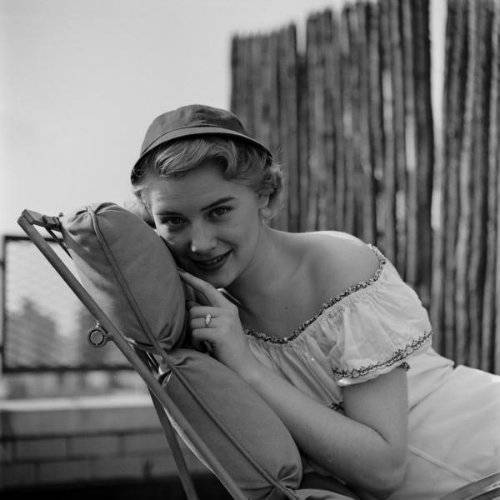
This book goes into great detail about Cheever’s sexual life. He kept a journal for most of his life and spent an inordinate amount of time writing about his sexual desires, loathing himself for finding himself attracted to men. ”He speaks scornfully of effeminate men lest he be misunderstood and as he scorns his own effeminacy. And in making this harsh judgement I might say that I sometimes live behind a veil of ignorance myself.” Cheever was clear about how he felt. Every encounter with suspected homosexuals (“with their funny clothes and their peculiar smells and airs ands scraps of French”) struck him as “an obscenity and a threat,” such that his own impulses were unbearable and had to be numbed with alcohol or blamed on his wife. Yes, Cheever was in so much denial about his own sexual desires that it not only lead to chronic drinking, but also started to hinder his ability to write. The drinking, gin in the early days, then scotch, then as he needed to keep up appearances vodka, lead to impotency with his wife. Even when he took a mistress, the actress Hope Lange, the beautiful woman put no lead in his pencil. Their physical relationship was restricted to oral ministrations.

HopeLange_zpsd05a850d
Hope Lange

Cheever at one point seeks out the notorious Ned Rorem who published his explicit diaries chronicling his sexual history as well as outing several prominent men as to their sexual proclivities. Even though Rorem was not physically attracted to Cheever he did have a relationship with him which gave Cheever no end of stress worrying about Rorem exposing him to the press. Self destructive behavior or a desire to finally be free? Cheever “seduced”admirers and would come home and bragged about his conquests to his wife. He was not subtle in his seductions usually indicated his desire by putting their hand on his crotch or pulling his pants down. His impotency was only a problem with women.

As his career takes off, Hollywood comes knocking and makes him reasonably comfortable for the first time in his life. The Wapshot Chronicle becomes a bestseller, but he is still drinking heavily and having issues with his sexuality. He takes a job teaching at the famed Iowa Fiction Workshop. His first class had Allan Gurganus, T. Coraghessan Boyle, and Ron Hansen all of whom went on to have stellar writing careers. His students were often frustrated with his lack of instruction. He would read their work and tell them if it worked or didn’t work, but he would never be specific about what was wrong. Gurganus in particular drove Cheever to distraction. Cheever would fret over what he perceived to be the young man’s sudden effeminacy, not to say his shameless teasing. “The more he flirts, the more he seems like a woman. He was so perfect in many ways--witty, well read, gifted--if only he weren’t so homosexual. And, given that he let himself be known as gay, the least he could do--or so Cheever manifestly believed--was go to be with him!” Despite many attempts Cheever never does get Gurganus in bed. Gurganus is reportedly charming and deflects these attempts with such grace that they remained lifelong friends.

Cheever after several stints in the hospital to get dried out, none of which worked for longer than it took him to get out of the car, go to his stash in the pantry, and start the ruinous cycle over again. Finally he has an attack that almost kills him, weakens his heart ,and finally he checks himself into a lockdown facility that gets him permanently dry. He can not believe how much energy he has now that he is not in a drunken haze for most of the day. He buys a bike and starts biking sometimes five miles a day every day. How many more Cheever books would there have been if he had come to terms with his drinking sooner? His antics while drunk drove a wedge between him and his kids. His wife never really forgave him. She never left him, but she was present physically not spiritually. He talked a lot about loneliness in his journals and the slapdash friendships he made with other writers were often strained over jealousy or his sharp tongue. John Updike tried to be a dutiful worshiper of his friend Cheever, but often found himself avoiding him. It was hard to see what a wreck Cheever had made of himself. ”You might say that he had lost the gift of evoking the perfumes of life: sea water, the smoke of burning hemlock, and the breasts of women. He had damaged...the ear’s innermost chamber, where we hear the heavy noise of the dragon’s tail moving over the dead leaves.”

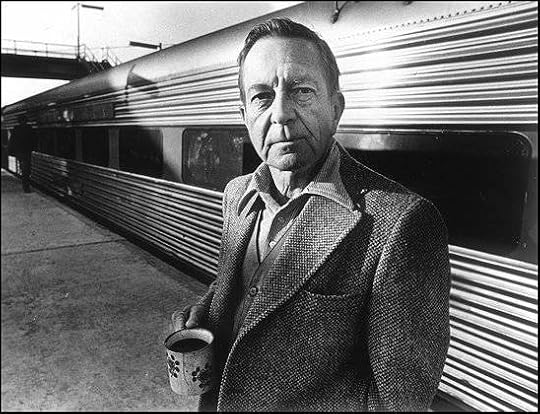
CheeverOlder_zps747e4ada

I spent a year reading John Cheever: Collected Stories and Other Writings. I would read a story about every night at bedtime sometimes two. Like many people among my favorite stories are ”The Swimmer”, and ”The Enormous Radio”. If you intend to be a writer you must read him. I will warn you that when he is on his best game he can be discouraging to writers. I at times find myself staring slack jawed at the wall after reading one of his beautiful stories thinking to myself how could I ever dream about being a writer? He was a wonderful observer, even when plowed out of his mind, he would still remember minute details for future stories. His wife quit fighting with him, usually goaded into a fight by Cheever, because like Zelda Fitzgerald she would later be incensed when she would find her words incorporated in stories. He did finally make peace with his sexuality, and his children later in life. Though his wife Mary was a different story. Even long after he was dead she still remembered things as they were and never did metamorphise her life with him into nostalgia, even though writers and admirers would have liked her to perpetuate a myth.

Cheever broke himself on the wheel of 1950s, 1960s, etc. homophobia and on his own inability to conform to his own ideal version of himself. He was a man crushed by his own desires, his chronic drinking, and his own self-inflicted loneliness. He was a man too human to bear up under the scrutiny of being famous. We must remember him for his beautiful prose.

Bonnie in the thread below this review shared a link that has Cheever reading The Swimmer. It is not to be missed. Thanks Bonnie. http://www.youtube.com/watch?v=5I8_Jy...
Profile Image for Paul Bryant.
2,409 reviews12.6k followers
July 30, 2024
Since I’m a biography fan and I have something of an obsession with very long books, and I love short stories, a 750 page biography of John Cheever seems guarandamnteed to please, especially one that comes garlanded with such blurby burbling as

Quite simply, the best example of literary biography I’ve ever read (Entertainment Weekly)

and

The most exquisite, compelling and heartbreaking life I’ve yet encountered (T C Boyle)

And plus, I already knew that John Cheever had a tortured unhappy life, as all great artists should have…. so, in the words of one of our greatest contemporary philosophers, what could possibly go wrong?

(Note : I’m leaving aside the not small matter of the author and the swirl of accusations made against him. This is not about him, this is about his book.)

You can see inside this book there is an excellent one trying to get out, but suffocating vines and creepers and clinging ivy wholly entangles it, it can hardly be seen, it’s lost, and there’s one single reason for this sclerotic tangle.

John Cheever kept a journal all his life – it ran to 4000 typed single spaced pages – and Blake Bailey was one of only allegedly ten people who read it all. What is the result? Enraptured by this ultimate source of pure Cheever anguished selfreflective gold, he extracts every last possible detail from every one of the 4000 pages and submerges his book in a billion boring tedious details, usually about (not particularly) quirky friends of the Cheevers, or about the many fab get-togethers at somebody’s mansion, or about enraptured months at a writers’ retreat, or about drinking, drinking and more drinking.

I stopped reading three biographies before this one because I hated the person so much (William Burroughs and Patricia Highsmith; and because I just got tired of Anais Nin). This time I liked what I could see of Cheever but I hated the biography. The fans of this book have way more tolerance than me for an ocean of headachy banal detail about John Cheever’s many interchangeable friends and acquaintances and their many apartments in New York and the many many parties they had and the un-naughty things that may have gone on. I’ll stick to the stories. Real life sucks. I always knew it did.
Profile Image for Dan.
1,249 reviews52 followers
May 20, 2019
This biography Cheever: A Life by Blake Bailey won the Francis Parkman prize in 2010. John Cheever, the subject of this biography, was called the American Chekhov because of his mastery of the short story. A prolific writer who wrote from the 1930s to 1970s, Cheever won major literary awards for The Wapshot Chronicle, Falconer and The Stories of John Cheever. Stories published in 1979 a few years before his death was a collection of short stories including many that he had previously published in the New Yorker.

This is a critically acclaimed biography for good reason. There is little that we don’t find out about Cheever in this impeccably researched and chronologically arranged tell all that was authorized by his children. Bailey had access to many letters and conducted many interviews.
It also turns out that one of America’s greatest writers kept personal diaries — as in thousands of pages.

For those who knew Cheever, his alcoholism was hardly a revelation in this biography. It is a common disease and much more common in the waspy society of the 20th century that Cheever lived in. He was married for more than forty years and had three children with his wife Mary. He was not a good husband by most measures. I will get to that part in a bit.

One will find that Cheever’s stories, with some rare exceptions, are largely devoid of any explicit descriptions of sex. He was not exactly a prude but when compared with authors like Updike he certainly seemed like one.

So it was a surprise that we learned from his journals and the ex-lovers still around in 2010, when the biography was written, that Cheever had many affairs almost exclusively with men. His journal entries were quite sexually explicit and rarely did he mention women. He told two of his children about his bi-sexuality on his deathbed believing the news would come out anyway after his death. The biographer does not say if Mary knew.

5 stars. As good a biography about a writer that I have read. I don’t presume any famous writer to have been a moral role model so Cheever’s failings were not that surprising. But boy there were a lot of them.
Profile Image for Liz.
44 reviews15 followers
July 10, 2009
I should have reviewed this right when I finished it so it would all still be fresh in my head, but here goes:

I have been a huge Cheever fan since I was a teenager and have always wished that he was the "venerable New England author" who lived on the street in Ipswich where I was born instead of Updike. (Updike can suck it, if you ask me. He wrote some decent short stories, but the Rabbit books are the most boring, misogynistic sack of poo that I have ever zzzzzzz....) I knew a bit about Cheever's life from having read a few excerpts of the diaries and being acquainted with the pop-cultural mythology surrounding the man. (Anyone who's ever read the Onion or watched Seinfeld knows of his alcoholism and fraught bisexuality.) Baily's biography did a superb job of plumbing the depths behind the myth and painting a three-dimensional portrait of the man. He does an incredibly thorough job acurately portraying a man who was so wrapped up in his own ego and mythology that, even in his journals, it is often difficult to separate fact from fiction. The tone is admirably tempered -- walking the line between adulation for one of the most celebrated wordsmiths of 20th century American literature, pity for such a wonded, self-loathing misfit desperate to cultivate a pedigree, and digust with the man's selfishness and mistreatment of his wife and children.

Cheever: A Life is peppered with all of the gossipy literary tidbits you want out of a biography of the man whose propensity to drink astounded even Frederick Exley and was notorious for servicing young up-and-coming male writers under the pool table at Yaddo. But it is also a poingant portrait of a brilliant mind hobbled by the fear of not being accepted. Even if you're not as enamored of the Wapshots as I, this is an engaging, moving, and higly instructive read.
Profile Image for Liina.
355 reviews323 followers
April 28, 2021
In the light of the recent accusation regarding Blake Bailey, I am struggling on how to review this, brilliant thoroughly detailed and honest biography of John Cheever. The same that many people now ask about Bailey himself was the core of this biography - can you separate the art form from the artist?

Because John Cheever is not that pleasant suburban gentleman smiling in the afternoon sun, having a barbeque with his neighbours. He was that for many of his friends but the inside of him was a depressive hole filled with an enormous amount of self loathe and self-doubt. At the height of his alcoholism, the way he (emotionally) abused his children and wife left little sympathy for him. Although Bailey made Mary, Cheevers wife relatively invisible (misogyny that he has been accused of often) it is not hard to imagine what she went through, having a husband who not only was a drunk but also a homosexual in denial about his own nature, constantly worried about money and status.

Despite the worry and anxiety Cheever pulled through and got famous. Very very famous. He also stopped drinking and smoking. It was then that his gentle and mischievous character most shone. And it was also then that he most suffered from the loneliness he felt throughout his life, even when surrounded by friends.

I found this biography very moving and honest. Bailey didn't justify Cheever nor did he accuse him of his shortcomings. He merely presented the reader with all the information. And form that formed a man who was never at ease with himself despite being a natural writer, a rare talent and a master of keeping up the facade. Even on his deathbed, he refused to succumb to the hopelessness of his situation. Cheever's life was one of the controversies and from those frictions, rose his iridescent prose.
Profile Image for Peter.
Author 8 books181 followers
October 8, 2012
This took me the entire summer--picking it up, putting it down-- to read. Mainly because my capacity for vicarious depression is not as large as it once was. I have too many things to say about this, and not enough time to say them. So I'll boil it down: it's absolutely amazing that such big-hearted fiction was written by a man who spent so much of his life feeling sad, guilty, and fraudulent.

But without those feelings would there have been such a lifeblood of pathos in the work? I'm pretty sure the drinking didn't help his writing (it almost killed him, for one thing), but the sense of living a double life...maybe that was key to the equation.

If you can possibly find the time, I would recommend reading the short stories along with this, checking out each story as it's mentioned in the biography. It makes for a fascinating intersection of life and art. The way he chose to alter events from his own life to turn them into the stuff of fiction is a glimpse of process that any writer will geek out on. His instincts in this area were second to none.


Profile Image for Hannah Garden.
1,053 reviews184 followers
February 1, 2009
Dangit, Blake Bailey. I am really loving Palace Walk, but you are like my goddamned idol at this point--I don't like biographies, barely care about Cheever, and am too BUSY to mess with this right now. And yet . . . sigh. What a wonderful jorb you do.

Man, this guy really kills me. Blake Bailey writes a biography like Richard Yates writes a novel. Given, the material is sweet as hell, and that helps, but I swear, if I were a thirteen-year old I would put a poster of Blake Bailey on my wall. StuPENdous.
Profile Image for K.M. Soehnlein.
Author 5 books147 followers
October 19, 2013
Things I didn’t know about John Cheever before reading this biography:

• He was raised in poverty, after his merchant-class father lost everything in the Depression.
• He was expelled from high school before graduating and never went to college.
• He published his first piece of writing as a teenager (!) in The New Republic (!). It was called “Expelled,” and it ripped apart the school that had kicked him out.
• He was short—5’5” as a full grown adult.
• After high school he lived in Boston with his older brother, who supported him, and who was, in some fashion, his lover.
• After that he lived a down-and-out life in the Village in New York—a young writer charming his way into friendships with literary greats like ee cummings—always without money.
• During those years, he was so broke he fainted on the streets of Manhattan from hunger.

Bailey’s book is called Cheever: A Life, but what struck me most strongly about this biography was how many lives Cheever lived.

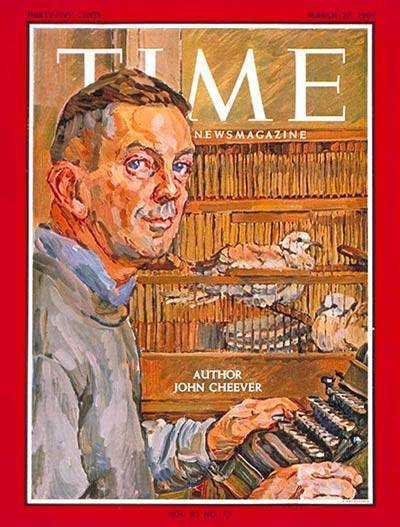
How did he get from this lowly desperation to the pinnacle of success he achieved before he died: his literary novels and short story collections on bestseller lists, his face on the cover of Time and Newsweek, the recipient of a Pulitzer Prize and an honorary degree from Harvard, famous even in the Soviet Union at the height of the Cold War?

The answer is one page at a time.

Cheever never didn’t write. He wrote every day; it was his job. As a young married man, he lived in a New York City apartment building, and every morning would put on a suit, ride the elevator with other men going to work in suits, but take that elevator all the way to the basement. There, in a small room, he’d put the suit on a hanger and sit down at his typewriter.

He found early patrons who published him, supported him, even housed and fed him. He got by as much on charm as talent. His impish smile and self-mocking giggle disarmed people; his artistic intelligence kept them near and made them want to help. His difficult origins makes for the most gripping part of Cheever’s story.

Once he begins to achieve success, he reinvents himself by rejecting and hiding where he came from, and he becomes in these pages more difficult to root for. Famously there was the public Cheever, cheerful scion of suburbia, married with children and dogs, and writing about that world for The New Yorker—a life that lay like a thick blanket atop the private Cheever, who suffered daily and deeply over his largely unexpressed homosexual desires, who felt like a friendless imposter in his social milieu and spent decades getting increasingly, near-fatally drunk. We know this because he’d instructed his children to oversee the publication of his journals, which he kept for decades and which held nothing back. (One question that bubbles under the surface is whether his tight-lipped wife, Mary, ever peeked at those journals. They were married for four decades. Is it possible she had no inkling of her husband’s heart and mind?)

Biographers expose, and even in the best-written biographies, subjects can be overwhelmed by the ugly details. Cheever was a supremely gifted writer and a supremely difficult person. It’s exhausting to witness decades of his self-abuse and downright depressing to learn of the emotional cruelty inflicted upon his wife and children. He had a strong libido and a stronger sense of shame about it; this book is a case study for internalized homophobia (and erotophobia in general). At the end of his life, miraculously sober thanks to rehab and AA, he allowed himself to act upon his queer desire more regularly, but he did so in the most exploitative way, as he pressured a younger writer into a relationship in exchange for publishing favors.

Would I recommend this book? I can hardly fault the biographer for doing a thorough job, and Bailey is a powerful and readable chronicler who deserves 5-star praise. But in the end I wished I could “unsee” what I’d been shown.

Instead I would recommend without reservation The Stories of John Cheever, which showcases the best of his work, including “The Swimmer,” “Goodbye My Brother,” “The Country Husband,” “The Death of Justina,” and so many more. I would recommend Falconer, his novel of a middle class addict who winds up in prison where he finds passion with another male inmate. Read his fiction—accessible, inventive, humorous, upsetting, challenging, original, masterful—without the taint of the troubled mind behind the stories. The stories are what’s important. The author’s life—or lives—mostly get in the way.

Profile Image for Joy H..
1,342 reviews71 followers
June 22, 2011
Cheever: A Life (Audio CD) by Blake Bailey
Added 4/20/11.
GR description: "Blake Bailey's biography focuses on the gaping disparity between Cheever's proud Yankee social persona and his lifelong inner turmoil."

READ SAMPLE OF THIS BOOK HERE:
http://books.google.com/ebooks/reader...

NOTE: Cheever won the 1979 Pulitzer Prize for Fiction for The Stories of John Cheever, a compilation of his short stories. Read a sample of these short stories here: http://books.google.com/ebooks/reader...

I am currently listening to an audio version of this book.

I finally finished listening to Cheever: A Life. There were about 22 discs to the CD album. It was very compelling. I was amazed at the frankness of the biography, especially Cheever's sexual escapades. It was also interesting to get an inside view of the world of a writer and the publishing world as well.

Goodreads member Patrick King wrote the following in his review:
========================================
"Taking insight from the subject's friends, family, works, and formidable journal archives, Bailey provides a year-by-year account of one of contemporary America's most vital and tortured literary personalities."
FROM: http://www.goodreads.com/review/show/...
========================================

After much searching online for a video of John Cheever being interviewed, I finally found one. The video shows Dick Cavett interviewing both John Cheever and John Updike in 1981. It can be seen at the link below:
http://opinionator.blogs.nytimes.com/...
The title of the page is: "A Last Look at Updike and Cheever".

PS-I just realized that back in 2009, I posted a GR topic about this book at:
http://www.goodreads.com/topic/show/1...

PPS-See the following link to a sample of Harold Bloom's study guide which contains information about Cheever:
http://books.google.com/ebooks/reader...
(Although this is just sample, it contains a good deal of info re Cheever and his work.)

PPPS: Below is a link to the NY Times review of this book on 3/12/09:
http://www.nytimes.com/2009/03/15/boo...
Profile Image for Bookmarks Magazine.
2,042 reviews809 followers
April 15, 2009

Most critics felt that Blake Bailey's book was an admirable work of scholarship and approved of his task of encouraging people to read Cheever again. But they disagreed about the extent to which Cheever succeeds as a literary biography. A few reviewers thought that Bailey had done an incomparable job of integrating the details of the man's life with his work. Others, however, opined that the book's exhaustive detail gives readers almost no insight into Cheever the author. Most assessments were more balanced, noting that while Bailey's research was very thorough, the reason we're ultimately interested in this man is due to his fiction, not his failings.

This is an excerpt from a review published in Bookmarks magazine.

Profile Image for Jason Pettus.
Author 20 books1,452 followers
October 27, 2010
(Reprinted from the Chicago Center for Literature and Photography [cclapcenter.com]. I am the original author of this essay, as well as the owner of CCLaP; it is not being reprinted illegally.)

As a general rule, it can be said that the newer an artistic movement, the more difficult it is to fully understand it, because of a lack of both historical distance and "how it really happened" stories regarding important turning points; given this, then, I suppose it's safe to call Postmodernism, history's last latest artistic movement, the most difficult one of all to understand*, starting with the fact that no one even agrees on when it exactly started and ended. After all, even its name indicates that it's mostly a reaction to the Modernist years that came before it (a long and much more easily defined movement, with its beginnings going all the way back to the dawn of the 20th century), a rebellion against the skinny ties and suburban niceties of the post-WW2 years; and so that lets some argue that the seeds of Postmodernism lie all the way back with the Beat poets of the 1950s, while others claim that the movement didn't really start until the civil-rights marches and obscenity-law trials of the Kennedy early-'60s, while yet others say that the movement didn't really come into its own until Woodstock and the other events of the late-'60s and early-'70s countercultural era.

No matter what the case, though, you can definitely count John Cheever as an important part of this process, because much like Elvis, he was an active artist through all three of these decades, and with the public seeing him in very different ways over the years -- first in the '50s as a brilliantly intellectual judge of character and a firm product of Modernism itself, then in the '60s as a middle-aged boozy square who no longer had anything relevant to say about society, then finally in the '70s as a prescient genius, who decades before had predicted against conventional wisdom the rotting-out of the American System that had finally caught up to the rest of the country by then. And that's the ironic thing, as seen in the new Cheever: A Life by Blake Bailey, which in fact is the first major biography of Cheever ever written; that Cheever was in some ways all three of these personas at once, in other ways none of them, his true personality blended over the years with so many lies and pretty stories that it eventually became impossible for anyone to figure out where the boundaries laid, even Cheever himself. His is a mostly tragic story, albeit with a happy ending, a man with complicated views about class and sexuality in an era that didn't permit such public discussions, which made his own life a living hell much of the time but that gave us some of the best literature ever written in the last 50 years.

Because that's the first thing to know about Cheever if you don't already, the most notorious thing about him (as most plainly evidenced in the running storyline from the old TV show Seinfeld regarding a character's family cabin burning down) -- that he was actively bisexual for almost the entire course of his life, actively closeted about it as well, with a complicated and self-hating attitude about that part of his desires, a person who sincerely couldn't stand the company of effeminate, queeny men but was compulsively driven to have sex with them anyway, which then flavors the tone and meaning of nearly everything he wrote, in a way that simply wasn't obvious to his original set of fans back when the stories were first coming out. And that of course is another important thing to know about Cheever, something I didn't realize myself until reading Bailey's impeccably researched 800-page doorstop of a bio -- that despite being so closely associated with the '70s by now, because of his late-career successes, Cheever actually started publishing way back in the 1930s, and spent his youth paling around with such revered Early Modernists as e.e. cummings and Walker Evans; and that despite putting out a handful of novels over his life that were all critical and commercial successes, what he will forever be mostly known for are the several hundred short stories he wrote over the course of five decades, considered by many to be some of the best short fiction in human history, and one of the serially published writers at The New Yorker (they put out 119 of his stories) to help initially define their now well-known style.

That's why I ended up reading The Stories of John Cheever as I was reading Bailey's bio as well**, the notorious '70s compilation which is what now makes him so associated with that particular decade (it won the Pulitzer, the National Book Award and the National Book Critics Circle Award in the same year, the only book in history to do so, and just a few years before his death at that); and I have to say, the double-reading was fascinating, in that the vast majority of his stories turn out to be autobiographical, and it was intensely interesting to see just which aspects of these mostly Modernist suburban nightmares came straight from the events of his real Modernist suburban nightmare life. And in fact, it's no coincidence at all that the current hit television show Mad Men originally had its early-'60s main characters living in Ossining, New York, the exact city where Cheever lived in real life in the early '60s; because now that I've read them myself, I realize that Mad Men is in many ways simply a "Tales of the City"-style anthology series of Cheever's short work, only done now with a visual sophistication and maturity that broadcast media simply couldn't get away with in Cheever's own lifetime.

Like I said, this is what gave Cheever such a big following in the first place, because he was the messenger of insightful but uncomfortable truths about society at a time when literature was the only medium allowed to get away with it; and as Mad Men now metaphorically shows us, the reason Cheever got away with it in the repressive '50s (and the reason he was called the "Chekhov of the Suburbs" throughout his early career) was that the simplistic audiences of those years thought he was merely discussing dysfunctional families and marriages that had turned sour, not even guessing until two decades later that what he was really describing was the corrosive nature of the entire Cold-War American society itself, a massive group lie about Leave-It-To-Beaver "nuclear families" that instantly crumbled in the '70s when enough people finally turned a critical eye towards it. (In fact, speaking of the Cold War, one of the many interesting things I learned in Bailey's biography was that Cheever tried numerous unsuccessful times to write some post-apocalyptic fiction in the Mid-Century Modernist years, both serious in nature like On the Beach and blackly funny like Dr. Strangelove, a genre I'm convinced he would've been brilliant at if he could've just stayed sober long enough to finish one of them.)

And that of course is the third major thing to know about Cheever, that all this deceit and dysfunction drove him to become one of the biggest alcoholics you'll ever hear of; and this is obviously a big part of why his career took such a nosedive in the '60s, not only because he was so drunk all the time (plastered most days by 10:30 a.m., according to his journals), but also because by then he had become the living embodiment of what the "flower children" were rebelling against -- the worn-out, gin-filled, fifty-something white male in a cheap wrinkled suit, forever yelling at his teenage children to "get a haircut, you hippies." It's the part of Bailey's biography that will break your heart, full of imagery that's right out of a bad melodrama; for example, I just dare you not to wince when reading the part about a suffering middle-aged Cheever living in a squalid studio apartment while teaching at the Iowa Writers Workshop, too drunk most days to do anything in class besides incoherently mumble, who would make awkward passes at straight students thirty years his junior and regularly get caught trying to walk naked down the late-night winter streets of Iowa in a blackout fugue.

But like I said, Cheever's story does thankfully end on a happy note, which is the biggest irony of all -- that the open calling of hypocrisy that he and his peers did in the '50s, which led to the social revolutions of the '60s, had produced a world by the '70s that let him finally be the proudly 12-stepping, comfortably out, shy little nerd he had always privately been (or at least as "comfortably out" as a self-hating sixty-something grandfather raised during Modernism could be), which came right at the same time as this aforementioned new praise for his long out-of-date stories, as well as a brand-new novel (a gay love story set in a prison!) that quickly became the most lucrative title of his entire career. And that's a nice thing to see, frankly, in a world where most forward-thinking artists die in the poverty-stricken, forgotten state that Cheever almost did; it's nice to see a truly deserving person actually survive something like that, not only to eventually see his vision of the world finally catch up with everyone else, but also the world become a place where he could finally live his life simply and honestly for the first time since childhood.

Cheever still has a lot to tell us about the human condition, in a bitterly funny and sometimes breathtakingly beautiful way, which alone makes his work still worth visiting and revisiting; but more importantly, with each passing year he is looking more and more like the most astute chronicler ever of the Postmodernist movement, the one person who best explains not how the world officially worked in the '50s, '60s and '70s but how the average person secretly wanted it to work, and the various ways that American society let so many people down in those years, in its collective obsessive desire to redefine itself in a superpower era. Both his original work and Bailey's superlative biography come highly recommended.

Out of 10: 9.5

*Or, well, I guess really the most difficult artistic movement of all to understand is the one we're currently going through, which I claim started around 9/11 and is marked mostly by the quest for sincerity and authenticity, which is why I call it "Sincerism;" but there are lots of people who disagree that such a movement even exists, so we'll leave that debate for another time.

**Incidentally, over at Goodreads.com I posted Twitter-sized reviews of many of Cheever's stories in real time as I was reading them, for those who want to check out my thoughts on them in further detail.
Profile Image for Texbritreader.
83 reviews26 followers
April 21, 2012
In this estimable and exhaustive account of the life and work of the late writer, John Cheever, the biographer, Blake Bailey, manages to do the seemingly impossible - he portrays his subject in the harsh light of brutal honesty without reducing either his humanity or his art. The long years of alcoholism and genteel penury as he refined his writing are faithfully recounted, as are his many complicated family relationships and his enduring association with the New Yorker.

The version of Cheever found in these pages is a man of both profound gifts and profound failings. In almost every way Cheever was a contradiction: a sublime master of prose bedeviled by artistic competitiveness and petty jealousies, a committed husband whose long marriage was rife with infidelities and years of physical and emotional sterility, a proud and loving father who was emotionally distant and judgmental, a homophobe whose greatest sexual desires were for other men, a patrician New Englander who was ashamed of his own parents, a literary lion who never finished high school.

The duality that Cheever, the man, embodied is a frequent underlying theme in his work and Bailey is a wonderful interpreter of his fictive world. He achieves the difficult task of unraveling the threads of reality that help to weave the literary pictures that make up Cheever's distinctive oeuvre without resorting to simplistic interpretations or dubious psychobiography masquerading as literary criticism.

For anyone who admires Cheever's work this book is invaluable; it would be hard to find a more nuanced examination of a troubled genius spinning literary gold out of the common hay of mid 20th century suburban life.
Profile Image for Garrett Rowlan.
236 reviews
April 25, 2024
One of the best biographies I have read. I have liked Cheever more for the 1950's-ish Madison Avenue tenor of his stories, and I knew he had trouble with alcohol and with admitting his own bisexuality. What emerges is a portrait of an often tormented and lonely man, definitely at times a "lonely at the top" kind of tale. A complex man to be pitied almost as much as envied. I have never been a big fan of his novels but this bio has sent me back to the stories.
Profile Image for Moira.
512 reviews25 followers
Read
August 30, 2009
Somewhat dryly and harshly written -- the author doesn't seem that much charmed by Cheever's prose or his personality, which are both luminous. But this is definitely the definitive biography; it makes Donaldson's fairly substantive earlier book look like a puff piece. It includes new, lengthy interviews with family members, careful chronological tracings of stories beginning and blooming (complete with unpublished working notes -- altho the whole book is rather sadly lacking in literary critical analysis, like most modern biographies of writers), and Bailey claims he is one of the few (under ten) people to have read through the entire 45,000-plus-page-long journal Cheever compulsively kept all his life. When Cheever is off estimating the arrival of Ezekiel Cheever, 'the first Cheever in America,' by three years or so, the biographer corrects him immediately in a footnote, prefaced with a dry 'For what it's worth' (this odd so-what tone is sounded frequently throughout the immense narrative -- if 'Fair enough' is dourly repeated after a piece of quoted dubious testimony once, it appears over half-a-dozen times). This book reminded me very much of Hilary Spurling's biography of Paul Scott. It was a little hard to love either writer afterwards, especially given the hell they put their wives and children through in their misguided, unswervable attempts to conform to what is nowadays called a heteronormative lifestyle. And yet after the flesh has ebbed the words remain, and those words are the reasons books like these -- setting out all those personal flaws and failings -- are written, after all.
Profile Image for Derek.
1,843 reviews140 followers
October 7, 2021
Blake Bailey is a gifted biographer: He’s a great writer and even better researcher. Unfortunately, his biographies do tend to be a little too personal, paradoxical as that may seem. In other words, his biography of Roth sometimes feels like gossip (if gossip can be well documented) rather than literary writing. On the other hand, the exhaustive Cheever biography is very good, and better than the later Roth biography because Bailey captures the pathos of Cheever’s personal and literary life.

Bailey spends a great deal of time on sex snd sexuality. Cheever’s bisexuality does seem very important to his personal life, if not (necessarily) his work. Cheever couldn’t stop writing in his diaries about his sexual adventures and misadventures. Still, it’s a question of balance.

Also, Bailey might have done more of his own literary criticism to give us some original insights into the work itself. He usually just cites other people’s criticism of the work.

And finally, the inevitable observation: Bailey’s alleged crimes make one wonder if we will ever see another major biography from him.
Profile Image for Greg.
188 reviews119 followers
July 31, 2009
Since the hardcover's too much of a brick to bring on a train commute, I decided to take a few months to read Cheever from home, wanting to feel as if I were checking in on a life from time to time. Having had unprecedented access to Cheever's colossal journals, Bailey gives Cheever's underrated, brilliant body of work the celebration it deserves (if you haven't checked out his stories, do so immediately), while more importantly sparing no detail about the man's tortured personal life: bisexuality, self-loathing, rocky marriage, not to mention his complex relationships to his literary peers (Salinger, Bellow, Updike, etc), his crippling alcoholism, and the fame that he craved, finally bestowed on him in the last years of his life. This is a really compassionate portrait of a man who, despite his suspicions that he was an impostor, wanted only to write about "the intrinsic largeness of the human spirit."
Profile Image for Larry Bassett.
1,634 reviews342 followers
February 26, 2020
This book was published in 2009 nearly 30 years after John Cheever died. It is possible that he lucked out because he missed the Me Too movement. This biography certainly marks him as a man who probably used his power and position to extort sexual favors from both men and women. He was evidently obsessed with meeting his erotic and sexual needs.

So now I have finished reading a biography that was based in great part by a detailed journal that he kept for most of his life. He use the journal both to share his internal drama but also to make note of interactions and events that he observed and that he very often used in his writing.

Cheever is possibly best known as a short story writer although he did write maybe a half dozen novels in his career. Writing a novel was a very long time consuming task for him. For the most part his novels got good reviews although eventually his fame allowed him to get less than superlative material published. There is considerable exposure of how a famous writer such as him can impact the career of beginning writers.

I have to say that this is a mostly very depressing book about a guy that struggled seriously with alcoholism and depression for most of his life. He was horrible with his children and wife. Now having some knowledge of his life story I will be fascinated to read some of his writing. I have read nothing by him yet. But I get the impression that it is much more positive than you might imagine from hearing about his life story.

At the end of the book there is some brief discussion about how surprised people were about his life as an alcoholic and a bisexual. A very strange dual life. The book portrays him as such a problematic drunk that it is hard to imagine how it could not have been obvious.
Profile Image for Joan Colby.
Author 48 books71 followers
March 26, 2010
This highly praised biography gets a mixed critique from me. Bailey does a good job of invigorating the spirit of Cheever, so one truly understands his complicated psyche. Yet, his writing as a whole is often awkward; e.g. rather than use the name of a individual stated in a prior sentence, he will say "the man" or "the woman" which tends to stop the reader in his tracks. Beyond awkward, it is confusing. This is just one example of Bailey's difficulty with usage. His descriptions of people sometimes seem overwrought,but often he is attributing them to Cheever, so perhaps it is deliberte while not being exact quotes. Cheever was a talented short story writer, and I even liked The Wapshot Chronicles though I woud not call his novels typical of the form.Yet in his personal life, he was often a fraud, which he confessed to his private journals, not just embellishing his c.v., but making things up out of wholecloth. He was obsessed with family and position, though while the Cheevers were early New Englandd settlers, his own father was a failed salesman and drunkard, and his mother was a domineering entrepreneur, whose efforts to salvage the family after the father's departure caused Cheever embarrassment, Partly, this emotion was linked to his hidden homosxuality which he blamed on the psychologically typical passive father-dominant mother. He had many affairs with women and a long-term marriage producing several children, while yearning after men. He at last came to terms with his homoerotic needs in his later years and was more openly gay. While his relaitonship with his children was problematic--he wanted them to be the perfect Wasp children and he lamented that both Susan and Fred (his favorite nonetheless) had weight problems--he was perfectly honest about his feelings for them and his expectations. His relationship with his wife Mary was tempestuous. As time passed and his drinking got out of line, Mary became disgusted with his behavior while still being supportive in her role as handmaid to a great writer. Cheever taunted and lambasted her, then turned sorrowful and penitent. As Mary found her own niche in life as a teacher and poet, Cheever turned to friends, other women (with whom he frequently claimed to have sexual relations,these claims being dubious) and the bottle. One wonders what he would have accomplished had he not been a raging alcoholic; whether in fact, alcohol fuled his talent, as sometimes happens, but then as time passes both physical and mental acuity declines. His journals reveal a melancholy man full of self-doubt,but to his friends he presented a facade of bonhomie and wit. In the latter stages of his life,he garnered many awards and accolades and seemingly became more comfortable with his identity.
Profile Image for Maryann MJS1228.
76 reviews2 followers
January 17, 2016
One of the pitfalls of reviewing a biography is that of finding oneself reviewing the life and not the work of the biographer. In the case of Cheever this danger looms especially large because John Cheever was a wreck of a human being from beginning to end. His voluminous journals were filled with what his own daughter described as "the gloomy, relentless sexual stuff" topped with a thick icing of self pity. It's material that is so depressing it makes Sylvia Plath's journals a comparative lark.

Yet Blake Bailey turns the life story of a drunken, depressive, self-loathing, verbally abusive and deeply closeted man into a compellingly readable, life-affirming book. Bailey not only makes the creative process interesting, he keeps Cheever from turning into so vile a being that the reader can't bear another page of him.

He also gives us the story of Cheever's times, evoking the lifestyles of Westchester suburbanites so vividly that I found myself looking around my home county looking for the places and people Bailey (& Cheever) described. I'm glad I didn't meet any of them behind the wheel, however, since this was one hard drinking crew, drinking themselves into oblivion at least once a week like a bunch of frat boys. The fact that any of them is a) alive and b) in possession of their factory issued liver is nothing short of a miracle.

On the other hand, reading about Cheever's personal relationships made me want to drink. When he's not being heinous to his wife and children he's writing in his journal about his genitals. Which is impressive since he's impotent for large swathes of the book. The short version is that Cheever was gay (or bi) and didn't want to be. It's not as simple as that, of course, but after a few decades I got the feeling that even Anita Bryant would have beseeched him to just be gay already. Sympathy for Cheever is hard to come by when he's so homophobic himself.

The final years of Cheever's life saw him accepting (to a degree) his own nature. Not that his relationships with his lovers were any more humane than those with girlfriends, wife and children. His relationship with Max Zimmer actually made me nauseous on occasion. Oblivious to Zimmer's own feelings or desires, Cheever wrecks his life with nary a twinge of regret.

So where's the life affirming part, you ask. In the day to day details with which Bailey builds his narrative. It's most apparent in the final chapters when Cheever's long suffering family rallies around him in death. Their loves and forgiveness along with Bailey's clear-eyed and compassionate view of his subject elevate this tale far beyond any individual sordid detail.

Highly recommended for fans of biograpny, 20th century history and American literature.
Profile Image for Franz Scherer.
76 reviews8 followers
June 10, 2021
Damals, im SchülerVZ, wurde ich von einer Freundin eingeladen in die Gruppe "Ich sitze nackt in einem gelben Sessel und trinke Whisky". So zumindest glaube ich war der Name der Gruppe, wo meine extra kurz vor dem Ende von SchülerVZ angefertigten Screenshots dieser Gruppen sind, weiß ich leider nicht mehr.
Eine Weile freue ich mich einfach an diesem Satz – ich bin zu dem Zeitpunkt ungefähr 17 Jahre alt – aber irgendwann sehe ich auf Google nach und stelle fest, dass er aus den Tagebüchern von John Cheever stammt, die ich mir in englischer Ausgabe bestelle. (Aus heutiger Sicht frage ich mich, wie dieser Satz in deutscher Übersetzung in das ja wirklich von Schülern bevölkerte SchülerVZ kam: Die Tagebücher wurden zwar mal auf Deutsch veröffentlicht worden, aber sind schon zu der besprochenen Zeit lange vergriffen und wurden nur in kleiner Auflage gedruckt, der Autor ist lange tot und war in Deutschland nie sehr bekannt; ich male mir aus, dass jemand, den ich mir mir ähnlich vorstelle, das elterliche Bücherregal durchforstete, das Buch aufklappte, und sich über den Satz so sehr freute wie ich mich später.)
Die Tagebücher sind nicht besonders leicht zu lesen; stark gekürzt (sie bilden nur ca. 1% des Materials ab) passieren die Dinge ohne roten Faden, ohne genauere Zeit- und Ortsangaben schwebe ich mehr oder weniger durch eine Leben, bei dem ich viele der Wörter nicht genau verstehe. Trotzdem wird dieses grüne, inzwischen mit zahlreichen Post-Its versehene, Buch das, was ich – falls jemand diese etwas alberne Frage stellt – als mein "einsame Insel Buch" angebe.
Das, was geschrieben steht, ist ziemlich deprimierend. Cheever säuft fürchterlich, ist bisexuell oder schwul aber damit nicht im Reinen, die Kombination aus Beidem zerrüttet seine Ehe und die Beziehung zu seinen Kindern. Voller Leid und Selbstmitleid und durchdrungen von dem "childlike sense of wonder" der als charakteristisch für seine Prosa gilt sind diese Aufzeichnungen als Zeugnisse der Selbstzerstörung genau das, was mich als schwuler Jugendlicher berührt.
Die sehr gute Biographie, um die es hier eigentlich geht, entzaubert Cheever endlich ein wenig für mich. Mit absoluter Kenntnis jedes jemals von ihm verfassten Schriftstücks, umfangreichen Gesprächen mit – so scheint es – Cheevers gesamtem noch lebenden Umfeld wird das Leben eines narzisstischen und sehr guten Autors erzählt, der sich und sein Umfeld mit Nachdruck zerstört. Spaß macht es, wie Bailey immer wieder in Fußnoten dank exzellenter Recherche Übertreibungen, Ungenauigkeiten und rein Erfundenes nüchtern klarstellt.
Profile Image for Judith.
1,180 reviews10 followers
November 8, 2012
I have read many of Cheever's short stories and I may have read a book or two as well - but am not sure about that. His stories are usually engaging and sometimes brilliant, but I did form the opinion that he was a misogynist. In his stories he always seems to be creating unsympathetic women, and men who are caught in their webs. I was curious about his own life. And it all became clear here.

He did have problems with women. He also had severe long-term problems with alcohol. He appeared to have been self-absorbed, selfish, often thoughtless. Yet many thought of him as kind and fun to be around as well.

He was hard-working but had trouble keeping the wolves from the door. Selling short stories, of course, is rarely if ever as lucrative as selling a novel. Thus he worked hard on the few books that he did write. It took him many years for the first one, and every one was very difficult for him. He excelled at writing the short stories but not so much at the novels. Some writers are just made to create the little jewels, which honestly would be enough in this case.

One theme that was in much of his work, if not always immediately apparent, was his frustration with his sexual orientation. He was bisexual but did not admit it, and even when having sex with another man he would not admit how many such affairs he'd had over the years. I suspect that he told the same lies to himself, to be fair. Learning about this part of him illuminates a great deal that may have seemed incomprehensible in his work. Certainly I am just as much an admirer as I was before. I never hold a writer's flaws or predilections against him.

I do hope that this biography is bringing a whole new set of readers to Cheever.
Profile Image for Richard Jespers.
Author 2 books21 followers
November 11, 2014
After spending several months reading Cheever’s fiction (four of five novels, the journals, and a number of stories), I came to this tome somewhat prepared. I’ve never been drawn to a writer as much as I’ve been drawn to Cheever. Several reasons seem to come to the fore. Cheever was not really wanted by his parents. I was wanted by mine, but their actions (particularly my father’s) did not always speak in such a manner (they did the very best they could). I’ll never write as eloquently as Cheever, but I do identify with his having no use for linear structure in a novel. He has taught me that almost any structure I can justify (to myself, mostly, as long as it can be executed) can be used. His work is worth emulating—as young or novice writers often do. I’ve just never felt attached to anyone, not even those I admire as much as Fitzgerald or Hemingway (or T.C. Boyle or Richard Ford or Tobias Wolff), as much as I’ve felt drawn to Cheever. No subject matter is too mundane if the approach, the tone, and/or POV (and let’s not forget voice) are appropriate. In my late blooming career, he has bolstered my courage to forge ahead.

In all, I think Cheever has been undervalued by American Letters, but time will tell. At some point in the future, a young professor may begin teaching him (for there is much to learn from his mastery), thus spawning a “renaissance” of Cheever’s work—it may be happening as we speak. His work still reads “fresh,” and I believe it always will. Now, to read that fifth novel and the rest of his stories (presumably the crown jewels of his oeuvre).
Profile Image for Lori.
266 reviews31 followers
March 8, 2014
I'd never read any Cheever when I picked up this book. So why was I interested in a biography of him? He seemed like an enigma to me in some way, and I'd always meant to read some of his stories. This bio was very well-reviewed, and I was interested, so I thought I'd give it a go. And I was completely drawn in -- both by the man himself and his very complicated life, and by the wonderful writing. Blake Bailey is now my favorite biographer and I will read any book he writes, especially biographies of writers. I was so disappointed by Max's bio of David Foster Wallace that I emailed Blake Bailey and asked him please to write one. He wrote me back (!) and said he'd just signed up to write another one that I'd soon hear about (Philip Roth! I can't wait). Well, his response made me an even bigger fan.

This book led me to Cheever's stories, and I think I'm glad I knew about him before reading his stories. Bailey gave me such deep psychological insight to the man, and such compassion for the difficult life he led -- made difficult by his disgust for a big part of who he was. Bailey's approach to writers' lives is now my idea of what a biography ought to be.

If you have any interest at all in John Cheever (or shoot, even if you don't think you do!) I heartily recommend this book. And I can't recommend Bailey's books enough; I'm about to read A Tragic Honesty, his biography of Richard Yates.
Profile Image for Nicholas Montemarano.
Author 10 books75 followers
March 31, 2009
I'd been looking forward to this biography for a while (Bailey's previous biography of Richard Yates is among my favorite books). I found Bailey's life of Cheever to be equally impressive (the amount of detail is almost overwhelming), but I didn't fall in love with Cheever, as he comes to life on the page, as much as I'd fallen in love with Yates. This has less to do with Bailey and much more to do with Cheever and Yates and my sympathetic inclinations. True, both men were alcoholic, troubled, selfish, narcissistic, and starved for love and validation, yet my heart broke more for Yates. I think it has something to do with Cheever's fame (at times, worldwide) vs. Yates' (certainly an accomplished writer, but he flew a bit more under the radar, though I suspect even fame wouldn't have exorcised his demons). Must say, too: I was surprised to discover, was angry to discover, just how many mediocre stories (sometimes, by his own and Bailey's admission, terrible) were accepted for publication by The New Yorker. For what it's worth, I found Cheever's Journals more moving and beautifully written than anything else he wrote; his best art.
Profile Image for Patrick King.
12 reviews
May 17, 2010
By today's standards, it seems as though John Cheever would not be a very popular writer. He was (for the most part) a brutally honest man without a college education who drank constantly, maintained a persona of an effeminate blue blood, was ashamed of his (then) 'uncommon' and insatiable sexual appetite, and had great difficulty producing actual novels, opting frequently for his now signature short works, which gave the world a quick glance into the strange emotional inner-workings of suburban American life.

Today we have our Dave Eggers', and our Jeffrey Eugenides'- richly educated and healthy looking 'men of the world' who make loads of money and write sprawling works of compassion. These men are NOT John Cheever, as we discover in Blake Bailey's exhaustively-researched biographical masterpiece. Taking insight from the subject's friends, family, works, and formidable journal archives, Bailey provides a year-by-year account of one of contemporary America's most vital and tortured literary personalities.
Profile Image for Nathan.
523 reviews4 followers
January 15, 2010
A biography with the fine, inexorable action of Greek tragedy, with a central figure drawn with a sympathetic yet honest eye. Bailey has absorbed the depth of Cheever's art without becoming besotted by it, yet neither is he ignorant of its moment. As well, the literary biographer's balancing act between author and works is executed with a confident, intelligent panache.

It is on the subject of Cheever's sexual life that Bailey stumbles; a voyeuristic, almost tabloidish attention is paid to Cheever's long line of lovers, veering at times into a Freudian pedantry.

Nonetheless, this is a grand spectacle of very human proportions, confident in the importance of its subject and thus natural and supple in it's inherent drama - a drama that doesn't presuppose a knowledge of Cheever's novels to impress, even engross.
Profile Image for Ellen Young.
40 reviews12 followers
January 27, 2010
This is a stupendous biography. I couldn't stop reading, and no, I didn't skim one bit. At times it read like a suspense novel. I've been a fond devotee of Cheever's stories for years and had read some of his published journals (which are almost as good reading as his stories), but I never knew much about him. Being bisexual and an alcoholic doesn't seem all that unusual, after all. His great gifts were his masterly storytelling and beautiful prose style.

Well, Bailey gave me a gift with this book. He brought me Cheever, the human being. And what a story Cheever, the man, was! At times I cringed (many times), and many other times rejoiced. I was utterly fascinated start to finish and will sorely miss reading this book.
42 reviews
Read
April 23, 2010
This terrific book goes immediately to my top shelf of literary biographies. John Cheever lived in endless turmoil with his contradictions—the erudite high school dropout; the closeted bisexual who despised gay men, guilt-ridden, manipulative and rampant in his pursuits; the snob most at ease with workers; a man who idealized husband-and-fatherhood, and an alcoholic compulsively unkind to his children and estranged from his wife. Given a lesser biographer all this could be merely lurid, but Bailey’s clean, low-key style and generous insights tease out the strands of harsh judgment and emollient self-deception in Cheever’s journals, and convincingly trace them into the effort and effect in his stories and novels. I don’t expect to read anything better this year. Brilliant.

-Mark
Profile Image for Lauren Albert.
1,834 reviews190 followers
November 17, 2012
I know how esteemed this biography of Cheever is. My biggest problem with the book was the length rather than with Bailey's portrayal of Cheever--in other words, not with the detail (sordid or not) but with the repetitiousness of it. It shows that with a biography, too much information can be as much of a problem as too little. Having the microscopic self-examination of a life which is Cheever's journal at hand, how does a biographer pick and choose. I don't think quite so many repeated encounters with Cheever at his worst or most conflicted was necessary to show the troubled and brilliant man as he was.
Profile Image for M. Sarki.
Author 20 books237 followers
August 15, 2013
I was thinking I might revisit this book next summer here at my cabin as I do like the writing of Blake Bailey. There is no doubt this is a very good book and well-written. But my problem lies with John Cheever. I have never read his fiction and really do not have any desire to do so. I really do not even like the man from what I have learned of him thus far. So, for the sake of what time remains to me to read the books I must in order to better myself and fulfill me, I must abandon this work permanently. My rating is as it reflects my opinion thus far. It was just OK. Had Bailey overwhelmed me with brilliance of his own or Cheever's, I may have continued. But not now.
Displaying 1 - 30 of 141 reviews

Can't find what you're looking for?

Get help and learn more about the design.