

What do you think?

Resistance
'My brother is adopted, but I can’t say and don’t want to say that my brother is adopted. If I say this, if I speak these words that I have long taken care to silence, I reduce my brother to a single categorical condition, a single essential attribute…’
A young couple, involved in the struggle against the military dictatorship in 1970s Argentina, must flee the country. The brutality and terror of the regime is closing in around them. Friends are being ‘disappeared’. Their names are on a list. Time is running out. When they leave, they take with them their infant son, adopted after years of trying for a child without success. They build a new life in Brazil and things change radically. The family grows as the couple have two more children: a son and a daughter.
Resistance unfolds as an intimate portrayal of the formation of a family under extraordinary circumstances, told from the point of view of the youngest child. It’s an examination of identity, of family bonds, of the different forms that exile can take, of what it means to belong to a place, to a family, to your own past.
Already winner of the Jabuti Award for Book of the Year 2016 (Brazil), the José Saramago Literary Prize 2017 (Portugal) and the Anna Seghers Prize 2018 (Germany), Resistance demonstrates remarkable courage and skill by one of Brazil’s rising literary stars.
‘A brilliant achievement.’ Le Monde
Named in The Guardian’s ‘Best fiction for 2018’
A young couple, involved in the struggle against the military dictatorship in 1970s Argentina, must flee the country. The brutality and terror of the regime is closing in around them. Friends are being ‘disappeared’. Their names are on a list. Time is running out. When they leave, they take with them their infant son, adopted after years of trying for a child without success. They build a new life in Brazil and things change radically. The family grows as the couple have two more children: a son and a daughter.
Resistance unfolds as an intimate portrayal of the formation of a family under extraordinary circumstances, told from the point of view of the youngest child. It’s an examination of identity, of family bonds, of the different forms that exile can take, of what it means to belong to a place, to a family, to your own past.
Already winner of the Jabuti Award for Book of the Year 2016 (Brazil), the José Saramago Literary Prize 2017 (Portugal) and the Anna Seghers Prize 2018 (Germany), Resistance demonstrates remarkable courage and skill by one of Brazil’s rising literary stars.
‘A brilliant achievement.’ Le Monde
Named in The Guardian’s ‘Best fiction for 2018’
111 pages, Kindle Edition
First published October 6, 2015
About the author
Julián Fuks
32 books91 followersJulián Fuks é um escritor e crítico literário brasileiro, filho de pais argentinos. Em 2012, foi eleito pela revista Granta um dos vinte melhores jovens escritores brasileiros. [Ganhou o Prêmio Jabuti de 2016 na categoria romance com o livro A Resistência.
Ratings & Reviews
Friends & Following
Create a free account to discover what your friends think of this book!
Community Reviews
Displaying 1 - 30 of 257 reviews

July 6, 2022
3.5*
Resistance is an interesting example of auto-fiction novel. The author, as the narrator of the novel, is a Brazilian of Argentinian origin. The narrator sets out to write a novel about his adopted brother and the issues of adoption in general but ends up writing more about his parent’s revolutionary past and their exile. He discovers that he also inserted quite a bit about his life and feelings. I enjoyed the way the narrator/author was writing to himself in the novel and being self-critic.
"I know that I am writing my failure. I don't really know what I'm writing. I waver between an incomprehensible attachment to reality - or to the paltry spoils of the world we call reality - and an inexorable pull towards telling tales, an alternative gimmick, a desire to forge meanings life refuses to give us. But even with this double artifice I can't attain what I thought I desired. I wanted to talk about my brother, about the brother who emerged from out of my words even if he was not the real brother, and yet I resist this proposal on every page, I flee wherever possible to the story of my parents. I wanted to deal with the present, with this noticeable loss of contact, with this distance that has arisen between us, and instead I stretch myself out along the meanderings of the past, of a possible past in which I distance myself, and lose myself, more and more."
The author wrote a follow up to this novel, which is called Occupation. I also read that one and hope to review it soon.
Resistance is an interesting example of auto-fiction novel. The author, as the narrator of the novel, is a Brazilian of Argentinian origin. The narrator sets out to write a novel about his adopted brother and the issues of adoption in general but ends up writing more about his parent’s revolutionary past and their exile. He discovers that he also inserted quite a bit about his life and feelings. I enjoyed the way the narrator/author was writing to himself in the novel and being self-critic.
"I know that I am writing my failure. I don't really know what I'm writing. I waver between an incomprehensible attachment to reality - or to the paltry spoils of the world we call reality - and an inexorable pull towards telling tales, an alternative gimmick, a desire to forge meanings life refuses to give us. But even with this double artifice I can't attain what I thought I desired. I wanted to talk about my brother, about the brother who emerged from out of my words even if he was not the real brother, and yet I resist this proposal on every page, I flee wherever possible to the story of my parents. I wanted to deal with the present, with this noticeable loss of contact, with this distance that has arisen between us, and instead I stretch myself out along the meanderings of the past, of a possible past in which I distance myself, and lose myself, more and more."
The author wrote a follow up to this novel, which is called Occupation. I also read that one and hope to review it soon.

March 18, 2021
مزيج من الخيال والسيرة الذاتية للكاتب البرازيلي جوليان فوكس
تبدو الرواية وكأنها حالة من المقاومة بالتفتيش في الذاكرة واستعادة ذكريات وأحداث الماضي
بكسر حاجز العزلة والفقد والحزن والبحث في تفاصيل المُقربين التي تتوارى بفعل الزمن
يتتبع الراوي سيرة عائلته بين الأرجنتين والبرازيل ويحكي بأسلوب غاية في السلاسة
عن حياته وأسرته وعلاقته بأخيه المُتَبَنَى.. وعن الوطن والديكتاتورية والاغتراب
محاولة جميلة للمقاومة بالكتابة عن الواقع العام والخاص بمختلف مشاهده وأحواله
تبدو الرواية وكأنها حالة من المقاومة بالتفتيش في الذاكرة واستعادة ذكريات وأحداث الماضي
بكسر حاجز العزلة والفقد والحزن والبحث في تفاصيل المُقربين التي تتوارى بفعل الزمن
يتتبع الراوي سيرة عائلته بين الأرجنتين والبرازيل ويحكي بأسلوب غاية في السلاسة
عن حياته وأسرته وعلاقته بأخيه المُتَبَنَى.. وعن الوطن والديكتاتورية والاغتراب
محاولة جميلة للمقاومة بالكتابة عن الواقع العام والخاص بمختلف مشاهده وأحواله

March 10, 2021
More essay/therapy than a novella. An interesting insight in Argentina’s Junta past and the ripple effects of adoption, trauma and the innate inaccuracy of memory
Talking about family, I think as the car crosses the grey city, writing about the family and reflecting so much on it isn’t the same as experiencing it, sharing its routine, inhabiting its present.
The vocabulary in Resistance is very rich and varied, but so much of the book is guessing about what other people felt or thought while those people are alive in the world and could be talked to. It feels more essay like than a novella, with reflections on adoption, the junta in Argentina, finding a home in a new country and feeling displaced.
The style Julián Fuks applies remembered me of how Mathias Énard writes, a lot of sweeping statements and detached intellectual reasoning about things happening. An example is:
Perhaps at that moment the desire to have a child was all she had left in life, another kind of struggle, a refusal to accept the annihilation being attempted by the regime. Having a child must always be an act of resistance. Perhaps the affirming of the continuity of life was no more than an ethical imperative to be followed, another way of opposing the brutality of the world.
Also the fickleness of memory and inherent subjectivity of remembering is touched upon:
This story might be very different if I could actually remember it.
In the end I enjoyed reading the book, despite sometimes finding it a bit navel gazing, but remember little of the setting or the fate of the characters thinking back now a little week later, quite reminiscent to this sentence by Fuks himself:
Does every scar cry out, or is it just the memory of a cry, a cry silenced by time?
Talking about family, I think as the car crosses the grey city, writing about the family and reflecting so much on it isn’t the same as experiencing it, sharing its routine, inhabiting its present.
The vocabulary in Resistance is very rich and varied, but so much of the book is guessing about what other people felt or thought while those people are alive in the world and could be talked to. It feels more essay like than a novella, with reflections on adoption, the junta in Argentina, finding a home in a new country and feeling displaced.
The style Julián Fuks applies remembered me of how Mathias Énard writes, a lot of sweeping statements and detached intellectual reasoning about things happening. An example is:
Perhaps at that moment the desire to have a child was all she had left in life, another kind of struggle, a refusal to accept the annihilation being attempted by the regime. Having a child must always be an act of resistance. Perhaps the affirming of the continuity of life was no more than an ethical imperative to be followed, another way of opposing the brutality of the world.
Also the fickleness of memory and inherent subjectivity of remembering is touched upon:
This story might be very different if I could actually remember it.
In the end I enjoyed reading the book, despite sometimes finding it a bit navel gazing, but remember little of the setting or the fate of the characters thinking back now a little week later, quite reminiscent to this sentence by Fuks himself:
Does every scar cry out, or is it just the memory of a cry, a cry silenced by time?

September 28, 2018
Longlisted for the 2019 Republic of Consciousness Prize
The judges' citation:
The Resistance, translated by the consistently excellent Daniel Hahn, from Julian Fuks' award-winning A Resistencia is the latest novel from the wonderful Charco Press. They are best known for the excellent Die, My Love which was longlisted for the Man Booker International and which we shortlisted for the Republic of Consciousness Prize, but all 6 of their books I have read were strong, my favourite being Fireflies. Their mission statement:
The narrator/author is from a family of 5. His family, on the father's side, descended, many generations earlier from noted botanist Leonhart Fuchs, perhaps best known today for giving his name to the genus of plant - and subsequently the colour - fuchsia.
His parents were active militants in Argentina, and fled the military regime in the late 1970s, initially to Brazil where they ultimately settled as a compromise, the father having wanted to continue the struggle from Cuba, and the mother to start a new life in Spain. They had been trying unsuccessfully to start a family for some time, and just before leaving Argentina adopt a baby boy, just two days old, son of a 'little Italian girl' (the only biographical information they received), the baby rejected by its father and the mother rejected by her strict parents.
Later in Brazil, two biological children are born, the narrator and his sister. His brother was aware from a young age he was adopted, a decision the parents took due to an adoption in a previous generation of the family where the adoptee had only found out about their status when they came of age, and subsequently broke off all contact with their adoptive family. They also follow generally the theories of Donald Winnicott, the English paediatrician and psychoanalyst.
This novel is inspired by the narrator trying to understand his brother's feelings of frustration and distance, as an adopted child, now in an expanded family, and indeed to write generally about the topic of adoption, one he feels underexplored in literature.
However, in practice, he finds it hard, both to approach the topic and also to generalise his brother as a type. And he also spends much time writing about his parents, and their resistance to the dictatorship, as well as their new life in Brazil: one particularly awkward moment comes in 1978 while watching the infamous Argentina-Peru game that eliminated Brazil from the tournament (see e.g. https://www.channel4.com/news/dr-henr...) with their Brazilian friends, and their own split loyalties to their country (love for the country, hatred for the regime the tournament succeeded in promoting).
As he admits:
Sei que escrevo meu fracasso. Não sei bem o que escrevo. Vacilo entre um apego incompreensível à realidade - ou aos esparsos despojos de mundo que costumamos chamar de realidade - e uma inexorável disposição fabular, um truque alternativo, a vontade de forjar sentidos que a vida se recusa a dar. Nem com esse duplo artifício alcanço o que pensava desejar. Queria falar do meu irmão, do irmão que emergisse das palavras mesmo que não fosse o irmão real, e, no entanto, resisto a essa proposta a cada página, fujo enquanto posso para a história dos meus pais. Queria tratar do presente, desta perda sensível de contacto, desta distância que surgiu entre nós, e em vez disso me alongo nos meandros do passado, de um passado possível onde me distancio e me perco cada vez mais.
I know that I am writing my failure. I don't really know what I'm writing. I waver between an incomprehensible attachment to reality - or to the paltry spoils of the world we call reality - and an inexorable pull towards telling tales, an alternative gimmick, a desire to forge meanings life refuses to give us. But even with this double artifice I can't attain what I thought I desired. I wanted to talk about my brother, about the brother who emerged from out of my words even if he was not the real brother, and yet I resist this proposal on every page, I flee wherever possible to the story of my parents. I wanted to deal with the present, with this noticeable loss of contact, with this distance that has arisen between us, and instead I stretch myself out along the meanderings of the past, of a possible past in which I distance myself, and lose myself, more and more.
and he goes on:
I know that I am writing my failure.. I wanted to write a book that discussed adoption, a book with one central question, a pressing question, ignored by so many, neglected even by leading writers, but what would there be to say in the end?
... How could my brother possibly represent anyone else, if in this book he doesn't even represent himself.
And yet, although the story is specific to his family, Fuks does succeed admirably in making it of wider interest and applicability. One intriguing link is to the Grandmothers of the Plaza del Mayo, an organisation searching for their grandchildren, the babies of their disappeared daughters who were often not returned to their families but rather kidnapped and passed on for adoption (see e.g. http://www.consortiumnews.com/1990s/c... while he has strong reason to believe this was not the case for his brother, it does add an intriguing link between the themes of adoption and resistance to the regime.
Fuks had originally planned to call the novel “O irmão possível” [English: The Possible Brother] but his published dissuaded him from using it due to the similarity with Chico Buarque's O irmão alemão [The German Brother]. In my view La distancia que nos separa [The Distance Between Us] would also have, coincidentally worked well (note the quote above). But as Fuks explains in this interview, https://revistacult.uol.com.br/home/o..., A resistência [Resistance] seemed to work well for what he wanted to express:
Having all this discussed at the end, with us showing up to critique the book, making observations, pointing out inaccuracies, it might be an ingenious device, but I can't say that it redeems anything.
Recommended.
The judges' citation:
Resistance, which has already won major prizes in Brazil, Portugal and Germany, marks the English-language debut of a writer who seems immediately important. Born in Brazil to Argentine parents, Julián Fuks engages with his own family history to write about the Argentine military dictatorship of the 1970s. It has been rendered into hypnotic English prose by the ever-reliable Daniel Hahn.There's always a sad tinge to your writing, she goes on and I notice a sense of hurt. I understand how attached you feel to intensity, but I'm not sure I understand why it's all got to be so melancholy. You don't lie the way other writers usually lie, and yet a lie is constructed all the same.
The Resistance, translated by the consistently excellent Daniel Hahn, from Julian Fuks' award-winning A Resistencia is the latest novel from the wonderful Charco Press. They are best known for the excellent Die, My Love which was longlisted for the Man Booker International and which we shortlisted for the Republic of Consciousness Prize, but all 6 of their books I have read were strong, my favourite being Fireflies. Their mission statement:
Charco Press focuses on finding outstanding contemporary Latin American literature and bringing it to new readers in the English-speaking world. We aim to act as a cultural and linguistic bridge for you to be able to access a brand new world of fiction that has, until now, been missing from your reading list.This novel, like the previous Charco book I read, The Distance Between Us, is auto-fictional, based on the author's own family situation, albeit with some of the details changed.
The narrator/author is from a family of 5. His family, on the father's side, descended, many generations earlier from noted botanist Leonhart Fuchs, perhaps best known today for giving his name to the genus of plant - and subsequently the colour - fuchsia.
His parents were active militants in Argentina, and fled the military regime in the late 1970s, initially to Brazil where they ultimately settled as a compromise, the father having wanted to continue the struggle from Cuba, and the mother to start a new life in Spain. They had been trying unsuccessfully to start a family for some time, and just before leaving Argentina adopt a baby boy, just two days old, son of a 'little Italian girl' (the only biographical information they received), the baby rejected by its father and the mother rejected by her strict parents.
Later in Brazil, two biological children are born, the narrator and his sister. His brother was aware from a young age he was adopted, a decision the parents took due to an adoption in a previous generation of the family where the adoptee had only found out about their status when they came of age, and subsequently broke off all contact with their adoptive family. They also follow generally the theories of Donald Winnicott, the English paediatrician and psychoanalyst.
This novel is inspired by the narrator trying to understand his brother's feelings of frustration and distance, as an adopted child, now in an expanded family, and indeed to write generally about the topic of adoption, one he feels underexplored in literature.
However, in practice, he finds it hard, both to approach the topic and also to generalise his brother as a type. And he also spends much time writing about his parents, and their resistance to the dictatorship, as well as their new life in Brazil: one particularly awkward moment comes in 1978 while watching the infamous Argentina-Peru game that eliminated Brazil from the tournament (see e.g. https://www.channel4.com/news/dr-henr...) with their Brazilian friends, and their own split loyalties to their country (love for the country, hatred for the regime the tournament succeeded in promoting).
As he admits:
Sei que escrevo meu fracasso. Não sei bem o que escrevo. Vacilo entre um apego incompreensível à realidade - ou aos esparsos despojos de mundo que costumamos chamar de realidade - e uma inexorável disposição fabular, um truque alternativo, a vontade de forjar sentidos que a vida se recusa a dar. Nem com esse duplo artifício alcanço o que pensava desejar. Queria falar do meu irmão, do irmão que emergisse das palavras mesmo que não fosse o irmão real, e, no entanto, resisto a essa proposta a cada página, fujo enquanto posso para a história dos meus pais. Queria tratar do presente, desta perda sensível de contacto, desta distância que surgiu entre nós, e em vez disso me alongo nos meandros do passado, de um passado possível onde me distancio e me perco cada vez mais.
I know that I am writing my failure. I don't really know what I'm writing. I waver between an incomprehensible attachment to reality - or to the paltry spoils of the world we call reality - and an inexorable pull towards telling tales, an alternative gimmick, a desire to forge meanings life refuses to give us. But even with this double artifice I can't attain what I thought I desired. I wanted to talk about my brother, about the brother who emerged from out of my words even if he was not the real brother, and yet I resist this proposal on every page, I flee wherever possible to the story of my parents. I wanted to deal with the present, with this noticeable loss of contact, with this distance that has arisen between us, and instead I stretch myself out along the meanderings of the past, of a possible past in which I distance myself, and lose myself, more and more.
and he goes on:
I know that I am writing my failure.. I wanted to write a book that discussed adoption, a book with one central question, a pressing question, ignored by so many, neglected even by leading writers, but what would there be to say in the end?
... How could my brother possibly represent anyone else, if in this book he doesn't even represent himself.
And yet, although the story is specific to his family, Fuks does succeed admirably in making it of wider interest and applicability. One intriguing link is to the Grandmothers of the Plaza del Mayo, an organisation searching for their grandchildren, the babies of their disappeared daughters who were often not returned to their families but rather kidnapped and passed on for adoption (see e.g. http://www.consortiumnews.com/1990s/c... while he has strong reason to believe this was not the case for his brother, it does add an intriguing link between the themes of adoption and resistance to the regime.
Fuks had originally planned to call the novel “O irmão possível” [English: The Possible Brother] but his published dissuaded him from using it due to the similarity with Chico Buarque's O irmão alemão [The German Brother]. In my view La distancia que nos separa [The Distance Between Us] would also have, coincidentally worked well (note the quote above). But as Fuks explains in this interview, https://revistacult.uol.com.br/home/o..., A resistência [Resistance] seemed to work well for what he wanted to express:
A resistência dos pais à ditadura militar é a mais imediata, mas há a resistência do irmão ao convívio familiar, a resistência do narrador ao contar essa história. Então tem uma série de resistências atravessando o livro e é aproximando dessa noção mesmo: de resistir como um ato simples de existência, existir e resistir como duas coisas muito relacionadas. Hoje está se fazendo muito esse trocadilho com o reexistir: voltar a existir. Resistir seria uma forma de voltar a existir. Gosto, especialmente, do que a palavra tem de ambivalente: resistência como algo negativo, como uma recusa a alcançar algo ou, pelo contrário, como um ato de força, de posicionamento diante de uma situação que exige uma tomada de posição. Eu gosto de pensar a literatura como capaz de fazer essa transição: do sentido mais negativo de resistência para o sentido mais positivo. Por meio da escrita a gente pode transformar uma resistência na outra.And the novel takes a meta-fictional turn at the end when he receives his parent's reaction to the novel - some of his mother's words open my review. They also point out certain inaccuracies and exaggerations, although he responds with parts he left obliged to leave out as real-life was stranger than fiction (e.g. it seems his parent's may actually have returned to Argentina, post fleeing the country, to pick up their adopted son). And his mother even comments on his plan to include this scene in the novel:
Having been asked to change the title by his publishers' Fuks rewrote parts of the novel to make the thread of Resistance themes through the novel stronger.
The resistance of the parents to the military dictatorship is the most immediate, but there is the brother's resistance to family life, the resistance of the narrator in telling this story. Then there is a series of resistances going through the book and it is approaching this very notion: to resist as a simple act of existence, to exist and to resist as two closely related things. Today there is a lot of talk about reexisting: to re-exist. Resisting would be a way to re-exist. I especially like what the word has of ambivalence: resistance as something negative, as a refusal to achieve something or, on the contrary, as an act of strength, of positioning in the face of a situation that demands a position. I like to think of literature as capable of making this transition: from the more negative sense of resistance to the more positive sense. Through writing we can turn one resistance into another. (from a decent translation by Google)
Having all this discussed at the end, with us showing up to critique the book, making observations, pointing out inaccuracies, it might be an ingenious device, but I can't say that it redeems anything.
Recommended.

January 8, 2023
Çağdaş Latin Amerika edebiyatı da en az bir önceki kuşağın ürettiği edebiyat kadar heyecan verici ya - onu bizimle buluşturan yayınevleri çok yaşasınlar! Samanta Schweblin, Ariana Harwicz, Ricardo Romero, Brenda Lozano, Alejandro Zambra, Cesar Aira filan derken "okuduğum yaşayan nefis Latin Amerikalı yazarlar" listeme Julian Fuks da eklendi, harika oldu. Üstelik kendisi sadece 42 yaşında.
Direniş, son dönemde sesini iyice yükselten özkurmaca türünün çok kuvvetli bir örneği. Aslında evlatlık alınan abisinin öyküsünü yazmaya başlayan anlatıcı, türlü sebeplerle kendini anne-babasını da anlatırken buluyor. Diktatörlüğün korkunç kıyımı nedeniyle Arjantin'i terk edip Brezilya'ya göç etmek zorunda kalan ailesinin öyküsünü.
Dolayısıyla bu her şeyden evvel bir sürgün hikayesi. Toplumsal sürgün duygusu (göç eden aile), bireysel sürgün duygusuyla (evlat edinilmek) iç içe geçiyor, iki sürgünü de gözlemleyen küçük oğul olan anlatıcımız, hafızasının el verdiği kadarıyla bize bu öyküleri anlatıyor.
Bu hafıza konusu önemli: neyi nasıl / ne kadar / neden hatırladığını didikleyip duruyor yazar. Hatıranın öznelliği, hafızanın güvenilmezliği, zihnin doldurduğu boşluklar. (Metinde hiç adı geçmese de baya bir Proust izleği olduğunu düşünüyorum bu çerçevede.)
Mikro sürgünler, makro sürgünler, devletin devasa elini silkerek dağıttığı hayatlar; bakmak, görmek, izleyici olmak, parçası olmak, hatırlamak, hatırlamanın biçimleri... Toplumsal soykırımların evlerde yarattığı küçük ama yıkıcı soykırımlar... Sevginin kimi zaman yeşermek için nefrete ihtiyaç duyması... Aklıma bir sürü fikir ve soru nakşetti bu küçük kitap.
Çok güzel bir metin bu, çok güzel ve incelikli yazılmış, Fuks'un sözcükleri nefis. Yazarın annesinin söylediği gibi, epeyce de melankolik bir yandan, içine sinmiş bir hüzün var kitabın.
Şu alıntıyla bitireyim: "Her yara bir işaret midir? İstemsizce merak ediyorum. Her yara feryat mı eder yoksa sadece bir feryadın hatırası mıdır, zamanda susturulmuş bir feryat mıdır?" 🤍
Direniş, son dönemde sesini iyice yükselten özkurmaca türünün çok kuvvetli bir örneği. Aslında evlatlık alınan abisinin öyküsünü yazmaya başlayan anlatıcı, türlü sebeplerle kendini anne-babasını da anlatırken buluyor. Diktatörlüğün korkunç kıyımı nedeniyle Arjantin'i terk edip Brezilya'ya göç etmek zorunda kalan ailesinin öyküsünü.
Dolayısıyla bu her şeyden evvel bir sürgün hikayesi. Toplumsal sürgün duygusu (göç eden aile), bireysel sürgün duygusuyla (evlat edinilmek) iç içe geçiyor, iki sürgünü de gözlemleyen küçük oğul olan anlatıcımız, hafızasının el verdiği kadarıyla bize bu öyküleri anlatıyor.
Bu hafıza konusu önemli: neyi nasıl / ne kadar / neden hatırladığını didikleyip duruyor yazar. Hatıranın öznelliği, hafızanın güvenilmezliği, zihnin doldurduğu boşluklar. (Metinde hiç adı geçmese de baya bir Proust izleği olduğunu düşünüyorum bu çerçevede.)
Mikro sürgünler, makro sürgünler, devletin devasa elini silkerek dağıttığı hayatlar; bakmak, görmek, izleyici olmak, parçası olmak, hatırlamak, hatırlamanın biçimleri... Toplumsal soykırımların evlerde yarattığı küçük ama yıkıcı soykırımlar... Sevginin kimi zaman yeşermek için nefrete ihtiyaç duyması... Aklıma bir sürü fikir ve soru nakşetti bu küçük kitap.
Çok güzel bir metin bu, çok güzel ve incelikli yazılmış, Fuks'un sözcükleri nefis. Yazarın annesinin söylediği gibi, epeyce de melankolik bir yandan, içine sinmiş bir hüzün var kitabın.
Şu alıntıyla bitireyim: "Her yara bir işaret midir? İstemsizce merak ediyorum. Her yara feryat mı eder yoksa sadece bir feryadın hatırası mıdır, zamanda susturulmuş bir feryat mıdır?" 🤍

January 21, 2019
Longlisted for the Republic of Consciousness Prize 2019
This powerful short novel tells the story of a family who escaped from Argentina in the 70s, and is told from the perspective of the youngest child (who is eventually named as Sébastian, the others remain nameless). The narrator has an elder brother who was adopted in Argentina and a sister born like the narrator in Brazil. The parents were psychiatrists and political activists. The book largely focuses on the narrator's changing relationship with the elder brother, and the shadow of the Disappearances is ever-present. Much of this seems to be shared with the history of Fuks' own family, but there is clearly a strong fictional element...
This powerful short novel tells the story of a family who escaped from Argentina in the 70s, and is told from the perspective of the youngest child (who is eventually named as Sébastian, the others remain nameless). The narrator has an elder brother who was adopted in Argentina and a sister born like the narrator in Brazil. The parents were psychiatrists and political activists. The book largely focuses on the narrator's changing relationship with the elder brother, and the shadow of the Disappearances is ever-present. Much of this seems to be shared with the history of Fuks' own family, but there is clearly a strong fictional element...

November 15, 2018
Re-read following its longlisting for the 2019 Republic of Consciousness Prize
Charco Press is an exciting new, small UK publisher which “focuses on finding outstanding contemporary Latin American literature and bringing it to new readers in the English-speaking world”. In 2017/early 2018 it published its first set of 5 novels. All of them were by Argentinian authors: “Die, My Love” – which I was, as a judge, delighted to shortlist for the 2017/18 Republic of Consciousness Prize for small presses and which then went on to be longlisted for the 2018 Man Booker International Prize; the deeply allegorical “President’s Room”; the delightfully playful “Fireflies”; and the flamboyant “Slum Virgin”; the short story collection “Southerly”.
Its 2018 set of five novels by contrast features authors from five different countries – the cynical-realism “Fish Soup” (from Colombia), an examination of exile in its widest sense "German Room" (from Argentina) and three auto-fictional books: a meditation on a relationship with a military, political father “The Distance Between Us” (from Peru); an examination of grief and family relationships “The Older Brother” (from Uruguay) and this book “Resistance” (from Brazil).
In terms of describing this novel, I found it difficult to add anything to Paul's excellent review here
https://www.goodreads.com/review/show...
This is a book which has links to a number of the other Charco 2018 titles and could easily have been titled "The Older Brother" or (as Paul notes) "The Distance Between Us" and the theme of exile - not just the political exile of the narrator's parents, but that of his Jewish grandparents and the exile his brother takes from family life - ties in with "The German Room".
And together with those books I think it showcases what Charco are achieving with their publications. They have said that they are aiming to showcase "the extraordinary talent that has been emerging [in Latin America] ever since the days of García Márquez and magical realism, which remains one of the few literary references that UK readers have for the region." - something they are doing by highlighting a new generation writing about new issues.
And there was I felt a nice link in this novel where the author is talking briefly about (and then dismissing as not relevant to his life) his family history including an episode which sounds like it is taken from a García Marquez novel:
I also would note that the combination of a new press dedicated to bring new translated literature to English speaking readers, and a translator who is tireless (and sacrificial) in his promotion of the importance of translation and translated literature is an excellent one.
I found this an excellent novel – and one which succeeds precisely because it fails.
The author sets out to write an autofictional tale of exile, political activism, adoption, family relationships, and the stories families retell themselves – and, in the text, while discussing his own apparent failure to adequately address any of these areas, manages instead to shine a literary light on them all.
Highly recommended - and if you are looking for a Christmas present for someone, promise to subscribe them to Charco Press in 2019.
Charco Press is an exciting new, small UK publisher which “focuses on finding outstanding contemporary Latin American literature and bringing it to new readers in the English-speaking world”. In 2017/early 2018 it published its first set of 5 novels. All of them were by Argentinian authors: “Die, My Love” – which I was, as a judge, delighted to shortlist for the 2017/18 Republic of Consciousness Prize for small presses and which then went on to be longlisted for the 2018 Man Booker International Prize; the deeply allegorical “President’s Room”; the delightfully playful “Fireflies”; and the flamboyant “Slum Virgin”; the short story collection “Southerly”.
Its 2018 set of five novels by contrast features authors from five different countries – the cynical-realism “Fish Soup” (from Colombia), an examination of exile in its widest sense "German Room" (from Argentina) and three auto-fictional books: a meditation on a relationship with a military, political father “The Distance Between Us” (from Peru); an examination of grief and family relationships “The Older Brother” (from Uruguay) and this book “Resistance” (from Brazil).
In terms of describing this novel, I found it difficult to add anything to Paul's excellent review here
https://www.goodreads.com/review/show...
This is a book which has links to a number of the other Charco 2018 titles and could easily have been titled "The Older Brother" or (as Paul notes) "The Distance Between Us" and the theme of exile - not just the political exile of the narrator's parents, but that of his Jewish grandparents and the exile his brother takes from family life - ties in with "The German Room".
And together with those books I think it showcases what Charco are achieving with their publications. They have said that they are aiming to showcase "the extraordinary talent that has been emerging [in Latin America] ever since the days of García Márquez and magical realism, which remains one of the few literary references that UK readers have for the region." - something they are doing by highlighting a new generation writing about new issues.
And there was I felt a nice link in this novel where the author is talking briefly about (and then dismissing as not relevant to his life) his family history including an episode which sounds like it is taken from a García Marquez novel:
"the case of a great-great-great-grandmother who waster away, starving herself out of love for a man, an episode my mother considered romantic ........ But I don't know why I'm going back over these trajectories, why I'm spreading myself so thinly among all these unnecessary details, which are as distant from our own lives as any novel"
I also would note that the combination of a new press dedicated to bring new translated literature to English speaking readers, and a translator who is tireless (and sacrificial) in his promotion of the importance of translation and translated literature is an excellent one.
I found this an excellent novel – and one which succeeds precisely because it fails.
The author sets out to write an autofictional tale of exile, political activism, adoption, family relationships, and the stories families retell themselves – and, in the text, while discussing his own apparent failure to adequately address any of these areas, manages instead to shine a literary light on them all.
Highly recommended - and if you are looking for a Christmas present for someone, promise to subscribe them to Charco Press in 2019.

October 26, 2017
Um livro muito bem escrito onde a técnica se sobrepõe à emoção. É uma leitura difícil e incómoda, densa, cheia de significado e profunda. É e não é um livro sobre adopção. É e não é um livro sobre relações familiares. É e não é um livro sobre a ditadura. É e não é um livro sobre as Avós da Praça de Maio.
A primeira parte do livro - vá! estou a ser simpática são mais 75% - é lenta e em alguns momentos enfadonha muito por conta do tom confessional, mas depois a narrativa ganha um ritmo que me agradou bastante.
É um livro pequeno mas pareceu um calhamaço.
Vencedor do Prémio Literário José Saramago 2017
Artigo no jornal online Observador
A primeira parte do livro - vá! estou a ser simpática são mais 75% - é lenta e em alguns momentos enfadonha muito por conta do tom confessional, mas depois a narrativa ganha um ritmo que me agradou bastante.
É um livro pequeno mas pareceu um calhamaço.
Vencedor do Prémio Literário José Saramago 2017
Artigo no jornal online Observador

November 27, 2016
OPINIÃO: Por algum tempo andei a resistir a esta leitura. Olhava para o livro, ele olhava para mim, mas havia um entendimento qualquer que teimava em não se alinhar. Eu não compreendia muito bem porquê, já que o interesse em lê-lo foi meu. Fui eu que provoquei o nosso encontro para depois nunca chegar realmente a comparecer, até Quinta-feira passada. Terminei-o ontem, mas tivesse havido tempo e tinha-o lido de uma só assentada.
A Resistência
, de Julián Fuks, é uma obra singular, desprovida de qualquer pretensão, e, talvez por isso mesmo, gigante por si mesma. Consegue, em tão poucas páginas, conter universos emocionais tão diversos, tão sentidos, tão em busca de um qualquer significado, que é impossível ficarmos-lhe indiferente.
Acho que esta leitura vai ser sempre uma experiência muito pessoal. Escrever sobre ela não é fácil, afinal, tal como está escrito a certa altura "cada linha tem um sentido duplo" e essa duplicidade vai ser inerente à experiência e sensibilidade de cada leitor. Cruzei-me com alguns textos sobre o livro e reparei que a impressão com que as várias testemunhas ficaram focavam-se em coisas diferentes, reforçando a opinião que já tinha ao final do livro. Esta história é uma espécie de auto-ficção, em que o escritor cruza acontecimentos reais da sua vida com ficção. O mote é a adopção do irmão do protagonista, mas à medida que avançamos na narrativa, são-nos apresentadas várias preocupações que não só essa.
A forma próxima com que o autor fala com o leitor, fez com que me sentisse a caminhar com ele pelos vários cenários, em bicos dos pés, oscilando na dúvida se devia de facto estar a assistir a episódios tão íntimos, a reflexões tão pessoais. Existe uma partilha tão intensa da dor, do esquecimento, da consciência atormentada pela dúvida, da procura de justificações para as suas acções e para as dos membros da sua família, que quando misturada com os factos históricos da altura, descritos pelo narrador, tudo se torna uma imensa tela cinematográfica que exala uma enorme energia de contenção e exploração pelo desconhecido.
Sei que escrevo meu fracasso. Não sei bem o que escrevo. Vacilo entre um apego incompreensível à realidade - ou aos esparsos despojos de mundo que costumamos chamar de realidade - e uma inexorável disposição fabular, um truque alternativo, a vontade de forjar sentidos que a vida se recusa a dar. Nem com esse duplo artifício alcanço o que pensava desejar. Queria falar do meu irmão, do irmão que emergisse das palavras mesmo que não fosse o irmão real, e, no entanto, resisto a essa proposta a cada página, fujo enquanto posso para a história dos meus pais. Queria tratar do presente, desta perda sensível de contacto, desta distância que surgiu entre nós [irmãos], e em vez disso me alongo nos meandros do passado, de um passado possível onde me distancio e me perco cada vez mais.
Sei que escrevo meu fracasso. Queria escrever um livro que falasse de adoção, um livro com uma questão central, uma questão permente, ignorada por muitos, negligenciada até em autores capitais, mas o que caberia dizer afinal? Que incerta verdade sobre essas vidas que não conheço, marcadas por um ínfimo abandono inaugural, talvez nem mesmo abandono, talvez mera contingência pessoal, fortuita como outras, arbitrária como outras, semelhantes a que mais?
(...)Com este livro não serei capaz de tirá-lo [ao irmão] do quarto - e como poderia, se para escrevê-lo eu mesmo me encerrei? Agora não sei mais por onde ir. Agora paraliso diante das letras e não sei quais escolher. Agora sim, por um instante, posso sentir: queria que meu irmão estivesse aqui, a pousar sua mão sobre minha nuca, a apertar o meu pescoço com os seus dedos alternados, tão suaves, tão sutis, a indicar a direcção que devo seguir.
Reconheci-me muito na temperança, na hesitação, e ao mesmo tempo no avanço determinado que Sebastian manteve na convicção de que este livro tinha que ser escrito. Julián Fuks é alguém que merece ser lido, que transporta consigo uma riqueza sublime no que à comunicação com o leitor diz respeito. A humanidade de A Resistência reforça um vínculo necessário e urgente nos romances actuais. Acho que cada vez mais o leitor procura um reconhecimento pessoal, íntimo, nas páginas que lê, ainda mais do que um final feliz ou uma qualquer fantasia dada como improvável na vida real. E é fácil harmonizarmo-nos com Fuks. Recomendo.
PS: A Resistência ganhou o prémio de Livro de Ficção do Ano. no Prêmio Jabuti, o mais importante da literatura brasileira.
Acho que esta leitura vai ser sempre uma experiência muito pessoal. Escrever sobre ela não é fácil, afinal, tal como está escrito a certa altura "cada linha tem um sentido duplo" e essa duplicidade vai ser inerente à experiência e sensibilidade de cada leitor. Cruzei-me com alguns textos sobre o livro e reparei que a impressão com que as várias testemunhas ficaram focavam-se em coisas diferentes, reforçando a opinião que já tinha ao final do livro. Esta história é uma espécie de auto-ficção, em que o escritor cruza acontecimentos reais da sua vida com ficção. O mote é a adopção do irmão do protagonista, mas à medida que avançamos na narrativa, são-nos apresentadas várias preocupações que não só essa.
A forma próxima com que o autor fala com o leitor, fez com que me sentisse a caminhar com ele pelos vários cenários, em bicos dos pés, oscilando na dúvida se devia de facto estar a assistir a episódios tão íntimos, a reflexões tão pessoais. Existe uma partilha tão intensa da dor, do esquecimento, da consciência atormentada pela dúvida, da procura de justificações para as suas acções e para as dos membros da sua família, que quando misturada com os factos históricos da altura, descritos pelo narrador, tudo se torna uma imensa tela cinematográfica que exala uma enorme energia de contenção e exploração pelo desconhecido.
Sei que escrevo meu fracasso. Não sei bem o que escrevo. Vacilo entre um apego incompreensível à realidade - ou aos esparsos despojos de mundo que costumamos chamar de realidade - e uma inexorável disposição fabular, um truque alternativo, a vontade de forjar sentidos que a vida se recusa a dar. Nem com esse duplo artifício alcanço o que pensava desejar. Queria falar do meu irmão, do irmão que emergisse das palavras mesmo que não fosse o irmão real, e, no entanto, resisto a essa proposta a cada página, fujo enquanto posso para a história dos meus pais. Queria tratar do presente, desta perda sensível de contacto, desta distância que surgiu entre nós [irmãos], e em vez disso me alongo nos meandros do passado, de um passado possível onde me distancio e me perco cada vez mais.
Sei que escrevo meu fracasso. Queria escrever um livro que falasse de adoção, um livro com uma questão central, uma questão permente, ignorada por muitos, negligenciada até em autores capitais, mas o que caberia dizer afinal? Que incerta verdade sobre essas vidas que não conheço, marcadas por um ínfimo abandono inaugural, talvez nem mesmo abandono, talvez mera contingência pessoal, fortuita como outras, arbitrária como outras, semelhantes a que mais?
(...)Com este livro não serei capaz de tirá-lo [ao irmão] do quarto - e como poderia, se para escrevê-lo eu mesmo me encerrei? Agora não sei mais por onde ir. Agora paraliso diante das letras e não sei quais escolher. Agora sim, por um instante, posso sentir: queria que meu irmão estivesse aqui, a pousar sua mão sobre minha nuca, a apertar o meu pescoço com os seus dedos alternados, tão suaves, tão sutis, a indicar a direcção que devo seguir.
Reconheci-me muito na temperança, na hesitação, e ao mesmo tempo no avanço determinado que Sebastian manteve na convicção de que este livro tinha que ser escrito. Julián Fuks é alguém que merece ser lido, que transporta consigo uma riqueza sublime no que à comunicação com o leitor diz respeito. A humanidade de A Resistência reforça um vínculo necessário e urgente nos romances actuais. Acho que cada vez mais o leitor procura um reconhecimento pessoal, íntimo, nas páginas que lê, ainda mais do que um final feliz ou uma qualquer fantasia dada como improvável na vida real. E é fácil harmonizarmo-nos com Fuks. Recomendo.
PS: A Resistência ganhou o prémio de Livro de Ficção do Ano. no Prêmio Jabuti, o mais importante da literatura brasileira.

January 27, 2019
Now re-read partly in preparation for reading Occupation because the two are the first two parts of a loose trilogy, and partly because it is a 5 star book for me and that means it is always going to be worth a re-read.
---------------------
There is something I don’t want to ask them. There are many things I don’t want to ask again, which I’d rather conjure up from words kept in the darkness of my memory, words I’ve already forgotten but which my mind was careful to transform into vague notions, blurred images, uncertain impressions. From this immaterial debris I have tried to construct the edifice of this story, on deeply buried foundations that are highly unstable.
This is a powerful, emotional and hypnotic book in which the author draws on his family history to give us a fictionalised version of events. As both narrator and author, Fuks tells the story of his parents’ (well, his father’s) role in militant activity in Argentina in the 1970s and their consequent flight to Brazil where they settle (mainly due to their inability to agree on where to go next). They take with them a son adopted when they realised they were having trouble conceiving a child. But then two other children arrive once they settle in Brazil. The author/narrator is the son born to them in Brazil and now, in this book, he sets out to write about his adopted brother. He wants to understand what his brother felt as an adopted child in a larger family. He wants to write about adoption which he feels has not been explored sufficiently in literature.
But writing about his brother turns out to be more difficult than he thought (this reminded me of Jesse Ball and his novel Census where Ball chose to write about a father/son relationship as a means of writing about his brother). He keeps approaching topics and backing away; he keeps diverting to write about his parents. There is a very moving chapter in which each paragraph begins I know I am writing my failure… and the first paragraph of that chapter is worth quoting because it also gives a feel for the emotion in the book and the style in which the (English translation of the) narrative flows:
I know that I am writing my failure. I don’t really know what I’m writing. I waver between an incomprehensible attachment to reality – or to the paltry spoils of the world we usually call reality – and an inexorable pull towards telling tales, an alternative gimmick, a desire to forge the meanings life refuses to give us. But even with this double artifice I can’t attain what I thought I desired. I wanted to talk about my brother, about the brother who emerged from out of my words even if he was not the real brother, and yet I resist this proposal on every page, I flee whenever possible to the story of my parents. I wanted to deal with the present, with this noticeable loss of contact, with this distance that has arisen between us, and instead I stretch myself out along the meanderings of the past, of a possible past in which I distance myself, and lose myself, more and more.
But this struggle, this apparent failure leads to a book that broadens in scope and teaches the reader about Argentinian history. I had not heard about the Grandmothers of Plaza del Mayo until I read this book. The women in this organisation are searching for their lost grandchildren who are the children of their disappeared daughters who were often passed on for adoption instead of being returned to their families. I will leave you to work out one of the possibilities the narrator is exploring when thinking about his adopted brother.
Again and again, our narrator emphasises the fact that he is building a story on unstable foundations. At one point he says ”This story might be very different if I could actually remember it.” But it is this uncertainty, this searching that gives it its power. On the surface, the title refers to the author’s parents and their involvement in the resistance to the military dictatorship, but the book opens with two chapters that start by saying ”I don’t want to…” and we quickly see the author’s resistance to telling the story that runs through the book. There are other examples as you read that show that this English title for the book is, in fact, very apt.
This is a beautiful book and I loved every page of it.
---------------------
There is something I don’t want to ask them. There are many things I don’t want to ask again, which I’d rather conjure up from words kept in the darkness of my memory, words I’ve already forgotten but which my mind was careful to transform into vague notions, blurred images, uncertain impressions. From this immaterial debris I have tried to construct the edifice of this story, on deeply buried foundations that are highly unstable.
This is a powerful, emotional and hypnotic book in which the author draws on his family history to give us a fictionalised version of events. As both narrator and author, Fuks tells the story of his parents’ (well, his father’s) role in militant activity in Argentina in the 1970s and their consequent flight to Brazil where they settle (mainly due to their inability to agree on where to go next). They take with them a son adopted when they realised they were having trouble conceiving a child. But then two other children arrive once they settle in Brazil. The author/narrator is the son born to them in Brazil and now, in this book, he sets out to write about his adopted brother. He wants to understand what his brother felt as an adopted child in a larger family. He wants to write about adoption which he feels has not been explored sufficiently in literature.
But writing about his brother turns out to be more difficult than he thought (this reminded me of Jesse Ball and his novel Census where Ball chose to write about a father/son relationship as a means of writing about his brother). He keeps approaching topics and backing away; he keeps diverting to write about his parents. There is a very moving chapter in which each paragraph begins I know I am writing my failure… and the first paragraph of that chapter is worth quoting because it also gives a feel for the emotion in the book and the style in which the (English translation of the) narrative flows:
I know that I am writing my failure. I don’t really know what I’m writing. I waver between an incomprehensible attachment to reality – or to the paltry spoils of the world we usually call reality – and an inexorable pull towards telling tales, an alternative gimmick, a desire to forge the meanings life refuses to give us. But even with this double artifice I can’t attain what I thought I desired. I wanted to talk about my brother, about the brother who emerged from out of my words even if he was not the real brother, and yet I resist this proposal on every page, I flee whenever possible to the story of my parents. I wanted to deal with the present, with this noticeable loss of contact, with this distance that has arisen between us, and instead I stretch myself out along the meanderings of the past, of a possible past in which I distance myself, and lose myself, more and more.
But this struggle, this apparent failure leads to a book that broadens in scope and teaches the reader about Argentinian history. I had not heard about the Grandmothers of Plaza del Mayo until I read this book. The women in this organisation are searching for their lost grandchildren who are the children of their disappeared daughters who were often passed on for adoption instead of being returned to their families. I will leave you to work out one of the possibilities the narrator is exploring when thinking about his adopted brother.
Again and again, our narrator emphasises the fact that he is building a story on unstable foundations. At one point he says ”This story might be very different if I could actually remember it.” But it is this uncertainty, this searching that gives it its power. On the surface, the title refers to the author’s parents and their involvement in the resistance to the military dictatorship, but the book opens with two chapters that start by saying ”I don’t want to…” and we quickly see the author’s resistance to telling the story that runs through the book. There are other examples as you read that show that this English title for the book is, in fact, very apt.
This is a beautiful book and I loved every page of it.

April 5, 2020
 Julián Fuks - Prémio Literário José Saramago 2017
”A Resistência” - o quarto romance do escritor brasileiro Julián Fuks (n. 1981) – foi galardoado com o Prémio Literário José Saramago 2017 (file:///C:/Users/Jo%C3%A3o%20Carlos%2...).
Julián Kuks desenvolve o romance com uma estrutura simples e subtil, nunca enveredando pelo facilitismo dramático, associando quase sempre o silêncio e a imobilidade ao confronto e aos erros do passado.
”Sei que escrevo meu fracasso. Não sei bem o que escrevo. Vacilo entre um apego incompreensível à realidade – ou aos esparsos despojos de mundo que costumamos chamar de realidade – e uma inexorável disposição fabular, um truque alternativo, a vontade de forjar sentidos que a vida se recusa a dar.” (Pág. 143)
Nem sempre é fácil entendermos as emoções e os sentimentos associados a acontecimentos que ocorreram num determinado período da nossa juventude. A turbulência política e a desordem social, quase sempre brutal e desumana, moldam a versão histórica dos acontecimentos, quer no passado, quer no presente.
”Visito o museu da memória, transito para corredores sinistros, me deixo consumir ainda uma vez pelos mesmos destinos trágicos, as mesmas tristes trajectórias.” (Pág. 139)
”A Resistência” é um excelente romance, construído através das memórias reais e/ou das memórias ficcionadas, numa narrativa autoficcionada, intensa e absorvente, sobre a identidade e sobre o exílio, profundamente reflexiva, perspicaz e melancólica.
"Que força tem o silêncio quando se estende muito além do incômodo imediato, muito além da mágoa." (Pág. 25)
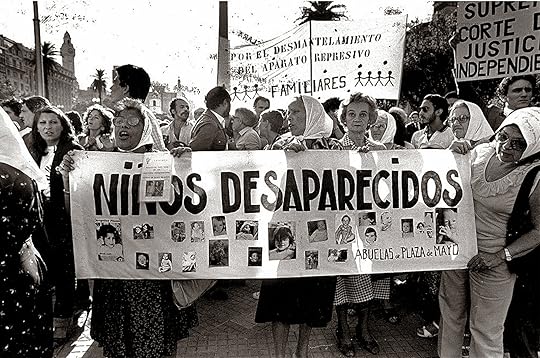 Avós da Praça de Maio - Argentina (1976 - 1983)
November 5, 2018
I bought this book several weeks ago but after far-right leader Jair Bolsonaro was elected president of Brazil last week and I read author Julián Fuks’ powerful response in this Guardian article I felt prompted to prioritize reading his novel “Resistance”. It’s a very meditative story about the narrator’s reflections on his family history – in particular his adopted brother’s troubled life and his parents’ move from Argentina to Brazil after living under a tyrannical dictatorship. It felt ominously prescient when I came to the line “Dictatorships can come back, I know, and I also know that the arbitrariness, the oppressions, the suffering, exist in all kinds of ways, in all kinds of regimes, even when hordes of citizens march biennially to the ballot box”. But, of course, Fuks must have experienced and read about many shifts in leadership over the years to see how frighteningly quickly oppressive political leaderships can take control of a country. So yes, this is a novel about personal and political resistance to these tyrannical governments, but it’s more about a resistance to the categories and interpretations of history which diminish its reality.
Read my full review of Resistance by Julián Fuks on LonesomeReader
Read my full review of Resistance by Julián Fuks on LonesomeReader

December 16, 2019
Adorei!
Opinião completa em vídeo (a partir do minuto 03: 21).
Recomendadíssimo.
Opinião completa em vídeo (a partir do minuto 03: 21).
Recomendadíssimo.

November 3, 2017
A resistência
Resistance. What does it mean to resist? How many ways can one resist? What are we resisting?
1976 and a military coup occurs in Argentina. A family is forced to flee to Brazil for political reasons. A family of psychiatrists; a past that intersects with dictatorship. A World Cup game where Perú throws the game in favour of Argentina. Two dictators seal the deal. Babies are stolen from parents, who are imprisoned or thrown from airplanes. These babies are adopted. By families fleeing persecution.
Resist. Every action is resistance. How can we resist? If we don’t resist are we resisting? If I resist am I resisting the resistance?
A son. The brother of the adopted brother. A sister. A family of five. Thirty years. Therapy. Thirty years to write a book of memory. Lembrança.
“Walking the streets of Buenos Aires, I observe the face of the people. I am writing a book intending to share the experience of walking the streets of Buenos Aires and observe the face of the people. I want to serve as the mirror, that in each corner that I replicate, that I discover an Argentinian with a simple altitude of camouflaging me, and so I could finally pass as equals.”
The Brazilian writer Julián Fuks has written one of the most lyrical, deep, pondering books on a challenging and dark history of Latin America. From the very first page to the very last, I was mesmerized by his account. Instead of a logical study, he uses reflections from the brother’s point of view trying to make sense of his family’s past.
We see his world from many angles. The exile into Brazil becomes his home and Argentina becomes something distant. Gone. Different. The politics gets murky. What did his parents do, know, expect, attempt, to make a better life. What of his brother? The grandmothers of the Plaza of May kept looking for their disappeared.
This is a short novela and I read passages over because they were so poetic. Deep and shallow. Harsh and gentle. The language is personal, evocative and compelling. Like those family photo albums, the photos recall an event but do we remember it because of the photo, or was there something else? Something we are searching to remember? To forget.
As the year comes to a close, this small book packed a punch for me. Number 50 of the year. So worth remembering.
https://www.publico.pt/2017/10/25/cul...
Winner of Prêmio Jabuti 2016 and Premió Literário José Saramago 2017.

July 21, 2018
Autoficção, livro de memórias, romance. Não importa como a necessidade humana de classificar as coisas denominam o livro de Julián Fuks. Trata-se de um intenso ato de resistir do início ao fim, seja por meio dos pais de Sebastián, de seu irmão, do próprio narrador, da escrita em si.
Poderia até mesmo ser um livro de escrita mais condescendente com o leitor, numa narração diversa ou com uma linguagem mais apropriada às leituras vertiginosas desses tempos tão corridos, mas até nisso eu aplaudo Fuks, por resistir, e entregar o livro que queria, que escreveu. Capítulos curtos, mas que requerem pausas longas, reflexão.
O livro também me tocou pelo tema da luta contra a ditadura, outra forma de resistência. No caso, a argentina. Suas consequências ainda são latentes naquela sociedade, que optou por não se esquecer, não varrer para debaixo do tapete da história, como fizemos, tão felizes do nosso (falso) pacifismo.
Enfim, em alguns momentos me lembrou Alan Pauls, mas de uma forma apenas como os dois escritores utilizam da memoria de forma tão poética, mesmo quando tão intensa e dolorida. Um belo e tocante livro.
Poderia até mesmo ser um livro de escrita mais condescendente com o leitor, numa narração diversa ou com uma linguagem mais apropriada às leituras vertiginosas desses tempos tão corridos, mas até nisso eu aplaudo Fuks, por resistir, e entregar o livro que queria, que escreveu. Capítulos curtos, mas que requerem pausas longas, reflexão.
O livro também me tocou pelo tema da luta contra a ditadura, outra forma de resistência. No caso, a argentina. Suas consequências ainda são latentes naquela sociedade, que optou por não se esquecer, não varrer para debaixo do tapete da história, como fizemos, tão felizes do nosso (falso) pacifismo.
Enfim, em alguns momentos me lembrou Alan Pauls, mas de uma forma apenas como os dois escritores utilizam da memoria de forma tão poética, mesmo quando tão intensa e dolorida. Um belo e tocante livro.

December 6, 2017
Que livro lindo!
Eu tava enrolando com essa leitura DESDE AGOSTO. Risos. Mas é um livro fininho, dá pra ler facilmente em 1 dia, tanto é que li os 50% finais de uma vez só!
A narrativa é muito emotiva, poética, totalmente fora da minha zona de conforto, mas eu consegui me envolver bastante com a trama.
Meu problemINHA aqui, que me fez tirar 1 estrela, é que eu achei que em alguns pontos o autor enrolou um pouco. Tinham momentos, inclusive no final, que eu queria mais fatos, mais desenrolar, e o autor gastou muito tempo descrevendo sentimentos e mais sentimentos. É lindo, mas eu quero saber da história, sabe? Pode ser um defeito meu que estou acostumado com as coisas que eu leio.
Eu tava enrolando com essa leitura DESDE AGOSTO. Risos. Mas é um livro fininho, dá pra ler facilmente em 1 dia, tanto é que li os 50% finais de uma vez só!
A narrativa é muito emotiva, poética, totalmente fora da minha zona de conforto, mas eu consegui me envolver bastante com a trama.
Meu problemINHA aqui, que me fez tirar 1 estrela, é que eu achei que em alguns pontos o autor enrolou um pouco. Tinham momentos, inclusive no final, que eu queria mais fatos, mais desenrolar, e o autor gastou muito tempo descrevendo sentimentos e mais sentimentos. É lindo, mas eu quero saber da história, sabe? Pode ser um defeito meu que estou acostumado com as coisas que eu leio.

August 4, 2022
This book is an auto-fictional (at times meta-fictional) account of a young activist couple who are forced to flee Argentina during the Dirty War years with their infant adoptive son. They settle in Brazil and have two more children, a girl and a boy. The narrative unfolds from the point of view of the younger son.
This is a slow, interior, contemplative novel examining family trauma and alienation, expertly translated by Daniel Hahn.
This is a slow, interior, contemplative novel examining family trauma and alienation, expertly translated by Daniel Hahn.

October 18, 2022
Há algum tempo que não me emocionava assim. Poético.

December 1, 2016
Um silencio que grita
Há uma cena em A RESISTÊNCIA, do paulistano Julián Fuks, que é bastante reveladora, e acontece ainda no começo da narrativa, quando a família está no carro, e o narrador-protagonista e sua irmã, ainda crianças, entram numa disputa tipicamente infantil, e termina com ele dizendo que não é irmão dela. “[Você] não pode, você é meu irmão e vai ser meu irmão para sempre. Eu insisto, eu não quero, você não é a minha irmã e pronto, está decidido. Eu decidi.” A história vira uma anedota familiar, contada por anos. O que, naquele momento, nenhuma das quatro pessoas (os irmãos e seus pais) no carro parece se dar conta é que a outra quinta pessoa é o filho adotivo, que realmente não é irmão de sangue.
Pouco antes disso, o autor comenta: “Que força tem o silêncio quando se estende muito além”. E é certeiramente sobre isso que será construído o livro: sobre os silêncios que são mais ensurdecedores do que palavras. Por muito tempo, não vamos ouvir a voz desse irmão adotivo, um personagem enigmático, mediado pelo olhar do protagonista. Ninguém tem nome, todos aqui têm funções familiares, o pai, a irmã etc.
Fuks trabalha a formação da identidade a partir da constituição familiar, mas também o passado histórico. Os pais, um casal de psiquiatras, vieram para São Paulo da Argentina, na época da ditadura, trazendo consigo um filho que adotaram assim que nasceu. Não sabemos – nem o narrador sabe – muito sobre a criança, e a história oficial é frágil demais – uma jovem mãe solteira de família católica italiana – mas pode ser verdade ou não. Tanto que a certa altura o narrador se questiona sobre as reais origens de seu irmão.
De certa maneira, A resistência lembra O Filho Eterno, de Cristóvão Tezza, um livro que combina diversos gêneros e criado a partir da experiência pessoal do autor, mas aqui as histórias nacionais são mais presentes – tanto do Brasil quanto da Argentina. Os pais eram militantes, e vieram passar um tempo aqui, e acabaram ficando. Lá, no entanto, no presente, as cicatrizes são mais gritantes, e a principal delas no livro são as Mães da Praça de Maio.
Não é à toa que a narrativa seja permeada por tantas perguntas. É um livro a procura de respostas, e que raramente as encontra. Talvez isso, simbolicamente, seja um reflexo da experiência histórica dos dois países reverberada nos dois irmãos – um argentino e um brasileiro, e dois países tão próximos, com trajetórias um tanto parecidas e maneiras distintas de as encarar. Talvez se o narrador brasileiro olhasse nos olhos do passado do seu país teria a mesma necessidade de, por um tempo, ficar calado, de se fechar no quarto como o seu irmão.
Há uma cena em A RESISTÊNCIA, do paulistano Julián Fuks, que é bastante reveladora, e acontece ainda no começo da narrativa, quando a família está no carro, e o narrador-protagonista e sua irmã, ainda crianças, entram numa disputa tipicamente infantil, e termina com ele dizendo que não é irmão dela. “[Você] não pode, você é meu irmão e vai ser meu irmão para sempre. Eu insisto, eu não quero, você não é a minha irmã e pronto, está decidido. Eu decidi.” A história vira uma anedota familiar, contada por anos. O que, naquele momento, nenhuma das quatro pessoas (os irmãos e seus pais) no carro parece se dar conta é que a outra quinta pessoa é o filho adotivo, que realmente não é irmão de sangue.
Pouco antes disso, o autor comenta: “Que força tem o silêncio quando se estende muito além”. E é certeiramente sobre isso que será construído o livro: sobre os silêncios que são mais ensurdecedores do que palavras. Por muito tempo, não vamos ouvir a voz desse irmão adotivo, um personagem enigmático, mediado pelo olhar do protagonista. Ninguém tem nome, todos aqui têm funções familiares, o pai, a irmã etc.
Fuks trabalha a formação da identidade a partir da constituição familiar, mas também o passado histórico. Os pais, um casal de psiquiatras, vieram para São Paulo da Argentina, na época da ditadura, trazendo consigo um filho que adotaram assim que nasceu. Não sabemos – nem o narrador sabe – muito sobre a criança, e a história oficial é frágil demais – uma jovem mãe solteira de família católica italiana – mas pode ser verdade ou não. Tanto que a certa altura o narrador se questiona sobre as reais origens de seu irmão.
De certa maneira, A resistência lembra O Filho Eterno, de Cristóvão Tezza, um livro que combina diversos gêneros e criado a partir da experiência pessoal do autor, mas aqui as histórias nacionais são mais presentes – tanto do Brasil quanto da Argentina. Os pais eram militantes, e vieram passar um tempo aqui, e acabaram ficando. Lá, no entanto, no presente, as cicatrizes são mais gritantes, e a principal delas no livro são as Mães da Praça de Maio.
Não é à toa que a narrativa seja permeada por tantas perguntas. É um livro a procura de respostas, e que raramente as encontra. Talvez isso, simbolicamente, seja um reflexo da experiência histórica dos dois países reverberada nos dois irmãos – um argentino e um brasileiro, e dois países tão próximos, com trajetórias um tanto parecidas e maneiras distintas de as encarar. Talvez se o narrador brasileiro olhasse nos olhos do passado do seu país teria a mesma necessidade de, por um tempo, ficar calado, de se fechar no quarto como o seu irmão.

October 29, 2018
Eu não sou o tipo de pessoa que dá muito valor à premiações, sejam de cunho literário, cinematográfico ou musical, mas não desprezo em dizer quais foram merecidos e esse livro do Fuks realmente mereceu todos esses grandes prêmios que ganhou.
O título brinca com a ambiguidade da resistência política na ditadura argentina com a resistência como conceito psicanalítico, é dessa intersecção que nasce a narrativa que se sustenta sobretudo ao maravilhoso estilo do autor em moldar palavras em subjetividades transcendentes. Enfim, é um livro delicioso.
O título brinca com a ambiguidade da resistência política na ditadura argentina com a resistência como conceito psicanalítico, é dessa intersecção que nasce a narrativa que se sustenta sobretudo ao maravilhoso estilo do autor em moldar palavras em subjetividades transcendentes. Enfim, é um livro delicioso.

February 6, 2019
I know that I am writing my failure. I don’t really know what I’m writing. I waver between an incomprehensible attachment to reality – or to the paltry spoils of the world we usually call reality – and an inexorable pull towards telling tales, an alternative gimmick, a desire to forge the meanings life refuses to give us. But even with this double artifice I can’t attain what I thought I desired. I wanted to talk about my brother, about the brother who emerged from out of my words even if he was not the real brother, and yet I resist this proposal on every page, I flee whenever possible to the story of my parents. I wanted to deal with the present, with this noticeable loss of contact, with this distance that has arisen between us, and instead I stretch myself out along the meanderings of the past, of a possible past in which I distance myself, and lose myself, more and more.
A moving and somehow elusive autofictional account of life lived under an oppressive regime and the possibilities of fiction / nonfiction. Fuks’ sentences are thought-out and beautiful. Not much to find fault with in this novel, but my reading did suffer from the book’s thematic similarity to the dozen novels dealing with brothers and autofiction I’ve read lately.
A moving and somehow elusive autofictional account of life lived under an oppressive regime and the possibilities of fiction / nonfiction. Fuks’ sentences are thought-out and beautiful. Not much to find fault with in this novel, but my reading did suffer from the book’s thematic similarity to the dozen novels dealing with brothers and autofiction I’ve read lately.

February 3, 2024
A escrita de Julián Fuks é um ACONTECIMENTO. Esse é um daqueles livros curtos que devem ser lidos com calma, apreciados. Na tentativa fracassada de narrar a história do irmão, o protagonista fala sobre sua história e de sua família. Ambientado na época da ditadura argentina, a família de psicanalistas se vê em engodos criados pelo silêncio. Essa leitura rendeu muitas marcações e virou um favorito. Tenho certeza que essa história irá me acompanhar por muito tempo. Termino com vontade de ler tudo o que o autor já escreveu até hoje.
”Com meus pais aprendi que todo sintoma é signo. Que, tantas vezes, contrariando a razão, contrariando a rigidez da garganta, a imobilidade da língua, o corpo grita. Que o corpo, quando grita, aproxima-se do cerne muito mais do que a razão, pois o corpo é mais urgente, não vê a razão na continência, não perde tempo em mentir. Foi, no entanto, com a razão que o aprendi, e desde então é sensível meu fracasso em sentir, desde então cada grito do corpo apenas me intriga.”
”Com meus pais aprendi que todo sintoma é signo. Que, tantas vezes, contrariando a razão, contrariando a rigidez da garganta, a imobilidade da língua, o corpo grita. Que o corpo, quando grita, aproxima-se do cerne muito mais do que a razão, pois o corpo é mais urgente, não vê a razão na continência, não perde tempo em mentir. Foi, no entanto, com a razão que o aprendi, e desde então é sensível meu fracasso em sentir, desde então cada grito do corpo apenas me intriga.”

April 24, 2023
"Às vezes, no espaço de uma dor cabe apenas o silêncio. Não um silêncio feito da ausência de palavras: um silêncio que é a própria ausência."
a força dantesca da ausência é o núcleo desse livro que parece simples, uma quase uma "intensidade melancólica demais", como é dito em certo momento. a ausência é uma forma de presença que dói, que incomoda, a presença incômoda; não o contrário, mas o avesso, o paralelo, talvez. sei que alguns leitores acreditarão que o autor enveredou para o caminho de um lirismo puríssimo para tentar engrossar o feijão, e eu não discordo.
mas é aquilo: quanto mais feijão, melhor.
a força dantesca da ausência é o núcleo desse livro que parece simples, uma quase uma "intensidade melancólica demais", como é dito em certo momento. a ausência é uma forma de presença que dói, que incomoda, a presença incômoda; não o contrário, mas o avesso, o paralelo, talvez. sei que alguns leitores acreditarão que o autor enveredou para o caminho de um lirismo puríssimo para tentar engrossar o feijão, e eu não discordo.
mas é aquilo: quanto mais feijão, melhor.
April 9, 2022
maravilhada com a escrita do Fuks! ganhei há uns anos o livro mas estava na infinita pilha de livros não lidos e resolvi pegar depois de uma amiga (oi, Letícia) falar que escutou uma entrevista com o autor em um podcast. Escolha acertadíssima: a escrita primorosa, a história instigante (e milhares de abas abertas sobre a ditadura argentina), relações familiares, o limite entre a auto-ficção e a ficção. Incrível!

March 5, 2023
‘Ama tartışmaya açık olmayan pişmanlıklar, abartılı olmayan acılar vardır. Masada icat edilmemiş, yudumlar ve çatal sesleri arasında, herhangi bir sohbet sırasında, hafifliğe yakınlığı reddeden, uzun uzadıya düşünülmemiş, gündelik sözlere uymayan hikayeler vardır. Belleğin yüzeyinde yaşamayan ama yine de unutulamayan, bastırılamayan olaylar vardır. Belirsiz şeyler hakkındaki bir şiir dizesi, tüm unutuşların bir acının içine sığabildiğini söyler ama şiir dizeleri her zaman doğruları yansıtmaz. Bazen bir acının içine sığan tek şey sessizliktir. Kelimelerin yokluğundan yapılmış bir sessizlik değil: Yokluğun kendisi olan bir sessizlik.’
.
Direniş, evlatlık edinme-yurdundan edilme-karşı çıkma hakkında herhangi bir türe bağlı kalmamış kısa bir eser. Arjantin’in cunta döneminden Brezilya’ya zorunlu göç eden ailesini anlatıyor Sebastian.
Cümleler savruk, zamanlar ve geçişler belirsiz görünse de yazar Julian Fuks çok etkiliyor beni.
Yaşanılan kolektif acıların mikro düzeyde- bir çekirdek ailede yansımalarını ustalıkla gösterebildiğini düşündüm.
Yer yer Zambra’yı da anımsamadım değil..
.
Bengi De Sa Matos Paixao çevirisi, Barış Şehri kapak tasarımıyla ~
.
Direniş, evlatlık edinme-yurdundan edilme-karşı çıkma hakkında herhangi bir türe bağlı kalmamış kısa bir eser. Arjantin’in cunta döneminden Brezilya’ya zorunlu göç eden ailesini anlatıyor Sebastian.
Cümleler savruk, zamanlar ve geçişler belirsiz görünse de yazar Julian Fuks çok etkiliyor beni.
Yaşanılan kolektif acıların mikro düzeyde- bir çekirdek ailede yansımalarını ustalıkla gösterebildiğini düşündüm.
Yer yer Zambra’yı da anımsamadım değil..
.
Bengi De Sa Matos Paixao çevirisi, Barış Şehri kapak tasarımıyla ~

Read
June 14, 2023konusu çok ilgimi çekmesine rağmen bir türlü içine giremediğim, hissedemediğim bir kitap oldu.

June 18, 2022
I didn’t expect to love this book so much. A rather thin storyline but the way it is written, goodness! It’s true that not the story matters, but the perspective with which it is told, the precision of the author’s observations, the profoundness of his thoughts. I thought about this book every minute I was awake last week.
“Resist: how much of resisting is the fearless acceptance of misfortune, compromising with everyday destruction, tolerating the ruin of those close to you? Does resisting mean managing to stay on your feet when others are falling, and until what point, until your own legs give way? Does resisting mean struggling in spite of inevitable defeat, shouting despite the hoarseness of your voice, acting despite the hoarseness of your will? It’s necessary to learn how to resist, but resisting will never mean surrendering to the fate that’s already sealed, it will never mean bowing down before a future that’s inevitable. How much of learning to resist isn’t learning to question yourself?”.
“Resistance” by Julián Fuks is a semi-autobiographical tale of a family - parents, who with the newly adopted son had to leave Argentina in the 1970s, when people around them started being disappeared. They settled in São Paulo and the very fallible narrator Sebástian and his sister were born. All his life Sebástian has been trying to understand the dynamics and the level of closeness among members of his family, make sense of his parents’ past and get to terms with his own, elusive, identity. He travels to Buenos Aires, half-heartedly searching for traces of his family and looking for that of his brother’s in strangers’ faces. He ponders on what being Argentinian or Brazilian means: “One day you give some information to a passer-by and realise you know the name of the street you’re on, that this might be your neighbourhood after all, that what was alien has become your own, or almost”.
In many moments Fuks moved me to tears, and in many moments I found myself in Sebastián - in his fragmented memory, his unknowing whether he’s broken or complete, his attempts to treat life as if it was a jigsaw puzzle to be solved. And in his letting go. A perfect novel for me.
“Resist: how much of resisting is the fearless acceptance of misfortune, compromising with everyday destruction, tolerating the ruin of those close to you? Does resisting mean managing to stay on your feet when others are falling, and until what point, until your own legs give way? Does resisting mean struggling in spite of inevitable defeat, shouting despite the hoarseness of your voice, acting despite the hoarseness of your will? It’s necessary to learn how to resist, but resisting will never mean surrendering to the fate that’s already sealed, it will never mean bowing down before a future that’s inevitable. How much of learning to resist isn’t learning to question yourself?”.
“Resistance” by Julián Fuks is a semi-autobiographical tale of a family - parents, who with the newly adopted son had to leave Argentina in the 1970s, when people around them started being disappeared. They settled in São Paulo and the very fallible narrator Sebástian and his sister were born. All his life Sebástian has been trying to understand the dynamics and the level of closeness among members of his family, make sense of his parents’ past and get to terms with his own, elusive, identity. He travels to Buenos Aires, half-heartedly searching for traces of his family and looking for that of his brother’s in strangers’ faces. He ponders on what being Argentinian or Brazilian means: “One day you give some information to a passer-by and realise you know the name of the street you’re on, that this might be your neighbourhood after all, that what was alien has become your own, or almost”.
In many moments Fuks moved me to tears, and in many moments I found myself in Sebastián - in his fragmented memory, his unknowing whether he’s broken or complete, his attempts to treat life as if it was a jigsaw puzzle to be solved. And in his letting go. A perfect novel for me.
May 19, 2023
بسرد بطيء السير كأنه يقاوم الانتهاء. كتاب عن الأسرة، عن الأخ، المتبنَّى، الأكثر من أخ، عن تجارب الطفولة، عن الصمت والحزن والعزلة، عن الدكتاتورية، عن الاضطهاد والعنف والإرهاب والتعذيب والاختفاء القسري، عن الهروب والكفاح والمقاومة.
- ألا يعني تعلّم المقاومة معرفة كيف تسأل نفسك؟
- إنجاب طفل هو عمل من أعمال المقاومة.
- هناك أحزان لا تتلاشى أمام المنطق، وهناك آلام لا يبالغ أصحابها فيها، وهناك قصص تأبى الاقتراب من الطيش وقلة الإحساس، والتي لا تتناسب مع اجترار العبارات اليومية العادية. هناك حالات لا تسكن سطح الذاكرة، وهي، مع ذلك، لا تُنسى، ولا يمكن أن تقمعها.
- "في بعض الأحيان عندما يصير الفضاء ألماً، لا يوجد مكان إلا الصمت." وليس الصمت صمت غياب كلمة، بل هو صمت الغياب بعينه.
- ضد المغالاة في المشاعر، وضد الضعف، لكن البالغ الذي يبكي ليس ضعيفاً، تعلمت ذلك عن اقتناع. هذا الدرس لم أنساه أبداً: البالغ الذي يبكي دون أن يشعر بالحرج يمتلك شفافية يُحسَد عليها.
- بدأ يفهم أن العالم كان أوسع بكثير، وأن به سهولاً واسعة وآفاقاً لانهائية، مادية أو تخيلية. وأنه سيكون للكفاح معنى .. دائماً وفي كل مكان.
- تبتسم وتعتقد أنك تفهم هؤلاء الناس، برغم أنك لا تفهم شيئاً عنهم، شيئاً يخصهم، شيئاً حقيقياً عن فرحتهم، عن جمالهم، هذا الجمال الغريب الذي ربما في يوم من الأيام يمكن تقليده - من يدري، ربما بمثل هذه الخفة. أنت تبتسم وتتساءل إذا كان الجمال لن يكون عنك غريباً، وإذا كان الفرح لن يكون عنك غريباً. شيء لا يمكن لأحد التعرف عليه في نفسه، شيء زائل ينطبع فقط على وجوه الآخرين، ولا ينطبع على وجهك أبداً. أنت تتساءل، في ذلك اليوم، لا عما إذا كنت في يوم من الأيام ستكون قادراً على جعل الجمال شيئاً أصيلاً فيك وجعل الفرح شيئاً يلازمك. ولكن عمّا إذا كنت يوماً ما قادراً على أن تكون شخصاً آخر، وأن تصبح غريباً كذلك!
- ألا يعني تعلّم المقاومة معرفة كيف تسأل نفسك؟
- إنجاب طفل هو عمل من أعمال المقاومة.
- هناك أحزان لا تتلاشى أمام المنطق، وهناك آلام لا يبالغ أصحابها فيها، وهناك قصص تأبى الاقتراب من الطيش وقلة الإحساس، والتي لا تتناسب مع اجترار العبارات اليومية العادية. هناك حالات لا تسكن سطح الذاكرة، وهي، مع ذلك، لا تُنسى، ولا يمكن أن تقمعها.
- "في بعض الأحيان عندما يصير الفضاء ألماً، لا يوجد مكان إلا الصمت." وليس الصمت صمت غياب كلمة، بل هو صمت الغياب بعينه.
- ضد المغالاة في المشاعر، وضد الضعف، لكن البالغ الذي يبكي ليس ضعيفاً، تعلمت ذلك عن اقتناع. هذا الدرس لم أنساه أبداً: البالغ الذي يبكي دون أن يشعر بالحرج يمتلك شفافية يُحسَد عليها.
- بدأ يفهم أن العالم كان أوسع بكثير، وأن به سهولاً واسعة وآفاقاً لانهائية، مادية أو تخيلية. وأنه سيكون للكفاح معنى .. دائماً وفي كل مكان.
- تبتسم وتعتقد أنك تفهم هؤلاء الناس، برغم أنك لا تفهم شيئاً عنهم، شيئاً يخصهم، شيئاً حقيقياً عن فرحتهم، عن جمالهم، هذا الجمال الغريب الذي ربما في يوم من الأيام يمكن تقليده - من يدري، ربما بمثل هذه الخفة. أنت تبتسم وتتساءل إذا كان الجمال لن يكون عنك غريباً، وإذا كان الفرح لن يكون عنك غريباً. شيء لا يمكن لأحد التعرف عليه في نفسه، شيء زائل ينطبع فقط على وجوه الآخرين، ولا ينطبع على وجهك أبداً. أنت تتساءل، في ذلك اليوم، لا عما إذا كنت في يوم من الأيام ستكون قادراً على جعل الجمال شيئاً أصيلاً فيك وجعل الفرح شيئاً يلازمك. ولكن عمّا إذا كنت يوماً ما قادراً على أن تكون شخصاً آخر، وأن تصبح غريباً كذلك!

September 6, 2021
In the great vein of Bukowski and Fante, Julián tells his stories using an alter ego, Sebastian. Like the two authors mentioned Fuks also talks about his childhood and the political environment, however, whereas Bukowski and Fante focused on the more sordid aspects of their lives, almost verging into comedic territory, Julián Fuks takes a more philosophical bent.
The majority of Resistance questions sibling relationships. Before Sebastian and his sister were born, his parents adopted a boy and his validity as a brother puzzles Sebastian. Should someone adopted be called a brother? are the parents of an adopted child really parents? At what point should an adopted child be accepted and should the adopted child accept?
The backdrop of the book is the Argentina Junta and how it affected his family, thus a theme of separation and adaptation runes throughout the book, which ties in with the adopted theme; when one is in a new country aren’t they ‘adopted’ as well? – to accentuate Fuks goes into the roots of his surname, which are European, which means his forebears were migrants as well.
In this brief novel, Fuks brings up more concepts and themes: memory, displacement, even the act of telling a story are part of the book’s focus. As this is part of a planned trilogy , the second part, Occupation will be reviewed tomorrow, I am curious to see how Julián Fuks will continue this interesting slice of autofiction.
The majority of Resistance questions sibling relationships. Before Sebastian and his sister were born, his parents adopted a boy and his validity as a brother puzzles Sebastian. Should someone adopted be called a brother? are the parents of an adopted child really parents? At what point should an adopted child be accepted and should the adopted child accept?
The backdrop of the book is the Argentina Junta and how it affected his family, thus a theme of separation and adaptation runes throughout the book, which ties in with the adopted theme; when one is in a new country aren’t they ‘adopted’ as well? – to accentuate Fuks goes into the roots of his surname, which are European, which means his forebears were migrants as well.
In this brief novel, Fuks brings up more concepts and themes: memory, displacement, even the act of telling a story are part of the book’s focus. As this is part of a planned trilogy , the second part, Occupation will be reviewed tomorrow, I am curious to see how Julián Fuks will continue this interesting slice of autofiction.
April 29, 2022
"No espaço de uma dor cabe todo o esquecimento, diz um verso sobre estas coisas incertas, mas os versos nem sempre acertam. Às vezes, no espaço de uma dor cabe apenas o silêncio. Não o silêncio feito da ausência das palavras: um silêncio que é a própria ausência."
Ler Fuks tem sido um prazer e acredito que sempre o será, como um amigo mencionou recentemente que obteve uma excelente leitura com essa obra, aqui estou. Assim como em seu romance A Ocupação, aqui também o autor faz de suas obras algo entre o biográfico e um ajuste de contas para com o passado, o presente e com tudo aquilo que busca desvendar de si e do mundo, mas sobretudo, encara as dores que muitas vezes são silenciadas, seja por nós, seja pela história.
Gosto imensamente de escritores que enfrentam temas assombrosos, como Hannah Arendt dizia, sobre o pensar, o querer e o julgar, e é esse caminho que Fuks tem trilhado, de forma diversa, mas essencial, suas obras, como essa, nos fala da imoralidade que é o totalitarismo, sempre dispondo do passado dos pais militantes contra a ditadura argentina e sua fuga ao Brasil. É nesse misto de inconformismo, cotidiano e sobrevivência, que A Resistência desemboca, mas principalmente, é um livro sobre seu irmão, sua vida diante do mundo e sua família. Eu não poderia ter gostado mais, Frederico.
Ler Fuks tem sido um prazer e acredito que sempre o será, como um amigo mencionou recentemente que obteve uma excelente leitura com essa obra, aqui estou. Assim como em seu romance A Ocupação, aqui também o autor faz de suas obras algo entre o biográfico e um ajuste de contas para com o passado, o presente e com tudo aquilo que busca desvendar de si e do mundo, mas sobretudo, encara as dores que muitas vezes são silenciadas, seja por nós, seja pela história.
Gosto imensamente de escritores que enfrentam temas assombrosos, como Hannah Arendt dizia, sobre o pensar, o querer e o julgar, e é esse caminho que Fuks tem trilhado, de forma diversa, mas essencial, suas obras, como essa, nos fala da imoralidade que é o totalitarismo, sempre dispondo do passado dos pais militantes contra a ditadura argentina e sua fuga ao Brasil. É nesse misto de inconformismo, cotidiano e sobrevivência, que A Resistência desemboca, mas principalmente, é um livro sobre seu irmão, sua vida diante do mundo e sua família. Eu não poderia ter gostado mais, Frederico.
Displaying 1 - 30 of 257 reviews