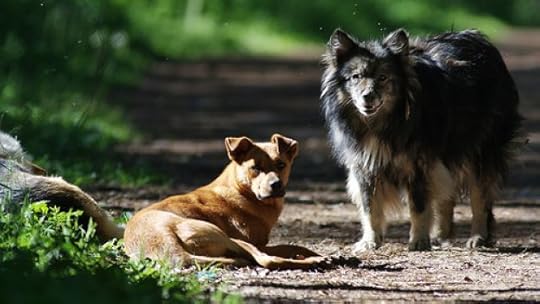
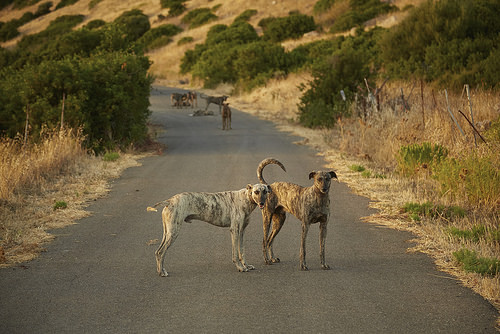
Alice's boyfriend abandons her dog, which joins a feral pack. Every evening, Alice and five others gather at the forest's edge, trying to call their dogs back. Most have similar tales of jealousy or vengeance enacted upon them through their dogs: Jamie is rebelling against his stepfather; Lily, who has suffered brain damage, is considered irresponsible. Becoming more deeply involved, Alice moves out to a cabin on land owned by Malcolm, one of the group, whose motives in having her there are suspicious. As she falls in love with the wildlife biologist whose wolf has gained lead of the pack, she feels the tug between love's wild power and her desire to domesticate it. After a tragic accident, all members of the group must rethink their lives and find their places in an untamed world. Wild Dogs strips away the conventions of love and passion to reveal deeper, richer truths.
Helen Humphreys is the author of five books of poetry, eleven novels, and three works of non-fiction. She was born in Kingston-on-Thames, England, and now lives in Kingston, Ontario, Canada.
Her first novel, Leaving Earth (1997), won the 1998 City of Toronto Book Award and was a New York Times Notable Book of the Year. Her second novel, Afterimage (2000), won the 2000 Rogers Writers' Trust Fiction Prize, was nominated for the Commonwealth Writers' Prize, and was a New York Times Notable Book of the Year. Her third novel, The Lost Garden (2002), was a 2003 Canada Reads selection, a national bestseller, and was also a New York Times Notable Book of the Year. Wild Dogs (2004) won the 2005 Lambda Prize for fiction, has been optioned for film, and was produced as a stage play at CanStage in Toronto in the fall of 2008. Coventry (2008) was a #1 national bestseller, was chosen as one of the top 100 books of the year by the Globe & Mail, and was chosen one of the top ten books of the year by both the Ottawa Citizen and NOW Magazine.
Humphreys's work of creative non-fiction, The Frozen Thames (2007), was a #1 national bestseller. Her collections of poetry include Gods and Other Mortals (1986); Nuns Looking Anxious, Listening to Radios (1990); and, The Perils of Geography (1995). Her latest collection, Anthem (1999), won the 2000 Canadian Authors Association Award for Poetry.
Helen Humphreys's fiction is published in Canada by HarperCollins, and in the U.S. by W.W. Norton. The Frozen Thames was published by McClelland & Stewart in Canada, and by Bantam in the U.S. Her work has been translated into many languages.
Helen Humphreys inizia questo breve romanzo con una delle sue tante metafore (non stupisce affatto che si sia dedicata a lungo alla poesia, prima di affrontare la scrittura narrativa: questo è il quarto romanzo, e per quanto ne so, il primo non ambientato nel passato): la motocicletta. E, per quanto io abbia la sensazione di essere vicino alla verità delle due ruote molto più della canadese, mi muovo sulla stessa traccia, e ho vissuto la partenza di Cani selvaggi esattamente come una sgommata: ruota che slitta follemente sull’asfalto lasciando uno strato di gomma, e via, si parte. Un diavolo di partenza, un ritmo che non si può reggere, che neppure HH può reggere: infatti, dopo un po’ rallenta, e prende velocità di crociera – ma sempre, almeno quella che si terrebbe su una autobahn.
HH usa parole cariche di eccitazione, senza evitare qualche cliché (e credo che qui sia la ragione che non porta alla quinta stella), e mette in piedi una storia che non si dimentica. Un gruppo di cani domestici è diventato selvaggio – non randagio, proprio selvaggio: vive nel bosco, che però è anche una foresta. Sono stati abbandonati dai parenti dei proprietari, per motivi diversi, nessuno condivisibile – alcuni di questi proprietari si ritrovano la sera al margine del bosco a chiamare il proprio animale, una volta domestico, ora selvaggio: li chiamano, li aspettano, li desiderano.
Si capisce presto che queste sei persone, questo branco umano, ha ferite, cicatrici sulla pelle e nell’anima, che il richiamo lanciato verso la foresta ai cani selvaggi, è anche rivolto a se stessi, a qualcosa dentro che non risponde a nomi e parole. Stanno urlando verso quella terra desolata, quello spazio selvaggio, quella landa incolta e deserta che si chiama cuore.
La voce di Alice domina più di metà del racconto. Quando Alice si rivolge al suo amore usa la seconda persona, e purtroppo la lingua italiana svela l’identità di questa persona molto prima della versione originale: la donna dei lupi, Rachel, viene nominata solo dopo la prima metà del libro, e sono le altre voci a farlo, quella di Jamie, di Lily, di Malcolm, di Walter, di Spencer, e della stessa Rachel.
Si parla di amore, di legami, di infanzie devastate, di tormenti, anche di domande esistenziali un po’ retoriche, e, naturalmente, non c’è lieto fine.
Another great novel by Helen Humphreys! In this book, she looks at wildness and domesticity as flip sides of the same instinct coin when it comes to love. It also gathers otherwise unlike beings into survival packs.
“I thought of how those dogs used to belong to people, used to sleep on the ends of beds, or on soft rugs on the floor. They used to eat out of bowls that said ‘Dog’ on the side. What would kill the dogs in that life would be accidental, or the slow running down of their bodies. They didn’t need to be wary of danger in that old life, and yet, were they? Were their wild instincts in place then? Is that why they could turn so quickly? Were they never who they appeared to be?”
The story is framed by Alice’s point of view, as she shifts from present to past tense, and from third to second to first person:
“I can still feel the flex of that river, feel how fast and far it moved me along its length so when I clambered up the muddy bank on the other side I was a good half mile from where I’d started. The river had taken me and yet I had not relented once against its force. That was how I lived then. That was what I thought wild was–throwing myself totally into something, at something, letting it move me, but never quite surrendering to it.”
A bit of a mystery develops when one of the six main characters goes missing, and in the back half of the book, we get the perspective of the others in the group. This quickens the pacing as it reveals what’s happened.
The prose is worthy of any contemplative page-hugger, while also maintaining a steady pace. The story is as sad as it is satisfying, and as universal as it is unique.
"Hunger is a beginning I can understand. It is most beginnings. But it is in endings that we prove our aloneness, and our individuality."
La storia inizia con la scomparsa di alcuni cani, che improvvisamente fuggono dai loro padroni e scorrazzano in gruppo per boschi e campagne facendo perdere le loro tracce. Gli ex-padroni, in crisi perché traditi dagli esseri da cui credevano di essere amati incondizionatamente, li cercano, non si rassegnano alla perdita. Cercando i cani s’incontrano e si conoscono. Sono adulti e bambini, uomini e donne che sembrano capaci solo di attendere. Sei personaggi ai margini, ognuno arrivato al proprio confine personale, che mostrano come sono complessi e tormentati i rapporti fra le persone. Uniti dalla speranza di ritrovare i loro cani, diventano essi stessi un branco, con regole e abitudini precise. In quello spazio tra il bosco e la città si raccontano i loro problemi esistenziali, gli amori che finiscono, i fallimenti, le speranze di vivere, le paure di morire. Ognuno di loro alla fine, troverà il modo di oltrepassare il proprio confine. I cani alla fine torneranno, ma il finale, duro e doloroso, non sarà conciliante.
Scritto molto bene, con uno stile asciutto, secco, coinvolgente ma anche poetico che sa cogliere la profondità della relazione fra uomini e animali. Questo romanzo, attento alle sfumature dei sentimenti, è sostenuto da una scrittura elegante ed evocativa. Si parla di amore, in tutte le sue sfumature, soprattutto di quel lato selvaggio che porta a offrirsi totalmente e ambiguamente all'amato e al contempo infonde il dubbio della perdita della propria libertà. L’amore non conosce la perdita soltanto nella nostra immaginazione; ma una così potente immaginazione sull’amore può nascondere una profonda solitudine non espressa. L’amore è quel sentimento che ti da la caccia, che sembra non possa terminare mai, ma che poi diventa debole ricordo, come un latrato che si perde nel buio.
"So che mi lascerai. So che ti amerò per sempre. So che non posso essere salvata, e nemmeno Jamie e nemmeno tu. Andremo avanti, soli, in uno spazio che un tempo abbiamo definito insieme. So che il mondo nel quale esistevamo non sarà in grado di ricordarci. So che questo non potrà mai essere quello, che la fede non è credere ma lottare per credere"
Essere selvaggi significa non dover rispondere a nessuno e quindi non poter deludere nessuno; significa accettare la vicinanza di qualcuno senza dipenderne. I cani selvaggi sono così, liberi dai vincoli, padroni delle loro scelte.
I had high hopes for this after reading an enticing review by a GR friend. I found the book easily on Internet Archive, so no money invested - only my time. Speaking of which - I can always tell when a book isn't working for me - I can feel myself speeding up, reading faster and faster, almost scan reading. I suppose this is the flip-side of Goodreads.
Good things about 'Wild Dogs' - yep definitely a dog owner - Humphreys has all the behaviours and doggy interactions as accurate as can be. I'm a dog owner - but I'm not one of those, dress-my-dog-in-a-bow and put-him-on-YouTube-type owner. I know my dogs are killers - they recently hunted and killed a mongoose. I don't like this - and I keep my "wolfie" type dog on a lead if I even suspect there are any sheep in the area. Tita my ageing hunter made a clean kill, however, she shook the mongoose and broke its neck in a matter of seconds - cleanish kill - I heard the mongoose scream, not squeal - scream as it died. I also had a fabulous hunting dog and I most certainly approved of the way he killed rats - unfortunately some chickens and a few rabbits. The thing is he was a professional - split second is the amount of time needed. I think I can confidently state that none of his victims knew what had happened. He did however bring down some small deer - which he was powerless to dispatch - that supposedly was my job - but I don't carry a gun or knife and I had to contact the local Hunting Sheriff to shoot these unfortunate animals - which was done fairly quickly. He told me to exercise my dogs separately, which I did and there were no further incidents. I certainly gained in the fitness department.
Currently I live in Portugal and I exercise my dogs in the eucalyptus woods - as far away as possible from any sheep . . . They have tracked wild boar, deer, hare and rabbits in these woods, and fortunately there has only been one catch. I don't encourage my dogs to hunt, but as I well understand it is their natural instinct.
I'm going to stop there. This is not a book review, but I think more an explanation of why I found very little of note or indeed of interest in this book. I've always lived with animals and I don't find it at all surprising or indeed difficult to acknowledge that not only do animals have feelings, sensitivities, intelligence, but perhaps what humans find impossible to accept is that on many occasions I have observed a morality which I can only describe as stronger than I find in most humans.
Humphrey's book? The other criteria of my reading is that I am always looking for originality - as I read Wild Dogs Doris Lessing's short story came to mind - A Story of Two Dogs, which you can find in A Man and Two Women: Stories. In this story a young woman who lives on the high veld, reluctantly allows her beloved dogs to return to their wilderness home - which she believes always calls to them in some way.
And if you want to read more about wolves and wolf packs and animal behaviour in general I can highly recommend Julie of the Wolves by Jean Craighead George - and if you want a Canadian read - there is no-one better on animals and the human interaction with wild animals than Farley Mowat; I highly recommend Owls in the Family. The young boy, Mowat, rescues an owlet being tortured by teenage boys and he himself finds another owlet separated from its nest after a high wind - he guesses. The story demonstrates both the intelligence of these birds (Eagle Owls!) and inevitably the disastrous consequences for them of being human-dependent.
We have a whole literature of wild-life stories - often with humans interacting with wild-animals: Helen Macdonald' s fabulous memoir H is for Hawk - and it is nearly always to the animal's detriment when it is rescued or 'trained' by humans - see T. H. White's The Goshawk.
Sorry, but I didn't find any new information in Humphrey's novel.
Alice has lost her dog, Hawk. Alice’s boyfriend has taken the dog and dumped her in a wood behind a farm where a pack of wild dogs is known to roam. When Alice goes to the field to call for Hawk to return to her, she encounters five other souls who have lost their dogs to the pack. A loose bond forms between these six people who stand on the edge of the woods night after night calling their dogs home, and it is their stories that drive this novel.
As Alice looks back upon the events of the summer and attempts to deal with her feelings for one of the other dog owners, she says:
It is impossible to fully inhabit a moment again. That is part of the inherent sorrow of life. This can never be that. I can never really let you know how much I felt for you that August afternoon.
So much of this novel is about those fleeting moments, the ones in which we might have touched a person or affected their lives; the moments in which we are touched or affected ourselves. And it is about the love we feel for an animal that we think would never desert us, but has; or perhaps a person who we thought would, but doesn’t.
Each of these people is carrying the load of being unusual, abused, frightened, or just alone. Each of them is clinging to the memory of their animal, as we cling to the unconditional love of a pet, particularly if we have not known love of any other kind.
It’s like you’ve got your foot in a door and for a while you can keep the door open, but the door just gets heavier and heavier against your foot and eventually it closes shut on you. There was one day when I couldn’t keep my foot in that door any more. There was one day when I no longer believed the dogs would come back and that one last day shut out all the other days when I did believe.
Trusting one another or even themselves is impossible.
I have been betrayed so many times that, of course, it is what I know and what I will eventually do myself. Never trust anyone who has been betrayed. Betrayal never loses its edge, never really goes away.
This is a short novel, only 185 pages, and I read it in one sitting. I had no desire to pull away from it. I felt so attached to the dogs and the people. I wanted the happily ever after ending. What I got was a strong sense of what it is to be lonely, misunderstood, mistreated, betrayed and what it feels like to suddenly realize you are not the only person dealing with those realities. Helen Humphrey is a masterful writer and this is a powerful book.
“Mi distendo nell’erba alta del prato. Mi distendo nella canzone fragrante della terra. Mi distendo nella luminosità del mattino e nell’opacità della sera. Mi distendo nella pioggia. Mi distendo sotto la parola promessa e sotto la parola azione. Mi distendo sola.” (Alice)
Per motivi analoghi e diversi sei cani si allontanano dalle loro case umane e si inoltrano nella foresta. I proprietari, uniti e intrecciati da questo strano avvenimento, si ritrovano ai margini del bosco nel tentativo di recuperare i propri animali. Da questo evento così inusuale si svolge una narrazione che dà voce (e voce molto differente) a ciascuno dei protagonisti di questa vicenda: adulti e adolescenti, uomini e donne. La penna felice di Helen Humphreys entra nelle loro vite, affronta il nucleo essenziale dei loro diversi traumi e soprattutto percorre quei territori sconosciuti che appartengono alla misteriosa percezione dell’esserci, del mutare e maturare, nonché al significato profondo dell’essere selvaggio o addomesticato. Il dolore che ciascuno cova in sé è unico e speciale, ammantato di solitudine e di silenzio. È il mistero della foresta, il timore di addentrarsi nel folto e nell’oscuro, fino a perdersi in un centro ignoto, desiderato e temuto allo stesso tempo. Là dove i loro cani hanno misteriosamente scelto di vivere, sottraendosi alle loro cure e alle loro carezze. Perché? E che cosa significa (voler) essere selvaggi?
La voce più consistente è quella che inizia il racconto: quella di Alice, giovane donna che ha cambiato luoghi, lavori, persone, mantenendo intatto il desiderio di fuggire indomita e quello di fermarsi e restare, addomesticata una volta per tutte dall’amore. L’incontro con la “donna degli lupi”, misteriosa biologa che fa parte del gruppo, sarà fulminante e fatale. Ma anche quello con i giovanissimi Jamie e Lily, adolescenti feriti che cercano a modo loro una via di uscita dal proprio vincolante e insopportabile dolore.
Una storia sorprendente per i temi e per la scrittura: alta, poetica, arguta, capace di ferire e accarezzare nello stesso istante.
A chi apparteniamo? Oppure, cosa ci appartiene veramente? Quesiti importanti, che affronta con sottile, ineccepibile franchezza Helen Humphreys nell’indimenticabile Cani Selvaggi, storia cruda e commovente, di pregevole fattura. Attraverso un fraseggio struggente ed evocativo il libro racconta le scomode, dolorose verità della vita e dell’universo relazionale, e non ci risparmia ferite e tristi momenti di riflessione, toccando le corde più profonde della nostra emotività. La scrittura parca ed ellittica dell’autrice canadese si impiglia indelebilmente nel cuore del lettore; sconvolge per il minimalismo deflagrante, ammalia per la sensuale, impavida, sofferta musicalità della prosa. “Ho deciso che l’amore non è buono. Ti fa solo venire una gran paura di perdere quello che ami, e poi, visto che la paura crea le condizioni perché accada, alla fine accade davvero. Che senso ha?”. Già, che senso ha?
"L'amore è un cane che viene dall'inferno"(Bukowski).
Sì, è un libro doloroso e difficile da affrontare, ma anche saturo di poesia, così al lettore che non conosce voglio regalare per prima questa immagine: "E su tutto il profumo delle tuberose.Un profumo che somiglia a quello dei lillà ma più intenso.Come la sensazione dello sprofondare.Un rumore di passi al crepuscolo.Il risveglio della memoria.L'odore che avrebbe una botta, o una promessa.La timidezza che prende quando i sentimenti invadono la conversazione e le parole incespicano le une sulle altre" *** Potrei scrivere molte cose su questo libro, a cominciare dal fatto che l'autrice sceglie la forma dei monologhi per raccontare le vicende di un gruppo di persone che, nei fatti, andranno a creare una rete di rapporti la cui trama sarà abbastanza solida da portare in salvo alcune di loro ma così tragicamente e umanamente fragile da non poter evitare che delle maglie si allarghino e alcuni precipitino nel vuoto. Potrei dire che ci sono domande scomode e scelte troppo facili. Potrei dire che qualcuno è rimasto chiuso dentro la propria testa - essendone disperatamente consapevole - ma alla fine un modo per uscire lo ha trovato, con dolore, fatica e anche a costo della vita. Altri invece hanno deciso che qualcosa poteva bastare, era sufficiente, anche se forse questo non significava vivere "onestamente" con sè stessi. Altri hanno figli dimenticati o padri da dimenticare. Potrei dire che è un libro che parla degli istinti e della fatica di saperli vivere senza esserne preda ma senza soffocarli. Si incontrano tante immagini mentre le pagine scorrono e l'autrice ha il dono di rappresentare con grazia e umanità anche le peggiori brutalità, ma questo libro mi ha conquistato dall'inizio con un'immagine ben precisa: esseri umani ai margini di un bosco tenebroso, che gridano il nome di chi li ha abbandonati scappando nell'oscurità.
Varie solitudini ai margini di un bosco In questa storia varie solitudini si incontrano ai margini di un bosco, sono i padroni di cani che sono improvvisamente fuggiti ed hanno costituito un branco. Ogni giorno ritornano ai margini del bosco, per officiare strane cerimonie come chiamarli a lungo, senza che loro si mostrino, o ripercorrere insieme gli itinerari che ciascuno faceva col suo cane. Nei vari capitoli, ciascuno col suo stile, gli ex padroni dei cani raccontano se stessi, il loro rapporto col cane e col mondo. Sono tutti persone in difficoltà, con occupazioni precarie, rapporti alle corde, poche prospettive e molta solitudine. L’incontro quotidiano smuove qualcosa e permetterà un’evoluzione delle situazioni personali. Vite inutili si intersecheranno realizzando qualcosa di buono, e questa è una cosa bellissima. L’amore che dà conforto e toglie indipendenza; i rapporti fra esseri umani, familiari o non imparentati, fra cani e padroni, nel gruppo di umani e nel branco sono oggetto di analisi. Non viene enfatizzata la famiglia quanto la scelta consapevole e reversibile delle persone con le quali relazionarsi. Non viene idealizzato il branco di animali in contrapposizione col gruppo degli umani e anche questo è giusto. E’ un libro bello, onesto e ben scritto, anche se non ha incontrato molto il mio gusto perché preferisco una scrittura più decantata.
E’ intorno al concetto di “selvaggio” in tutte le sue accezioni che ruota questo sorprendente romanzo, con pagine di grande bellezza ed una struttura ondivaga e ammaliante a partire dall’incipit con i sei personaggi in cerca di amore, in cerca del proprio animaletto che rappresenta in qualche modo la parte selvaggia che, più o meno nascosta, cova in ognuno di loro e, come ci viene suggerito neppure tanto velatamente, in ognuno di noi.
Personaggi, diversi per età, sesso, coscienza ma accomunati da storie personali di abbandono, emarginazione, frustrazione, isolamento che precedono il tempo presente del romanzo.
Ancor più a monte c’è una storia di abbandono collettivo nella piccola cittadina canadese, un tempo cresciuta intorno a un’importante fabbrica di mobili e poi andata incontro a una decadenza economica, sociale, psicologica dopo la chiusura della stessa e la conseguente perdita del fulcro vitale della comunità.
Su questo assunto, neppure originalissimo, è tuttavia non una scrittrice ma una poetessa che ci introduce a modo suo in questo spicchio di realtà alla deriva, dove i legami si spezzano e casualmente si ricompongono, dove la bellissima ricorrente immagine dei “margini del bosco dietro ai campi della fattoria di Cooper” sembra segnare il confine fra una modesta civiltà alle spalle e di fronte l’immensa, misteriosa e pericolosamente affascinante presenza della foresta, nella quale ci si può inoltrare, perdersi, immaginare di studiarne i dettagli razionalmente, ma sempre con un riverbero di paura dentro al cuore.
Ed è emozionante vedere e seguire, anche intimamente tramite lo spostamento dell’io narrante, il percorso di ognuna di queste anime erranti che, pur in diverso modo, giungono tutte allo stesso snodo interiore: ”E’ possibile che non ci sia altra scelta che essere la cosa selvaggia oppure sparare alla cosa selvaggia?”
Particolare. Spietato. Ogni protagonista porta con se le sue fragilità, il suo scarto rispetto ad una normalità ideale che nella realtà non si trova. Ognuno si confronta in una lotta serrata contro i suoi demoni: può essere l'amore, la solitudine, la violenza, la ricerca dell'assoluto, la follia, la banalità quotidiana.
Scritto in una prosa secca e scorrevole, lirica senza essere sentimentale, che rasenta la poesia.
Bella l'idea dei cani che persi o abbandonati ritornano selvaggi, un po' come i loro padroni, ancora più soli senza di loro. Però l'ho trovato un poco ripetitivo e melenso.
Un libro pieno di temi, che non fornisce risposte, ma solo domande. La lingua in apparenza semplice nasconde invece una notevole ricercatezza. "Il cuore è un cane che torna a casa."
"Il cuore è una creatura selvaggia e in fuga. Il cuore è un cane che ritorna a casa."
C'è qualcosa di puro e incontaminato in queste pagine: l'ardore santo della libertà, che non può non essere selvaggia. Proprio come questi sei cani selvaggi, abbandonati e allontanati per un motivo o per un altro, rintanati in una foresta ai margini del mondo civilizzato, che decidono, ogni sera, di ignorare i richiami dei loro padroni. Padroni che sono altrettanto smarriti, abbandonati e allontanati: anche loro si spingono con piena consapevolezza ai margini della città e della civiltà. Cani selvaggi è un romanzo sulla vita, sull'amore, sugli abbandoni e sui legami, in un continuo gioco di specchi tra la vita dei cani, sempre più simili ai lupi, e la vita umana: entrambe si poggiano su convinzioni che sono mere concessioni. Un cane non è veramente fedele: però te lo lascia credere. La fedeltà è una concessione unilaterale, che può esser revocata. Così è, affatto semplicisticamente, la vita umana, così è l'intero spettro delle relazioni umane. A un cane selvaggio somiglia innanzitutto la febbre d'amore tra Alice, principale voce narrante, e Rachel, studiosa di lupi. E così è anche per gli altri personaggi: cinque altre voci narranti che si uniscono a quella maggioritaria di Alice in un patchwork che frammenta e ricostruisce la trama. A sorprendere veramente è lo scenario spento, essenziale, minimalista, così come la scelta di personaggi intrappolati in una quotidianità quasi ordinaria. Una storia piccola per temi grandissimi. Una trama semplice per un messaggio molto più complesso. Il segreto della Humphreys è la sua vocazione di poetessa (che si lascia scappare talvolta, in improvvise virate di lirismo): una magistrale abilità nell'usare parole come colpi di cannone. Frasi semplici, pochi vocaboli, una punteggiatura appena sufficiente: e la capacità di esprimere un intero universo racchiuso in una frase sola. Questo è un romanzo da leggere e rileggere, sottolineare ogni frase, riflettere su ogni parola, meditare su ogni virgola pausa e punto. Un romanzo di attese e di silenzi, come questi sei personaggi che parlano poco, ma ascoltano e aspettano, in silenzio, che il loro cane torni a casa.
Helen Humphreys is one of my favourite novelists. I would say she's got a wild imagination and so one wonders how she comes up with the ideas in her book. In this one I can guess that she may have come across a few people calling their dogs out of the woods and from there she flushes out the characters involved. there's always something a bit twisted going on in her stories, not obvious, but it's there under a layer of something ominous you are curious about but at the same time don't really want to know. her metaphors are original and plentiful which is part of why I enjoy her books.
Exquisitely lyrical little book. It's about love and loss and coming to terms with being left. It's about choices and connection and understanding where you end and someone else begins. It's about the murky overlap along the borders. It's about defining your space in relationships, packs and tribes. It's about fitting in. It's about dogs and people and sorrow and compassion. It's about love. And loss. And coming to terms with being left.
The writing is luscious. If I could bathe in a book, this is the book I would choose.
La testa non ragiona, segue il corpo, tutto si muove in alcune direzioni ma è il contatto con lo spazio che determina la qualità e la volta dopo non può essere uguale perché lo spazio dura il tempo di quel movimento e poi non c’è più, c’è altro spazio pronto a prendere il suo posto.
L’impermanenza. La paura. L’amore. La vulnerabilità.
Cosa significa essere selvaggi? Per me è questo: essere in una situazione ma pronti a mollare gli ormeggi. Vivere in bilico tra l’istinto di restare e l’istinto di scappare. La paura che una volta raggiunto quello che credo di desiderare potrei voler rinunciare.
La felicità è impermanente, costituita da singoli momenti che è impossibile rivivere. In questa storia ci sono tanti legami. Legami per affinità e legami per compensazione. Legami scelti e legami non scelti che determinano le ferite dei personaggi di questo romanzo. Il dolore della perdita accomuna sei persone di età, genere e carattere diversi, si trasforma, unisce e diventa la forza per reagire e per guarire. Hanno perso i loro cani (o gli sono stati portati via) che sentendosi abbandonati hanno formato un branco selvaggio, che vive nel bosco. Il bosco fa da confine tra natura selvaggia e civiltà, dicotomia che vive anche nell’animo umano ed è difficile da accettare. • “Non pensi più che la mia vita riguardo ciò che mi è successo. Riguarda ciò che ho scelto di credere. Non quello che vedo, ma quello che penso sia lì fuori.”
Questa storia mi ha trascinato in un’introspezione molto profonda, la scrittura è schietta, incisiva e poetica. Una storia che scava a fondo in ciò che scegliamo di credere e in ciò a cui ci affidiamo. Una storia difficile da dimenticare.
I adored this book. Humphreys is an extraordinary writer with amazing prose and an attention to her characters that is inspiring. Wild Dogs is deep, profound, and haunting. I think this book is the kind of book that helps us understand more about what it means to be human and what love means. That said, this book is not for people who are feint of heart. My wife will not read or watch anything that portrayals animal cruelty or involves dogs dying in any way. She would not read this book. Thus, be warned, this book is painful and even at moments horrifying. For me, these difficult passages are earned by Humphreys because she makes meaning from death and cruelty, but it is not an easy read. Worth it, though. This book was a finalist for the Lambda Literary Award and there is a compelling lesbian love story as a part of the narrative.
I loved this raw and tender book. The characters are deeply shown to the reader, their sad lives drawn together by their dogs who have run off into wildness. A lot of pain and touching, quiet heroism as they confront their hurt. I was reminded of Mary Oliver's poetry as I read this--the poet's intense love of nature, her acute observations of it and her ability to delve and uncover refined lessons about the human condition.
I found that this book did not resonate deeply with me as it did with other readers. The writing style didn't demand deep heart wrenching emotions despite the difficult pasts that most characters have faced. I thought it was interesting to analyze in the context of the Pastoral genre, but other than that.. Meh. I could live without having read this book. Again, interesting and stimulating to analyze, but not that exciting of a reading experience.
This is a short book, but the writing is really dense and poetic, so it is not a quick read. The story centers on a group of lonely people whose dogs have gone feral, and they call to them from a field by the woods, and becomes an extended meditation about love, connections, and the natural world.
This book reminded me of a book I read in high school called The Road. Not a complaint. I honestly had no idea what the point of this book was until I was half way through it because of all of its random nonsense that makes up most of the book.
In una piccola cittadina sei cani fuggono, o forse sono stati spinti a scappare, dalle case in cui vivono. I loro padroni ogni sera si incontrano nei pressi di un bosco e li chiamano, aspettano, con la speranza che tornino da loro. Sei cani che decidono di vivere selvaggiamente nel bosco; sei persone che non si conoscono e che si uniscono nell’attesa di poter rivedere i loro animali. Alice, la voce narrante, conduce il lettore nella sua vita e in quella degli altri cinque personaggi; voci che fanno parte di un puzzle e ricostruiscono la trama del libro.
Cosa accomuna queste persone? Perché i loro cani non ritornano?
Cani selvaggi esplora l’inquietudine delle anime, il senso di smarrimento e la perdita nelle sue molteplici accezioni; riesce a scavare in profondità, lì dove le paure hanno radici e dove le ferite bruciano ancora. E’ facile immedesimarsi ed empatizzare con i personaggi: ognuno fa risuonare quelle note dolenti che vibrano nell’intimità, ognuno porta con sé un fardello tenuto nascosto, ognuno è solo.
“La solitudine rinchiude. La solitudine è il coperchio che sigilla il vaso. Costringe a vivere senz’aria. Avevo ristretto la mia vita a una sola stanza, a una manciata di pensieri, alle stesse stanche, tristi abitudini”.
La condivisione della perdita dei propri cani crea un legame tra i personaggi che li porta ad uscire allo scoperto e a riaccendere la speranza, a mostrare la propria vulnerabilità, la tristezza e lo sconforto e provare in qualche modo a ritrovarsi.
L'abbandono, la solitudine, la perdita dei punti di riferimento, la paura di amare e di non essere amati, il controllo di ogni cosa per non soffrire, la sicurezza, la morte, c’è tutto questo e di più. Ci sono le scelte obbligate, quelle che non comprendiamo, le manie, l’adattamento e l’accontentarsi. C’è la natura, la libertà e l’essere selvaggi.
E se i cani vivono liberamente e selvaggiamente nel bosco, dov’è il lato selvaggio degli esseri umani? Forse è quell’istinto che sopprimiamo, che teniamo a bada per non soffrire, che nascondiamo per il timore di non essere accettati e di essere lasciati. Però c’è e batte forte, come un cuore libero.
Cani selvaggi è un piccolo romanzo inaspettato che contiene un grande messaggio. La scrittura della Humphreys è fluida e delicata, essenziale e a tratti poetica. Le parole scaldano e sciolgono quell’intricato flusso di emozioni che ci portiamo dentro, e come un urlo libera e alleggerisce.
Lost dogs ... lost souls, both human and canine. Six people lose their dogs to the wild. These people meet at the edge of a wood, calling their dogs home ... Lives intersect, collide; people are redeemed and ruined ...
Quotes:
How do we know anyone or anything? Did I know Hawk because I knew her habits?
Losing you has been so painful because being with you was so joyful. I never expected to feel that connected to someone, and I never expected to have it taken away so swiftly and completely. And what I don't know how to do is to reconcile those two things.
... if something has momentum behind it, it cannot be stopped.
Now I see how many wolf characteristics you had. You were wary, didn't really trust anyone or anything. You were elusive and secretive. You paced out behind the trees, watching everything and waiting for the moment when it was safe to come in and rest by the fire. But you weren't happy there -- no, I take that back, you were happy there, but you weren't comfortable. It wasn't what you knew. It wasn't what you trusted. You trusted meanness, not kindness. Kindness spooked you -- you were always looking for the trap in it. You trusted in a scrappy existence where you had to fight for your survival.
Love is momentum and love is opportunism.
Knowing is easy, belief is difficult. Knowledge is tangible. Faith is reach, and some of us just can't do it.
I remember how good the woods smelled, starting to absorb the first bit of heat from the sun, how that released the smells of the trees and the leaves and the rich scent of the earth itself. It's always a surprise to encounter something and have it be better than you remembered, like you've had to remember it as less than it was in order to be able to live with the lack of it. I had forgotten how much I loved to be in the woods, how good it made me feel to step quietly out into the morning.
There are words in my life that I wish I'd never said ... those three words, I love you, should never be used if you don't mean them. My lying has meant I will never get to use them on anyone else. I went against my own truth, my own heart, and there is really no coming back from that.
My life has collapsed, but maybe it needed to collapse. Of course, I wish it hadn't happened this way, but I an see now that it would have happened some other way. There was nothing holding me together. I could only come apart.
... she had brain damage from some childhood accident. Then I think that maybe that's why the dogs took her in, because they knew she was weak and needed protection.
Not doing something takes up as much time as doing it, more perhaps because your failure to act takes up a lot of space in your thoughts. It takes up all your thoughts, really.
... It was a shock to get that call. I was so used to my father's depressive inertia that it was a shock to hear he'd done something about it. But his death was sad mistake, just like his life ...
Distraction operated as forgetting and forgetting gave me a little peace.
Loneliness closes one down. Loneliness is the lid tightening on the jar. It forces one to live airless. I had been shrinking my life down to one room, a handful of thoughts, the same tired, sad habits.
I may not be brave, but I do know what is truly valuable.
Memory is a barricade against forgetting; light is a bulwark against darkness; life is a flex against the stillness of the grave. Maybe that's what I'm trying to do here, clear a space in all the debris, through all the anxieties and worries, where I can just exist, easily and simply, entire, for as long as I have left.
There is a cardinal on the tree outside my window. The flash of red is bright, like arterial blood, like the slash of red I remember from Malcolm's painting. / Perhaps this recognition, this taste of remembered life, is all I get on this earth. / Perhaps it will be enough.
I had lost myself. It was that simple. I had allowed myself to become subsumed in someone else, and it felt terrible.
I know that being tolerated is the most one can hope for from a wild thing.
... He will remember it forever and that betrayal will never soften. It will never make enough sense for him to be able to forgive ... I have been betrayed so many times that, of course, it is what I know and what I will eventually do myself. Never trust anyone who has been betrayed. Betrayal never loses its edge, never really goes away.
I don't let myself think this often, but I sometimes wonder if what I felt most trapped by -- love -- was, paradoxically, the wilderness I could have entered Maybe to be truly wild is to trust completely.
This is what love makes possible. This is how it can end up and this is why it is to be feared. I never want to be that fox. I never want to feel that pain. And I am not talking about the dead fox, but the living one.
I have seen animals shot, and I have seen people who have been blindsided by grief. We always know what has hit us. We don't always know that it will kill us.
... But what is this fear, really? Is it not that we are afraid of what is wild within ourselves? Isn't the whole structure of society about trying to fit ourselves into smaller and smaller cages? The more confined we are by duty and love, the more our wilderness will be tamed and the more secure we expect to feel. But, of course, that's not true. We don't feel safe at all.
I stayed too long with not enough. Isn't that always the way?
... I miss talking with you. I miss being with you. I miss your particular take on the world and its creatures. I miss the happiness I felt simply being near you. I miss the person I was with you.
Your leaving will not be solved by your coming back. But one does not preclude the other. And maybe that is always what there is to fear, in everything that happens -- what we choose to love will choose to forsake us. / The truth is, I want you to come back. I don't think we're finished. I don't believe that all we were meant to have was something as brief as the red twist of the fox moving fast across the empty field. / I don't think any more that my life is about what has happened to me. It's about what I choose to believe. It's not what I can see, but what I think is out there. / And in the end, this end, here is what I believe. / The heart is a wild and fugitive creature. / The heart is a dog who comes home.
This entire review has been hidden because of spoilers.
Leggere questo libro è come cadere da uno strapiompo e tu, sin dall’inizio, te lo aspetti il dolore. Perché lo sai che non potrebbe essere altrimenti. Non ti risparmia niente, per cui cadi e mentre sei disteso, sei tu a decidere se rialzarti o restare fermo lì. È un atto di coraggio, come vivere. Come accettare la propria natura e rispettarla. Come amare.
“C’erano tante cose che volevo chiederti. Ma a dire il vero, alla fine, tutto si riduce a una sola domanda: qual è la cosa peggiore che sarebbe potuta accadere, se mi avessi permesso di amarti?”
Ma quanto mentiamo a noi stessi? Tutto per non affrontare, tutto per proteggersi e alla fine ci si costruisce un muro altissimo intorno, invalicabile e non si vive mai davvero.
“A volte mi chiedo se quello che mi ha fatto sentire più in trappola- l’amore- non fosse, il mondo selvaggio nel quale sarei potuta entrare. Forse, essere selvaggi significa fidarsi completamente.”
E tutto si riduce ad una scelta: vivere con coraggio, accettando che la sofferenza potrebbe catturarti in qualsiasi momento, strappare a morsi un’altra possibilità, rincorrere tutto ciò che sembra vivo, ringhiare a chi vuole sottometterti, piangere, riprovarci e sapere che sì, si può avere di più perché lo si merita. Oppure negare l’istinto, sopprimere le emozioni, annientare l’intimità, mettendo una bugia dietro l’altra.
E forse quello che si deve fare è “sgomberare uno spazio in mezzo alle macerie, attraverso tutte le ansie e le apprensioni” dove si possa esistere integri e liberi. Dove si possa accogliere il nostro cuore selvaggio.
Un romanzo denso. Cupo e poetico allo stesso tempo, pieno di spunti di riflessione mai scontati sui temi dell'appartenenza, della fedeltà, dell'abbandono e dell'addomesticamento del lato selvaggio dell'essere umano che inevitabilmente si riflette anche nei confronti degli animali domestici con cui esso convive. Un'ambientazione che sembra fuori dal tempo e confinata nei pressi di una sperduta località del Canada dove ogni notte sei persone si incontrano al limitare del bosco per chiamare i loro rispettivi cani dai quali, per qualche misterioso motivo, sono stati abbandonati per preferire la vita selvaggia.Tra queste persone si svilupperà un legame molto forte che metterà a nudo le loro debolezze e fragilità. Un racconto polifonico, indimenticabile, narrato a turno da ciascuno dei sei protagonisti conferendo maggiori sfaccettature al narrato. Capolavoro.
What a fantastic book! I love the way that the author gives each character a chance to tell their story from their perspective, while moving the story forward until you have the complete picture.