

What do you think?
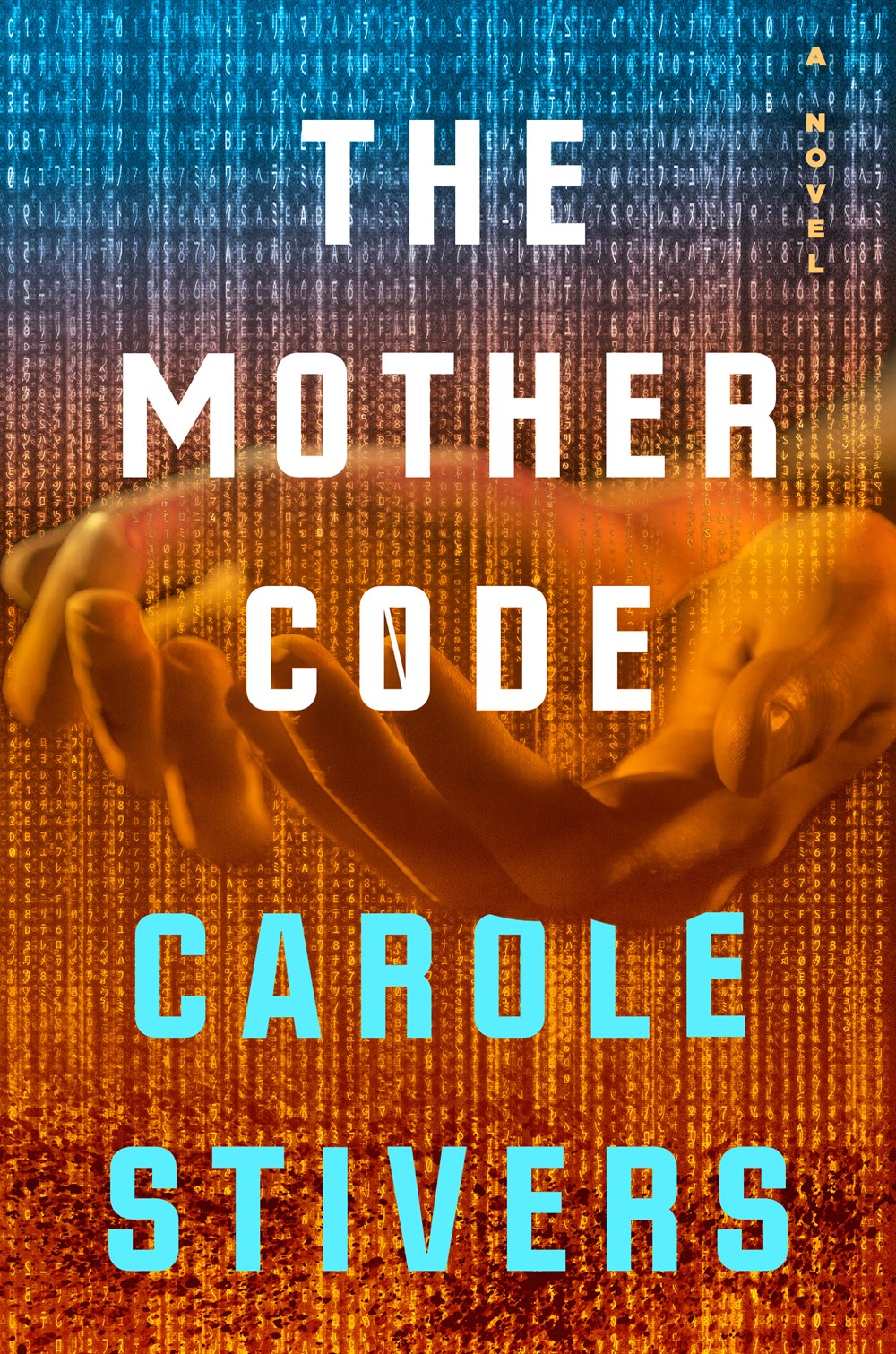
The Mother Code
Goodreads Choice Award
Nominee for Readers' Favorite Science Fiction (2020)What it means to be human—and a mother—is put to the test in Carole Stivers' debut novel set in a world that is more chilling and precarious than ever.
The year is 2049. When a deadly non-viral agent intended for biowarfare spreads out of control, scientists must scramble to ensure the survival of the human race. They turn to their last resort, a plan to place genetically engineered children inside the cocoons of large-scale robots—to be incubated, birthed, and raised by machines. But there is yet one hope of preserving the human order—an intelligence programmed into these machines that renders each unique in its own right—the Mother Code.
Kai is born in America's desert southwest, his only companion his robot Mother, Rho-Z. Equipped with the knowledge and motivations of a human mother, Rho-Z raises Kai and teaches him how to survive. But as children like Kai come of age, their Mothers transform too—in ways that were never predicted. When government survivors decide that the Mothers must be destroyed, Kai must make a choice. Will he break the bond he shares with Rho-Z? Or will he fight to save the only parent he has ever known?
In a future that could be our own, The Mother Code explores what truly makes us human—and the tenuous nature of the boundaries between us and the machines we create.
The year is 2049. When a deadly non-viral agent intended for biowarfare spreads out of control, scientists must scramble to ensure the survival of the human race. They turn to their last resort, a plan to place genetically engineered children inside the cocoons of large-scale robots—to be incubated, birthed, and raised by machines. But there is yet one hope of preserving the human order—an intelligence programmed into these machines that renders each unique in its own right—the Mother Code.
Kai is born in America's desert southwest, his only companion his robot Mother, Rho-Z. Equipped with the knowledge and motivations of a human mother, Rho-Z raises Kai and teaches him how to survive. But as children like Kai come of age, their Mothers transform too—in ways that were never predicted. When government survivors decide that the Mothers must be destroyed, Kai must make a choice. Will he break the bond he shares with Rho-Z? Or will he fight to save the only parent he has ever known?
In a future that could be our own, The Mother Code explores what truly makes us human—and the tenuous nature of the boundaries between us and the machines we create.
352 pages, Hardcover
First published May 5, 2020
About the author
Carole Stivers
2 books194 followersCarole Stivers is a Silicon Valley biochemist whose "home genre" is science fiction. Her near-future science fiction novel The Mother Code is on track for publication by Berkley Books (Penguin Random House) in May 2020. It has already been sold in countries around the world, including the UK, Germany, France, Holland, Spain, and Brazil. And, it was recently optioned for film by Steven Spielberg's Amblin Entertainment.
In addition to her passion for science fiction, Carole has been a life-long fan of mystery—starting as a child reading Nancy Drew, graduating to Agatha Christie and "Ellery Queen," and later to John Grisham and Scott Turow. "A good mystery is not too far a cry from a good work of science fiction. Both deal with intricate human relationships, strained by extraordinary circumstances," Stivers says. "And if the mystery includes a twist of science, all the better!"
Yearly visits to the California coast's many monarch butterfly refuges, coupled with multiple trips to New Orleans before and after Katrina, suggested the perfect plot and setting for her mystery story The Butterfly Garden, a tale of clashing social values and long-simmering animosities, stirred in the wake of a devastating storm.
In addition to her passion for science fiction, Carole has been a life-long fan of mystery—starting as a child reading Nancy Drew, graduating to Agatha Christie and "Ellery Queen," and later to John Grisham and Scott Turow. "A good mystery is not too far a cry from a good work of science fiction. Both deal with intricate human relationships, strained by extraordinary circumstances," Stivers says. "And if the mystery includes a twist of science, all the better!"
Yearly visits to the California coast's many monarch butterfly refuges, coupled with multiple trips to New Orleans before and after Katrina, suggested the perfect plot and setting for her mystery story The Butterfly Garden, a tale of clashing social values and long-simmering animosities, stirred in the wake of a devastating storm.
Ratings & Reviews
Friends & Following
Create a free account to discover what your friends think of this book!
Community Reviews
Displaying 1 - 30 of 531 reviews

February 9, 2020
A man made pandemic is released in 2049 and the world is absolutely reeling.
"If all of this is true, then you are asking me to solve a monumental problem..."

The world's best scientists are scrambling for a cure.
They're not giving up...but they're also coming to the stunning realization.
And so they turn to Plan B - the children.
"...we don't have time to save the world."
A genetically engineered generation of humans is created in the labs and each one is paired with a "Mother" - a robot designed to incubate and nurture.
But what no one counted on...is when the Mothers develop their own spark of life.
This one ended up being quite good!
"The end?"
"The end of everything."
There are two storylines - one during the apocalypse and one set several years after (when the Mothers are the ones in charge).
As always, I feel like it is difficult to balance the two storylines and I was so invested in the Mother's storyline that I was disappointed whenever we flipped away.
That being said, the both of them were really well written...just one was more appealing to me.
I did love all the science in this one.
As a biophysics graduate student, I'm always SUPER picky about the science in books but I tip my hat at Stivers - a biochemist - she did a fab job crafting the plot and weaving in all the science fiction.
The setting really drew me into the story - I felt like I was in the desert with the children. So well done!
All in all, this was a great book! I cannot wait to see what she writes next!!
A huge thank you to Berkley Publishing and Carole Stivers for sending me a free copy in exchange for an honest review.

December 5, 2019
Get ready to flip pages and encounter a quiet disturbing mash-up of two intriguing subgenres: Genetic mutation and fatal disease! When bioterror knocks on your door, you cannot easily run away! So buckle up and join this thrilling sci-fi adventure!
I have to warn you before you jump in without your swimsuits, you gotta have some technical knowledge about the bioweapons, how they function, what changed with their operation skills throughout the years not to keep in the dark. So I can honestly say this book is not for regular readers. It fits the expectations of true die-hard fans of sci-fi books. If you are not into them, you may get lost easily with the jargon and the technical terms and you start blabbering, “who am I” , “what the hell I’m doing here”! I have to admit at some parts I kept blubbering something Gibberish for too much overload. My brain cells suffered from slow burn and over-usage so I kept putting ice on my head during my read and I thought maybe I should have taken an IQ test before requesting this book from my second favorite fairy Mother NetGalley ( don’t let me repeat first one is Olivia Colman who is also my second favorite queen after Claire Foy)
But what I liked mostly about this book is building of characters. You can easily sympathize with their motions, how they handle the situations and face the risks which makes you feel like you are one of them.
So another apocalyptic shockwave hits the world and after the infection, only a few group of military personals and scientists survived with the help of daily treatment. Two little children: Kai and Sela survived because they are immune to the epidemic and the main reason how they are still alive is they’ve been raised by ROBOTS. The name of the robotic mothers is “MOTHER’S CODE”. They were designed to raise and guard the children for eight years before the children are ready to socialize with their other friends.
And of course we have MISHA, another engineered child. Unfortunately her robotic mother had crashed and she has been raised by Hopi and other scientist who had survived from infection.
Another thing I liked about this book is giving you promising future. It doesn’t serve you a depressing, bleak, suffocating kind of message. It is controversial, questioning the nature of motherhood, fast pacing, capturing and interesting read.
Special thanks to NetGalley and Berkley for sharing this intriguing ARC COPY with me in exchange my honest review.
I have to warn you before you jump in without your swimsuits, you gotta have some technical knowledge about the bioweapons, how they function, what changed with their operation skills throughout the years not to keep in the dark. So I can honestly say this book is not for regular readers. It fits the expectations of true die-hard fans of sci-fi books. If you are not into them, you may get lost easily with the jargon and the technical terms and you start blabbering, “who am I” , “what the hell I’m doing here”! I have to admit at some parts I kept blubbering something Gibberish for too much overload. My brain cells suffered from slow burn and over-usage so I kept putting ice on my head during my read and I thought maybe I should have taken an IQ test before requesting this book from my second favorite fairy Mother NetGalley ( don’t let me repeat first one is Olivia Colman who is also my second favorite queen after Claire Foy)
But what I liked mostly about this book is building of characters. You can easily sympathize with their motions, how they handle the situations and face the risks which makes you feel like you are one of them.
So another apocalyptic shockwave hits the world and after the infection, only a few group of military personals and scientists survived with the help of daily treatment. Two little children: Kai and Sela survived because they are immune to the epidemic and the main reason how they are still alive is they’ve been raised by ROBOTS. The name of the robotic mothers is “MOTHER’S CODE”. They were designed to raise and guard the children for eight years before the children are ready to socialize with their other friends.
And of course we have MISHA, another engineered child. Unfortunately her robotic mother had crashed and she has been raised by Hopi and other scientist who had survived from infection.
Another thing I liked about this book is giving you promising future. It doesn’t serve you a depressing, bleak, suffocating kind of message. It is controversial, questioning the nature of motherhood, fast pacing, capturing and interesting read.
Special thanks to NetGalley and Berkley for sharing this intriguing ARC COPY with me in exchange my honest review.

April 13, 2020
But now everything had changed. He'd have to learn, all over again, how this world worked.
The Mother Code was a challenging read for me. Stivers is a Silicon Valley biochemist and, I have to say, this book feels like it was written by a Silicon Valley biochemist. Which I know will be a huge plus for many readers. But, unfortunately, some of the jargon went straight over my head and a couple of times I did pause and wonder if I should continue. Still, I'm glad I did.
From the blurb, I thought this was a book about artificial intelligence and robots, and it sounded almost identical to the movie I Am Mother, but that is only part of the book and it actually has little in common with the movie. It's actually also about a manmade pandemic-- an experiment in biological warfare gone wrong --and so obviously it hit a lot closer to home than I was expecting. It really is the most disquieting feeling to read about the collapse of society due to a pandemic while you're sat in quarantine.
The Mother Code alternates between the "past", starting in 2049, in which several government employees attempt to find a cure for the leaked virus whilst also keeping it secret from the public, and the 2060s, in which a young boy called Kai is raised by his robot mother, Rho-Z. Eventually the past catches up with the present and we see how the robots came to be. But now Kai and other children like him are being told it's time to destroy the only mothers they have ever known.
In the "past" chapters, the book captures the panicked race to find a cure/solution and protect humanity. A small team of esteemed scientists and doctors work around the clock to find an answer to the problem. Though the panic tapped into a fear that is all too real right now, I never really felt a close connection to James, Rose, Rick and Sara. And I really couldn't summon any interest when the author introduced some lukewarm romantic subplots. Similarly, the kids all felt a bit like YA stereotypes - the leader, the spunky tomboy, the introvert - and not like fully fleshed-out humans.
But what this book lacks in characterization it makes up for in philosophical questions. What I loved most about the book are the questions it raises about mothers, motherhood and the mother/child bond. Rho-Z might be a machine, but to Kai she is his mother, his protector, and for a long time his only companion. This is not a bond that should be taken lightly.
A thought-provoking but difficult book.
Facebook | Instagram

July 5, 2020
Chalk it up to bad timing!💁🏻♀️
I was so excited to read this book since I first heard about it.
Then came Covid-19.🤦🏻♀️
I’d put this book off long enough and knew I had to try. But honestly it was a struggle to read about a biological agent that can spread and kill. No matter how dissimilar the book was to our reality, at that point my anxiety was spiking and I knew it was impossible to find any enjoyment going forward.
I’m an RN seeing this virus close-up and personal everyday. No matter how much I tell myself this is science fiction, it hits too close to home.
I think my days of science fiction...dystopian and post-apocalyptic reading could be over. At least for the foreseeable future. Strange days indeed.
Wrong reader...wrong time.
A buddy read with Susanne.
Thank you to Berkley Publishing and Edelweiss for an ARC to read and review.
I was so excited to read this book since I first heard about it.
Then came Covid-19.🤦🏻♀️
I’d put this book off long enough and knew I had to try. But honestly it was a struggle to read about a biological agent that can spread and kill. No matter how dissimilar the book was to our reality, at that point my anxiety was spiking and I knew it was impossible to find any enjoyment going forward.
I’m an RN seeing this virus close-up and personal everyday. No matter how much I tell myself this is science fiction, it hits too close to home.
I think my days of science fiction...dystopian and post-apocalyptic reading could be over. At least for the foreseeable future. Strange days indeed.
Wrong reader...wrong time.
A buddy read with Susanne.
Thank you to Berkley Publishing and Edelweiss for an ARC to read and review.

April 3, 2020
”A young child knows Mother as a smelled skin, a halo of light, a strength in the arms, a voice that trembles with feeling. Later the child wakes and discovers this mother--and adds facts to impressions, and historical understanding to facts.” --Annie Dillard, An American Childhood.
It all begins with a bioweapon named IC-NAN that is deployed in the Middle East to kill pesky terrorists hiding in rugged terrain.
It works.
It is supposed to be strategic and controllable.
It is not.
Nature has the final say.
We have f**ked ourselves!
The world is soon engulfed in a manmade pandemic that threatens to wipe the human race off the face of the planet. In desperation, scientists begin building robots infused with a mother code that will enable these bots to raise and protect babies who are encoded to survive IC-NAN. ”Early socialization would have to rely solely on the Mothers themselves--the soft ‘hands,’ audible voices, imprintable faces, and unique personalities of the human women whose babies they carried, databases rife with information about life in the world before they were created, extensive programming in the Socratic method--all the elements that Rose had painstakingly built into the Mother Code.”
They drop these bots with their precious cargo in the deserts of the American Southwest and hope for the best.
Carole Shivers explores what it means to be alive. Are the machines we create living entities? To the kids who are raised by them, these robots are much more than their programming. They are their protectors. They are their friends. They are their mothers. Can they keep their charges alive long enough to survive the plague?
Reading this during our COVID-19, state-mandated, stay-at-home quarantine, which, I must be honest, being locked away in my ivory tower is the most normal situation for me, made me feel comfort that the coronavirus is merely a dress rehearsal (USA is failing the rehearsal) for something much more sinister, like IC-NAN. Maybe COVID-19 will scare lawmakers enough that we will be better prepared for the second wave of COVID-19, or for something even more deadly.
I see that some readers find the science in here challenging, but I find it to be not only accessible but well explained by the author. It isn’t quite a young adult book, but I certainly wouldn’t hesitate to allow preteens to read this. The violence is minimal, and the story will be compelling for young people to read, especially in this new era of pandemics that we now live in.
Read books! Let your mind travel beyond the confines of your sequestration.
If you wish to see more of my most recent book and movie reviews, visit http://www.jeffreykeeten.com
I also have a Facebook blogger page at:https://www.facebook.com/JeffreyKeeten and an Instagram account https://www.instagram.com/jeffreykeeten/
It all begins with a bioweapon named IC-NAN that is deployed in the Middle East to kill pesky terrorists hiding in rugged terrain.
It works.
It is supposed to be strategic and controllable.
It is not.
Nature has the final say.
We have f**ked ourselves!
The world is soon engulfed in a manmade pandemic that threatens to wipe the human race off the face of the planet. In desperation, scientists begin building robots infused with a mother code that will enable these bots to raise and protect babies who are encoded to survive IC-NAN. ”Early socialization would have to rely solely on the Mothers themselves--the soft ‘hands,’ audible voices, imprintable faces, and unique personalities of the human women whose babies they carried, databases rife with information about life in the world before they were created, extensive programming in the Socratic method--all the elements that Rose had painstakingly built into the Mother Code.”
They drop these bots with their precious cargo in the deserts of the American Southwest and hope for the best.
Carole Shivers explores what it means to be alive. Are the machines we create living entities? To the kids who are raised by them, these robots are much more than their programming. They are their protectors. They are their friends. They are their mothers. Can they keep their charges alive long enough to survive the plague?
Reading this during our COVID-19, state-mandated, stay-at-home quarantine, which, I must be honest, being locked away in my ivory tower is the most normal situation for me, made me feel comfort that the coronavirus is merely a dress rehearsal (USA is failing the rehearsal) for something much more sinister, like IC-NAN. Maybe COVID-19 will scare lawmakers enough that we will be better prepared for the second wave of COVID-19, or for something even more deadly.
I see that some readers find the science in here challenging, but I find it to be not only accessible but well explained by the author. It isn’t quite a young adult book, but I certainly wouldn’t hesitate to allow preteens to read this. The violence is minimal, and the story will be compelling for young people to read, especially in this new era of pandemics that we now live in.
Read books! Let your mind travel beyond the confines of your sequestration.
If you wish to see more of my most recent book and movie reviews, visit http://www.jeffreykeeten.com
I also have a Facebook blogger page at:https://www.facebook.com/JeffreyKeeten and an Instagram account https://www.instagram.com/jeffreykeeten/
Read
July 5, 2020A huge fan of Science Fiction, I was looking forward to “The Mother Code” - unfortunately, the terminology used in this novel was a bit beyond me as I don’t know all that much about biowarfare, bioweapons, bioterrorism and genetic mutation. Though the premise truly intrigued me: ensuring the human race, the execution went over my head and I realized that I am the wrong reader for this novel.
This was a buddy read with Kaceey.
Thank you to Elisha at Penguin Publishing Group for the arc.
Published on Goodreads on 7.5.20.
This was a buddy read with Kaceey.
Thank you to Elisha at Penguin Publishing Group for the arc.
Published on Goodreads on 7.5.20.
April 28, 2020
Wow, The Mother Code was a bit frightening to read right now- both because it includes a pandemic and because it felt so real.
I’m not a regular reader of science fiction, so some of the technology and terminology was a little beyond me, but that didn’t keep me from being engaged in the story. In the future, the children are “engineered” and have robots for mothers. It’s thought-provoking and well-paced. Overall, I’m grateful I gave sci fi a try with this one and would definitely read more from the author.
I received a gifted copy. All opinions are my own.
I’m not a regular reader of science fiction, so some of the technology and terminology was a little beyond me, but that didn’t keep me from being engaged in the story. In the future, the children are “engineered” and have robots for mothers. It’s thought-provoking and well-paced. Overall, I’m grateful I gave sci fi a try with this one and would definitely read more from the author.
I received a gifted copy. All opinions are my own.

Read
February 18, 2020The Mother Code has some interesting ideas, but the execution is...messy. I can definitely see why the film rights were snapped up. This could easily be a blockbuster film, but as a novel it isn't great. This is a apocalyptic novel about robots designed to birth and raise the last human babies after a biological weapon goes very wrong. Like I said, the idea and basic plot are really interesting.
However, the structure and tone of the book are strange. Initially we go between two different timelines, one following humans as things begin to go wrong and the other following robots and the children they give birth to. Later, the timelines merge, but we still get two different perspectives. What's weird is the tone of these. The early human timeline tries to explore the science of what is happening and also focus on the romantic and familial relationships of several characters, but without generating real attachment to the characters. I think that section could have been more effectively structured as a series of documents and reports, because I never cared about the characters. The past timeline follows the development of children who don't at all act like normal children, but this is never quite explained. Then later portion of the book reads more like a dystopian YA novel, but with plot holes and choices that either don't make sense or are never fully explored.
This was a somewhat frustrating book to read because the ideas are truly interesting, but the execution is very messy and could have done with further rounds of editing. On the other hand, I would definitely go see this as a film if it gets made. I received an advance copy of this book for review from the publisher. All opinions are my own.
However, the structure and tone of the book are strange. Initially we go between two different timelines, one following humans as things begin to go wrong and the other following robots and the children they give birth to. Later, the timelines merge, but we still get two different perspectives. What's weird is the tone of these. The early human timeline tries to explore the science of what is happening and also focus on the romantic and familial relationships of several characters, but without generating real attachment to the characters. I think that section could have been more effectively structured as a series of documents and reports, because I never cared about the characters. The past timeline follows the development of children who don't at all act like normal children, but this is never quite explained. Then later portion of the book reads more like a dystopian YA novel, but with plot holes and choices that either don't make sense or are never fully explored.
This was a somewhat frustrating book to read because the ideas are truly interesting, but the execution is very messy and could have done with further rounds of editing. On the other hand, I would definitely go see this as a film if it gets made. I received an advance copy of this book for review from the publisher. All opinions are my own.

August 29, 2020
The timing for The Mother Code is just uncanny. I can't help but wonder if this is going to help the readers relate more to the events described by Carol Stivers.
The Mother Code has two timelines that slowly converge. One is following the development of a deadly pandemic that is bringing the civilisation as we know it to its end. The other starts with the birth of a human baby and the way his robot mother is taking care of his needs, including two of the most powerful ones: the need to learn and adapt to the environment in order to survive and the socialization need.
The pandemic described in The Mother Code starts with a biowarfare agent released by the US government with the noble aim of fighting terrorism. The weapon is designed to be of a self-containing, degrade-in-several-hours kind. It cannot be replicated by the cells of a contaminated human, so it isn't supposed to be contageous. If inhaled within several hours after the targeted release, it causes a terminal lung desease that causes death in a matter of weeks. Sounds like the scientists thought of everything that could go wrong. Well, you guessed it, they didn't. If you enjoy reading about biology, genetics and biochemistry, you are going to appreciate the author's explanation of how this ill-advised bioexperiment causes a manmade disaster on the whole planet scale and leads to inexorable collapse of the human society. As scientists race towards finding a cure, they realise they are running of time and might have to fall on Plan B: genetically modified human embryos that would be carried to term and later looked after by special robots. The scientist who oversees the development of these marvellous machines and their programming makes sure every Mother is unique and carries a personality based on a real woman, the egg donor for that particular child.
Depending on your preferences, you might find one of the two timelines more interesting. Perhaps, the pandemic line was more focused, more believable. Having said that, there were some aspects that reflect our geopolitics and tie it to our time. You know when you read The Ender's Game and come across the passage on the Soviets and say to yourself: What?! Oh, right, it was written in the early eighties...
Good science-fiction needs to ask thought-provoking questions. The role of early socialization and mother/caretaker-child unique bond, machine learning, AI, the brave new world which is created by humans who are raised by machines...I think the book could have gone deeper into exploring these fascinating issues.
There were quite a few characters - the scientists, the military personnel, the children. Perhaps, if there were fewer, I could have felt a stronger emotional connection to their stories. Or perhaps, it is the case of the development of the concept taking precedence over the characterisation. As it was, my favourite character was probably Rho-Z, because I really wanted to see how much of her was the original Mother Code and how much was being Kai's Mother, the mother of a real boy who is discovering the world.
Overall, I enjoyed reading The Mother Code and would love to see a film adaptation for this book- there is so much potential to make the story spectacular. Thank you to Edelweiss and Berkley for the review copy provided in exchange for an honest opinion.
The Mother Code has two timelines that slowly converge. One is following the development of a deadly pandemic that is bringing the civilisation as we know it to its end. The other starts with the birth of a human baby and the way his robot mother is taking care of his needs, including two of the most powerful ones: the need to learn and adapt to the environment in order to survive and the socialization need.
The pandemic described in The Mother Code starts with a biowarfare agent released by the US government with the noble aim of fighting terrorism. The weapon is designed to be of a self-containing, degrade-in-several-hours kind. It cannot be replicated by the cells of a contaminated human, so it isn't supposed to be contageous. If inhaled within several hours after the targeted release, it causes a terminal lung desease that causes death in a matter of weeks. Sounds like the scientists thought of everything that could go wrong. Well, you guessed it, they didn't. If you enjoy reading about biology, genetics and biochemistry, you are going to appreciate the author's explanation of how this ill-advised bioexperiment causes a manmade disaster on the whole planet scale and leads to inexorable collapse of the human society. As scientists race towards finding a cure, they realise they are running of time and might have to fall on Plan B: genetically modified human embryos that would be carried to term and later looked after by special robots. The scientist who oversees the development of these marvellous machines and their programming makes sure every Mother is unique and carries a personality based on a real woman, the egg donor for that particular child.
Depending on your preferences, you might find one of the two timelines more interesting. Perhaps, the pandemic line was more focused, more believable. Having said that, there were some aspects that reflect our geopolitics and tie it to our time. You know when you read The Ender's Game and come across the passage on the Soviets and say to yourself: What?! Oh, right, it was written in the early eighties...
Good science-fiction needs to ask thought-provoking questions. The role of early socialization and mother/caretaker-child unique bond, machine learning, AI, the brave new world which is created by humans who are raised by machines...I think the book could have gone deeper into exploring these fascinating issues.
There were quite a few characters - the scientists, the military personnel, the children. Perhaps, if there were fewer, I could have felt a stronger emotional connection to their stories. Or perhaps, it is the case of the development of the concept taking precedence over the characterisation. As it was, my favourite character was probably Rho-Z, because I really wanted to see how much of her was the original Mother Code and how much was being Kai's Mother, the mother of a real boy who is discovering the world.
Overall, I enjoyed reading The Mother Code and would love to see a film adaptation for this book- there is so much potential to make the story spectacular. Thank you to Edelweiss and Berkley for the review copy provided in exchange for an honest opinion.

September 13, 2020
2.5 stars
The Mother Code is set in the near future wherein the American government releases a biological weapon in the form of a lethal virus into the Middle East, which of course mutates and begins killing everyone, everywhere. Number 1 - with the state of things these days, this is wholly believable. Number 2 - reading about a serious disease attacking lungs is pretty grim right now. Higher ups keep the disease a secret until the last possible moment (why warn people and attempt to save lives?) and instead spend their time leading up to the apocalypse trying to a) develop a cure and b) work on a CODE BLACK scenario. This scenario is: everyone is dead. Their solution is to create robots that carry fertilised human eggs, birth them, and raise them in the event that there are no humans left to do the job.
I thought the concept of this book was original and had a lot of promise, but the story itself was not as compelling as I'd hoped it would be. I really enjoyed any scenes in which the Mothers - the robots - communicated with their little charges, and I liked the descriptions of society breaking down and government officials fucking up monumentally while trying desperately to create a cure. However, the characters themselves were a little bland, with one in particular making a huge decision which I simply couldn't understand at all and felt quite out of character. Sections of the book also dragged for me, with a lot of seemingly repetitive science ideas and terminology as well as some repetitive scenes with the robot-parented children out in the desert. Overall, there were equally as many positives as negatives for me in this novel.
The Mother Code is set in the near future wherein the American government releases a biological weapon in the form of a lethal virus into the Middle East, which of course mutates and begins killing everyone, everywhere. Number 1 - with the state of things these days, this is wholly believable. Number 2 - reading about a serious disease attacking lungs is pretty grim right now. Higher ups keep the disease a secret until the last possible moment (why warn people and attempt to save lives?) and instead spend their time leading up to the apocalypse trying to a) develop a cure and b) work on a CODE BLACK scenario. This scenario is: everyone is dead. Their solution is to create robots that carry fertilised human eggs, birth them, and raise them in the event that there are no humans left to do the job.
I thought the concept of this book was original and had a lot of promise, but the story itself was not as compelling as I'd hoped it would be. I really enjoyed any scenes in which the Mothers - the robots - communicated with their little charges, and I liked the descriptions of society breaking down and government officials fucking up monumentally while trying desperately to create a cure. However, the characters themselves were a little bland, with one in particular making a huge decision which I simply couldn't understand at all and felt quite out of character. Sections of the book also dragged for me, with a lot of seemingly repetitive science ideas and terminology as well as some repetitive scenes with the robot-parented children out in the desert. Overall, there were equally as many positives as negatives for me in this novel.

August 6, 2021
Schlechtestes Buch seit langem!
Am Ende las ich nur noch quer.
Wie sagten meine Mitleser (Buddyread): quer beenden!
Herrliche Wortneuschöpfung und hier überaus angebracht.
(meine) Auszüge aus unseren Dialogen:
"Echt jetzt?
Unter diesen inzestuösen Zustände ist es der Autorin wichtig, dass die verwandt sind? Ich denke sie ist Biologin. Dieser unwesentliche Punkte scheint nicht auf ihrer Agenda zu sein 🤦🏼♀️"
Oder...
"Ach und der Hirsch...
Die Kids sind 11! (also haben wir da mittlerweile die 5a und 5b aus Dingsbüttel 🙄)
Bei ihr zu Hause beim Grillen scheint die Autorin sich lediglich um Salat und Getränke kümmern zu müssen.
Wer schon mal ein Kaninchen geschlachtet hat weiß, wovon ich rede. Das ist was anderes als ein Schnitzel vom Metzger ☝🏻
Eines der Kinder hat Ratten in der Tasche! Das kann man doch nicht mit sich rumtragen wie eine Tüte Bonbon."
Nach 10 Jahren ohne Zivilisation mit dazugehöriger Industrie, ohne Vulkanausbrüche oder Waldbrände gibt es extreme Probleme mit Feinstaub..! in der amerikanischen Pampa!
Den braucht die Autorin.
Also gibt es den.
Punkt!
Was es noch gibt sind - trotz Feinstaub und diversen anderen widrigen Umständen - Funktelefone, GPS usw 🤥
Ja, klar!
"2064 funktionieren Satellitentelefone?
Wie wird das betrieben?
Die Technik muss ja der Wahnsinn sein, dass da alles so autonom und autark weiterläuft 😬
War da nicht was mit zerstörerischem Feinstaub?"
"...Das ist so halbgar hingerotzt...🙌🏻
Es fällt mir so sehr auf, dass die Autorin sich die Realität in ihrer Geschichte entsprechnend hinbiegt, dass es zum Plot passt:
•Ich will, dass die Roboterammen nicht immer zu fliegen, also Feinstaub.
•Mechaniker-Lillie (8) ohne Werkstatt nur mit Hammer und Schraubenschlüssel (bin selbst gelernter Autoschlosser ☝🏻)
Erklärung: Ein 8jähriges Mädchen repariert in der Wüste ohne ersichtliche Kenntnisse, Technik oder irgendwelchen anderen Voraussetzungen die Radgabel ihres Motorades. Die Autorin hat es nie für nötig erachtet, auch nur einmal auf den Lernprozess der Kinder einzugehen, wie sie trainiert werden, vorbereitet usw. Es sind auch genetisch völlig normale Kids! Natürlich fahren die auch mit dem Motorad - Schnuller in der Hosentasche.
•Ein bisschen Bomben aber nicht zu viele, so dass ein Charakter das direkt verpennt
•Eine weltweit so verheerende Pandemie ploppt auf und ist vorbei..."
Lasst das Buch im Laden.
Schaut einen Film 🎬 oder geht einen Kaffee 🍰☕ trinken.
Das Buch ist verschwendete Lebenszeit.
Am Ende las ich nur noch quer.
Wie sagten meine Mitleser (Buddyread): quer beenden!
Herrliche Wortneuschöpfung und hier überaus angebracht.
(meine) Auszüge aus unseren Dialogen:
"Echt jetzt?
Unter diesen inzestuösen Zustände ist es der Autorin wichtig, dass die verwandt sind? Ich denke sie ist Biologin. Dieser unwesentliche Punkte scheint nicht auf ihrer Agenda zu sein 🤦🏼♀️"
Oder...
"Ach und der Hirsch...
Die Kids sind 11! (also haben wir da mittlerweile die 5a und 5b aus Dingsbüttel 🙄)
Bei ihr zu Hause beim Grillen scheint die Autorin sich lediglich um Salat und Getränke kümmern zu müssen.
Wer schon mal ein Kaninchen geschlachtet hat weiß, wovon ich rede. Das ist was anderes als ein Schnitzel vom Metzger ☝🏻
Eines der Kinder hat Ratten in der Tasche! Das kann man doch nicht mit sich rumtragen wie eine Tüte Bonbon."
Nach 10 Jahren ohne Zivilisation mit dazugehöriger Industrie, ohne Vulkanausbrüche oder Waldbrände gibt es extreme Probleme mit Feinstaub..! in der amerikanischen Pampa!
Den braucht die Autorin.
Also gibt es den.
Punkt!
Was es noch gibt sind - trotz Feinstaub und diversen anderen widrigen Umständen - Funktelefone, GPS usw 🤥
Ja, klar!
"2064 funktionieren Satellitentelefone?
Wie wird das betrieben?
Die Technik muss ja der Wahnsinn sein, dass da alles so autonom und autark weiterläuft 😬
War da nicht was mit zerstörerischem Feinstaub?"
"...Das ist so halbgar hingerotzt...🙌🏻
Es fällt mir so sehr auf, dass die Autorin sich die Realität in ihrer Geschichte entsprechnend hinbiegt, dass es zum Plot passt:
•Ich will, dass die Roboterammen nicht immer zu fliegen, also Feinstaub.
•Mechaniker-Lillie (8) ohne Werkstatt nur mit Hammer und Schraubenschlüssel (bin selbst gelernter Autoschlosser ☝🏻)
Erklärung: Ein 8jähriges Mädchen repariert in der Wüste ohne ersichtliche Kenntnisse, Technik oder irgendwelchen anderen Voraussetzungen die Radgabel ihres Motorades. Die Autorin hat es nie für nötig erachtet, auch nur einmal auf den Lernprozess der Kinder einzugehen, wie sie trainiert werden, vorbereitet usw. Es sind auch genetisch völlig normale Kids! Natürlich fahren die auch mit dem Motorad - Schnuller in der Hosentasche.
•Ein bisschen Bomben aber nicht zu viele, so dass ein Charakter das direkt verpennt
•Eine weltweit so verheerende Pandemie ploppt auf und ist vorbei..."
Lasst das Buch im Laden.
Schaut einen Film 🎬 oder geht einen Kaffee 🍰☕ trinken.
Das Buch ist verschwendete Lebenszeit.
October 29, 2020
An escaped bioweapon is set to doom the human race in a handful of years. A mad plan turns out to be the only hope: a genetically engineered group of human babies raised by robot mothers as seed of a new human race. Only the scramble to get the project off the ground leads to short cuts that cause all sorts of issues far down the line once the children are being protected by their "mothers" and the few other human survivors are trying to contact them.
This is an unusual apocalypse story, following the events that caused the apocalypse and the eventual outcomes of it. Point of view characters include the people watching the disaster and the children that are the supposed solution. The science here is very well done, but the actual plotting is a little hit and miss. The early parts of the book leading up to the disaster and early time after works fairly well, as does the first part of the children and robot stories, but later on when the robots start going a bit haywire doesn't work quite as well.
Overall, great SF and a reasonable story that makes me look forward to seeing what else this author can do.
This is an unusual apocalypse story, following the events that caused the apocalypse and the eventual outcomes of it. Point of view characters include the people watching the disaster and the children that are the supposed solution. The science here is very well done, but the actual plotting is a little hit and miss. The early parts of the book leading up to the disaster and early time after works fairly well, as does the first part of the children and robot stories, but later on when the robots start going a bit haywire doesn't work quite as well.
Overall, great SF and a reasonable story that makes me look forward to seeing what else this author can do.

May 29, 2022
Blurb Beware: The blurb gives away about 95 percent of the plot, so don’t read beyond the first paragraph.
In the not-too-distant future, the U.S. uses a bioweapon virus in warfare. Because nobody in the government or military has apparently ever seen a sci fi movie, they are shocked when the virus starts wiping out most of humanity.

Part of the contingency plan for humanity’s survival is creating “mother” robots that can incubate and give birth to fetusus and then raise children. The book starts with switching between Before and After timelines, though there are only about three After chapters before the Before catches up. This plot structure helped kill any tension that could have naturally developed.
My biggest issue is that I never connected with the characters. We had a ton of POVs, so no character got much personal time with the reader. I never cared about any of them or what happened to them. It was like they were caricatures of people instead of real people. I was merely watching the author manipulate them. In most stories, it feels like the author is reporting what the characters did without having control over them. Here it felt so contrived. If someone died, I was like, Oh well.

Another issue was the depiction of the Hopi. It made me a bit uncomfortable; something was off. I think they were portrayed too much as the Noble Savage trope (see here and here). But maybe I’m totally off and being oversensitive for no good reason.
The writing is not great. It’s serviceable, like a tech manual. The word “suddenly” is used often. There is nothing unique in the prose, no hint of poetry or artistry. Was there even an editor? This reads like a first draft. If this went through an actual editing process, those people should be fired.
Because of my lack of concern for the characters, it dragged quite a bit for me. I probably would’ve quit if I wasn’t using it for a challenge. There was a lot of biological and technological jargon, though that didn’t bother me much because I’m a science nerd. And some of it was interesting. Then the ending just kind of … ended. I don’t think it even referenced the prophecy at the end that was built up from the beginning. The book could have explored ideas about motherhood, survival, AI, etc., and ended up barely touching on these topics. Disappointing.
The audio narrator was all right. It was a female narrator even though most of the characters were male. She mispronounced Nevada, which angers me the more I hear it. Westerners, we must unite against Eastern aggression! Until they learn to pronounce Nevada, Oregon, and Colorado, we have no obligation to respect their pronunciations of Illinois, Arkansas, or Missouri. Let’s go further and modify how we pronounce all the other states, too.

Language: Clean
Sexual Content: Biological reproduction mentioned; sex is referenced very vaguely.
Violence: Mild
Harm to Animals:
Harm to Children:
Other (Triggers):
In the not-too-distant future, the U.S. uses a bioweapon virus in warfare. Because nobody in the government or military has apparently ever seen a sci fi movie, they are shocked when the virus starts wiping out most of humanity.
Part of the contingency plan for humanity’s survival is creating “mother” robots that can incubate and give birth to fetusus and then raise children. The book starts with switching between Before and After timelines, though there are only about three After chapters before the Before catches up. This plot structure helped kill any tension that could have naturally developed.
My biggest issue is that I never connected with the characters. We had a ton of POVs, so no character got much personal time with the reader. I never cared about any of them or what happened to them. It was like they were caricatures of people instead of real people. I was merely watching the author manipulate them. In most stories, it feels like the author is reporting what the characters did without having control over them. Here it felt so contrived. If someone died, I was like, Oh well.
Another issue was the depiction of the Hopi. It made me a bit uncomfortable; something was off. I think they were portrayed too much as the Noble Savage trope (see here and here). But maybe I’m totally off and being oversensitive for no good reason.
The writing is not great. It’s serviceable, like a tech manual. The word “suddenly” is used often. There is nothing unique in the prose, no hint of poetry or artistry. Was there even an editor? This reads like a first draft. If this went through an actual editing process, those people should be fired.
Because of my lack of concern for the characters, it dragged quite a bit for me. I probably would’ve quit if I wasn’t using it for a challenge. There was a lot of biological and technological jargon, though that didn’t bother me much because I’m a science nerd. And some of it was interesting. Then the ending just kind of … ended. I don’t think it even referenced the prophecy at the end that was built up from the beginning. The book could have explored ideas about motherhood, survival, AI, etc., and ended up barely touching on these topics. Disappointing.
The audio narrator was all right. It was a female narrator even though most of the characters were male. She mispronounced Nevada, which angers me the more I hear it. Westerners, we must unite against Eastern aggression! Until they learn to pronounce Nevada, Oregon, and Colorado, we have no obligation to respect their pronunciations of Illinois, Arkansas, or Missouri. Let’s go further and modify how we pronounce all the other states, too.
Language: Clean
Sexual Content: Biological reproduction mentioned; sex is referenced very vaguely.
Violence: Mild
Harm to Animals:
Harm to Children:
Other (Triggers):

January 25, 2022
3.5 Stars
This novel is much more serious in tone than the stories normally classified as sci fi thrillers. The author addresses many controversial ethical topics surrounding genetic manipulation and medical testing. Some of the characters actions and assumptions may offend readers with differing beliefs. Yet the story setup was quite compelling. Unfortunately the narrative became more convoluted as the story progressed and did not completely work. This is a very unique piece of pandemic fiction that likely suffered from the timing of its publication.
This novel is much more serious in tone than the stories normally classified as sci fi thrillers. The author addresses many controversial ethical topics surrounding genetic manipulation and medical testing. Some of the characters actions and assumptions may offend readers with differing beliefs. Yet the story setup was quite compelling. Unfortunately the narrative became more convoluted as the story progressed and did not completely work. This is a very unique piece of pandemic fiction that likely suffered from the timing of its publication.

August 28, 2020
Maybe I'm unfair to authors who come up with a great premise since I start off with really high expectations for them to deliver. Robots having to raise children in a post-apocalyptic setting is such a gold mine of material to play with that it feels like a let down when almost none of that potential is utilized. How different are these children? Not that different apparently. How do they treat these maternal surrogates? Like useful robots they've grown attached to since they've been the only interaction they've ever known. Shocking, I know.
What about this futuristic world where all this takes place? Well, we don't really learn all that much about it, to be honest. I didn't catch any major technological advances other than the couple that were necessary to the plot (Genetic engineering and AI). If you told me this was set in 2030, I could easily see the plot playing out pretty much exactly the same. I'd even go so far as to say the world-building was noticeably lacking in terms of the expectations for the genre.
However, the biggest blunder by the author was the bloated cast of pov characters. I honestly lost track of how many people we followed throughout this story (around 7 I think). And that character that's hinted at in the blurb? Well, he only showed up in about 10% of the book and was completely bland. The rest of the characters were so generic to be interchangeable. The secondary characters were mostly your typical archetypes like 'love interest' or 'gossiping colleague'. The only character I even remotely cared about was Kai, but that was before the story went downhill around the halfway mark.
So let's talk about this story. We had 2 timelines: The 'before everything goes to shit' and the 'present'. The first half of the book jumped between these two but definitely focused more on the before timeline which while it had its moments, was never anywhere as intriguing as the present timeline with the children and their 'mothers'. However, at the halfway mark, we caught up to the present and pretty much all the setup of the first half went out the window and we were left with a dull, convoluted rescue mission of sorts where the stakes were overblown and the obstacles were so contrived to border on the ridiculous. Which only made for the solutions to be just as silly and almost entirely plot-based which leeched all the believability (of what little there was) out of the story and robbed it of any possible tension the author was going for.
Hence the solid 2 stars. At halfway, this was probably headed for a 3, but that 2nd half was a solid 1. The writing was fine and I didn't notice anything glaringly annoying (apart from some really stupid dialogue in places). The pace was on the faster side but actually felt a bit rushed at times due to the constant pov switching. Thematically, this failed abysmally with the main questions the premise had hinted at not only poorly handled, but barely even tried to say anything remotely interesting on the subject of maternal bonds. So unless you're particularly starved for apocalyptic sci-fi, I'd give this one a skip. The few decent plot points and ideas made it readable, but the execution of the fundamentals was sorely lacking.
What about this futuristic world where all this takes place? Well, we don't really learn all that much about it, to be honest. I didn't catch any major technological advances other than the couple that were necessary to the plot (Genetic engineering and AI). If you told me this was set in 2030, I could easily see the plot playing out pretty much exactly the same. I'd even go so far as to say the world-building was noticeably lacking in terms of the expectations for the genre.
However, the biggest blunder by the author was the bloated cast of pov characters. I honestly lost track of how many people we followed throughout this story (around 7 I think). And that character that's hinted at in the blurb? Well, he only showed up in about 10% of the book and was completely bland. The rest of the characters were so generic to be interchangeable. The secondary characters were mostly your typical archetypes like 'love interest' or 'gossiping colleague'. The only character I even remotely cared about was Kai, but that was before the story went downhill around the halfway mark.
So let's talk about this story. We had 2 timelines: The 'before everything goes to shit' and the 'present'. The first half of the book jumped between these two but definitely focused more on the before timeline which while it had its moments, was never anywhere as intriguing as the present timeline with the children and their 'mothers'. However, at the halfway mark, we caught up to the present and pretty much all the setup of the first half went out the window and we were left with a dull, convoluted rescue mission of sorts where the stakes were overblown and the obstacles were so contrived to border on the ridiculous. Which only made for the solutions to be just as silly and almost entirely plot-based which leeched all the believability (of what little there was) out of the story and robbed it of any possible tension the author was going for.
Hence the solid 2 stars. At halfway, this was probably headed for a 3, but that 2nd half was a solid 1. The writing was fine and I didn't notice anything glaringly annoying (apart from some really stupid dialogue in places). The pace was on the faster side but actually felt a bit rushed at times due to the constant pov switching. Thematically, this failed abysmally with the main questions the premise had hinted at not only poorly handled, but barely even tried to say anything remotely interesting on the subject of maternal bonds. So unless you're particularly starved for apocalyptic sci-fi, I'd give this one a skip. The few decent plot points and ideas made it readable, but the execution of the fundamentals was sorely lacking.

September 12, 2020
I'm DNF'ing. Every time I contemplate returning to this story, I pick up a different book or short story instead. So, that tells me I really don't want to continue this.

August 17, 2020
"What does it mean to be a mother?"
A warms-up-as-it-goes-along story about humanity's paradoxical desire to destroy and to survive and the pure, sweet miracle of children. As with every good post-apocalyptic novel, military secrets, biological warfare and attempted military control causes, frankly, the end of life as we know it. Robot mothers are designed to birth children genetically-engineered to survive in this new world.
"She called it the Mother Code, a computer code meant to embody the very essence of motherhood..."
Set in America, the narrative is split between "the past" in 2049, what caused this devastating new world, and "the present", with learning how to survive, in it. I read this in two sittings and although I found the first 25% technical in a scientific sense (detailed explanations of the biology behind the "biological warfare" - this book was written by a biochemist) the rest of the book was gripping and I was unable to put it down. Aside from the science, it's got an easy writing style and the plot is full to the brim.
"If her time in the military had taught her anything, it was that the world was an endless user interface"
This is a story that questions the decisions that adults make based on fear and what we can learn from children's love. There's family love. Lots of it. Between robot mothers and their human children. Between unrelated human children. There is death in this book and that includes young and stillborn children. Although not graphically depicted, some readers may find this distressing.
"If I were you, I'd enjoy my life. No one can predict the future"
Steven Spielberg's Amblin Partners have acquired film rights for this book, so expect to see it on the big screen soon!
Buy this book at the Book Depository (free worldwide shipping!)
Thank you to the publisher, Hodder and Stoughton, for an eARC to review via Netgalley!
A warms-up-as-it-goes-along story about humanity's paradoxical desire to destroy and to survive and the pure, sweet miracle of children. As with every good post-apocalyptic novel, military secrets, biological warfare and attempted military control causes, frankly, the end of life as we know it. Robot mothers are designed to birth children genetically-engineered to survive in this new world.
"She called it the Mother Code, a computer code meant to embody the very essence of motherhood..."
Set in America, the narrative is split between "the past" in 2049, what caused this devastating new world, and "the present", with learning how to survive, in it. I read this in two sittings and although I found the first 25% technical in a scientific sense (detailed explanations of the biology behind the "biological warfare" - this book was written by a biochemist) the rest of the book was gripping and I was unable to put it down. Aside from the science, it's got an easy writing style and the plot is full to the brim.
"If her time in the military had taught her anything, it was that the world was an endless user interface"
This is a story that questions the decisions that adults make based on fear and what we can learn from children's love. There's family love. Lots of it. Between robot mothers and their human children. Between unrelated human children. There is death in this book and that includes young and stillborn children. Although not graphically depicted, some readers may find this distressing.
"If I were you, I'd enjoy my life. No one can predict the future"
Steven Spielberg's Amblin Partners have acquired film rights for this book, so expect to see it on the big screen soon!
Buy this book at the Book Depository (free worldwide shipping!)
Thank you to the publisher, Hodder and Stoughton, for an eARC to review via Netgalley!

October 24, 2020
What a waste of time. This was unredemptively depressing and boring. I didn't care about any of the characters. The situation could have been interesting, but the wrong questions were focused on imo. And I listened to the audiobook and the reader's voice was whiny.
It gets spoilery from here.
Sexual violence? No. Other triggers? Glorification of motherhood, white supremacy, US supremacy, racism.
It gets spoilery from here.
Sexual violence? No. Other triggers? Glorification of motherhood, white supremacy, US supremacy, racism.

December 10, 2019
The Mother Code is an extremely clever and addictive post apocalyptic drama, exploring parental relationships and our increasing reliance on technology – a thought provoking, atmospheric narrative that keeps you immersed throughout.
The end of human existence as we know it has been done many times in literature – Carole Stivers manages to put a new twist on it, presenting us with a multi layered emotionally resonant story featuring a group of characters both human and machine, setting them against a realistically built world in ruins then challenging them in many ways.
After feeling slightly blinded by science in the very early stages I completely devoured this- there is a lot of nuance here and some twists of fate that hit you in the heart- I don’t want to give too much away, many of the joys of this novel came in it’s unexpected moments but overall this is a beautifully written page turner that I highly recommend.
You can purchase The Mother Code (Hodder and Staughton) Here.
Happy Reading!
The end of human existence as we know it has been done many times in literature – Carole Stivers manages to put a new twist on it, presenting us with a multi layered emotionally resonant story featuring a group of characters both human and machine, setting them against a realistically built world in ruins then challenging them in many ways.
After feeling slightly blinded by science in the very early stages I completely devoured this- there is a lot of nuance here and some twists of fate that hit you in the heart- I don’t want to give too much away, many of the joys of this novel came in it’s unexpected moments but overall this is a beautifully written page turner that I highly recommend.
You can purchase The Mother Code (Hodder and Staughton) Here.
Happy Reading!
September 20, 2020
For the first 1/4 of this book I was legit thinking this was going to be a contender for my annual Top Five reads. As a debut it’s remarkably self-assured, with solid characters, an interesting premise, and decent dialogue. I like the technothriller scary science stuff, which certainly sounds plausible, with the addition of manga-esque mechs which make sense given the setup, all of it easily shifting from a disease apocalypse to a post-apocalyptic battle for survival.
But then the little things started piling up, dragging down the story and distracting from the tale.
Cinematic sci-fi, especially that of the 1950s and 60s, was prone to the trope that’s called, “As you know, Bob”. This is where one character will tell another character something that the second character is already familiar with, but it needs to be explained to the audience. Stivers employs that a lot in this book. A LOT. She doesn’t even try to disguise it, simply using “as you know” to start infodumps.
Another thing she uses is repetition of words to create a fake sense that a conversation is taking place, when in actuality it’s a monologue to, again, dump some info on you. Lots of bad movies and bad TV shows use this all the time. I suspect she watches all those procedural shows where lawyers, doctors or cops lay out the plot and one character is there simply to repeat key words.
Key words?
Yes, in order to foster the illusion that this is a dialogue.
A dialogue?
Yes, a dialogue. As you know, that’s a conversation between two people, but really I’m just monologuing to get the point across, and this breaks up a wall of text in order to make something more readable.
Readable?
Yes. The extra white space on the page makes the story flow faster because your eyes have somewhere to rest.
Interesting.
...and scene. Seriously, if you started a drinking game where you slammed a shot for each “as you know” and every instance of word repetition, you’d be well and truly pickled by the halfway point of this book. Which is a shame because the bones of it are so good, and the mother/child relationships between the robots and kids works really well as a metaphor for modern technological child-rearing.
The other thing that bothered me a bit was that the 8-year-olds (and later 10-year-olds) acted more like 12- to 14-year-olds sometimes. I can kinda let that one slide, but in the movie adaptation I would age the kids up a bit. Those couple of years make a real difference.
Another point in the book’s favor is the inclusion of the Hopi Indian tribe. It’s exceedingly rare for Native Americans to appear in novels at all, and they are almost invisible in Science Fiction. If you can name any Native American characters in SF at all, likely the only one you can come up with is Commander Chakotay from Star Trek: Voyager, and that show is 25 years old already. That Chakotay is also Hopi probably influenced Stivers.
Those execution errors aside, I liked the book overall.
But then the little things started piling up, dragging down the story and distracting from the tale.
Cinematic sci-fi, especially that of the 1950s and 60s, was prone to the trope that’s called, “As you know, Bob”. This is where one character will tell another character something that the second character is already familiar with, but it needs to be explained to the audience. Stivers employs that a lot in this book. A LOT. She doesn’t even try to disguise it, simply using “as you know” to start infodumps.
Another thing she uses is repetition of words to create a fake sense that a conversation is taking place, when in actuality it’s a monologue to, again, dump some info on you. Lots of bad movies and bad TV shows use this all the time. I suspect she watches all those procedural shows where lawyers, doctors or cops lay out the plot and one character is there simply to repeat key words.
Key words?
Yes, in order to foster the illusion that this is a dialogue.
A dialogue?
Yes, a dialogue. As you know, that’s a conversation between two people, but really I’m just monologuing to get the point across, and this breaks up a wall of text in order to make something more readable.
Readable?
Yes. The extra white space on the page makes the story flow faster because your eyes have somewhere to rest.
Interesting.
...and scene. Seriously, if you started a drinking game where you slammed a shot for each “as you know” and every instance of word repetition, you’d be well and truly pickled by the halfway point of this book. Which is a shame because the bones of it are so good, and the mother/child relationships between the robots and kids works really well as a metaphor for modern technological child-rearing.
The other thing that bothered me a bit was that the 8-year-olds (and later 10-year-olds) acted more like 12- to 14-year-olds sometimes. I can kinda let that one slide, but in the movie adaptation I would age the kids up a bit. Those couple of years make a real difference.
Another point in the book’s favor is the inclusion of the Hopi Indian tribe. It’s exceedingly rare for Native Americans to appear in novels at all, and they are almost invisible in Science Fiction. If you can name any Native American characters in SF at all, likely the only one you can come up with is Commander Chakotay from Star Trek: Voyager, and that show is 25 years old already. That Chakotay is also Hopi probably influenced Stivers.
Those execution errors aside, I liked the book overall.

February 22, 2020
How does one form a sense of self?
That is the deep universal question underlying THE MOTHER CODE, where 50 embryos are sent out with only their robot mothers to survive a worldwide and manmade pandemic (making me wonder how the Coronavirus really originated).
It's always a good sign when I find myself cheering on my favorite characters, wanting to shake some sense into others, and mourning over ones I care about. I absolutely understand why Steven Spielberg is going to make this into a movie. It's well worth the day it takes to devour this.
*My honest review made possible thanks to an early copy from Berkley
That is the deep universal question underlying THE MOTHER CODE, where 50 embryos are sent out with only their robot mothers to survive a worldwide and manmade pandemic (making me wonder how the Coronavirus really originated).
It's always a good sign when I find myself cheering on my favorite characters, wanting to shake some sense into others, and mourning over ones I care about. I absolutely understand why Steven Spielberg is going to make this into a movie. It's well worth the day it takes to devour this.
*My honest review made possible thanks to an early copy from Berkley

September 13, 2020
Full of technobabble and info dumps.Nothing drew me into this story.

May 13, 2022
- Chủ đề thực sự thú vị: Bối cảnh hậu tận thế đi cùng với lý do tận thế (con người thử nghiệm vũ khí hoá học, vô tình khiến dịch bệnh lạ lan rộng và đưa loài người tới gần ngày tận số). Không còn kịp tìm ra thuốc giải cho tất cả, những nhà khoa học đã nghiên cứu một mẫu trí tuệ nhân tạo để nuôi dưỡng những bào thai trở thành những đứa trẻ sống sót sau đại dịch, khi trái đất bị tuyệt diệt.
- Tuy nhiên tham vọng của tác giả khiến cho chủ đề trải rộng, từ an ninh quốc gia, vũ khí sinh học, tới việc đề cập tới nhân tính của người máy, tình mẫu tử liệu có tồn tại giữa người và robot, vân vân và mây mây. Cho nên vô hình tạo nên một câu chuyện rất hỗn độn, có phần nhốn nháo và thiếu chiều sâu.
- Điểm đáng nói thứ nhì sau chủ đề thú vị là các kiến thức về sinh học di truyền rất sinh động. Và đương nhiên rồi, tác giả là một nhà sinh học.
Vốn đã kỳ vọng để đưa cuốn này vào Dây Cót Magazine số 3 nhưng lại không hay tới mức đó rồi :(
- Tuy nhiên tham vọng của tác giả khiến cho chủ đề trải rộng, từ an ninh quốc gia, vũ khí sinh học, tới việc đề cập tới nhân tính của người máy, tình mẫu tử liệu có tồn tại giữa người và robot, vân vân và mây mây. Cho nên vô hình tạo nên một câu chuyện rất hỗn độn, có phần nhốn nháo và thiếu chiều sâu.
- Điểm đáng nói thứ nhì sau chủ đề thú vị là các kiến thức về sinh học di truyền rất sinh động. Và đương nhiên rồi, tác giả là một nhà sinh học.
Vốn đã kỳ vọng để đưa cuốn này vào Dây Cót Magazine số 3 nhưng lại không hay tới mức đó rồi :(

August 29, 2020
Not bad at all- just a decent average story without too many surprises. Quick read.

August 25, 2020
The year is 2049 and a deadly non-viral agent intended for biowarfare is spreading out of control. Scientists are scrambling to create a solution, but as more and more people become sick it seems a cure is impossible. These scientists begin working on a way to ensure the survival of the human race by putting a plan into place to genetically engineer children inside cocoons of large-scale robots. A future awaits where these children will be incubated, birthed, and raised by machines. These robots are unique in that they contain an intelligence program that renders them to have individual personalities based on the women who have provided their embryos to the future of mankind. This is the Mother Code.
Carole Stivers dives into a eerily possible future with THE MOTHER CODE. This story follows a dystopian future where the human race is facing extinction and the only way to keep hope alive is to rely on machines. I absolutely loved the premise and the execution of this story!
The book kicks off with the start of the epidemic and weaves in sections from the future. The buildup to the climax of the epidemic coupled with the future passages were a great complement for each other and left me feeling an intense sense of anticipation, which ultimately made me want to read more and more. I felt a need to know what was going to happen and how things progressed to where we were reading about in the future. From there I also wanted to know what would come next for our characters, which is exactly what the reader is given once part two kicks off.
There are so many characters to learn about and bond with throughout THE MOTHER CODE that it can seem a little overwhelming when you’re first starting out. Stivers does a great job of fully forming these characters into unique individuals who truly shine throughout the story. I had some troubles with a few of the character’s decisions, but they were all valid based off of the personalities they had, so I never truly disliked anyone in this book.
If you’re not a typical science fiction reader, I will warn you that the first handful of chapters are going to hit you hard with a lot of jargon you won’t understand right away. Power through! It’s so worth getting over this hump and once you settle into the story those sciencey items will start to make sense.
THE MOTHER CODE is a great read for fans of science fiction, dystopian reads, or even just those looking to change up what they read!
A huge thank you to Berkley for my gifted copy!
Carole Stivers dives into a eerily possible future with THE MOTHER CODE. This story follows a dystopian future where the human race is facing extinction and the only way to keep hope alive is to rely on machines. I absolutely loved the premise and the execution of this story!
The book kicks off with the start of the epidemic and weaves in sections from the future. The buildup to the climax of the epidemic coupled with the future passages were a great complement for each other and left me feeling an intense sense of anticipation, which ultimately made me want to read more and more. I felt a need to know what was going to happen and how things progressed to where we were reading about in the future. From there I also wanted to know what would come next for our characters, which is exactly what the reader is given once part two kicks off.
There are so many characters to learn about and bond with throughout THE MOTHER CODE that it can seem a little overwhelming when you’re first starting out. Stivers does a great job of fully forming these characters into unique individuals who truly shine throughout the story. I had some troubles with a few of the character’s decisions, but they were all valid based off of the personalities they had, so I never truly disliked anyone in this book.
If you’re not a typical science fiction reader, I will warn you that the first handful of chapters are going to hit you hard with a lot of jargon you won’t understand right away. Power through! It’s so worth getting over this hump and once you settle into the story those sciencey items will start to make sense.
THE MOTHER CODE is a great read for fans of science fiction, dystopian reads, or even just those looking to change up what they read!
A huge thank you to Berkley for my gifted copy!

September 23, 2019
I received this book as a result of a Goodreads Giveaway, and I was quite looking forward to it. It sounded very Asimov-ish. Then, when I started reading it, I was pleasantly surprised, because two of my favorite subgenres are diseases and genetic mutation. It seemed like this book was right up my alley. I must admit to enjoying the bioterror aspects of the book more than I enjoyed the robotics, though the two are intertwined. I liked the book.
Now, in saying that I liked the book, there are two issues that I would point out with the book itself. First, there were some rough transitions between scenes that resulted in a disconnect from the content. If I hit one of those transitions when anyone was doing pretty much anything in the room, I was immediately distracted. The second area of concern was that there were periods of intense explanation, followed by periods in which there was a high level of assumption that the reader would know what the author meant. For example, going through and explaining the creation of the bioweapon, followed by an immediate assumption that the audience would know a) what BSL-4 (biosafety level 4) meant, b) what such a suit looked like, how it operated, and how it had changed throughout the years, and c) understand the implications of why such a getup was necessary. While I do have that background information because of my preferred sub-genres, the blurb of the book doesn't suggest that the information is necessary to the reader (being focused on robotics as it is), which means that the average audience for this book, or the anticipated audience for the book, may not have that information, which will lead to potential frustration for future readers.
That being said, in spite of those potential difficulties for other audience members, it was a pretty decent book. I liked it. It didn't blow me out of my seat, but it was a pleasurable way to spend part of an evening.
Now, in saying that I liked the book, there are two issues that I would point out with the book itself. First, there were some rough transitions between scenes that resulted in a disconnect from the content. If I hit one of those transitions when anyone was doing pretty much anything in the room, I was immediately distracted. The second area of concern was that there were periods of intense explanation, followed by periods in which there was a high level of assumption that the reader would know what the author meant. For example, going through and explaining the creation of the bioweapon, followed by an immediate assumption that the audience would know a) what BSL-4 (biosafety level 4) meant, b) what such a suit looked like, how it operated, and how it had changed throughout the years, and c) understand the implications of why such a getup was necessary. While I do have that background information because of my preferred sub-genres, the blurb of the book doesn't suggest that the information is necessary to the reader (being focused on robotics as it is), which means that the average audience for this book, or the anticipated audience for the book, may not have that information, which will lead to potential frustration for future readers.
That being said, in spite of those potential difficulties for other audience members, it was a pretty decent book. I liked it. It didn't blow me out of my seat, but it was a pleasurable way to spend part of an evening.

August 18, 2020
All I can say about Carole Stivers' The Mother Code is a truly heartfelt WOW!
This book is an amazing and somewhat mind-binding look into what could very well be our not to distant future.
The bio-weapon.
The mistakes.
The cover-up
The solution
So many parts of a very complex human puzzle.
That of the continuation of the human species. Against all odds. And in the face of sure extinction.
If not for one key factor. The technology of a mother. Programmed into machines. Machines built to protect. Machines built to nurture. Machines built to endure.
The the seamless blending of technology and the human experience is the key to this story. Gone are the days when technology is simply there to make the human experience convenient. This book speaks of a time when technology combined with the capacity to learn, adapt and understand. Serves as the saving grace for the continuation of human life.
Told in points of view that shift from pre-epidemic to post. Readers come to understand both the reasons that precipitated the creation of the Mothers. As well as the motives, lives, failings and successes of the small group of people bearing that knowledge and responsibility.
But the key element that really serves to bring all of the others together. And give the story is purpose is. The children.
Each as unique in his or her personhoood as the robot mother programmed to rear them.
They are the ones through whom the world after the pandemic is realized. Both for the reader and for themselves.
They become everything.
Their experiences, hope, dreams fears, more precious to the reader than gold.
This book serves as a modern day Noah's Ark.
A most harrowing, yet hopeful glimpse at what it could really mean to begin again.
This book is an amazing and somewhat mind-binding look into what could very well be our not to distant future.
The bio-weapon.
The mistakes.
The cover-up
The solution
So many parts of a very complex human puzzle.
That of the continuation of the human species. Against all odds. And in the face of sure extinction.
If not for one key factor. The technology of a mother. Programmed into machines. Machines built to protect. Machines built to nurture. Machines built to endure.
The the seamless blending of technology and the human experience is the key to this story. Gone are the days when technology is simply there to make the human experience convenient. This book speaks of a time when technology combined with the capacity to learn, adapt and understand. Serves as the saving grace for the continuation of human life.
Told in points of view that shift from pre-epidemic to post. Readers come to understand both the reasons that precipitated the creation of the Mothers. As well as the motives, lives, failings and successes of the small group of people bearing that knowledge and responsibility.
But the key element that really serves to bring all of the others together. And give the story is purpose is. The children.
Each as unique in his or her personhoood as the robot mother programmed to rear them.
They are the ones through whom the world after the pandemic is realized. Both for the reader and for themselves.
They become everything.
Their experiences, hope, dreams fears, more precious to the reader than gold.
This book serves as a modern day Noah's Ark.
A most harrowing, yet hopeful glimpse at what it could really mean to begin again.

February 5, 2022
the synopsis of the book is unbelievably misleading. i wanted a book exploring the bond between an AI mother and its child, but instead i got a book that was 70% about the military with the mother robots and their children taking a backseat to the story, leaving it extremely underdeveloped. additionally, none of the kids read like children; i would often forget i wasn't reading in an adult's perspective. the adults all came across as very juvenile too, as well as flat with zero personality or individuality. other than rick's racism, nothing distinguished him from the rest of the adult characters.
one of the things i hated the most was the fact that the muslim character james had a family secret that his uncle and other relatives were terrorists. like really? between the russians hacking the US military's computers and the one muslim character being (of course!) linked to terrorism, carole stivers couldn't come across as more lazy if she tried.
absolutely terrible execution. a supremely disappointing novel with zero substance.
one of the things i hated the most was the fact that the muslim character james had a family secret that his uncle and other relatives were terrorists. like really? between the russians hacking the US military's computers and the one muslim character being (of course!) linked to terrorism, carole stivers couldn't come across as more lazy if she tried.
absolutely terrible execution. a supremely disappointing novel with zero substance.

June 7, 2020
Een boek onder de noemer " thriller " ...ik zou eerder zeggen een spannend boek.
Op bepaalde ogenblikken wordt je overdonderd met informatie en allerlei termen,mijn hoofd ging tollen.
Maar toch wil je verder lezen.
Er is ook een telkens verspringen in tijd wat enige verwarring kan geven.
Maar naast de ( voor mij te vele)informatie zijn er ook hoofdstukken vol van ontroering,emoties en (moeder)liefde.
Deze afwisselde hoofdstukken zetten je telkens weer aan om verder te lezen.
Voor mij 3,5 *
Op bepaalde ogenblikken wordt je overdonderd met informatie en allerlei termen,mijn hoofd ging tollen.
Maar toch wil je verder lezen.
Er is ook een telkens verspringen in tijd wat enige verwarring kan geven.
Maar naast de ( voor mij te vele)informatie zijn er ook hoofdstukken vol van ontroering,emoties en (moeder)liefde.
Deze afwisselde hoofdstukken zetten je telkens weer aan om verder te lezen.
Voor mij 3,5 *
not-my-cuppa-don-t-need-gr-dnf-sh
November 2, 2019I won this via goodreads giveaways in exchange for an honest review. All my opinions are my own.
---
Lovely idea but just not for me.
---
Lovely idea but just not for me.
Displaying 1 - 30 of 531 reviews