Six Scottish Pricks Get Wasted in Major European City
... or is this the most glorious moment of their lives?
They say you know nothing at eighteen. But there are things you know at eighteen that you will never know again.
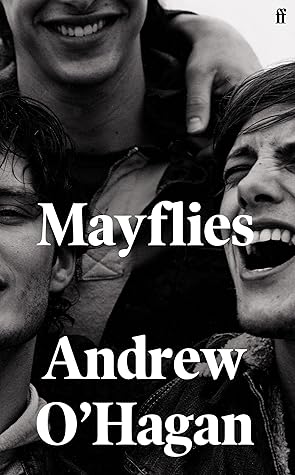
Young and poor working class mates from Glasgow in the summer of 1986 decide to break free of their dismal jobs and of their worries about the future in order to go to a punk concert in Manchester. Noodles, Tully, Tibbs, Limbo, Hogg and Clogs are razzing each other something fierce while flaunting their cultural sophistication with flash quizzes about cinema, art, music, politics and football. Their wildness is a cover for the despair and insecurity of the Thatcher era, a rebellion against the tired values of their fathers. And the best way to celebrate their angst will be in front of the live scene front lined by The Smiths at the peak of their stardom.
Irvine New Town, east of eternity. Tully was twenty years old and a lathe turner. He impersonated Arthur Seaton from Saturday Night and Sunday Morning by taunting his boss all week and drinking pints of Black and Tan all weekend.
Jimmy ‘Noodles’ is the youngest member of the gang, and Tully Dawson is his best friend, already earning a wage and singing in a band. Jimmy is the narrator here, a role that comes naturally to him as the introspective romantic with a passion for the written word: I was one of those kids who bumped into lamp posts on the way back from the library.
I was 22 myself in the summer of 1986, feeling wild and free for escaping from by own blue collar town and going to my first live rock concerts. It is so easy to identify with Noodles and to tap into that deep well of nostalgia for the easy friendships and the endless conversations of that sparkling youth. The names that keep dropping in the conversation between the gang of six are all familiar: movies, books and music that I grew up with and are too numerous to list here. The first half of the novel simply flew by me in a state of constant amazement at the way these emotions can cross geographical and cultural borders. You can change the name of the venues and the names of the bands playing and of the drinks consumed, but there is still instant recognition of the time and place where it all took place.
We came into Manchester like air into Xanadu. The place was a state of mind to us and we saw cascades of glitter in ordinary things.
A wee bit drunk, then a wee bit high, it was magic to feel you had things to say and people to say them to.
And when we are gone from the world, there will still be spores of delight, somewhere in the universe, recalling the moment Tully Dawson ran down the steps of the Britannia Hotel and spread himself over the bonnet of the Smiths’ posh vehicle, his face pressed with contorted affection against the windscreen.
Jimmy is probably the most self-aware of the friends, the one who keeps a corner of his mind free to observe and interpret and put events in a larger context. Or maybe it is just the fact that the story of the trip to Manchester is told as an extended flashback, using insights from a more mature and experienced age. For me, Jimmy captures this fleeting moment of magic with photographic accuracy, every little detail and dialogue sharp, vivid, as if his whole later life yearns for a return to that moment of grace.
Then the Smiths came on.
Aubrey Beardsley in white jeans: Morissey in his prime. The singer wafted into view and sold his drowsy reticence like a drug. The band was at its height, romantic and wrong and fierce and sublime, with haircuts like agendas. Morrisey came brandishing a licence, a whole manner of permission, as if a new kind of belonging could be made from feeling left out, like nobody knew you as he did.
The full brass of being. Who knew what time incubated or what life would demonstrate; we were there, beyond navigation, floating through the air. We beamed to the rafters and jumped shoulder to shoulder. And the words we sang were daft and romantic and ripe and British, custom-built for the clear-eyed young.
>>><<<>>><<<
When Jimmy and Tully get separated from the rest of the group, the conversations turn deadly serious, a counterpoint to the deliberate insults and the escape into violence, alcohol and drugs that is their usual way to deal with a corrupt society. Dialogue becomes intimate and earnest and urgent. The subject is the future, how to make sure they don’t end up in the same pit of despair they see in their father’s eyes.
‘Nobody has to live like that,’ I said. ‘That’s your dad’s life you’re talking about there.’
‘But how do we avoid it?’
‘By being right here.’
‘And is it enough?’
‘We’ll see. It’s enough for now.’
I could see it clearly, the dream of newness tugging him along, the wish to separate from home.
‘He blames me for being younger than him. Blames me for the Miner’s Strike. Hates me being in a band. He resents us for wanting to go places and I can’t speak to him and now he’s dying.’
Violence, man. At some level they pass that on to you, the violence. Unless you say no.
A weekend at a rock concert ends up in a blaze of glory, gone too soon, but echoes of that moment inform the second half of the novel, where we meet Jimmy and Tully in the autumn of 2017, three decades older but still having half mocking and half serious conversations about everything under the sun – from politics to their beloved books and music. Both friends have managed to escape the doom of their fathers: Jimmy a successful author in London, Tully a teacher of literature for middle grade.
‘The new authoritarians,’ I said. ‘They hate any fact that doesn’t confirm what they already believe to be true. They hate it even before they hear it. We’re all just one observation away from damnation.’
‘It’s just woke Thatcherism,’ he said. ‘It all stems from the Eighties. The Decade That Decency Forgot. So, basically it’s our fault.’
But life is cruel and the glitter is all but washed away from their eyes. Their friendship will be put to the test by a diagnostic of incurable cancer for Tully. This is for me the needed reverse of the shiny medal of youth that was the first half of the novel, and this struggle to be true to one another and to the shared past is as important and as gripping for me now that I am getting older as the mawkish recollection of their early years in the sun.
The thing we know is that humanity has a hundred per cent mortality rate. We all die. But the facts don’t matter – we can’t bear to lose the people we love, and it doesn’t quite register about the billions who die, or even about our own coming deaths. We don’t experience our own deaths the way we experience the deaths of those we love.
I am not going to describe the events and the difficult decisions that need to be made in this second half of the novel. I will only mention that this is my first book by Andrew O’Hagan and that I was impressed by his range, by his control of tone and emotion, by his ability to insert the right cultural reference in the right place at the right time, ultimately by his humanity and his sincerity in this account of the most painful rite of passage we all have to pass in our own journey through life.
‘It’s been my good fortune to share a story with him,’ I said, ‘and that’s all we’ll ever have. There’s no more. Earth is all the heaven we’ll ever know.’
‘They were all boys, and the romance of it all lay in knowing they’d seen the sun together.’
>>><<<>>><<<
These notes about cultural references are a bit superfluous after I finished my comments on the text, but there are some titles here I would like to revisit or to learn more about. I started of course by downloading an anthology by The Smiths and read online about the way Morissey let down his fans in his later solo career. I am planning to pay more attention to the lyrics, in particular to How Soon is Now? because Jimmy says it is his favorite, this song and Candyskins by The Fire Engines. I’m not sure I have the time and the patience to watch the sitcom Brookside that the lads are talking about in 1986, but I have watched and loved A Taste of Honey , Billy Liar , Mona Lisa and Saturday Evening, Sunday Morning . Edith Sitwell, Philip K Dick and F Scott Fitzgerald are named directly by Jimmy, while a portrait of J M Barrie and Goya’s Boys Playing at Soldiers fired Jimmy’s imagination elsewhere.
Finally, the title of the novel is rather self-evident in reference to the fleeting nature of life, but Andrew O’Hagan includes another Easter Egg in his mention of Dutch naturalist Jan Swammerdam, who in 1681 wrote Ephemeri Vita: or the Natural History and Anatomy of the Ephemeron. His prints are allegedly well worth the hunt.