What do you think?
Rate this book


278 pages, Hardcover
First published October 7, 2021
Braithwaite was born in Darlington in 1925 and, from the scant information available, appears to have had a brief period of celebrity in the mid-1960s
If there is a recurring theme through the cases he presents though, it is that his clients are traumatised not by their eccentricities themselves, but by the stress of concealing them; of being forced to present different personae to different audiences. Braithwaite’s remedy is to embrace the idea of ‘being several’ (a phrase he uses repeatedly): to give up the idea that one persona is any ‘truer’ than any of the others. Once one has thrown off the idea of a ‘hierarchy of selves’ one can happily be whoever one wants, whenever ones wants.
Subjecting oneself to therapy from Braithwaite must have been terrifying. Reading about it is tremendously entertaining.
He describes this new way of being as ‘schizophrening’. As the decade wore on, this would become an idea perfectly in tune with the be-whoever-you-want-to-be mood of the time, and copies of Kill Your Self would be soon found in the back pocket of every student and bar-room philosopher. ‘Phrening’ (or sometimes ‘phreening’) passed into beatnik argot, and the slogans ‘Don’t be yourself: phree yourself!’ or the more succinct ‘Don’t be: phree!’ were graffitied on the walls of university campuses up and down the land. The concept also gave rise to the short-lived Phree Verse movement in which often acid-fuelled performers channelled their various selves into a spiralling cacophony, until the different personae melded into one incomprehensible but ‘authentic’ stream of consciousness. Ironically, more than one participant in these happenings would later find themselves recovering in psychiatric facilities.
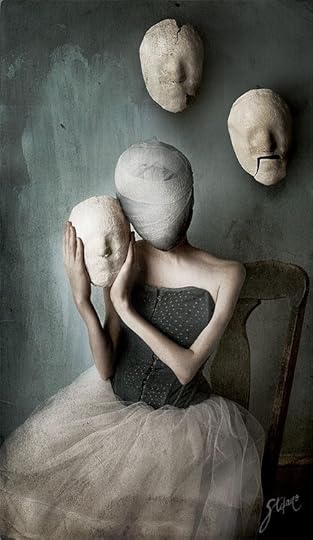
Yes, I'm the great pretender
I think people will Google Collins Braithwaite and think he is real, because I write about him in a documentary style.
...
When you write in a documentary format it signifies truth to the reader, or reality. Whereas when [a book is written] in the first person, there’s a much stronger feeling that you don’t need to believe what you’re reading and that the [character] may be misleading you.
...
It’s fascinating to me, because when we read novels, we know it’s not real; yet what we seek from a novel, or what I seek from a novel, is a feeling of reality. In order to immerse yourself in a novel I think you have to feel that it is real, even though we know that it’s not true, it’s all made up.